
Cheese Market Size and Share
Market Overview
| Study Period | 2021 - 2031 |
|---|---|
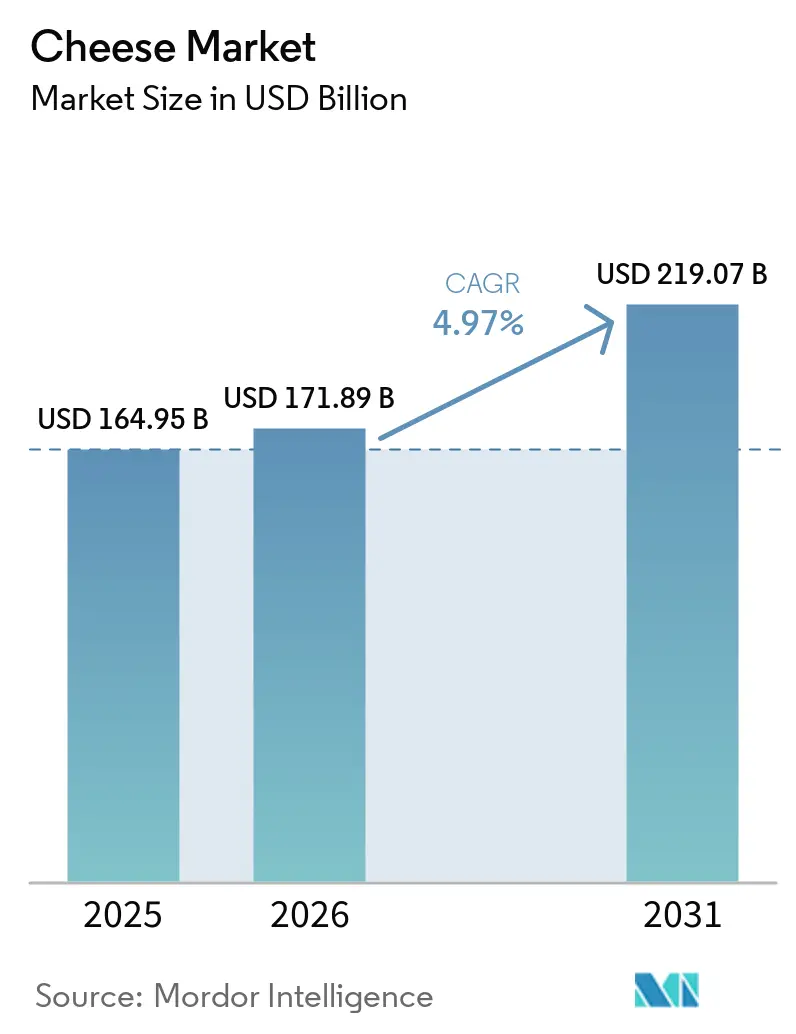
| Market Size (2026) | USD 171.89 Billion |
| Market Size (2031) | USD 219.07 Billion |
| Growth Rate (2026 - 2031) | 4.97 % |
| Fastest Growing Market | Asia-Pacific |
| Largest Market | Europe |
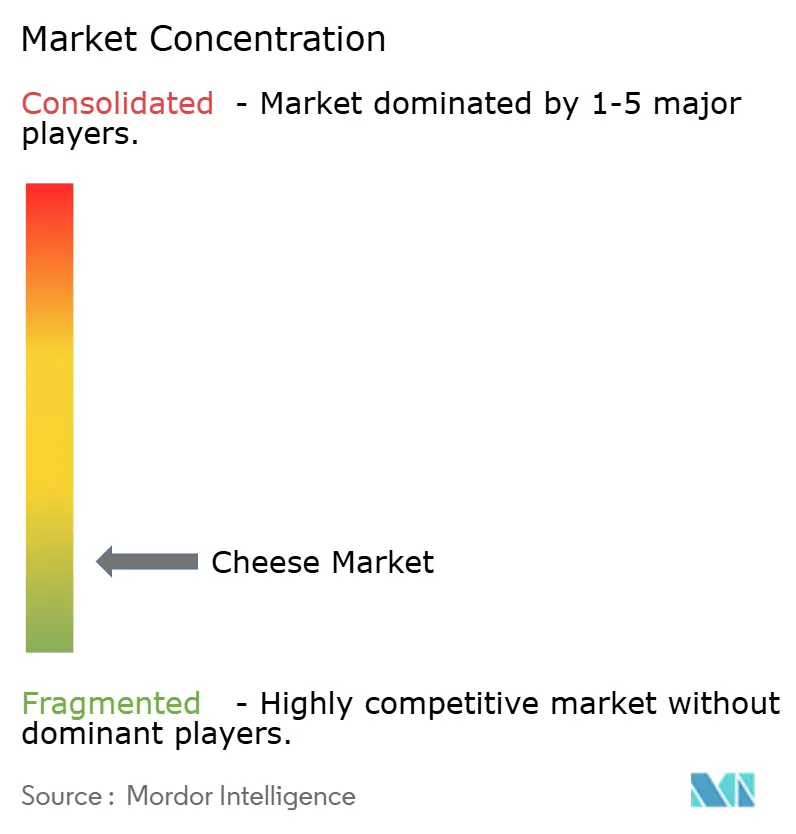
| Market Concentration | Low |
Major Players *Disclaimer: Major Players sorted in no particular order Image © Mordor Intelligence. Reuse requires attribution under CC BY 4.0. | |
Cheese Market Analysis by Mordor Intelligence
The cheese market size is projected to expand from USD 164.95 billion in 2025 and USD 171.89 billion in 2026 to USD 219.07 billion by 2031, registering a compound annual growth rate (CAGR) of 4.97% between 2026 to 2031. This growth highlights the steady expansion of the market. Factors such as robust urbanization, increasing disposable incomes, and changing protein preferences, particularly in the Asia-Pacific region, are driving consumption beyond traditional cooking uses to include on-the-go snacking, premium entertaining, and convenience-focused foodservice menus. Innovations in formats, such as sliced, shredded, and baked cheese snacks, have enhanced portion control for restaurants, improved shelf appeal in retail settings, and reduced labor requirements in institutional kitchens. Additionally, sustainability efforts are directing investments toward low-emission feed additives, carbon-neutral processing methods, and fiber-based packaging that minimizes plastic usage while maintaining shelf life. The competitive landscape remains intense, as no single player holds pricing power. Multinational corporations, regional cooperatives, and artisanal producers are focusing on differentiation through provenance, technology, or cost leadership to achieve balanced growth in both volume and value within the global cheese market.
Key Report Takeaways
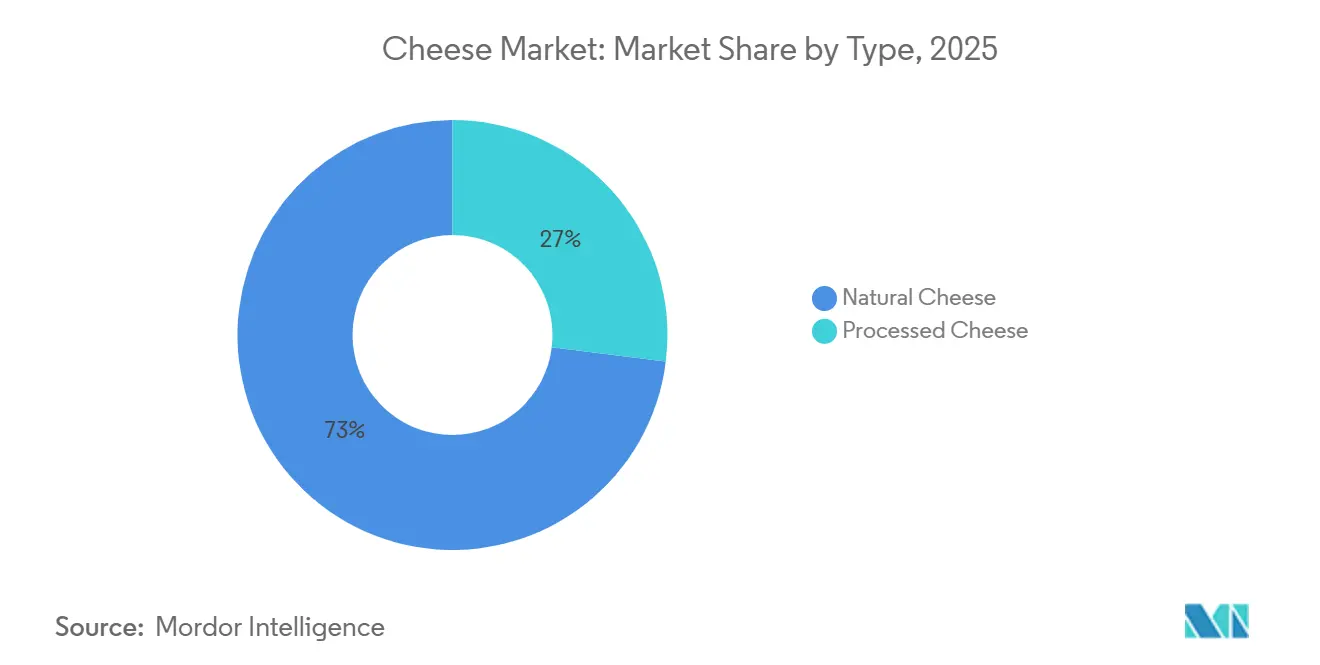
- By type, natural cheese captured 73.03% of the global cheese market share in 2025, whereas processed cheese is forecast to expand at a 5.24% CAGR through 2031.
- By milk source, cow milk dominated with 53.01% contribution to the global cheese market size in 2025, while goat milk cheese is set to advance at a 6.34% CAGR to 2031.
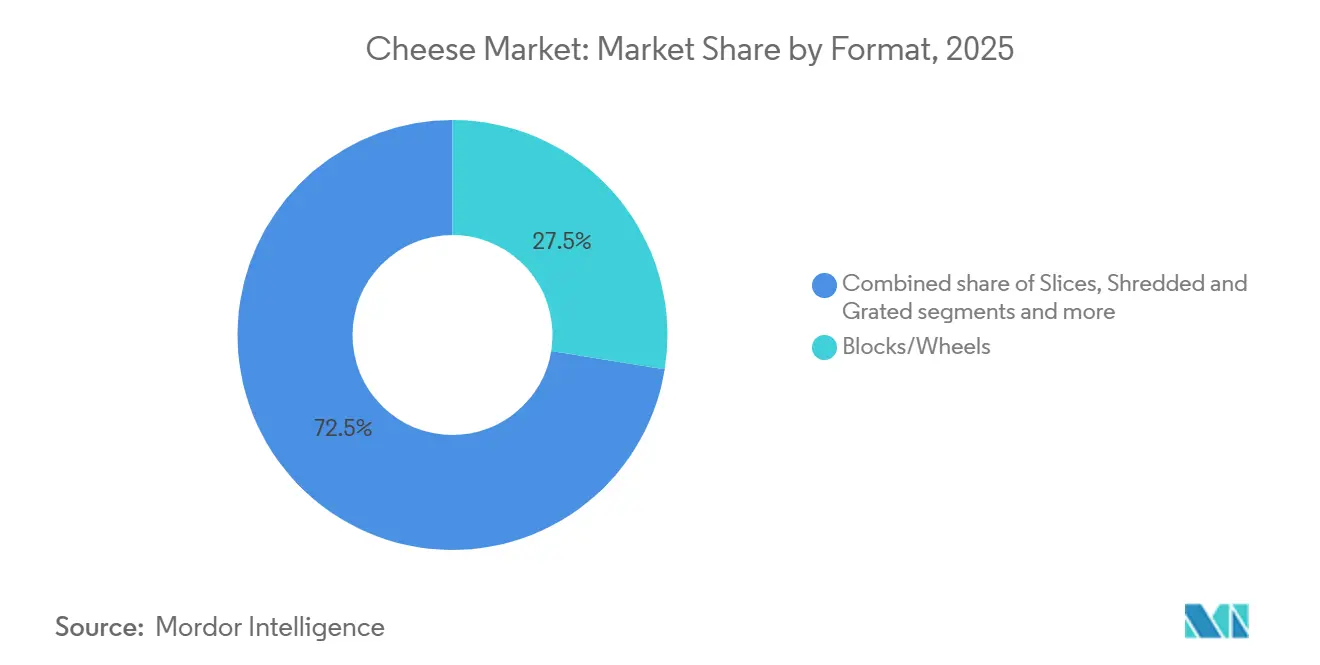
- By format, blocks and wheels accounted for 27.54% of the global cheese market size in 2025, yet sliced cheese leads growth at a 6.34% CAGR through 2031.
- By distribution channel, retail held 63.53% of the global cheese market share in 2025, while foodservice is rising fastest at a 5.61% CAGR to 2031.
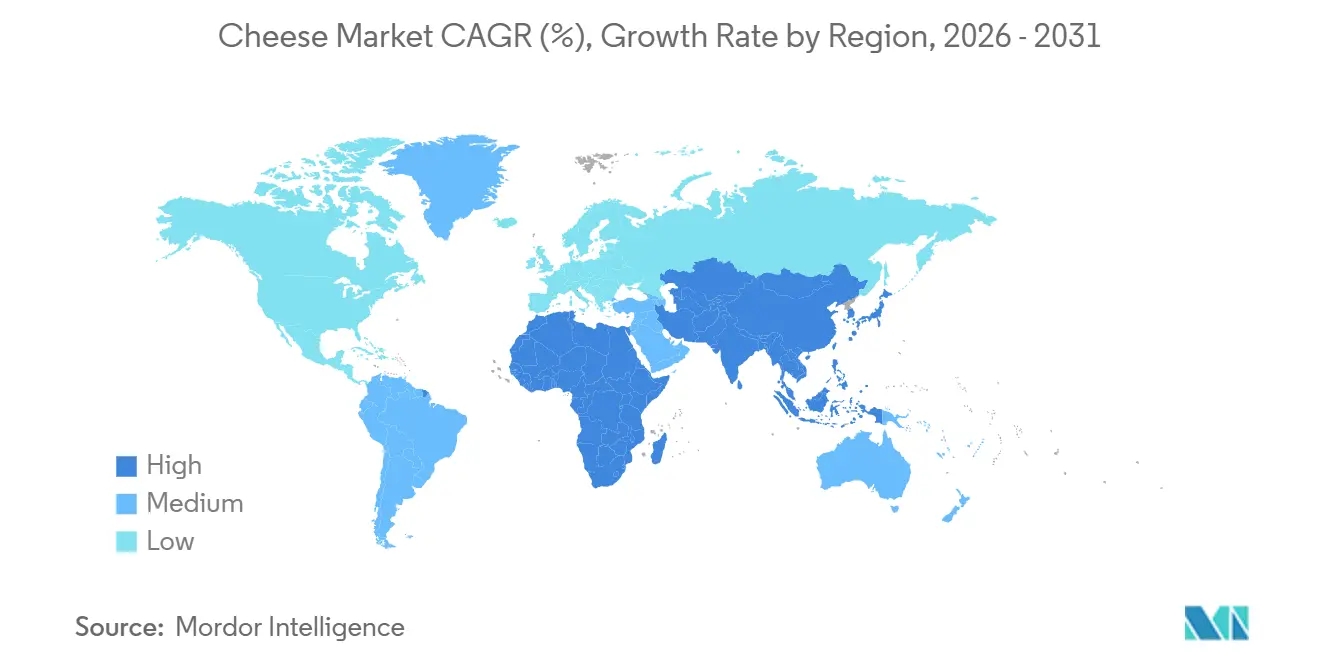
- By geography, Europe led revenue with a 27.32% share of the global cheese market in 2025, but Asia-Pacific is expanding at the highest 6.89% CAGR through 2031.
Note: Market size and forecast figures in this report are generated using Mordor Intelligence’s proprietary estimation framework, updated with the latest available data and insights as of January 2026.
Market Trends and Insights
Drivers Impact Analysis of Cheese Market*
| Driver | (~) % Impact on CAGR Forecast | Geographic Relevance | Impact Timeline |
|---|---|---|---|
| Growth in cheese varieties and specialty types | +1.2% | Global, with premium segments in North America and Europe | Medium term (2-4 years) |
| Sustainability concerns influencing demand for eco-friendly cheese products | +0.8% | Europe and North America, spillover to Asia-Pacific | Long term (≥ 4 years) |
| Popularity of ready-to-eat and convenience foods | +1.5% | Global, strongest in Asia-Pacific and North America | Short term (≤ 2 years) |
| Advancements in cheese ripening and flavor enhancement technology | +0.6% | Europe and North America, technology transfer to emerging markets | Medium term (2-4 years) |
| Premiumization trend boosting demand for aged and artisanal cheeses | +1.0% | North America, Europe, and affluent Asia-Pacific urban centers | Medium term (2-4 years) |
| Increasing product visibility through new formats | +0.7% | Global, with rapid adoption in foodservice channels | Short term (≤ 2 years) |
| Source: Mordor Intelligence | |||


Growth in cheese varieties and specialty types
The growing demand for specialty cheese varieties is transforming value pools as consumers increasingly opt for options like feta, halloumi, and aged Gouda instead of standard choices such as mozzarella and cheddar. This shift is particularly evident in North America, where specialty cheese sales recorded year-over-year growth in 2025, outpacing the overall category growth by a factor of three. Retailers are expanding shelf space for curated cheese assortments, often positioning them alongside charcuterie and crackers to encourage complementary purchases. In Europe, a similar trend is observed, with protected designation of origin cheeses such as Parmigiano-Reggiano and Roquefort using their authenticity to command price premiums of 40 percent to 60 percent over generic hard and blue cheeses. Smaller producers are leveraging direct-to-consumer channels to bypass traditional distribution markups, allowing them to retain margins that would otherwise go to wholesalers. In response, larger companies are acquiring artisanal brands or launching premium sub-brands to protect their market share in the fastest-growing premium price segments.
Sustainability concerns influencing demand for eco-friendly cheese products
Environmental considerations are significantly shaping sourcing and packaging strategies, with dairy cooperatives increasingly adopting regenerative agriculture practices to reduce methane emissions from cattle. In 2025, Fonterra announced its plan to transition 30% of its New Zealand supplier base to low-emission feed additives by 2028, with the goal of achieving a 15% reduction in Scope 3 emissions. Furthermore, the European Union LIFE (L’Instrument Financier pour l’Environnement) program allocated EUR 45 million (USD 48 million) in grants in 2024 to support pilot projects for carbon-neutral cheese production facilities in France and the Netherlands, reflecting strong regulatory backing for decarbonization efforts [1]Source: Eurostat, “Italy unmatched in pasta production and exports,” ec.europa.eu. On the packaging front, innovation remains critical as single-use plastics face bans in several jurisdictions. In 2025, Arla Foods introduced a fiber-based wrapper for sliced cheese, which reduced plastic content by 60% while maintaining the 90-day shelf life required for export markets. However, these sustainability initiatives come with substantial upfront capital costs, posing challenges for smaller producers. This financial strain may lead to increased industry consolidation, as achieving compliance with sustainability standards increasingly demands economies of scale.
Popularity of ready-to-eat and convenience foods
The demand for grab-and-go cheese formats is increasing as busy consumers prioritize convenience without compromising their protein intake. Products such as string cheese, cheese cubes, and portion-controlled snack packs experienced an 18% growth in volume during 2025, with Asia-Pacific markets driving significant growth due to the expansion of modern retail channels. Kraft Heinz introduced a line of single-serve cheese and cracker combinations in Japan and South Korea in early 2025, capturing an 8% share of the ambient snacking category within six months. Foodservice operators are also adopting pre-portioned formats to reduce labor costs and minimize waste. A 2024 survey of United States quick-service restaurants found that 72% had transitioned to pre-sliced or pre-shredded cheese to enhance kitchen efficiency during peak hours. This trend has created a dual demand, with bulk formats catering to price-sensitive institutional buyers, while premium single-serve options target on-the-go consumers willing to pay a 30% to 40% premium for convenience.
Advancements in cheese ripening and flavor enhancement technology
Precision fermentation and microbial engineering are enabling producers to accelerate aging processes and enhance flavor complexity without extending production cycles. Agroscope, a Swiss research institute, published findings in 2024 indicating that specific Lactobacillus strains can reduce the ripening time for Emmental cheese by 25% while maintaining traditional flavor profiles. Similarly, the Leibniz Institute for Food Systems Biology in Germany developed a rapid-aging technique in 2025 using controlled humidity and temperature oscillations, which has since been licensed to three European cheesemakers. These innovations reduce working-capital requirements by shortening inventory holding periods, a significant advantage in an industry where aged cheeses can tie up capital for 12 to 36 months. However, adoption remains inconsistent; artisanal producers resist technology-driven methods, arguing they undermine terroir-based differentiation, while industrial players consider them essential for meeting rising demand without proportional capacity expansion.
Restraints Impact Analysis of Cheese Market*
| Restraint | (~) % Impact on CAGR Forecast | Geographic Relevance | Impact Timeline |
|---|---|---|---|
| Regulatory challenges in food safety, adulteration, and labeling | -0.6% | Global, with acute pressure in Europe and North America | Medium term (2-4 years) |
| Health concerns related to high fat and calorie content | -0.9% | North America and Europe, emerging in Asia-Pacific | Long term (≥ 4 years) |
| Lack of standardization in regional cheese quality and type definitions | -0.4% | Emerging markets in Asia-Pacific, Latin America, and Middle East and Africa | Medium term (2-4 years) |
| Hygiene and traceability issues in farm-to-table supply chains | -0.5% | South Asia, Southeast Asia, and parts of Latin America | Short term (≤ 2 years) |
| Source: Mordor Intelligence | |||
Regulatory challenges in food safety, adulteration, and labeling
Divergent regulatory frameworks across jurisdictions increase compliance costs, disproportionately affecting exporters and smaller producers. In 2024, the U.S. Food and Drug Administration issued updated guidance requiring country-of-origin labeling for all imported cheeses, adding an estimated USD 0.15 per kilogram in labeling and documentation costs [2]Source: U.S. Food & Drug Administration, “Food Traceability Rule: Critical Tracking Events (CTEs) and Key Data Elements (KDEs),” fda.gov. Similarly, the European Food Safety Authority tightened limits on Listeria monocytogenes in soft cheeses in 2025, necessitating more frequent testing and compelling several French producers to upgrade aging facilities with improved sanitation systems. Adulteration remains a significant concern in price-sensitive markets; for instance, India's Food Safety and Standards Authority found palm oil substitution in 18% of processed cheese samples tested during a 2024 inspection, leading to recalls and diminishing consumer trust [3]Source: Food Safety and Standards Authority of India (FSSAI), “Food Safety And Standards (Labelling And Display) Regulations,” fssai.gov.in. Labeling disputes also remain contentious, particularly regarding terms like "natural" and "artisanal," which lack standardized definitions and often result in accusations of greenwashing.
Health concerns related to high fat and calorie content
Consumers are increasingly aware of the risks associated with cardiovascular diseases, prompting them to pay closer attention to saturated fat and sodium levels in their diets. This trend is particularly evident in developed markets where per capita cheese consumption exceeds 15 kilograms annually. In 2025, the World Health Organization (WHO) reaffirmed its recommendation that saturated fat should account for less than 10 percent of total energy intake. A single 50-gram serving of aged cheddar can nearly reach this limit. In response, several producers introduced reduced-fat cheese variants; however, these often compromise the texture and flavor intensity that are key to premium positioning. For example, Lactalis launched a 30 percent reduced-fat Président Brie in 2025, but initial sales data showed that a 40 percent price discount was required to match the sales volume of full-fat versions, which negatively impacted profitability. Sodium reduction presents additional challenges, as salt is critical for microbial control and flavor development during the aging process. These health-related challenges are most significant in North America and Europe, where obesity rates remain high, but they are also beginning to emerge in urban Asia-Pacific markets as Western dietary habits become more prevalent.
*Our forecasts treat driver/restraint impacts as directional, not additive. The impact forecasts reflect baseline growth, mix effects, and variable interactions.
Cheese Market Segment Analysis
By Type:
Natural Cheese Dominates but Processed Variants Gain GroundIn 2025, natural cheese accounted for 73.03% of the market share, underscoring a strong consumer preference for dairy products that undergo minimal processing. This preference highlights the growing demand for products perceived as more natural and wholesome. On the other hand, processed cheese is anticipated to grow at a Compound Annual Growth Rate (CAGR) of 5.24% through 2031. This growth is primarily driven by clean-label reformulations, as consumers increasingly seek greater transparency in cheese ingredients while maintaining the convenience features that are crucial for adoption in the foodservice industry. Mozzarella continues to dominate as the largest sub-segment within natural cheese, supported by the increasing consumption of pizza in Asia-Pacific markets. This trend is further bolstered by the expansion of quick-service restaurant chains in the region.
Parmesan and other hard cheeses are experiencing significant benefits from premiumization trends, with aged variants commanding retail prices that are approximately 50% higher than those of commodity mozzarella. Feta and other brined cheeses are becoming increasingly popular in Mediterranean and Middle Eastern cuisines, reflecting a shift in consumer preferences toward diverse and authentic flavors. Meanwhile, ricotta and cottage cheese are gaining traction among fitness-focused consumers who prioritize high-protein, low-fat options in their diets. Cream cheese, while showing stagnant growth in mature markets, is witnessing rapid expansion in Asia due to the growing popularity of Western-style breakfasts in the region.

By Milk Source:
Cow Milk Leads While Goat Milk SurgesCow milk accounted for 53.01% of the cheese market in 2025, primarily due to its cost efficiency and the presence of well-established supply chains. This dominance underscores the widespread availability and affordability of cow milk, making it the preferred choice for large-scale cheese production. In contrast, goat milk cheese is experiencing a compound annual growth rate (CAGR) of 6.34%. This growth is attributed to increasing consumer demand for its digestibility benefits and its positioning as a premium product. Goat cheese typically commands retail prices 30% to 50% higher than cow milk cheese, a premium linked to its perceived superior nutritional value and the artisanal methods used in its production.
Buffalo milk cheese, primarily represented by mozzarella di bufala, occupies a niche yet profitable segment within the cheese market. Italian exports of buffalo milk cheese to the Asia-Pacific region increased by 19% year-over-year in 2025. This growth is supported by the rising preference among affluent consumers in countries such as China and Japan for authentic Mediterranean products. Meanwhile, sheep milk cheese production remains concentrated in Southern Europe and the Middle East, where traditional varieties such as Pecorino Romano and feta are protected by geographic indications. These geographic protections play a crucial role in preserving the authenticity of these cheeses but also limit the potential for significant expansion in supply.
By Format:
Sliced Cheese Gains as Convenience Trumps CostBlocks and wheels accounted for 27.54% of the market share in 2025, driven by institutional buyers and cost-conscious consumers who prioritize cost efficiency per kilogram. At the same time, sliced cheese is projected to grow at a Compound Annual Growth Rate (CAGR) of 6.34%, as both foodservice operators and households increasingly adopt portion-controlled formats to save on labor and reduce waste. Pre-sliced cheese eliminates the need for cutting equipment and minimizes waste, particularly in quick-service restaurants where speed and consistency are critical. A 2025 survey of United States sandwich chains revealed that 68% had fully transitioned to pre-sliced cheese, reporting a 12% reduction in labor costs and a 15% decrease in product waste.
Shredded and grated cheese is also experiencing strong growth, fueled by rising pizza and pasta consumption. However, the use of anti-caking agents to prevent clumping has faced criticism from clean-label advocates. Spreads and cubes represent smaller but rapidly growing segments, with spreads benefiting from the increasing popularity of snacking and cubes appealing to parents seeking convenient protein options for children's lunchboxes. Within this category, cheese sticks, a sub-segment of cubes and sticks, recorded a 22% increase in volume in 2025, with significant growth driven by Asia-Pacific markets as Western snacking habits gained traction in the region.

By Distribution Channel:
Retail Leads but Foodservice AcceleratesIn 2025, retail channels accounted for 63.53% of the total cheese volume, emphasizing the critical role of cheese as a household staple across diverse consumer groups. The foodservice segment is experiencing consistent growth, with a compound annual growth rate (CAGR) of 5.61%. This growth is largely attributed to the recovery in restaurant traffic and the expansion of quick-service restaurant (QSR) chains that prominently feature cheese-focused menu offerings. Supermarkets and hypermarkets remain the dominant retail sub-channel, leveraging private-label programs to improve profit margins. Additionally, these outlets are introducing curated specialty cheese sections aimed at attracting higher-income consumers, further solidifying their leadership in the market.
Convenience stores are steadily increasing their market share in urban areas, where single-serve and grab-and-go formats align with the preferences of busy, time-constrained consumers. Online retail, which saw substantial growth during the COVID-19 pandemic, has continued to maintain high penetration levels. This trend is particularly notable for specialty and imported cheeses, which are often less accessible in physical retail stores. A 2025 analysis indicated that online channels accounted for 12% of cheese sales in the United States, marking a significant rise from 6% in 2020.
Geography Analysis
Europe Cheese Market
In 2025, Europe led the global cheese market, accounting for 27.32% of the total share. This dominance is rooted in its long-standing consumption traditions and the Protected Designation of Origin (PDO) frameworks, which provide regional producers with pricing advantages. Germany, France, Italy, and the Netherlands collectively contributed over 60% of European production, each specializing in unique cheese varieties that reflect local terroir and production methods. However, growth in the region is slowing as per-capita consumption approaches saturation and health concerns over saturated fats influence dietary preferences. Regulatory oversight remains significant, with the European Food Safety Authority (EFSA) enforcing strict microbial limits and the European Union's Farm to Fork strategy targeting a 20% reduction in food waste by 2030. Producers are responding by investing in shelf-life extension technologies, while sustainability-focused innovations, such as carbon-neutral production and biodegradable packaging, are gaining traction. Post-Brexit trade disruptions in the United Kingdom have increased supply chain costs, while Eastern European countries like Poland are expanding production capacity to meet both domestic and export demand.
APAC Cheese Market
The Asia-Pacific region is the fastest-growing cheese market, with a compound annual growth rate (CAGR) of 6.89% projected through 2031. This growth is driven by urbanization, rising disposable incomes, and the adoption of Western dietary habits. China is the standout market, with per-capita cheese consumption tripling between 2020 and 2025 due to the proliferation of pizza and burger chains and the expansion of modern retail. In India, traditional paneer consumption remains robust, while Western-style cheese adoption is concentrated in urban areas and among younger consumers. Japan and South Korea are mature markets, where demand is shifting toward premium imported varieties and fusion products that combine cheese with traditional ingredients. Improvements in cold-chain infrastructure across Southeast Asia are unlocking demand, although price sensitivity remains a challenge in lower-income markets such as Indonesia and the Philippines. Australia and New Zealand are net exporters, leveraging pasture-based production systems that command sustainability premiums in Asian export markets.
The Americas and MEA Cheese Market
Other regions are also contributing to the global cheese market's growth. North America held a significant share in 2025, with the United States as the largest contributor, where per-capita cheese consumption exceeded 17 kilograms annually. The region is characterized by high foodservice penetration, with quick-service restaurants accounting for nearly 40% of cheese volume. Mexico is experiencing rapid growth, driven by traditional queso fresco consumption and increasing urban adoption of processed cheese. In Canada, bilingual labeling requirements and provincial trade barriers fragment distribution, raising costs for national brands. Additionally, updated guidance from the U.S. Food and Drug Administration (FDA) on country-of-origin labeling has increased compliance costs for importers, while tariff uncertainties complicate long-term sourcing strategies for multinational producers. South America is steadily expanding, with Brazil and Argentina as key markets. Brazil's cheese consumption is rising as middle-class growth drives demand for both traditional requeijão and imported European varieties. Argentina benefits from a strong dairy farming base and exports significant volumes of hard cheeses to neighboring countries and Europe, although economic instability and currency fluctuations pose challenges. In the Middle East and Africa, the market is fragmented. Gulf Cooperation Council (GCC) countries rely heavily on imports, with demand driven by expatriate populations and tourism. Meanwhile, North African markets such as Egypt and Morocco have established local production but face challenges in maintaining quality consistency.

Regulatory Landscape
Global cheese regulation is anchored by food safety controls, compositional standards, and increasingly prescriptive traceability and labeling requirements that vary by importing market. At the international level, the Codex Alimentarius Commission amended the General Standard for Cheese (CXS 283-1978) in December 2024 (Section 4 on food additives), reinforcing Codex as a reference point for national rules and trade specifications.
In key importing regions, compliance obligations tightened further through 2025-2026. The European Union implemented stricter Listeria monocytogenes criteria for ready-to-eat foods (relevant for soft and high-moisture cheeses) under Commission Regulation (EU) 2024/2895 (effective in 2026), raising testing and sanitation expectations for producers and packers. In the United States, FDA standards of identity for cheeses continue to be defined under 21 CFR Part 133, while FSMA traceability requirements remain an important cross-cutting compliance theme (with an extended compliance date to July 20, 2028 for certain traceability records). Trade policy also influences market access, with tariff-rate quotas for cheese categories formalized in EU legal instruments during 2026 and linked to the EU-Mercosur framework, including a 3,000-ton quota referenced for cheeses, which affects sourcing and export planning for suppliers targeting EU demand.
Value Chain Analysis
The cheese value chain begins with raw milk production (farm inputs, animal health, and milk collection), moves through chilling and logistics into processing (standardization, pasteurization, cultures/enzymes, coagulation, cutting, pressing, brining, ripening, and packaging), and then into cold-chain distribution to retail and foodservice. Value capture differs by product: aged and specialty cheeses require longer working-capital cycles and tighter quality systems, while sliced, shredded, and portioned formats add converting steps that support labor saving for foodservice and convenience-led retail. Compliance and customer requirements have become embedded in operations, including GFSI-style audits and digital record-keeping aligned to FSMA traceability expectations.
Recent industry actions show how processors are reshaping assets across the chain to secure brands, capacity, and regional routes to market. In January 2026, Bel Group announced a EUR 16.7 million investment to double production capacity at its Vietnam cheese plant to 20,000 tons per year, strengthening local processing and regional distribution capabilities. In May 2026, Woodlands Dairy acquired Ladismith Cheese Company in South Africa for about USD 51 million, and in July 2026 Lactalis Canada moved to acquire Agropur Cooperative's fine cheese division (brands and two manufacturing facilities), highlighting consolidation across processing and branded go-to-market nodes. These moves run alongside structural constraints such as capital-intensive pathogen control, specialized equipment for slicing/shredding, and the need for auditable chain-of-custody across cross-border trade lanes.
Competitive Landscape
The global cheese market is highly fragmented, with multinational corporations, regional cooperatives, and artisanal producers competing across various price and quality segments. Large-scale players, including Groupe Lactalis, The Kraft Heinz Company, and Arla Foods amba, leverage vertical integration and multi-country operations to achieve cost efficiencies. However, these companies face challenges in replicating the authenticity and storytelling that drive the premiumization of smaller, terroir-focused brands.
Competitive strategies vary significantly by segment. In the commodity cheese segment, companies prioritize procurement efficiency and maximizing capacity utilization. Conversely, specialty cheese varieties focus on differentiation through provenance, aging techniques, and sensory attributes, enabling them to command price premiums of 40% to 60%. Emerging opportunities are evident in plant-based cheese alternatives and hybrid products combining dairy and non-dairy ingredients. However, these segments remain in the early stages of development and face challenges related to taste and texture, which hinder their mainstream adoption.
Technological advancements are reshaping the cheese market. Leading companies are adopting precision fermentation to reduce aging times and implementing blockchain-based traceability systems to enhance food safety. For instance, Fonterra Co-operative Group Limited's 2025 pilot project in Thailand demonstrated that end-to-end supply chain visibility could reduce recall costs by 60%. Additionally, disruptors such as direct-to-consumer artisanal brands are bypassing traditional distribution channels to capture margins through e-commerce. Regional cooperatives in emerging markets are scaling production to compete with multinational players on price. Innovation in cheese-ripening technology is accelerating, as evidenced by an 18% year-over-year increase in patent filings in 2025, with European and North American applicants leading the way. Regulatory compliance is also becoming a critical differentiator. Producers implementing robust traceability systems and obtaining certifications such as ISO 22000 are gaining preferential access to export markets and institutional buyers.
Cheese Industry Leaders
Groupe Lactalis SA
FrieslandCampina NV
Arla Foods amba
Fonterra Co-operative Group Ltd
Saputo Inc.
- *Disclaimer: Major Players sorted in no particular order
Cheese Market Companies Covered in this Report
- Groupe Lactalis SA
- FrieslandCampina NV
- Arla Foods amba
- Fonterra Co-operative Group Ltd
- Saputo Inc.
- The Kraft Heinz Company
- Savencia Fromage & Dairy
- Dairy Farmers of America Inc.
- Land O’Lakes Inc.
- Gujarat Co-operative Milk Marketing Federation
- Almarai Company
- Hochland SE
- DMK Group
- Sargento Foods Inc.
- Associated Milk Producers Inc.
- Ornua Co-operative Ltd
- Emmi AG
- Leprino Foods Company
- Unibel SA
- Hilmar Cheese Company

Market Opportunities and Future Outlook
Capacity additions and modernization programs are creating whitespace in high-throughput snacking and convenience formats, and in plants designed for improved yield management and byproduct valorization (notably whey streams). Arla Foods' February 2026 announcement of a new cheese plant project in Gotene, Sweden (EUR 300 million), and Bel Group's expansion plans for snacking-cheese output, including a USD 200 million expansion in Brookings, South Dakota to double Mini Babybel capacity to 20,000 tons annually, illustrate the investment cycle. These projects align with demand for portion-controlled, ready-to-eat formats already expanding through retail and foodservice, while also increasing competitive pressure on smaller producers that lack similar scale and automation.
Digitization and process-control tools are another opportunity area, especially where compliance, yield, and consistency directly affect margin. In March 2026, Bel Group partnered with Dassault Systemes on a digital virtual twin approach for cheese production, while equipment suppliers promote in-line measurement and Factory OS concepts to automate coagulation and cutting decisions. At the same time, trade and regulatory shifts are opening room for exporters able to meet stricter microbial controls and documentation needs, including new tariff-rate quota structures in the EU during 2026 that influence which cheese categories can move at preferred terms. Together, these factors support investment in traceability-ready operations, packaging designed for shelf life and export, and regional production hubs near high-growth consumption centers.
Recent Industry Developments in Cheese Market
- July 2026: Lactalis Canada announced a strategic acquisition of Agropur Cooperative's fine cheese division, covering brands such as OKA, Champfleury, and Monsieur Gustav, along with two manufacturing facilities. The move expands Lactalis Canada's domestic production footprint and strengthens its premium and specialty positioning in a market where brand portfolios and local capacity support retail and foodservice scale.
- June 2026: Arla Foods completed its merger with DMK Group, effective June 1, 2026, creating a larger cooperative platform under the Arla name. The combined scale increases the milk pool and processing base available for cheese output and value-added formats, improving procurement leverage and the ability to fund modernization and compliance investments.
- September 2024: RELCO (a Kovalus company) formed a strategic partnership with Milky Mist Dairy Food Private Limited to establish Indias largest Cheddar cheese manufacturing plant. The project supports local industrial cheese supply for fast-growing foodservice and modern retail channels, reducing reliance on imports and widening the domestic converting ecosystem for sliced and shredded formats.


Cheese Market Report Scope and Research Methodology
Market Definition and Coverage
For this study, the cheese market covers revenue earned from the sale of dairy-based cheese (natural and processed) across retail, food service, and industrial channels, with values captured at ex-factory prices in USD.
Scope exclusions: This sizing does not count plant-based cheese analogs, whey powders, or standalone cheese-ingredient blends.
Segments Covered in This Report
- By Type
- Natural Cheese
- Mozzarella
- Feta
- Ricotta
- Cottage
- Cream
- Parmesan
- Others
- Processed Cheese
- Natural Cheese
- By Milk Source
- Cow
- Goat
- Buffalo
- Others
- By Format
- Blocks/Wheels
- Slices
- Shredded and Grated
- Spreads
- Cubes and Sticks
- Others
- By Distribution Channel
- Foodservice (HoReCa)
- Retail
- Supermarkets and Hypermarkets
- Convenience Stores
- Specialist Retailers
- Online Retail
- Others
- By Geography
- North America
- United States
- Canada
- Mexico
- Rest of North America
- Europe
- Germany
- United Kingdom
- Italy
- France
- Spain
- Netherlands
- Poland
- Belgium
- Sweden
- Rest of Europe
- Asia-Pacific
- China
- India
- Japan
- Australia
- Indonesia
- South Korea
- Thailand
- Singapore
- Rest of Asia-Pacific
- South America
- Brazil
- Argentina
- Colombia
- Chile
- Peru
- Rest of South America
- Middle East and Africa
- South Africa
- Saudi Arabia
- United Arab Emirates
- Nigeria
- Egypt
- Morocco
- Turkey
- Rest of Middle East and Africa
- North America
Data Sources, Market Sizing, and Validation
Desk Research
Desk work starts by building a consistent fact base on milk supply, cheese output, and demand signals that can be tracked year to year. We use public sources such as FAOSTAT, USDA datasets, Eurostat, and national statistics offices to understand production, consumption, and trade direction. For cross-border flows and unit movements, customs statistics and UN Comtrade series help spot volume shifts that often explain revenue changes.
We also review company annual reports and investor presentations to understand product mix, pricing commentary, and capacity additions, then compare these against association releases and reputable press coverage. When needed, paid subscriptions are used in a limited way for company financials and intelligence, import and export shipment-level checks, and patent databases connected to processing and packaging improvements. The sources named above are illustrative, and there were several other references used to collect data, validate it, and clarify assumptions.
Primary Interviews and Surveys
Primary work is used to pressure-test assumptions that desk sources cannot confirm cleanly, especially around price realization, mix shifts between natural and processed cheese, and channel-level demand softness or strength. We speak with manufacturers, distributors, and food service-linked stakeholders, along with category and procurement roles that see contract terms and promotional cycles. Since this is a global market, respondents are spread across major producing and consuming regions so regional price spreads and currency impacts can be understood before finalizing the totals.
Distribution of primary research fieldwork respondents
| Company type | Respondent position | Region |
|---|---|---|
| Top tier: 36% | CXOs: 18% | APAC: 53% |
| Mid tier: 44% | Functional/Unit leaders: 23% | EMEA: 29% |
| Smaller Players: 20% | Managers: 59% | Americas: 18% |
Market-Sizing & Forecasting
The core build uses a top-down approach where production, trade, and apparent consumption indicators are converted into value using region-specific average selling prices that reflect product mix and channel spread. To keep the math honest, results are then checked with selective bottom-up approximations, such as sampled brand and private-label price points, distributor markups observed in channel checks, and a few supplier revenue rollups where disclosures are clear.
Key inputs that move the model include raw milk price direction, cheese production volumes, import and export balances, per-capita dairy consumption signals, food service recovery indicators, and the shift toward value-added formats like shredded, sliced, or snacking packs. For forecasting, scenario analysis is used around milk-cost cycles and pricing pass-through, and then a simple regression links demand to income and urbanization trends in fast-growing regions. Where direct pricing is patchy, gaps are handled by using proxy price series and adjusting them with interview feedback on realized discounts and contract timing.
Data Validation & Update Cycle
Totals are validated through cross-checks against independent signals, including trade balances, production capacity announcements, and price series movements that should match the direction of the modeled revenue. If an outlier shows up in a country or region, assumptions are re-opened and, when needed, respondents are re-contacted to confirm whether it is a real shift or a data artifact.
Before sign-off, the model and key drivers go through multi-step analyst reviews, and variance checks are run across years to catch sudden jumps that cannot be explained by volume or price. Reports are refreshed annually, with interim updates when material events occur such as large price spikes, major policy moves, or visible supply disruptions. Right before delivery, a final pass is completed so clients receive the most current view available.
Mordor Intelligence's Cheese Market Size Versus Other Published Estimates
Published cheese market values often differ because the counting rules are not the same, and the timing behind pricing and currency translation can change the result even when volumes look similar. Differences also come from what gets treated as cheese revenue versus adjacent dairy products, plus how retail, food service, and industrial channels are captured.
A big driver is the price logic, because average selling prices move with milk costs, promotional depth, and mix between natural and processed items, and they do not move evenly across regions. Currency timing matters too, since using yearly averages versus spot conversions can lift or reduce USD totals for large producing regions. In the 2026 sizing, the price deck and FX rates are refreshed on a consistent schedule and then re-checked against production and trade signals, which is why the total published by Mordor Intelligence can land away from figures built on older conversion windows or retail-level price points.
Benchmark comparison
| Source | Market Size | Gaps in Research Methodology |
|---|---|---|
| Mordor Intelligence | USD 171.89 B (2026) | |
| Global Consultancy A | USD 215.51 B (2025) | This figure appears to use a broader value chain boundary and can include plant-based cheese and retail-level value capture, which lifts totals versus an ex-factory definition. It also uses a 2025 base year, so price and currency timing differs from a 2026 view. |
| Industry Publisher B | USD 173.79 B (2025) | The scope notes indicate wider segmentation by source and nature, which can pull non-dairy items into the total depending on definitions. The longer forecast window can also smooth near-term price volatility, and the base year currency assumptions are not always aligned with yearly average conversions. |
Overall, the spread mainly comes from scope boundaries and how price and currency are converted into USD, rather than from disagreement on broad demand direction. When the scope is kept to dairy cheese at ex-factory prices and the input series are refreshed and re-checked against production and trade signals, the final number becomes easier to trace and repeat across years.


Key Questions Answered in the Report
What is the current value of the global cheese market?
The global cheese market size stands at USD 171.89 billion in 2026.
How fast will the market grow through 2031?
The global cheese market is forecast to expand at a 4.97% CAGR, reaching USD 219.07 billion by 2031.
Which cheese type holds the largest share?
Natural cheese leads with 73.03% of global cheese market share as of 2025.
Which region is growing the fastest?
Asia-Pacific is projected to post a 6.89% CAGR through 2031, the highest regional growth rate.
What channel is expanding more quickly—retail or foodservice?
What channel is expanding more quickly - retail or foodservice?
Page last updated on:


 Your data is secure and never sold or shared.


