
Black Beer Market Size and Share
Market Overview
| Study Period | 2021 - 2031 |
|---|---|
| Market Size (2026) | USD 70.37 Billion |
| Market Size (2031) | USD 85.72 Billion |
| Growth Rate (2026 - 2031) | 4.02 % |
| Fastest Growing Market | Asia Pacific |
| Largest Market | Europe |
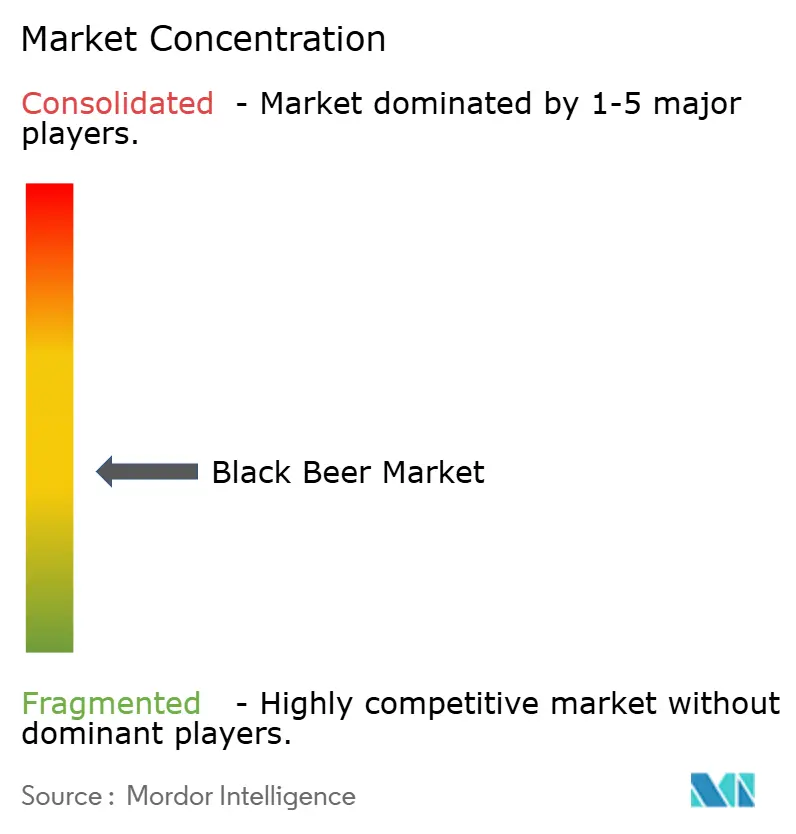
| Market Concentration | Medium |
Major Players
*Disclaimer: Major Players sorted in no particular order Image © Mordor Intelligence. Reuse requires attribution under CC BY 4.0. |
|
Black Beer Market Analysis by Mordor Intelligence
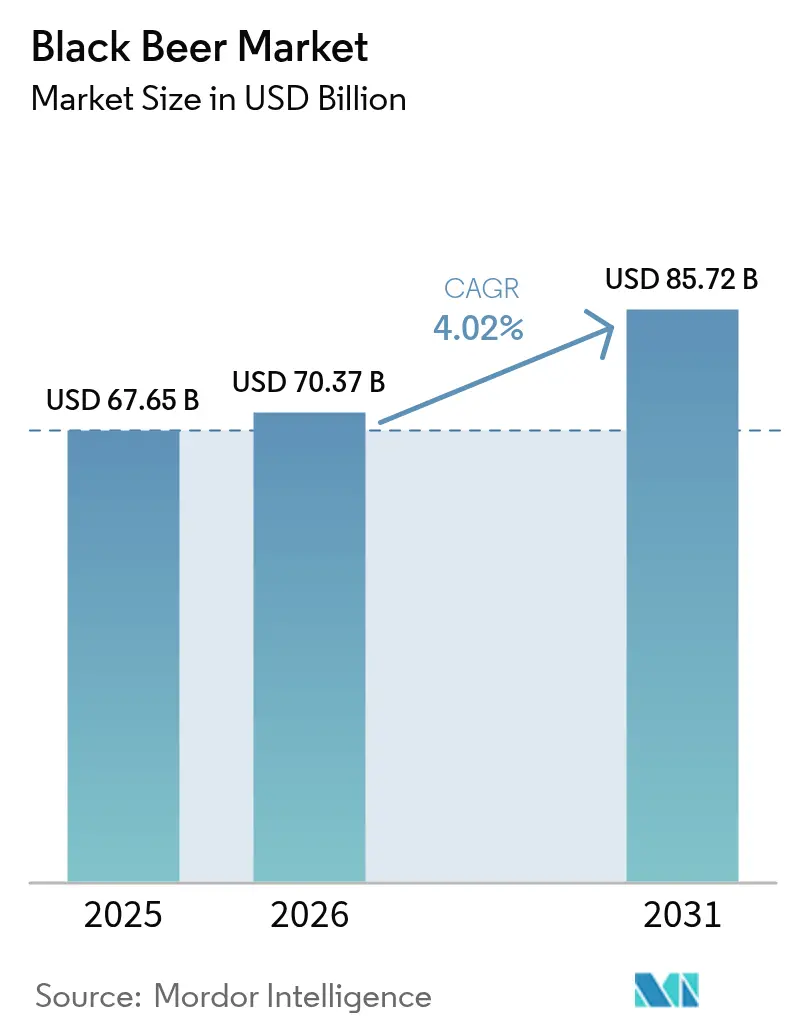
The black beer market size was valued at USD 67.65 billion in 2025 and estimated to grow from USD 70.37 billion in 2026 to reach USD 85.72 billion by 2031, at a CAGR of 4.02% during the forecast period (2026-2031). Consumer demand for premium and craft beer experiences drives this growth. Black beer attracts both connoisseurs and traditional consumers with its robust flavors, deep color, and high malt content. Metropolitan populations and younger consumers influence manufacturers to create innovative products. The market expands through increased female participation, supported by targeted marketing and diverse products. The expansion of distribution networks is also accelerating market reach. While bars and pubs remain influential, the rise of off-trade channels like retail chains, e-commerce platforms, and specialty stores is making black beer more accessible to a wider audience. Packaging trends are reinforcing this momentum, as the convenience and eco-friendliness of cans appeal to modern consumers, while bottled variants maintain a stronghold among those seeking premium, traditional presentation. The Asia-Pacific region shows strong growth potential as disposable incomes rise, urbanization continues, and consumers embrace international beverage trends. These factors point to sustained growth in the black beer segment, creating opportunities for market expansion and product innovation across regions.
Key Report Takeaways
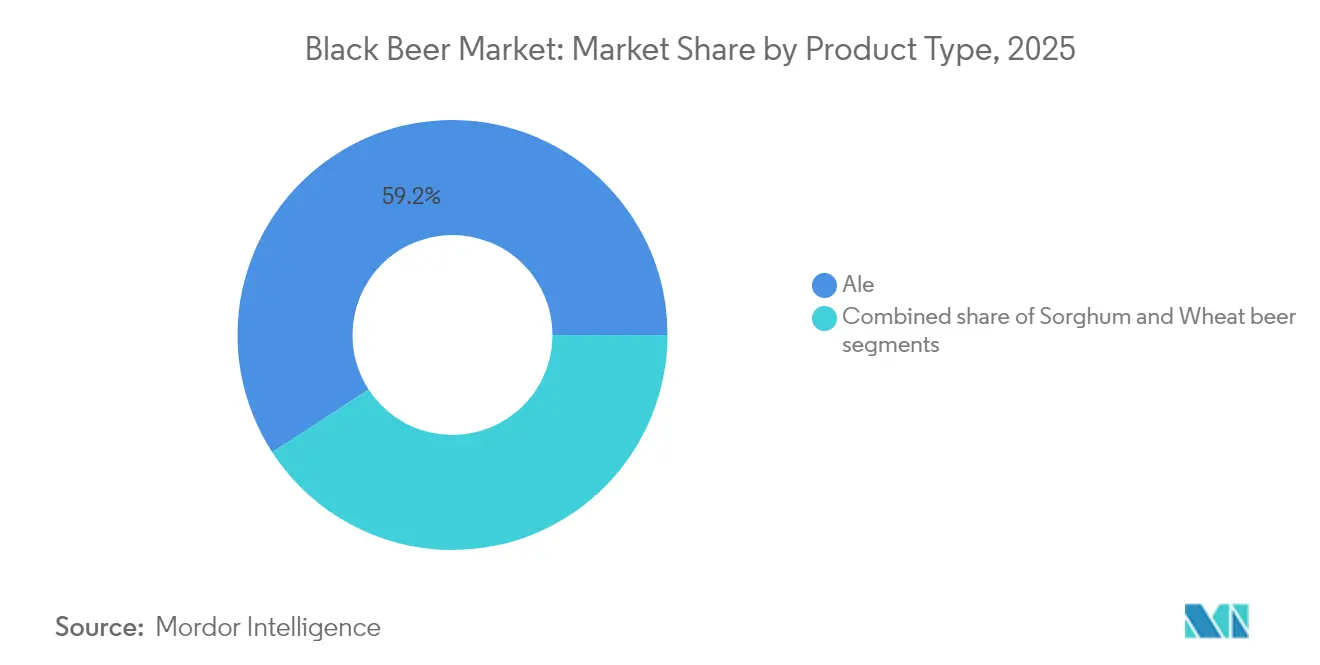
- By product type, ale led with 59.17% of black beer market share in 2025, while Wheat Beer is forecast to expand at a 4.42% CAGR through 2031.
- By end user, men accounted for 68.78% share of the black beer market size in 2025, but the women segment holds the fastest projected CAGR at 4.66% to 2031.
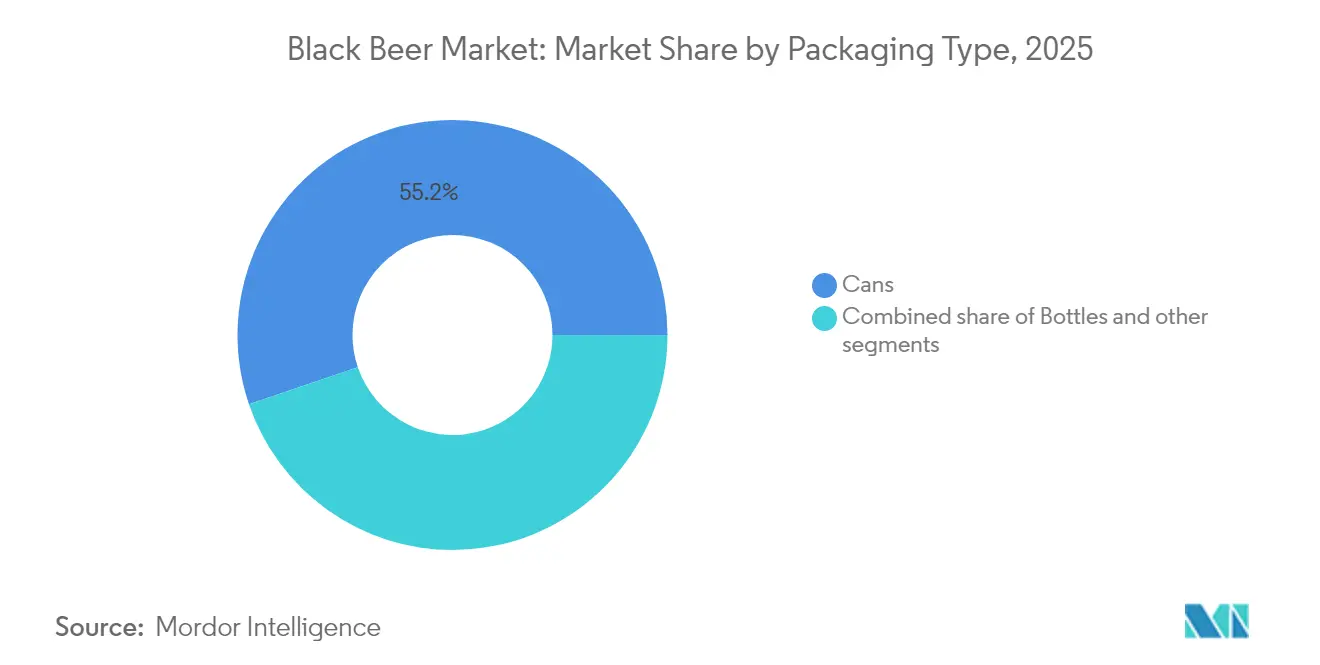
- By packaging, cans dominated with 55.21% of the black beer market share in 2025; bottles are advancing at a 4.9% CAGR through 2031.
- By distribution channel, the on-trade segment captured 57.74% share of the black beer market size in 2025, whereas the off-trade segment is set to grow at a 4.15% CAGR to 2031.
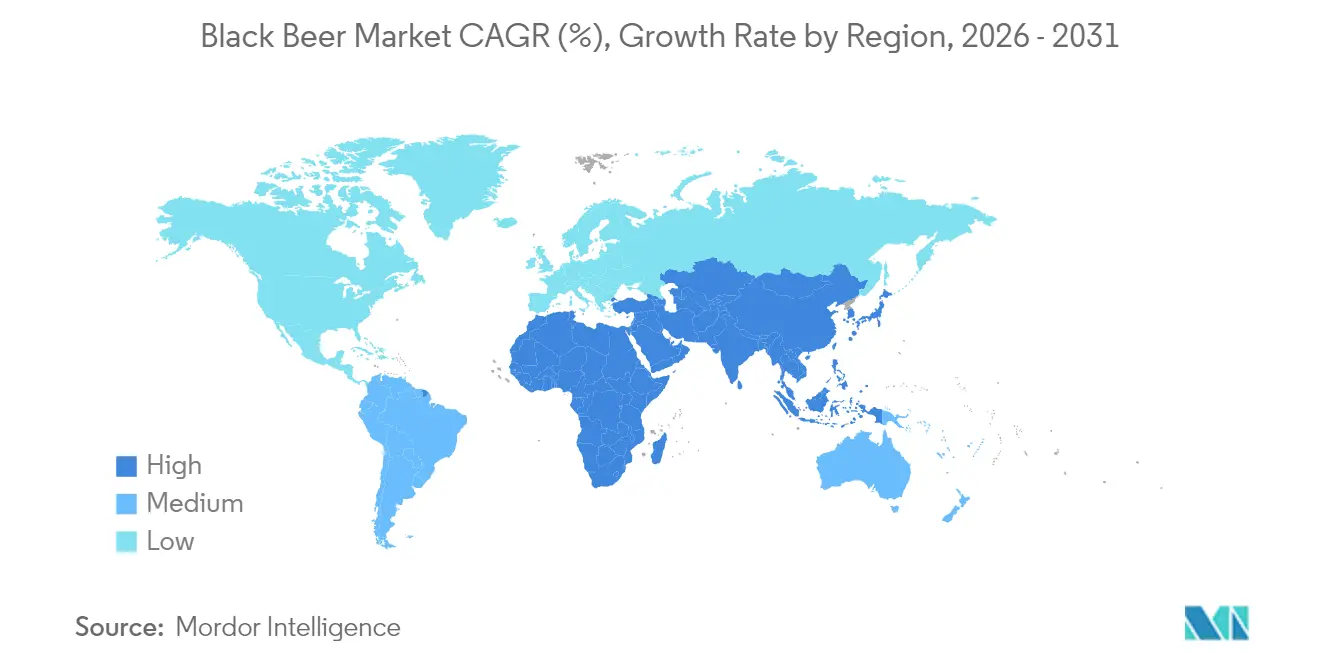
- By geography, Europe held 41.22% of the black beer market share in 2025, while Asia-Pacific shows the highest regional CAGR at 4.96% between 2026-2031.
Note: Market size and forecast figures in this report are generated using Mordor Intelligence’s proprietary estimation framework, updated with the latest available data and insights as of 2026.
Market Trends and Insights
Drivers Impact Analysis of Black Beer Market*
| Driver | (~) % Impact on CAGR Forecast | Geographic Relevance | Impact Timeline |
|---|---|---|---|
| Growth of craft beer culture and microbreweries | +1.2% | Global, with concentration in North America and Europe | Medium term (2-4 years) |
| Growing tourism and hospitality sector | +0.8% | Europe, North America, emerging Asia-Pacific destinations | Short term (≤ 2 years) |
| Health awareness and perceived benefits of dark beer | +0.7% | North America, Europe, Urban Asia-Pacific | Medium term (2-4 years) |
| Rising consumer preference for unique and complex flavors | +1.0% | Global, with early adoption in urban centers | Long term (≥ 4 years) |
| Cultural influence and social media trends | +0.6% | Global, with highest impact in digitally connected markets | Short term (≤ 2 years) |
| Strategic marketing highlighting product heritage | +0.4% | Europe, North America, premium segments globally | Medium term (2-4 years) |
| Source: Mordor Intelligence | |||
Growth of Craft Beer Culture and Microbreweries
The expansion of craft beer culture and microbreweries serves as a fundamental catalyst in the dark beer market's evolution, emphasizing superior quality and localized production methodologies. These establishments distinguish themselves from conventional mass-market manufacturers through the strategic incorporation of regional ingredients and distinctive flavor profiles, thereby addressing the increasing consumer demand for differentiated beverage experiences. The implementation of supportive governmental policies, encompassing regulatory frameworks and fiscal incentives, has contributed significantly to the craft brewing industry's development. Furthermore, microbreweries have established themselves as integral community establishments, facilitating various engagement initiatives through organized events and tasting sessions, which subsequently enhance customer retention. This transformation in the brewing landscape is evidenced by data from the Brewers Association, which documented 9,796 operational craft breweries in the United States during 2024, representing a 0.36% increase from the previous year, thus demonstrating the sustained growth and market presence of craft brewing establishments [1]Source: Brewers Association, "Brewers Association Reports 2024 U.S. Craft Brewing Industry Figures", www.brewersassociation.org .
Growing Tourism and Hospitality Sector
The expansion of the tourism and hospitality industry serves as a fundamental driver for the global black beer market growth by facilitating breweries' access to international consumer bases. The emergence of beer tourism as a significant market phenomenon has manifested through structured brewery tours, organized festivals, and curated tasting events that prominently feature black beer varieties, including stouts, porters, and dark lagers. This systematic international exposure effectively introduces black beer to diverse consumer demographics and establishes its position as a premium craft beverage option, thereby encouraging market participants to explore beyond conventional lagers and ales. The established beer markets of Europe and North America, characterized by their deep-rooted beer traditions, have experienced substantial growth in tourist participation at specialty beer events, consequently strengthening the demand for black beer products across both traditional and craft brewery segments. This trend is further substantiated by the UN Tourism World Tourism Barometer (May 2025), which indicates that international tourist arrivals surpassed 300 million in Q1 2025, demonstrating an increase of 14 million (5%) compared to the previous year 2024 [2]Source: UN Tourism, “World Tourism Barometer," unwto.org .
Health Awareness and Perceived Benefits of Dark Beer
Black beer's market positioning is transitioning from a traditional heavy beverage to a wellness-oriented drink, thereby increasing its appeal among health-conscious consumers. Stouts and porters are experiencing increased market penetration due to their complex flavor profiles and nutritional composition, specifically their higher concentrations of antioxidants, B vitamins, and essential minerals compared to light beers. The category demonstrates particular resonance among urban, educated consumers who prioritize both taste and health benefits in their beverage selections. The growing recognition of dark beer's digestive benefits and antioxidant properties has substantially enhanced its market acceptance. In response to this market evolution, brewers are strategically developing organic black beers and lower-alcohol variants that maintain the characteristic richness while addressing contemporary health preferences. This transformation in consumer preferences, coupled with the industry's adaptability to health-conscious trends, continues to drive the growth and innovation in the black beer segment, establishing a robust foundation for sustained market expansion.
Rising Consumer Preference for Unique and Complex Flavors
The market is experiencing a transformative evolution as consumers demonstrate heightened sophistication in their beer preferences, particularly gravitating toward dark beers with multifaceted flavor compositions. Breweries strategically diversify their product portfolios through methodical flavor innovation, incorporating premium ingredients such as coffee, chocolate, and herbs to develop distinctive offerings that command higher price points in the market. This sustained consumer demand for sophisticated flavor profiles accelerates technological advancements in brewing methodologies, including cold crushing and hybrid yeast processes, enabling precise flavor control and production consistency. These advanced production techniques enable manufacturers to establish distinctive flavor signatures, thereby strengthening their market position and competitive differentiation in an increasingly sophisticated beverage landscape. The continuous refinement of brewing processes and flavor development capabilities positions manufacturers to effectively respond to evolving consumer preferences while maintaining product quality and consistency.
Restraints Impact Analysis of Black Beer Market*
| Restraint | (~) % Impact on CAGR Forecast | Geographic Relevance | Impact Timeline |
|---|---|---|---|
| Stringent government regulations | -0.6% | Global, with particular impact in emerging markets | Medium term (2-4 years) |
| Consumer's inclination toward no/low alcohol products | -0.5% | North America, Europe, Urban Asia | Long term (≥ 4 years) |
| Premium pricing limiting mass market adoption | -0.4% | Global, with highest impact in price-sensitive markets | Medium term (2-4 years) |
| Logistics challenges in maintaining product quality | -0.3% | Global, with particular impact on international trade | Long term (≥ 4 years) |
| Source: Mordor Intelligence | |||
Stringent Government Regulations
Government regulations aimed at sustainability and public health create significant barriers in the global black beer market. These regulations increase operational costs, add compliance requirements, and limit marketing options for brewers, particularly affecting small and medium-sized craft breweries. Key regulatory requirements include alcohol content disclosure, advertising restrictions, packaging standards, and distribution controls, which affect product launches and market expansion. Zoning and licensing laws restrict microbrewery and taproom expansion in urban areas, while high excise duties on high-ABV beverages increase black beer prices, reducing consumer demand. Restrictions on alcoholic beverage advertising, particularly in digital media, limit brand visibility and consumer outreach. Manufacturers also face increased costs due to varying regulations across countries and regions, requiring modifications to labeling, packaging, and formulations. These regulatory requirements affect global brewers focusing on specialized products like black beer, impacting their expansion plans. In the United States, for instance, the Alcohol and Tobacco Tax and Trade Bureau (TTB) enforces strict compliance for labeling and formulation through processes such as the Certificate of Label Approval (COLA).
Consumer’s Inclination Toward No/Low Alcohol Products
The increasing consumer preference for moderate alcohol consumption and alcohol-free alternatives represents a significant market restraint for the black beer industry. The shift is particularly evident among health-conscious consumers, especially younger demographics, who actively seek products that deliver beer-like experiences without alcohol content. This transformation in consumer behavior has compelled major breweries to invest substantially in developing non-alcoholic dark beer alternatives to maintain market relevance. Notable industry players, such as Diageo, have strategically expanded their zero-alcohol product portfolio, introducing alcohol-free versions of traditional products like Guinness to address this evolving market demand. The market faces continued pressure as consumers increasingly select low-alcohol or alcohol-free options driven by health consciousness, social considerations, and religious factors. This ongoing transition in consumer preferences is anticipated to further impact traditional black beer sales, necessitating continuous product innovation and portfolio diversification from manufacturers to maintain market position and meet changing consumer requirements.
*Our forecasts treat driver/restraint impacts as directional, not additive. The impact forecasts reflect baseline growth, mix effects, and variable interactions.
Black Beer Market Segment Analysis
By Product Type:
Ale’s Heritage Sustains Category LeadershipThe black beer market demonstrates a significant preference for ale, which secured a commanding 59.17% market share in 2025. This dominance stems from Europe's deeply rooted brewing traditions, which have established rigorous quality and authenticity benchmarks that resonate throughout global markets. These traditional elements have effectively strengthened consumer confidence and maintained Ales' premium market positioning, successfully attracting both traditional consumers and enthusiasts seeking the complex flavor profiles characteristic of stouts and porters. The continuous evolution of the ale segment through strategic flavor innovations, including the incorporation of tropical fruit elements, smoked malts, and single-origin cocoa beans, has expanded the category's appeal.
The wheat beer segment exhibits substantial growth potential, with projections indicating a 4.42% CAGR through 2031. The category has attracted consumers seeking approachable flavor profiles and those with dietary preferences. Market expansion has been particularly notable in the gluten-conscious segment, where sorghum-based alternatives have successfully addressed health-conscious consumer demands while maintaining high flavor standards. The implementation of advanced production methodologies, particularly cold crashing techniques, has significantly enhanced product clarity and stability throughout the distribution chain. Additionally, brewers' strategic exploration of alternative grain varieties has strengthened supply chain resilience and fostered continuous product innovation. These developments have positioned wheat beer as a key segment in the black beer market, with strong growth prospects ahead.



By End User:
Women Propel Inclusive GrowthMales constitute 68.78% of the dark beer market share in 2025, demonstrating the category's historically male-dominated consumer demographic. This reflects the category's long-standing association with male drinkers, influenced by historical marketing strategies, cultural norms, and consumption patterns. The robustness, bitterness, and fuller-bodied profile of dark beers like stouts and porters align with traditional male taste preferences, reinforcing their dominance in this segment. This consumer behavior continues to influence product positioning, packaging design, and advertising strategies, maintaining men as the primary target audience for dark beer brands globally.
The female consumer segment demonstrates substantial growth potential, with a projected Compound Annual Growth Rate (CAGR) of 4.66% during 2026-2031, driven by evolving social norms, increased economic independence, and broader acceptance of women in alcohol-related social spaces. This trend is particularly evident in markets like Japan, where research from the National Center of Neurology and Psychiatry revealed that approximately 72% of female respondents reported alcohol consumption within the previous year in 2023, reflecting changing attitudes toward female drinking . The projected growth rate signals significant untapped potential, prompting brands to diversify offerings with smoother, more aromatic dark beers and inclusive marketing. Product innovations focusing on health, flavor, and moderation, such as lower-alcohol or botanically infused dark beers, are enhancing appeal among women, accelerating their adoption in this category.
By Packaging Type:
Bottles Regain Prestige Through Eco-InnovationIn the global black beer market, packaging serves as a crucial element for sustainability, consumer appeal, and market differentiation. Cans maintain market dominance in 2025, accounting for 55.21% of total category volume. Their lightweight nature reduces transportation costs and environmental impact, while their ability to shield contents from light ensures product quality and freshness. Furthermore, cans are highly recyclable, aligning with the growing consumer preference for eco-friendly packaging solutions. Additionally, their seamless integration with mobile canning systems enables smaller brewers to scale production efficiently, offering a cost-effective and flexible solution for meeting the increasing consumer demand. This combination of functional and environmental benefits solidifies cans as the preferred packaging choice in the black beer market.
Glass bottles represent the fastest-growing packaging segment, with a CAGR of 4.9%. This growth reflects increasing consumer association of glass packaging with premium quality and enhanced drinking experience. The adoption of recyclable, weight-reduced brown glass is increasing, particularly in Europe, where deposit-return systems improve environmental sustainability while maintaining the UV protection essential for dark beer preservation. Manufacturers enhance product differentiation through bottle design features such as molded embossing and foil stamping. The industry's commitment to sustainability extends to both can and bottle formats through the implementation of plant-based carrier handles.
By Distribution Channel:
Digital Off-Trade Accelerates ReachIn 2025, global dark beer sales saw the on-trade segment commanding a significant 57.74% share. This surge is largely attributed to a growing consumer preference for premium experiences in venues like pubs, taprooms, and craft beer bars. Patrons are drawn to these spots not just for their ambiance, but also for expert recommendations and exclusive, limited-edition brews. This trend underscores the on-trade segment's pivotal role in brand discovery and fostering community ties. On the other hand, the off-trade segment is poised for growth, with projections indicating a 4.15% CAGR from 2026 to 2031. This expansion is driven by a surge in at-home consumption, the rise of digital retail, and the popularity of subscription models. E-commerce platforms are becoming the go-to for consumers, offering both convenience and a diverse range of niche dark beer brands, often absent from traditional retail shelves.
Specialty and liquor stores maintain their significance in off-trade distribution by providing curated dark beer selections and expert recommendations. E-commerce has emerged as the fastest-growing distribution channel, supported by regulatory changes in markets like South Korea that now permit online alcohol sales. This digital shift particularly benefits craft and specialty dark beer producers by enabling direct consumer access without traditional retail limitations. Supermarkets and convenience stores continue to enhance their dark beer offerings through dedicated craft sections and temperature-controlled displays, supporting product quality and premium positioning.
Geography Analysis
Europe Black Beer Market
Europe holds 41.22% market share in 2025, building on its established brewing heritage and consumers who value dark beer complexity. The region shows robust growth in craft and specialty beers, notably in France and the United Kingdom, emphasizing quality production. Sustainability initiatives are gaining prominence, exemplified by Carlsberg Marston's Brewing Company's implementation of Snap Pack technology. This new packaging system replaces traditional plastic wraps with a glue-based solution, reducing plastic waste by 76% in multipacks.
The Americas, APAC and MEA Black Beer Market
Asia-Pacific demonstrates the highest growth potential with a 4.96% CAGR forecast for 2026-2031. This growth stems from increasing disposable incomes, urban development, and evolving consumer preferences. China and India lead regional expansion, with their growing middle classes embracing premium and craft beer options. Regional marketing approaches, including Chinese New Year special edition packaging, strengthen brand presence and consumer connections. North America remains a key market, with the United States at the forefront of innovation and craft spirits production. Consumer preference for authentic, local products has strengthened the craft brewery segment. The American Crafts Spirits Association reports that United States craft spirits reached 13.5 million 9 L cases in retail sales in 2023, showing a -3.6% year-over-year change. South America and the Middle East and Africa display growth potential, particularly in Brazil, Argentina, and South Africa, where increasing consumer sophistication and tourism create new market opportunities.

Regulatory Landscape
Black beer producers operate under layered alcohol and food-labeling rules that vary by country, with labeling and formulation compliance shaping time-to-market for new stouts, porters, and other roasted-malt variants. In the United States, the Alcohol and Tobacco Tax and Trade Bureau (TTB) administers malt beverage labeling and formulation requirements, including the Certificate of Label Approval process and mandatory label information under 27 CFR Part 7, which can be particularly relevant when products use non-standard ingredients, additives, or statements that trigger additional disclosures.
Internationally, shifts in global food standards affect labeling and ingredient governance even when adoption remains country-specific. In July 2026, the FAO/WHO Codex Alimentarius Commission (49th session) adopted new guidance on precautionary allergen labeling as an annex to the General Standard for the Labeling of Pre-packaged Foods (CXS 1-1985), alongside updates that affect additive frameworks (GSFA, CXS 192-1995). Buyers and brand owners also increasingly reference GFSI-benchmarked certifications in supplier qualification: FSSC 22000 moved from Version 6 to Version 7 in May 2026 with upgrade audits required by April 2028, and BRCGS issued updated position statements effective for audits from August 10, 2026, raising expectations for traceability and allergen control across internationally traded beer portfolios.
Competitive Landscape
The black beer market demonstrates a moderately fragmented competitive landscape characterized by the presence of established global brewing corporations, including Diageo, Heineken, and Anheuser-Busch InBev, operating in conjunction with regional specialists and craft breweries. The competitive environment presents two distinct strategic approaches: operational scale optimization and product authenticity differentiation. Global manufacturers implement comprehensive portfolio strategies focused on premiumization, as exemplified by Molson Coors' strategic initiative to position one-third of its global brand portfolio within the above-premium segment.
The market structure facilitates significant opportunities for craft breweries, which capitalize on their operational flexibility and deep local market understanding to develop specialized products. These smaller manufacturers establish strong consumer loyalty through product differentiation and market segmentation strategies. This competitive dynamic generates opportunities in hybrid product categories that incorporate traditional dark beer characteristics while addressing evolving consumer preferences, particularly in the development of low-alcohol variants with sophisticated flavor profiles.
The competitive landscape continues to evolve through market entrants implementing technological innovations and alternative business models. Direct-to-consumer e-commerce platforms enable smaller manufacturers to establish independent distribution channels and direct consumer relationships. Contract brewing services reduce market entry barriers by providing production capabilities to brand-focused enterprises. Additionally, technological advancements in brewing processes facilitate enhanced flavor development and product standardization. Diageo demonstrates the effective use of technology in market expansion, achieving 1% organic net sales growth in the first half of fiscal 2025 despite inflationary pressures. The company positions Guinness in the premium segment while developing zero-alcohol alternatives to meet the demands of health-conscious consumers.
Black Beer Industry Leaders
-
Diageo plc
-
Heineken Holding N.V
-
Anheuser-Busch InBev SA/NV
-
Allagash Brewing Co.
-
Kirin Holdings Company, Limited.
- *Disclaimer: Major Players sorted in no particular order
Black Beer Market Companies Covered in this Report
- Diageo plc
- Heineken Holding N.V
- Anheuser-Busch InBev SA/NV
- Allagash Brewing Co.
- Kirin Holdings Company, Limited.
- Carlsberg A/S
- The Asahi Group Holdings, Ltd.
- Molson Coors Beverage Company
- Sapporo Holdings Ltd.
- Constellation Brands Inc.
- BrewDog plc
- Sierra Nevada Brewing Co.
- Phillips Brewing & Malting Co.
- Bitburger Holding GmbH (Kostritzer Schwarzbier)
- Boston Beer Company
- Hill Farmstead Brewery
- Bent Paddle Brewing Co.
- The Alchemist Brewery
- J.J. Taylor Companies, Inc.
- Dark Horse Brewing Co.

Market Opportunities and Future Outlook
Product differentiation in black beer continues to create room in premium, craft-led line extensions that emphasize sensory complexity while aligning with moderation and wellness-adjacent cues already visible in consumer behavior, including demand for lower-alcohol variants that retain roasted richness. R&D is also targeting functional and value-added positioning through fermentation science: in July 2026, researchers reported the development of a non-genetically modified yeast strain (ADHorn49) with higher ornithine accumulation in wort, showing how yeast selection and strain development can shift nutritional or functional attributes without changing the core dark-beer style cues.
On the production side, opportunities center on tightening process control and improving consistency for roasted-malt beers across broader distribution, supporting both on-trade quality and off-trade scalability. Industrial research points to oxygenation and pitching-rate decisions affecting attenuation and fermentation time, reinforcing the commercial case for instrumentation, standard operating procedures, and recipe-to-package repeatability for dark styles. Ingredient technology also leaves room for innovation at the malt and microbe level: black patent malt (drum-roasted at high temperatures) and sequential inoculation approaches using non-Saccharomyces yeasts can help brewers create differentiated stout and porter profiles while retaining the roasted flavor foundations associated with black beer.
Recent Industry Developments in Black Beer Market
- April 2026: Molson Coors expanded the availability of Caffrey’s Black Stout into pubs in Northern Ireland following its UK on-trade launch. The move broadened on-trade footprint for a heritage-led stout brand and sharpened competitive positioning in a market where stout stays a high-visibility on-premise category.
- March 2026: Belhaven Brewery rolled out Belhaven Black Scottish Stout to more than 1,000 Lidl stores nationwide in the UK in a nitro-canned format. The wider off-trade placement and nitro packaging supported at-home stout consumption and extended the brand’s retail trial channel beyond traditional pub-led discovery.
- May 2024: Diageo invested EUR 100 million to decarbonize its St. James’s Gate brewery in Dublin 8. The program focused on improving energy and water efficiency at one of the industry’s key stout production sites, strengthening long-term operational resilience and sustainability credentials tied to major black beer volumes.


Black Beer Market Report Scope and Research Methodology
Market Definition and Coverage
This market covers revenue earned from commercially produced black beer sold through on-trade and off-trade channels, across bottles, cans, and kegs. Black beer is treated as dark-hued beer styles made using roasted malts and similar processes, and values are captured at brewer-gate prices.
Scope exclusions: Non-alcoholic malt beverages and home-brewed batches are excluded because they do not follow the same pricing and distribution structure seen in commercial black beer sales.
Segments Covered in This Report
-
By Product Type
- Ale
- Sorghum
- Wheat Beer
-
By End User
- Men
- Women
-
By Packaging Type
- Bottles
- Cans
- Others
-
By Distribution Channel
- On-Trade
-
Off-Trade
- Specialty/Liquor Stores
- Others Off Trade Channels
-
By Geography
-
North America
- United States
- Canada
- Mexico
- Rest of North America
-
Europe
- Germany
- United Kingdom
- Italy
- France
- Spain
- Netherlands
- Poland
- Belgium
- Sweden
- Rest of Europe
-
Asia-Pacific
- China
- India
- Japan
- Australia
- Indonesia
- South Korea
- Thailand
- Singapore
- Rest of Asia-Pacific
-
South America
- Brazil
- Argentina
- Colombia
- Chile
- Peru
- Rest of South America
-
Middle East and Africa
- South Africa
- Saudi Arabia
- United Arab Emirates
- Nigeria
- Egypt
- Morocco
- Turkey
- Rest of Middle East and Africa
-
North America
Data Sources, Market Sizing, and Validation
Desk Research
Desk work started by building a fact base around beer output, trade flows, and consumption, then narrowing it down to black beer using style and category signals. Public sources such as the United States Alcohol and Tobacco Tax and Trade Bureau (TTB), Eurostat, UN Comtrade, and FAOSTAT were used to anchor beverage production and trade context, and those series were translated into market inputs.
To avoid over-relying on any single public series, we also reviewed brewery annual reports, investor presentations, and press releases to identify portfolio shifts toward darker styles, packaging mix changes, and route-to-market priorities. In parallel, a paid subscription for company financials and intelligence and an import-export shipment-level database were used selectively to validate larger supplier footprints and cross-check trade directionality. The desk research sources listed here are illustrative only, and additional public documents and data tables were consulted to collect, validate, and clarify inputs.
Primary Interviews and Surveys
Primary work focused on mapping black beer demand into measurable signals, then confirming the assumptions behind pricing and channel mix. Interviews covered brewery and brand teams, distributors and importers, retail buyers, and on-trade operators, plus industry experts in the main consumption markets, so we could fill gaps from desk research and stress-test key ratios before finalizing results.
Distribution of primary research fieldwork respondents
| Company type | Respondent position | Region |
|---|---|---|
| Top tier: 37% | CXOs: 13% | APAC: 42% |
| Mid tier: 47% | Functional/Unit leaders: 39% | EMEA: 36% |
| Smaller Players: 16% | Managers: 48% | Americas: 22% |
Market-Sizing & Forecasting
Sizing used a top-down build that reconstructs demand using beer category value pools, then filters by black beer penetration across styles, packaging, and channels. The first cut was shaped by variables including the on-trade versus off-trade split, bottle-can-keg mix, typical price ladders for dark styles, regional preference patterns (for example, higher mature demand in parts of Europe), and premiumization shifts that change average revenue per liter.
Once the demand pool was formed, we ran selective bottom-up checks to keep totals realistic. This included sampling supplier revenues where available, using distributor and importer channel checks, and sanity-testing implied volumes derived from average selling price assumptions. Where bottom-up visibility was incomplete, gaps were handled through conservative coverage factors that were confirmed in interviews, and any revisions were made only when multiple sources supported the change. Forecasting used scenario analysis tied to expected changes in channel recovery, packaging trends, and pricing progression, with assumptions reviewed and refined based on the direction the practitioners described.
Data Validation & Update Cycle
Validation triangulated modeled totals against independent signals, including the overall beer market direction, trade and shipment indicators, and whether implied per-capita consumption levels remained believable by region. Outliers were flagged and reviewed, and when variance could not be explained through a clear change in pricing, channel mix, or definition, follow-up outreach was used to re-check assumptions.
Before sign-off, the model and inputs went through multi-step analyst review so the logic is repeatable and the numbers can be traced back to specific drivers. Reports are refreshed annually, and interim updates are made when material events affect pricing, distribution, or category demand. A final pass is completed right before delivery so clients receive the most current updated view.
Mordor Intelligence's Black Beer Market Size Measured Against Other Published Estimates
Published values for black beer can differ sharply even when the topic sounds identical, because the underlying boundary is often not the same. The main drivers are what is counted as black beer, the price point used for revenue, and how channel and regional mixes are treated.
Packaging and on-trade weighting can shift totals quickly in this category. Kegs and draft-led sales differ from packaged retail sales in both volume behavior and pricing, which changes revenue outcomes. Another frequent gap comes from whether the estimate holds to brewer-gate revenue in constant dollars, or whether it blends retail markups, taxes, and different currency timing, which changes the reported value even if consumption is similar.
Benchmark comparison
| Source | Market Size | Gaps in Research Methodology |
|---|---|---|
| Mordor Intelligence | USD 67.65 B (2025) | |
| Industry Research Publisher A | USD 38.85 B (2025) | This figure appears to apply a narrower definition of black beer and may treat revenue closer to retail-level value in some markets, which can also alter how taxes and trade margins are captured across regions. |
| Consultancy B | USD 31.91 B (2025) | The estimate likely uses a tighter style boundary and different channel coverage, particularly for on-trade and imported brands, which can understate the value in regions where dark styles are more established. |
Trade-direction checks and packaging mix signals are used to keep Mordor Intelligence anchored to a brewer-gate revenue pool for black beer in constant dollars, which reduces drift from shifting retail markups. From the spread in the table, the variation is mainly explained by how styles are classified and how much on-trade value is included, so a clear definition and repeatable pricing logic matter most.


Key Questions Answered in the Report
What is the current size of the dark beer market?
The dark beer market is worth USD 70.37 billion in 2026, with expectations to reach USD 85.72 billion by 2031.
Which product type leads the dark beer category?
Ale dominates, holding 59.17% market share in 2025 thanks to its rich heritage and broad flavor range.
Which region is growing the fastest for dark beer?
Asia-Pacific posts the highest forecast CAGR at 4.96% between 2026 and 2031, driven by rising middle-class demand and localized craft offerings.
How are sustainability efforts influencing dark beer packaging?
Lightweight glass, bio-based carrier handles, and water-efficient brewing lines are propelling bottle growth at a 4.9% CAGR while meeting circular-economy targets.
Page last updated on:





