
Baby Nail Care Products Market Size and Share
Market Overview
| Study Period | 2021 - 2031 |
|---|---|
| Market Size (2026) | USD 417.82 Million |
| Market Size (2031) | USD 570.16 Million |
| Growth Rate (2026 - 2031) | 6.41 % |
| Fastest Growing Market | Asia-Pacific |
| Largest Market | North America |
| Market Concentration | Medium |
Major Players
*Disclaimer: Major Players sorted in no particular order Image © Mordor Intelligence. Reuse requires attribution under CC BY 4.0. |
|
Baby Nail Care Products Market Analysis by Mordor Intelligence
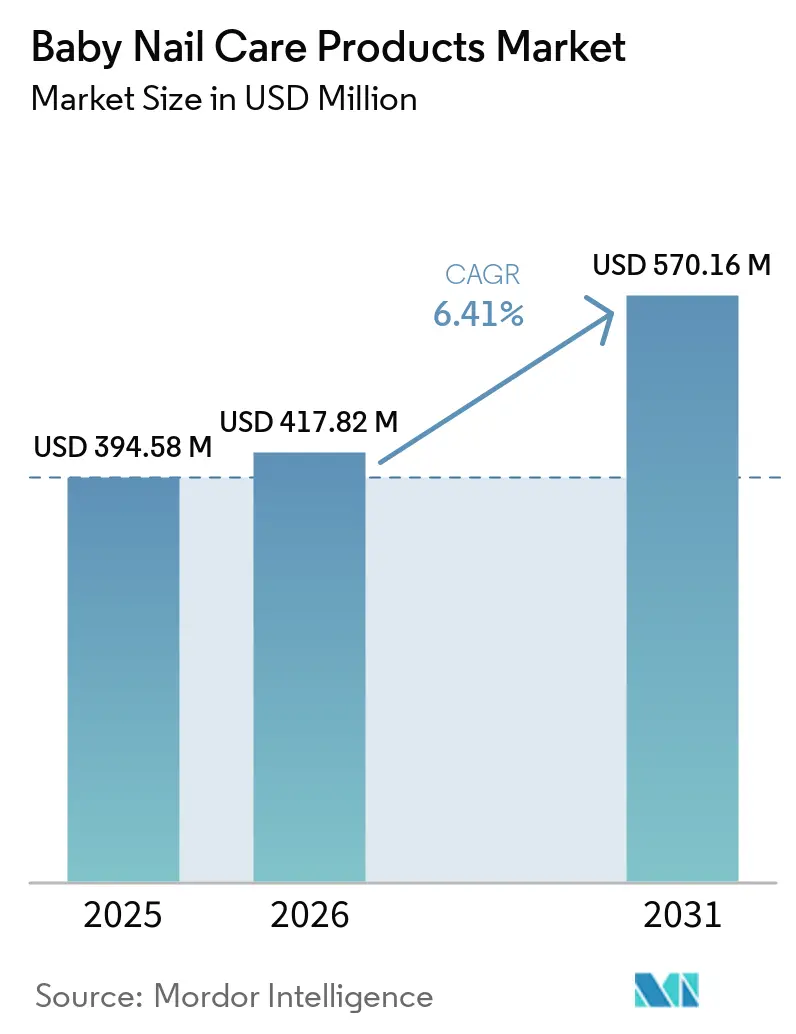
The baby nail care products market size is expected to grow from USD 394.58 million in 2025 to USD 417.82 million in 2026 and is forecast to reach USD 570.16 million by 2031 at 6.41% CAGR over 2026-2031. The baby nail care products market is increasingly driven by the adoption of structured infant grooming routines rather than birth rates alone, as many parents initially rely on improvised adult grooming tools before transitioning to baby-specific products. Pediatric recommendations, hospital guidance, and concerns about accidental injuries are encouraging parents to make more informed purchasing decisions, strengthening the influence of trusted brands during the initial buying stage. E-commerce platforms are enhancing product visibility and consumer awareness by providing detailed information on safety features, age suitability, and certifications, while brick-and-mortar retailers continue to play a critical role by offering tangible product assessment and quality assurance.
Key Report Takeaways
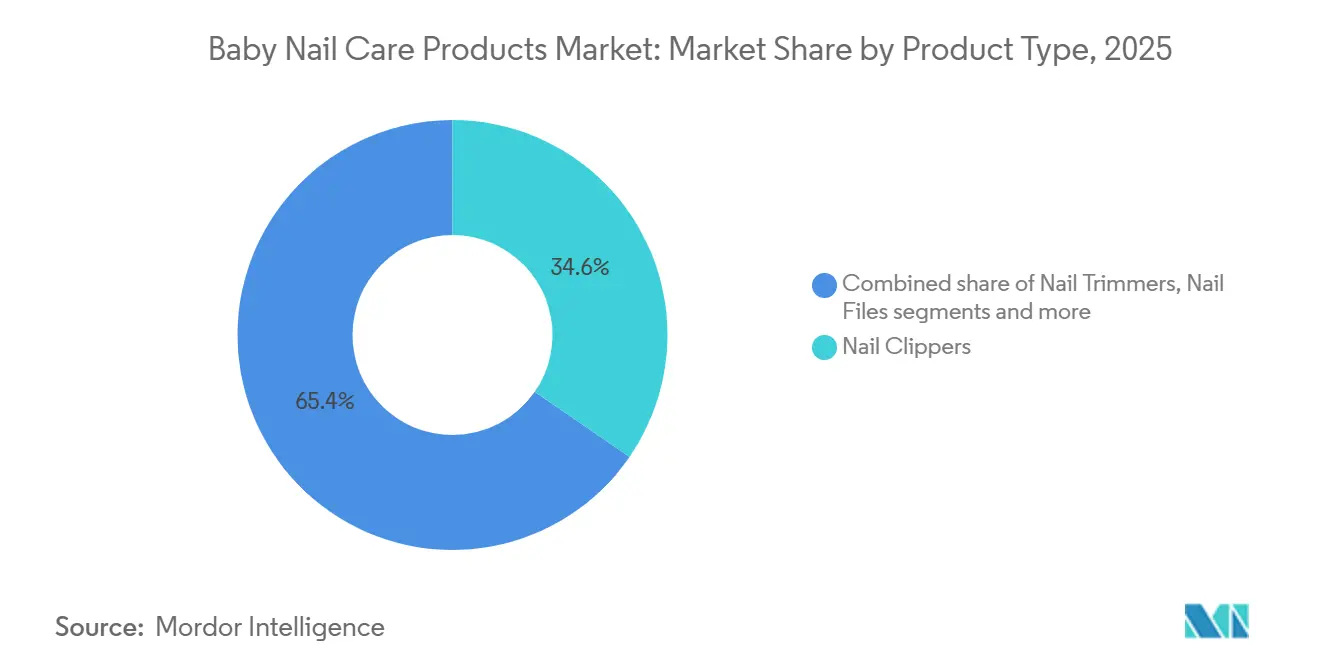
- By product type, nail clippers led with 34.61% revenue share in 2025, while electric nail trimmers are projected to expand at 7.76% CAGR through 2031.
- By age group, newborns held 43.86% share in 2025 and also recorded the highest projected CAGR of 6.95% through 2031.
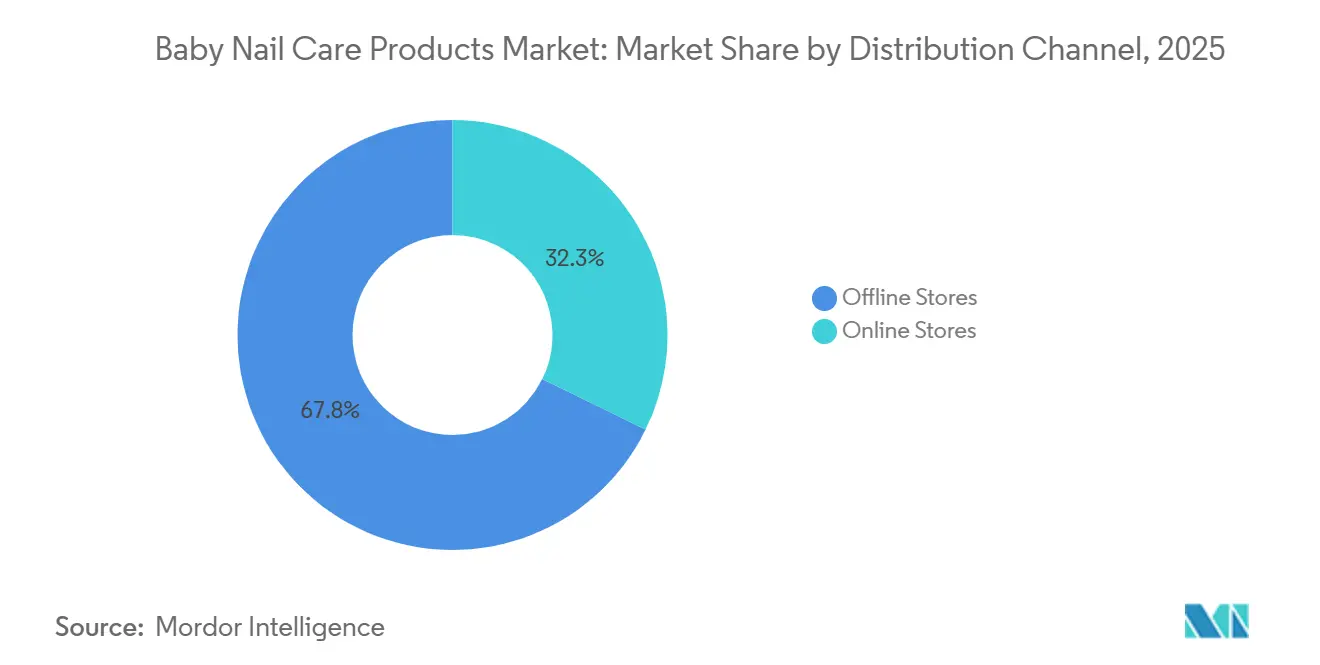
- By distribution channel, offline stores accounted for 67.75% of revenue in 2025, while online stores are forecast to grow at 8.11% CAGR through 2031.
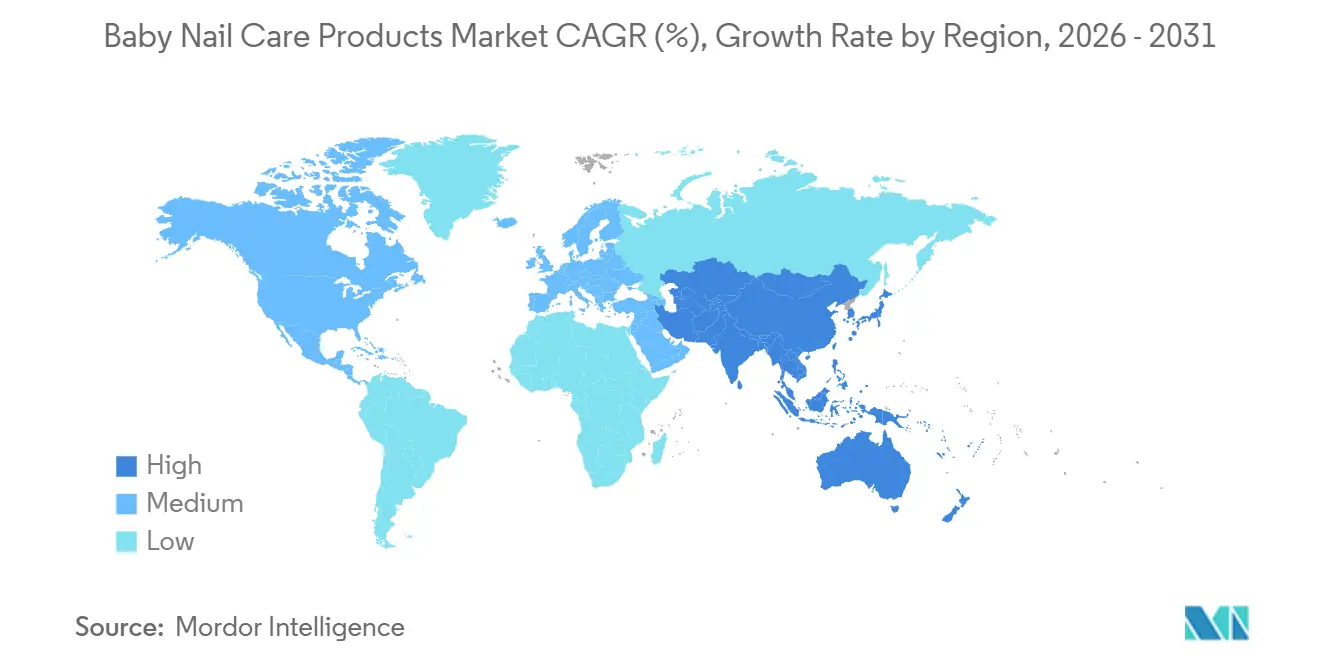
- By geography, North America held 37.81% share in 2025, while Asia-Pacific is expected to record the fastest regional CAGR of 7.52% through 2031.
Note: Market size and forecast figures in this report are generated using Mordor Intelligence’s proprietary estimation framework, updated with the latest available data and insights as of January 2026.
Market Trends and Insights
Drivers Impact Analysis of Baby Nail Care Products Market*
| Driver | (~) % Impact on CAGR Forecast | Geographic Relevance | Impact Timeline |
|---|---|---|---|
| Increasing awareness of infant hygiene and grooming practices | +1.4% | Global, with stronger gains in North America, Europe, and urban Asia-Pacific | Medium term (2-4 years) |
| Rising birth rates in developing economies | +0.9% | Sub-Saharan Africa, South Asia, and parts of Southeast Asia | Long term (≥ 4 years) |
| Growing demand for safe and baby-specific personal care products | +1.1% | North America and Europe, with early gains in the United Arab Emirates and Saudi Arabia | Short term (≤ 2 years) |
| Product innovations such as electric baby nail trimmers and safety clippers | +1.3% | Global core markets, with fastest uptake in Japan, North America, and China tier-1 cities | Medium term (2-4 years) |
| Increasing parental concerns about accidental scratching in infants | +0.8% | Global, especially in digitally engaged parenting markets | Short term (≤ 2 years) |
| Growth of e-commerce channels for baby care products | +1.0% | Asia-Pacific, North America, Europe, with spillover into the Middle East, Africa, and South America | Medium term (2-4 years) |
| Source: Mordor Intelligence | |||
Increasing awareness of infant hygiene and grooming practices
Increased emphasis on infant health, cleanliness, and preventive care has encouraged parents to adopt dedicated grooming routines from an early stage of a child’s development. Pediatricians, maternity hospitals, and parenting resources increasingly recommend proper nail maintenance to prevent accidental scratching and support overall hygiene. As a result, parents are moving away from using improvised adult grooming tools and opting for baby-specific nail care products designed with enhanced safety features. The growing availability of educational content through healthcare providers, parenting platforms, and social media has further improved understanding of safe infant grooming practices. Manufacturers are responding by offering age-appropriate nail clippers, scissors, files, and electric trimmers tailored for newborns and infants. This shift toward structured grooming habits is supporting consistent demand for specialized baby nail care solutions across both developed and emerging markets.
Rising birth rates in developing economies
Growing infant populations across developing economies continue to create a strong foundation for demand in the baby nail care products market. Higher birth rates translate into a larger base of newborns and infants requiring specialized grooming and hygiene products from an early age. According to World Bank data, Sub-Saharan Africa recorded a fertility rate of 4.3 births per woman in 2024, reflecting sustained population growth and expanding demand for infant care products[1]Source: World Bank, “Fertility rate, total (births per woman) - Sub-Saharan Africa”, data.worldbank.org. Similarly, the United Nations Economic and Social Commission for Asia and the Pacific reported that India’s total fertility rate was 2 live births per woman in 2024, supporting the country's substantial annual birth cohort[2]Source: United Nations Economic and Social Commission for Asia and the Pacific, “Population Trends and Demographic Dividend in Asia-Pacific 2024", asia-pacific.unfpa.org. As healthcare access and parental spending on infant well-being improve, the adoption of baby-specific grooming tools is increasing across these markets. This demographic trend continues to support long-term consumption of baby nail clippers, scissors, files, and electric nail trimmers in emerging economies.
Growing demand for safe and baby-specific personal care products
Parents are increasingly seeking personal care products specifically designed for infants, driven by growing concerns about safety, comfort, and age-appropriate product usage. Unlike conventional grooming tools, baby nail care products are developed with specialized features such as rounded edges, protective guards, and gentle filing mechanisms to minimize the risk of injury. Rising disposable incomes in many countries are further supporting the adoption of premium infant grooming solutions. For instance, according to the U.S. Department of Commerce, per capita personal income in the United States reached USD 108,233 in 2024, reflecting strong consumer purchasing power and the ability to spend on specialized baby care products[3]Source: US Department of Commerce, “Regional Data - GDP and Personal Income”, bea.gov. As parents become more willing to invest in products that enhance infant safety and well-being, demand for baby-specific nail clippers, scissors, files, and electric trimmers continues to grow.
Product innovations such as electric baby nail trimmers and safety clippers
Technological advancements in infant grooming products are encouraging greater adoption of specialized baby nail care solutions. Manufacturers are increasingly introducing electric baby nail trimmers, safety clippers, and precision nail files designed to reduce the risk of accidental cuts while improving ease of use for parents. Features such as low-noise operation, LED lighting, multiple speed settings, age-specific filing pads, and ergonomic grips enhance both safety and convenience. These innovations are particularly appealing to first-time parents who may feel apprehensive about trimming an infant’s nails with conventional tools. In addition, safety-focused clippers with rounded blades, protective guards, and improved visibility mechanisms provide greater confidence during grooming. Continuous product development is helping brands differentiate themselves in a competitive market while addressing evolving consumer expectations.
Restraints Impact Analysis of Baby Nail Care Products Market*
| Restraint | (~) % Impact on CAGR Forecast | Geographic Relevance | Impact Timeline |
|---|---|---|---|
| Availability of low-cost generic and unbranded alternatives | -0.9% | Global, with the sharpest effect in South Asia, Southeast Asia, and Sub-Saharan Africa | Short term (≤ 2 years) |
| Limited product replacement frequency due to long product lifespan | -0.6% | Global, especially in mature markets such as North America and Western Europe | Long term (≥ 4 years) |
| Safety concerns regarding improper use of nail care tools | -0.5% | Global, with higher impact where pediatric guidance is limited | Medium term (2-4 years) |
| Lack of consumer awareness in rural and underserved regions | -0.7% | Rural South Asia, Sub-Saharan Africa, and rural South America | Long term (≥ 4 years) |
| Source: Mordor Intelligence | |||
Availability of low-cost generic and unbranded alternatives
The widespread availability of low-cost generic and unbranded baby nail care products creates pricing pressure for established manufacturers and limits the growth potential of premium offerings. Many consumers, particularly in price-sensitive markets, opt for inexpensive alternatives that perform basic grooming functions at a significantly lower cost. These products are commonly available through local retailers, discount stores, and online marketplaces, increasing competition across the market. As a result, branded companies often face challenges in communicating the value of advanced safety features, superior materials, and product certifications. The presence of numerous low-priced options can also reduce brand loyalty, as consumers may switch products based primarily on affordability. In emerging economies, cost considerations frequently outweigh preferences for premium infant grooming solutions.
Limited product replacement frequency due to long product lifespan
The long lifespan and durable nature of baby nail care products can limit repeat purchases and reduce overall sales growth within the market. Products such as nail clippers, scissors, and nail files are typically designed for extended use and often remain functional throughout an infant’s early developmental years. Many families are able to use a single product for multiple children, further reducing replacement demand. Unlike consumable baby care products that require frequent repurchasing, nail care tools generally only need replacement when lost, damaged, or significantly worn out. This limits opportunities for manufacturers to generate recurring revenue from existing customers. As a result, market growth relies heavily on new parent purchases and newborn population trends rather than frequent product replacement cycles. The low replacement frequency associated with these products can therefore constrain long-term revenue expansion for market participants.
*Our forecasts treat driver/restraint impacts as directional, not additive. The impact forecasts reflect baseline growth, mix effects, and variable interactions.
Baby Nail Care Products Market Segment Analysis
By Product Type:
Innovation Shifts Revenue Weight Toward Motorized FormatsBy product type, nail clippers accounted for the largest share of the baby nail care products market, representing 34.61% of total revenue in 2025. Their market leadership is primarily attributed to widespread consumer familiarity, affordability, and ease of use compared to more advanced grooming alternatives. Parents and caregivers continue to prefer nail clippers as an essential infant grooming tool due to their effectiveness in maintaining nail hygiene and preventing accidental scratching. The segment benefits from strong availability across pharmacies, supermarkets, specialty baby stores, and online retail platforms. Manufacturers have further strengthened demand by introducing ergonomic designs, safety guards, and age-specific variants that improve user confidence and convenience.
Electric nail trimmers are projected to be the fastest-growing product segment, expanding at a CAGR of 7.76% between 2026 and 2031. Rising parental concerns regarding accidental cuts and injuries are encouraging the adoption of safer and more technologically advanced grooming solutions. Electric nail trimmers offer gentle filing mechanisms, quiet operation, and enhanced precision, making them particularly attractive for newborns and first-time parents. Growing awareness of infant safety, coupled with increasing disposable incomes, is supporting demand for premium baby grooming products across both developed and emerging markets.



By Age Group:
Newborn-First Purchase Behavior Defines Category EconomicsNewborns (0–6 Months) represented the largest age-group segment in the baby nail care products market, accounting for 43.86% of total revenue in 2025, and are also projected to register the highest growth rate with a CAGR of 6.95% through 2031. The segment's dominance is driven by the heightened need for frequent nail maintenance during the first months of life, when infants have delicate skin and are more prone to scratching themselves. Parents typically prioritize specialized grooming tools during this stage due to concerns about safety, precision, and ease of use. Recommendations from pediatricians, maternity hospitals, and parenting resources further encourage the adoption of baby-specific nail care products shortly after birth.
Infants (6–12 Months) and Toddlers (1–3 Years) collectively represent a significant portion of the baby nail care products market, supported by the ongoing need for regular grooming as children grow and become more active. Demand within these age groups is driven by parents seeking durable, easy-to-use, and multifunctional grooming solutions that can accommodate changing nail care requirements. As children develop greater mobility, maintaining proper nail hygiene remains important to prevent accidental scratches and support overall cleanliness.
By Distribution Channel:
Offline Anchors Volume While Online Redefines Brand DynamicsOffline stores dominated the baby nail care products market, accounting for 67.75% of total revenue in 2025. The segment's leadership is largely attributed to parents' preference for physically examining infant grooming products before purchase, particularly when evaluating safety features, material quality, and ease of use. Pharmacies, supermarkets, hypermarkets, specialty baby stores, and maternity-focused retailers continue to serve as key distribution channels for baby nail care products. Consumers often place greater trust in products purchased through established retail outlets, especially for items intended for newborn and infant care. In-store availability also enables parents to compare products, seek recommendations from sales personnel, and make immediate purchases without delivery wait times.
Online stores are expected to emerge as the fastest-growing distribution channel, registering a CAGR of 8.11% between 2026 and 2031. The rapid expansion of e-commerce platforms has significantly improved product accessibility, allowing consumers to explore a wider range of baby nail care products from both domestic and international brands. Online channels provide detailed product descriptions, safety certifications, customer reviews, and demonstration videos, helping parents make more informed purchasing decisions. The growing adoption of smartphones, digital payment systems, and convenient home delivery services is further accelerating online sales.
Geography Analysis
North America Baby Nail Care Products Market
North America accounted for 37.81% of the global baby nail care products market in 2025, making it the largest regional market. The region benefits from high consumer awareness regarding infant hygiene and grooming practices, supported by strong recommendations from pediatric healthcare professionals and maternity care providers. Parents in the United States and Canada increasingly prefer baby-specific grooming tools over conventional alternatives due to heightened safety concerns. The presence of established baby care brands, extensive retail networks, and high spending on premium infant products further strengthens market demand.
APAC Baby Nail Care Products Market
Asia-Pacific is projected to register the fastest CAGR of 7.52% during the forecast period through 2031. Rapid urbanization, rising disposable incomes, and growing awareness of infant health and safety are driving demand for baby nail care products across countries such as China, India, Japan, and Southeast Asian nations. The expanding middle-class population is increasingly investing in specialized baby care products, including advanced grooming solutions such as electric nail trimmers. Digital commerce platforms are playing a significant role in expanding product reach and educating first-time parents about safe infant grooming practices.
EMEA and South America Baby Nail Care Products Market
Europe represents a mature market characterized by strong product quality standards, high consumer preference for certified baby care products, and growing demand for premium grooming solutions. Meanwhile, South America is experiencing steady growth due to improving economic conditions, expanding retail distribution, and increasing awareness of infant hygiene. The Middle East and Africa region is also witnessing gradual market expansion, supported by rising urban populations, improving healthcare access, and greater availability of international baby care brands.

Competitive Landscape
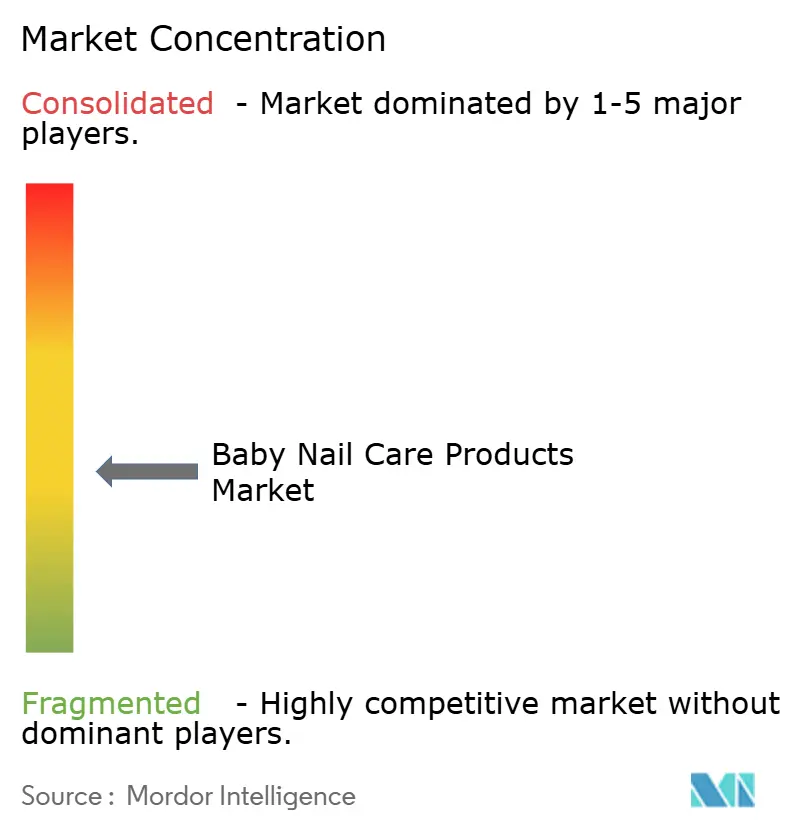
The baby nail care products market is moderately fragmented, with numerous international and regional manufacturers competing across different price points and distribution channels. No single company commands a dominant global market share, as consumer preferences vary by region, product type, and brand reputation. Established baby care brands compete alongside specialized infant grooming companies and private-label manufacturers. Market participants focus on product safety, ergonomic design, and compliance with child safety standards to strengthen their competitive positions. The presence of multiple brands across online and offline retail channels further intensifies competition.
Innovation remains a key competitive factor in the market, particularly in the development of electric nail trimmers, safety-enhanced clippers, and multifunctional grooming kits. Manufacturers are increasingly introducing products with features such as quiet motors, LED lighting, rounded blades, and age-specific accessories to improve ease of use and safety. Premiumization trends are also influencing competition, with brands offering high-quality materials, attractive packaging, and advanced safety mechanisms. Companies leverage pediatric endorsements, consumer reviews, and educational marketing campaigns to build trust among first-time parents.
Distribution capabilities and digital engagement play a critical role in shaping the competitive landscape of the baby nail care products market. Leading companies are expanding their presence across e-commerce platforms, specialty baby stores, pharmacies, and large retail chains to improve product accessibility. Online channels have become particularly important for showcasing product features, safety certifications, and customer testimonials. At the same time, offline retail outlets continue to provide consumers with opportunities to evaluate product quality before purchase.
Baby Nail Care Products Industry Leaders
-
FridaBaby, LLC
-
Dorel Juvenile Group, Inc.
-
Summer Infant (USA), Inc.
-
Pigeon Corporation
-
Munchkin, Inc.
- *Disclaimer: Major Players sorted in no particular order
Baby Nail Care Products Market Companies Covered in this Report
- FridaBaby, LLC
- Dorel Juvenile Group, Inc.
- Summer Infant (USA), Inc.
- Pigeon Corporation
- Munchkin, Inc.
- Richell Corporation
- Goodbaby International Holdings Limited
- Mayborn (UK) Limited
- Artsana S.p.A.
- Tomy International, Inc.
- NUK USA LLC
- Béaba SAS
- Bblüv Group Corp.
- The Green Sprouts, Inc.
- Haakaa Limited
- Prince Lionheart, Inc.
- Farlin Corporation
- Shenzhen Seago Electric Co., Ltd.
- Wenzhou Rikang Baby Products Co., Ltd.
- Newell Brands Inc.

Recent Industry Developments in Baby Nail Care Products Market
- April 2026: Momcozy launched the Electric Baby Nail File, expanding its infant grooming portfolio with a rechargeable and safety-focused nail care solution designed for newborns, toddlers, and young children. The product features dual soft LED lights for enhanced visibility during nail grooming, a low-noise motor operating at approximately 35 dB, four adjustable speed settings, and age-specific grinding pads to improve safety and precision.
- February 2026: Lollababy launched an upgraded baby nail trimmer featuring a new filing tip suitable for children aged two years and above, quieter operation, improved grip design, enhanced tip retention, and a refined product design. The company emphasized safety, convenience, and extended usability from newborns to older children.
- August 2024: Pigeon Corporation launched the “Baby Electric Nail File,” introducing the first reciprocating-type electric nail file in the Japanese baby care market. The electric nail file features a compact head for improved visibility of small infant nails, reciprocating filing technology for enhanced control, and dual operating modes (“soft” and “normal”) to accommodate different user preferences.


Global Baby Nail Care Products Market Report Scope
Baby nail care products are specialized grooming tools and accessories designed to safely trim, shape, and maintain the fingernails and toenails of infants and young children. The baby nail care products market is segmented by product type, age group, distribution channel, and geography. By product type, the market is segmented into nail clippers, nail trimmers, nail scissors, nail files, electronic nail trimmers, and other product types. By age group, the market is segmented into newborns, infants, and toddlers. By distribution channel, the market is segmented into offline stores and online stores. By geography, the market is segmented into North America, Europe, Asia-Pacific, South America, and the Middle East and Africa. For each segment, the market sizing and forecasting have been done in value terms (USD million).
| Nail Clippers |
| Nail Trimmers |
| Nail Scissors |
| Nail Files |
| Electric Nail Trimmers |
| Other Product Types |
| Newborns (0-6 Months) |
| Infants (6-12 Months) |
| Toddlers (1-3 Years) |
| Offline Stores |
| Online Stores |
| North America | United States |
| Canada | |
| Mexico | |
| Rest of North America | |
| Europe | United Kingdom |
| Germany | |
| Spain | |
| France | |
| Italy | |
| Sweden | |
| Ireland | |
| Austria | |
| Rest of Europe | |
| Asia-Pacific | China |
| Japan | |
| India | |
| South Korea | |
| New Zealand | |
| Australia | |
| Rest of Asia-Pacific | |
| South America | Brazil |
| Argentina | |
| Rest of South America | |
| Middle East and Africa | United Arab Emirates |
| Saudi Arabia | |
| South Africa | |
| Rest of Middle East and Africa |
| By Product Type | Nail Clippers | |
| Nail Trimmers | ||
| Nail Scissors | ||
| Nail Files | ||
| Electric Nail Trimmers | ||
| Other Product Types | ||
| By Age Group | Newborns (0-6 Months) | |
| Infants (6-12 Months) | ||
| Toddlers (1-3 Years) | ||
| By Distribution Channel | Offline Stores | |
| Online Stores | ||
| By Geography | North America | United States |
| Canada | ||
| Mexico | ||
| Rest of North America | ||
| Europe | United Kingdom | |
| Germany | ||
| Spain | ||
| France | ||
| Italy | ||
| Sweden | ||
| Ireland | ||
| Austria | ||
| Rest of Europe | ||
| Asia-Pacific | China | |
| Japan | ||
| India | ||
| South Korea | ||
| New Zealand | ||
| Australia | ||
| Rest of Asia-Pacific | ||
| South America | Brazil | |
| Argentina | ||
| Rest of South America | ||
| Middle East and Africa | United Arab Emirates | |
| Saudi Arabia | ||
| South Africa | ||
| Rest of Middle East and Africa | ||


Key Questions Answered in the Report
How large is the baby nail care products space in 2026 and where is it heading by 2031?
It is valued at USD 417.82 million in 2026 and is forecast to reach USD 570.16 million by 2031 at a 6.41% CAGR.
Which product category leads revenue in baby nail care products?
Nail clippers led in 2025 with 34.61% share because they remain the default first-purchase format across retail channels and income groups.
What is the fastest-growing product format for infant nail care?
Electric nail trimmers are the fastest-growing product type, with a projected 7.76% CAGR through 2031, driven by safety-focused design and reduced caregiver anxiety.
Why are newborns so important in this category?
Newborns accounted for 43.86% share in 2025 and are also the fastest-growing age group at 6.95% CAGR, which makes the first 6 months the most valuable purchase window.
Page last updated on:


 Your data is secure and never sold or shared.


