
Baby Carrier Market Size and Share
Market Overview
| Study Period | 2021 - 2031 |
|---|---|
| Market Size (2026) | USD 698.12 Million |
| Market Size (2031) | USD 975.49 Million |
| Growth Rate (2026 - 2031) | 6.92 % |
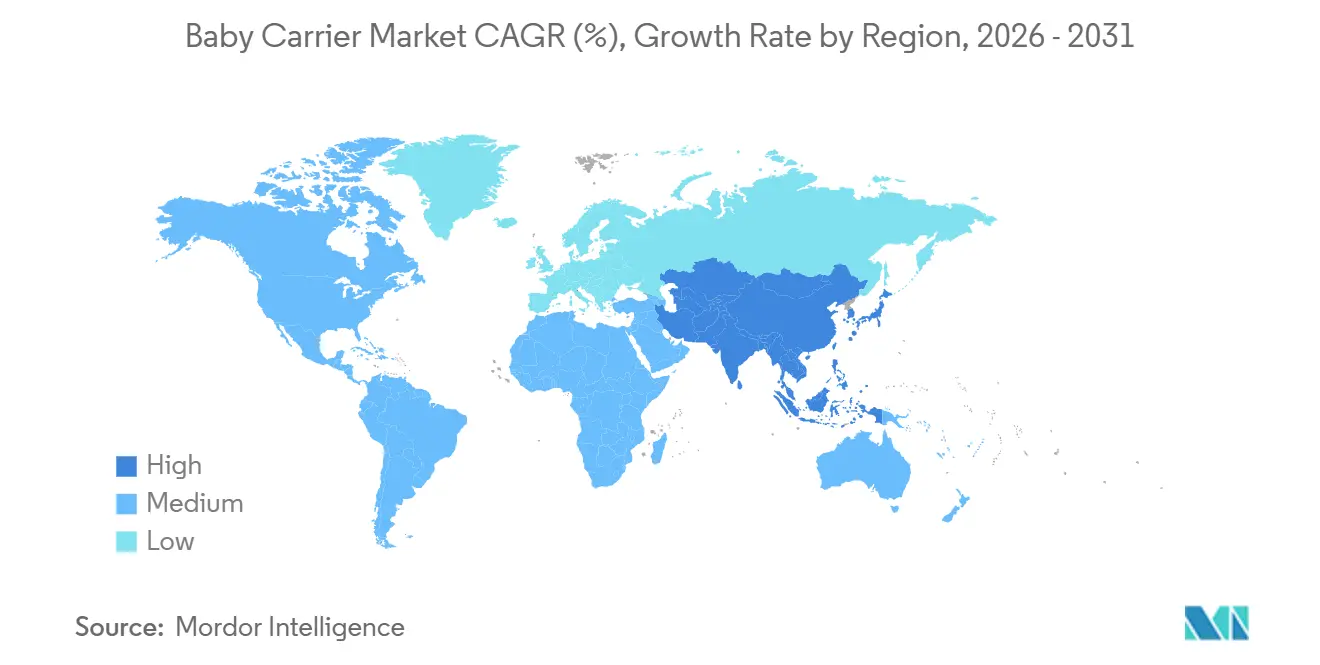
| Fastest Growing Market | Asia Pacific |
| Largest Market | North America |
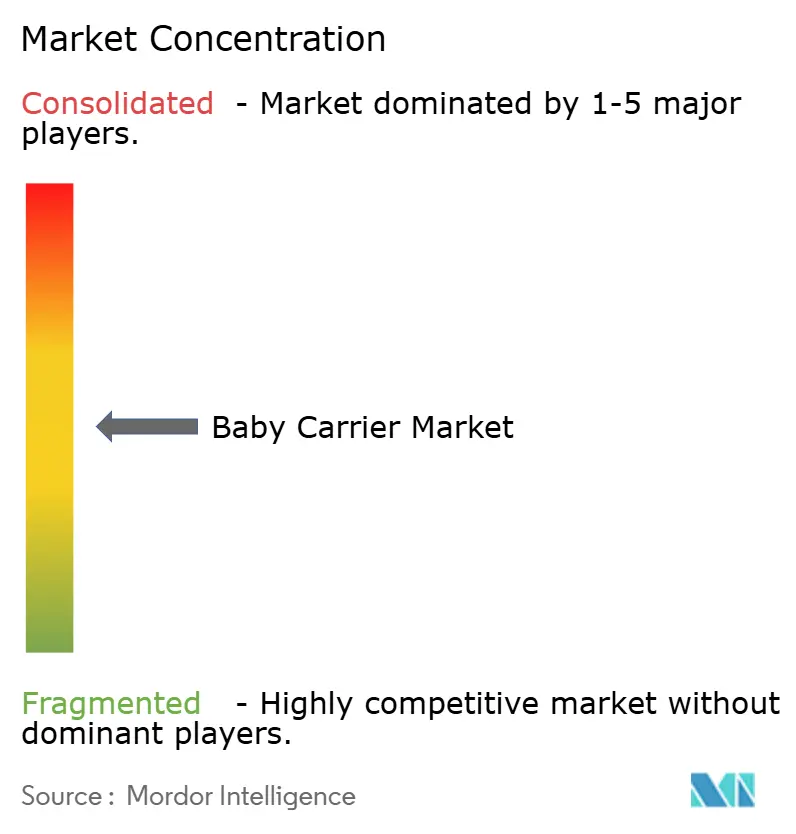
| Market Concentration | Medium |
Major Players *Disclaimer: Major Players sorted in no particular order Image © Mordor Intelligence. Reuse requires attribution under CC BY 4.0. | |
Baby Carrier Market Analysis by Mordor Intelligence
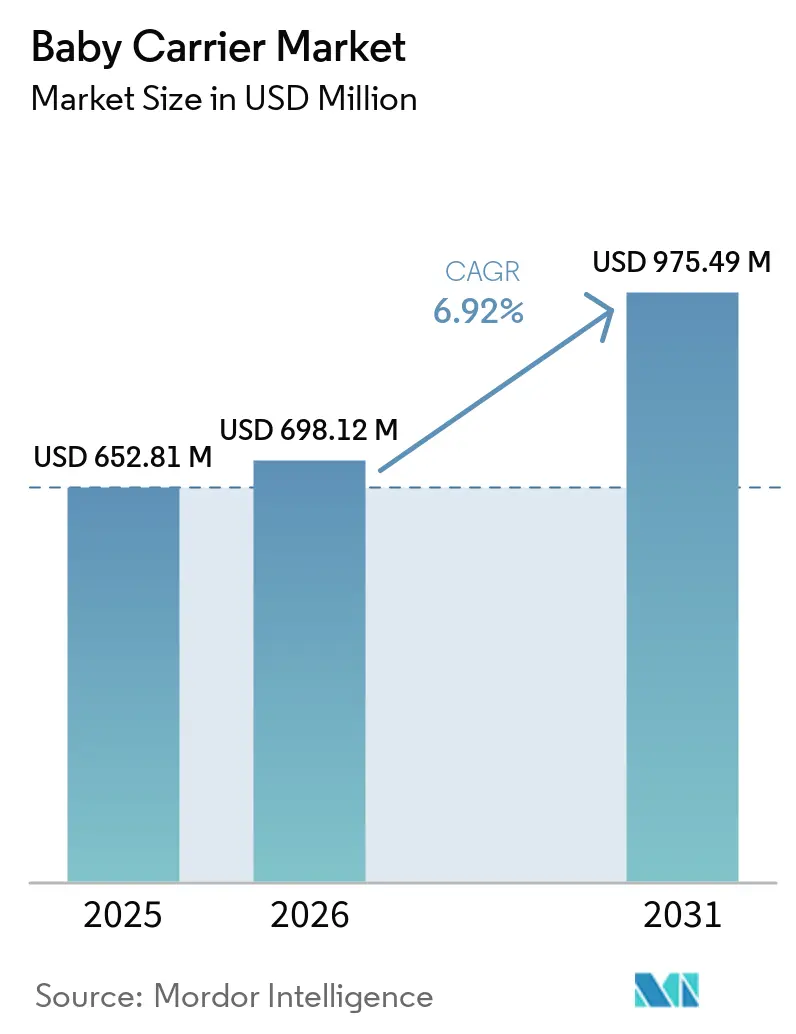
The Baby Carrier Market size was valued at USD 652.81 million in 2025 and estimated to grow from USD 698.12 million in 2026 to reach USD 975.49 million by 2031, at a CAGR of 6.92% during the forecast period (2026-2031). While population growth plays a role, evolving lifestyles are a key source of demand. Notably, 68.3% of U.S. mothers with kids under 6 are in the labor force, underscoring the heightened need for hands-free mobility, as highlighted by the U.S. Bureau of Labor Statistics. Parents are increasingly gravitating toward premium brands, especially those that combine ergonomic certifications with eco-friendly materials. This trend is further supported by omni-channel distribution, which simplifies product discovery. Since February 2025, the stringent enforcement of 16 CFR Part 1226 has made safety a pivotal competitive edge, leading some smaller, import-only brands to reconsider their market presence. Meanwhile, social media platforms have amplified product visibility, with influencer endorsements swaying 44% of maternal purchasing choices, giving direct-to-consumer brands a significant platform.
Key Report Takeaways
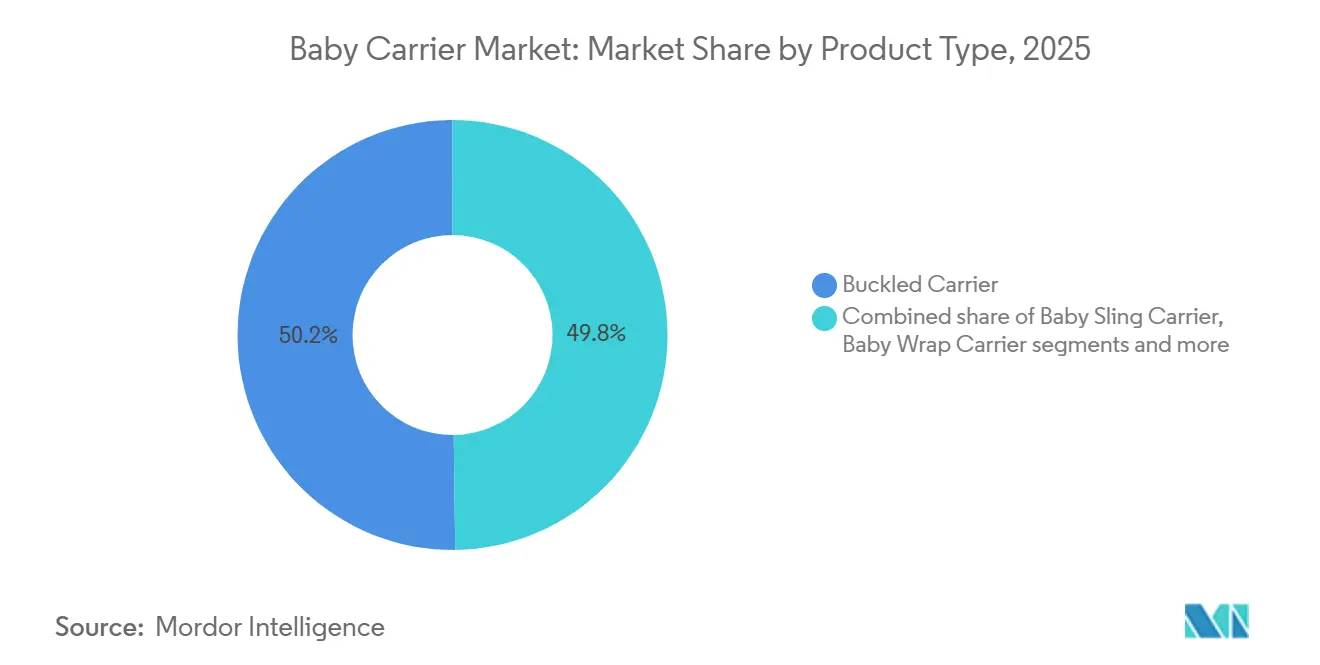
- By product type, buckled baby carriers led with 50.21% of the baby carrier market share in 2025, while baby sling carriers posted the fastest projected 7.88% CAGR through 2031.
- By price range, the mass tier commanded a 67.51% share of the baby carrier market in 2025, whereas the premium tier advanced at an 8.41% CAGR through 2031.
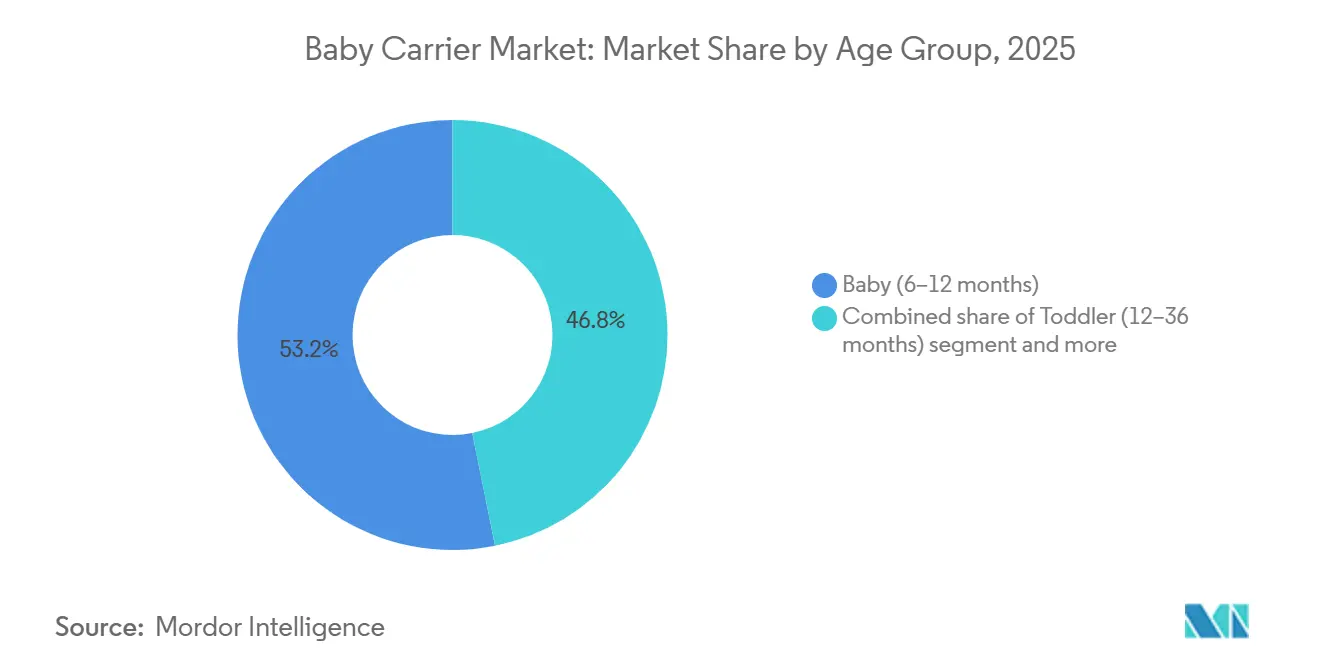
- By age group, baby carriers designed for infants aged 6–12 months captured a 53.17% share in 2025, and the toddler segment is forecast to expand at a 7.13% CAGR to 2031.
- By distribution channel, offline retail outlets accounted for 44.50% of sales in 2025, while online retail is projected to grow at a 7.11% CAGR through 2031.
- By geography, North America held a 37.05% share in 2025; the Asia-Pacific region records the fastest growth at 7.92% CAGR for the forecast horizon.
Note: Market size and forecast figures in this report are generated using Mordor Intelligence’s proprietary estimation framework, updated with the latest available data and insights as of January 2026.
Market Trends and Insights
Drivers Impact Analysis of Baby Carrier Market*
| Driver | (~) % Impact on CAGR Forecast | Geographic Relevance | Impact Timeline |
|---|---|---|---|
| Urban millennial adoption of baby-wearing | +1.2% | North America, Western Europe, urban Asia-Pacific | Medium term (2-4 years) |
| Omni-channel expansion of DTC premium brands | +0.9% | North America, EU core, Asia-Pacific metros | Short term (≤ 2 years) |
| Post-pandemic outdoor and travel boom | +0.8% | North America, Europe, Australia/New Zealand | Short term (≤ 2 years) |
| Rising birth rates in emerging economies | +1.1% | India, Indonesia, Nigeria, Egypt, South America | Long term (≥ 4 years) |
| Increasing number of working parents | +1.3% | Global, strongest in North America, Northern Europe, urban Asia-Pacific | Medium term (2-4 years) |
| Influence of social-media parenting networks | +0.7% | Global, leader North America, Europe, rapidly growing Asia-Pacific | Short term (≤ 2 years) |
| Source: Mordor Intelligence | |||
Urban millennial adoption of baby-wearing culture
Millennial parents, now the dominant cohort of first-time buyers, treat baby-wearing as a lifestyle statement rather than a utilitarian choice, driving demand for aesthetically differentiated products that signal attachment-parenting values. The U.S. Bureau of Labor Statistics reported that 68.3% of mothers with children under 6 participated in the labor force in 2024, creating a structural need for hands-free caregiving solutions that integrate into commuting and errand routines[1]. Ergobaby's 2024 launch of the Embrace Cozy Newborn Carrier, emphasizing soft-structured design for skin-to-skin contact, reflects manufacturers' pivot toward products that blend ergonomic function with emotional resonance. Urban density amplifies this trend, as public-transit navigation and apartment living favor compact, wearable solutions over bulky strollers. The International Hip Dysplasia Institute's endorsement of specific carrier models further legitimizes baby-wearing within pediatric circles, converting clinical recommendations into purchase triggers.
Omni-channel expansion of DTC premium brands
Direct-to-consumer brands bypass traditional retail intermediaries, capturing 25-35% gross margins versus 15-20% for wholesale-dependent peers, and reinvest savings into content marketing and influencer partnerships that drive online conversion rates above 3.5%. Walmart and Kohl's both launched baby registries in 2024-2025 with omni-channel fulfillment, enabling customers to order online and pick up in-store within hours, a capability that premium DTC entrants like BabyBjörn and Ergobaby now replicate through partnerships with specialty retailers. Amazon's dominance in baby products, capturing an estimated 40% of U.S. online baby-gear sales, forces brands to maintain Amazon storefronts while simultaneously building owned e-commerce channels to protect pricing integrity. The shift to omni-channel also reduces inventory risk, as brands can test new SKUs online before committing to retail shelf space, accelerating product-development cycles from 18 months to under 12.
Rising birth rates in emerging economies
India and Indonesia together account for over 40 million annual births, sustaining absolute volume growth even as fertility rates edge downward from historical peaks, and rising disposable incomes in these markets shift demand from unbranded wraps to structured carriers priced at USD 30-60. India's birth rate of 16.8 per 1,000 population in 2024, combined with a median age of 28, creates a demographic tailwind that offsets declines in East Asia and Southern Europe[2]. Indonesia's expanding middle class, projected to reach 135 million households by 2030, drives demand for international brands that signal quality and safety, with Goodbaby's Cybex label gaining traction in Jakarta and Surabaya through partnerships with premium department stores. Nigeria and Egypt in the Middle East and Africa region exhibit similar dynamics, with birth rates above 25 per 1,000 sustaining market entry for mass-tier brands. However, distribution infrastructure remains fragmented, and brands must navigate import tariffs ranging from 15-35% depending on the country of origin and product classification.
Increasing number of working parents
Labor-force participation among mothers with children under 6 reached 68.3% in the United States in 2024, and OECD data shows similar trends across Northern Europe, where maternal employment rates exceed 70% within two years of childbirth. This structural shift creates demand for carriers that enable multitasking, grocery shopping, commuting, and household chores, while maintaining infant proximity, a need that buckled carriers address more effectively than wraps due to faster on-off cycles. Employers' adoption of on-site childcare and lactation rooms, mandated under updated U.S. Department of Labor guidelines in 2024, further normalizes baby-wearing in professional settings, expanding the use case beyond weekends and errands. Ergobaby's Omni Breeze Plus, launched in 2024 with four carrying positions and breathable mesh, explicitly targets working parents who cycle between forward-facing, hip, and back carries throughout the day. The trend also benefits sling carriers, which offer discreet nursing access in public spaces, a feature increasingly valued as return-to-office mandates reduce remote-work flexibility.
Restraints Impact Analysis of Baby Carrier Market*
| Restraint | (~) % Impact on CAGR Forecast | Geographic Relevance | Impact Timeline |
|---|---|---|---|
| Fragmented regional safety standards | -0.6% | Global, acute in cross-border trade between North America, Europe, and Asia-Pacific | Medium term (2-4 years) |
| Persistently low birth rates in East Asia and Southern Europe | -0.9% | East Asia (Japan, South Korea, China), Southern Europe (Italy, Spain, Greece) | Long term (≥ 4 years) |
| High costs of premium carriers | -0.5% | Global, most pronounced in price-sensitive emerging markets | Short term (≤ 2 years) |
| Proliferation of counterfeit/low-quality products | -0.4% | Asia-Pacific, Middle East and Africa, South America; e-commerce platforms globally | Medium term (2-4 years) |
| Source: Mordor Intelligence | |||
Persistently low birth rates in East Asia and Southern Europe regions
In 2024, Japan's fertility rate stands at 1.2, while South Korea's is even lower at 0.7. These figures highlight a persistent demographic decline in both nations, one that policy interventions have yet to reverse. According to the World Bank, this trend narrows the addressable market in two regions that have historically been deemed high-value. Italy and Spain, also hovering around a fertility rate of 1.2, are on a similar path. Their aging populations further curtail the household spending typically directed towards baby products. Meanwhile, China's fertility rate, recorded at 1.0, continues to reflect the challenges posed by urbanization and escalating education costs. Despite China's 2021 reversal of its one-child policy, these factors have effectively deterred many from considering second or third births. Highlighting the impact of these domestic challenges, Goodbaby International reported a notable 7.9% decline in revenue for the first half of 2024, emphasizing how local headwinds can overshadow potential international growth[3]. Furthermore, these markets are characterized by strong brand loyalty, posing significant challenges for newcomers aiming to displace established players. Compounding this challenge is a trend of distribution consolidation among major retailers, which has led to a diminished shelf space for niche or emerging brands. Looking ahead, this demographic drag is poised to intensify until 2031. As cohorts, born during previous low-fertility periods, reach their prime childbearing years, the cycle is set to perpetuate.
Proliferation of counterfeit/low-quality products
In fiscal 2024, U.S. Customs and Border Protection seized a staggering USD 5.4 billion worth of counterfeit goods, with a notable 90% of these fakes hailing from China and Hong Kong[4]. Baby products, due to their high margins and perceived low risk of enforcement, constituted a significant portion of the counterfeit goods. These counterfeit items, frequently sold by third-party sellers on platforms like Amazon and AliExpress, are often priced 50-70% lower than genuine brands. However, they lacked safety certifications and were made from subpar materials, posing a risk of failure under load. This not only exposed platforms to potential liabilities but also diminished consumer trust in online shopping. A loophole in the system allowed 97% of the seized counterfeits to infiltrate the U.S. via de minimis shipments, which are packages valued under USD 800 that can sidestep formal customs entry. Despite proposed legislative reforms aimed at closing this loophole, they face pushback from e-commerce lobbyists. While brands are turning to anti-counterfeiting strategies like serialized QR codes and blockchain authentication, these measures come at an added cost of USD 2-5 per unit. This poses a challenge for smaller brands that lack the scale for such investments. The issue is particularly pronounced in the Asia-Pacific and Middle East regions, where regulatory enforcement is lax. Here, consumers often remain oblivious to the authenticity of products until a safety-related incident brings the counterfeit nature to light.
*Our forecasts treat driver/restraint impacts as directional, not additive. The impact forecasts reflect baseline growth, mix effects, and variable interactions.
Segment Analysis
By Product Type: Buckled Carriers Dominate Through Ease of Use
Buckled baby carriers accounted for 50.21% of the 2025 market share, driven by their user-friendly clip-and-adjust design, which appeals to first-time parents who prioritize convenience over the learning curve associated with wraps. In contrast, baby sling carriers are expected to grow at the fastest rate, with a 7.88% CAGR through 2031, as millennial consumers increasingly embrace traditional baby-wearing techniques promoted by lactation consultants and doulas. Notable products like Ergobaby's Omni Breeze Plus and BabyBjörn's Harmony Carrier, both launched in 2024, address common issues such as back pain through features like padded shoulder straps and lumbar support, which distribute weight more effectively compared to earlier models. Back pain, a key factor in legacy products' abandonment rates exceeding 30%, has been a significant challenge for the market. Meanwhile, baby wrap carriers, though requiring practice to use effectively, attract attachment-parenting advocates who value skin-to-skin contact and customizable fits for newborns under 10 pounds, a demographic underserved by buckled carriers. The "Other Product Type" category, which includes frame carriers and hybrid designs, remains a niche segment but benefits from the growing popularity of outdoor recreation. Brands such as Osprey and Deuter have expanded distribution through retailers like REI and specialty hiking stores, capitalizing on this trend. Additionally, compliance with ASTM F2236-24, effective February 2025, has increased testing costs for buckled carriers by USD 5,000-10,000 per SKU, leading to market consolidation favoring brands with the financial resources to meet third-party certification requirements mandated by the U.S. Consumer Product Safety Commission.
The 7.88% CAGR of baby sling carriers reflects their positioning as a secondary purchase for parents who already own a buckled carrier but seek a lightweight, portable option for short outings or nursing in public. Brands such as WildBird and Kol Kol differentiate themselves through premium fabric options, including linen, organic cotton, and cashmere blends, which command price points ranging from USD 100 to 200. These carriers appeal to consumers who view them as both functional and fashionable. The segment also benefits from influencer marketing, as sling carriers are visually appealing and perform well on platforms like Instagram and TikTok, generating organic reach that buckle carriers, with their more utilitarian design, struggle to achieve. However, sling carriers face challenges related to safety concerns, as improper positioning can obstruct infant airways. Compliance with the CPSC's 16 CFR Part 1228 requires warning labels and instructional videos, adding to production costs as mandated by the U.S. Consumer Product Safety Commission. Baby wrap carriers, despite their steep learning curve, maintain a loyal customer base among experienced parents and those influenced by attachment-parenting philosophies. These carriers are particularly valued for their ability to provide skin-to-skin contact and a customizable fit for newborns. However, their growth lags behind buckled and sling carriers due to limited retail availability and a reliance on direct-to-consumer sales channels. This restricted distribution model poses a challenge to broader market penetration, limiting their appeal to a niche audience.
Note: Segment shares of all individual segments will be available upon report purchase
By Price Range: Premium Segment Outpaces Mass Market
The mass price segment accounted for 67.51% of the market share in 2025, reflecting consumer preferences for carriers priced between USD 50-80, where functionality takes precedence over brand prestige. However, the premium segment is projected to grow at a CAGR of 8.41% through 2031, surpassing the overall market growth rate of 6.92%. This growth is driven by affluent parents opting for features such as organic fabrics, International Hip Dysplasia Institute certification, and lifetime warranties, which emphasize durability. In early 2025, tariff-driven inflation increased baby-gear prices by 20%, reducing affordability for mass buyers and creating a bifurcated market. Premium brands like BabyBjörn and Ergobaby retained pricing power, while mass-tier competitors such as Infantino and Baby K'tan absorbed margin losses to maintain volume. Additionally, premium buyers increasingly demand transparency regarding labor practices and environmental impact. Brands unable to substantiate sustainability claims face risks of social media backlash, where accusations of greenwashing can quickly damage long-established brand equity.
The resilience of the mass segment is attributed to its strong presence in emerging markets, where median household incomes remain below USD 10,000 annually, making carriers priced above USD 100 aspirational purchases. Goodbaby's Cybex brand, positioned in the premium segment, gained traction in urban markets in India and Indonesia through partnerships with premium department stores. However, Goodbaby International reported a 7.9% revenue decline in H1 2024, as macroeconomic challenges in China offset gains in other regions. Mass-tier brands benefit from omni-channel distribution through retailers such as Walmart, Target, and Amazon. These channels capture impulse purchases from parents who may not have planned to buy a carrier but are drawn by competitive pricing and same-day pickup options.
By Age Group: Baby Segment Dominates, Toddler Grows Fastest
Carriers designed for babies aged 6-12 months accounted for 53.17% of the market share in 2025. This age group represents the peak usage period, as infants have outgrown newborn-specific carriers but are still light enough for extended wear. Meanwhile, the toddler segment (12-36 months) is expected to grow at a CAGR of 7.13% through 2031. This growth is driven by parents extending baby-wearing beyond traditional timelines to manage tantrums and maintain mobility in crowded environments. The infant segment (0-6 months), while critical for first-time buyers, faces challenges due to safety concerns related to airway obstruction. Additionally, the CPSC's 16 CFR Part 1228 regulation requires warning labels and instructional videos for sling carriers, which are the most commonly used in this age group. BabyBjörn's Mini Carrier, launched in 2024, targets the infant segment with a simplified design that eliminates adjustable straps, reducing setup time to under 30 seconds and addressing concerns about complexity that deter adoption among sleep-deprived new parents.
The toddler segment's 7.13% CAGR reflects a shift in usage patterns, as parents increasingly rely on carriers for crowd control in environments such as airports, theme parks, and urban festivals, rather than as a primary mobility solution. In response, brands are designing products with weight capacities of up to 45 pounds and reinforced stitching to withstand the lateral forces generated by active toddlers. Ergobaby's Omni Breeze Plus, rated for children up to 45 pounds, is positioned as a long-term investment, eliminating the need for separate infant and toddler carriers. This value proposition appeals to cost-conscious buyers. Despite its smaller market share, the infant segment remains strategically important for establishing brand loyalty, which influences subsequent purchases. Brands are heavily investing in hospital partnerships and endorsements from lactation consultants to capture first-time buyers. However, growth in this segment is limited by shorter usage periods, as most infants transition to the baby segment by six months, and competition from bassinets and swaddles that address overlapping needs during the newborn phase.
Note: Segment shares of all individual segments will be available upon report purchase
By Distribution Channel: Online Retail Gains at Offline's Expense
Offline retail stores accounted for 44.50% of the market share in 2025, driven by consumers' preference to physically test products before purchase and the ability of retailers to provide immediate gratification through same-day pickup. However, online retail channels are projected to grow at a compound annual growth rate (CAGR) of 7.11% through 2031, surpassing offline channels. This growth is fueled by direct-to-consumer brands that bypass traditional markups and leverage influencer partnerships, achieving conversion rates exceeding 3.5%. Amazon dominates the baby products segment, capturing an estimated 40% of U.S. online baby-gear sales. This compels brands to maintain Amazon storefronts while simultaneously developing their own e-commerce platforms to safeguard pricing integrity. Amazon's Prime membership, which offers free two-day shipping, reduces the friction that previously favored brick-and-mortar purchases. Walmart and Kohl's introduced baby registries in 2024-2025 with omni-channel fulfillment options, allowing customers to order online and pick up in-store within hours. This capability blurs the distinction between online and offline channels, creating a hybrid shopping experience that benefits both formats.
Specialty baby stores and supermarkets/hypermarkets, categorized under offline retail, face margin pressures due to rising rents in high-traffic locations and pricing competition from e-commerce platforms, which undercut prices by 15-25%. The "Other Distribution Channels" category, which includes direct sales, pop-up shops, and hospital gift shops, remains niche but benefits from experiential marketing. For instance, brands like Ergobaby and BabyBjörn host in-person baby-wearing workshops, converting attendees at rates exceeding 20%, which is double the conversion rate of online advertising. The 7.11% CAGR of online retail also reflects challenges such as the proliferation of counterfeit products, which undercut authentic brands by 50-70% and erode consumer trust when safety incidents occur. Platforms are under increasing pressure to implement authentication measures, such as serialized QR codes and blockchain-based verification, as recommended by the U.S. Customs and Border Protection. Despite these challenges, the shift to online retail benefits smaller, direct-to-consumer brands that lack the capital for retail distribution. These brands effectively reach niche audiences through targeted Facebook and Instagram advertising, achieving customer acquisition costs below USD 50 per buyer.
Geography Analysis
North America Baby Carrier Market
North America accounted for 37.05% of the 2025 market share, supported by the enforcement of 16 CFR Part 1226 by the U.S. Consumer Product Safety Commission (CPSC) in February 2025. This regulation mandates third-party testing for soft infant carriers, creating barriers for non-compliant importers and favoring brands with the resources to fund CPSC-accredited lab testing, which costs USD 5,000-10,000 per SKU. The region benefits from high disposable incomes, with median household income exceeding USD 70,000 in the United States and CAD 85,000 in Canada. This supports an 8.41% CAGR in the premium segment, as consumers increasingly opt for organic fabrics and products certified by reputable organizations, such as the International Hip Dysplasia Institute. In Mexico, the expanding middle class, projected to reach 40 million households by 2030, drives demand for mass-tier carriers priced between USD 30 and USD 60. Brands like Infantino and Baby K'tan are expanding their distribution through retailers such as Walmart and Soriana. However, tariff-driven inflation in early 2025 increased baby-gear prices by 20%, reducing affordability for mass-market buyers while creating opportunities for domestic manufacturers marketing "Made in USA" products. Additionally, the region's 68.3% labor-force participation rate among mothers with children under six sustains demand for hands-free caregiving solutions. Employers' adoption of on-site childcare, following updated U.S. Department of Labor guidelines in 2024, has further normalized baby-wearing in professional settings, as reported by the U.S. Bureau of Labor Statistics.
APAC Baby Carrier Market
The Asia-Pacific region is the fastest-growing, with a 7.92% CAGR projected through 2031. This growth is driven by high birth rates in India (16.8 births per 1,000 population) and Indonesia (15.9 births per 1,000 population), which sustain absolute birth volumes despite China's declining total fertility rate of 1.0. Rising disposable incomes in urban centers are shifting consumer preferences from unbranded wraps to structured carriers that emphasize quality and safety, according to the World Bank. Goodbaby's Cybex brand has gained traction in Jakarta and Surabaya through partnerships with premium department stores. However, the company's 7.9% revenue decline in H1 2024 highlights how macroeconomic challenges in China offset gains in other markets. Japan and South Korea, with total fertility rates of 1.2 and 0.7, respectively, face structural demographic declines that have not been reversed by policy interventions, shrinking the addressable market in these historically high-value regions. Southeast Asia's rapid urbanization and growing middle class provide a demographic tailwind; however, fragmented distribution infrastructure and import tariffs ranging from 15% to 35% pose significant challenges. Australia and New Zealand, though smaller markets, exhibit high per-capita spending on baby products and strong consumer preference for safety-certified carriers, benefiting brands like BabyBjörn and Ergobaby that comply with voluntary Australian standards.
EMEA and South America Baby Carrier Market
Europe's market reflects maturity, characterized by high safety awareness and stringent compliance with the EN 13209-1:2021 standards. Germany, the United Kingdom, and France account for the majority of regional demand, while Southern Europe, including Italy and Spain, faces demographic challenges due to declining birth rates, with total fertility rates near 1.2, as reported by the World Bank. Sustainability is a key driver in the region, with demand for organic cotton and recycled materials on the rise. Brands unable to substantiate environmental claims risk backlash on social media, where accusations of greenwashing can spread rapidly. Poland and Sweden, though smaller markets, show above-average growth due to rising incomes and government childcare subsidies that support household spending on baby products. South America and the Middle East and Africa remain emerging markets. In South America, countries such as Brazil, Argentina, and Colombia exhibit birth rates above 13 per 1,000 population, but face challenges due to fragmented retail infrastructure and import tariffs that add 15-35% to landed costs. In the Middle East, the United Arab Emirates and Saudi Arabia lead regional demand, driven by high expatriate populations and disposable incomes. In Africa, countries like Nigeria and Egypt sustain volume growth with birth rates exceeding 25 per 1,000 population, though affordability constraints limit penetration in the premium segment.
Regulatory Landscape
The United States is tightening regulation around soft infant and toddler carriers. The U.S. Consumer Product Safety Commission (CPSC) enforces 16 CFR Part 1226 for soft carriers and requires testing to the ASTM F2236-24 standard, which became mandatory on February 22, 2025, with expectations for documentation and certification across multi-SKU portfolios. In Europe, compliance now hinges on the GPSR, with risk analyses and technical-file requirements as baseline deliverables, alongside the framed reference EN 13209-1:2022.
Activity around prEN 13209-2:2026 for soft carriers without framed support is proceeding, with consultations running May 18 to July 14, 2026. For brands, this signals that test methods and documentation expectations will likely change as the draft moves toward adoption.
Competitive Landscape
The global baby carrier market exhibits moderate concentration, with key players such as Goodbaby International, Artsana Group, Ergobaby, Thrive International, and BabyBjörn holding significant but not dominant positions. No single company commands more than a 15% market share, creating opportunities for agile direct-to-consumer brands. These emerging players utilize influencer partnerships and omnichannel distribution strategies to effectively capture niche segments. Goodbaby International experienced a 7.9% revenue decline in the first half of 2024. While its Cybex premium label gained traction in urban Asia-Pacific markets, macroeconomic challenges in China offset international growth. Additionally, the company's reliance on wholesale channels exposes it to risks such as retailer consolidation and margin pressures. Ergobaby and BabyBjörn focus on product innovation to differentiate themselves. For instance, the Omni Breeze Plus and Harmony Carrier, both launched in 2024, feature breathable mesh and organic cotton materials, with price points ranging from USD 150 to USD 200. These companies also invest heavily in compliance with standards such as ASTM F2236-24 and EN 13209-1:2021, creating barriers for smaller competitors that lack the capital for third-party testing.
White-space opportunities exist in the toddler segment (12-36 months), which is growing at a compound annual growth rate (CAGR) of 7.13% but remains underserved by legacy brands that primarily focus on infant carriers. Additionally, emerging markets such as India and Indonesia present growth potential, as fragmented distribution infrastructure and local manufacturers' ability to undercut imports by 30-40% through domestic sourcing create unique market dynamics. Emerging disruptors like WildBird and Baby K'tan are gaining market share through social media marketing, achieving engagement rates exceeding 5%, which is double the effectiveness of traditional advertising. Their direct-to-consumer models eliminate retail markups, allowing them to offer competitive pricing despite their premium positioning. Technology adoption is also a key trend, with brands utilizing e-commerce platforms, mobile apps featuring augmented reality for virtual try-ons, and blockchain-based authentication to combat counterfeiting. Counterfeit products accounted for USD 5.4 billion in U.S. Customs seizures during fiscal 2024, with 90% originating from China and Hong Kong.
Brands are increasingly investing in sustainability certifications such as GOTS for organic cotton and Oeko-Tex for chemical safety. These certifications help differentiate products in a market where 44% of mothers report making purchases influenced by brand endorsements emphasizing environmental responsibility. However, incumbents face challenges such as margin pressures from tariff-driven cost inflation, which increased baby gear prices by 20% in early 2025. Additionally, Amazon's dominance in online baby product sales forces brands to maintain Amazon storefronts while simultaneously building their own e-commerce channels to protect pricing integrity.
Baby Carrier Industry Leaders
-
Goodbaby International Holdings Limited
-
Artsana Group
-
Ergobaby Inc.
-
Thrive International, Inc. (Moby Wrap, Inc)
-
BabyBjörn AB
- *Disclaimer: Major Players sorted in no particular order
Baby Carrier Market Companies Covered in this Report
- Artsana Group (Chicco)
- BabyBjörn AB
- Ergobaby Inc.
- Goodbaby International Holdings Ltd
- Thrive International Inc. (Moby Wrap)
- Stokke AS
- Blue Box Corp. (Infantino)
- LILLEbaby LLC
- Boba Inc.
- Be Lenka s.r.o.
- WildBird LLC
- Storchenwiege (Schwartzer GmbH)
- Najell AB
- Onya Baby Inc.
- Baby K’tan LLC
- Tula (Baby Tula)
- Didymos GmbH
- Hoppediz GmbH & Co KG
- Kol Kol Baby Carrier
- i-Angel (Angel Carrier)
- Napro Ltd (KeaBabies)
Market Opportunities and Future Outlook
Regulatory compliance creates differentiating opportunities for brands that can industrialize testing, documentation, and traceability. In the United States, the F2236-24 standard has raised the bar for third-party testing and Children’s Product Certificate maintenance. As e-filing requirements evolve, with anticipated changes around July 8, 2026, the process adds a data and systems layer that tends to favor organized brands and compliant marketplace sellers.
In the EU, GPSR effective in 2024 makes risk analysis and technical documentation a baseline deliverable. This supports suppliers and service partners that help brands assemble risk files, labeling, and evidence packs aligned to EN 13209-1:2022 and the evolving prEN 13209-2 track.
Recent Industry Developments in Baby Carrier Market
- April 2026: Ergobaby rolled out a company rebrand centered on science-backed comfort and ergonomic design, paired with a refreshed digital experience. The update supports premium positioning and makes product claims and fit guidance easier to communicate online for direct-to-consumer customers.
- May 2025: Ergobaby signed a multi-year distribution agreement with a leading European retailer network to expand its footprint across EU markets. The agreement increases access to specialty retail channels in the region.
- April 2024: Rebelstork partnered with Ergobaby to launch products under The ReLuvable Collective. The collaboration ties branded baby carriers to a recommerce-focused model aimed at addressing returns and sustainability concerns, while adding another route to value-conscious shoppers.
Baby Carrier Market Report Scope and Research Methodology
Market Definition and Coverage
This market covers the revenue generated from new baby carriers that securely attach an infant or toddler to a caregiver for hands-free carrying across home and outdoor use, sold through retail and direct channels worldwide.
Scope exclusions: We exclude second-hand resale of carriers and adjacent baby transport products like strollers, travel systems, and infant car seats.
Segments Covered in This Report
- By Product Type
- Buckled Baby Carrier
- Baby Wrap Carrier
- Baby Sling Carrier
- Other Product Type
- By Price Range
- Mass
- Premium
- By Age Group
- Infant (0–6 months)
- Baby (6–12 months)
- Toddler (12–36 months)
- By Distribution Channel
- Supermarkets/Hypermarkets
- Specialty Baby Stores
- Online Retailers
- Other Distribution Channels
- By Geography
- North America
- United States
- Canada
- Mexico
- Rest of North America
- Europe
- Germany
- United Kingdom
- Italy
- France
- Spain
- Netherlands
- Poland
- Belgium
- Sweden
- Rest of Europe
- Asia-Pacific
- China
- India
- Japan
- Australia
- Indonesia
- South Korea
- Thailand
- Singapore
- Rest of Asia-Pacific
- South America
- Brazil
- Argentina
- Colombia
- Chile
- Peru
- Rest of South America
- Middle East and Africa
- South Africa
- Saudi Arabia
- United Arab Emirates
- Nigeria
- Egypt
- Morocco
- Turkey
- Rest of Middle East and Africa
- North America
Data Sources, Market Sizing, and Validation
Desk Research
Desk work starts by mapping the baby carrier demand context by region, then cross-checking it with trade and retail signals that can be traced back to public datasets. We referenced public sources such as US Census Bureau trade statistics, UN Comtrade, Eurostat, and national statistics offices for population and birth data, plus maternal and infant health publications from WHO and CDC-style outlets where they helped with interpretive context.
For category direction, we also reviewed association and standards body sites that describe baby product safety requirements, and we used patent databases to gauge innovation intensity around carrier designs and fastening systems.
On the commercial side, we reviewed company filings, investor presentations, and reputable press coverage to understand price positioning, channel mix, and the timing of major product refreshes. Paid subscriptions were used selectively for company financials and news tracking, and also for shipment-level import-export checks in key markets to sense supply movement. These desk sources are illustrative, and many other public references were also used to collect, validate, and clarify data points during the study.
Primary Interviews and Surveys
Primary work focused on validating the real selling price ranges, regional channel splits, and what qualifies as a carrier versus nearby categories sold in the same retail sets. We spoke with manufacturers, distributors, retailers, and industry specialists across APAC, EMEA, and the Americas so desk-based assumptions on adoption and category boundaries could be confirmed, adjusted, and then carried into the final model.
Distribution of primary research fieldwork respondents
| Company type | Respondent position | Region |
|---|---|---|
| Top tier: 30% | CXOs: 21% | APAC: 43% |
| Mid tier: 49% | Functional/Unit leaders: 31% | EMEA: 31% |
| Smaller Players: 21% | Managers: 48% | Americas: 26% |
Market-Sizing & Forecasting
Sizing was built using top-down and bottom-up logic, with the main structure coming from a demand pool reconstruction. We start with births and the addressable infant and toddler population by region, then apply adoption rates for babywearing, replacement cycles, and channel availability to translate into unit demand. To convert units into value, we paired unit estimates with average selling prices that reflect mix shifts across structured buckle carriers, wraps and slings, hip seats, and backpack style carriers.
To keep the totals realistic, we corroborate the output using selective bottom-up checks such as sampled SKU price checks, retailer assortment counts, and manufacturer revenue splits where disclosed. When a country lacks reliable category splits, we bridge gaps using proxy markets with similar income bands and baby product penetration, then re-check the result against trade flows and what interviewees described about assortment behavior. For forecasting, we used scenario analysis so adoption, pricing, and channel shift paths could be varied, and then aligned to what primary respondents expect for premiumization, e-commerce share, and safety-driven product upgrades over the next few years.
Data Validation & Update Cycle
Validation is done through multiple checks before results are finalized. Model outputs are compared against independent signals such as birth trends, import-export movements for relevant product codes, and observed retail price bands, and unusual jumps are reviewed to confirm they come from identifiable changes rather than a modeling error. If a variance cannot be explained cleanly, follow-up calls are triggered so assumptions like adoption rates or channel weights can be corrected.
Before sign-off, the work is reviewed in steps by another analyst to confirm calculations, conversions, and year alignment. Reports are refreshed annually, and interim updates are added when major events change pricing, trade, or consumer demand patterns. Right before delivery, a final data pass is completed so the reported view reflects the most current information available at that time.
Mordor Intelligence's Baby Carrier Market Size Versus Other Published Estimates
Published numbers for baby carriers often differ because each publisher applies its own rules for what qualifies as a carrier, the base year used, and how pricing and mix shifts are projected over time. Differences also appear when one model leans more on shipment signals, and another leans more on consumer demand indicators such as birth cohorts and babywearing adoption.
A common driver is scope creep into adjacent baby transport items, or counting resale activity that does not represent new-product revenue. Some sources also project faster price growth without cross-checking how promotions, online discounting, and premium versus mass mix change by region. In this study, some external totals appear to include broader baby transport or accessory spend, then Mordor Intelligence counts only new wearable carriers (structured carriers, wraps, slings, hip seats, and backpack carriers) and excludes second-hand transactions, strollers, travel systems, and infant car seats, which keeps the value tied to the defined demand pool.
Benchmark comparison
| Source | Market Size | Gaps in Research Methodology |
|---|---|---|
| Mordor Intelligence | USD 0.70 B (2026) | |
| Industry Publisher A | USD 0.86 B (2026) | Uses a higher 2026 value that likely reflects a wider inclusion set and faster price progression, and it is presented alongside a longer forecast window that can compound optimistic adoption and premiumization assumptions. |
| Industry Publisher B | USD 0.68 B (2025) | Anchors on a different base year and appears to rely on broader segment grouping and regional roll-ups that can dilute channel mix effects, especially when online discounting and mass-tier volumes are changing quickly. |
Across the table, the spread is mainly explained by what gets included as a baby carrier purchase, the base year chosen, and how ASP changes are carried forward by region. Our approach stays traceable because the value is built from a clear unit demand pool and then cross-checked with pricing and supply indicators that can be re-tested when new information comes in.
Key Questions Answered in the Report
What is the current value of the baby carrier market?
The baby carrier market size is USD 698.12 million in 2026 with a forecast value of USD 975.49 million by 2031.
Which product type holds the largest share?
Buckled carriers lead the category with 50.21% of 2025 sales.
Which region is growing the fastest?
Asia-Pacific posts the highest 7.92% CAGR through 2031, driven by sustained birth volumes in India and Indonesia.
Why are premium models expanding faster than mass ones?
Premium growth at 8.41% CAGR is fueled by demand for organic fabrics, ergonomic certification, and influencer-driven brand storytelling.
What role do online channels play in category growth?
Online retail records a 7.11% CAGR, outpacing offline as fast shipping, registry integration, and influencer content lower purchase barriers.