
Animal Feed Micronutrients Market Size and Share
Market Overview
| Study Period | 2021 - 2031 |
|---|---|
| Market Size (2026) | USD 2.12 Billion |
| Market Size (2031) | USD 2.85 Billion |
| Growth Rate (2026 - 2031) | 6.10 % |
| Fastest Growing Market | Asia Pacific |
| Largest Market | Asia Pacific |
| Market Concentration | Medium |
Major Players *Disclaimer: Major Players sorted in no particular order Image © Mordor Intelligence. Reuse requires attribution under CC BY 4.0. | |
Animal Feed Micronutrients Market Analysis by Mordor Intelligence
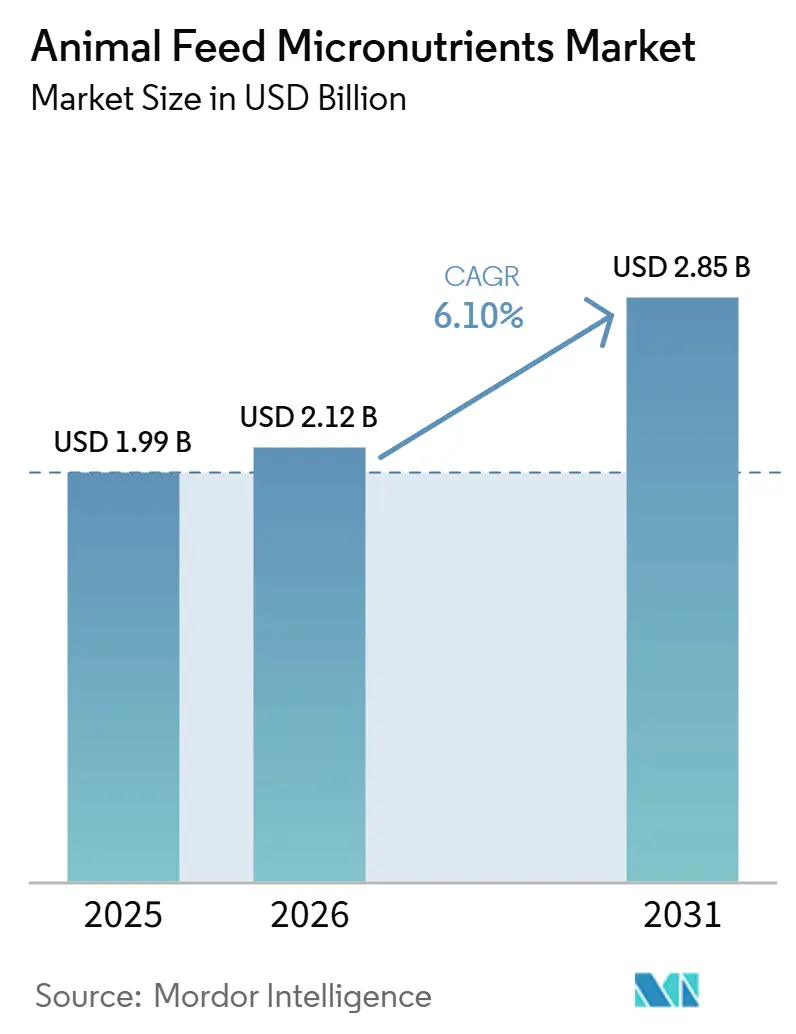
The animal feed micronutrients market size was valued at USD 1.99 billion in 2025 and is projected to grow from USD 2.12 billion in 2026 to USD 2.85 billion by 2031 at a CAGR of 6.10% during the forecasted period from 2026 to 2031. The animal feed micronutrients market is supported by a demand base that is now less exposed to short-term feed price swings, as livestock systems are becoming more industrial, standardized, and dependent on consistent feed performance. Global meat production reached 374 million metric tons in 2024, and, according to the Food and Agriculture Organization (FAO), poultry meat has the largest share, which keeps micronutrient fortification closely tied to large-scale feed milling activity. Rising consumption of meat, milk, eggs, and aquatic protein is also pushing producers to adopt more targeted vitamin and mineral programs as antibiotic growth promoters lose ground and precision nutrition becomes increasingly important in daily feed formulation.
Key Report Takeaways
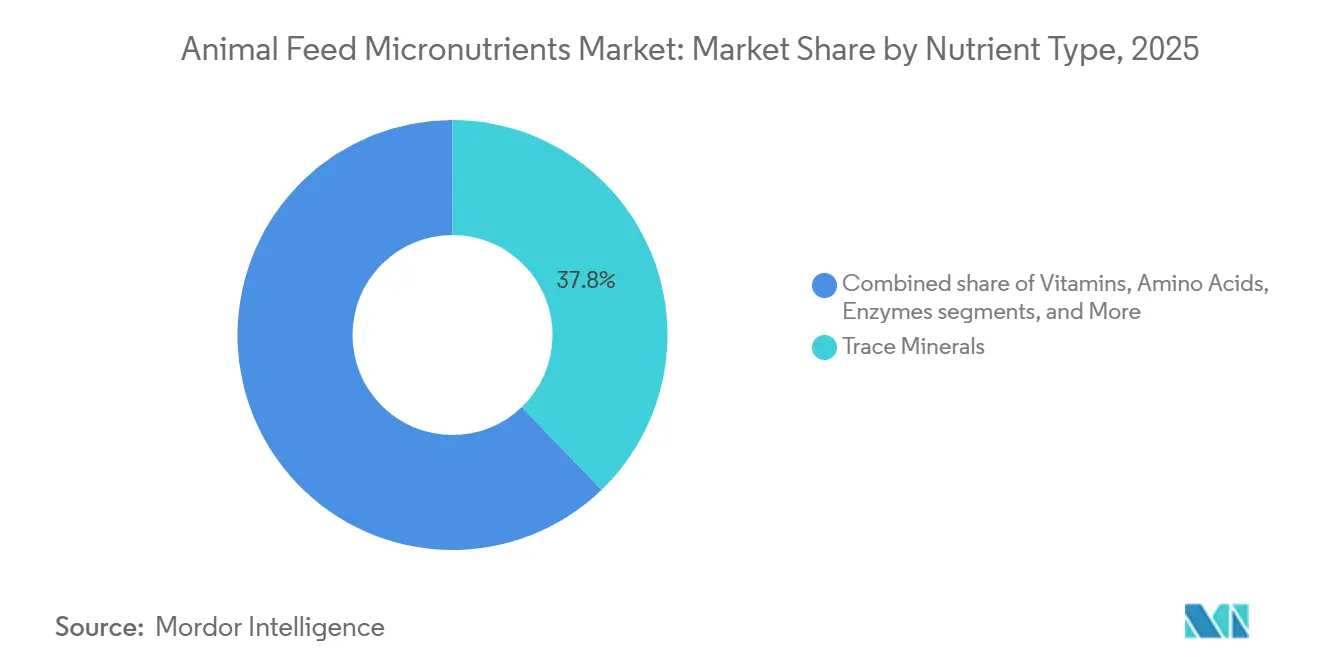
- By nutrient type, the animal feed micronutrients market share for trace minerals held the largest 37.8% in 2025, while the animal feed micronutrients market for the vitamins segment is projected to grow at the fastest CAGR of 7.9% from 2026 to 2031.
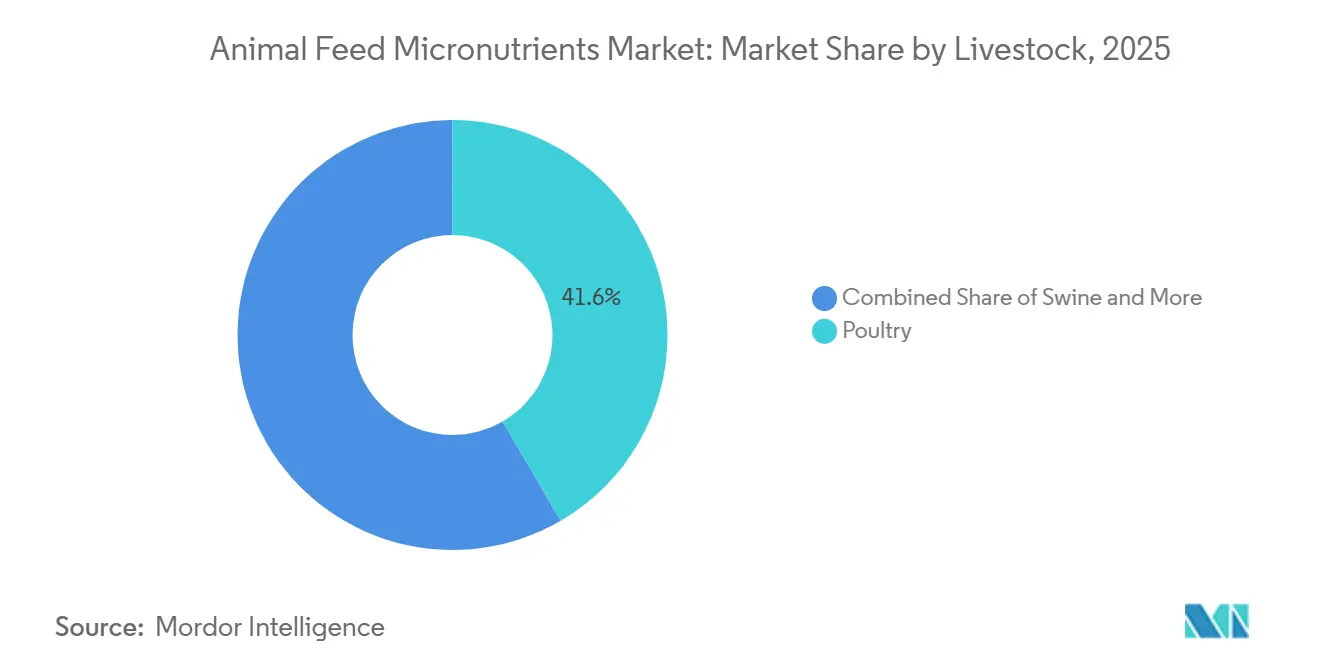
- By livestock, Poultry held the largest 41.6% of the animal feed micronutrients market size in 2025, while Aquaculture was the fastest-growing livestock segment at 7.8% CAGR over 2026-2031.
- By geography, Asia-Pacific held the largest 42.7% share in 2025 and was also the fastest-growing regional segment at 6.8% CAGR over 2026-2031.
Note: Market size and forecast figures in this report are generated using Mordor Intelligence’s proprietary estimation framework, updated with the latest available data and insights as of January 2026.
Global Animal Feed Micronutrients Market Trends and Insights
Drivers Impact Analysis*
| Driver | (~) % Impact on CAGR Forecast | Geographic Relevance | Impact Timeline |
|---|---|---|---|
| Intensifying industrial livestock production worldwide | +1.5% | Global, with the strongest pull in Asia-Pacific, South America, and Sub-Saharan Africa where commercial feed milling is expanding | Short term (≤ 2 years) |
| Rising demand for animal protein and quality meat, milk, eggs, and aquaculture output | +1.3% | Global, with stronger demand acceleration in Asia-Pacific and South America | Short term (≤ 2 years) |
| Tightening feed safety and traceability standards | +0.9% | Strongest in Europe and North America, with growing influence in Asia-Pacific and the Middle East | Medium term (2-4 years) |
| Shift toward higher-bioavailability organic and chelated micronutrients | +0.8% | Strongest in North America and Europe, with faster adoption in premium Asia-Pacific segments | Medium term (2-4 years) |
| Precision feeding platforms enabling species-stage-specific dosing | +0.6% | Led by North America and Europe, with early adoption in commercial poultry and aquaculture systems in the Asia-Pacific region | Long term (≥ 4 years) |
| Reformulation around alternative ingredients and lower crude-protein diets | +0.5% | Most relevant in Europe and North America, with rising relevance in the Asia-Pacific | Medium term (2-4 years) |
| Source: Mordor Intelligence | |||
Intensifying Industrial Livestock Production Worldwide
The animal feed micronutrients market is expanding as global livestock production increasingly shifts toward industrial systems that demand consistent and scalable feed formulations. In 2024, global meat production reached 374 million metric tons, with poultry meat holding the largest share, according to the Food and Agriculture Organization (FAO)[1]. This transition has driven feed mills to adopt standardized micronutrient inclusion practices, ensuring consistent nutrient distribution and feed quality across large-scale production. For instance, according to the European Feed Manufacturers' Federation (FEFAC), the European Union's total compound feed output reached 147.6 million metric tons in 2025, highlighting the scale of organized feed production. As herd and flock sizes grow, even minor improvements in feed efficiency and animal performance offer significant economic benefits. This trend underscores the importance of trace minerals and vitamins in animal feed, supporting the continued expansion of the animal feed micronutrients market.
Rising Demand for Animal Protein and Quality Meat, Milk, Eggs, and Aquaculture Output
The animal feed micronutrients market is experiencing growth due to the rising demand for animal protein and higher-quality livestock products within global food systems. Producers are focusing on enhancing productivity, animal health, and feed efficiency, which has increased the emphasis on balanced micronutrient supplementation. According to the Food and Agriculture Organization (FAO), global milk production reached 985 million metric tons in 2024, indicating continued growth in dairy output. Achieving higher production targets necessitates precise nutritional management, including sufficient levels of vitamins and trace minerals to support animal health, reproduction, immunity, and overall productivity. As livestock systems become more performance-driven, the demand for feed micronutrients is projected to remain robust.
Tightening Feed Safety and Traceability Standards
The animal feed micronutrients market is shaped by increasingly stringent regulations on sourcing, dosage control, and product documentation. The European Food Safety Authority (EFSA) enforces these standards by evaluating and authorizing specific forms of feed additives under European Union Regulation (EC) No. 1831/2003, ensuring compliance with approved chemical compositions and defined inclusion limits. For instance, EFSA has identified significant variations in copper inclusion limits across species, ranging from 15 mg/kg of complete feed for bovines to 150 mg/kg for suckling piglets, underscoring the need for precise micronutrient formulation and dosage management[2]. This level of precision requires robust supplier quality documentation, giving feed mills that source from certified micronutrient suppliers a clear advantage in demonstrating traceability during inspections and audits. As more regions strengthen regulatory oversight of feed additives and feed inputs, compliance is no longer just a cost burden but a key driver of demand, supporting sustained growth in the animal feed micronutrients market.
Shift Toward Higher-Bioavailability Organic and Chelated Micronutrients
The animal feed micronutrients market is shifting toward organic and chelated mineral forms due to their improved absorption efficiency and reduced nutrient waste. In 2025, the European Food Safety Authority (EFSA) confirmed that a copper(II)-betaine complex led to greater copper deposition in broiler liver and skin fat tissues than in unsupplemented groups, demonstrating its superior bioavailability. This is particularly important as stricter regulatory limits on total mineral inclusion make premium forms more attractive by delivering the same biological effects at lower inclusion rates. Similarly, manganese(II)-betaine complex, with approved maximum levels for fish and terrestrial species, reinforces the trend toward efficient mineral delivery. As producers increasingly focus on nutrient retention, excretion, and overall return per animal, the adoption of premium forms is projected to rise. This growing preference underscores the industry's shift toward sustainable, efficient solutions in the animal feed micronutrients market.
Restraints Impact Analysis*
| Restraint | (~) % Impact on CAGR Forecast | Geographic Relevance | Impact Timeline |
|---|---|---|---|
| Volatility in vitamin and specialty mineral input costs | -1.2% | Global, with stronger exposure in Asia-Pacific due to supply concentration, and in Europe and North America due to import and logistics costs | Short term (≤ 2 years) |
| Restrictive inclusion limits and lengthy approvals for certain trace minerals | -0.8% | Strongest in Europe under EFSA and growing in North America | Long term (≥ 4 years) |
| Integrated feed additive programs reducing standalone micronutrient differentiation | -0.6% | Most visible in North America and Europe, with early signs in premium Asia-Pacific segments | Medium term (2-4 years) |
| Micronutrient stability loss during feed storage and pelleting | -0.4% | Global, with stronger severity in tropical Asia-Pacific, Africa, and the Middle East | Short term (≤ 2 years) |
| Source: Mordor Intelligence | |||
Volatility in Vitamin and Specialty Mineral Input Costs
Input cost volatility remains a key short-term restraint on the animal feed micronutrients market, as profitability depends heavily on a limited number of upstream suppliers for essential vitamins and specialty trace minerals. In 2025, DSM-Firmenich reported that supply disruptions in the global vitamin market generated an estimated temporary EBITDA contribution of €150 million (USD 162 million), driven by higher vitamin prices resulting from market shortages[3]. These disruptions in the supply of essential feed vitamins can rapidly increase procurement costs for animal nutrition manufacturers, prompting feed producers to delay the adoption of premium organic trace minerals or optimize micronutrient inclusion rates to control costs. Although baseline demand for essential micronutrients remains intact, sustained volatility in input costs can slow the transition to higher-value formulations, thereby restraining growth in the animal feed micronutrients market.
Integrated Feed Additive Programs Reducing Standalone Micronutrient Differentiation
The animal feed micronutrients market faces increasing competitive pressure as animal nutrition suppliers expand integrated feed additive portfolios that combine micronutrients with phytogenics, postbiotics, enzymes, probiotics, and other functional ingredients. Rather than replacing essential vitamins and trace minerals, these bundled nutrition programs offer comprehensive performance solutions that simplify procurement and technical support for feed manufacturers and livestock producers. This trend is particularly evident in commercial livestock operations seeking integrated strategies to improve feed efficiency, gut health, and productivity. As suppliers increasingly differentiate through complete nutritional solutions rather than individual products, standalone micronutrient offerings face greater pricing pressure and reduced differentiation, limiting value realization within the animal feed micronutrients market.
*Our forecasts treat driver/restraint impacts as directional, not additive. The impact forecasts reflect baseline growth, mix effects, and variable interactions.
Segment Analysis
By Nutrient Type: Trace Minerals Lead, While Vitamins Accelerate
The animal feed micronutrients market size for the trace minerals segment accounted for the largest 37.8% in 2025. Their position reflects the broad role of zinc, copper, manganese, selenium, and iron in immune response, enzyme activity, reproduction, bone integrity, and metabolic control across nearly all commercial species. Zinc remains one of the most widely used trace elements because it supports broiler leg health, sow claw strength, and shrimp immune response across very different production systems. Selenium attracts unusually close regulatory attention because the European Union sets a maximum selenium level of 0.5 mg/kg feed for all species and 0.2 mg/kg for organic selenium sources, which has encouraged more careful reformulation toward more efficient organic forms. Chromium remains a smaller part of the animal feed micronutrients market, but it gained more visibility after EFSA approved chromium propionate for all growing poultry species in 2025 at a maximum of 0.4 mg chromium/kg complete feed.
The animal feed micronutrient market for the vitamins segment is forecast to grow at the fastest CAGR of 7.9% from 2026 to 2031. Growth is being supported by stronger use of vitamins A, D3, E, and K in poultry and dairy systems, where reproductive performance, immunity, and production persistence depend on stable nutrient delivery. Water-soluble vitamins are also becoming more important in aquaculture because intensive shrimp and fish systems respond quickly to nutritional stress, transport shocks, and water-quality variability. Enzymes remain a large and stable part of the broader formulation mix, especially phytases in monogastric diets, but specialty micronutrients such as carotenoids, choline, and protected nutrient formats are taking a larger role in premium feeds. China issued the group standard T/SDFA 053-2025 in September 2025 to define recommended astaxanthin inclusion rates for aquaculture species and ornamental fish, demonstrating how carotenoid use is becoming more formalized in high-value feed applications.

By Livestock: Poultry Dominates, Aquaculture Gains Momentum
Poultry accounted for the largest 41.6% of the animal feed micronutrients market share in 2025, making it the largest livestock segment. Its lead comes from the scale of broiler and layer production and the industry's dependence on precisely formulated compound feed containing essential vitamins and trace minerals, resulting in consistently high demand for feed micronutrients. The Food and Agriculture Organization (FAO) reported poultry meat output of 154.4 million metric tons in 2025, underscoring the sheer scale of feed demand for broilers alone. Within poultry, breeders remain the most technically demanding group because vitamin E, selenium, manganese, and carotenoid levels can affect fertility, embryo viability, and hatch outcomes. Ruminants form the next major block in the animal feed micronutrients market, with dairy cattle standing out for high per-head use of selenium, iodine, and beta-carotene when forage and grain mineral content fall short of production requirements.
Germany's 2025 grain harvest data showed zinc levels of only 24.2-39.6 mg/kg dry matter across cereal types, which explains why direct supplementation remains important in high-output ruminant systems. Swine also remain a major segment, as piglet and sow diets often require stricter mineral control, including higher permissible copper levels for young piglets under European regulations. Aquaculture is the fastest-growing livestock segment, with a 7.8% CAGR over 2026-2031. The Organisation for Economic Co-operation and Development and the Food and Agriculture Organization (FAO) projected aquaculture output at 118 million metric tons by 2034, up 20% from 2022-2024 levels, with shrimp and prawn production projected to record the strongest species-level growth. This growth is driving demand for animal feed micronutrients, as the increasing use of plant-based and alternative feed ingredients in aquaculture reduces the natural availability of essential nutrients. As a result, feed manufacturers are increasingly incorporating vitamins, trace minerals, amino acids, and carotenoids to ensure balanced nutrition, sustain growth performance, and maintain animal health.
Geography Analysis
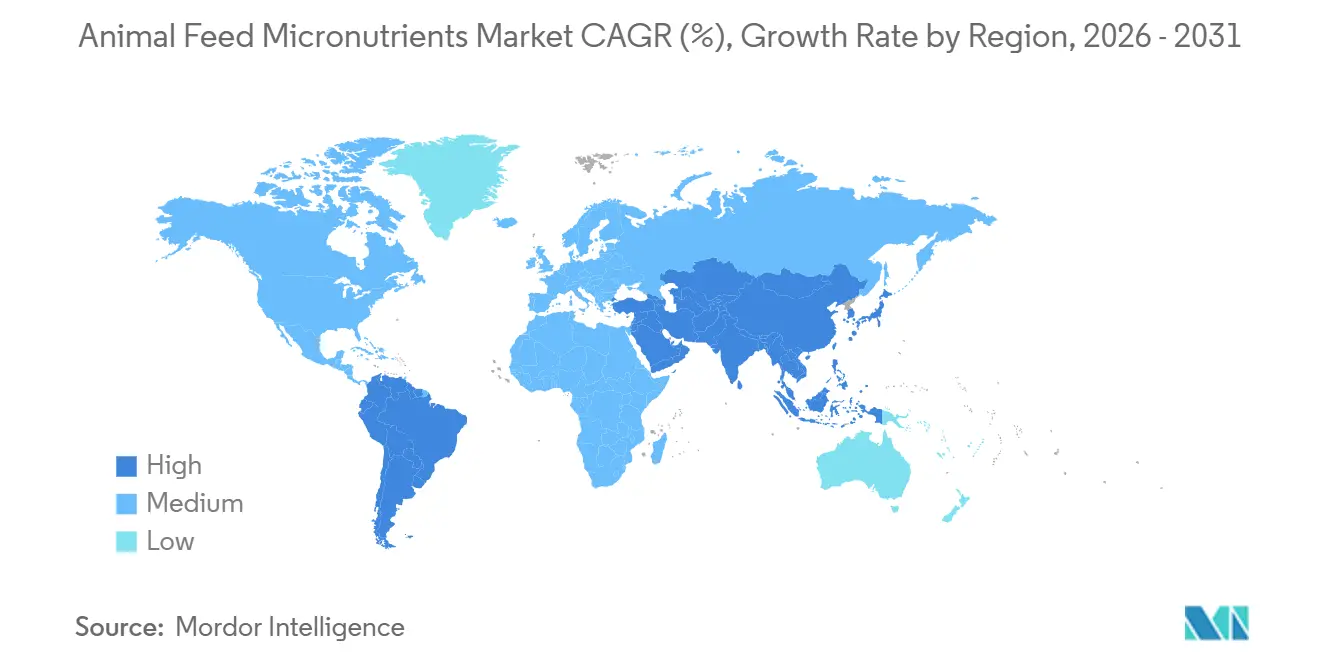
The Asia-Pacific region accounted for the largest share of the animal feed micronutrients market at 42.7% in 2025, and it is also the fastest-growing regional segment, with a projected CAGR of 6.8% from 2026 to 2031. This dominance is attributed to the expansion of commercial feed production across poultry, swine, dairy, and aquaculture value chains. Within the region, China plays a central role due to its majority share in global aquaculture and egg production, both of which depend on micronutrient-intensive feeding systems. Similarly, India's significant contribution to global milk production drives consistent demand for mineral and vitamin supplementation in dairy feed. In addition, Southeast Asia's export-oriented shrimp and fish industries are boosting demand for vitamins, carotenoids, and specialty micronutrient formulations, reinforcing the region's position.
North America is growing moderately, reflecting its mature yet valuable market position. Growth in this region is driven by premiumization, with rising demand for organic trace minerals, species-specific micronutrient solutions, and performance-focused formulations. According to the United States Department of Agriculture (USDA), a cattle inventory of 94.2 million head as of July 2025 provides a strong foundation for beef and dairy micronutrient programs. Mexico and Canada contribute steady demand through their integration with North American feed and livestock systems. In comparison, South America is witnessing faster growth, with Brazil and Argentina adopting standardized micronutrient supplementation practices to support export-oriented poultry, swine, and cattle production.
Europe is anticipated to witness moderate growth, driven by stringent regulatory frameworks that promote the use of high-quality micronutrient formulations. In contrast, Russia faces obstacles due to sanctions and import-substitution policies, which limit access to foreign suppliers. The Middle East is projected to experience significant growth, supported by the increasing adoption of commercial feed, rising investments in food security, and the expansion of formal livestock production systems. Similarly, Africa is projected to achieve steady growth as feed manufacturing becomes more organized and industrialized, although affordability constraints may limit the pace of adoption. Overall, the animal feed micronutrients market is projected to display varied growth trends across regions.
Competitive Landscape
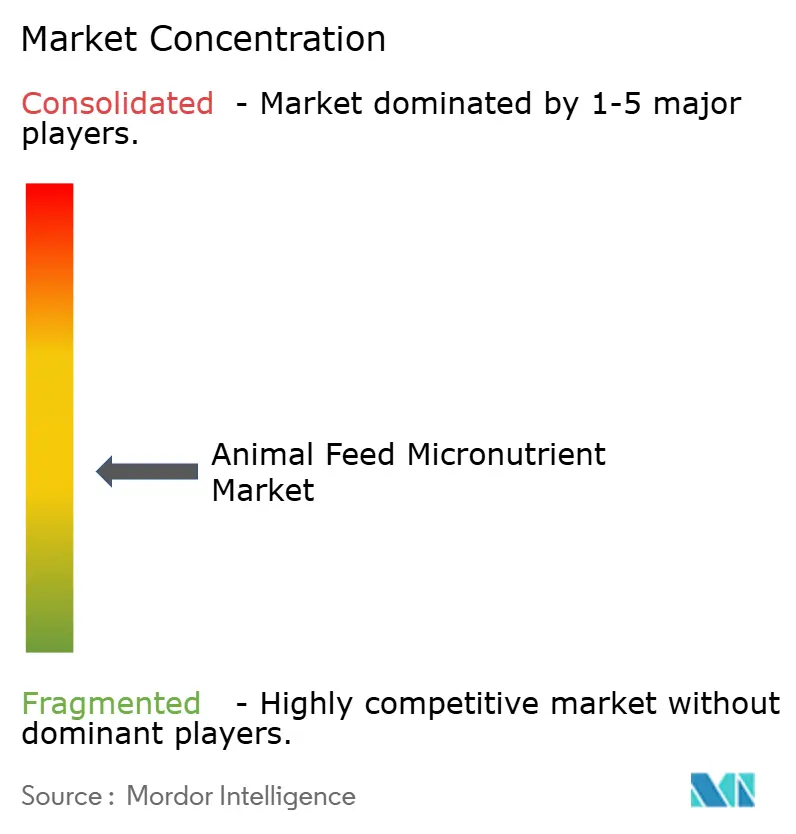
The animal feed micronutrients market is moderately concentrated. The top five companies, including Cargill, Incorporated, ADM, Nutreco N.V. (SHV Holdings N.V.), BASF SE, and Adisseo France S.A.S. (China National BlueStar Group Co., Ltd.), account for the majority of the market share. Despite their dominance, specialist companies such as Zinpro Corporation, Alltech, Inc., and Orffa International Holding B.V. continue to strengthen their presence through technical expertise and species-specific nutrition solutions. While scale provides a competitive advantage, formulation capabilities and application-specific knowledge create opportunities for regional and niche players. Major suppliers are expanding their integrated animal nutrition portfolios, combining vitamins, trace minerals, phytogenics, postbiotics, enzymes, and other functional feed additives to address evolving customer requirements. This trend reflects the growing importance of formulation support, regulatory expertise, and the delivery of measurable performance improvements at both the feed mill and farm levels.
Cargill, Incorporated and ADM have strengthened their market positions by integrating micronutrients into comprehensive animal nutrition solutions tailored to different species and production stages. Nutreco N.V. (SHV Holdings N.V.) differentiates itself through Trouw Nutrition and IntelliBond hydroxy trace minerals, while BASF SE and Adisseo France S.A.S. (China National BlueStar Group Co., Ltd.) maintain strong positions in the vitamin and methionine segments, both of which are essential components of modern animal nutrition. In November 2025, Biochem Zusatzstoffe Handels- und Produktionsgesellschaft mbH signed an agreement to acquire BASF SE's global glycinate business, a move projected to strengthen Biochem's organic trace mineral portfolio upon completion in 2026. In the same month, Cargill, Incorporated expanded its micronutrition facility in Engerwitzdorf, Austria, by 50%, increasing its annual production capacity to 30,000 metric tons. These developments reflect the industry's continued focus on capacity expansion, portfolio diversification, and innovation in micronutrient solutions.
Opportunities for competition are particularly strong in aquaculture-specific programs, tropical-market delivery formats, and digital dosing systems that enhance customer retention. In March 2026, Evonik Industries AG announced a 10% net price increase for MetAMINO, reflecting the willingness of leading suppliers to defend pricing amid tightening supply conditions. In January 2026, Zinpro Corporation launched Zinpro Sole Source for poultry, and in September 2025, it opened an innovation center in Spain to advance animal nutrition research. These initiatives demonstrate a specialist strategy focused on product simplification and technical validation. The animal feed micronutrients market remains dynamic, as specialists continue to excel in areas where bioavailability, species-specific solutions, and research-backed support outweigh the advantages of scale. This balance ensures that moderate market concentration coexists with active competition, driving innovation and growth across both mainstream and premium segments.
Animal Feed Micronutrients Industry Leaders
-
Cargill, Incorporated
-
ADM
-
Nutreco N.V. (SHV Holdings N.V.)
-
BASF SE
-
Adisseo France S.A.S. (China National Bluestar Group Co., Ltd.)
- *Disclaimer: Major Players sorted in no particular order
Recent Industry Developments
- January 2026: Zinpro Corporation launched Zinpro Sole Source for poultry, a single-source organic trace mineral product designed to simplify mineral supplementation while improving mineral absorption, growth performance, and carcass yield.
- November 2025: Cargill, Incorporated, completed a 50% expansion of its Engerwitzdorf, Austria, micronutrition production facility, raising annual capacity to 30,000 metric tons, sufficient to fortify 200 million metric tons of animal feed, and the facility operates on 100% renewable energy.
- November 2025: Biochem Zusatzstoffe Handels- und Produktionsgesellschaft mbH signed a binding agreement to acquire BASF SE's global glycinate business, strengthening Biochem's organic trace mineral portfolio with glycinate product lines and access to BASF's global distribution network.
Global Animal Feed Micronutrients Market Report Scope
Animal feed micronutrients are vital vitamins and trace minerals that are incorporated into livestock and poultry diets in small amounts. They play a key role in supporting metabolic processes, bone development, and reproductive functions.
The animal feed micronutrients market report is segmented by nutrient type (trace minerals (zinc, Iron, copper, manganese, selenium, chromium, and other trace minerals), vitamins (fat-soluble vitamins and water-soluble vitamins), amino acids (methionine, lysine, threonine, tryptophan, and other amino acids), enzymes (phytases, proteases, carbohydrases, and other enzymes), and other micronutrients), by livestock (poultry (broilers, layers, and breeders), ruminants (dairy cattle, beef cattle, and small ruminants), swine (piglets, and grow-finish pigs), aquaculture (fish and shrimps and other crustaceans), and by geography (North America, Europe, Asia-Pacific, South America, and more). The market forecasts are provided in terms of value (USD) and volume (metric tons).
| Trace Minerals | Zinc |
| Iron | |
| Copper | |
| Manganese | |
| Selenium | |
| Chromium | |
| Other Trace Minerals | |
| Vitamins | Fat-Soluble Vitamins |
| Water-Soluble Vitamins | |
| Amino Acids | Methionine |
| Lysine | |
| Threonine | |
| Tryptophan | |
| Other Amino Acids | |
| Enzymes | Phytases |
| Proteases | |
| Carbohydrases | |
| Other Enzymes | |
| Other Micronutrients |
| Poultry | Broilers |
| Layers | |
| Breeders | |
| Ruminants | Dairy Cattle |
| Beef Cattle | |
| Small Ruminants | |
| Swine | Piglets |
| Grow-Finish Pigs | |
| Sows and Boars | |
| Aquaculture | Fish |
| Shrimp and Other Crustaceans | |
| Equine | |
| Other Livestock |
| North America | United States |
| Canada | |
| Mexico | |
| Rest of North America | |
| South America | Brazil |
| Argentina | |
| Rest of South America | |
| Europe | Germany |
| United Kingdom | |
| France | |
| Italy | |
| Spain | |
| Russia | |
| Rest of Europe | |
| Asia-Pacific | China |
| India | |
| Japan | |
| Australia | |
| South Korea | |
| Indonesia | |
| Thailand | |
| Rest of Asia-Pacific | |
| Middle East | Saudi Arabia |
| United Arab Emirates | |
| Turkey | |
| Rest of Middle East | |
| Africa | South Africa |
| Egypt | |
| Nigeria | |
| Rest of Africa |
| By Nutrient Type | Trace Minerals | Zinc |
| Iron | ||
| Copper | ||
| Manganese | ||
| Selenium | ||
| Chromium | ||
| Other Trace Minerals | ||
| Vitamins | Fat-Soluble Vitamins | |
| Water-Soluble Vitamins | ||
| Amino Acids | Methionine | |
| Lysine | ||
| Threonine | ||
| Tryptophan | ||
| Other Amino Acids | ||
| Enzymes | Phytases | |
| Proteases | ||
| Carbohydrases | ||
| Other Enzymes | ||
| Other Micronutrients | ||
| By Livestock | Poultry | Broilers |
| Layers | ||
| Breeders | ||
| Ruminants | Dairy Cattle | |
| Beef Cattle | ||
| Small Ruminants | ||
| Swine | Piglets | |
| Grow-Finish Pigs | ||
| Sows and Boars | ||
| Aquaculture | Fish | |
| Shrimp and Other Crustaceans | ||
| Equine | ||
| Other Livestock | ||
| By Geography | North America | United States |
| Canada | ||
| Mexico | ||
| Rest of North America | ||
| South America | Brazil | |
| Argentina | ||
| Rest of South America | ||
| Europe | Germany | |
| United Kingdom | ||
| France | ||
| Italy | ||
| Spain | ||
| Russia | ||
| Rest of Europe | ||
| Asia-Pacific | China | |
| India | ||
| Japan | ||
| Australia | ||
| South Korea | ||
| Indonesia | ||
| Thailand | ||
| Rest of Asia-Pacific | ||
| Middle East | Saudi Arabia | |
| United Arab Emirates | ||
| Turkey | ||
| Rest of Middle East | ||
| Africa | South Africa | |
| Egypt | ||
| Nigeria | ||
| Rest of Africa | ||
Key Questions Answered in the Report
What is the current outlook for animal feed micronutrients demand?
The animal feed micronutrients market was valued at USD 1.99 billion in 2025 and is anticipated to reach USD 2.12 billion in 2026.
Which livestock category creates the strongest demand?
Poultry is the largest livestock segment with 41.6% share in 2025, supported by the scale of global broiler, layer, and breeder feed programs.
Which region offers the strongest growth opportunity through 2031?
Asia-Pacific is both the largest regional segment, with a 42.7% share in 2025, and the fastest-growing region, with a 6.8% CAGR over 2026-2031.
Why are vitamins and trace minerals becoming more important in feed programs?
Producers are managing higher output targets in meat, milk, eggs, and aquaculture, while also replacing less precise feeding practices with more traceable nutrition programs.
What is limiting the faster adoption of premium micronutrient products?
The main limits are volatile vitamin and specialty mineral costs, long approval timelines for new trace mineral forms, and competition from bundled additive packages.