
Animal Feed Organic Trace Minerals Market Size and Share
Market Overview
| Study Period | 2021 - 2031 |
|---|---|
| Market Size (2026) | USD 158.45 Million |
| Market Size (2031) | USD 206.19 Million |
| Growth Rate (2026 - 2031) | 5.42 % |
| Fastest Growing Market | Middle East |
| Largest Market | Asia Pacific |
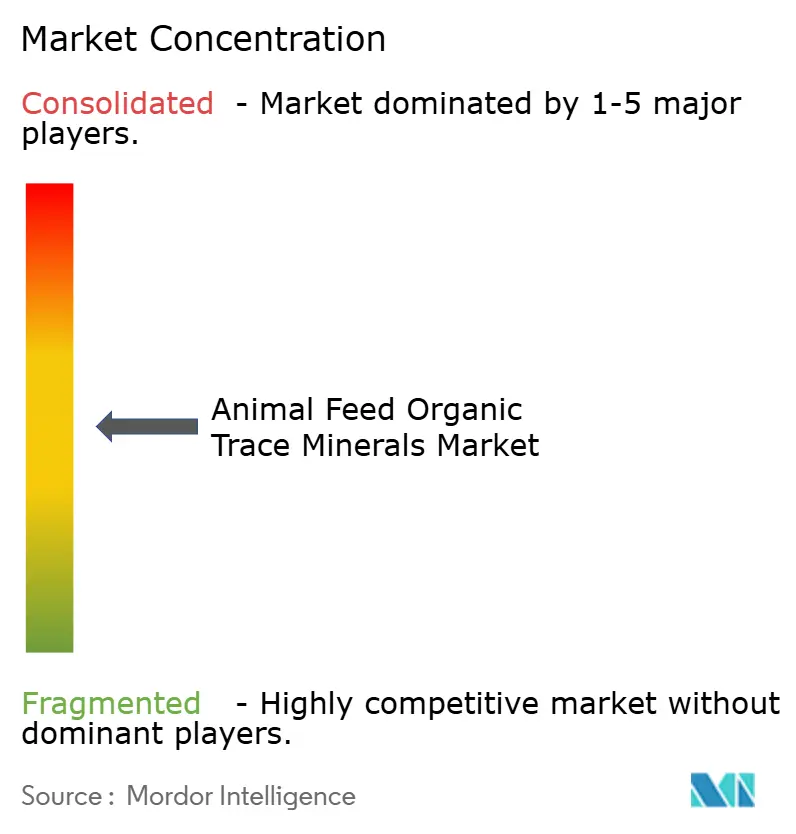
| Market Concentration | Medium |
Major Players *Disclaimer: Major Players sorted in no particular order Image © Mordor Intelligence. Reuse requires attribution under CC BY 4.0. | |
Animal Feed Organic Trace Minerals Market Analysis by Mordor Intelligence
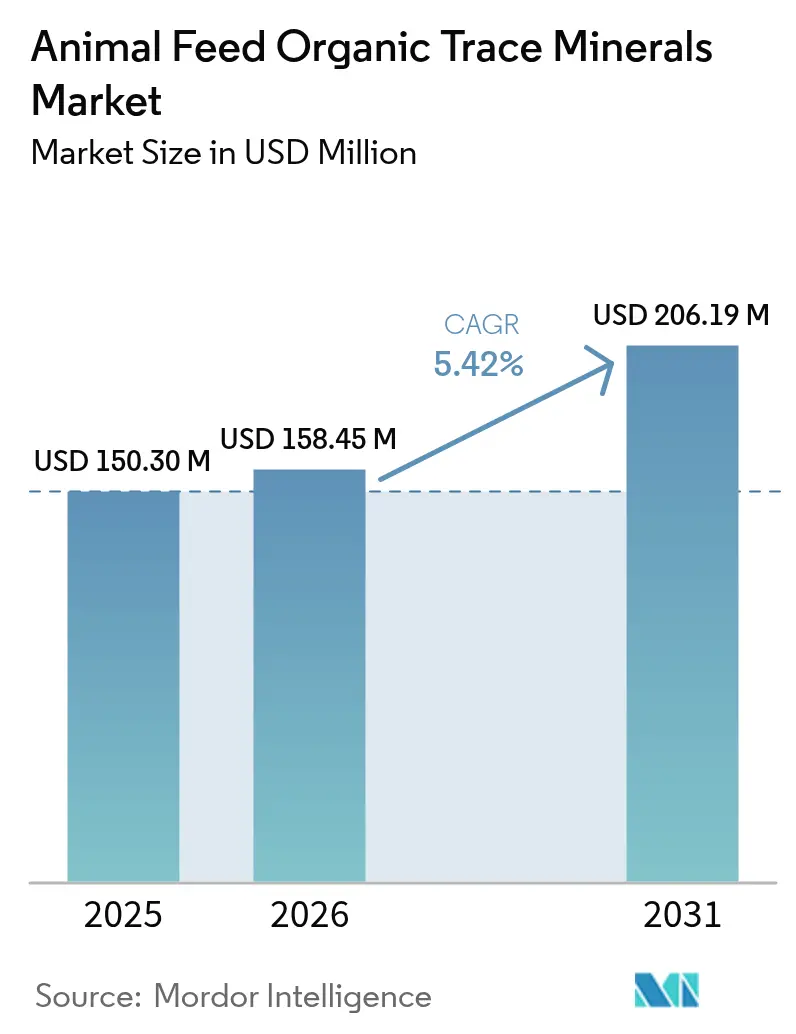
The animal feed organic trace minerals market size is expected to grow from USD 150.3 million in 2025 to USD 158.45 million in 2026 and is forecast to reach USD 206.19 million by 2031 at 5.42% CAGR over 2026-2031. The market expansion is driven by the transition from antibiotic growth promoters to bioavailable mineral solutions that comply with discharge regulations while maintaining productivity. Chelated minerals provide 2-3 times higher absorption compared to inorganic variants, allowing reduced inclusion rates without affecting animal performance. The adoption of digital feed-formulation technologies enhances dosage accuracy and demonstrates clear returns on investment. Market competition focuses on developing proprietary chelation technologies, implementing AI-based nutrition systems, and expanding regional production capacity to reduce supply chain vulnerabilities and protect customers from raw material price fluctuations.
Key Report Takeaways
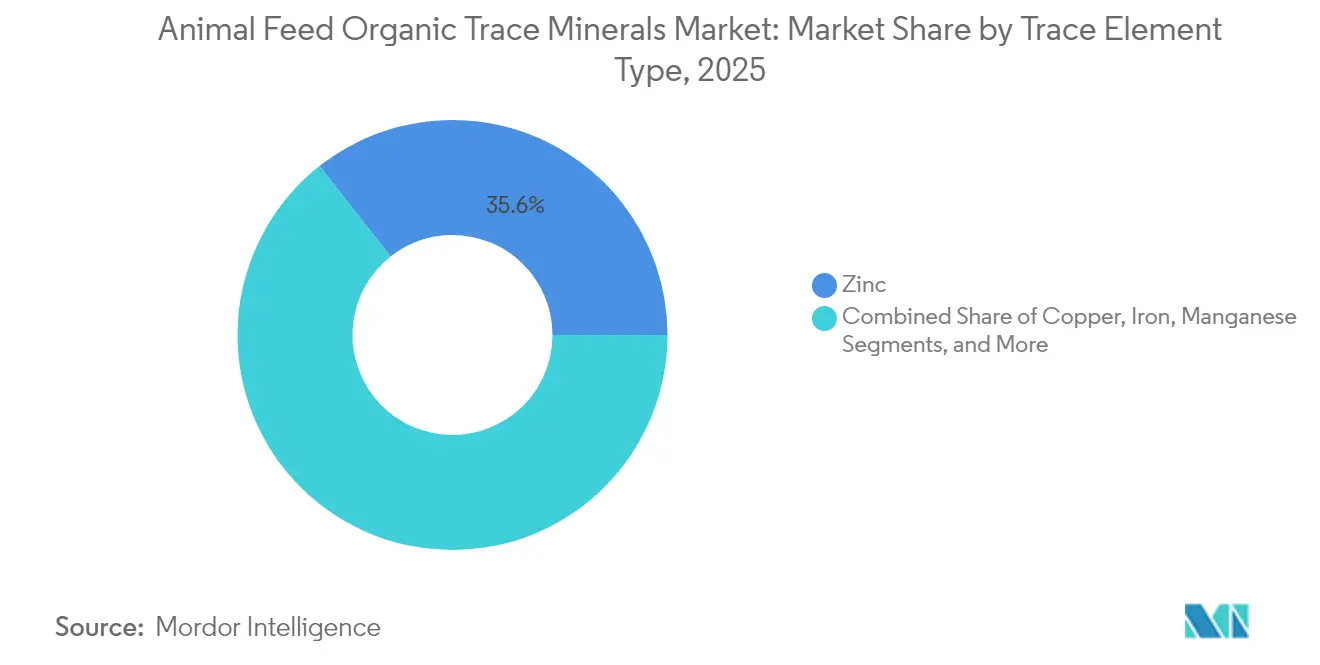
- By trace element type, zinc led with 35.62% of the animal feed organic trace minerals market share in 2025, while selenium is growing fastest at an 7.78% CAGR through 2031.
- By chelation type, amino-acid chelates controlled 39.74% revenue in 2025; hydroxy-trace minerals are advancing at a 9.74% CAGR through 2031.
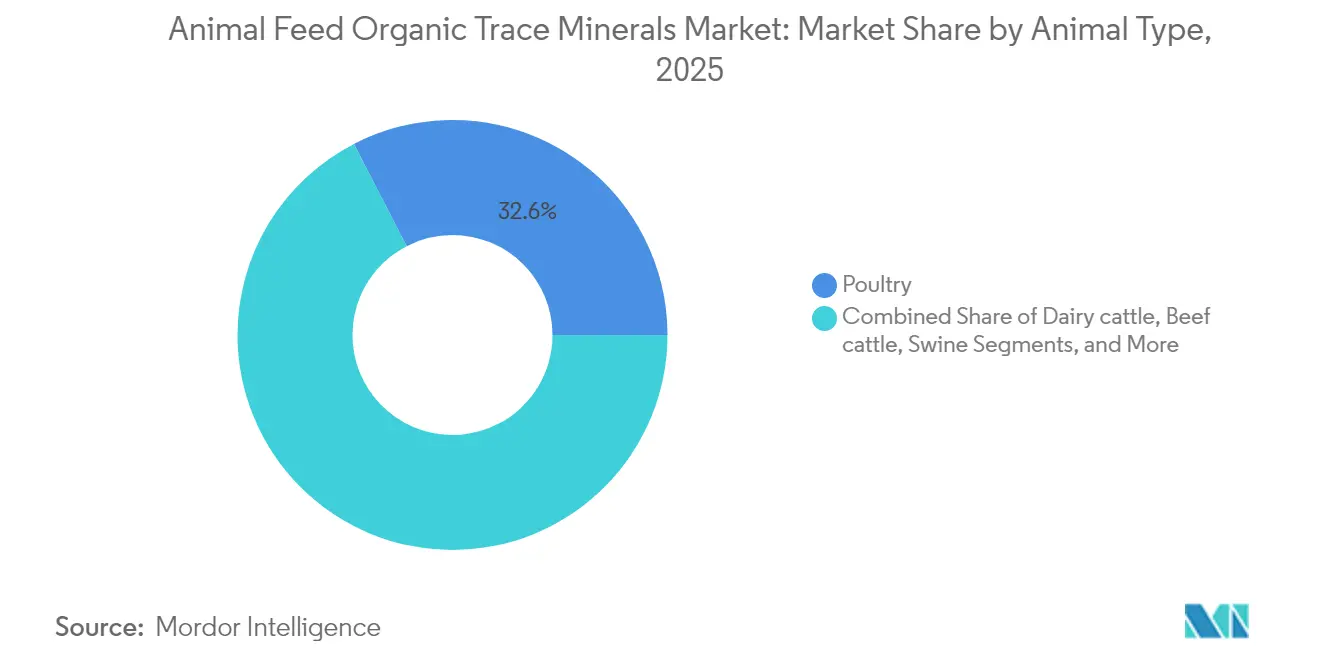
- By animal type, poultry captured 32.58% of 2025 revenue, and the aquaculture is expanding at a 8.92% CAGR to 2031.
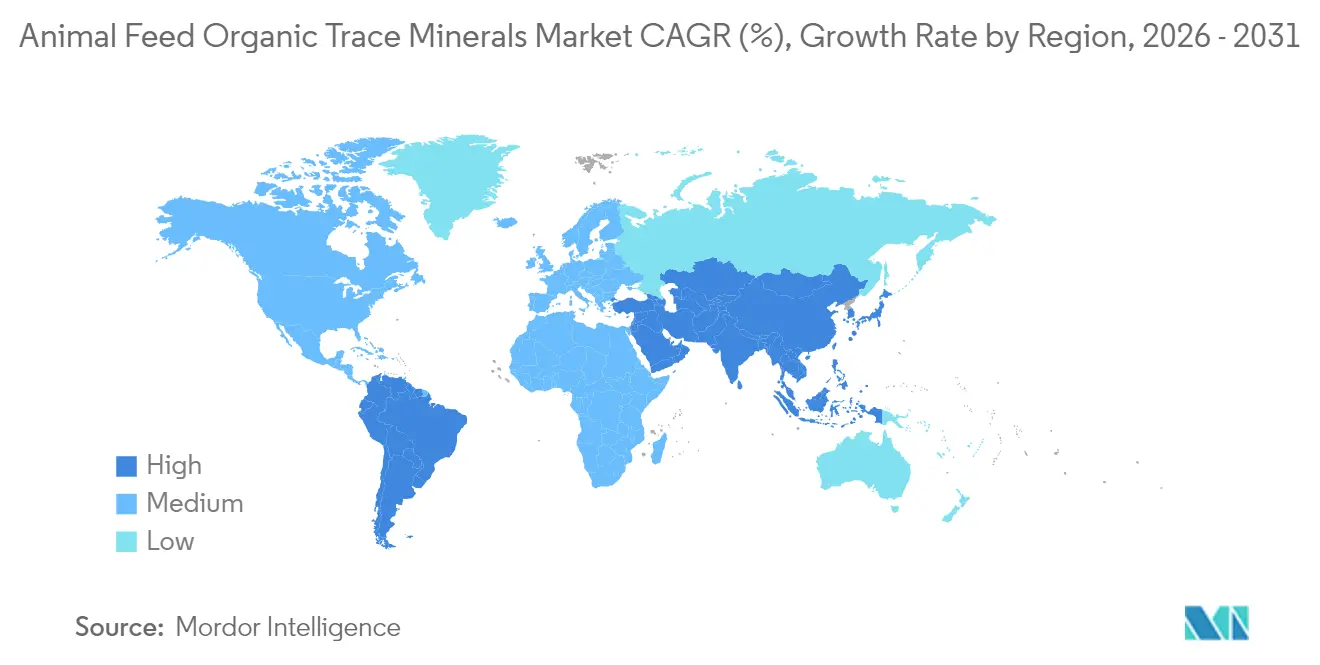
- By geography, Asia-Pacific accounted for 43.65% of revenue in 2025; the Middle East is accelerating at an 7.82% CAGR through 2031.
- The market shows moderate concentration, with five major companies accounting for 44% of annual revenue. Cargill, Incorporated leads with a 12% market share, followed by DSM-Firmenich (9.1%), Zinpro (8.2%), SHV (Nutreco NV) (A Bluestar Company) (7.6%), and Adisseo (6.9%).
Note: Market size and forecast figures in this report are generated using Mordor Intelligence’s proprietary estimation framework, updated with the latest available data and insights as of 2026.
Market Trends and Insights
Drivers Impact Analysis of Animal Feed Organic Trace Minerals Market*
| Driver | (~) % Impact on CAGR Forecast | Geographic Relevance | Impact Timeline |
|---|---|---|---|
| Escalating demand for high-quality animal protein | +1.8% | Global, with concentration in Asia-Pacific and South America | Medium term (2–4 years) |
| Stringent bans on Antibiotic Growth Promoters (AGPs) | +1.5% | North America and Europe; expanding to Asia-Pacific | Short term (≤ 2 years) |
| Tighter manure-phosphorus and heavy-metal discharge regulations | +1.2% | North America and Europe; adoption emerging in Asia-Pacific | Medium term (2–4 years) |
| Rapid adoption of precision-chelation and micro-encapsulation technology | +0.9% | Global, led by developed markets | Long term (≥ 4 years) |
| Livestock carbon footprint measurement and dietary impact | +0.7% | Europe and North America, with pilot programs in Asia-Pacific | Long term (≥ 4 years) |
| AI-driven digital feed-formulation platforms standardizing organic trace minerals | +0.6% | Global, with early adoption in North America and Europe | Medium term (2-4 years) |
| Source: Mordor Intelligence | |||
Escalating Demand for High-Quality Animal Protein
The increasing disposable income in Asia-Pacific and South America has elevated the consumption of premium meat, milk, fish, and eggs, prompting producers to focus on nutritional value enhancement rather than volume production. The use of chelated selenium and zinc improves antioxidant levels, extends product shelf-life, and enhances sensory characteristics, enabling higher retail prices. Research indicates that bioavailable minerals deliver 3-5% better feed conversion compared to inorganic salts, compensating for higher additive costs while meeting lean-meat requirements. Retail chains include mineral-enrichment specifications in supplier agreements, driving adoption throughout integrated supply chains. Additionally, governments in regions with protein deficiency promote mineral optimization as part of their food security initiatives.
Stringent Bans on Antibiotic Growth Promoters (AGPs)
The ban on routine in-feed antibiotics by North American and European regulators, along with upcoming phase-out policies in Asia-Pacific markets, has created a productivity challenge in animal farming. Zinc and copper chelates have emerged as crucial alternatives, as they help maintain gut health and enhance immune function. Field trials conducted after the antibiotic ban demonstrate that organic mineral supplementation programs can achieve up to 90% of previous weight-gain performance, helping maintain profitability in intensive farming operations. Feed manufacturers are now combining chelated minerals with phytogenic compounds to develop antibiotic-free feed concentrates at premium price points. The implementation of antibiotic restrictions across emerging economies is expanding the market potential for animal feed organic trace minerals.
Tighter Manure-Phosphorus and Heavy-Metal Discharge Regulations
The Environmental Protection Agency's CAFO regulations and corresponding European Union directives establish strict limits on zinc, copper, and phosphorus excretion.[1]Environmental Protection Agency, “National Pollutant Discharge Elimination System, Concentrated Animal Feeding Operations,” epa.gov Chelated minerals reduce fecal losses by 20-40%, enabling producers to maintain compliance without compromising growth performance. Non-compliance results in financial penalties and damage to reputation, prompting integrators to implement precision-nutrition audits for verifying inclusion rates and excretion coefficients. Multiple U.S. states connect nutrient-management funding to verified reductions in mineral discharge, providing additional incentives for early adoption. These environmental requirements generate sustained demand that strengthens the growth prospects of the animal feed organic trace minerals market.
Rapid Adoption of Precision-Chelation and Micro-Encapsulation Technology
Hydroxy-trace minerals and next-generation chelates maintain their stability through acidic gut conditions, improving absorption and reducing antagonistic losses. Encapsulation protects sensitive ligands during pelleting and extrusion processes, ensuring nutrient consistency in high-temperature feed production. Producers report reduced mortality rates and more consistent weight distributions in broilers and shrimp, which is significant for processors operating with narrow margins. Technology providers integrate artificial intelligence-based formulation systems with real-time sensor data, enabling nutritionists to adjust chelated mineral levels based on weather conditions, water quality, and disease indicators. Analysis of total ownership costs demonstrates net cost advantages compared to inorganic programs when accounting for waste management expenses and performance improvements.
Restraints Impact Analysis of Animal Feed Organic Trace Minerals Market*
| Restraint | (~) % Impact on CAGR Forecast | Geographic Relevance | Impact Timeline |
|---|---|---|---|
| Premium pricing versus inorganic counterparts | -1.4% | Global; highest sensitivity in price-conscious markets | Short term (≤ 2 years) |
| Limited awareness among smallholder farmers | -1.1% | Asia-Pacific, Africa, and South America | Medium term (2–4 years) |
| Supply bottlenecks for key chelating ligands | -0.8% | Global, with concentration in amino acid supply chains | Short term (≤ 2 years) |
| Regulatory fragmentation across organic-livestock certification bodies | -0.6% | Global, with particular complexity in cross-border trade | Long term (≥ 4 years) |
| Source: Mordor Intelligence | |||
Premium Pricing Versus Inorganic Counterparts
Organic trace minerals cost 2-4 times more than oxides or sulfates, which limits their adoption in the poultry and pig sectors, where feed represents over 70% of production costs. The volatility in corn and soybean meal prices increases scrutiny of feed additives. Producers require a return on investment analyses supported by data before implementing chelated mineral programs. Nutrition companies offer tiered product lines, volume rebates, and bundled formulations to distribute costs across multiple performance benefits. Digital calculators that convert inclusion rates into carcass-yield gains help demonstrate value beyond feed cost considerations.
Limited Awareness Among Smallholder Farmers
Family-operated herds and ponds constitute the primary livestock production systems across Asia-Pacific, Africa, and South America. The extension systems lack adequate resources to disseminate advanced mineral-nutrition knowledge. Limited understanding of proper dosage, compatibility, and return on investment restricts adoption, concentrating sales among commercial integrators. The information gap is narrowing through language-specific manuals, radio programming, and demonstration farm trials. The animal feed organic trace minerals market is expanding through emerging partnerships between mineral suppliers, local cooperatives, and microfinance institutions that combine technical training with product access.
*Our forecasts treat driver/restraint impacts as directional, not additive. The impact forecasts reflect baseline growth, mix effects, and variable interactions.
Animal Feed Organic Trace Minerals Market Segment Analysis
By Trace Element Type:
Zinc Dominance Amid Selenium SurgeZinc maintained 35.62% of the animal feed organic trace minerals market share in 2025, supported by its essential role in over 80 metalloenzymes that influence immune function, epithelial integrity, and reproduction. The higher bioavailability of organic zinc enables producers to reduce dietary inclusion rates while meeting environmental excretion limits, resulting in lower environmental fees and improved profit margins. Selenium, despite its minimal dietary requirement, achieved the highest growth rate at 7.78% CAGR, driven by processors seeking enhanced antioxidant properties to extend the shelf-life of chilled meat, particularly in aquaculture fillets susceptible to oxidative deterioration during maritime transport. Copper, manganese, and iron remain essential nutrients but face strict inclusion limits, increasing the demand for chelated forms that maintain performance at reduced concentrations.
The distribution of trace elements reflects both biological requirements and regulatory constraints. While zinc maintains market dominance, selenium commands higher prices and benefits from marketing advantages through "selenium-enriched" product labeling. Cobalt and chromium serve specific functions in rumen metabolism and glucose utilization, while iodine and molybdenum address regional deficiency issues. Market growth favors elements that improve product quality while helping meet waste management regulations. These factors create an interconnected foundation for the animal feed organic trace minerals market.



By Chelation Type:
Amino-Acid Supremacy Challenged by Hydroxy InnovationAmino-acid chelates accounted for 39.74% of revenue in 2025, driven by established production methods, widespread regulatory approval, and compatibility with existing formulation matrices. These remain the preferred choice for poultry operations focused on established cost-effectiveness. While the animal feed organic trace minerals market for amino-acid chelates continues to grow, hydroxy-trace minerals are gaining momentum with a 9.74% CAGR, attributed to their enhanced stability in acidic gut environments and reduced mineral interactions.
Proteinates and polysaccharide complexes maintain specific market segments where taste preferences or controlled-release properties offer distinct benefits, particularly in ruminant total mixed rations and fish-feed pellets. Yeast-based mineral complexes combine probiotic benefits with mineral supplementation, appealing to customers seeking to reduce additive components. Propionate chelates serve certified-organic operations that avoid synthetic amino acids. Market competition centers on patent development for ligand ratios, particle characteristics, and coating methods to achieve specific release patterns. These technological developments will continue to shape the animal feed organic trace minerals market through 2031.
By Animal Type:
Poultry Leadership Amid Aquaculture AccelerationPoultry accounted for 32.58% of 2025 revenue, driven by vertically integrated broiler and layer operations that require precise mineral specifications to optimize feed conversion and egg shell integrity. The use of organic zinc, copper, and manganese improves bone strength and eggshell quality, which reduces cull rates and increases economic efficiency. The aquaculture segment is growing at a 8.92% CAGR, the highest in the animal feed organic trace minerals market, as fish and shrimp farms increase stocking densities and focus on mineral optimization to reduce disease outbreaks and avoid water pollution penalties.
The dairy cattle segment maintains a significant market share due to extended lactation periods that require optimal mineral levels for reproductive performance and milk quality control. Swine producers use organic minerals to reduce post-weaning diarrhea and enhance growth in antibiotic-free facilities. Pet food manufacturers incorporate chelated minerals in premium and therapeutic diets to meet the growing consumer demand for functional benefits. While equine and specialty species contribute to market demand, the primary volume competition remains between intensive poultry operations and expanding aquaculture facilities.
Geography Analysis
APAC Animal Feed Organic Trace Minerals Market
Asia-Pacific holds 43.65% of the 2025 revenue in the animal feed organic trace minerals market, driven by China's aquaculture production and India's growing broiler and shrimp industries. Government subsidies for domestic feed additives increase the adoption of high-absorption mineral formats. The region's market size benefits from concentrated production clusters that reduce logistics costs and enable direct relationships between suppliers and integrators. Japan and South Korea's technical expertise and research capabilities support the implementation of advanced chelates with proven environmental benefits.
Middle East Animal Feed Organic Trace Minerals Market
The Middle East market projects an 7.82% CAGR through 2031, supported by government investments in protein production capacity, including Saudi Arabia's target of 600,000 metric tons of fish by 2030. The region's water scarcity necessitates precise mineral feeding to reduce effluent discharge. Feed mills positioned near coastal farming centers minimize oxidation during transport, increasing demand for temperature-resistant trace mineral formats.
The Americas and Europe Animal Feed Organic Trace Minerals Market
North America and Europe represent established markets where regulatory requirements and sustainability commitments generate steady growth. The FDA's Veterinary Feed Directive and European restrictions on antibiotic usage encourage organic mineral supplementation to maintain animal performance. Environmental regulations on mineral discharge promote the use of highly bioavailable forms. South America shows growth potential as swine and poultry integrators enhance nutrition programs to comply with export market requirements, balancing cost considerations with increased adoption of chelated minerals. These regional developments indicate diverse growth opportunities in the animal feed organic trace minerals market.

Regulatory Landscape
Regulation of organic trace minerals in animal feed is split between general feed-additive and ingredient rules and organic-livestock requirements. In the European Union, trace-mineral additives require authorization under the feed-additives framework (Regulation (EC) No 1831/2003) after EFSA FEEDAP safety and efficacy assessment, followed by European Commission implementing acts. Recent EU actions show how approvals are managed compound-by-compound, shaping product portfolios and species access, including Implementing Regulation (EU) 2024/3168 authorizing a preparation of zinc-L-selenomethionine for all animal species, and Implementing Regulation (EU) 2025/1782 authorizing chromium chelate of DL-methionine for salmonids (with Zinpro Animal Nutrition Europe as holder).
In the United States, organic trace mineral use in certified-organic livestock must comply with the USDA National Organic Program requirements in 7 CFR Part 205, including National List allowances for feed supplements (7 CFR 205.603). For broader animal feed ingredient compliance, FDA oversight and common industry pathways such as AAFCO ingredient definitions and contaminant guidance remain the working controls. The USDA AMS continues to update organic-related guidance and proposed rulemaking, including a proposed rule published in March 2026 to amend organic regulations, which adds a tracking requirement for suppliers targeting organic production alongside conventional feed additive controls.
Competitive Landscape
The market demonstrates moderate concentration with five major players controlling 44% of annual revenue. Cargill, Incorporated holds 12% market share, followed by DSM-Firmenich at 9.1%, Zinpro at 8.2%, SHV (Nutreco NV) (A Bluestar Company) at 7.6%, and Adisseo at 6.9%. The remaining market share provides opportunities for mid-sized specialists and regional companies. Industry consolidation continues, as evidenced by Nutreco's 2024 acquisition of Micronutrients (now Selko), which consolidated its chelation portfolio and distribution. Cargill expanded its market presence through mill acquisitions and a Saudi aquaculture venture, strengthening its feed-to-fork capabilities while increasing demand for its mineral products.
Innovation drives competitive differentiation in the market. DSM-Firmenich increased its regional capacity by 100,000 metric tons with its Sete Lagoas plant, which includes analytics laboratories for developing mineral premixes suited to Brazil's diverse climate zones. Zinpro introduced TruCare LQ Zn, a water-soluble zinc product for stressed piglets that complies with large barn biosecurity requirements. Second-tier suppliers focus their research and development on polysaccharide or yeast-based complexes, often collaborating with local universities to validate effectiveness across different species.
Market entry barriers include regulatory requirements, specialized application knowledge, and global logistics capabilities. Companies that integrate patented chemical formulations with AI-supported formulation software and comprehensive technical support establish long-term customer relationships. Leading food companies increasingly require sustainability audits and carbon-footprint monitoring, benefiting mineral suppliers that can demonstrate reduced waste and transparent sourcing practices. These factors shape the animal feed organic trace minerals market structure.
Animal Feed Organic Trace Minerals Industry Leaders
Cargill, Incorporated
DSM-Firmenich
Zinpro
SHV (Nutreco NV)
Adisseo (A Bluestar Company)
- *Disclaimer: Major Players sorted in no particular order
Animal Feed Organic Trace Minerals Market Companies Covered in this Report
- Alltech
- ADM
- Balchem Corp.
- Biochem Zusatzstoffe Handels
- DSM-Firmenich
- Adisseo (A Bluestar Company)
- Cargill, Incorporated
- Kemin Industries, Inc.
- Novus International, Inc.
- SHV (Nutreco NV)
- Orffa
- BASF SE
- Phibro Animal Health
- Zinpro
- Vamso Biotec Pvt. Ltd.
Read Analysis of Animal Feed Organic Trace Minerals Companies

Market Opportunities and Future Outlook
Portfolio expansion through regulatory authorizations is creating whitespace for differentiated organic trace mineral chemistries in high-compliance markets, particularly in Europe where EFSA opinions and European Commission implementing acts gate access by compound and species. The authorization of chromium chelate of DL-methionine for salmonids under Implementing Regulation (EU) 2025/1782 is a clear route for new organic trace mineral forms in aquaculture, where producers manage effluent and health outcomes through nutrition. Organic-livestock channels also retain an opportunity tied to compliance readiness, as the USDA National Organic Program allows synthetic trace minerals as feed supplements under 7 CFR 205.603(d)(2) when aligned with FDA and AAFCO frameworks. This supports branded mineral programs that can document source and contaminant controls, along with formulation fit for certified operations.
Technology-led differentiation continues to center on stability and measurable bioavailability while supporting waste-reduction goals that favor adoption away from inorganic salts. Market activity such as Biochem securing EU approval for BetaTrace Cu (completing a portfolio spanning zinc, copper, manganese, and iron bound to betaine) illustrates how approvals can broaden species coverage and help standardize product families for premix and compound feed customers. Processing and production innovation, including emerging work on hot melt extrusion and microbial synthesis routes for advanced mineral forms, also opens avenues for suppliers to pair performance claims with sustainability and manufacturing-efficiency narratives, as long as products remain within approved additive definitions and region-specific inclusion limits.
Recent Industry Developments in Animal Feed Organic Trace Minerals Market
- January 2026: Biochem announced that BetaTrace Cu received European Union approval, completing its BetaTrace organic trace mineral portfolio spanning zinc, copper, manganese, and iron bound to betaine. The approval strengthens Biochem's ability to serve EU feed and premix customers with a more standardized product family across multiple trace elements.
- November 2025: Cargill completed an expansion at its Engerwitzdorf, Austria facility, increasing micronutrition production capacity by 50% to 30,000 metric tons per year. Added regional capacity supports faster supply and formulation support for European customers using organic and specialty trace mineral solutions.
- September 2025: Zinpro opened an innovation center in Santiago de Compostela, Spain, focused on gastrointestinal research and rumen digestion, alongside development of nutritional solutions. The site adds localized R&D capability that can accelerate validation and adaptation of organic trace mineral programs for European production systems.


Animal Feed Organic Trace Minerals Market Report Scope and Research Methodology
Market Definition and Coverage
This market covers the value of organic trace minerals used as nutritional additives in animal feed and premixes, where minerals are bound in organic forms to improve absorption in livestock and aquaculture diets.
Scope exclusions: Inorganic mineral salts and nano-mineral formulations are not counted in this market sizing.
Segments Covered in This Report
- By Trace Element Type
- Zinc
- Copper
- Iron
- Manganese
- Selenium
- Cobalt
- Chromium
- Others
- By Chelation Type
- Amino-Acid Chelates
- Proteinates
- Polysaccharide Complexes
- Hydroxy-Trace Minerals
- Propionates
- Yeast-Based Complexes
- Others
- By Animal Type
- Dairy cattle
- Beef cattle
- Poultry
- Swine
- Aquaculture
- Pets
- Equine
- Others
- By Geography
- North America
- United States
- Canada
- Mexico
- Rest of North America
- Europe
- Germany
- France
- United Kingdom
- Italy
- Spain
- Netherlands
- Russia
- Rest of Europe
- Asia-Pacific
- China
- India
- Japan
- Australia
- South Korea
- Rest of Asia-Pacific
- South America
- Brazil
- Argentina
- Chile
- Rest of South America
- Middle East
- Saudi Arabia
- Turkey
- UAE
- Rest of Middle East
- Africa
- South Africa
- Egypt
- Kenya
- Rest of Africa
- North America
Data Sources, Market Sizing, and Validation
Desk Research
Desk work starts with mapping the demand pool for compound feed and premixes, and then checking how trace mineral inclusion trends are evolving by animal production systems. We rely on public datasets and technical references such as FAOSTAT, USDA and Eurostat livestock and feed indicators, and guidance and scientific opinions from the European Food Safety Authority, which help us understand safe use levels and adoption limits.
To keep pricing and trade assumptions realistic, we also look at signals like UN Comtrade trade flows for relevant mineral inputs and peer-reviewed animal nutrition journals that discuss organic mineral performance and dosage practices. Company annual reports, investor presentations, and reputable industry press are used to confirm product positioning and where organic forms are prioritized in formulations. Where needed, we supplement with paid subscriptions used for company financials and intelligence, and for patent databases, mainly to validate player activity and where innovation is moving. These sources are illustrative only, and we review additional references to collect data, cross-check figures, and clarify open questions.
Primary Interviews and Surveys
Primary work is used to pressure-test the adoption curve for organic trace minerals across poultry, ruminants, swine, aquaculture, and other feed applications, because inclusion rates and purchasing habits can differ by species and region. We speak with a mix of feed manufacturers, premix blenders, distributors, nutritionists, and raw material suppliers to confirm typical inclusion levels, buyer preference shifts, and how pricing moves through contracts and spot buying. Since this is a global market, coverage is balanced across major consuming regions so assumptions on Asia focused volume growth and mature market reformulation trends are checked against on-the-ground inputs.
Distribution of primary research fieldwork respondents
| Company type | Respondent position | Region |
|---|---|---|
| Top tier: 28% | CXOs: 13% | APAC: 48% |
| Mid tier: 55% | Functional/Unit leaders: 34% | EMEA: 30% |
| Smaller Players: 17% | Managers: 53% | Americas: 22% |
Market-Sizing & Forecasting
Sizing is built with a top-down logic where global and regional feed output and animal production indicators are reconstructed into an addressable demand pool, and then adjusted using organic trace mineral penetration into premixes and complete feed. In practice, the model is anchored to measurable inputs such as compound feed volumes by species, shifts toward higher bioavailability formulations, typical inclusion rates for key elements (zinc, copper, iron, manganese, selenium, and others), and average selling price ranges by chelation type like amino-acid chelates and proteinates.
Those totals are then corroborated through selective bottom-up checks, including sampled price per kilogram against implied consumption volumes and channel checks on premix usage. This helps us correct for gaps where public data is thin. When primary inputs suggest that adoption differs sharply by region or species, we adjust the penetration and pricing paths rather than forcing a single global average.
For forecasting, scenario analysis is used to reflect how regulatory guidance, cost of chelated inputs, and livestock production cycles can change year to year, and then the base case is aligned with the most consistent expectations shared by interviewees. The forecast also tracks a realistic ASP progression, where price changes are not assumed to move uniformly across all chelation types and geographies.
Data Validation & Update Cycle
Validation is done by comparing outputs against independent signals such as animal headcount trends, compound feed production direction, and plausibility checks on implied inclusion rates by species. If a region shows an abrupt jump that is not supported by feed output or reported formulation behavior, the assumptions are reviewed, and follow up calls are triggered to understand what changed.
Before sign-off, the model and the story go through multiple analyst reviews, with a separate pass focused on unit consistency, currency conversion timing, and outlier pricing. Reports are refreshed annually, and interim updates are made when material events occur, such as major regulatory changes or sharp input cost swings. Right before delivery, we run a final sweep so clients receive the latest updated view rather than an older snapshot.
Mordor Intelligence's Animal Feed Organic Trace Minerals Market Sizing Compared With Other Published Estimates
Published market sizes for animal feed organic trace minerals can look far apart, even when the topic sounds identical, because the counted product set and the way volumes are converted into value often differ. Variations also show up when base years are not aligned, when pricing is assumed from list prices instead of realized selling prices, or when regional coverage is expanded without clearly stating what is included.
The main gap comes from whether inorganic trace minerals and blended premix value are mixed into the total, and how element types like zinc and copper are priced across chelation formats, which is why Mordor Intelligence only counts organic forms and keeps pricing tied to reported adoption and inclusion behavior. Some estimates also use more aggressive penetration assumptions for fast growing regions, while others apply a single global uptake rate that can miss species level differences across poultry, ruminants, swine, and aquaculture.
Benchmark comparison
| Source | Market Size | Gaps in Research Methodology |
|---|---|---|
| Mordor Intelligence | USD 150.30 M (2025) | |
| Global Consultancy A | USD 794.70 M (2024) | Uses an earlier base year and appears to apply a broader value pool that can inflate totals if premix value add or adjacent mineral categories are blended into the definition, with limited visibility on how chelation types are separated in ASPs. |
| Industry Research Group B | USD 892.64 M (2025) | Starts from a larger 2025 total and may apply higher organic penetration or wider product coverage across product types, which can shift the result if inclusion rates and pricing are not constrained by feed output and species level formulation practices. |
The spread across sources mostly traces back to what gets included with organic trace minerals, and whether pricing and adoption are grounded in realistic feed formulation behavior. By tying the model to feed production signals, species level inclusion patterns, and chelation type pricing checks, we keep the market total traceable and easier to replicate over time.


Key Questions Answered in the Report
What is the current size of the animal feed organic trace minerals market?
The market generated USD 158.45 million in 2026 and is forecast to reach USD 206.19 million by 2031 at a 5.42% CAGR.
Which trace element dominates sales?
Zinc leads with 35.62% revenue share in 2025, reflecting its central role in immune and metabolic functions.
Why are hydroxy-trace minerals growing faster than other chelation types?
Their superior stability in acidic gut conditions and lower antagonistic interactions underpin a 9.74% CAGR through 2031.
Which animal type segment shows the highest growth?
Aquaculture registers a 8.92% CAGR as intensive fish and shrimp farms adopt bioavailable minerals to manage health and water quality.
How do environmental regulations influence adoption?
Stricter discharge limits on zinc, copper, and phosphorus favor chelated minerals that slash fecal excretion by up to 40%, aiding compliance and lowering fines.
Page last updated on:


 Your data is secure and never sold or shared.


