
Alcohol Wipes Market Size and Share
Market Overview
| Study Period | 2021 - 2031 |
|---|---|
| Market Size (2026) | USD 696.48 Million |
| Market Size (2031) | USD 960.16 Million |
| Growth Rate (2026 - 2031) | 6.64 % |
| Fastest Growing Market | Asia Pacific |
| Largest Market | North America |
| Market Concentration | Medium |
Major Players *Disclaimer: Major Players sorted in no particular order Image © Mordor Intelligence. Reuse requires attribution under CC BY 4.0. | |
Alcohol Wipes Market Analysis by Mordor Intelligence
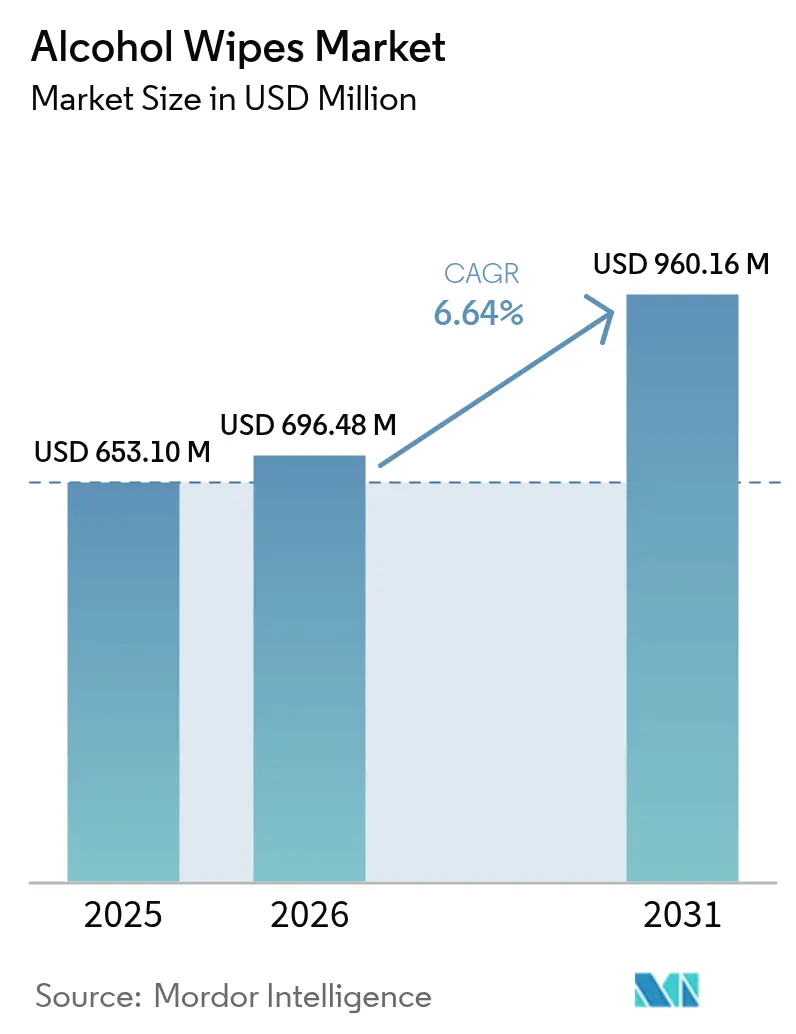
The Alcohol Wipes Market size was valued at USD 653.1 million in 2025 and estimated to grow from USD 696.48 million in 2026 to reach USD 960.16 million by 2031, at a CAGR of 6.64% during the forecast period (2026-2031). This growth trajectory is being shaped by intensifying hygiene consciousness across healthcare facilities, commercial spaces, and households, with alcohol wipes increasingly recognized as essential tools for infection prevention. The market's expansion is further accelerated by regulatory frameworks that mandate stringent disinfection protocols, particularly in healthcare settings where the U.S. Centers for Disease Control and Prevention (CDC) emphasizes the importance of proper surface disinfection to reduce healthcare-associated infections.
Key Report Takeaways
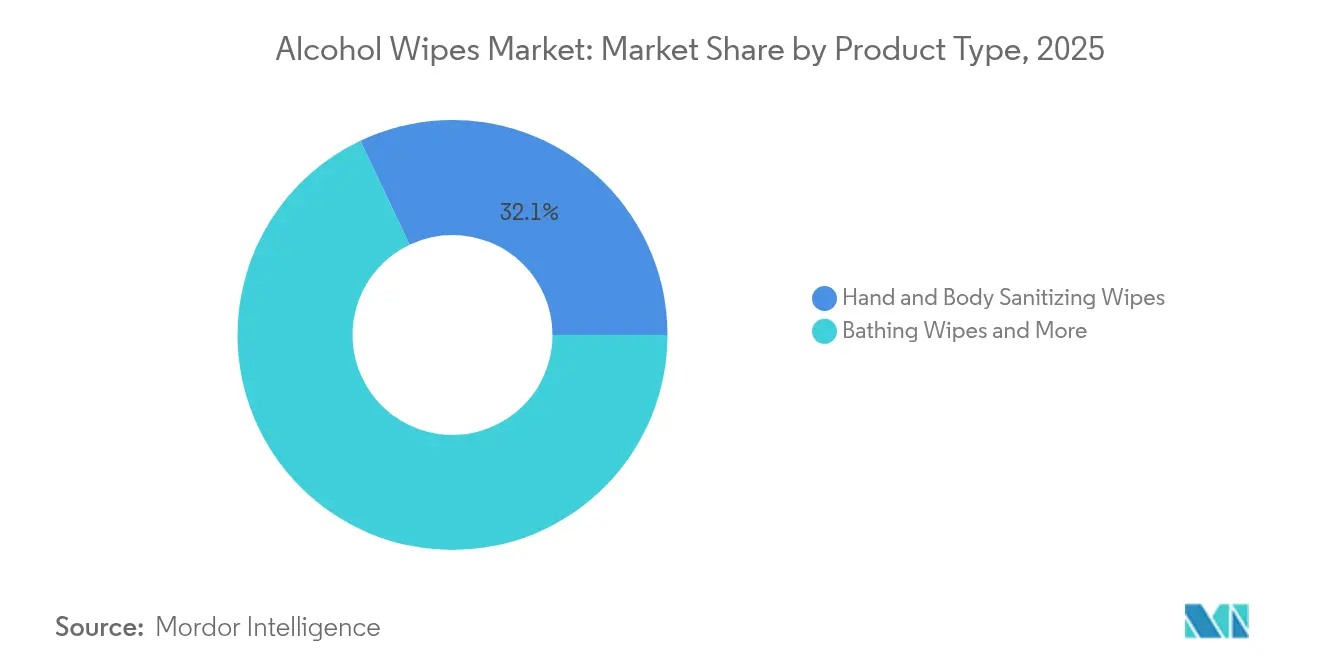
- By product type, hand and body sanitizing wipes held 32.05% of the alcohol wipes market share in 2025, and surface and equipment disinfecting wipes are advancing at an 7.84% CAGR from 2026-2031.
- By fabric material, synthetic commanded 81.78% revenue share in 2025 and natural material led growth at a 7.25% CAGR through 2031.
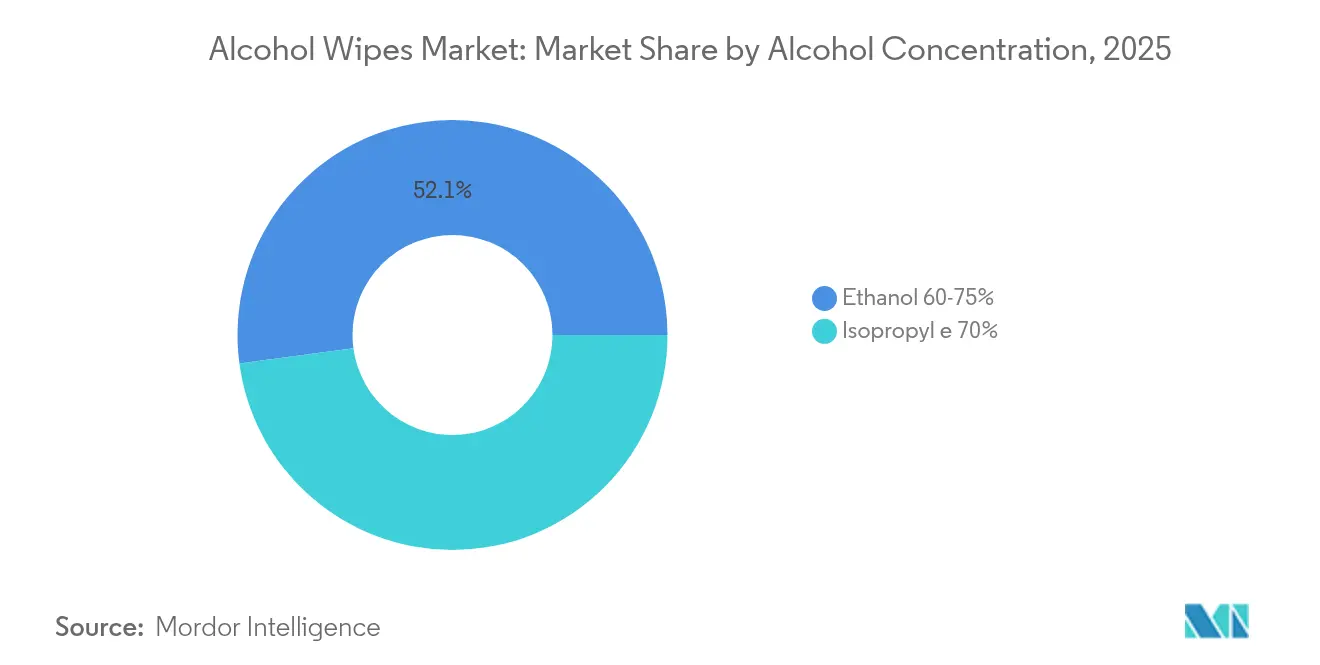
- By alcohol concentration, ethanol formulations dominated with a 52.12% share in 2025, whereas dual-alcohol blends are set to post a 6.92% CAGR through 2031.
- By distribution channel, supermarkets/hypermarkets contributed 44.30% revenue share in 2025, while online stores will log an 8.12% CAGR through 2031.
- By geography, North America captured 40.10% of the alcohol wipes market size in 2025, and Asia-Pacific is on track for the highest CAGR of 7.33% during 2026-2031.
Note: Market size and forecast figures in this report are generated using Mordor Intelligence’s proprietary estimation framework, updated with the latest available data and insights as of 2026.
Market Trends and Insights
Drivers Impact Analysis of Alcohol Wipes Market*
| Driver | (~) % Impact on CAGR Forecast | Geographic Relevance | Impact Timeline |
|---|---|---|---|
| Growing preference for on-the-go surface disinfection | 0.8% | Global, with higher impact in North America and Europe | Short term (≤ 2 years) |
| Rising awareness regarding disinfecting | 0.7% | Global, with significant impact in Asia-Pacific | Medium term (2-4 years) |
| Rapid penetration of biodegradable alcohol wipes amid plastic bans | 0.5% | Europe, North America, with spillover to Asia-Pacific | Medium term (2-4 years) |
| Premiumization of personal care wipes via dermatologist-tested formulations | 0.4% | North America, Europe, and Urban Asia | Long term (≥ 4 years) |
| Surge in hospital-acquired infection control protocols in North America | 0.6% | North America, with spillover to Europe | Medium term (2-4 years) |
| Expansion of ambulatory surgery centers elevating high-level pre-op skin prep demand | 0.5% | North America, Europe, with emerging impact in Asia Pacific | Long term (≥ 4 years) |
| Source: Mordor Intelligence | |||
Growing Preference for On-the-Go Surface Disinfection
The escalating demand for convenient, portable disinfection solutions is reshaping consumer behavior patterns, with on-the-go alcohol wipes emerging as essential companions for daily activities. This shift extends beyond traditional healthcare settings into commercial spaces, public transportation, and personal environments, where consumers increasingly expect immediate access to disinfection tools. The Centers for Disease Control and Prevention's updated guidance on cleaning and disinfecting for COVID-19 has reinforced this trend by emphasizing the importance of regular disinfection of high-touch surfaces in public facilities [1]. The convenience factor is particularly resonating with urban professionals and frequent travelers who prioritize protection against pathogens in shared spaces. Manufacturers are responding with compact, resealable packaging formats that preserve moisture content and antimicrobial efficacy while fitting easily into purses, backpacks, and vehicle compartments—a design evolution that has expanded the addressable market beyond healthcare professionals to everyday consumers.
Rising Awareness Regarding Disinfecting
Heightened public consciousness about pathogen transmission has fundamentally altered cleaning behaviors, with consumers now demonstrating a sophisticated understanding of disinfection principles that previously were primarily the domain of healthcare professionals. This awareness surge has transformed alcohol wipes from occasional purchases to household staples, with usage frequency increasing across demographic segments. The EPA's List N, which identifies disinfectants effective against SARS-CoV-2, has become a reference point for informed consumers seeking validated efficacy claims [2]. Educational initiatives by public health authorities have created a more discerning customer base that scrutinizes alcohol concentration levels, kill claims, and contact times when selecting disinfectant products. This knowledge-driven market is compelling manufacturers to enhance transparency in efficacy documentation and invest in clinical validation studies—a development that favors established brands with research capabilities while creating entry barriers for new market participants without scientific credibility.
Rapid Penetration of Biodegradable Alcohol Wipes Amid Plastic Bans
Environmental regulations targeting single-use plastics are accelerating the transition toward biodegradable substrates in the alcohol wipes market, creating both compliance challenges and innovation opportunities. Spain's draft legislation to ban the flushing of wet wipes and require manufacturers to cover cleanup costs exemplifies the regulatory pressure reshaping product development priorities. Leading manufacturers are responding with plant-based alternatives, as demonstrated by Ecolab's launch of the first EPA-registered 100% plastic-free disinfectant wipe, which has shown a 36% reduction in total wipe utilization compared to leading alcohol-based alternatives. The shift toward natural fibers like bamboo, wood pulp, and plant-based cellulose is creating supply chain reconfiguration requirements as manufacturers pivot away from synthetic materials that dominated the category for decades. This transition is particularly pronounced in markets with advanced environmental regulations, where consumers are increasingly willing to pay premium prices for products that align with sustainability values without compromising antimicrobial efficacy.
Premiumization of Personal-Care Wipes via Dermatologist-Tested Formulations
The convergence of skincare science with disinfection technology is elevating alcohol wipes beyond utilitarian cleaning tools to skincare-adjacent products with therapeutic positioning. This premiumization trend is particularly evident in personal-care segments, where dermatologist-tested formulations incorporating skin-conditioning agents are commanding price premiums and expanding usage occasions. Millie Moon's Sensitive Wipes, which won the 2025 Parents Best for Baby Awards, exemplify this trend with their 99% natural formula featuring soothing ingredients like aloe and avocado. The incorporation of skin-friendly additives that counteract the drying effects of alcohol is enabling higher frequency usage without compromising the skin barrier, a critical factor for healthcare professionals and consumers with sensitive skin conditions. This segment's evolution is attracting investment from skincare conglomerates seeking to leverage their dermatological expertise in the disinfectant category, potentially reshaping competitive dynamics as traditional cleaning product manufacturers face competition from beauty industry entrants with established premium positioning capabilities.
Restraints Impact Analysis of Alcohol Wipes Market*
| Restraint | (~) % Impact on CAGR Forecast | Geographic Relevance | Impact Timeline |
|---|---|---|---|
| Rising incidence of contact dermatitis linked to high alcohol concentrations | 0.5% | Global, with higher impact in healthcare settings | Medium term (2-4 years) |
| Sustainability scrutiny over single-use synthetic non-woven substrates | 0.3% | Europe, North America, with emerging impact in Asia-Pacific | Long term (≥ 4 years) |
| Volatility in isopropanol supply chain post-pandemic disruptions | 0.4% | Global, with higher impact in Asia-Pacific manufacturing hubs | Short term (≤ 2 years) |
| Price compression from private-label retail brands in mature markets | 0.3% | North America, Europe, with emerging impact in urban Asia | Medium term (2-4 years) |
| Source: Mordor Intelligence | |||
Rising Incidence of Contact Dermatitis Linked to High Alcohol Concentrations
The growing reports of skin irritation and contact dermatitis associated with frequent use of high-concentration alcohol wipes are creating usage barriers that could constrain market growth, particularly in healthcare settings where repeated exposure is unavoidable. Clinical evidence suggests that prolonged contact with alcohol concentrations above 70% can compromise the skin barrier function, leading to dryness, cracking, and increased susceptibility to irritant and allergic reactions. A pilot study evaluating isopropyl alcohol wipes for disinfecting healthcare workers' smartphones highlighted these concerns, noting the need for balancing disinfection efficacy with skin compatibility considerations. Healthcare facilities are increasingly reporting occupational dermatitis cases among staff required to perform frequent hand hygiene and surface disinfection, prompting reevaluation of disinfection protocols and product selection criteria. This challenge is driving demand for formulations that incorporate emollients and skin protectants while maintaining antimicrobial efficacy—a technical balancing act that requires significant research and development investment and may increase production costs, potentially limiting adoption in price-sensitive market segments.
Sustainability Scrutiny over Single-Use Synthetic Non-Woven Substrates
The environmental impact of disposable wipes is attracting increasing regulatory and consumer scrutiny, with particular concern focused on synthetic substrates that contribute to microplastic pollution and landfill accumulation. The bipartisan legislation reintroduced in March 2025 to address non-flushable products in wastewater infrastructure signals heightened political attention to this issue [3]. According to the Spanish Association of Water Supply and Sanitation, the annual cost of removing wet wipes from sanitation systems in Spain alone is estimated at €230 million, illustrating the significant economic externalities associated with improper disposal. Major retailers are responding to these concerns by implementing sustainability requirements for their suppliers—U.K. retailers have begun banning plastic-based wipes, while Tesco has committed to eliminating plastic in baby wipes. These developments are compelling manufacturers to accelerate the transition to biodegradable alternatives, which often entail higher production costs and technical performance challenges. The tension between environmental sustainability and functional requirements is particularly acute in healthcare settings, where efficacy and reliability cannot be compromised, creating complex trade-offs that manufacturers must navigate as they reformulate products to meet evolving market expectations.
*Our forecasts treat driver/restraint impacts as directional, not additive. The impact forecasts reflect baseline growth, mix effects, and variable interactions.
Alcohol Wipes Market Segment Analysis
By Product Type:
Healthcare Drives Disinfection InnovationHand and body sanitizing wipes held 32.05% market share in 2025, driven by their widespread use in healthcare facilities and consumer settings. Healthcare facilities rely on these wipes for maintaining hygiene standards in patient care areas, surgical units, and general medical environments. In consumer settings, these wipes are commonly used in households, offices, schools, and public spaces for personal hygiene. The wipes increasingly contain skin conditioning agents such as aloe vera, vitamin E, and glycerin to support frequent use while minimizing skin irritation, making them suitable for repeated application throughout the day.
Surface and equipment disinfecting wipes are expected to grow at an 7.84% CAGR during 2026-2031, surpassing other product segments. Healthcare facilities are implementing stricter infection control protocols by increasing the frequency of surface disinfection, adopting standardized cleaning procedures, and maintaining detailed documentation of disinfection activities. The proven effectiveness of proper disinfection in reducing healthcare-associated infections, such as MRSA, C. difficile, and other pathogens, provides significant economic benefits through reduced treatment costs and shorter patient stays. This evidence-based approach encourages healthcare providers to standardize their disinfection practices across departments and facilities, driving the increased adoption of disinfecting wipes.

By Fabric Material:
Sustainability Reshapes ManufacturingSynthetic materials held a dominant market share of 81.78% in 2025, primarily due to their cost-effectiveness, durability, and wide range of applications across various industries. These materials offer consistent quality, superior performance characteristics, and can be manufactured to meet specific requirements, making them the preferred choice over natural alternatives. However, environmental concerns and regulatory restrictions on single-use plastics constrain market growth. The industry's innovation now focuses on biodegradable alternatives manufactured from wood pulp fibers, bamboo, and plant-based cellulose, which offer faster decomposition and lower environmental impact.
Natural materials represent the fastest-growing substrate segment, with a projected CAGR of 7.25% during 2026-2031. This growth stems from manufacturers adapting their production processes to meet stringent environmental regulations and increasing consumer demand for sustainable products. The shift toward natural materials reflects a broader industry transformation, where companies are investing in eco-friendly alternatives to traditional substrates, particularly in packaging and construction applications. This transition is further supported by advancements in natural material processing technologies and improved cost-effectiveness in sustainable manufacturing methods.
By Alcohol Concentration:
Efficacy Balances with SafetyEthanol held a 52.12% market share in 2025, as it offers a broader antimicrobial spectrum and lower toxicity compared to other alcohol types. Ethanol's effectiveness stems from its ability to denature proteins and disrupt the cell membranes of microorganisms, making it particularly suitable for healthcare applications. Studies comparing ethanol-based and isopropyl alcohol disinfectants for medical equipment showed similar effectiveness (92.8% vs. 92.5% bacterial contamination reduction). This comparison demonstrates that the overall formulation quality, including factors such as concentration levels, additives, and stabilizing agents, plays a more crucial role in determining disinfection performance than the specific type of alcohol used.
Dual-alcohol blends are expected to grow at a CAGR of 6.92% during 2026-2031. These formulations combine two distinct types of alcohol, such as ethanol with isopropyl alcohol or n-propanol, each at reduced concentrations. The complementary properties of different alcohols enhance antimicrobial effectiveness against bacteria, viruses, and fungi. The lower concentration of individual alcohols in these blends minimizes skin dryness and irritation while maintaining disinfection efficacy. This balanced approach to formulation has made dual-alcohol products increasingly popular in healthcare settings, food processing facilities, and other environments requiring strict hygiene protocols.
By Distribution Channel:
E-commerce Disrupts Traditional RetailSupermarkets and hypermarkets held the dominant market share of 44.30% in 2025, as these retail formats offer consumers immediate access to products during their regular shopping visits. The integration of these products within everyday shopping destinations enables customers to conveniently purchase items alongside their routine grocery shopping, eliminating the need for separate store visits. Additionally, these large-format stores provide extensive product selections and competitive pricing, further strengthening their market position.
Online retail channels are expected to grow at an 8.12% CAGR from 2026-2031, representing the highest growth rate among distribution channels for alcohol wipes. E-commerce platforms are changing how both consumers and professionals purchase these products by offering convenient ordering options, automated reordering capabilities, and personalized product recommendations. The growth of digital sales enables manufacturers to sell directly to customers, avoiding traditional retail limitations while increasing profit margins. This direct-to-consumer model allows companies to provide customers with broader product choices, detailed product specifications, usage instructions, safety information, and real-time inventory updates. Additionally, online platforms facilitate customer reviews and ratings, helping buyers make informed purchasing decisions.
Geography Analysis
North America Alcohol Wipes Market
North America dominates the alcohol wipes market with a 40.10% share in 2025, driven by advanced healthcare infrastructure, stringent infection control regulations, and high consumer awareness of hygiene practices. The region's leadership position is reinforced by the U.S. FDA's ongoing implementation of the Modernization of Cosmetics Regulation Act (MoCRA), which mandates enhanced safety standards and testing methods for personal care products, including certain categories of wipes. Healthcare applications represent the primary growth driver, with hospitals and clinics implementing standardized disinfection protocols that rely heavily on alcohol-based products.
APAC Alcohol Wipes Market
Asia Pacific is projected to be the fastest-growing region with a 7.33% CAGR from 2026-2031, driven by expanding healthcare infrastructure, rising disposable incomes, and increasing hygiene awareness across both urban and rural markets. China leads the regional market, with domestic manufacturers rapidly expanding production capacity to meet growing demand while also enhancing product quality to compete with international brands. Japan and South Korea represent mature markets with high penetration rates and sophisticated consumer preferences, particularly for premium products with skin-friendly formulations. The region's growth is further supported by the rapid expansion of e-commerce platforms, which are improving product accessibility in second and third-tier cities where traditional retail distribution remains limited.
EMEA and South America Alcohol Wipes Market
Europe maintains a significant market presence, characterized by stringent environmental regulations that are accelerating the transition toward biodegradable wipe substrates. Spain's draft legislation to ban the flushing of wet wipes and require manufacturers to cover cleanup costs exemplifies the regulatory pressure reshaping product development priorities in the region. The United Kingdom has seen major retailers implementing bans on plastic-based wipes, while companies like Tesco have committed to eliminating plastic in baby wipes entirely. Germany, France, and the United Kingdom represent the largest markets within the region, with healthcare and institutional segments driving volume growth. The Middle East and Africa region shows promising growth potential, particularly in Gulf Cooperation Council countries where healthcare infrastructure development and increasing tourism are creating demand for hygiene products. South America is experiencing moderate growth, with Brazil leading regional consumption as healthcare modernization initiatives expand the institutional market for disinfection products.
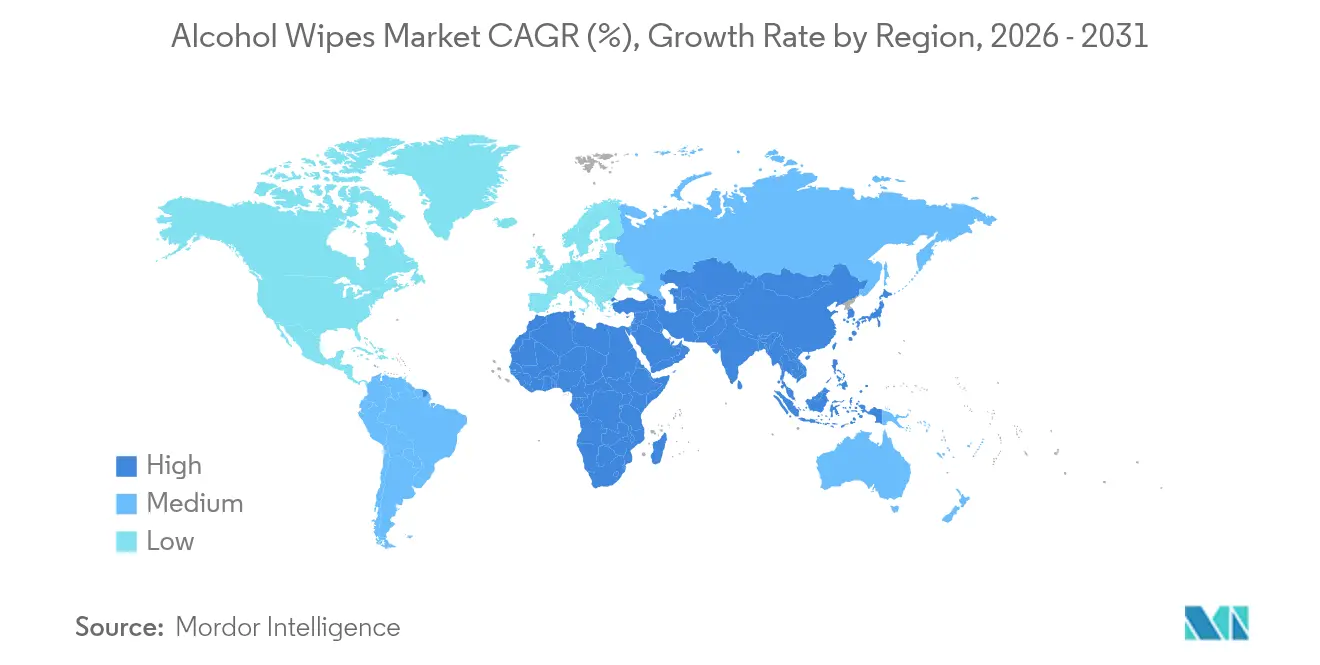
Note: Regional shares of all individual regions will be available upon report purchase
Regulatory Landscape
Regulation for alcohol wipes is primarily determined by intended use and claims, creating split oversight across major markets. In the United States, cleansing and personal-care wipes fall under FDA cosmetic requirements, including ingredient labeling and safety-related provisions. Surface disinfecting or sanitizing wipes are regulated by the US EPA as pesticides under FIFRA, with efficacy supported through EPA registration frameworks such as List N for products effective against SARS-CoV-2. This claim-driven boundary affects formulation, labeling, and testing strategy, especially for brands that sell both personal-care and disinfection SKUs.
In Europe, products marketed for medical uses can fall under the EU Medical Device Regulation (EU) 2017/745 (for example, certain alcohol wipes classified as Class IIa depending on intended use), while disinfectant claims can trigger the Biocidal Products Regulation rather than the Cosmetic Products Regulation for hand-hygiene-type products. Environmental policy is also shaping the category, with Europe applying pressure to reduce the impacts from wet-wipe disposal. Spain has advanced draft measures addressing wet-wipe flushing and cleanup cost responsibilities, which is pushing manufacturers toward biodegradable substrates and clearer consumer disposal communication.
Value Chain Analysis
Alcohol wipes value chains combine chemical inputs, nonwoven substrate production, and high-speed converting and packaging. Upstream inputs include ethanol or isopropyl alcohol, nonwoven rolls (commonly synthetic spunbond or blends, with growing use of natural fibers), binders and lotion additives where skin conditioning is part of the positioning, and moisture-retention packaging materials such as foil-laminate films and resealable closures. Midstream, converters saturate, slit, fold, and pack wipes, and quality management and compatibility testing become more stringent when products carry disinfecting claims. In those cases, US EPA FIFRA requirements govern efficacy and labeling, and healthcare customers often require validated contact times and supporting documentation.
Global supply reflects a mix of vertically integrated Asian manufacturing for substrates and packaging and more localized converting near end markets to manage logistics costs for bulky, low value-density finished goods. Bottlenecks tend to cluster around alcohol feedstock price volatility, seasonal demand spikes, and reliance on a limited set of packaging film suppliers that can consistently deliver barrier performance. End-market routes include institutional procurement (healthcare systems, clinics, laboratories) and retail and e-commerce, with private-label programs and contract manufacturing central to serving supermarkets/hypermarkets and online replenishment models.
Competitive Landscape
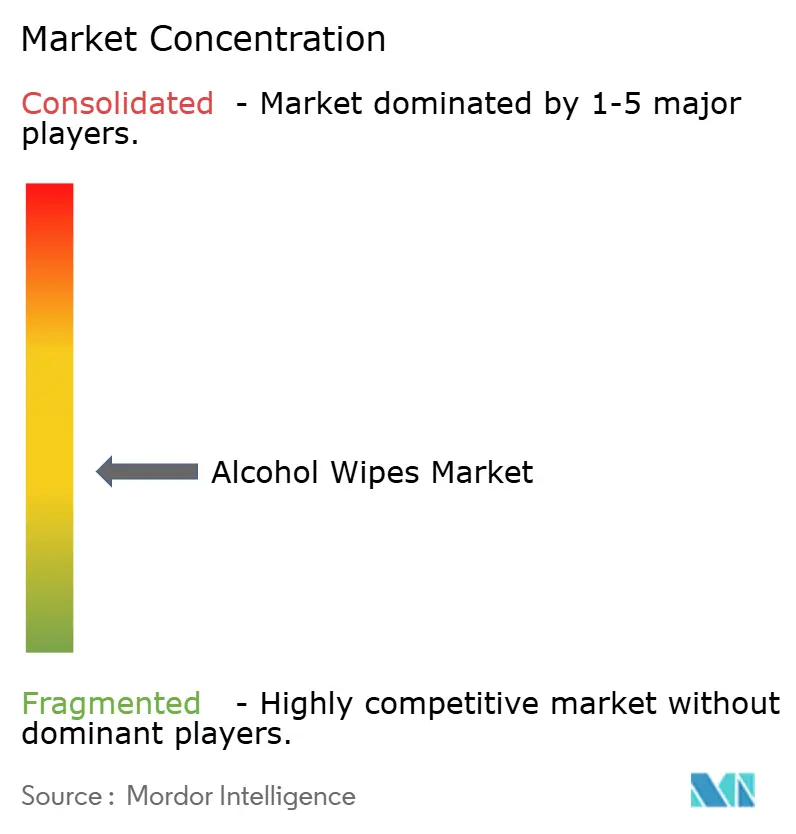
The alcohol wipes market shows moderate fragmentation, with a concentration score of 4 out of 10. The market includes established multinational corporations, regional manufacturers, and private label producers. Key market players include 3M, The Clorox Company, Cardinal Health Inc., Kimberly-Clark Corporation, and Nice-Pak Products Inc.
Competition has intensified pricing pressure in standard product segments, prompting companies to differentiate through specialized formulations, packaging innovations, and sustainability features. The market has shifted from traditional product-based competition to solution-based offerings, incorporating digital tracking, compliance monitoring, and sustainability metrics. This transition is particularly evident in healthcare and institutional segments, where procurement decisions consider overall value rather than just unit price.
The market shows a clear division between premium and value segments, with mid-market products experiencing margin pressure from both ends. Companies are focusing on developing specialized product lines to maintain market share and profitability, while also investing in sustainable manufacturing practices and innovative packaging solutions to meet evolving customer demands.
Smaller regional manufacturers and private labels compete aggressively in value segments, often undercutting prices and focusing on localized demand. This has led to margin compression in mid-tier offerings, pushing established players to innovate through differentiated formulations, eco-friendly packaging, and compliance-driven solutions.
Alcohol Wipes Industry Leaders
-
3M Company
-
The Clorox Company
-
Cardinal Health Inc.
-
Kimberly-Clark Corporation
-
Nice-Pak Products Inc.
- *Disclaimer: Major Players sorted in no particular order
Alcohol Wipes Market Companies Covered in this Report
- 3M Company
- The Clorox Company
- Cardinal Health Inc.
- Kimberly-Clark Corporation
- Nice-Pak Products Inc.
- PDI Healthcare
- GOJO Industries Inc.
- Combe Incorporated
- Kenvue Brands LLC
- Ecolab Inc.
- Edgewell Personal Care Company
- Medline Industries LP
- SweetSpot Labs USA
- GAMA Healthcare Ltd.
- Parker Laboratories Inc.
- CleanFinity Brands
- Rael Inc.
- The Honey Pot Company
- The Honest Company Inc.
- Prestige Consumer Healthcare, Inc.
Market Opportunities and Future Outlook
Regulatory and testing evolution in disinfecting wipes is creating space for manufacturers that can validate performance on pre-saturated substrates quickly and align claims to the appropriate regulatory regime. The US EPA released draft guidance in November 2024 to support registration of pre-saturated disinfecting wipes using standardized, wipe-relevant efficacy methods, including ASTM E3363. That approach raises the expectations for data packages and tends to favor companies with in-house microbiology capabilities or established testing partners.
On sustainability, Europe-facing product lines are being reformulated around plastic-free and biodegradable substrates as scrutiny of synthetic nonwoven waste and disposal impacts increases. Retailer actions such as UK retailers restricting plastic-based wipes and Tesco commitments on plastic in baby wipes reinforce this direction. Capacity additions and manufacturing modernization are also opening near-term opportunities for both branded and contract manufacturing models. In June 2026, Premier Care Industries completed a new manufacturing campus in Arlington, Texas, to support contract manufacturing for wipes and alcohol-based products, expanding supply options for brands balancing regulatory, quality, and responsiveness requirements in North America. At the same time, investments in automated converting and packaging, including ATEX Zone 1/2 explosion-proof designs for alcohol handling, support safer high-throughput operations and reduce solvent exposure versus manual processes, which aligns with tighter EHS expectations from institutional buyers and large retailers.
Recent Industry Developments in Alcohol Wipes Market
- June 2026: The Clorox Company launched Clorox Healthcare Quat Alcohol Disinfecting Wipes for healthcare settings, positioned around a 1-minute contact time and a formulation using less alcohol than some comparator products. The move targets a common operational problem in facilities where rapid evaporation can make achieving labeled wet-contact time difficult. It also supports Clorox Healthcare's infection prevention portfolio.
- March 2026: Cardinal Health issued a voluntary nationwide recall for select lots of Webcol Large Alcohol Prep Pads (70% isopropyl alcohol) due to potential contamination with Paenibacillus phoenicis. The action tightened focus on quality controls and microbial assurance in alcohol wipe and pad production, especially for clinical preparation products used at scale.
- July 2024: Ecolab launched Disinfectant 1 Wipe, an EPA-registered, plastic-free and biodegradable disinfectant wipe positioned for hospital-grade disinfection with a one-minute kill claim. The introduction linked infection prevention performance with sustainability requirements, which aligns with healthcare buyers seeking to reduce plastic content while maintaining validated disinfectant claims.
Alcohol Wipes Market Report Scope and Research Methodology
Market Definition and Coverage
The alcohol wipes market covers ready-to-use wipes that contain alcohol-based solutions and are sold for hygiene, skin cleansing, and surface disinfection across consumer, commercial, and healthcare settings, with revenue measured in USD for the study period.
Scope exclusions: It excludes non-alcohol wet wipes, sprays and liquids sold without a wipe substrate, and durable cleaning textiles that are reused.
Segments Covered in This Report
- By Product Type
- Face Wipes
- Bathing Wipes
- Intimate Wipes
- Hand and Body Sanitizing Wipes
- Surface and Equipment Disinfecting Wipes
- By Fabric Material
- Synthetic
- Natural
- By Alcohol Concentration
- Isopropyl ≥ 70%
- Ethanol 60-75%
- Dual-Alcohol Blend
- By Distribution Channel
- Supermarkets / Hypermarkets
- Health and Wellness Stores
- Online Stores
- Others
- By Geography
- North America
- United States
- Canada
- Mexico
- Rest of North America
- Europe
- Germany
- France
- United Kingdom
- Italy
- Spain
- Russia
- Rest of Europe
- Asia-Pacific
- China
- India
- Japan
- South Korea
- Australia and New Zealand
- Rest of Asia-Pacific
- South America
- Brazil
- Argentina
- Rest of South America
- Middle East and Africa
- Saudi Arabia
- United Arab Emirates
- Turkey
- South Africa
- Nigeria
- Rest of Middle East and Africa
- North America
Data Sources, Market Sizing, and Validation
Desk Research
Desk research was used to map the demand story and to keep assumptions realistic before we started building the model. We reviewed public health and hygiene guidance and usage cues from sources such as the US CDC and FDA, the World Health Organization, and the European Centre for Disease Prevention and Control, which helped us understand where disinfecting wipes are used and how usage changes over time.
We also checked trade and supply signals using sources such as UN Comtrade, national customs statistics, and government price and inflation series, and then supported it with company filings, investor presentations, and reputable press coverage to capture product mix shifts and channel movements. Where available, a paid subscription focused on company financials and another on import and export shipments were used to sanity-check growth patterns and pricing ranges for the category. These desk sources are not exhaustive, and many other public references were also used for data collection, validation, and clarification during the work.
Primary Interviews and Surveys
Primary discussions were used to validate what is actually being sold as alcohol wipes, how pricing moves by pack size and channel, and how demand differs between personal hygiene use and institutional disinfection needs. We spoke with a mix of manufacturers, distributors, and downstream buyers across major regions so that assumptions on volumes, promotions, and alcohol concentration preferences could be adjusted to what is seen in the market.
Distribution of primary research fieldwork respondents
| Company type | Respondent position | Region |
|---|---|---|
| Top tier: 34% | CXOs: 15% | APAC: 39% |
| Mid tier: 50% | Functional/Unit leaders: 34% | EMEA: 34% |
| Smaller Players: 16% | Managers: 51% | Americas: 27% |
Market-Sizing & Forecasting
Sizing was built using a top-down approach where hygiene and disinfection usage pools are reconstructed by region, and then split into wipe consumption using penetration rates that were checked in interviews. The total is then corroborated with selective bottom-up approximations, including sampled price per pack times estimated packs sold in key channels, plus supplier and distributor checks to ensure the totals stay realistic.
The model uses a small set of inputs that are easy to trace and update, such as healthcare facility activity indicators, consumer hygiene frequency shifts, average alcohol concentration preferences (which influence product mix), pack size and count trends, online share within wipe sales, and regional inflation and currency movements that affect reported revenue. When a bottom-up check is weak in a country due to limited disclosure, we fill the gap using peer country ratios and then re-test it against trade flows and interview feedback.
For forecasting, scenario analysis was used so the outlook stays practical even when hygiene behavior changes quickly. Growth paths were anchored to expected normalization in institutional demand, steady household usage, and channel expansion, and then the final curve was reviewed with experts so it matches real purchasing cycles.
Data Validation & Update Cycle
Validation is done through repeated cross-checks so the final number is not dependent on a single assumption. We compare outputs against independent signals like category growth in broader wipes, shifts in channel mix, and trade movements, and then investigate any sharp variance before sign-off.
A second analyst review is used to test the logic, recalculate key steps, and check whether each region behaves in a believable way. Reports are refreshed annually, and interim updates are triggered when material events occur, such as regulatory changes, supply shocks in nonwoven inputs, or sudden pricing swings. Before delivery, a final pass is completed so clients receive the most current view available.
Mordor Intelligence's Alcohol Wipes Market Size Compared With Other Published Estimates
Published market sizes for alcohol wipes can look inconsistent because different studies count different product sets, use different pricing points, and pick different base years. Even when the topic name is the same, the inclusion of surface and equipment wipes, the handling of retail versus institutional demand, and the currency timing can shift the result.
The main gap comes from whether revenue is captured at factory-gate values versus end-market sales, and also from whether adjacent disinfecting formats are counted along with alcohol wipes. Scope choices around wipe types, alcohol concentration cutoffs, and distribution coverage (especially online versus offline) also matter, and older refresh cycles can miss recent price changes.
Benchmark comparison
| Source | Market Size | Gaps in Research Methodology |
|---|---|---|
| Mordor Intelligence | USD 696.48 M (2026) | |
| Global Consultancy A | USD 684.40 M (2024) | Uses an earlier base year and a longer historic set, and the published view is more tied to broad segment rollups, which can under-capture newer channel mix shifts and pack-level pricing changes. |
| Industry Publisher B | USD 0.99 B (2025) | Uses factory-gate valuation and a different market definition that can pull in wider technical and medical wipe categories, which changes what is counted as alcohol wipes and lifts the headline number. |
The table shows that scope and valuation choices explain most of the spread. The main gap comes from factory-gate versus end-market revenue treatment, where Mordor Intelligence counts alcohol wipes based on end-use and channel sales across the covered wipe types rather than expanding into broader technical wipe value that can be priced and sold differently. With clear variables like channel mix, pack pricing, and regional demand cues, the steps stay easy to follow and can be rechecked when new information appears.
Key Questions Answered in the Report
What is the current size of the alcohol wipes market?
The alcohol wipes market is estimated at USD 696.48 million in 2026 and is projected to grow to USD 960.16 million by 2031.
Which region leads the alcohol wipes market?
North America leads with 40.10% revenue share in 2025, supported by stringent infection-control regulations.
What product type is growing fastest?
Surface and equipment disinfecting wipes will expand at an 7.84% CAGR between 2026-2031.
How is e-commerce affecting alcohol wipes distribution?
Online stores are forecast to post an 8.12% CAGR through 2031, enabling direct-to-consumer sales and subscription-based replenishment models.