
Mouthwash Market Size and Share
Market Overview
| Study Period | 2021 - 2031 |
|---|---|
| Market Size (2026) | USD 6.78 Billion |
| Market Size (2031) | USD 9.43 Billion |
| Growth Rate (2026 - 2031) | 6.76 % |
| Fastest Growing Market | Asia-Pacific |
| Largest Market | North America |
| Market Concentration | Medium |
Major Players
*Disclaimer: Major Players sorted in no particular order Image © Mordor Intelligence. Reuse requires attribution under CC BY 4.0. |
|
Mouthwash Market Analysis by Mordor Intelligence
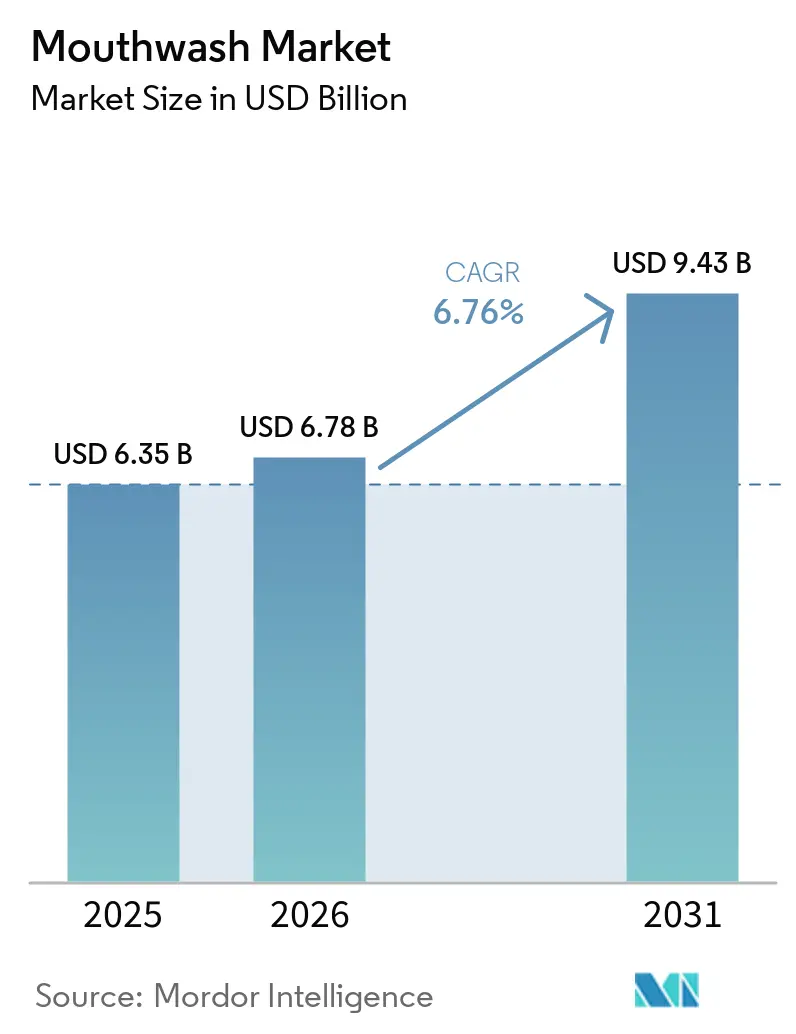
The mouthwash market size was valued at USD 6.35 billion in 2025 and is estimated to grow to USD 6.78 billion in 2026, reaching USD 9.43 billion by 2031, at a CAGR of 6.76% during the forecast period (2026–2031). This growth highlights the market's steady expansion, driven by changing consumer preferences and evolving regulations. Therapeutic mouthwash products are witnessing higher demand as government fluoride programs and increased endorsements from dental professionals encourage consumers to shift from cosmetic rinses to products with health benefits. The trend of premiumization is gaining momentum, with consumers increasingly opting for clinically proven formulations that offer benefits such as disease prevention, teeth whitening, and breath freshening. Research and development efforts are intensifying, focusing on innovations like alcohol-free formulations, natural ingredients, and advanced delivery systems. These advancements are reshaping the competitive landscape of the market. Global oral health campaigns are also playing a significant role in promoting daily mouthwash use as an essential part of overall wellness, rather than just an optional hygiene step. The mouthwash market is moderately consolidated, with key players driving innovation and competition.
Key Report Takeaways
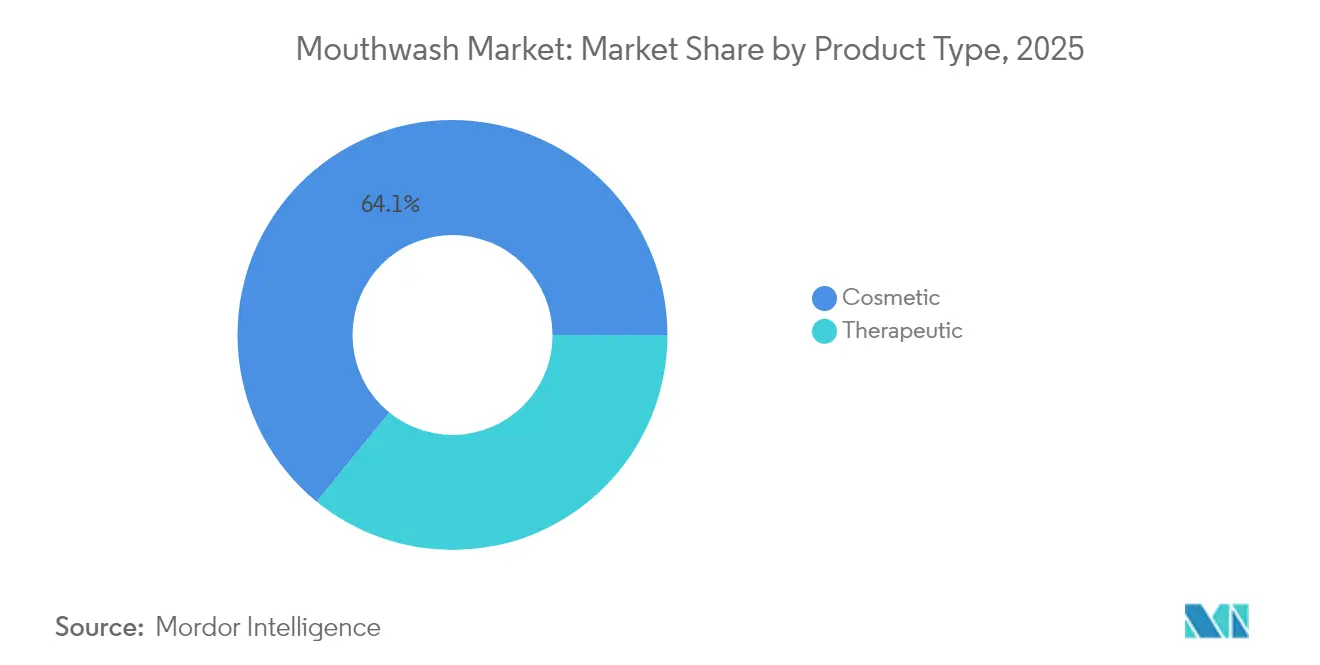
- By product type, cosmetic variants led with 64.12% of mouthwash market share in 2025, while therapeutic solutions are advancing at a 7.18% CAGR through 2031.
- By nature, conventional formulations accounted for 86.22% of the mouthwash market size in 2025; organic options are expanding at an 7.77% CAGR to 2031.
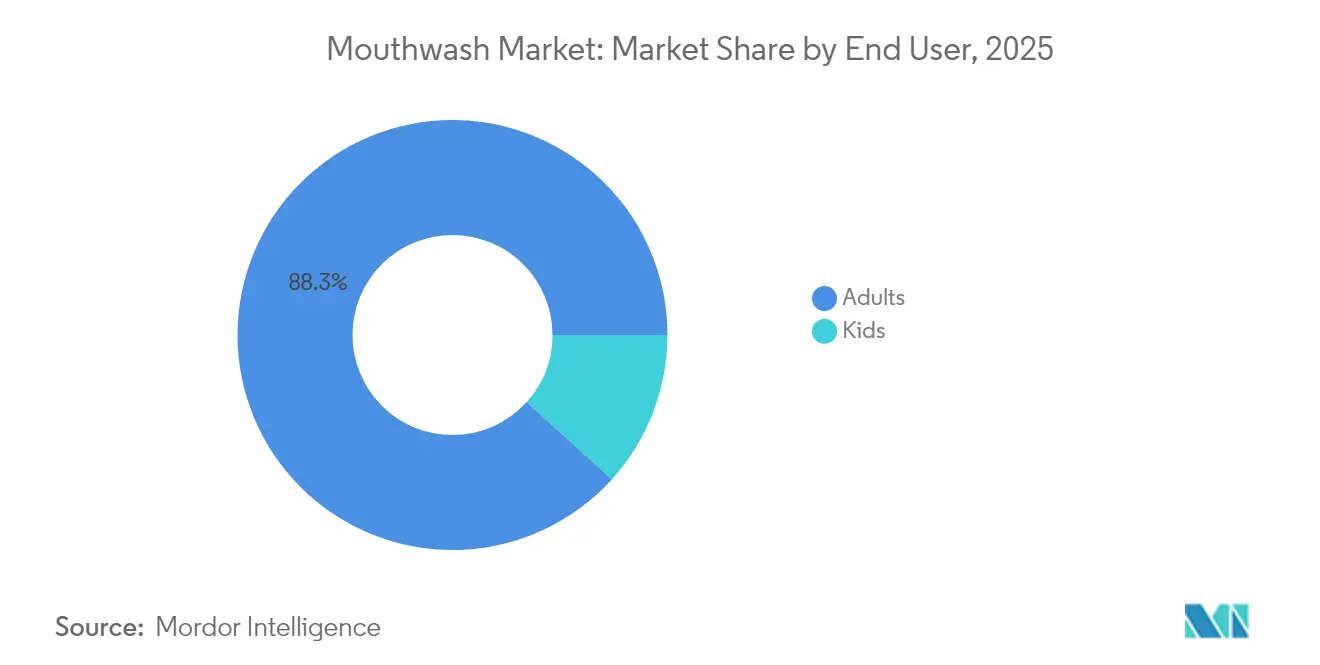
- By end user, adults captured 88.30% of the mouthwash market share in 2025, whereas kids’ formulations are forecast to rise at a 8.96% CAGR by 2031.
- By packaging, bottles retained 66.92% of the mouthwash market size in 2025; pouches deliver the fastest 7.03% CAGR through 2031.
- By distribution channel, supermarkets/hypermarkets commanded 36.10% mouthwash market share in 2025, but online retail is growing at 9.03% CAGR to 2031.
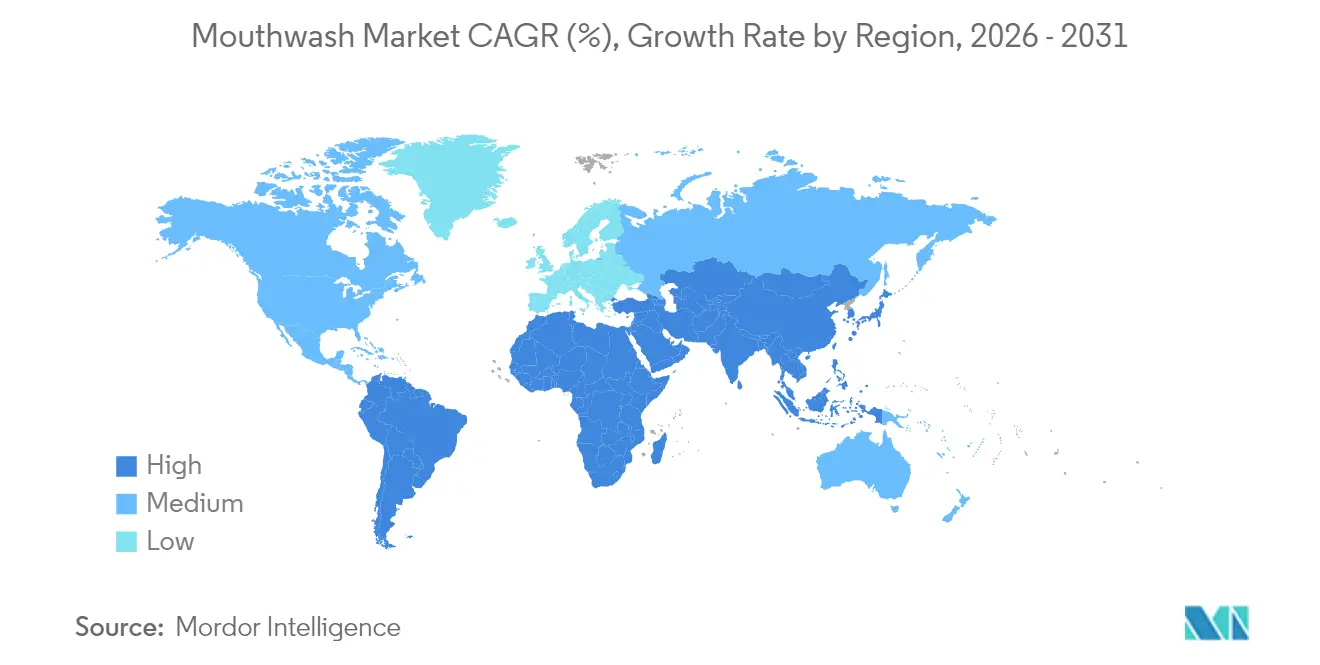
- By geography, North America accounted for 35.20% of the mouthwash market size in 2025; Asia-Pacific is expanding at an 8.53% CAGR to 2031.
Note: Market size and forecast figures in this report are generated using Mordor Intelligence’s proprietary estimation framework, updated with the latest available data and insights as of 2026.
Market Trends and Insights
Drivers Impact Analysis of Mouthwash Market*
| DRIVER | (~) % IMPACT ON CAGR FORECAST | GEOGRAPHIC RELEVANCE | IMPACT TIMELINE |
|---|---|---|---|
| Rising oral health awareness | +0.8% | Global, with stronger impact in North America and Europe | Medium term (2-4 years) |
| Government fluoride and oral-health initiatives in public schools | +0.6% | North America and Europe core, expanding to Asia-Pacific | Long term (≥ 4 years) |
| Growing demand for cosmetic and aesthetic oral care | +0.7% | Global, led by North America and urban Asia-Pacific markets | Short term (≤ 2 years) |
| Innovation in product formulation | +0.5% | Global, with Research and Development concentration in North America and Europe | Medium term (2-4 years) |
| Shift toward alcohol-free and herbal formulations | +0.4% | Global, strongest in Europe and urban Asia-Pacific | Medium term (2-4 years) |
| Uptick in professional dentist recommendations | +0.6% | North America and Europe core, spill-over to Middle East and Africa | Long term (≥ 4 years) |
| Source: Mordor Intelligence | |||
Rising oral health awareness
Awareness about oral health is steadily increasing, supported by various government programs and public health campaigns. These initiatives include training health workers with detailed guides that emphasize the importance of maintaining oral hygiene through practices like regular brushing and using mouthwash to prevent dental issues. On a global scale, oral diseases affect approximately 3.7 billion people every year, as reported by the World Health Organization, which highlights the urgent need for preventive oral care solutions[1]Source: World Health Organization, "Oral health", who.int. Consumer interest in oral health is growing, with recent data from the Oral Health Foundation revealing that 93% of United Kingdom adults in 2024 feel comfortable discussing their oral health with family and friends[2]Source: Oral Health Foundation, "New data reveals 93% of UK adults are willing to open up about their oral health", dentalhealth.org. This indicates a cultural shift where oral hygiene is becoming a key part of overall health and wellness. These combined efforts are helping people understand the importance of oral care.
Government fluoride and oral-health initiatives in public schools
Government fluoride programs are playing a key role in shaping the development and marketing of children's oral care products, especially mouthwashes. In the United States, public schools are required to implement fluoride mouth rinse programs with guidelines for age-appropriate fluoride concentrations. For example, Ohio's Revised Code mandates that school staff or volunteers cannot administer a fluoride mouth rinse to a student without receiving a signed consent form from the student's parent or guardian. This ensures that parents are involved in their child's oral care decisions. These regulations require companies to conduct clinical testing, which creates challenges for new brands trying to enter the market. Furthermore, in March 2025, the Food and Drug Administration (FDA) took action to remove unapproved ingestible fluoride prescription drug products for children from the market[3]Source: Food and Drug Administration, "FDA Begins Action To Remove Ingestible Fluoride Prescription Drug Products for Children from the Market", fda.gov. This move highlights the growing focus on safety and effectiveness in pediatric oral care.
Uptick in professional dentist recommendations
Recommendations from dentists play a significant role in increasing the use of therapeutic mouthwashes. Dentists often prescribe specific types of mouthwash, such as those targeting gum diseases, gingivitis, or providing fluoride protection, based on the unique needs of their patients. A survey conducted by Scientific Research Publishing, in May 2024, revealed that 49% of respondents used mouthwash to address bad breath, 37% to manage gum disease, and 10% for relief from throat discomfort[4]Source: Scientific Research Publishing, "Knowledge and the Attitude on the Use of Mouthwash among Two Selected Senior High Schools in Kumasi", scirp.org. Dentists often provide these recommendations, encouraging patients to prioritize therapeutic benefits over cosmetic features. Major brands invest in educational programs and clinical research to keep dentists informed and engaged. This ensures that dentists continue to recommend their products, helping these brands expand their market presence. Since consumers often rely on expert advice for oral care products, this professional influence significantly boosts the growth of the therapeutic mouthwash segment.
Innovation in product formulation
Innovation in product formulation is playing a significant role in driving the growth of the mouthwash market. Brands are focusing on advanced technologies to improve the effectiveness, safety, and overall appeal of their products. Techniques such as encapsulation, pH balancing, and multi-ion complexes like zinc–amine fluoride are being used to enhance the delivery of active ingredients, reduce irritation, and increase product shelf life. For example, in October 2023, Kenvue launched the Listerine® Clinical Solutions line, which uses Rapid Fusion Technology to boost fluoride absorption and strengthen teeth. Similarly, in April 2024, Lion Corporation introduced its OCH-TUNE mouthwash line, featuring pH-balancing formulations designed for personalized oral care. These advancements not only make products more effective but also create a competitive edge for established brands.
Restraints Impact Analysis of Mouthwash Market*
| RESTRAINT | (~) % IMPACT ON CAGR FORECAST | GEOGRAPHIC RELEVANCE | IMPACT TIMELINE |
|---|---|---|---|
| Strong competition from alternatives | -0.9% | Global, particularly intense in price-sensitive markets | Short term (≤ 2 years) |
| Concerns around alcohol-based formulas | -0.5% | Global, strongest impact in health-conscious demographics | Medium term (2-4 years) |
| Price sensitivity in developing regions | -0.7% | Asia-Pacific, Middle East and Africa, and Latin America core markets | Long term (≥ 4 years) |
| Perception of mouthwash as non-essential | -0.4% | Global, varying by cultural oral hygiene practices | Medium term (2-4 years) |
| Source: Mordor Intelligence | |||
Strong competition from alternatives
The mouthwash market is experiencing growing competition from alternative oral care products such as water flossers and probiotic lozenges. These alternatives are becoming increasingly popular among consumers who are looking for innovative or natural ways to maintain oral hygiene. Many of these products are backed by clinical studies that demonstrate their effectiveness, which puts pressure on traditional cosmetic mouthwashes to prove their value. Products that lack therapeutic benefits or scientific backing are at risk of being perceived as less effective, especially in online marketplaces where consumers can easily compare features and reviews. To address this challenge and retain market share, companies are introducing bundled offerings that combine mouthwash with other oral care products like toothbrushes and floss. These bundles encourage brand loyalty by creating a comprehensive oral care solution within a single platform.
Concerns around alcohol-based formulas
Concerns about alcohol-based mouthwash formulas are slowing market growth, as research has linked excessive use to issues like irritation of the mouth lining and potential cancer risks. These findings have led to more cautious recommendations in professional guidelines. Retailers and insurance providers are also becoming hesitant to stock or promote mouthwashes with high alcohol content unless safer alternatives are available. To address these challenges, companies are increasingly focusing on creating alcohol-free mouthwash options. These alternatives use ingredients such as essential oils or quaternary ammonium compounds to provide similar antimicrobial benefits without the risks associated with alcohol. Brands are taking steps to educate consumers by including clear and transparent labeling on product packaging. They are also launching dedicated educational websites to raise awareness about the safety and benefits of alcohol-free formulations.
*Our forecasts treat driver/restraint impacts as directional, not additive. The impact forecasts reflect baseline growth, mix effects, and variable interactions.
Mouthwash Market Segment Analysis
By Product Type:
Therapeutic Gains Ground Despite Cosmetic DominanceCosmetic mouthwashes led the mouthwash market in 2025, accounting for 64.12% of the total market share. This segment's popularity is driven by consumer preferences for products that offer teeth-whitening benefits and long-lasting fresh breath. The wide availability of these products through offline and online retail channels, combined with appealing flavors and attractive packaging, makes them a convenient choice for many. Marketing campaigns emphasizing aesthetic benefits further boost their demand. Despite growing awareness of oral health, cosmetic mouthwashes remain a preferred option for consumers seeking quick and visible results in their daily oral care routines.
Therapeutic mouthwashes are rapidly gaining traction and are expected to be the fastest-growing segment, with a projected CAGR of 7.18% between 2026 and 2031. This growth is primarily driven by increasing dentist recommendations for products containing antimicrobial and fluoride-based ingredients to address issues like gingivitis, plaque, and periodontal diseases. Consumers are increasingly trusting advanced formulations with clinically proven benefits, which is encouraging adoption. Rising health awareness, tele-dentistry consultations, and oral health campaigns are promoting the use of therapeutic mouthwashes. This shift highlights a growing trend of consumers viewing mouthwash as an essential part of preventive oral care rather than just a cosmetic product.



By Nature:
Organic Segment Surges Despite Conventional LeadershipConventional mouthwash formulations dominated the market in 2025, accounting for 86.22% of the total market share. Their popularity is largely due to their widespread availability in retail stores, established brand reputation, and consumer familiarity with traditional flavors and ingredients. These products are often marketed as reliable and effective solutions for daily oral hygiene, which resonates with a broad audience. Their affordability and ease of use make them a convenient choice for consumers looking for basic oral care. Despite the emergence of new trends, conventional mouthwashes continue to be the go-to option for many households worldwide.
On the other hand, organic mouthwashes are rapidly gaining traction and are expected to grow at a robust CAGR of 7.77% through 2031. This growth is fueled by increasing consumer interest in natural and sustainable products, as well as a preference for alcohol-free and chemical-free formulations. Organic mouthwashes often feature plant-based ingredients and eco-friendly packaging, appealing to environmentally conscious buyers. Health-focused consumers are also drawn to these products for their gentle yet effective oral care benefits. As awareness of clean-label and sustainable practices grows, organic mouthwashes are carving out a significant niche in the market, attracting both new and existing users.
By End User:
Adult Market Stability Contrasts with Kids Segment InnovationIn 2025, adults represented the largest segment in the mouthwash market, accounting for 88.30% of the total market share. This dominance is primarily due to the widespread use of mouthwash as part of daily oral care routines among adults. The availability of various products catering to specific oral health needs, such as gum care and fresh breath, has further boosted this segment. Trusted brands, familiar flavors, and effective marketing campaigns emphasizing convenience and oral health benefits continue to attract adult consumers. The growing awareness of maintaining long-term oral hygiene has solidified the importance of mouthwash in adult oral care practices.
The kids' mouthwash segment, on the other hand, is expected to grow significantly, with a projected CAGR of 8.96% through 2031. This growth is fueled by increasing parental awareness of the importance of early oral hygiene habits. Pediatric dentists are actively recommending mouthwash for children to prevent cavities and promote healthy teeth. To cater to this demand, companies are introducing products with kid-friendly flavors, colorful packaging, and interactive designs to make oral care more appealing to children. These efforts aim to encourage children to adopt good oral hygiene practices early, while also addressing the rising demand for safe and effective products specifically designed for younger users.
By Packaging Type:
Sustainability Drives Pouches Growth Despite Bottles DominanceBottled mouthwash formats were the leading choice in the market in 2025, holding 66.92% of the total market share. Their popularity stems from their ease of use, durability, and availability in retail outlets like supermarkets and pharmacies. Consumers find bottled mouthwash convenient for daily oral care, as the design allows for easy dosing and consistent application. The sturdy packaging also ensures product quality and builds trust in established brands. These factors make bottled formats a reliable and preferred option for a wide range of users looking for effective oral hygiene solutions.
Pouch formats, meanwhile, are rapidly gaining popularity and are projected to grow at a CAGR of 7.03% through 2031. Their lightweight and compact design makes them cost-effective for shipping and aligns with the growing demand for sustainable packaging. Many brands are marketing pouches as eco-friendly alternatives, appealing to environmentally conscious consumers. Their refillable nature offers a practical and budget-friendly option for users, reducing waste while maintaining oral hygiene. This emerging segment provides brands with an opportunity to cater to consumers seeking both convenience and sustainability in their oral care products.
By Distribution Channel:
E-Commerce Disrupts Traditional Retail PatternsSupermarkets/hypermarkets were the leading distribution channels in the mouthwash market in 2025, holding 36.10% of the total market share. These outlets attract a large number of customers due to their convenience and accessibility. Products are strategically placed on shelves to encourage impulse buying, making it easier for consumers to pick up mouthwash during routine shopping trips. Promotions, discounts, and in-store advertisements further boost sales in these retail formats. The trust and familiarity associated with supermarkets and hypermarkets make them a preferred choice for purchasing oral care products.
Online retail, however, is growing rapidly and is expected to achieve a CAGR of 9.03% by 2031. This growth is fueled by the increasing popularity of subscription services, which ensure regular delivery of products, and targeted online advertisements that cater to individual preferences. E-commerce platforms also offer convenience, allowing consumers to shop from home and access a wider range of products, including exclusive deals and bundles. Manufacturers are utilizing these platforms to directly engage with customers, offering personalized promotions and enhancing brand loyalty. As a result, online retail is becoming an essential channel for expanding the reach of mouthwash products.
Geography Analysis
North America Mouthwash Market
North America held a significant 35.20% share of the mouthwash market in 2025, driven by high consumer spending, strong dentist recommendations, and clear regulatory guidelines on fluoride usage and product claims. While the market in this region continues to grow, the pace has slowed due to widespread adoption and market saturation. To address this challenge, companies are introducing innovative therapeutic products, such as solutions for dry mouth (xerostomia) and peri-implant care, to cater to specific consumer needs and unlock new revenue opportunities.
APAC Mouthwash Market
The Asia-Pacific region is witnessing the fastest growth, with a projected CAGR of 8.53%. This growth is supported by the rising middle-class population in urban areas, increasing access to dental insurance, and the influence of social media in promoting better oral care habits. Countries like China and India are driving this demand, with China's expanding tier-2 cities and India's school-based oral health initiatives playing a significant role. Consumer preferences for alcohol-free and herbal formulations, such as green tea or clove-based flavors, are encouraging global brands to tailor their products to meet local tastes and preferences.
EMEA and LATAM Mouthwash Market
In Europe, the market is growing steadily as environmentally conscious consumers increasingly prefer recyclable packaging and organic ingredients, in line with strict European Union cosmetic regulations. In the Middle East and Africa, adoption rates vary widely. Wealthier Gulf Cooperation Council countries are adopting premium products similar to those in Western markets, while rural areas in Africa still consider mouthwash a non-essential product. In Latin America, the market shows mixed trends. Brazil's growing orthodontic treatments are boosting demand for therapeutic mouthwash, but economic challenges and currency fluctuations in other countries are limiting price flexibility and overall market growth.

Regulatory Landscape
Mouthwash regulation is driven by product claims and intended use, which can place products under different oversight pathways. In the United States, therapeutic mouthwashes positioned for anticaries benefits must align with FDA OTC monograph requirements (for example, OTC Monograph M021 for anticaries drug products), while broader oral healthcare drug products fall under FDA final administrative orders issued under section 505G of the FD&C Act (including M022 for oral healthcare drug products for OTC human use). When an oral rinse is positioned to reduce plaque adhesion through a physical mechanism, FDA classifies it as a Class II medical device and it may require 510(k) clearance under the agency's special controls guidance for plaque-adhesion oral rinses.
Regulatory scrutiny also extends to how claims are communicated to consumers. FDA has primary jurisdiction over labeling, while the US Federal Trade Commission (FTC) oversees advertising and requires competent and reliable scientific evidence for health-related claims under its Health Products Compliance Guidance. These guardrails have pushed branded players to maintain compliant labeling and listings (for example, Colgate-Palmolive product labels maintained in the DailyMed/NLM ecosystem) and to strengthen clinical and scientific substantiation for therapeutic, pediatric, and sensitivity-related positioning.
Competitive Landscape
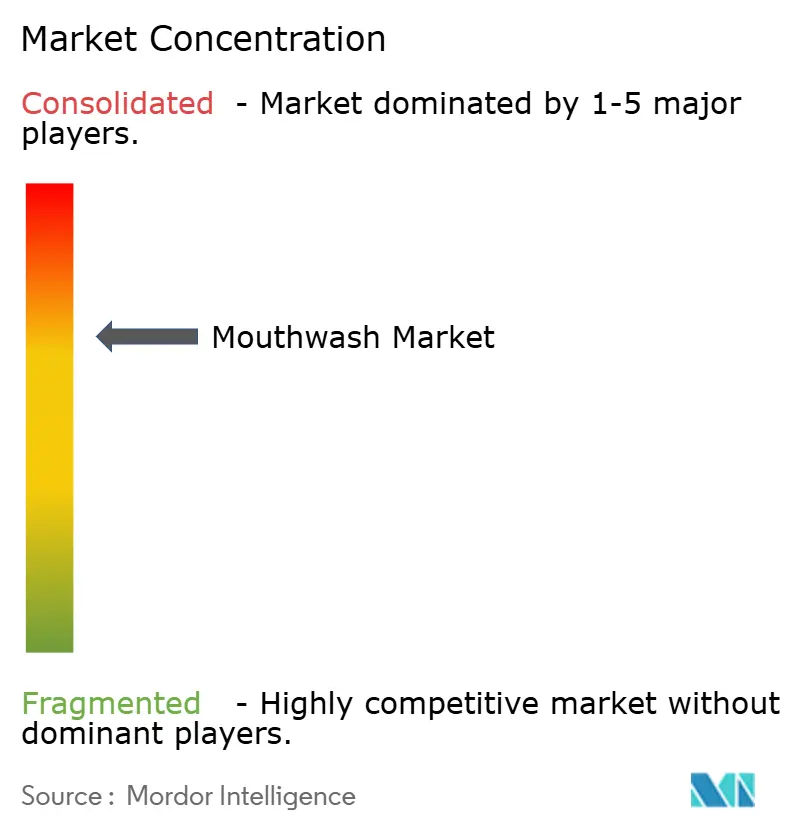
The mouthwash market is moderately consolidated, with the top 5 companies accounting for approximately 70% of the total market share. Large multinational companies benefit from economies of scale in research, development, and marketing. For example, Church & Dwight’s acquisition of TheraBreath for USD 580 million expanded its portfolio of therapeutic products, strengthening its market position. Similarly, Colgate-Palmolive focuses on developing proprietary ingredients, such as cetylpyridinium-fluoride blends, to enhance partnerships with dentists and reduce competition from private-label brands.
Innovation in the market is increasingly focused on specialized mouthwash products designed for specific conditions, such as post-implant healing, plaque detection, or salivary diagnostics. Start-ups are leveraging faster clinical trials to introduce these niche products. E-commerce-focused brands are using subscription models and data analytics to customize flavor options and dosage recommendations, challenging the dominance of traditional retail players. Sustainability is also becoming a key focus, with companies like Lion committing to fully recyclable packaging by 2026, as environmental responsibility is now seen as a standard expectation rather than a unique selling point.
Capital investments in the industry are directed toward advanced technologies, such as micro-encapsulation for better ingredient delivery, AI-driven flavor development, and facilities for packaging with post-consumer recycled (PCR) content. Companies are also prioritizing the validation of product claims through peer-reviewed studies and real-world evidence, as consumers increasingly demand transparency and scientific backing. To build trust with informed and research-oriented buyers, firms are strengthening collaborations with universities and publishing open-access studies, which are becoming more critical than traditional advertising in gaining a competitive edge.
Mouthwash Industry Leaders
-
Colgate-Palmolive Company
-
Kenvue Inc.
-
Procter & Gamble Company
-
GlaxoSmithKline plc
-
Unilever plc
- *Disclaimer: Major Players sorted in no particular order
Mouthwash Market Companies Covered in this Report
- Colgate-Palmolive Company
- Kenvue Inc.
- Procter & Gamble Company
- GlaxoSmithKline plc
- Curasept S.p.A
- Unilever plc
- Sunstar Group
- Oral Care Australia Pty Ltd (Denta Med)
- Kao Corporation
- Lion Corporation
- Church & Dwight Co., Inc.
- Dabur India Ltd
- Himalaya Global Holdings Ltd
- LG Corporation
- Perrigo Company plc
- Alticor Inc.
- Triumph Pharmaceuticals Inc.
- L'Oréal SA (Aesop)
- Venture Life Group (Dendron Brands)
- Grants of Australia

Market Opportunities and Future Outlook
Therapeutic positioning continues to create space for brands that can sustain compliance-ready, clinically supported claims across markets. This is closely tied to the shift from cosmetic rinses toward prevention-oriented benefits (anti-gingivitis, anticaries, plaque control) and dentist-led recommendations. In the United States, clearer separation between OTC drug monograph oral-care claims (FDA) and advertising substantiation expectations (FTC) supports opportunities for companies that invest in substantiation, label discipline, and system-based oral care bundles that pair toothpaste, toothbrush, and mouthwash to reinforce daily-use habits and improve conversion across retail and e-commerce.
Packaging and delivery-format innovation is another opportunity area, supported by category shifts toward alcohol-free formulas, portability, and sustainability. Refill pouches and mono-material packaging concepts address consumer and retailer pressure to reduce plastic, while on-the-go formats create incremental usage occasions beyond home bathrooms. Direct-to-consumer and subscription-led distribution also reduces reliance on traditional pharmacy networks, giving challenger brands and incumbents a way to test niche formulations (for example, alcohol-free, essential oil systems, and advanced actives) with faster feedback loops and targeted personalization, particularly in high-growth urban Asia-Pacific markets where alcohol-free and herbal preferences are already visible.
Recent Industry Developments in Mouthwash Market
- May 2026: Kenvue reported a global restage of Listerine, including the roll-out of a new range and Listerine On-The-Go Alcohol Free Mouthwash Sachets highlighted in its first-quarter 2026 update. The change broadens usage occasions through portability and reinforces the shift toward alcohol-free propositions within mainstream brands.
- February 2025: Colgate-Palmolive announced the launch of the Colgate Total Active Prevention System, which includes a mouthwash positioned around CPC and zinc technology for extended antibacterial protection. The system-based approach links mouthwash with adjacent oral-care steps, supporting premiumization and higher regimen adherence across channels.
- September 2024: Colgate-Palmolive launched Colgate PerioGard Protect mouthwash in Canada, expanding the PerioGard gum care system. This launch strengthens gum-health specialization in a mature market and adds another therapeutic option that can be leveraged through dental-professional and pharmacy-led pathways.


Mouthwash Market Report Scope and Research Methodology
Market Definition and Coverage
This market covers the value of mouthwash (mouthrinse) products sold for oral hygiene, including cosmetic and therapeutic rinses, across retail and professional purchase points, measured in USD at the global level.
Scope exclusions: Toothpaste, toothbrushes, floss, whitening strips, and prescription-only medicinal rinses are excluded from this market sizing.
Segments Covered in This Report
-
By Product Type
- Therapeutic
- Cosmetic
-
By Nature
- Organic
- Conventional
-
By End User
- Kids
- Adults
-
By Packaging Type
- Bottles
- Pouches
- Others
-
By Distribution Channel
- Supermarkets/Hypermarkets
- Pharmacies/Drug Stores
- Online Retail Stores
- Other Channels
-
By Geography
-
North America
- United States
- Canada
- Mexico
- Rest of North America
-
South America
- Brazil
- Colombia
- Chile
- Peru
- Argentina
- Rest of South America
-
Europe
- United Kingdom
- Germany
- France
- Italy
- Spain
- Poland
- Belgium
- Sweden
- Rest of Europe
-
Asia-Pacific
- China
- Japan
- India
- Australia
- Indonesia
- South Korea
- Thailand
- Singapore
- Rest of Asia-Pacific
-
Middle East and Africa
- South Africa
- Saudi Arabia
- United Arab Emirates
- Nigeria
- Egypt
- Morocco
- Turkey
- Rest of Middle East and Africa
-
North America
Data Sources, Market Sizing, and Validation
Desk Research
Desk research was used to set the category boundaries and build a clean demand context before any modeling started. We typically reviewed public health and consumption indicators, plus product standards and labeling language, so the counted products match how mouthwash is sold and used.
Common public sources included, such as the World Health Organization, the US CDC oral health pages, the US FDA monographs and labeling guidance where relevant, the European Commission and national health agency publications, and trade statistics from UN Comtrade. We also referenced company annual reports, investor decks, reputable retail and pharmacy channel commentary, and a few paid subscriptions that help with company financials, news tracking, and patent lookups for formulation activity. These examples are not exhaustive, and many other sources were also used for data collection, validation, and clarification during the study.
Primary Interviews and Surveys
Primary work was used to validate how demand is formed and how prices move by region, especially where public data is not directly mapped to mouthwash. We spoke with a mix of manufacturers, distributors, retail and pharmacy channel participants, and dental and oral care practitioners across APAC, EMEA, and the Americas. Their inputs were then used to cross-check assumptions like pack size mix, premiumization, and the split between cosmetic and therapeutic use cases.
Distribution of primary research fieldwork respondents
| Company type | Respondent position | Region |
|---|---|---|
| Top tier: 37% | CXOs: 12% | APAC: 46% |
| Mid tier: 48% | Functional/Unit leaders: 41% | EMEA: 32% |
| Smaller Players: 15% | Managers: 47% | Americas: 22% |
Market-Sizing & Forecasting
For sizing, we used a top-down build where oral care spending and trade and consumption indicators were reconstructed into a mouthwash demand pool, and then split by key usage patterns and channel realities for each region. To keep the totals realistic, results were corroborated using selective bottom-up approximations, such as sampled price bands by pack size, retailer and pharmacy shelf benchmarks, and a limited roll-up of reported category exposure from relevant company disclosures.
The model was driven by a practical set of inputs that are easy to audit, including oral hygiene penetration signals, incidence and awareness cues for gum health and halitosis needs, the share shift toward alcohol-free and natural positioning, average pack size and frequency of purchase assumptions, and region-level price progression tied to inflation and premium mix. Where direct volume proxies were patchy, we handled gaps by using closest-available public series and then stress-testing them with interview feedback before locking assumptions.
For forecasting, scenario analysis was applied around the demand-side drivers and pricing, and then smoothed using time-series checks so single-year spikes did not distort the 2026 to 2031 trajectory. Assumptions were finalized only after they matched what respondents described for channel growth, promotions intensity, and premium product adoption.
Data Validation & Update Cycle
Validation was done by comparing modeled outputs against independent signals like oral care category growth, regional trade patterns where applicable, and observed pricing movement across major channels. We also ran variance checks across regions so the implied per-capita spend and growth rates stayed within plausible ranges given income, distribution reach, and product mix.
Before sign-off, the workbook goes through multi-step analyst review, and outliers trigger a re-check of inputs. When needed, we re-contacted respondents to confirm what changed in their channel or pricing view. Reports are refreshed annually, with interim updates when material events occur, and a final pre-delivery pass is completed so clients receive the latest updated view.
Mordor Intelligence's Global Mouthwash Market Size Compared With Other Published Estimates
Published market numbers for mouthwash can look different even when the topic sounds identical, because not everyone counts the same products, channels, or pricing points. Differences also show up when base year choices vary, or when one publisher updates assumptions more frequently than another.
Prescription-only medicinal rinses sit outside Mordor Intelligence's scope, and that single exclusion often explains why some higher figures that bundle pharmacy-drug categories do not line up with a consumer mouthwash total. Beyond scope, the biggest gap drivers are usually whether values are counted at retail versus factory-gate, how premium mix and pack sizes are handled in ASP building, and whether currency conversion uses a single-year average or a multi-year smoothing approach.
Benchmark comparison
| Source | Market Size | Gaps in Research Methodology |
|---|---|---|
| Mordor Intelligence | USD 6.63 B (2026) | |
| Trade Journal A | USD 5.66 B (2024) | Uses an earlier base year with limited visibility on premium price tiers and tends to apply conservative price assumptions across regions, which can understate value when premiumization is rising. |
| Industry Brief B | USD 9.35 B (2024) | Often blends adjacent oral rinse categories and may apply retail-level pricing without clearly separating prescription and non-prescription therapeutic products, which inflates a pure mouthwash total. |
The comparison points to two practical issues, which are category boundaries and price basis. By keeping the counted products tied to consumer mouthwash and by validating price and mix shifts with channel feedback, the final value stays traceable to repeatable inputs and clear checks.


Key Questions Answered in the Report
How large is the global mouthwash market in 2026?
The mouthwash market stands at USD 6.78 billion in 2026 and is projected to reach USD 9.43 billion by 2031 at a 6.76% CAGR.
Which region is growing fastest for mouthwash sales?
Asia-Pacific records the highest 8.53% CAGR through 2031, fueled by urbanization and rising oral-health awareness.
What segment shows the quickest growth within mouthwash?
Therapeutic formulations expand at a 7.18% CAGR owing to dentist endorsements and preventive-care positioning.
How is e-commerce reshaping the category?
Online retail grows at 9.03% CAGR as subscription models, personalized recommendations, and direct-to-consumer strategies gain popularity.
Page last updated on:


 Your data is secure and never sold or shared.


