
AI-Based Microbiome Platforms Market Size and Share
Market Overview
| Study Period | 2020 - 2031 |
|---|---|
| Market Size (2026) | USD 0.67 Billion |
| Market Size (2031) | USD 1.19 Billion |
| Growth Rate (2026 - 2031) | 12.17 % |
| Fastest Growing Market | Asia-Pacific |
| Largest Market | North America |
| Market Concentration | Medium |
Major Players *Disclaimer: Major Players sorted in no particular order Image © Mordor Intelligence. Reuse requires attribution under CC BY 4.0. | |
AI-Based Microbiome Platforms Market Analysis by Mordor Intelligence
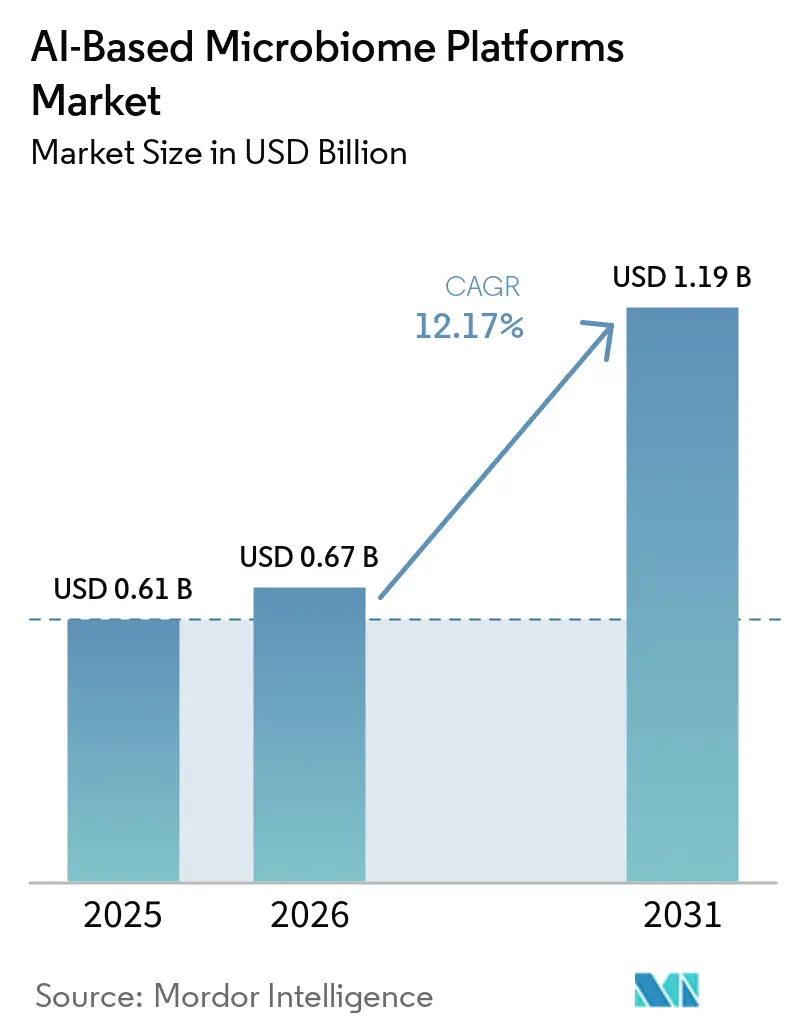
The AI-based microbiome platforms market is expected to grow from USD 0.61 billion in 2025 to USD 0.67 billion in 2026 and is forecasted to reach USD 1.19 billion by 2031 at 12.17% CAGR over 2026-2031. The AI-based microbiome platforms market is already generating measurable revenue in 2026 because pharmaceutical companies and clinical laboratories are deploying AI-led sequencing and analytics workflows in active commercial settings rather than in pilot-only programs. Growth in the AI-based microbiome platforms market reflects a deeper operating change, because AI is now the main layer that converts complex sequencing output into disease stratification, biomarker discovery, and precision therapeutic guidance. Competitive positioning in the AI-based microbiome platforms market is increasingly shaped by access to large proprietary datasets, stronger regulatory clarity for microbiome therapeutics, and the ability to support enterprise-scale workflows with clinically relevant outputs. The AI-based microbiome platforms market also benefits from lower sequencing costs and broader multi-omics adoption, which are improving model performance by expanding cohort sizes and deepening phenotype resolution. Even so, the AI-based microbiome platforms market still faces practical drag from uneven reimbursement, limited database standardization across ethnic cohorts, and the high cost of compute infrastructure needed for production-grade multi-omics analysis.
Key Report Takeaways
- By microbiome type, gut microbiome held 56.24% of the AI-based microbiome platforms market in 2025, while environmental microbiome is expected to expand at 12.50% CAGR through 2031.
- By deployment mode, cloud-based platforms accounted for 59.66% of the AI-based microbiome platforms market size in 2025, and the same segment is projected to grow at 13.28% CAGR through 2031.
- By application, clinical diagnostics represented 46.94% of the AI-based microbiome platforms market size in 2025, while drug discovery and development are anticipated to grow at 14.36% CAGR through 2031.
- By end-user, clinical and diagnostic laboratories captured 51.73% of global demand in 2025, while pharma and biotechnology companies are expected to expand at 13.44% CAGR through 2031.
- By geography, North America held 50.43% of the AI-based microbiome platforms market share in 2025, while Asia-Pacific is projected to grow at 14.42% CAGR through 2031.
Note: Market size and forecast figures in this report are generated using Mordor Intelligence’s proprietary estimation framework, updated with the latest available data and insights as of January 2026.
Market Trends and Insights
Drivers Impact Analysis of AI-Based Microbiome Platforms Market*
| Driver | (~) % Impact on CAGR Forecast | Geographic Relevance | Impact Timeline |
|---|---|---|---|
| Commercial Adoption of AI-Driven Strain-Design Tools | +1.9% | North America, Europe | Medium term (2-4 years) |
| Rising Adoption of AI In Microbiome Analytics | +2.3% | Global | Short term (≤ 2 years) |
| Surge in Multi-Omics Data Generation and Falling Sequencing Costs | +1.8% | Global, APAC accelerating | Short term (≤ 2 years) |
| Regulatory Green Lights for Microbiome-Based Therapeutics | +1.2% | North America, Europe | Medium term (2-4 years) |
| Growth in Personalized Medicine and Precision Nutrition | +1.4% | North America, APAC | Medium term (2-4 years) |
| Advancements in Cloud Computing and High-Performance Bioinformatics Infrastructure | +1.0% | Global | Short term (≤ 2 years) |
| Source: Mordor Intelligence | |||
Commercial Adoption of AI-Driven Strain-Design Tools
Automated strain-design platforms are turning a long wet-lab cycle into a scalable commercial service inside the AI-based microbiome platforms market. Ginkgo Bioworks stated in May 2026 that its Nebula autonomous lab in Boston is expanding to more than 100 robotic array configurations and operates around the clock, with experiments feeding AI models used in drug discovery and industrial biotechnology.[1] This matters because shared autonomous infrastructure lets smaller microbiome companies access strain-engineering capacity through cloud-style service models instead of building proprietary facilities. bitBiome reinforced that commercial direction when it closed an oversubscribed seed extension round in May 2026 around its microbial gene database and high-throughput strain engineering platform. The result is that strain library depth is becoming as important as algorithm quality in defining competitive advantage across the AI-based microbiome platforms market.
Rising Adoption of AI in Microbiome Analytics
AI-driven microbiome analytics has moved beyond exploratory research and now supports clinical diagnostics and precision nutrition programs across the AI-based microbiome platforms market. A review published in Gut in September 2025 showed that methods ranging from random forests to graph neural networks and large language models are being used for biomarker discovery, disease prediction, patient stratification, and personalized intervention design across gastrointestinal, oncological, and metabolic conditions.[2] The most important change is that platforms combining metatranscriptomics with AI recommendation engines are showing better clinical usefulness than systems limited to static composition analysis. Viome’s July 2025 collaboration with Microsoft was designed around the storage and memory requirements of RNA-based microbiome analysis, which signals that multi-omics AI workflows need a different infrastructure profile than standard GPU training stacks. With Viome reporting more than 1 million samples across 106 countries and over 10 quadrillion biological data points, scale advantages are widening inside the AI-based microbiome platforms market.
Surge in Multi-Omics Data Generation and Falling Sequencing Costs
The AI-based microbiome platforms market is expanding as multi-omics workflows move from specialist projects into standard analytical practice. PacBio announced in October 2025 that its SPRQ-Nx chemistry on the Revio platform would support genome sequencing at USD 250 per genome in beta testing, with full commercial availability planned for 2026, lowering the economic barrier for larger microbiome studies.[3]A 2025 PMC review showed that the field is moving beyond isolated metagenomics toward frameworks that combine microbial community profiles with host gene expression and metabolite data, which materially improves phenotype resolution for AI models. Lower sequencing costs are also lifting cohort sizes, which helps reduce one of the longstanding limits on clinical adoption, namely weak model generalizability across broader patient populations. That change supports both the research pipeline and commercial readiness of the AI-based microbiome platforms market.
Regulatory Green Lights for Microbiome-Based Therapeutics
Regulatory milestones are giving the AI-based microbiome platforms market a more predictable clinical and commercial pathway. In April 2026, the FDA granted Fast Track designation to MRM Health’s MH002, a rationally designed live biotherapeutic product made from 6 characterized commensal strains for mild-to-moderate ulcerative colitis, following Phase 2a data showing mucosal healing and microbiome balance recovery. In Europe, the SoHO Regulation brought human microbiomes into scope as substances of human origin and set a harmonized authorization framework that will apply across EU member states from August 2027. These changes help platform vendors frame AI tools for candidate screening and clinical trial stratification against a more defined regulatory timetable. As a result, enterprise buyers in the AI-based microbiome platforms market can evaluate contracts with lower perceived clinical uncertainty than in earlier years.
Restraints Impact Analysis of AI-Based Microbiome Platforms Market*
| Restraint | (~) % Impact on CAGR Forecast | Geographic Relevance | Impact Timeline |
|---|---|---|---|
| High Computational Infrastructure and Multi-Omics Integration Costs | -1.4% | Global, most acute in APAC and MEA | Short term (≤ 2 years) |
| Lack of Standardized Reference Databases Across Ethnic Cohorts | -1.0% | Global, structural | Long term (≥ 4 years) |
| Uncertain Reimbursement Pathways for AI-Guided Interventions | -0.9% | North America, Europe | Medium term (2-4 years) |
| Limited Clinical Validation and Model Interpretability | -0.8% | Global | Medium term (2-4 years) |
| Source: Mordor Intelligence | |||
High Computational Infrastructure and Multi-Omics Integration Costs
The AI-based microbiome platforms market still faces a major cost barrier in production-grade compute infrastructure. Even with cheaper sequencing, end-to-end analysis that combines metagenomics, metabolomics, and transcriptomics needs high-speed storage, large memory capacity, and GPU-backed inference, which raises the total cost of deployment for laboratories without strong internal infrastructure. A capable on-premises research node can exceed USD 500,000, which pushes many users toward cloud migration but adds recurring processing costs that pressure margins in lower-volume workflows. A 2025 PMC review also highlighted batch effects across sequencing platforms as a persistent issue that requires expensive correction before AI models can be trained or applied across institutions. This makes the AI-based microbiome platforms market harder to enter for smaller biotech companies and emerging-market adopters, especially when they lack both compute scale and harmonized datasets.
Uncertain Reimbursement Pathways for AI-Guided Interventions
Unclear reimbursement remains a direct commercial limit on the AI-based microbiome platforms market, especially in clinical diagnostics. The US Health Tech Investment Act proposed a Medicare pathway for algorithm-based healthcare services in April 2025, but the measure had not been enacted, leaving payment certainty unresolved for many AI-enabled workflows. At the same time, Biomerica received a CMS Medicare payment rate of USD 300 for its inFoods IBS test effective January 2026, which showed that reimbursement gains are possible but highly test specific. That pattern means individual regulatory and pricing negotiations can support selected products, yet they do not create a broad reimbursement base for the wider AI-based microbiome platforms market. Hospitals and clinical laboratories therefore remain cautious about large platform commitments even when the science behind AI-guided microbiome testing is improving.
*Our forecasts treat driver/restraint impacts as directional, not additive. The impact forecasts reflect baseline growth, mix effects, and variable interactions.
AI-Based Microbiome Platforms Market Segment Analysis
By Microbiome Type:
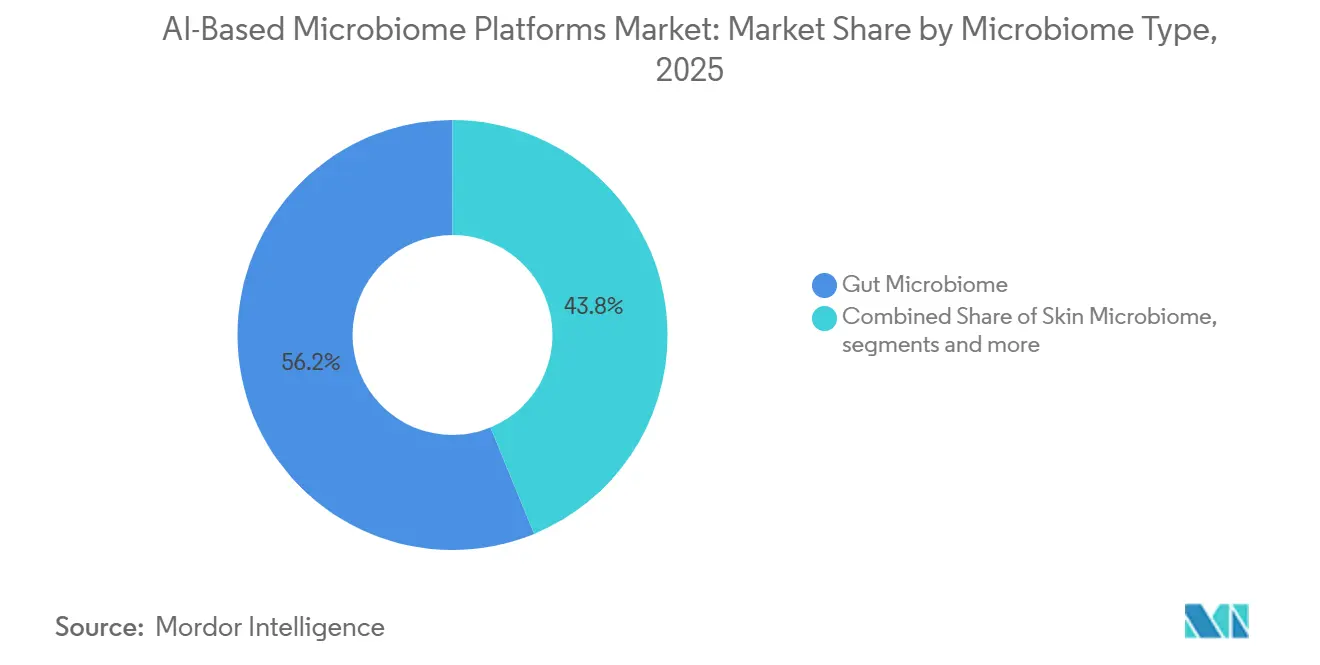
Gut Microbiome Dominates; Environmental Applications AccelerateGut microbiome held 56.24% of the AI-based microbiome platforms market in 2025, making it the largest microbiome category by revenue. The segment leads because it has the deepest body of peer-reviewed clinical research, the widest disease coverage, and the most mature AI training datasets spanning inflammatory bowel disease, metabolic disorders, and oncology response prediction. This part of the AI-based microbiome platforms industry also benefits from cumulative data advantages, because platforms with larger longitudinal datasets can generate stronger signatures for metabolic and immune scoring.
Japan is building a parallel position in gut-focused analytics inside the AI-based microbiome platforms market. Kirin Holdings announced in February 2026 that Cowellnex and Metagen had launched joint research using Japan’s largest collection of shotgun metagenomic gut data to develop new test items and food recommendation algorithms tailored to Japanese microbiome characteristics. Environmental microbiome is projected to grow at 12.50% CAGR through 2031, the fastest among microbiome types, as AI tools move into soil health, aquaculture pathogen risk, and water system monitoring. Skin microbiome also gained traction through Concerto Biosciences’ Skin Universe Project, while oral microbiome research published in 2025 showed metagenomic AI classifiers reaching AUC values of 0.78 to 0.89 in head and neck squamous cell carcinoma detection.

By Deployment Mode:
Cloud Platforms Consolidate Both Share and SpeedCloud-based platforms held 59.66% of the AI-based microbiome platforms market size in 2025 and are also expected to be the fastest-growing deployment model at 13.18% CAGR through 2031. Their lead reflects workflow demands rather than simple user preference, because multi-omics datasets create large raw files that require taxonomic annotation, batch-effect correction, and AI inference at research scale.
On-premises platforms still matter in parts of the AI-based microbiome platforms market where health data sovereignty rules limit use of external servers. That is particularly relevant in regulated environments across Germany, China, and Japan, where patient microbiome data can require tighter location control. Hybrid architectures are therefore emerging as a practical middle ground, especially for large pharmaceutical groups that keep sensitive patient data on site while shifting compute-heavy model training to the cloud. This pattern helps explain why the smaller on-premises and hybrid segments can still attract large enterprise contracts in the AI-based microbiome platforms market.
By Application:
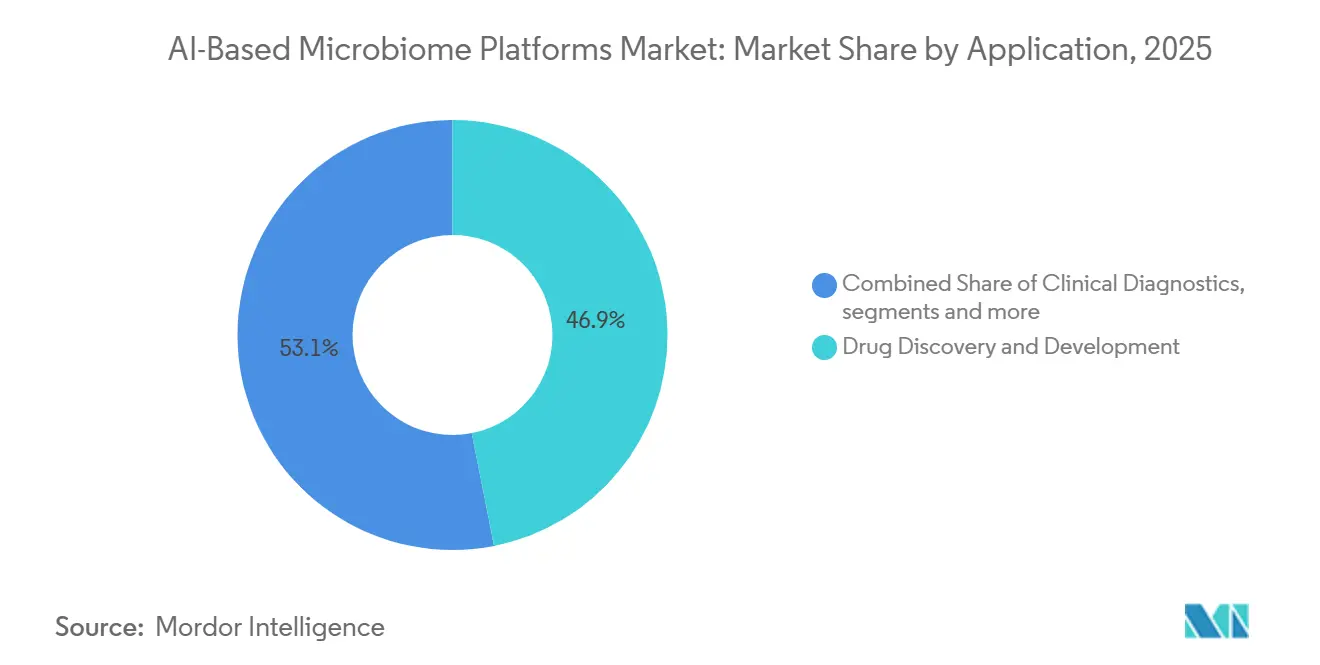
Drug Discovery Gains Fastest Ground on Diagnostic IncumbencyClinical diagnostics accounted for 46.94% of the AI-based microbiome platforms market size in 2025, making it the largest application by current revenue. That lead came from established laboratory workflows and clearer near-term monetization than other application layers. Even so, drug discovery and development is projected to grow at 14.36% CAGR through 2031, which makes it the fastest-expanding application in the AI-based microbiome platforms market. Pharmaceutical companies are using microbiome AI for target identification, candidate screening, and biomarker qualification, which gives platform vendors a deeper role in the value chain than in test-only models.
Insilico Medicine’s Garutadustat, an AI-designed gut-restricted PHD inhibitor, had advanced into Phase IIa in 2026 and shows how microbiome-linked discovery programs are reaching regulatory-grade development stages. Precision medicine and personalized nutrition remain an important adjacent layer, and Viome’s Full Body Intelligence Test launched in 2025 as a single consumer platform covering stool, blood, and saliva gene expression analysis. Other application areas, including agricultural microbiome and environmental monitoring, are also expanding as the AI-based microbiome platforms market proves value in crop yield support and pathogen risk management.
By End-User:
Pharma Integration Outpaces the Lab IncumbentClinical and diagnostic laboratories held 51.73% share of the AI-based microbiome platforms market in 2025, supported by established sample-processing capacity and existing test workflows. This made laboratories the leading end-user group in current deployment volume across the AI-based microbiome platforms market. Pharma and biotechnology companies, however, are projected to grow at 13.44% CAGR through 2031, which reflects a stronger shift in contract depth than in simple platform count. These users are not only buying analytics outputs, they are embedding AI microbiome systems into longer discovery programs and clinical development strategies.
Research and academic institutes remain a major source of model development and reference data generation in the AI-based microbiome platforms industry. MGI Tech launched the Million Microbiome of Humans Project to build a 1 million sample human microbiome reference database, a scale that could reduce one of the largest data standardization costs facing commercial platforms. This means academic networks still shape future commercialization in the AI-based microbiome platforms market even when revenue realization happens later through enterprise buyers.
Geography Analysis
North America AI-Based Microbiome Platforms Market
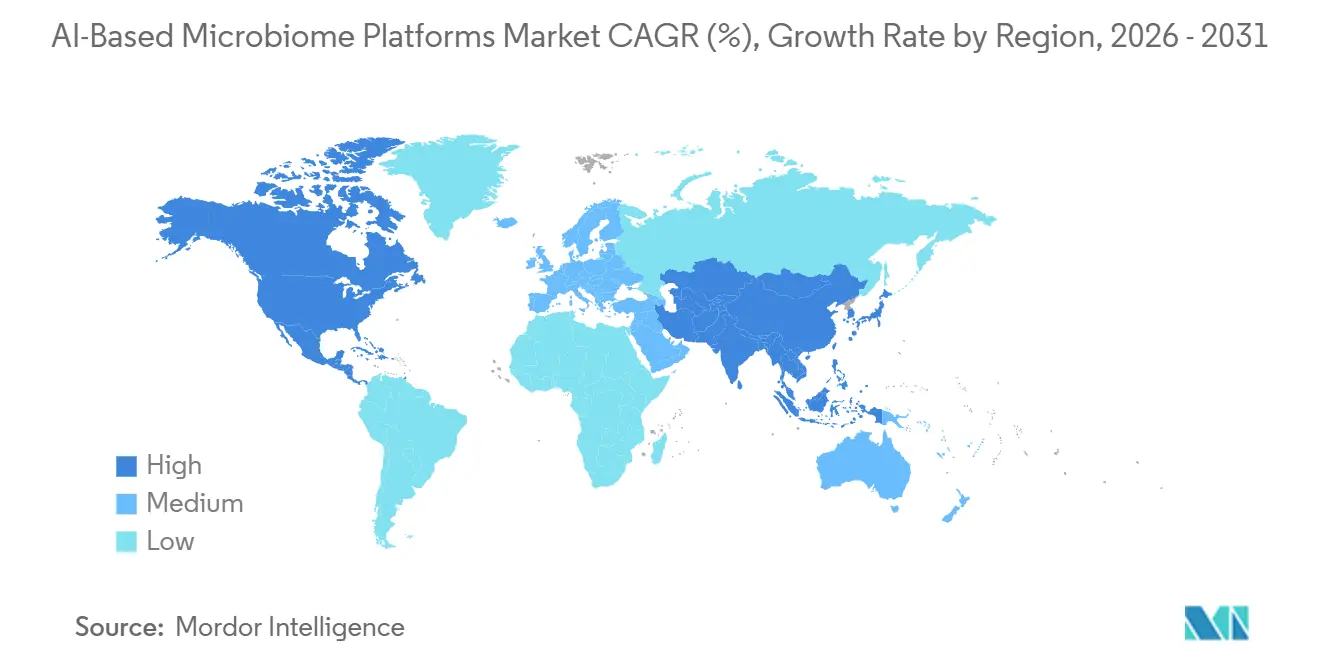
North America held 50.43% of the AI-based microbiome platforms market share in 2025, making it the largest regional center for current revenue. The region leads because it combines deep pharma and biotech research budgets, strong venture backing, and an established clinical laboratory network with next-generation sequencing capability. The United States generates the largest absolute deployment revenue within the AI-based microbiome platforms market, especially across clinical diagnostics and pharmaceutical research programs. Canada and Mexico still represent smaller shares, but they are adding incremental demand through research partnerships and consumer wellness activity.
Europe and Germany AI-Based Microbiome Platforms Market
Europe held the second-largest regional position in the AI-based microbiome platforms market in 2025. Germany stands out as the main innovation hub because of its strong gastroenterology research base and its evidence-led approach to clinical microbiome diagnostics. The EU SoHO Regulation also gives the AI-based microbiome platforms market a more harmonized framework for human microbiome-derived preparations, which should reduce multi-country compliance friction as the transition period progresses.
APAC, South America and MEA AI-Based Microbiome Platforms Market
Asia-Pacific is projected to be the fastest-growing region in the AI-based microbiome platforms market and is projected to expand at 14.42% CAGR through 2031. Japan is a major demand engine, and Kirin said in September 2025 that its MicroBio Me service was targeting 1,000 clinical facility partnerships and 5,000 cumulative tests by the end of 2026. China is strengthening the data foundation for long-term competition by building large proprietary microbiome reference assets that can support model training at local scale. Singapore and Australia are also emerging nodes for the AI-based microbiome platforms market through microbiome medicine partnerships and specialized clinical programs, while South America and the Middle East and Africa remain smaller today but are gaining attention through sequencing infrastructure tied to national health data efforts.
Competitive Landscape
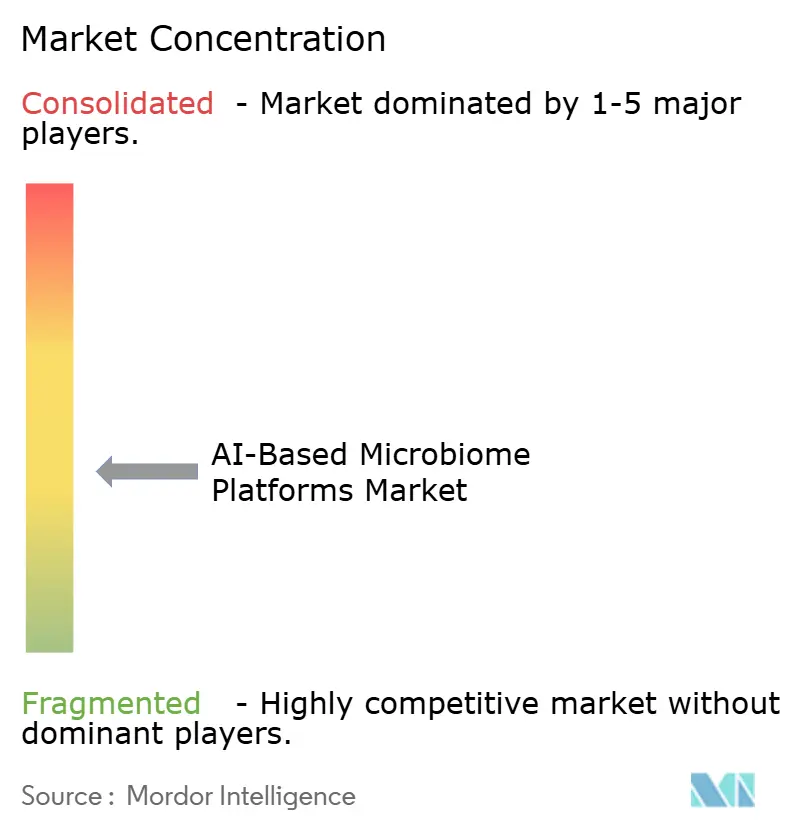
The AI-based microbiome platforms market remains moderately fragmented, with no single company controlling a decisive global position across diagnostics, wellness, therapeutics, and infrastructure. Competition is split between data-network platforms that rely on proprietary multi-omics datasets and AI models, and infrastructure-focused platforms that support third-party research and development. Viome illustrates the first model, because it pairs a large RNA-based biological dataset with Microsoft cloud infrastructure and competes on data depth and resolution rather than on sequencing hardware throughput. Ginkgo Bioworks illustrates the second model, because it launched Ginkgo Cloud Lab in March 2026 and shifted its focus toward autonomous lab infrastructure and research-as-a-service delivery.
The AI-based microbiome platforms market still has open space in ethnic cohort database standardization, continuous microbiome monitoring, and food-linked platform integration. Under-represented population datasets remain a major gap, and companies that can build validated reference collections outside predominantly Western cohorts are likely to gain defensible commercial ground. Agricultural platform developers are also widening the market boundary, as shown by Biome Makers’ expansion of AI-based soil intelligence for field-level decision support. That broadening of use cases means competitive pressure is no longer limited to human clinical workflows alone.
Intellectual property is also shifting the AI-based microbiome platforms market from passive analytics toward active microbiome modification. Companies such as Metagenomi and Insilico Medicine show how discovery platforms can move from data analysis into therapeutic design and development. At the same time, larger proprietary datasets and stronger privacy-aware training frameworks are becoming necessary for multinational deployment across Europe and Asia. This keeps the AI-based microbiome platforms market competitive, but it also raises the bar for smaller vendors that lack scale in data, compute, or regulatory readiness.
AI-Based Microbiome Platforms Industry Leaders
-
Viome Life Sciences
-
Eagle Genomics
-
CosmosID
-
Pendulum Therapeutics
-
DayTwo
- *Disclaimer: Major Players sorted in no particular order
AI-Based Microbiome Platforms Market Companies Covered in this Report
- Atlas Biomed
- Biohm Health
- Biome Diagnostics GmbH
- BiomeSense
- CosmosID
- DayTwo
- Eagle Genomics
- Finch Therapeutics
- Ginkgo Bioworks
- HelloBiome
- Insilico Medicine
- Metagenomi
- Onegevity (Thorne)
- Pendulum Therapeutics
- Second Genome
- Seed Health
- Seer Bio
- Sun Genomics
- Synlogic
- Viome Life Sciences
Recent Industry Developments in AI-Based Microbiome Platforms Market
- May 2026: bitBiome closed an oversubscribed seed extension round to accelerate its AI-driven microbial gene database and high-throughput strain engineering platform. The investment signals strong commercial interest in database-scale enzyme and protein discovery capabilities positioned at the intersection of bioeconomy and biodefense priorities.
- April 2026: Ginkgo Bioworks completed the divestiture of its biosecurity business to Tower Biosecurity on April 3, 2026, retaining approximately 20% equity. This strategic exit concentrates Ginkgo's full resources on its autonomous lab and cloud lab offerings, directly serving AI-driven drug discovery and microbiome research customers.
- April 2026: MRM Health's MH002, a 6-strain LBP targeting ulcerative colitis, received FDA Fast Track designation after Phase 2a data demonstrated mucosal healing and microbiome balance recovery. The company is advancing into a Phase 2b study (STARFISH-UC) enrolling approximately 204 patients across Europe and the US, with first results expected Q4 2027.
Global AI-Based Microbiome Platforms Market Report Scope
According to the report’s scope, the AI-based microbiome platforms market comprises software platforms and analytical solutions that use artificial intelligence and machine learning to analyze microbiome data from human, animal, or environmental samples. These platforms help identify microbial patterns, predict health outcomes, support biomarker discovery, and accelerate the development of personalized therapeutics, diagnostics, nutrition solutions, and precision medicine applications.
The AI-based microbiome platforms market is segmented into microbiome type, deployment mode, application, end-user, and geography. By microbiome type, the market is segmented into gut microbiome, skin microbiome, oral microbiome, and environmental microbiome. By deployment mode, the market is segmented into cloud-based platforms, on-premises platforms, and hybrid models. By application, the market is segmented into drug discovery and development, clinical diagnostics, precision medicine and personalized nutrition, consumer microbiome and wellness platforms, and other applications. By end-user, the market is segmented into pharma and biotechnology companies, clinical and diagnostic laboratories, research and academic institutes, food and nutrition companies, and other end-users. By geography, the market is segmented into North America, Europe, Asia-Pacific, the Middle East and Africa, and South America. The report also covers the estimated market sizes and trends for 17 countries across major regions globally. The report offers values (USD) for all the above segments.
Segmentation Overview
| Gut Microbiome |
| Skin Microbiome |
| Oral Microbiome |
| Environmental Microbiome |
| Cloud-Based Platforms |
| On-Premises Platforms |
| Hybrid Models |
| Drug Discovery and Development |
| Clinical Diagnostics |
| Precision Medicine and Personalized Nutrition |
| Consumer Microbiome and Wellness Platforms |
| Other Applications |
| Pharma and Biotechnology Companies |
| Clinical and Diagnostic Laboratories |
| Research and Academic Institutes |
| Food and Nutrition Companies |
| Other End-Users |
| North America | United States |
| Canada | |
| Mexico | |
| Europe | Germany |
| United Kingdom | |
| France | |
| Italy | |
| Spain | |
| Rest of Europe | |
| Asia-Pacific | China |
| Japan | |
| India | |
| Australia | |
| South Korea | |
| Rest of Asia-Pacific | |
| Middle East and Africa | GCC |
| South Africa | |
| Rest of Middle East and Africa | |
| South America | Brazil |
| Argentina | |
| Rest of South America |
| By Microbiome Type | Gut Microbiome | |
| Skin Microbiome | ||
| Oral Microbiome | ||
| Environmental Microbiome | ||
| By Deployment Mode | Cloud-Based Platforms | |
| On-Premises Platforms | ||
| Hybrid Models | ||
| By Application | Drug Discovery and Development | |
| Clinical Diagnostics | ||
| Precision Medicine and Personalized Nutrition | ||
| Consumer Microbiome and Wellness Platforms | ||
| Other Applications | ||
| By End-User | Pharma and Biotechnology Companies | |
| Clinical and Diagnostic Laboratories | ||
| Research and Academic Institutes | ||
| Food and Nutrition Companies | ||
| Other End-Users | ||
| By Geography | North America | United States |
| Canada | ||
| Mexico | ||
| Europe | Germany | |
| United Kingdom | ||
| France | ||
| Italy | ||
| Spain | ||
| Rest of Europe | ||
| Asia-Pacific | China | |
| Japan | ||
| India | ||
| Australia | ||
| South Korea | ||
| Rest of Asia-Pacific | ||
| Middle East and Africa | GCC | |
| South Africa | ||
| Rest of Middle East and Africa | ||
| South America | Brazil | |
| Argentina | ||
| Rest of South America | ||
Key Questions Answered in the Report
What is the projected value of the AI-based microbiome platforms space by 2031?
It is forecasted to reach USD 1.19 billion by 2031, rising from USD 0.67 billion in 2026 at a 12.17% CAGR over 2026-2031.
Which region currently leads global demand?
North America led in 2025 with 50.43% share, supported by strong pharma and biotech activity and mature clinical sequencing infrastructure.
Which region is growing the fastest through 2031?
Asia-Pacific is the fastest-growing region, with a projected 14.42% CAGR through 2031, led by Japan, China, and South Korea.
Why are cloud platforms leading adoption?
Cloud-based platforms held 59.66% share in 2025 because multi-omics workflows create large datasets that need elastic compute, storage, and AI processing capacity.