
Market Overview
| Study Period | 2020 - 2031 |
|---|---|
| Forecast Data Period | 2026 - 2031 |
| Base Year Market Size (2025) | USD 51.24 Billion |
| Market Size (2026) | USD 54.41 Billion |
| Market Size (2031) | USD 75.57 Billion |
| Growth Rate (2026 - 2031) | 6.79 % |
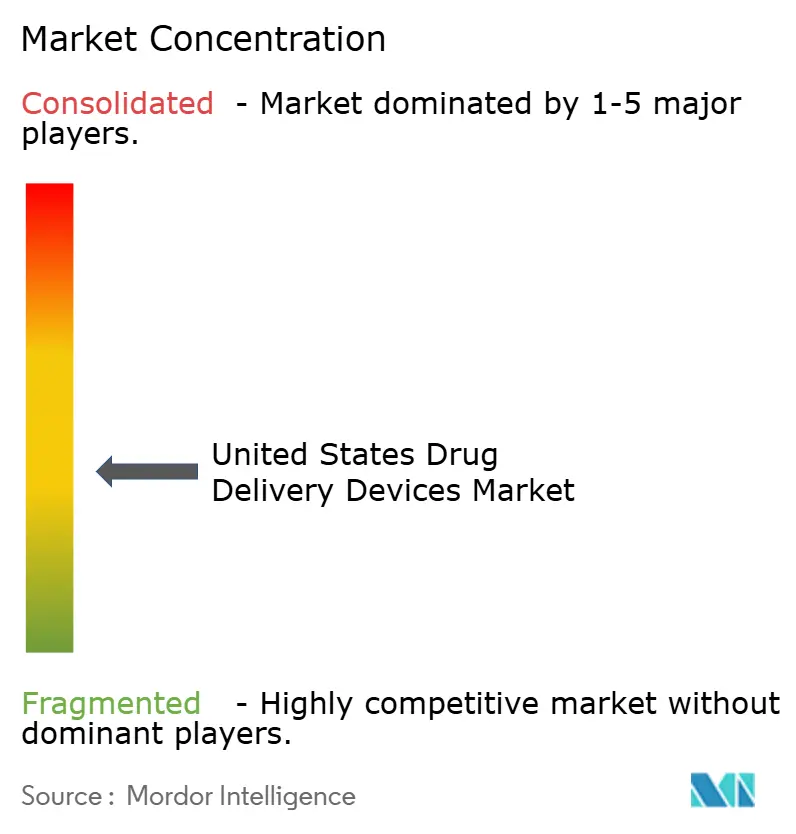
| Market Concentration | Medium |
Major Players *Disclaimer: Major Players sorted in no particular order Image © Mordor Intelligence. Reuse requires attribution under CC BY 4.0. | |
United States Drug Delivery Devices Market Analysis by Mordor Intelligence
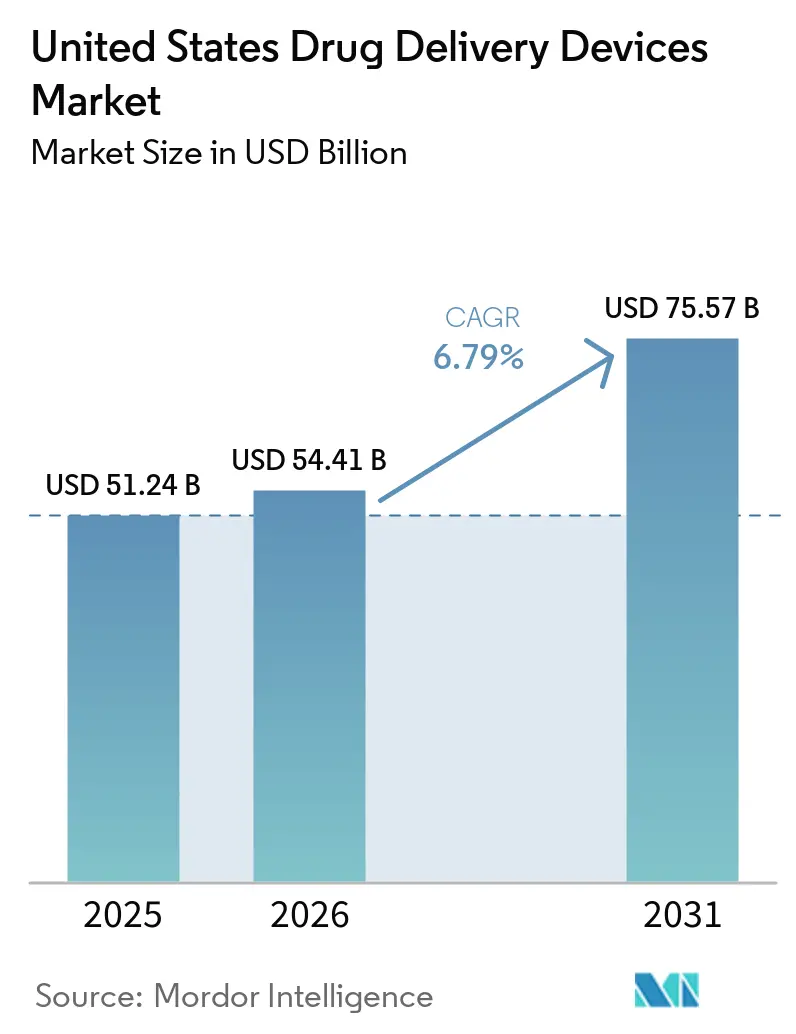
The United States Drug Delivery Devices Market size is expected to increase from USD 51.24 billion in 2025 to USD 54.41 billion in 2026 and reach USD 75.57 billion by 2031, growing at a CAGR of 6.79% over 2026-2031.
Investment announcements exceeding USD 150 billion for biologics manufacturing capacity during 2024-2025 are converting fill-finish demand into immediate orders for prefilled syringes, autoinjectors, and large-volume wearable injectors, while connected-device mandates are steering capital toward platforms that capture real-time adherence data. Subcutaneous administration is gaining momentum, with a 7.69% CAGR, as large-volume patch pumps from BD, Ypsomed, and Enable Injections deliver 5-50 mL biologic doses at home, thereby reducing infusion-center visits. Hospitals accounted for 49.28% of end-user spending in 2025, yet home healthcare settings are advancing at an 8.78% CAGR after CMS began reimbursing home infusion therapy at near-parity with outpatient departments on 1 January 2025.
Key Report Takeaways
- By device type, injectable platforms held 43.27% of the United States drug delivery devices market share in 2025, whereas oral controlled-release systems are forecast to expand at a 7.32% CAGR through 2031.
- By route of administration, intravenous formats accounted for 36.83% of revenue share in 2025, while subcutaneous delivery is projected to grow fastest at a 7.69% CAGR over 2026-2031.
- By therapeutic area, oncology dominated the United States drug delivery devices market with a 28.88% share in 2025, yet diabetes devices are poised to grow at a 9.01% CAGR through 2031.
- By end user, hospitals accounted for 49.28% of 2025 spending, but the home healthcare segment is forecast to lead growth at an 8.78% CAGR through the outlook period.
Note: Market size and forecast figures in this report are generated using Mordor Intelligence’s proprietary estimation framework, updated with the latest available data and insights as of January 2026.
Market Trends and Insights
Drivers Impact Analysis of United States Drug Delivery Devices Market*
| Driver | (~) % Impact on CAGR Forecast | Geographic Relevance | Impact Timeline |
|---|---|---|---|
| Rising Prevalence of Chronic Diseases | +1.2% | Global, concentrated in aging U.S. demographics | Long term (≥ 4 years) |
| Growing Preference for Self-Administration & Home Healthcare | +1.5% | National, accelerated in metropolitan areas with telehealth infrastructure | Medium term (2-4 years) |
| Connected Smart Devices Improve Adherence & Outcomes | +1.1% | National, early gains in diabetes and respiratory segments | Medium term (2-4 years) |
| Biologics Capacity Boom Drives Demand for Advanced Containers | +1.8% | National, spillover to contract manufacturing hubs in North Carolina, Indiana | Short term (≤ 2 years) |
| Value-Based Care Models Favor Long-Acting Implants | +0.9% | National, Medicare Advantage penetration highest in Florida, California | Long term (≥ 4 years) |
| Expanding Biologics Pipeline Necessitating Advanced Parenteral Delivery Platforms | +1.3% | National, concentrated in oncology and autoimmune therapeutic areas | Medium term (2-4 years) |
| Source: Mordor Intelligence | |||
Rising Prevalence of Chronic Diseases
Nearly 38.4 million Americans lived with diagnosed diabetes in 2024, and the CDC projects one in three adults will carry the diagnosis by 2050, intensifying long-term demand for continuous glucose monitors, insulin pumps, and GLP-1 autoinjectors.[1] Cancer incidence surpassed 2 million new cases in 2024, sustaining high utilisation of port-a-cath systems and ambulatory infusion pumps for chemotherapy. Cardiovascular disease affects 127 million adults, prompting increased use of anticoagulant pens and drug-eluting stents that mitigate hospital readmissions. Chronic respiratory conditions and a growing autoimmune population are driving the United States drug delivery devices market toward durable, patient-managed formats. The cumulative effect is a multiyear lift in baseline procedure volumes, supporting predictable unit shipments well beyond the forecast horizon.
Growing Preference for Self-Administration & Home Healthcare
CMS introduced stand-alone reimbursement codes for home infusion therapy in 2025, neutralising historical payment penalties and giving providers an economic incentive to discharge stable patients with wearable injectors and connected pumps.[2] Medicare Advantage enrollment crossed 33 million members the same year, and plans rapidly bundled device supplies with telehealth monitoring to cut emergency-department visits. The American Nurses Association forecasts 78,000 unfilled RN positions by 2026, further encouraging technologies that shift dosing responsibility to patients. Device makers answered with user-centred autoinjectors featuring needle-retraction windows and audible cues that reduce error rates among seniors. Collectively, these trends pivot the United States drug delivery devices market toward home-centric care pathways that reward simplicity and remote visibility.
Connected Smart Devices Improve Adherence & Outcomes
Dexcom’s G7 CGM seamlessly links with Tandem’s Mobi pump, automatically modulating basal rates and reducing severe hypoglycemia events by 40% in a real-world cohort.[3] Propeller Health inhaler sensors transmit timestamped actuations and GPS data so pulmonologists can intervene before an asthma crisis, yet only connected devices with demonstrated clinical benefit are gaining broad reimbursement. Payers such as UnitedHealthcare now require documentation that closed-loop systems outperform manual therapy, forcing lagging device platforms to retrofit connectivity or risk exclusion. The FDA cybersecurity guidance issued in 2024 embedded SBOM submission as a premarket requirement, adding compliance costs but also establishing trust that data-rich devices will not expose networks. The net effect is a premium on platforms that transform raw data into actionable dosing logic, reinforcing digital moats around incumbents.
Biologics Capacity Boom Drives Demand for Advanced Containers
Manufacturers announced USD 150 billion in new U.S. biologics facilities between 2024-2025, with capacity to be concentrated in North Carolina, Indiana, and Ohio. Each monoclonal antibody batch requires cyclic olefin polymer syringes, elastomeric stoppers, and safety-engineered needles that comply with ISO 11608, propelling component backlogs beyond 18 months. West Pharmaceutical reported 24-month lead times for coated plungers in 2025, compelling drug sponsors to lock multiyear contracts early. Wearable injectors capable of handling 10-50 mL viscous formulations are simultaneously replacing IV infusion lines, shifting revenue from acute-care equipment into ambulatory patches. In the United States drug delivery devices market, container shortages have quietly become a rate-limiting step for therapy launches, advantaging vertically integrated suppliers.
Restraints Impact Analysis of United States Drug Delivery Devices Market*
| Restraint | (~) % Impact on CAGR Forecast | Geographic Relevance | Impact Timeline |
|---|---|---|---|
| Stringent FDA Regulatory Requirements | -0.8% | National, affecting all device classes | Long term (≥ 4 years) |
| Recalls & Device Malfunctions Undermine Confidence | -1.1% | National, concentrated in insulin pump and autoinjector users | Short term (≤ 2 years) |
| Raw-Material Bottlenecks in Medical-Grade Polymers | -0.5% | National, supply-chain dependencies on Asian resin producers | Medium term (2-4 years) |
| Rising Needlestick Injury Litigation Elevating Liability Insurance Premiums | -0.4% | National, acute in hospital and ambulatory settings | Medium term (2-4 years) |
| Source: Mordor Intelligence | |||
Stringent FDA Regulatory Requirements
Cybersecurity guidance released in 2024 makes an SBOM and threat-modeling dossier a condition of clearance for any wireless device, extending development cycles 6-12 months and adding USD 2-5 million per platform. Combination product reviews now require human factors validation even when predicate devices exist, and post-market surveillance reporting is mandatory within 30 days of serious incidents. Smaller innovators struggle with the staffing and documentation load, slowing pipeline velocity and nudging the United States drug delivery devices industry toward consolidation. Real-world evidence is also becoming increasingly important; products must demonstrate performance in routine practice within 24 months, which escalates launch costs.
Recalls & Device Malfunctions Undermine Confidence
Medtronic’s Class I recall of over 2 million MiniMed pumps in 2024 shook patient trust and inflated liability premiums by 22% for all pump makers. Tandem and Insulet faced software-related recalls that year, and BD withdrew syringe lots due to particulate contamination alarms. Endocrinologists reported a 15% uptick in requests to switch back to manual injections during recall peaks, a behavioural drag on automated-device adoption. Class-action litigation raised out-of-pocket settlement costs and spurred payers to insist on longer warranty terms, trimming gross margins. The episode underscores how a single high-visibility failure can ripple across the broader United States drug delivery devices market for several quarters.
*Our forecasts treat driver/restraint impacts as directional, not additive. The impact forecasts reflect baseline growth, mix effects, and variable interactions.
United States Drug Delivery Devices Market Segment Analysis
By Device Type:
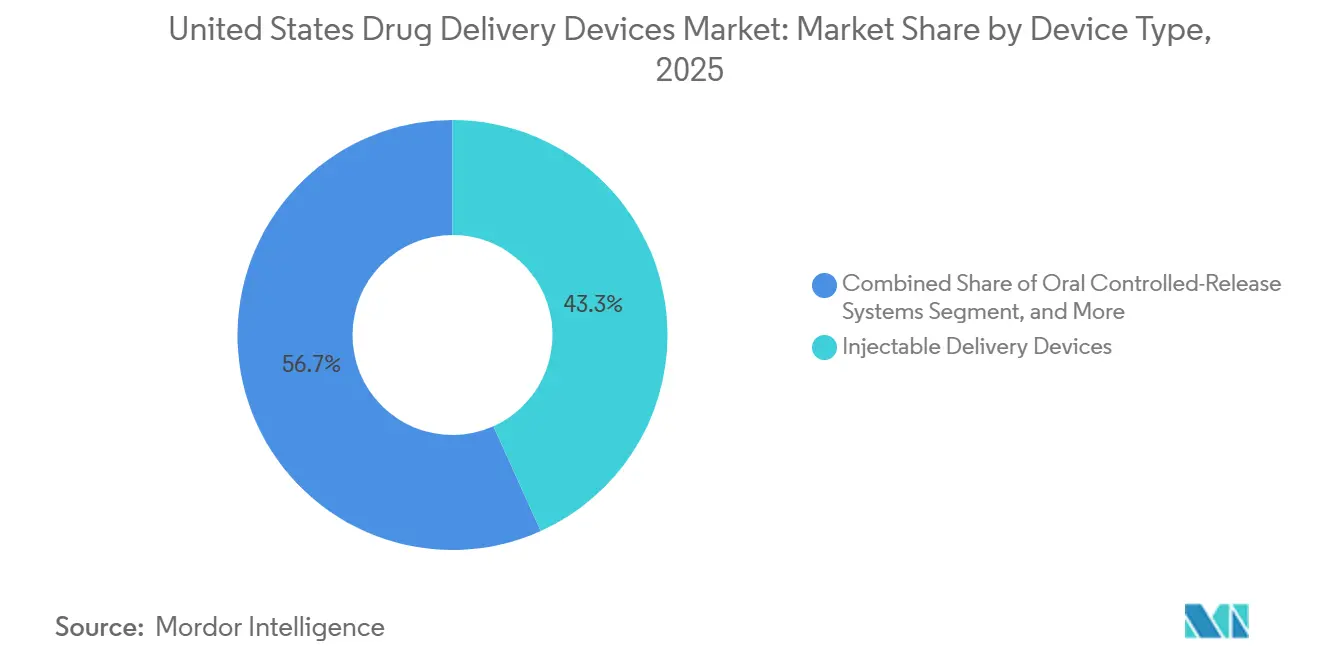
Injectable Platforms Dominate, Oral Systems AccelerateInjectable platforms generated 43.27% revenue in 2025, anchoring the United States drug delivery devices market share with 8.2 billion units shipped. Wearable injectors such as BD Libertas and Enable enFuse now handle 5-50 mL biologics, opening subcutaneous routes for therapies once limited to infusion chairs. Oral controlled-release systems, although only 18% of 2025 revenue, will outpace all categories at 7.32% CAGR to 2031 because Rybelsus proved peptides can survive GI transit when paired with absorption enhancers.
The CAGR for injectables steps up slightly over 2026-2031 as biosimilar launches and GLP-1 demand intensify. Smart sensors improved adherence, but adoption lags pending uniform payer coverage. Transdermal and ocular devices together remain below 10% share but win premium pricing where they reduce clinic visits, exemplified by Genentech’s twice-yearly Susvimo refills for AMD.

By Route of Administration:
Intravenous Leads, Subcutaneous SurgesIntravenous delivery captured 36.83% of the 2025 value, primarily through hospital chemotherapy and TPN volumes, yet its forecast CAGR tails at 5.2% as payers reroute suitable biologics to the home. Subcutaneous delivery will grow 7.69% annually, driven by the scaling of large-volume patch pumps reimbursed under new home-infusion codes. Intradermal remains niche, though microneedle vaccine patches secured Breakthrough Device status in 2024. Oral routes hold a stable base, while pulmonary and transdermal routes serve targeted populations like COPD and chronic pain, sustaining mid-single-digit growth.
By Application:
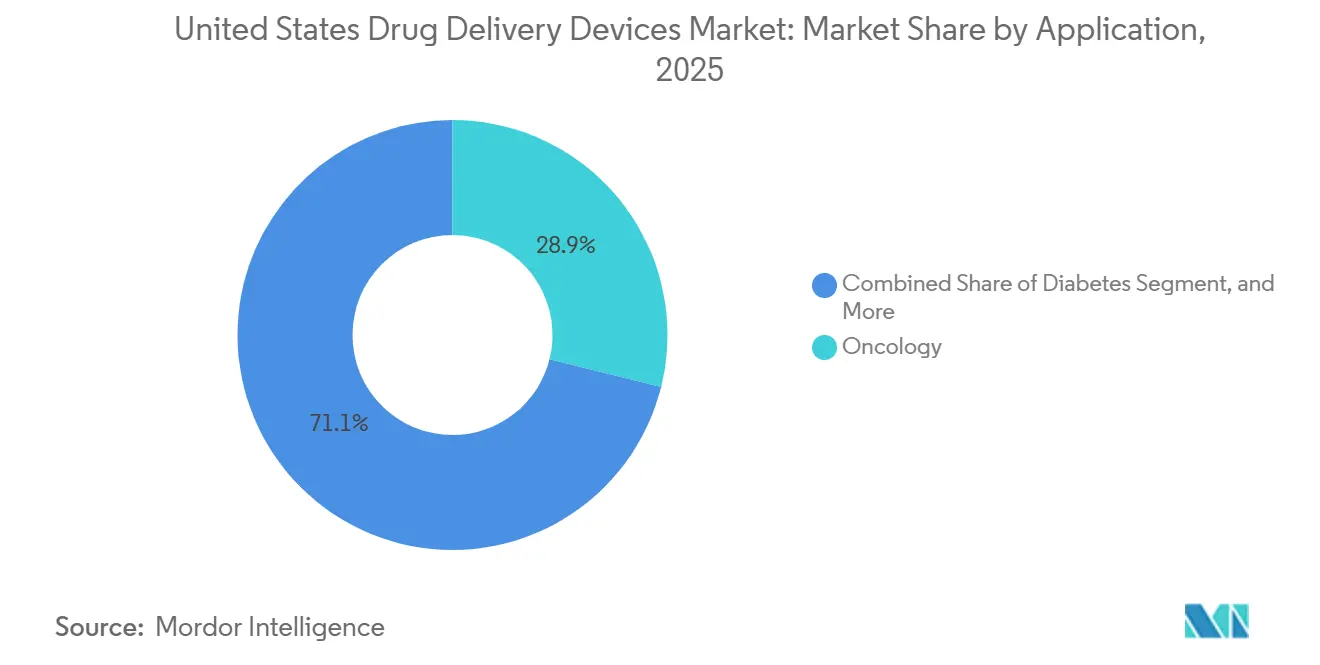
Oncology Dominates, Diabetes AcceleratesOncology retained 28.88% of 2025 spend thanks to infusion hardware, but diabetes devices will post the strongest 9.01% CAGR through 2031 as closed-loop ecosystems penetrate both Medicare and commercial formularies. Respiratory, cardiovascular, and autoimmune segments follow with steady growth tied to uptake of biologics or smart inhalers. Other categories, including rare-disease gene therapies, remain small in dollars but command ultra-high device ASPs due to cryogenic handling needs.
By End User:
Hospitals Lead, Home-Healthcare Gains GroundHospitals consumed 49.28% of 2025 expenditures, yet growth slowed to 4.9% as staffing shortages and value-based penalties encouraged earlier discharge. Home healthcare grows 8.78% annually after reimbursement parity, with ambulatory surgical centers and specialty clinics filling the mid-acuity gap. Devices that seamlessly transition across sites now enjoy procurement preference, meaning a single SKU must satisfy both institutional and home-care safety protocols.
Geography Analysis
Regional demand in the United States drug delivery devices market aligns with payer mix and manufacturing footprints. North Carolina, Indiana, and Ohio host multibillion-dollar expansions in biologics production by Novo Nordisk, Eli Lilly, and Amgen, stimulating local supply chains for prefilled syringes and elastomeric seals. California and Massachusetts lead in clinical trials, driving the adoption of prototype devices among academic centres. Sun Belt states show the fastest unit growth as Medicare Advantage penetration tops 50% and diabetes prevalence rises. Rural broadband gaps still slow connected-device uptake in Mountain West counties; federal infrastructure funding should close most of that divide by 2028. State Medicaid policies create patchwork access: Texas expanded CGM coverage in 2025, boosting shipments 22%, whereas non-expansion states lag.
Regulatory Landscape
The United States drug delivery devices market operates under FDA oversight for combination products, with the Office of Combination Products (OCP) assigning the lead review center (CDER, CBER, or CDRH) based on Primary Mode of Action (PMOA). For manufacturing compliance, 21 CFR Part 4 provides a streamlined pathway for drug-device combination products to demonstrate cGMP alignment without duplicative systems, and post-market reporting timelines, such as serious incident reporting within 30 days, continue to shape quality and surveillance operating models.
A 2026 compliance inflection is the FDA transition from the Quality System Regulation (21 CFR Part 820) to the Quality Management System Regulation (QMSR), effective February 2, 2026. The QMSR incorporates ISO 13485:2016 by reference for device quality management. FDA also continued to sharpen technical and labeling expectations for combination products, including a June 2025 Federal Register draft guidance clarifying Unique Device Identifier (UDI) requirements for combination products and an April 2026 CDRH letter to industry on identifying and managing nitrosamine risks in CDRH-led combination products. The emphasis remains on documented risk management and material controls for device constituent parts.
Competitive Landscape
The five largest suppliers, BD, Medtronic, Insulet, Dexcom, and Tandem, held a significant share of the combined 2025 revenue, signalling moderate concentration. Novo Holdings’ USD 16.5 billion buyout of Catalent underscored a shift toward vertical integration, pressuring pure-play component makers. Enable Injections, Ypsomed, and West Pharmaceutical gained share by specialising in large-volume subcutaneous systems or advanced packaging. Software prowess is now a key differentiator; platforms unable to furnish secure cloud data risk exclusion from integrated delivery network formularies. Liability costs post-recall highlight the importance of rigorous validation, favouring incumbents with deep quality budgets.
United States Drug Delivery Devices Industry Leaders
-
Becton, Dickinson and Company
-
Johnson & Johnson
-
Medtronic plc
-
West Pharmaceutical Services, Inc.
-
3M
- *Disclaimer: Major Players sorted in no particular order
United States Drug Delivery Devices Market Companies Covered in this Report
- 3M
- Abbvie
- Amgen
- AstraZeneca
- Beckton Dickinson
- Boston Scientific
- Eli Lilly and Company
- Gerresheimer
- Insulet
- Johnson & Johnson
- Medtronic
- Novartis
- Pfizer
- Sanofi
- Tandem Diabetes Care
- Teva Pharmaceutical Industries
- West Pharmaceutical Services
Read Analysis of United States Drug Delivery Devices Companies
Market Opportunities and Future Outlook
Domestic capacity build-out for sterile fill-finish and drug-device combination assembly is an actionable whitespace area as biologics and GLP-1 volumes pressure supply chains and extend lead times for advanced containers and delivery systems. Recent proof points include PCI Pharma Services announcing a USD 1 billion investment program (April 2026) to expand US sterile fill-finish and drug-device combination capabilities, including autoinjector lines. MGS also opened a new 300,000-square-foot healthcare manufacturing facility in Richfield, Wisconsin (February 2026), with 140,000 square feet of ISO Class 8 cleanrooms to support pharmaceutical drug delivery device production. Together, these moves point to demand for suppliers that can deliver integrated device assembly, testing, and packaging at scale, particularly for prefilled formats and wearable or self-injection systems.
Regulatory standardization is also creating opportunities for platforms that can operationalize tighter design control and performance verification requirements without pushing out time-to-market. The FDA QMSR, effective February 2, 2026, increases the importance of ISO 13485-aligned quality systems for device constituents. In parallel, the FDA draft guidance on Essential Drug Delivery Outputs for devices intended to deliver drugs and biological products (June 2026) suggests more explicit expectations for critical performance parameters and verification and validation packages in combination products. Manufacturers that combine compliant quality infrastructure with connectivity, human factors validation, and post-market surveillance processes have a more defined path to support payers and providers shifting dosing into home settings under updated reimbursement dynamics.
Recent Industry Developments in United States Drug Delivery Devices Market
- May 2026: Medtronic announced its intent to acquire SPR Therapeutics for about USD 650 million, adding the SPRINT Peripheral Nerve Stimulation system to its pain therapy portfolio. The deal expands Medtronic's presence in chronic pain management and increases its exposure to device-led therapy delivery in ambulatory settings.
- July 2025: BD announced a first pharma-sponsored clinical trial using BD Libertas wearable injector technology for biologic drugs. The trial activity supports broader adoption of large-volume, patient-administered injection platforms, aligning with the shift of suitable biologics from infusion centers to home care.
- October 2024: BD and Ypsomed announced a collaboration to advance self-injection systems for high-viscosity biologics. The partnership targets autoinjector and prefilled syringe compatibility for challenging formulations, reinforcing the industry's focus on subcutaneous administration and improved patient usability.
United States Drug Delivery Devices Market Report Scope and Research Methodology
Market Definition and Coverage
For this study, the market is defined as revenue generated in the United States from drug delivery devices that enable a measured, repeatable, and patient safe administration of medicines across common routes of delivery.
Scope exclusions: We exclude low value ancillary disposables and packaging components (for example, basic tubing sets, vial stoppers, and similar items) when they are not sold as part of the delivery device value.
Segments Covered in This Report
- Device Type
- Injectable Delivery Devices
- Inhalation Delivery Devices
- Transdermal Delivery Devices
- Ocular Delivery Devices
- Oral Controlled-Release Systems
- Other Device Types (Implantable Drug Delivery Devices, Nasal Delivery Devices, etc.)
- Route of Administration
- Intravenous
- Subcutaneous
- Intradermal
- Oral
- Others (Pulmonary, Transdermal, etc.)
- Application / Therapeutic Area
- Oncology
- Diabetes
- Respiratory Diseases
- Cardiovascular Diseases
- Auto-immune Diseases
- Other Applications (Infectious Diseases, CNS Disorders, etc.)
- End User
- Hospitals
- Ambulatory Surgical Centers
- Home-Healthcare Settings
- Specialty Clinics
Data Sources, Market Sizing, and Validation
Desk Research
Desk research was used to set the factual base for the model, especially on disease burden, care settings, and what drives device adoption in the United States. We typically start with public sources such as the US FDA databases for clearances and safety notices, the US Census Bureau for population trends, the Centers for Disease Control and Prevention (CDC) and National Center for Health Statistics (NCHS) for chronic disease indicators, and the Centers for Medicare and Medicaid Services (CMS) for healthcare spending context.
We then build practical sizing inputs from company filings, investor presentations, annual reports, and reputable press coverage that discusses launches, manufacturing expansions, and therapy shifts toward self administration. To tighten assumptions where public data is not specific enough, we also use paid subscriptions for company financials and intelligence, patent databases, and selective news and financials tracking. The source list above is illustrative only, and many other public references were checked to support data collection, validation, and clarification.
Primary Interviews and Surveys
Primary work focused on confirming what is counted as a drug delivery device sale in the United States and how pricing and mix change by care setting. We spoke with manufacturers, component suppliers, distributors, and provider-side stakeholders, and then used follow-ups to validate route-level adoption (injectable, inhalation, transdermal, and others) and to sanity check growth assumptions across home healthcare, hospitals, and ambulatory settings.
Distribution of primary research fieldwork respondents
| Company type | Respondent position |
|---|---|
| Top tier: 39% | CXOs: 13% |
| Mid tier: 42% | Functional/Unit leaders: 30% |
| Smaller Players: 19% | Managers: 57% |
Market-Sizing & Forecasting
Sizing starts with a top-down build where US demand is reconstructed from treated population signals and device usage intensity by route of administration, then translated into value using a price and mix layer. Because device families can look similar but are paid differently, we split the logic by major device groups and care settings before rolling up to totals.
Key inputs used in the model include chronic disease prevalence trends tied to self administered therapies, prescription and therapy mix shifts toward biologics that require specific delivery formats, procedure and infusion setting migration, device replacement cycles for durable platforms, and observed pricing movement for common device categories. Where data points were thin, a bounded range was applied and then narrowed after primary checks on typical unit economics and mix change.
For forecasting, scenario analysis was used so growth can be adjusted when adoption drivers move faster or slower than expected, and then the selected path was cross checked with a simple time series sanity check using recent market direction. Results were corroborated with selective bottom-up approximations, such as sampled ASP times volume logic by major device groups and channel checks, which were then used to adjust totals when the roll up did not match real world buying behavior.
Data Validation & Update Cycle
Outputs were validated through consistency checks across routes, end users, and applications so the totals do not grow in ways that contradict known care delivery shifts. We also compare model signals against independent metrics such as clearance activity, major launch timing, and spending direction in relevant care settings, and then review outliers before sign off.
Reports are refreshed on an annual cycle, and interim updates are triggered when material events occur, such as major regulatory actions, notable shortages, or meaningful changes in reimbursement and site of care. Before delivery, a final analyst pass is completed so clients receive the most current view using the same repeatable steps.
Mordor Intelligence's USA Drug Delivery Devices Market Estimate Compared With Other Published Estimates
Published market sizes for US drug delivery devices can vary quite a bit, even when the topic name looks identical. In most cases, the gap comes from what is counted as a device sale, the year chosen as the current base, and how pricing and mix are handled when therapies move between settings.
By tracking device-only revenue boundaries and refreshing scope checks through interviews, Mordor Intelligence keeps the estimate aligned to finished delivery devices and avoids quietly adding adjacent disposables or broader drug delivery systems that inflate totals.
Benchmark comparison
| Source | Market Size | Gaps in Research Methodology |
|---|---|---|
| Mordor Intelligence | USD 54.41 B (2026) | |
| Trade Publisher A | USD 51.24 B (2025) | Uses a different current-year anchor, and the earlier base year can understate the step-up from recent mix shifts toward higher value delivery platforms. |
| Industry Report B | USD 67.83 B (2024) | Broader inclusion logic appears to combine a wider set of routes and device categories without clear exclusions for low value disposables, and it also applies a different base year and growth window. |
The spread in values is mostly explained by time anchoring and scope edges, not by math errors. When the market is defined tightly around finished delivery devices, and pricing and mix are updated using current adoption signals, the result is easier to trace back to real demand drivers and to replicate in future updates.
Key Questions Answered in the Report
How large is the United States drug delivery devices market in 2026?
It is estimated at USD 54.41 billion in 2026, up from USD 51.24 billion in 2025.
Which device type grows fastest to 2031?
Oral controlled-release systems are forecast to rise at 7.32% CAGR through 2031 as peptide tablets gain traction.
Why is subcutaneous delivery gaining share?
Large-volume wearable injectors approved in 2024 enable 5-50 mL biologics to be moved from infusion centers to home use, saving payers facility fees.
What segment drives future revenue growth?
Diabetes devices lead with a projected 9.01% CAGR, driven by the adoption of closed-loop insulin delivery and the expansion of CGM coverage.
How is regulation affecting new product launches?
FDA cybersecurity and human-factors mandates add 6-12 months and USD 2-5 million to each connected-device development cycle.
Which regions see fastest demand expansion?
Sun Belt states with high Medicare Advantage penetration post the quickest unit growth as home-infusion incentives align.