
United Arab Emirates Baby Diapers And Wipes Market Size and Share
Market Overview
| Study Period | 2021 - 2031 |
|---|---|
| Forecast Data Period | 2026 - 2031 |
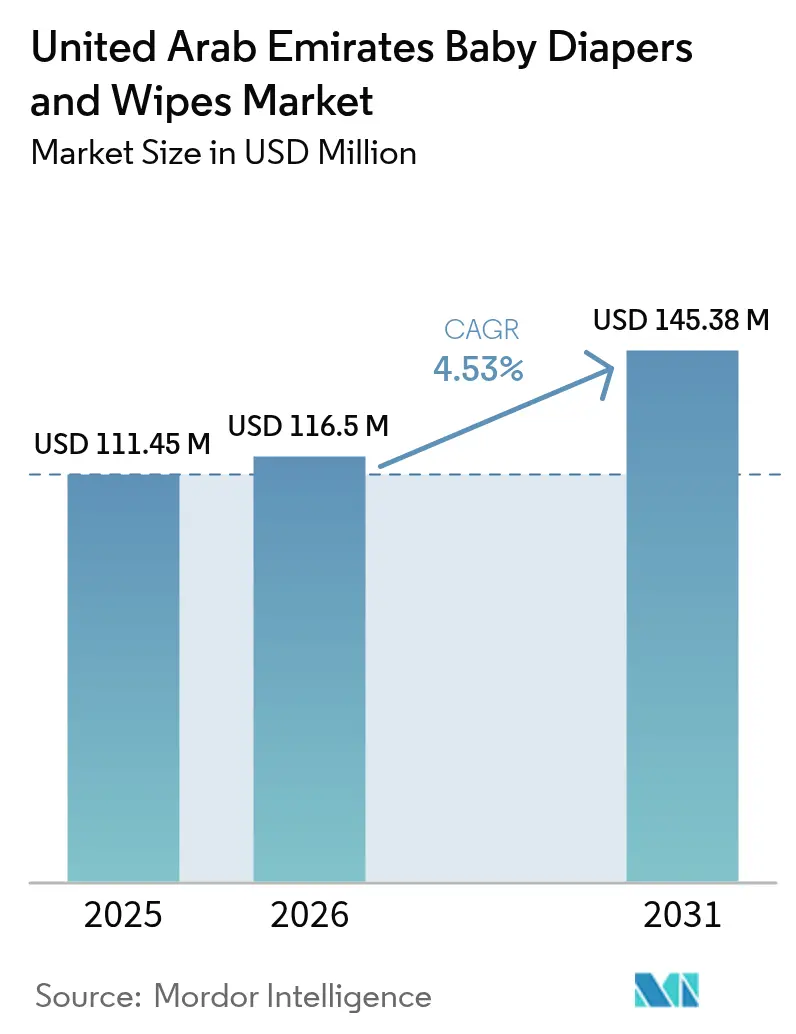
| Base Year Market Size (2025) | USD 111.45 Million |
| Market Size (2026) | USD 116.5 Million |
| Market Size (2031) | USD 145.38 Million |
| Growth Rate (2026 - 2031) | 4.53 % |
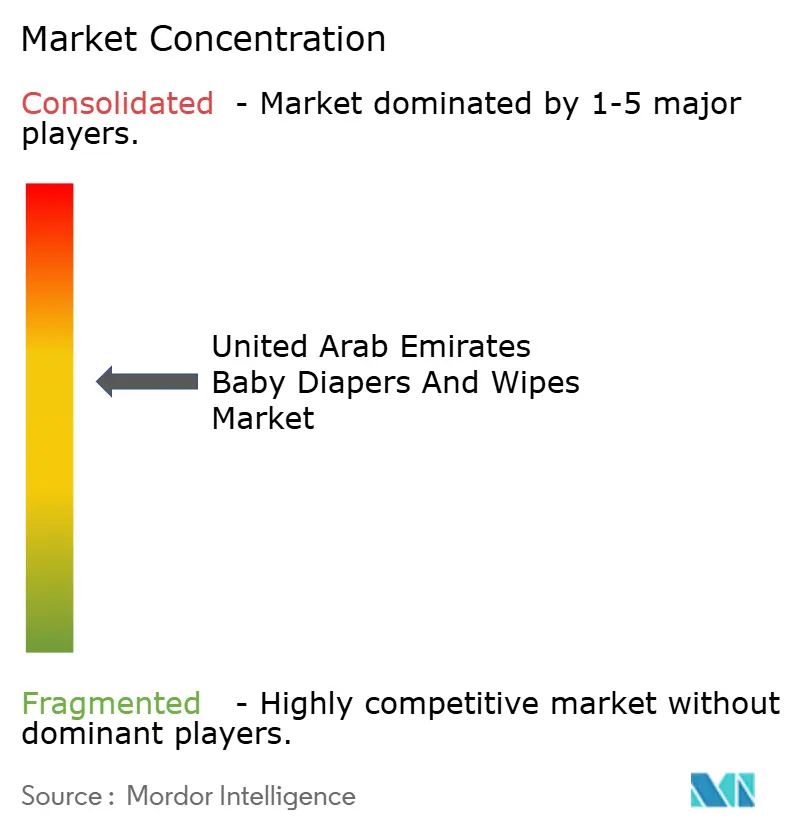
| Market Concentration | Medium |
Major Players
*Disclaimer: Major Players sorted in no particular order Image © Mordor Intelligence. Reuse requires attribution under CC BY 4.0. |
|
United Arab Emirates Baby Diapers And Wipes Market Analysis by Mordor Intelligence
The United Arab Emirates baby diapers and wipes market size is expected to grow from USD 111.45 million in 2025 to USD 116.5 million in 2026 and is forecast to reach USD 145.38 million by 2031 at 4.53% CAGR over 2026-2031. While national fertility rates dip, a surge in expatriate births, a trend towards premium products, and a robust non-oil economy bolster the country's baby diaper and wipe market, ensuring its consistent growth. The increasing number of expatriates in the country has significantly contributed to the rise in births, creating a growing demand for baby care products, including diapers and wipes. Additionally, the market is witnessing a shift towards premiumization, as consumers increasingly prefer high-quality, eco-friendly, and skin-friendly products for their infants. This trend is further supported by the the country's resilient non-oil economy, which provides a stable environment for market growth. Despite lower fertility rates among the national population, these factors collectively drive the consistent expansion of the United Arab Emirates baby diapers and wipes market.
Key Report Takeaways
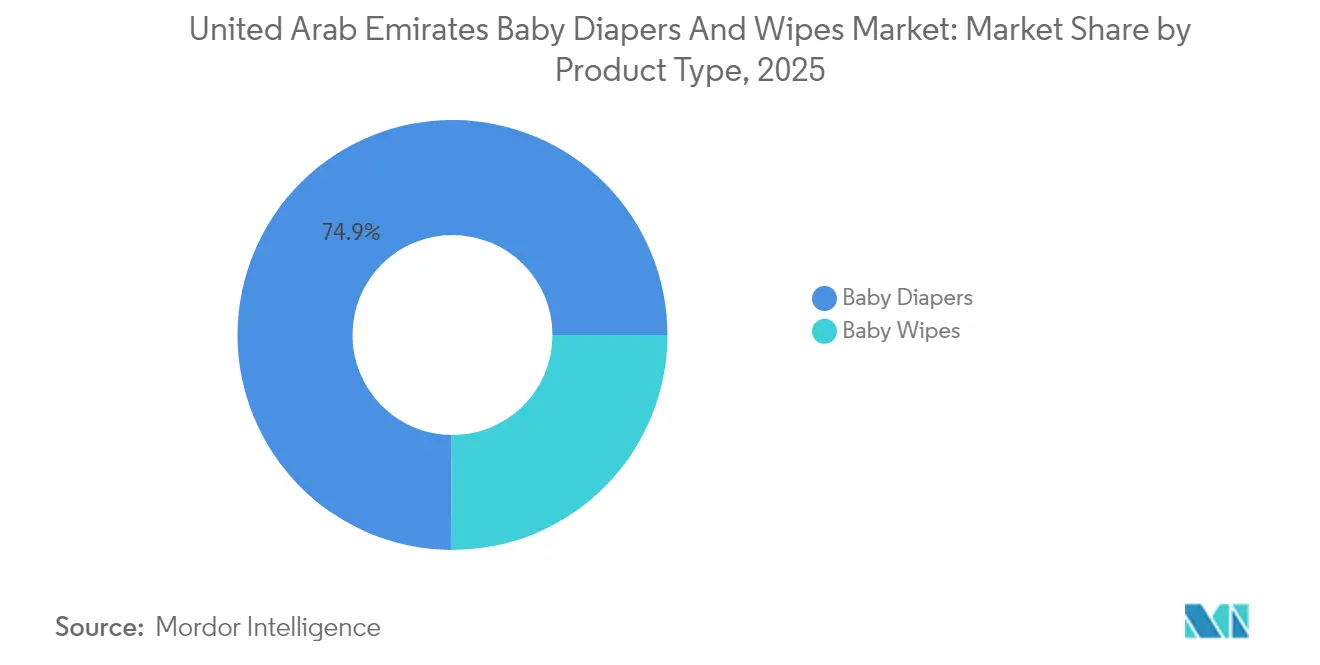
- By product type, baby diapers held 74.88% of the United Arab Emirates baby diapers and wipes market share in 2025, whereas baby wipes are projected to advance at a 5.02% CAGR through 2031.
- By category, conventional products accounted for 86.62% of the United Arab Emirates baby diapers and wipes market size in 2025, while organic offerings are poised for 5.41% CAGR growth to 2031.
- By price range, mass products commanded 78.74% of the United Arab Emirates baby diapers and wipes market size in 2025, yet premium SKUs are expected to post the fastest gains at 5.6% CAGR during the outlook period.
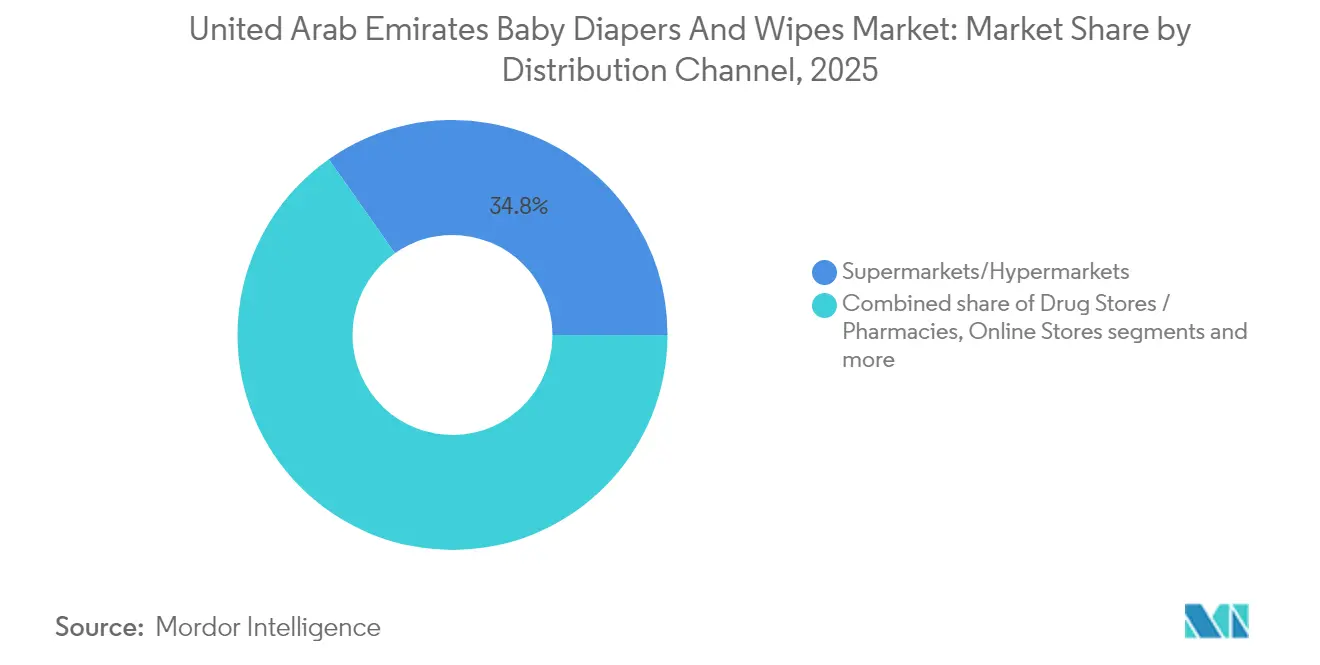
- By distribution channel, supermarkets and hypermarkets led with 34.76% revenue share in 2025; online retail is set to expand at a 5.73% CAGR to 2031.
Note: Market size and forecast figures in this report are generated using Mordor Intelligence’s proprietary estimation framework, updated with the latest available data and insights as of 2026.
United Arab Emirates Baby Diapers And Wipes Market Trends and Insights
Drivers Impact Analysis*
| Driver | (~) % Impact on CAGR Forecast | Geographic Relevance | Impact Timeline |
|---|---|---|---|
| Increasing parental awareness about infant hygiene and health | +1.2% | United Arab Emirates-wide, with higher impact in Dubai and Abu Dhabi urban centers | Medium term (2-4 years) |
| Rising working female population | +0.9% | Nationwide, concentrated in major emirates with strong Emiratisation policies | Long term (≥ 4 years) |
| Rising disposable income and expanding expatriate middle class | +1.1% | National, with early gains in Dubai, Abu Dhabi, Sharjah | Medium term (2-4 years) |
| Dominance of international brands and increasing product variety | +0.7% | Nationwide, spill-over to broader GCC region | Short term (≤ 2 years) |
| Increased marketing and product differentiation by major brands | +0.5% | National, with premium positioning in urban centers | Short term (≤ 2 years) |
| Technological advancements such as smart diapers with wetness sensors | +0.4% | National, particularly in Dubai, Abu Dhabi | Long term (≥ 4 years) |
| Source: Mordor Intelligence | |||
Increasing parental awareness about infant hygiene and health
Increasing parental awareness about infant hygiene and health is a key driver of the market. Parents in the region are becoming more conscious of the importance of using gentle, chemical-free, and safe products to protect their babies’ delicate and sensitive skin from allergies, rashes, and infections. This heightened awareness is encouraging the demand for premium, organic, and plant-based baby care products such as bamboo diapers and hypoallergenic wipes. The country’s growing expatriate population and rising disposable incomes further support this trend, driving consumers to invest more in quality and eco-friendly baby hygiene solutions. Additionally, the expansion of e-commerce platforms and the influence of online parenting communities and blogs are facilitating informed purchasing decisions, making it easier for parents to access and choose the best baby care products. This increasing focus on infant health and hygiene is expected to sustain the steady growth of the United Arab Emirates baby diapers and wipes market in the coming years.
Rising working female population
The rising working female population in the United Arab Emirates is a significant driver for the baby diapers and wipes market, as more women balancing careers and family life increase demand for convenient, high-quality infant care products. In 2024, womens labor force participation rate in the country reached over 54%, reflecting strong female engagement in the workforce [1]Source: World Bank, “United Arab Emirates - Gender Data Portal”, genderdata.worldbank.org. This demographic shift has heightened the need for reliable, safe, and easy-to-use baby hygiene solutions, prompting working mothers to prioritize premium diapers and wipes that offer superior comfort, skin protection, and convenience. Additionally, the increase in dual-income households with higher disposable incomes is driving demand for trusted, eco-friendly, and hypoallergenic baby care products. The evolving socio-economic landscape, combined with urban lifestyles and expanding e-commerce channels, is expected to sustain robust growth in the United Arab Emirates baby diapers and wipes market.
Rising disposable income and expanding expatriate middle class
Rising disposable incomes and a growing expatriate middle class are fueling the baby diapers and wipes market in the United Arab Emirates, supported by the country’s strong economic diversification and demographic trends. The country’s non-oil GDP grew by 4.4% in the first half of 2024, with non-oil sectors now contributing 75% of total GDP, underpinning sustained consumer spending among its largely expatriate population [2]Source: United Arab Emirates Ministry of Economy and Tourism, "UAE’s GDP grows by 3.6 per cent in the first half of 2024", moet.gov.ae. Abu Dhabi’s population grew by 7.5% to 4.14 million in 2024, with 84% of residents aged between 15 and 64 and a median age of 33, reflecting an influx of working-age professionals with disposable income [3]Source: Statistics Centre, "Abu Dhabi population in 2024 grows 7.5% to reach 4.14m", scad.gov.ae. The forward-looking “We the UAE 2031” vision targets doubling the GDP to AED 3 trillion, signaling continued economic momentum that supports rising household incomes. This expanding middle class, with its preference for premium and safe baby care products, is driving steady demand growth in baby diapers and wipes, while urbanization and modern lifestyles further enhance market opportunities.
Dominance of international brands and increasing product variety
The United Arab Emirates baby diapers and wipes market is strongly driven by the dominance of international brands and the increasing variety of product offerings. Leading global players such as Procter & Gamble, Kimberly-Clark, and Unicharm have established a significant presence in the region, leveraging their trusted brand reputation and advanced product innovations to capture consumer loyalty. These companies continuously expand their portfolios to include premium, eco-friendly, and hypoallergenic options, catering to the growing demand for safe and high-quality baby care products. The diverse expatriate population and affluent consumer base in cities like Dubai provide a receptive market for a wide product range, from mass-market to specialized organic and plant-based diapers and wipes. Retail infrastructure in the country, including supermarkets, hypermarkets, and expanding e-commerce platforms, supports broad availability and accessibility, encouraging consumers to explore newer variants.
Restraints Impact Analysis*
| Restraint | (~) % Impact on CAGR Forecast | Geographic Relevance | Impact Timeline |
|---|---|---|---|
| Environmental concerns and waste management issues | -0.8% | National, with stricter enforcement in Dubai and Abu Dhabi | Medium term (2-4 years) |
| Competition from alternative products hindering growth potential | -0.6% | National, with local variations in cloth diaper adoption | Short term (≤ 2 years) |
| Supply chain disruptions limiting market growth | -0.5% | National, affecting import-dependent markets | Short term (≤ 2 years) |
| Skin irritation and allergies associated with synthetic diaper materials | -0.3% | National, with higher awareness in educated expatriate communities | Long term (≥ 4 years) |
| Source: Mordor Intelligence | |||
Environmental concerns and waste management issues
Environmental concerns and waste management challenges pose a notable restraint to the United Arab Emirates baby diapers and wipes market. Conventional disposable diapers and wipes, largely made from non-biodegradable plastics and synthetic materials, contribute significantly to landfill waste, raising environmental pollution concerns amid increasing regulatory and consumer focus on sustainability. The country’s Sustainable Waste Management initiative, aiming to divert 75% of waste from landfills by 2025, and the imposition of tariffs on single-use plastics have put pressure on manufacturers to invest in costly research and development of eco-friendly alternatives. While biodegradable and organic diaper options made from plant-based materials such as bamboo, cotton, and sugarcane are gaining traction, their higher costs and limited composting infrastructure restrict wider adoption. Additionally, improper disposal practices reduce the effectiveness of biodegradable products, highlighting the need for increased consumer education and government support. These environmental and logistical challenges limit market growth potential, urging brands to innovate sustainable yet affordable baby care solutions to meet both regulatory demands and consumer expectations.
Competition from alternative products hindering growth potential
In the United Arab Emirates, baby diapers and wipes market, the growth potential is hindered by competition from alternative products. These alternatives, such as reusable cloth diapers and eco-friendly wipes, are increasingly gaining traction among environmentally conscious consumers who are seeking sustainable and cost-effective solutions. The rising awareness of environmental issues, coupled with government initiatives promoting sustainability, has further encouraged the adoption of these alternatives. Additionally, the perception of reusable products as being safer for babies' skin compared to disposable options has also contributed to their growing popularity. Many parents are now prioritizing products that align with their values, such as reducing waste and minimizing the use of chemicals, which has led to a gradual shift in purchasing behavior. Furthermore, the cost-effectiveness of reusable diapers, despite the higher initial investment, appeals to budget-conscious families, especially in the long term. This shift in consumer preferences presents a significant challenge for the market, as manufacturers of conventional baby diapers and wipes must now innovate and adapt to meet the changing demands of the target audience.
*Our forecasts treat driver/restraint impacts as directional, not additive. The impact forecasts reflect baseline growth, mix effects, and variable interactions.
Segment Analysis
By Product Type: Diapers Anchor Market While Wipes Drive Innovation
The baby diapers segment commands a significant 74.88% market share in the United Arab Emirates in 2025, underscoring its essential role in infant care across the country. This dominance reflects the widespread reliance on diapers as a core hygiene product that supports infant comfort and health. With increasing parental awareness about the importance of quality and safety in baby care, demand for diapers remains robust. The segment is further bolstered by the presence of international brands offering advanced features such as enhanced absorbency, skin-friendly materials, and longer-lasting usage. Supermarkets and hypermarkets serve as the dominant distribution channels, providing vast retail space and extensive product variety to meet diverse consumer preferences. Furthermore, premium and organic diaper options are gaining traction, driven by rising disposable incomes and growing health consciousness among parents.
On the other hand, baby wipes represent the fastest-growing segment in the United Arab Emirates baby care market, with a projected CAGR of 5.02% from 2026 to 2031. This growth is attributed to expanding use cases beyond traditional diaper changing, including general hygiene and convenient cleaning for babies and mothers. The wipes segment benefits from innovation in formulations, such as hypoallergenic and plant-based ingredients, appealing to health-conscious consumers. E-commerce and online retail platforms have also accelerated accessibility and convenience, enabling rapid market penetration. The increasing number of working parents, combined with urban lifestyles, supports wipes consumption as a practical solution for on-the-go hygiene needs. With heightened consumer focus on safety, effectiveness, and environmental sustainability, baby wipes are poised to continue their strong upward trajectory in the market.



By Category: Conventional Dominance Faces Organic Acceleration
Conventional baby diapers and wipes hold a dominant 86.62% market share in the United Arab Emirates for 2025, reflecting established consumer preferences that prioritize familiar and cost-effective products. This substantial share underscores the market’s sensitivity to price and the trust that consumers place in conventional products for their reliability and widespread availability. The segment’s strength is supported by extensive distribution networks, including supermarkets and hypermarkets, which ensure accessibility to a broad customer base. Additionally, the longstanding presence of international brands has cultivated strong brand loyalty among consumers. Despite growing interest in alternative products, conventional options continue to dominate due to their affordability, proven performance, and readiness for mass consumption. This entrenched consumer behavior provides a stable foundation for continued sales and market presence.
Conversely, organic baby diapers and wipes represent the fastest-growing segment, registering a robust CAGR of 5.41% during the forecast period from 2026 to 2031. This impressive growth is fueled by increasing health consciousness, particularly among expatriate families who seek safer, chemical-free products for their children. Organic alternatives, made from plant-based materials such as cotton, hemp, and bamboo, appeal to parents who prioritize hypoallergenic and environmentally friendly options. Regulatory support for sustainable products further propels market adoption and encourages manufacturers to innovate within this segment. The rise of premiumization and a shift toward eco-conscious consumerism is reshaping purchase behavior, driving demand for organic baby care items.
By Price Range: Mass Market Stability Versus Premium Momentum
Mass market products hold the largest share in the United Arab Emirates baby diapers and wipes market, capturing 78.74% of the market in 2025. This dominant share reflects the country’s diverse economic demographics, where price-conscious purchasing patterns are predominant across a broad range of consumers. Mass market products offer affordability and accessibility, making them the preferred choice for many families. The widespread availability of such products in supermarkets, hypermarkets, and convenience stores further drives their extensive reach. These products cater to the essential needs of infants while balancing quality and cost-effectiveness, which resonates well within the price-sensitive segments of the population. Additionally, brand loyalty and strong distribution networks support the sustained leadership of mass market offerings in the country.
Conversely, premium products represent the fastest-growing segment, projected to accelerate at a CAGR of 5.6% during 2026-2031. This growth is propelled by rising disposable incomes among expatriate professionals and an increasing preference for differentiated, high-quality products. Premium baby diapers and wipes focus on attributes such as hypoallergenic materials, organic ingredients, enhanced comfort, and eco-friendly packaging, which appeal to health-conscious and affluent consumers. The expatriate community, which accounts for a significant share of the country’s population, actively drives demand for exclusive and innovative baby care solutions. Companies are responding with targeted marketing, product formulation innovations, and superior customer experiences tailored to this segment. As awareness about infant health and wellness grows, premium products are expected to gain further traction, reshaping market dynamics over the forecast period.
By Distribution Channel: Traditional Retail Meets Digital Transformation
Supermarkets and hypermarkets maintain a significant market share of 34.76% in the United Arab Emirates baby diapers and wipes market in 2025. This leading position reflects established consumer shopping behaviors where bulk purchasing and one-stop shopping convenience are highly valued. These retail formats provide extensive shelf space and product variety, enabling consumers to access a wide range of baby care products under one roof. Competitive pricing and promotional activities further attract price-sensitive and brand-loyal customers alike. Additionally, supermarkets and hypermarkets serve as critical channels for mass market products, reinforcing their dominance in overall sales. The presence of well-established international and regional brands within these outlets strengthens consumer confidence and loyalty, maintaining their preeminent position among distribution channels.
In contrast, online retail stores represent the fastest-growing distribution channel in the United Arab Emirates baby diapers and wipes market, expected to grow at a CAGR of 5.73% during 2026-2031. This surge is largely driven by accelerated digital adoption post-pandemic, which has reshaped consumer purchasing behaviors towards convenience-oriented shopping. The ease of browsing extensive product ranges, accessing customer reviews, and receiving doorstep deliveries has significantly enhanced the attractiveness of online shopping for parents. Exclusive online promotions, subscription models, and flexible payment options are additional factors boosting growth in this segment. Moreover, growing smartphone penetration and improved digital infrastructure continue to expand the reach of e-commerce platforms across the country. As consumer preference shifts towards personalized, hassle-free shopping experiences, online retail is positioned to capture a substantial share of market growth in the coming years.
Geography Analysis
Driven by demographic, economic, and lifestyle factors, the market showcases notable regional variations. In the country, Dubai emerges as the preeminent market hub, largely due to its vast expatriate community, elevated household incomes, and sophisticated retail infrastructure. Positioned strategically as a logistics and trade nexus, Dubai attracts a diverse range of global and regional brands, offering an extensive selection of baby care products. Notably, Dubai commands a significant share of the market's sales volume, with consumers gravitating towards both premium organic products and mass-market selections. The retail scene is fiercely competitive, dominated by supermarkets, hypermarkets, and branded specialty stores. Furthermore, the emirate's diverse consumer base drives ongoing trends of innovation and premiumization, especially in the baby diapers and wipes sectors.
Abu Dhabi stands out as another key region in the market. With a growing population and rising birth rates, demand for baby hygiene products has surged. The emirate has also embraced e-commerce, with a notable uptick in recent years, driven by consumer convenience and innovative delivery methods, including diaper and wipe subscription services. A marked increase in premium product consumption underscores the region's economic growth and a shift towards health-conscious, sustainable choices. Retail expansion, especially in specialty stores and modern trade outlets, bolsters this market growth. While Abu Dhabi's economic diversification lags slightly behind Dubai, its market potential is rapidly expanding, fueled by demographic changes and heightened consumer spending on baby care.
While Sharjah and Ajman contribute to the United Arab Emirate's baby care market, their impact is more modest. These emirates, characterized by middle-income demographics, predominantly lean towards mass-market and value-priced baby products. However, urbanization and enhanced retail connectivity are making these products more accessible. With a growing workforce and heightened awareness of infant hygiene, these regions are poised for steady market growth. Recognizing this potential, local manufacturers and retailers are intensifying their focus, aiming to address concerns of affordability and accessibility. In summary, while Dubai and Abu Dhabi spearhead growth and innovation in the country's baby care market, other emirates maintain a stable demand, rooted in traditional purchasing habits.
Regulatory Landscape
Baby diapers in the United Arab Emirates fall under the UAE System for Control of Childcare Requirements (Cabinet Resolution No. 34 of 2019), with the Ministry of Industry and Advanced Technology (MoIAT) acting as the primary gatekeeper for conformity. Single-use disposable baby diapers must be certified under the Emirates Conformity Assessment Scheme (ECAS) against applicable standards (including UAE.S/GSO 1833). Certification typically requires documentation such as a valid UAE trade license, compliant labeling, and a test report from an ISO/IEC 17025-accredited laboratory, issued within the validity window required for certification, before the products may be legally circulated.
For baby wipes and related consumer baby hygiene items, oversight commonly sits within broader consumer product safety controls administered by MoIAT and implemented alongside local market-surveillance and import controls, including municipal requirements such as Dubai Municipality Health and Safety Department guidance for consumer products import and re-export. In parallel, the Ministry of Health and Prevention (MOHAP) maintains specific requirements for certain infant-related products and marketing practices under Ministerial Resolution No. 257 of 2020 (implementing Cabinet Resolution No. 21 of 2018), reinforcing the need for supplier registration and disciplined compliance for claims, labeling, and promotional materials where applicable.
Value Chain Analysis
The UAE baby diapers and wipes value chain is import-led for finished goods and key inputs, with global brand owners (such as Procter & Gamble, Kimberly-Clark, and Unicharm) typically operating through local license holders and distributors to access modern trade, pharmacies, and e-commerce. Upstream inputs include nonwovens, superabsorbent polymers, elastics, and skin-contact substrates, followed by converting and packing (either offshore manufacturing or regional sourcing), then inbound logistics into the UAE, where customs clearance and product release depend on conformity documentation.
A defining midstream step is regulatory and quality compliance. MoIAT ECAS certification and the Certificate of Conformity act as control points that shape time-to-market, portfolio refresh cadence, and supplier selection, including the requirement for ISO/IEC 17025 lab test reports and compliant labeling for regulated childcare articles such as disposable diapers. Downstream execution is carried by UAE-based distributors and trading entities that manage warehousing, last-mile fulfillment, and retailer onboarding, supporting availability across supermarkets/hypermarkets, pharmacies, and online platforms. This also enables brands to manage SKU localization, promotional execution, and continuity during logistics disruptions.
Competitive Landscape
The United Arab Emirates baby diapers and wipes market demonstrates a moderate concentration, indicating a competitive environment shaped by prominent international brands. This level of concentration reflects a balance between market dominance by key players and opportunities for new entrants to establish a foothold. The competitive dynamics are driven by the presence of globally recognized companies that leverage their extensive resources, including well-established distribution networks and strong brand equity, to maintain their market positions. Despite this, the market remains open to innovation and differentiation, providing room for smaller players to carve out niche segments or introduce unique product offerings.
Market leaders such as Procter & Gamble, Kimberly-Clark, and Unicharm have solidified their positions by capitalizing on their global brand strength and operational efficiencies. These companies benefit from widespread consumer trust and loyalty, which are bolstered by their ability to consistently deliver high-quality products. Their dominance is further supported by strategic partnerships and collaborations within the supply chain, ensuring seamless product availability across the country. However, the competitive landscape is not static, as these companies continue to adapt to changing consumer preferences and market trends, such as the growing demand for eco-friendly and sustainable products.
Recent strategic shifts among these leading players highlight an evolving competitive positioning within the United Arab Emirates baby diapers and wipes market. Companies are increasingly focusing on innovation, such as the introduction of biodegradable diapers and wipes, to address environmental concerns and cater to a more conscious consumer base. Additionally, advancements in product design, including improved absorbency and skin-friendly materials, are becoming key differentiators. These developments, coupled with the entry of new players and the expansion of existing ones, are expected to intensify competition further, making the market dynamic and ripe with opportunities for growth during the forecast period.
United Arab Emirates Baby Diapers And Wipes Industry Leaders
-
Kimberly-Clark Corporation
-
Kao Corporation
-
Unicharm Corporation
-
Procter & Gamble Company
-
Essity AB
- *Disclaimer: Major Players sorted in no particular order

Market Opportunities and Future Outlook
Sustainability-linked differentiation is an active whitespace in the UAE, reinforced by both consumer premiumization and policy pressure around waste management. The market has visible proof of commercialization for biodegradable concepts: in February 2026, Nobel Hygiene launched the Teddyy Bio-Earth diaper in Dubai using biodegradable non-woven technology (in partnership with Avgol and Polymateria) and placed it for sale via Blue Ocean Global Group on Amazon Dubai. Launches like this support opportunities for premium and mass-premium lines that combine skin-sensitive positioning (hypoallergenic, fragrance-free) with measurable materials innovation, while still fitting the country’s certification and labeling requirements.
There is also room for tighter localization of infant and baby-care supply chains, enabled by industrial-zone investment and organized retail scale. In February 2026, AD Ports Group announced that Barakat Group started construction of an AED 150 million baby food manufacturing facility in Khalifa Economic Zones Abu Dhabi (Kezad), signaling broader momentum toward locally anchored infant-category manufacturing and ecosystem development. For diapers and wipes suppliers, this environment elevates opportunities tied to UAE-compliant product registration, faster replenishment models for online retail including subscriptions, and distributor-led scale-up strategies that reduce regulatory friction through experienced local license holders and conformity management.
Recent Industry Developments
- February 2026: Nobel Hygiene launched the Teddyy Bio-Earth diaper in Dubai, featuring biodegradable non-woven technology developed with Avgol and Polymateria. The product was brought to market through Blue Ocean Global Group and listed on Amazon Dubai, sharpening competitive differentiation around sustainability and accelerating the pace of eco-claims scrutiny across diaper SKUs.
- January 2025: Kimberly-Clark announced a strategic partnership with Intercare Limited to distribute its professional hygiene and personal care product lines across the UAE, Qatar, and Oman. The tie-up strengthens route-to-market coverage through a regional hygiene solutions provider and supports broader shelf and institutional access that can spill over into brand visibility for consumer hygiene categories.
- May 2024: TERRA Baby Care expanded into international markets including the United Arab Emirates with biodegradable baby wipes made from 100% bamboo and plant-based diapers using materials such as bamboo, corn starch, and sugar cane. This entry added eco-positioned alternatives to the assortment available to UAE parents, reinforcing premiumization and ingredient-led differentiation in wipes and diapers.


Research Methodology Framework and Report Scope
Market Definition and Coverage
This market covers the value of baby diapers and baby wipes sold for infant and toddler hygiene in the UAE, across offline retail and online channels, and captured at the market level in USD.
Scope exclusions: Adult incontinence products, feminine hygiene, household cleaning wipes, and diapering accessories are excluded from this sizing.
Segmentation Overview
-
By Product Type
- Baby Diapers
- Baby Wipes
-
By Category
- Conventional
- Organic
-
By Price Range
- Mass
- Premium
-
By Distribution Channel
- Supermarkets / Hypermarkets
- Drug Stores / Pharmacies
- Online Retail Stores
- Other Distribution Channels
Data Sources, Market Sizing, and Validation
Desk Research
To set the base structure, we start with UAE population and household context, and then build the demand pool using public datasets such as the UAE Federal Competitiveness and Statistics Centre releases, UN demographic tables, World Bank indicators, and UN Comtrade trade statistics for relevant hygiene product codes. We also review UAE Ministry of Economy updates and Dubai Customs-style trade communications where available to understand import reliance and any category shifts.
After that, public brand and retailer information is checked to understand pack-size norms, common price ladders, and channel mixes, which is then aligned with investor presentations, press coverage from business outlets, and company annual reports for category commentary. Patent databases are also reviewed selectively to see material trends that may affect product mixes over time. In parallel, we use paid subscriptions for company financials and news, and for shipment-level import and export signals where it helps validate the direction of demand. These desk sources are illustrative, and many other references were used for data collection, validation, and clarification.
Primary Interviews and Surveys
Primary work was used to confirm what is selling in practice and what is changing by channel, particularly between supermarkets and hypermarkets, pharmacies, convenience stores, and online platforms. We spoke with manufacturers, importers and distributors, retailers, and category specialists, and we tested assumptions through packaging and pricing viewpoints so the model reflects typical UAE purchase behavior.
Distribution of primary research fieldwork respondents
| Company type | Respondent position |
|---|---|
| Top tier: 28% | CXOs: 13% |
| Mid tier: 54% | Functional/Unit leaders: 27% |
| Smaller Players: 18% | Managers: 60% |
Market-Sizing & Forecasting
Our sizing logic uses top-down demand reconstruction. The diapering and wiping consumption pool is built from the relevant age cohort, diapering incidence, typical usage per day, and expected pack sizes, then translated into value using prevailing price bands. When the main clause is reached, the result is a market total that stays tied to real UAE baby population dynamics rather than only shelf listings.
To keep the estimate realistic, we corroborate the totals with selective bottom-up checks, such as sampled price per pack multiplied by observed retail volumes, channel-level sell-in discussions, and a sanity check against import and re-export patterns for the category. Inputs that commonly matter in this market include annual births and the 0 to 3 population, penetration of disposable diapers versus cloth, shift toward premium and skin-friendly variants, online share growth, and average price progression by pack format. Forecasting is run using scenario analysis, since changes in birth trends, premiumization, and channel mix do not always move in a straight line. The final path is then aligned to expert views gathered in interviews. If a bottom-up check has missing visibility for smaller outlets, that gap is handled through calibrated channel weights and rechecked with retailer feedback.
Data Validation & Update Cycle
Before the numbers are finalized, we cross-check totals against independent signals like demographic trends, trade movement direction, and channel shift commentary, and then flag any unusual jumps for deeper review. A second analyst reviews the key assumptions, and if a variance cannot be explained, respondents are re-contacted to confirm whether pricing, promotions, or distribution changes caused it. The report is refreshed annually, and interim updates are added when a material event changes supply, pricing, or category demand. Right before delivery, a fresh review pass is completed so clients receive an up-to-date view.
Mordor Intelligence's UAE Baby Diapers and Wipes Market Size Compared Against Other Published Estimates
Published numbers for this market can vary because firms do not always count the same products, the same channel boundary, or the same timing for currency and pricing. Differences also show up when one estimate leans heavily on trade flow proxies, while another leans on household usage assumptions, so the underlying demand pool is not consistent.
Import movement checks, diapering age-cohort build-ups, and channel mix validation from retailer conversations support Mordor Intelligence's estimate by grounding it in UAE consumption rather than inflating value through re-exports or adjacent wipe categories. In addition, the way pack-size and pricing ladders are treated can change the final value significantly, especially when premium packs grow faster than economy packs, and some sources apply a single average price across all channels.
Benchmark comparison
| Source | Market Size | Gaps in Research Methodology |
|---|---|---|
| Mordor Intelligence | USD 111.45 M (2025) | |
| Regional Consultancy A | USD 204.80 M (2024) | Uses an earlier base year and appears to apply a broader definition that can pull in added diaper formats and wider wipe types, which can raise the value even if unit demand is similar. |
| Market Advisory B | USD 122.33 M (2026) | A later sizing year and a longer forecast window can shift reported totals, and the inclusion of training pants as a distinct counted item can increase the measured market versus narrower diaper-only definitions. |
Across the three figures, the spread is mostly explained by timing and boundary choices, then by how product formats and price ladders are treated in the value conversion. By keeping inputs traceable to the UAE baby cohort, usage rates, and channel pricing, the final number stays easier to replicate and revalidate when new signals appear.


Key Questions Answered in the Report
What is the forecast value of the UAE baby diapers and wipes market in 2031?
The category is expected to reach USD 145.38 million by 2031.
How fast is premium baby-care expected to grow in the UAE?
Premium diapers and wipes are projected to expand at a 5.6% CAGR between 2026–2031, outpacing mass products.
Which product segment is gaining share the quickest?
Baby wipes lead incremental growth with a 5.02% CAGR forecast over 2026–2031.
How are environmental regulations affecting manufacturers?
Dubai’s plastic ban and the federal Extended Producer Responsibility pilot are forcing shifts to bio-based materials and take-back schemes, raising production and compliance costs.
Page last updated on:


 Your data is secure and never sold or shared.


