
Baby Toiletries Market Size and Share
Market Overview
| Study Period | 2021 - 2031 |
|---|---|
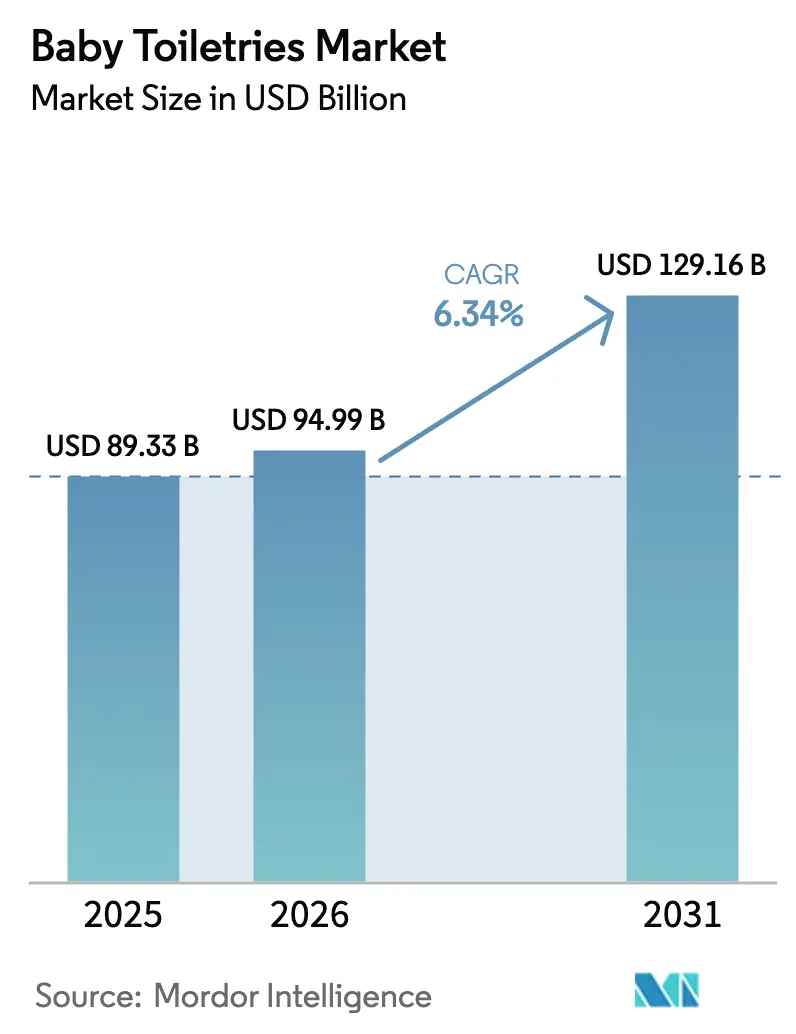
| Market Size (2026) | USD 94.99 Billion |
| Market Size (2031) | USD 129.16 Billion |
| Growth Rate (2026 - 2031) | 6.34 % |
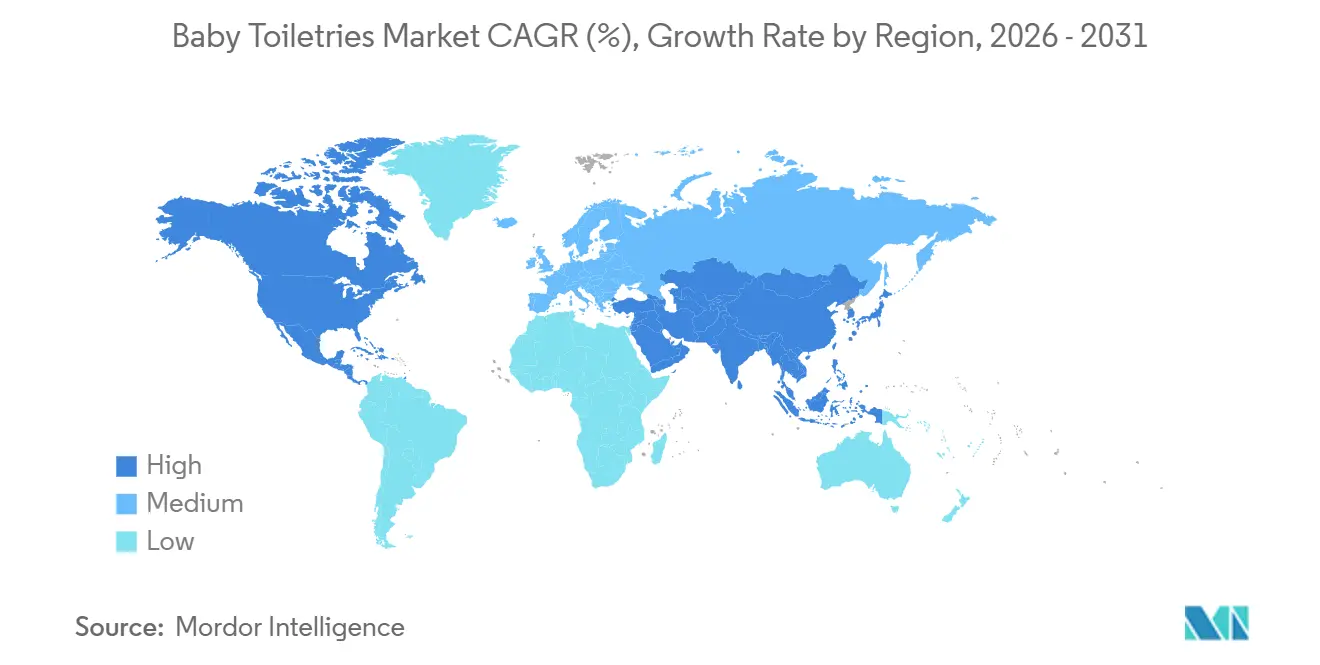
| Fastest Growing Market | Asia Pacific |
| Largest Market | North America |
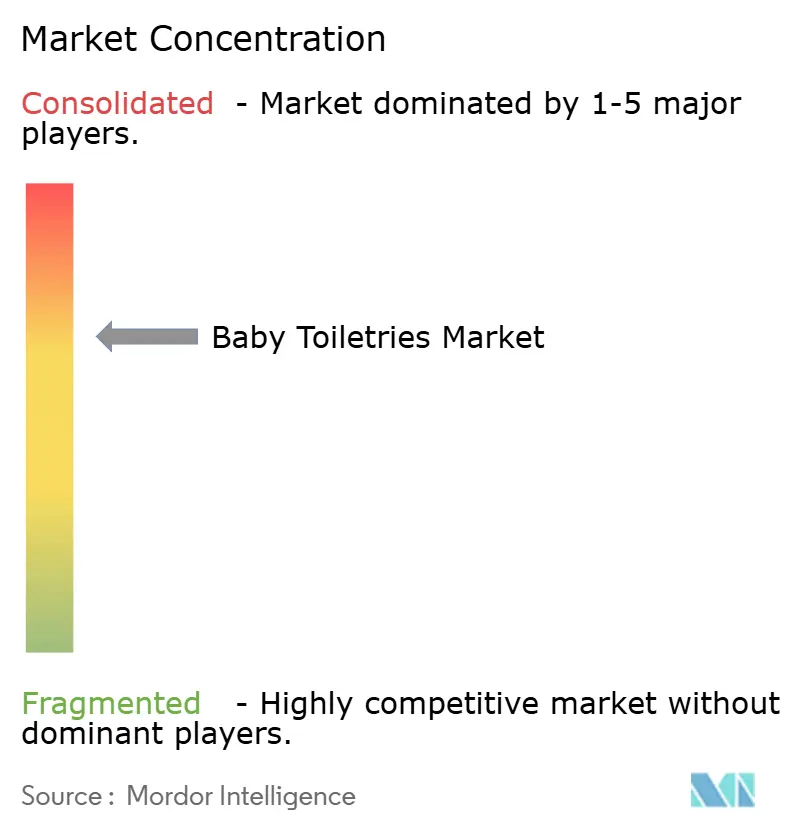
| Market Concentration | Medium |
Major Players *Disclaimer: Major Players sorted in no particular order Image © Mordor Intelligence. Reuse requires attribution under CC BY 4.0. | |
Baby Toiletries Market Analysis by Mordor Intelligence
The baby toiletries market size was valued at USD 89.33 billion in 2025 and estimated to grow from USD 94.99 billion in 2026 to reach USD 129.16 billion by 2031, at a CAGR of 6.34% during the forecast period (2026-2031). Continued parental investment in dermatologist-tested formulas, growing adoption of digital retail, and the credibility pediatrician backing lends to online reviews sustain the trajectory. Digital channels convert shoppers faster than traditional media because influencer demonstrations combine product education with real-time safety assurance, an approach that resonates with millennial and Gen Z parents. At the same time, patent-protected absorbent technologies bolster value perception for disposable diapers, while organic certification programs incentivize premium pricing on skin- and hair-care lines. Regional dynamics remain uneven: North America accounts for the largest share of 2025 revenue, but Asia-Pacific is expanding more rapidly as urbanization in India, Indonesia, and the Philippines offsets China’s demographic contraction. Competitive intensity revolves around R&D investments in super-absorbent polymers, microbiome-friendly preservatives, and AI-enabled personalization tools that raise switching costs for caregivers.
Key Report Takeaways
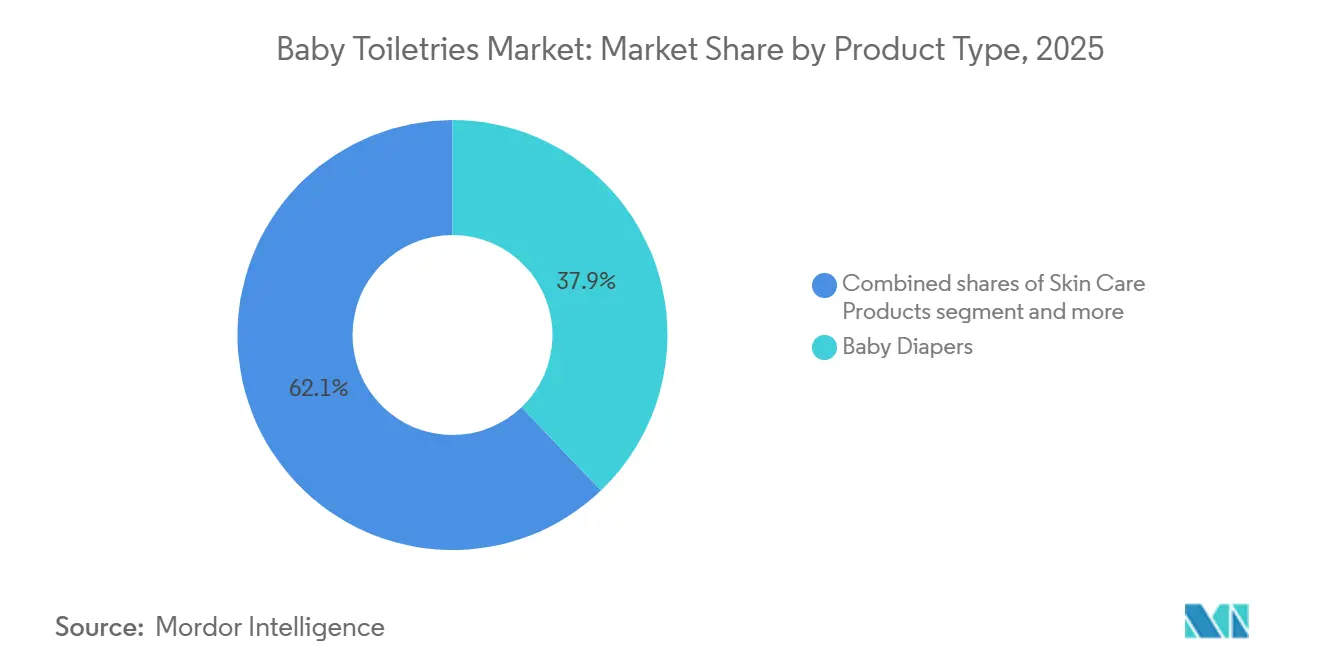
- By product type, baby diapers captured 37.87% of 2025 product-type revenue, whereas skin-care products are forecast to post the fastest 6.77% CAGR to 2031.
- By category, conventional formulations accounted for 78.21% of 2025 sales, while organic and natural variants are projected to grow at a 7.45% CAGR through 2031.
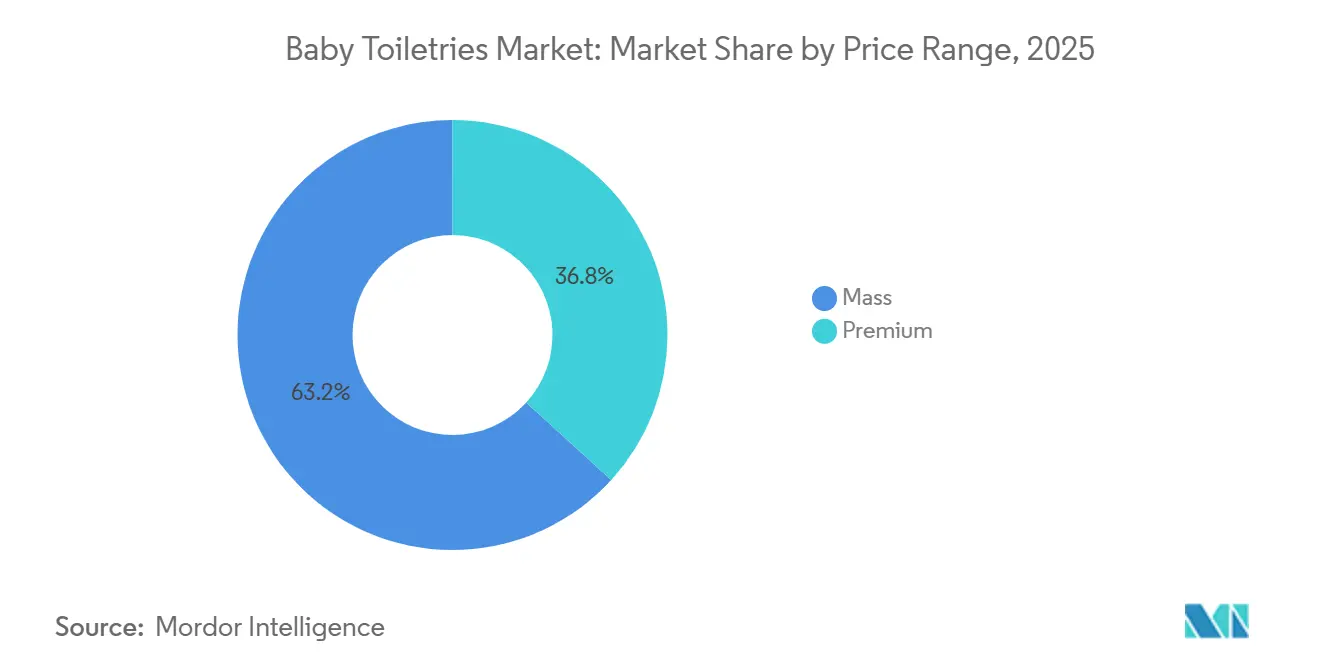
- By price range, mass-market offerings held 63.22% of 2025 revenue; the premium tier is expected to expand at a 7.05% CAGR over the outlook period.
- By distribution channel, supermarkets and hypermarkets led 2025 distribution with 37.21% share, yet online retail stores are on track for a 6.84% CAGR to 2031.
- By geography, North America delivered 34.21% of 2025 global revenue; Asia-Pacific is set to record the highest 7.02% CAGR during the forecast horizon.
Note: Market size and forecast figures in this report are generated using Mordor Intelligence’s proprietary estimation framework, updated with the latest available data and insights as of January 2026.
Market Trends and Insights
Drivers Impact Analysis of Baby Toiletries Market*
| Driver | (~) % Impact on CAGR Forecast | Geographic Relevance | Impact Timeline |
|---|---|---|---|
| Increasing parental awareness of baby hygiene and safety | +1.2% | Global, strongest in North America and Europe | Medium term (2-4 years) |
| Rising demand for organic and natural formulations | +1.5% | North America, Europe, urban Asia-Pacific | Long term (≥4 years) |
| Rising global birth rates supporting consistent demand | +0.8% | Asia-Pacific core, spill-over to Middle East and Africa | Long term (≥4 years) |
| Higher parental spending on dermatologist-tested products | +1.1% | North America, Western Europe, affluent Asia-Pacific | Medium term (2-4 years) |
| Collaborations with pediatricians boosting credibility | +0.9% | Global, early gains in North America and Europe | Short term (≤2 years) |
| Strong influence of social media on purchasing decisions | +1.3% | Global, highest in North America and urban Asia-Pacific | Short term (≤2 years) |
| Source: Mordor Intelligence | |||
Rising Demand for Organic and Natural Formulations
Organic and natural baby-care lines are expected to outpace conventional products, posting a 7.45% CAGR between 2026 and 2031. Parents focus on certifications such as USDA (United States Department of Agriculture) Organic and COSMOS (COSMetic Organic and Natural Standard) because they provide third-party validation that products exclude parabens, phthalates, and other endocrine disruptors, now flagged by the European Chemicals Agency [1]. Major specialty retailers have responded by increasing their organic shelf space; Whole Foods Market reported a significant year-over-year increase in baby-category organic SKUs (Stock Keeping Units) during 2025. Brands that disclose full supply-chain traceability earn Net Promoter Scores 18% higher than competitors relying on generic “gentle” claims. Compliance with the EU Cosmetics Regulation and the U.S. FDA (Food and Drug Administration) Modernization Act 2.0 is accelerating reformulation cycles and pushing manufacturers to invest in botanical-extract standardization alongside ISO 10993 allergen testing.
Strong Influence of Social Media on Purchasing Decisions
Influencer-driven content adds to the overall CAGR, largely because TikTok and Instagram product demonstrations convert at rates 3.5 times higher than banner advertisements. Parenting micro-influencers, those with 10,000 to 100,000 followers, achieve trust scores 40% above celebrity spokespersons, in part due to the authenticity of unedited product trials. Brands now allocate up to 35% of their digital budgets to creators who possess pediatric-nursing credentials or lactation-consultant certifications, a move that bridges marketing and clinical credibility. Hashtag initiatives, such as #BabyCareTruth, generated more than 2 billion impressions in 2025, shaping purchase intent within 48 hours of the campaign launch. The algorithmic preference for short-form video is prompting manufacturers to furnish influencers with dermatologist-validated case studies that verify skin-condition improvements.
Increasing Parental Awareness of Baby Hygiene and Safety
Clinical guidelines from the American Academy of Pediatrics emphasize pH-balanced cleansers and fragrance-free moisturizers, driving product recommendations that flow directly from hospital discharge packs to e-commerce baskets [2]. Telehealth platforms further reinforce evidence-based choices by embedding product links into post-natal care plans, effectively shortening the path to purchase. Recalls of contaminated wipes in 2024 heightened sensitivity to manufacturing quality; ISO 22716 Good Manufacturing Practice certification has since become a baseline retailer requirement in North America and Europe[3]. Compliance frameworks such as the Consumer Product Safety Improvement Act mandate third-party verification for heavy metals and phthalates, raising costs for newcomers but elevating overall safety confidence. Collectively, these changes bolster premium spending as parents favor brands that make clinical data public.
Higher Parental Spending on Dermatologist-Tested Products
Dermatologist-tested baby-care SKUs command 15-20% price premiums and add significant share to the sector’s growth. The prevalence of infant atopic dermatitis now ranges between 15% and 20% in developed economies, encouraging health-care providers to recommend hypoallergenic formats that exclude methylisothiazolinone and cocamidopropyl betaine. Manufacturers are channeling USD 50-100 million annually into trials capable of producing peer-reviewed data that satisfy FDA (Food and Drug Administration) Over-the-Counter Monograph requirements for diaper-rash treatments. Co-branding deals with dermatology clinics and children’s hospitals reinforce credibility, while European Medicines Agency guidelines compel age-stratified safety studies that lengthen development cycles but improve product differentiation.
Restraints Impact Analysis of Baby Toiletries Market*
| Restraint | (~) % Impact on CAGR Forecast | Geographic Relevance | Impact Timeline |
|---|---|---|---|
| Counterfeit or substandard products erode trust | -0.7% | Global, acute in Asia-Pacific and Middle East and Africa | Short term (≤2 years) |
| Stringent regulatory compliance increases costs | -0.9% | Global, highest in European Union and North America | Medium term (2-4 years) |
| Consumer skepticism over ingredient transparency | -0.5% | North America, Europe, urban Asia-Pacific | Medium term (2-4 years) |
| Limited awareness in rural or developing regions | -0.6% | South Asia, Sub-Saharan Africa, rural South America | Long term (≥4 years) |
| Source: Mordor Intelligence | |||
Stringent Regulatory Compliance Increases Costs
Divergent safety standards across the European Union, the United States, and China subtract a few percentage points from projected growth. Preparing toxicological dossiers that detail dermal absorption and systemic exposure costs USD 30,000 to USD 80,000 per SKU under the EU (European Union) Cosmetics Regulation. China’s National Medical Products Administration still requires animal testing for certain imports, forcing smaller organic-focused brands to maintain parallel formulations or abandon the market. Although the U.S. FDA Modernization Act 2.0 allows non-animal methods, validating new protocols extends time-to-market by up to 12 months. Retailers have added ISO 22716 accreditation to vendor policies, obliging mid-sized manufacturers to invest USD 0.5-2 million in facility upgrades.
Counterfeit or Substandard Products Erode Trust
E-commerce marketplaces remain vulnerable to counterfeit diapers and wipes as recalls dent brand equity. In 2024, the U.S. FDA issued 47 warning letters for contaminated infant wipes that exceeded microbial limits outlined in USP 61 and 62, prompting widespread consumer alerts. Brands now deploy QR-code authentication and blockchain-enabled traceability, adding USD 0.05-0.15 per unit but restoring confidence among premium shoppers. Regulatory moves such as the EU Market Surveillance Regulation and the U.S. INFORM Consumers Act place responsibility on online platforms to verify seller identities, compelling the integration of AI-driven monitoring systems that flag suspicious listings.
*Our forecasts treat driver/restraint impacts as directional, not additive. The impact forecasts reflect baseline growth, mix effects, and variable interactions.
Baby Toiletries Market Segment Analysis
By Product Type:
Diapers Anchor Revenue While Skin-Care Innovations AccelerateDiapers represented 37.87% of 2025 revenue, cementing their status as the backbone of the baby toiletries market; advanced super-absorbent polymers now keep skin dry for 12 hours, reducing rash incidence by 30% in clinical trials. Skin-care solutions are projected to deliver a 6.77% CAGR as microbiome-friendly lotions and colloidal oatmeal cleansers gain physician endorsement for atopic-prone infants. Hair-care lines also earn attention, leveraging sulfate-free surfactants that safeguard delicate follicles during the first year of life. Wipes continue to evolve with pH-balanced formulas and biodegradable substrates that comply with flushability standards in Europe and North America. Other categories, such as oral care, sun protection, and insect repellents, remain niche but capture premium price points when formulated without fluoride for infants under 24 months.
Diaper manufacturers increasingly market compostable versions in Europe and parts of North America, a shift spurred by municipal disposal programs and the EU Single-Use Plastics Directive. Although these eco-friendly options cost 20-30% more, surveys show that 40% of affluent parents are willing to pay up for lower landfill impact. The skincare subsegment reflects rising dermatitis prevalence, which now affects one in five infants in high-income regions; products enriched with ceramides and zinc oxide thus command shelf prominence. Regulatory demands under the FDA OTC Monograph and EU Cosmetics Regulation ensure that rash-treatment claims rest on clinical evidence, boosting trust and justifying elevated price tags.

By Category:
Conventional Formulations Dominate Yet Organic Variants SurgeConventional formulas held 78.21% of 2025 sales due to established supply chains and preservative systems that guarantee 36-month shelf lives even in warm climates. Organic-certified alternatives, however, are poised for a 7.45% CAGR as parents scrutinize labels for pesticide residues and heavy-metal contamination. The Environmental Working Group’s public database makes it easy to compare ingredient profiles, encouraging transparent brands to publish third-party audit results. Mass retailers have responded: endcaps devoted to certified-organic products rose across U.S. big-box chains in 2025.
Nevertheless, organic formulators face hurdles because natural preservatives such as radish-root ferment offer shorter efficacy windows, forcing companies to conduct frequent ISO 11930 stability tests. Annual audits mandated by the EU Organic Regulation and the USDA National Organic Program add USD 10,000-30,000 to compliance costs but simultaneously create entry barriers that protect incumbents with robust traceability systems. Enhanced scrutiny of “greenwashing” claims by NSF International and OEKO-TEX further polarizes the baby toiletries market between genuinely certified offerings and value-tier synthetics.
By Price Range:
Mass Market Holds Volume While Premium Segment ExpandsMass-market SKUs supplied 63.22% of 2025 revenue through high-velocity channels such as hypermarkets and discount chains, benefiting from manufacturing lines that churn out 500-800 units per minute, keeping diaper prices below USD 0.20 each. The premium tier, however, is projected to grow at a 7.05% CAGR, fueled by dual-income households willing to pay 30-40% more for dermatologist-tested or organic credentials. Subscription models blur lines: direct-to-consumer brands now deliver premium diapers at mid-tier prices by bypassing retail markups and capitalizing on automated replenishment.
Private-label premium lines from major retailers erode share from national brands by offering comparable quality at 15-20% lower price points. Clinical validation remains the central differentiator; companies budget up to USD 100 million annually for pediatric dermatology trials that underpin premium positioning. Regulatory guardrails such as the Consumer Product Safety Improvement Act apply across price tiers, ensuring that safety standards remain uniform and limiting the ability of ultra-low-cost entrants to undercut on compliance.
By Distribution Channel:
Supermarkets Lead Yet Online Retail SurgesSupermarkets and hypermarkets controlled 37.21% of 2025 distribution revenue, capitalizing on high foot traffic and bulk discounting that trims per-unit costs by as much as 15%. Nevertheless, online retail is forecast to have a 6.84% CAGR, propelled by mobile-first shoppers who appreciate one-click checkout and doorstep delivery. Subscription services reduce acquisition costs by up to 50% while providing brands with first-party data used for demand forecasting.
Omnichannel tactics merge online ordering with in-store pickup, enhancing convenience without sacrificing the tactile reassurance of physical displays. Pharmacy chains and baby specialty stores preserve relevance by offering staff consultations that help first-time parents navigate ingredient lists, a key defense against pure-play e-commerce. Growing enforcement of the EU Digital Services Act and the INFORM Consumers Act forces platforms to verify sellers, improving trust and encouraging repeat online purchases.
Geography Analysis
North America Baby Toiletries Market
North America accounted for 34.21% of 2025 revenue, yet its growth lags the global average because U.S. fertility fell to 1.62 births per woman in 2024. Premiumization compensates for lower unit volumes as parents allocate a higher share of disposable income to dermatologist-validated and organic formulations. Canada mirrors the trend, while Mexico benefits from a younger demographic profile that continues to trade up from economy to mid-tier offerings.
APAC Baby Toiletries Market
Asia-Pacific is expected to chart a 7.02% CAGR, making it the fastest-growing region in the baby toiletries market. India leads volume expansion, combining a 2.0 fertility rate with rising middle-class incomes and public-health campaigns that emphasize evidence-based hygiene. Urban Indonesia and the Philippines add momentum by adopting e-commerce and subscription models at double-digit annual rates. China’s birth rate slipped to 1.09 in 2024, but per-child spending rises as single-child households trade up to imported brands they view as safer, pushing value sales higher even as volume flattens.
EMEA and South America Baby Toiletries Market
Europe presents moderate growth driven by rigorous safety standards and eco-friendly legislation such as the Single-Use Plastics Directive, which accelerates demand for biodegradable diapers and recyclable packaging. South America offers uneven prospects; Brazil and Argentina wrestle with macroeconomic volatility, yet younger populations and rising hygiene awareness underpin gradual category expansion. In the Middle East and Africa, underdeveloped retail infrastructure restrains premium adoption, but urban enclaves in the United Arab Emirates and South Africa demonstrate strong uptake of certified-organic lines. Overall, regional disparities ensure that the baby toiletries market maintains a diversified growth profile through 2031.
Regulatory Landscape
Regulatory Landscape for baby toiletries spans cosmetics, consumer product safety, chemicals, and e-commerce accountability. In the European Union, Regulation (EC) 1223/2009 governs cosmetic safety and labeling, and 2026 amendments tighten ingredient restrictions for sensitive-use cases such as children under three and anogenital products including wipes. Commission Regulation (EU) 2026/78 applies from 1 May 2026 and updates CMR-related controls under the Cosmetics Regulation, while Commission Regulation (EU) 2026/909 dated 27 April 2026 adds additional substance restrictions and accelerates reformulation, along with updates to CPSR and technical files.
In the United States, MoCRA expands FDA oversight of cosmetics through facility registration and strengthened records access tied to serious adverse health consequences, which increases the need for formal safety substantiation for baby skin and hygiene categories. The United Kingdom continues to amend its retained cosmetics framework, including restrictions on specific UV filters and changes to labeling thresholds, increasing SKU-by-SKU compliance work for multinational portfolios. Across regions, platform-focused rules such as the EU Market Surveillance Regulation and the U.S. INFORM Consumers Act raise expectations for online seller verification, which is relevant to counterfeit diapers, wipes, and creams sold through digital marketplaces.
Competitive Landscape
The competitive field scores a moderate concentration scale. Procter & Gamble, Kimberly-Clark, and Unilever rely on global supply chains and deep patent portfolios covering super-absorbent polymers, hypoallergenic surfactants, and microbiome-friendly preservative systems that support 15-20% price premiums. Collectively, these incumbents channel USD 200-500 million per year into R&D, safeguarding their positions in diapers, wipes, and skin care.
White-space opportunities persist in organic skin- and hair-care niches, where insurgents such as The Honest Company, Seventh Generation, and Earth Mama Organics collectively hold significant margin by emphasizing USDA Organic credentials and direct-to-consumer distribution. Subscription models lower customer-acquisition costs and generate data that feed rapid formulation tweaks. Established players respond by striking pediatrician co-branding deals, embedding products in neonatal-intensive-care units, and scaling influencer partnerships that convert social-media engagement into basket additions.
Technology adoption is accelerating. AI-enabled mobile apps diagnose skin conditions, recommend personalized regimens, and trigger automated reorders, increasing stickiness and diminishing price sensitivity. Rising compliance hurdles, ISO 22716 audits, FDA OTC Monograph obligations, and EU Cosmetics Regulation documentation raise the fixed-cost threshold, favouring firms with robust quality systems. As a result, the baby toiletries market is expected to remain moderately consolidated while enabling agile disruptors to thrive in specialized niches.
Baby Toiletries Industry Leaders
-
Kimberly-Clark Corporation
-
Beiersdorf AG
-
Unilever
-
Johnson & Johnson
-
Procter & Gamble
- *Disclaimer: Major Players sorted in no particular order
Baby Toiletries Market Companies Covered in this Report
- Procter & Gamble
- Johnson & Johnson
- Kimberly‑Clark Corporation
- Unilever
- Beiersdorf AG
- Unicharm Corporation
- Hengan International Group Co., Ltd.
- Ontex International NV
- Kao Corporation
- DSG International Ltd.
- The Honest Company, Inc.
- Seventh Generation, Inc.
- Bambo Nature
- Pigeon Corporation
- Dabur India Ltd.
- Himalaya Global Holdings Ltd.
- Cotton Babies, Inc.
- Essity AB
- Colgate‑Palmolive Company
- Earth Mama Organics
Market Opportunities and Future Outlook
Regulatory tightening and ingredient scrutiny create openings for compliant pediatric formulations and for stronger substantiation of safety claims, particularly in baby wipes and leave-on skin care used in high-absorption areas. The 2026 EU amendments to the Cosmetics Regulation, including Commission Regulation (EU) 2026/78 and Commission Regulation (EU) 2026/909, along with the REACH workstream to restrict CMR 1A and 1B substances in childcare products, push manufacturers to redesign fragrance systems, preservative packages, and impurity profiles. This favors suppliers that can document toxicological risk assessments and stability performance at scale.
In parallel, MoCRA requirements in the United States, including the biennial facility registration renewal due by July 2026 and FDA records-access authority, reinforce demand for quality systems and traceability across baby toiletries sold online and in mass retail. Sustainability-driven packaging engineering is another opportunity area where leading brands are moving from marketing claims to measurable material changes. Himalaya Wellness Company introduced a packaging redesign for its Gentle Baby Care range in February 2026, targeting a 500-ton plastic reduction over five years through lightweighting. This aligns with retailer expectations and emergent recyclability requirements, while supporting differentiation for premium and natural-positioned baby care lines. With online retail growing alongside these compliance shifts, authenticated supply chains (QR codes, seller verification) and region-specific formulation strategy become more central as brands balance global scale with localization driven by regulation.
Recent Industry Developments in Baby Toiletries Market
- July 2026: Procter & Gamble announced a transition of Pampers Swaddlers diapers to fragrance-free. The change reflects heightened sensitivity to ingredient transparency in baby hygiene products and supports positioning around gentler, lower-irritant diaper choices. It also increases competitive pressure on mass-market diaper lines where fragrance has been a common differentiator.
- May 2026: Kimberly-Clark launched the Huggies Natural Born Fighters initiative focused on NICU babies and families, highlighting preemie-sized diaper needs and associated care support. Beyond brand building, the campaign underscores continued product specialization around fit and skin protection for premature infants, a segment where clinical credibility and hospital-adjacent use cases influence caregiver purchasing.
- February 2026: Himalaya Wellness Company introduced packaging redesign for its Gentle Baby Care range targeting a 500-ton plastic reduction over five years through lightweighting. The initiative aligns with retailer expectations and recyclability requirements, while differentiating premium and natural-positioned baby care lines and reinforcing authenticated supply chains in online channels.
Baby Toiletries Market Report Scope and Research Methodology
Market Definition and Coverage
This market covers the sales value of baby personal care and hygiene items used for infants and toddlers, counted in each country across retail and institutional channels and then consolidated to a global total.
Scope exclusions: Baby food and beverages, baby apparel, toys, and durable baby gear are not counted in this market value.
Segments Covered in This Report
- Product Type
- Skin Care Products
- Hair Care Products
- Baby Diapers
- Baby Wipes
- Other Product Types
- Category
- Organic
- Conventional
- Price Range
- Mass
- Premium
- Distribution Channel
- Supermarkets/Hypermarkets
- Beauty and Health Stores
- Online Retail Stores
- Other Distribution Channels
- Geography
- North America
- United States
- Canada
- Mexico
- Rest of North America
- Europe
- Germany
- United Kingdom
- Italy
- France
- Spain
- Netherlands
- Poland
- Belgium
- Sweden
- Rest of Europe
- Asia-Pacific
- China
- India
- Japan
- Australia
- Indonesia
- South Korea
- Thailand
- Singapore
- Rest of Asia-Pacific
- South America
- Brazil
- Argentina
- Colombia
- Chile
- Peru
- Rest of South America
- Middle East and Africa
- South Africa
- Saudi Arabia
- United Arab Emirates
- Nigeria
- Egypt
- Morocco
- Turkey
- Rest of Middle East and Africa
- North America
Data Sources, Market Sizing, and Validation
Desk Research
Desk research starts by building a demand context for baby hygiene and care, so the model can be anchored on realistic usage and price signals. We refer to public sources such as the US Census Bureau for population and retail indicators, the World Bank and IMF for macro and currency context, UN Comtrade for trade flows of relevant consumer product categories, and WHO and UNICEF for infant and maternal health indicators that shape category usage.
After that, company annual reports, investor presentations, and official retailer and brand communications are reviewed to understand product mix and pricing ladders across mass and premium ranges. Peer-reviewed dermatology and pediatrics literature is used to sense-check how sensitive skin needs influence product form adoption. Where a gap exists, paid subscriptions for company financials and for import-export shipment-level records are used only for directional checks. The sources named above are illustrative and not exhaustive, and many other public references were also used for collection, validation, and clarification.
Primary Interviews and Surveys
Primary inputs come from interviews and structured surveys with manufacturers, distributors, retailers, and domain specialists who track baby care purchases and new launches. Respondent input is used to confirm which products are grouped under baby toiletries, validate price movements and premiumization, and align growth expectations across APAC, EMEA, and the Americas.
Distribution of primary research fieldwork respondents
| Company type | Respondent position | Region |
|---|---|---|
| Top tier: 28% | CXOs: 15% | APAC: 41% |
| Mid tier: 52% | Functional/Unit leaders: 28% | EMEA: 37% |
| Smaller Players: 20% | Managers: 57% | Americas: 22% |
Market-Sizing & Forecasting
Market sizing is built with a top-down and bottom-up blend, where a top-down demand pool is reconstructed first and then cross-checked using selective supplier and channel approximations. For the top-down build, population by age cohort, baby care spending patterns, and channel expansion signals are used to develop regional totals, which are then split into product baskets.
A few practical inputs tend to move the model the most, even though they are not the only ones tracked. These include live births and the under-3 population base, penetration of wipes and bathing products in urban households, premiumization rate (mass-to-premium shift), and the split of sales between supermarkets, specialist retailers, health and beauty stores, and online. Organic versus conventional mix is also monitored because it changes the average selling price curve and can cause step changes when ingredient preferences shift.
For forecasting, scenario analysis is applied and supported by simple multivariate regression using drivers like births, real household income, and inflation-adjusted pricing, followed by expert validation on expected launch cadence and shelf expansion. Where country inputs are incomplete, proxy markets with similar income and birth-rate profiles are used and then adjusted during validation so outliers do not carry forward mechanically.
Data Validation & Update Cycle
Validation is done in layers so the final numbers do not depend on a single dataset. Model outputs are compared with independent signals such as trade movement for relevant consumer goods categories, consumer goods inflation trends, and the expected direction of channel shifts, followed by targeted checks on any sharp jumps by country or product basket.
Before sign-off, the work goes through multi-step analyst review, including variance checks versus prior estimates and a second-pass review of assumptions and calculations. When a material event occurs, such as a large currency move or a major change in baby skin care labeling rules, respondents are re-contacted to confirm the likely impact. Reports refresh annually, and interim updates are made when events can shift the outlook, followed by a final freshness pass before delivery.
Mordor Intelligence's Baby Toiletries Market Size Measured Against Other Published Estimates
Published market sizes for baby toiletries can look far apart even when they discuss similar products, because each publisher makes different choices on what gets counted and how base years are set. The main differences typically come from scope inclusions, price normalization, the forecast scenario used, and the timing of currency conversion when rolling country values into USD.
The main gap comes from whether diapers are treated as part of baby toiletries or kept as a separate baby care category. In Mordor Intelligence, the value pool includes diapers alongside skin care, hair care, bathing products, wipes, and other product types, which pushes totals higher than narrower toiletries-only definitions.
Benchmark comparison
| Source | Market Size | Gaps in Research Methodology |
|---|---|---|
| Mordor Intelligence | USD 94.99 B (2026) | |
| Global Consultancy A | USD 113.33 B (2024) | Uses a 2024 base year and a different forecast window, and it can shift totals through how diapers are categorized and how channel weights are applied across offline and online sales. |
| Industry Dataset B | USD 106.80 B (2024) | Assumes a slower growth profile over 2025-2032 and may lean more on broad retail channel estimates, which can mute premiumization and organic mix effects that lift ASPs in several markets. |
Across the table, most of the spread can be explained by year alignment and what is included inside the product basket, followed by differences in pricing assumptions and USD conversion timing. When the inputs are tied back to visible signals like births, channel mix, and mass-to-premium shifts, it becomes easier for users to understand and replicate the sizing logic for a specific geography.
Key Questions Answered in the Report
How large is the baby toiletries market in 2026?
The baby toiletries market size is USD 94.99 billion in 2026, and it is projected to reach USD 129.16 billion by 2031.
Which product category is growing fastest?
Skin-care products are forecast to post the quickest 6.77% CAGR through 2031, driven by microbiome-friendly and hypoallergenic innovations.
Why are organic baby-care products gaining momentum?
Certifications such as USDA Organic and COSMOS provide third-party proof that products exclude harmful chemicals, a priority for millennial and Gen Z parents.
How are counterfeit products being addressed?
Brands now use QR-code authentication and blockchain traceability, while new regulations obligate online marketplaces to verify seller identities, reducing counterfeit incidence.