
Rubber Gloves Market Size and Share
Market Overview
| Study Period | 2021 - 2031 |
|---|---|
| Market Size (2026) | USD 52.81 Billion |
| Market Size (2031) | USD 72.76 Billion |
| Growth Rate (2026 - 2031) | 6.62 % |
| Fastest Growing Market | Asia-Pacific |
| Largest Market | Asia-Pacific |
| Market Concentration | Medium |
Major Players
*Disclaimer: Major Players sorted in no particular order Image © Mordor Intelligence. Reuse requires attribution under CC BY 4.0. |
|
Rubber Gloves Market Analysis by Mordor Intelligence
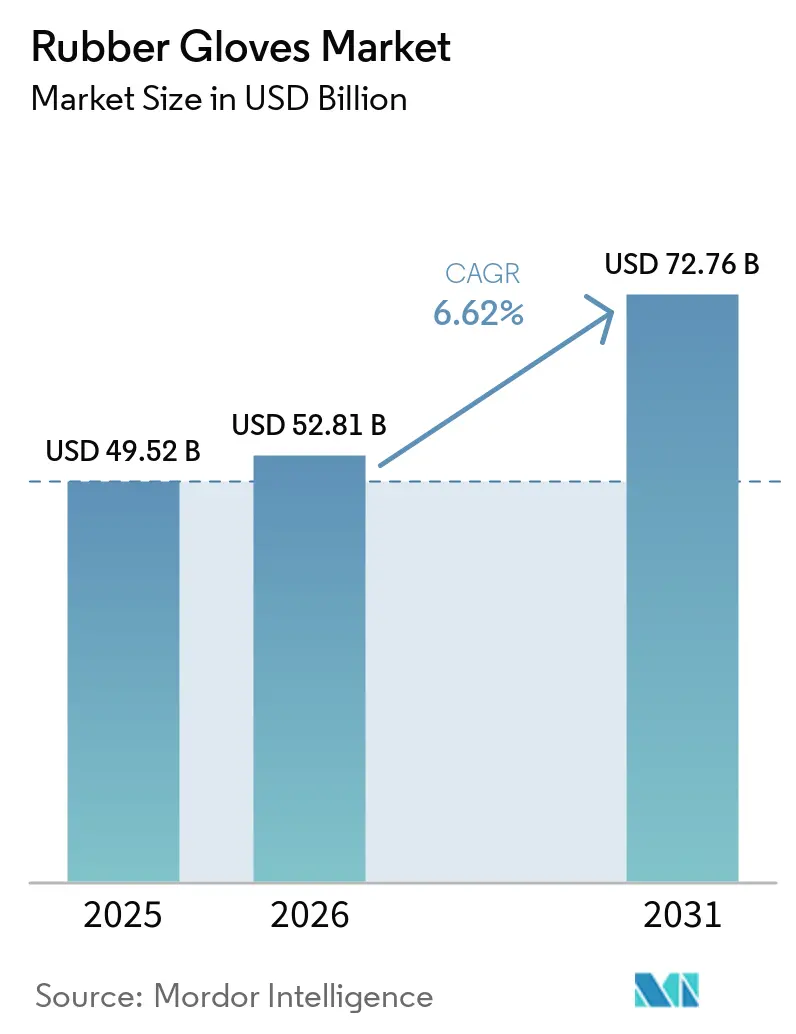
The Rubber Gloves Market is projected to grow from USD 49.52 billion in 2025 to USD 52.81 billion in 2026, reaching USD 72.76 billion by 2031, with a CAGR of 6.62% during 2026–2031. This growth is primarily driven by the increasing focus on hygiene, safety, and contamination prevention across various applications. Factors such as the rise in medical procedures, growing demand for protective solutions, and the enforcement of stricter safety and quality standards further support market expansion. Advancements in manufacturing technologies, including automation, innovative materials, powder-free designs, improved puncture resistance, and enhanced grip solutions, are enabling the production of high-performance gloves tailored to diverse needs.
Key Report Takeaways
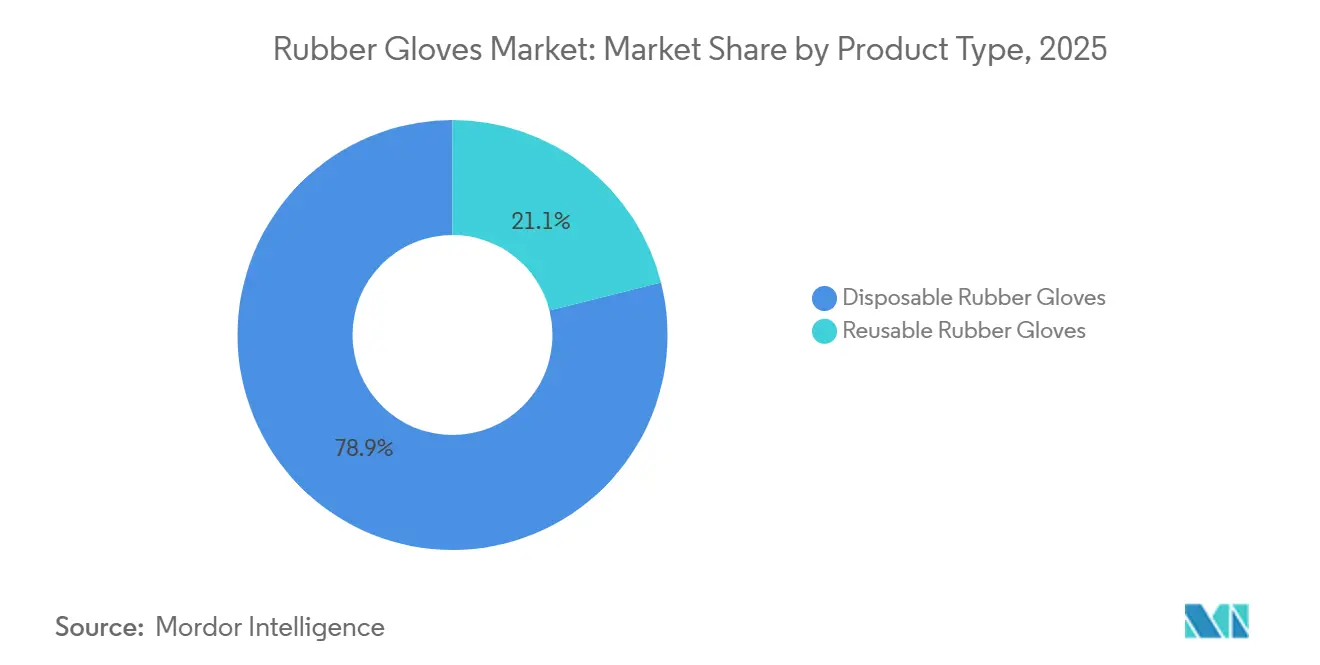
- By product type, disposable rubber gloves held 78.92% of the rubber gloves market in 2025, while reusable rubber gloves are forecast to grow at a 7.3% CAGR through 2031.
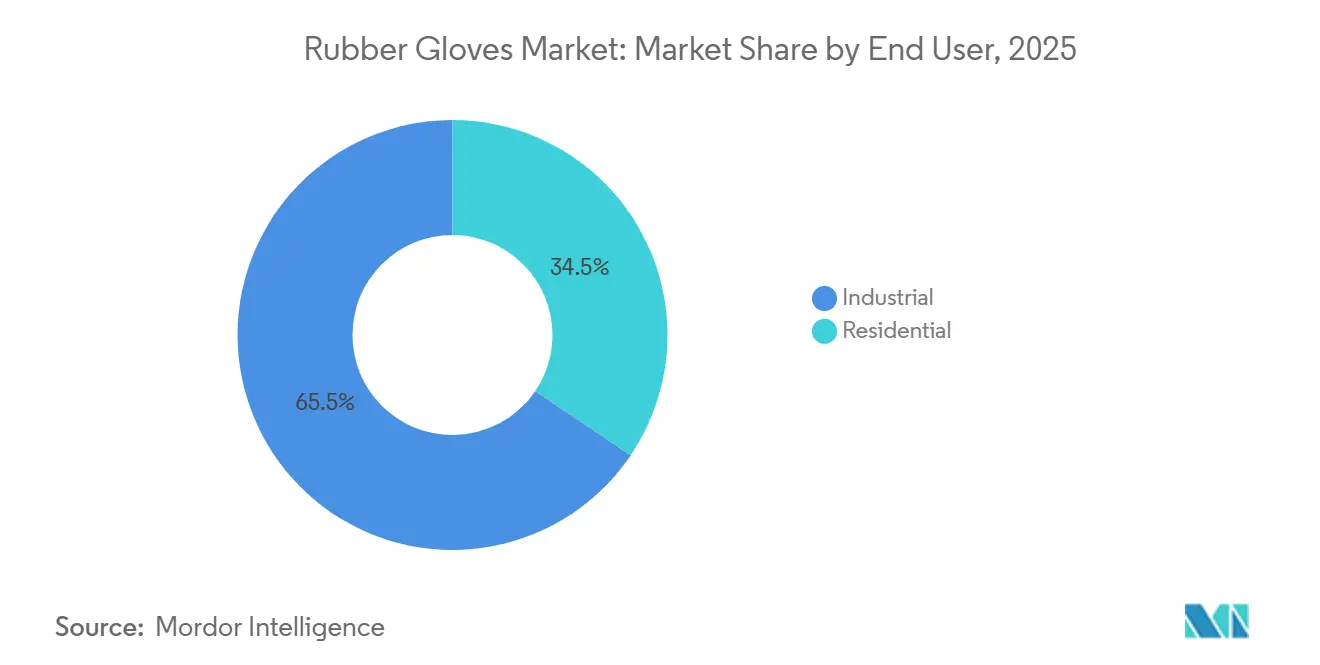
- By end use, industrial applications accounted for 65.54% of the rubber gloves market in 2025, while residential use is projected to rise at a 6.9% CAGR through 2031.
- By geography, Asia-Pacific held 41.23% of the rubber gloves market in 2025 and is also expected to record the fastest regional growth at a 7.2% CAGR through 2031.
Note: Market size and forecast figures in this report are generated using Mordor Intelligence’s proprietary estimation framework, updated with the latest available data and insights as of January 2026.
Market Trends and Insights
Drivers Impact Analysis of Rubber Gloves Market*
| Driver | (~) % Impact on CAGR Forecast | Geographic Relevance | Impact Timeline |
|---|---|---|---|
| Healthcare safety and infection prevention standards | +1.6% | Global; peak intensity in North America, Europe, and Asia-Pacific healthcare systems | Medium term (2-4 years) |
| Expansion of surgical procedures and medical treatments | +1.4% | Global, led by Asia-Pacific (China, India) and North America | Long term (≥ 4 years) |
| Stringent workplace safety regulations | +1.1% | North America (OSHA) and Europe (EU-OSHA), spill-over to Asia-Pacific | Medium term (2-4 years) |
| Advancements in glove manufacturing technologies | +0.8% | APAC core (Malaysia, Thailand, China), spill-over to Middle-East and Africa | Long term (≥ 4 years) |
| Adoption of nitrile gloves due to latex allergy concerns | +0.7% | Global; pronounced in healthcare-intensive economies | Medium term (2-4 years) |
| Sustainability and development of eco-friendly rubber gloves | +0.4% | Europe and North America, early gains in Asia-Pacific | Long term (≥ 4 years) |
| Source: Mordor Intelligence | |||
Healthcare safety and infection prevention standards
The growing emphasis on healthcare safety, infection prevention, and contamination control is driving the expansion of the rubber gloves market. Healthcare facilities are increasingly prioritizing strict hygiene protocols to minimize the risk of healthcare-associated infections (HAIs), cross-contamination, and exposure to harmful pathogens. Rubber gloves play a vital role as a protective barrier for healthcare professionals during examinations, surgeries, diagnostic procedures, and patient care activities, contributing to their widespread use. The enforcement of stringent safety guidelines and infection control measures has heightened the demand for high-quality disposable and sterile gloves with improved durability, puncture resistance, and barrier protection. Furthermore, the expansion of medical services, laboratory testing, and preventive healthcare practices is boosting glove consumption. Rising awareness about personal protection among healthcare workers and the importance of maintaining safe clinical environments are expected to further drive the global demand for rubber gloves.
Expansion of surgical procedures and medical treatments
The growing number of surgical procedures, medical treatments, and clinical interventions is driving the expansion of the global rubber gloves market. The increasing demand for healthcare services, rising patient care needs, and the development of hospital infrastructure have heightened the requirement for sterile, high-performance gloves used in surgeries, examinations, and diagnostic activities. Rubber gloves are essential for maintaining aseptic conditions, preventing cross-contamination, and ensuring the safety of healthcare professionals and patients during medical procedures. Additionally, government initiatives to enhance healthcare capacity are contributing to market growth. For example, China’s Health China 2030 initiative has accelerated hospital construction and expanded surgical capabilities in tier-2 and tier-3 cities, boosting the demand for medical consumables such as surgical and examination gloves [1]Source: World Health Organization (WHO), "Health Determinants, Promotion and Prevention", who.int. As healthcare systems improve treatment accessibility and procedural capacity, the demand for reliable protective rubber gloves is anticipated to grow steadily.
Stringent workplace safety regulations
The enforcement of stringent workplace safety regulations and occupational health standards is a significant driver of growth in the global rubber gloves market. Industries are increasingly utilizing protective gloves to meet safety requirements aimed at minimizing workplace injuries, chemical exposure, contamination risks, and contact with hazardous substances. Regulatory authorities and workplace safety organizations have reinforced guidelines mandating the use of appropriate personal protective equipment (PPE) in sectors such as manufacturing, healthcare, chemicals, pharmaceuticals, food processing, automotive, and laboratories. Rubber gloves play a vital role in workplace safety by providing resistance to chemicals, biological hazards, abrasions, and other occupational risks. Furthermore, the growing emphasis by employers on worker protection, risk management, and adherence to safety standards is driving the demand for durable, specialized, and high-performance rubber gloves in industrial settings.
Advancements in glove manufacturing technologies
The increasing adoption of advanced glove manufacturing technologies is significantly driving improvements in product quality, production efficiency, and performance characteristics. Manufacturers are emphasizing automation, artificial intelligence (AI), data analytics, and innovative production processes to create gloves with enhanced durability, better barrier protection, improved elasticity, superior grip, and greater user comfort. Technological advancements have also facilitated the development of powder-free gloves, thinner yet stronger materials, improved chemical resistance, and specialized solutions for healthcare and industrial applications. For example, in January 2025, Sri Trang Group announced its commitment to business transformation through AI and data, positioning itself as a technology-driven organization. The company’s focus on digital technologies and smart manufacturing underscores the industry's shift toward operational efficiency, quality enhancement, and innovation-led growth, further supporting the global adoption of advanced rubber glove solutions.
Restraints Impact Analysis of Rubber Gloves Market*
| Restraint | (~) % Impact on CAGR Forecast | Geographic Relevance | Impact Timeline |
|---|---|---|---|
| Fluctuating raw material prices | -1.4% | Global; most acute for Asia-Pacific producers (Malaysia, Thailand, Indonesia) | Short term (≤ 2 years) |
| Allergy and skin sensitivity issues | -0.6% | Global; particularly healthcare markets in North America and Europe | Medium term (2-4 years) |
| Limited biodegradability of synthetic rubber gloves | -0.4% | Europe (EU sustainability mandates), North America | Long term (≥ 4 years) |
| Availability of alternative hand protection materials | -0.5% | North America and Europe; emerging in Asia-Pacific | Medium term (2-4 years) |
| Source: Mordor Intelligence | |||
Fluctuating raw material prices
Fluctuations in raw material prices significantly restrain the growth of the global rubber gloves market. Manufacturers rely heavily on materials such as natural rubber latex, nitrile butadiene rubber (NBR), and other synthetic rubber compounds. Variability in raw material availability, supply conditions, production constraints, and rubber price volatility directly impact manufacturing costs, posing challenges to maintaining stable profit margins. Sudden increases in input costs can result in higher glove prices, affecting competitiveness and influencing purchasing decisions among end users. Furthermore, reliance on specific raw material sources exposes manufacturers to supply chain uncertainties and cost pressures. These price fluctuations complicate long-term production planning, compelling companies to prioritize cost optimization, explore alternative materials, and enhance operational efficiencies to mitigate their impact on the rubber gloves market.
Allergy and skin sensitivity issues
The rising prevalence of allergies and skin sensitivity issues linked to rubber gloves is a significant factor limiting the growth of the global rubber gloves market. Proteins present in natural rubber latex gloves can cause allergic reactions in some users, resulting in symptoms such as skin irritation, itching, rashes, and other sensitivity-related issues, particularly for individuals with frequent glove use. Furthermore, certain chemicals, accelerators, and additives used in the manufacturing process can lead to contact dermatitis and discomfort, impacting prolonged usage. These challenges have prompted healthcare professionals, industrial workers, and other end users to opt for alternative materials, thereby reducing the demand for traditional latex gloves. Manufacturers are increasingly required to develop improved formulations, low-allergen products, and advanced processing technologies to address sensitivity concerns, which adds to production complexity and costs.
*Our forecasts treat driver/restraint impacts as directional, not additive. The impact forecasts reflect baseline growth, mix effects, and variable interactions.
Rubber Gloves Market Segment Analysis
By Product Type:
Reusable Segment Narrows Disposable DominanceDisposable rubber gloves accounted for 78.92% of the rubber gloves market in 2025, driven by their extensive use in applications requiring high standards of hygiene, safety, and contamination control. The growing emphasis on infection prevention, workplace safety regulations, and stringent hygiene protocols has significantly increased the demand for disposable gloves. These gloves offer single-use protection, minimizing the risk of cross-contamination. Their convenience, affordability, lightweight design, and availability in various materials, such as latex and nitrile, have made them widely adopted across sectors like healthcare, food handling, laboratories, cleaning, and industrial operations. Ongoing advancements in glove manufacturing, including improved durability, enhanced puncture resistance, better comfort, and powder-free options, have further contributed to their widespread acceptance.
Reusable rubber gloves are the fastest-growing product segment, with a projected CAGR of 7.32% during 2026–2031. This growth is fueled by the rising demand for durable, cost-effective, and environmentally sustainable hand protection solutions. Increasing efforts to reduce single-use waste and promote eco-friendly practices have encouraged industries and consumers to adopt reusable gloves with extended service life. These gloves offer superior strength, chemical resistance, abrasion resistance, and the ability to endure repeated use, making them ideal for tasks such as cleaning, chemical handling, manufacturing, agriculture, and heavy-duty applications. Innovations in material technologies have resulted in reusable gloves with improved flexibility, enhanced grip, greater comfort, and higher resistance to challenging working conditions, further driving their adoption.


By End Use:
Industrial Demand Anchored by Regulation, Residential Segment Gains Structural GroundIn 2025, industrial end use accounted for 65.54% of the rubber gloves market, driven by the significant need for hand protection, worker safety, and contamination prevention across various industrial operations. The increasing adoption of rubber gloves in sectors such as manufacturing, chemicals, automotive, food processing, pharmaceuticals, electronics, laboratories, and cleaning has reinforced the segment's dominance. Industries depend on rubber gloves to safeguard workers from chemical exposure, biological hazards, abrasions, and workplace injuries while ensuring hygiene and operational safety standards. The availability of specialized gloves with enhanced durability, puncture resistance, chemical protection, improved grip, and comfort has further boosted their use in demanding work environments.
The residential end-use segment is expected to grow at a CAGR of 6.91% during 2026–2031, making it the fastest-growing application category. This growth is attributed to the increasing use of rubber gloves for household cleaning, sanitation, personal hygiene, and home maintenance activities. Rising awareness about protection against germs, chemicals, detergents, and cleaning agents has encouraged consumers to incorporate gloves into daily household routines. The growing emphasis on maintaining hygienic living environments, along with increased usage of disinfectants and cleaning products, is further driving demand for durable and comfortable rubber gloves. According to the United States Census Bureau, there were approximately 148.1 million housing units in the United States in 2025, highlighting the expanding base of households requiring cleaning and hygiene solutions [2]Source: United States Census Bureau, "Number of housing units and annual percentage increase in the United States", census.gov.
Geography Analysis
APAC Rubber Gloves Market
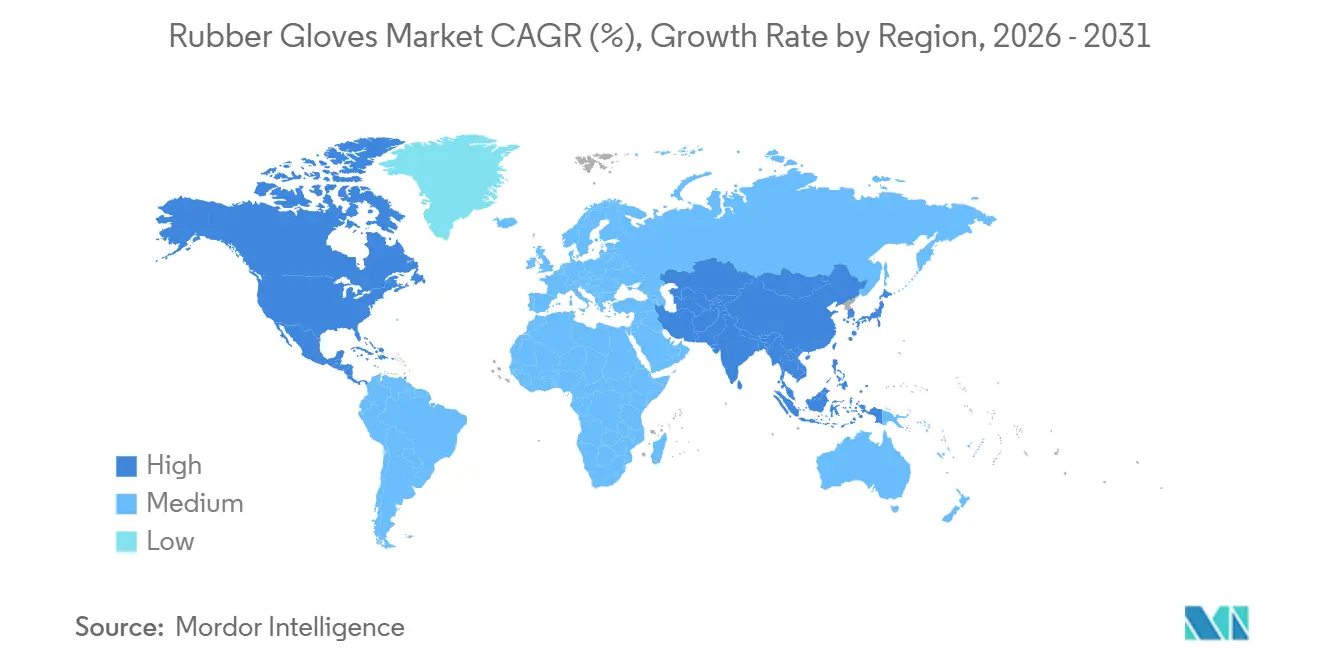
Asia-Pacific accounted for 41.23% of the rubber gloves market in 2025 and is projected to remain the fastest-growing region, with a CAGR of 7.23% during 2026–2031. This growth is driven by robust manufacturing capabilities, increasing healthcare needs, expanding industrial applications, and the presence of large-scale glove producers. The region benefits from advanced rubber processing infrastructure, abundant raw material availability, and ongoing investments in production capacity expansion. Rising demand from industries such as healthcare, food processing, electronics, and manufacturing has further boosted rubber glove consumption. According to the Department of Statistics Malaysia, gloves were the leading export category among rubber-based products, reaching RM1.5 billion in October 2024, a 21.8% increase from RM1.2 billion in September 2024 [3]Source: Department of Statistics Malaysia, "Monthly Rubber Statistics, October 2024", dosm.gov.my. This underscores the region’s significant role in global rubber glove production and trade.
North America Rubber Gloves Market
North America is the second-largest regional market for rubber gloves, supported by stringent workplace safety standards, advanced healthcare infrastructure, and widespread adoption of personal protective equipment in medical and industrial sectors. The region experiences consistent demand due to a growing focus on infection prevention, hygiene compliance, laboratory safety, and worker protection. Increased utilization of nitrile and specialty gloves in healthcare facilities, pharmaceutical operations, food handling, and high-risk industrial environments is driving market growth. Additionally, innovations aimed at improving durability, comfort, allergy prevention, and sustainability are enhancing product adoption across the region.
EMEA and South America Rubber Gloves Market
Europe represents a mature market for rubber gloves, characterized by specification-driven demand. Growth in this region is fueled by stringent regulatory requirements, high-quality standards, sustainability initiatives, and the need for specialized protective gloves in healthcare and industrial applications. The focus on compliance and quality continues to shape the market dynamics in Europe. South America, the Middle East, and Africa are emerging regions with increasing adoption opportunities for rubber gloves. Growth in these markets is driven by expanding healthcare services, improving hygiene awareness, rising industrial safety practices, and greater use of protective equipment across various sectors. Investments in healthcare infrastructure, food safety practices, and industrial development are expected to support long-term demand in these developing regions.

Competitive Landscape
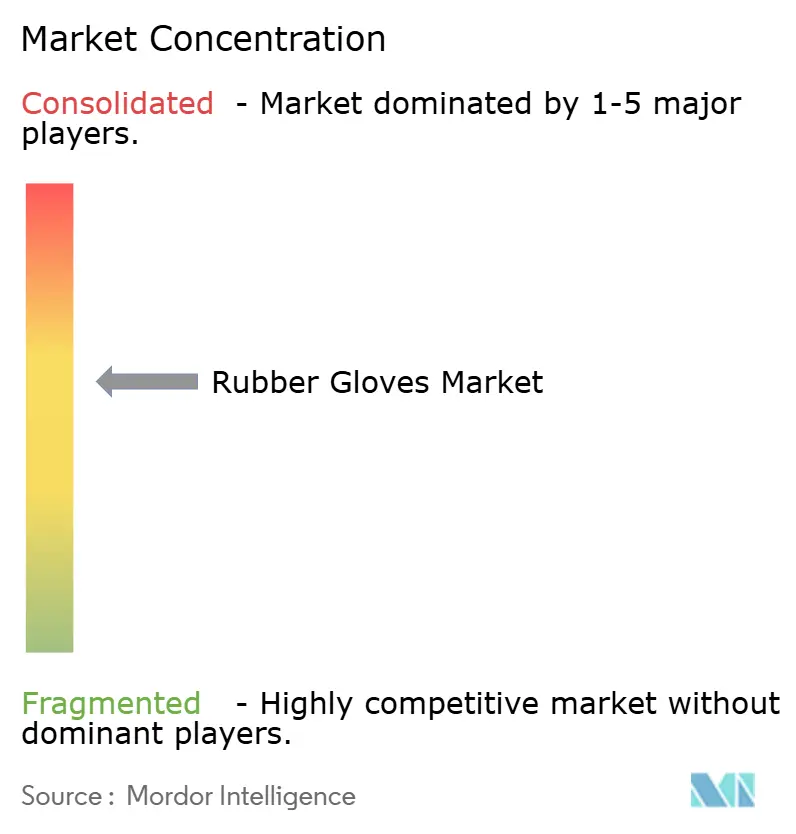
The global rubber gloves market is highly competitive, with key players such as Top Glove Corporation Bhd, Hartalega Holdings Berhad, Kossan Rubber Industries Bhd, Ansell Limited, and Semperit AG Holding focusing on enhancing their market positions through product innovation, operational efficiency, automation, and advanced manufacturing capabilities. These companies are investing in advanced glove technologies, including improved barrier protection, enhanced comfort, allergy-free formulations, and specialized gloves for healthcare, cleanroom, food handling, and industrial applications to meet evolving customer needs.
Top-tier producers are shifting their strategies from capacity expansion to value-driven growth, efficiency improvements, and portfolio optimization. Following years of aggressive production growth, manufacturers are now prioritizing automation, digital manufacturing systems, cost optimization, and higher-margin specialty gloves to enhance competitiveness. Companies are also expanding their premium nitrile, surgical, and industrial glove portfolios while strengthening supply chain resilience and quality assurance practices to comply with stringent global safety and performance standards.
Competition in the rubber gloves market is increasingly centered on performance specialization and sustainability. Manufacturers are differentiating themselves through eco-friendly production practices, responsible sourcing, and sustainable glove solutions. Leading players are investing in energy-efficient manufacturing, waste reduction initiatives, biodegradable materials, and environmentally conscious production processes. The emphasis on product performance, regulatory compliance, and sustainability is expected to shape competitive strategies and drive long-term growth in the global rubber gloves industry.
Rubber Gloves Industry Leaders
-
Top Glove Corporation Bhd
-
Hartalega Holdings Berhad
-
Kossan Rubber Industries Bhd
-
Ansell Limited
-
Semperit AG Holding
- *Disclaimer: Major Players sorted in no particular order
Rubber Gloves Market Companies Covered in this Report
- Top Glove Corporation Bhd
- Hartalega Holdings Berhad
- Kossan Rubber Industries Bhd
- Ansell Limited
- Semperit AG Holding
- Supermax Corporation Berhad
- Cardinal Health, Inc.
- Medline Industries, LP
- Kimberly-Clark Corporation
- Honeywell International Inc.
- 3M Company
- McKesson Corporation
- Bunzl plc
- Unigloves (UK) Limited
- AMMEX Corporation
- YTY Industry Holdings Berhad
- Hextar Healthcare Berhad
- Rubberex Corporation (M) Berhad
- Sri Trang Gloves Public Company Limited
- Mapa Professional GmbH

Recent Industry Developments in Rubber Gloves Market
- January 2026: Ansell Limited introduced the TouchNTuff 93-800, a disposable glove designed to provide at least 15 minutes of acetone resistance. The TouchNTuff 93-800 utilizes Ansell’s MICROCHEM Chemical Barrier Technology and features a multi-layer construction comprising neoprene, nitrile, and natural rubber latex.
- November 2025: Top Glove Corporation Bhd has launched two new examination gloves: the LiteGuard Lightweight Latex Examination Glove and the ElastiCore Accelerator-Free Nitrile Examination Glove.
- April 2025: INTCO Medical has announced the global launch of its patented Syntex Synthetic Disposable Latex Gloves. Syntex aims to enhance glove quality, safety, and performance, offering an alternative to natural latex.


Global Rubber Gloves Market Report Scope
A rubber glove is a glove made out of natural or synthetic rubber. The rubber gloves market is segmented by product type, end use, and geography. Based on product type, the market is segmented into disposable rubber gloves and reusable rubber gloves. Based on end use, the market is segmented into industrial and residential. Based on geography, the market is segmented into North America, Europe, Asia-Pacific, South America, and Middle East and Africa. The report provides market size and forecasts in both value (USD) and volume (tons) for all the mentioned segments.
| Disposable Rubber Gloves |
| Reusable Rubber Gloves |
| Industrial |
| Residential |
| North America | United States |
| Canada | |
| Mexico | |
| Rest of North America | |
| Europe | Germany |
| United Kingdom | |
| Italy | |
| France | |
| Spain | |
| Netherlands | |
| Poland | |
| Belgium | |
| Sweden | |
| Rest of Europe | |
| Asia-Pacific | China |
| India | |
| Japan | |
| Australia | |
| Indonesia | |
| South Korea | |
| Thailand | |
| Singapore | |
| Rest of Asia-Pacific | |
| South America | Brazil |
| Argentina | |
| Colombia | |
| Chile | |
| Peru | |
| Rest of South America | |
| Middle East and Africa | South Africa |
| Saudi Arabia | |
| United Arab Emirates | |
| Nigeria | |
| Egypt | |
| Morocco | |
| Turkey | |
| Rest of Middle East and Africa |
| By Product Type | Disposable Rubber Gloves | |
| Reusable Rubber Gloves | ||
| By End Use | Industrial | |
| Residential | ||
| By Geography | North America | United States |
| Canada | ||
| Mexico | ||
| Rest of North America | ||
| Europe | Germany | |
| United Kingdom | ||
| Italy | ||
| France | ||
| Spain | ||
| Netherlands | ||
| Poland | ||
| Belgium | ||
| Sweden | ||
| Rest of Europe | ||
| Asia-Pacific | China | |
| India | ||
| Japan | ||
| Australia | ||
| Indonesia | ||
| South Korea | ||
| Thailand | ||
| Singapore | ||
| Rest of Asia-Pacific | ||
| South America | Brazil | |
| Argentina | ||
| Colombia | ||
| Chile | ||
| Peru | ||
| Rest of South America | ||
| Middle East and Africa | South Africa | |
| Saudi Arabia | ||
| United Arab Emirates | ||
| Nigeria | ||
| Egypt | ||
| Morocco | ||
| Turkey | ||
| Rest of Middle East and Africa | ||


Key Questions Answered in the Report
What is the current outlook for rubber gloves demand through 2031?
The rubber gloves market stands at USD 52.81 billion in 2026 and is forecast to reach USD 72.76 billion by 2031, supported by a 6.6% CAGR and steady healthcare and industrial demand.
Which product category leads revenue in rubber gloves?
Disposable rubber gloves led with 78.92% share in 2025 because hospitals and many industrial users still depend on single-use infection control and contamination prevention protocols.
Which product category is growing fastest in gloves?
Reusable rubber gloves are projected to grow at a 7.3% CAGR through 2031 as buyers pay more attention to lifecycle cost, waste reduction, and sustainability credentials.
Why does Asia-Pacific lead global glove sales and production?
Asia-Pacific held 41.23% of the rubber gloves market in 2025 and also shows the fastest growth, helped by Malaysia, Thailand, and China’s large production base and rising regional consumption.
Page last updated on:





