
Industrial Safety Gloves Market Size and Share
Market Overview
| Study Period | 2021 - 2031 |
|---|---|
| Market Size (2026) | USD 13.34 Billion |
| Market Size (2031) | USD 19.07 Billion |
| Growth Rate (2026 - 2031) | 7.41 % |
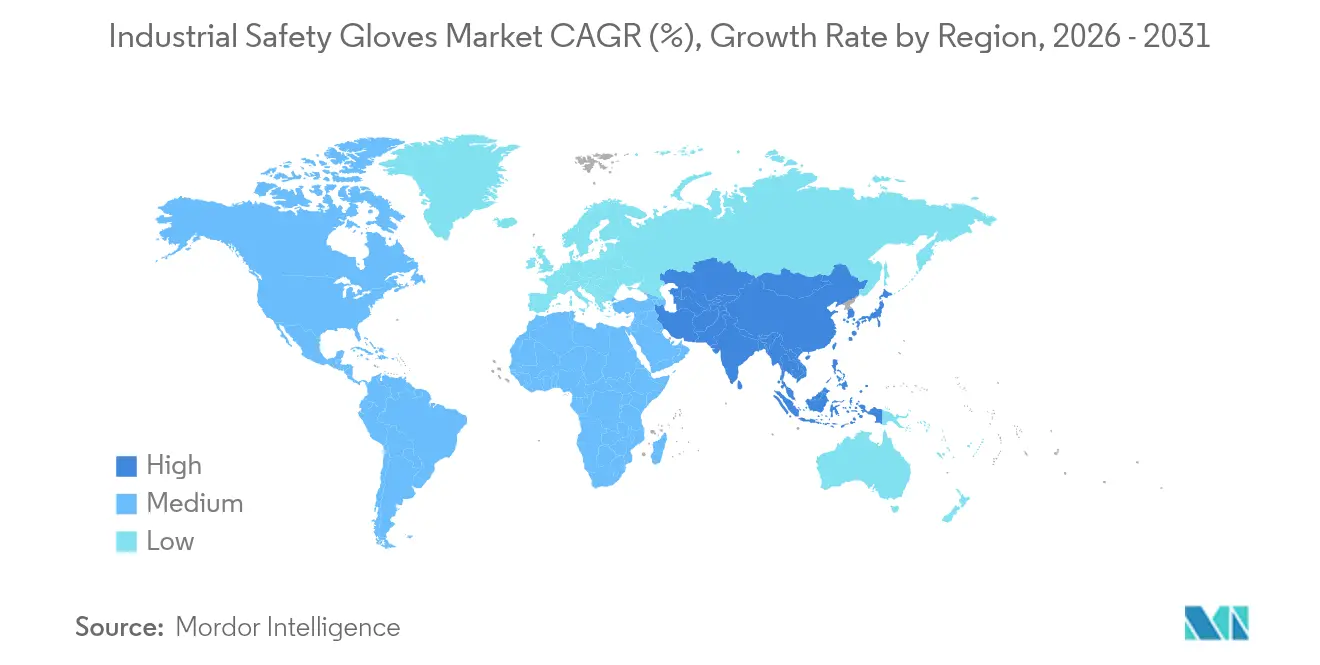
| Fastest Growing Market | Asia Pacific |
| Largest Market | North America |
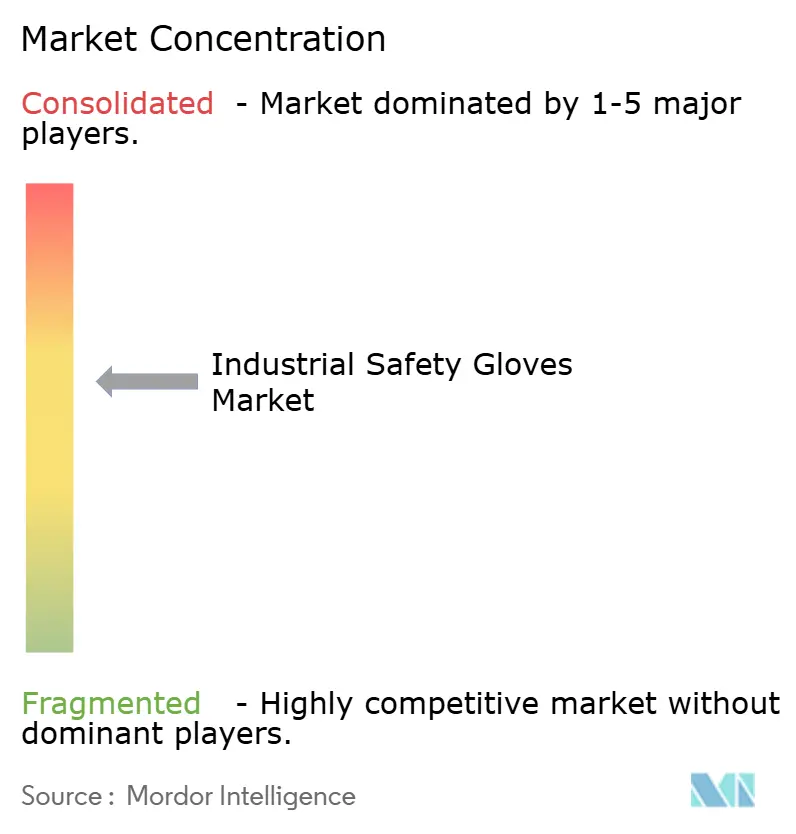
| Market Concentration | Medium |
Major Players *Disclaimer: Major Players sorted in no particular order Image © Mordor Intelligence. Reuse requires attribution under CC BY 4.0. | |
Industrial Safety Gloves Market Analysis by Mordor Intelligence
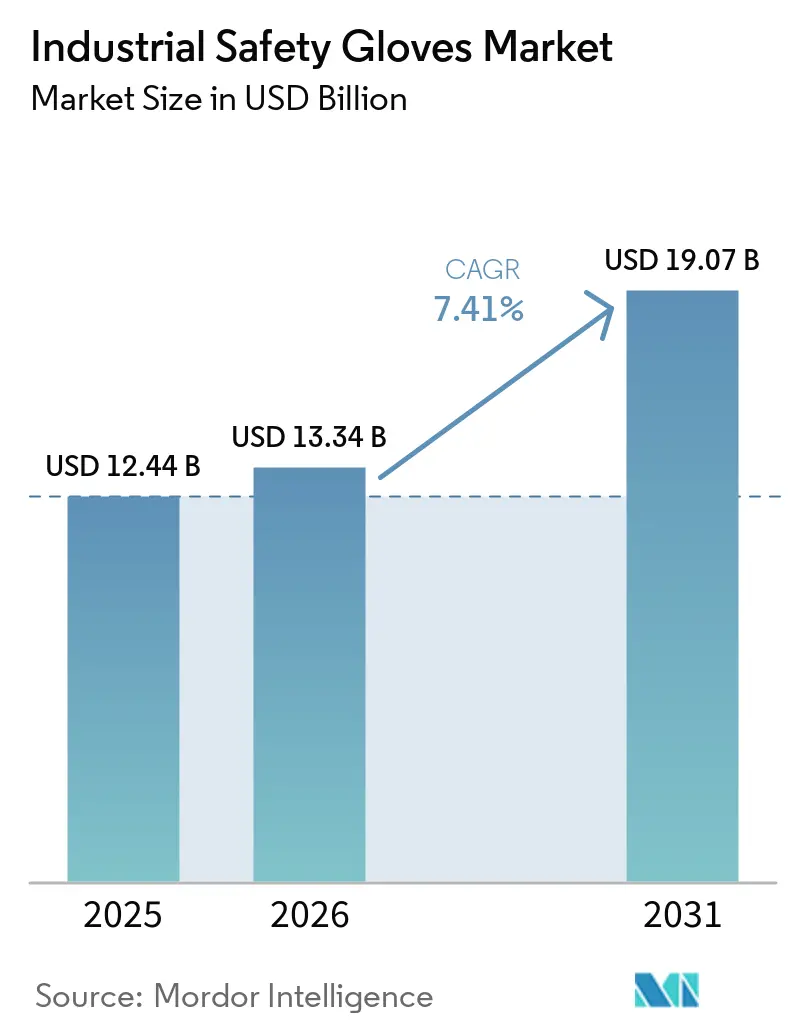
The global industrial safety gloves market size was valued at USD 12.44 billion in 2025 and estimated to grow from USD 13.34 billion in 2026 to reach USD 19.07 billion by 2031, registering a compound annual growth rate (CAGR) of 7.41% during the forecast period 2026-2031. The global industrial safety gloves market is growing due to increased workplace safety awareness and the enforcement of stricter occupational protection regulations across industries such as manufacturing, construction, oil & gas, healthcare, and chemicals. Rapid industrialization and automation have heightened worker exposure to mechanical, chemical, thermal, and biological hazards, driving the adoption of task-specific protective gloves, including cut-resistant, chemical-resistant, and heat-resistant types. Additionally, the expansion of e-commerce logistics and warehousing has increased the need for hand protection in material handling activities. The healthcare sector also continues to demand high-performance disposable gloves for hygiene control. Innovations in materials such as nitrile, neoprene, and high-performance fibers have enhanced durability, comfort, and grip, leading to higher replacement rates and broader adoption, thereby contributing to market growth.
Key Report Takeaways
- By material type, latex captured 34.34% of 2025 industrial safety gloves market share while HPPE is projected to expand at an 8.67% CAGR during 2026-2031.
- By product type, reusable gloves led with 76.88% of 2025 revenue; disposable gloves are forecast to grow at an 8.13% CAGR through 2031.
- By functionality, cut-resistant gloves accounted for 44.32% share in 2025 and heat- and flame-resistant gloves are advancing at an 8.85% CAGR to 2031.
- By end-user, automotive held 24.54% of 2025 demand, whereas pharmaceutical manufacturing is poised for an 8.91% CAGR between 2026-2031.
- By geography, North America commanded 32.44% of value in 2025; Asia-Pacific is the fastest-growing region at an 8.53% CAGR through 2031.
Note: Market size and forecast figures in this report are generated using Mordor Intelligence’s proprietary estimation framework, updated with the latest available data and insights as of 2026.
Market Trends and Insights
Drivers Impact Analysis of Industrial Safety Gloves Market*
| Driver | (~) % Impact on CAGR Forecast | Geographic Relevance | Impact Timeline |
|---|---|---|---|
| Strict global workplace health and safety rules | +1.8% | Global, with strongest enforcement in North America and European Union | Medium term (2-4 years) |
| Growing focus on employee safety and protection | +1.3% | Global, particularly in developed markets | Long term (≥ 4 years) |
| Expansion of industries such as automotive, construction, mining, chemicals, and oil & gas | +1.5% | Asia-Pacific core, spillover to Middle East and South America | Medium term (2-4 years) |
| Increasing industrial accidents and injury incidents | +1.0% | Global, with higher incidence in emerging manufacturing hubs | Short term (≤ 2 years) |
| Advancements in glove materials | +1.6% | Global, led by innovation centers in North America and Europe | Long term (≥ 4 years) |
| Higher demand for disposable gloves, particularly in healthcare and pharma sectors | +1.4% | North America, Europe, and Asia-Pacific pharmaceutical clusters | Medium term (2-4 years) |
| Source: Mordor Intelligence | |||
Strict global workplace health and safety rules
Stricter occupational safety regulations globally are driving the demand for industrial safety gloves, as companies are required to provide adequate hand protection to prevent injuries and avoid legal repercussions. Regulatory authorities are intensifying inspections, enforcing compliance standards, and imposing higher financial penalties, prompting employers to standardize personal protective equipment in industries such as manufacturing, construction, and chemical handling. For instance, the Occupational Safety and Health Administration (OSHA) set the maximum penalty for a serious violation at USD 16,550 per violation in 2025, significantly increasing the cost of non-compliance[1]. Consequently, organizations are increasingly adopting certified hand gloves as a preventive measure, contributing to market growth.
Expansion of industries such as automotive, construction, mining, chemicals, and oil & gas
The expansion of labor-intensive and hazard-prone industries significantly drives the demand for industrial safety gloves, as workers often handle sharp tools, heavy materials, oils, solvents, and high-temperature equipment. These industries include manufacturing, construction, automotive, and chemical processing, where the risk of injuries is high due to the nature of tasks performed. Increasing production capacities and infrastructure projects necessitate protective hand gear to minimize injury risks and ensure uninterrupted operations. For example, according to data published by India’s Ministry of Heavy Industries in February 2026, referencing the Society of Indian Automobile Manufacturers (SIAM), the automobile industry alone accounts for nearly 15% of the country’s GST revenue and supports approximately 30 million jobs across the value chain[2]. The scale of such extensive industrial workforces sustains the consistent procurement of protective gloves to safeguard workers and comply with regulations. Additionally, stringent safety standards and government regulations further emphasize the importance of using industrial safety gloves in these sectors to prevent workplace accidents and ensure employee well-being.
Advancements in glove materials
Advancements in glove materials are driving the increased adoption of industrial safety gloves by enhancing both protection and usability. Manufacturers are introducing high-performance fibers, engineered polymers, and multi-layer coatings that offer improved resistance to cuts, punctures, chemicals, and heat, while maintaining a lightweight and flexible design. Features such as enhanced breathability, improved grip in oily conditions, touchscreen compatibility, and ergonomic fit help reduce worker fatigue and boost productivity, encouraging consistent glove usage during tasks. Additionally, longer durability and washable designs reduce replacement frequency, making these gloves more cost-effective for employers. These improvements in performance and comfort are expanding their application in precision manufacturing, electronics, automotive assembly, and chemical handling, thereby driving market growth.
Higher demand for disposable gloves, particularly in healthcare and pharma sectors
The increasing hygiene and contamination-control requirements in healthcare and pharmaceutical production are driving the rising demand for disposable safety gloves. Hospitals, laboratories, and pharmaceutical manufacturing facilities depend on single-use gloves to prevent cross-contamination among personnel, equipment, and sterile products, necessitating frequent replacements during daily operations. Regulatory guidelines further support this practice. For instance, the U.S. FDA’s Guidance for Industry: Sterile Drug Products Produced by Aseptic Processing - Current Good Manufacturing Practice recommends that sterile gloves be regularly sanitized or replaced after initial gowning to reduce contamination risks[3]. These stringent procedural standards lead to consistent, high-volume glove usage, positioning disposable gloves as a significant growth driver in the global industrial safety gloves market.
Restraints Impact Analysis of Industrial Safety Gloves Market*
| Restraint | (~) % Impact on CAGR Forecast | Geographic Relevance | Impact Timeline |
|---|---|---|---|
| Fluctuating and increasing prices of latex, nitrile, and polymer inputs | -1.2% | Global, most acute in Asia-Pacific manufacturing hubs | Short term (≤ 2 years) |
| Strong competition from low-cost, lower-quality manufacturers | -0.9% | Asia-Pacific and Middle East, with spillover to price-sensitive segments globally | Medium term (2-4 years) |
| Commoditization causing pricing pressure and reduced margins | -0.7% | Global, particularly affecting mid-tier manufacturers | Long term (≥ 4 years) |
| Low PPE awareness and adoption in many emerging markets | -0.5% | South Asia, Sub-Saharan Africa, and parts of South America | Long term (≥ 4 years) |
| Source: Mordor Intelligence | |||
Fluctuating and increasing prices of latex, nitrile, and polymer inputs
Fluctuations in the prices of key raw materials, including natural latex, nitrile rubber, and synthetic polymers, pose a challenge to the industrial safety gloves market by increasing production costs and reducing pricing stability. These materials rely on petrochemical feedstocks and agricultural supply conditions, making them vulnerable to crude oil price fluctuations, weather-related disruptions, and supply chain issues. Sudden cost increases strain manufacturers' profit margins and often result in higher product prices for end users, discouraging bulk purchases, particularly among small and medium-sized industries. Unstable input costs also complicate long-term contracts and inventory management, delaying purchasing decisions and hindering consistent market growth.
Strong competition from low-cost, lower-quality manufacturers
Intense competition from low-cost producers, particularly unorganized or non-certified manufacturers, constrains the global industrial safety gloves market by exerting downward pressure on pricing and reducing profit margins for established brands. These suppliers often provide low-cost products that attract cost-sensitive buyers, despite not meeting durability or safety performance standards. Consequently, premium manufacturers face challenges in demonstrating value and justifying higher prices, especially in developing industrial regions where procurement decisions are primarily cost-driven. This competitive landscape discourages investment in advanced materials and innovation, while also hindering the adoption of certified high-performance gloves, ultimately restricting overall market growth.
*Our forecasts treat driver/restraint impacts as directional, not additive. The impact forecasts reflect baseline growth, mix effects, and variable interactions.
Industrial Safety Gloves Market Segment Analysis
By Material Type:
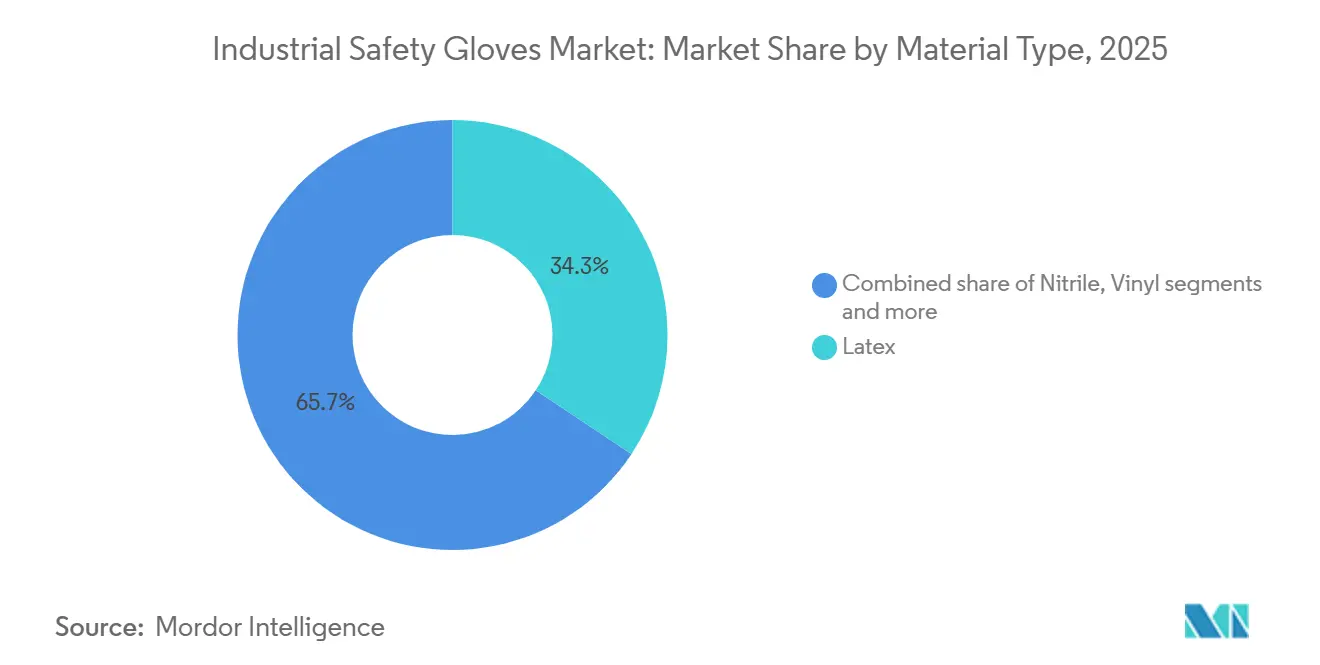
HPPE Disrupts Latex DominanceThe latex segment accounted for a 34.34% market share in 2025, while High-Performance Polyethylene (HPPE) industrial safety gloves are projected to grow at a rate of 8.67% during the forecast period from 2026 to 2031. The demand for latex industrial safety gloves is driven by their superior elasticity, tactile sensitivity, and secure grip, making them ideal for precision handling tasks in sectors such as healthcare, food processing, laboratories, and light manufacturing. Their snug fit enhances dexterity and reduces worker fatigue, promoting consistent use during repetitive tasks. Additionally, latex gloves provide effective protection against biological contaminants and mild chemicals, while being cost-efficient compared to many synthetic alternatives. This combination of comfort, hygiene control, and affordability makes them a practical choice for high-volume, single-use applications.
The growth of HPPE industrial safety gloves is attributed to increasing demand for advanced cut-resistant protection in heavy-duty industries such as metal fabrication, automotive assembly, glass handling, and construction. HPPE fibers offer a high strength-to-weight ratio, enabling gloves to remain lightweight and flexible while providing protection against sharp edges and abrasion. Their durability, extended service life, and resistance to oils and mechanical stress reduce the frequency of replacements and enhance productivity. These attributes make HPPE gloves an appealing option for employers prioritizing worker safety and long-term cost efficiency.

By Product Type:
Disposable Gains Despite Reusable LeadReusable gloves commanded 76.88% of market value in 2025, reflecting their dominance in automotive assembly, construction, and general manufacturing, where multi-shift durability and launderability deliver lower per-use costs. Yet disposable gloves are expanding at 8.13% annually through 2031, driven by pharmaceutical cleanroom protocols, food safety regulations, and healthcare infection control standards that mandate single-use products. The demand for reusable industrial safety gloves is primarily driven by heavy-duty industries such as construction, metalworking, mining, and oil & gas, where workers are regularly exposed to risks like abrasion, cuts, heat, and chemicals. Employers favor durable gloves made from coated fabrics, leather, or engineered fibers due to their longer lifespan, cost-effectiveness by reducing frequent replacements, and enhanced protection for high-risk tasks. Additionally, sustainability initiatives promote the use of reusable gloves, as they produce less waste and support extended operational cycles while maintaining safety standards.
The demand for disposable industrial safety gloves is increasing due to stringent hygiene and contamination-control requirements in industries such as healthcare, pharmaceuticals, food processing, laboratories, and cleanroom manufacturing. These industries rely on single-use gloves to prevent cross-contact between workers, equipment, and sensitive products, necessitating frequent glove changes during routine operations. Their ease of use, consistent cleanliness, and ready availability make them indispensable for short-duration tasks and environments where strict sanitation standards must be upheld.
By Functionality:
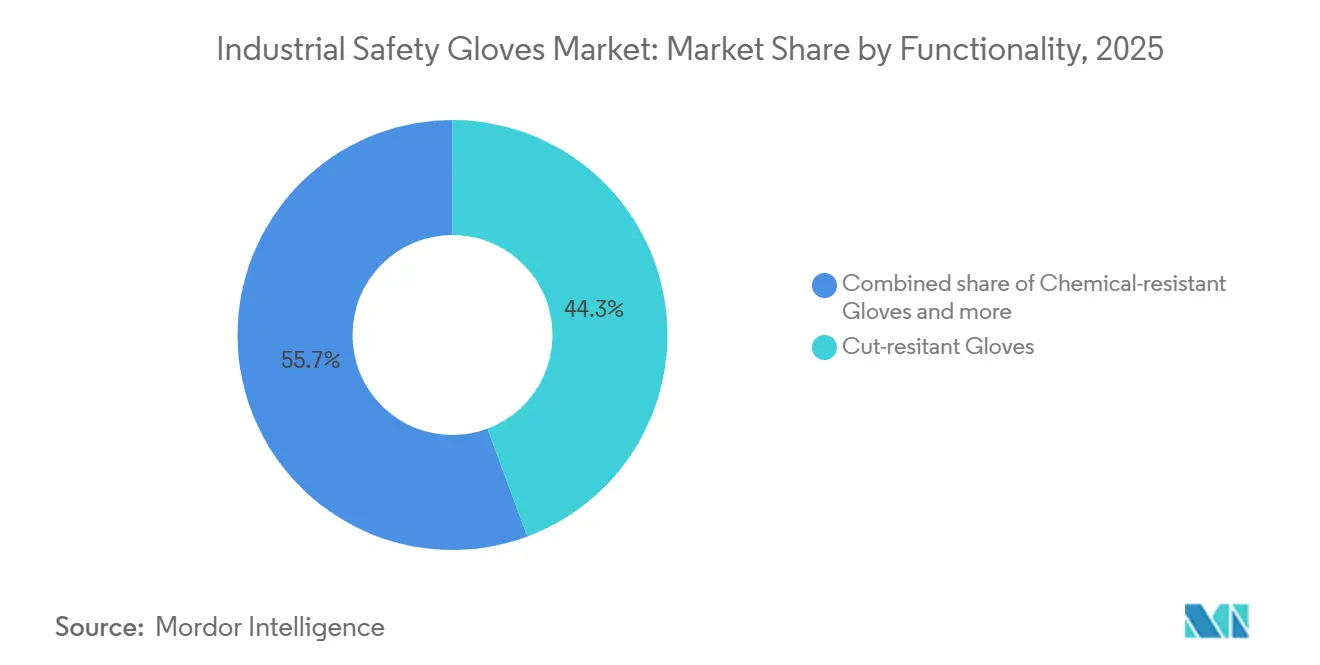
Heat Resistance Surges on Battery ManufacturingCut-resistant gloves accounted for 44.32% of the functionality segment in 2025, driven by demand from automotive assembly, construction, and metal fabrication industries. However, heat and flame-resistant variants are projected to grow at the fastest rate, with an annual growth of 8.85% through 2031. Cut-resistant gloves are increasingly in demand in industries where workers handle sharp materials, including sheet metal, glass, blades, and engineered components. Sectors such as manufacturing, automotive assembly, logistics, warehousing, and construction require gloves that protect against lacerations while maintaining dexterity for precise tasks. The use of automated cutting tools and faster production lines has heightened the risk of injuries, prompting employers to provide high-strength fiber gloves that offer both flexibility and reliable mechanical protection, thereby reducing accidents and minimizing downtime.
Heat and flame-resistant gloves are primarily used in applications involving high temperatures, sparks, and molten materials, such as welding, foundries, forging, glass production, and oil and gas maintenance. These gloves enable workers to handle hot equipment and surfaces safely without compromising grip or dexterity. The adoption of insulated and flame-retardant materials is driven by stricter fire-safety regulations and the need to prevent burn injuries. Companies increasingly rely on specialized thermal protective gloves to enhance worker safety and ensure uninterrupted operations in high-temperature environments.
By End-User:
Pharmaceutical Outpaces AutomotiveThe automotive sector held a 24.54% share among end-users in 2025, the largest across all categories. However, pharmaceutical manufacturing is expected to grow at the fastest rate of 8.91% annually through 2031. The automotive industry involves significant manual handling of metal parts, tools, lubricants, and assembly equipment, posing risks such as cuts, abrasions, and oil exposure. Workers engaged in welding, stamping, painting, and component assembly require gloves that ensure grip, dexterity, and mechanical protection while maintaining productivity. The rise in vehicle production, intricate component designs, and the adoption of automated machinery have heightened safety demands, leading manufacturers to standardize protective gloves across assembly lines to minimize injuries and avoid production disruptions.
Pharmaceutical facilities require stringent contamination control and sterile handling during drug formulation, packaging, and laboratory testing, necessitating the consistent use of safety gloves. Employees must avoid direct contact with active ingredients, chemicals, and sterile products, which demands frequent glove changes and adherence to high hygiene standards. Compliance with quality assurance protocols and cleanroom practices drives the use of certified protective gloves to ensure product integrity, worker safety, and regulatory compliance throughout manufacturing processes.
Geography Analysis
North America Industrial Safety Gloves Market
North America commanded 32.44% of global market value in 2025, sustained by stringent OSHA enforcement, high PPE compliance rates, and a shift toward premium-performance gloves in automotive and pharmaceutical manufacturing. In North America, the demand for industrial safety gloves is driven by the region's emphasis on workplace liability prevention and compliance with insurance regulations. Companies actively invest in protective equipment to minimize compensation claims and legal risks. Additionally, the increasing use of advanced manufacturing technologies, such as robotics and precision equipment, necessitates specialized hand protection that supports fine motor control during human-machine interactions. The presence of large, organized distributors and safety supply contracts promotes standardized procurement of personal protective equipment (PPE) across multi-site enterprises. Furthermore, workforce training programs and union safety practices contribute to consistent glove usage in industrial facilities.
APAC Industrial Safety Gloves Market
Asia-Pacific is expanding at 8.53% annually through 2031, the fastest among all regions, driven by manufacturing capacity additions in China, India, and Southeast Asia and by improving regulatory enforcement in developed markets like Japan, South Korea, and Australia. In the Asia-Pacific region, the industrial safety gloves market is primarily driven by the rapid growth of small and medium-scale manufacturing clusters and contract production hubs. These facilities, which supply global brands, are required to adhere to buyer audit standards for worker protection. Export-oriented factories are increasingly adopting standardized protective equipment to comply with international sourcing requirements and pass third-party compliance inspections. Additionally, the expansion of technical education and vocational training programs is raising awareness of workplace injury prevention among new workers. The development of organized industrial parks and special economic zones further supports centralized procurement of protective gear, ensuring steady demand for gloves across the region.
Europe Industrial Safety Gloves Market
In Europe, the industrial safety gloves market is driven by a strong focus on worker ergonomics and long-term occupational health. Companies are adopting protective gear designed to minimize strain and enhance comfort during prolonged work shifts. Employers are increasingly incorporating safety equipment into productivity initiatives, prioritizing gloves that improve grip precision and reduce handling errors in high-quality manufacturing sectors such as machinery, aerospace components, and precision engineering. Additionally, sustainability objectives are fostering the adoption of recyclable and responsibly sourced protective products. Structured worker training and certification programs further support the consistent use of protective equipment across industrial workplaces.
Regulatory Landscape
Industrial safety gloves are governed by occupational safety rules that require employers to assess hand hazards and provide appropriate protection, which affects glove selection and documentation across end-user industries. In the United States, OSHA 29 CFR 1910.138 links glove selection to a workplace hazard assessment, and the agency raised the maximum penalty for a serious violation to USD 16,550 per violation in 2025, increasing the financial risk of non-compliance and supporting demand for compliant, task-specific gloves.
In Europe, Regulation (EU) 2016/425 sets the framework for personal protective equipment (PPE) and supports CE marking for protective gloves, with conformity commonly supported by harmonised standards. The European Commission adopted Implementing Decision (EU) 2026/1279 on 12 June 2026, updating the list of harmonised standards supporting Regulation (EU) 2016/425 and replacing the prior decision (2023/941), which affects the test standards manufacturers reference to maintain presumption of conformity. Technical benchmarks also continue to evolve, including ISO 374-1:2024 (published July 2024) for chemical and microorganism protection and ISO 21420:2020 (confirmed under systematic review on 4 December 2025) for general glove requirements and test methods. Canada also moved to modernize PPE terminology via proposed amendments published in the Canada Gazette on 13 June 2026 to improve consistency across federal OHS jurisdictions.
Value Chain Analysis
The industrial safety gloves value chain begins with upstream inputs such as natural latex and petrochemical-derived polymers (including nitrile latex, PVC, polyurethane, neoprene, and butyl rubber), along with base yarns like nylon and polyester and specialty additives used in compounding and coatings. Manufacturing typically includes liner knitting (often differentiated by gauge such as 7G/13G/18G), solution dipping into polymer compounds, curing and finishing, and optional grip enhancements such as dot reinforcement to target abrasion, cut, chemical, and thermal performance.
Midstream suppliers include vertically integrated producers and OEM/ODM manufacturers that tailor coatings, liners, and ergonomics to application needs, using in-house or third-party testing aligned with standards such as ISO 21420:2020 and ISO 374-1:2024, plus regional classification systems such as ANSI/ISEA 105-2024. Downstream, products move through safety specialists, industrial distributors, and enterprise procurement contracts serving automotive, construction, chemicals, logistics, and pharmaceutical manufacturing, where certification, consistency, and supply assurance drive supplier selection. Price and continuity risks cluster around latex and nitrile input volatility and around the ability to maintain consistent compounding, dipping, and quality-control processes at scale across both reusable and disposable product lines.
Competitive Landscape
The global industrial safety gloves market is moderately consolidated, with major multinational manufacturers such as 3M, Ansell, Honeywell, Top Glove, and Radians, Inc. dominating the market. These companies leverage extensive product portfolios and global distribution networks to maintain strong relationships with large industrial buyers. They focus on providing certified, application-specific protection and consistent product quality. Meanwhile, numerous regional and private-label manufacturers compete intensely, particularly in price-sensitive segments, creating ongoing competitive pressure in standard protective glove categories.
Market competition is characterized by two distinct strategies. Established international brands prioritize expanding high-performance product lines, enhancing technical capabilities, and differentiating through advanced materials and specialized designs tailored for demanding industrial applications. On the other hand, smaller and regional manufacturers focus on cost-efficient production and competitive pricing to secure volume contracts, particularly in markets where affordability takes precedence over advanced performance features.
Innovation plays a key role in market differentiation, with manufacturers developing multifunctional protection solutions and ergonomically designed gloves for complex industrial tasks. Efforts are also directed toward connected protective equipment and advancements in material engineering to improve durability and user comfort. However, the adoption of advanced solutions remains gradual, as buyers often weigh performance benefits against cost considerations. This dynamic allows both premium and value-oriented suppliers to coexist within the competitive landscape.
Industrial Safety Gloves Industry Leaders
-
3M Corporation
-
Ansell Limited
-
Top Glove Corporation Berhad
-
Honeywell International Inc.
-
Radians, Inc.
- *Disclaimer: Major Players sorted in no particular order
Industrial Safety Gloves Market Companies Covered in this Report
- 3M Company
- Ansell Limited
- Top Glove Corporation Berhad
- Radians, Inc.
- Honeywell International Inc.
- Hartalega Holdings Berhad
- The Glove Company
- MCR Safety
- Unigloves (UK) Limited
- Superior Glove Works Ltd.
- Globus Group
- Atlantic Safety Products
- Supermax Corporation Berhad
- Ammex Corporation
- ATG Intelligent Glove Solutions
- Protective Industrial Products, Inc.
- Adenna LLC
- Kossan Rubber Industries Bhd
- Bunzl Plc
- Semperit AG Holding
Market Opportunities and Future Outlook
New capacity and localization projects point to an opportunity for suppliers that can deliver compliance-grade performance while improving regional supply resilience. Manufacturing investments in 2026 across Sri Lanka (Hayleys Dipped Products PLC capacity expansion at Kottawa with advanced dipping plants and automation), India (Mallcom India Limited investment in Sanand, Gujarat adding NBR dipping lines and localization of PU-coated glove production), and Brazil (Supermax Corporation Bhd announcing a new facility in Parana as its first Latin America production base for natural rubber and nitrile examination gloves) suggest efforts to reduce lead times and import dependence in key consuming regions. For industrial buyers, this supports sourcing cases where local production aligns with application-specific requirements in automotive, general manufacturing, and hygienic single-use environments.
Product and certification-led differentiation also remains a practical route to value capture as standards and classifications become more prescriptive and procurement increasingly specifies measurable performance. Updates such as ISO 374-1:2024 for chemical protection and continued use of ISO 21420:2020 for general requirements reinforce the need for documented testing and traceability, particularly for chemical handling and pharmaceutical manufacturing where glove changes are frequent and compliance audits are routine. Opportunity is also concentrated in specialty categories that are harder to commoditize, including chemical-resistant disposables and higher-performance reusable cut-resistant gloves based on advanced fibers, where companies that invest in compounding know-how, automated dipping and knitting, and standardized testing infrastructure can compete beyond price-based procurement.
Recent Industry Developments in Industrial Safety Gloves Market
- June 2026: Top Glove Corporation Berhad announced expansion initiatives in Thailand, including an additional block planned for installing about 14 double-former lines. The expansion shifts incremental capacity toward a lower-cost operating base and aims to support higher output availability for both industrial and examination glove categories while the company advances automation and debottlenecking efforts.
- April 2025: Radians, Inc. entered the disposable glove market with a lineup of 14 styles of powder-free nitrile and latex gloves. This broadened its PPE portfolio beyond core industrial safety products and strengthened its ability to bid on bundled hand-protection programs through distributor channels.
- April 2024: Medicom inaugurated its EUR 88 million ManiKHeir nitrile glove facility in Besse-sur-Braye, France, with stated annual capacity of 900 million gloves. Establishing local single-use nitrile manufacturing in Europe supported regional supply-chain diversification and created a nearer source for regulated, high-volume users such as healthcare and pharmaceutical operations.
Industrial Safety Gloves Market Report Scope and Research Methodology
Market Definition and Coverage
This market covers revenue from gloves used for industrial hand protection during work. In these purchases, the glove is selected mainly to reduce injury risk from cuts, chemicals, heat, abrasion, impact, and similar hazards, then sold through common industrial supply channels.
Scope exclusions: We exclude non-glove hand protection items and fashion or general-purpose household gloves that are not bought for industrial safety use.
Segments Covered in This Report
- By Material Type
- Latex
- Nitrile
- High-Performance Polyethylene (HPPE)
- Vinyl
- Neoprene
- Others
- By Product Type
- Disposable Gloves
- Reusable Gloves
- By Functionality
- Cut-resistant Gloves
- Chemical-resistant Gloves
- Heat/Flame-resistant Gloves
- Others
- By End-User
- Automotive
- Construction
- Food Industry
- Pharmaceutical
- Mining
- Oil and Gas
- Other End-Users
- By Geography
- North America
- United States
- Canada
- Mexico
- Rest of North America
- Europe
- Germany
- United Kingdom
- France
- Spain
- Italy
- Netherlands
- Russia
- Poland
- Belgium
- Sweden
- Rest of Europe
- Asia-Pacific
- China
- Japan
- Australia
- South Korea
- Indonesia
- Vietnam
- Malaysia
- Thailand
- Singapore
- Rest of Asia-Pacific
- South America
- Brazil
- Argentina
- Colombia
- Chile
- Peru
- Rest of South America
- Middle East and Africa
- Saudi Arabia
- United Arab Emirates
- South Africa
- Nigeria
- Egypt
- Morocco
- Turkey
- Rest of Middle East and Africa
- North America
Data Sources, Market Sizing, and Validation
Desk Research
Desk work starts by building a fact base for how glove demand moves with industrial activity and safety enforcement. We used public sources such as occupational safety regulator guidance and injury statistics (for example, OSHA and NIOSH), the US Bureau of Labor Statistics, Eurostat, and trade data series from UN Comtrade to understand import dependence and pricing pressure by region.
To tighten the model inputs, we also reviewed peer-reviewed papers and standards references around PPE performance (such as ISO and EN test methods), along with association and distributor webpages that describe common use cases and purchasing behavior. Annual reports, investor presentations, and press releases were used to track product mix shifts between disposable and reusable gloves, and to see how raw material swings can pass through. In addition, paid subscriptions supporting company financials and patent screening were used selectively to cross-check revenue direction and innovation trends. These sources are illustrative, and many other public references were also consulted to collect, validate, and clarify the final assumptions.
Primary Interviews and Surveys
Primary work focused on confirming what is counted as industrial safety use and how the average selling price changes by glove type and performance level. We spoke with stakeholders across manufacturing, construction, oil and gas, and other heavy users, along with distribution-side respondents, so gaps from desk research could be closed and assumptions could be triangulated across APAC, EMEA, and the Americas.
Distribution of primary research fieldwork respondents
| Company type | Respondent position | Region |
|---|---|---|
| Top tier: 30% | CXOs: 12% | APAC: 43% |
| Mid tier: 54% | Functional/Unit leaders: 36% | EMEA: 33% |
| Smaller Players: 16% | Managers: 52% | Americas: 24% |
Market-Sizing & Forecasting
Sizing is built with a top-down approach that reconstructs demand from industrial workforce exposure and activity signals, then filters it through safety adoption and replacement behavior. In practice, we map the addressable worker base across key industries, apply a usage and replacement rate, and translate units into value using an ASP ladder that reflects disposable versus reusable mix and performance grades.
To keep the totals realistic, the outputs are corroborated with selective bottom-up approximations, such as supplier and distributor channel checks and sampled volume times ASP calculations by major end-user blocks, and then adjusted where gaps show up. The model uses repeatable inputs, including industrial employment and output indicators, construction and manufacturing activity, reported workplace injury patterns that drive compliance spending, trade flows for key glove materials, and raw material linked price movement that affects ASP progression.
For forecasting, scenario analysis is used first to reflect different paths for industrial production, regulatory enforcement intensity, and input-cost pass-through. The chosen scenario is then aligned to expert consensus from interviews. When a bottom-up check cannot cover a small country or niche end-user, the missing piece is filled through proxy indicators (for example, industrial employment and import reliance) before being rolled into the regional totals.
Data Validation & Update Cycle
Validation happens in layers so a single data series does not drive the final number. We compare the modeled value against independent signals, including trade value direction, industrial production trends, and expected glove spend intensity by end-use, then review any large variance country by country before sign-off.
If an outlier is found, analysts re-check the underlying assumptions, revisit currency conversion timing, and re-contact selected respondents when the change looks tied to pricing or mix rather than real demand. Reports are refreshed annually, with interim updates when material events occur, such as safety rule changes or sharp raw material price moves. Before delivery, one more pass is completed to ensure the latest public indicators are reflected in the market view.
Mordor Intelligence's Industrial Safety Gloves Market Size Versus Other Published Estimates
Published market sizes for industrial safety gloves can look far apart because the same glove purchase can be counted under different umbrellas, and because pricing assumptions are handled differently across years. The spread is usually explained by scope boundaries, how disposable and reusable mixes are treated, and whether the numbers reflect a steady base case or a more aggressive price and volume ramp.
In this study, the biggest gap drivers were the refresh cadence and the way ASP movement is timed to raw material swings and product mix shifts, followed by checks against trade signals and end-use activity, which are then re-tested during annual updates, a cadence that is applied by Mordor Intelligence.
Benchmark comparison
| Source | Market Size | Gaps in Research Methodology |
|---|---|---|
| Mordor Intelligence | USD 13.34 B (2026) | |
| Industry Publisher A | USD 7.14 B (2024) | Uses an earlier base year and a lower implied ASP level, and its scope tends to be anchored to a narrower industrial PPE spending view, which can undercount performance-grade upgrades and some heavy-industry replacement intensity. |
| Global Research House B | USD 8.90 B (2024) | Builds the value more tightly around country coverage and a fixed base-year structure, which can miss later-period mix shifts between disposable and reusable gloves and may not fully re-time currency conversion and price pass-through when input costs move quickly. |
Looking at the three figures together, the main lesson is that scope and timing choices matter as much as the math. By keeping the demand pool tied to end-use worker exposure, and by updating price and currency assumptions in step with observable signals, we end up with a market size that is easier to trace and repeat when conditions change.
Key Questions Answered in the Report
How fast will global demand for industrial safety gloves grow from 2026 to 2031?
Aggregate consumption value is expected to rise at a 7.41% CAGR, lifting the industrial safety gloves market size from USD 13.34 billion to USD 19.07 billion.
Which material will gain the most share by 2031?
HPPE gloves are projected to record the highest growth, expanding at 8.67% annually as automotive and construction buyers upgrade to ANSI A9 cut levels.
Which region is expected to grow the fastest in the industrial safety gloves market?
Asia-Pacific is the fastest-growing region, forecast to expand at a CAGR of 8.53% during 2026–2031.
Which end-user segment shows the strongest growth potential?
Pharmaceutical manufacturing registers the fastest 8.91% CAGR because biomanufacturing expansion and GMP rules demand specialized chemical-resistant disposable gloves.