
Hand Cream Market Size and Share
Market Overview
| Study Period | 2021 - 2031 |
|---|---|
| Market Size (2025) | USD 0.94 Billion |
| Market Size (2030) | USD 1.29 Billion |
| Growth Rate (2025 - 2030) | 6.59 % |
| Fastest Growing Market | Asia Pacific |
| Largest Market | North America |
| Market Concentration | Medium |
Major Players
*Disclaimer: Major Players sorted in no particular order Image © Mordor Intelligence. Reuse requires attribution under CC BY 4.0. |
|
Hand Cream Market Analysis by Mordor Intelligence
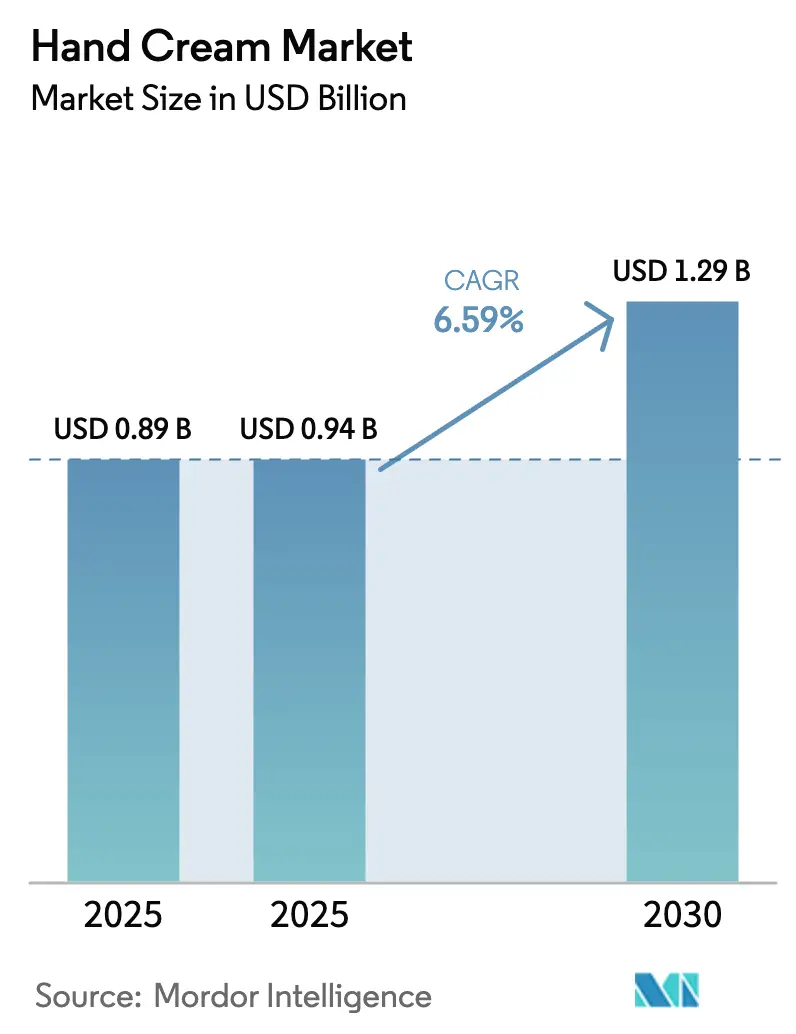
The global hand cream market is experiencing steady growth, increasing from USD 0.89 billion in 2025 to USD 0.94 billion in 2026, and is projected to reach USD 1.29 billion by 2031, with a CAGR of 6.59% during 2026–2031. This growth is primarily driven by the rising incorporation of hand care into daily skincare routines, as consumers increasingly prioritize skin health beyond the face and body. The frequent use of handwashing and sanitizers has heightened concerns about dryness, irritation, and skin barrier damage, sustaining demand for moisturizing and reparative products. Additionally, consumer preferences are shifting toward multifunctional and performance-oriented products that provide benefits such as anti-aging, protection, and nourishment in a single application, further contributing to market growth.
Key Report Takeaways
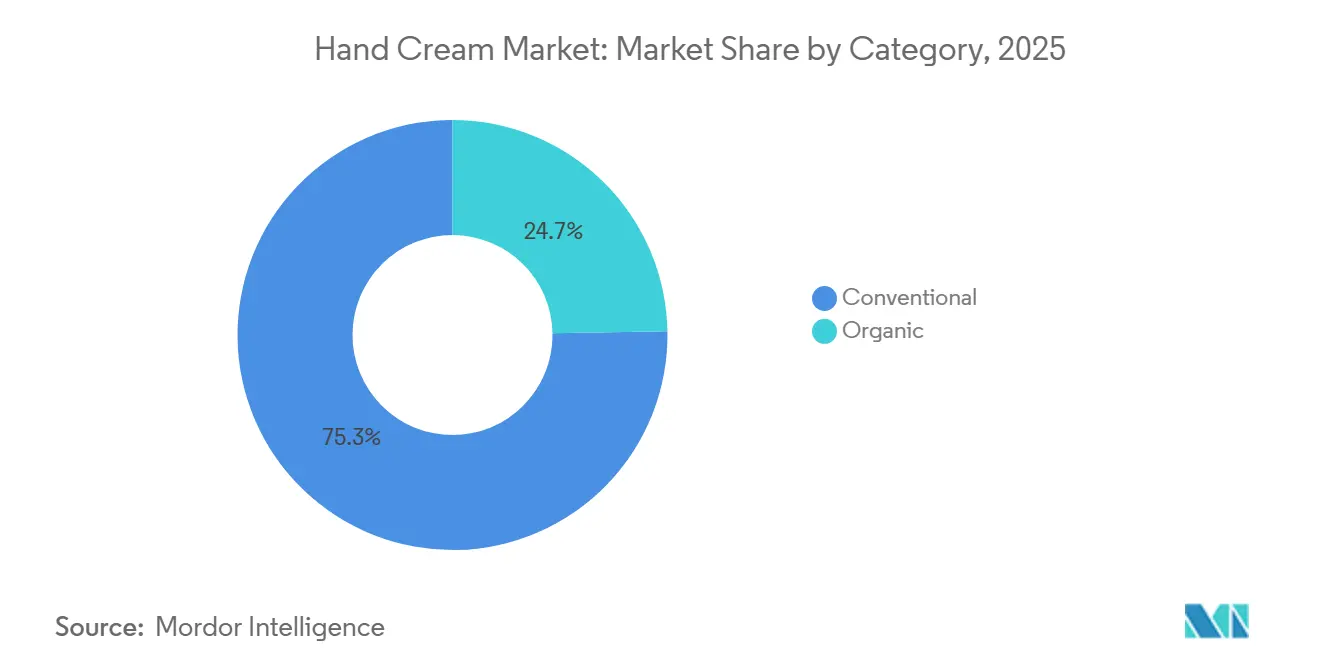
- By category, conventional formulations commanded 75.27% of the hand cream market share in 2025, while organic alternatives are projected to post a 7.09% CAGR through 2031.
- By end-user, women generated 65.45% of revenue in 2025 and men’s lines are advancing at a 6.81% CAGR during 2026-2031.
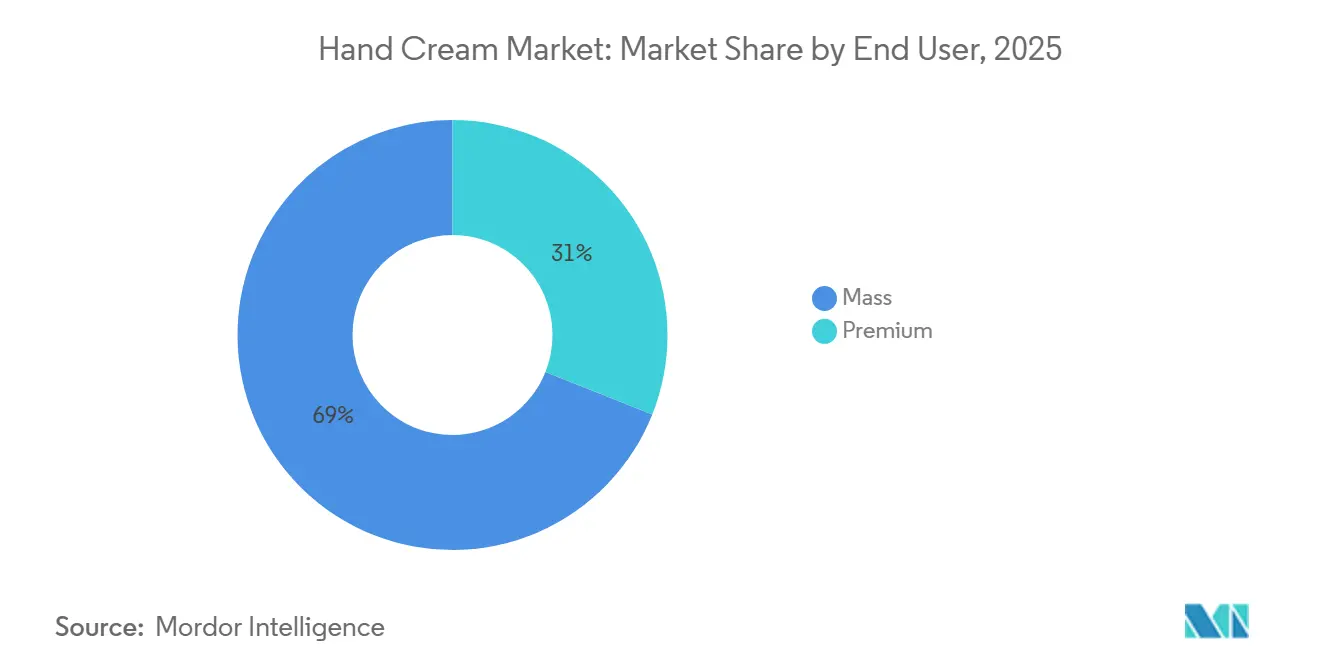
- By price point, mass products held 68.98% of the hand cream market size in 2025, whereas premium lines are on track to expand at an 8.56% CAGR to 2031.
- By distribution channel, health and beauty stores led with 37.65% share in 2025 and online retail is forecast to grow at a 9.45% CAGR to 2031.
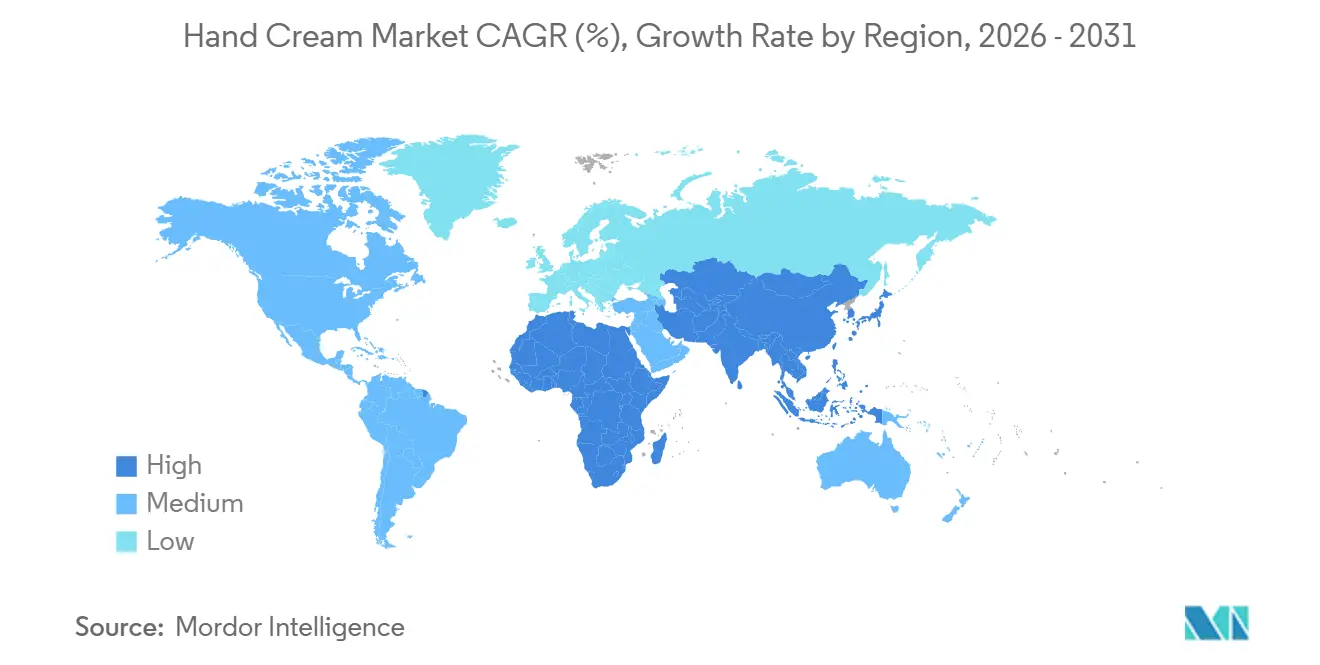
- By geography, North America accounted for 34.18% of sales in 2025 and Asia-Pacific is the fastest-growing region with an expected 8.04% CAGR over 2026-2031.
Note: Market size and forecast figures in this report are generated using Mordor Intelligence’s proprietary estimation framework, updated with the latest available data and insights as of January 2026.
Market Trends and Insights
Drivers Impact Analysis of Hand Cream Market*
| Driver | (~) % Impact on CAGR Forecast | Geographic Relevance | Impact Timeline |
|---|---|---|---|
| Changing consumer hygiene habits | +1.5% | Global, with strongest impact in North America and Europe | Short term (≤ 2 years) |
| Demand for anti-aging and specialized solutions | +1.3% | North America, Europe, Asia-Pacific (urban centers) | Medium term (2-4 years) |
| Demand for natural and organic ingredients | +1.1% | Europe, North America, China, India | Medium term (2-4 years) |
| Product innovation and advanced formulations | +1.0% | Global, led by South Korea, Japan, Europe, North America | Long term (≥ 4 years) |
| Influence of social media and beauty trends | +0.9% | Global, particularly Asia-Pacific, North America, Europe | Short term (≤ 2 years) |
| Shift toward multi-benefit and functional hand care | +0.8% | North America, Europe, Asia-Pacific | Medium term (2-4 years) |
| Source: Mordor Intelligence | |||
Changing consumer hygiene habits
Changing consumer hygiene habits are driving the growth of the global hand cream market. Increased awareness of cleanliness and skin health has led to more frequent handwashing and sanitizer use in daily routines. While essential for hygiene, these practices often cause skin dryness, irritation, and weakened skin barriers, increasing the demand for regular hand moisturization and repair products. As hygiene practices become more integrated into daily life, hand creams are increasingly perceived as essential complementary products rather than occasional purchases. This trend is particularly prominent in developed markets, where awareness and product usage are well-established. For example, according to IfD Allensbach, approximately 19.9 million people in Germany aged 14 and over reported using specialized hand care products in 2025, underscoring the growing adoption of dedicated hand care solutions [1]Source: IfD Allensbach, "Number of people that use special hand care products in Germany", ifd-allensbach.de.
Demand for anti-aging and specialized solutions
The demand for anti-aging and specialized hand care solutions is increasing as consumers seek products that address visible signs of aging, such as wrinkles, fine lines, age spots, and loss of skin elasticity, beyond basic moisturization. Hands, being one of the most exposed parts of the body, are particularly prone to premature aging, driving the adoption of targeted formulations containing ingredients like retinol, hyaluronic acid, peptides, and SPF protection. This trend is further supported by the aging global population, which shows a growing preference for preventive and corrective skincare solutions to maintain a youthful appearance. For example, according to the Population Reference Bureau, Monaco had the highest proportion of individuals aged 65 and above in 2024, at 36%, followed by Japan at 29%, underscoring the expanding elderly demographic that fuels the demand for anti-aging products [2]Source: Population Reference Bureau, "The countries with the largest percentage of the total population over 65 years", prb.org.
Demand for natural and organic ingredients
The demand for natural and organic ingredients is increasing as consumers prioritize clean, safe, and transparent formulations in personal care products. Awareness of the potential side effects of synthetic chemicals, such as parabens, sulfates, and artificial fragrances, has driven a shift toward plant-based, non-toxic, and sustainably sourced alternatives. Consumers are seeking hand creams enriched with ingredients like shea butter, aloe vera, coconut oil, and essential oils, which are perceived as gentler on the skin and more environmentally friendly. This trend aligns with the broader clean beauty movement, where product labels, certifications, and ingredient traceability significantly influence purchasing decisions. Additionally, natural and organic hand creams are associated with better skin compatibility, reduced irritation risk, and holistic wellness benefits, making them particularly attractive to consumers with sensitive skin.N
Product innovation and advanced formulations
Product innovation and advanced formulations are significantly influencing the global hand cream market, as brands focus on improving product efficacy, functionality, and consumer appeal through continuous research and development (R&D). Companies are creating advanced formulations that integrate scientifically proven active ingredients with natural components to provide multifunctional benefits, including deep hydration, skin repair, protection, and anti-aging effects in a single product. Developments in texture, long-lasting moisture retention, and skin barrier restoration are enhancing the overall user experience, promoting more frequent usage, and fostering consumer loyalty. For example, in January 2025, H.A. Brieger introduced a new product development strategy for the Dzintars brand, launching hand creams that feature 97% natural ingredients combined with scientifically supported formulations. These products are designed to meet comprehensive daily hand care needs, such as hydration, nourishment, and protection, reflecting the market's trend toward high-performance, multifunctional solutions.
Restraints Impact Analysis of Hand Cream Market*
| Restraint | (~) % Impact on CAGR Forecast | Geographic Relevance | Impact Timeline |
|---|---|---|---|
| Strong competition from natural remedies | -0.7% | Global, particularly in price-sensitive markets and rural areas | Short term (≤ 2 years) |
| Strict cosmetic/ingredient regulations | -0.6% | Europe, North America, China | Long term (≥ 4 years) |
| Consumer perception and behavioral barriers | -0.5% | Global, particularly North America and Europe | Medium term (2-4 years) |
| Supply-chain and formulation constraints | -0.4% | Global, particularly for organic and natural brands | Medium term (2-4 years) |
| Source: Mordor Intelligence | |||
Strong competition from natural remedies
Strong competition from natural remedies serves as a significant restraint on the global hand cream market, as many consumers continue to prefer traditional, home-based skincare solutions over commercial products. Commonly available options such as coconut oil, aloe vera, shea butter, and other plant-based ingredients are often viewed as safer, more affordable, and free from synthetic chemicals, making them appealing alternatives to packaged hand creams. This trend is particularly evident in regions where cultural practices and herbal skincare traditions are well-established, limiting the market penetration of branded products. Furthermore, increasing awareness of clean beauty and ingredient transparency strengthens the preference for DIY and minimally processed solutions, as consumers prioritize control over the products they use on their skin.
Strict cosmetic/ingredient regulations
Strict cosmetic and ingredient regulations serve as a significant restraint on the global hand cream market by imposing complex compliance requirements on manufacturers. These regulations cover aspects such as formulation, labeling, safety testing, and marketing claims. Regulatory frameworks in key markets mandate that all ingredients meet approved safety standards, restricting the use of certain chemicals, preservatives, fragrances, and active compounds. This often results in reformulation challenges, as brands must adapt their products to comply with changing regulations while ensuring product efficacy and stability. Furthermore, stringent rules regarding product claims necessitate extensive validation and documentation, increasing the time and resources required for product development and approval. Additionally, these regulations significantly impact the scalability of operations, as manufacturers must navigate varying regional requirements, leading to increased costs and delays in market entry.
*Our forecasts treat driver/restraint impacts as directional, not additive. The impact forecasts reflect baseline growth, mix effects, and variable interactions.
Hand Cream Market Segment Analysis
By Category:
Conventional Formulations Dominate, Organic AcceleratesConventional hand cream products accounted for a dominant 75.27% market share in 2025, continuing to drive the global market due to their alignment with mass consumer needs, formulation familiarity, and widespread accessibility. These products are integral to daily skincare routines, effectively addressing common concerns such as dryness, roughness, and skin barrier damage, issues that are prevalent across various climates and lifestyles. Their formulations rely on clinically proven, widely trusted ingredients that deliver quick and visible results, reinforcing consumer confidence and encouraging habitual usage. Additionally, this segment benefits from its broad applicability across diverse end users, including individuals with frequent handwashing routines, working professionals, and those exposed to harsh environmental conditions, ensuring consistent usage frequency.
Organic hand creams are emerging as a key growth driver in the global hand cream market, projected to expand at a CAGR of 7.09% from 2026 to 2031, as consumer preferences increasingly shift toward safer, transparent, and environmentally conscious skincare solutions. This segment is strongly influenced by rising awareness of the potential long-term effects of synthetic chemicals, prompting consumers to seek products formulated with plant-based, non-toxic, and sustainably sourced ingredients. For instance, according to the National Sanitation Foundation (NSF), in 2024, 74% of Americans considered organic ingredients important in personal care products, highlighting a significant behavioral shift toward natural formulations [3]Source: National Sanitation Foundation (NSF), "74% of Consumers Consider Organic Ingredients Important in Personal Care Products", nsf.org. Furthermore, organic hand creams are associated with enhanced skin compatibility and a reduced risk of irritation, making them particularly appealing to individuals with sensitive skin or those seeking gentle, dermatologically aligned solutions.


By End-User:
Women Lead, Men's Segment AcceleratesWomen accounted for 65.45% of global hand cream demand in 2025, maintaining their position as the dominant segment in the market. This dominance is attributed to the alignment of hand cream usage with evolving skincare behaviors, increased aesthetic awareness, and routine-based consumption patterns. Female consumers often engage in comprehensive skincare regimens, treating hand care as an integral part of overall skincare rather than an occasional or standalone need. This integration into daily routines fosters frequent and habitual product usage, sustaining demand over time. Additionally, the segment is driven by a strong tendency toward product experimentation and premiumization. Female consumers are more inclined to explore new formulations, textures, and ingredient claims, including natural and dermatologically tested variants.
Men’s hand cream is emerging as the fastest-growing demographic segment, with a projected CAGR of 6.81% from 2026 to 2031. This growth is fueled by a notable shift in male grooming behaviors, where skincare has evolved beyond basic hygiene to encompass a more comprehensive personal care routine. Brands are responding to this trend by introducing male-specific hand creams featuring non-greasy textures, subtle or neutral fragrances, and functional benefits such as repair, protection, and quick absorption, catering to male preferences. The segment also benefits from its relatively low penetration, offering significant growth potential as first-time users adopt the category and transition into regular usage.
By Price Point:
Mass Accessibility Versus Premium DifferentiationMass-market hand creams held a significant 68.98% market share in 2025, continuing to drive the global hand cream market due to their alignment with everyday usability, accessibility, and functional performance expectations. This segment is primarily fueled by its positioning as a practical, daily-use solution for addressing common concerns such as dryness, roughness, and skin barrier protection, making it relevant to a wide consumer base. These products are designed to provide reliable and immediate results, encouraging frequent application and consistent usage, particularly among consumers who prioritize functionality over specialized or premium features. Furthermore, mass-market hand creams serve as an entry point into the category, attracting first-time users with their straightforward positioning and dependable performance, which fosters strong repeat consumption patterns.
Premium hand creams are projected to grow at a CAGR of 8.56% from 2026 to 2031, making them the fastest-growing segment within the price-point category. This growth is driven by a shift toward value-added skincare and experiential consumption. Consumers are increasingly prioritizing product quality, sophisticated ingredients, and targeted benefits over basic functionality, positioning premium hand creams as an extension of advanced skincare rather than merely a moisturizing solution. Additionally, the rising influence of self-care culture and wellness-oriented lifestyles is elevating hand creams into indulgent, sensorial products, emphasizing fragrance, texture, and overall user experience. The segment also benefits from growing demand for clean-label, dermatologically tested, and sustainably positioned products, which are predominantly concentrated in the premium tier.
By Distribution Channel:
Online Retail Disrupts Traditional FootfallHealth and beauty stores held a dominant 37.65% share of hand cream distribution in 2025. This channel continues to drive market growth due to its strong influence on consumer decision-making, product discovery, and brand engagement. These stores are positioned as specialized retail environments focused on personal care and skincare, attracting consumers who seek guidance and are open to exploring products beyond basic purchases. The presence of knowledgeable staff and beauty advisors is instrumental in educating consumers about various formulations, ingredients, and targeted benefits, helping them choose products tailored to specific skin concerns such as dryness, sensitivity, or aging. Additionally, in-store sampling and testing experiences enhance consumer confidence by allowing direct interaction with product textures, absorption, and fragrance, key factors influencing purchase decisions in the hand cream category.
Online retail is emerging as the fastest-growing distribution channel, with a projected CAGR of 9.45% from 2026 to 2031. This channel is reshaping how consumers discover and purchase hand cream products, driven by the increasing demand for convenience, accessibility, and seamless shopping experiences. Online platforms allow consumers to browse, compare, and purchase products at any time, free from physical constraints. They also provide access to a broader range of brands, formulations, and niche offerings, including premium, organic, and dermatologist-recommended products that may not always be available in physical stores. Furthermore, detailed product descriptions, ingredient transparency, user reviews, and ratings empower consumers to make informed decisions, reducing uncertainty and encouraging product trials.
Geography Analysis
North America Hand Cream Market
North America accounted for 34.18% of the global hand cream market in 2025, maintaining its leading position due to a highly developed and organized retail ecosystem combined with strong consumer awareness of skincare and personal hygiene. The region, particularly the United States and Canada, is characterized by well-established distribution networks across supermarkets, pharmacies, specialty beauty stores, and online platforms, ensuring widespread product availability and accessibility. Consumers in this region demonstrate high engagement with skincare routines, with hand creams increasingly viewed as an essential part of daily personal care rather than a seasonal product. Additionally, the market benefits from continuous product innovation, strong brand presence, and early adoption of premium and specialized formulations, including anti-aging, therapeutic, and dermatologist-recommended products, which further sustains demand and reinforces regional dominance.
APAC Hand Cream Market
Asia-Pacific is the fastest-growing region, projected to expand at a CAGR of 8.04% from 2026 to 2031, driven by a combination of rising skincare awareness, evolving consumer lifestyles, and increasing influence of beauty trends. The region is witnessing a rapid shift toward preventive and routine-based skincare practices, where hand care is becoming an integral component. Markets such as China, India, Japan, and South Korea are experiencing strong demand for innovative, multifunctional, and skin-enhancing products, including brightening and anti-aging hand creams. Additionally, the growing penetration of digital platforms and social media influence is accelerating product awareness and adoption, particularly among younger consumers. The region’s large and diverse population base, combined with increasing exposure to global beauty standards and product innovations, continues to create significant growth momentum, positioning Asia-Pacific as a key future growth engine.
EMEA and South America Hand Cream Market
Europe’s hand cream market is driven by stringent regulatory frameworks and high product quality standards, which play a crucial role in building consumer trust and confidence. Regulations governing ingredient safety, labeling, and product claims ensure that consumers have access to safe, reliable, and high-quality formulations, encouraging consistent usage and brand loyalty. South America and the Middle East and Africa represent emerging growth opportunities, supported by improving awareness of personal care, gradual expansion of retail infrastructure, and increasing exposure to global beauty trends. These regions are witnessing rising adoption of hand creams as part of daily grooming routines, particularly in urban areas, creating untapped potential for market expansion and long-term growth.

Competitive Landscape
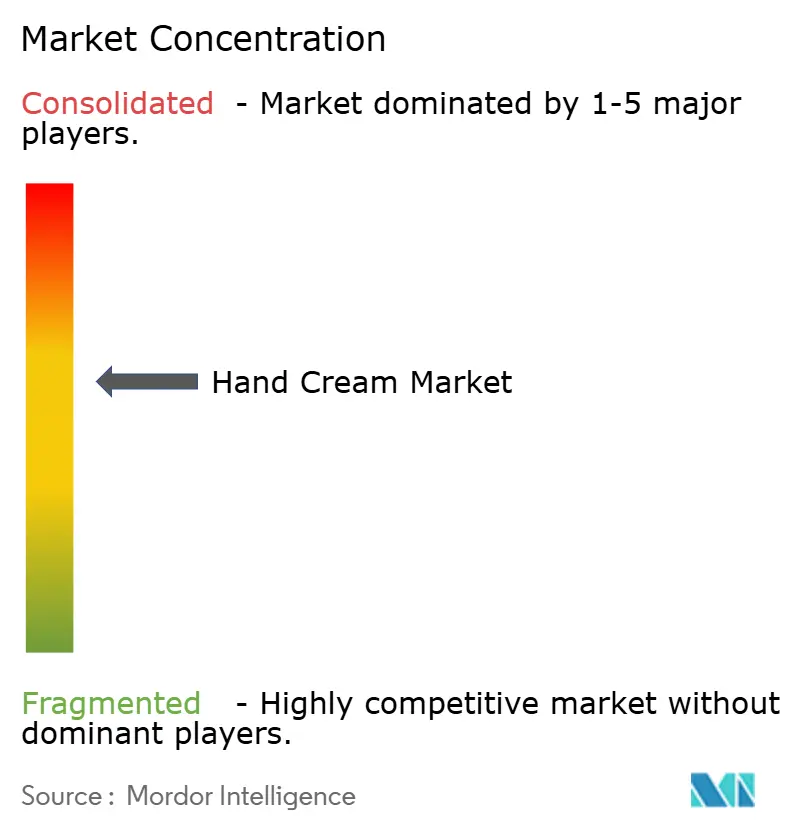
The global hand cream market is moderately fragmented, with significant competition among multinational companies such as L'Oréal S.A., Unilever plc, Beiersdorf AG, The Procter & Gamble Company, and Kao Corporation. These companies maintain a strong market presence through extensive global distribution networks, well-established brands, and diversified product portfolios, enabling them to serve both mass-market and premium segments. Their competitive advantage is driven by consistent product innovation, brand reliability, and large-scale marketing efforts, which help retain consumer loyalty and expand their reach in both developed and emerging markets.
Technological advancements have become a critical factor in competition, with companies increasingly investing in advanced formulation science, dermatological research, and ingredient innovation to improve product efficacy and performance. Innovations such as fast-absorbing textures, long-lasting hydration systems, microbiome-friendly formulations, and multifunctional products are helping brands differentiate themselves in a competitive market. Additionally, digital tools like AI-driven skin analysis, personalized recommendations, and data-driven product development are enabling companies to better understand consumer preferences and deliver targeted solutions, further intensifying market competition.
Meanwhile, emerging and niche players are transforming the competitive landscape by adopting agile business models and digital-first strategies. These companies are leveraging social commerce, influencer partnerships, and direct-to-consumer (DTC) channels to quickly build brand awareness and connect with younger consumers. Strategies such as subscription models, limited-edition product launches, and a strong focus on clean beauty, sustainability, and transparency are helping them effectively distinguish themselves from traditional market leaders.
Hand Cream Industry Leaders
-
L'Oréal S.A.
-
Unilever plc
-
Beiersdorf AG
-
The Procter & Gamble Company
-
Kao Corporation
- *Disclaimer: Major Players sorted in no particular order
Hand Cream Market Companies Covered in this Report
- L'Oreal S.A.
- Unilever plc
- Beiersdorf AG
- Kenvue Inc. (Neutrogena)
- The Procter & Gamble Company (Olay)
- Kao Corporation
- Shiseido Company, Ltd.
- The Estee Lauder Companies Inc.
- L'Occitane Group S.A.
- Natura &Co (The Body Shop)
- Clarins Group
- Weleda AG
- Burt's Bees (The Clorox Company)
- Mary Kay Inc.
- LG Household & Health Care Ltd.
- Bath & Body Works, Inc.
- Shanghai Jahwa United Co., Ltd.
- Eveline Cosmetics
- Innisfree Corporation
- Jurlique International

Recent Industry Developments in Hand Cream Market
- March 2026: Zion Health Inc. launched Intense Hand Repair Cream with MuruMuru Butter, a 2 oz intensive moisturizing treatment introduced in updated packaging. The product is designed to restore softness, comfort, and resilience to overworked hands.
- March 2026: Havyn introduced its bestselling hand creams at Anthropologie stores across the United States. Recognized for its allergen-conscious approach, Havyn develops scented products tailored for individuals who have previously avoided fragrances due to irritation or concerns about ingredients.
- November 2025: Sowvital and Scentmate by dsm-firmenich have partnered with consultant Isabelle van Ingen to introduce The Gardener's Hand Cream collection, inspired by the essence of orchard fruits and gardens.
- March 2025: Dionis Goat Milk Skincare, known for its best-selling hand creams, has launched Busy Hands. Formulated specifically for hardworking hands requiring lasting relief, Busy Hands is a deeply hydrating, non-greasy, and fast-absorbing hand cream designed to provide long-lasting moisture for extremely dry, cracked skin.


Global Hand Cream Market Report Scope
Hand cream is a targeted cosmetic moisturizer specifically formulated to nourish, protect, and repair the skin on the hands. The hand cream market is segmented by category, end-user, price point, distribution channel, and geography. Based on category, the market is segmented into conventional and organic. Based on end-user, the market is segmented into women, men, and kids. Based on price point, the market is segmented into mass and premium. Based on distribution channel, the market is segmented into supermarkets/hypermarkets, health and beauty stores, online retail stores, and other distribution channels. Based on geography, the market is segmented into North America, Europe, Asia-Pacific, South America, and the Middle East and Africa. The report provides market size and forecasts in both value (USD) and volume (tons) for all the mentioned segments. The Market Forecasts are Provided in Terms of Value (USD).
| Conventional |
| Organic |
| Women |
| Men |
| Kids |
| Mass |
| Premium |
| Supermarkets and Hypermarkets |
| Health and Beauty Stores |
| Online Retail Stores |
| Other Distribution Channels |
| North America | United States |
| Canada | |
| Mexico | |
| Rest of North America | |
| Europe | Germany |
| United Kingdom | |
| Italy | |
| France | |
| Spain | |
| Netherlands | |
| Poland | |
| Belgium | |
| Sweden | |
| Rest of Europe | |
| Asia-Pacific | China |
| India | |
| Japan | |
| Australia | |
| Indonesia | |
| South Korea | |
| Thailand | |
| Singapore | |
| Rest of Asia-Pacific | |
| South America | Brazil |
| Argentina | |
| Colombia | |
| Chile | |
| Peru | |
| Rest of South America | |
| Middle East and Africa | South Africa |
| Saudi Arabia | |
| United Arab Emirates | |
| Nigeria | |
| Egypt | |
| Morocco | |
| Turkey | |
| Rest of Middle East and Africa |
| By Category | Conventional | |
| Organic | ||
| By End-User | Women | |
| Men | ||
| Kids | ||
| By Price Point | Mass | |
| Premium | ||
| By Distribution Channel | Supermarkets and Hypermarkets | |
| Health and Beauty Stores | ||
| Online Retail Stores | ||
| Other Distribution Channels | ||
| By Geography | North America | United States |
| Canada | ||
| Mexico | ||
| Rest of North America | ||
| Europe | Germany | |
| United Kingdom | ||
| Italy | ||
| France | ||
| Spain | ||
| Netherlands | ||
| Poland | ||
| Belgium | ||
| Sweden | ||
| Rest of Europe | ||
| Asia-Pacific | China | |
| India | ||
| Japan | ||
| Australia | ||
| Indonesia | ||
| South Korea | ||
| Thailand | ||
| Singapore | ||
| Rest of Asia-Pacific | ||
| South America | Brazil | |
| Argentina | ||
| Colombia | ||
| Chile | ||
| Peru | ||
| Rest of South America | ||
| Middle East and Africa | South Africa | |
| Saudi Arabia | ||
| United Arab Emirates | ||
| Nigeria | ||
| Egypt | ||
| Morocco | ||
| Turkey | ||
| Rest of Middle East and Africa | ||


Key Questions Answered in the Report
How fast is the hand cream market projected to grow between 2026 and 2031?
It is forecast to post a 6.59% CAGR, lifting value from USD 0.94 billion in 2026 to USD 1.29 billion by 2031.
Which category is gaining ground fastest?
Organic and certified-natural creams are the quickest risers, with a projected 7.09% CAGR through 2031.
Why is Asia-Pacific the most attractive region right now?
Rapid growth in China’s functional skincare and South Korea’s export boom push regional CAGR to 8.04%, the highest worldwide.
What is driving premium hand cream launches?
Clinical proof points, biotech peptides such as cyclized hexapeptide-9, and sustainable luxury packaging all back price premiums.
Page last updated on:


 Your data is secure and never sold or shared.


