
Rose Extract Market Size and Share
Market Overview
| Study Period | 2021 - 2031 |
|---|---|
| Market Size (2026) | USD 461.46 Million |
| Market Size (2031) | USD 640.60 Million |
| Growth Rate (2026 - 2031) | 6.78 % |
| Fastest Growing Market | Asia Pacific |
| Largest Market | Asia Pacific |
| Market Concentration | Medium |
Major Players *Disclaimer: Major Players sorted in no particular order Image © Mordor Intelligence. Reuse requires attribution under CC BY 4.0. | |
Rose Extract Market Analysis by Mordor Intelligence
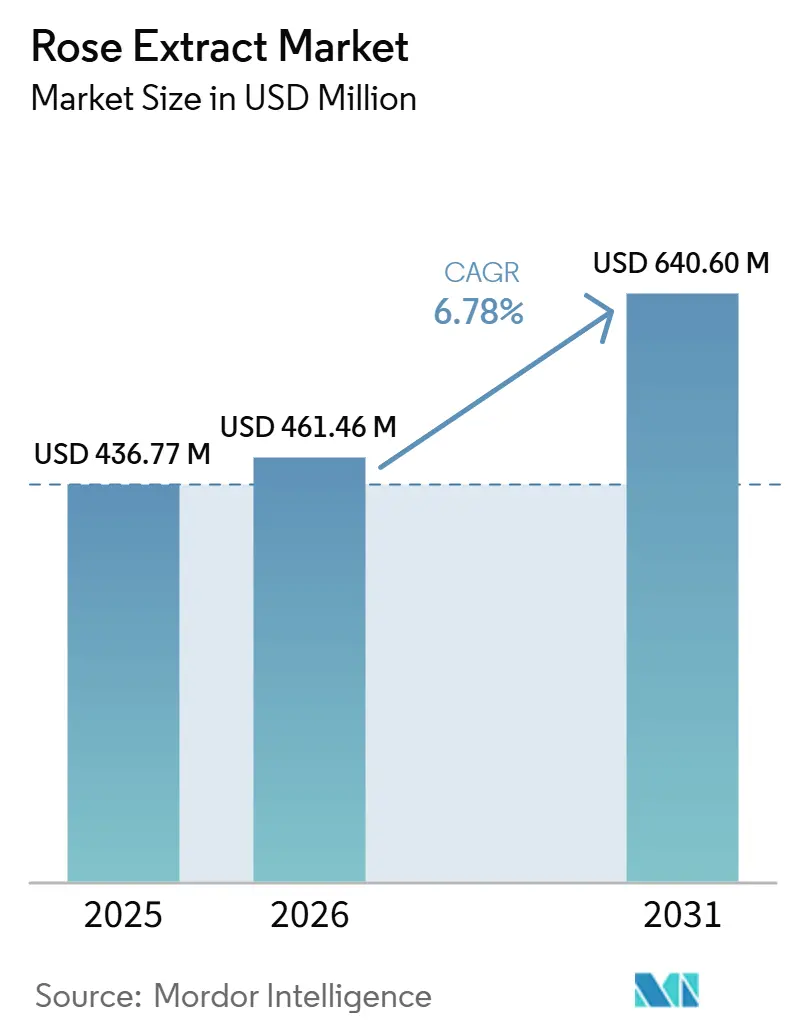
The global rose extract market was valued at USD 436.77 million in 2025 and is projected to grow from USD 461.46 million in 2026 to USD 640.60 million by 2031, registering a CAGR of 6.78% during the forecast period. The market is experiencing steady growth driven by the increasing use of rose extract as a multifunctional botanical ingredient across multiple industries. Advancements in extraction technologies are improving product quality, purity, and consistency, enabling manufacturers to expand commercial applications and improve production efficiency. The market is also benefiting from growing botanical-based product innovation and a shift toward naturally derived ingredients in industrial formulations. Improvements in supply chain integration, traceability systems, and certified raw material procurement are further strengthening the availability of premium rose extracts and supporting long-term market growth.
Key Report Takeaways
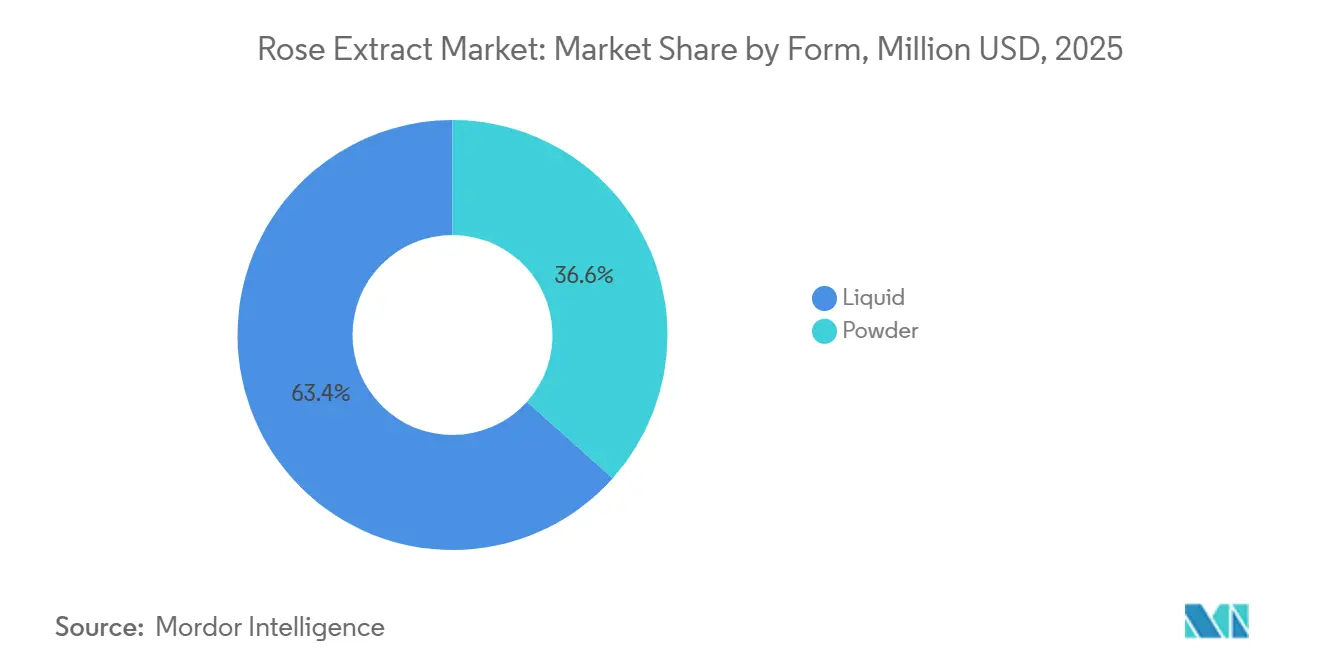
- By form, liquid led with 63.39% share in 2025, while powder is forecast to expand at 7.35% CAGR through 2031.
- By category, conventional held 71.23% share in 2025, while organic recorded the highest projected CAGR at 8.21% through 2031.
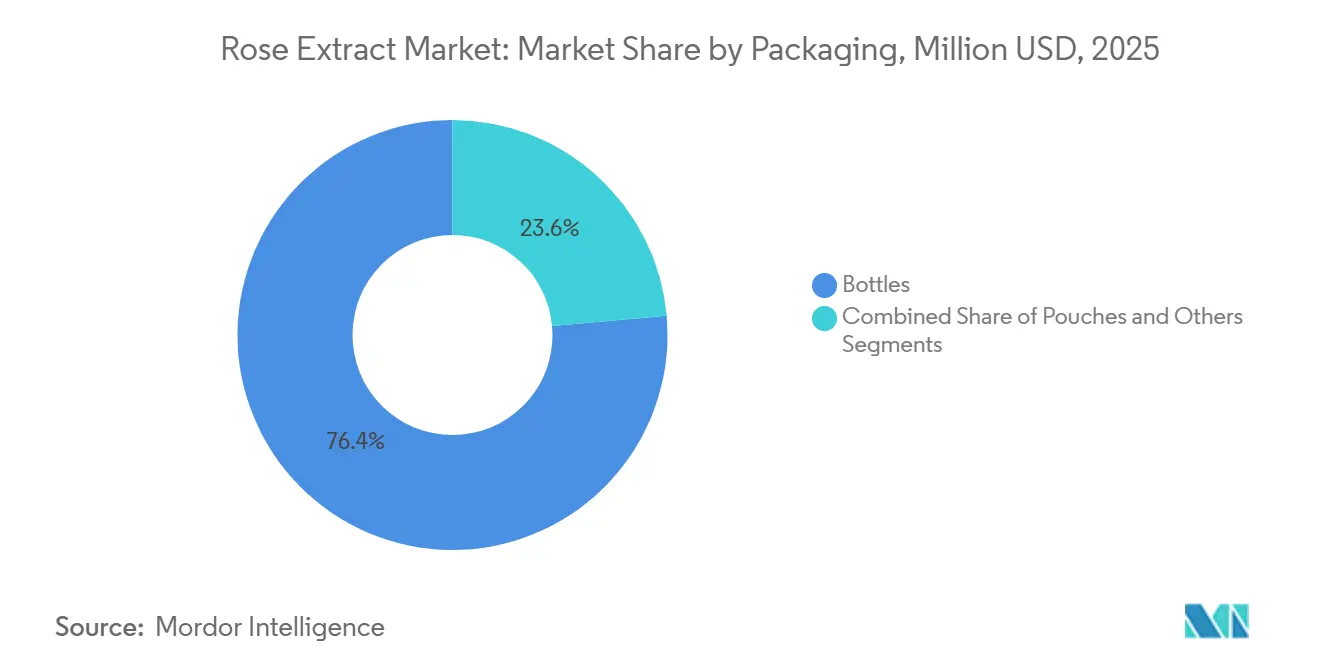
- By packaging, bottles accounted for 76.43% share in 2025, while pouches are advancing at 7.55% CAGR through 2031.
- By end-user, industrial users captured 81.22% share in 2025, while retail is projected to grow fastest at 8.12% CAGR through 2031.
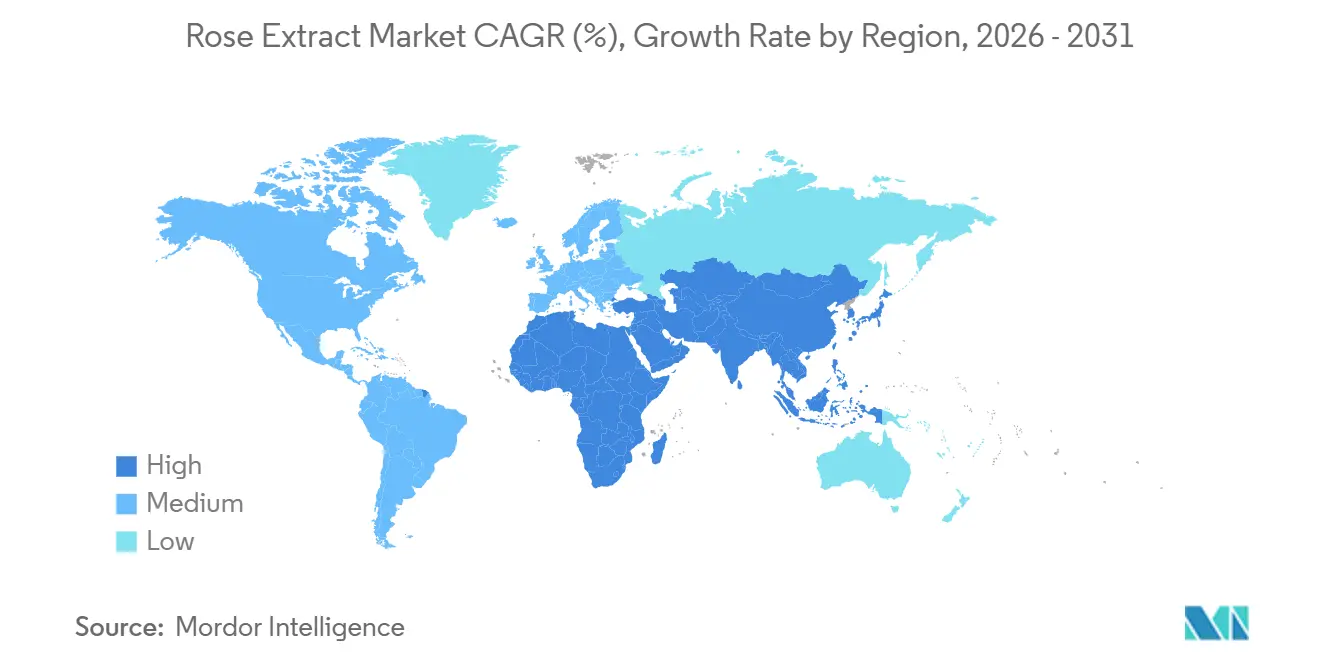
- By geography, Asia-Pacific held 41.19% share in 2025 and is also the fastest-growing region at 7.91% CAGR through 2031.
Note: Market size and forecast figures in this report are generated using Mordor Intelligence’s proprietary estimation framework, updated with the latest available data and insights as of January 2026.
Market Trends and Insights
Drivers Impact Analysis of Rose Extract Market*
| Driver | (~) % Impact on CAGR Forecast | Geographic Relevance | Impact Timeline |
|---|---|---|---|
| Rising demand for natural and botanical ingredients | +1.8% | Global | Medium term (2-4 years) |
| Increasing consumer preference for clean-label products | +1.2% | North America and Europe, spill-over to Asia-Pacific | Medium term (2-4 years) |
| Utilization of rose extract in aromatherapy and wellness products | +0.8% | Asia-Pacific core, spill-over to North America and Middle East and Africa | Short term (≤ 2 years) |
| Advancements in rose extraction technologies | +0.6% | Global, Research and Development intensive in Europe and China | Long term (≥ 4 years) |
| Awareness of the antioxidant and skin-rejuvenating properties | +0.9% | North America, Europe, Asia-Pacific | Medium term (2-4 years) |
| Shift toward traceable and sustainably sourced floral extracts | +0.5% | Europe, North America | Long term (≥ 4 years) |
| Source: Mordor Intelligence | |||
Rising demand for natural and botanical ingredients
The growing demand for natural and botanical ingredients is driving the rose extract market, as consumers increasingly seek products formulated with plant-derived ingredients perceived as safe, sustainable, and minimally processed. Rose extract has gained significant traction due to its natural antioxidant, soothing, moisturizing, and aromatic properties, making it a preferred ingredient across a wide range of formulations. This trend is further supported by increasing emphasis on ingredient transparency, certified organic sourcing, and environmentally responsible production practices, encouraging greater adoption of floral extracts in new product development. For instance, according to NSF's 2024 consumer survey, 74% of consumers considered organic ingredients important in personal care products, highlighting the strong preference for natural formulations and reinforcing the growing demand for botanical ingredients such as rose extract across the global market [1].
Increasing consumer preference for clean-label products
Growing consumer preference for clean-label products is a significant driver of the global rose extract market, as manufacturers increasingly replace synthetic additives, artificial fragrances, colors, and preservatives with naturally derived botanical ingredients. Consumers are placing greater emphasis on ingredient transparency, recognizable labels, and products formulated with simple, plant-based components, driving the use of rose extract in product development. Rose extract aligns well with clean-label trends due to its natural origin, multifunctional properties, and ability to provide aroma, flavor, and bioactive benefits without synthetic ingredients. This shift is prompting manufacturers to reformulate existing products and introduce new offerings featuring botanical extracts that meet evolving consumer expectations for authenticity, sustainability, and minimal processing.
Utilization of rose extract in aromatherapy and wellness products
The growing adoption of aromatherapy and wellness therapies is driving demand for rose extract, owing to its distinctive floral aroma and relaxing sensory properties. Rose extract is increasingly incorporated into massage oils, diffuser blends, spa treatments, bath formulations, and meditation products to enhance relaxation and support emotional well-being. The expansion of wellness centers, spas, and therapeutic treatment facilities, along with the increasing popularity of home aromatherapy devices, has broadened the commercial use of rose-derived ingredients. Consumer preference for natural, plant-based ingredients in wellness routines has further reinforced the position of rose extract as a preferred choice in aromatherapy applications. Manufacturers are also developing specialized wellness formulations using rose extract to cater to consumers seeking premium sensory experiences and stress-relief solutions, reflecting the broader shift toward holistic health and self-care practices.
Advancements in rose extraction technologies
Advancements in rose extraction technologies are driving the global rose extract market by improving extraction efficiency, product purity, and the retention of aromatic compounds and bioactive constituents. Modern techniques such as supercritical CO₂ extraction, advanced steam distillation, and solvent-free extraction enable manufacturers to achieve higher yields while preserving the natural fragrance, color, and functional properties of rose extracts. These technologies also enhance batch-to-batch consistency, reduce processing losses, and improve overall production efficiency, making high-quality rose extracts more suitable for premium industrial applications. As manufacturers continue to invest in improved extraction processes to enhance product quality and operational performance, the adoption of rose extract is expected to increase across diverse end-use industries.
Restraints Impact Analysis of Rose Extract Market*
| Restraint | (~) % Impact on CAGR Forecast | Geographic Relevance | Impact Timeline |
|---|---|---|---|
| Limited availability of high-quality rose raw materials | -0.6% | Global; most acute in Europe and premium segments sourcing from Bulgaria & Turkey | Short term (≤ 2 years) |
| High production and extraction complexity | -0.5% | Global | Medium term (2-4 years) |
| Variability in raw material quality | -0.3% | Asia-Pacific, Middle-East and Africa (emerging producer regions) | Medium term (2-4 years) |
| Short shelf life of natural formulations | -0.3% | Global, particularly retail and export-oriented segments | Long term (≥ 4 years) |
| Source: Mordor Intelligence | |||
Limited availability of high-quality rose raw materials
The limited availability of high-quality rose raw materials is a major restraint for the global rose extract market. Production depends heavily on favorable climatic conditions, seasonal harvesting, and the cultivation of premium rose varieties. Fluctuations in flower yield directly affect the availability, quality, and consistency of raw materials required for extraction, leading to supply constraints and production challenges for manufacturers. Lower harvest volumes can reduce extraction yields and disrupt procurement planning, particularly for producers relying on premium-grade rose petals. For instance, Bulgaria's rose harvest declined to approximately 6,000 tonnes in 2025 from around 10,000 tonnes in 2024, highlighting the vulnerability of rose production to adverse growing conditions and the resulting impact on the global supply of high-quality rose raw materials.
High production and extraction complexity
High production and extraction complexity is a key restraint for the global rose extract market. Producing high-quality rose extract requires large quantities of fresh rose petals, precise harvesting at the optimal flowering stage, and carefully controlled extraction processes to preserve volatile aromatic compounds. The extraction process is highly labor-intensive and demands specialized equipment and technical expertise to maintain consistent quality and maximize yield. Variations in raw material quality and the delicate nature of rose petals can further reduce extraction efficiency and increase processing time, limiting large-scale production. These operational complexities make it difficult for manufacturers to maintain consistent output, product quality, and supply reliability across the market.
*Our forecasts treat driver/restraint impacts as directional, not additive. The impact forecasts reflect baseline growth, mix effects, and variable interactions.
Rose Extract Market Segment Analysis
By Form:
Liquid Dominance Challenged by Powder's Shelf-Stability AppealLiquid rose extract accounted for a 63.39% share of the global rose extract market in 2025, driven by its versatility, ease of handling, and compatibility with modern manufacturing processes. Its high solubility and uniform consistency allow seamless incorporation into a wide range of formulations without requiring additional processing, making it the preferred form for large-scale production. Liquid extracts also offer better dispersion, precise dosing, and improved blending characteristics, enabling manufacturers to achieve consistent product quality across production batches. The form is well suited for both continuous and batch processing systems, contributing to improved operational efficiency and reduced formulation complexity.
Powder rose extract is projected to be the fastest-growing form, advancing at a CAGR of 7.35% through 2031. Growth is driven by its stability, longer shelf life, and ease of transportation and storage compared to liquid formats. Its low moisture content reduces the risk of microbial growth and degradation, making it suitable for applications requiring extended product durability. Powdered extracts are also easier to measure, package, and incorporate into dry formulations, supporting greater manufacturing efficiency and formulation flexibility. The format enables precise ingredient standardization, helping manufacturers maintain consistent product quality across production batches.
By Category:
Conventional Volume Meets Organic Premium MomentumConventional rose extract held a 71.23% share of the global rose extract market in 2025, primarily due to its widespread availability, established cultivation practices, and consistent large-scale production. Conventional farming methods enable higher crop yields and a more reliable supply of rose petals, allowing manufacturers to meet growing demand for rose-derived ingredients throughout the year. The well-developed infrastructure for cultivation, harvesting, and processing associated with conventional production supports efficient raw material procurement and manufacturing operations. In addition, conventional rose extract offers greater consistency in quality, color, aroma, and chemical composition, making it suitable for standardized industrial formulations.
Organic rose extract is projected to grow at a CAGR of 8.21% through 2031, driven by increasing preference for botanicals cultivated without synthetic pesticides, herbicides, or chemical fertilizers. Manufacturers are increasingly incorporating organically sourced extracts to meet stringent certification requirements and align with clean-label and sustainability initiatives. Growing emphasis on environmental stewardship, biodiversity conservation, and responsible agricultural practices is encouraging greater investment in organic rose cultivation and certified supply chains. Improvements in organic farming techniques, traceability systems, and certification processes are also enhancing the availability and credibility of organic rose extracts in the global market.
By Packaging:
Bottle Leadership Meets Sustainable Pouch TransitionBottles accounted for 76.43% of the global rose extract market in 2025, owing to their ability to preserve product quality, aroma, and functional properties during storage and transportation. They provide effective protection against moisture, air, light, and external contaminants, helping maintain the stability and integrity of rose extract over extended periods. Bottles also support accurate dispensing, minimize product wastage, and offer convenience in handling and repeated use, making them a preferred packaging format for both industrial and retail applications. Their compatibility with a wide range of closure systems, including droppers, pumps, and tamper-evident caps, further enhances product safety and ease of use.
Pouches are projected to grow at a CAGR of 7.55% through 2031, driven by their lightweight design, space-efficient structure, and lower packaging material requirements. They reduce transportation and storage costs while improving logistics efficiency through higher packing density and lower shipping weight. Flexible pouches also require less material than rigid packaging, supporting manufacturers' efforts to optimize packaging efficiency and reduce overall material usage. Ongoing innovations in high-barrier films, resealable closures, and multilayer packaging technologies have improved product protection, shelf life, and consumer convenience.

By End-user:
Industrial Scale Anchors Revenue, Retail Leads GrowthIndustrial users accounted for 81.22% of the global rose extract market in 2025, driven by large-scale procurement of rose extract as a functional botanical ingredient for commercial manufacturing. Industrial buyers require consistent product quality, standardized composition, and reliable year-round supply to support continuous production operations. Among industrial users, cosmetics and personal care represented the largest sub-segment, owing to the extensive use of rose extract in premium skincare, haircare, body care, and fragrance formulations. For instance, according to the Office for National Statistics, consumer spending on personal care products in the United Kingdom reached approximately GBP 38.29 billion in 2025, reflecting strong demand for beauty and personal care products that support the consumption of botanical ingredients such as rose extract [2].
The retail segment is projected to expand at a CAGR of 8.12% through 2031, driven by growing consumer interest in botanical wellness products and increasing demand for ready-to-use natural extracts. Greater product availability through e-commerce platforms, specialty wellness stores, pharmacies, and health-focused retailers has improved consumer access to rose extract products. The rising popularity of home-based skincare routines, aromatherapy practices, and do-it-yourself beauty and wellness applications is further encouraging direct consumer purchases. Manufacturers are also introducing convenient retail pack sizes, user-friendly packaging, and value-added formulations to meet evolving consumer preferences.
Geography Analysis
APAC Rose Extract Market
Asia-Pacific accounted for 41.19% of the global rose extract market in 2025 and is projected to register the highest CAGR of 7.91% through 2031. The region's position is driven by abundant rose cultivation and a well-established botanical extraction industry. Increasing consumer preference for plant-based formulations, coupled with growing manufacturing capacity for botanical extracts, continues to strengthen regional demand. The rapid expansion of the aromatherapy and herbal wellness industry, along with increasing product innovation using floral ingredients, is further supporting market growth. For instance, according to the Directorate General of Commercial Intelligence and Statistics (DGCI&S), India exported essential oils valued at approximately USD 323 million in 2024, highlighting the country's strong position in the global botanical extract and essential oil trade, which supports the growth of the rose extract market [3].
Europe and North America Rose Extract Market
Europe and North America together form the second-largest geographic cluster in the global rose extract market. Growth across these regions is supported by the widespread adoption of premium botanical ingredients, strong demand for clean-label formulations, and increasing preference for naturally derived fragrances and wellness products. Mature manufacturing capabilities, advanced extraction technologies, and stringent quality standards continue to drive the utilization of high-quality rose extracts across multiple industries. Ongoing product innovation, sustainable sourcing initiatives, and rising consumer awareness of plant-based ingredients are encouraging manufacturers to expand the use of rose extract in value-added formulations, supporting steady market growth across both regions.
South America and MEA Rose Extract Market
South America and the Middle East and Africa represent smaller but strategically important markets at different stages of development. Market growth is being supported by the gradual expansion of botanical ingredient processing, increasing cultivation of aromatic plants, and rising adoption of natural extracts across consumer products. Growing investments in value-added agricultural products, improvements in extraction capabilities, and increasing participation in international trade are enhancing regional market potential. Expanding awareness of herbal wellness, natural fragrances, and botanical-based formulations is creating new opportunities for rose extract manufacturers. Although these regions currently account for a comparatively smaller market share, continued improvements in production infrastructure, export capabilities, and product diversification are expected to support sustained market expansion through the forecast period.
Competitive Landscape
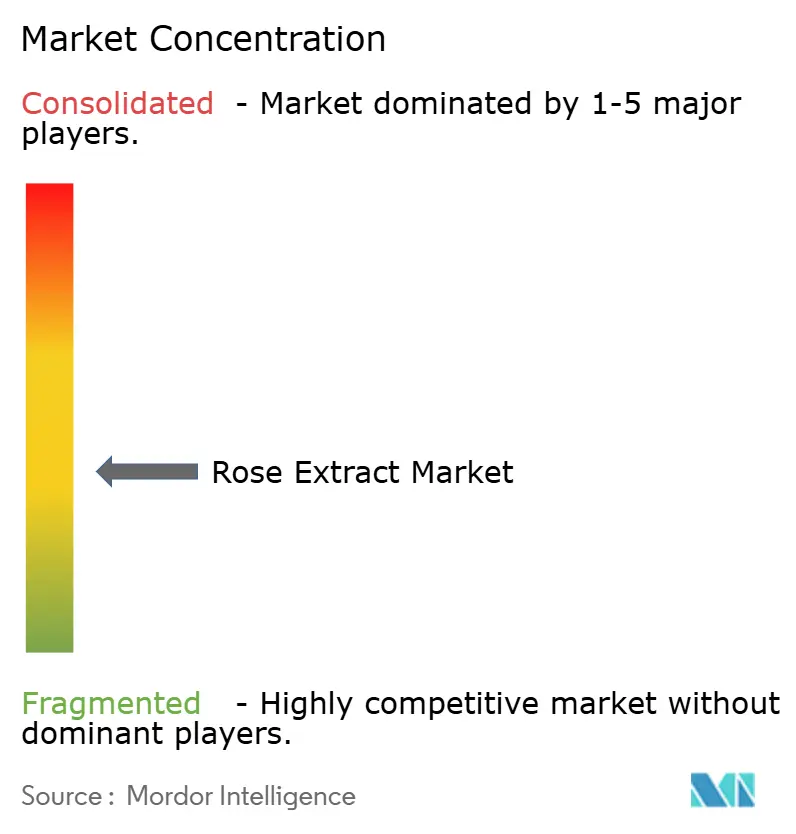
The global rose extract market is moderately fragmented, with no single manufacturer accounting for a dominant share of global production or procurement. Competition is primarily based on extract quality, botanical sourcing capabilities, product purity, consistency, and application-specific formulations rather than price alone. Manufacturers are focusing on expanding their portfolios across liquid, powder, essential oil, and specialty rose extracts to serve diverse industrial requirements. The market comprises established botanical ingredient suppliers alongside specialized extract producers that cater to cosmetics, food and beverage, fragrance, pharmaceutical, and nutraceutical manufacturers. Key participants include Bramble Berry, Nature's Flavors, International Flavors & Fragrances Inc., Mountain Rose Herbs, and Enio Bonchev.
Manufacturers are increasingly strengthening their supply chains through long-term sourcing partnerships with rose cultivators, contract farming arrangements, and greater vertical integration to ensure a stable supply of premium-quality raw materials. Investments in traceability systems, quality assurance programs, and sustainable sourcing practices are helping companies improve supply chain transparency while reducing raw material variability. Technological advancements in extraction and processing, including supercritical CO₂ extraction, improved steam distillation, and advanced purification techniques, are enabling producers to enhance extract purity, improve bioactive compound retention, and achieve greater batch-to-batch consistency. These developments are allowing manufacturers to offer differentiated, high-value botanical ingredients for premium applications.
The market is also seeing a growing presence of organic and certified botanical producers, driven by increasing demand for sustainably sourced and clean-label ingredients. Companies are expanding certified organic rose cultivation, improving environmentally responsible farming practices, and obtaining certifications that enhance product credibility in international markets. In addition, manufacturers are investing in product innovation, customized extract concentrations, and value-added botanical solutions to strengthen their competitive positioning. As demand for premium natural ingredients continues to rise, competition is expected to increasingly focus on sustainable sourcing, technological innovation, supply chain resilience, and the ability to deliver standardized, high-quality rose extracts across global markets.
Rose Extract Industry Leaders
-
Nature’s Flavors
-
Bramble Berry
-
International Flavors & Fragrances Inc.
-
Mountain Rose Herbs
-
Enio Bonchev
- *Disclaimer: Major Players sorted in no particular order
Rose Extract Market Companies Covered in this Report
- Nature's Flavors
- Bramble Berry
- International Flavors and Fragrances Inc.
- Alba Grups
- Mountain Rose Herbs
- Enio Bonchev
- Dabur India Limited
- doTERRA
- Alteya Organics
- Eden Botanicals
- Venus Herbal and Healthcare
- Florihana
- VLCC Health Care Limited
- Berje Inc.
- Shanghai Novanat Co, Ltd
- Aromatics International
- Matha Exports International
- Buan Italia
- Kirpal Exports Overseas
- Medikonda Nutrients
Recent Industry Developments in Rose Extract Market
- October 2025: dōTERRA became a member of the Union for Ethical BioTrade. This membership reflects a committed work plan to advance responsible sourcing across prioritized botanical supply chains.
- September 2025: IFF inaugurated its expanded LMR Naturals site in Grasse following a EUR 10 million investment. The expansion increases the facility's footprint by 75% to 4,687 square meters and includes a new pilot hall designed to accelerate the development of natural ingredients.
Global Rose Extract Market Report Scope
Rose extract is a concentrated essence derived from rose petals, typically using steam distillation or solvent extraction. The rose extract market is segmented by form, category, packaging, end-user, and geography. Based on form, the market is segmented into liquid and powder. Based on category, the market is segmented into organic and conventional. Based on packaging, the market is segmented into bottles, pouches, and others. Based on end-user, the market is segmented into industrial and retail. The industrial segment is further categorized into cosmetics and personal care, food and beverages, aromatherapy and fragrance, pharmaceuticals and nutraceuticals, and others. Based on geography, the market is segmented into North America, Europe, Asia-Pacific, South America, and Middle East and Africa. The report provides market size and forecasts in both value (USD) and volume (tons) for all the mentioned segments.
Segmentation Overview
| Liquid |
| Powder |
| Organic |
| Conventional |
| Bottles |
| Pouches |
| Others |
| Industrial | Cosmetics and Personal Care |
| Food and Beverages | |
| Aromatherapy and Fragrance | |
| Pharmaceuticals and Nutraceuticals | |
| Others | |
| Retail |
| North America | United States |
| Canada | |
| Mexico | |
| Rest of North America | |
| Europe | United Kingdom |
| Germany | |
| France | |
| Italy | |
| Spain | |
| Netherlands | |
| Poland | |
| Belgium | |
| Sweden | |
| Rest of Europe | |
| Asia-Pacific | China |
| Japan | |
| India | |
| Australia | |
| Indonesia | |
| South Korea | |
| Thailand | |
| Singapore | |
| Rest of Asia-Pacific | |
| South America | Brazil |
| Argentina | |
| Colombia | |
| Chile | |
| Peru | |
| Rest of South America | |
| Middle East and Africa | South Africa |
| Saudi Arabia | |
| United Arab Emirates | |
| Nigeria | |
| Egypt | |
| Morocco | |
| Turkey | |
| Rest of Middle East and Africa |
| By Form | Liquid | |
| Powder | ||
| By Category | Organic | |
| Conventional | ||
| By Packaging | Bottles | |
| Pouches | ||
| Others | ||
| By End-user | Industrial | Cosmetics and Personal Care |
| Food and Beverages | ||
| Aromatherapy and Fragrance | ||
| Pharmaceuticals and Nutraceuticals | ||
| Others | ||
| Retail | ||
| By Geography | North America | United States |
| Canada | ||
| Mexico | ||
| Rest of North America | ||
| Europe | United Kingdom | |
| Germany | ||
| France | ||
| Italy | ||
| Spain | ||
| Netherlands | ||
| Poland | ||
| Belgium | ||
| Sweden | ||
| Rest of Europe | ||
| Asia-Pacific | China | |
| Japan | ||
| India | ||
| Australia | ||
| Indonesia | ||
| South Korea | ||
| Thailand | ||
| Singapore | ||
| Rest of Asia-Pacific | ||
| South America | Brazil | |
| Argentina | ||
| Colombia | ||
| Chile | ||
| Peru | ||
| Rest of South America | ||
| Middle East and Africa | South Africa | |
| Saudi Arabia | ||
| United Arab Emirates | ||
| Nigeria | ||
| Egypt | ||
| Morocco | ||
| Turkey | ||
| Rest of Middle East and Africa | ||
Key Questions Answered in the Report
What is the projected value of the rose extract market by 2031?
The rose extract market is projected to reach USD 640.60 million by 2031 from USD 461.46 million in 2026, at a 6.78% CAGR.
Which region leads global demand for rose extract?
Asia-Pacific led with 41.19% share in 2025 and is also the fastest-growing region at 7.91% CAGR through 2031.
Why is liquid rose extract still the leading form?
Liquid held 63.39% share in 2025 because it fits directly into serums, toners, mists, floral waters, and other water-based formulations.
Which category is growing faster, organic or conventional rose extract?
Conventional remained larger with 71.23% share in 2025, but organic is growing faster at 8.21% CAGR through 2031 because certification matters more in premium channels.