
Tallow Market Size and Share
Market Overview
| Study Period | 2021 - 2031 |
|---|---|
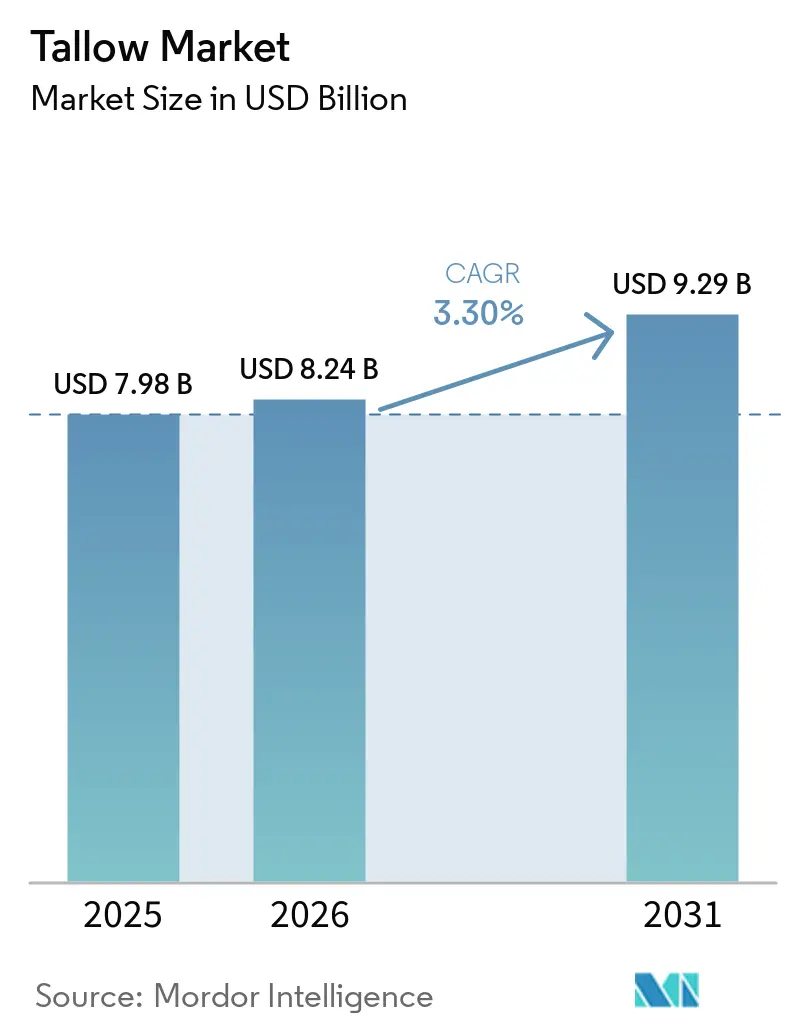
| Market Size (2026) | USD 8.24 Billion |
| Market Size (2031) | USD 9.29 Billion |
| Growth Rate (2026 - 2031) | 3.30 % |
| Fastest Growing Market | Middle East and Africa |
| Largest Market | Asia Pacific |
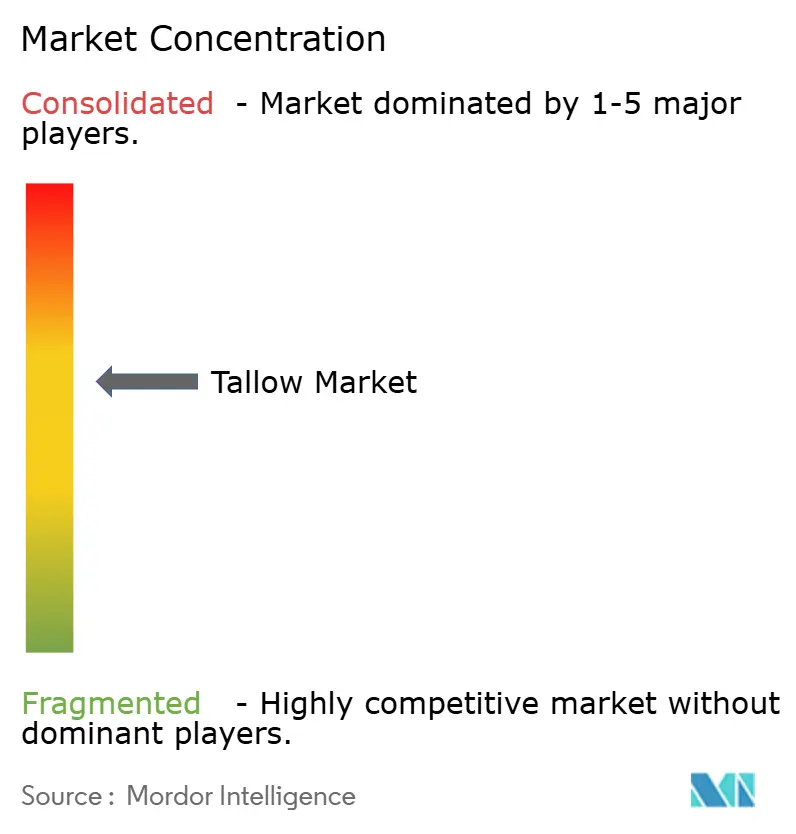
| Market Concentration | Medium |
Major Players *Disclaimer: Major Players sorted in no particular order Image © Mordor Intelligence. Reuse requires attribution under CC BY 4.0. | |
Tallow Market Analysis by Mordor Intelligence
The tallow market size was valued at USD 7.98 billion in 2025 and estimated to grow from USD 8.24 billion in 2026 to reach USD 9.69 billion by 2031, at a CAGR of 3.3% during the forecast period (2026-2031). Demand in the tallow market stays supported by food processing, renewable fuel production, animal nutrition, and personal care formulation, which gives the category a broader demand base than many specialty fats. Supply also remains durable because large livestock systems continue to generate steady rendered-fat output, and major exporters such as Australia, Brazil, and Canada remain active in global trade flows [1]Source: USDA Economic Research Service, “Meat Animals Production, Disposition, and Income 2025 Summary,” USDA, esmis.nal.usda.gov. This dependable supply profile keeps the tallow market less exposed to sudden raw material swings than more narrowly sourced lipid categories. A separate force shaping the tallow market is the pricing split created by the US 45Z Clean Fuel Production Credit, which excluded imported feedstocks from eligibility starting in 2026 and pushed trade flows toward new regional destinations. The same shift is lifting demand for certified supply in Europe and increasing domestic biofuel use in Brazil, which supports price floors and creates more room for processors that can secure traceable feedstock.
Key Report Takeaways
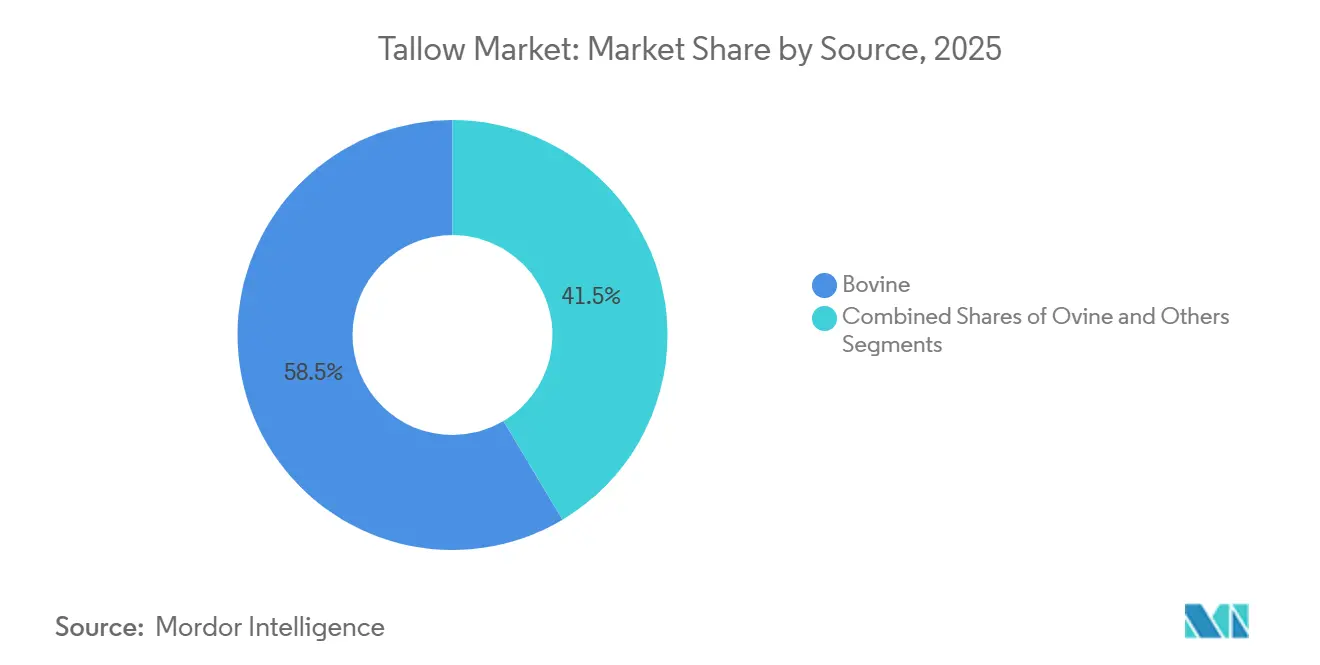
- By source, bovine tallow held 58.54% share in 2025, while ovine tallow is projected to expand at a 4.89% CAGR through 2031.
- By grade, Edible Grade held 62.15% share in 2025, while Industrial Grade is projected to grow at a 4.78% CAGR through 2031.
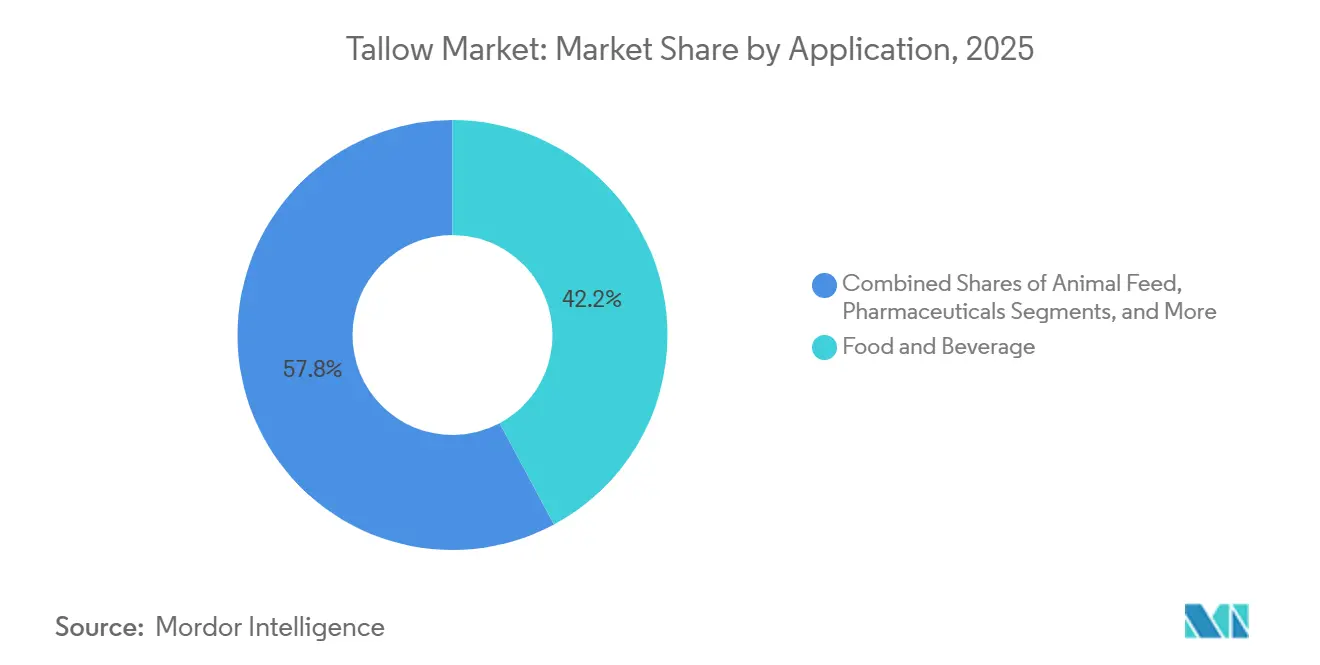
- By application, Food and Beverages held 42.16% share in 2025, while Personal Care and Cosmetics is projected to grow at a 4.65% CAGR through 2031.
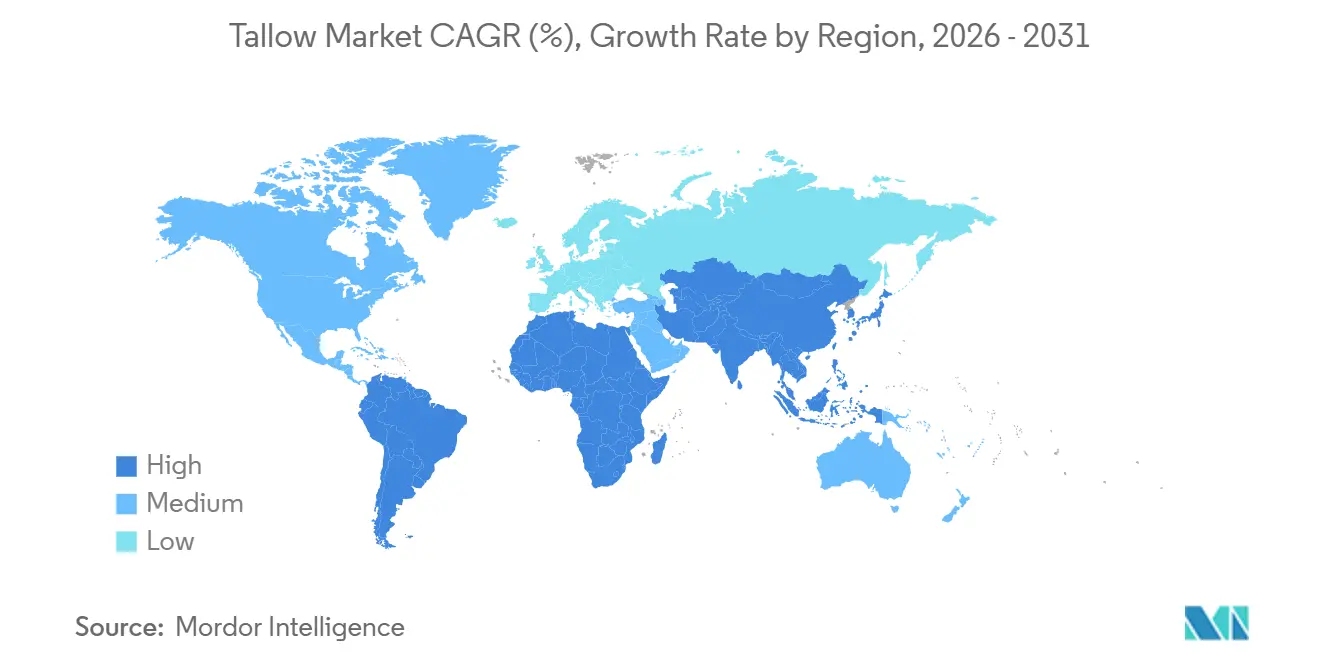
- By geography, Asia-Pacific held 34.70% of the tallow market share in 2025, while the Middle East and Africa is projected to grow at a 4.98% CAGR through 2031.
Note: Market size and forecast figures in this report are generated using Mordor Intelligence’s proprietary estimation framework, updated with the latest available data and insights as of January 2026.
Market Trends and Insights
Drivers Impact Analysis of Tallow Market*
| Driver | (~) % Impact on CAGR Forecast | Geographic Relevance | Impact Timeline |
|---|---|---|---|
| Stable And Longer Shelf-Life Tallow Products | +0.4% | Global, led by North America and Europe | Medium term (2-4 years) |
| Use Of Tallow In Pet Food And Livestock Feed | +0.6% | Global, Asia-Pacific core, North America | Short term (≤ 2 years) |
| Expansion Of Meat Processing Facilities And Steady Supply | +0.5% | South America, Australia, North America | Long term (≥ 4 years) |
| Animal Fats As Alternatives To Synthetic Additives | +0.7% | North America and Europe | Short term (≤ 2 years) |
| Demand For Animal By-Products For Waste Reduction | +0.3% | Global | Long term (≥ 4 years) |
| Preference For Sustainable And Biodegradable Ingredients | +0.4% | North America and Europe | Medium term (2-4 years) |
| Source: Mordor Intelligence | |||
Growing Awareness of Animal Fats As Alternatives To Synthetic Additives
Demand for tallow-based formulations increased significantly, driven by shifting consumer preferences away from seed oils and synthetic additives toward natural animal fats. This transition positioned tallow from a traditional formulation ingredient to a differentiated product feature in branded food offerings. The growing commercialization of tallow was reflected in product innovation across the food sector. Utz Brands introduced a beef tallow variant of its Boulder Canyon Classic Sea Salt chips, highlighting strong consumer interest across natural and organic product segments. This indicated rising mainstream acceptance of tallow beyond niche markets. Additionally, Whole Foods Market identified beef tallow as a leading food trend for 2026, further strengthening retail validation and market visibility. This growing industry acceptance is accelerating adoption across the tallow market, as categories that previously faced longer consumer acceptance cycles are integrating tallow more rapidly. As a result, food manufacturers are increasingly entering into long-term supply agreements to secure stable access to edible-grade tallow, supporting tighter supply conditions and stronger price stability across the market.
Rising Use of Tallow In Pet Food And Livestock Feed
Tallow continues to strengthen its position in pet food and livestock feed applications due to its high energy density, strong palatability, and cost-effective nutritional profile. These characteristics make it a preferred fat source for feed formulators seeking consistent performance and improved feed efficiency. The large-scale availability of rendered fats further supports market growth. The U.S. produced approximately 1.76 million metric tons of inedible tallow in 2024, highlighting the substantial supply base available for feed applications [2]Source: National Renderers Association, “2025 Market Report,” NARA, nara.org. In Europe, rising competition for animal fats is reshaping market dynamics. Approximately 25% of available animal fats in the EU are allocated to animal nutrition, creating direct competition between feed and biofuel applications for the same raw material base. This increasing overlap in demand is contributing to tighter supply conditions across key markets. Additionally, premium pet food manufacturers are increasingly demanding grass-fed and certified-origin tallow to meet higher quality and traceability standards. This shift is encouraging renderers to strengthen supply chain transparency and product differentiation, resulting in the emergence of premium pricing segments within the feed market and increasing the overall value contribution of tallow in animal nutrition applications.
Rising Preference For Sustainable And Biodegradable Ingredients
Tallow benefits from its position as a by-product of existing meat processing operations rather than a separately cultivated feedstock or synthetic ingredient, making it well aligned with circular economy and waste valorization objectives. This strengthens its appeal across industries seeking sustainable and resource-efficient raw materials. Regulatory developments have further supported market growth, particularly in Europe. The introduction of EU Regulation 2025/1377 expanded approved processing methods for biodiesel production using rendered animal fats and updated certification requirements for processed fats entering renewable fuel value chains [3]Source: European Commission, “Commission Regulation (EU) 2025/1377 of 15 July 2025,” EUR-Lex, eur-lex.europa.eu. This regulatory advancement reduced compliance uncertainty for biofuel producers and strengthened policy support for tallow as a renewable feedstock in a key demand region. These favorable supply, regulatory, and economic factors are driving stronger long-term procurement agreements between tallow suppliers, biofuel refiners, and personal care ingredient manufacturers. As a result, the tallow market is benefiting from a broader demand base, improved market stability, and reduced dependence on any single end-use sector.
Advancements In Stable And Longer Shelf-Life Tallow-Based Products
Historically, limited shelf life and oxidative stability constrained the use of tallow in ambient and extended-shelf-life food applications. However, ongoing advancements in refining, fractionation, and enzymatic processing are improving lipid quality and enabling more customized fatty acid profiles, thereby expanding tallow’s suitability across higher-value applications. Technological investments in rendering and processing infrastructure are accelerating this shift. JBS Pork Australia received approval for a continuous dry-rendering facility in Melbourne designed to process 200 tons of porcine by-products per day, with production focused on higher-quality tallow, oils, and protein meals through improved process control. Similarly, JBS Biopower announced a R$140 million investment across three biodiesel plants in Brazil to implement enzymatic esterification technology and enhance feedstock flexibility, including increased tallow utilization. These advancements are gradually shifting tallow from a bulk commodity product toward a more specialized, application-specific ingredient with improved consistency and performance characteristics. As a result, market participants are better positioned to supply high-quality tallow across diverse end-use industries, including food, personal care, lubricants, and biofuels, from the same rendering value chain.
Restraints Impact Analysis of Tallow Market*
| Restraint | (~) % Impact on CAGR Forecast | Geographic Relevance | Impact Timeline |
|---|---|---|---|
| Health Concerns Related To Saturated Fat Content | -0.2% | Global, strongest in North America & Europe | Short term (≤ 2 years) |
| Strict Regulations On Animal Fat Derivatives | -0.2% | Europe & North America primarily | Medium term (2-4 years) |
| Growing Demand For Plant-Based And Cruelty-Free Alternatives | -0.1% | North America & Europe, expanding globally | Long term (≥ 4 years) |
| Disease Outbreaks Disrupting Tallow Supply | -0.2% | Global, episodic regional impact | Short term (≤ 2 years) |
| Source: Mordor Intelligence | |||
Health Concerns Related To Saturated Fat Content
Health concerns continue to limit broader adoption of tallow in human nutrition due to its high saturated fatty acid content, with beef tallow typically containing 40–50% saturated fats. This restricts its use in heart-health and clinical nutrition applications, where consumer and regulatory scrutiny remains high. Concerns also extend to personal care applications. A 2026 study on beef tallow-based skincare products found limited clinical evidence supporting dermatological benefits, despite growing promotional activity in digital channels. This has slowed adoption among mainstream personal care brands, which require stronger scientific validation before large-scale formulation commitments [4]Source: A. Maarouf et al., “Beef Tallow-Based Skincare Claims in Social Media: A Cross-Sectional Analysis,” PubMed Central, pmc.ncbi.nlm.nih.gov. As a result, market growth is increasingly concentrated in biofuels, industrial lubricants, and surfactants, where saturated fat content presents fewer limitations and can offer functional advantages. While health-related concerns are less restrictive in pet and sports nutrition, they are expected to remain a key restraint for human food applications throughout the forecast period.
Growing Demand For Plant-Based And Cruelty-Free Alternatives
The growing adoption of plant-based foods, vegan cosmetics, and cruelty-free formulations continues to restrict tallow’s addressable market, particularly in premium consumer segments. As an animal-derived ingredient, tallow remains excluded from vegan and cruelty-free product categories, limiting its penetration in personal care and packaged food applications. Competition from alternative lipid feedstocks also remains a key challenge. In renewable fuels, used cooking oil (UCO) competes directly with tallow for HEFA refinery capacity, with UCO often benefiting from lower carbon-intensity scores in several regulatory frameworks. This advantage influences procurement strategies and credit economics for biofuel producers. As refinery capacity expands, competition among lipid feedstocks is expected to intensify, maintaining pricing pressure and limiting tallow’s growth in premium sustainability-driven segments. While demand remains strong in commodity food, feed, and industrial applications, ethical positioning and feedstock competition will continue to act as key market restraints.
*Our forecasts treat driver/restraint impacts as directional, not additive. The impact forecasts reflect baseline growth, mix effects, and variable interactions.
Tallow Market Segment Analysis
By Source:
Bovine Dominance Masks A Strategic Shift Toward OvineBovine tallow accounted for 58.54% of the global market share in 2025, supported by the large-scale availability of feedstock from established red meat processing industries. The United States maintained a strong cattle and calf base in 2025, supporting stable production of both edible and inedible tallow through its extensive rendering infrastructure. Meanwhile, the “Others” segment, including porcine fat and mixed-source rendered fats, is witnessing growing investment as processors expand feedstock diversification and production capabilities.
Ovine tallow is projected to register the fastest growth, expanding at a 4.89% CAGR through 2031. Growth is primarily driven by Australia and New Zealand, where renderers are increasingly focused on specialty fat production for pharmaceutical and cosmetic applications in Europe. Ovine tallow’s distinct fatty acid composition and relatively higher CLA content enhance its appeal in skin-care, therapeutic, and premium personal care formulations. Growing commercial relevance and improved production tracking further indicate rising demand for ovine-derived tallow in specialized end-use markets.



By Grade:
Edible Grade Leads on Value While Industrial Grade Scales on VolumeEdible Grade accounted for 62.15% of the market share in 2025, highlighting the strong value contribution of high-purity, food-grade tallow. Rising production further indicates strengthening demand, particularly in food-grade segments where buyers increasingly prefer grass-fed and traceable-origin tallow. Beyond food applications, edible-grade tallow is also gaining traction in personal care, where high-purity formulations are becoming a preferred base for premium skincare products.
Industrial Grade is projected to register the fastest growth, expanding at a 4.78% CAGR through 2031. Demand is particularly strong in renewable fuels, where industrial-grade tallow is increasingly used as a key feedstock for renewable diesel and sustainable aviation fuel production. This growing industrial demand is expected to drive volume expansion and strengthen the role of industrial-grade tallow in the overall market.
By Application:
Personal Care Segment Drives Premium GrowthFood & Beverages accounted for 42.16% of the market share in 2025, making it the largest application segment in the tallow market. Growth is driven by tallow’s strong performance in high-heat frying, shortening, and clean-label food formulations. Animal Feed remained the second-largest segment, supported by steady demand for energy-dense fats in livestock and aquaculture nutrition. Pharmaceuticals maintained a smaller but important share due to tallow’s use in topical formulations and excipient applications. Meanwhile, the Others segment, including industrial lubricants, candles, and surfactants, continued to benefit from tallow’s cost competitiveness compared to petrochemical alternatives.
Personal Care & Cosmetics is projected to grow at the fastest rate, registering a 4.65% CAGR through 2031. Growth is driven by rising demand for naturally derived emollients and lipid-based ingredients that support skin barrier function. Vantage Specialty Chemicals has expanded its personal care ingredient portfolio in response to growing formulator demand for natural and functional ingredients. As demand rises, personal care manufacturers are increasingly competing with food processors for certified-origin and premium-grade tallow. This growing overlap is expected to tighten edible-grade supply and enhance pricing pressure in premium segments of the tallow market.
Geography Analysis
APAC and Oceania Tallow Market
Asia-Pacific accounted for 34.70% of the global market share in 2025, making it the largest regional market for tallow. Growth is driven by strong demand from major economies such as China, India, Japan, and Malaysia. China remains a key consumer due to large-scale oleochemical demand, while Malaysia serves as an important refining and trade hub for regional distribution. On the supply side, Australia continues to play a critical role as the leading global exporter, supported by strong rendering capacity and export volumes. Rising demand from livestock feed, pet nutrition, and food processing across Asia-Pacific continues to strengthen the region’s market position.
North America and Europe Tallow Market
North America and Europe remain key technology, production, and policy-driven markets. North America benefits from strong rendering infrastructure and rising demand for renewable diesel and sustainable fuels, which continues to support large-scale tallow consumption. In Europe, increasing biofuel demand and tightening sustainability regulations are driving greater interest in traceable animal-fat feedstocks as alternatives to palm-based inputs. Major markets such as France, Germany, and the Netherlands remain important centers for refining, oleochemical processing, and downstream derivative production.
MEA Tallow Market
Middle East & Africa is projected to register the fastest growth, expanding at a 4.98% CAGR through 2031. Growth is supported by rising investments in biofuels, meat processing, and oleochemical production. Expanding industrial capacity in countries such as Saudi Arabia and South Africa is increasing regional demand for tallow across surfactants, chemicals, and industrial applications. Additionally, growing processing investments in the Gulf region are expected to strengthen regional supply and support long-term market expansion.

Competitive Landscape
The tallow market remains moderately concentrated, with integrated renderers maintaining a strong competitive advantage through control over feedstock sourcing, rendering, and distribution. This vertically integrated model provides better raw material security, quality consistency, and supply reliability compared to traders and standalone processors.
Darling Ingredients remains a leading global player, leveraging portfolio optimization to strengthen its position in rendering and fats. Similarly, JBS benefits from a captive rendering model, supporting large-scale tallow production for food, industrial, and biofuel applications.
Growth opportunities remain strongest in certified specialty tallow and high-value personal care and pharmaceutical applications. Demand for grass-fed, origin-verified, and traceable tallow is increasing as buyers prioritize transparency and premium-grade inputs. At the same time, advanced processing technologies such as enzymatic esterification, continuous dry rendering, and enhanced traceability systems are becoming key competitive differentiators.
Although large renderers maintain significant control over raw material access, regional processors and downstream oleochemical players continue to compete through product specification, certification, and service quality. As a result, competition in the tallow market is shifting from volume-driven strategies toward feedstock security, traceability, and multi-application supply capabilities. Companies with strong integration and advanced processing capabilities are expected to maintain the strongest competitive positions as demand across renewable fuels, food, and personal care continues to expand.
Tallow Industry Leaders
Darling Ingredients Inc.
Cargill Incorporated
Tyson Foods Inc.
JBS S.A.
Australian Renderers Group
- *Disclaimer: Major Players sorted in no particular order
Tallow Market Companies Covered in this Report
- Darling Ingredients Inc.
- Cargill Incorporated
- Tyson Foods Inc.
- JBS S.A.
- Australian Renderers Group
- West Coast Reduction Ltd.
- Bakers Biodiesel LLC
- Colyer Fehr Tallow Pty Ltd
- Tallow Products Pty Ltd
- Caila & Pares SA
- FASA Group
- Saria Bio-Industries
- CD Formulation.
- West Coast Reduction Ltd
- Vantage Specialty Chemicals, Inc
- Australian Tallow Producers
- Caila i Pares SA
- Baker Commodities Inc.

Recent Industry Developments in Tallow Market
- March 2026: JBS announced a USD 1.4 billion capacity expansion program for 2026 across multiple facilities, including beef processing expansion in Cactus, Texas, a new processing unit in Paraguay, and an integrated poultry and beef operation in Oman. These strategic investments are expected to gradually increase tallow co-product output, strengthening supply availability across North America, South America, and the Middle East & Africa.
- February 2025: Coast Packing Co. began construction on a new edible fats and oils refinery and packaging facility in Amarillo, Texas, expected to open in summer 2026 and create up to 60 jobs while enhancing animal fat shortening production capabilities
- August 2024: JBS announced initiatives to utilize pork lard and beef tallow as alternative fuels for airplanes, expanding into sustainable aviation fuel applications and diversifying end-use markets


Global Tallow Market Report Scope
Tallow is a rendered animal fat primarily derived from cattle, sheep, and other livestock, widely used across food processing, animal nutrition, personal care, pharmaceuticals, and industrial applications due to its functional, nutritional, and cost-effective properties. The tallow market report is segmented by source, grade, application, and geography. By source, the market is categorized into bovine, ovine, and others. Based on grade, the market is divided into edible grade and industrial grade. By application, the market is segmented into food & beverages, animal feed, personal care & cosmetics, pharmaceuticals, and others. Geographically, the market is analyzed across North America, Europe, Asia-Pacific, South America, and the Middle East & Africa. The market size and forecasts are provided in terms of value (USD) for all segments.
| Bovine |
| Ovine |
| Others |
| Edible Grade |
| Technical/Industrial Grade |
| Food and Beverage |
| Animal Feed |
| Pharmaceuticals |
| Personal Care and Cosmetics |
| Others |
| North America | United States |
| Canada | |
| Mexico | |
| Rest of North America | |
| Europe | Germany |
| United Kingdom | |
| Italy | |
| France | |
| Spain | |
| Netherlands | |
| Rest of Europe | |
| Asia-Pacific | China |
| India | |
| Japan | |
| Australia | |
| Rest of Asia-Pacific | |
| South America | Brazil |
| Argentina | |
| Rest of South America | |
| Middle East and Africa | South Africa |
| Saudi Arabia | |
| United Arab Emirates | |
| Rest of Middle East and Africa |
| By Source | Bovine | |
| Ovine | ||
| Others | ||
| By Grade | Edible Grade | |
| Technical/Industrial Grade | ||
| By Application | Food and Beverage | |
| Animal Feed | ||
| Pharmaceuticals | ||
| Personal Care and Cosmetics | ||
| Others | ||
| By Geography | North America | United States |
| Canada | ||
| Mexico | ||
| Rest of North America | ||
| Europe | Germany | |
| United Kingdom | ||
| Italy | ||
| France | ||
| Spain | ||
| Netherlands | ||
| Rest of Europe | ||
| Asia-Pacific | China | |
| India | ||
| Japan | ||
| Australia | ||
| Rest of Asia-Pacific | ||
| South America | Brazil | |
| Argentina | ||
| Rest of South America | ||
| Middle East and Africa | South Africa | |
| Saudi Arabia | ||
| United Arab Emirates | ||
| Rest of Middle East and Africa | ||


Key Questions Answered in the Report
What is the current outlook for the tallow market?
The tallow market was valued at USD 7.98 billion in 2025, stands at USD 8.24 billion in 2026, and is projected to reach USD 9.69 billion by 2031 at a 3.3% CAGR.
Which source segment leads tallow demand today?
Bovine tallow led with 58.54% share in 2025 because large red meat processing systems give it the broadest raw material base.
Which grade is growing fastest through 2031?
Industrial Grade is the fastest-growing grade at a 4.78% CAGR, supported by renewable fuel demand and very high inedible tallow output.
Which application is expanding the fastest?
Personal Care and Cosmetics is projected to grow at a 4.65% CAGR as formulators increase use of naturally derived emollients and specialty tallow-based ingredients.
Which region leads global consumption?
Asia-Pacific held the largest regional share at 34.70% in 2025 because of China's oleochemical demand, Malaysia's trade hub role, and Australia's export strength.
Page last updated on:


 Your data is secure and never sold or shared.


