
Tuberose Extract Market Size and Share
Market Overview
| Study Period | 2021 - 2031 |
|---|---|
| Market Size (2026) | USD 189.52 Million |
| Market Size (2031) | USD 246.99 Million |
| Growth Rate (2026 - 2031) | 5.44 % |
| Fastest Growing Market | Asia Pacific |
| Largest Market | Europe |
| Market Concentration | Medium |
Major Players
*Disclaimer: Major Players sorted in no particular order Image © Mordor Intelligence. Reuse requires attribution under CC BY 4.0. |
|
Tuberose Extract Market Analysis by Mordor Intelligence
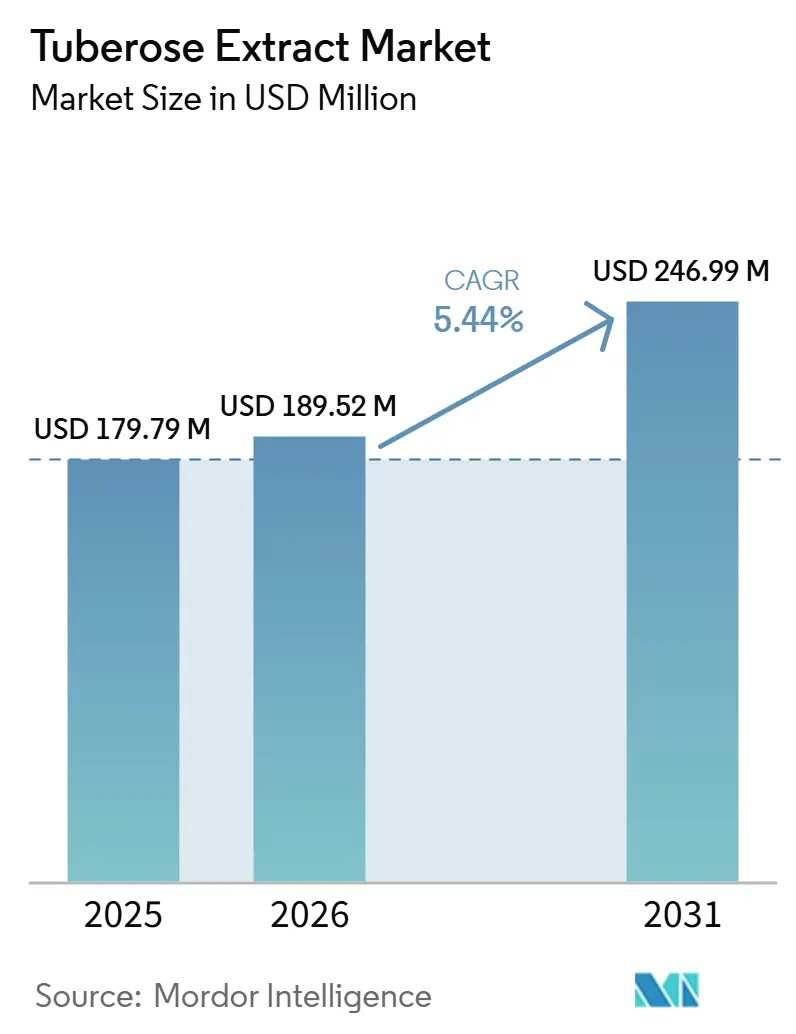
The global tuberose extract market is experiencing steady growth, increasing from USD 179.79 million in 2025 to USD 189.52 million in 2026, and is projected to reach USD 246.99 million by 2031, with a CAGR of 5.44% during the forecast period. This growth is largely attributed to the rising demand for natural, plant-based ingredients and the growing focus on clean-label, sustainable, and high-quality botanical extracts. Furthermore, the adoption of wellness-oriented lifestyles and a preference for holistic, nature-inspired solutions are driving the demand for botanical extracts such as tuberose. Advances in extraction technologies are also playing a key role by improving yield efficiency, quality retention, and consistency, making production more scalable and dependable.
Key Report Takeaways
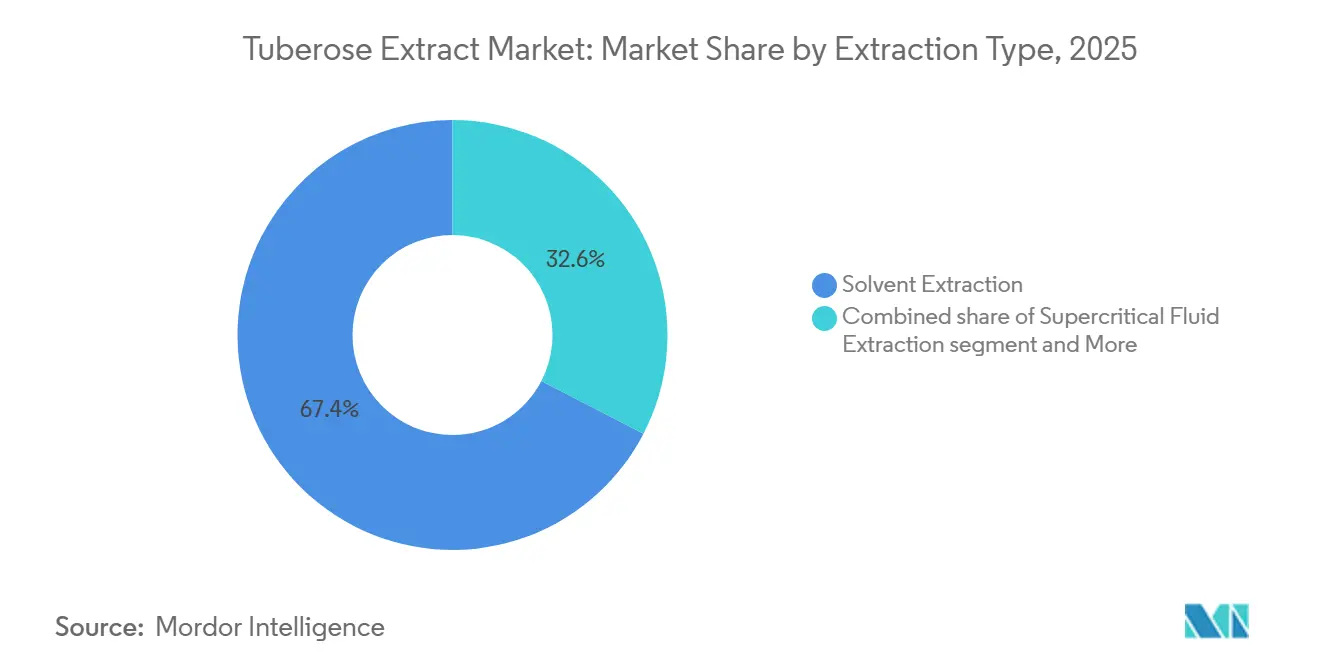
- By extraction type, solvent extraction led with 67.41% of the tuberose extract market share in 2025, while supercritical fluid extraction is projected to advance at a 7.86% CAGR through 2031.
- By category, conventional grades accounted for 84.48% of 2025 demand, whereas certified-organic grades are forecast to post the fastest 6.43% CAGR to 2031.
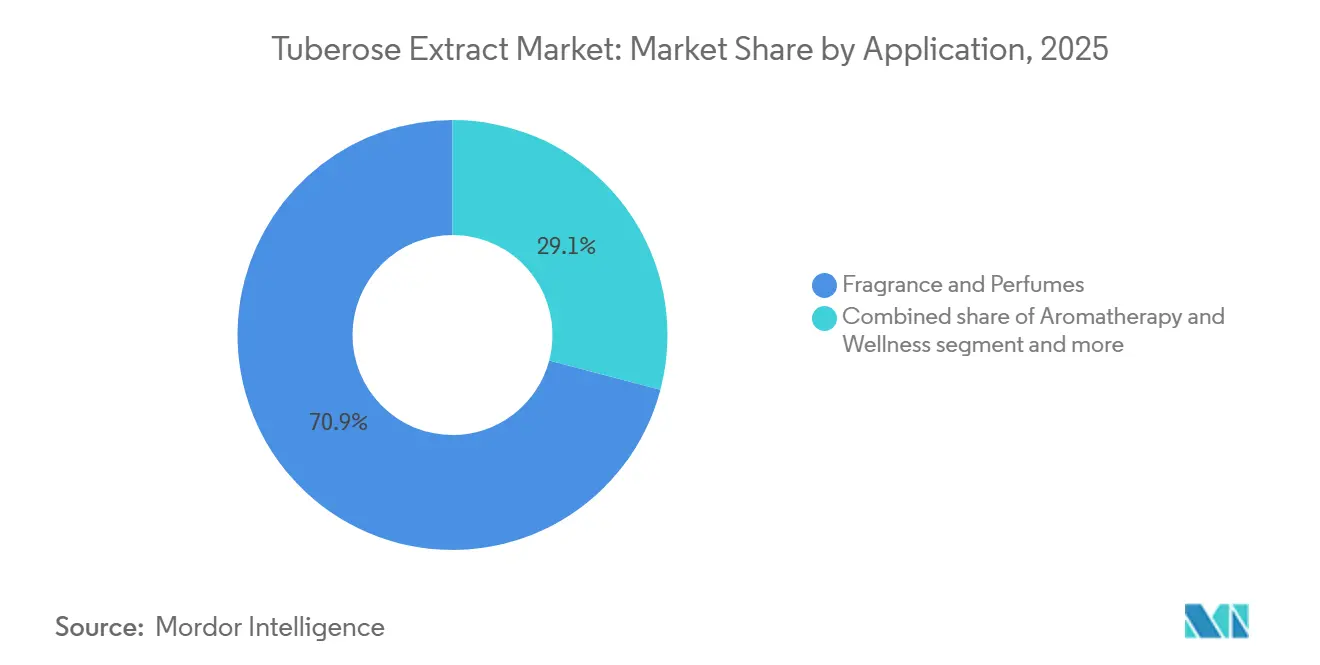
- By application, fragrance and perfumes captured 70.91% of 2025 revenue, yet aromatherapy and wellness blends are expected to expand at 6.57% CAGR during the outlook period.
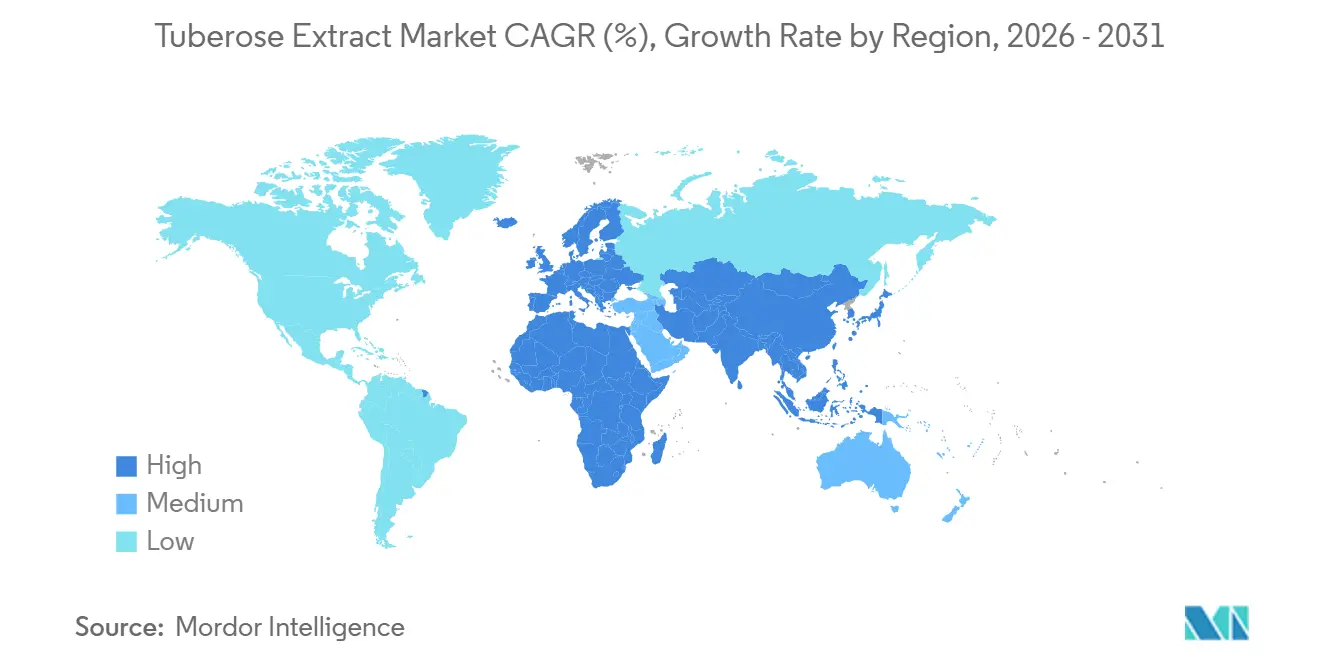
- By geography, Europe dominated with 38.12% of 2025 sales, while Asia-Pacific is forecast to grow the fastest at 7.49% CAGR on the back of Indian cultivation and Japanese spa spending.
Note: Market size and forecast figures in this report are generated using Mordor Intelligence’s proprietary estimation framework, updated with the latest available data and insights as of January 2026.
Market Trends and Insights
Drivers Impact Analysis of Tuberose Extract Market*
| Driver | (~) % Impact on CAGR Forecast | Geographic Relevance | Impact Timeline |
|---|---|---|---|
| Rising consumer preference for natural and botanical ingredients | +1.2% | Global, strongest in North America and Europe | Medium term (2–4 years) |
| Expanding premium perfumery segment | +0.9% | Europe (Grasse, Italy), Middle East, Asia-Pacific luxury hubs | Long term (≥4 years) |
| Increasing demand for aromatherapy and spa services | +1.1% | Asia-Pacific (Japan, China), North America, Europe | Short term (≤2 years) |
| Technological advancements in extraction methods | +0.7% | Europe (Grasse cluster), North America (Phasex/Robertet), India (pilot plants) | Medium term (2–4 years) |
| Preference for sustainable and eco-friendly ingredients | +0.8% | Global, led by Europe and North America regulatory frameworks | Long term (≥4 years) |
| Cultural and traditional significance | +0.4% | India, Southeast Asia, Middle East | Long term (≥4 years) |
| Source: Mordor Intelligence | |||
Rising consumer preference for natural and botanical ingredients
Increasing consumer preference for natural and botanical ingredients is a significant driver of the tuberose extract market. Consumers are increasingly prioritizing clean-label, plant-based, and minimally processed ingredients in product formulations. This trend is prompting manufacturers to replace synthetic components with natural alternatives such as tuberose extract, valued for its authenticity and sensory appeal. The perception of botanical ingredients as safer, more transparent, and environmentally sustainable is further boosting their adoption. For example, according to the International Food Information Council (IFIC), in 2024, 36% of consumers in the United States actively selected products labeled as natural, organic, or healthy, underscoring the strong demand for naturally sourced ingredients [1]Source: International Food Information Council (IFIC), "International Food Information Council (IFIC)", ific.org . This shift in consumer preferences is encouraging producers to incorporate high-quality botanical extracts into their products, thereby driving growth in the tuberose extract market.
Expanding premium perfumery segment
The expanding premium perfumery segment is a key driver of the tuberose extract market, as the growing focus on high-end, niche, and artisanal fragrance creation increases the demand for distinctive and luxurious natural ingredients. Tuberose extract, valued for its rich, intense, and long-lasting aromatic profile, is particularly sought after in premium formulations where depth, complexity, and uniqueness of scent are essential. As consumers increasingly prefer exclusive and sophisticated fragrance experiences, brands are incorporating rare and high-quality botanical ingredients to enhance their product offerings. This trend is further bolstered by the rise of niche fragrance houses and bespoke scent creation, where natural extracts like tuberose are integral to developing signature and differentiated olfactory profiles, thereby sustaining market demand.
Increasing demand for aromatherapy and spa services
The growing demand for aromatherapy and spa services is driven by wellness-focused consumers seeking sensory, plant-based experiences that promote relaxation and emotional well-being. Tuberose extract, known for its naturally soothing and mood-enhancing aroma, aligns with the trend toward holistic and experiential wellness practices. The expansion of spa and wellness centers is further boosting the demand for high-quality botanical extracts that enhance ambiance and therapeutic outcomes. For example, according to the International Spa Association, the United States spa industry recorded 187 million visits in 2024, an increase from 182 million in the previous year, indicating a steady rise in wellness engagement [2]Source: International Spa Association, "Number of spa visits in the United States", experienceispa.com. This growing footfall is encouraging the increased use of natural aromatic ingredients, thereby driving the growth of the tuberose extract market.
Technological advancements in extraction method
Technological advancements in extraction methods are significantly driving growth in the tuberose extract market by enabling higher efficiency, improved yield, and superior quality retention from delicate floral raw materials. Advanced techniques such as solvent optimization, supercritical fluid extraction, and precision-controlled processing are substantially enhancing the preservation of fragile aromatic compounds while minimizing degradation and losses. These advancements also play a crucial role in achieving greater consistency and standardization across batches, which is essential for maintaining stringent quality benchmarks. Furthermore, improvements in solvent recovery systems, automation, and process control are effectively reducing operational inefficiencies and environmental impact, making extraction processes more sustainable, scalable, and environmentally responsible.
Restraints Impact Analysis of Tuberose Extract Market*
| Restraint | (~) % Impact on CAGR Forecast | Geographic Relevance | Impact Timeline |
|---|---|---|---|
| High production and extraction costs | -0.9% | India (cultivation), Europe (processing), global supply chain | Short term (≤2 years) |
| Competition from synthetic alternatives | -0.7% | North America, Europe (mass-market fragrances), Asia-Pacific (cost-sensitive segments) | Medium term (2–4 years) |
| Sensitivity and allergen concerns | -0.5% | Europe, Canada, United States. (regulatory markets) | Long term (≥4 years) |
| Regulatory compliance challenges | -0.4% | Global, concentrated in Europe and North America | Medium term (2–4 years) |
| Source: Mordor Intelligence | |||
High production and extraction costs
High production and extraction costs present a significant challenge to the growth of the tuberose extract market. The entire value chain, from cultivation to processing, is labor-intensive and resource-intensive. Tuberose flowers must be manually harvested at precise stages of bloom to retain their aromatic compounds, which increases operational complexity and costs. Furthermore, extraction techniques such as solvent extraction and supercritical fluid extraction require specialized equipment, controlled processing conditions, and substantial energy input, further driving up production expenses. The low yield of extract compared to the large volume of flowers needed adds additional cost pressures, making large-scale production difficult. Consequently, the high cost structure limits affordability and hinders broader adoption, particularly in price-sensitive market segments, thereby restraining market growth.
Competition from synthetic alternatives
Competition from synthetic alternatives poses a significant restraint on the tuberose extract market. Synthetic aroma compounds can replicate the distinctive scent of tuberose at a much lower cost while ensuring consistent supply. Unlike natural extracts, synthetic ingredients are not reliant on seasonal cultivation or climatic conditions, allowing for stable, large-scale production and predictable pricing. Additionally, synthetic alternatives offer benefits such as longer shelf life, uniform composition, and easier formulation control, making them appealing to manufacturers focused on efficiency and cost management. As a result, many producers choose synthetic substitutes, particularly for price-sensitive applications, which limits the wider adoption of natural tuberose extract and presents a key challenge to market growth.
*Our forecasts treat driver/restraint impacts as directional, not additive. The impact forecasts reflect baseline growth, mix effects, and variable interactions.
Tuberose Extract Market Segment Analysis
By Product Type:
Concentrates Dominate Despite Essential Oil InnovationSolvent extraction accounted for 67.41% of the 2025 market share, primarily due to its effectiveness in capturing and preserving the full range of delicate aromatic compounds found in tuberose. This method is particularly suitable for fragile flowers, as it operates under conditions that prevent the degradation of sensitive volatile molecules, resulting in a highly concentrated and chemically intact extract. Its higher yield efficiency compared to other extraction techniques makes it a preferred choice for producers working with limited and perishable raw materials. Furthermore, solvent extraction ensures greater batch-to-batch consistency, which is essential for maintaining standardized quality in natural extracts. Advances in extraction processes, such as improved solvent recovery systems and enhanced processing controls, have further increased operational efficiency while reducing losses and addressing safety concerns.
Supercritical fluid extraction is projected to grow at a 7.86% CAGR through 2031, driven by its ability to produce high-purity extracts without residual organic solvents, aligning with the increasing demand for cleaner and safer processing methods. This technique employs supercritical CO₂ under controlled temperature and pressure conditions, enabling the selective extraction of delicate aromatic compounds while preserving their structural integrity. Compared to traditional methods, it offers greater precision and tunability, allowing manufacturers to optimize extraction parameters for improved quality and consistency. Additionally, the process enhances product stability and minimizes degradation by avoiding high thermal exposure and harsh chemicals. Ongoing advancements in equipment design and process optimization are further improving scalability and cost-efficiency over time.


By Category:
Organic Surges on Certification PremiumsConventional tuberose accounted for 84.48% of the 2025 volume, driven by its widespread availability, established cultivation practices, and reliable supply across major producing regions. Conventional farming methods enable higher yield efficiency and scalable production, which is crucial for a crop like tuberose that requires precise handling and timely harvesting. The use of standardized agricultural inputs and practices ensures uniform flower quality and predictable output, supporting a steady supply of raw materials for extraction processes. Additionally, conventional cultivation benefits from well-established supply chains and lower operational complexities, enabling producers to manage large volumes more effectively compared to alternative methods. Its dominance is further supported by the ability to meet bulk demand requirements with stable quality parameters, making it the preferred choice for manufacturers seeking consistent sourcing.
Organic tuberose is projected to grow at a 6.43% CAGR through 2031, driven by the global shift toward certified natural and chemical-free agricultural practices. The rising preference for traceable and sustainably produced botanical ingredients is encouraging growers to adopt organic cultivation methods, despite their relatively lower yield efficiency. According to the Organic Trade Association (OTA), United States organic sales reached USD 71.6 billion in 2024, highlighting the growing demand for organic products across industries [3]Source: Organic Trade Association (OTA), "2025 Organic Market Report", ota.com. This trend is influencing the tuberose extract market, where buyers prioritize purity, the absence of synthetic inputs, and environmentally responsible sourcing. Organic cultivation also enhances the perceived value of tuberose by aligning with premium positioning and clean-label standards. Furthermore, advancements in organic farming techniques and certification frameworks are addressing earlier challenges related to consistency and scalability.
By Application:
Aromatherapy Outpaces Fragrance's Volume LeadFragrance and perfumes accounted for 70.91% of the projected 2025 demand, driven by the strong olfactory appeal and distinctive sensory profile of tuberose. This floral ingredient is highly valued in scent creation due to its naturally intense, creamy, and long-lasting aroma, which enables formulators to craft deep, complex, and highly diffusive fragrance compositions. Tuberose's ability to function as both a primary note and a blending enhancer adds richness, depth, and longevity to formulations, further solidifying its importance. Additionally, its high compatibility with both natural and synthetic aromatic compounds allows for versatile scent structuring and innovation in fragrance design. The ingredient's consistent performance in maintaining scent integrity over time makes it a preferred choice for manufacturers focused on stability and quality retention.
The aromatherapy and wellness segment is projected to grow at a 6.57% CAGR through 2031, fueled by the rising preference for holistic well-being and plant-based therapeutic solutions. Tuberose extract is gaining prominence in this segment due to its naturally calming and mood-enhancing properties, which align with the increasing focus on stress management, relaxation, and emotional balance. Its rich and soothing aroma supports sensory-driven wellness experiences, making it a valuable ingredient in formulations aimed at promoting mental clarity and relaxation. Furthermore, the shift toward non-synthetic, nature-derived ingredients in wellness routines is driving its adoption, as consumers seek safer and more sustainable alternatives. Ongoing innovation in wellness formulations and the integration of botanical extracts into daily self-care practices are further contributing to the growing demand for tuberose extract.

Geography Analysis
Europe Tuberose Extract Market
Europe accounted for 38.12% of the projected 2025 revenue, driven by its established heritage in fine fragrance creation and expertise in botanical extraction techniques. The region benefits from a mature ecosystem of fragrance houses and ingredient processors that emphasize high-quality natural extracts and advanced scent development. Additionally, stringent regulatory frameworks and sustainability standards are promoting the use of traceable and premium botanical ingredients, bolstering demand for tuberose extract. Continuous innovation in formulations and a focus on artisanal and niche fragrance development further strengthen Europe’s leading position in the market.
APAC Tuberose Extract Market
Asia-Pacific is projected to grow at a 7.49% CAGR through 2031, supported by its strong raw material base and expanding processing capabilities. The region plays a vital role in tuberose cultivation, benefiting from favorable agro-climatic conditions and extensive agricultural expertise. Advancements in extraction infrastructure, alignment with quality standardization, and export-oriented production are enhancing its global competitiveness. Furthermore, the integration of traditional botanical knowledge with modern processing techniques is solidifying Asia-Pacific’s position as a key supplier and a rapidly growing consumption hub.
The Americas and MEA Tuberose Extract Market
North America, South America, and the Middle East and Africa collectively account for the remaining global demand, driven by increasing adoption of natural ingredients and evolving formulation preferences. North America is distinguished by its strong innovation capabilities and focus on clean-label and sustainable ingredient sourcing. South America benefits from its rich biodiversity and growing involvement in botanical extraction industries. Meanwhile, the Middle East and Africa are experiencing gradual growth, supported by rising interest in premium natural ingredients and improving processing infrastructure.

Competitive Landscape
The tuberose extract market is moderately fragmented, with prominent players such as Givaudan SA, DSM-Firmenich AG, Symrise AG, International Flavors & Fragrances Inc., and Robertet Group shaping the competitive environment. These companies leverage their expertise in natural ingredient sourcing, advanced extraction techniques, and formulation capabilities to maintain strong market positions. Their global supply networks and established relationships with cultivators ensure consistent access to high-quality tuberose. Additionally, their focus on innovation enables them to meet evolving demands for purity, consistency, and performance.
Technology is playing an increasingly significant role in shaping competitive advantages, as leading companies invest in advanced extraction methods, biotechnology, and digital tools to enhance efficiency and product quality. Innovations such as precision extraction, molecular profiling, and ingredient optimization are helping preserve delicate aromatic compounds while improving yield and scalability. Furthermore, the adoption of data-driven formulation techniques and sensory science is enabling more targeted and consistent product outcomes, reinforcing differentiation in a market where maintaining the integrity of natural extracts is essential.
New opportunities are arising at the intersection of receptor science and sustainability, offering avenues for competitive differentiation. Companies are investigating how fragrance molecules interact with olfactory receptors to create more efficient, high-impact formulations using fewer raw materials, aligning with sustainability objectives. Simultaneously, there is an increasing emphasis on eco-friendly sourcing, traceability, and low-impact extraction processes. These trends are driving innovation beyond traditional methods. The convergence of scientific advancements and sustainable practices is expected to reshape competition, enabling both established players and new entrants to capture value in the evolving tuberose extract market.
Tuberose Extract Industry Leaders
-
Givaudan SA
-
DSM-Firmenich AG
-
Symrise AG
-
International Flavors & Fragrances Inc.
-
Robertet Group
- *Disclaimer: Major Players sorted in no particular order

Tuberose Extract Market Companies Covered in this Report
- Givaudan SA
- DSM-Firmenich AG
- Symrise AG
- International Flavors & Fragrances Inc.
- Robertet Group
- Mane SA
- Takasago International Corp.
- Sensient Technologies Corp.
- Ultra International B.V.
- Argeville SAS
- Berje Inc.
- Augustus Oils Ltd.
- Mane Kancor Ltd.
- AOS Products Pvt. Ltd.
- Eden Botanicals LLC
- Stillpoint Aromatics LLC
- Martin Bauer Group
- Arjuna Natural Extracts Ltd.
- Charabot SA
- Vigon International Inc.

Recent Industry Developments in Tuberose Extract Market
- January 2026: MANE has acquired ChemoSensoryx Biosciences, a Belgian biotech company recognized for its expertise in the molecular mechanisms of chemosensory perception involving olfactory, gustatory, and trigeminal receptors.
- September 2025: IFF inaugurated its expanded LMR Naturals facility in Grasse following a €10 million investment. The expansion has increased the facility's size by 75%, reaching 4,687 square meters.


Global Tuberose Extract Market Report Scope
Tuberose extract is a highly fragrant, natural aromatic substance derived from the flowers of Polianthes tuberosa L. The tuberose extract market is segmented by extraction type, category, application, and geography. Based on extraction type, the market is segmented into Solvent Extraction, Supercritical Fluid Extraction, and Others. By Category, the market is segmented into Organic, and Conventional. By application, the market is segmented into Fragrance and Perfumes, Cosmetics and Personal Care, Aromatherapy and Wellness, Food and Beverage, Home Care, and Others. Based on geography, the market is segmented into North America, Europe, Asia-Pacific, South America, and the Middle East and Africa. The report provides market size and forecasts in both value (USD) and volume (tons) for all the mentioned segments.
| Solvent Extraction |
| Supercritical Fluid Extraction |
| Others |
| Organic |
| Conventional |
| Fragrance and Perfumes |
| Cosmetics and Personal Care |
| Aromatherapy and Wellness |
| Food and Beverage |
| Home Care |
| Others |
| North America | United States |
| Canada | |
| Mexico | |
| Rest of North America | |
| Europe | Germany |
| United Kingdom | |
| Italy | |
| France | |
| Spain | |
| Netherlands | |
| Rest of Europe | |
| Asia-Pacific | China |
| India | |
| Japan | |
| Australia | |
| Rest of Asia-Pacific | |
| South America | |
| Middle East and Africa |
| By Extraction Type | Solvent Extraction | |
| Supercritical Fluid Extraction | ||
| Others | ||
| By Category | Organic | |
| Conventional | ||
| By Application | Fragrance and Perfumes | |
| Cosmetics and Personal Care | ||
| Aromatherapy and Wellness | ||
| Food and Beverage | ||
| Home Care | ||
| Others | ||
| By Geography | North America | United States |
| Canada | ||
| Mexico | ||
| Rest of North America | ||
| Europe | Germany | |
| United Kingdom | ||
| Italy | ||
| France | ||
| Spain | ||
| Netherlands | ||
| Rest of Europe | ||
| Asia-Pacific | China | |
| India | ||
| Japan | ||
| Australia | ||
| Rest of Asia-Pacific | ||
| South America | ||
| Middle East and Africa | ||


Key Questions Answered in the Report
How fast is global demand for tuberose extract growing?
The tuberose extract market is projected to post a 5.44% CAGR between 2026 and 2031 on rising clean-label and aromatherapy usage.
Which extraction technology is expanding the quickest?
Supercritical CO₂ systems are advancing at 7.86% CAGR because they give residue-free concentrates and meet new allergen regulations.
Why are brands paying premiums for organic tuberose?
Retail sustainability scorecards and due-diligence laws reward certified supply chains, helping organic material grow at 6.43% annually.
Which region currently buys the most tuberose extract?
Europe contributes 38.12% of global revenue, supported by Grasse’s geographic-indication flowers and a dense perfumery cluster.
Page last updated on:


 Your data is secure and never sold or shared.


