
Elderberry Extract Market Size and Share
Market Overview
| Study Period | 2021 - 2031 |
|---|---|
| Market Size (2026) | USD 117.74 Million |
| Market Size (2031) | USD 166.55 Million |
| Growth Rate (2026 - 2031) | 7.18 % |
| Fastest Growing Market | Asia Pacific |
| Largest Market | Europe |
| Market Concentration | Medium |
Major Players
*Disclaimer: Major Players sorted in no particular order Image © Mordor Intelligence. Reuse requires attribution under CC BY 4.0. |
|
Elderberry Extract Market Analysis by Mordor Intelligence
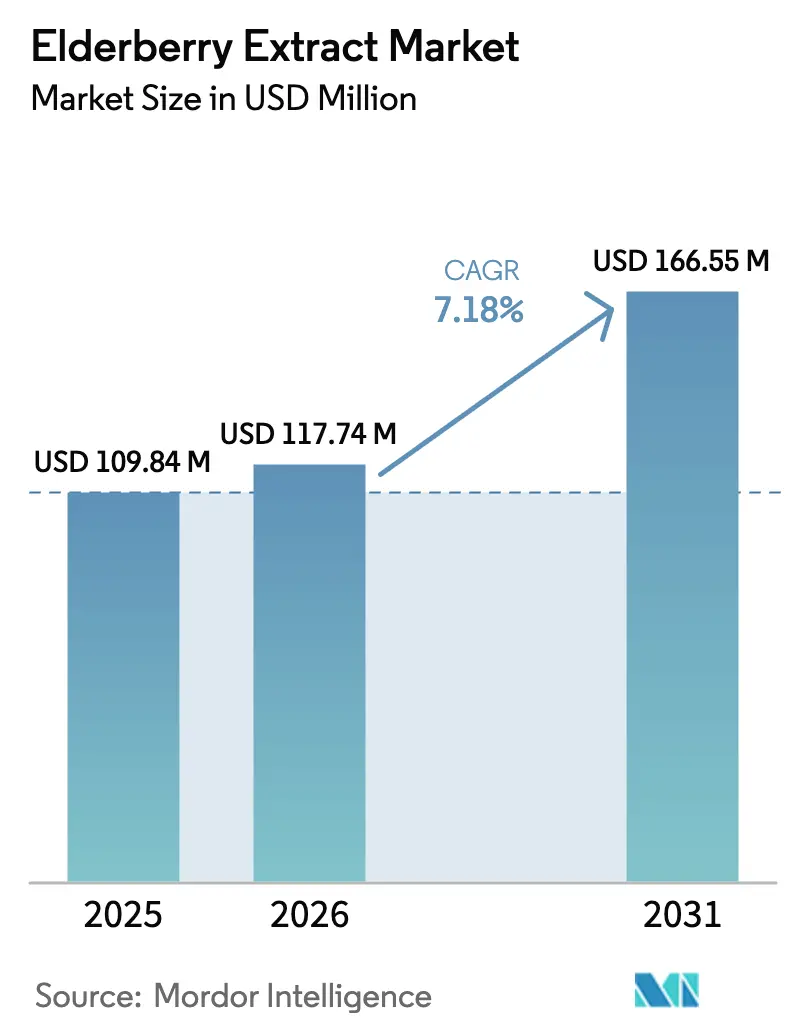
The elderberry extract market size is expected to grow from USD 109.84 million in 2025 to USD 117.74 million in 2026 and is forecast to reach USD 166.55 million by 2031 at 7.18% CAGR over 2026-2031. This sustained expansion follows the pandemic-era spike in immunity purchases and reflects a durable shift toward science-backed botanical ingredients across supplements, foods, beverages, and cosmetics. Besides, rising consumer trust in standardized extracts, widening clean-label adoption, and steady rollout of spray-drying capacity underpin demand. Market competition remains moderate, with suppliers differentiating on origin traceability, organic certification, and advanced encapsulation rather than on price cutting. Moreover, Europe keeps its leadership position owing to mature regulations, while Asia-Pacific delivers the most rapid growth as online retail and plant-based lifestyles accelerate elderberry adoption.
Key Report Takeaways
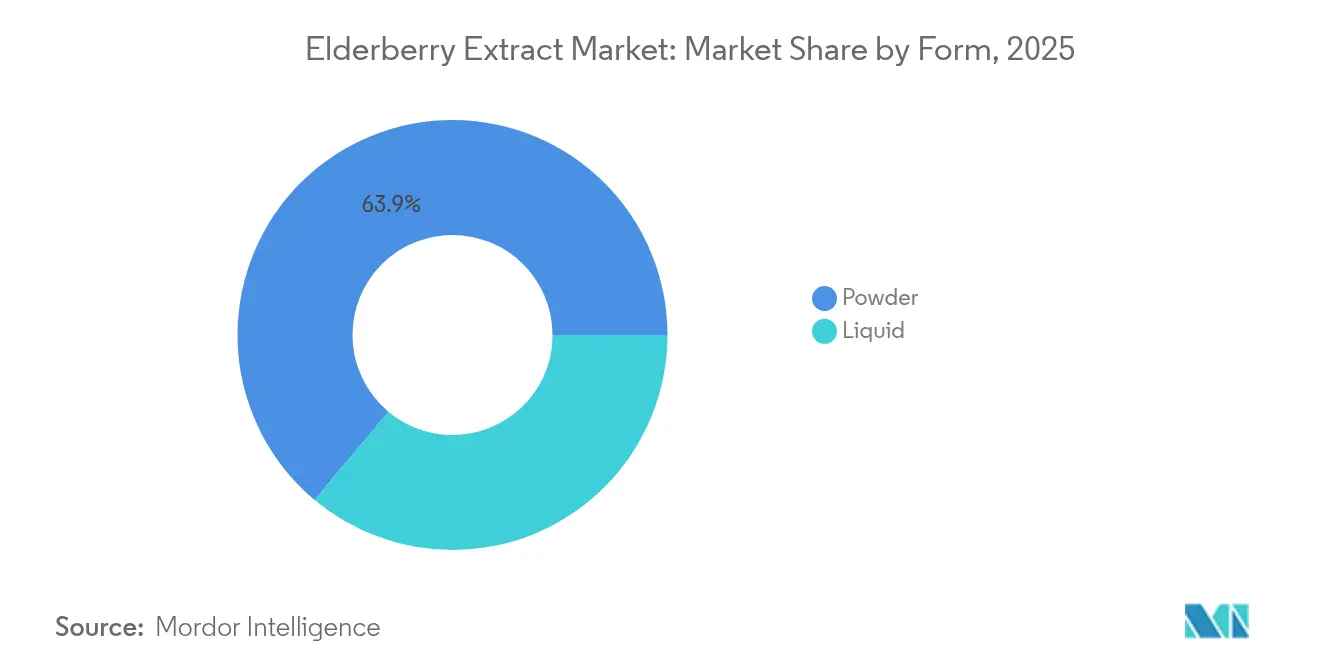
- By form, powder captured 63.92% of the elderberry extract market share in 2025; liquid is projected to expand at an 8.32% CAGR to 2031.
- By nature, conventional products led with 70.85% revenue share in 2025, whereas the organic segment is forecast to climb at an 8.61% CAGR through 2031.
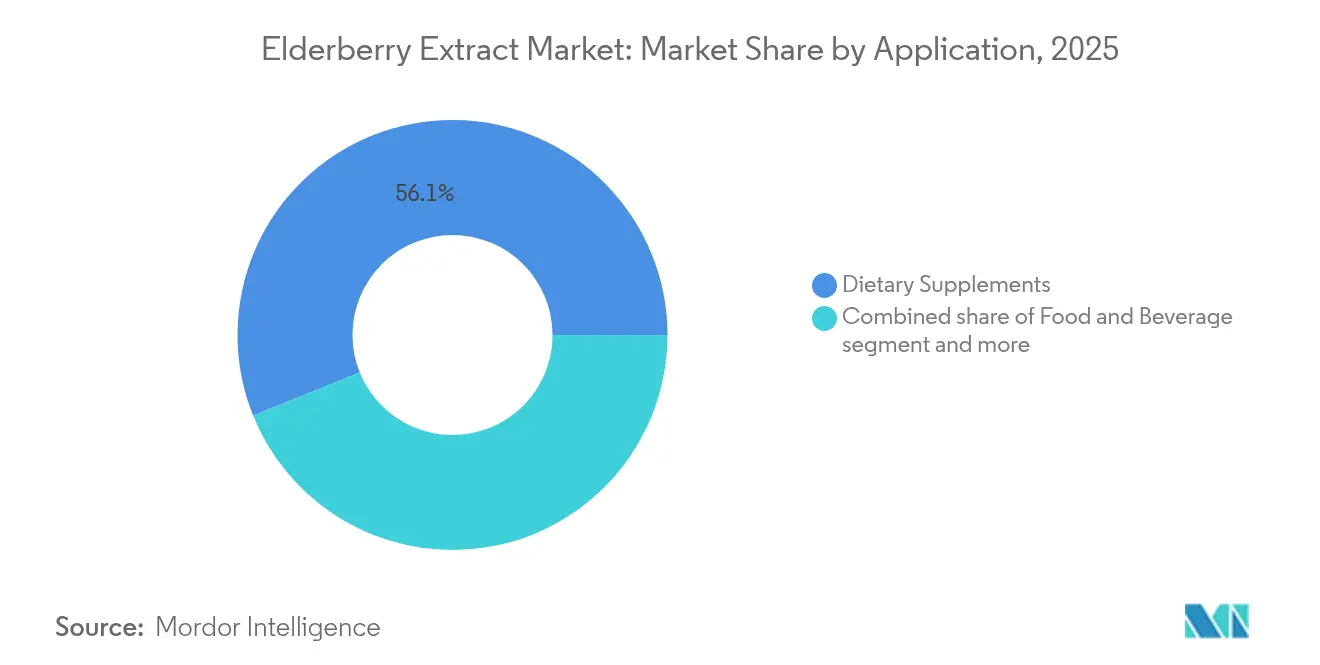
- By application, dietary supplements held 56.10% of the elderberry extract market size in 2025, while cosmetics and personal care are advancing at an 8.73% CAGR to 2031.
- By geography, Europe accounted for 32.10% of the elderberry extract market share in 2025; Asia-Pacific is set to post an 8.34% CAGR between 2026 and 2031.
Note: Market size and forecast figures in this report are generated using Mordor Intelligence’s proprietary estimation framework, updated with the latest available data and insights as of 2026.
Market Trends and Insights
Drivers Impact Analysis of Elderberry Extract Market*
| Driver | (~) % Impact on CAGR Forecast | Geographic Relevance | Impact Timeline |
|---|---|---|---|
| Growing demand for botanical and herbal supplements | +1.2% | Global, with strongest impact in North America and Europe | Medium term (2-4 years) |
| Surge of clean-label natural colorants in food and beverage industry | +0.8% | Global, particularly strong in Europe and North America | Long term (≥ 4 years) |
| Expansion of spray-drying tech unlocking year-round powder supply | +1.0% | Global, with early adoption in North America and Europe | Short term (≤ 2 years) |
| Consumer shift towards organic and clean-label ingredients | +1.1% | Global, led by developed markets | Medium term (2-4 years) |
| Inclusion of vegan and vegetarian supplement formulations | +0.7% | Global, strongest in North America and Europe | Medium term (2-4 years) |
| Growing demand for natural immunity boosters | +1.5% | Global | Short term (≤ 2 years) |
| Source: Mordor Intelligence | |||
Growing Demand for Botanical and Herbal Supplements
The increasing demand for botanical and herbal supplements is a significant driver of the elderberry market. Consumers are increasingly seeking natural and plant-based alternatives for health and wellness, which has boosted the popularity of elderberry products. Elderberries are rich in antioxidants, vitamins, and other nutrients, making them a preferred choice for boosting immunity and addressing various health concerns. This trend is further supported by growing awareness about the benefits of herbal remedies and the shift toward preventive healthcare. Additionally, the rise in consumer preference for clean-label and organic products has further propelled the demand for elderberry-based supplements in the market. The elderberry market is also benefiting from the growing adoption of traditional medicine practices, which emphasize the use of natural ingredients like elderberries for their therapeutic properties. Furthermore, the increasing prevalence of lifestyle-related diseases and the rising geriatric population have amplified the focus on maintaining health through natural supplements, further driving the demand for elderberry products. The Population Reference Bureau reports that in 2024, approximately 10% of the global population is over 65 years of age. Europe demonstrates the highest concentration of elderly residents, with 20% of its population above 65 years, surpassing the demographic under 15 years. North America maintains the second-highest elderly population at 18% [1]Source: Population Reference Bureau, “2024 World Population Data Sheet”, 2024-wpds.prb.org.
Surge of Clean-Label Natural Colorants in Food and Beverage Industry
The surge of clean-label natural colorants in the food and beverage industry is driving significant growth in the elderberry market. As consumers increasingly gravitate towards clean-label products, the demand for natural colorants, particularly those derived from elderberries, is surging. This shift underscores a broader trend where individuals prioritize natural and minimally processed ingredients in their food and beverages. Moreover, the European Food Safety Authority (EFSA) has recognized elderberry as a safe and effective natural colorant, further boosting its adoption in the food and beverage industry. Additionally, the Food and Agriculture Organization (FAO) highlights that elderberries are a sustainable crop, requiring fewer resources compared to synthetic alternatives, which aligns with the global push for environmentally friendly practices. This trend is expected to continue during the forecast period, driven by consumer preferences, regulatory support for natural additives, and the increasing focus on sustainability in the food and beverage sector.
Expansion of Spray-drying Tech Unlocking Year-round Powder Supply
The expansion of spray-drying technology is emerging as a critical driver in the elderberry market, enabling the production of elderberry powder throughout the year. This technological advancement effectively addresses seasonal supply constraints, ensuring a steady and reliable supply for manufacturers and end-users. The Food and Agriculture Organization (FAO) highlights that spray-drying not only extends the shelf life of elderberry powder but also preserves its nutritional properties, making it a preferred choice for various applications, including dietary supplements, functional foods, and beverages. Furthermore, the National Institute of Health emphasizes that elderberry powder produced through spray-drying retains a higher concentration of anthocyanins, a key bioactive compound, compared to other drying methods. This ensures that manufacturers can meet consumer demand for health-focused products with consistent quality. The growing adoption of spray-drying technology is expected to play a pivotal role in supporting the elderberry market's growth during the forecast period, as it enables year-round production and reduces dependency on seasonal harvests.
Inclusion of Vegan and Vegetarian Supplement Formulations
The inclusion of vegan and vegetarian supplement formulations is driving the elderberry market. The United States Department of Agriculture (USDA) has been actively promoting plant-based diets through various initiatives, further encouraging the adoption of such formulations in the supplement industry. The growing awareness of health benefits associated with plant-based diets, such as improved heart health and reduced risk of chronic diseases, has further fueled this trend. In 2023, ProVeg International reported that 38% of Europeans embraced diets such as flexitarian, vegan, or vegetarian, underscoring a notable surge in the adoption of vegetarian and vegan lifestyles [2]Source: Proveg International, "From meat to legumes – tracking Europe’s shift towards more plant-based eating", proveg.org. This shift in consumer preferences is prompting manufacturers to innovate and expand their product portfolios to include elderberry-based supplements that cater to these dietary choices.
Restaints Impact Analysis of Elderberry Extract Market*
| Restraint | (~) % Impact on CAGR Forecast | Geographic Relevance | Impact Timeline |
|---|---|---|---|
| Seasonal raw elderberries shortages and price spikes | -1.8% | Global, particularly severe in North America | Short term (≤ 2 years) |
| Wide-spread adulteration hurting brand trust | -1.2% | Global, most acute in unregulated markets | Medium term (2-4 years) |
| Perishable nature of raw elderberries limiting large-scale processing | -0.9% | Global, especially challenging in developing regions | Long term (≥ 4 years) |
| Challenges in flavor masking in functional foods | -0.6% | Global, primarily affecting food and beverage applications | Medium term (2-4 years) |
| Source: Mordor Intelligence | |||
Seasonal Raw Elderberries Shortages and Price Spikes
The market faces a significant restraint due to seasonal shortages of raw elderberries, which lead to price spikes. Elderberries are primarily harvested during a specific season, and their limited availability during off-seasons creates supply chain challenges. This scarcity often results in increased procurement costs for manufacturers, directly impacting the overall production cost of elderberry extracts. Furthermore, the reliance on a seasonal crop makes the market vulnerable to unpredictable factors such as adverse weather conditions, which can further exacerbate shortages. These fluctuations in raw material availability and pricing pose a challenge for market players, affecting their ability to maintain a consistent supply and competitive pricing throughout the year. Additionally, the seasonal nature of elderberry cultivation limits the ability of manufacturers to stockpile raw materials, as elderberries are perishable and require proper storage conditions to maintain their quality. This further complicates inventory management and increases operational costs.
Perishable Nature of Raw Elderberries Limiting Large-scale Processing
The highly perishable nature of raw elderberries poses a significant restraint on the elderberry extract market. These berries have a short shelf life, which complicates their storage, transportation, and large-scale processing. Without proper preservation techniques, raw elderberries quickly lose their quality, leading to wastage and increased costs for manufacturers. This challenge limits the ability of producers to meet the growing demand for elderberry extracts, particularly in regions where elderberries are not cultivated locally. Additionally, the need for immediate processing or freezing adds logistical complexities and raises operational expenses, further impacting the scalability of production. Addressing this issue requires advancements in preservation methods and supply chain optimization to ensure the availability of high-quality raw materials for extract production.
*Our forecasts treat driver/restraint impacts as directional, not additive. The impact forecasts reflect baseline growth, mix effects, and variable interactions.
Elderberry Extract Market Segment Analysis
By Form:
Powder Dominates, Liquid AcceleratesIn 2025, powder formulations dominate the global elderberry market with a 63.92% share. This dominance is attributed to their enhanced stability, extended shelf life, and versatility in applications such as dietary supplements, functional foods, and cosmetic formulations. Powder formulations are particularly favored for their ease of storage and transportation, making them a preferred choice for manufacturers and consumers alike. Additionally, their ability to retain the nutritional and medicinal properties of elderberries further strengthens their position in the market. The growing demand for elderberry-based products in the health and wellness sector has also contributed to the widespread adoption of powder formulations. These products are often used in capsules, tablets, and powdered drink mixes, catering to a wide range of consumer needs and preferences.
On the other hand, the liquid segment, while smaller in size, exhibits the strongest growth trajectory in the global elderberry market. It is projected to grow at an impressive 8.32% CAGR through 2031. This growth is driven by increasing innovations in functional beverages and a growing consumer inclination toward ready-to-consume formats. Liquid formulations are gaining traction due to their convenience and faster absorption, which aligns with the evolving preferences of health-conscious consumers. Furthermore, the rising popularity of elderberry syrups, tinctures, and liquid concentrates as immune-boosting solutions has significantly boosted the demand for liquid formulations. The segment's rapid expansion is also supported by advancements in packaging technologies, which enhance product shelf life and maintain quality, making liquid elderberry products more appealing to a broader audience.



By Nature:
Organic Premium Positioning Accelerates GrowthConventional elderberry extracts maintain 70.85% market share in 2025, reflecting established supply chains and cost-competitive positioning across mass-market applications. This dominance is primarily due to their well-established supply chains and cost-competitive positioning, making them highly accessible for mass-market applications. Conventional elderberry extracts benefit from economies of scale, ensuring affordability and widespread availability. Their extensive use in dietary supplements, functional foods, and beverages further strengthens their foothold in the market. Additionally, the trust and familiarity associated with conventional elderberry products continue to drive their demand across various regions. Manufacturers and consumers alike favor these extracts for their reliability and cost-effectiveness, ensuring their sustained prominence in the global market.
In contrast, the organic elderberry segment is witnessing significant growth momentum, with a projected CAGR of 8.61% through 2031. This growth is fueled by increasing consumer awareness of health benefits, environmental sustainability, and a willingness to pay premium prices for products with organic certification. Regulatory support for sustainable agricultural practices is further bolstering the organic segment, encouraging producers to adopt eco-friendly methods. Organic elderberry extracts are particularly gaining traction in niche markets, such as premium dietary supplements and natural health products, where quality, sustainability, and clean-label attributes are critical purchasing factors. As consumers increasingly prioritize health-conscious and environmentally responsible choices, the organic segment is expected to play a pivotal role in shaping the future of the global elderberry market.
By Application:
Dietary Supplements Leads, Cosmetics and Personal Care Gain MomentumDietary supplements dominate with a 56.10% market share in 2025. This dominance is attributed to elderberry's established reputation for supporting immune health, backed by extensive clinical validation across multiple delivery formats, including capsules, gummies, and syrups. The segment benefits from increasing consumer awareness of preventive healthcare and the growing demand for natural and plant-based supplements. Elderberry's versatility in formulation and its scientifically supported benefits have further solidified its position in the dietary supplements market, making it a key driver of the overall market's growth. Additionally, the rising prevalence of lifestyle-related health issues has amplified the demand for elderberry-based supplements, as consumers seek effective and natural solutions to enhance their well-being.
The cosmetic and personal care segment, although smaller in market share, demonstrates the highest growth potential, with an impressive CAGR of 8.73% projected through 2031. This growth is driven by elderberry's proven antioxidant and DNA-protective properties, which are increasingly utilized in skincare formulations to combat aging and environmental damage. Additionally, according to NSF, Public Health and Safety Organization, 74% of consumers in 2024 prioritize organic ingredients in personal care products . This market demand increases the incorporation of organic botanicals, specifically elderberry extract, which provides antioxidant and skin-soothing benefits. Elderberry's natural properties meet clean beauty requirements and allow manufacturers to develop plant-based formulations for cosmetics and personal care products. Moreover, the food and beverage sector also plays a significant role, benefiting from the clean-label movement and the rising demand for natural colorants, as elderberry's vibrant pigmentation and health benefits align with consumer preferences for natural and functional ingredients.
Geography Analysis
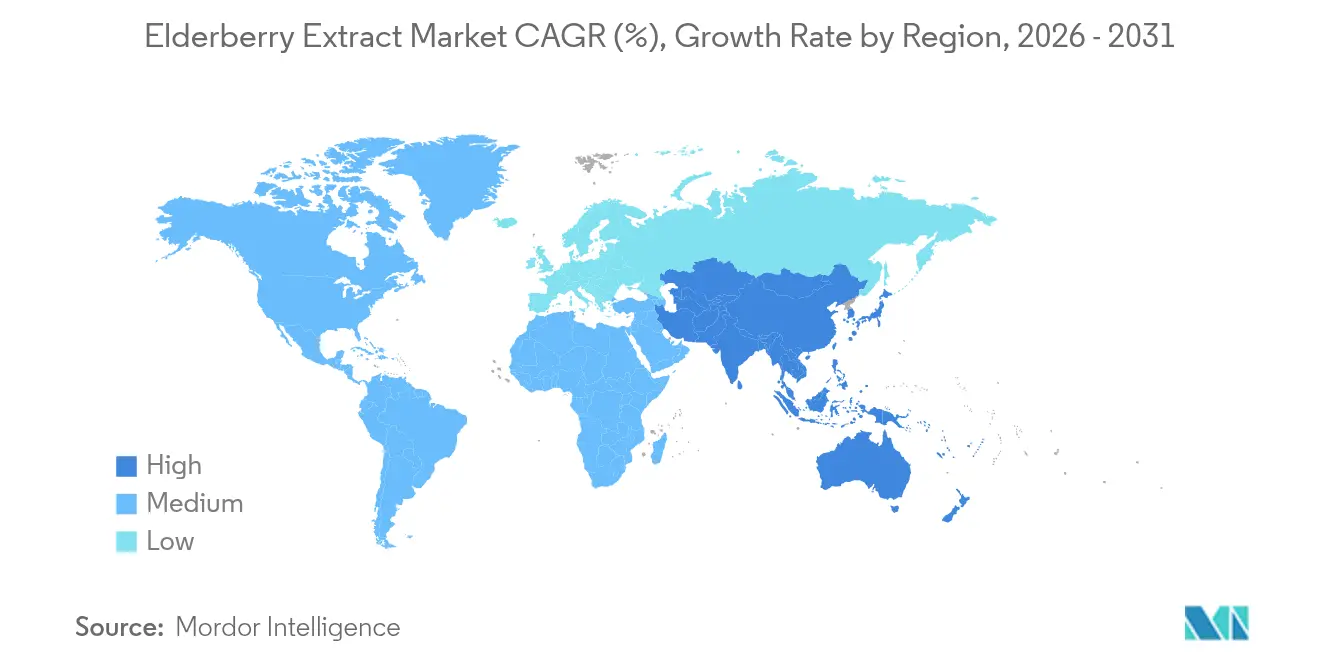
Europe Elderberry Extract Market
In 2025, Europe commands a dominant 32.10% share of the global elderberry extract market, leveraging its established regulatory frameworks, age-old elderberry cultivation practices, and advanced processing infrastructure. This robust setup not only caters to domestic needs but also positions Europe as a key player in global exports. The region's long-standing expertise in elderberry farming, coupled with its sophisticated supply chain and processing capabilities, ensures consistent product quality and reliability. Furthermore, Europe's commitment to sustainable agriculture and organic certifications resonates with the natural appeal of elderberries, granting the region a competitive edge in eco-conscious markets. Also, the increasing demand for organic and sustainably sourced products further strengthens Europe's position as a leader in the elderberry extract market.
APAC Elderberry Extract Market
Asia-Pacific is on a rapid ascent, projected to grow at a robust 8.34% CAGR through 2031. The region's growth is driven by rising consumer awareness of elderberry's health benefits, coupled with increasing disposable incomes and a growing preference for natural dietary supplements. Countries such as China, India, and Japan are witnessing a surge in demand, supported by expanding middle-class populations and a shift toward preventive healthcare. Additionally, the region's improving agricultural practices and investments in elderberry cultivation are expected to enhance supply capabilities, further fueling market growth. The increasing penetration of elderberry-based products in functional foods, beverages, and nutraceuticals is also contributing to the region's rapid expansion.
North America Elderberry Extract Market
North America is witnessing steady growth, buoyed by a surge in domestic elderberry cultivation. The USDA's endorsement of elderberries as a significant dietary supplement crop bolsters agricultural development efforts. Concurrently, investments by the Midwest Elderberry Cooperative in processing hubs are effectively mitigating past supply chain bottlenecks that hampered market growth. Moreover, American consumers' readiness to pay a premium for domestically grown elderberries empowers local producers to vie with entrenched European suppliers, especially as sustainability and local sourcing gain prominence in purchasing decisions. The region's focus on innovation in elderberry-based product formulations, such as gummies, syrups, and capsules, is further driving consumer interest.

Competitive Landscape
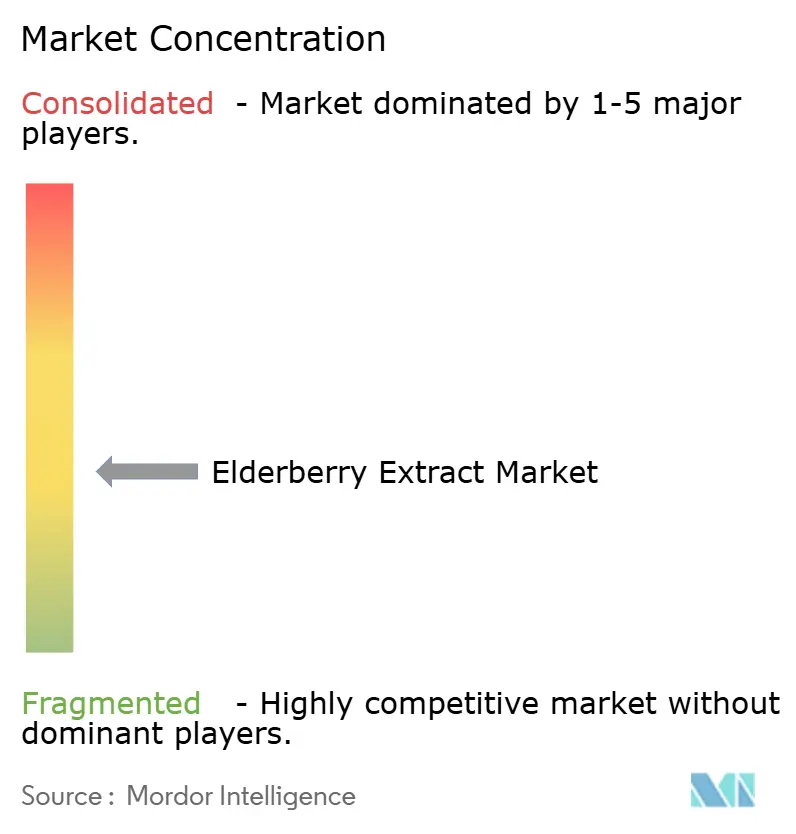
The elderberry extract market exhibits moderate fragmentation, indicating substantial opportunities for both established botanical suppliers and emerging technology-driven disruptors to gain market share through differentiated positioning strategies. This moderate fragmentation indicates that while the market is not dominated by a few players, there is enough room for competition and innovation, allowing companies to differentiate themselves through strategic initiatives. The competitive dynamics of the market are shaped by several critical factors, including quality assurance, supply chain reliability, and technological advancements, rather than relying solely on price competition. This shift in focus is largely driven by growing concerns over product adulteration, which has heightened the demand for premium, verified, and traceable products. Consumers and regulatory bodies alike are increasingly prioritizing transparency and authenticity, creating a lucrative niche for companies capable of meeting these stringent requirements.
The emphasis on quality and traceability has led to the adoption of strategic trends such as vertical integration, where companies oversee operations from cultivation to processing. Vertical integration not only enhances control over the supply chain but also ensures consistent product quality, reduces dependency on third-party suppliers, and helps companies meet evolving consumer expectations. By managing the entire value chain, businesses can address potential bottlenecks, improve operational efficiency, and maintain a competitive edge in the market. For example, the Midwest Elderberry Cooperative has implemented continuous flow destemming technology as part of its operational strategy. This technological advancement has significantly reduced labor costs by two-thirds while simultaneously improving processing efficiency. Such innovations underscore the importance of operational efficiency and product quality in achieving long-term success in the elderberry extract market.
Furthermore, the market's focus on technological innovation extends beyond processing to include advancements in cultivation practices, extraction methods, and product formulation. Companies are investing in research and development to enhance the bioavailability and efficacy of elderberry extracts, catering to the growing demand for functional and nutraceutical products. The integration of advanced technologies, such as precision agriculture and automated processing systems, is enabling businesses to optimize resource utilization, reduce waste, and improve overall productivity. Overall, the elderberry extract market presents a dynamic and evolving landscape where companies that prioritize innovation, traceability, vertical integration, and sustainability are well-positioned to capitalize on the growing demand for high-quality botanical products.
Elderberry Extract Industry Leaders
-
Greenway Biotech Co., Ltd.
-
Naturalin Bio-Resources Co., Ltd.
-
PLT Health Solutions
-
Symrise AG
-
Givaudan SA
- *Disclaimer: Major Players sorted in no particular order
Elderberry Extract Market Companies Covered in this Report
- Greenway Biotech Co., Ltd.
- Naturalin Bio-Resources Co. Ltd
- Bolise Co., Ltd.
- PLT Health Solutions
- Hunan Huacheng Biotech Inc.
- Artemis International
- Changsha Vigorous-Tech Co. Ltd
- Kshipra Biotech Pvt Ltd
- A&A Pharmachem Inc.
- Bio-Botanica Inc.
- Innovative Natural Solutions, LLC
- Jarrow Formulas, Inc.
- Givaudan SA
- Symrise AG
- Ming Chyi Biotechnology Ltd.
- Specnova LLC
- Xi'an Healthful Biotechnology Co.,Ltd
- Anklam Extrakt GmbH
- Shaanxi Hongda Phytochemistry Co., Ltd
- Nektium Pharma S.L.

Recent Industry Developments in Elderberry Extract Market
- July 2024: Iprona launched standardized European black elderberry extracts utilizing its polyphenol extraction technology. The extracts delivered consistent quality and efficacy, addressing the increasing demand for natural health ingredients in the nutraceutical and functional food industries.
- May 2023: IPRONA introduced craftIngredients’ range of botanical extracts from European black elderberry, tart cherries, blackcurrants, and aronia.
- January 2023: BGG World (BGG) obtained recognition from the United States Pharmacopeia (USP) for establishing standards for elderberry extracts. The company received a "Certificate of Appreciation" and "Donor Recognition Program" award for its contributions to USP's standards, which were documented in the "European Elder Berry Dry Extract" monograph.


Global Elderberry Extract Market Report Scope
Elderberry extract, derived from the Sambucus tree, commonly referred to as the European or black elder tree, boasts a rich nutritional profile characterized by its deep purple hue. The elderberry extracts market is segmented by type, application, and geography. By type, the market is segmented into powder and liquid. By application, the market is segmented into functional food and beverage, dietary supplements, cosmetic and personal care, and other applications. By geography, the market is segmented into North America, Europe, Asia-Pacific, South America, and Middle East and Africa. The market sizes and forecasts have been done based on value (USD) for all the above mentioned segments.
| Powder |
| Liquid |
| Organic |
| Conventional |
| Food and Beverage |
| Dietary Supplement |
| Cosmetic and Personal Care |
| Others |
| North America | United States |
| Rest of North America | |
| Europe | Germany |
| United Kingdom | |
| France | |
| Rest of Europe | |
| Asia-Pacific | China |
| India | |
| Japan | |
| Rest of AsiaPacific | |
| South America | |
| Middle East and Africa |
| By Form | Powder | |
| Liquid | ||
| By Nature | Organic | |
| Conventional | ||
| By Application | Food and Beverage | |
| Dietary Supplement | ||
| Cosmetic and Personal Care | ||
| Others | ||
| By Geography | North America | United States |
| Rest of North America | ||
| Europe | Germany | |
| United Kingdom | ||
| France | ||
| Rest of Europe | ||
| Asia-Pacific | China | |
| India | ||
| Japan | ||
| Rest of AsiaPacific | ||
| South America | ||
| Middle East and Africa | ||


Key Questions Answered in the Report
What is the current size of the elderberry extract market?
The elderberry extract market is valued at USD 117.74 million in 2026 and is forecast to reach USD 166.55 million by 2031.
Which segment holds the largest elderberry extract market share?
Dietary supplements led with 56.10% share in 2025, reflecting long-standing clinical validation and broad consumer familiarity.
Which application segment is growing the fastest?
Cosmetics and personal care show the highest growth, advancing at an 8.73% CAGR through 2031 as skincare formulators leverage elderberry’s antioxidant and DNA-protective benefits.
Why is Asia-Pacific the fastest-growing region?
Rising disposable income, e-commerce dominance, and traditional acceptance of botanical remedies push Asia-Pacific growth to an 8.34% CAGR.
Page last updated on:


 Your data is secure and never sold or shared.


