
North America Residential Construction Market Size and Share
| Study Period | 2019 - 2030 |
| Forecast Data Period | 2025 - 2030 |
| Historical Data Period | 2019 - 2023 |
| Market Size (2025) | USD 0.89 Trillion |
| Market Size (2030) | USD 1.11 Trillion |
| CAGR (2025 - 2030) | 4.50% |
| Market Concentration | Medium |
Major Players *Disclaimer: Major Players sorted in no particular order |
North America Residential Construction Market Analysis by Mordor Intelligence
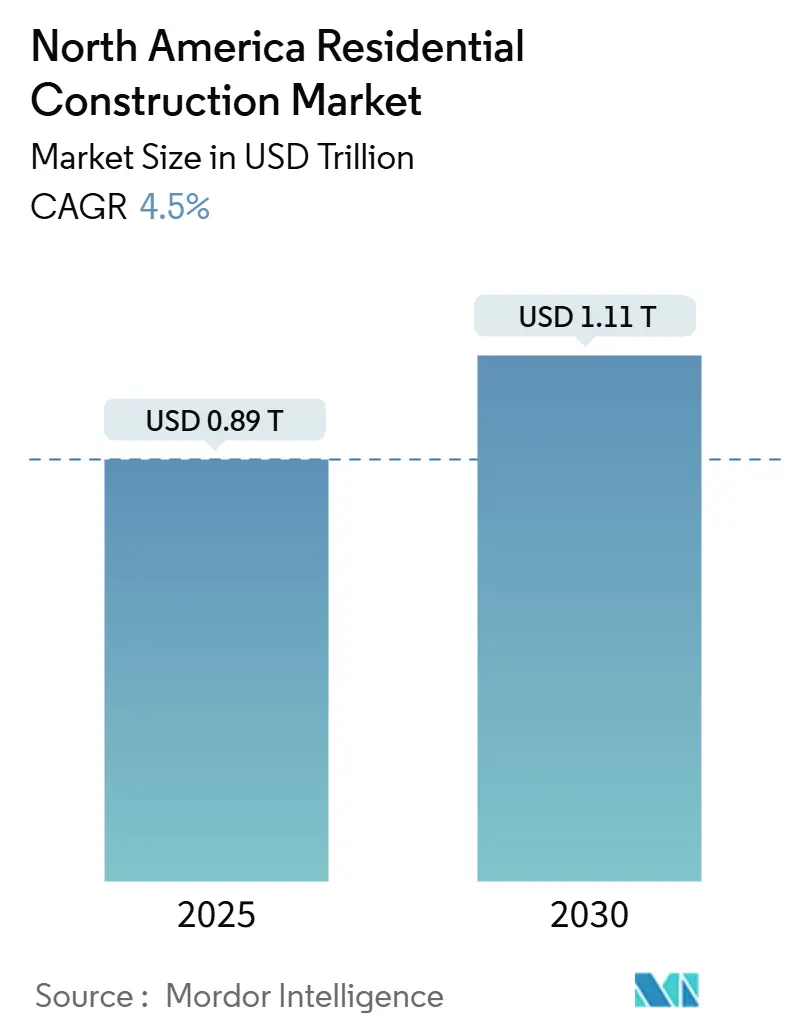
The North America Residential Construction Market size is estimated at USD 0.89 trillion in 2025, and is expected to reach USD 1.11 trillion by 2030, at a CAGR of 4.5% during the forecast period (2025-2030).
- North America's residential construction market faced significant challenges due to elevated mortgage rates and rising material costs, which suppressed housing demand. However, urban centers like New York City witnessed a strategic shift, with former office spaces being repurposed into residential units. This trend addressed housing shortages and revitalized urban areas, showcasing a creative solution to the region's housing crisis. Additionally, the market increasingly adopted sustainable building practices, integrating energy-efficient designs and eco-friendly materials to meet growing consumer demand for environmentally responsible housing.
- In Canada, the government introduced a USD 4 billion fund in 2023 under the National Housing Strategy to accelerate housing development. This initiative focuses on "missing-middle" housing, such as duplexes and triplexes, encouraging municipalities to implement pro-housing policies. These efforts aim to address the housing supply gap and cater to the growing demand for affordable housing options in urban and suburban areas.
- Canada's National Housing Strategy, launched in 2017 and expanded in 2024, represents a long-term commitment to affordable housing. The strategy includes investments in constructing new units, repairing aging housing stock, and providing targeted support for vulnerable populations. This comprehensive approach is expected to strengthen the residential construction market by addressing critical housing needs across the country.
- Technological advancements have significantly transformed North America's residential construction market. The adoption of Building Information Modeling (BIM) has improved project planning and collaboration, reducing errors and enhancing efficiency. For example, BIM has enabled developers to optimize resource allocation and streamline workflows, leading to faster project completions. The use of 3D printing, as demonstrated by the world's largest 3D-printed neighborhood in Texas, has expedited construction timelines and minimized material waste, offering a cost-effective solution for large-scale housing projects.
- Furthermore, drones and robotics have enhanced site inspections and safety protocols, while artificial intelligence has optimized project management and risk assessment. These innovations collectively drive efficiency, reduce costs, and improve the overall quality of residential construction in the region.
- In conclusion, while North America's residential construction market faces challenges such as high mortgage rates, labor shortages, and regulatory hurdles, innovative solutions and government initiatives are paving the way for growth. The integration of sustainable practices, technological advancements, and targeted housing policies is expected to strengthen the market, addressing housing shortages and meeting evolving consumer demands. As interest rates ease and urban redevelopment continues, the market is poised for steady progress in the coming years.
North America Residential Construction Market Trends and Insights
Renovation and Remodeling Activities Plays a Pivotal Role in Market
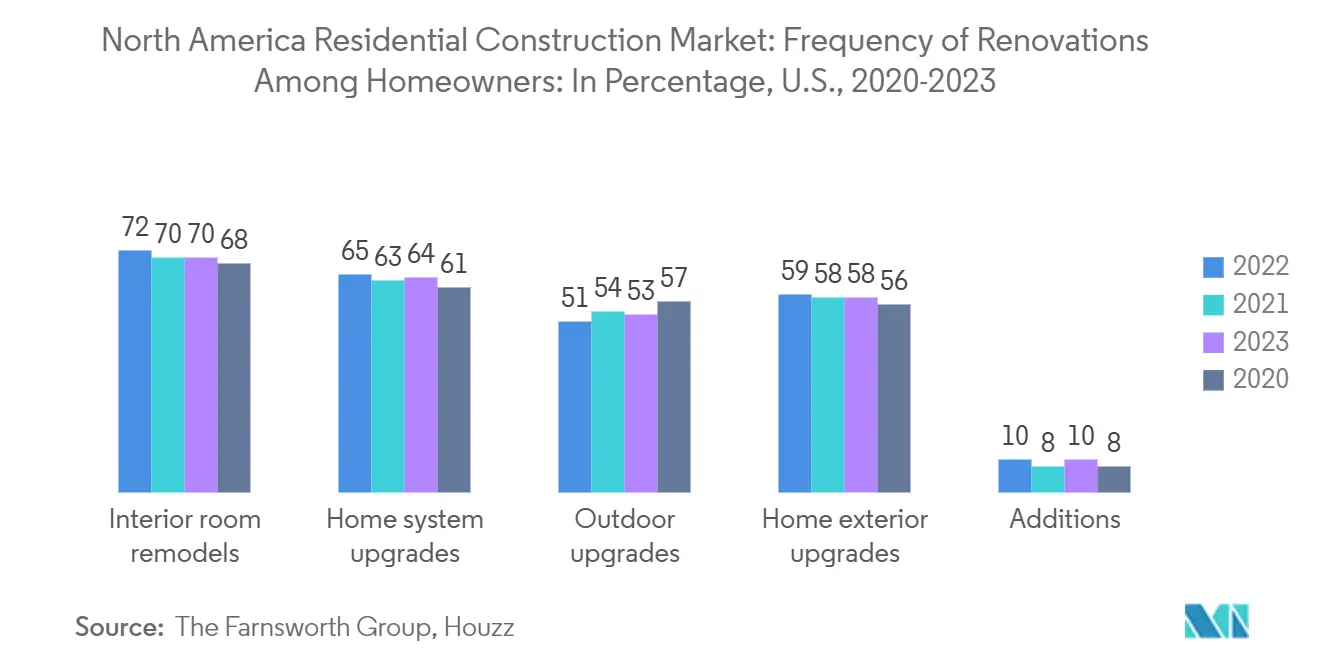
Home renovations are significantly influencing the North America residential construction market by driving demand for materials, labor, and services. These renovations are shaped by factors such as an aging housing stock, changing homeowner preferences, and a growing focus on energy efficiency, which are collectively steering trends and economic activities within the market.
Annual expenditures on improvements and repairs to owner-occupied homes are expected to decline by over 7% in the third quarter of 2024, with the rate of decline easing to -2.6% by the first quarter of 2025. This reflects a moderating downturn as the market moves toward stabilization. Conversions of former office spaces into residential apartments are emerging as a key trend, particularly in cities like New York, Washington, D.C., and Chicago. New York is projected to lead this transformation, with 8,310 office units set for residential conversion by 2025, representing a 59% increase from the previous year. This development is addressing housing shortages while revitalizing underutilized urban spaces, contributing to the growth of the residential construction market.
Residential remodeling activity is expected to remain steady in 2024 compared to 2023, with a nominal 2% increase anticipated in 2025. Limited housing inventory, an aging housing stock, and rising homeowner equity are sustaining demand for remodeling projects, further supporting the market's evolution. These developments underscore the dynamic nature of the North America residential construction market, where renovation and remodeling activities continue to play a pivotal role in addressing housing needs and adapting to changing market conditions.


U.S. Driving Growth in North America's Residential Construction Market
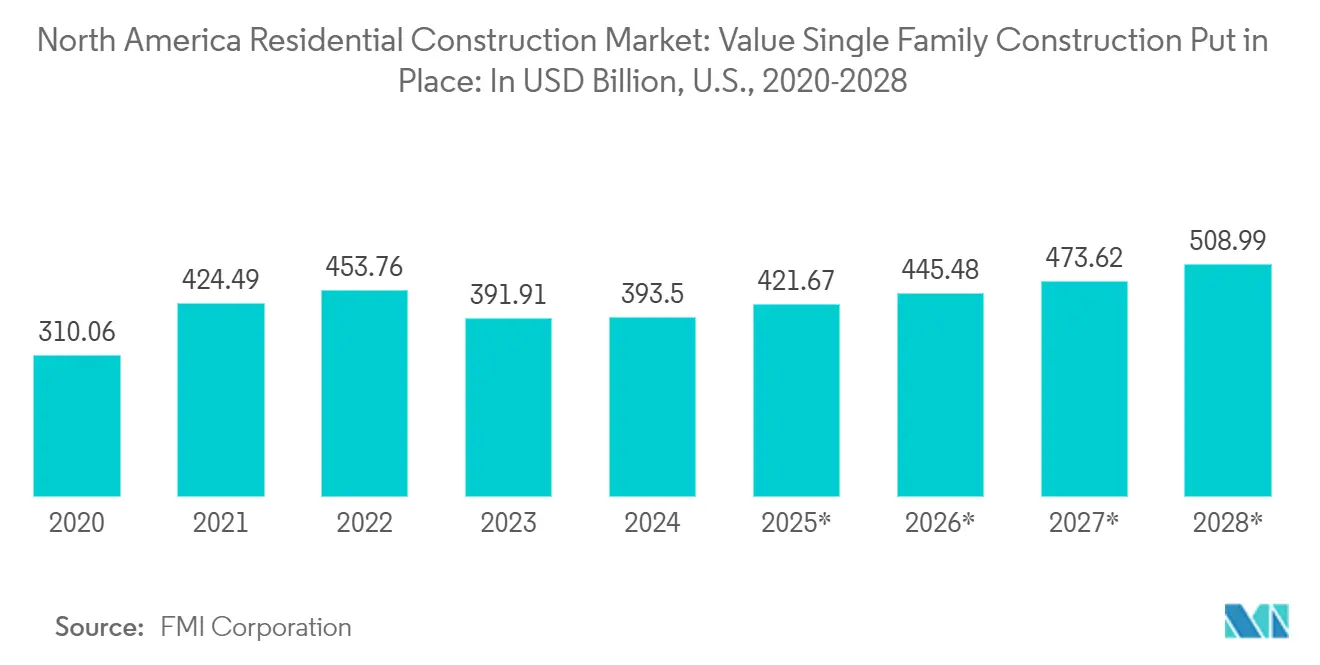
The United States continues to dominate the North American residential construction market, supported by strong housing demand, urbanization, and substantial investments in single-family and multi-family housing projects. These factors are shaping the market's growth trajectory and influencing regional construction trends.
In August 2024, new home starts in the U.S. rose by nearly 10% compared to the previous month. This increase reflects a response to the ongoing housing shortage and declining mortgage rates, which have collectively stimulated construction activity. The rise in home-building is contributing to the overall expansion of the residential construction market in North America.
By February 2025, cities such as New York, Washington, D.C., and Chicago are witnessing a growing trend of converting former office spaces into residential apartments. New York is leading this transformation, with 8,310 office units planned for residential conversion in 2025, representing a 59% increase from the previous year. This shift is addressing housing demand while revitalizing underutilized urban spaces, further driving the market's evolution.
Construction spending in the U.S. surpassed expectations in December 2024, with a 0.5% monthly increase driven by single-family homebuilding. On an annual basis, construction spending grew by 4.3% in December and by 6.5% throughout 2024. This sustained investment in residential projects highlights the U.S.'s pivotal role in shaping the North American residential construction market.
In conclusion, the U.S. remains a key driver of growth in the North American residential construction market. Factors such as increased housing demand, innovative urban transformations, and consistent investments in residential projects are collectively fostering market expansion and setting the stage for continued development in the forecast period.

Competitive Landscape
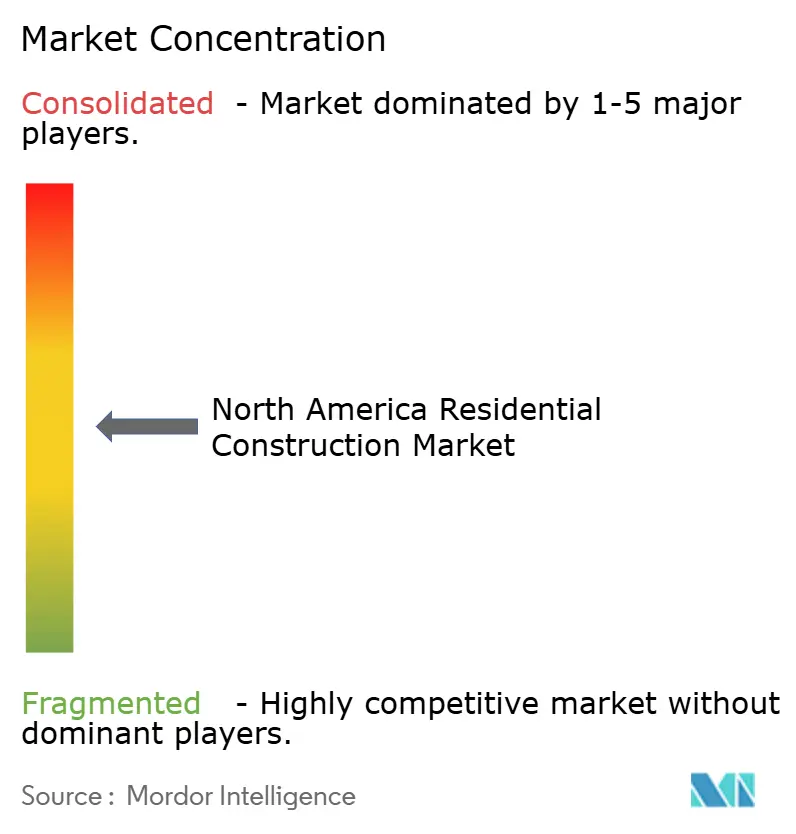
The North American residential construction market remains semi-consolidated, with a mix of large national builders and numerous regional firms. Companies such as D.R. Horton, Lennar Corporation, PulteGroup, NVR, and Toll Brothers hold significant market shares. However, the presence of smaller builders catering to local markets sustains competition and drives innovation, contributing to diverse housing solutions across the region. The semi-consolidated structure enables the market to adapt efficiently to regional housing demands and economic conditions.
For instance, in December 2024, PulteGroup acquired 4.5 acres from the Boynton Beach Community Redevelopment Agency (CRA) for the Cottage District project in the Heart of Boynton community. This development includes 41 for-sale residential units, comprising 19 single-family homes and 22 townhomes. Such initiatives reflect the evolving dynamics of the North American residential construction market, as builders address workforce housing needs and expand their regional footprints. PulteGroup’s milestone of constructing its 100th workforce housing home in the County highlights the growing focus on affordable housing solutions.
North America Residential Construction Industry Leaders
Lennar Corporation
D. R. Horton
PulteGroup
NVR
Toll Brothers, Inc.
- *Disclaimer: Major Players sorted in no particular order

Recent Industry Developments
- December 2024: Davidson Bogel Real Estate announced the expansion of DR Horton's master-planned community, Silverado, with the purchase of 32 adjacent acres for an additional phase. This development highlights the ongoing growth and investment in the North America Residential Construction market.
- November 2024: Lennar Corporation disclosed its agreement to acquire Rausch Coleman Homes, a residential builder based in Fayetteville, Arkansas. The acquisition, which includes operations expected to deliver approximately 5,000 homes in 2024 at an average sales price of USD 230,000, reflects the evolving dynamics of the North America Residential Construction market.


North America Residential Construction Market Report Scope
The residential construction market is defined as the sector encompassing the planning, development, and construction of housing units, including single-family homes, multi-family apartments, and condominiums. It involves various stakeholders such as developers, contractors, architects, and material suppliers. The market is influenced by factors like urbanization, population growth, government policies, and economic conditions. Advancements in construction technology, sustainable building practices, and smart home integration are shaping its evolution. Demand varies based on housing affordability, mortgage rates, and regional infrastructure development.
The North America residential construction market is segmented by property type (single family and multi-family), construction type (new construction and renovation), and region (United States, Canada, and Mexico). The report offers market size and market forecasts for North America residential construction market in value (USD).
| Single Family |
| Multi-family |
| New Construction |
| Renovation |
| United States |
| Canada |
| Mexico |
| By Property Type | Single Family |
| Multi-family | |
| By Construction Type | New Construction |
| Renovation | |
| By Region | United States |
| Canada | |
| Mexico |


Key Questions Answered in the Report
How big is the North America Residential Construction Market?
The North America Residential Construction Market size is expected to reach USD 0.89 trillion in 2025 and grow at a CAGR of 4.5% to reach USD 1.11 trillion by 2030.
What is the current North America Residential Construction Market size?
In 2025, the North America Residential Construction Market size is expected to reach USD 0.89 trillion.
Who are the key players in North America Residential Construction Market?
Lennar Corporation, D. R. Horton, PulteGroup, NVR and Toll Brothers, Inc. are the major companies operating in the North America Residential Construction Market.
What years does this North America Residential Construction Market cover, and what was the market size in 2024?
In 2024, the North America Residential Construction Market size was estimated at USD 0.85 trillion. The report covers the North America Residential Construction Market historical market size for years: 2019, 2020, 2021, 2022, 2023 and 2024. The report also forecasts the North America Residential Construction Market size for years: 2025, 2026, 2027, 2028, 2029 and 2030.
Page last updated on:
North America Residential Construction Market Report
Statistics for the 2025 North America Residential Construction market share, size and revenue growth rate, created by Mordor Intelligence™ Industry Reports. North America Residential Construction analysis includes a market forecast outlook for 2025 to 2030 and historical overview. Get a sample of this industry analysis as a free report PDF download.


 Your data is secure and never sold or shared.


