
North America DNA Sequencing Market Size and Share
| Study Period | 2021 - 2030 |
| Forecast Data Period | 2025 - 2030 |
| Historical Data Period | 2021 - 2023 |
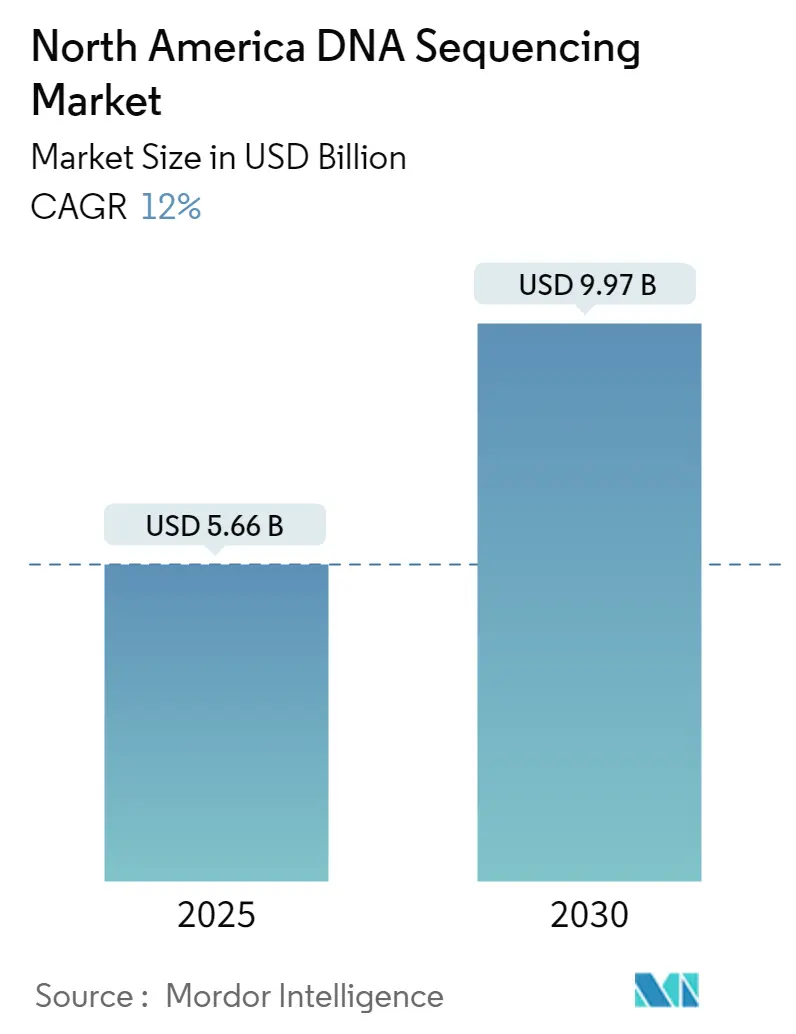
| Market Size (2025) | USD 5.66 Billion |
| Market Size (2030) | USD 9.97 Billion |
| CAGR (2025 - 2030) | 12.00% |
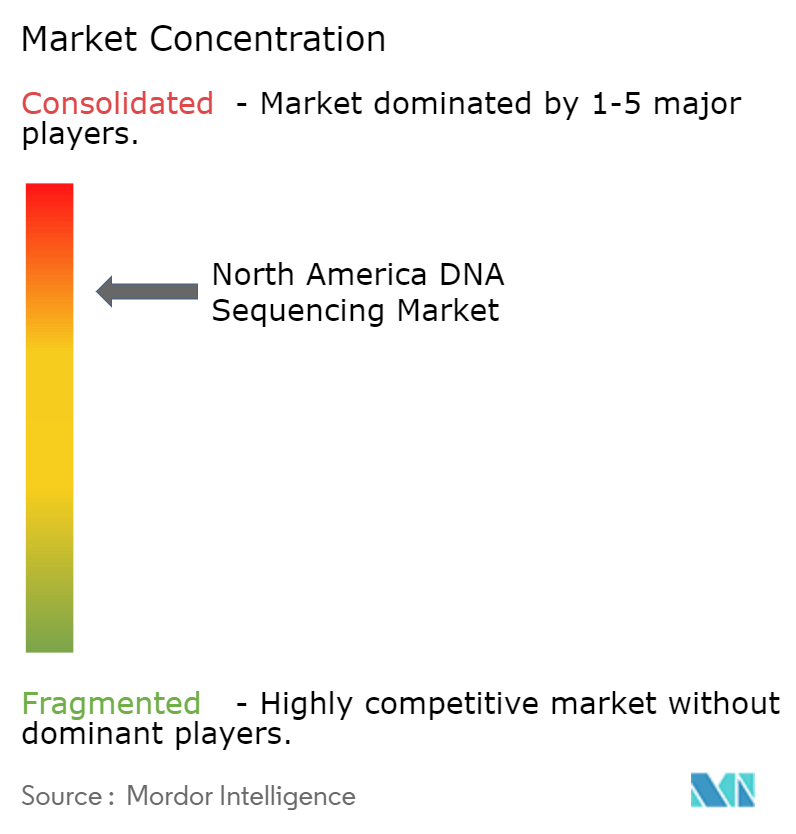
| Market Concentration | High |
Major Players *Disclaimer: Major Players sorted in no particular order |
North America DNA Sequencing Market Analysis by Mordor Intelligence
The North America DNA Sequencing Market size is estimated at USD 5.66 billion in 2025, and is expected to reach USD 9.97 billion by 2030, at a CAGR of 12% during the forecast period (2025-2030).
DNA sequencing identifies the exact order of nucleotides in a DNA molecule, providing crucial genetic insights. This technology is integral to genomics, personalized medicine, and biological research. Key drivers such as technological advancements in DNA sequencing, increased R&D investments, expanding applications in drug discovery and clinical diagnostics, and the rising adoption of personalized medicine are expected to drive market growth during the forecast period.
Technological advancements in DNA sequencing have resulted in more accurate and cost-effective methods. For instance, a May 2023 article in the National Institutes of Health highlighted that these advanced methods not only reduced costs and streamlined processes but also clarified molecular mechanisms of cellular functions and genomic structures.
Moreover, in July 2023, an article in Biology noted that advancements and versatility of next-generation sequencing platforms expanded the scope of genomic research, aiding fields like cancer research, population genetics, and microbiome analysis. Such advancements in sequencing technologies present promising growth opportunities for the market in the coming years.
Additionally, the market is buoyed by intensified research efforts aimed at developing DNA sequencing platforms for precise disease diagnosis. For instance, in June 2023, researchers from the Perelman School of Medicine at the University of Pennsylvania unveiled a technique to map DNA markings, specifically 5-methylcytosine (5mC), crucial for gene expression and health.
This innovative method allows profiling DNA from minuscule, undamaged samples, making it ideal for liquid biopsies and early cancer detection. Notably, it can distinctly identify 5mC without confusing it with other common markings, a significant edge over existing methods.
Moreover, in April 2023, scientists from Harvard and the Broad Institute of MIT introduced a novel NGS approach that identifies genetic mutations in single DNA molecules. This breakthrough can facilitate early cancer detection using blood samples. Such intensified research endeavors are poised to bolster market expansion during the study period.
Furthermore, the surge in the launch of advanced DNA sequencing platforms is set to drive market growth. For instance, in October 2023, the United States Food and Drug Administration granted de novo marketing authorization for the InVitae Common Hereditary Cancers Panel, designed to pinpoint genetic predispositions to various cancers. Therefore, such growing regulatory approvals of novel products are anticipated to foster the industry uptake over the coming years.
Moreover, the surge in collaborations as well as partnerships are further projected to offer the growth momentum for the industry growth. For instance, in July 2024, Labcorp expanded its collaboration with Ultima Genomics, harnessing the UG 100 sequencing solution and ppmSeq technology. This partnership aims to delve into new clinical applications for whole genome sequencing (WGS), particularly focusing on molecular residual disease (MRD) in patients with early-stage solid tumor cancers. Such strategic collaborations are anticipated to propel market growth further.
In conclusion, the aforementioned factors such as technological advancements in DNA sequencing, growing research and development investments, and their growing applications in drug discovery and clinical diagnostics are poised to drive the market's growth. However, challenges like interpreting intricate data and a shortage of skilled professionals could temper this growth during the forecast period.
Worldwide, activity is shaped by contributions from multiple regions, with North america representing one of the more structurally developed among them. The global report on dna sequencing market by Mordor Intelligence reflects how these regional layers combine into a single system.
North America DNA Sequencing Market Trends and Insights
Next-generation Sequencing (NGS) Segment is Expected to Dominate the North America DNA Sequencing Market during the Forecast Period
Next-generation Sequencing (NGS) is at the forefront of the DNA Sequencing industry, driven by its expanding applications in clinical diagnostics, speed, and precision. Compared to traditional methods like microarrays, NGS enhances efficiency, fueling market growth. In addition, the expanding applications of NGS in precision medicine development and growing efforts by market players to develop NGS based diagnostics are further anticipated to propel segment growth.
The increasing adoption of NGS in clinical diagnostics, combined with its speed, cost-effectiveness, and accuracy, is set to further propel market expansion. Studies highlight NGS's superiority over traditional sequencing methods, offering advantages such as higher throughput with sample multiplexing, enhanced sensitivity for detecting low-frequency variants, quicker turnaround for large sample volumes, and reduced costs.
For instance, in May 2023, Tempus, a player in artificial intelligence and precision medicine, achieved a milestone with the FDA's approval of its first Premarket Approval (PMA) application. Their xT CDx, a 648-gene NGS test, specializes in solid tumor profiling, including microsatellite instability status and serving as a companion diagnostic for colorectal cancer patients.
Research indicates NGS's capability in massively parallel sequencing, steadily replacing conventional Sanger sequencing. This shift underscores the rising demand for swift and economical sequencing solutions. Given these advantages, NGS is poised to drive market growth in the coming years.
Moreover, NGS's cost efficiency, especially compared to other sequencing methods, presents significant growth opportunities. An article from "Value in Health" in September 2024 highlighted NGS's role in detecting multiple biomarkers as a cost-effective alternative to single-gene assays. Such economic benefits are likely to amplify NGS's adoption, propelling segment growth in the foreseeable future.
Market participants are actively pursuing both organic and inorganic growth strategies, further fueling segment expansion. For example, Agilent Technologies Inc's acquisition of Avida Biomed in January 2023. Avida, an emerging player in life sciences, specializes in high-performance target enrichment workflows. This strategic move bolstered Agilent's offerings for clinical researchers leveraging NGS in cancer studies. Such strategic acquisitions are projected to bolster segment expansion over the projected period.
In summary, factors such as strategic initiatives by key players, NGS's efficiency over traditional methods, its rising prominence in drug discovery, and its growing role in clinical diagnostics collectively signal a robust growth trajectory for the segment.


United States is Expected to Exhibit Lucrative Market Growth in the North America DNA Sequencing Market
The United States is set to retain a significant market share in the forthcoming years. DNA Sequencing, particularly NGS-based technologies, is increasingly becoming a standard in clinical diagnostics. Market growth is driven by the rising prevalence of chronic and infectious diseases, increased genomics spending, and new product launches by key players.
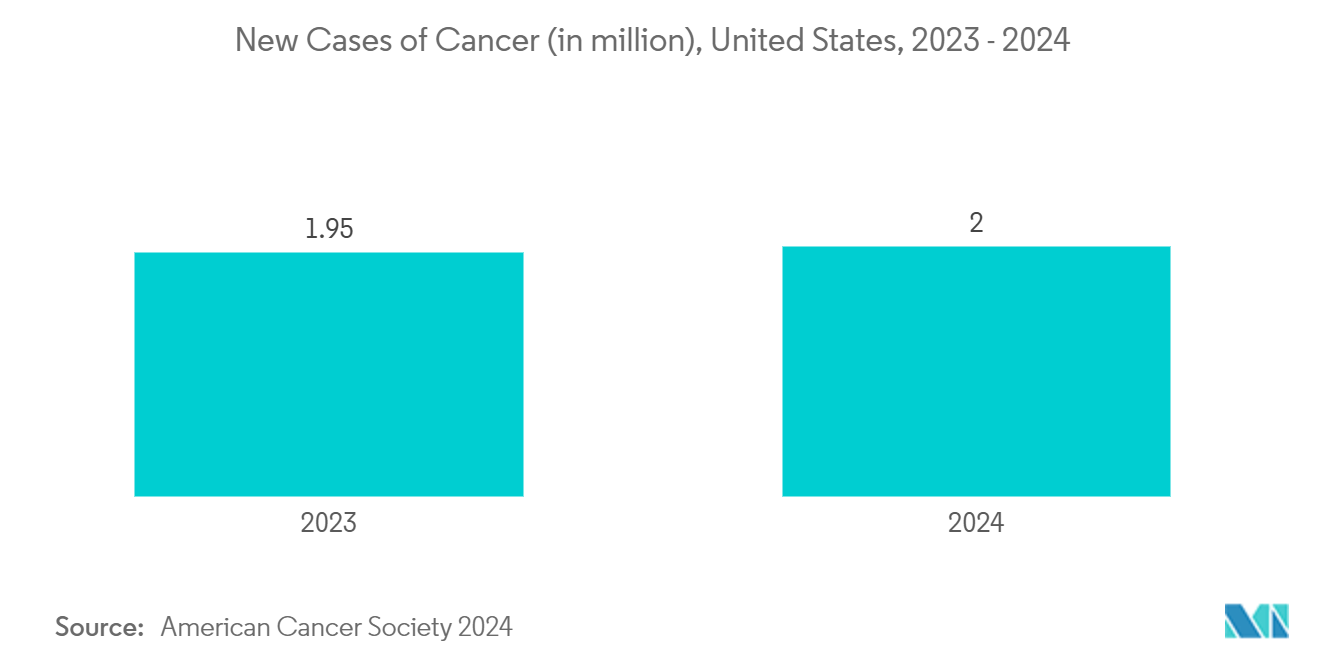
The growing burden of chronic diseases is anticipated to propel the country's market growth. For instance, the American Cancer Society estimates that new cancer cases in the United States will increase from 1.9 million in 2023 to 2.0 million in 2024. In 2023, the most common cancers were breast, lung, and hematological malignancies. Similarly, the Canadian Cancer Society reports that cancer cases in Canada will rise from 239,100 in 2023 to 247,100 in 2024.
This increase in disease incidence is driving the adoption of NGS technology for comprehensive tumor genomic profiling, thereby boosting the North American DNA Sequencing Market.
Additionally, increased investments in DNA and genomics research are expected to drive the demand for DNA Sequencing devices. For example, the National Institutes of Health (NIH) projects U.S. spending on cancer genomics to rise from USD 4,902 million in 2024 to USD 5,228 million in 2025. These financial commitments are anticipated to bolster the demand for DNA sequencing, driving regional market growth.
Furthermore, product innovations by leading players are expected to further stimulate North America's DNA sequencing market. For instance, in August 2024, Ambry Genetics, a subsidiary of REALM IDx, Inc, launched the ExomeReveal test in the United States. This advanced multiomic exome sequencing test promises superior rare disease detection compared to conventional methods. Such innovations and strategic initiatives by industry leaders are poised to enhance regional market growth.
In summary, the combination of rising disease prevalence, increased genomics investments, and proactive developments by key players positions North America's DNA sequencing market for significant growth.

Competitive Landscape
The North American DNA sequencing market is highly competitive and has significant players. The companies are engaged in undertaking several organic as well as inorganic growth strategies to bolster their revenue shares. Some of the key players operating in the market include Agilent Technologies Inc., Bio-Rad Laboratories, Inc., Danaher, F. Hoffmann-La Roche Ltd, Illumina, Inc., Merck KGaA, Revvity, Thermo Fisher Scientific Inc., QIAGEN, Eurofins Genomics LLC, among others.
North America DNA Sequencing Industry Leaders
Agilent Technologies Inc.
Bio-Rad Laboratories, Inc.
F. Hoffmann-La Roche Ltd
Thermo Fisher Scientific Inc.
QIAGEN
- *Disclaimer: Major Players sorted in no particular order

Recent Industry Developments
- October 2024: Illumina launched a new benchtop next-generation sequencing (NGS) system aimed at increasing accessibility for smaller laboratories. This initiative was intended to broaden the use of NGS technology in a wider range of clinical settings.
- January 2024: Illumina Inc., a key player in DNA sequencing and array-based technologies, collaborated with Nashville Biosciences, LLC (NashBio) and announced the addition of three new Alliance for Genomic Discovery (AGD) members.


North America DNA Sequencing Market Report Scope
As per the scope of the report, the North America DNA sequencing market refers to the collective industry encompassing the research, development, manufacturing, and commercialization of DNA sequencing technologies and related services within the geographical region of North America. This market involves the analysis of the nucleotide sequences in DNA molecules, employing various sequencing technologies such as Next-Generation Sequencing (NGS), Sanger Sequencing, and Third-Generation Sequencing.
The North America DNA sequencing market is segmented by product type, sequencing type, application and end user. Based on product type the market is segmented as instruments, consumables, and other product types. Based on sequencing type, the market is segmented as, sanger sequencing, next-generation sequencing, and other sequencing types. Based on application the market is segmented as diagnostics, personalized medicine, and other applications. Based on end user the market is segmented as hospitals and healthcare organizations, academics and research institutions, and pharmaceutical and biotechnology companies. By country, the market is segmented into the United States, Canada, and Mexico. The report also covers the market sizes and forecasts for the North America DNA sequencing market in major countries across North America. For each segment, the market size is provided in terms of value (USD).
| Instruments |
| Consumables (Kits and Reagents) |
| Other Product Types (Data Storage Solutions, Single-Cell Sequencing Products) |
| Sanger Sequencing |
| Next-generation Sequencing |
| Other Sequencing Types (Third Generation Sequencing, Clinical Sequencing) |
| Diagnostics |
| Personalized Medicine |
| Other Applications (Reproductive Health, Consumer Genomics) |
| Hospitals and Healthcare Organizations |
| Academics and Research Institutions |
| Pharmaceutical and Biotechnology Companies |
| United States |
| Canada |
| Mexico |
| By Product Type | Instruments |
| Consumables (Kits and Reagents) | |
| Other Product Types (Data Storage Solutions, Single-Cell Sequencing Products) | |
| By Sequencing Type | Sanger Sequencing |
| Next-generation Sequencing | |
| Other Sequencing Types (Third Generation Sequencing, Clinical Sequencing) | |
| By Application | Diagnostics |
| Personalized Medicine | |
| Other Applications (Reproductive Health, Consumer Genomics) | |
| By End User | Hospitals and Healthcare Organizations |
| Academics and Research Institutions | |
| Pharmaceutical and Biotechnology Companies | |
| Geography | United States |
| Canada | |
| Mexico |


Key Questions Answered in the Report
How big is the North America DNA Sequencing Market?
The North America DNA Sequencing Market size is expected to reach USD 5.66 billion in 2025 and grow at a CAGR of 12% to reach USD 9.97 billion by 2030.
What is the current North America DNA Sequencing Market size?
In 2025, the North America DNA Sequencing Market size is expected to reach USD 5.66 billion.
Who are the key players in North America DNA Sequencing Market?
Agilent Technologies Inc., Bio-Rad Laboratories, Inc., F. Hoffmann-La Roche Ltd, Thermo Fisher Scientific Inc. and QIAGEN are the major companies operating in the North America DNA Sequencing Market.
What years does this North America DNA Sequencing Market cover, and what was the market size in 2024?
In 2024, the North America DNA Sequencing Market size was estimated at USD 4.98 billion. The report covers the North America DNA Sequencing Market historical market size for years: 2021, 2022, 2023 and 2024. The report also forecasts the North America DNA Sequencing Market size for years: 2025, 2026, 2027, 2028, 2029 and 2030.
Page last updated on:
North America DNA Sequencing Market Report
Statistics for the 2025 North America DNA Sequencing market share, size and revenue growth rate, created by Mordor Intelligence™ Industry Reports. North America DNA Sequencing analysis includes a market forecast outlook for 2025 to 2030 and historical overview. Get a sample of this industry analysis as a free report PDF download.





