
Genomics In Cancer Care Market Size and Share
Market Overview
| Study Period | 2020 - 2031 |
|---|---|
| Forecast Data Period | 2026 - 2031 |
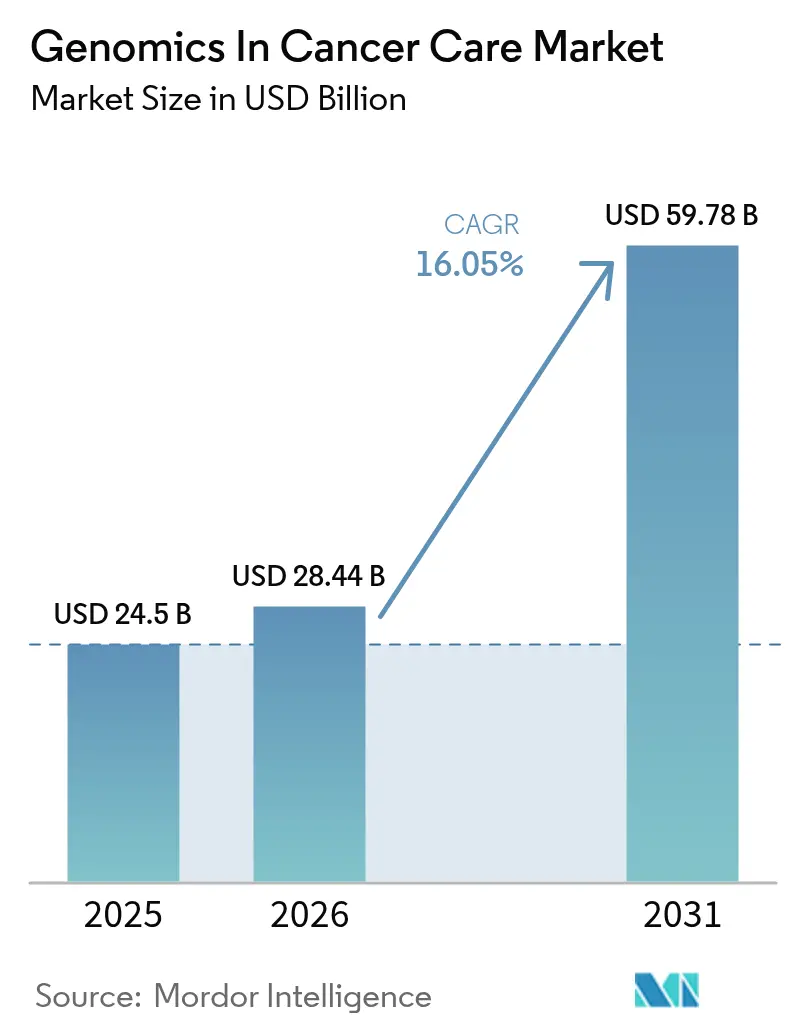
| Market Size (2026) | USD 28.44 Billion |
| Market Size (2031) | USD 59.78 Billion |
| Growth Rate (2026 - 2031) | 16.05 % |
| Fastest Growing Market | Asia Pacific |
| Largest Market | North America |
Major Players *Disclaimer: Major Players sorted in no particular order Image © Mordor Intelligence. Reuse requires attribution under CC BY 4.0. | |
Genomics In Cancer Care Market Analysis by Mordor Intelligence
Genomics in the cancer care market size in 2026 is estimated at USD 28.44 billion, growing from 2025 value of USD 24.5 billion with 2031 projections showing USD 59.78 billion, growing at 16.05% CAGR over 2026-2031. The surge reflects sustained technology innovation, harmonized regulation, and expanding clinical validation that make genomic testing central to precision oncology. Broader Medicare reimbursement for liquid biopsy, falling sequencing costs that bring whole-genome testing close to the USD 100 threshold, and rapid integration of artificial-intelligence decision tools are reshaping therapeutic strategies toward proactive, molecularly guided care. Competitive intensity accelerates as platform vendors converge with analytics specialists, and as single-molecule, real-time sequencing begins to erode short-read NGS dominance. Together, these dynamics reinforce a structural transition from one-off diagnostic assays to longitudinal, data-rich solutions that inform every stage of the oncology journey.
Key Report Takeaways
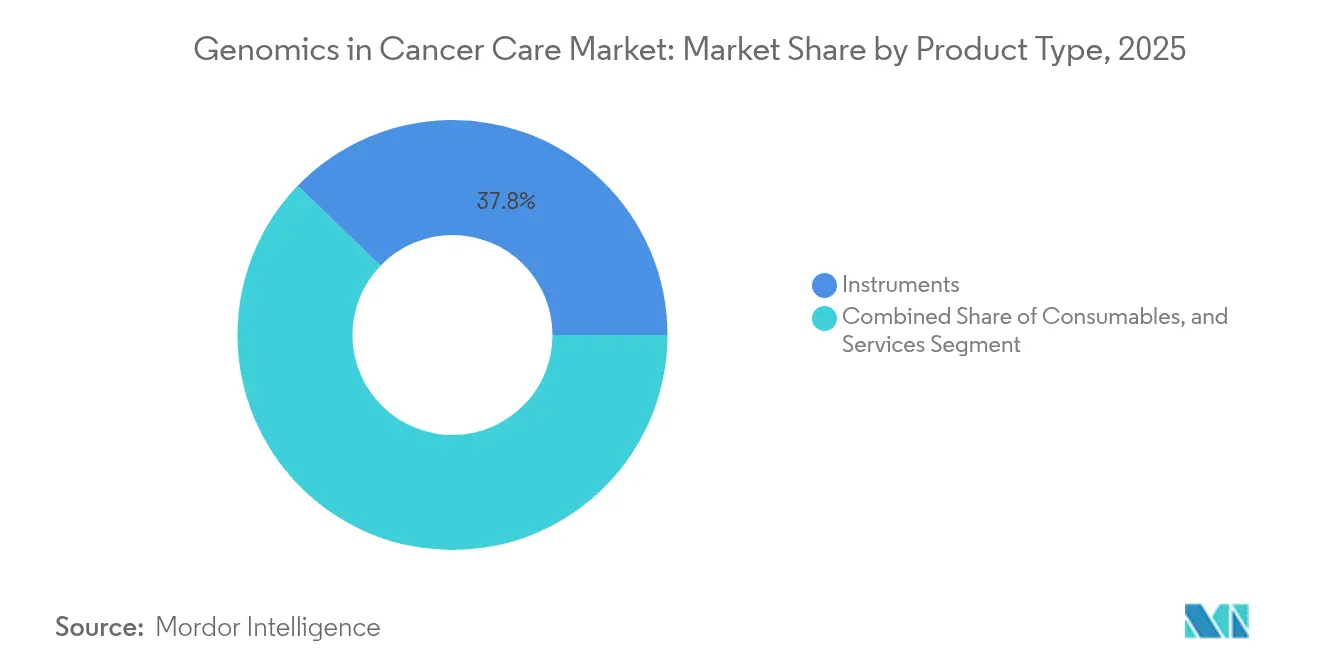
- By product type, instruments led with 37.80% revenue share in 2025, while services are projected to grow at an 18.35% CAGR through 2031.
- By technology, genome sequencing commanded 45.70% of the genomics in cancer care market share in 2025, and single-molecule real-time sequencing is advancing at a 22.85% CAGR to 2031.
- By application, diagnostics held 52.00% of the genomics in cancer care market size in 2025; minimal-residual-disease monitoring and liquid biopsy is expanding at a 20.65% CAGR.
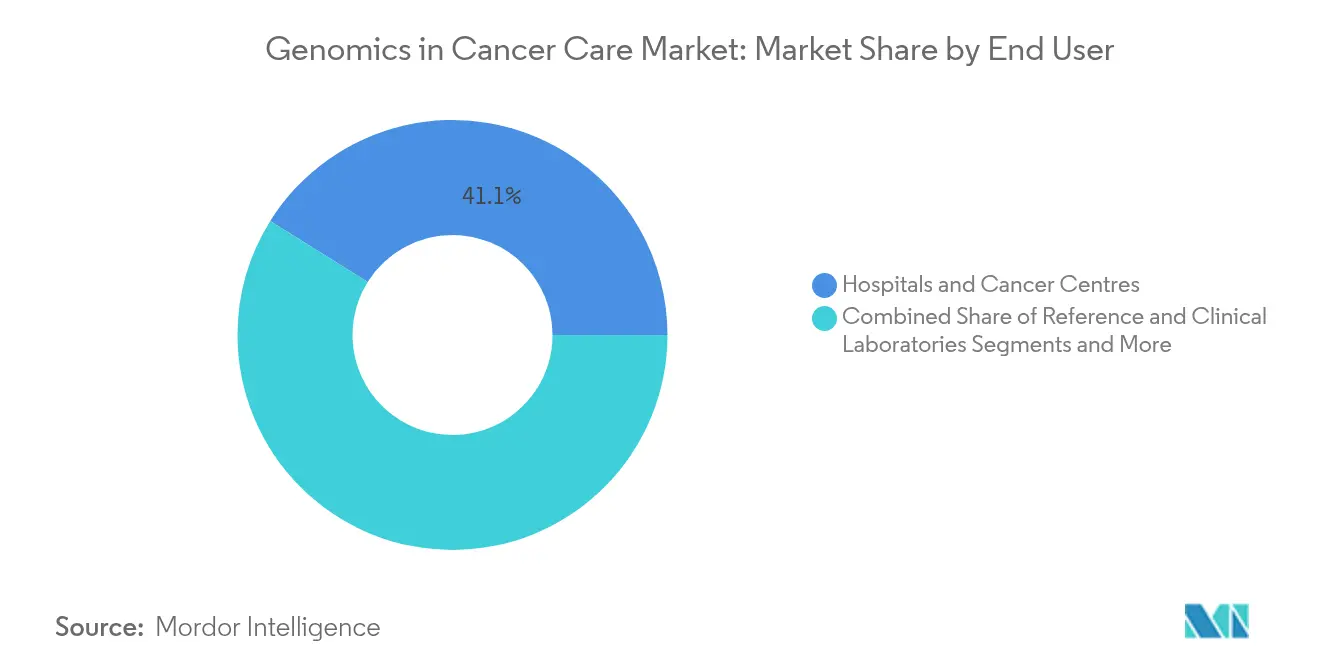
- By end-user, hospitals and cancer centers accounted for 41.10% of the genomics in cancer care market size in 2025, while reference and clinical laboratories are rising at a 17.35% CAGR.
- By geography, North America contributed 36.60% market share in 2025, and Asia-Pacific posted the fastest regional CAGR at 14.55%.
Note: Market size and forecast figures in this report are generated using Mordor Intelligence’s proprietary estimation framework, updated with the latest available data and insights as of 2026.
Market Trends and Insights
Drivers Impact Analysis of Genomics In Cancer Care Market*
| Driver | (~) % Impact on CAGR Forecast | Geographic Relevance | Impact Timeline |
|---|---|---|---|
| Growing burden of cancer & earlier screening | +3.20% | Global, concentrated in North America & Europe | Medium term (2-4 years) |
| Increasing adoption of NGS-based CGP | +4.10% | North America & EU, expanding to Asia-Pacific | Short term (≤ 2 years) |
| Rapid sequencing and digital-PCR cost decline | +2.80% | Global, accelerated in emerging markets | Long term (≥ 4 years) |
| Scaling liquid-biopsy MRD pipelines | +3.50% | North America & EU, early expansion in Asia-Pacific | Medium term (2-4 years) |
| AI-powered multi-omic decision tools | +1.90% | North America & EU, limited penetration in emerging markets | Long term (≥ 4 years) |
| Rise of reimbursement for tumor-agnostic CDx | +2.40% | North America & EU, gradual adoption in Asia-Pacific | Medium term (2-4 years) |
| Source: Mordor Intelligence | |||
Growing Burden of Cancer & Earlier Screening Programs
Robust growth in global cancer incidence is compelling health-system planners to shift resources toward preventive genomic screening. Latin America alone projects a 66% rise in cancer cases by 2040, intensifying pressure to catch malignancies at sub-clinical stages. U.S. agencies embraced blood-based detection when the FDA cleared Guardant Health’s Shield test for colorectal screening in adults aged 45 and older, setting a precedent for non-invasive assays.[1] Large population trials such as the National Cancer Institute’s Vanguard study employ the same platform to test multi-cancer detection across diverse cohorts. These developments create long-term reimbursement pathways, foster payer confidence, and bolster recurring revenue streams for test developers while lowering downstream treatment costs.
Increasing Adoption Of NGS-Based Comprehensive Genomic Profiling
Oncology practices are migrating from sequential single-gene tests toward expansive panels that interrogate hundreds of loci in one run. Evidence from the GOZILA trial showed patients guided by the Guardant360 CDx liquid biopsy achieved a median overall survival of 18.6 months compared with 9.9 months under standard care. Illumina’s TruSight Oncology Comprehensive became the first FDA-cleared kit with pan-cancer companion-diagnostic claims.[2] Coupled with AI analytics, laboratories now deliver clinically actionable reports within days, and U.S. Medicare increasingly reimburses broad panels over iterative assays, accelerating mainstream uptake.
Rapid Cost Decline of Sequencing & Digital PCR Reagents
PacBio’s SPRQ chemistry for Revio systems cut HiFi whole-genome sequencing costs below USD 500 while preserving accuracy. The University of Minnesota Genomics Center reported an additional 20% drop after adopting AVITI technology, surpassing Illumina NovaSeq X Plus on cost-per-gigabase metrics. Roche’s sequencing-by-expansion prototypes promise throughput capable of seven 30× human genomes per hour. These breakthroughs help institutions in emerging economies overcome budget barriers and lay the groundwork for point-of-care genomic testing models.
Scaling Liquid-Biopsy Pipelines for Minimal-Residual-Disease (MRD) Monitoring
Exact Sciences’ OncoDetect test identifies colorectal-cancer recurrence up to two years earlier than imaging by scanning 200 ctDNA variants. A 2,000-patient colon-cancer study showed 62.6% of ctDNA-positive cases relapsed within three years versus 15.4% of ctDNA-negative cases, reinforcing MRD’s prognostic power. The FDA guidance on ctDNA endpoints sponsors use liquid biopsy for accelerated approval pathways.[3] With CMS covering Guardant Reveal in postoperative surveillance, economic and regulatory alignment is propelling wide adoption.
Restraints Impact Analysis of Genomics In Cancer Care Market*
| Restraint | (~) % Impact on CAGR Forecast | Geographic Relevance | Impact Timeline |
|---|---|---|---|
| Shortage Of Accredited Molecular Pathologists | -2.10% | Global, with acute shortages in emerging markets | Long term (≥ 4 years) |
| Persistently High Total-Cost-Of-Ownership For WGS Platforms | -1.80% | Global, with disproportionate impact on emerging markets | Medium term (2-4 years) |
| Cyber-Security & Genomic-Data-Sovereignty Regulation | -1.30% | North America & EU core, expanding to APAC | Medium term (2-4 years) |
| Limited Clinical-Utility Evidence For Emerging MRD Assays | -0.90% | Global, with regulatory focus in North America & EU | Short term (≤ 2 years) |
| Source: Mordor Intelligence | |||
Shortage Of Accredited Molecular Pathologists
Worldwide demand for professionals who can translate multi-omic data into clinical action far exceeds supply. Training requirements encompass molecular biology, bioinformatics, and oncology subspecialties, competencies that extend beyond legacy pathology curricula. Emerging economies face added challenges as talent migrates to higher-income regions. AI tools lighten routine interpretation workloads, yet regulations still require board-certified oversight for final sign-off. Fast-track certification programs are under development, but workforce expansion will lag market growth for several years.
Persistently High Total-Cost-Of-Ownership for WGS Platforms
While reagent costs keep falling, capital outlays for high-throughput sequencers, environmental controls, secure data storage, and specialized staffing remain steep. Mid-sized hospitals in emerging economies must often send samples to external reference labs, slowing turnaround and limiting the accrual of in-house expertise. Cloud bioinformatics services reduce hardware needs, but data-sovereignty rules and cybersecurity obligations raise separate compliance expenses. Sequencing-as-a-service models continue to mature, yet have not fully resolved budget constraints.
*Our forecasts treat driver/restraint impacts as directional, not additive. The impact forecasts reflect baseline growth, mix effects, and variable interactions.
Genomics In Cancer Care Market Segment Analysis
By Product Type:
Services Drive Growth Despite Instruments DominanceInstruments represented the largest revenue pool, holding 37.80% share of the genomics in the cancer care market in 2025. Demand reflected ongoing platform refresh cycles as users swapped legacy sequencers for higher-throughput, longer-read systems. Consumables sales expanded in line with test-volume growth, while point-of-care cartridges opened new, decentralized channels.
Services are accelerating at an 18.35% CAGR, underscoring a shift toward data interpretation, cloud analytics, and integrated clinical reporting. Guardant Health’s 31% revenue jump to USD 737 million during 2024 shows the pull of recurring testing and bioinformatics fees. Hospitals increasingly outsource bioinformatics to mitigate staffing shortages, and bundled, end-to-end service contracts now cover sample logistics, sequencing, interpretation, and decision-support updates. This evolution positions service providers as strategic partners rather than transactional suppliers within the genomics in cancer care market.

By Technology:
Single-Molecule Sequencing Disrupts NGS DominanceGenome sequencing platforms based on short-read NGS secured 45.70% market share in 2025, supported by established laboratory workflows and extensive clinical evidence. Yet single-molecule, real-time sequencing is expanding at a startling 22.85% CAGR as oncologists seek structural-variant resolution in repeat-rich regions and methylation layers unavailable from short reads.
Oxford Nanopore’s latest chemistry generated complete chromosome assemblies and simultaneous epigenetic maps, demonstrating the clinical readiness of long-read approaches. Meanwhile, Roche’s sequencing-by-expansion prototypes promise to merge long reads with high throughput, threatening to redraw product-replacement cycles. PCR-based kits retain value for low-plex companion diagnostics and rapid EGFR or KRAS checks, yet microarrays are ceding ground as sequencing prices near parity. Technology diversity ensures that laboratories can align platform choice with specific oncology use cases inside the genomics in cancer care market.
By Application:
MRD Monitoring Accelerates Beyond DiagnosticsDiagnostics maintained 52.00% of the genomics in the cancer care market size in 2025 through entrenched companion-diagnostic pathways and payer familiarization. Routine EGFR, BRAF, and PIK3CA panels anchor laboratory revenue streams.
Minimal-residual-disease and liquid-biopsy assays, growing at a 20.65% CAGR, are redefining follow-up protocols. The SERENA-6 trials verified that ctDNA-guided treatment switches halve the progression risk for ER-positive breast-cancer patients with emergent ESR1 mutations. Pharma sponsors now embed MRD endpoints in adjuvant-therapy trials, which reinforce assay volumes post-approval. Drug-discovery genomics and precision-oncology decision platforms further enlarge the pipeline, supplying biomarker insights during early clinical development and supporting adaptive trial designs.
By End-user:
Reference Labs Gain Share Through Specialized CapabilitiesHospitals and cancer centers generated 41.10% of 2025 revenue, leveraging on-site pathology and integrated care teams to run high-throughput panels for newly diagnosed patients. Yet reference and clinical laboratories exhibit the fastest momentum at 17.35% CAGR, bolstered by economies of scale and capital-intensive automation that lower per-sample costs.
Labcorp’s partnership with Ultima Genomics to expand whole-genome offerings and to launch Plasma Detect ctDNA MRD illustrates reference labs’ strategic positioning. Pharmaceutical and biotech firms intensify demand for high-complexity assays to stratify trial subjects, while academic institutes pilot novel technologies before broader rollout. Together, these segments create a complementary ecosystem in which centralized expertise coexists with bedside sequencing in the genomics market for cancer care.
Geography Analysis
North America Genomics in Cancer Care Market
North America led with 36.60% market share in 2025, supported by broad payer coverage, a mature clinical-trial network, and stringent but predictable regulatory oversight. The FDA’s May 2024 Laboratory Developed Tests final rule aligned quality requirements across commercial and academic laboratories. Parallel Medicare decisions extended reimbursement to liquid-biopsy-based MRD surveillance, unlocking sizable, recurring test volumes. Cross-industry collaborations ensure rapid migration of research innovations into front-line clinical practice, consolidating the region’s leadership in the genomics in cancer care market.
APAC and Middle East Genomics in Cancer Care Market
Asia Pacific records the fastest regional CAGR at 14.55% to 2031. National genome programs in China, Japan, Singapore, and the United Arab Emirates underpin large-scale sequencing infrastructure and create fertile ground for early screening pilots. Ongoing investment in Saudi Arabia’s precision-medicine corridor, combined with streamlined regulatory pathways in the United Arab Emirates, attracts multinational diagnostics firms to establish regional hubs. Rising cancer incidence and widening insurance coverage accelerate demand, while local manufacturing partnerships drive down consumables’ costs, improving accessibility.
Europe Genomics in Cancer Care Market
Europe remains a critical pillar of global adoption through coordinated regulatory and value-assessment frameworks. The European Commission’s conditional approval of Illumina’s divestment plan for GRAIL removed a legal logjam, restoring competitive balance and allowing pan-European multi-cancer screening pilots to proceed. Meanwhile, the EU In Vitro Diagnostic Regulation enforces stringent clinical-evidence requirements, boosting confidence among physicians and payers. Standard-setting bodies such as the European Liquid Biopsy Society publish harmonized protocols that foster reproducibility across laboratories. In combination, these measures sustain healthy growth despite mature infrastructure.

Regulatory Landscape
Regulation for genomics in cancer care continues to tighten around test validity, software and bioinformatics controls, and clinical evidence. In the United States, FDA device classifications and special controls have been applied to sequencing constituents (including whole-exome-sequencing-related devices, effective September 2024), while 21 CFR 866.6080 sets expectations for labeling and limitations around the clinical significance of findings for NGS-based tumor profiling tests. Reimbursement policy also shapes adoption, with CMS maintaining national coverage for NGS testing for Medicare beneficiaries with advanced cancer when performed in CLIA-certified laboratories.
Outside the United States, national health systems are formalizing pathways that move genomics from pilots into routine care. Cancer Australia released its National Framework for Genomics in Cancer Control in January 2025 to guide equitable access and implementation, and NHS England announced a national genetic register in January 2026 to support systematic follow-up and targeted screening for inherited cancer risk. In Europe, the EMA updated its Qualification of Novel Methodologies guidance (Revision 6, June 2026), reinforcing structured evidence generation for emerging methodologies used in medicinal product development and companion diagnostic-enabled precision oncology.
Value Chain Analysis
The value chain covers assay and platform design (sequencing chemistry, library prep, and panel design), instrument and reagent manufacturing (sequencers, PCR systems, consumables), and sample acquisition and preparation (tissue and liquid biopsy workflows, including FFPE processing). It then moves through analytical validation and clinical deployment in CLIA/ISO-aligned laboratories, bioinformatics and reporting (pipelines, variant interpretation, AI-driven decision support), and downstream clinical action (tumor boards, therapy selection, MRD monitoring, and longitudinal data management). Distribution is increasingly hybrid, combining direct sales of instruments and kits with sequencing-as-a-service, cloud analytics subscriptions, and enterprise contracts with hospitals, cancer centers, and reference laboratories.
Recent partnerships show where value accrues and where bottlenecks persist. Illumina expanded its collaboration with Labcorp in March 2026 to co-commercialize distributed IVD kits (including PGDx elio plasma focus Dx and TruSight Oncology Comprehensive), while Illumina also partnered with PREMIA to widen CGP access within Taiwan provider networks that already integrated CGP into national coverage in 2024. On the analytics side, SOPHiA GENETICS collaborations with MD Anderson (January 2026) and an MOU with Memorial Sloan Kettering Cancer Center (June 2026) highlight the growing role of platform-based data interpretation hubs. Workflow-enablement initiatives such as PacBio and Covaris (April 2026) target the large installed base of FFPE tumor samples, while CellCarta and Pillar Biosciences (April 2026) use kitted NGS panels to reduce trial screening friction across distributed laboratory networks.
Competitive Landscape
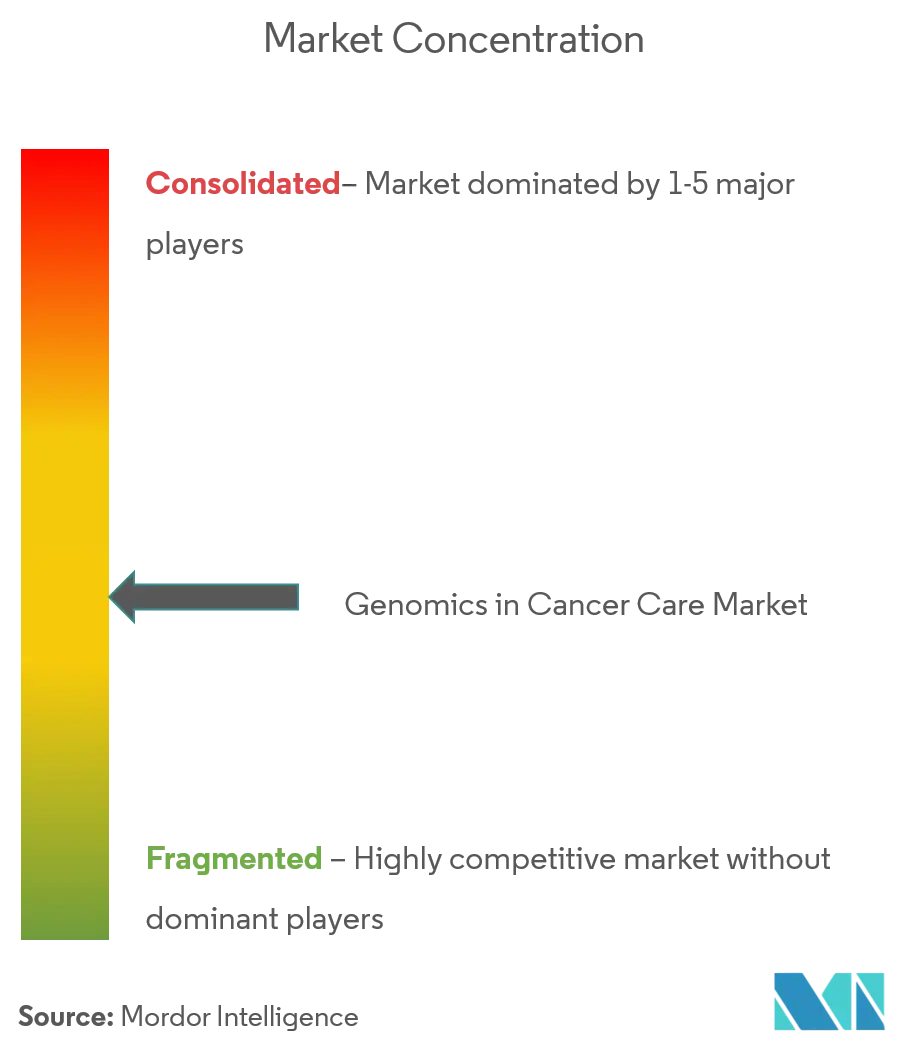
The genomics in the cancer care market is moderately consolidated. Illumina, Thermo Fisher Scientific, and Roche hold multi-platform portfolios that span instruments, consumables, and software, granting them pricing leverage and global distribution reach. Specialized providers such as Guardant Health and Exact Sciences outpace the field in liquid-biopsy and MRD niches, leveraging protected assay patents and large proprietary datasets.
Mergers and acquisitions intensified in 2024–2025 as incumbents sought AI analytics, multi-omic fusion capabilities, and regional market entry.
Examples include Guardant Health’s agreement with Pfizer to co-develop therapy-linked diagnostics and PacBio’s release of the benchtop Vega system aimed at decentralizing HiFi sequencing. Litigation has also emerged as a competitive instrument; Guardant filed suit against Tempus AI alleging infringement of DNA-testing patents.
Players are now prioritizing vertical integration, pairing wet-lab kits with real-time analytics delivered through cloud dashboards. Intellectual-property filings concentrate on chemistry that improves read accuracy and on machine-learning pipelines that cut interpretation time. Emerging white spaces include point-of-care sequencing for community oncology clinics, AI-driven molecular tumor boards, and turnkey solutions tailored to low-resource settings.
Genomics In Cancer Care Industry Leaders
-
Agilent Technologies
-
Illumina, Inc.
-
Pacific Biosciences, Inc.
-
ThermoFisher Scientific Inc.
-
Intrexon Bioinformatics Germany GmbH
- *Disclaimer: Major Players sorted in no particular order
Genomics In Cancer Care Market Companies Covered in this Report
- Illumina
- Thermo Fisher Scientific
- Roche
- Agilent Technologies
- QIAGEN
- Pacific Bioscience
- Guardant Health
- Exact Sciences
- Foundation Medicine Inc.
- Oxford Nanopore Technologies plc
- Myriad Genetics
- Bio-Rad Laboratories
- GE HealthCare Technologies Inc.
- PerkinElmer
- BGI Genomics Co. Ltd.
- Adaptive Biotechnologies Corp.
- Personalis Inc.
- Invitae
- 10x Genomics Inc.
- Burning Rock Biotech Ltd.
- Natera
Market Opportunities and Future Outlook
A major opportunity is the shift from episodic, single-timepoint profiling to longitudinal blood-based monitoring integrated into routine oncology workflows. Quest Diagnostics expanded access to its Haystack MRD ctDNA test and comprehensive genomic profiling by integrating ordering into Flatiron Healths OncoEMR for community oncology clinicians (July 2026), which lowers operational friction for repeat testing and supports broader use of MRD beyond large academic centers. Platform vendors and labs also have whitespace to package end-to-end services that address the shortage of accredited molecular pathologists by combining wet-lab execution with automated interpretation and report generation tools.
Multi-cancer early detection and ultra-sensitive MRD are also creating room for whole-genome and transcriptome-informed offerings paired with AI interpretation. Caris Life Sciences launched Caris Detect, a multi-cancer early detection blood test using ultra-deep WGS, WTS, and AI (July 2026), while GRAIL presented PATHFINDER 2 data at ASCO 2026 across 35,878 participants showing Galleri increased cancer detection 6.5-fold when added to standard screening. In MRD, Ultima Genomics presented TRACERx data at AACR 2026 describing ppmSeq performance with a 95% limit of detection below 3 parts per million, reinforcing demand for high-sensitivity approaches that broaden liquid biopsy into earlier disease settings and tighter recurrence surveillance. Together, these signals point to continued investment in distributed IVD kit strategies, automation, and data platforms that can scale interpretation and compliance across geographies.
Recent Industry Developments in Genomics In Cancer Care Market
- July 2026: Agilent Technologies received FDA approval for the PD-L1 IHC 28-8 pharmDx assay as a companion diagnostic supporting nivolumab-based indications in gastric, gastroesophageal junction, and esophageal cancers. The expanded CDx positioning strengthens standardized immuno-oncology testing on automated platforms and supports more consistent biomarker-driven therapy selection across laboratories.
- March 2026: Illumina expanded its collaboration with Labcorp to advance precision oncology, including co-commercialization of distributed IVD test kits such as PGDx elio plasma focus Dx and TruSight Oncology Comprehensive. The move supports broader access to tissue and liquid biopsy testing by pushing validated kits into more lab settings rather than relying solely on centralized testing models.
- November 2024: Pacific Biosciences unveiled the benchtop Vega system, extending HiFi sequencing to smaller laboratories. By lowering footprint and access barriers for long-read sequencing, the launch supported decentralization of higher-resolution genomic characterization beyond large reference labs.
Genomics In Cancer Care Market Report Scope and Research Methodology
Market Definition and Coverage
This market covers revenues linked to using genomic information in cancer care, meaning testing and analysis that support diagnosis, stratification, monitoring, and treatment selection in oncology settings, plus the related instruments, consumables, and service fees used to deliver these results.
Scope exclusions: We exclude non-cancer genomics, animal genomics, and routine hereditary screening that is not tied to an oncology care pathway.
Segments Covered in This Report
- By Product Type
- Instruments
- Consumables
- Services
- By Technology
- Genome Sequencing
- PCR
- Microarrays &
- Others
- By Application
- Diagnostics
- Drug Discovery & Clinical Trials Genomics
- Personalized / Precision Oncology
- Others
- By End-user
- Hospitals & Cancer Centres
- Reference & Clinical Laboratories
- Pharmaceutical & Biotech Companies
- Academic & Research Institutes
- By Geography
- North America
- United States
- Canada
- Mexico
- Europe
- Germany
- United Kingdom
- France
- Italy
- Spain
- Rest of Europe
- Asia Pacific
- China
- Japan
- India
- South Korea
- Australia
- Rest of Asia Pacific
- Middle East and Africa
- GCC
- South Africa
- Rest of Middle East and Africa
- South America
- Brazil
- Argentina
- Rest of South America
- North America
Data Sources, Market Sizing, and Validation
Desk Research
Desk research was used to set the fact base for the model, then assumptions were tested with real-world users and suppliers. We relied on public sources such as cancer incidence and mortality statistics from the World Health Organization and national cancer registries, along with reimbursement and coverage updates from the US Centers for Medicare and Medicaid Services.
To estimate testing volumes and adoption signals, we also reviewed US FDA approvals and safety communications for oncology diagnostics, plus peer-reviewed oncology and genomics journals for use-pattern shifts. Where possible, customs or trade statistics were used to track flows for instruments and reagents. Company filings, investor presentations, association websites, and reputable press sources were added for product mix and capacity commentary. A paid subscription for company financials, news, patent databases, and shipment-level trade data was used selectively to cross-check timelines and pricing direction. These desk sources are not exhaustive, and many additional references were used to collect, validate, and clarify specific data points during the study.
Primary Interviews and Surveys
Primary work focused on oncology labs, hospital decision makers, reference testing providers, and supporting ecosystem participants who see order volumes and test menus change over time. Interviews and short surveys were used to confirm what is counted as cancer-care genomics revenue, to pressure-test pricing and utilization assumptions, and to validate regional patterns across APAC, EMEA, and the Americas.
Distribution of primary research fieldwork respondents
| Company type | Respondent position | Region |
|---|---|---|
| Top tier: 39% | CXOs: 13% | APAC: 40% |
| Mid tier: 47% | Functional/Unit leaders: 43% | EMEA: 33% |
| Smaller Players: 14% | Managers: 44% | Americas: 27% |
Market-Sizing & Forecasting
Sizing starts with a top-down build where cancer incidence trends, guideline-driven testing uptake, and the share of patients routed into genomic testing are used to reconstruct an addressable testing pool by major region. Those demand pools are converted into revenues using practical price points for common test types and workflows, then adjusted for retesting frequency, liquid biopsy usage, and the split between in-house and outsourced testing.
After the first cut, totals are corroborated with selective bottom-up checks, such as sampled lab throughput discussions and channel checks on instruments and reagent pull-through, plus a sanity check on average revenue per test across care settings. Key inputs include reported oncology testing adoption shifts, reimbursement coverage direction, sequencing cost curves, and turnaround time expectations that influence test selection. Growth in targeted therapies that require companion biomarker evidence is also considered. Where bottom-up datapoints are limited, gaps are filled using conservative ranges tied to similar health systems, then narrowed during follow-up calls.
For forecasting, scenario analysis is used so uptake is not treated as a straight line when reimbursement, guideline updates, and technology mix can change quickly. Assumptions for test penetration, pricing progression, and care-setting mix were aligned with what interviewees expected to be realistic over the next few years, then applied consistently across regions.
Data Validation & Update Cycle
Model outputs are checked against independent signals like cancer burden trends, published reimbursement policies, and observable instrument and consumable demand markers. Any large variances are investigated before sign-off. If a result appears off, the input drivers are revisited, unit assumptions are re-checked, and sources are re-contacted for clarification.
A multi-step review is applied so calculations, units, and currency handling are consistent across regions and years, and so the final results match what the data can support. Reports are refreshed annually, with interim updates when material events occur, such as major reimbursement shifts or step changes in test adoption. Before delivery, a fresh analyst pass is completed so clients receive the latest updated view.
Mordor Intelligence's Cancer Care Genomics Market Size Measured Against Other Published Estimates
Published market sizes for genomics in cancer care can differ widely even when they describe a similar theme, because the scope boundary and the revenue components included are not always aligned. Differences also come from how firms treat the mix of instruments, consumables, and services, and whether pricing and test penetration assumptions are refreshed with recent reimbursement and utilization signals.
The table shows a spread versus the 2026 value, and in Mordor Intelligence's model the market is counted around clinical and translational oncology use with instruments, consumables, and software-enabled services tied to patient-care workflows, rather than folding in broader genomics activity that sits outside cancer care delivery. Other gaps usually reflect differences in base year selection, use of a more aggressive adoption curve for liquid biopsy, or a faster ASP decline that is not validated through lab-level checks and recent policy updates.
Benchmark comparison
| Source | Market Size | Gaps in Research Methodology |
|---|---|---|
| Mordor Intelligence | USD 28.44 B (2026) | |
| Industry Publisher A | USD 20.93 B (2024) | Uses a different base year and forecast window, and the definition appears to emphasize genomics-driven cancer care revenue without making the same explicit separation between clinical workflow revenues and adjacent research-oriented genomics activity, which can shift what gets counted and when pricing is reset. |
| Industry Publisher B | USD 20.56 B (2025) | Includes instruments, consumables, and services, but the published snapshot relies on a nearer-term historic-to-forecast bridge that can understate later-year scale-up if test penetration and liquid biopsy adoption are not revalidated with current reimbursement coverage and care-setting utilization patterns. |
Looking across the three figures, most of the difference is explained by year selection and what is treated as cancer-care genomics revenue versus broader genomics work. By keeping the model tied to observable care pathways, pricing logic, and adoption signals that can be rechecked each year, we can provide users a practical number that is easier to trace and replicate.
Key Questions Answered in the Report
What is the current size of the genomics in cancer care market?
The market generated USD 28.44 billion in revenue in 2026 and is projected to grow to USD 59.78 billion by 2031.
Which region leads in market share?
North America contributed 36.60% of global revenue in 2025, buoyed by extensive reimbursement coverage and clear regulatory pathways.
Which product segment is expanding fastest?
Service-based offerings that bundle sequencing, analysis, and reporting are advancing at an 18.35% CAGR through 2031.
Why is single-molecule sequencing gaining traction?
Long-read platforms resolve structural variants and methylation patterns that standard NGS can miss, fueling a 22.85% CAGR in this technology segment.
How are liquid biopsies changing cancer management?
Circulating-tumor-DNA assays enable minimal-residual-disease monitoring, helping detect relapse up to two years earlier than imaging while supporting therapy adjustments in real time.