
Natural Home Fragrance Products Market Size and Share
Market Overview
| Study Period | 2021 - 2031 |
|---|---|
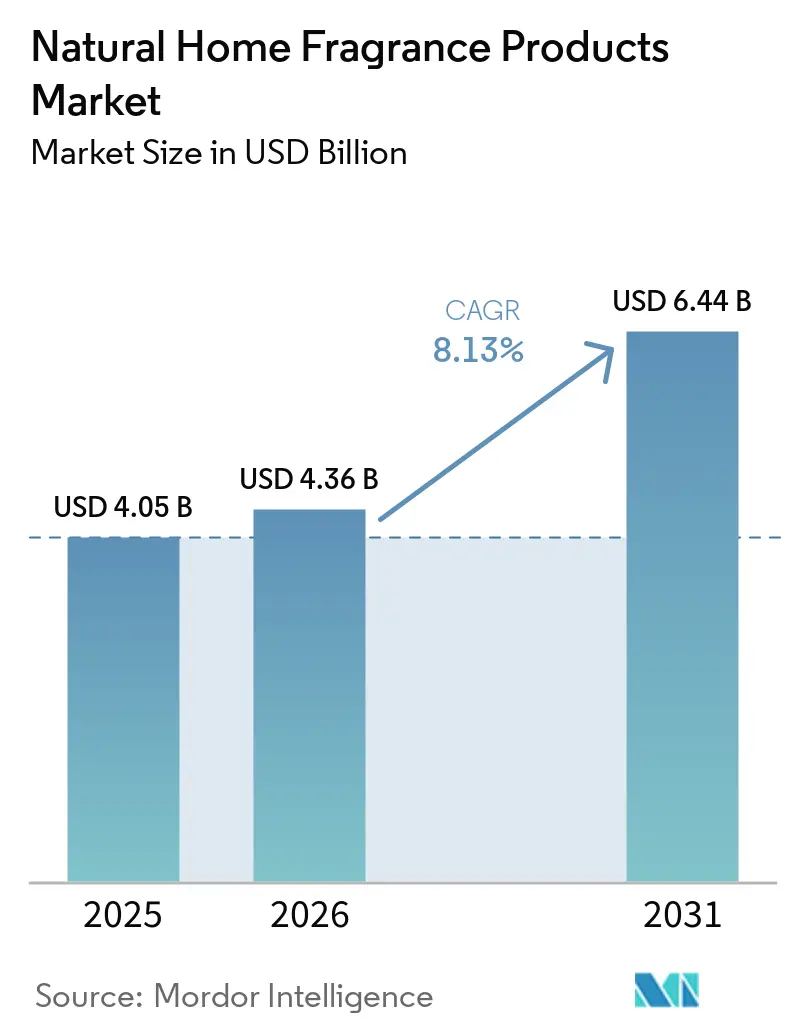
| Market Size (2026) | USD 4.36 Billion |
| Market Size (2031) | USD 6.44 Billion |
| Growth Rate (2026 - 2031) | 8.13 % |
| Fastest Growing Market | Asia-Pacific |
| Largest Market | Europe |
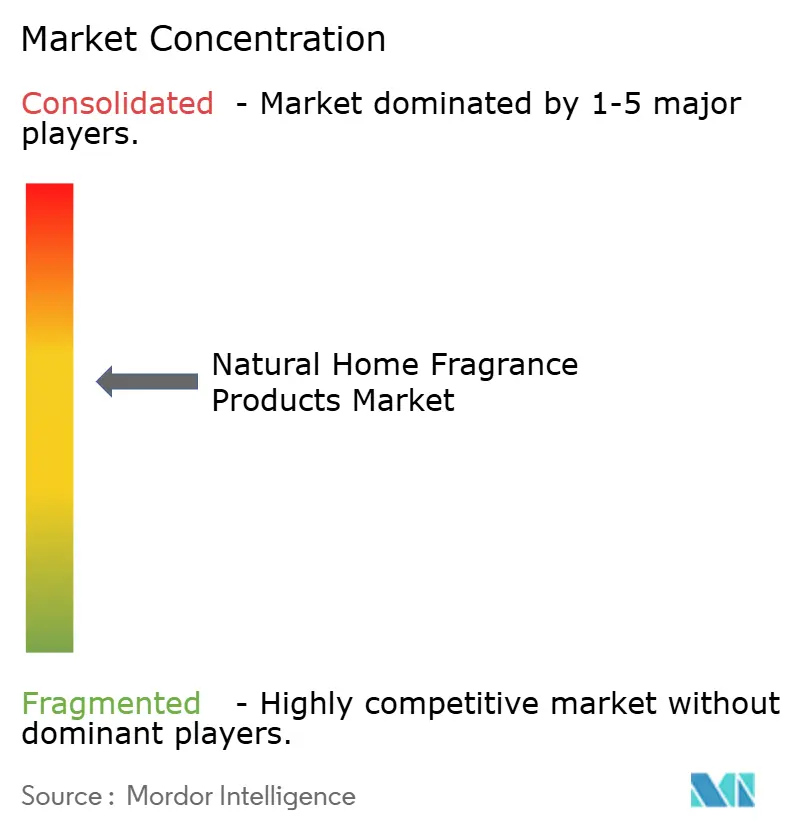
| Market Concentration | Medium |
Major Players *Disclaimer: Major Players sorted in no particular order Image © Mordor Intelligence. Reuse requires attribution under CC BY 4.0. | |
Natural Home Fragrance Products Market Analysis by Mordor Intelligence
The natural home fragrance products market is projected to grow from USD 4.05 billion in 2025 and USD 4.36 billion in 2026 to USD 6.44 billion by 2031, with a CAGR of 8.13% between 2026 and 2031. Previously, demand was tied to seasonal gifting and occasional purchases rather than regular household use. However, growing awareness of health risks from synthetic fragrances has driven households toward plant-based alternatives. Increased wellness spending and better digital access have also made these products easier to find, compare, and reorder. Climate challenges affecting botanical inputs have raised the need for multi-origin sourcing, flexible formulations, and ingredient substitution. Competitive strategies now focus on clean-label reformulation, digital-first sales, premium brand building, and retailer compliance. Transparent independent brands still have opportunities to maintain authenticity as the market grows.
Key Report Takeaways
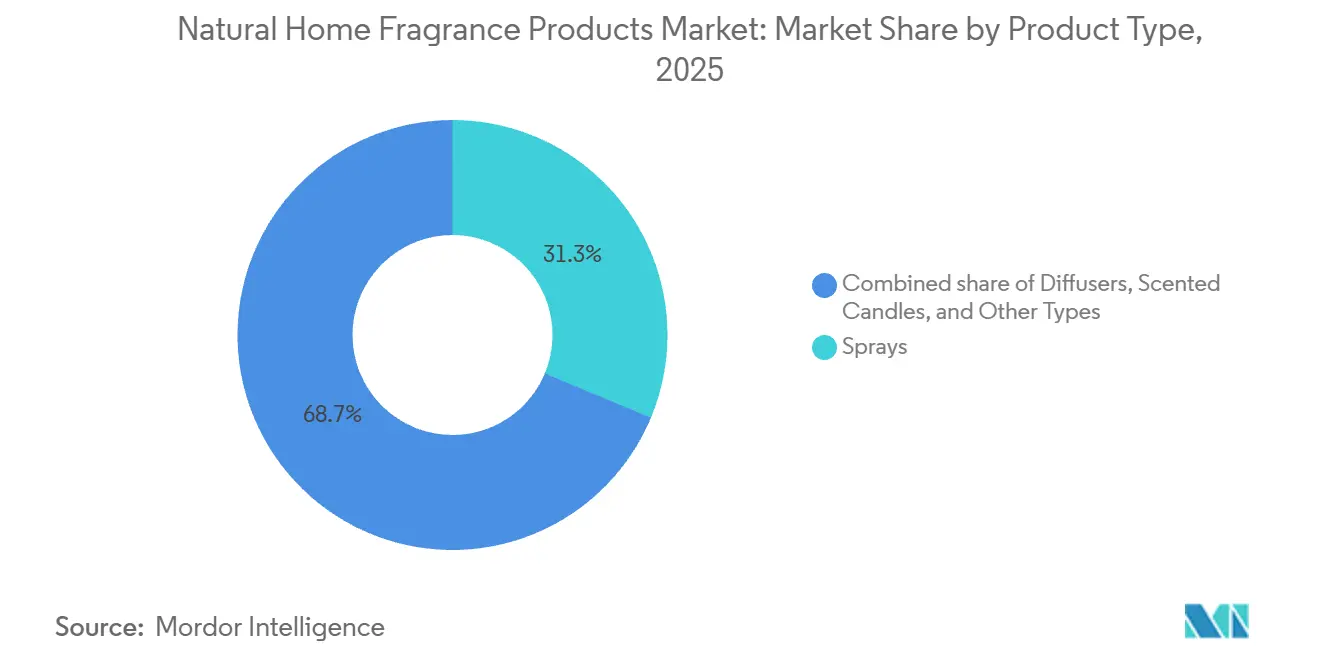
- By product type, sprays held 31.28% revenue share in 2025, while diffusers are projected to grow at an 8.79% CAGR through 2031.
- By category, mass held 63.41% revenue share in 2025, while premium is forecast to expand at a 9.73% CAGR through 2031.
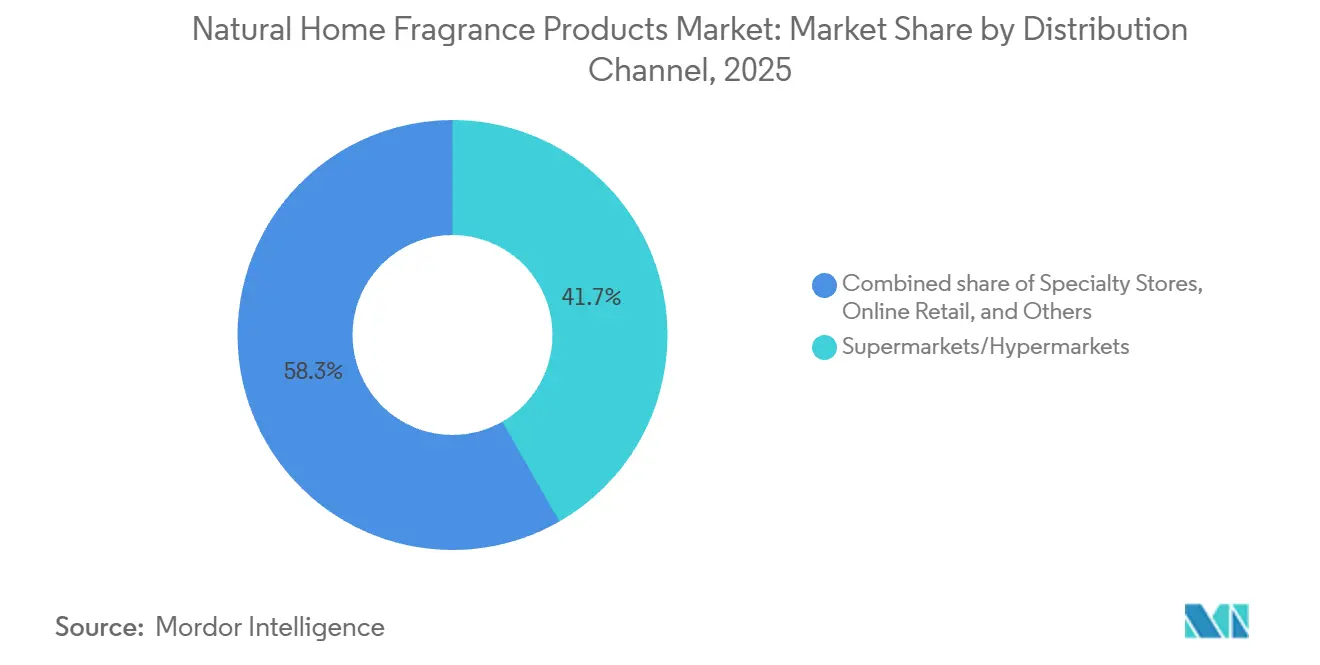
- By distribution channel, supermarkets and hypermarkets accounted for 41.71% revenue share in 2025, while online retail is projected to advance at a 9.54% CAGR through 2031.
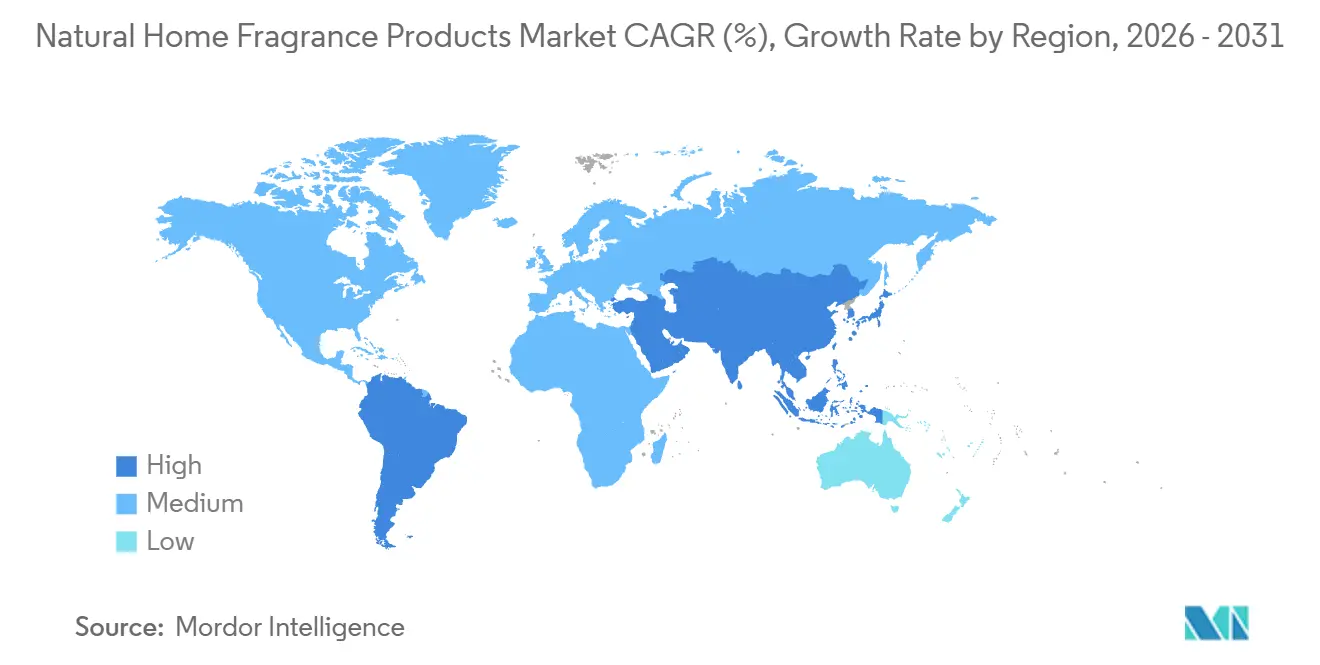
- By geography, Europe held 33.62% revenue share in 2025, while Asia Pacific is forecast to grow at a 9.12% CAGR through 2031.
Note: Market size and forecast figures in this report are generated using Mordor Intelligence’s proprietary estimation framework, updated with the latest available data and insights as of January 2026.
Market Trends and Insights
Drivers Impact Analysis of Natural Home Fragrance Products Market*
| Drivers | (~) % Impact on CAGR Forecast | Geographic Relevance | Impact Timeline |
|---|---|---|---|
| Growing Consumer Awareness of Health Risks from Synthetic Fragrances | +1.8% | Global, strongest in North America and Europe | Short term (≤ 2 years) |
| Rising Focus on Home Aesthetics and Wellness-Driven Lifestyles | +2.0% | Global, with early concentration in North America, Europe and APAC urban centers | Medium term (2-4 years) |
| Rise of Remote Work and Home-Based Lifestyle | +1.0% | North America, Europe and APAC urban markets | Short term (≤ 2 years) |
| Growing Shift Toward Sustainability and Eco-Friendly Practices | +1.5% | Global, with regulation-led acceleration in Europe | Medium term (2-4 years) |
| Social Media Platforms Popularizing Natural Home Fragrances | +0.8% | Global, with high engagement in North America and Southeast Asia | Short term (≤ 2 years) |
| Government Regulations Encouraging Sustainable Manufacturing | +0.5% | Europe-led, with spillover into North America and APAC | Long term (≥ 4 years) |
| Source: Mordor Intelligence | |||
Growing Consumer Awareness of Health Risks from Synthetic Fragrances
Health concerns are now driving demand in the natural home fragrance products market, surpassing the influence of branding. A 2025 review in Frontiers in Toxicology revealed that volatile organic compounds from conventional fragrances can cause respiratory issues, neurological symptoms, and endocrine disruption. This has increased the demand for cleaner alternatives. Such findings encourage consumers to question products once considered safe for indoor use. They also put pressure on established brands with unclear labels about ingredient origins, inhalation risks, or differences between natural and synthetic scents[1]Source: Frontiers in Toxicology, “The Impact of Perfumes and Cosmetic Products on Human Health A Narrative Review”, frontiersin.org. Brands offering transparent ingredient details and emphasizing safety are more likely to attract first-time switchers. This trend challenges slower reformulators, as health concerns, once prioritized, rarely fade from household decisions.
Rising Focus on Home Aesthetics and Wellness-Driven Lifestyles
The natural home fragrance products market is growing as scent becomes a key part of home wellness routines. Consumers now choose fragrances not just for occasional room freshening but to improve mood, sleep, focus, and comfort. This trend spans all price tiers, with mass retail and grocery channels expanding natural product assortments beyond premium shelves. Premium innovations highlight this shift; in June 2026, Pura and Calm launched a scent and guided sound collection, making home fragrance a daily ritual rather than just decoration. As this behavior spreads, the gap between premium and mass offerings narrows, with both focusing on ingredient clarity and sensory experience. This change increases competition in the middle segment, where brands must balance affordable pricing with a credible wellness focus.
Growing Shift Toward Sustainability and Eco-Friendly Practices
Sustainability expectations are transforming the natural home fragrance products market, impacting both ingredients and packaging. In Europe, while the EU Cosmetics Regulation doesn't define "natural fragrance," its safety and disclosure rules raise standards for product accountability. IFRA standards further guide ingredient use and strengthen traceability and formulation reviews, influencing global fragrance production[2]Source: European Commission, “Regulation (EC) No 1223/2009 Consolidated September 2025”, eur-lex.europa.eu. Manufacturers are increasingly adopting recyclable glass, refill systems, paper-based packaging, and robust sourcing records for botanical raw materials. Suppliers focusing on clean ingredients and eco-friendly packaging are gaining retailer approval and justifying premium pricing. Sustainability is expected to shift from a niche selling point to a baseline requirement for reputable brands.
Social Media Platforms Popularizing Natural Home Fragrances
Social platforms have transformed demand creation in the natural home fragrance products market, with discovery now happening through short-form content before reaching stores. Pew Research Center reported in June 2025 that 50% of US adults used Instagram and 37% used TikTok, giving fragrance brands broad visual reach across diverse consumer groups. Since sampling fragrances online is challenging, creators fill the gap by showcasing vessels, refill rituals, room styling, and product context. Camera-friendly formats like reed diffusers and decorative candles gain traction faster than plain utility formats. This shift benefits smaller brands by helping them build awareness without needing national shelf presence. In response, major players in the natural home fragrance market are increasing investments in creator collaborations, social merchandising, and faster product refresh cycles.
Restraints Impact Analysis of Natural Home Fragrance Products Market*
| Restraint | (~) % Impact on CAGR Forecast | Geographic Relevance | Impact Timeline |
|---|---|---|---|
| Limited Availability of Raw Materials | -1.2% | Global, concentrated in APAC sourcing regions and MENA | Medium term (2-4 years) |
| Lack of Regulatory Framework and Standards | -0.5% | Emerging markets across South America, South and Southeast Asia, and MEA | Long term (≥ 4 years) |
| Shorter Shelf Life Compared to Synthetic Fragrances | -0.6% | Global | Short term (≤ 2 years) |
| Complexity in Extraction and Processing of Natural Ingredients | -0.7% | Global, with production-side concentration in sourcing regions | Long term (≥ 4 years) |
| Source: Mordor Intelligence | |||
Limited Availability of Raw Materials
Raw material constraints are disrupting volume planning and profitability in the natural home fragrance products market. Climate shocks have reduced the availability of key botanical inputs. In 2024, Bulgarian lavender yields dropped 50% to 60% below 2021 levels, while severe weather events cut Indonesian patchouli supply. Heat stress in Egypt also impacted jasmine harvesting, reducing picker margins and threatening supply stability for this critical material. A March 2026 trade update reported reduced acreage, low carryover stock, and increased logistics pressures, leaving manufacturers with limited options to manage disruptions. Brands without long-term offtake agreements or multi-origin sourcing strategies face higher risks of margin compression and formula changes. Companies that diversify ingredients, maintain buffer stocks, and adjust blends without affecting product positioning gain a clear advantage.
Lack of Regulatory Framework and Standards
Brands in the natural home fragrance products market grapple with inconsistent regulations on claims of being "natural" or "clean." While the EU Cosmetics Regulation mandates safety assessments and comprehensive ingredient disclosures, it stops short of offering a definitive category-level definition for "natural fragrance" claims. The International Fragrance Association (IFRA) sets voluntary standards that encompass a significant portion of global fragrance production. However, these standards lack legal enforcement outside of member structures. As a result, uncertified products can undercut prices in markets with less developed regulatory systems. Consequently, the natural home fragrance market faces a trust deficit: consumers often struggle to differentiate between authentically traceable botanical products and vague green claims. This ambiguity not only undermines premium pricing but also hampers investments from producers burdened with higher compliance costs.
*Our forecasts treat driver/restraint impacts as directional, not additive. The impact forecasts reflect baseline growth, mix effects, and variable interactions.
Natural Home Fragrance Products Market Segment Analysis
By Product Type:
Sprays Lead on Volume, Diffusers on TrajectoryIn 2025, sprays held a 31.28% share of the natural home fragrance products market, driven by their wide retail availability and frequent household use. Their popularity highlights their practicality in odor control and mood enhancement, appealing to both budget-conscious and premium shoppers. Sprays also act as an easy entry point, often introducing new buyers to natural home fragrances. Scented candles follow closely, offering a unique mix of fragrance, gifting appeal, and decorative value. Meanwhile, incense sticks, wax melts, and similar formats cater to specific niches, rooted in aromatherapy and regional traditions.
From 2026 to 2031, the diffuser segment in the natural home fragrance market is projected to grow at a strong 8.79% CAGR, making it the fastest-growing product category. This growth reflects a shift from occasional scent use to consistent ambient fragrance, especially in homes where scenting is now a daily habit. Diffusers are also gaining popularity due to their safety advantage—eliminating open flames while providing long-lasting scent delivery. In June 2026, Goose Creek entered the plug-in diffuser market with a refill-based device emphasizing flame-free use and natural scents. Similarly, in 2024, Reckitt’s Air Wick brand upgraded its Essential Mist Diffuser, focusing on better intensity control and essential oil-infused refills.



By Category:
Mass Commands Volume, Premium Commands GrowthIn 2025, the mass category led the natural home fragrance products market, contributing 63.41% of total revenue. This leadership was driven by extensive placements in supermarkets, hypermarkets, and discount channels, where natural-adjacent products have become standard. The growth of private labels further normalized botanical products for value-conscious households that previously avoided specialty retailers. As a result, natural claims have shifted from being a premium feature to a standard shopping expectation. This change has expanded the consumer base and ensured steady sales across everyday retail formats.
From 2026 to 2031, the premium segment of the natural home fragrance products market is expected to grow at a CAGR of 9.73%, the fastest among all categories. This growth is fueled by consumers linking fragrances to wellness, favoring ingredient transparency, and seeking eco-friendly packaging. In June 2026, brands like Pura and Calm highlighted this trend by launching a multi-sensory collection combining home fragrances with guided audio rituals, extending premium fragrances into self-care. Premium products also benefit from stronger gift appeal, curated storytelling, and higher consumer willingness to pay for unique experiences compared to mass-market options. These factors ensure the premium segment remains attractive, even as mass offerings improve.
By Distribution Channel:
Supermarkets Anchor Volume, Online Retail Reshapes DiscoveryIn 2025, supermarkets and hypermarkets led the distribution landscape, contributing 41.71% of revenue in the natural home fragrance products market. Their success stems from impulse merchandising, seasonal displays, and placing affordable natural products near everyday household items. In 2026, Aldi demonstrated this strategy by launching premium home fragrance collections at competitive prices through its grocery outlets. Specialty stores remain vital, offering premium and artisan brands a platform to highlight fragrance nuances, packaging quality, and pricing. Other channels, like direct sales and hospitality gifting, though smaller, provide high-value transactions and boost brand visibility.
Online retail is projected to grow at 9.54% CAGR from 2026 to 2031, making it the fastest-growing distribution channel. This growth is driven by easier product access, refill programs, direct-to-consumer sales, and social commerce. Online platforms overcome physical distribution limits, helping niche brands achieve national reach before securing shelf space. They also offer quick insights into scent preferences, pricing, and buying habits, refining launch strategies. This leads to faster market entry, better product visibility, and increased competition for traditional retailers dominating fragrance discovery.
Geography Analysis
Europe Natural Home Fragrance Products Market
In 2025, Europe held a 33.62% share of the natural home fragrance products market, driven by strong fragrance traditions in France, the UK, Germany, and Italy, where home scents are integral to daily life and gifting. Regulatory and sustainability pressures are accelerating the shift from synthetic to natural formulations, with Germany leading reformulation demand. Europe's extensive retail network supports premium candles and diffusers, making the region central to premiumization in the natural home fragrance market.
APAC Natural Home Fragrance Products Market
Asia Pacific is projected to grow at a 9.12% CAGR from 2026 to 2031, making it the fastest-growing region. Urbanization, rising incomes, and e-commerce are driving demand in China, India, and Southeast Asia. In India, digital retail is expanding access to home scents without relying on specialty stores. Southeast Asia benefits from social-driven product discovery and a younger demographic comfortable with online purchases. In China, global fragrance brands are localizing products to match consumer preferences and premium buying habits.
The Americas and MEA Natural Home Fragrance Products Market
North America remained a key market in 2025, supported by large retail networks and wellness-focused consumers. Bath & Body Works' USD 7.29 billion net sales highlight the scale of branded home fragrances in the U.S. South America and the Middle East & Africa are emerging markets, with premium retail growth and cultural preferences for ambient scents driving demand. Urbanization, hospitality growth, and rising middle-class spending in Brazil, Saudi Arabia, the UAE, South Africa, Egypt, and Morocco are expanding the market beyond luxury consumption.

Competitive Landscape
The natural home fragrance products market features competition between multinational companies and niche brands, driven by product innovation, brand strength, and extensive distribution networks. Leading players like Reckitt Benckiser, Procter & Gamble, SC Johnson, Bath & Body Works, and Newell Brands offer diverse products, including scented candles, reed diffusers, essential oils, and room sprays. Their strong retail presence and brand recognition help them meet the growing demand for plant-based, clean-label fragrances.
Consumer preferences for natural ingredients, sustainability, and wellness are shaping the market. Companies are focusing on essential oil-based formulations, botanical extracts, and reducing synthetic chemicals. Eco-friendly packaging, responsibly sourced ingredients, and aromatherapy-inspired products are key strategies to attract eco-conscious consumers. Brands are also expanding premium lines and introducing new fragrances to enhance relaxation and mood.
Product launches, acquisitions, and omnichannel strategies are crucial for market positioning. Major players strengthen their presence through e-commerce, direct channels, and partnerships with specialty retailers. While established companies benefit from scale and marketing resources, niche brands gain traction by focusing on natural and sustainable products. As demand for healthier indoor environments grows, competition will intensify around innovation, sustainability, and premium experiences.
Natural Home Fragrance Products Industry Leaders
Reckitt Benckiser Group plc
The Procter and Gamble Company
SC Johnson and Son, Inc.
Bath and Body Works, Inc.
Newell Brands Inc.
- *Disclaimer: Major Players sorted in no particular order
Natural Home Fragrance Products Market Companies Covered in this Report
- Reckitt Benckiser Group plc
- The Procter and Gamble Company
- SC Johnson and Son, Inc.
- Newell Brands Inc.
- Bath and Body Works, Inc.
- Godrej Consumer Products Limited
- Henkel AG and Co. KGaA
- d?TERRA International LLC
- Nest New York, Inc.
- Scentsy, Inc.
- Prolitec Inc.
- Voluspa LLC
- Diptyque
- L'Occitane Groupe SA
- ScentAir Technologies, LLC
- Puzhen Life Co. Ltd.
- Ryohin Keikaku Co., Ltd.
- The Estee Lauder Companies Inc.
- Faultless Brands
- Seda France Inc.

Recent Industry Developments in Natural Home Fragrance Products Market
- May 2026: Tranquil Lights introduced Kaio, a new lava stone fragrance diffuser designed to naturally enhance indoor spaces with long-lasting scent diffusion. The product works by absorbing essential oils or fragrance blends into porous lava stones, which gradually release the aroma over time. Suitable for bedrooms, bathrooms, workspaces, cars, and other small spaces, Kaio offers a natural and convenient home fragrance solution.
- May 2026: The Painted Pineapple expanded its home fragrance offering with new Wildwood Creek natural reed diffusers, featuring returning favorites such as Sacred Spaces alongside seasonal scents including Bloom and Grasslands. Manufactured in Nova Scotia using plant-based ingredients and pure essential oils, the diffusers align with growing consumer demand for natural and sustainable home fragrance products.
- March 2026: Goyal launched Real Rose Premium Dhoop Sticks, a new home fragrance product inspired by the traditional aroma of rose-scented puja spaces. The dhoop sticks are formulated with a 100% natural rose fragrance and pure ingredients, free from harmful chemicals, catering to consumers seeking natural and authentic fragrance experiences. With a long-lasting, slow-burning format, the launch strengthens the company's portfolio in the natural home fragrance and spiritual wellness segment.


Global Natural Home Fragrance Products Market Report Scope
| Sprays |
| Diffusers |
| Scented Candles |
| Other Types |
| Premium |
| Mass |
| Supermarkets/Hypermarkets |
| Specialty Stores |
| Online Retail |
| Other Distribution Channels |
| North America | United States |
| Canada | |
| Mexico | |
| Rest of North America | |
| Europe | Germany |
| United Kingdom | |
| Italy | |
| France | |
| Spain | |
| Netherlands | |
| Poland | |
| Belgium | |
| Sweden | |
| Rest of Europe | |
| Asia-Pacific | China |
| India | |
| Japan | |
| Australia | |
| Indonesia | |
| South Korea | |
| Thailand | |
| Singapore | |
| Rest of Asia-Pacific | |
| South America | Brazil |
| Argentina | |
| Colombia | |
| Chile | |
| Peru | |
| Rest of South America | |
| Middle East and Africa | South Africa |
| Saudi Arabia | |
| United Arab Emirates | |
| Nigeria | |
| Egypt | |
| Morocco | |
| Turkey | |
| Rest of Middle East and Africa |
| By Product Type | Sprays | |
| Diffusers | ||
| Scented Candles | ||
| Other Types | ||
| By Category | Premium | |
| Mass | ||
| By Distribution Channel | Supermarkets/Hypermarkets | |
| Specialty Stores | ||
| Online Retail | ||
| Other Distribution Channels | ||
| By Geography | North America | United States |
| Canada | ||
| Mexico | ||
| Rest of North America | ||
| Europe | Germany | |
| United Kingdom | ||
| Italy | ||
| France | ||
| Spain | ||
| Netherlands | ||
| Poland | ||
| Belgium | ||
| Sweden | ||
| Rest of Europe | ||
| Asia-Pacific | China | |
| India | ||
| Japan | ||
| Australia | ||
| Indonesia | ||
| South Korea | ||
| Thailand | ||
| Singapore | ||
| Rest of Asia-Pacific | ||
| South America | Brazil | |
| Argentina | ||
| Colombia | ||
| Chile | ||
| Peru | ||
| Rest of South America | ||
| Middle East and Africa | South Africa | |
| Saudi Arabia | ||
| United Arab Emirates | ||
| Nigeria | ||
| Egypt | ||
| Morocco | ||
| Turkey | ||
| Rest of Middle East and Africa | ||


Key Questions Answered in the Report
What will natural home fragrance products be worth by 2031?
The category is projected to reach USD 6.44 billion by 2031, rising from USD 4.05 billion in 2025 and an estimated USD 4.36 billion in 2026.
How fast are natural home fragrance products growing?
The expected growth rate is 8.13% from 2026 to 2031, supported by health concerns around synthetic fragrances, wellness-driven buying, and wider digital access.
Which product type leads current demand?
Sprays led with 31.28% of 2025 revenue, helped by broad shelf access, everyday use, and lower trial risk for new buyers.
Which format is expanding the fastest?
Diffusers are projected to grow at 8.79% through 2031, because they support continuous scenting, refill use, and device-led premiumization.
Page last updated on:


 Your data is secure and never sold or shared.


