
Modular Office Furniture Market Size and Share
Market Overview
| Study Period | 2020 - 2031 |
|---|---|
| Market Size (2026) | USD 28.74 Billion |
| Market Size (2031) | USD 40.61 Billion |
| Growth Rate (2026 - 2031) | 7.16 % |
| Fastest Growing Market | Asia-Pacific |
| Largest Market | North America |
| Market Concentration | Medium |
Major Players *Disclaimer: Major Players sorted in no particular order Image © Mordor Intelligence. Reuse requires attribution under CC BY 4.0. | |
Modular Office Furniture Market Analysis by Mordor Intelligence
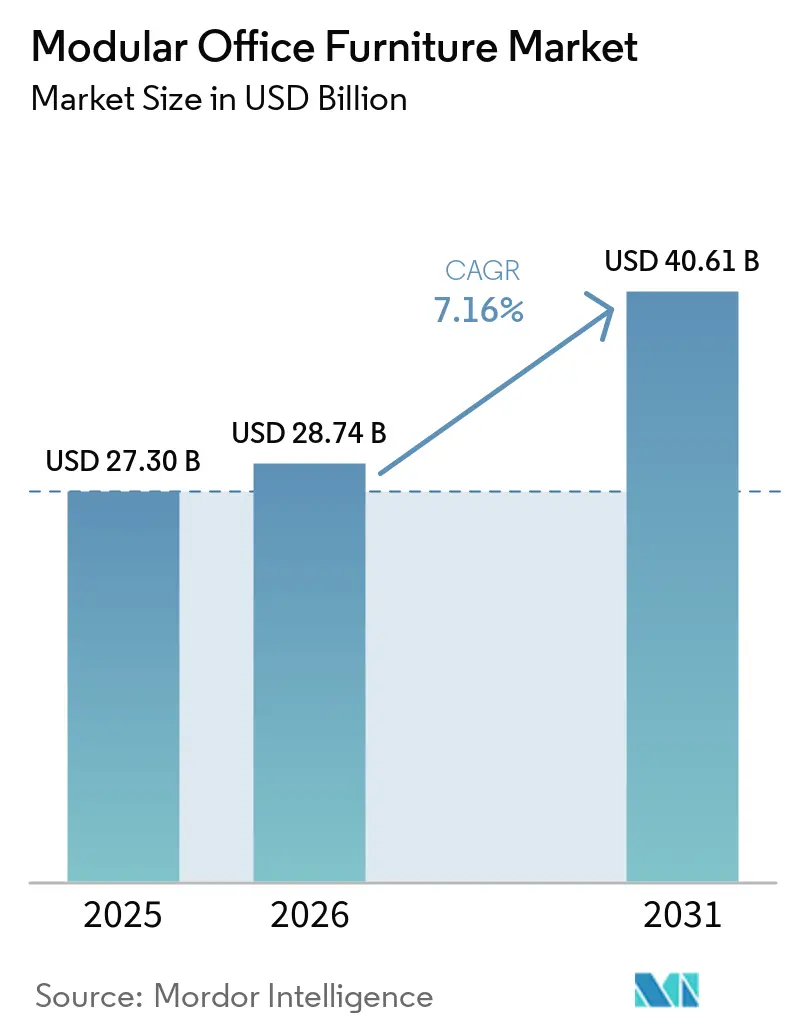
The modular office furniture market size is projected to expand from USD 27.3 billion in 2025 to USD 28.7 billion in 2026, and to USD 40.6 billion by 2031, registering a CAGR of 7.2% between 2026 and 2031. The modular office furniture market is being supported by the shift of hybrid work from a temporary policy to a regular operating model, which is increasing repeat demand for layouts that can be resized, moved, and reused without major fit-out disruption. The narrowing gap between actual and target office use also points to more stable procurement activity, which matters because the modular office furniture market depends on recurring workplace refresh cycles rather than one-time office openings. Demand is also being reinforced by strong order momentum at large contract furniture companies, which suggests that buyers are still funding upgrades that improve flexibility, workplace experience, and long-term asset use[1]. At the same time, the modular office furniture market still faces budget pressure in slower economies, where buyers continue to defer larger capital purchases even when the lifetime value case remains favorable. Even with that restraint, repairability, traceability, and circular procurement are moving from preference to procurement standard in large enterprise accounts, which is improving the strategic position of the modular office furniture market in regulated commercial environments.
Key Report Takeaways
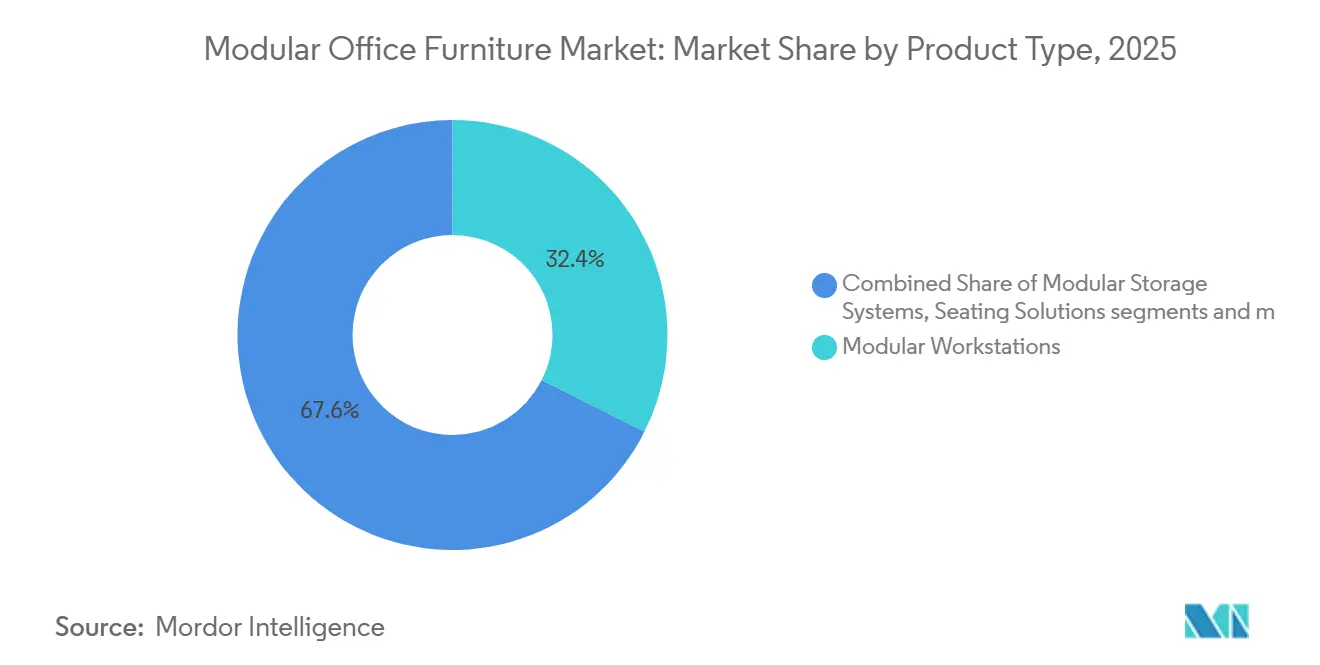
- By product type, modular workstations led with 32.41% of the modular office furniture market share in 2025, while modular reception and lobby furniture is forecast to expand at a 7.83% CAGR through 2031.
- By material type, metal held 37.42% revenue share in 2025, while plastic and polymer recorded the highest projected CAGR at 8.16% through 2031.
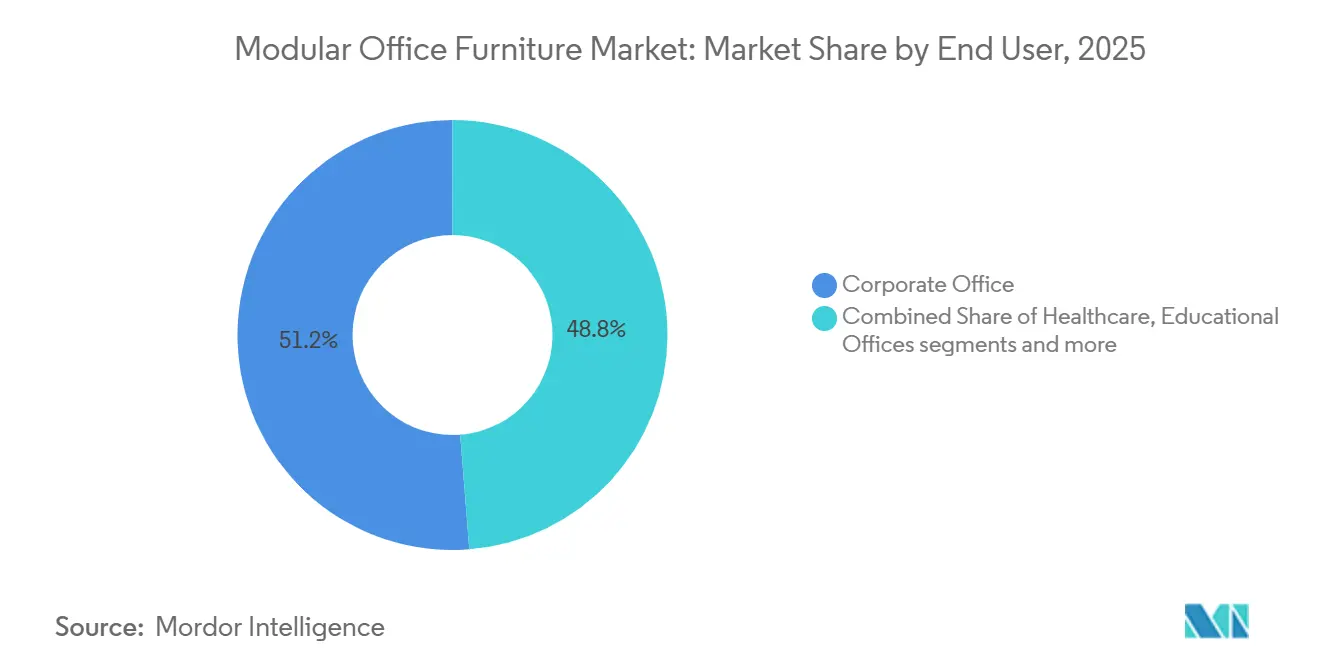
- By end-user, corporate offices accounted for 51.25% of the modular office furniture market share in 2025, while hospitality and retail back-offices are advancing at an 8.21% CAGR through 2031.
- By distribution channel, B2B/Project held 73.01% of the modular office furniture market share in 2025, and is also projected to post the fastest CAGR at 8.31% through 2031.
- By geography, North America led with 33.62% revenue share in 2025, while Asia-Pacific is forecast to grow at an 8.42% CAGR through 2031.
Note: Market size and forecast figures in this report are generated using Mordor Intelligence’s proprietary estimation framework, updated with the latest available data and insights as of January 2026.
Market Trends and Insights
Drivers Impact Analysis of Modular Office Furniture Market*
| Driver | (~) % Impact on CAGR Forecast | Geographic Relevance | Impact Timeline |
|---|---|---|---|
| Hybrid Work Reconfiguration Demand | +1.8% | Global, with concentration in North America, Western Europe and Asia-Pacific commercial hubs | Short term (≤ 2 years) |
| Enterprise Demand for Reusable Fit-Out Assets | +1.3% | North America & EU primarily; early adoption in Asia-Pacific tier-1 cities | Medium term (2–4 years) |
| Space-Constrained Office Densification | +1.0% | Asia-Pacific core; spill-over to North America and EMEA | Medium term (2–4 years) |
| Sustainability, Traceability, and Circular Procurement | +0.9% | Europe is primary; expanding to North America and Asia-Pacific | Long term (≥ 4 years) |
| Rising Demand for Acoustic and Privacy-Ready Modular Zones | +0.8% | Global, strongest in North America and Northern Europe | Short term (≤ 2 years) to Medium term (2–4 years) |
| Digital Specification, Configuration, and Remote Procurement | +0.7% | North America, Western Europe, and Asia-Pacific leading the adoption | Medium term (2–4 years) |
| Source: Mordor Intelligence | |||
Hybrid Work Reconfiguration Demand
The modular office furniture market is seeing repeat demand because hybrid work schedules now require offices to support changing attendance patterns instead of static seating plans. The JLL benchmark showed that 62% of organizations now mandate fixed in-office attendance days, up from 49% a year earlier, indicating many employers are adjusting floor plates more often than during the first post-pandemic phase. The same shift is pushing demand toward layouts that can add focus rooms, phone booths, and small meeting rooms without a full construction cycle. This changes how buying decisions are made because real estate, HR, and workplace technology teams are increasingly shaping the specification together rather than leaving the decision only to facilities buyers. Vendors that simplify planning with configuration tools and account-based project support are therefore gaining an advantage in the modular office furniture market by reducing the time between layout approval and order placement.
Space-Constrained Office Densification
The modular office furniture market is also benefiting from the need to fit more task types into less space, especially in cities where office occupancy costs remain high. Many employers are reducing dedicated desk ratios while still trying to preserve meeting capacity, privacy zones, touchdown areas, and shared collaboration points within the same leased footprint. That pressure favors modular systems because they can switch between workstations, meeting layouts, and lounge-based formats without forcing a heavy construction reset. Activity-based working is an important part of this shift because it places greater value on how quickly a workspace can change over a week or even a day. In practice, that means buyers are paying more attention to joinery, mobility, integrated power, and component interchangeability when they evaluate products in the modular office furniture market. The longer this densification pattern persists, the more the modular office furniture market will benefit from products that help companies stretch leased space without sacrificing usability.
Rising Demand for Acoustic and Privacy-Ready Modular Zones
Acoustic weakness in open office layouts is adding a distinct layer of demand to the modular office furniture market because more office activity now includes video calls, confidential conversations, and focused solo work. The result is a stronger interest in enclosed or semi-enclosed modular products that can improve speech privacy without the time and cost of conventional room construction. This demand is not limited to pods, since partition systems with sound-absorbing surfaces, privacy-ready seating, and reconfigurable meeting enclosures are now part of the same buying conversation. That broadens the revenue opportunity across multiple product groups in the modular office furniture market rather than concentrating it in a single niche. Framery’s Gradus Work pod, which achieved ISO 23351-1 Class A speech reduction of 30 dB, shows how this category is moving toward clearer performance benchmarks that large buyers can specify with more confidence[2]. As acoustic performance becomes easier to compare, suppliers with tested and documented solutions should gain share in the modular office furniture market, where corporate buyers want lower risk in workplace design decisions.
Sustainability, Traceability, and Circular Procurement
The modular office furniture market is gaining support from procurement rules that increasingly reward products built for reuse, repair, and material transparency. In Europe, the combination of CSRD-related reporting pressure and the Ecodesign for Sustainable Products Regulation is making it increasingly important for buyers to know where materials come from, how long a product can remain in service, and what happens at the end of life. Modular systems fit that requirement well because their parts can be repaired or replaced at the component level, which is easier to document than full product replacement. This matters in the modular office furniture market because sustainability is now being considered a practical procurement criterion rather than just a branding statement. It also changes vendor positioning because companies with take-back models, product passports, and verifiable material declarations can address both operational and compliance needs in one offer. Over time, that should help the modular office furniture market move further into large enterprise and public-facing procurement programs where lifecycle evidence is becoming a formal selection factor.
Restraints Impact Analysis of Modular Office Furniture Market*
| Restraint | (~) % Impact on CAGR Forecast | Geographic Relevance | Impact Timeline |
|---|---|---|---|
| Higher Upfront Cost Versus Conventional Furniture | -1.2% | Global, with greater severity in mid-market and SME segments | Short term (≤ 2 years) to Medium term (2–4 years) |
| Assembly, Reconfiguration, and Service Complexity | -0.7% | Global; particularly acute in MEA, South America, and Tier 2/3 markets | Medium term (2–4 years) |
| Durability Concerns in High-Frequency Reconfiguration Environments | -0.5% | Global, with heightened concern in healthcare and high-density co-working | Medium term (2–4 years) |
| Installer Capacity and After-Sales Coverage Gaps | -0.4% | MEA, South America, and emerging Asia-Pacific markets | Long term (≥ 4 years) |
| Source: Mordor Intelligence | |||
Higher Upfront Cost Versus Conventional Furniture
The modular office furniture market still faces resistance when buyers focus on the initial purchase price rather than multi-year asset use. This is most visible in the mid-market and SME segments, where budgets are tighter, and capital approval cycles are less flexible than in large multinational accounts. Germany’s office furniture industry recorded approximately USD 2.39 billion in 2025 revenue, down 8.8%, while domestic orders fell 10.3%, indicating that some buyers delayed purchases under economic and geopolitical pressure. That pattern matters for the modular office furniture market because the value case is often strongest over a 5- to 7-year cycle, but the budget decision is still made at the start of the project. Furniture-as-a-Service is therefore becoming a practical response because it lowers the capital barrier and gives vendors another way to tie lifecycle data to client reporting needs. If adoption of these models increases, the modular office furniture market could improve penetration among buyer groups that remain interested in flexibility but hesitant to make an upfront commitment.
Assembly, Reconfiguration, and Service Complexity
The modular office furniture market depends on more than product design, because its value falls quickly when installation, reconfiguration, and after-sales support are inconsistent. Smaller occupiers and second-tier markets often lack certified installers who can handle complex layouts without interrupting normal office operations. The IBA noted that companies with broader geographic and sector exposure were more resilient during the 2025 slowdown, which points to the importance of service reach and customer support depth beyond a single local dealer network[3]. This creates a structural gap in the modular office furniture market across parts of Southeast Asia, Sub-Saharan Africa, and other emerging areas where product demand is rising faster than service infrastructure. Vendors that build dealer certification programs, remote planning tools, and repeatable installation methods should be better placed to scale in these areas. Until those networks deepen, service complexity will continue to slow adoption in parts of the modular office furniture market where buyer interest is present, but delivery confidence remains uneven.
*Our forecasts treat driver/restraint impacts as directional, not additive. The impact forecasts reflect baseline growth, mix effects, and variable interactions.
Modular Office Furniture Market Segment Analysis
By Product Type:
Workstations Lead, While Hospitality-Adjacent Products AccelerateIn 2025, modular Workstations dominated the modular office furniture market, capturing 32.41% of the market share. This dominance underscores the pivotal role workstations play in enterprise re-fit programs, particularly in North America and Europe, where hybrid work has taken on a more structured approach. Large buyers continue to prioritize features such as benching, storage integration, cable management, and system-level power access, making it challenging to replace workstation platforms with standalone components. Additionally, the modular office furniture market sees a steady influx of repeat orders, as workstation systems often serve as foundational layers, with meeting, focus, and lounge zones added over time. Meanwhile, Modular Reception and Lobby Furniture is set to outpace others, projected to grow at a 7.83% CAGR from 2026 to 2031. This surge is indicative of a broader trend towards hospitality-style office designs, where employers are keen on making arrival spaces and communal areas more purposeful for team interactions.
Consequently, the modular office furniture market is evolving. It's moving away from a focus solely on task seating and desking, and towards systems that enhance experience, branding, and flexibility within projects. A testament to this shift is Knoll's Dividends Skyline, launched in January 2026, which seamlessly integrates workstations, storage, and acoustic partitioning for open-plan settings. Similarly, Haworth's Gallerie platform underscores the narrative that engineering tweaks at the component level are now integral to the product story, especially for buyers seeking reduced material intensity and easier reconfiguration. While modular seating solutions and modular storage systems remain crucial for activity-based layouts, Modular Conference and Meeting Furniture has gained prominence as video-enabled collaboration transitions from a luxury to a workplace norm. Furthermore, Other Product Types, such as acoustic panels, reconfigurable partitions, and height-adjustable components, are increasingly valued in projects prioritizing privacy, adaptability, and comprehensive lifecycle documentation in purchasing decisions.

By Material Type:
Metal Retains Structural Dominance, Polymers Advance on Circularity CredentialsIn 2025, metal accounted for 37.42% of the modular office furniture market, solidifying its status as the dominant material. This prominence underscores metal's pivotal role in crafting frames, workstation structures, storage units, and height-adjustable mechanisms, where durability and consistent load-bearing are paramount. Steel and aluminum remain foundational in numerous modular assemblies, prized for their ability to withstand repeated use, achieve industrial finishes, and seamlessly integrate with diverse system components. Moreover, buyers in the modular office furniture sector appreciate metal's adaptability, allowing for large project orders with minimal structural alterations compared to more design-sensitive materials. Forecasted to grow at an 8.16% CAGR from 2026 to 2031, plastic and polymer are emerging as the fastest-growing material category. This surge is bolstered by advancements in recycled-content polymers and bio-based resins, striking a balance between performance, weight, and sustainability.
The narrative surrounding modular office furniture materials is evolving. It's shifting focus from mere strength to a more nuanced conversation about compliance, recyclability, and transparency in composition. North American standards like BIFMA level® and European regulations under ESPR are pushing vendors to provide detailed material disclosures. This trend offers a competitive edge to well-positioned polymer supply chains in specification tasks. Wood continues to play a significant role in premium, publicly visible applications, where attributes such as warmth, finish quality, and origin heavily influence choices. This explains why design-centric brands like Kinnarps and Martela prioritize certified timber and advocate for prolonged usage. Meanwhile, other materials, such as glass, fabric panels, and composite boards, are vital in partitions and acoustic settings, deftly balancing visual openness with privacy. As the modular office furniture sector increasingly embraces regulated procurement, there's a growing emphasis on mono-material approaches, simplified disassembly, and transparent material composition declarations. This evolution doesn't signal a decline for metal; rather, it highlights a more intricate material hierarchy. Here, performance must align with transparency and lifecycle value. While metal retains its leading position, there's expanding space for polymers and hybrid designs that champion both functionality and responsible sourcing.
By End-User:
Corporate Offices Dominant, While Hospitality and Retail Back-Offices Gain SpeedIn 2025, Corporate Offices secured a dominant 51.25% share, solidifying their position as the leading end-user segment in the modular office furniture market. Their prominence stemmed from initiatives like return-to-office programs, redesigning floor plates, and optimizing existing office spaces for diverse teams and work styles. Corporate Offices remain the primary demand hub for the modular office furniture market, driven by large office occupiers who influence repeat specifications, standardization across multiple sites, and project-based procurement. However, the demand landscape is evolving. Mid-market office fitouts and programs from co-working operators are gaining prominence, now standing shoulder to shoulder with large campus projects. Meanwhile, the Hospitality and Retail Back-Offices segment is set to expand at a brisk 8.21% CAGR from 2026 to 2031, emerging as the fastest-growing end-user segment in the current forecast. This surge is attributed to the increasing adoption of branded, reconfigurable office systems in hotel support areas, concierge hubs, and retail corporate centers, where staff turnover and layout adjustments are frequent.
The broader takeaway is that the modular office furniture market is expanding into related workplace settings that prioritize efficiency, consistency, and ease of reconfiguration. Interio by Godrej wrapped up FY2026 with a revenue of INR 4,000 crore (approximately USD 471 million), marking a robust 25% year-on-year growth. This surge was bolstered by strong B2B institutional demand, particularly from India's banking, corporate, and infrastructure sectors. Healthcare Offices offer a significant growth opportunity, as both administrative and clinical support roles increasingly favor cleanable, adaptable modular setups over traditional fixed furnishings. While Educational Offices and Government and Public Offices maintain stability, their purchasing processes tend to be more deliberate and formal. In these sectors, there's a growing emphasis on lifecycle evidence and certified material sourcing, aligning seamlessly with the Modular office furniture market's strengths. Other notable end users, such as co-working spaces and dynamic creative environments, are particularly significant in the Asia-Pacific region. Here, operators frequently commission modular systems on a large scale during both the lease-up and occupancy ramp phases. Collectively, these evolving end-user dynamics indicate that the definition of the Modular office furniture market has broadened. It's no longer solely anchored by traditional corporate headquarters; a diverse array of office-like environments is now driving substantial incremental demand.
By Distribution Channel:
B2B/Project Consolidates as Specification Complexity DeepensIn 2025, the B2B/Project segment commanded a dominant 73.01% share of the modular office furniture market and is projected to expand at a robust 8.31% CAGR through 2031. This unique blend of leadership and growth underscores the modular office furniture market's reliance on specification-heavy channels to cater to enterprise demand. Large-scale modular projects necessitate meticulous layout planning, technical installations, electrical coordination, and support for future reconfigurations. This complexity underscores the pivotal role of contract dealers and project channels. Furthermore, buyers in the modular office furniture sector prefer fewer handoffs between design, procurement, delivery, and post-installation adjustments. Digital configurators bolster this trend, empowering procurement teams to test layouts and evaluate options without being tethered to showroom selections. Highlighting this trend, MillerKnoll reported a 9.2% year-on-year order growth in Q3 FY2026, with North America's Contract segment playing a pivotal role, underscoring the strength of the contract-centric market approach.
While the B2C and retail segments are significant, they cater to distinct demand profiles within the modular office furniture landscape. These channels primarily serve home office buyers, micro-businesses, and smaller commercial entities, all of whom purchase in lower volumes and require less integrated services. The online segment stands out as the most robust facet of this channel. Digital-first brands leverage this platform, offering configure-to-order convenience without the overhead of a comprehensive dealer network. However, the divide between B2B and B2C shares is widening. The most lucrative projects in the modular office furniture arena now demand a level of technicality and service complexity that retail channels often fall short of providing. In South and Southeast Asia, local workshops play a crucial role. Their proximity to the market allows for cost flexibility and custom work tailored to smaller clients. Yet, despite their significance, they haven't diminished the structural edge that B2B and project channels hold with larger enterprise accounts. Looking ahead, the balance of power in the modular office furniture market is poised to favor suppliers adept at merging data insights, installation expertise, and consistent account management across multiple client sites. This evolution suggests that distribution is shifting its focus from mere product access to a more holistic approach: managing modular assets throughout their entire lifecycle in the workplace.
Geography Analysis
North America Modular Office Furniture Market
In 2025, North America secured 33.62% of the modular office furniture market share, solidifying its leading position. The U.S. stands out as the dominant player, with major sectors like technology, finance, healthcare, and government pouring investments into return-to-office layouts that blend flexibility with standardization. Steelcase, a key player, reported a fiscal 2025 backlog of about USD 694 million in the Americas, up 11% year on year. They also set their sights on mid-single-digit organic revenue growth for fiscal 2026, underscoring the region's pivotal role in the modular office furniture market. Canada, with cities like Toronto and Vancouver, is witnessing heightened demand, especially from co-working and financial services projects. Meanwhile, Mexico is reaping the benefits of office developments tied to nearshoring. North America's edge is further amplified by its mature dealer network, depth of certified installers, and stringent compliance benchmarks set by BIFMA, creating a high entry barrier for less-established suppliers.
Europe and South America Modular Office Furniture Market
Europe plays a crucial role in the modular office furniture market. While regulations are nudging buyers towards more repairable and traceable systems, the short-term spending landscape remains inconsistent. In 2025, Germany's office furniture industry saw a 8.8% decline, reaching EUR 2.2 billion (around USD 2.39 billion). Domestic orders fell 10.3%, indicating that macroeconomic pressures continue to influence investment decisions. However, there's a silver lining: exports surged, with their share climbing to 21.9%. This uptick suggests that, even amid a sluggish local cycle, European producers are seeing stronger demand from international markets. Regions like the United Kingdom, France, BENELUX, and the Nordics are holding their ground, buoyed by sustainability-driven procurement and a focus on design quality. Meanwhile, South America is seeing a boost in demand, particularly from Brazil and construction-related office projects in Chile, Peru, and Argentina.
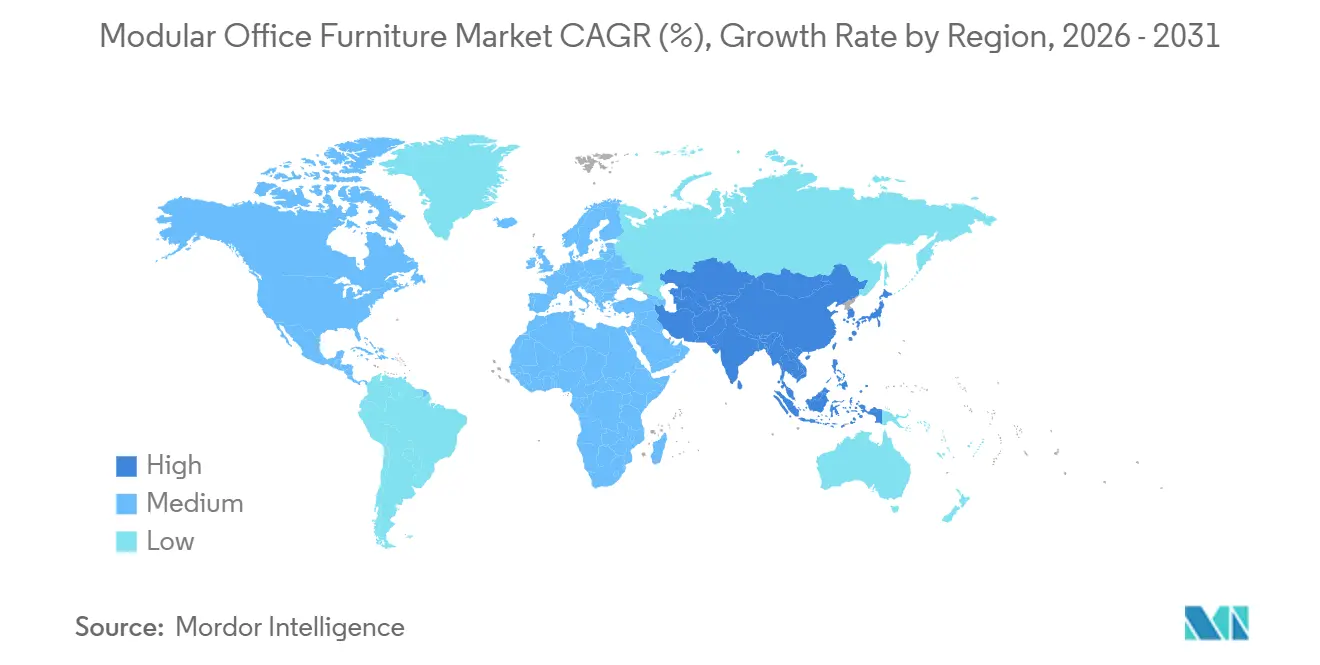
APAC and MEA Modular Office Furniture Market
Asia-Pacific is set to lead the charge, with projections indicating an 8.42% CAGR from 2026 to 2031 in the modular office furniture market. India is emerging as a standout player, with workplace expansions, institutional demand, and local manufacturing investments all aligning. Interio by Godrej is targeting revenue of INR 10,000 crore (approximately USD 1.18 billion) by FY2029, backed by a planned investment of INR 300 crore (approximately USD 35 million) in digital, retail, and manufacturing. KOKUYO is amplifying its presence in India, having rebranded HNI India to Kokuyo Workplace India, and is aiming for a 15% to 20% annual revenue growth from its expansive 350,000 sq ft facility in Nagpur. While China anchors the region in terms of volume, nations like Japan, South Korea, Australia, and segments of Southeast Asia are driving demand through premium projects, co-working expansions, and multinational office setups. The Middle East and Africa are making strides, especially in the United Arab Emirates and Saudi Arabia, but face challenges in installer coverage and after-sales infrastructure, hindering a more balanced market expansion.
Competitive Landscape
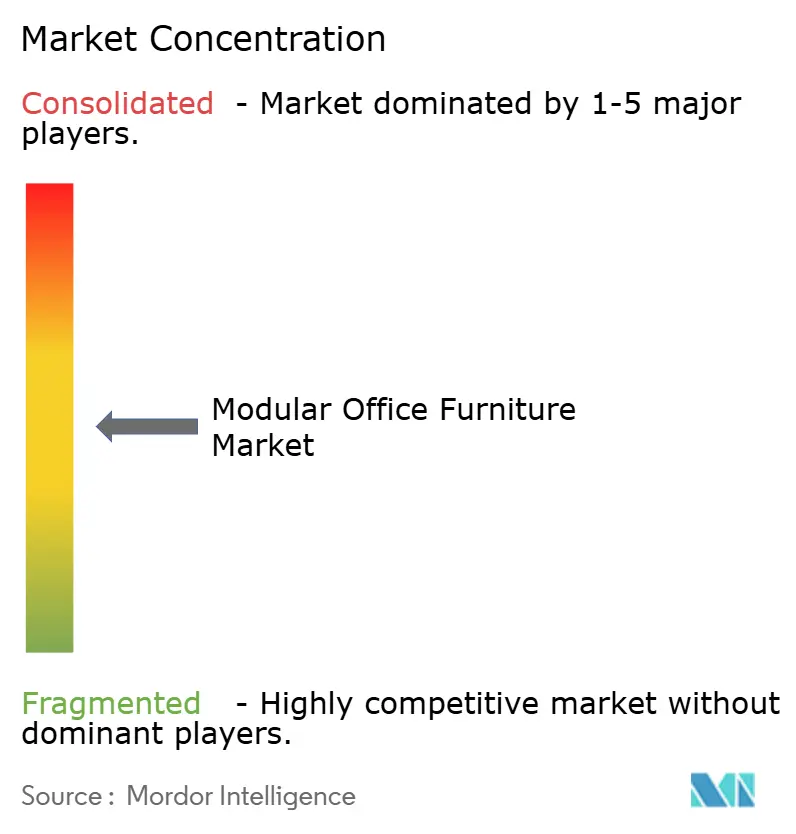
Steelcase, MillerKnoll, Haworth, and HNI Corporation dominate the global specification tier of the modular office furniture market, making their mark in large corporate accounts and established dealer networks. However, this concentration doesn't extend throughout the entire market. Regional suppliers and design-led specialists maintain significant roles in local and mid-market projects. Competing on product provenance, finish quality, and sustainability, European brands like Kinnarps, Sedus Stoll, and Vitra face off against Asian suppliers such as KOKUYO and Godrej Interio, who leverage regional reach and scalable cost structures. The competitive edge in the modular office furniture market hinges not just on product quality, but also on the ability to deliver integrated systems, installation support, and ongoing reconfiguration. This explains why leading players prioritize bundled architectures over standalone product launches.
Leading companies are making strategic moves to capture a larger share of projects in the modular office furniture market. In May 2026, Knoll launched the Konzert private office system, offering a configurable solution that spans panels, tables, seating, storage, and integrated lighting. Earlier, in January 2026, Knoll introduced Dividends Skyline, designed for open-plan workstations and quick workplace reconfigurations. Steelcase emphasized workplace performance and local needs, showcasing new products in Chicago and debuting a fabric collection tailored for the Indian market[4]. Such initiatives underscore the market's preference for suppliers who can deliver a cohesive office solution.
There's a pronounced competitive opportunity in the mid-market, second-tier geographies, and the circular-service segment of the modular office furniture market. While major players dominate premium contract channels, smaller workshops excel in local customization and speed. Yet, many buyers find themselves between these extremes, creating space for suppliers who merge standard modular components with digital asset tracking and lifecycle services. Such offerings can alleviate the upfront purchase burden. As buyers increasingly seek to extend asset use and clarify procurement decisions, circular programs and refurbishable product strategies gain prominence. In this competitive landscape, success lies with those who harmonize product variety with service excellence, data consistency, and reliable, long-term support.
Modular Office Furniture Industry Leaders
-
MillerKnoll Inc.
-
Haworth Inc.
-
HNI Corporation
-
Okamura Corporation
-
KOKUYO Co., Ltd.
- *Disclaimer: Major Players sorted in no particular order
Modular Office Furniture Market Companies Covered in this Report
- Steelcase Inc.
- MillerKnoll, Inc.
- Haworth Inc.
- HNI Corporation
- KOKUYO Co., Ltd.
- Teknion Corporation
- Kimball International, Inc.
- Okamura Corporation
- KI (Krueger International, Inc.)
- Global Furniture Group
- Kinnarps AB
- Godrej Interio
- Vitra International AG
- Sedus Stoll AG
- Bene GmbH
- Martela Corporation
- ACTIU Berbegal y Formas S.A.
- Wilkhahn
- Humanscale
- Fursys Inc.
Recent Industry Developments in Modular Office Furniture Market
- June 2026: At NeoCon 2026, Haworth unveiled its most significant product lineup in decades, spotlighting a pioneering power delivery system rooted in the company's legacy of innovation from the knowledge revolution era.
- June 2026: Steelcase India launched the 'Made in India' Fabric Collection, a locally curated and sourced range developed to address the evolving needs of Indian corporate workplaces. The initiative deepens Steelcase's local supply chain integration in one of Asia-Pacific's fastest-growing office furniture markets.
- June 2026: Herman Miller, MillerKnoll, introduced the Aeron Chair in two new colors with updated sustainable material specifications and inclusive ergonomic design enhancements. The product debuted at Fulton Market Design Days in Chicago under the theme "Living with Change," reinforcing Herman Miller's premium ergonomic positioning.
- January 2026: Knoll has officially launched its Dividends Skyline, a system designed by Jeffrey Bernett and Nicholas Dodziuk. This refined and flexible system seamlessly integrates privacy, focus, and collaboration, catering specifically to open-plan workplaces.
Global Modular Office Furniture Market Report Scope
Segmentation Overview
| Modular Workstations |
| Modular Storage Systems |
| Modular Seating Solutions |
| Modular Conference and Meeting Furniture |
| Modular Reception and Lobby Furniture |
| Other Product Types |
| Wood |
| Plastic & Polymer |
| Metal |
| Other Materials |
| Corporate Office |
| Healthcare Offices |
| Educational Offices |
| Government & Public Offices |
| Hospitality & Retail Back-Offices |
| Other End-Users |
| B2B/Project | |
| B2C/Retail | Home Centers |
| Specialty Furniture Stores | |
| Online | |
| Local Workshops | |
| Other Distribution Channels |
| North America | Canada |
| United States | |
| Mexico | |
| South America | Brazil |
| Peru | |
| Chile | |
| Argentina | |
| Rest of South America | |
| Europe | United Kingdom |
| Germany | |
| France | |
| Spain | |
| Italy | |
| BENELUX (Belgium, Netherlands, and Luxembourg) | |
| NORDICS (Denmark, Finland, Iceland, Norway, and Sweden) | |
| Rest of Europe | |
| Asia-Pacific | India |
| China | |
| Japan | |
| Australia | |
| South Korea | |
| South East Asia (Singapore, Malaysia, Thailand, Indonesia, Vietnam, and the Philippines) | |
| Rest of Asia-Pacific | |
| Middle East and Africa | United Arab Emirates |
| Saudi Arabia | |
| South Africa | |
| Nigeria | |
| Rest of the Middle East and Africa |
| By Product Type | Modular Workstations | |
| Modular Storage Systems | ||
| Modular Seating Solutions | ||
| Modular Conference and Meeting Furniture | ||
| Modular Reception and Lobby Furniture | ||
| Other Product Types | ||
| By Material Type | Wood | |
| Plastic & Polymer | ||
| Metal | ||
| Other Materials | ||
| By End-User | Corporate Office | |
| Healthcare Offices | ||
| Educational Offices | ||
| Government & Public Offices | ||
| Hospitality & Retail Back-Offices | ||
| Other End-Users | ||
| By Distribution Channel | B2B/Project | |
| B2C/Retail | Home Centers | |
| Specialty Furniture Stores | ||
| Online | ||
| Local Workshops | ||
| Other Distribution Channels | ||
| By Geography | North America | Canada |
| United States | ||
| Mexico | ||
| South America | Brazil | |
| Peru | ||
| Chile | ||
| Argentina | ||
| Rest of South America | ||
| Europe | United Kingdom | |
| Germany | ||
| France | ||
| Spain | ||
| Italy | ||
| BENELUX (Belgium, Netherlands, and Luxembourg) | ||
| NORDICS (Denmark, Finland, Iceland, Norway, and Sweden) | ||
| Rest of Europe | ||
| Asia-Pacific | India | |
| China | ||
| Japan | ||
| Australia | ||
| South Korea | ||
| South East Asia (Singapore, Malaysia, Thailand, Indonesia, Vietnam, and the Philippines) | ||
| Rest of Asia-Pacific | ||
| Middle East and Africa | United Arab Emirates | |
| Saudi Arabia | ||
| South Africa | ||
| Nigeria | ||
| Rest of the Middle East and Africa | ||
Key Questions Answered in the Report
What is the current size of the modular office furniture space and where is it headed by 2031?
The Modular office furniture market stood at USD 27.3 billion in 2025 and USD 28.7 billion in 2026, and it is projected to reach USD 40.6 billion by 2031 at a 7.2% CAGR.
Why are companies buying more modular office furniture now?
Structured hybrid work, higher pressure on office space use, and the need for layouts that can be changed without major fit-out work are the main reasons supporting demand.
Which product category is leading demand?
Modular Workstations led with 32.41% share in 2025 because they remain the core system layer for enterprise office re-fit programs and multi-site workplace standardization.
Which region is growing the fastest?
Asia-Pacific is the fastest-growing region, with an 8.42% CAGR expected from 2026 to 2031, supported by commercial build-outs, institutional demand, and local manufacturing investment.
What is the most important sales channel for this business?
B2B and Project channels are the most important because they held 73.01% share in 2025 and also carry the fastest projected growth at 8.31% through 2031.