
Meat Tenderizing Agents Market Size and Share
Market Overview
| Study Period | 2021 - 2031 |
|---|---|
| Market Size (2026) | USD 2.33 Billion |
| Market Size (2031) | USD 2.84 Billion |
| Growth Rate (2026 - 2031) | 4.04 % |
| Fastest Growing Market | Asia-Pacific |
| Largest Market | North America |
| Market Concentration | Low |
Major Players
*Disclaimer: Major Players sorted in no particular order Image © Mordor Intelligence. Reuse requires attribution under CC BY 4.0. |
|
Meat Tenderizing Agents Market Analysis by Mordor Intelligence
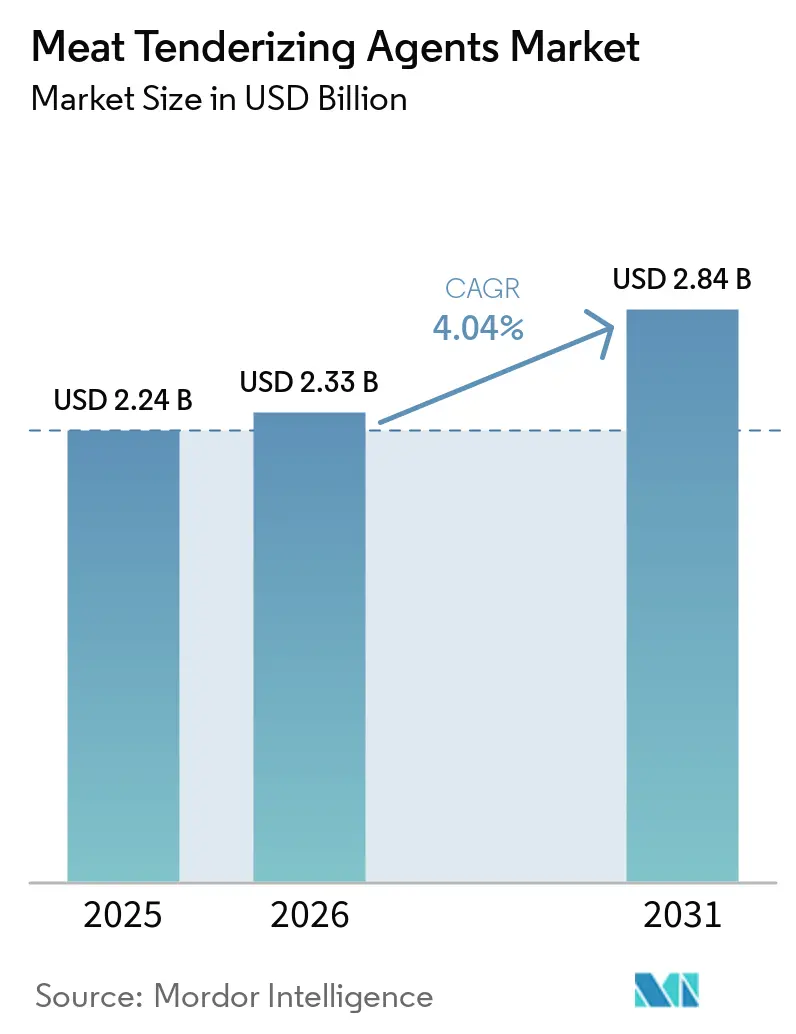
The meat tenderizing agents market size is anticipated to grow from USD 2.24 billion in 2025 and USD 2.33 billion in 2026 to USD 2.84 billion by 2031, reflecting a CAGR of 4.04% during the forecast period of 2026 to 2031. This growth is primarily driven by consistent demand from industrial meat processors who require uniform texture and quality across large-scale production lines. The increasing incorporation of processed meat into daily diets, particularly in urban areas, is bolstering market demand. This trend is especially prominent in South and Southeast Asia, where the adoption of convenience-based food formats continues to expand. The market is also witnessing a significant shift toward plant-based and fermentation-derived enzymes, as manufacturers aim to balance clean-label product offerings, batch consistency, and operational efficiency. North America remains a key market, supported by its well-established processed meat industry. However, the Asia-Pacific region is expected to experience the fastest growth, driven by rising demand from quick-service restaurants and the expansion of industrial poultry processing. Despite its growth potential, the market remains highly fragmented, with numerous players competing to meet evolving consumer and industry demands.
Key Report Takeaways
- By product type, enzymes held 68.72% of revenue in 2025, while salts and acids are forecast to grow at 6.51% through 2031.
- By source, plant-based agents accounted for 84.68% of demand in 2025, while microbial-based enzymes are projected to expand at 6.32% through 2031.
- By format, dry products accounted for 71.55% of the meat tenderizing agents market in 2025, while liquid formats are expected to grow at 6.24% through 2031.
- By application, beef captured 43.73% of demand in 2025, while poultry is forecast to grow at 6.46% through 2031.
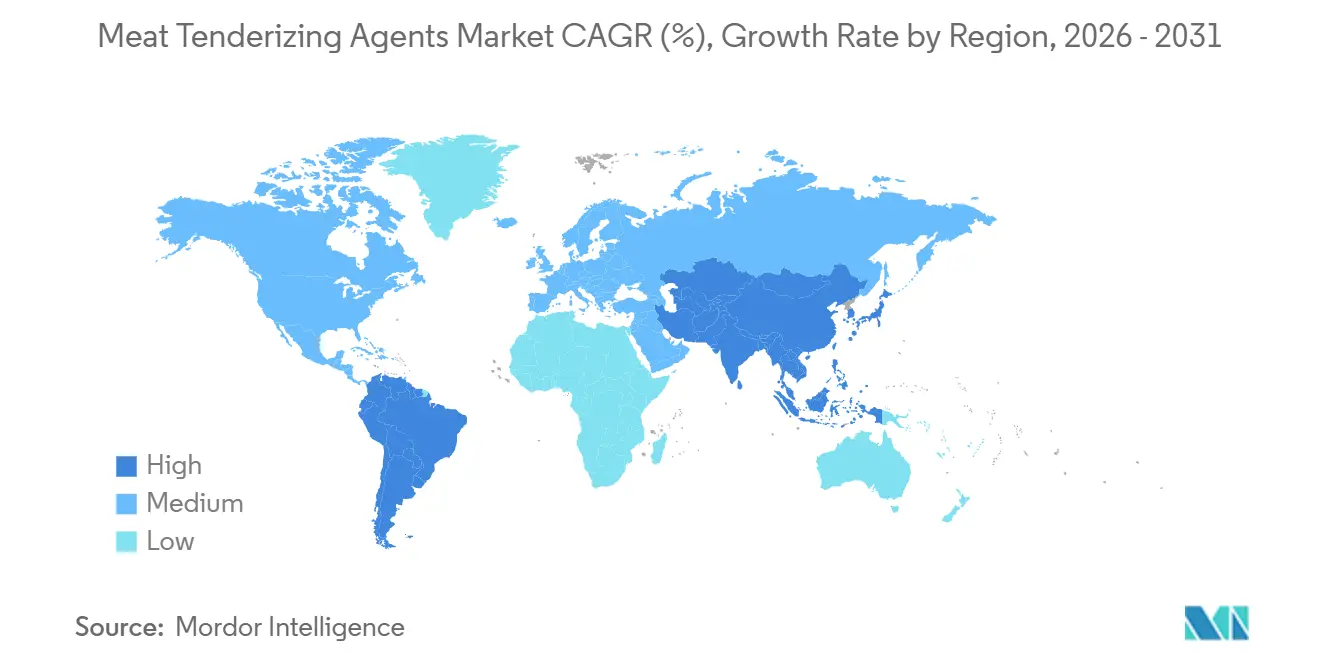
- By geography, North America held 32.68% of the meat tenderizing agents market share in 2025, while Asia-Pacific is projected to expand at 6.75% through 2031.
Note: Market size and forecast figures in this report are generated using Mordor Intelligence’s proprietary estimation framework, updated with the latest available data and insights as of January 2026.
Market Trends and Insights
Drivers Impact Analysis of Meat Tenderizing Agents Market*
| Driver | (~) % Impact on CAGR Forecast | Geographic Relevance | Impact Timeline |
|---|---|---|---|
| Rising demand for processed and convenience meat products | +1.5% | Global; highest intensity in Asia-Pacific and Latin America | Short term (≤ 2 years) |
| Growing adoption of natural and enzyme-based tenderizing solutions | +0.8% | North America and Europe | Short term (≤ 2 years) |
| Advancements in enzyme technology and meat processing techniques | +0.6% | Global | Medium term (2–4 years) |
| Demand for clean-label and natural food ingredients | +0.5% | North America and Europe; spill-over to Asia-Pacific | Short term (≤ 2 years) |
| Increasing demand for enzyme-based tenderization in industrial meat processing | +0.4% | Global; focus on Asia-Pacific industrial processors | Medium term (2–4 years) |
| Production of marinated and value-added meat products | +0.4% | Asia-Pacific, North America | Medium term (2–4 years) |
| Source: Mordor Intelligence | |||
Rising demand for processed and convenience meat products
The increasing demand for processed, ready-to-cook, and convenience meat products is driving significant growth in the meat tenderizing agents market. Factors such as rising urbanization, hectic lifestyles, and the rapid expansion of quick-service restaurants and organized retail channels are driving demand for standardized, high-quality meat products. According to the 2025 Food & Health Survey conducted by the International Food Information Council (IFIC), nearly 48% of Americans identified convenience as a critical factor influencing their food and beverage purchasing decisions[1]Source: International Food Information Council, "2025 IFIC Food & Health Survey", ific.org. This trend underscores the growing consumer preference for easy-to-prepare meal solutions. Meat tenderizing agents play a crucial role in helping processors enhance the texture, consistency, and yield of meat products while also improving the value of lower-grade meat cuts commonly used in processed foods. With global demand for convenience-focused protein products on the rise, meat manufacturers are increasingly incorporating tenderizing solutions to optimize production efficiency and elevate product quality, meeting evolving consumer expectations.
Demand for clean-label and natural food ingredients
The growing consumer preference for clean-label, naturally sourced ingredients is driving the global meat tenderizing agents market. To meet this demand, meat processors are increasingly turning to plant-based tenderizers such as papain, bromelain, and ficin, which are derived from natural sources and align with the trend toward minimally processed and easily recognizable ingredients. This shift is particularly pronounced in regions like Europe and North America, where consumers place a high value on transparency in food labeling. A study published in ScienceDirect in August 2024 revealed that 78% of European consumers considered the ingredient list a critical factor when purchasing food products[2]Source: ScienceDirect, "Clean-Label Alternatives For Food Preservation: An Emerging Trend", sciencedirect.com. This underscores the rising importance of ingredient transparency and clean-label formulations in influencing purchasing decisions. Consequently, there is a growing demand for meat tenderizing agents that not only deliver effective functionality but also emphasize natural sourcing and robust traceability. These factors are driving wider adoption of such agents across the meat processing industry, as manufacturers strive to meet evolving consumer expectations.
Production of marinated and value-added meat products
The rising production of marinated, seasoned, and value-added meat products is significantly contributing to the growth of the global meat tenderizing agents market. Meat processors are increasingly relying on tenderizing agents to enhance texture, improve moisture retention, and ensure consistent quality in ready-to-cook and pre-marinated meat products. According to the 2026 Power of Meat Report published by the North American Meat Institute (NAMI), 45% of U.S. consumers reported actively attempting to prepare more meals featuring meat or poultry as of March 2026[3]Source: North American Meat Institute, "Sales At Record High, Americans View Meat As Part Of a Healthy, Balanced Lifestyle", meatinstitute.org. This growing consumer inclination toward meat-based meals is pushing manufacturers to diversify their offerings of convenient and value-added meat products. Consequently, as production volumes of these products continue to rise, the demand for meat tenderizing agents is expected to grow further. These agents play a critical role in helping processors maintain product quality, achieve uniformity, and meet evolving consumer expectations for taste and convenience.
Advancements in enzyme technology and meat processing techniques
Technological advancements in enzyme development and modern meat processing techniques are driving significant growth in the meat tenderizing agents market. Companies are increasingly focusing on enzyme innovation to enhance meat tenderness, improve processing efficiency, ensure consistent product quality, and reduce the likelihood of over-tenderization. Recent breakthroughs in biotechnology, such as AI-driven enzyme engineering and precision fermentation, have enabled the development of protease enzymes with improved stability, activity, and specificity under industrial processing conditions. These advancements empower meat processors to achieve precise tenderization results, catering to the growing demand for both premium and value-added meat products. As the adoption of advanced processing technologies and high-performance enzyme solutions continues to rise, the demand for specialized meat tenderizing agents is expected to grow further, particularly in commercial meat processing applications.
Restraints Impact Analysis of Meat Tenderizing Agents Market*
| Restraint | (~) % Impact on CAGR Forecast | Geographic Relevance | Impact Timeline |
|---|---|---|---|
| Consumer concerns regarding chemical additives in meat products | -0.3% | Global; most pronounced in Europe and North America | Short to medium term (1–3 years) |
| Risk of over-tenderization and texture degradation | -0.2% | Global | Medium term (2–4 years) |
| Stringent food safety and regulatory requirements | -0.4% | Europe, North America | Long term (≥ 4 years) |
| Availability of alternative mechanical tenderization methods | -0.2% | Asia, Latin America | Medium term (2–4 years) |
| Source: Mordor Intelligence | |||
Consumer concerns regarding chemical additives in meat products
Consumer skepticism about the use of additives and processing aids in meat products remains a significant barrier to the growth of the global meat tenderizing agents market. The rising preference for clean-label foods has prompted consumers to scrutinize ingredient lists more closely, often avoiding products that appear overly processed or contain unfamiliar components. Even when tenderizing agents are sourced from natural ingredients such as papaya or pineapple, inadequate labeling and a lack of consumer awareness can lead to hesitation in their acceptance. This growing demand for ingredient transparency is compelling meat processors to reassess their formulation practices and adopt more transparent labeling strategies. Consequently, suppliers are under increasing pressure to provide detailed documentation, ensure traceability, and align their ingredients with consumer expectations. These challenges, despite the functional advantages of tenderizing agents, are slowing their market adoption.
Risk of over-tenderization and texture degradation
The risk of over-tenderization and undesirable texture changes remains a major challenge for the global meat tenderizing agents market. Enzyme-based tenderizers require precise dosing and careful control during processing, as excessive enzyme activity can lead to undesirable outcomes, such as overly soft or mushy meat textures that fail to meet commercial standards. This issue is particularly critical in industrial meat processing, where ensuring consistent product quality across large-scale production is essential. The potential for texture degradation not only complicates formulation processes but also necessitates additional monitoring and quality control measures, thereby significantly increasing operational costs for manufacturers. Consequently, many processors remain cautious about adopting highly active tenderizing systems, as the risks associated with improper application can outweigh the benefits, thereby limiting their broader use in certain market segments.
*Our forecasts treat driver/restraint impacts as directional, not additive. The impact forecasts reflect baseline growth, mix effects, and variable interactions.
Meat Tenderizing Agents Market Segment Analysis
By Product Type:
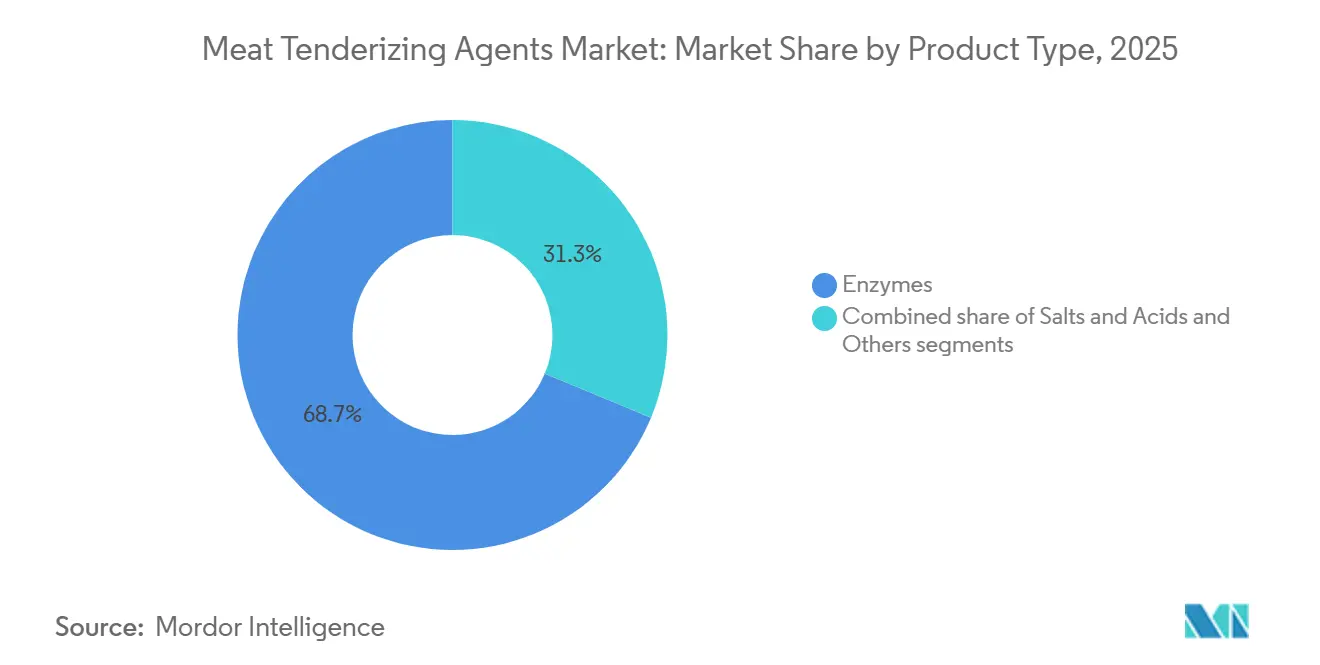
Enzymes Lead While Salts and Acids Gain Ground in Cost-Sensitive ProgramsEnzymes dominated the global meat tenderizing agents market in 2025, accounting for 68.72% of the market share. Their widespread adoption is attributed to their effectiveness in industrial meat processing, particularly for beef and pork, where they significantly enhance tenderness while preserving overall quality and consistency. Enzyme-based solutions are highly favored for their ability to improve texture without altering the natural flavor profile, making them an essential component of commercial meat processing operations. This dominance highlights the critical role enzymes play in meeting the growing demand for high-quality processed meat products.
The salts and acids segment is anticipated to grow the fastest, with a projected CAGR of 6.51% through 2031. This growth is driven by their affordability, ease of integration into processing systems, and their ability to enhance moisture retention and overall meat quality. These ingredients are particularly valued for their practicality in optimizing production efficiency while adhering to cost constraints and formulation requirements. As a result, salts and acids are increasingly adopted by processors seeking reliable, cost-effective tenderization solutions to meet evolving consumer preferences and industry demands.



By Source:
Plant-Based Leadership Holds, While Fermentation Economics Strengthen Microbial GrowthPlant-based tenderizing agents accounted for 84.68% of the global meat tenderizing agents market in 2025, highlighting their dominant role in the industry. These agents, primarily derived from natural sources such as papaya, pineapple, and fig, are widely preferred for their proven ability to enhance meat tenderness. Their extensive availability and established use in commercial meat processing have solidified their position as a reliable and sustainable solution. Additionally, their compatibility with global ingredient supply chains has further contributed to their widespread adoption.
The microbial-based enzyme segment is projected to grow at the fastest rate of 6.32% during the forecast period through 2031. This growth is driven by the increasing demand for consistent product performance and a stable supply chain. Fermentation-derived enzymes offer significant advantages over plant-based sources, including greater control over enzyme properties, enhanced batch-to-batch consistency, and reduced reliance on agricultural factors. These benefits make microbial enzymes an attractive option for meat processors seeking reliable and efficient tenderizing solutions, thereby boosting their market penetration.
By Format:
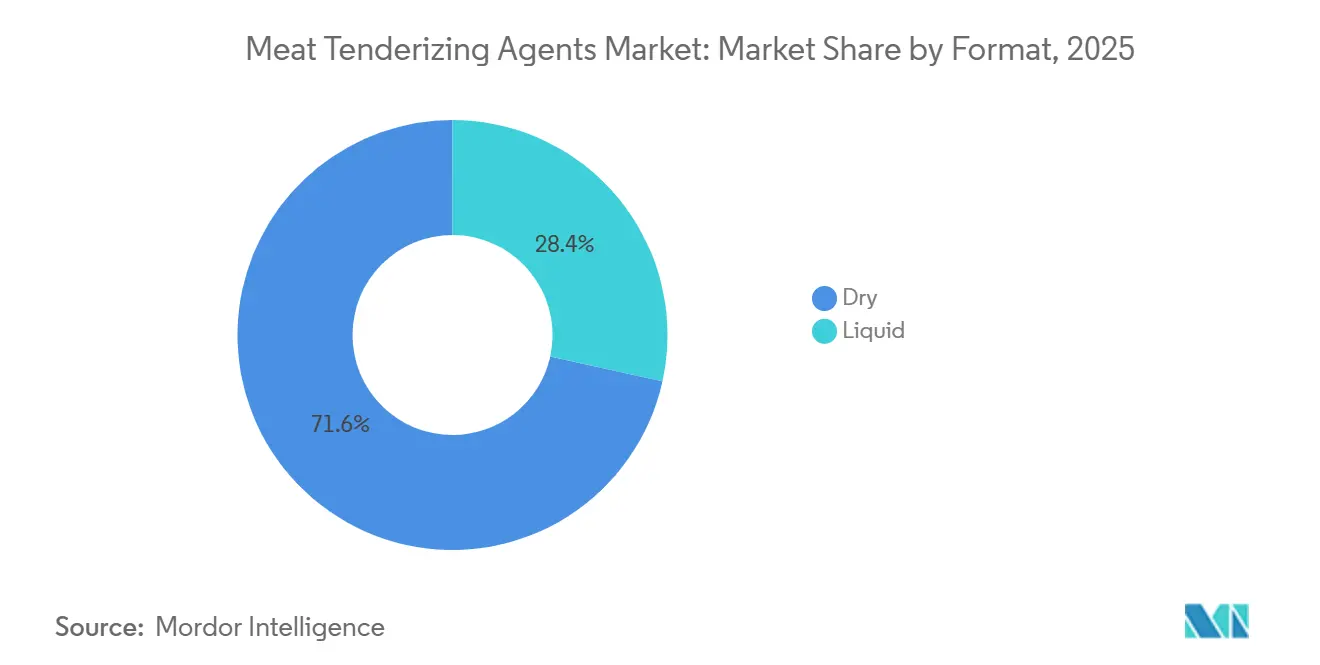
Dry Systems Dominate Current Demand, While Liquid Formats Expand with Injection ApplicationsIn 2025, dry formats dominated the global meat tenderizing agents market, accounting for 71.55% of the market share. This dominance is primarily due to their extended shelf life, ease of handling, and reduced storage and transportation costs. Dry formulations provide greater stability during processing and can be seamlessly integrated into seasoning blends and dry marinades. These characteristics make them highly preferred in industrial meat processing operations, ensuring consistent quality and efficiency.
Meanwhile, the liquid format segment is projected to grow the fastest, with a CAGR of 6.24% through 2031. This growth is driven by the increasing adoption of injection, tumbling, and brine-marination systems in commercial meat processing facilities. Liquid tenderizing agents offer superior ingredient distribution and deeper penetration into meat products, resulting in enhanced tenderness and moisture retention. Their ability to support high-throughput operations while maintaining consistent product quality has made them increasingly popular among large-scale meat manufacturers.
By Application:
Beef Remains the Core Use Case, While Poultry Delivers the Fastest ExpansionIn 2025, beef emerged as the largest application segment in the global meat tenderizing agents market, accounting for 43.73% of the market share. The widespread use of tenderizing agents in beef processing is primarily driven by the need to enhance texture, tenderness, and overall eating quality, especially for tougher cuts. Industrial processors increasingly depend on these agents to ensure product consistency and meet consumer expectations. The strong global demand for beef across foodservice and retail sectors continues to drive the adoption of meat tenderizing agents in this segment.
The poultry segment is anticipated to grow at the fastest CAGR of 6.46% through 2031, driven by rising consumption due to its affordability and nutritional benefits. Processors are focusing on improving the quality and efficiency of poultry products by incorporating tenderizing agents into marinated, ready-to-cook, and value-added offerings. These agents play a crucial role in enhancing texture and retaining moisture in poultry products. Furthermore, the increasing demand for convenient protein options and the expansion of industrial poultry processing facilities are expected to significantly drive this segment's growth.
Geography Analysis
North America Meat Tenderizing Agents Market
North America dominated the global meat tenderizing agents market in 2025, holding a 32.68% share, making it the largest regional market. This dominance is attributed to the region's well-established meat processing industry and the high demand for processed, marinated, and value-added meat products. Meat processors in North America widely use tenderizing agents to enhance texture, consistency, and production efficiency across various meat applications. Additionally, continuous investments in product innovation and advanced processing technologies are further bolstering the region's market growth prospects.
APAC Meat Tenderizing Agents Market
The Asia-Pacific region is anticipated to grow at the fastest pace, with a projected CAGR of 6.75% through 2031, making it the most rapidly expanding regional market. This growth is fueled by rising meat consumption, expanding food processing capacity, and a growing preference for ready-to-cook and convenience-oriented protein products. Factors such as rapid urbanization, evolving consumer lifestyles, and the growth of foodservice channels are driving the adoption of meat tenderizing agents. Furthermore, significant investments in modern meat processing infrastructure are expected to support the region's long-term market expansion.
EMEA and South America Meat Tenderizing Agents Market
Europe continues to be a key market for meat tenderizing agents, driven by its mature food processing sector and strong demand for premium-quality meat products. The region is experiencing a growing shift toward clean-label ingredients and advanced processing solutions that enhance product quality and functionality. Regulatory frameworks governing food ingredients and enzyme usage play a crucial role in shaping market development and innovation strategies. Meanwhile, South America and the Middle East & Africa are emerging as promising markets, supported by increasing meat processing activities and a growing demand for value-added meat products in these regions.

Competitive Landscape
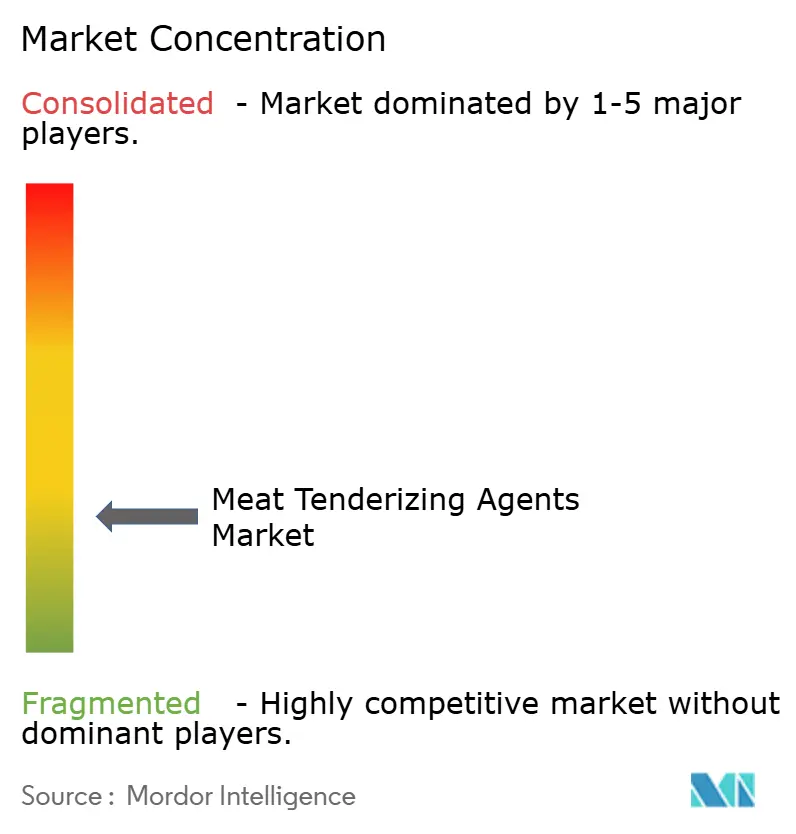
The global meat tenderizing agents market is highly fragmented, with key players including AB Enzymes GmbH, Amano Enzyme Inc., Archer Daniels Midland Company, Advanced Enzyme Technologies Ltd., and DSM-Firmenich. Numerous global and regional suppliers offer a wide variety of enzyme-based and non-enzyme tenderizing solutions, creating a highly competitive environment. Companies compete on factors such as product performance, application expertise, formulation adaptability, and supply chain reliability. The lack of a single dominant player ensures a dynamic and competitive market landscape.
Innovation and product differentiation have become critical drivers of competition in the market. Companies are increasingly focusing on developing advanced tenderizing solutions that enhance meat texture, improve processing efficiency, and ensure consistent quality. Additionally, there is a growing emphasis on clean-label and reduced-additive formulations to meet evolving consumer preferences. Investments in biotechnology, enzyme research, and tailored application support are enabling market players to strengthen their positions. Strategic initiatives, including product launches and geographic expansions, are further helping manufacturers expand their market reach and technical capabilities.
The demand for advanced tenderizing systems that align with modern meat processing operations is on the rise. These systems are expected to deliver greater precision, consistency, and compatibility with evolving industry requirements. Companies with robust research and development capabilities, regulatory compliance expertise, and extensive global distribution networks are well-positioned to leverage emerging opportunities. Meanwhile, regional and niche manufacturers continue to compete effectively by offering cost-efficient solutions tailored to local market needs. This competitive dynamic is anticipated to sustain the fragmented nature of the market throughout the forecast period.
Meat Tenderizing Agents Industry Leaders
-
AB Enzymes GmbH
-
Amano Enzyme Inc.
-
Archer Daniels Midland Company
-
Advanced Enzyme Technologies Ltd.
-
DSM-Firmenich
- *Disclaimer: Major Players sorted in no particular order
Meat Tenderizing Agents Market Companies Covered in this Report
- AB Enzymes GmbH
- Amano Enzyme Inc.
- Archer Daniels Midland Company
- Advanced Enzyme Technologies Ltd.
- DSM-Firmenich
- Enzybel Group
- Enzyme Bioscience Private Limited
- Enzyme Development Corporation
- Creative Enzymes
- International Flavors and Fragrances Inc.
- Kerry Group plc
- Kemin Industries, Inc.
- Antozyme Biotech
- Novonesis Group
- Aum Enzymes
- Specialty Enzymes & Probiotics.
- Specialty Enzymes and Probiotics
- SternEnzym GmbH and Co. KG
- Enzyme Innovation
- Nagase Viita Co., Ltd.

Recent Industry Developments in Meat Tenderizing Agents Market
- May 2026: AB Enzymes expanded its operations across Mexico, Central America, and the Caribbean by enhancing its regional distribution network and optimizing its commercial structure to provide better local customer support and market coverage. This effort included new distribution partnerships for food and baking applications, allowing the company to strengthen technical service capabilities and drive growth throughout the region.
- April 2025: Novonesis finalized an agreement to acquire a fermentation production facility in Rayong, Thailand, from Meihua for approximately USD 50 million. This acquisition bolsters its manufacturing presence in Southeast Asia, aligning with the company's long-term growth strategy by increasing production capacity, strengthening supply chain resilience, and improving access to rapidly growing Asian markets.
- April 2026: Kerry has expanded its biotechnology manufacturing hub in Carrigaline, Ireland, significantly boosting its industrial-scale lactase enzyme production capacity to address the rising global demand for lactose-free and sugar-reduced dairy products.
- July 2025: Griffith Foods introduced OptiTender Marinade, a clean-label meat tenderizer that improves tenderness and reduces cooking time by up to 25% in slow-cook applications. This product offers a natural alternative to traditional enzyme-based tenderizers, enabling meat processors to enhance the quality of value cuts while addressing the increasing demand for clean-label meat products.


Global Meat Tenderizing Agents Market Report Scope
Meat tenderizing agents are substances such as ingredients, enzymes, acids, and salts that enhance the tenderness, texture, and overall quality of meat by breaking down muscle fibers and connective tissues. The global meat tenderizing agents market is segmented by product type, source, format, application, and geography. Based on product type, the market is segmented by enzymes, salts and acids, and others. Based on the source, the market is classified into plant-based and microbial-based. Based on format, the market is classified into dry and liquid. Based on application, the market is segmented by beef, pork, poultry, seafood, and others. Based on geography, the market is classified into North America, Europe, Asia-Pacific, South America, and the Middle East and Africa. The market forecasts are provided in terms of value (USD).
| Enzymes | Papain |
| Bromelain | |
| Ficin | |
| Others | |
| Salts and Acids | |
| Others |
| Plant-Based |
| Microbial-Based |
| Dry | Powder |
| Granules | |
| Liquid |
| Beef |
| Pork |
| Poultry |
| Seafood |
| Others |
| North America | United States |
| Canada | |
| Mexico | |
| Rest of North America | |
| Europe | Germany |
| United Kingdom | |
| Italy | |
| France | |
| Spain | |
| Poland | |
| Belgium | |
| Sweden | |
| Rest of Europe | |
| Asia-Pacific | China |
| Japan | |
| India | |
| Australia | |
| Indonesia | |
| South Korea | |
| Thailand | |
| Singapore | |
| Rest of Asia-Pacific | |
| South America | Brazil |
| Argentina | |
| Colombia | |
| Chile | |
| Peru | |
| Rest of South America | |
| Middle East and Africa | South Africa |
| Saudi Arabia | |
| United Arab Emirates | |
| Nigeria | |
| Egypt | |
| Morocco | |
| Turkey | |
| Rest of Middle East and Africa |
| By Product Type | Enzymes | Papain |
| Bromelain | ||
| Ficin | ||
| Others | ||
| Salts and Acids | ||
| Others | ||
| By Source | Plant-Based | |
| Microbial-Based | ||
| By Format | Dry | Powder |
| Granules | ||
| Liquid | ||
| By Application | Beef | |
| Pork | ||
| Poultry | ||
| Seafood | ||
| Others | ||
| By Geography | North America | United States |
| Canada | ||
| Mexico | ||
| Rest of North America | ||
| Europe | Germany | |
| United Kingdom | ||
| Italy | ||
| France | ||
| Spain | ||
| Poland | ||
| Belgium | ||
| Sweden | ||
| Rest of Europe | ||
| Asia-Pacific | China | |
| Japan | ||
| India | ||
| Australia | ||
| Indonesia | ||
| South Korea | ||
| Thailand | ||
| Singapore | ||
| Rest of Asia-Pacific | ||
| South America | Brazil | |
| Argentina | ||
| Colombia | ||
| Chile | ||
| Peru | ||
| Rest of South America | ||
| Middle East and Africa | South Africa | |
| Saudi Arabia | ||
| United Arab Emirates | ||
| Nigeria | ||
| Egypt | ||
| Morocco | ||
| Turkey | ||
| Rest of Middle East and Africa | ||


Key Questions Answered in the Report
What is the expected value of the meat tenderizing agents sector by 2031?
It is forecasted to reach USD 2.84 billion by 2031, rising from USD 2.33 billion in 2026, projected to grow at a 4.04% CAGR over 2026-2031.
Which product type leads current demand for meat tenderizing agents?
Enzymes lead demand, holding 68.72% of revenue in 2025 because they remain central to industrial beef and pork tenderization programs.
Which source category is growing the fastest in meat tenderizing applications?
Microbial-based enzymes are projected to grow the fastest at 6.32% through 2031 because fermentation offers better batch consistency and lower crop exposure.
Why is poultry becoming such an important growth area?
Poultry is forecast to grow at 6.46% through 2031 because industrial broiler processing needs consistent texture at high throughput and cannot rely only on natural resting time.
Page last updated on:


 Your data is secure and never sold or shared.


