
LNG Vehicle Market Size and Share
Market Overview
| Study Period | 2019 - 2031 |
|---|---|
| Market Size (2026) | USD 33.70 Billion |
| Market Size (2031) | USD 39.47 Billion |
| Growth Rate (2026 - 2031) | 3.21 % |
| Fastest Growing Market | Asia-Pacific |
| Largest Market | Asia-Pacific |
| Market Concentration | Medium |
Major Players *Disclaimer: Major Players sorted in no particular order Image © Mordor Intelligence. Reuse requires attribution under CC BY 4.0. | |
LNG Vehicle Market Analysis by Mordor Intelligence
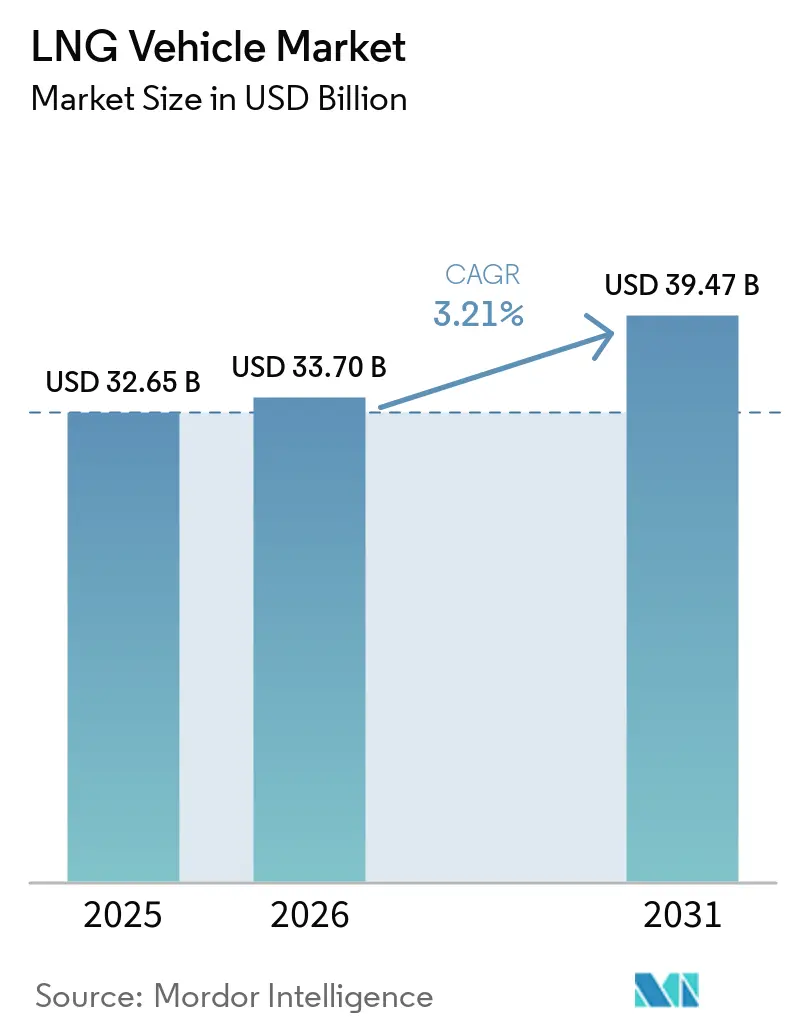
The LNG vehicle market size was valued at USD 32.65 billion in 2025, is estimated at USD 33.70 billion in 2026, and is projected to reach USD 39.47 billion by 2031, at a CAGR of 3.21% during the forecast period (2026–2031). Current expansion stems from enforceable emissions mandates, active corridor build-outs, and measurable fleet economics rather than speculative demand. Long-haul freight operators continue to anchor volumes, yet growth momentum is shifting toward medium-duty and urban distribution use cases as range-extending cylinder technology matures. Supply-side competition centers on repurposed diesel platforms, while value migrates to fuel-system specialists and infrastructure owners who secure recurring revenue streams. Regional adoption remains uneven: Asia-Pacific accounts for nearly half of global deliveries, North America leverages abundant gas supply and incentives, and Europe balances bio-LNG pathways with stringent zero-emission targets.
Key Report Takeaways
- By vehicle type, heavy-duty trucks led with 53.29% of revenue share in 2025. Medium-duty trucks recorded the quickest expansion at a 6.89% CAGR through 2031.
- By application, freight transport accounted for 49.47% of revenue share in 2025, while personal vehicles are projected to grow at a 6.72% CAGR by 2031.
- By tank capacity, 300–500 kg systems accounted for 49.27% of revenue share in 2025; tanks above 500 kg are projected to grow at a 7.19% CAGR through 2031.
- By drive system, conventional engines accounted for 85.38% of revenue share in 2025, whereas hybrid powertrains are advancing at a 7.29% CAGR through 2031.
- By geography, Asia-Pacific accounted for 48.49% of revenue share in 2025 and is set to grow at a 7.42% CAGR through 2031.
Note: Market size and forecast figures in this report are generated using Mordor Intelligence’s proprietary estimation framework, updated with the latest available data and insights as of January 2026.
Market Trends and Insights
Drivers Impact Analysis of LNG Vehicle Market*
| Driver | (~) % Impact on CAGR Forecast | Geographic Relevance | Impact Timeline |
|---|---|---|---|
| Global HDV CO₂/NOx Rules | +0.8% | Europe, North America, China | Medium term (2-4 years) |
| Expanding LNG Corridor Network | +0.6% | Europe, China, United States | Long term (≥ 4 years) |
| Diesel-to-LNG Fuel Cost Edge | +0.5% | Asia-Pacific core, spill-over global | Short term (≤ 2 years) |
| Incentives and Toll Relief | +0.4% | Europe, California, select Asia-Pacific regions | Medium term (2-4 years) |
| China 3,500 km Dual-Cylinder Tech | +0.3% | China dominant, expanding across Asia-Pacific | Long term (≥ 4 years) |
| Europe Bio-LNG Blend Mandates | +0.2% | Europe core, limited North America | Long term (≥ 4 years) |
| Source: Mordor Intelligence | |||
Stringent HDV CO₂ and NOx Regulations Worldwide
Global emissions laws are reshaping truck purchasing. EPA Phase 3 rules in the United States begin with model-year 2027 vehicles and target steep greenhouse-gas cuts [1]“Greenhouse Gas Phase 3 Standards,” U.S. Environmental Protection Agency, epa.gov. In Europe, regulators set targets for a 43–45% reduction in CO₂ emissions from heavy-duty vehicles by 2030, prompting OEMs and fleets to explore alternatives to diesel. In China, stringent emission norms increased LNG truck adoption as fleets seek cost-effective, compliant solutions. LNG-powered engines offer lower CO₂ emissions compared to diesel and meet NOx requirements through established after-treatment systems, making them a practical compliance option. These standards introduce stringent limits while maintaining a technology-neutral approach, allowing compliance through advanced combustion engines and alternative fuels. While zero-emission technologies remain the long-term goal, LNG vehicles are recognized as a transitional, scalable, and regulation-compliant solution, particularly for heavy-duty and long-haul applications where electrification is challenging.
Rapid Build-Out of LNG Fueling Corridors
Infrastructure is catching up to vehicle demand. Europe’s TEN-T-Core mandate requires adequate LNG refueling by 2025 and has spurred since 2022 [2]“TEN-T and Alternative Fuels Infrastructure,” European Commission, europa.eu. In 2025–2026, partnerships between OEMs and energy companies are expected to play a significant role in driving expansion. These collaborations focus on corridor-based strategies that connect industrial hubs, logistics parks, and highways into integrated LNG networks. For instance, infrastructure companies in India are working with OEMs such as Tata Motors to identify high-density freight corridors for station deployment, enhancing fuel availability for long-haul trucking operations. China’s dense corridor network supports the world’s largest LNG truck fleet, while the United States now has 1,600 natural-gas stations, including 60 dedicated LNG sites. Each station expands viable route options, creating a network effect that attracts additional fleet conversions.
Government Purchase Incentives and Toll Exemptions
Recent European Union discussions highlight the inclusion of CNG and LNG trucks compatible with biomethane in EU funding frameworks as transitional technologies for decarbonizing heavy-duty vehicles. Industry stakeholders advocate for targeted financial support to accelerate fleet renewal, particularly in long-haul freight, where electrification remains challenging. The EU acknowledges that gas-based heavy-duty vehicles provide immediate emissions reductions, especially with biomethane, which significantly lowers lifecycle greenhouse gas emissions while utilizing existing refueling infrastructure. Policy frameworks identify these vehicles as a transitional solution between diesel reliance and future zero-emission mobility, particularly along high-utilization freight corridors.
Dual-1,500 L Cylinder Tech Enabling 3,500 Km Range
CIMC Enric's dual 1,500-liter design incorporates booster pumps, enabling vehicles to achieve a range of 3,500 kilometers on a single fill. This feature effectively addresses concerns related to range limitations for cross-country transportation within China. The tanks are designed to comply with ISO 11439 standards, ensuring adherence to international safety and quality requirements. Additionally, the improved cryogenic hold times significantly reduce boil-off losses, enhancing the overall efficiency of the system. As a result, long-haul fleet operators increasingly perceive LNG trucks as comparable to diesel-powered vehicles in terms of operational uptime and productivity. At the same time, these trucks continue to deliver notable advantages in fuel efficiency and emissions reduction, making them a viable and sustainable alternative for long-distance freight transportation.
Restraints Impact Analysis of LNG Vehicle Market*
| Restraint | (~) % Impact on CAGR Forecast | Geographic Relevance | Impact Timeline |
|---|---|---|---|
| Faster BEV and FCEV Cost Drop | -0.6% | North America and Europe first, Asia-Pacific catching up | Medium term (2-4 years) |
| Gas Price Volatility vs Diesel | -0.4% | Global; acute in price-sensitive markets | Short term (≤ 2 years) |
| Methane-Slip Scrutiny | -0.3% | Europe focus, broadening worldwide | Long term (≥ 4 years) |
| Non-standard Tank Sizes | -0.2% | Global, especially cross-border fleets | Medium term (2-4 years) |
| Source: Mordor Intelligence | |||
Volatile Natural-Gas Pricing Vs. Diesel Parity
Excess global LNG export capacity of 193 MMt-per-year through 2028 creates price swings that complicate fleet planning[3] “Global LNG Outlook 2024-2028,” Institute for Energy Economics & Financial Analysis, ieefa.org. Between 2025 and 2030, approximately 345 bcm/year of new LNG export capacity is expected to become operational from projects that had reached FID and were under construction as of 2025. This represents the largest wave of capacity additions to date. However, the pace and scale of these developments may be influenced by factors such as geopolitical events, construction delays, new project FIDs, progress on approved but currently inactive projects, and other uncertainties.
Lack of Tank-Size Standardization Inflating Fleet TCO
Unlike compressed natural gas (CNG), liquefied natural gas (LNG) truck tanks do not conform to a universally recognized ISO standard. The absence of standardization in tank dimensions leads to increased costs associated with inventory management, maintenance, and operator training, particularly for fleets utilizing mixed-brand vehicles. Additionally, infrastructure owners are required to allocate resources for multiple dispenser interfaces, which significantly delays the realization of network efficiency improvements. This lack of alignment in standards further discourages multi-regional fleet operators from scaling LNG usage beyond initial pilot projects, as the operational complexities and associated costs outweigh the potential benefits of expansion. Establishing a standardized framework for LNG truck tanks could address these challenges and facilitate broader adoption across regions.
*Our forecasts treat driver/restraint impacts as directional, not additive. The impact forecasts reflect baseline growth, mix effects, and variable interactions.
LNG Vehicle Market Segment Analysis
By Vehicle Type:
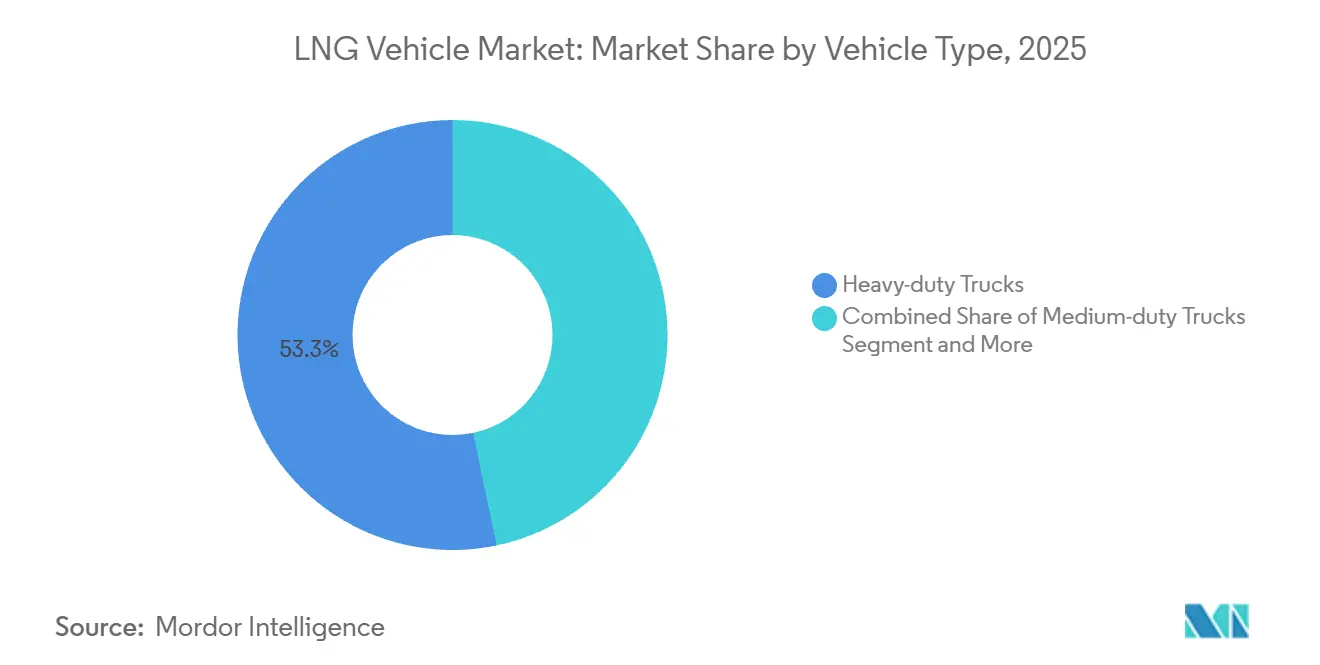
Heavy-duty Trucks Dominates the MarketIn 2025, heavy-duty units accounted for 53.29% of revenue share, reflecting their suitability for long-haul payloads and ability to meet extensive transportation needs. Meanwhile, medium-duty rigs experienced the highest growth, recording a 6.89% CAGR. This growth is primarily driven by urban and regional distribution fleets focusing on cost-effective emissions compliance while maintaining route flexibility to ensure operational efficiency. This shift in category preference indicates that fleet managers are increasingly viewing LNG as a versatile option that can cater to a broader range of applications rather than solely as a solution for long-distance travel.
As infrastructure continues to expand into metropolitan depots and intermediate hubs, the adoption of LNG trucks is witnessing consistent growth. OEMs such as Volvo reported a 25% global increase in gas-powered deliveries in 2024, supported by diversified chassis offerings that cater to varying operational needs. City fleets are steadily incorporating LNG-powered buses, particularly as challenges persist with electric charging for routes exceeding 200 km, which limits the feasibility of electric alternatives for longer shifts. Advancements in cylinder technology and increased fueling availability are gradually addressing perception barriers and operational concerns, positioning LNG as a mainstream alternative in the transportation sector. These developments are contributing to the growing acceptance of LNG as a reliable and sustainable option for fleet operations.



By Application:
Freight Core Faces Consumer TailwindsIn 2025, freight operations accounted for 49.47% of revenue share, benefiting from LNG's cost advantage in fuel for high-mileage transportation routes. At the same time, the personal vehicle segment, although limited in absolute units, recorded a significant 6.72% CAGR. This growth reflects the development of a mature network of filling stations in specific markets, enabling private vehicle owners to take advantage of reduced per-mile fuel costs.
Commercial fleets continue to dominate the market, as their requirements for extended range, payload capacity, and efficient refueling align effectively with the economic demands of logistics operations. However, the increasing adoption of LNG by personal vehicle users indicates that filling station networks have reached a level of maturity sufficient to support additional consumer demand without negatively impacting other segments. Furthermore, municipal bus acquisitions and the use of LNG in specialized vehicles, such as cement mixers, highlight the expanding range of applications for this fuel within the market.
By Tank Capacity:
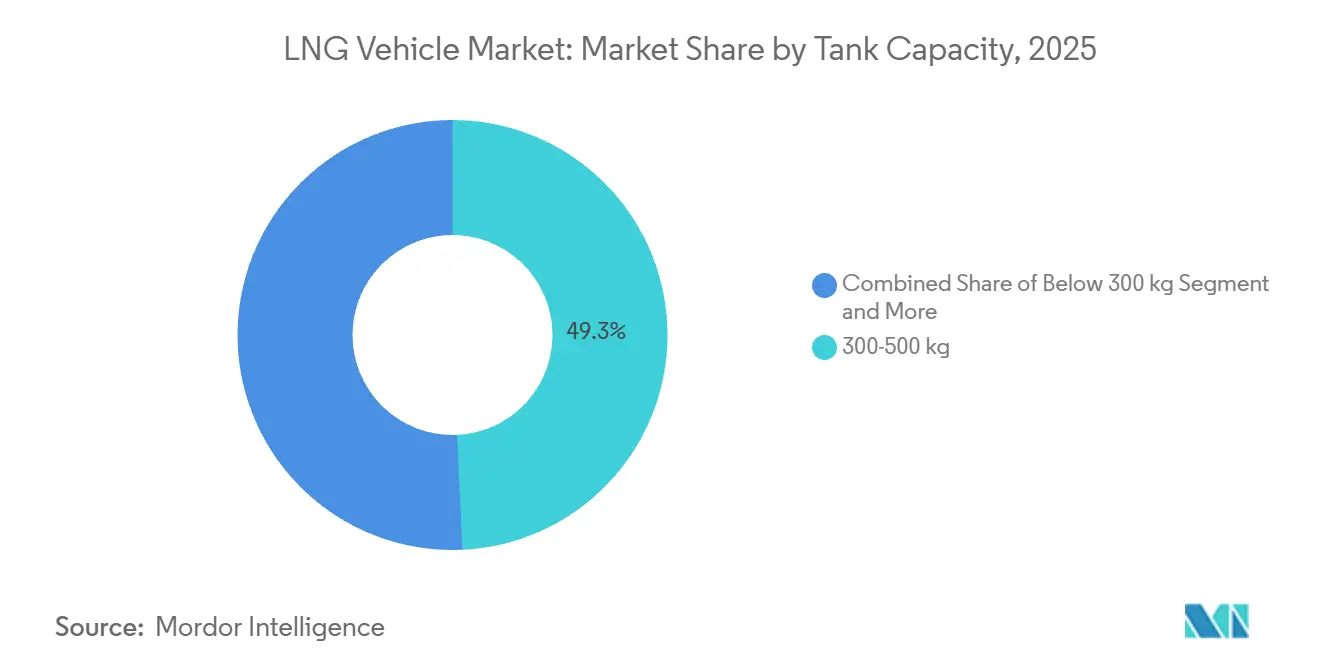
Mid-Range Sweet Spot Gives Way to Extended RangeIn 2025, the 300-500 kg weight bracket accounted for 49.27% of revenue share, demonstrating its ability to balance cargo weight and fueling frequency effectively. Concurrently, systems exceeding 500 kg are experiencing a significant growth rate of 7.19% CAGR, driven by the increasing demand from long-haul carriers for operational autonomy during single shifts and enhanced dispatch flexibility. Additionally, tanks with capacities below 300 kg continue to serve a niche market, addressing the specific needs of light-duty urban fleets that prioritize payload preservation.
CIMC Enric’s 1,500 L twin-cylinder module represents the direction in which the segment is evolving, offering a range comparable to diesel-powered systems without compromising operational efficiency. While ISO 1496-3 standards for containerized tanks simplify cross-border compliance, the development of an equivalent specification for road vehicles could further enhance economic standardization and streamline operations across the industry.
By Drive System:
Conventional Dominance, Hybrid UpswingIn 2025, conventional engines maintained a dominant position, accounting for 85.38% of revenue share. This significant share is attributed to their established reliability, widespread familiarity in servicing, and ease of fueling. Concurrently, hybrid setups, which incorporate regenerative braking and short electric boosts, are experiencing the fastest growth with a 7.29% CAGR. This growth is driven by original equipment manufacturers (OEMs) focusing on enhancing combustion efficiency while meeting the demand for quieter operations in urban areas. For instance, Cummins’ X15N demonstrates consistent advancements, delivering a 10% improvement in fuel economy compared to its predecessor while adhering to the regulatory requirements set for 2027.
The acceleration of hybrid adoption is particularly evident in drayage and regional distribution markets, where operational patterns involving frequent stop-and-start movements align well with the capabilities of battery assistance. Over time, hybridization is expected to serve as a transitional solution for fleets planning to eventually adopt zero-emission technologies.
Geography Analysis
APAC LNG Vehicle Market
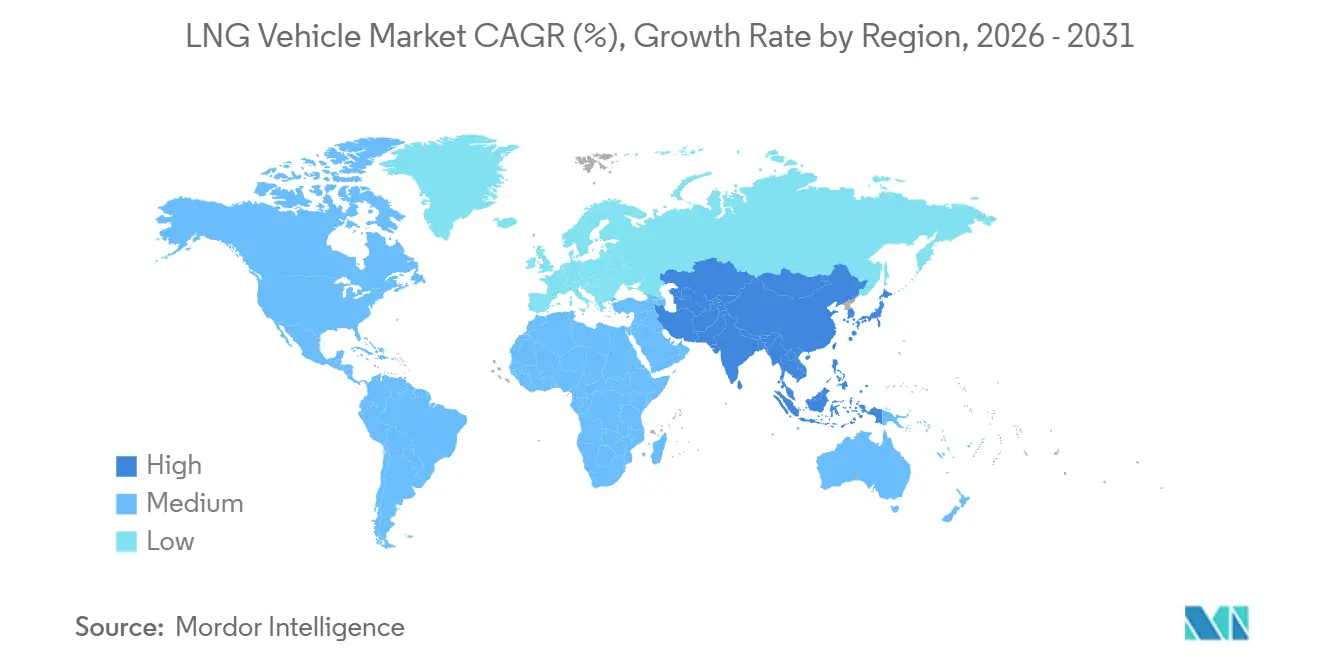
In 2025, the Asia-Pacific region accounted for 48.49% of global revenue, with a CAGR of 7.42% projected through 2031. China's implementation of early adoption policies, expansion of corridor infrastructure, and favorable pump prices significantly contributed to a notable sales increase. India is positioned as a key driver of growth in the region, supported by the development of the Hazira LNG truck-loading hub and the increasing availability of domestic original equipment manufacturer (OEM) offerings. Additionally, mature markets such as Japan and South Korea continue to focus on gradual fleet renewals to maintain market stability. Indonesia is actively exploring the potential of natural-gas mobility as a means to monetize its newly developed upstream projects, further enhancing the region's growth prospects.
North America LNG Vehicle Market
North America benefits from a well-established network of gas stations, complemented by California's comprehensive incentive framework designed to promote alternative fuel adoption. The United States' abundant natural gas resources provide a foundation for long-term fuel cost advantages. However, federal incentives for battery-electric trucks are introducing competitive pressures along major freight corridors, challenging the dominance of natural gas in the region. Canada is adopting a diversified approach by piloting hydrogen fuel initiatives in areas with sufficient electricity infrastructure, thereby expanding its multi-fuel strategy. In Mexico, the planned Salina Cruz terminal is expected to facilitate the establishment of cross-border LNG freight routes, which could enhance regional connectivity and trade efficiency.
EMEA LNG Vehicle Market
Europe is pursuing a dual strategy to address emissions reduction, focusing on immediate relief through the adoption of bio-LNG blends while preparing for a long-term transition to zero-emission powertrains. Germany's recently introduced toll system, effective from December 2025, imposes a EUR 1-per-ton-km CO₂ surcharge, which is expected to reduce LNG's cost advantage. However, bio-LNG credits are anticipated to offset these tariffs on compliant routes, ensuring continued viability for LNG-based transportation. Scandinavian countries maintain their preference for LNG buses due to their operational resilience in cold climates, while Italy continues to advance its corridor infrastructure projects with the support of EU grants. In the Middle East and Africa, the abundance of gas reserves presents opportunities for LNG freight to support domestic logistics. However, competing priorities in power generation and the limited availability of refueling infrastructure are likely to constrain the growth of LNG freight volumes in the near term. Despite these challenges, the region remains committed to exploring LNG as a viable solution for enhancing logistics efficiency and leveraging its natural gas resources.

Competitive Landscape
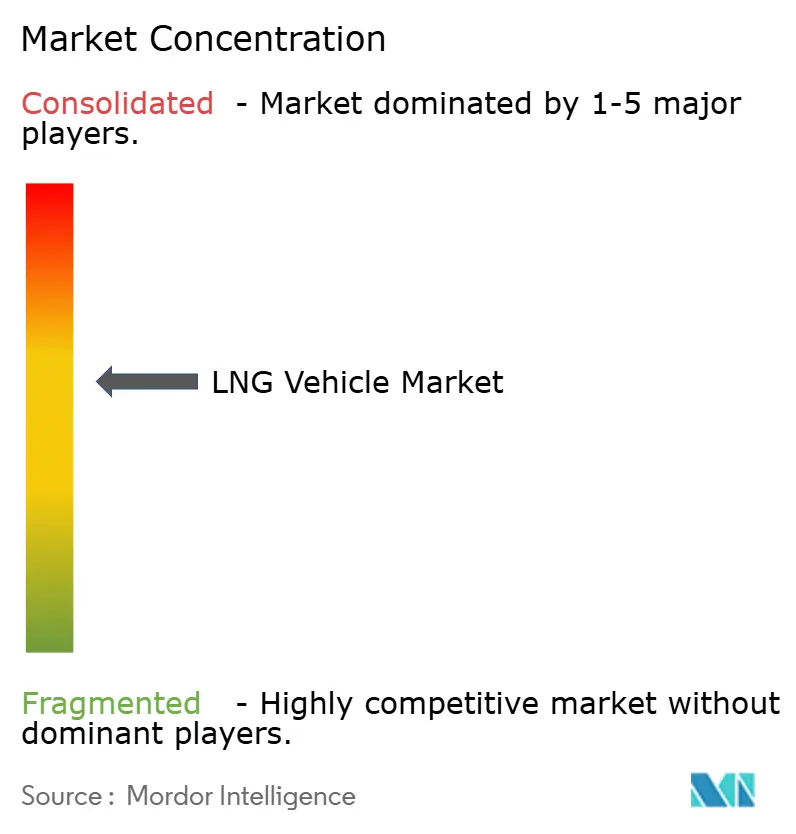
The market is characterized by moderate fragmentation. Prominent original equipment manufacturers (OEMs), including Volvo, Paccar, and Sinotruk, collectively accounted for a significant share of shipments. These companies have focused their strategies on reengineering existing diesel chassis to optimize manufacturing cost efficiencies. This approach allows them to leverage established production processes while adapting to the growing demand for LNG-powered vehicles. Additionally, fuel-system providers such as Westport Fuel Systems, Hexagon Agility, and Chart Industries have achieved notable differentiation in the market by offering advanced cryogenic tank, pump, and injector technologies, which contribute to enhanced vehicle performance and operational efficiency.
Vertical integration is increasingly shaping the competitive landscape of the market. Companies such as Shell and Clean Energy Fuels have been actively expanding their network of fueling stations while securing upstream gas supplies. This strategy ensures price stability, which in turn supports the adoption and sales of LNG-powered vehicles. Furthermore, Daimler has entered into a partnership with Linde to develop liquid-hydrogen supply solutions, positioning itself to address potential shifts in the market toward alternative fuel technologies. Collaborative efforts in intellectual property, such as the HPDI venture between Volvo and Westport, are playing a critical role in accelerating development cycles and mitigating associated risks.
Competition within the market is increasingly centered on lifecycle greenhouse gas (GHG) performance and total cost of ownership (TCO) rather than the initial purchase price of vehicles. OEMs are placing significant emphasis on the compatibility of their vehicles with bio-LNG and the reduction of methane slip, which are key factors in improving environmental performance. At the same time, suppliers are focusing on advancements in boil-off suppression technologies and extending vehicle range, which enhance the overall value proposition for end-users. The barriers to entry in this market remain moderate. While the development of truck platforms requires substantial capital investment, component supply chains are relatively accessible, and regulatory homologation processes are well-established in major markets.
LNG Vehicle Industry Leaders
FAW TRUCKS CO., LTD.
Sinotruk (CNHTC)
Volvo Group
TRATON SE
Paccar
- *Disclaimer: Major Players sorted in no particular order
LNG Vehicle Market Companies Covered in this Report
- FAW TRUCKS CO., LTD.
- Sinotruk (CNHTC)
- Dongfeng Trucks
- SAIC Motor
- Volvo Group
- TRATON GROUP
- PACCAR Inc. (Kenworth, Peterbilt, DAF)
- Foton Motor
- Beiben Trucks
- Hyliion

Recent Industry Developments in LNG Vehicle Market
- August 2026: Demand for LNG-powered heavy-duty trucks is accelerating across Europe. Cespira reported a 125% year-over-year increase in second-quarter revenue, driven by favorable fuel economics and emissions regulations that support the adoption of its high-pressure direct injection (HPDI) fuel systems.Cespira, a joint venture between Westport Fuel Systems and Volvo Group, generated USD 27.1 million in revenue in the second quarter, compared with USD 12 million in the same quarter of the previous year.
- May 2026: Volvo Trucks strengthened its alternative-fuel strategy in 2026 by introducing a new 13-liter combustion-engine platform designed to run on gas fuels, including renewable gas, alongside renewable diesel. The development supports Volvo's continued positioning of gas-powered trucks as a lower-carbon solution for long-haul and heavy-duty applications.
- May 2025: Volvo Trucks reported a 25% jump in 2024 gas-powered sales to 8,000 units, with biogas-ready models cutting CO₂ up to 100% and LNG variants delivering 20% reductions.


Global LNG Vehicle Market Report Scope
The scope of the report includes vehicle type, application, tank capacity, drive system, and geography. By vehicle type, the market is segmented into medium-duty trucks, heavy-duty trucks, and buses. By application, the market is segmented into freight transport, public transport, personal vehicles, and other applications. By tank capacity, the market is segmented into below 300 kg, 300–500 kg, and above 500 kg. By drive system, the market is segmented into conventional engine and hybrid engine. By geography, the market is segmented into North America, South America, Europe, Asia-Pacific, and the Middle East and Africa.
| Medium-duty Trucks |
| Heavy-duty Trucks |
| Buses |
| Freight Transport |
| Public Transport |
| Personal Vehicles |
| Other Applications |
| Below 300 kg |
| 300-500 kg |
| Above 500 kg |
| Conventional Engine |
| Hybrid Engine |
| North America | United States |
| Canada | |
| Rest of North America | |
| South America | Brazil |
| Argentina | |
| Rest of South America | |
| Europe | Germany |
| United Kingdom | |
| Spain | |
| Italy | |
| France | |
| Netherlands | |
| Rest of Europe | |
| Asia-Pacific | India |
| China | |
| Japan | |
| South Korea | |
| Indonesia | |
| Rest of Asia-Pacific | |
| Middle East and Africa | United Arab Emirates |
| Saudi Arabia | |
| Turkey | |
| Egypt | |
| South Africa | |
| Rest of Middle East and Africa |
| By Vehicle Type | Medium-duty Trucks | |
| Heavy-duty Trucks | ||
| Buses | ||
| By Application | Freight Transport | |
| Public Transport | ||
| Personal Vehicles | ||
| Other Applications | ||
| By Tank Capacity | Below 300 kg | |
| 300-500 kg | ||
| Above 500 kg | ||
| By Drive System | Conventional Engine | |
| Hybrid Engine | ||
| Geography | North America | United States |
| Canada | ||
| Rest of North America | ||
| South America | Brazil | |
| Argentina | ||
| Rest of South America | ||
| Europe | Germany | |
| United Kingdom | ||
| Spain | ||
| Italy | ||
| France | ||
| Netherlands | ||
| Rest of Europe | ||
| Asia-Pacific | India | |
| China | ||
| Japan | ||
| South Korea | ||
| Indonesia | ||
| Rest of Asia-Pacific | ||
| Middle East and Africa | United Arab Emirates | |
| Saudi Arabia | ||
| Turkey | ||
| Egypt | ||
| South Africa | ||
| Rest of Middle East and Africa | ||


Key Questions Answered in the Report
What is the projected value of the LNG vehicle market by 2031?
It is expected to reach USD 39.47 billion by 2031 based on the current 3.21% CAGR forecast.
Which region leads current LNG vehicle adoption?
Asia-Pacific holds 48.49% of 2025 global revenue and maintains the fastest 7.42% CAGR through 2031.
Which vehicle class is growing fastest within this sector?
Medium-duty trucks are expanding at a 6.89% CAGR as fleets deploy LNG beyond traditional long-haul roles.
What technology mitigates range anxiety for LNG trucks?
Dual 1,500-liter cryogenic cylinders enable about 3,500 km per fill, matching diesel range for inter-city freight.
What factor most restrains future LNG truck growth in Europe?
Rapid cost declines and policy support for zero-emission battery-electric trucks are expected to erode LNG’s competitiveness over the medium term.
Page last updated on:





