
Human Papillomavirus Vaccine Market Size and Share
Market Overview
| Study Period | 2020 - 2031 |
|---|---|
| Market Size (2026) | USD 9.73 Billion |
| Market Size (2031) | USD 14.59 Billion |
| Growth Rate (2026 - 2031) | 8.39% CAGR |
| Fastest Growing Market | Asia-Pacific |
| Largest Market | North America |
| Market Concentration | Medium |
Major Players *Disclaimer: Major Players sorted in no particular order Image © Mordor Intelligence. Reuse requires attribution under CC BY 4.0. | |
Human Papillomavirus Vaccine Market Analysis by Mordor Intelligence
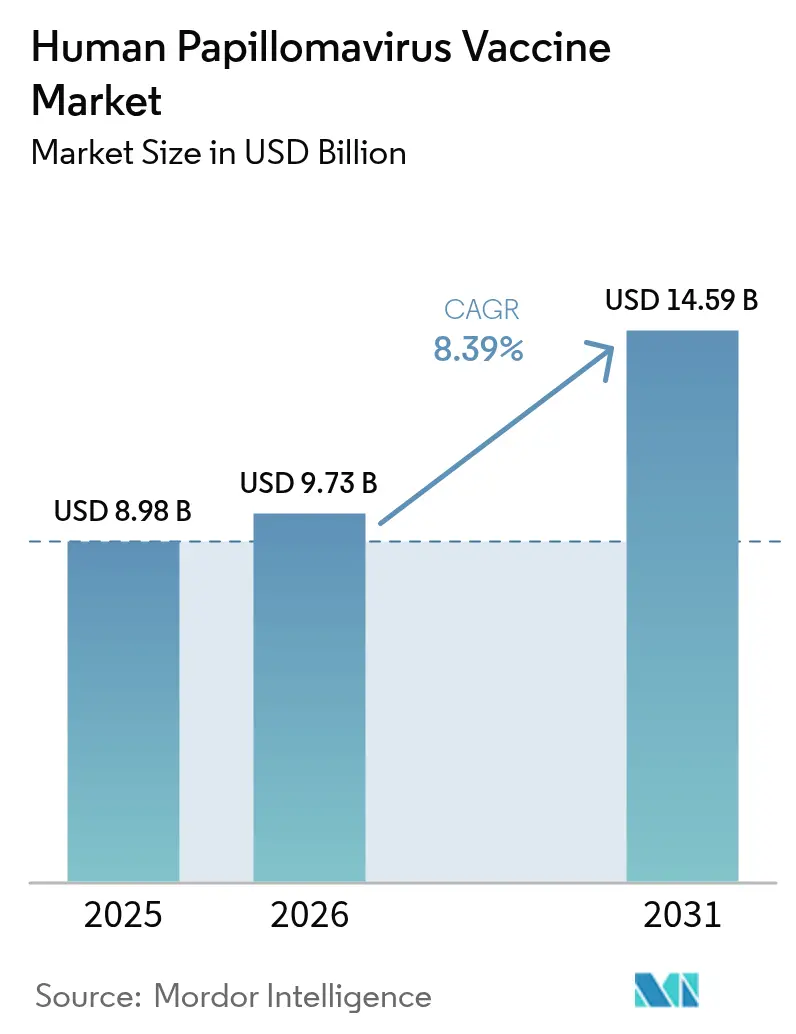
The human papillomavirus vaccine market size was valued at USD 8.98 billion in 2025 and estimated to grow from USD 9.73 billion in 2026 to reach USD 14.59 billion by 2031, at a CAGR of 8.39% during the forecast period (2026-2031). Single-dose schedules endorsed by the World Health Organization (WHO) in late-2024 [1]World Health Organization, “Single-Dose HPV Vaccine Position Paper,” who.int , a surge of low- and middle-income country (LMIC) manufacturers, and widening gender-neutral policies are redefining clinical demand patterns. The rapid uptake of nonavalent formulations, large-scale government funding commitments in India, China and the European Union, and the extension of FDA labels to cover head-and-neck cancers together sustain robust volume growth. Manufacturers are simultaneously re-tooling production for single-dose regimens and region-specific multivalent platforms, while payers negotiate tiered pricing that broadens access without eroding margins. These forces position the human papillomavirus vaccine market for sustained expansion across public programs and premium private segments worldwide.
Key Report Takeaways
- By vaccine type, quadrivalent products led with 66.85% revenue share in 2025, while nonavalent formulations are projected to expand at a 9.02% CAGR to 2031.
- By indication, cervical cancer prevention held 69.25% of the human papillomavirus vaccine market share in 2025, whereas anal cancer prevention is advancing at a 9.08% CAGR through 2031.
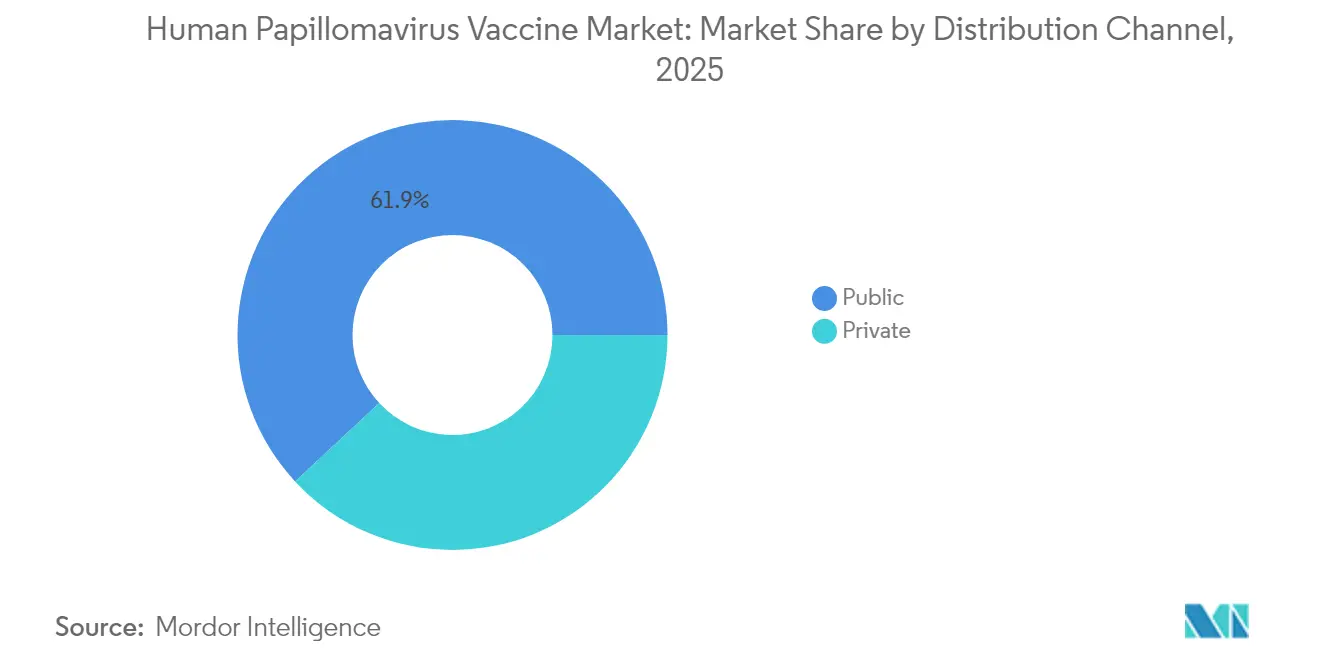
- By distribution channel, public programs commanded 61.92% of the human papillomavirus vaccine market size in 2025, while private healthcare outlets are growing at 9.16% CAGR during the forecast period.
- By age group, adults accounted for 59.10% share of the human papillomavirus vaccine market size in 2025, yet pediatric vaccination is set to post the fastest 8.95% CAGR to 2031.
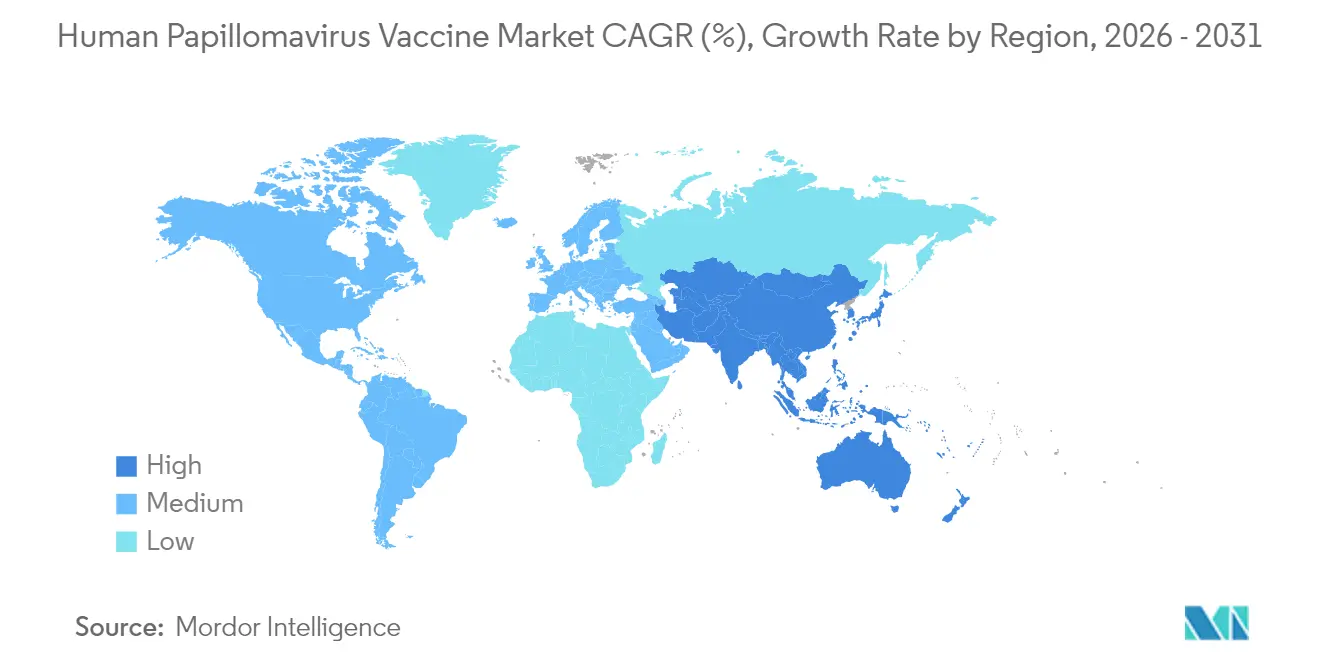
- By geography, North America captured 39.12% share of the human papillomavirus vaccine market in 2025, but Asia-Pacific is on course for the strongest 8.98% CAGR through 2031.
Note: Market size and forecast figures in this report are generated using Mordor Intelligence’s proprietary estimation framework, updated with the latest available data and insights as of 2026.
Market Trends and Insights
Drivers Impact Analysis of Human Papillomavirus Vaccine Market*
| Driver | (~) % Impact on CAGR Forecast | Geographic Relevance | Impact Timeline |
|---|---|---|---|
| Approval of new multivalent HPV vaccines | +1.8% | Global; early adoption in North America & EU | Medium term (2-4 years) |
| Government & multi-lateral funding accelerators | +2.1% | LMIC focus; Gavi-supported countries; India & China | Long term (≥ 4 years) |
| Gender-neutral immunization policies | +1.5% | North America; EU; Australia; expanding to Asia-Pacific | Medium term (2-4 years) |
| Rising HPV-linked cancer incidence | +1.2% | Global; especially oropharyngeal cancers in developed markets | Long term (≥ 4 years) |
| One-dose schedule endorsed by WHO | +1.7% | Worldwide; accelerated adoption in LMICs | Short term (≤ 2 years) |
| Emergence of LMIC-based vaccine manufacturers | +0.9% | Asia-Pacific; Africa; Latin America | Long term (≥ 4 years) |
| Source: Mordor Intelligence | |||
Approval of New Multivalent HPV Vaccines
Recent FDA clearance of Gardasil 9 for head-and-neck cancer prevention extends protective reach beyond gynecological malignancies and opens male adult segments. Merck and several Asian developers are advancing next-generation multivalent candidates aimed at HPV types highly prevalent in Africa and South-East Asia, reinforcing the premium tier of the human papillomavirus vaccine market. WHO’s pipeline review lists more than 20 therapeutic vaccines, signalling future convergence of preventive and therapeutic modalities [2]World Health Organization, “HPV Vaccine R&D Pipeline,” who.int . Collectively, these innovations underpin volume growth and encourage price differentiation across regions.
Government & Multi-Lateral Funding Accelerators
India’s 2024 budget funded a national girls’ program using locally produced Cervavac at USD 24 per private-sector dose, creating the largest single expansion in the human papillomavirus vaccine market. Gavi’s USD 600 million commitment and UNICEF’s aggregate procurement surpassing 93 million doses since 2013 provide stable demand forecasts that justify capacity builds in Asia and Latin America [3]Gavi, “HPV Vaccine Programme Commitments,” gavi.org . Similar agreements under PAHO in 2025 further aggregate regional orders, lowering unit cost and widening access.
Gender-Neutral Immunization Policies
The transition from female-only to gender-neutral programs effectively doubles the eligible cohort in several high-income markets. Taiwan’s June 2025 decision to vaccinate boys free of charge underscores widening regional acceptance. European Union funding under the PROTECT-EUROPE project accelerates the same pivot, reinforcing long-term demand within the human papillomavirus vaccine industry. Clinical evidence from ASCO shows vaccinated males experiencing a lower incidence of HPV-related malignancies, strengthening the policy rationale.
One-Dose Schedule Endorsed By WHO
WHO guidance of October 2024 concludes that a single dose offers comparable protection to multi-dose regimens, a finding already operational in 57 countries by September 2024. The simplified schedule eases cold-chain logistics, halves per-capita vaccine cost, and unblocks uptake in settings where school attendance and follow-up are challenging. Manufacturers are reformulating existing nonavalent platforms into single-dose vials while LMIC producers see faster regulatory pathways, sharpening competition in the human papillomavirus vaccine market.
Restraints Impact Analysis of Human Papillomavirus Vaccine Market*
| Restraint | (~) % Impact on CAGR Forecast | Geographic Relevance | Impact Timeline |
|---|---|---|---|
| Stringent biologics regulations | -1.4% | Global; particularly complex in emerging markets | Medium term (2-4 years) |
| Vaccine hesitancy & misinformation | -2.3% | Worldwide; amplified by social media | Short term (≤ 2 years) |
| High procurement cost for MICs | -1.1% | Middle-income countries; non-Gavi eligible | Long term (≥ 4 years) |
| Cold-chain & last-mile gaps in LMICs | -0.8% | Sub-Saharan Africa; rural Asia; remote Latin America | Medium term (2-4 years) |
| Source: Mordor Intelligence | |||
Stringent Biologics Regulations
Complex biologics frameworks require exhaustive safety and potency data, driving development costs above USD 1 billion per candidate and delaying approvals for regional manufacturers. European Medicines Agency dossiers add another tier of compliance, while WHO prequalification remains essential for multilateral tenders. These layers heighten time-to-market and favor incumbents with deep capital reserves, tempering the growth of smaller entrants in the human papillomavirus vaccine market.
Vaccine Hesitancy & Misinformation
Social-media-driven skepticism, especially around adolescent sexuality, suppresses uptake even where vaccines are subsidized. Studies publishing increased parental refusals in metropolitan Nigeria and comparable patterns in parts of Europe illustrate the headwind. Counter-campaigns involving religious and community leaders succeed, but demand sustained financing and coordination, slowing trajectory in the near term.
*Our forecasts treat driver/restraint impacts as directional, not additive. The impact forecasts reflect baseline growth, mix effects, and variable interactions.
Human Papillomavirus Vaccine Market Segment Analysis
By Vaccine Type:
Nonavalent Innovation Challenges Quadrivalent DominanceQuadrivalent vaccines retained 66.85% share in 2025, underpinning broad national program penetration. Their entrenched status supports predictable revenue flow, yet premium-priced nonavalent products are outpacing at a 9.02% CAGR. The human papillomavirus vaccine market size for nonavalent offerings is expanding strongly in North America and Europe as payers endorse wider oncogenic strain coverage. This shift also benefits middle-income consumers willing to pay for broader protection, even while procurement agencies in LMICs continue purchasing cost-efficient quadrivalent or bivalent doses.
Global clinical evidence shows Gardasil 9 delivering near-universal cervical cancer protection and 90% efficacy against other HPV-related conditions. WHO prequalification of Cecolin for single-dose schedules and Walrinvax for two-dose regimes broadens supply options, pressuring price points in the human papillomavirus vaccine market. Looking forward, region-specific multivalent candidates designed for African and Asian strain prevalence may further fragment the competitive field.




By Indication:
Cervical Cancer Prevention Expands to Male-Focused ApplicationsCervical cancer prevention accounted for 69.25% of 2025 revenue thanks to entrenched public-health focus and decades of supportive data. Yet anal cancer prevention is rising fastest at 9.08% CAGR because gender-neutral policies recognize growing male disease burden. The human papillomavirus vaccine market share for cervical applications will gradually erode as non-cervical indications gain prominence, though absolute revenues continue growing.
FDA extension of Gardasil 9 to head-and-neck cancers validates expansion beyond female-centric indications and informs adult catch-up programs. Peer-reviewed data reveal a rising incidence of oropharyngeal cancer among men, catalyzing policy updates worldwide. Manufacturers are therefore repositioning value propositions toward comprehensive cancer prophylaxis that appeals to both sexes.
By Distribution Channel:
Private Sector Growth Outpaces Public ProgramsPublic tenders controlled 61.92% of doses in 2025, dominated by Gavi, UNICEF and national ministries. Nevertheless, private outlets are posting a 9.16% CAGR as urban middle-classes seek convenience and earlier vaccination. This dual structure compels suppliers to calibrate differential pricing; for instance, Serum Institute offers Cervavac at INR 2,000 (USD 24) privately versus INR 300-400 in government schemes.
European procurement showcases efficiency, with average tender prices sliding from EUR 101.8 in 2007 to EUR 28.4 by 2017. CDC data echo payment-linked disparities, where privately insured adolescents display higher completion than Medicaid or uninsured cohorts. Future volume gains in the human papillomavirus vaccine market stem from hybrid public-private models that expand reach while protecting manufacturer margins.
By Age Group:
Adult Catch-Up Programs Drive Market ExpansionAdults represented 59.10% sales in 2025, reflecting legacy cohorts that missed early immunization. Catch-up demand remains strong after the CDC broadened recommendations to 27-45-year-olds, though uptake is uneven at 16% in that bracket. Conversely, pediatric programs deliver the fastest 8.95% CAGR as countries introduce vaccination at 9 years and adopt single-dose regimens.
Evidence that earlier initiation improves series completion from 47% to over 60% by age 13 guides strategy. Long-term surveillance finds 79% fewer cervical precancers among women aged 20-24 who received adolescent vaccination, reinforcing cost-effectiveness arguments. In turn, this encourages governments and insurers to fund earlier, broader coverage, cementing lifetime value within the human papillomavirus vaccine market.
Geography Analysis
North America Human Papillomavirus Vaccine Market
North America’s 39.12% share reflects early adoption, broad insurance coverage, and ongoing gender-neutral catch-up initiatives. The United States still shows payment-linked gaps, yet Canada’s 2024 single-dose recommendation for those aged 9-20 positions it as a policy bellwether. Mexico’s participation in PAHO’s elimination roadmap promises synergies in pricing and procurement across the sub-region.
APAC Human Papillomavirus Vaccine Market
Asia-Pacific leads growth at a 8.98% CAGR, propelled by India’s fully funded girls’ program and China’s surge of domestic producers challenging Western incumbents. Merck’s 41% Q1-2025 sales decline in China highlights intensifying price competition and regulatory complexity. Japan’s shift to 9-valent vaccines for boys and girls, together with Australia’s mature elimination strategy, illustrates the diversity of policy models that collectively enlarge the human papillomavirus vaccine market size across the region.
EMEA and South America Human Papillomavirus Vaccine Market
Europe continues policy innovation through its 90% female coverage and expanding male vaccination mandate, underwritten by EUR 20 million in EU4Health funds. Competitive tenders sustain affordability without compromising supply security. The Middle East and Africa face cold-chain and hesitancy barriers, yet Nigeria’s 2024-2025 drive to reach 7.7 million girls shows that community-centric engagement can secure high utilization. In South America, PAHO’s 2025 partnership with Spanish agencies enhances access to 9-valent vaccines, while differential economics across the continent necessitate phased rollouts.

Regulatory Landscape
Regulation for HPV vaccines is shaped by national immunization technical advisory groups, biologics regulators, and WHO procurement mechanisms that influence public tender access. A major shift is dose-schedule simplification: Canada updated its NACI guidance in December 2024 to recommend one dose for ages 9-20, with two doses for those 21 and older, while WHO actions in 2024 supported single-dose program use and prequalification activity that broaden procurement pathways for additional suppliers.
Competitive Landscape
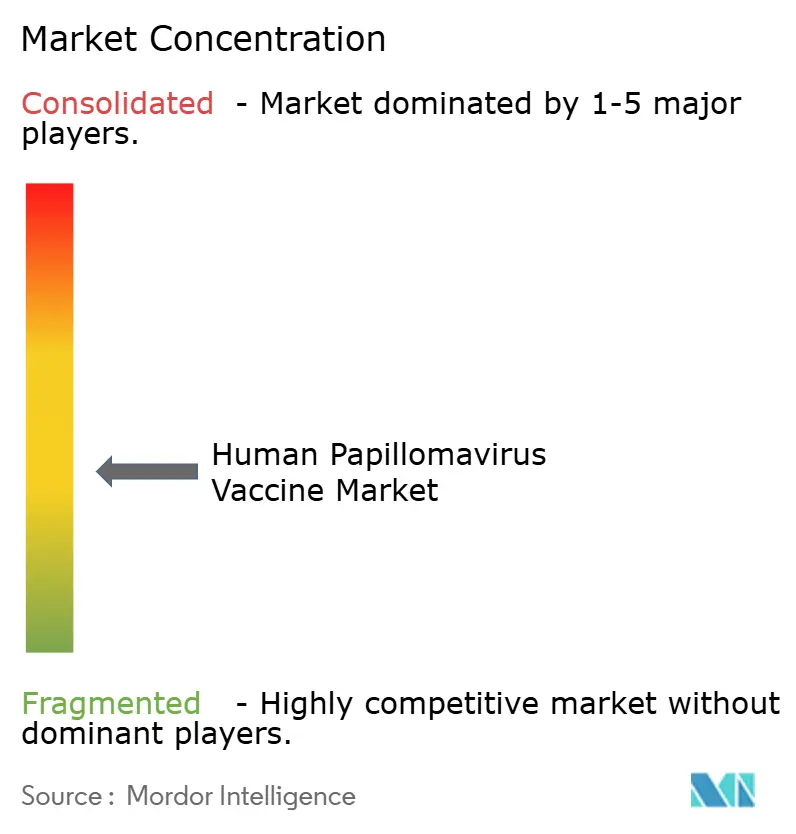
The human papillomavirus vaccine industry is moderately concentrated. Merck continues to dominate with the Gardasil franchise but faces unprecedented legal and commercial headwinds, including USD 8 billion in safety litigation and rapid share loss in China. Investments in an expanded Elkton, Virginia plant and single-dose Gardasil 9 formulations are designed to defend leadership.
GSK maintains a cost-centric niche through Cervarix, while Serum Institute’s Cervavac and newly WHO-prequalified Chinese entrants erode price floors, especially in LMIC tenders. Emerging pipelines feature therapeutic gene therapies such as Precigen’s PRGN-2012 for recurrent respiratory papillomatosis, pending FDA priority review in August 2025. Digital tracking platforms integrated with electronic medical records are becoming a differentiator, allowing companies to document coverage evidence and reinforce value propositions with payers.
White-space segments include adult male vaccination, therapeutic vaccines, and region-specific multivalent formulations. Suppliers able to navigate complex biologics regulation, deploy tiered pricing, and support community-driven education campaigns will capture outsized gains in the human papillomavirus vaccine market through 2030.
Human Papillomavirus Vaccine Industry Leaders
Serum Institute of India Pvt. Ltd.
Wantai BioPharm
INOVIO Pharmaceuticals
Merck & Co., Inc.
GSK plc.
- *Disclaimer: Major Players sorted in no particular order
Human Papillomavirus Vaccine Market Companies Covered in this Report
- Merck
- GlaxoSmithKline
- Serum Institute of India Pvt Ltd
- Walvax Biotechnology Co. Ltd
- Bharat Biotech
- Innovax (Xiamen Innovax Biotech)
- Wantai BioPharm
- Sinovac Biotech
- INOVIO Pharmaceuticals
- Novartis
- AstraZeneca
- Dynavax Technologies
- CSL Seqirus
- Shenzhen Kangtai Biological
- Pfizer
- Sanofi
- VBI Vaccines
- Geneos Therapeutics
- Takeda Pharmaceuticals
- Daiichi-Sankyo

Market Opportunities and Future Outlook
Large-scale program expansion creates whitespace in supply security, contracting, and delivery models, especially as more countries shift from limited access to routine national introduction. By February 2026, 160 countries had introduced HPV vaccines nationally, widening the addressable base for both public tenders and complementary private channels. Gavi's Phase 6 strategy period (2026-2030) includes HPV as part of its immunization agenda, and the market-shaping roadmap workstream keeps procurement design and product availability central to sustaining introductions and multi-age cohort campaigns.
Recent Industry Developments in Human Papillomavirus Vaccine Market
- May 2026: ApolloBio, INOVIO Pharmaceuticals partner in China, announced positive topline results from the pivotal Phase 3 trial of VGX-3100 in cervical dysplasia, meeting the primary efficacy endpoint. The readout strengthens the clinical case for therapeutic DNA medicines in HPV-related disease management and supports broader HPV portfolio strategies in the market.
- June 2025: Taiwan confirmed free HPV vaccinations for boys starting September 2025, expanding the eligible cohort by adding male adolescents to the publicly funded program. This policy change supports higher addressable demand in a market already using organized school-based delivery, reinforcing gender-neutral immunization as a volume driver.
- December 2024: WHO prequalification activity expanded procurement pathways for additional HPV vaccine suppliers, broadening access in lower-income markets.


Human Papillomavirus Vaccine Market Report Scope and Research Methodology
Market Definition and Coverage
This market covers revenues generated from human papillomavirus (HPV) vaccines used for immunization programs and routine vaccination in healthcare settings, counted at the manufacturer level in USD across the covered geographies.
Scope exclusions: This sizing excludes HPV testing, screening, diagnostics, and treatment drugs for HPV-related cancers or warts.
Segments Covered in This Report
- By Vaccine Type
- Bivalent
- Quadrivalent
- Nonavalent
- By Indication
- Cervical Cancer
- Anal Cancer
- Penile Cancer
- Oropharyngeal Cancer
- Genital Warts
- Others
- By Distribution Channel
- Public
- Private
- By Age Group
- Adults
- Pediatric
- By Geography
- North America
- United States
- Canada
- Mexico
- Europe
- Germany
- United Kingdom
- France
- Italy
- Spain
- Rest of Europe
- Asia-Pacific
- China
- Japan
- India
- Australia
- South Korea
- Rest of Asia-Pacific
- Middle East and Africa
- GCC
- South Africa
- Rest of Middle East and Africa
- South America
- Brazil
- Argentina
- Rest of South America
- North America
Data Sources, Market Sizing, and Validation
Desk Research
Desk work starts by building the demand context and policy timelines that drive HPV vaccine uptake. We refer to sources such as the World Health Organization for immunization recommendations, UNICEF procurement information where available, and national immunization program publications for schedule changes and target cohorts.
To ground the model inputs, public epidemiology and health-system indicators are reviewed from sources such as the US CDC, peer-reviewed journals covering HPV prevalence and vaccine effectiveness, and government statistics portals for population by age and gender. These are supplemented with company filings, investor presentations, and reputable press to understand product mix shifts and supply related constraints. Where helpful, paid subscriptions are used for company financials and intelligence, along with patent databases to track platform activity and pipeline direction. The desk sources listed here are illustrative, and many other public documents and databases were also used for cross-checking and clarification.
Primary Interviews and Surveys
Primary interviews are used to check what is happening in real procurement and clinical pathways, especially across public tenders, private channel stocking, and changes in vaccine schedules. We spoke with a mix of manufacturers, distributors, immunization program stakeholders, and clinicians across major regions, and then validated key assumptions like price bands, adoption by cohort, and supply availability with follow-up inputs.
Distribution of primary research fieldwork respondents
| Company type | Respondent position | Region |
|---|---|---|
| Top tier: 31% | CXOs: 13% | APAC: 42% |
| Mid tier: 52% | Functional/Unit leaders: 43% | EMEA: 34% |
| Smaller Players: 17% | Managers: 44% | Americas: 24% |
Market-Sizing & Forecasting
The core model uses a top-down demand pool build that starts from eligible population cohorts by country, which are then filtered through the vaccination schedule (dose regimen), coverage rates, and a public versus private channel mix. Because the data trails can vary by country, the cohort build is adjusted using practical signals such as immunization program expansions, gender-neutral policy rollouts, and school-based uptake patterns.
Those totals are then corroborated with selective bottom-up approximations, mainly sampled average selling price by valency, tender price ranges where disclosed, and a check using shipment availability and manufacturing scale signals discussed by interviewees. Inputs used in the model include vaccine valency mix (for example, shifts toward nonavalent use), dose count assumptions by schedule, coverage by age group, tender intensity in public programs, and currency timing for USD conversion. For forecasting, scenario analysis is used around the policy adoption pace and supply normalization, and the final growth curve is aligned with expert consensus on how quickly new cohorts and geographies are expected to add volume.
Data Validation & Update Cycle
Outputs are checked against independent signals such as reported immunization targets, public procurement announcements, and visible changes in recommended schedules, and then compared across regions to catch unusual jumps. When a variance looks too large, assumptions are revisited and respondents are re-contacted to confirm whether the change is real or is driven by timing and currency effects.
Before sign-off, the model goes through multiple analyst reviews so the country totals and regional rollups reconcile cleanly and remain explainable. The study is refreshed annually, and interim updates are done when material events occur, such as major guideline revisions, supply disruptions, or meaningful tender price shifts. Right before delivery, a fresh pass is completed so clients receive the most current view possible.
Mordor Intelligence's Human Papillomavirus Vaccine Market Size Versus Other Published Estimates
Published numbers for the HPV vaccine space can differ even when they use the same currency, because scope choices and timing choices are not always the same. Differences usually come from how each publisher treats dose schedules, what they include as revenue (manufacturer versus channel markups), and whether the estimate is aligned to a specific base year.
A second source of variation is the assumption set used for program-driven demand, where uptake in public immunization can shift quickly after a policy update. Some estimates also apply a faster price escalation across valencies or assume earlier conversion to nonavalent products, and these choices move the total even when volume inputs are similar. The spread below is mainly explained by counting only preventive HPV vaccines by country with dose regimen and public procurement checks, which is applied consistently by Mordor Intelligence.
Benchmark comparison
| Source | Market Size | Gaps in Research Methodology |
|---|---|---|
| Mordor Intelligence | USD 9.73 B (2026) | |
| Global Consultancy A | USD 9.67 B (2025) | Uses an earlier base year and a broader segmentation that can blend preventive and therapeutic framing, which can shift pricing and uptake assumptions across countries. |
| Industry Research House B | USD 8.14 B (2024) | Starts from an earlier value and pairs it with a high growth curve, which can overstate near term adoption before public program expansion and supply availability are fully evidenced. |
The comparison shows that year selection and what is counted as vaccine revenue are the two biggest drivers of the gap. By tying the model to clear cohort, schedule, and channel assumptions and then cross-checking those inputs with real-world program signals, we keep the estimate traceable and repeatable when clients revisit the logic later.


Key Questions Answered in the Report
What is the projected value of the human papillomavirus vaccine market by 2031?
The market is expected to reach USD 14.59 billion by 2031, growing at an 8.39% CAGR.
Why are single-dose HPV schedules significant for LMICs?
Single-dose regimens cut follow-up visits in half and lower delivery cost, which improves coverage in settings with limited healthcare infrastructure.
Which vaccine type is growing fastest in the human papillomavirus vaccine market?
Nonavalent formulations show the quickest trajectory, expanding at a 9.02% CAGR through 2031 due to broader strain protection.
How are gender-neutral policies affecting demand?
Including boys effectively doubles the eligible population, accelerating uptake in North America, Europe and increasingly in Asia-Pacific.
Which region offers the highest growth potential to 2031?
Asia-Pacific is forecast to post the strongest 8.98% CAGR, driven by large-scale national programs and expanding domestic manufacturing.
What role do private channels play in vaccine distribution?
Private outlets are the fastest growing channel at 9.16% CAGR, catering to middle-income consumers willing to pay for convenience and early access.
Page last updated on:






