
Neurology Clinical Trials Market Size and Share
Market Overview
| Study Period | 2021 - 2032 |
|---|---|
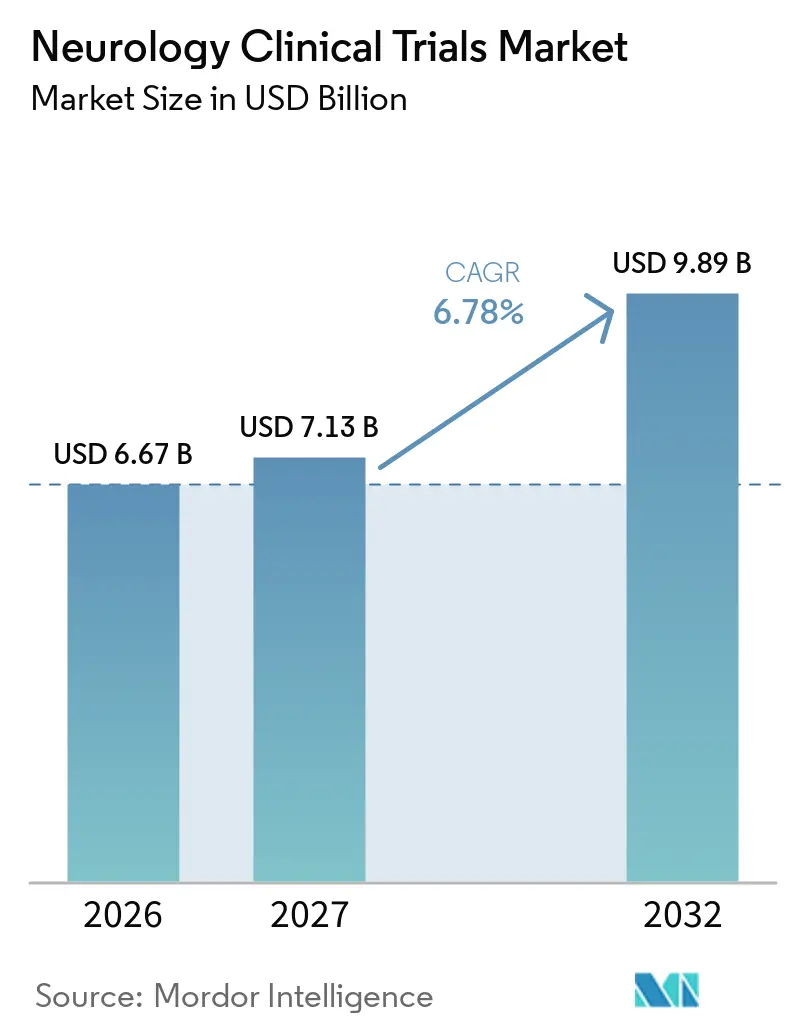
| Market Size (2027) | USD 7.13 Billion |
| Market Size (2032) | USD 9.89 Billion |
| Growth Rate (2027 - 2032) | 6.78 % |
| Fastest Growing Market | Asia-Pacific |
| Largest Market | North America |
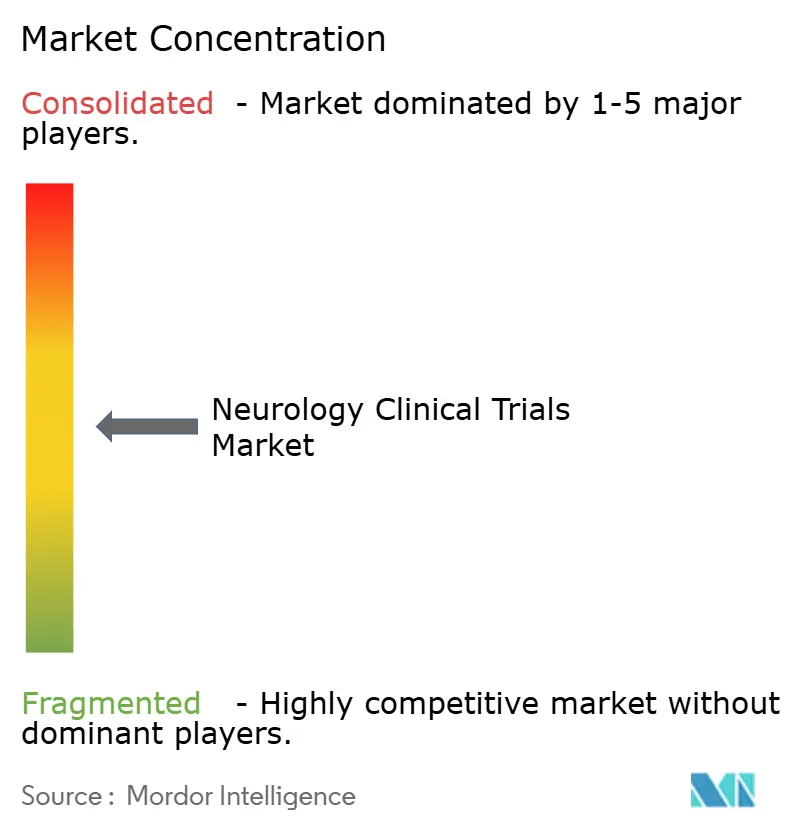
| Market Concentration | Medium |
Major Players *Disclaimer: Major Players sorted in no particular order Image © Mordor Intelligence. Reuse requires attribution under CC BY 4.0. | |
Neurology Clinical Trials Market Analysis by Mordor Intelligence
The Neurology Clinical Trials Market size is projected to expand from USD 6.67 billion in 2026 and USD 7.13 billion in 2027 to USD 9.89 billion by 2032, registering a CAGR of 6.78% between 2027 and 2032.
Growth stems from the convergence of regulatory modernization, expanding digital-health toolkits and intensified central nervous system (CNS) research spending that together accelerate time-to-market for breakthrough neurotherapies. Rapid uptake of decentralized and hybrid study models trims site-visit burdens, broadens geographic reach and improves data density, while validated fluid and imaging biomarkers streamline early-phase go/no-go decisions. Venture investment into neuro-start-ups hit record levels in 2025, propelled by confidence in gene, cell and brain-computer interface (BCI) platforms that promise disease-modifying effects in previously intractable indications. Contract research organizations (CROs) continue to widen neuroscience capabilities, providing end-to-end support—including adaptive-design statistics, decentralized operations and complex neurosurgical logistics—that smaller biotech sponsors increasingly outsource. Meanwhile, the U.S. Food and Drug Administration’s (FDA) accelerated pathways for neurodegenerative diseases shorten development timelines and encourage first-in-class approaches.
Key Report Takeaways
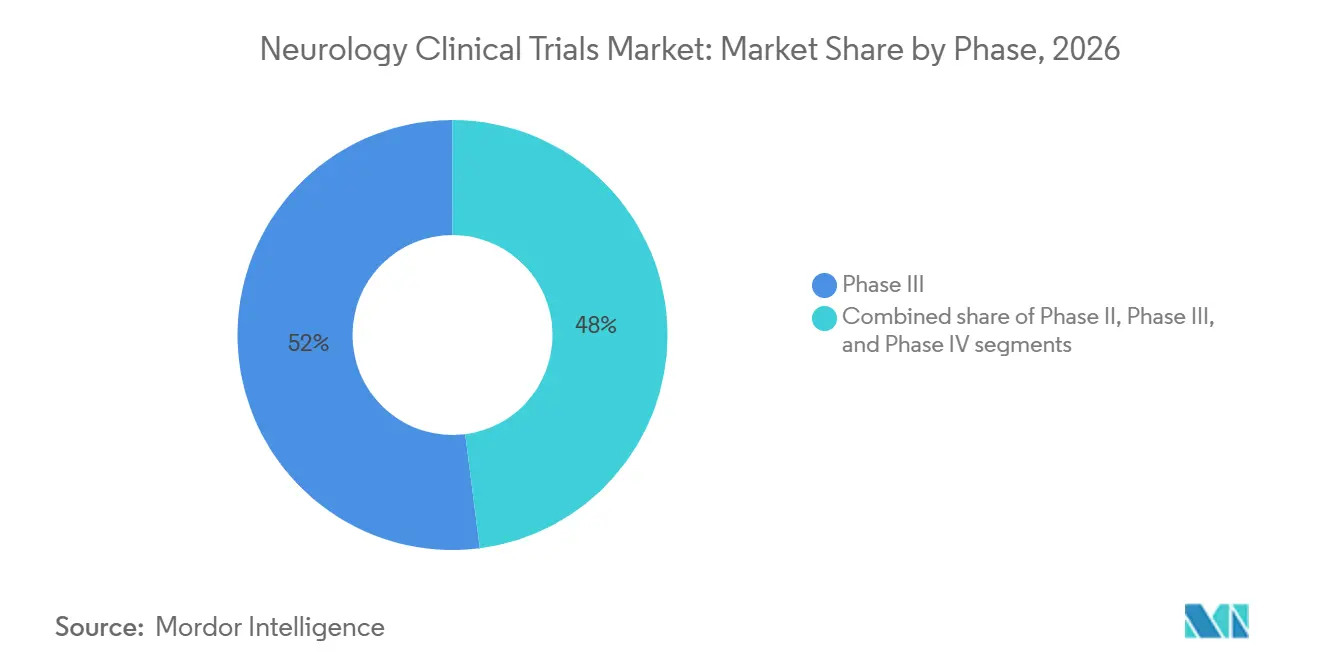
- By phase, Phase III studies led with 52.02% of the neurology clinical trials market share in 2026, while Phase I trials are projected to post the highest 8.65% CAGR through 2032.
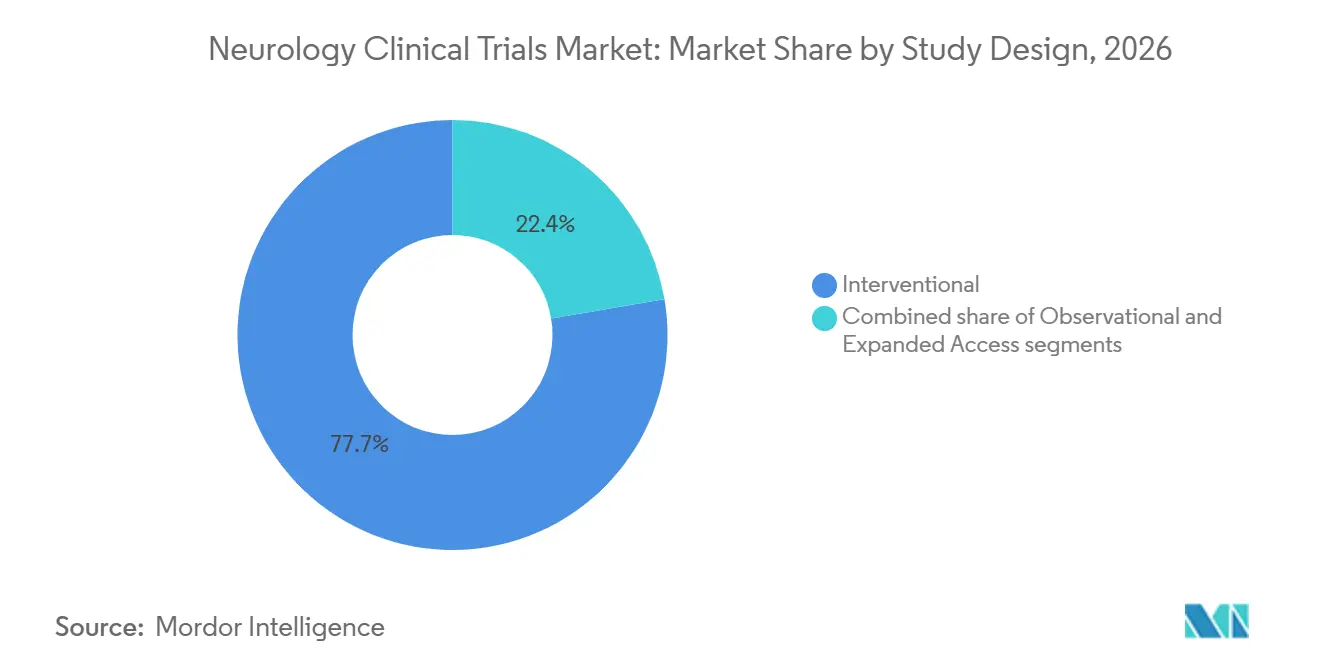
- By study design, interventional trials accounted for 77.65% revenue in 2026; decentralized and hybrid formats are poised to grow at a 8.72% CAGR to 2032.
- By indication, Alzheimer’s disease held 23.21% share of the neurology clinical trials market size in 2026; gene and cell therapy programs for amyotrophic lateral sclerosis (ALS) are expected to expand at a 9.43% CAGR to 2032.
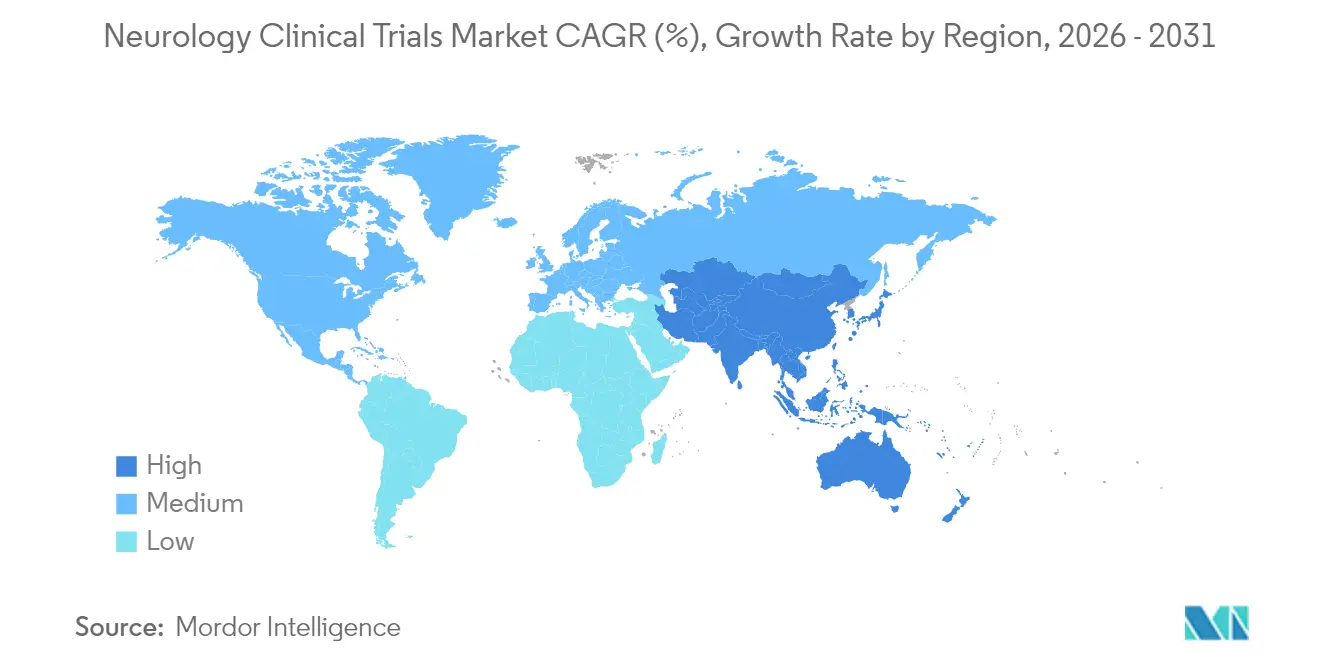
- By geography, North America captured 41.88% revenue in 2026, while Asia-Pacific is the fastest-growing region with a 7.54% CAGR through 2032.
Note: Market numbers in this report are based on Mordor Intelligence's proprietary estimation framework, which combines nine months of actuals with Q4 projections for base year 2026.
Market Trends and Insights
Drivers Impact Analysis of Neurology Clinical Trials Market*
| Driver | % Impact on CAGR Forecast | Geographic Relevance | Impact Timeline |
|---|---|---|---|
| Increasing global burden of neurological disorders | +1.8% | Global; strongest in aging North America, Europe, Asia-Pacific | Long term (≥ 4 years) |
| Growing investment in CNS drug development | +1.5% | North America & EU core; spill-over to Asia-Pacific | Medium term (2-4 years) |
| Favorable regulatory initiatives for neurotherapeutics | +1.2% | US and EU early; global uptake | Short term (≤ 2 years) |
| Technological advancements in trial design and digital health | +1.0% | Developed markets first; global diffusion | Medium term (2-4 years) |
| Expansion of contract research organization capabilities | +0.8% | Major CRO hubs worldwide | Short term (≤ 2 years) |
| Rising adoption of precision medicine and biomarkers | +0.7% | North America & EU expanding to Asia-Pacific | Long term (≥ 4 years) |
| Source: Mordor Intelligence | |||
Increasing Global Burden of Neurological Disorders
Neurological conditions now affect more than 1 billion people worldwide, creating urgent demand for disease-modifying therapies that fuels clinical trial volume. Alzheimer’s disease alone impacts 55 million individuals and is projected to double by 2050, prompting a pipeline shift toward amyloid- and tau-targeting agents following FDA approvals of aducanumab and lecanemab[1]. Parkinson’s disease prevalence surpassed 10 million, and regenerative trials such as Kyoto University’s iPS-cell dopaminergic progenitors showed motor-score improvements in 4 of 6 patients[2]. Stroke incidence continues rising, with the Chinese tirofiban study reducing early neurological deterioration by 68% versus aspirin across 10 stroke centers. Population aging therefore extends trial addressable pools and secures multi-year growth momentum for the neurology clinical trials market.
Growing Investment in Central Nervous System Drug Development
Pharmaceutical and venture investors committed record sums to CNS programs in 2025, attracted by clearer regulatory routes and transformative technology platforms. AbbVie launched a USD 2 billion alliance with Gilgamesh Pharmaceuticals to create non-hallucinogenic neuroplastogens for psychiatric disorders. Bayer advanced AB-1005 gene therapy for Parkinson’s into Phase II across four countries after favorable Phase Ib safety readouts. Eisai raised its annual venture allocation to JPY 4 billion, earmarking neurology start-ups. New specialist funds such as Nexus NeuroTech Ventures emerged to incubate BCI, gene-editing and neuro-immunology projects. Capital influx accelerates proof-of-concept timelines and diversifies modality choices.
Favorable Regulatory Initiatives for Neurotherapeutics
Global authorities introduced streamlined pathways that compress launch cycles without diluting safety oversight. The FDA re-classified digital therapeutic devices for ADHD into Class II with special controls effective September 2024, facilitating rapid clearance of software-based neuro interventions. Breakthrough Device badges for blood-based neurofilament light chain (NfL) assays and for multiple brain-computer interfaces underscore regulator openness to novel endpoints and platforms. NIH-FDA workshops in 2024 created draft frameworks for BCI clinical outcome assessments, enabling sponsors to align early with agency expectations[3]. European harmonization projects, such as multinational protocols for transorbital electrical stimulation, further reduce bureaucratic drag. These moves lift the Neu¬ro¬science clinical trials market by clearing bottlenecks that once deterred high-risk programs.
Technological Advancements in Trial Design and Digital Health
Decentralized clinical trials (DCTs) leverage eConsent, tele-visits and wearable devices to reach immobile or cognitively impaired participants. The MIRAI Remote Study, a fully masked sham-controlled investigation of smartphone therapeutic CT-152 for major depressive disorder, validated DCT feasibility while maintaining data rigor. Precision Neuroscience obtained FDA clearance for a wireless cortical electrode array with 1,024 contacts that can reside intracranially for 30 days, supplying unprecedented neural telemetry. Virtual reality cognitive-training platforms and consumer-grade sleep-neurostimulation wearables further enrich outcome measures. Together, these tools raise data granularity, cut dropout rates and broaden recruitment catchments.
Restraints Impact Analysis of Neurology Clinical Trials Market*
| Restraints Impact Analysis | (~) % Impact on CAGR Forecast | Geographic Relevance | Impact Timeline |
|---|---|---|---|
| High cost and complexity of late-phase neuroscience trials | -1.5% | Global; greatest in cost-sensitive markets | Medium term (2-4 years) |
| Stringent ethical and regulatory requirements | -1.2% | Worldwide, variable intensity | Long term (≥ 4 years) |
| Recruitment challenges due to narrow eligibility | -1.0% | Global; acute in rare diseases | Short term (≤ 2 years) |
| Limited predictive preclinical models | -0.8% | Global | Long term (≥ 4 years) |
| Source: Mordor Intelligence | |||
High Cost and Complexity of Late-Phase Neuroscience Trials
Large sample sizes, lengthy follow-up and intricate outcome assessments inflate per-patient costs. The HERCULES study enrolled 1,131 non-relapsing secondary progressive multiple sclerosis patients across 31 countries, illustrating the logistic scale required for progressive indications. Sanofi’s parallel Phase III trials for frexalimab further spotlight the financial load of testing novel mechanisms in both relapsing and progressive cohorts. Cell-therapy epilepsy studies demand neurosurgical centers and multi-year monitoring, compounding expenditure. These capital hurdles can deter smaller firms and limit geographic diversity of pivotal trials.
Stringent Ethical and Regulatory Requirements for CNS Studies
Cognitive impairment raises consent complexity, and implanted devices trigger long-term safety scrutiny. Neuralink’s PRIME BCI trial must observe participants for 72 months under an Investigational Device Exemption. Pediatric migraine trials like Pfizer’s BHV-3000 require dual assent processes and specialized monitoring. Such layers extend timelines and add administrative cost, tempering near-term growth in the neurology clinical trials market.
*Our forecasts treat driver/restraint impacts as directional, not additive. The impact forecasts reflect baseline growth, mix effects, and variable interactions.
Neurology Clinical Trials Market Segment Analysis
By Phase:
Early-Stage Innovation AcceleratesPhase III held the dominant 52.02% neurology clinical trials market share in 2026, reflecting the high revenue weight of large confirmatory studies. Yet Phase I exhibits an 8.65% CAGR to 2032 as gene, cell and BCI programs proliferate. UniQure’s AMT-162 SOD1-ALS gene therapy moved into its second dosing cohort within one year, underscoring brisk early-phase throughput. Similarly, Precision’s Layer 7 safety trial exemplifies the front-loaded evaluation necessary for invasive neurotech. This burst of Phase I activity signals a robust pipeline that will replenish late-phase volumes after 2027.
Later-stage studies nonetheless remain pivotal for payer acceptance and guideline inclusion. The HERCULES success with tolebrutinib showed a 31% delay in disability progression, setting the stage for regulatory filing and commercial rollout. Post-marketing Phase IV studies—though smaller in spend—provide real-world evidence vital for label expansions, as illustrated by UCSF’s ocrelizumab lymph-node mechanism study.

By Study Design:
Decentralized Models Transform EngagementInterventional trials comprised 77.65% of 2026 revenue, anchored by drug and device efficacy evaluations. However, decentralized and hybrid formats are forecast to rise at 8.72% CAGR, propelled by digital platforms that enable remote cognitive testing, ePRO capture and telemedicine safety checks. The MIRAI Remote Study’s sham-controlled smartphone therapeutic for depression exemplified regulatory-grade decentralization. Wearable data streams—from ECG-enabled watches to home EEG headbands—feed into adaptive algorithms, facilitating earlier detection of efficacy signals and reducing site visits. Observational registries and expanded-access programs continue to yield hypothesis-generating insights but capture a smaller slice of the neurology clinical trials market size.
By Indication:
Gene Therapy Drives ALS InnovationAlzheimer’s disease retained 23.21% of 2026 revenue, buoyed by large patient numbers and new anti-amyloid approvals. Yet gene and cell therapy trials in ALS will log a 9.43% CAGR as precision approaches tackle monogenic forms. UniQure’s antisense vector AMT-162 and Biogen/Ionis’ Tofersen illustrate regulatory acceptance of nucleic-acid strategies. Parkinson’s disease benefits from cell-replacement efforts such as Kyoto University’s iPS grafts, while multiple sclerosis explores BTK inhibitors like tolebrutinib. Stroke and migraine programs progressively adopt AI imaging and digital-health adjuncts to refine endpoint measurement, keeping indication diversification high.
Geography Analysis
North America Neurology Clinical Trials Market
North America remains the gravitational center of high-complexity neuroscience research. FDA breakthrough designations for BCIs, digital therapeutics and fluid biomarkers lower regulatory opacity and entice multinational sponsors. AbbVie’s USD 2 billion neuroplastogen alliance and NIH’s USD 10 million annual BRAIN Initiative invasive-device program reinforce capital depth. Extensively networked CROs such as IQVIA and Syneos supply specialized neurosurgical and remote-monitoring logistics, sustaining regional dominance.
APAC Neurology Clinical Trials Market
Asia-Pacific’s momentum derives from broad policy backing and cost-efficient infrastructure. Shanghai StairMed’s invasive BCI trial places China among the few nations executing cutting-edge neuroimplants. The 10-center Chinese tirofiban stroke study proved capability to manage >1,000-patient acute trials. Japan’s iPS Parkinson’s therapy successes ignite regenerative-medicine pipelines. Coupled with rising middle-class neurological disease burden, these factors shift sponsor footprints eastward.
Europe Neurology Clinical Trials Market
Europe leverages pan-regional networks to run multi-country trials efficiently. Germany’s EPIsoDE psilocybin investigation, the UK’s temporal-interference Alzheimer’s stimulation project and EU-wide Long-COVID neuro-autoantibody trials illustrate breadth of therapeutic exploration. Harmonized ethics review under EMA guidelines shortens setup times, while Horizon Europe grants offset costs for academia–industry consortia.
Regulatory Landscape
Regulatory oversight for neurology trials continues to evolve with major updates across global agencies. In June 2026, ICH E6(R3) Annex 2 reached Step 4 and was adopted by EMA CHMP, reinforcing risk-based quality management and modernized oversight for CNS trials, including decentralized and hybrid execution. The FDA published a revised guidance on Early Alzheimer’s Disease: Developing Drugs for Treatment in March 2024, and the EMA updated its epilepsy development framework with Revision 3 adopted by CHMP in February 2025 (effective 30 September 2025). In 2026, CHMP adopted a concept paper on the clinical investigation of medicines for myasthenia gravis for public consultation, signaling continued EU focus on indication-specific trial guidance alongside cross-cutting expectations such as Bayesian methods.
Competitive Landscape
Market competition is balanced between large pharma incumbents and agile biotech innovators, with moderate overall concentration. Big-cap companies dominate late-phase programs in prevalent diseases: Sanofi in multiple sclerosis, Novartis in migraine and AbbVie in psychiatric neuroplastogens. Biotechs drive frontier modalities—UniQure in gene therapy, Precision Neuroscience in BCI and Neurona in cell therapy—often partnering to access scale manufacturing or global trial networks.
Strategic collaborations drive differentiation, with AbbVie's pact with Gilgamesh Pharmaceuticals providing early access to non-hallucinogenic psychedelics and helping distinguish it from traditional SSRI competitors. Charles River–Insightec and Bayer–AskBio illustrate horizontal alliances mixing CRO, device and gene-therapy expertise. Digital-health entrants compete by validating software therapeutics through randomized studies, with MIRAI Remote positioning to capture antidepressant adherence niches.
CROs increasingly shape outcomes by embedding decentralized capabilities and neuro-imaging analytics. IQVIA's proprietary patient-finding algorithms cut recruitment windows, while Syneos merges remote rater platforms with onsite neurosurgical oversight. Such service differentiation pressures smaller CROs, spurring niche specialization (e.g., seizure detection wearables).
Neurology Clinical Trials Industry Leaders
-
Novartis AG
-
Biogen
-
F. Hoffmann-La Roche Ltd
-
Eli Lilly & Co.
-
Abbvie, Inc.
- *Disclaimer: Major Players sorted in no particular order
Neurology Clinical Trials Market Companies Covered in this Report
- Abbvie
- AstraZeneca
- Biogen
- Eli Lilly and Company
- Eisai
- Novartis
- Sanofi
- Merck
- Roche
- Takeda Pharmaceuticals
- Teva Pharmaceutical Industries
- Supernus (Adamas)
- Athira Pharma
- Annovis Bio
- Zydus Group
- Neurocrine Biosciences
- Voyager Therapeutics
- IQVIA
- Parexel International (MA) Corporation
- Charles River
- Syneos Health
- MedPace
Market Opportunities and Future Outlook
Operational opportunities emerge where sponsors combine regulator-aligned designs with high-density data capture and patient-centric endpoints. The EU Clinical Trials Regulation transition ended on 30 January 2025, requiring all new initial EU/EEA trial applications to go through CTIS, creating demand for sponsors and CROs that can execute harmonized submissions and multi-country set-up efficiently. In 2026, ICH E6(R3) Annex 2 Step 4 adoption raises the premium on vendors that can operationalize risk-based quality management across complex neurology programs, including decentralized elements. Digital endpoints and at-home assessments, such as the Roche PD Mobile Application and platform-based data capture, support scalable screening and follow-up, while sponsor activity in 2026 - 2025 reinforces a shift toward platform-driven studies with streamlined enrollment paths.
Recent Industry Developments in Neurology Clinical Trials Market
- June 2026: EMA CHMP adopted a concept paper on the clinical investigation of medicines for myasthenia gravis for public consultation, signaling continued EU focus on indication-specific trial guidance along with Bayesian approaches.
- November 2025: Roche reported that the Phase III FENhance 2 study of fenebrutinib in relapsing multiple sclerosis met its primary endpoint. A positive late-stage outcome increases follow-on clinical activities and lifts demand for specialized RMS trial execution capabilities.
- March 2024: The FDA issued a revised guidance, Early Alzheimer’s Disease: Developing Drugs for Treatment, to assist sponsors developing therapies for early-stage disease. Updated expectations around trial design and evidence influence protocol choices, endpoint selection, and the use of biomarkers in Alzheimer’s clinical programs.
Neurology Clinical Trials Market Report Scope and Research Methodology
Market Definition and Coverage
In this methodology, the market covers the value of running neurology-focused clinical studies worldwide, measured as sponsor spending tied to planning, executing, and managing trials across major study types and phases for nervous system disorders.
Scope exclusions: device-only neurodiagnostic trials and post-marketing registries are excluded from the market size.
Segments Covered in This Report
- By Phase
- Phase I
- Phase II
- Phase III
- Phase IV
- By Study Design
- Interventional
- Observational
- Expanded Access
- By Indication
- Epilepsy
- Stroke
- Alzheimer's Disease
- Parkinson's Disease
- Multiple Sclerosis
- Migraine
- Amyotrophic Lateral Sclerosis
- Other Indications
- Geography
- North America
- United States
- Canada
- Mexico
- Europe
- Germany
- United Kingdom
- France
- Italy
- Spain
- Rest of Europe
- Asia-Pacific
- China
- Japan
- India
- Australia
- South Korea
- Rest of Asia-Pacific
- Middle East & Africa
- GCC
- South Africa
- Rest of Middle East & Africa
- South America
- Brazil
- Argentina
- Rest of South America
- North America
Data Sources, Market Sizing, and Validation
Desk Research
Desk work starts with mapping what is being studied, where it is being studied, and how trial activity is changing over time. We lean on public sources such as the World Health Organization for disease burden context, NIH and ClinicalTrials.gov for trial registrations and activity signals, the US FDA and the European Medicines Agency for approval and regulatory cadence, and OECD health statistics for system-level comparators across countries.
Next, we connect those signals to spending logic using sponsor and service provider disclosures, annual reports, investor decks, and credible industry press, to understand how budgets move with protocol complexity. Where needed, we also reference paid subscriptions for company financials and intelligence, plus patent databases to sanity check innovation intensity around key neurological mechanisms. The desk sources listed here are illustrative only, and many additional public and paid references were used for data collection, cross-checking, and clarification.
Primary Interviews and Surveys
Primary work is used to confirm what the desk signals cannot fully explain, especially how neurology trial costs vary by indication, protocol complexity, and geography. We spoke with a mix of sponsors, contract research service teams, site-facing roles, and supporting specialists across APAC, EMEA, and the Americas, which helped validate assumptions such as typical trial duration, patient recruitment friction, and the share of work outsourced versus kept in-house.
Distribution of primary research fieldwork respondents
| Company type | Respondent position | Region |
|---|---|---|
| Top tier: 31% | CXOs: 17% | APAC: 42% |
| Mid tier: 52% | Functional/Unit leaders: 34% | EMEA: 34% |
| Smaller Players: 17% | Managers: 49% | Americas: 24% |
Market-Sizing & Forecasting
Sizing is built using a top-down and bottom-up sequence, where global neurology trial activity is reconstructed from study counts and mix, and then translated into spend using cost-per-study and cost-per-patient style benchmarks that were validated in calls. To keep it practical, the model uses a small set of repeatable drivers, and then results are checked against selective bottom-up approximations such as sampled study budgets, service line pricing, and region-level outsourcing intensity.
Key inputs (illustrative) include the number of active and newly registered neurology studies by phase, the split of interventional versus observational designs, average enrollment ranges for common indications like Alzheimer's and multiple sclerosis, geographic site mix shifts, and protocol complexity markers that influence monitoring and data workloads. Where bottom-up evidence is thin for a country or a niche indication, the gap is handled using peer-market ratios and phase-weighted cost curves, followed by expert review before it is merged into the total.
Forecasting uses scenario analysis, so the outlook can reflect how funding cycles, regulatory timelines, and recruitment constraints may shift year to year. Assumptions on trial starts, duration, and cost inflation are pressure tested with primary inputs, then tuned so the curve remains consistent with observable trial activity signals.
Data Validation & Update Cycle
Validation is handled in layers so the final output is not driven by one dataset or one assumption. We compare the modeled totals against independent signals such as trial registration momentum, major approval and filing activity, and publicly discussed R&D spend shifts, then investigate sharp variances before sign-off.
Outliers are reviewed through internal analyst checks, and call-backs are triggered when a key input changes, such as a sudden swing in trial starts for a major indication or a clear shift toward decentralized execution. The report is refreshed annually, and material events can trigger interim updates, followed by a final pre-delivery review so clients receive the latest updated view.
Mordor Intelligence's Global Neurology Clinical Trials Market Size Compared Against Other Published Estimates
Published values for this market can look far apart even when the topic name sounds similar, because teams often count different parts of trial spending, and they may use different base years or inflation paths. Differences also show up when one estimate leans heavily on trial counts, while another relies more on broad clinical research spend ratios.
The benchmark table shows a clear spread, and in Mordor Intelligence's model the value is limited to neurology studies evaluating drugs and biologicals across interventional, observational, and expanded-access designs. Spend is counted around sites, CRO services, data management, and enabling technologies, rather than device-only neurodiagnostic work. Other published figures may pull in adjacent medical device trials, use aggressive cost escalation for complex protocols, or apply currency conversion timing that moves the same local spend into a higher or lower USD total.
Benchmark comparison
| Source | Market Size | Gaps in Research Methodology |
|---|---|---|
| Mordor Intelligence | USD 6.25 B (2025) | |
| Trade Journal A | USD 6.22 B (2025) | Often presented as a broad press-style number with limited visibility into what cost buckets are included, and it can blend in non-drug study activity depending on how clinical research services are defined. |
| Regional Consultancy B | USD 6.80 B (2025) | Tends to assume a higher average cost per study through faster protocol complexity inflation, and may extend scope into adjacent CNS device-related trials, which pushes the total upward. |
Across the three numbers, the main takeaway is that scope and cost translation rules explain most of the gap, not the underlying demand for neurology studies. Our approach stays traceable because trial activity signals are linked to a defined set of spend buckets, and assumptions are rechecked with practitioners before totals are finalized.
Key Questions Answered in the Report
How large is the neurology clinical trials market today?
The neurology clinical trials market size was USD 6.25 billion in 2025 and is projected to reach USD 9.89 billion by 2032.
Which trial phase is growing fastest?
Phase I studies show the highest growth with an 8.65% CAGR as gene, cell and brain-computer interface programs multiply.
Which indication leads by revenue?
Alzheimer’s disease trials account for 23.21% of 2026 revenue, supported by recent disease-modifying approvals.
Why is Asia-Pacific considered the growth engine?
The region posts a 7.54% CAGR through 2032 due to expanding clinical infrastructure, supportive policies and lower operational costs.
What technologies are transforming trial execution?
Decentralized monitoring platforms, wearable sensors and FDA-cleared wireless cortical arrays are reshaping patient engagement and data capture.
How concentrated is the competitive landscape?
The top five sponsors control roughly 45.0% of late-phase neuroscience trials, indicating moderate concentration with ample room for biotech disruptors.