
Market Overview
| Study Period | 2020 - 2031 |
|---|---|
| Forecast Data Period | 2026 - 2031 |
| Base Year Market Size (2025) | USD 41.62 Billion |
| Market Size (2026) | USD 44.02 Billion |
| Market Size (2031) | USD 58.27 Billion |
| Growth Rate (2026 - 2031) | 5.76 % |
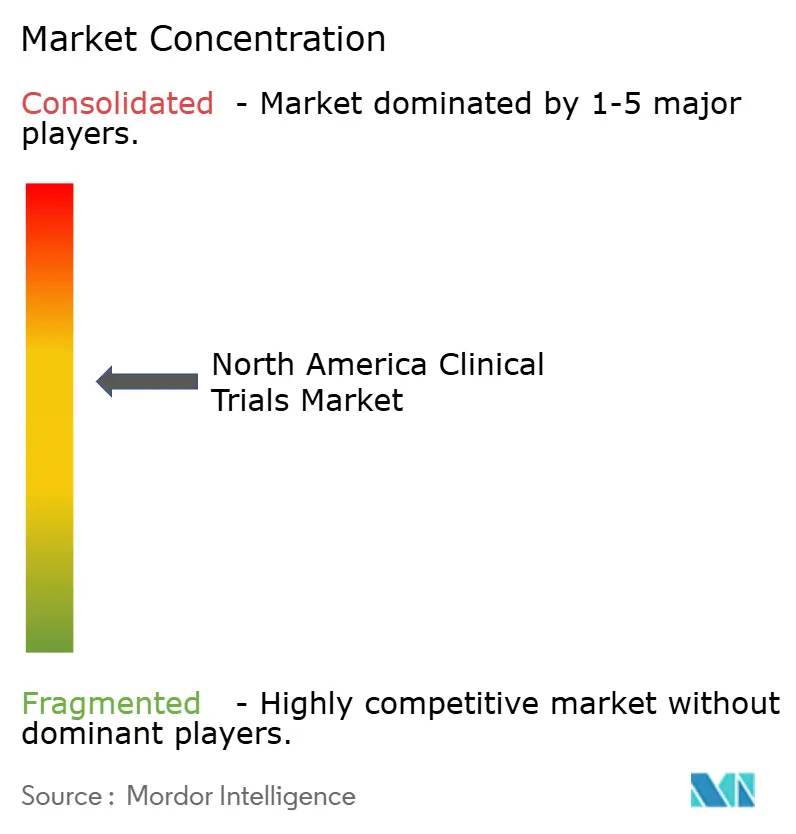
| Market Concentration | Medium |
Major Players *Disclaimer: Major Players sorted in no particular order Image © Mordor Intelligence. Reuse requires attribution under CC BY 4.0. | |
North America Clinical Trials Market Analysis by Mordor Intelligence
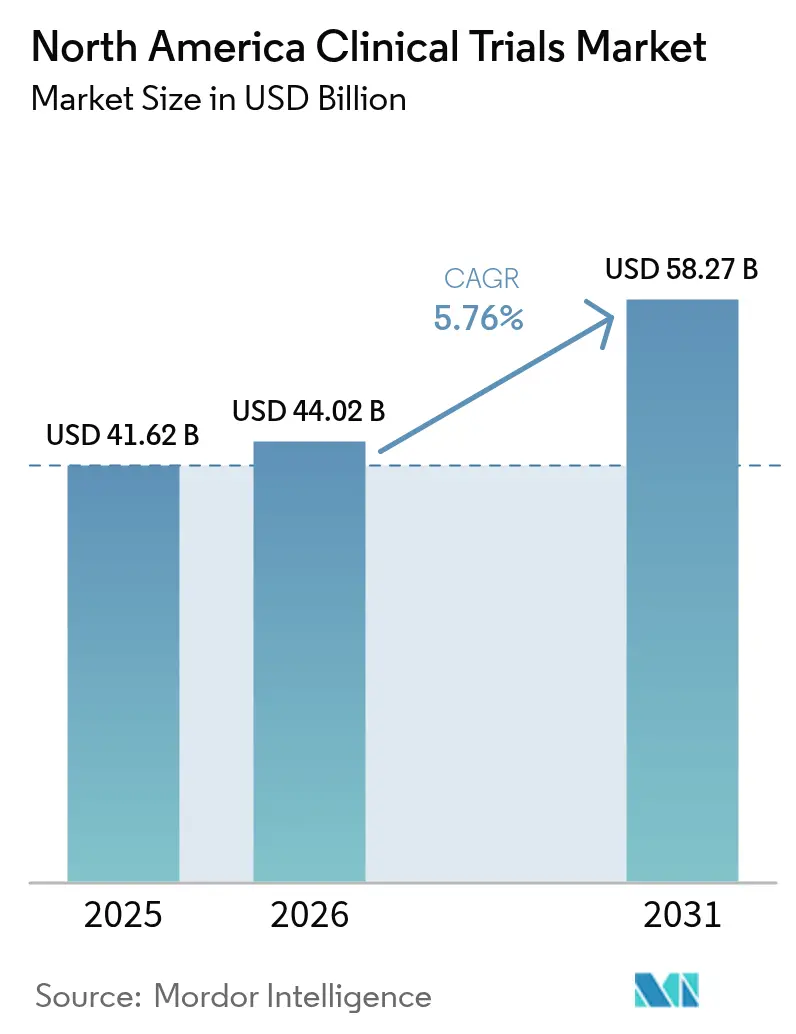
The North America clinical trials market size is expected to grow from USD 41.62 billion in 2025 to USD 44.02 billion in 2026 and is forecast to reach USD 58.27 billion by 2031 at 5.76% CAGR over 2026-2031. This sustained trajectory is rooted in North America’s position as the global epicenter for pharmaceutical innovation, reinforced by sophisticated regulatory pathways, mature contract-research infrastructure, and strong investor confidence that collectively underpin more than three-quarters of FDA approvals[1]. Intensifying adoption of AI‐enabled data analytics, a rising chronic-disease burden, and health-authority endorsement of decentralized and adaptive designs have markedly lifted study volumes, even as Phase III trial costs reached USD 36.58 million in 2024. Consolidation among leading CROs, exemplified by ICON’s USD 12 billion acquisition of PRA Health Sciences, is yielding end-to-end service platforms that challenge traditional outsourcing models.
Key Report Takeaways
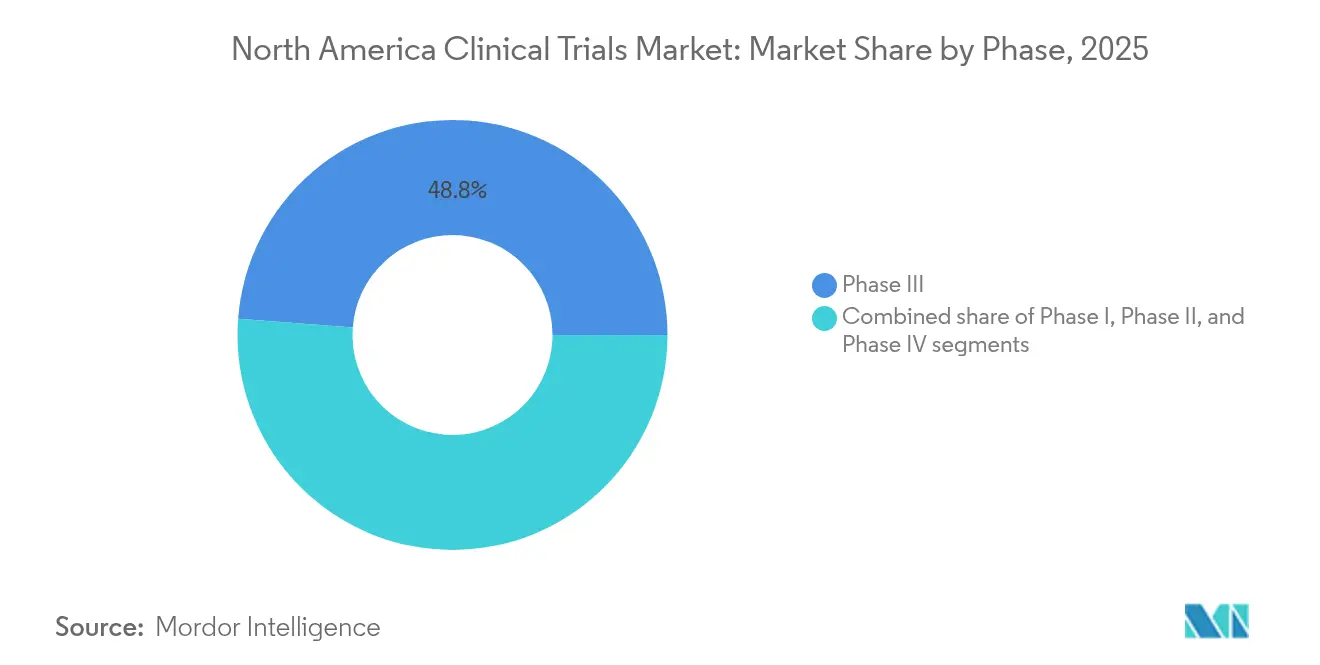
- By phase, Phase III trials held 48.80% of the North America clinical trials market share in 2025; Phase II is projected to lead growth at a 7.42% CAGR through 2031.
- By study design, interventional trials dominated with 71.91% revenue share in 2025, while adaptive trials are poised to expand at an 8.26% CAGR to 2031.
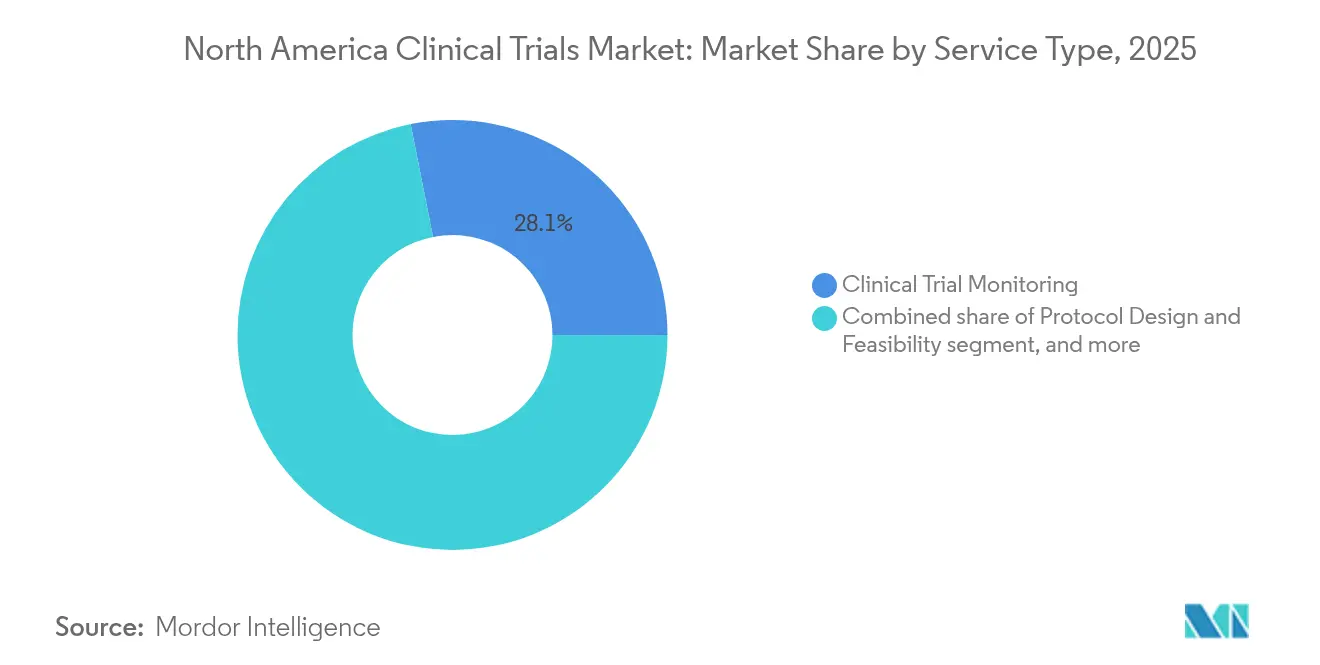
- By service type, clinical monitoring accounted for 28.12% of the North America clinical trials market size in 2025; decentralized services are advancing at an 7.98% CAGR to 2031.
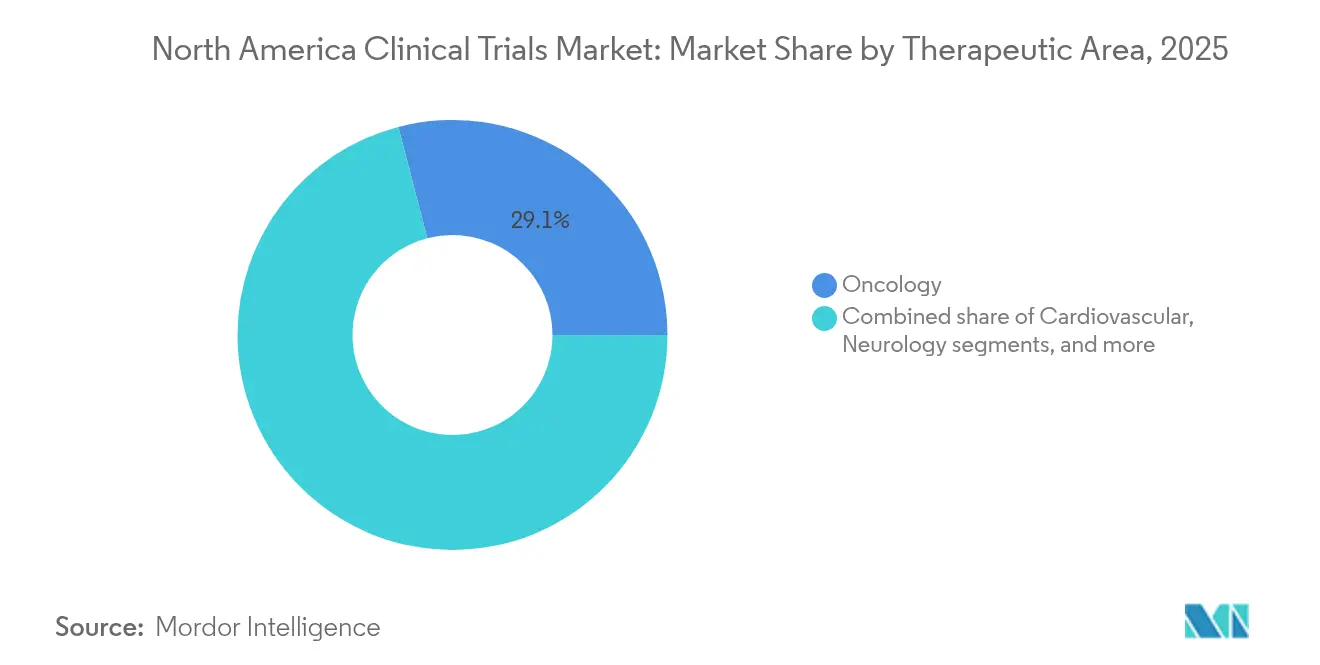
- By therapeutic area, oncology led with 29.05% share in 2025; neurology is forecast to grow fastest at 8.92% CAGR through 2031.
- By sponsor type, pharmaceutical and biopharmaceutical companies led with 67.82% revenue share in 2025, while government and non-profit organizations are forecast to expand at a 7.12% CAGR through 2031.
- By geography, the United States controlled 74.10% revenue in 2025, whereas Canada is on track for the quickest expansion at 6.10% CAGR through 2031.
Note: Market size and forecast figures in this report are generated using Mordor Intelligence’s proprietary estimation framework, updated with the latest available data and insights as of 2026.
Market Trends and Insights
Drivers Impact Analysis of North America Clinical Trials Market*
| Driver | % Impact on CAGR Forecast | Geographic Relevance | Impact Timeline |
|---|---|---|---|
| Robust life-sciences investment & innovation ecosystem | +1.2% | United States, spillover to Canada | Long term (≥ 4 years) |
| High chronic- & rare-disease burden generating trial demand | +1.0% | North America, aging populations | Medium term (2-4 years) |
| Mature CRO / site infrastructure supporting large-scale outsourcing | +0.8% | United States, expanding to Canada | Medium term (2-4 years) |
| Supportive FDA & Health Canada initiatives for decentralized and adaptive designs | +0.7% | United States and Canada | Short term (≤ 2 years) |
| Advanced data-sharing & digital-health backbone enabling hybrid trials | +0.6% | North America, US-led adoption | Medium term (2-4 years) |
| Favorable IP protection & reimbursement outlook attracting sponsor capital | +0.5% | United States, limited Canada impact | Long term (≥ 4 years) |
| Source: Mordor Intelligence | |||
Robust Life-Sciences Investment & Innovation Ecosystem
Record R&D spending of USD 161 billion by major pharmaceutical firms in 2023 fueled an influx of Phase II and Phase III programs that now anchor the North America clinical trials market. Private-equity momentum—highlighted by Kohlberg’s investment in Worldwide Clinical Trials—has scaled dedicated site networks that shorten study start-up timelines and deepen therapeutic specialization. Venture funding into biotech rebounded to USD 3 billion in 2024 and is increasingly tied to AI-driven platform companies that demand rapid proof-of-concept readouts. Strategic alliances such as Parexel-Palantir integrate advanced analytics directly into trial operations, improving protocol feasibility and accelerating interim decisions. These converging capital flows reinforce a virtuous cycle where investment begets infrastructure upgrades that, in turn, attract further sponsor activity across the North America clinical trials market.
High Chronic- & Rare-Disease Burden Generating Trial Demand
An aging population and escalating prevalence of cardiometabolic and neurodegenerative disorders sustain a robust pipeline of development programs. North America accounts for a disproportionate share of Alzheimer’s research, with the regional pipeline feeding an Alzheimer’s therapeutics market expected to reach USD 30.8 billion by 2033. Parallel growth in diabetes and obesity studies further elevates site utilization as GLP-1 receptor agonists dominate the metabolic drug landscape. Moreover, oncology precision-medicine protocols now comprise 30% of global oncology trials and expand fastest in the United States, intensifying demand for biomarker-enabled laboratories. Regulatory flexibility toward adaptive designs enables swift protocol amendments that align trial resources with shifting disease-biology insights, reinforcing upside for the North America clinical trials market.
Mature CRO/Site Infrastructure Supporting Large-Scale Outsourcing
CROs headquartered in North America manage roughly 75% of active global studies and increasingly deliver unified portfolios that combine monitoring, data-science, and real-world-evidence services. IQVIA alone supports around 1,500 trials annually, leveraging a 530 million-record real-world database to optimize site selection and enrollment projections iqvia.com. Consolidation waves—such as Thermo Fisher’s USD 17.4 billion PPD acquisition—are generating vertically integrated platforms that pair laboratory analytics with execution capabilities. Advanced risk-based monitoring and automation allow CROs to navigate the 67% rise in protocol procedures recorded between 2009 and 2020 while preserving quality and cost discipline. Such structural advantages safeguard the competitive edge of the North America clinical trials market in a tightening global funding climate.
Supportive FDA & Health Canada Initiatives for Decentralized and Adaptive Designs
Guidance issued by both FDA and Health Canada formalizes decentralized trial frameworks, enabling remote data capture without compromising GCP standards[2]. Health Canada’s 30-day default review period for Clinical Trial Applications provides sponsors with rapid study activation relative to many OECD peers, while the FDA’s clarity on remote-data-acquisition tools catalyzes adoption of hybrid protocols. Bilateral alignment also allows Canadian data packages to support US regulatory files, shaving months off multinational submission schedules. These regulatory efficiencies directly bolster throughput across the North America clinical trials market and incentivize further digital-health investment.
Restraints Impact Analysis of North America Clinical Trials Market*
| Restraints Impact Analysis | (~) % Impact on CAGR Forecast | Geographic Relevance | Impact Timeline |
|---|---|---|---|
| Complex multi-jurisdictional regulatory landscape prolonging approvals | –0.9% | United States, Canada, Mexico | Medium term (2-4 years) |
| Shortage of skilled investigators, coordinators and site staff | –1.1% | North America, especially specialty research centers | Short term (≤ 2 years) |
| Inflation-driven escalation of site operating and participant-recruitment costs | –0.8% | North America, with higher sensitivity at urban academic medical sites | Short term (≤ 2 years) |
| Intensifying competition for diverse patient cohorts slowing enrollment | –0.6% | Major metropolitan research hubs across the United States and Canada | Medium term (2-4 years) |
| Source: Mordor Intelligence | |||
Complex Multi-Jurisdictional Regulatory Landscape Prolonging Approvals
Divergent country requirements frequently delay regional study launches: Mexico’s COFEPRIS averages three months for approvals, triple Health Canada’s default timeline, forcing staggered start-up strategies that complicate data harmonization. Separate ethics-committee mandates across jurisdictions further extend timelines and inflate costs as sponsors must secure sequential green-lights before enrollment begins. Forthcoming ICH E6(R3) revisions in 2025 will tighten metadata standards, necessitating new digital traceability systems at sites and CROs. Combined, these factors temper the otherwise strong growth curve of the North America clinical trials market by adding compliance complexity and administrative overhead.
Shortage of Skilled Investigators, Coordinators and Site Staff
Ninety-five percent of cancer centers report staffing shortages that jeopardize protocol adherence and delay enrollment benchmarks. Between 2016 and 2024, study volume has outpaced workforce expansion, creating a persistent gap in experienced coordinators and data managers. Burnout and pandemic-related attrition exacerbate turnover, with 70% of site personnel citing increased difficulty in managing rising protocol complexity. Although technology platforms automate aspects of source-data verification and participant engagement, the immediate relief is insufficient; roughly 80% of trials miss initial recruitment milestones across the North America clinical trials market. The resulting headcount constraints squeeze margins and inflate per-patient costs, registering the sharpest negative drag on growth among identified restraints.
*Our forecasts treat driver/restraint impacts as directional, not additive. The impact forecasts reflect baseline growth, mix effects, and variable interactions.
North America Clinical Trials Market Segment Analysis
By Phase:
Late-Stage Dominance Amid Early-Phase AccelerationPhase III programs commanded 48.80% of the North America clinical trials market in 2025, an outsized footprint that reflects regulatory reliance on large pivotal studies for approval decisions. Average Phase III spending climbed to USD 36.58 million in 2024 as biomarker testing, imaging endpoints, and patient-reported outcomes layered complexity onto traditional efficacy measures, yet sponsors continue to funnel resources into these late-stage trials to secure first-in-class or best-in-class labels. Concurrently, the North America clinical trials market size for Phase II programs is projected to expand at a 7.42% CAGR through 2031 as companies prioritize well-characterized proof-of-concept designs that mitigate downstream attrition.
A growing share of Phase II studies leverage adaptive features—futility analyses, sample-size re-estimation, and dose-finding algorithms—that enable early termination or cohort expansion based on interim reads, sharpening commercial decision-making and conserving capital. Phase I trials maintain steady momentum as immuno-oncology and gene-therapy modalities demand rigorous safety exploration, while Phase IV post-marketing studies rise in prominence amid payer insistence on real-world evidence. Such diversification across phases ensures that the wider North America clinical trials industry retains balanced growth vectors even under budget scrutiny.

By Study Design:
Interventional Trials Lead While Adaptive Designs Transform ResearchInterventional designs held 71.91% share in 2025, underscoring regulatory preference for randomized controlled environments when evaluating investigational therapies. Robust oversight frameworks and well-established statistical conventions solidify interventional studies as the gold standard for primary efficacy claims within the North America clinical trials market. Yet adaptive trials are gaining velocity, forecast to post an 8.26% CAGR as sponsors capture efficiencies by prospectively planning design modifications that respond to interim outcomes data.
The growing repository of FDA guidance on adaptive methods has alleviated historical concerns regarding type-I error inflation, prompting oncology and rare-disease portfolios to incorporate seamless Phase II/III protocols that compress development timelines. Observational and expanded-access studies round out the design mix, supplying complementary real-world data that inform payer value dossiers. With regulatory authorities increasingly receptive to master protocols and platform trials, the North America clinical trials market size for adaptive designs is set to widen, enhancing flexibility in heterogeneous patient populations.
By Service Type:
Monitoring Services Dominate While Digital Solutions AccelerateClinical monitoring generated 28.12% of 2025 revenue and remains indispensable for safeguarding patient safety and data integrity. Risk-based monitoring paradigms now focus on centralized statistical triggers that redirect on-site visits to high-risk centers, preserving quality while trimming travel budgets. Meanwhile, decentralized and virtual-trial services are on track to register an 7.98% CAGR, propelled by telehealth adoption and wearables that collect continuous biometric endpoints outside brick-and-mortar clinics.
Protocol-design consulting, data-management, and medical-writing operations collectively broaden the service stack, enabling full-service CROs to lock in multi-year master service agreements. Integration of eConsent, electronic patient-reported outcomes, and direct-to-patient drug-dispensing solutions has redefined participant engagement models across the North America clinical trials market. Investments in AI-enabled site-support platforms—illustrated by IQVIA’s virtual-site network tools—are poised to compress start-up intervals and realign monitoring paradigms around data-quality hotspots.
By Therapeutic Area:
Oncology Leadership Challenged by Neurology InnovationOncology retained 29.05% share in 2025, underpinned by sustained venture and pharma spending on precision-medicine assets targeting tumor-agnostic pathways and cell-therapy constructs. Immune-checkpoint inhibitors, antibody–drug conjugates, and CAR-T pipelines collectively account for rising patient volumes, demanding sophisticated biomarker lab services and genomic consent frameworks. Neurology is forecast to outpace all other specialties with a 8.92% CAGR through 2031 as disease-modifying Alzheimer’s candidates and novel Parkinson’s disease gene therapies enter pivotal phases, reshaping investment flows within the North America clinical trials market.
Cardiovascular, metabolic, and infectious-disease arenas maintain mid-single-digit growth, with post-COVID therapeutic focus now extending to long-COVID syndrome and next-generation antiviral prophylaxis. The accelerating convergence of immunology and oncology portfolios spawns basket and umbrella protocols that recruit across molecular signatures rather than organ‐site taxonomy. These methodological innovations reinforce the positioning of the North America clinical trials industry as a global test-bed for first-in-class therapies across high-unmet-need categories.
By Sponsor Type:
Pharma Dominance Amid Government Research ExpansionPharmaceutical and biopharmaceutical companies accounted for 67.82% of study initiations in 2025, leveraging deep R&D budgets and regulatory know-how to steer late-stage execution pipelines. Big Pharma’s alliance network with academic medical centers and biotech innovators cultivates early discovery assets while outsourcing execution complexity to CROs, thereby sustaining the expansive scope of the North America clinical trials market.
Government and non-profit entities are projected to grow at a 7.12% CAGR, mobilizing public health grants such as Canada’s USD 250 million Clinical Trials Fund to tackle vaccine preparedness and neglected diseases. Academic investigators, empowered by collaborative grant structures and shared bioinformatics infrastructure, increasingly sponsor investigator-initiated trials that feed confirmatory datasets into industry programs. Medical-device sponsors add diversity, driving smaller, faster IDE studies that pivot swiftly toward FDA de novo or 510(k) filings. Collectively, this mosaic of sponsor profiles diffuses funding risk and anchors stable throughput across the North America clinical trials industry landscape.
Geography Analysis
United States Clinical Trials Market
The United States controlled 74.10% of 2025 revenue and is projected to grow alongside the broader North America clinical trials market at a stable 5.76% CAGR through 2031. A confluence of advanced healthcare systems, extensive academic networks, and progressive FDA frameworks sustains its unrivaled density of trial sites. Leading CRO headquarters—IQVIA in Durham, PPD in Wilmington, and ICON in Philadelphia—anchor a workforce skilled in decentralized and adaptive methodologies, enabling rapid deployment of master protocols that simultaneously interrogate multiple endpoints. Continued venture and private-equity inflows funnel capital into specialized site networks, curbing patient-recruitment delays and cementing the country’s innovation leadership.
Canada Clinical Trials Market
Canada is poised for the fastest expansion, with the North America clinical trials market size attributable to Canadian operations set to register a 6.10% CAGR through 2031. Health Canada’s 30-day review policy offers sponsors a swift on-ramp, while alignment with ICH standards equips Canadian data packages for FDA and EMA submissions without redundant filings. Government incentives such as the Strategic Innovation Fund subsidize infrastructure upgrades, and the Canadian Clinical Trials Asset Map promotes site capabilities to foreign sponsors. Moreover, cost efficiencies—generally 20% below US per-patient outlays—enhance Canada’s allure, particularly for early-phase oncology and rare-disease cohorts that benefit from the country’s ethnically diverse patient base.
Mexico Clinical Trials Market
Mexico, though presently a smaller contributor, presents compelling momentum as COFEPRIS streamlines its regulatory architecture and adopts ICH GCP. The 2024 Equivalence Agreement permits importation of investigational products without full marketing authorization, reducing logistical friction for multinational trials. Mexico’s proximity to the United States supports cross-border site pairing strategies that enrich diversity mandates in FDA guidance, while favorable cost structures attract sponsors exploring Phase IV pharmacovigilance and real-world-evidence programs. Nonetheless, coordination complexities and ethics-committee sequencing requirements temper near-term uptake. As these procedural bottlenecks ease, Mexico will reinforce the geographic depth of the North America clinical trials market and expand regional patient-access channels.
Regulatory Landscape
Clinical trial conduct in North America is shaped by regulator-led GCP frameworks and a dense guidance ecosystem that affects protocol design, data integrity, and participant protections across the United States, Canada, and Mexico. In the United States, the FDA continues to refresh expectations through guidance, including its December 2025 guidance on enhancing participation in clinical trials (eligibility criteria, enrollment practices, and trial design choices), which influences sponsor strategies around representativeness and site selection.
During 2026, modernization initiatives are pushing more structured approaches to data governance and advanced methods. In January 2026, FDA issued a draft guidance on Bayesian methodology for clinical trials of drugs and biologics, widening the practical playbook for adaptive and efficient designs. In Canada, Health Canada moved forward on its clinical trials modernization agenda by implementing the adopted ICH E6(R3) GCP approach in April 2026, reinforcing risk-based quality management and traceability expectations that CROs and sites must operationalize across hybrid and decentralized workflows.
Competitive Landscape
North America hosts a moderately consolidated yet intensely competitive CRO arena, with recent megadeals amplifying scale and service breadth. ICON’s absorption of PRA Health Sciences and Thermo Fisher’s integration of PPD forged two end-to-end platforms capable of spanning trial design through bioanalytical testing, generating synergies that appeal to sponsors seeking single-vendor accountability[3]. IQVIA leads the pack, pairing a 19% global CRO share with proprietary real-world datasets that feed predictive enrollment algorithms and therapeutic-area benchmarks. Synergistic capabilities yield negotiating leverage and lock-in contracts that extend beyond individual trials, cushioning revenue volatility within the North America clinical trials market.
Technology convergence is a defining battleground. Parexel’s alliance with Palantir embeds AI-driven analytics into EDC systems, while Tempus’s acquisition of Deep 6 AI sharpens precision-recruitment through real-time EMR mining. Emerging ventures such as Lindus Health, flush with USD 18 million Series A capital, champion software-first models that promise rapid feasibility assessments and lower fixed overhead. Established players counter with internal incubators and venture funds to acquire or license niche digital assets, preserving competitive positioning as decentralized conduct gains mainstream status.
Private equity remains a transformative force, funneling capital into site networks and specialized vendors. Kohlberg’s stake in Worldwide Clinical Trials and VSS Capital’s infusion into Eximia Research illustrate appetite for growth platforms that can be rolled up into larger entities or floated via IPO. As labor shortages persist, acquirers favor networks with embedded training academies and standardized SOPs that mitigate workforce risk. The competitive intensity is therefore set to heighten, but scale, data depth, and digital dexterity will remain the decisive differentiators for market leadership in the North America clinical trials market.
North America Clinical Trials Industry Leaders
-
ICON Plc
-
IQVIA
-
Parexel International
-
Syneos Health
-
Laboratory Corp of America (Covance)
- *Disclaimer: Major Players sorted in no particular order
North America Clinical Trials Market Companies Covered in this Report
- IQVIA
- Laboratory Corp of America (Covance)
- Parexel International
- ICON
- Syneos Health
- Charles River
- Medpace Holdings
- WuXi App Tec
- PRA Health Sciences
- Clinipace
- Pharmaceutical Product Development (PPD)
- Thermo Fisher Scientific
- Catalent Pharma Solutions
Market Opportunities and Future Outlook
FDA-led pilots and modernization programs are creating identifiable whitespace for sponsors, CROs, and technology vendors that can shorten early development timelines and strengthen submission readiness. A key opportunity sits in front-loaded first-in-human enablement: a June 2026 Federal Register notice described a proposed Expedited IND pilot that uses a network of Qualified Research Institutions (QRIs) and explores rolling submission of IND components before the final submission, which drives demand for integrated protocol development and coordinated nonclinical, clinical, and CMC documentation workflows.
Data streaming and cloud-connected execution are another actionable area, supported by FDA activity during 2026 on real-time endpoint visibility. A reported FDA proof-of-concept involved real-time access to clinical trial endpoints in the cloud with AstraZeneca, the University of Texas MD Anderson Cancer Center, and the University of Pennsylvania, and a similar effort was described with Amgen, underscoring the need for secure data pipelines, centralized monitoring, and validated analytics layers that can fit regulator-facing use. In Canada, the proposed Clinical Trials Regulations published in the Canada Gazette in December 2025 introduced a national research ethics board option (voluntary for sponsors) intended to reduce duplicative REB reviews for multi-site studies, supporting faster multi-center activation for operators that can standardize documents and governance across provinces. These capacity and readiness investments are also showing up in infrastructure build-outs, including Kincell Bio's expansion project at its Research Triangle Park facility with targeted full occupancy in late summer to early fall 2026.
Recent Industry Developments in North America Clinical Trials Market
- June 2026: ICON selected Microsoft as a preferred technology partner and announced an enterprise-wide rollout of Microsoft 365 Copilot and Azure-based AI infrastructure to scale its Orbis platform. The initiative reinforces a shift toward cloud-native, AI-assisted trial operations that can standardize workflows across study teams and increase throughput across large multi-program client portfolios.
- May 2026: ICON opened a new 69,500 square-foot clinical research unit in San Antonio, Texas, and added two satellite outpatient clinics in Houston, Texas, and Lawrence, Kansas, expanding its US early-phase footprint. Added capacity at purpose-built units supports higher volumes of complex Phase I work and provides sponsors more options to localize recruitment and conduct intensive PK and safety monitoring.
- December 2024: Thermo Fisher Scientific closed its USD 17.4 billion acquisition of PPD, expanding its integrated drug development services across clinical execution and adjacent capabilities. The combined platform increases the ability to bundle services under single-vendor models, raising competitive pressure on standalone CROs and strengthening end-to-end outsourcing propositions for biopharma sponsors.
North America Clinical Trials Market Report Scope and Research Methodology
Market Definition and Coverage
For this sizing, the market is defined as revenue generated from conducting human clinical trials in the United States, Canada, and Mexico, covering sponsored and outsourced trial activities across Phases I to IV for drugs, biologics, and medical devices.
Scope exclusions: We exclude pre-clinical animal studies, expanded-access use outside a formal protocol, and stand-alone lab analytical services that are not part of running a trial.
Segments Covered in This Report
- By Phase
- Phase I
- Phase II
- Phase III
- Phase IV
- By Study Design
- Interventional / Treatment Studies
- Observational Studies
- Expanded Access Studies
- By Service Type
- Protocol Design & Feasibility
- Site Identification & Start-up
- Regulatory Submission & Approval
- Clinical Trial Monitoring
- Data Management & Biostatistics
- Medical Writing
- Other Service Types
- By Therapeutic Area
- Oncology
- Cardiovascular
- Neurology
- Infectious Diseases
- Metabolic Disorders (Diabetes, Obesity)
- Immunology / Autoimmune
- Other Therapeutic Areas
- By Sponsor Type
- Pharmaceutical & Biopharmaceutical Companies
- Medical Device Companies
- Academic & Research Institutes
- Government & Non-profit Organizations
- Geography
- United States
- Canada
- Mexico
Data Sources, Market Sizing, and Validation
Desk Research
Desk work starts by grounding the demand pool in observable trial activity and funding signals, then converting that into a spend view using realistic cost and service mix assumptions. Public sources used include ClinicalTrials.gov for trial counts and characteristics, US FDA and Health Canada releases for regulatory and study-start context, CDC and NIH publications for disease burden and research priorities, and OECD and World Bank datasets for macro health and R&D indicators.
We also review company filings, investor presentations, reputable press coverage, and association websites to understand outsourcing intensity and service pricing direction. Where available, we use an approved paid subscription for company financials and news to cross-check revenue splits and timing of major contract wins, rather than relying on a single disclosure. The desk sources listed here are illustrative only, and many other public references were reviewed for collection, validation, and clarification.
Primary Interviews and Surveys
Primary work focuses on aligning the model with how trials are actually budgeted and delivered in North America, since public sources rarely show clean pricing and service-mix detail. We interview and survey a spread of sponsors, service providers, and site-side experts, and we use their input to confirm assumptions on outsourcing rates, protocol complexity, enrollment friction, and typical per-study spend by phase across the US, Canada, and Mexico.
Distribution of primary research fieldwork respondents
| Company type | Respondent position |
|---|---|
| Top tier: 28% | CXOs: 13% |
| Mid tier: 54% | Functional/Unit leaders: 39% |
| Smaller Players: 18% | Managers: 48% |
Market-Sizing & Forecasting
Sizing uses a top-down and bottom-up approach, where the top-down path reconstructs clinical trial spend from trial-start and trial-volume indicators, then allocates that spend across phases and delivery activities based on validated cost shares. In practice, we connect signals like trial initiations and active study counts, mix of Phase I to IV activity, share of decentralized and hybrid execution, patient enrollment timelines, and the outsourcing share routed to service providers.
To keep totals realistic, we corroborate with selective bottom-up approximations, such as sampled average cost per trial by phase multiplied by modeled trial volumes, along with channel checks on service-rate movement for monitoring, data management, and site operations. When coverage is uneven (for example, Mexico-specific pricing or Canada-specific site workload), gaps are handled through proxying using trial mix and wage-cost direction, then reviewed again with experts.
For forecasting, we mainly apply scenario analysis anchored in expected changes in trial volume, protocol complexity, and outsourcing intensity, and then stress-tested against macro R&D spending direction and regulatory cycle expectations. The final path is chosen only after primary feedback suggests the variable movements are plausible for the next few years.
Data Validation & Update Cycle
Validation is done through several checks so results are not driven by one input. We compare model outputs against independent signals such as pipeline activity trends, trial registry movement, and reported revenue direction from public filings, and then investigate outliers before sign-off.
If a variance is large, we re-check unit economics, revisit currency and timing assumptions, and re-contact select respondents for clarification. Reports are refreshed annually, with interim updates when material events occur such as major regulatory shifts, sharp funding changes, or structural outsourcing moves. Before delivery, a final analyst pass is completed to ensure the latest publicly available information is reflected.
Mordor Intelligence's North America Clinical Trials Market Size Versus Other Published Estimates
Published market sizes for North America clinical trials often look different because the underlying spend pool is built in different ways, and the boundary of what counts as a trial service is not always consistent. Differences also show up when base years vary, when the same region is measured with different currency timing, or when the assumed outsourcing share is applied more aggressively.
The key gap drivers here usually come from what is included in trial revenue (for example, sponsor in-house work versus only outsourced work), how Phases I to IV activity is converted into spend, and how decentralized and hybrid trials are treated in cost progression. Another common reason is refresh cadence, since trial starts and budgets shift quickly when funding cycles or regulatory priorities change.
Benchmark comparison
| Source | Market Size | Gaps in Research Methodology |
|---|---|---|
| Mordor Intelligence | USD 41.62 B (2025) | |
| Global Consultancy A | USD 43.03 B (2024) | Uses a different base year and growth window, and the spend pool can shift if protocol complexity and outsourcing rates are applied using a single-year snapshot rather than phase-mix adjustments over time. |
| Industry Publisher B | USD 19.04 B (2023) | Reports a much narrower spend view for the region, which can happen when only a subset of clinical trial services is counted, or when in-house sponsor and site-side execution costs are not included in the total. |
The table shows a wide spread, and in Mordor Intelligence's model the total includes sponsor in-house activities alongside outsourced services across Phases I to IV, which lifts the spend base versus estimates focused mainly on outsourced revenues. When the scope is aligned and the year is normalized, most of the remaining difference tends to come from how phase mix, protocol complexity, and outsourcing shares are updated and validated with market checks.
Key Questions Answered in the Report
What is the current value of the North America clinical trials market?
The market is valued at USD 44.02 billion in 2026 and is projected to reach USD 58.27 billion by 2031.
Which phase generates the largest revenue in North America clinical trials?
Phase III trials contribute the most, holding 48.80% of 2025 revenue and reflecting sponsors’ focus on pivotal studies.
Why are adaptive trial designs gaining adoption?
Regulatory guidance from FDA and Health Canada clarifies statistical expectations, enabling sponsors to modify protocols mid-study and compress timelines.
How fast is the Canadian clinical trials segment growing?
Canada is forecast to expand at 6.10% CAGR through 2031, aided by its 30-day CTA review period and cost efficiencies.
What is the main operational challenge facing trial sites?
A severe shortage of experienced investigators and coordinators drives 80% of studies to miss initial enrollment targets, increasing per-patient costs.
How is technology reshaping the competitive landscape?
CROs are embedding AI, risk-based monitoring, and decentralized platforms into service models to reduce cycle times and win “one-stop” contracts from sponsors.