
Lung Cancer Surgery Market Size and Share
Market Overview
| Study Period | 2020 - 2031 |
|---|---|
| Market Size (2026) | USD 6.63 Billion |
| Market Size (2031) | USD 8.06 Billion |
| Growth Rate (2026 - 2031) | 3.98 % |
| Fastest Growing Market | Asia Pacific |
| Largest Market | North America |
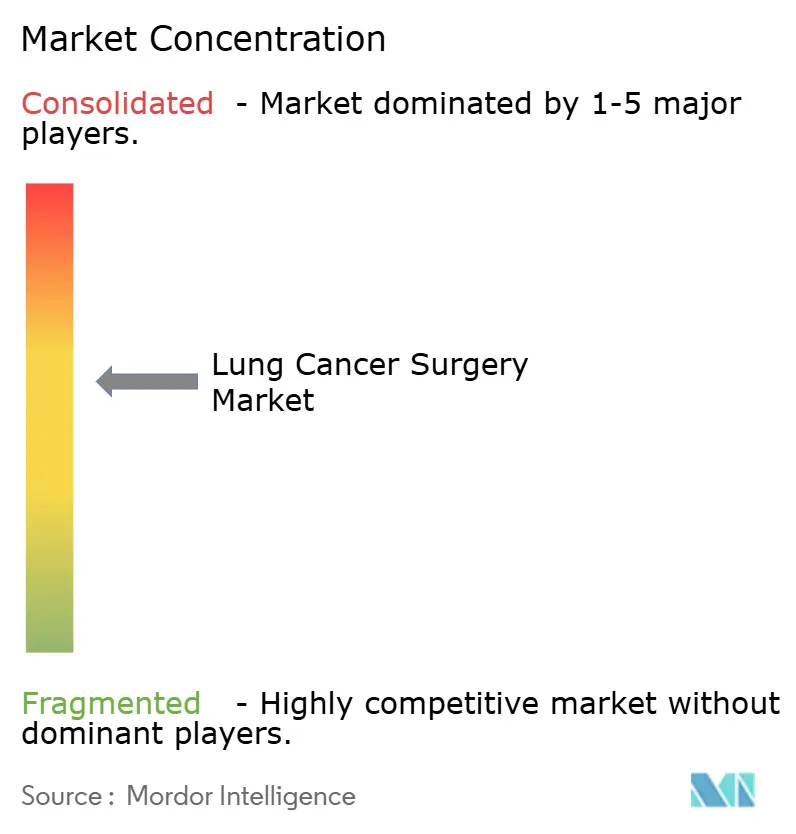
| Market Concentration | Medium |
Major Players *Disclaimer: Major Players sorted in no particular order Image © Mordor Intelligence. Reuse requires attribution under CC BY 4.0. | |
Lung Cancer Surgery Market Analysis by Mordor Intelligence
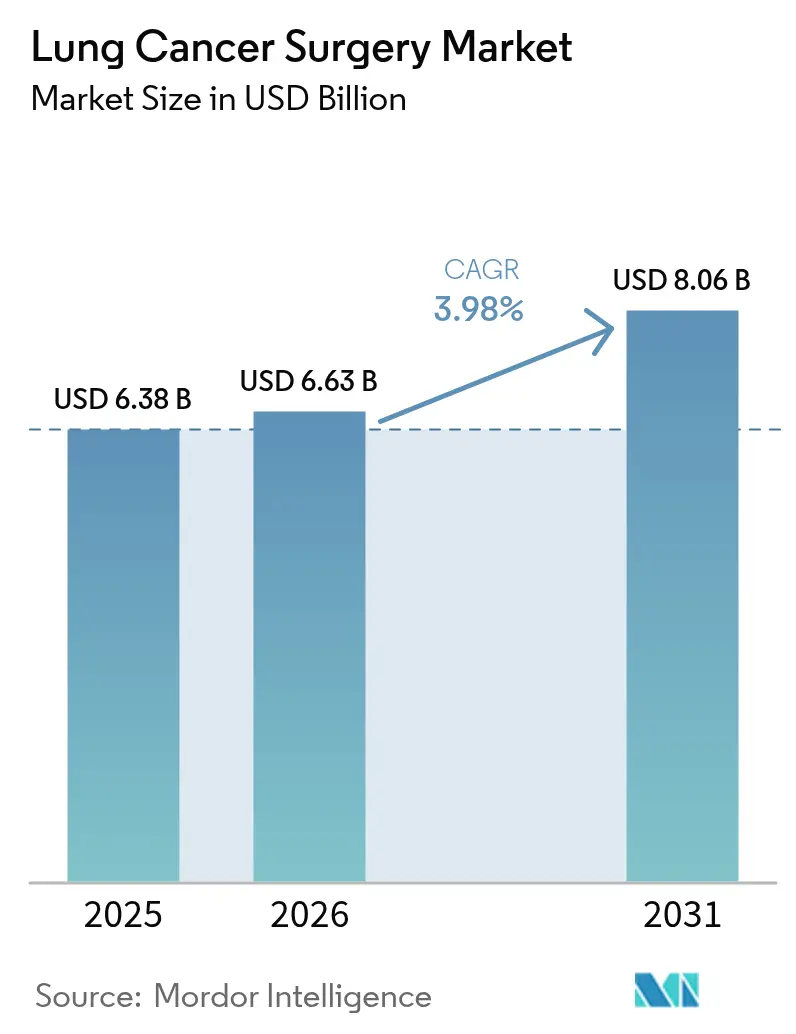
The Lung Cancer Surgery Market size was valued at USD 6.38 billion in 2025 and estimated to grow from USD 6.63 billion in 2026 to reach USD 8.06 billion by 2031, at a CAGR of 3.98% during the forecast period (2026-2031). Competitive intensity is now shaped less by sheer procedure volumes and more by the sophistication of robotic platforms, advanced stapling systems, and AI-enabled imaging that compress operating times while sustaining oncological precision. Hospitals expand capital budgets for integrated robotic suites even as ambulatory surgical centers adopt lighter single-port systems that fit outpatient economics. Early-stage lung cancer detection through low-dose CT screening funnels an expanding cohort of surgical candidates, yet workforce shortages spur demand for automation that lets surgeons handle higher throughput without compromising lymph-node harvests. At the same time, reimbursement frameworks in North America and parts of Europe reward quality-of-life metrics, incentivizing providers to migrate from open thoracotomy to video-assisted and robotic approaches that shorten length of stay and reduce conversion rates.
Key Report Takeaways
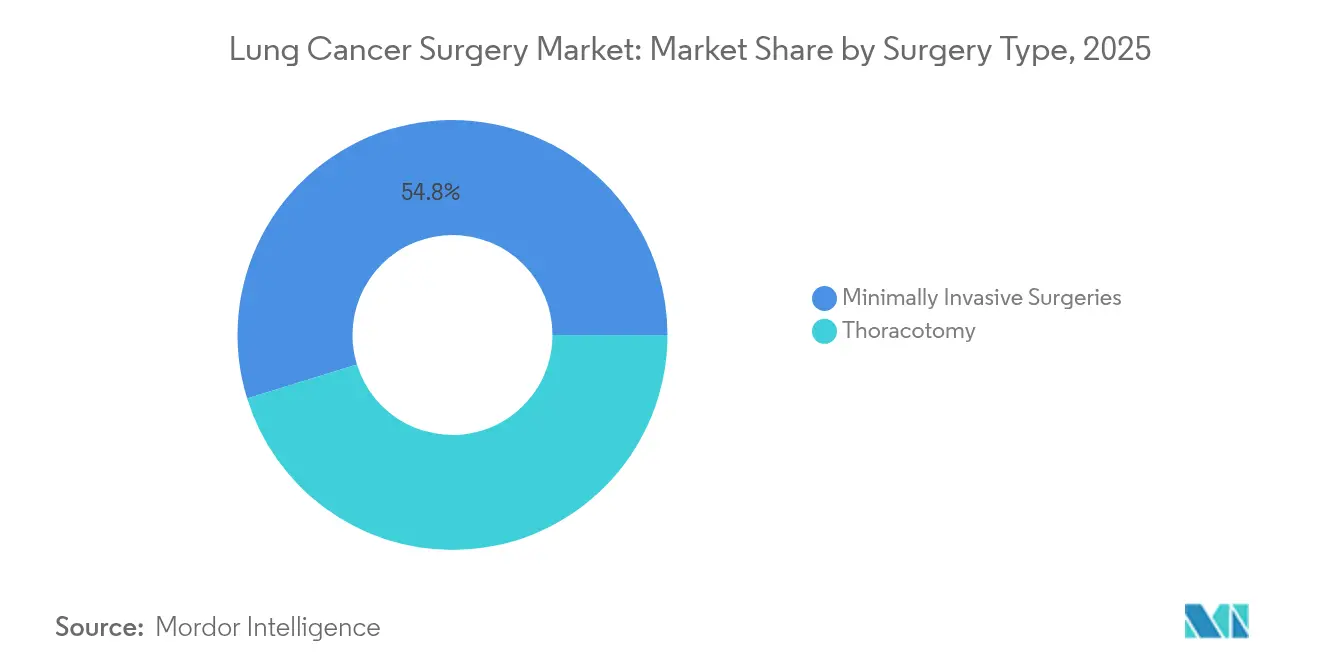
- By surgery type, minimally invasive procedures accounted for 54.78% of the lung cancer surgery market share in 2025, growing at a 5.05% CAGR through 2031.
- By product, surgical devices led with a 59.05% revenue share in 2025; monitoring devices recorded the fastest growth at a 5.74% CAGR from 2025 to 2031.
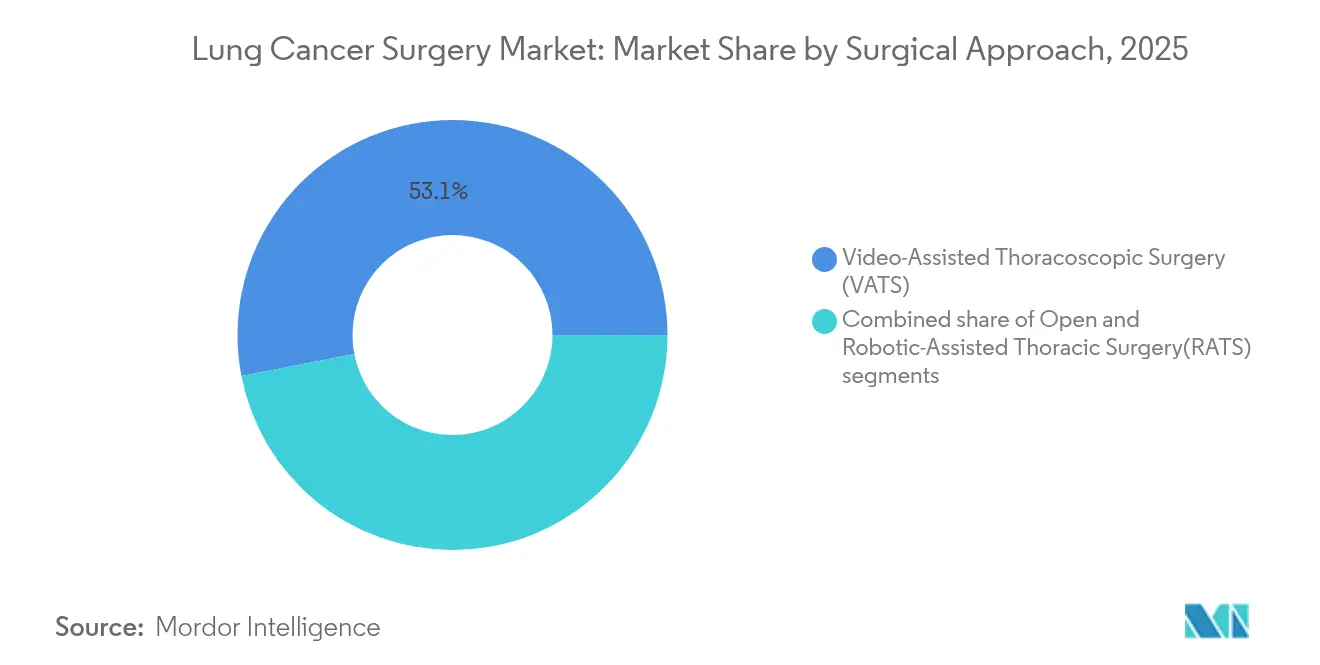
- By surgical approach, video-assisted thoracoscopic surgery accounted for a 53.05% share of the lung cancer surgery market size in 2025, whereas robotic-assisted thoracic surgery is projected to post the highest 5.39% CAGR from 2025 to 2031.
- By end user, hospitals commanded a 62.10% share in 2025; ambulatory surgical centers advanced at a 4.82% CAGR through 2031.
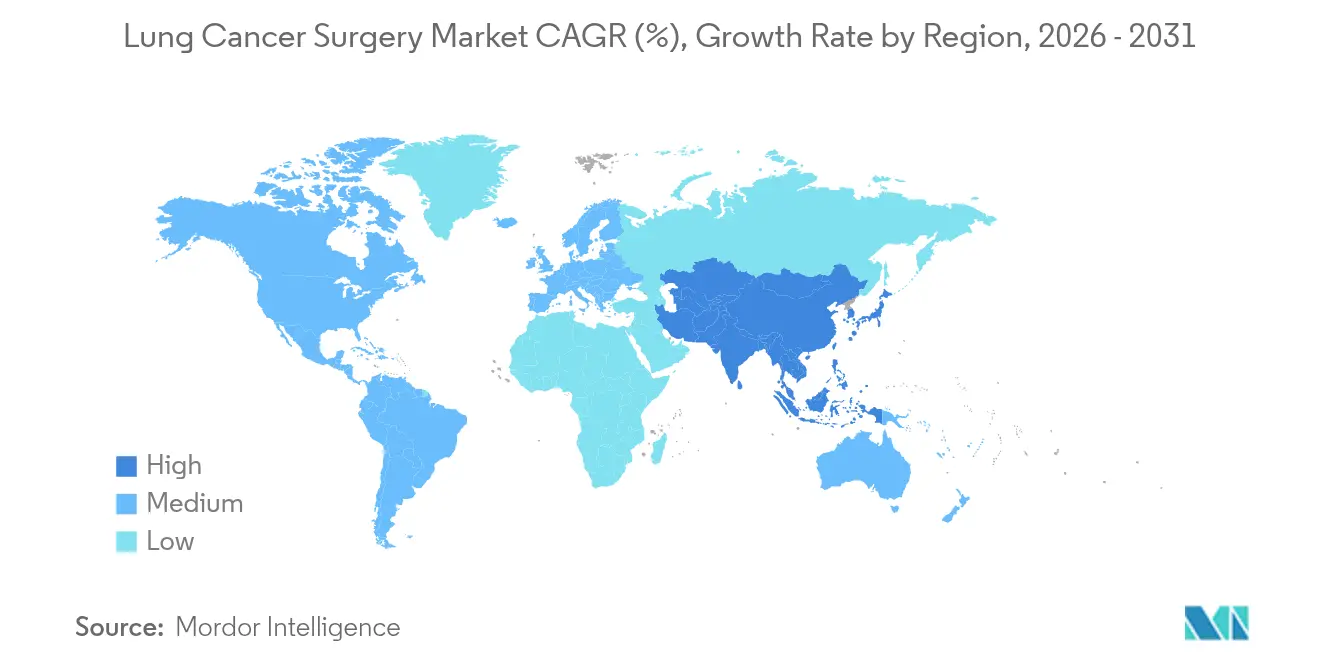
- By geography, North America held 36.10% revenue share in 2025, while the Asia Pacific is projected to expand at a 5.59% CAGR to 2031.
Note: Market size and forecast figures in this report are generated using Mordor Intelligence’s proprietary estimation framework, updated with the latest available data and insights as of 2026.
Market Trends and Insights
Drivers Impact Analysis of Lung Cancer Surgery Market*
| Driver | (~) % Impact on CAGR Forecast | Geographic Relevance | Impact Timeline |
|---|---|---|---|
| Growing burden of lung cancer | +1.2% | Global, with highest impact in APAC and MEA | Long term (≥ 4 years) |
| Technological advances in minimally-invasive and robotic surgery | +1.5% | North America & EU leading, APAC catching up | Medium term (2-4 years) |
| Rising air pollution and occupational exposures | +0.8% | APAC core, spill-over to MEA and Latin America | Long term (≥ 4 years) |
| Expanding reimbursement for robotic lobectomy | +0.9% | North America & EU, emerging in APAC | Medium term (2-4 years) |
| Integration of intra-operative AI imaging & navigation | +0.7% | North America & EU, selective APAC markets | Short term (≤ 2 years) |
| Surge in early-stage detection via low-dose CT screening | +1.1% | Global, with fastest adoption in developed markets | Medium term (2-4 years) |
| Source: Mordor Intelligence | |||
Growing burden of lung cancer
Epidemiological projections indicate a 70% rise in surgical cases by 2035, driven by aging populations and escalating air-pollution exposure in emerging economies. Screening programs in Taiwan already detect 85% of cancers at stage 0–1, sharply increasing operable volumes while lowering per-case complexity. Device makers respond by prioritizing workflow efficiency over premium pricing curves. The epidemiological transition from late-stage palliative care to early-stage curative surgery fundamentally alters device utilization patterns and reimbursement models.
Technological advances in minimally-invasive and robotic surgery
Hospitals installed 147 da Vinci 5 systems in Q1 2025, signifying strategic commitment to articulated instruments and AI-driven analytics that improve lymph-node harvests from 5.6 to 7.5 stations per procedure. Partnerships such as Johnson & Johnson-NVIDIA focus on real-time algorithmic guidance, underscoring a shift toward software as the key differentiator.
Rising air pollution and occupational exposures
PM2.5 exposure increases mortality risk by 44% among lung-cancer patients, concentrating demand in high-pollution APAC corridors that must scale thoracic capacity quickly.[1] Occupational hazards such as asbestos further regionalize device uptake in heavy-industry zones. Climate change exacerbates these trends, with wildfire-related air quality deterioration increasing lung cancer surgical complexity and post-operative complications.
Expanding reimbursement for robotic lobectomy
HCPCS code S2900 standardizes U.S. billing for robotic supplies, eliminating a major uncertainty barrier and supporting steady system purchases. Cost-utility studies show 73% five-year survival for robotic resection, helping justify capital outlays despite a 36% cost premium over SBRT. The reimbursement landscape shift enables hospitals to invest in robotic platforms while maintaining financial viability, though the lack of additional reimbursement beyond standard surgical codes constrains margin expansion. Insurance coverage expansion for eligible patients under the Affordable Care Act and Medicare creates a broader addressable market for robotic procedures, though prior authorization requirements may limit utilization growth.
Restraints Impact Analysis of Lung Cancer Surgery Market*
| Restraint | (~) % Impact on CAGR Forecast | Geographic Relevance | Impact Timeline |
|---|---|---|---|
| Effectiveness of non-surgical alternatives (SBRT, targeted therapies) | -0.8% | Global, with highest impact in developed markets | Medium term (2-4 years) |
| Workforce shortage of thoracic surgeons | -1.1% | Global, most acute in North America and EU | Long term (≥ 4 years) |
| High capital cost of robotic systems and disposables | -0.6% | APAC and emerging markets primarily | Medium term (2-4 years) |
| Regulatory delays for novel energy devices | -0.4% | Global, with varying impact by regulatory jurisdiction | Short term (≤ 2 years) |
| Source: Mordor Intelligence | |||
Effectiveness of non-surgical alternatives (SBRT, targeted therapies)
SBRT delivers ≥90% local control in inoperable patients and costs USD 8,933 per course versus USD 12,197 for robotic resection, shifting treatment algorithms in frail cohorts. Novel devices must therefore present clear survival or quality-of-life edges to defend cap-ex budgets. The therapeutic landscape shift toward precision medicine and targeted therapies reduces the addressable surgical population, particularly for patients with specific molecular markers who achieve superior outcomes through systemic treatments.
Workforce shortage of thoracic surgeons
A projected 21% supply drop juxtaposed threatens capacity even in advanced markets, pushing hospitals toward automation that extends each surgeon’s productive hours. Training pipeline constraints exacerbate the shortage, with fewer residents entering thoracic surgery despite growing case volumes, creating a structural imbalance that limits device market expansion regardless of technological advancement. Geographic disparities in surgeon distribution create access barriers that prevent optimal device utilization, particularly in rural and underserved markets where surgical expertise concentration limits advanced technology adoption.
*Our forecasts treat driver/restraint impacts as directional, not additive. The impact forecasts reflect baseline growth, mix effects, and variable interactions.
Lung Cancer Surgery Market Segment Analysis
By Surgery Type:
Minimally Invasive Procedures Drive Market EvolutionMinimally invasive techniques captured 54.78% lung cancer surgery market share in 2025 and are growing at 5.05% through 2031, outpacing thoracotomy as payers reward faster discharge and lower complication rates. The shift toward single-port VATS and uniportal robotic approaches trims average operative time to 88 minutes, nearly 28% faster than legacy multi-port procedures. Thoracotomy retains a foothold for extensive resections and complex hilum anatomy, yet its flatter adoption curve signals a limited role outside specialty centers.
Surgeons value minimally invasive workflows for reducing postoperative pneumonia and atrial arrhythmia incidence, translating to shorter 4-day median stays versus 7 days for open surgery. Single-port robotic trials exceeding 100 thoracic cases confirm feasibility for sleeve resections and segmentectomies, signalling a broadening addressable pool once training ecosystems mature.

By Product:
Surgical Devices Dominate While Monitoring AcceleratesSurgical devices represented 59.05% revenue in 2025, reflecting their indispensable role in tissue dissection and stapling; however, monitoring devices log the quickest 5.74% CAGR as AI engines tether imaging to operative consoles in real time. Olympus' BF-P190 bronchoscope, equipped with a 2.2 mm channel, exemplifies hardware advances underpinning procedural agility.
Siemens’ AI-Rad Companion positions monitoring gear as data generators for continuous surgical learning, nudging hospitals to bundle analytics subscriptions with capital purchases. Such hybrid revenue models solidify vendor lock-in while supporting device upgrades on software cycles rather than hardware depreciation schedules.
By Surgical Approach:
VATS Leadership Challenged by RATS InnovationVideo-assisted thoracoscopic surgery held 53.05% of the lung cancer surgery market size in 2025, capitalizing on widespread surgeon proficiency and lower capital thresholds. Robotic-assisted thoracic surgery, increasing at a 5.39% CAGR, distinguishes itself through 3D optics and wristed instruments that slash conversion rates to 6.3% compared with 13.1% for VATS.
Despite an average USD 4,700 per-patient cost premium, RATS offsets financial drag by trimming average length of stay to 4 days, saving bed-day expenses and enhancing throughput. Continued reimbursement support and fellowship-level training pipelines foreshadow a gradual share shift toward robotics in high-volume centers through 2030. The surgical approach evolution suggests that RATS will capture increasing market share as reimbursement frameworks adapt and surgeon training programs expand robotic competency.
By End User:
Hospitals Anchor Market While ASCs Gain MomentumHospitals controlled 62.10% demand in 2025 owing to high-acuity infrastructure and ICU backup that complex lobectomies require. Nonetheless, ambulatory surgical centers, advancing 4.82% annually, ride miniaturized robotic carts that fit ORs with lower ceiling heights and simplified draping protocols, reducing setup times to 10 minutes.
Specialty cancer institutes occupy a sweet spot where concentrated caseloads justify enterprise-wide AI platforms integrating pathology, imaging and operative archives, tightening feedback loops for precision oncology programs. Ambulatory surgical centers benefit from lower overhead costs and streamlined patient flow, enabling competitive pricing for appropriate surgical candidates while maintaining quality outcomes. The end-user landscape evolution suggests that technological advancement will continue expanding the range of procedures suitable for outpatient settings, driving market share redistribution toward lower-cost care environments.
Geography Analysis
North America Lung Cancer Surgery Market
North America’s leadership stems from harmonized reimbursement and rapid technology clearance under the FDA's 510(k) route, allowing for the continuous infusion of AI-guided imaging and next-generation stapling systems. Intuitive Surgical placed 367 systems in Q1 2025 in the U.S., reinforcing an installed base that already executed 2.63 million procedures in 2024.
Europe Lung Cancer Surgery Market
Europe sustains stable uptake via MDR-aligned assessments that stress cost-effectiveness; Hungary’s multicenter LDCT projects show pathways for member states to funnel early-stage cases into surgery, maintaining a predictable capital-purchase cadence. Simultaneously, CE-marked innovations such as Optune Lua widen therapeutic alternatives, compelling surgeons to demonstrate superiority on survival and quality-of-life endpoints.
APAC Lung Cancer Surgery Market
Asia Pacific’s lung cancer surgery market is propelled by urban pollution spikes and government-funded insurance expansion that subsidizes minimally invasive procedures in tier-1 and tier-2 cities. AI-enabled diagnosis projects in China exemplify leapfrogging strategies that integrate deep-learning triage into routine screening, potentially shortening pathways from detection to resection.
Regulatory Landscape
Regulatory oversight for lung cancer surgery platforms and accessories continues to be shaped by major pathways in the United States, Europe, and the United Kingdom, with a large share of enabling devices and software entering via FDA 510(k) clearances. In February 2026, the FDA cleared the uMI Panvivo system (K260524), which includes indications tied to low-dose CT lung cancer screening workflows that feed earlier-stage surgical pathways. Device-adjacent oncology options also remain active in the US through the PMA route, for example Optune Lua received FDA PMA approval in October 2024 for metastatic NSCLC. These actions sustain a steady cadence of technology updates around screening-to-intervention workflows, including navigation and bronchoscopy accessories that influence surgical candidacy and procedural planning.
In Europe, regulatory and market-access requirements under the EU MDR continue to emphasize clinical evidence and post-market obligations. In April 2026, the European Medicines Agency launched a pilot to help developers of breakthrough medical devices with enhanced regulatory support and priority scientific advice for high-risk technologies. In Great Britain, the Medical Devices (Amendment) (Great Britain) Regulations 2025 came into force on May 24, 2025, updating the Medical Devices Regulations 2002 and reinforcing the UKs ongoing post-Brexit transition, alongside MHRA proposals that include international reliance routes for devices authorized by trusted regulators. On the provider procurement side, multi-year awards such as a seven-year NHS contract (February 2025) for a robotic surgical system for thoracic procedures indicate that regulatory compliance and tendering requirements are increasingly linked to long-term service, training, and upgrade commitments.
Competitive Landscape
The lung cancer surgery market features moderate fragmentation. Intuitive Surgical retains a robust moat in multi-port robotics, but software-centric challengers coalesce around AI navigation layers. Johnson & Johnson’s NVIDIA alliance aims to package predictive analytics with hardware, shifting value from instruments to data stewardship. Siemens Healthineers counters with automated C-arm imaging that halves fluoroscopy time, underscoring cross-modal competition where imaging vendors now target intra-operative space.
White-space exists in outpatient robotics, where compact carts priced below USD 800,000 appeal to ASCs that previously balked at multimillion-dollar platforms. Body Vision Medical’s LungVision overlays AI-driven fluoroscopy onto existing C-arms, enabling facilities to add navigation capabilities without the need for full-scale robotic purchases. Patent activity is gravitating toward semi-autonomous suturing and stapling, portending future regulatory debates over surgeon oversight thresholds.
Strategic moves in 2024–2025 include Stryker joining the IRCAD network to bolster robotic training pipelines and Lexington Medical introducing a next-gen stapler portfolio aimed at improving staple line integrity in dense emphysematous lung tissue. Increasingly, vendors differentiate via bundled service contracts covering simulation, proctorship and AI analytics rather than standalone hardware features.
Lung Cancer Surgery Industry Leaders
-
Accuray Incorporated
-
Olympus Corporation
-
Siemens Healthineers AG
-
Johnson & Johnson (Ethicon)
-
GE HealthCare
- *Disclaimer: Major Players sorted in no particular order
Lung Cancer Surgery Market Companies Covered in this Report
- Accuray
- GE Healthcare
- Johnson & Johnson
- Olympus
- Richard Wolf
- Siemens Healthineers
- Intuitive Surgical
- Medtronic
- Stryker
- KARL STORZ SE
- Boston Scientific
- Neomend Inc.
- Trokamed GMBH
- Scanlan International Inc.
- BSD Medical Corp.
- Teleflex
- AngioDynamics
Market Opportunities and Future Outlook
Opportunities concentrate in technologies that compress the pathway from detection to minimally invasive resection, especially software-driven navigation, imaging overlays, and instruments optimized for lung-sparing surgery. The FDA 510(k) pathway remains a practical route for these enabling components, illustrated by April 2026 clearance for Broncus Medicals LungPoint Virtual Bronchoscopic Navigation (VBN) Software (K260009) and January 2026 clearance for LEADOPTIKs Last Inch Assessment (LIA) system integrating silicon photonics imaging into biopsy tools. These clearances support an installed-base strategy in which hospitals and ambulatory centers add navigation and visualization capabilities onto existing endoscopy and imaging infrastructure rather than relying only on large capital robotic purchases.
Single-port robotics and specialized thoracic stapling advances create whitespace for vendors focused on instruments, analytics, and training packages that make segmentectomy and other lung-sparing approaches more reproducible across a wider surgeon base. Early clinical reporting in 2026 describing single-port robotic stapler use in pulmonary resection, along with investigator-led work on pneumatically actuated robots with quantitative haptic feedback, points to an active push toward better tactile feedback, stable stapling in fragile emphysematous tissue, and more consistent margin control. With minimally invasive procedures already representing the largest procedural share in the current market and hospitals balancing workforce constraints, solutions that standardize steps (pre-op planning, intra-op navigation, and post-op monitoring) and reduce setup time align with procurement discussions focused on throughput, shorter length of stay, and reproducible lymph node assessment rather than hardware alone.
Recent Industry Developments in Lung Cancer Surgery Market
- May 2026: Accuray announced a 10-year strategic collaboration with the University of Wisconsin School of Medicine and Public Health under a master research agreement to advance technologies for personalized cancer care. While centered on oncology technology development, the focus on adapting treatment to patient-specific and motion-related challenges aligns with broader thoracic oncology workflow innovation and competitive differentiation through clinical partnerships.
- May 2025: Johnson & Johnson MedTech partnered with Qure.ai to roll out AI-led pulmonary nodule clinics across India. The partnership expands upstream detection and triage capacity, increasing the flow of earlier-stage candidates into interventional and surgical pathways and reinforcing the role of AI-enabled workflow products as complements to procedure-enabling devices.
- December 2024: Apollo Cancer Centre launched the LungLife low-dose CT (LDCT) screening program across India. By broadening structured screening access, the program supports stage shift toward more operable disease and increases demand for minimally invasive thoracic surgery infrastructure, including stapling, visualization, and intraoperative monitoring systems.
Lung Cancer Surgery Market Report Scope and Research Methodology
Market Definition and Coverage
For this study, the lung cancer surgery market is defined as revenues tied to surgical procedures and the core surgical instruments, visualization, and monitoring systems used to remove malignant lung tissue in a curative setting.
Scope exclusions: drug therapies, diagnostic imaging equipment, non-oncology thoracic devices, post-operative implants, and palliative ablation kits are excluded so the analysis stays focused on the resection pathway.
Segments Covered in This Report
- By Surgery Type
- Thoracotomy
- Lobectomy
- Sleeve Resection
- Segmentectomy
- Pneumonectomy
- Minimally Invasive Surgeries
- Thoracotomy
- By Product
- Surgical Devices
- Monitoring Devices
- By Surgical Approach
- Open
- Video-Assisted Thoracoscopic Surgery (VATS)
- Robotic-Assisted Thoracic Surgery (RATS)
- By End User
- Hospitals
- Specialty Cancer Centers
- Ambulatory Surgical Centers
- By Geography
- North America
- United States
- Canada
- Mexico
- Europe
- Germany
- United Kingdom
- France
- Italy
- Spain
- Rest of Europe
- Asia-Pacific
- China
- Japan
- India
- Australia
- South Korea
- Rest of Asia-Pacific
- Middle East and Africa
- GCC
- South Africa
- Rest of Middle East and Africa
- South America
- Brazil
- Argentina
- Rest of South America
- North America
Data Sources, Market Sizing, and Validation
Desk Research
Desk research was used to set the factual base for demand signals and clinical practice patterns before the model was built. We referenced public sources such as the World Health Organization and IARC for lung cancer burden, the OECD and national health ministries for procedure capacity and healthcare spending context, and the U.S. CDC and NIH for screening and epidemiology indicators that affect surgical eligibility.
To convert these signals into market inputs, we also reviewed peer-reviewed thoracic surgery outcomes literature, guideline bodies such as NCCN and ESMO for standard-of-care shifts (including minimally invasive adoption), and public procurement or hospital statistics where available. Company filings and investor presentations were used to understand product mix and pricing direction, and a paid subscription for company financials and patent intelligence was used selectively to cross-check product portfolios and innovation momentum. These examples are illustrative only, and many other public and paid sources were also used to collect, validate, and clarify data points during the study.
Primary Interviews and Surveys
Primary discussions were run with a mix of thoracic surgeons, hospital procurement teams, and medical device and service leaders to confirm what drives case volumes and spending in different care settings. Because this is a global market, interviews were spread across major geographies to test assumptions on surgical approach mix (open vs VATS vs robotic), accessory usage, and the practical price ranges paid by hospitals and surgery centers.
Distribution of primary research fieldwork respondents
| Company type | Respondent position | Region |
|---|---|---|
| Top tier: 38% | CXOs: 19% | APAC: 47% |
| Mid tier: 40% | Functional/Unit leaders: 40% | EMEA: 35% |
| Smaller Players: 22% | Managers: 41% | Americas: 18% |
Market-Sizing & Forecasting
Market size was first reconstructed using a top-down approach, where cancer incidence, stage at diagnosis, and resection eligibility rates are converted into an addressable surgery pool by region, and then mapped to spend per case across the surgical pathway. Once that demand pool was formed, results were cross-checked with selective bottom-up approximations such as sampled procedure volumes from major health systems, supplier revenue splits by geography, and a sanity check of average selling price assumptions multiplied by estimated unit consumption of key single-use accessories.
In the model, a few inputs mattered more than others, so they were handled carefully and then stress-tested in interviews. These included the share of cases performed via VATS and robotic-assisted approaches, average operating room time and equipment utilization that affects per-case cost, adoption levels of screening programs that shift patients into earlier resectable stages, reimbursement direction in large markets, and regional hospital capacity for thoracic surgery. Where local data was thin, gaps were handled through proxy variables like healthcare expenditure per capita, cancer center density, and calibrated adoption curves that were validated by clinicians.
For forecasting, scenario analysis was used with a base case that reflects the most common expert view on procedure growth and approach mix shift, and then a higher and lower path to reflect uncertainty in screening penetration and capacity expansion. The final forecast was accepted only after the forward drivers matched what interviewees described as plausible for the next five years in each major region.
Data Validation & Update Cycle
Validation was done through repeated checks between the model output and independent signals like lung cancer burden trends, surgical approach adoption rates, and hospital activity indicators, and then variances were reviewed before sign-off. When a large gap appeared, we re-checked the underlying assumptions, re-ran sensitivity on the key drivers, and re-contacted relevant experts to confirm whether the variance was real or caused by a scope mismatch.
The report is refreshed on an annual cycle, and interim updates are made when material events are observed, such as guideline changes, reimbursement revisions, or sharp shifts in minimally invasive utilization. Before delivery, a final analyst pass is completed so the numbers and narrative reflect the latest available information.
Mordor Intelligence's Global Lung Cancer Surgery Market Size Compared With Other Published Estimates
Published market sizes for lung cancer surgery can appear far apart even when they are trying to measure the same underlying scope, because the counting rules differ across studies. Differences typically come from the market boundary, the way procedure volumes are translated into revenues, and whether inputs like approach mix and pricing are validated consistently across regions.
In this market, key gap drivers usually show up in two areas. First, some estimates treat this as a pure procedure and provider revenue pool, while others also count core surgical systems, visualization, and monitoring tools used during curative resections, which can lift the total depending on how equipment revenue is allocated. Second, assumptions for the share of minimally invasive and robotic cases, the average spend per case, and the currency timing used for multi-region conversion can move the market size meaningfully, particularly when a study refresh cadence is slower and older price points stay in the model.
Benchmark comparison
| Source | Market Size | Gaps in Research Methodology |
|---|---|---|
| Mordor Intelligence | USD 6.63 B (2026) | |
| Industry Publisher A | USD 5.40 B (2026) | Often modeled as procedure and provider revenue only, which can undercount when surgical instruments, visualization, and monitoring systems tied to curative resections are not assigned into the same market total. |
| Research House B | USD 3.47 B (2025) | Uses an earlier year and a faster-growth lens, and the starting value can differ if resection eligibility, approach mix, and per-case pricing are not aligned to region-specific capacity and reimbursement realities. |
The table shows a clear spread that is mostly explained by what gets counted and when it gets counted. In Mordor Intelligence's model, revenues tied to curative surgical procedures are sized together with the core instruments, visualization, and monitoring systems used in the operating room, and then checked against adoption of VATS and robotic approaches plus region-level surgery capacity before the total is finalized.
Key Questions Answered in the Report
What is the current size of the lung cancer surgery market?
The market stands at USD 6.63 billion in 2026 and is projected to climb to USD 8.06 billion by 2031.
What compound annual growth rate (CAGR) is expected for the market through 2031?
Mordor Intelligence forecasts a steady 3.98% CAGR for the period 2026-2031.
Which surgical approach currently commands the largest share?
Video-assisted thoracoscopic surgery (VATS) leads with 53.05% share, although robotic-assisted procedures are gaining ground fastest.
Which region is projected to grow the quickest?
Asia Pacific is set to expand at a 5.59% CAGR, driven by rapid screening adoption and healthcare infrastructure upgrades.
What role do minimally invasive techniques play in market growth?
Minimally invasive surgeries already hold 54.78% market share and are advancing at 5.05% CAGR thanks to shorter recovery times and lower complication rates.
How are new technologies shaping competitive dynamics?
AI-enabled imaging, real-time navigation and compact robotics are shifting competition from hardware alone to integrated software-plus-service ecosystems, rewarding vendors that combine precision with workflow efficiency.