
Surgical Imaging Market Size and Share
Market Overview
| Study Period | 2022 - 2031 |
|---|---|
| Market Size (2026) | USD 4.75 Billion |
| Market Size (2031) | USD 7.18 Billion |
| Growth Rate (2026 - 2031) | 8.63 % |
| Fastest Growing Market | Asia Pacific |
| Largest Market | North America |
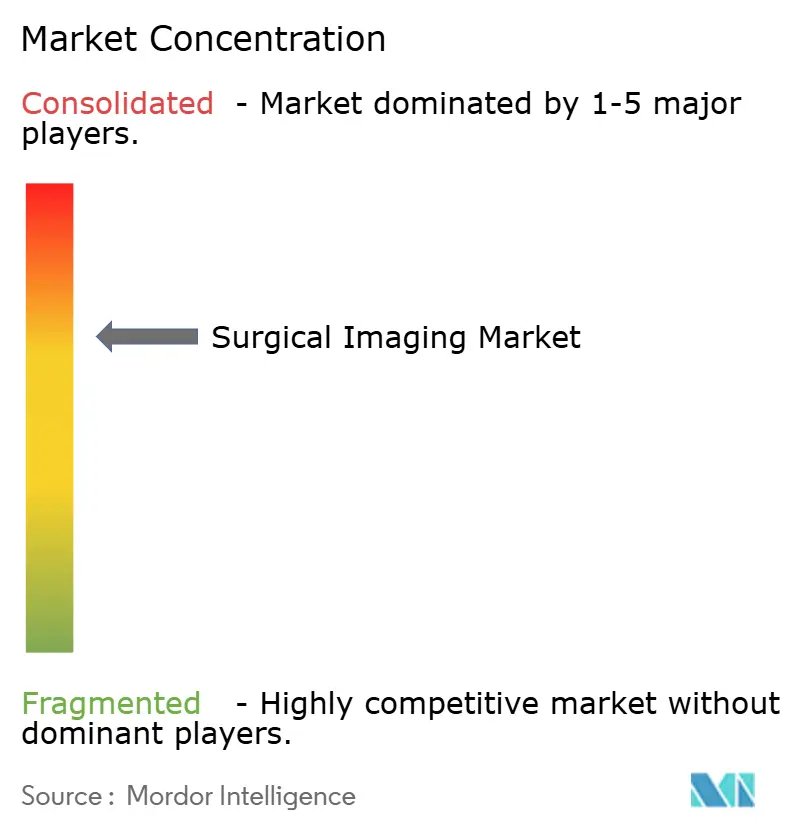
| Market Concentration | Medium |
Major Players *Disclaimer: Major Players sorted in no particular order Image © Mordor Intelligence. Reuse requires attribution under CC BY 4.0. | |
Surgical Imaging Market Analysis by Mordor Intelligence
Market Analysis
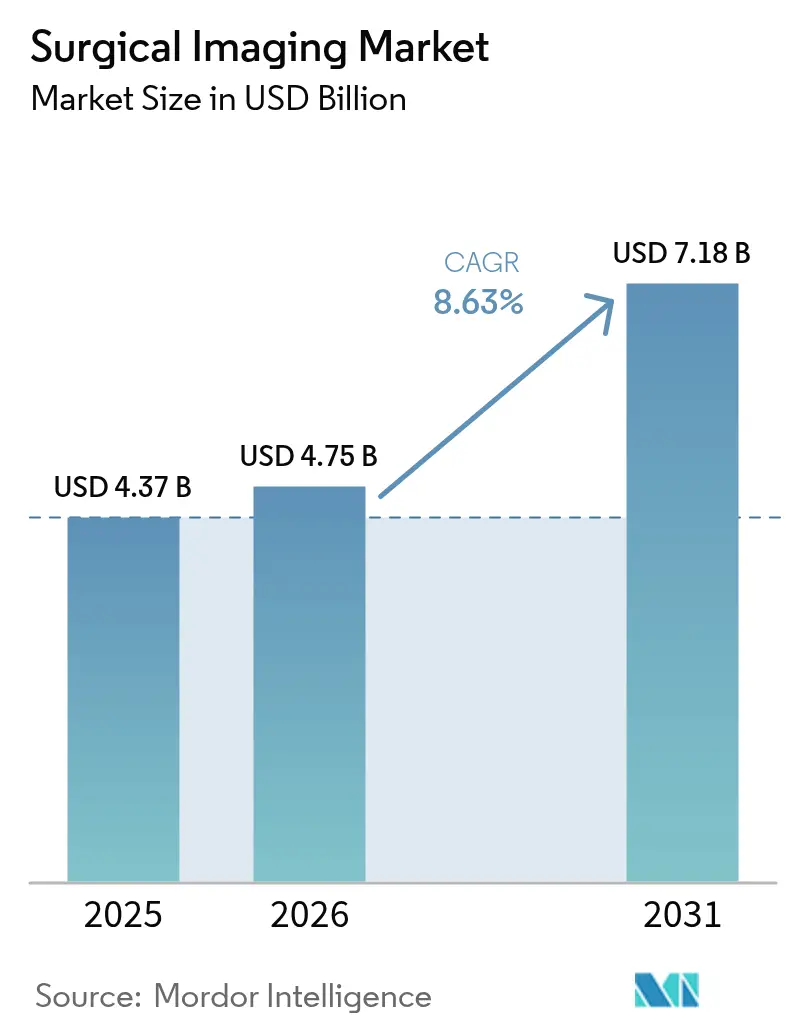
The surgical imaging market size was valued at USD 4.37 billion in 2025 and estimated to grow from USD 4.75 billion in 2026 to reach USD 7.18 billion by 2031, at a CAGR of 8.63% during the forecast period (2026-2031). Escalating demand for real-time visualization in minimally invasive procedures, rapid incorporation of artificial intelligence (AI) into intra-operative workflows, and the need to optimize over-stretched surgical workforces form the fulcrum of current growth. Vendors that seamlessly fuse hardware, software, and decision-support services now compete on workflow efficiency rather than on individual device specifications. Capital spending is pivoting toward mobile, high-performance systems suited to ambulatory settings, while tier-1 hospitals invest in hybrid operating rooms that consolidate surgical and interventional radiology capabilities. Finally, geographic expansion in Asia-Pacific underscores the structural shift of surgical volumes to emerging economies and intensifies rivalry for first-mover advantage in those markets.
Key Report Takeaways
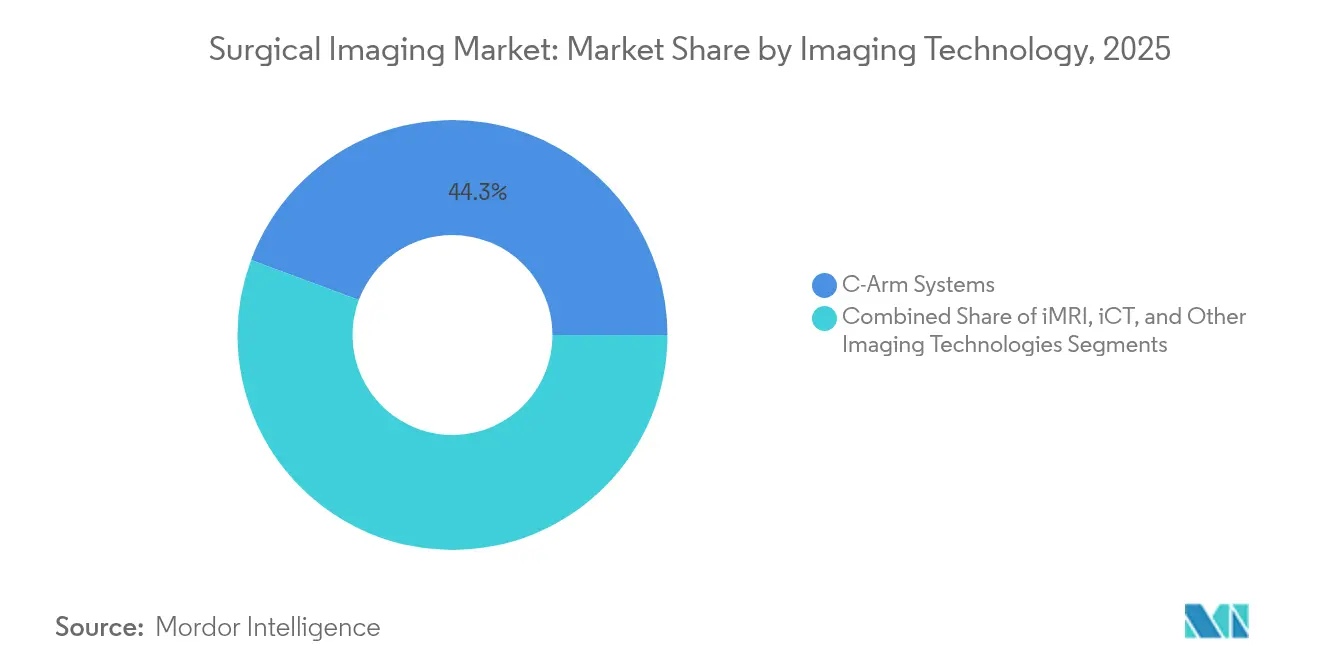
- By imaging technology, C-Arm Systems held 44.32% of the surgical imaging market share in 2025, while intra-operative 3-D/4-D imaging technologies are advancing at a 9.86% CAGR through 2031.
- By application, orthopedic and trauma surgery commanded 28.92% of the surgical imaging market size in 2025, whereas cardiac and vascular surgery is projected to grow at a 9.55% CAGR to 2031.
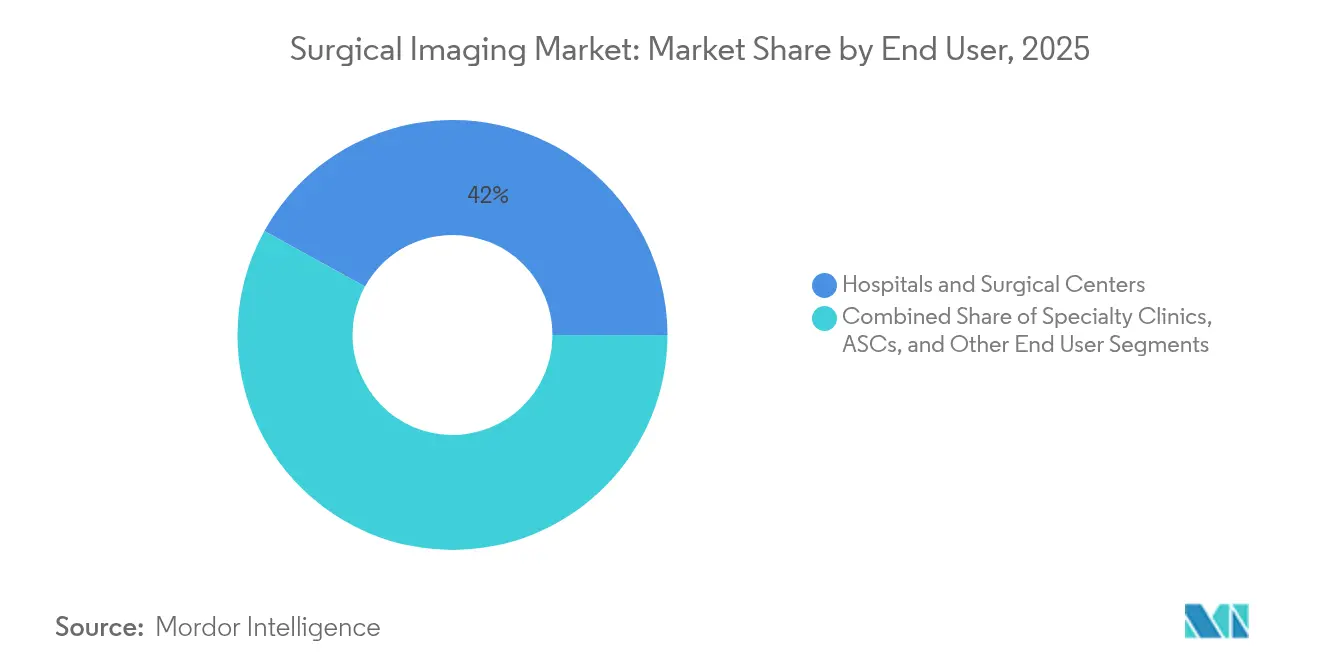
- By end user, hospitals and surgical centers led with 41.96% of revenue in 2025, and ambulatory surgical centers are moving ahead at a 9.83% CAGR during the same horizon.
- By geography, North America accounted for 38.74% of the surgical imaging market share in 2025, while Asia-Pacific is forecast to expand at a 10.04% CAGR through 2031.
Note: Market size and forecast figures in this report are generated using Mordor Intelligence’s proprietary estimation framework, updated with the latest available data and insights as of 2026.
Market Trends and Insights
Drivers Impact Analysis of Surgical Imaging Market*
| Driver | (≈) % Impact on CAGR Forecast | Geographic Relevance | Impact Timeline |
|---|---|---|---|
| Growing demand for minimally invasive surgeries | +2.1% | Global; early uptake in North America & EU | Medium term (2-4 years) |
| Rising burden of chronic diseases | +1.8% | Global; aging populations in developed markets | Long term (≥ 4 years) |
| Technological shift toward 3-D/4-K imaging | +1.9% | North America & EU core; spill-over to Asia-Pacific | Short term (≤ 2 years) |
| Expansion of hybrid operating rooms | +1.6% | North America, EU, select Asia-Pacific metros | Medium term (2-4 years) |
| AI-driven intra-operative decision support | +2.2% | Global; led by North America & EU | Short term (≤ 2 years) |
| Rapid adoption of mobile C-arms by ASCs | +1.4% | North America & EU; emerging in Asia-Pacific | Medium term (2-4 years) |
| Source: Mordor Intelligence | |||
Growing Demand for Minimally Invasive Surgeries
Minimally invasive approaches replace tactile feedback with image-guided precision, making intra-operative visualization core to procedural success. Advanced C-arms now embed AI-based noise reduction and edge-enhancement algorithms that sharpen critical anatomical landmarks and curtail radiation exposure[1]“Artificial Intelligence and Medical Devices,” FDA.gov. Mobile variants cater to tight ASC footprints by combining slim gantries with automated positioning and rapid boot-up times. Real-time quality improvements reduce conversion to open surgery, shorten length of stay, and strengthen a hospital’s performance metrics under value-based payment models. As payers link reimbursement to outcomes and patient satisfaction, facilities that lack sophisticated imaging capability risk referral leakage to tech-enabled competitors. The surge therefore aligns clinical needs, economic incentives, and patient preferences around a unified migration pathway to high-acuity imaging systems.
Rising Burden of Chronic Diseases
Non-communicable conditions such as cardiovascular disease, osteoarthritis, and cancer escalate lifetime procedural counts and drive recurring imaging demand. Multi-stage patient journeys—pre-operative mapping, intra-operative guidance, and post-operative surveillance—each rely on dedicated visualization systems, creating predictable revenue streams for manufacturers [WHO.INT]. Aging demographics intensify complexity; octogenarian patients often undergo valve replacements, spine fusions, and tumor resections within the same decade, multiplying imaging touchpoints. Hospitals counter volume spikes by standardizing on multimodality suites capable of fluoro-CT fusion or echo overlay, minimizing patient transfers and staff redeployment. This confluence of clinical and operational pressures accelerates procurement of integrated surgical imaging market platforms that can manage diverse disease trajectories without workflow disruption.
Technological Shift toward 3-D/4-K Intra-operative Imaging
Three-dimensional and ultra-high-definition (4-K) outputs recast operative planning from two-plane estimation to volumetric accuracy. Orthopedic teams employ automatic screw-trajectory planning, while neurosurgeons exploit real-time tumor margin visualization to preserve eloquent cortex [CANON-MEDICAL.COM]. AR overlays align reconstructed anatomy to the patient’s surface, freeing surgeons from gaze shifts between screens and operative fields. Early adopters report double-digit cuts in operative minutes, amplifying daily case capacity without additional staffing. The rapid benefits expedite budget approvals, explaining short-term driver prominence despite capital intensity. Downstream, software upgrades enlarge field-of-view and integrate fiber-optic shape-sensing, safeguarding long-term relevance of installed fleets and sustaining the surgical imaging market growth curve.
Expansion of Hybrid Operating Rooms in Tier-1 Hospitals
Hybrid suites marry high-resolution imaging with full surgical infrastructure to address complex aortic repairs, trauma embolizations, and oncologic resections in one setting. Up-front investments topping USD 2 million include lead shielding, laminar airflow retrofits, and ceiling-mounted robotics. However, procedural bundling eliminates inter-departmental transfers, slashes anesthesia turnover, and lifts surgeon recruitment appeal. Academic medical centers spearhead installation counts, but large private hospital chains follow suit to avert patient flight. Hybrid adoption thus reinforces a two-tier market: premium facilities chase all-in imaging ecosystems, while community hospitals weigh modular, mobile alternatives. Both scenarios ultimately buoy the surgical imaging market through differentiated procurement paths aligned to institutional scale.
Restraints Impact Analysis of Surgical Imaging Market*
| Restraint | (≈) % Impact on CAGR Forecast | Geographic Relevance | Impact Timeline |
|---|---|---|---|
| High equipment & procedure costs | −1.7% | Global; most acute in emerging markets | Long term (≥ 4 years) |
| Stringent regulatory & certification hurdles | −1.2% | Global; jurisdiction-specific variations | Medium term (2-4 years) |
| Reimbursement limitations in emerging markets | −0.9% | Asia-Pacific, Middle East & Africa, Latin America | Long term (≥ 4 years) |
| Supply-chain vulnerability of flat-panel detectors | −0.8% | Global; concentrated among manufacturers | Short term (≤ 2 years) |
| Source: Mordor Intelligence | |||
High Equipment & Procedure Costs
Total cost of ownership often doubles the sticker price once installation, shielding, and multi-year service contracts are considered. Premium interventional C-arms can cost up to USD 250,000, and hybrid OR build-outs reach USD 2 million when structural retrofits are required [SIEMENS-HEALTHINEERS.COM]. Mid-tier hospitals therefore delay upgrades or enter leasing arrangements that include usage quotas, potentially throttling case growth. Emerging-market providers face import tariffs and currency volatility that inflate acquisition budgets. While refurbished systems offer cost relief, they typically lack AI-ready processors and vendor-supported software pathways, constraining future-proofing and tempering surgical imaging market acceleration.
Stringent Regulatory & Certification Hurdles
Device makers must navigate divergent regional requirements, from U.S. FDA pre-market submissions to the European MDR’s post-market clinical follow-up mandates. AI software add-ons demand continuous algorithm retraining logs and real-world performance tracking, lengthening development by up to 24 months and raising capital needs. Smaller innovators struggle to fund multi-site clinical trials, slowing entry of disruptive solutions that could energize competition. Consequently, regulatory complexity modestly caps the surgical imaging market CAGR by favoring large incumbents and stretching commercialization timelines.
*Our forecasts treat driver/restraint impacts as directional, not additive. The impact forecasts reflect baseline growth, mix effects, and variable interactions.
Surgical Imaging Market Segment Analysis
By Imaging Technology:
AI-Assisted C-Arms Underpin Automation PushC-Arm Systems retained 44.32% of the surgical imaging market share in 2025 owing to multi-specialty versatility and entrenched surgeon familiarity. Self-driving models such as Siemens Healthineers’ CIARTIC Move combine lidar sensors with phase-recognition software that positions the arm autonomously, trimming fluoroscopy time and radiation dosage. Mobile C-arms remain ASC favorites for their plug-and-play portability, while fixed versions dominate hybrid suites that prize image clarity over space economy. Intra-operative CT (iCT) and MRI (iMRI) target neurosurgery and oncology centers where real-time tissue contrast justifies seven-digit investments. Fluoroscopy and ultrasound hold steady as budget-friendly options for routine cases, although value-added AI may eventually reset their price-performance calculus.
Intra-operative 3-D/4-D imaging outpaces all peers at a 9.86% CAGR through 2031. These systems deliver volumetric data sets with near-real-time reconstruction, enabling spinal alignment checks or transcatheter valve deployment verification before wound closure. Image-to-device registration aligns implant trajectories within sub-millimeter tolerances, accelerating adoption among orthopedic and cardiac teams. Continued declines in GPU costs and cloud-compute pricing should narrow total ownership gaps, fortifying the long-term ascent of this technology cohort and sustaining overall surgical imaging market expansion.



By Application:
Cardiac & Vascular Interventions Propel Next-Wave GrowthOrthopedic and trauma surgery generated 28.92% of the surgical imaging market size in 2025, buoyed by high incidence of joint replacements and fracture cases. Imaging-guided screw placement mitigates mal-alignment and lowers revision rates, reinforcing the installed-base appeal of mobile C-arms in emergency departments and trauma bays. Robotic-arm assisted knees and hips further intensify intra-operative visualization needs, entrenching image acquisition as a procedural prerequisite.
Cardiac and vascular surgery is forecast to grow at 9.55% CAGR, fastest among applications, driven by structural heart and peripheral vascular interventions that depend on multi-modality imaging overlays. Transcatheter aortic valve replacement (TAVR) now rivals open surgery volumes, and complex endovascular aneurysm repair necessitates rotational angiography coupled with 3-D echo fusion. As reimbursement codes expand for catheter-based therapies, hospitals recalibrate capital budgets toward advanced angio-CT hybrids, accelerating revenue opportunities inside the surgical imaging market.
By End User:
Ambulatory Centers Re-Define Procurement PrioritiesAmbulatory surgical centers (ASCs) lead growth at 9.83% CAGR, mirroring payer mandates to shift elective volume away from high-cost inpatient settings. Compact imaging carts offering hospital-grade output align with ASC space constraints and same-day discharge protocols. Subscription service contracts swap capex for opex, letting centers scale technology in step with case ramp-up. Operating efficiencies measured in room turns and staffing ratios push ASCs to favor intuitive UIs and automated exposure settings that minimize training curves and radiation events.
Hospital and surgical centers still commanded 41.96% of revenue in 2025, leveraging centralized purchasing to negotiate enterprise-wide platform deals and shared-service fleets. Emphasis now lies on cross-department standardization that eases technician redeployment and simplifies service logistics. Specialty clinics and academic institutes contribute smaller slices yet shape future trajectories by piloting beta releases and generating peer-reviewed validation that de-risks broader rollouts, thereby lifting the long-range prospects of the surgical imaging industry.
Geography Analysis
North America Surgical Imaging Market
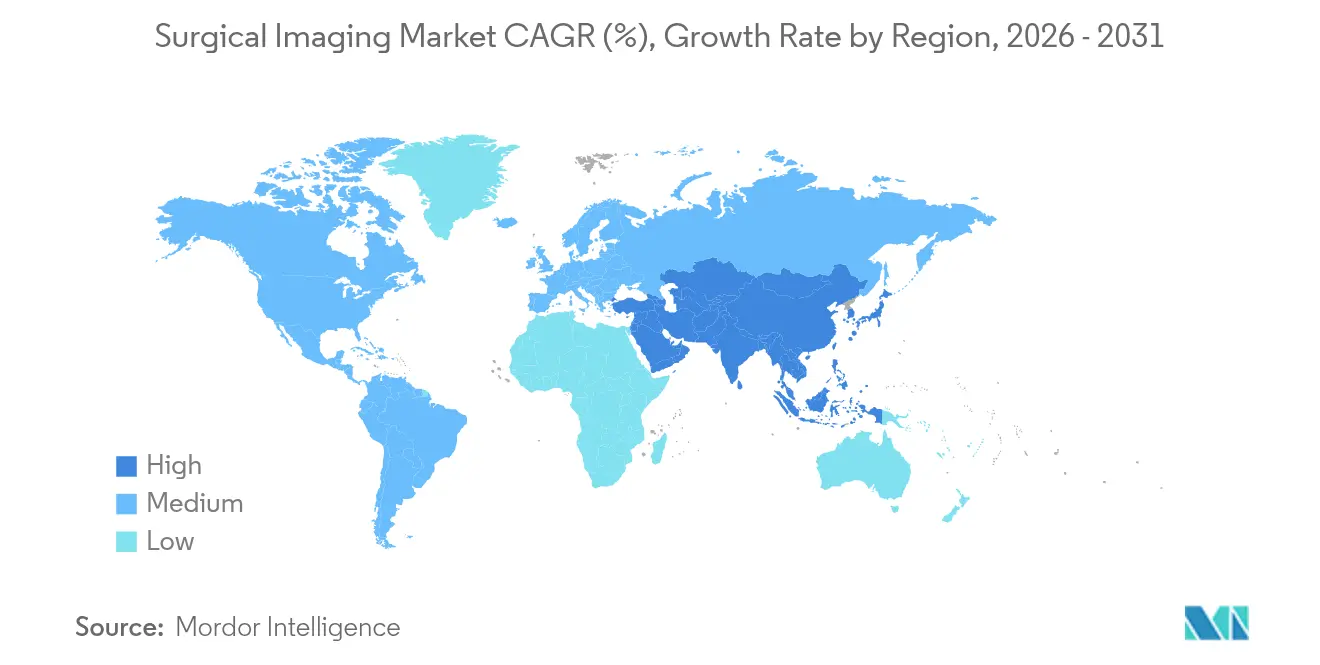
North America accounted for 38.74% of 2025 revenue on the back of premium pricing, sophisticated reimbursement policies, and early AI adoption. The U.S. market prioritizes hybrid OR investment, and FDA fast-track programs expedite commercial launches that set global benchmarks. Canada pursues provincial asset-sharing networks to lift equipment utilization, while private Mexican hospitals court medical tourists with newest-generation C-arms and CT-fluoro hybrids.
Europe Surgical Imaging Market
Europe maintains balanced growth as aging demographics and surgical wait-time targets spur modernization of imaging fleets. Germany and the United Kingdom spearhead intra-operative 3-D program adoption, supported by government diagnostic imaging funds. France and Italy temper spending with value-based procurement models that weigh lifetime costs against measurable outcomes, nudging vendors to present total-care economics rather than hardware price tags. Pan-EU CE-mark standardization lowers compliance friction, smoothing multi-country rollouts and underpinning the surgical imaging market trajectory.
APAC Surgical Imaging Market
Asia-Pacific is poised for the highest regional expansion at a 10.04% CAGR to 2031. China funnels public-private partnerships into tertiary hospital upgrades, while India’s burgeoning private sector builds ASC chains that source mid-tier but AI-ready imaging solutions. Japan deploys AI decision-support modules rapidly, leveraging domestic electronics expertise; South Korea replicates pace with government innovation grants. Australia, though smaller in volume, reinforces demand through mandatory technology refresh cycles and an aging population with rising orthopedic and cardiovascular procedure counts. Collectively, these factors cement Asia-Pacific as a strategic battleground for share capture within the global surgical imaging market.

Regulatory Landscape
Surgical imaging hardware and software are regulated as medical devices, and market access is shaped by the US FDA framework and the EU Medical Device Regulation (MDR) 2017/745. In the United States, manufacturers commonly use 510(k) submissions for imaging platforms and related software that can demonstrate substantial equivalence, while novel moderate-risk digital surgery functions can follow De Novo pathways and higher-risk indications can require PMA. A relevant 2025 milestone for AI-enabled imaging workflows is the FDA classification of the Radiological Acquisition and/or Optimization Guidance System as Class II (special controls), reflecting regulators focus on software that influences image acquisition and optimization.
In Europe, MDR 2017/745 continues to tighten clinical evidence expectations and post-market obligations, while the transition timeline for legacy devices extends into 2027/2028 for eligible products, affecting portfolio renewal cycles and certificate planning. As of 28 May 2026, four EUDAMED modules (Actor Registration, UDI/Device Registration, Notified Bodies and Certificates, and Market Surveillance) are mandatory, increasing operational requirements for manufacturers and authorized representatives. In parallel, the EU AI Act (2024) adds risk-based obligations for high-risk AI used in medical devices, raising the bar for data governance and lifecycle monitoring for AI-assisted intra-operative imaging and decision-support software.
Value Chain Analysis
The surgical imaging value chain begins with upstream suppliers of X-ray tubes, flat-panel detectors, sensors, GPUs, and medical-grade semiconductors, along with specialized optics and illumination for endoscopic and fluorescence-capable visualization. Component availability and qualification can be a limiting factor, particularly for electronics, where medical devices compete with larger end markets for mature-node chips, and where quality and traceability requirements restrict rapid substitution. A specific example of upstream specialization is OMNIVISIONs March 2026 integration of its OVMed OH0131 image signal processor into ATL Medicals PREVOYANCE Complete Imaging System, which underscores how imaging performance and multi-image configurations increasingly rely on dedicated processing blocks.
Midstream, OEMs and contract manufacturers handle system engineering, software integration, verification and validation, and regulated production under quality systems, including 21 CFR Part 820 expectations in the United States. Downstream activities include distribution through direct enterprise sales to hospitals and group purchasing channels, installation and room readiness (shielding and workflow integration), and recurring service, software upgrades, and uptime support that often drives total cost of ownership. Post-market surveillance and cybersecurity and AI lifecycle management are increasingly embedded in service delivery, particularly as hospitals and ASCs buy integrated platforms combining hardware, visualization software, and decision-support modules under multi-year service contracts.
Competitive Landscape
Market leadership resides with diversified conglomerates that integrate hardware, software, and lifecycle services into turnkey ecosystems. GE HealthCare’s USD 1.45 billion purchase of MIM Software adds advanced visualization and contouring engines to its OEC and Discovery C-arm lines, pivoting value propositions from equipment capabilities toward workflow orchestration[3]“GE HealthCare Completes Acquisition of MIM Software,” GEHealthCare.com. Siemens Healthineers bundled its CIARTIC Move self-navigating C-arm with Syngo Carbon enterprise imaging to guarantee single-vendor continuum, raising competitor switching barriers. Canon Medical Systems leverages Deep Learning Reconstruction algorithms to retrofit installed CT base, extending revenue without incremental hardware swaps.
White-space entrants concentrate on software-only overlays that enhance existing fleets, demonstrating dose reductions and navigation accuracy gains independent of device brand. Some OEMs now license independent algorithms to stay hardware agnostic, hedging against platform commoditization. Meanwhile, strategic alliances between imaging majors and robotic-surgery firms pursue closed-loop ecosystems where pre-op planning, in-field guidance, and post-op analytics converge seamlessly. Overall, competition pivots from image resolution metrics to end-to-end automation proficiency, keeping the surgical imaging market in an innovation-driven contest.
Surgical Imaging Industry Leaders
Canon Medical Systems Corporation
Siemens Healthineers
GE Healthcare
Ziehm Imaging GmbH
Koninklijke Philips N.V.
- *Disclaimer: Major Players sorted in no particular order
Surgical Imaging Market Companies Covered in this Report
- GE HealthCare Technologies Inc.
- Siemens Healthineers
- Koninklijke Philips
- Canon
- Ziehm Imaging
- Hologic
- Shimadzu
- Medtronic
- Stryker
- Fujifilm Holdings Corp.
- Orthoscan
- Karl Storz
- Carestream Health
- Novadaq (Stryker)
- Geonoray Co. Ltd.
- Nuvox Imaging
- Allengers Medical Systems
- Eurocolumbus S.r.l
- Wuxi Biotec Co.
- Nanjing Perlove Medical

Market Opportunities and Future Outlook
A key opportunity is expanding intra-operative visualization beyond standard 2D fluoroscopy and white-light endoscopy into 4K, 3D, and fluorescence-guided surgery (FGS) across minimally invasive and open procedures. Olympuss launch of the VISERA ELITE III surgical imaging platform in the United States in March 2026, with True 4K, 3D imaging, and IR/ICG support, shows how vendors are productizing higher-end visualization and FGS features for routine surgical workflows. FDA clearances in 2026 for imaging-enabled digital surgery components, including the da Vinci Firefly Imaging System (510(k) clearance in May 2026) and Karl Storz Rubina Lens exoscope for open surgery with NIR-ICG capability (FDA clearance in June 2026), also support a multi-vendor shift toward real-time perfusion and anatomy visualization as a standard adjunct to surgical decision-making.
Another opportunity is in regionalized manufacturing, service infrastructure, and delivery models that reduce downtime and speed deployment, particularly as ASCs and hybrid ORs push for higher utilization and faster service response. Siemens Healthineers commencement of local production of the Artis One Edition X angiography system in Bengaluru in April 2026 points to more locally supplied interventional imaging systems in India, aligned with tertiary hospital upgrades and private-sector expansion. In North America, Fujifilms May 2026 operationalization of an 18,000-square-foot endoscopy warehouse in Fairfield, New Jersey, expanding service center capacity by 1.5 times, highlights how after-sales logistics and parts availability are being scaled to protect uptime for advanced imaging portfolios, creating space for OEMs and third-party service providers to offer predictable lifecycle performance.
Recent Industry Developments in Surgical Imaging Market
- April 2026: Canon Medical Systems announced the launch of Ultimion in Japan, described as the companys first domestically produced photon-counting CT. The move strengthens Canons position in high-end CT technology that supports detailed intra-operative and procedural imaging needs, while also signaling continued investment in differentiated detector platforms.
- February 2026: GE HealthCare announced US FDA 510(k) clearance and CE marking for the Allia Moveo interventional imaging platform and reported a first global installation. Regulatory clearances across the US and Europe support broader commercialization into interventional suites where workflow efficiency and image quality are key procurement criteria.
- November 2024: Siemens Healthineers announced a 10-year, USD 105 million Value Partnership with The Ohio State University that covers technology and services across the health system. Long-duration, enterprise partnerships of this scale influence competitive dynamics by locking in upgrade pathways and service frameworks that can shape multi-modality imaging standardization in surgical and interventional environments.


Surgical Imaging Market Report Scope and Research Methodology
Market Definition and Coverage
This market is defined as imaging systems and supporting software used during surgery to help surgeons visualize anatomy and guide procedures in real time, across fixed and mobile setups used in operating rooms.
Scope exclusions: We exclude general diagnostic imaging not used for intraoperative guidance, along with radiology service revenue and post procedure image reading fees.
Segments Covered in This Report
- By Imaging Technology
- Magnetic Resonance Imaging (iMRI)
- Computed Tomography (iCT)
- C-Arm Systems
- Fixed C-Arm
- Mobile C-Arm
- Fluoroscopy
- Ultrasound
- Intra-operative 3-D / 4-D Imaging
- Other Technologies
- By Application
- Cardiac & Vascular Surgery
- Neurosurgery
- Orthopedic & Trauma Surgery
- Gastrointestinal Surgery
- Spine Surgery
- Urology & Gynecology Surgery
- Other Applications
- By End User
- Hospitals & Surgical Centers
- Ambulatory Surgical Centers (ASCs)
- Specialty Clinics
- Academic & Research Institutes
- By Geography
- North America
- United States
- Canada
- Mexico
- Europe
- Germany
- United Kingdom
- France
- Italy
- Spain
- Rest of Europe
- Asia-Pacific
- China
- Japan
- India
- South Korea
- Australia
- Rest of Asia-Pacific
- Middle East and Africa
- GCC
- South Africa
- Rest of Middle East and Africa
- South America
- Brazil
- Argentina
- Rest of South America
- North America
Data Sources, Market Sizing, and Validation
Desk Research
Desk work was used to set the market context and shape the first version of the model inputs before we moved to interviews. We referenced public sources such as the US FDA device databases, the US Centers for Medicare and Medicaid Services payment schedules, OECD health statistics, and World Bank health expenditure indicators to understand procedure growth signals and hospital spending capacity.
To keep assumptions realistic, we also reviewed peer reviewed clinical journals on image guided surgery and intraoperative imaging adoption, along with government or hospital statistics related to operating room activity. We supplemented this with company filings and investor materials that describe product positioning and geographic exposure. For company level context, we used paid subscriptions focused on company financials and intelligence, patent databases, and news and financials to cross-check launch timing, recall events, and pricing direction. The sources listed here are illustrative and not exhaustive, and many other public documents and datasets were also referenced for data collection, validation, and research clarification.
Primary Interviews and Surveys
Primary work focused on confirming what gets purchased and used inside operating rooms, and how replacement and upgrade cycles behave by modality. We spoke with hospital imaging leads, operating room managers, biomedical engineering teams, distributors, and clinical users across APAC, EMEA, and the Americas so utilization, system mix, and pricing assumptions could be adjusted when desk signals were unclear.
Distribution of primary research fieldwork respondents
| Company type | Respondent position | Region |
|---|---|---|
| Top tier: 39% | CXOs: 12% | APAC: 43% |
| Mid tier: 42% | Functional/Unit leaders: 40% | EMEA: 33% |
| Smaller Players: 19% | Managers: 48% | Americas: 24% |
Market-Sizing & Forecasting
Sizing starts with a top-down and bottom-up combination, where procedure volumes and operating room infrastructure indicators are translated into an addressable installed base for intraoperative imaging systems, and then annual spending is derived using replacement demand and new system additions. Totals are then corroborated using selective bottom-up approximations such as sampled average selling price ranges by modality, channel checks on shipment momentum, and a reality check against supplier revenue exposure tied to surgical imaging use cases.
Key inputs in the model include minimally invasive and complex surgery volumes, hybrid OR penetration, modality mix (C-arm systems, CT, MRI, and other intraoperative imaging technologies), typical replacement cycles for mobile versus fixed systems, and configuration value changes when 3D capability or detector upgrades are adopted. When country level bottom-up signals are thin, we use proxies such as hospital bed capacity, surgical intensity, and trade indicators for relevant imaging equipment, then review the outputs again with regional experts so the estimates do not drift.
For forecasting, scenario analysis is applied around capital budgets and adoption of advanced intraoperative imaging, and then the year by year path is refined using expert expectations on hybrid OR builds and modality upgrades. Assumptions are kept traceable so a change in procedure growth or replacement timing produces a clear and reproducible impact on the forecast.
Data Validation & Update Cycle
Outputs are validated through several checks that compare modeled spending with independent signals such as procedure growth, hospital capital intensity, and modality adoption patterns discussed in clinical literature. If a region shows an outlier jump or a flat line that does not match known demand signals, we revisit the inputs and re-contact selective respondents to confirm whether the variance reflects a real shift or an assumption issue.
Before sign-off, the dataset goes through analyst reviews for internal consistency across regions and for reasonable year over year movement. We then do a final pass for currency conversion timing and inflation handling. Reports are refreshed annually, and interim updates are made when material events occur such as major regulatory changes, disruptive product introductions, or macro level changes in hospital spending. Right before delivery, we complete a fresh update pass so clients receive the latest view tied to clear inputs.
Mordor Intelligence's Surgical Imaging Market Sizing Compared With Other Published Estimates
Published market numbers for surgical imaging can vary because the topic is defined differently across sources, and assumptions on pricing and refresh cycles are not always aligned. Differences also come from the year chosen for the headline value, along with how each publisher treats hybrid OR related components.
Some published estimates expand the count into broader operating room visualization stacks and adjacent equipment that is not always used for intraoperative guidance. In Mordor Intelligence, revenue is counted only for intraoperative imaging technologies used to guide procedures (such as C-arm systems, CT, MRI, and other surgical imaging), and the totals are checked against procedure growth, hybrid OR uptake, and replacement cycles so one-time capital spikes do not overstate demand.
Benchmark comparison
| Source | Market Size | Gaps in Research Methodology |
|---|---|---|
| Mordor Intelligence | USD 4.37 B (2025) | |
| Global Consultancy A | USD 5.40 B (2024) | Uses an earlier headline year and a wider modality bundle in the published figure, and pricing uplift is often applied at a higher level without a clear replacement-cycle check by system type. |
| Industry Publisher B | USD 5.20 B (2025) | Appears to include a broader set of hybrid OR linked systems, and the grouping can pull in adjacent visualization and workflow components that are not consistently purchased as surgical imaging equipment. |
The spread across the values is mainly explained by scope expansion into adjacent operating room technologies and by base-year timing, which changes how pricing and replacement waves are captured. By keeping the sizing tied to procedure-linked demand signals, modality mix, and realistic refresh cycles, the final number remains easier to reconcile with hospital procurement patterns and to repeat with the same steps.


Key Questions Answered in the Report
How large is the surgical imaging market in 2026?
The market stands at USD 4.75 billion in 2026 and is forecast to reach USD 7.18 billion by 2031.
Which imaging technology generates the highest revenue?
C-Arm Systems contribute 44.32% of 2025 revenue due to their cross-specialty versatility.
Which application is growing fastest?
Cardiac and vascular procedures are advancing at a 9.55% CAGR through 2031 driven by structural heart interventions.
Why are ambulatory surgical centers important to equipment vendors?
ASCs exhibit a 9.83% CAGR in imaging demand, favoring portable, AI-enabled systems that fit space and cost constraints.
Which region shows the strongest growth outlook?
Asia-Pacific leads with a projected 10.04% CAGR owing to hospital infrastructure investments and rising surgical volumes.
Page last updated on:


 Your data is secure and never sold or shared.


