
Biological Safety Testing Market Size and Share
Market Overview
| Study Period | 2020 - 2031 |
|---|---|
| Market Size (2026) | USD 5.07 Billion |
| Market Size (2031) | USD 8.78 Billion |
| Growth Rate (2026 - 2031) | 11.63 % |
| Fastest Growing Market | Asia Pacific |
| Largest Market | North America |
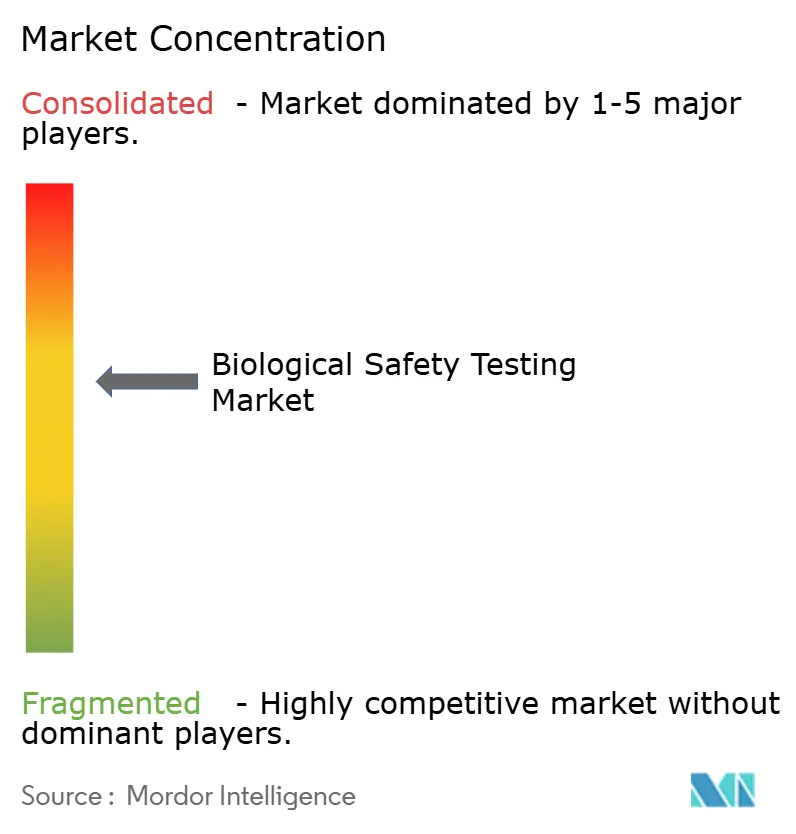
| Market Concentration | Medium |
Major Players *Disclaimer: Major Players sorted in no particular order Image © Mordor Intelligence. Reuse requires attribution under CC BY 4.0. | |
Biological Safety Testing Market Analysis by Mordor Intelligence
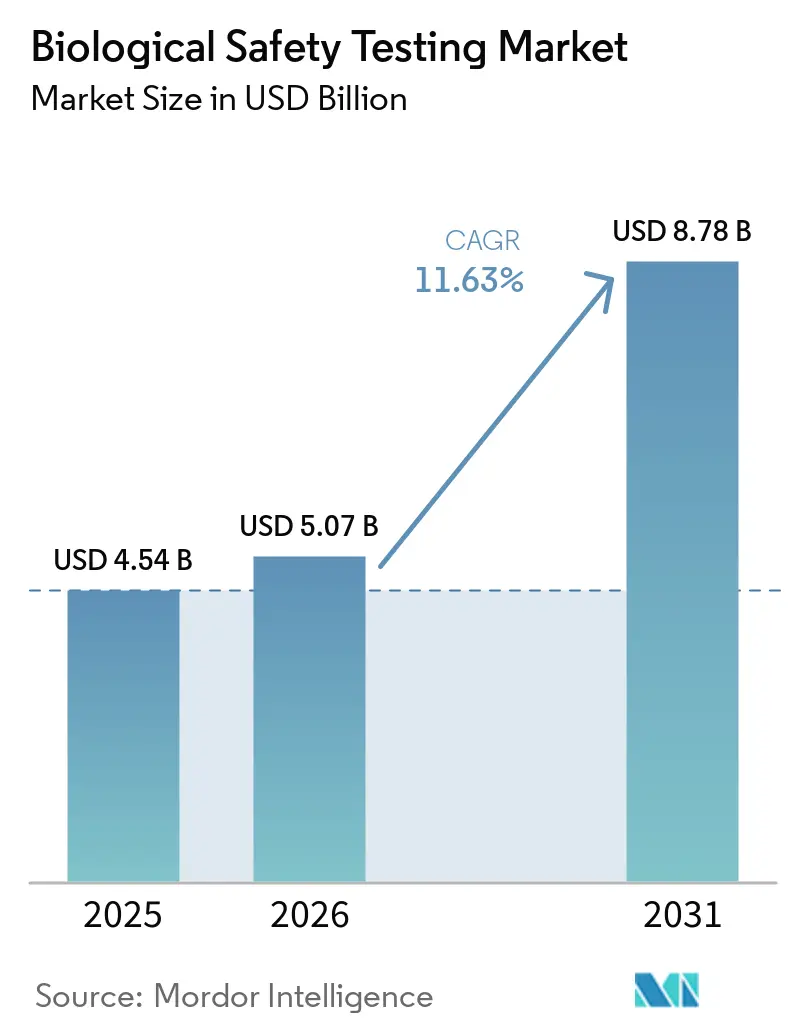
The biological safety testing market size is expected to grow from USD 4.54 billion in 2025 to USD 5.07 billion in 2026 and is forecast to reach USD 8.78 billion by 2031 at 11.63% CAGR over 2026-2031. This growth is driven by increased venture funding in cell and gene therapy pipelines, stricter global contamination-control regulations, and the rising trend of outsourcing to contract development and manufacturing organizations (CDMOs). CDMOs now account for a significant share of spending as sponsors reallocate resources toward clinical trials. Additionally, the adoption of rapid-method validation is becoming a key differentiator, enabling faster time-to-market upon regulatory approval. Sterility tests remain the highest revenue-generating segment due to their universal application to injectables. However, adventitious virus detection is gaining traction, particularly as gene-therapy developers address the risks associated with replication-competent lentivirus. The competitive landscape is intensifying, with major laboratories acquiring regional players to streamline quality agreements across release sites in North America, Europe, and the Asia-Pacific. Despite these advancements, the market faces two critical challenges: the volatile supply of Limulus Amebocyte Lysate and the slow regulatory acceptance of rapid sterility methods. These factors are expected to influence cost structures and vendor strategies over the next four years.
Key Report Takeaways
- By product & service, reagent kits, culture media, and detection instruments held a 62.45% revenue share of the biological safety testing market in 2025, whereas services are expected to expand at a 13.54% CAGR through 2031.
- By test type, sterility tests led with a 28.54% share of the biological safety testing market in 2025; adventitious virus detection is projected to advance at a 13.76% CAGR through 2031.
- By application, recombinant protein and monoclonal antibodies accounted for 31.67% share of the biological safety testing market size in 2025, while cellular and gene therapy is growing at a 14.88% CAGR through 2031.
- By end user, biopharma and biotech companies accounted for 47.54% of spending in 2025, whereas CDMOs are projected to record the highest CAGR of 14.67% from 2026 to 2031.
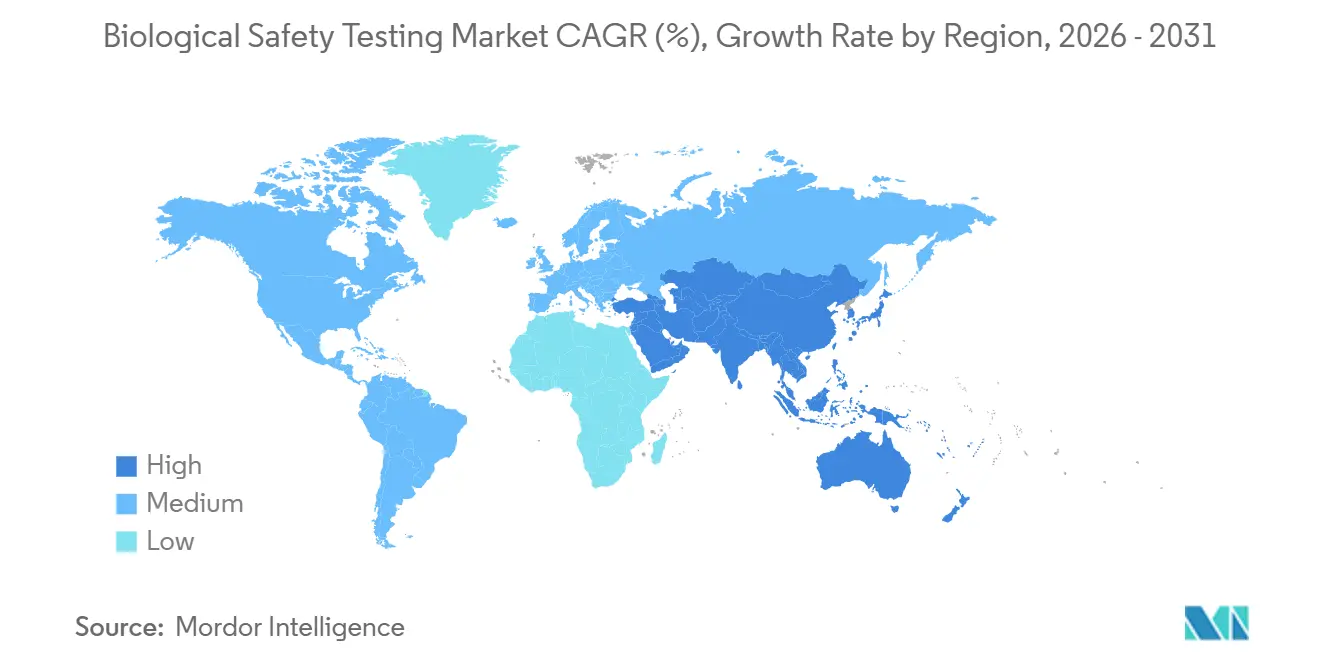
- By geography, North America led with a 41.67% revenue share in 2025, whereas the Asia-Pacific region is estimated to grow at a 12.54% CAGR through 2031.
Note: Market size and forecast figures in this report are generated using Mordor Intelligence’s proprietary estimation framework, updated with the latest available data and insights as of January 2026.
Market Trends and Insights
Drivers Impact Analysis of Biological Safety Testing Market*
| Driver | (~) % Impact on CAGR Forecast | Geographic Relevance | Impact Timeline |
|---|---|---|---|
| Expansion of Global Biopharma R&D and Venture Financing | +2.8% | North America and Europe core | Medium term (2-4 years) |
| Accelerated Commercialization of Cell & Gene Therapies | +3.2% | North America and Europe core, Asia-Pacific emerging | Long term (≥4 years) |
| Stringent Global Regulatory Standards for Contamination Control | +2.1% | Global | Short term (≤2 years) |
| Growing Outsourcing of Quality Control to Cost-Efficient CDMOs | +2.5% | Asia-Pacific core, spill-over to North America and Europe | Medium term (2-4 years) |
| Adoption of Digital Twins and Predictive Analytics for Batch Release | +1.3% | Early adopters in North America and Europe | Medium term (2-4 years) |
| Government Biodefense Stockpile Initiatives Boosting Validation Demand | +0.9% | United States and selected EU member states | Short term (≤2 years) |
| Source: Mordor Intelligence | |||
Expansion of Global Biopharma R&D and Venture Financing
Venture investors deployed USD 23 billion into biopharma in 2024, channeling 42% of capital toward immunology and gene-editing platforms that require extensive safety testing before investigational new drug filings[1]. European Medicines Agency data show a 19% increase in biologics submissions during the first half of 2025, with each submission requiring sterility, endotoxin, and mycoplasma panels. Series B-stage sponsors are locking in three-year master service agreements that hedge reagent inflation of 8-12% seen in 2024–2025, concentrating spend among the five largest global laboratories. Pfizer reported a 14% increase in outsourced quality-control spending in 2025, as its mRNA vaccine portfolio expanded, underscoring the trend's durability. These trends collectively raise baseline testing volumes and translate venture funding into predictable service revenues.
Accelerated Commercialization of Cell & Gene Therapies
The U.S. FDA approved eight cell and gene therapy products in 2024, bringing the cumulative number of authorizations to 37 since 2017. Each autologous launch multiplies safety-testing demand, supporting continued expansion of the biological safety testing Market as batches cannot be pooled.. Novartis processed more than 12,000 sterility tests in 2024 for its CAR-T network, illustrating the one-patient-one-batch paradigm. The EMA guidance issued in 2025 doubled viral testing for lentiviral vectors by mandating both in vitro and in vivo assays, while Japan shortened sterility holds from 28 days to seven, spurring the uptake of rapid methods across the Asia-Pacific region. Bluebird Bio reduced its release cycle time by 30% after installing automated mycoplasma detection at its Seattle site, confirming that in-house rapid platforms can quickly pay back when throughput is high. Geographic clusters are now co-locating manufacturing and testing to keep autologous products within a 48-hour cold-chain window.
Stringent Global Regulatory Standards for Contamination Control
The U.S. FDA issued 14 warning letters for sterility assurance lapses in 2024, a 27% year-over-year increase that triggered remediation testing across affected sites. Revised guidance now links environmental monitoring results to batch-release data, expanding routine bioburden panels. China aligned its endotoxin limits with those of USP <85> in mid-2025, thereby increasing the retest frequency for injectables. Meanwhile, ISO 13485:2024 introduced traceability rules that widened the demand for extractables and leachables analysis. Europe introduced a rapid-method chapter in 2025, yet withheld full equivalence, prolonging dual-method validation requirements. Collectively, these mandates encourage sponsors to partner with laboratories that maintain current Good Manufacturing Practice (cGMP) accreditation and offer diversified assay menus.
Growing Outsourcing of Quality Control to Cost-Efficient CDMOs
CDMOs absorbed a significant share of end-user spend in 2025 as sponsors redirected internal budgets toward clinical pipelines. WuXi Biologics logged 22% revenue growth in integrated testing services during 2024, while Biocon Biologics secured EMA approval for its Bengaluru laboratory to act as a qualified-person site, allowing sterility results to travel with the product across borders. NMPA policies now let foreign sponsors use Chinese contract labs in investigational filings, diverting work from Singapore to Suzhou. Samsung Biologics operates three segregated QC suites to accommodate multiple clients, an investment that smaller CDMOs struggle to match. As labor costs climb in U.S. biotech hubs, outsourcing provides variable cost structures and bundled service efficiencies.
Restraints Impact Analysis of Biological Safety Testing Market*
| Restraint | (~) % Impact on CAGR Forecast | Geographic Relevance | Impact Timeline |
|---|---|---|---|
| Prolonged Validation Timelines for Novel Rapid Microbiology Methods | −1.4% | North America and Europe | Medium term (2-4 years) |
| Volatile Supply of Horseshoe Crab Lysate and Alternate Reagent Uncertainty | −1.1% | North America and Asia-Pacific | Short term (≤2 years) |
| Limited Skilled Workforce and Rising Training Expenditure | −0.8% | Global, acute in high-cost biotech hubs | Medium term (2-4 years) |
| Margin Compression From Vendor Consolidation in Testing Supply Chain | −0.6% | Global | Short term (≤2 years) |
| Source: Mordor Intelligence | |||
Prolonged Validation Timelines for Novel Rapid Microbiology Methods
Rapid sterility platforms promise three-day results versus the 14-day compendial benchmark; however, U.S. FDA guidance issued in 2024 requires side-by-side equivalence studies over at least 30 production batches, which pushes validation timelines to 18–24 months for low-volume biologics. Charles River Laboratories noted a sub-forecast adoption of its Celsis system due to this burden, and the European Pharmacopoeia’s 2025 framework grants full equivalence only to technologies detecting under 10 colony-forming units, a threshold that many ATP and cytometry platforms miss. Contract labs cannot amortize single-product validations across clients, choking mid-tier investment appetite. Consequently, fewer than 12% of Lonza’s biologics customers had migrated to rapid sterility testing by mid-2025. Widespread adoption is therefore unlikely before 2028, which will limit the benefits of cycle-time compression in the intermediate term.
Volatile Supply of Horseshoe Crab Lysate and Alternate Reagent Uncertainty
Atlantic horseshoe crab landings fell 31% between 2019 and 2024, driving Limulus Amebocyte Lysate (LAL) reagent prices up 18% in 2024 and delaying batch release by up to 10 days when stockouts occurred[2]. Recombinant Factor C (rFC) received provisional European approval in 2024; however, USP equivalence is pending, leaving North American sponsors in limbo. Eli Lilly qualified rFC for European facilities but still uses LAL in the United States, doubling QC complexity. Japan now permits rFC yet demands validation across 50 production lots, a hurdle similar to rapid-method challenges. Larger CDMOs, such as Fujifilm Diosynth, hedged their risk by signing multi-year LAL contracts. Still, virtual biotech firms remain exposed to spot-market volatility, creating cost unpredictability over the next two years.
*Our forecasts treat driver/restraint impacts as directional, not additive. The impact forecasts reflect baseline growth, mix effects, and variable interactions.
Biological Safety Testing Market Segment Analysis
By Product & Service:
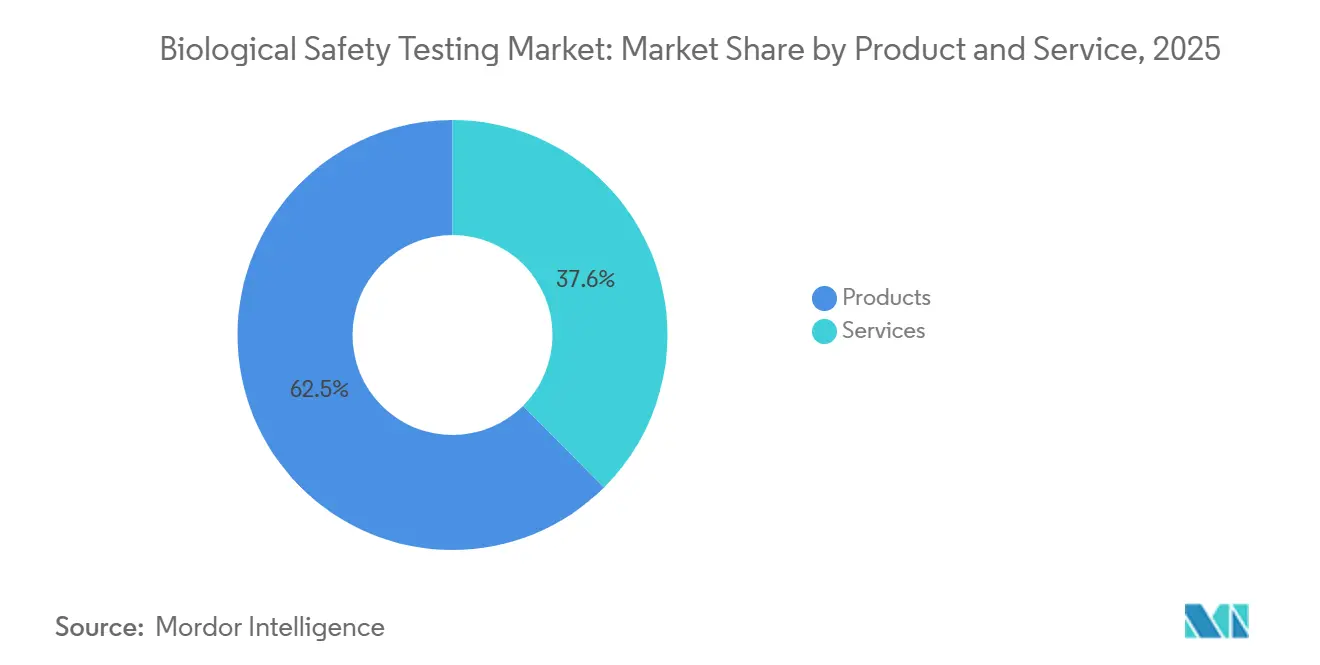
Outsourced Testing Gains MomentumServices are rising at a 13.54% CAGR through 2031, even though products commanded 62.45% of the biological safety testing market in 2025. The high upfront price of automated microbiology platforms-often above USD 500,000 per unit-pushes early-stage sponsors toward variable-cost outsourcing. Suppliers of reagents are bundling LAL kits with rFC alternatives to mitigate lysate shortages, while single-use containers now require extractables- and leachables assays under ISO 13485:2024. Eurofins grew biopharma services revenue 16% year-over-year in 2024 as clients avoided 12- to 18-month in-house validation lead times.
Structural shifts favor services because CDMOs can amortize capital across multiple clients and offer faster turnaround times. Laboratories, such as Pacific BioLabs, have trimmed sterility cycles to 10 days by implementing staggered incubation, whereas product vendors face margin pressure due to competitive pricing per test. The services segment also captures value from new viral-safety requirements that many sponsors cannot support internally without BSL-2 or BSL-3 facilities. Consequently, outsourcing continues to gain momentum as complexity and regulatory expectations escalate.

By Test Type:
Virus Detection Outpaces Legacy PanelsSterility tests held 28.54% of revenue in 2025, but face commoditization as automated liquid handlers cut labor input. Adventitious virus detection is the fastest-growing segment, with a 13.76% CAGR, driven by concerns about replication-competent lentivirus in gene therapy. Endotoxin assays remain high-margin because reagent scarcity inflates prices, yet widespread rFC approval could trim costs by 20% within three years. Mycoplasma detection is pivoting to PCR-based kits that provide four-hour results and comply with European Pharmacopoeia chapter 2.6.7.
Segment dynamism hinges on regulatory incentives. Charles River saw viral-safety revenue increase by 21% in 2024, as more clients required both pre-clinical and commercial testing. Rapid technology adoption is uneven; BioMérieux launched a multiplex assay that detects eight Mycoplasma species in a single run, while USP <71> revisions forced sponsors to revalidate sterility filters, temporarily boosting demand for contract labs. The biological safety testing market size for adventitious virus panels is set to expand as allogeneic therapies push master-cell-bank testing upstream.
By Application:
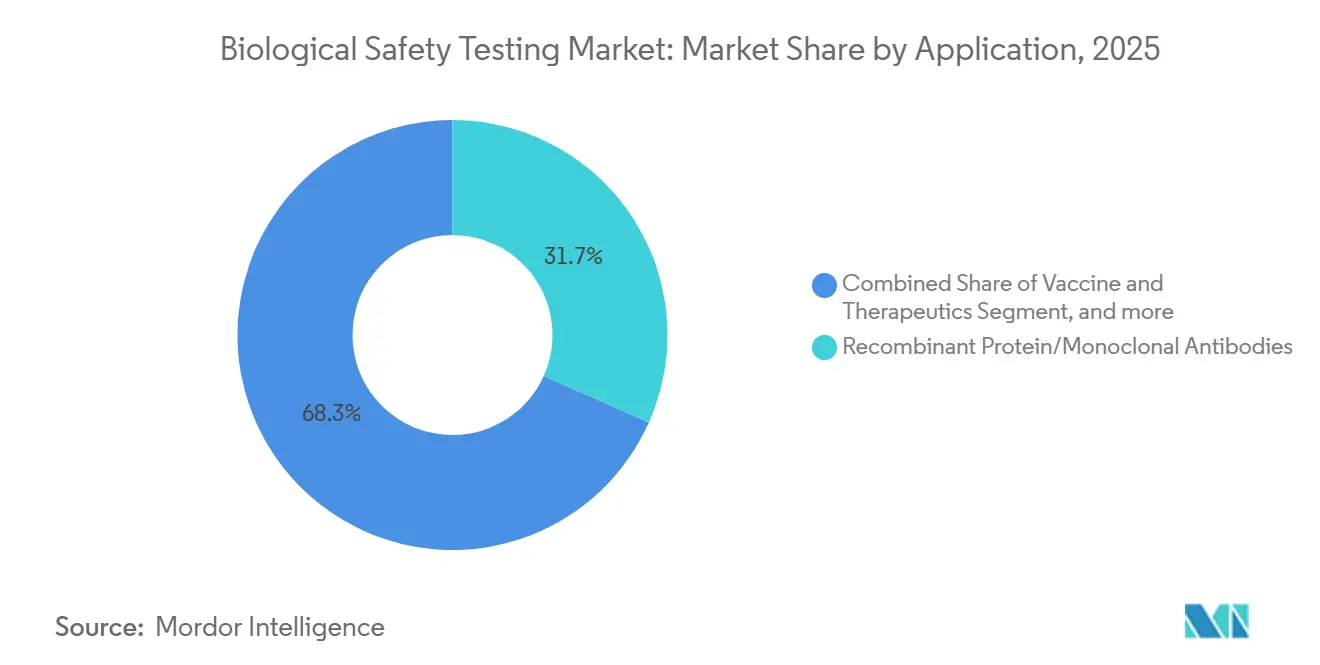
CGT Complexity Drives Premium PricingCellular and gene therapy testing is projected to grow at a 14.88% CAGR through 2031, the fastest among applications, as each patient-specific batch requires a unique safety panel. Recombinant proteins and monoclonal antibodies still accounted for 31.67% of application revenue in 2025; however, biosimilar pathways allow for abbreviated testing, which could dampen growth. Vaccine programs remain volume drivers; Moderna executed more than 8,000 sterility and endotoxin tests in 2024 alone.
Price elasticity favors complex modalities. Lonza estimated that traceability and documentation add 22% to per-batch costs for autologous products. The vaccine segment is regionalizing, with India’s Serum Institute qualifying for WHO pre-approval after conducting 1,200 tests over 18 months. Blood products may face disruption from pathogen-reduction technology, which could reduce the frequency of future testing for adventitious agents. Overall, higher test intensity in gene and cell therapies will keep the biological safety testing market expanding at a rate above double digits, even as mature biologics plateau.
By End User:
CDMOs Capture Outsourcing WaveCDMOs are forecast to grow at a 14.67% CAGR through 2031, overtaking the 47.54% market share held by biopharma and biotech companies in 2025. Wage inflation of 12–14% for microbiologists in Boston and San Francisco clusters has made external testing more attractive to virtual biotech. Samsung Biologics reported that 68% of manufacturing clients bundled testing in 2025, up from 54% in 2023, highlighting the stickiness of integrated contracts.
Academic institutes continue to outsource because maintaining viral-safety suites exceeds grant budgets. NIH allocated USD 47 million to contract testing in 2024, while device makers require hybrid pharmaceutical and biocompatibility panels for combination products. CDMOs are bifurcating into full-service providers and specialized labs, but integrated service bundles command higher margins and reinforce customer lock-in across multi-year programs.
Geography Analysis
North America Biological Safety Testing Market
North America contributed a 41.67% revenue share in 2025, anchored by venture-backed biotech clusters and the FDA's enforcement of revised sterility rules that link environmental monitoring with batch release. Thermo Fisher completed a USD 150 million expansion in Rockville to add capacity for 2,000 in vivo viral assays, while Canada harmonized mycoplasma PCR requirements with USP <63>. Mexico’s Grupo PiSA gained FDA recognition as a foreign testing site, shortening batch-release timelines for U.S. sponsors.
Europe Biological Safety Testing Market
Europe benefits from a centralized EMA pathway, concentrating the biological safety testing market share in Germany, Switzerland, and Ireland. Lonza’s EU labs operated at 87% utilization during the second half of 2024. Rapid-method interest is rising following the European Pharmacopoeia’s alternative methods chapter; however, the U.K.’s divergent viral-safety rules require dual testing for pan-European launches. France and Italy are scaling CAR-T testing through public-private partnerships, boosting regional capacity.
APAC Biological Safety Testing Market
The Asia-Pacific region is expected to post the fastest growth at a 12.54% CAGR from 2026 to 2031, following the NMPA's alignment with ICH standards and rising CDMO investment. WuXi’s Shanghai lab secured EMA release-site status, and Japan reduced sterility holds to seven days, facilitating rapid method adoption. Samsung Biologics’ three QC suites in Incheon illustrate capital intensity that smaller regional CDMOs cannot match. India’s Biocon won EMA approval for its Bengaluru lab, while Australia reduced the review time for investigational testing to 30 days, attracting early-phase sponsors.
MEA and South America Biological Safety Testing Market
Emerging regions, such as South America and the Middle East, are adding capacity to meet WHO prequalification standards. Brazil now mandates Mycoplasma PCR for cell-culture products, and the UAE is building a USD 25 million testing center in Dubai Science Park. South Africa partnered with SGS to reduce sample shipping delays, signaling a greater level of regional self-sufficiency.
Regulatory Landscape
Biological safety testing requirements for biologics and advanced therapies are anchored in global harmonization through ICH, with viral safety evaluation guided by ICH Q5A(R2) and implemented through major agencies. In the United States, the FDA published guidance aligned to ICH Q5A(R2) in January 2024, formally bringing next-generation sequencing (NGS) and bioinformatic analysis into the agency's recommended toolkit for virus detection and characterization, alongside established in vitro and in vivo methods.
For gene therapy and other high-complexity modalities, regulators are tightening expectations around characterization and safety documentation rather than relaxing legacy panel requirements. In April 2026, the FDA announced the availability of a draft guidance on safety assessment of genome editing in human gene therapy products using NGS, reinforcing the shift toward deeper molecular characterization in biosafety packages. In Europe, EMA updates in 2025 addressed safety-related in-process controls for unprocessed bulk, with explicit attention to mycoplasma and adventitious agent testing, supporting continued demand for validated biosafety assays across raw materials, intermediates, and finished product release.
Value Chain Analysis
The biological safety testing value chain begins with inputs and sample generation across cell-line development (cell banking and characterization), raw material qualification, in-process controls, and release testing for intermediates and finished drug substance or drug product. Testing workflows then move through method selection (compendial culture methods plus molecular assays such as qPCR and sequencing-based detection), assay validation under GMP expectations, and execution in either in-house QC laboratories or outsourced partners (specialty CROs and CDMOs) that provide BSL-2 and GMP infrastructure, trained analysts, and quality systems for multi-region submissions.
Value capture concentrates in high-complexity services (viral safety and adventitious agent programs, cell bank testing, and rapid methods) as well as in suppliers of critical reagents and platforms that feed sterility, endotoxin, and mycoplasma panels. Regulatory signals are reshaping capability investments across the chain: the FDA highlighted NGS-based approaches in an April 2026 draft guidance on genome editing safety assessment, while the ICH Management Committee endorsed an ATMP quality guideline recommendation paper in November 2025, reinforcing the need for modality-specific quality annexes. These steps increase the importance of standardized documentation, digital traceability, and global comparability packages that large multi-site laboratories and integrated CDMOs can execute across regions.
Competitive Landscape
The top five providers—Charles River Laboratories, Eurofins Scientific, SGS, Thermo Fisher Scientific, and Lonza—held an estimated 38–42% share of the biological safety testing market revenue in 2025. Consolidation is intensifying as networks acquire regional labs to streamline multi-region quality agreements, while investment focuses on automated microbiology to defend margins against rising wages. Sartorius aims to capture on-site testing demand from gene-therapy developers through portable rapid-detection systems, and technology leadership in rapid sterility validation is a key differentiator.
Lonza’s patent filing for a closed-system rapid-sterility cartridge encapsulates the race to compress cycle time. Danaher’s acquisition of Abcam created a vertically integrated reagent and instrument supplier able to bundle pricing for large CDMOs, pressuring independent labs. Smaller players compete through niche capabilities, such as Pacific BioLabs’ dedicated viral-safety suites, which reduce the risk of cross-contamination. Regulatory frameworks are enabling hybrid strategies as FDA guidance now allows risk-based rapid methods for low-risk products without full validation, benefiting labs with diversified portfolios.
On balance, market concentration remains moderate but is trending upward as global players leverage scale for price negotiations and technology investment. Laboratories that validate rapid methods first are well-positioned to win high-throughput gene-therapy accounts, capturing a disproportionate share of growth as the biological safety testing market matures.
Biological Safety Testing Industry Leaders
-
Eurofins Scientific
-
Merck KGaA
-
Promega Corporation
-
Thermo Fisher Scientific
-
Lonza Group
- *Disclaimer: Major Players sorted in no particular order
Biological Safety Testing Market Companies Covered in this Report
- Alcami
- Avance Biosciences
- bioMérieux
- Charles River
- Creative BioLabs
- Cytovance Biologics
- Eurofins
- Lonza Group
- Merck KGaA (MilliporeSigma)
- Microbac Laboratories
- Nelson Labs
- Pall Corporation (Danaher)
- Pacific BioLabs
- Promega
- Sartorius
- SGS
- STERIS
- Thermo Fisher Scientific
- Toxikon (Labcorp)
- WuXi App Tec
Market Opportunities and Future Outlook
A primary whitespace emerges where manufacturing capacity expansion for advanced modalities outpaces local, GMP-ready biosafety release testing capacity, particularly for viral safety and rapid microbiology programs that require specialized suites and validated workflows. Recent capacity moves by CDMOs and manufacturers provide a direct pull-through for testing: AGC Biologics announced a USD 350 million Yokohama, Japan investment (April 2026) spanning cell therapy, mammalian, and mRNA manufacturing, and Chime Biologics inaugurated its GMP-2 facility in Wuhan (June 2026) with eight 2,000 L single-use bioreactors. Each new or expanded site increases demand for site-specific validation, cell bank qualification, mycoplasma and adventitious agent programs, and release testing across multi-client schedules.
Another opportunity centers on upgrading assay menus toward molecular and sequencing-enabled biosafety packages that align with regulators and harmonized standards. The ICH Q5A(R2) viral safety framework and FDA actions highlighting NGS-based approaches for genome editing safety assessment raise demand for providers that can operationalize NGS, bioinformatics, and comparability documentation within GMP quality systems. Rapid sterility solutions, including approaches built around NAT and other rapid microbial detection technologies, create commercial headroom where autologous and time-sensitive products need shorter turnaround times but still require robust validation and defensible data packages across regions.
Recent Industry Developments in Biological Safety Testing Market
- July 2026: MilliporeSigma (Merck KGaA) signed a five-year agreement with Genetix Biotherapeutics to serve as the sole provider for analytical and biosafety release testing for its gene therapy portfolio. The deal formalizes long-duration outsourcing for high-complexity release testing, reinforcing the role of large testing organizations in supporting multi-program gene therapy pipelines.
- May 2025: Thermo Fisher Scientific launched the Thermo Scientific 1500 Series Class II, Type A2 Biological Safety Cabinet designed to meet NSF/ANSI 49 safety requirements. While biosafety cabinets sit outside the study scope as routine lab infrastructure, the launch signals continued investment in contamination-control environments that support sterility and microbiology workflows across biopharma and biotech laboratories.
- April 2024: Merck launched the Aptegra CHO genetic stability assay as a validated, all-in-one solution using whole-genome sequencing and bioinformatics. The product compresses multiple legacy assays into a single workflow, supporting the market shift toward sequencing-enabled characterization within biosafety and release-related testing programs.
Biological Safety Testing Market Report Scope and Research Methodology
Market Definition and Coverage
For this methodology, the market covers revenues earned from biological safety testing used to confirm that biologics, vaccines, and advanced therapies are free from contamination before release, including key assays run from cell bank creation through commercial manufacturing.
Scope exclusions: Routine environmental monitoring devices and biosafety cabinets are excluded from the market size.
Segments Covered in This Report
- By Product & Service
- Products
- Reagents & Kits
- Instruments
- Single-Use Consumables
- Services
- Sterility Testing Services
- Endotoxin & Pyrogen Testing Services
- Cell Line Authentication & Characterisation
- Products
- By Test Type
- Sterility Tests
- Bioburden Tests
- Endotoxin/LAL Tests
- Mycoplasma Detection
- Adventitious Virus Detection
- By Application
- Recombinant Protein / Monoclonal Antibodies
- Vaccine And Therapeutics
- Cellular And Gene Therapy
- Blood And Blood-Based Therapy
- Other Application
- By End User
- Biopharma & Biotech Companies
- Contract Development & Manufacturing Organisations
- Academic & Research Institutes
- Medical Device Manufacturers
- Geography
- North America
- United States
- Canada
- Mexico
- Europe
- Germany
- United Kingdom
- France
- Italy
- Spain
- Rest Of Europe
- Asia-Pacific
- China
- Japan
- India
- Australia
- South Korea
- Rest Of Asia-Pacific
- Middle East And Africa
- GCC
- South Africa
- Rest Of Middle East And Africa
- South America
- Brazil
- Argentina
- Rest Of South America
- North America
Data Sources, Market Sizing, and Validation
Desk Research
Desk research was used to build the starting structure for the model and to identify what drives demand for safety testing across biologics manufacturing. We relied on public, non-paywalled sources such as FDA and EMA guidance and databases, USP and European Pharmacopoeia chapters relevant to sterility and endotoxin, CDC references where applicable, and OECD or WHO publications tied to lab and biologics quality practices.
To convert those qualitative requirements into sizing inputs, we reviewed company annual reports and investor presentations, contract announcements, and credible press releases to understand shifts in testing mix and capacity additions over time. We also used paid subscriptions for company financials and intelligence, news and financials, and patent databases to cross-check reported revenue pools and technology changes without forcing assumptions that cannot be traced. The desk sources listed here are illustrative, and many other public and paid sources were also consulted for data collection, validation, and clarification.
Primary Interviews and Surveys
Primary work was run through expert interviews and structured surveys with testing laboratories, biopharma quality teams, and stakeholders involved in batch release and method validation across Americas, EMEA, and APAC. Input from these respondents was used to refine assumptions on test frequency, outsourcing share, and realistic pricing movement, and then to check whether the desk signals aligned with routine operations.
Distribution of primary research fieldwork respondents
| Company type | Respondent position | Region |
|---|---|---|
| Top tier: 31% | CXOs: 16% | APAC: 51% |
| Mid tier: 47% | Functional/Unit leaders: 28% | EMEA: 31% |
| Smaller Players: 22% | Managers: 56% | Americas: 18% |
Market-Sizing & Forecasting
Sizing starts from a top-down build where regulated biologics output and release activity are translated into a demand pool for required safety tests, then expanded using observed outsourcing penetration and service intensity. To keep the totals realistic, results are corroborated using selective bottom-up approximations, such as sampled price per test multiplied by estimated test volumes, plus reasonableness checks against disclosed testing service revenues and capacity signals.
Key inputs we track include biologics and vaccine pipeline and approvals, manufacturing batch volumes and scale-up trends, the mix of high-risk tests (for example sterility, endotoxin, mycoplasma, and adventitious agent detection), the share of work routed to external labs versus in-house, and average selling price movement by assay type as methods shift to faster formats. Where direct volume proxies are missing, gaps are handled with conservative ranges that are narrowed using interview feedback, and assumptions are applied consistently across regions.
For forecasting, we use scenario analysis supported by trend smoothing on the main demand drivers, then adjust the forward view based on what experts expect on capacity utilization, new modality adoption (such as cell and gene therapy), and changes in testing intensity during tech transfer and scale-up.
Data Validation & Update Cycle
Outputs are validated through triangulation across independent signals, including biologics manufacturing activity, outsourcing patterns, and the implied pricing curve by major assay families. Variance checks are run at the regional level and by test group so unusual spikes can be investigated and explained, and then the model is reviewed in multiple analyst steps before sign-off.
Reports are refreshed annually, and interim updates are triggered when material events occur, such as a major regulatory change, a step-up in biologics capacity, or a sudden shift in outsourcing behavior. Before delivery, a final review pass is completed so clients receive the latest updated view based on the most recent public information and re-contacts where needed.
Mordor Intelligence's Global Biological Safety Testing Market Market Size Versus Other Published Estimates
Published market values for biological safety testing can vary widely, even when they appear similar on the surface, because each publisher defines the revenue boundary and counting rules in its own way. Differences usually come from what product and service lines are counted, which testing steps are included across the biologics workflow, and how pricing and outsourcing are treated over time.
Environmental monitoring devices are not part of Mordor Intelligence's scope, which is one reason some broader figures come out higher when adjacent lab spend categories get bundled into safety testing. Beyond scope, gaps also come from the year used for currency conversion, whether estimates assume aggressive capacity ramp-ups, and how quickly average price per test is stepped down as rapid methods scale, which is why we rely on cross-checks between batch activity, assay mix, and interview-confirmed pricing ranges.
Benchmark comparison
| Source | Market Size | Gaps in Research Methodology |
|---|---|---|
| Mordor Intelligence | USD 5.07 B (2026) | |
| Global Consultancy A | USD 5.94 B (2026) | Uses a products-and-services framing that can capture a wider set of testing-related purchases, and it typically assumes a faster expansion in outsourced service intensity, which lifts the 2026 value. |
| Industry Publisher B | USD 5.51 B (2025) | Uses an earlier base year and then applies a higher growth curve into the outer years, with limited clarity on how assay-level pricing and test frequency changes are validated by region. |
The table shows that most of the spread can be traced back to what gets counted as part of safety testing, plus differences in base-year setup and pricing progression. By keeping inputs tied to observable release activity, test mix, and practical outsourcing rates, the estimate remains easier to audit and repeat when new public data arrives.
Key Questions Answered in the Report
How large is the biological safety testing market in 2026?
The biological safety testing market size stands at USD 5.07 billion in 2026.
What CAGR is expected for biological safety testing through 2031?
The market is forecast to expand at an 11.63% CAGR between 2026 and 2031.
Which test type is growing the fastest?
Adventitious virus detection is the fastest-growing test type, projected at a 13.76% CAGR to 2031.
Why are CDMOs gaining market share in testing services?
Sponsors outsource quality control to reduce capital outlay and leverage bundled manufacturing-testing contracts offered by CDMOs, which are growing at a 14.67% CAGR.
Which region will experience the quickest growth?
Asia-Pacific is projected to rise at a 12.54% CAGR as China, Japan, and India harmonize regulations and expand testing infrastructure.
What supply risk could disrupt endotoxin testing?
Potential shortages of horseshoe crab lysate may elevate costs and delay batch release until recombinant Factor C gains full regulatory equivalence.