
Dried Eggs Market Size and Share
Market Overview
| Study Period | 2021 - 2031 |
|---|---|
| Market Size (2026) | USD 2.02 Billion |
| Market Size (2031) | USD 2.71 Billion |
| Growth Rate (2026 - 2031) | 6.31 % |
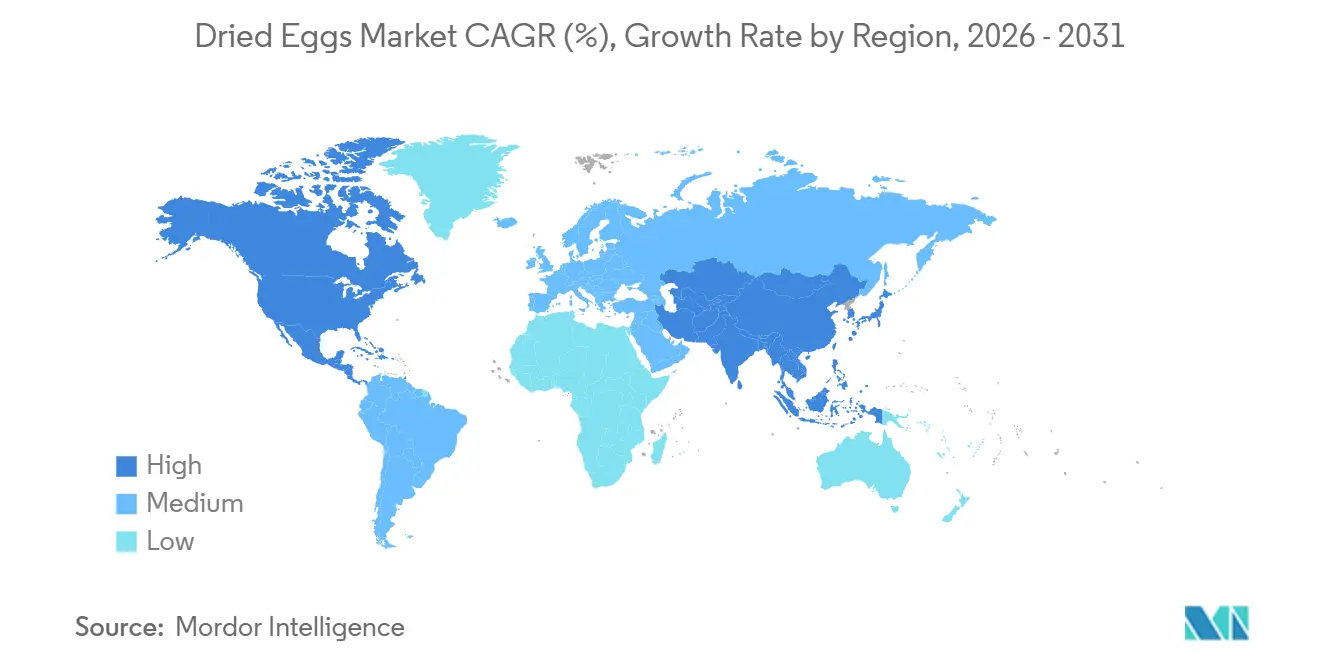
| Fastest Growing Market | Asia Pacific |
| Largest Market | North America |
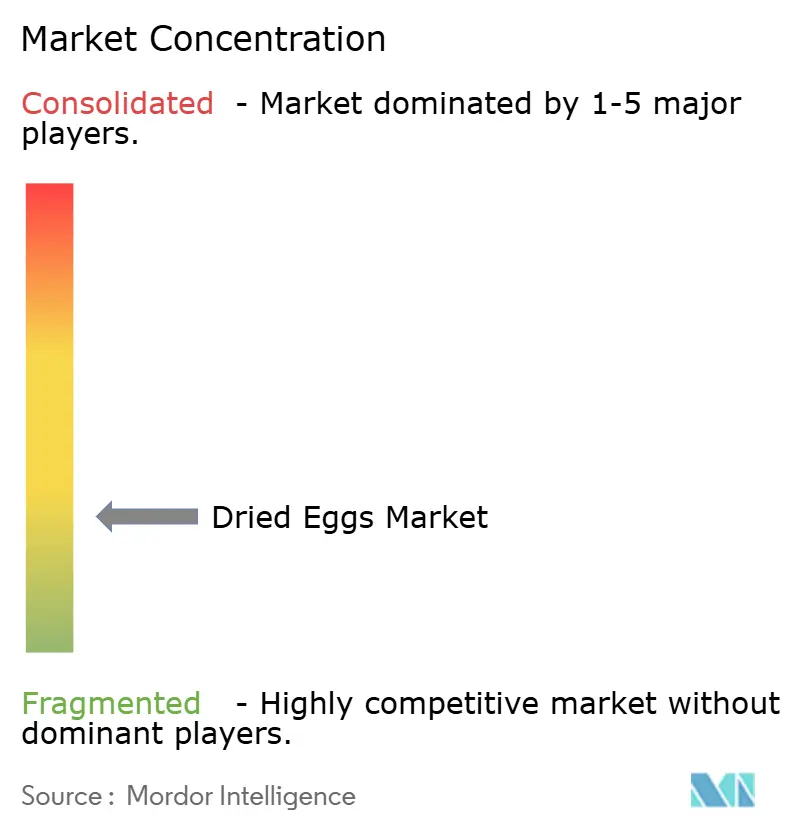
| Market Concentration | Low |
Major Players
*Disclaimer: Major Players sorted in no particular order Image © Mordor Intelligence. Reuse requires attribution under CC BY 4.0. |
|
Dried Eggs Market Analysis by Mordor Intelligence
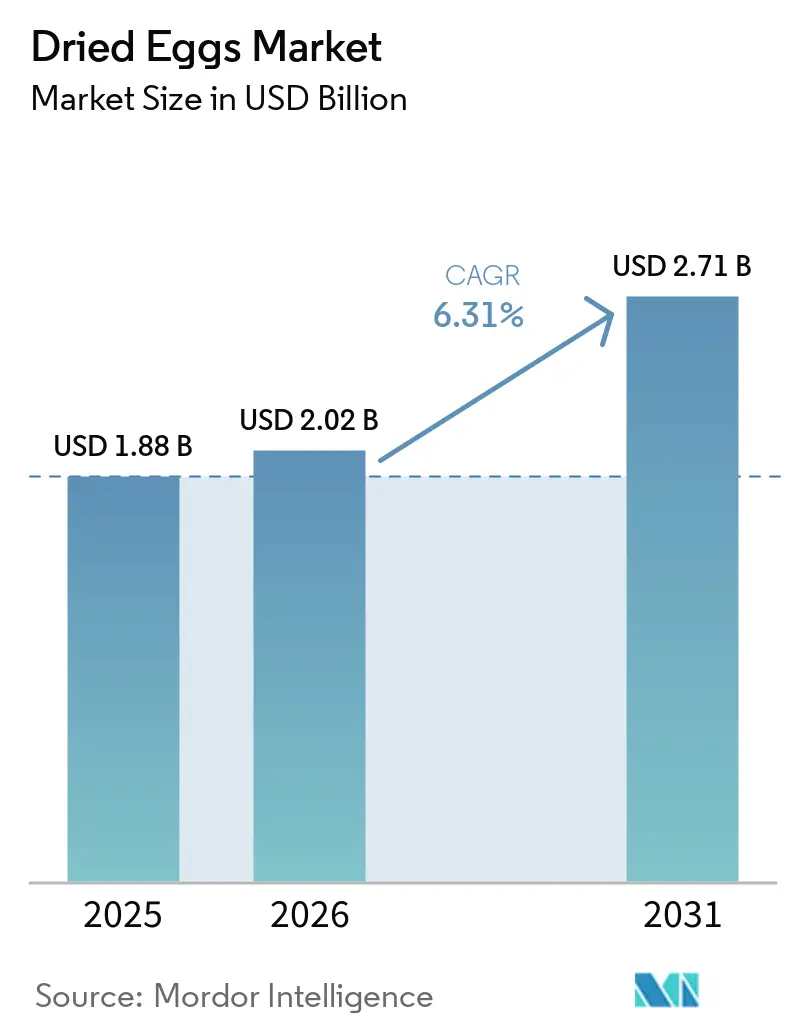
The Dried Eggs Market size is estimated at USD 2.02 billion in 2026, and is expected to reach USD 2.71 billion by 2031, at a CAGR of 6.31% during the forecast period (2026-2031). This acceleration reflects the convergence of health-conscious consumer behavior, industrial food processing efficiency demands, and technological advances in dehydration processes. The market's growth trajectory benefits from the increasing adoption of cage-free production methods, which commands premium pricing while addressing evolving consumer preferences for ethically sourced ingredients. Supply chain disruptions from highly pathogenic avian influenza (HPAI) have paradoxically strengthened the market's value proposition, as dried egg powder offers superior shelf stability and logistics advantages over shell eggs during crisis periods[1]Source: USDA Economic Research Service, "Egg Products and Food Safety", fsis.usda.gov. The USDA forecasts a 41.1% increase in egg prices for 2025, with dried whole eggs experiencing price surges of 187% during peak disruption periods. This volatility underscores the strategic importance of processed egg products in maintaining food system resilience. North America remains the single largest contributor because of its integrated supply chains and deep installed base of egg drying capacity. Asia-Pacific records the quickest gains as food processors in China and India ramp up bakery, convenience meal, and sports nutrition lines to serve expanding middle-class demand.
Key Report Takeaways
- By product type, dried whole egg powder held a 45.36% dried egg powder market share in 2024; dried egg white powder is projected to record an 7.13% CAGR through 2030.
- By category, conventional offerings represented 76.33% of the dried egg powder market size in 2024, whereas organic and specialty eggs are rising at a 9.52% CAGR to 2030.
- By form, spray-dried powder accounted for 85.47% of the dried egg powder market size in 2024; freeze-dried powder is expected to expand at a 9.38% CAGR over the same period.
- By packaging format, pouches captured 60.42% of the dried egg powder market share in 2024, while jars and canisters lead growth at a 9.66% CAGR.
- By end-user, industrial commanded 37.38% of the dried egg powder market size in 2024; retail/off-trade are forecast to post a 10.31%.
- By geography, North America commanded 36.11% of the dried egg powder market size in 2024; Asia-Pacific are forecast to post a 9.25%.
Note: Market size and forecast figures in this report are generated using Mordor Intelligence’s proprietary estimation framework, updated with the latest available data and insights as of January 2026.
Market Trends and Insights
Drivers Impact Analysis of Dried Eggs Market*
| Driver | (~) % Impact on CAGR Forecast | Geographic Relevance | Impact Timeline |
|---|---|---|---|
| Demand for Healthier Processed Foods | +1.8% | Global, with concentration in North America & Europe | Medium term (2-4 years) |
| Surge in Cage-Free Dried Egg Powder Demand | +1.5% | North America & European Union primary, expanding to Asia-Pacific | Long term (≥ 4 years) |
| Rising Consumption of High-Protein Nutrition | +1.2% | Global, led by Asia-Pacific and North America | Short term (≤ 2 years) |
| Advances in Drying Technologies | +0.9% | Global, technology leaders in North America & Europe | Medium term (2-4 years) |
| Demand for Convenient Shelf-Stable Food Products | +1.1% | Global, accelerated in emerging markets | Short term (≤ 2 years) |
| Adoption in Nutraceuticals and Dietary Supplements | +1.4% | North America & Europe core, expanding globally | Long term (≥ 4 years) |
| Source: Mordor Intelligence | |||
Demand for Healthier Processed Foods
The shift toward healthier processed foods fundamentally reshapes ingredient sourcing strategies across the food manufacturing sector. Dried egg powder offers manufacturers a clean-label protein source that maintains nutritional integrity while eliminating preservatives and artificial additives commonly found in alternative protein ingredients. This positioning becomes particularly valuable as food processors seek to meet consumer demands for transparency and nutritional density without compromising shelf stability or production efficiency. The FDA's continued emphasis on nutrition labeling requirements under 21 CFR 101 reinforces the competitive advantage of naturally nutritious ingredients like dried egg powder [2]Source: U.S Food & Drug Administration, "Nutrition, Food Labeling, and Critical Foods", fda.gov. Food manufacturers increasingly recognize that dried egg powder's complete amino acid profile and bioavailable nutrients provide functional benefits that synthetic alternatives cannot replicate, driving adoption across bakery, confectionery, and prepared food categories.
Surge in Cage-Free Dried Egg Powder Demand
Corporate sustainability commitments create a structural shift toward cage-free egg sourcing that extends beyond consumer-facing brands to ingredient suppliers. Major food service operators and retail chains have established cage-free procurement mandates, creating downstream demand for cage-free dried egg powder that commands 15-20% price premiums over conventional alternatives. This trend gains momentum as European Union regulations phase out conventional cage systems, with similar legislative movements emerging across North American jurisdictions. The USDA's National Organic Program standards under 7 CFR 205 provide regulatory framework supporting organic and cage-free production methods, establishing quality benchmarks that differentiate premium dried egg powder products [3]Source: U.S Department of Agriculture, "Organic Regulations", ams.usda.gov. The cage-free transition requires significant capital investment in production facilities, creating barriers to entry that benefit established players with integrated supply chains and processing capabilities.
Rising Consumption of High-Protein Nutrition
The protein fortification trend extends beyond traditional sports nutrition into mainstream food categories, with dried egg powder emerging as a preferred ingredient for its complete amino acid profile and neutral flavor characteristics. Unlike plant-based proteins that often require flavor masking or texture modification, egg protein powder integrates seamlessly into formulations while delivering superior biological value and digestibility scores. This functional advantage becomes critical in applications where protein content must increase without compromising taste or texture, particularly in bakery goods and ready-to-eat meals. Research published in food science journals demonstrates that egg protein powder maintains higher protein efficiency ratios compared to soy or pea protein alternatives, supporting its adoption in premium nutrition products. The growing awareness of protein quality metrics among health-conscious consumers drives demand for ingredients that deliver both quantity and bioavailability.
Advances in Drying Technologies
Technological innovations in spray drying and freeze-drying processes unlock new applications for dried egg powder while improving cost efficiency and product quality. Spray freeze drying (SFD) technology enables production of premium egg powders with superior rehydration properties and extended shelf life, commanding higher margins in specialized applications. Dehumidified-air-assisted spray drying (DASD) reduces energy consumption by 20-30% compared to conventional methods, improving manufacturing economics while maintaining product quality standards. These process improvements become particularly valuable as energy costs rise and sustainability requirements intensify across food manufacturing operations. Patent filings in drying technology show increasing focus on microencapsulation techniques that protect bioactive compounds during processing, enabling dried egg powder applications in functional foods and nutraceuticals. The convergence of energy efficiency and product quality improvements creates competitive advantages for manufacturers investing in advanced drying infrastructure.
Restraints Impact Analysis of Dried Eggs Market*
| Restraint | (~) % Impact on CAGR Forecast | Geographic Relevance | Impact Timeline |
|---|---|---|---|
| Competition from Alternative Protein Sources | -1.2% | Global, intensified in North America & Europe | Medium term (2-4 years) |
| Shift Toward Vegan and Plant-Based Products | -0.8% | North America & Europe primary, expanding globally | Long term (≥ 4 years) |
| Food Safety and Contamination Risks | -0.6% | Global, regulatory focus in developed markets | Short term (≤ 2 years) |
| Raw Egg Price Volatility Effects | -1.1% | Global, acute impact in major producing regions | Short term (≤ 2 years) |
| Source: Mordor Intelligence | |||
Competition from Alternative Protein Sources
The proliferation of plant-based protein ingredients creates pricing pressure and market share erosion for traditional animal proteins, including dried egg powder. Soy protein isolates, pea protein concentrates, and emerging alternatives like insect protein offer cost advantages and appeal to environmentally conscious consumers seeking sustainable protein sources. Plant-based egg alternatives have achieved functional parity in many baking applications, with companies like Eat Just and BENEO developing powdered formulations that replicate egg protein's binding and leavening properties. The plant-based egg alternatives market projects to reach USD 1.5 billion by 2034, with powdered formats representing the largest segment at USD 815.4 million according to the Plant-Based Foods Association. This competitive pressure intensifies as food manufacturers seek to reduce ingredient costs while meeting consumer demands for plant-forward formulations, particularly in mass-market applications where premium pricing for animal proteins becomes difficult to justify.
Food Safety and Contamination Risks
Salmonella contamination risks in egg products create ongoing regulatory scrutiny and potential market disruptions that affect dried egg powder demand. The FDA's Egg Safety Rule under 21 CFR 118 requires comprehensive pathogen reduction programs, but contamination events continue to trigger product recalls and facility shutdowns that disrupt supply chains. Recent outbreaks linked to egg products have resulted in multi-million dollar recalls and long-term reputation damage for affected brands, creating risk aversion among food manufacturers considering egg-based ingredients. The regulatory response includes enhanced testing requirements and facility inspections that increase compliance costs and operational complexity for dried egg powder producers according to the FDA Egg Safety Rule. These food safety challenges become particularly acute in international trade, where importing countries may impose additional testing requirements or temporary import restrictions following contamination events, limiting market access and growth opportunities.
*Our forecasts treat driver/restraint impacts as directional, not additive. The impact forecasts reflect baseline growth, mix effects, and variable interactions.
Dried Eggs Market Segment Analysis
By Product Type:
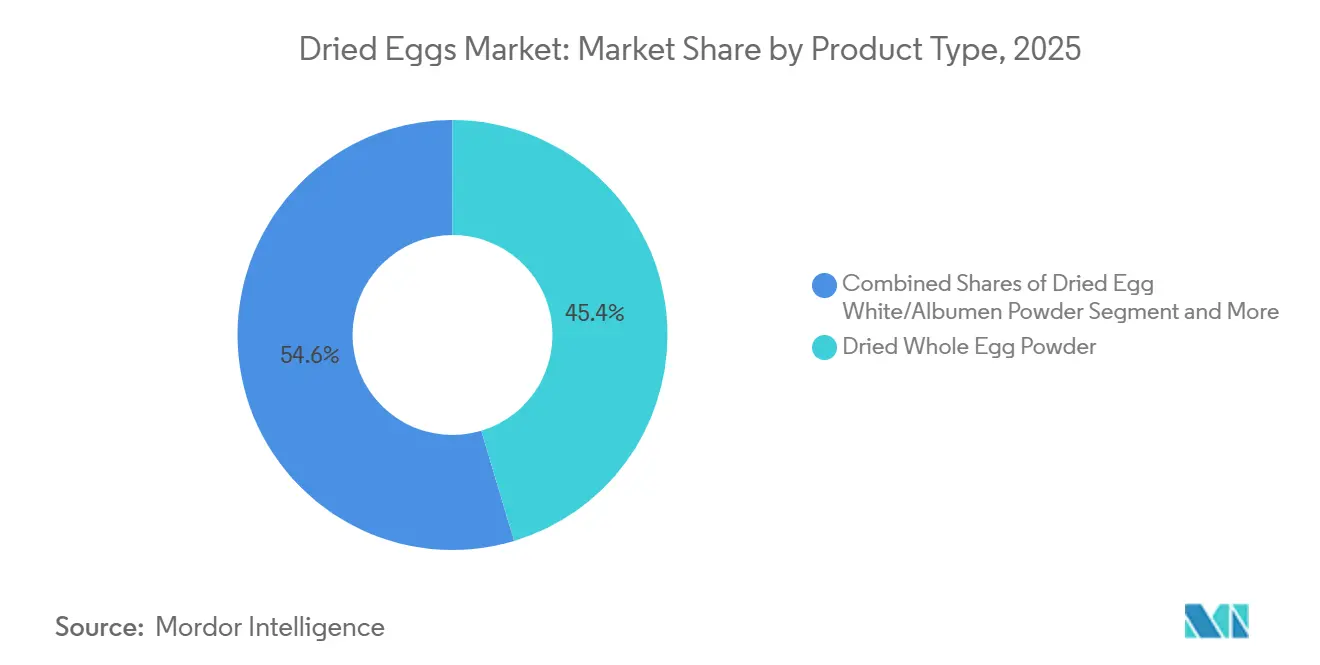
Whole Egg Dominance Faces Specialized GrowthDried whole egg powder commands 45.36% market share in 2024, reflecting its versatility across diverse food processing applications from bakery goods to prepared meals. However, dried egg white powder emerges as the fastest-growing segment at 7.13% CAGR through 2030, driven by specialized applications in sports nutrition, medical foods, and premium baking where pure protein content and neutral flavor profiles provide functional advantages. The albumen segment benefits from growing awareness of egg white protein's superior amino acid profile and rapid absorption characteristics, particularly valuable in post-workout recovery formulations and clinical nutrition products.
Dried egg yolk powder occupies a niche but stable position, primarily serving industrial applications where fat content and emulsification properties are essential, such as mayonnaise production and premium confectionery items. The segment's growth remains modest due to health-conscious trends favoring lower-fat protein sources, but maintains importance in applications requiring specific functional properties that whole egg or albumen powders cannot replicate. Recent advances in spray drying technology have improved yolk powder stability and reduced oxidation issues that previously limited shelf life, expanding potential applications in shelf-stable prepared foods.



By Category:
Organic Premium Drives Future GrowthConventional dried egg powder maintains 76.33% market share in 2024, supported by established supply chains and cost advantages in price-sensitive applications. However, the organic and specialty egg category demonstrates superior growth dynamics at 9.52% CAGR, reflecting consumer willingness to pay premiums for perceived quality and ethical production attributes. This growth trajectory aligns with broader organic food market expansion and corporate sustainability commitments that prioritize cage-free and organic ingredient sourcing.
The organic segment's expansion faces supply chain constraints as cage-free production transitions require significant capital investment and longer production cycles. USDA organic certification requirements under the National Organic Program create quality differentiation but also impose compliance costs that limit market entry for smaller producers. The premium pricing for organic dried egg powder, typically 15-20% above conventional alternatives, remains sustainable due to limited supply and strong demand from health-conscious consumers and premium food manufacturers seeking clean-label ingredients.
By Form:
Spray-Dried Leadership Challenged by Premium AlternativesSpray-dried powder dominates with 85.47% market share in 2024, benefiting from established production infrastructure and cost efficiency in high-volume applications. The technology's maturity and widespread adoption across food processing industries create significant barriers to alternative drying methods in cost-sensitive segments. However, freeze-dried powder emerges as the fastest-growing format at 9.38% CAGR, driven by superior product quality characteristics including better rehydration properties, extended shelf life, and preserved nutritional content.
Freeze-drying technology commands premium pricing due to higher energy costs and longer processing times, but delivers product attributes that justify the cost differential in specialized applications such as emergency food supplies, premium baking ingredients, and high-end prepared foods. Recent innovations in spray freeze drying (SFD) combine benefits of both technologies, creating hybrid products with improved quality at lower costs than traditional freeze-drying. The FDA's food processing regulations under 21 CFR 110 support quality-focused approaches that favor advanced drying technologies capable of maintaining nutritional integrity and safety standards.
By Packaging Format:
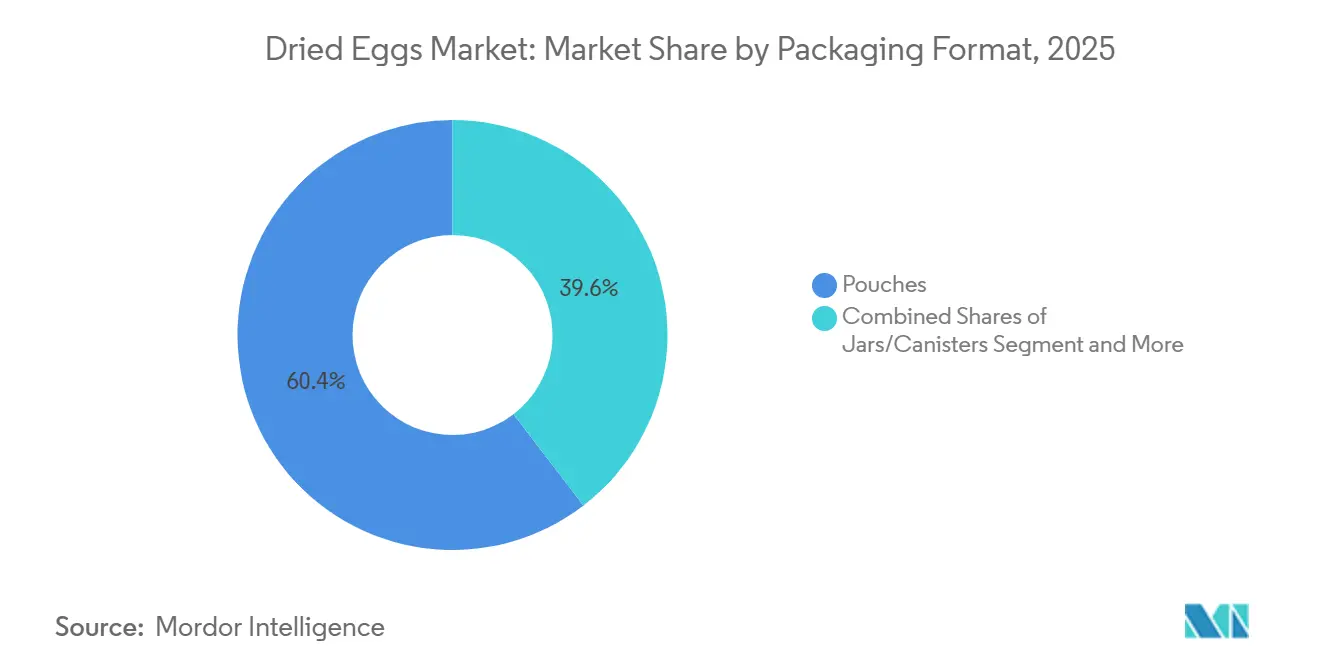
Convenience Drives InnovationPouches lead packaging formats with 60.42% market share in 2024, reflecting their advantages in portion control, storage efficiency, and consumer convenience for retail applications. The flexible packaging format aligns with sustainability trends by reducing material usage and transportation costs compared to rigid containers. However, jars and canisters represent the fastest-growing segment at 9.66% CAGR, driven by premium positioning and perceived quality associations among consumers who equate rigid packaging with product durability and freshness.
The packaging evolution reflects broader trends toward portion control and extended shelf-life requirements, particularly important for dried egg powder applications in emergency preparedness and institutional food service. Innovations in barrier packaging materials improve moisture protection and extend shelf life, addressing key quality concerns that affect product performance in various storage conditions. Other packaging formats, including sachets and bulk containers, serve specialized market segments with specific handling and portion requirements, maintaining steady demand in industrial and food service applications.
By End-User:
Industrial Applications Lead GrowthIndustrial applications command 37.83% market share in 2024, reflecting dried egg powder's essential role across diverse manufacturing processes from large-scale bakery operations to processed food production lines. This segment benefits from the ingredient's functional advantages in providing consistent protein content, binding properties, and extended shelf life that enable efficient mass production and inventory management. Industrial users particularly value dried egg powder's ability to maintain product quality during extended storage periods and its compatibility with automated processing equipment that requires precise ingredient dosing and mixing capabilities.
However, retail and off-trade channels emerge as the fastest-growing segment at 10.31% CAGR through 2030, driven by increasing consumer interest in home baking, emergency preparedness, and protein supplementation. The retail segment benefits from growing awareness of dried egg powder's convenience advantages, particularly among health-conscious consumers seeking shelf-stable protein sources and home bakers requiring consistent results. The COVID-19 pandemic accelerated consumer adoption of baking ingredients for home use, creating lasting behavioral changes that support continued retail growth USDA Economic Research Service. Food service and on-trade applications maintain steady demand through restaurant chains and institutional kitchens that require standardized ingredients with predictable performance characteristics, while specialized segments like nutraceuticals, personal care, and animal feed represent high-value niche opportunities with premium pricing potential.
Geography Analysis
North America Dried Eggs Market
North America maintains market leadership with 36.11% share in 2024, supported by advanced food processing infrastructure, established supply chains, and regulatory frameworks that facilitate large-scale dried egg powder production. The region benefits from integrated poultry operations and sophisticated drying technology capabilities that enable cost-effective production across multiple product categories. However, the region faces challenges from HPAI outbreaks that have disrupted supply chains and caused significant price volatility, with dried whole egg prices increasing 187% during peak disruption periods. The USDA's comprehensive regulatory framework under the Food Safety and Inspection Service provides quality assurance but also creates compliance costs that favor larger, established producers. Recent investments in cage-free production capacity position North American suppliers to meet growing demand for premium dried egg powder products, though the transition requires substantial capital investment and longer production cycles.
APAC Dried Eggs Market
Asia-Pacific emerges as the fastest-growing region at 9.25% CAGR through 2030, driven by expanding food processing industries, rising protein consumption, and growing middle-class populations in China and India. The region's growth benefits from increasing adoption of Western-style processed foods and bakery products that require dried egg powder as a functional ingredient. China's food processing industry demonstrates strength in convenience foods and pre-cooked meal categories, creating demand for shelf-stable protein ingredients that support extended distribution chains. The region's regulatory environment continues evolving, with countries implementing food safety standards that align with international best practices, supporting market development for quality-focused suppliers. Import dependence remains significant, with the region relying on North American and European suppliers for premium dried egg powder products, creating opportunities for local production capacity development.
Europe, Middle East and South America Dried Eggs Market
Europe represents a mature but evolving market characterized by strong regulatory frameworks and consumer preferences for organic and cage-free products. The region demonstrates strong import activity, with EU dried egg white imports reaching 121,113 tonnes in 2024, representing 34.4% growth year-over-year, indicating robust demand that exceeds local production capacity according to the European Commission Trade Data. The Middle East dried eggs market is characterized by growing urbanization and an expanding foodservice industry, with key players investing in advanced processing technologies to meet increasing demand. However, high production costs and logistical challenges like limited cold chain infrastructure pose significant competitive barriers in the region. South America's dried eggs market is competitive with a mix of local producers and multinational companies focusing on meeting the rising demand for protein-enriched and shelf-stable food products. Investment in modern processing facilities and expanding distribution channels are critical factors shaping market competition across countries like Brazil and Argentina.

Competitive Landscape
The dried egg powder market exhibits fragmented characteristics with a low concentration, indicating significant consolidation opportunities and competitive dynamics that favor companies with operational scale and technological capabilities. This fragmentation creates market conditions where strategic acquisitions, capacity expansions, and vertical integration initiatives can rapidly alter competitive positioning and market share distribution. The industry structure reflects the capital-intensive nature of egg processing operations and the specialized knowledge required for effective drying technology implementation and quality control. Capital requirements are climbing because cage-free housing conversions and energy-efficient dryers each demand multimillion-dollar investments. Processors that integrate feed milling, flock management, and powder conversion therefore hold stronger negotiating power with multinational bakery and nutrition customers.
Strategic patterns emerge around vertical integration and geographic expansion, with leading players pursuing acquisitions that strengthen supply chain control and market access. Cal-Maine Foods underscored its consolidation play by purchasing Echo Lake Foods for USD 258 million, adding specialty drying and packaging assets to its network. The company also injected USD 6.75 million into a joint venture with Crepini to co-develop protein-rich egg wraps for refrigerated snack sets. Rembrandt Enterprises mirrored this approach, acquiring Artisan Kitchens to secure formulation expertise and premium food-service accounts. On capacity, Rose Acre Farms is investing USD 15 million to boost its Indiana spray-dry output by 25%, signaling confidence in industrial demand. Collectively, these moves show market leaders pairing strategic acquisitions with targeted upgrades to defend share and expand margins in the dried egg powder market.
Technology alliances add another layer of differentiation. Sanovo Technology Group earned industry honors for a next-generation spray system that cuts energy use, a feature that appeals to buyers monitoring Scope 3 emissions. Bouwhuis Enthoven launched freeze-dried powders for emergency rations, capturing a premium niche that lifts price realization. Competitive pressure also rises from Brazil after USDA authorization of processed egg imports, which tightens price negotiations in North America and prompts domestic producers to accelerate efficiency programs. The FDA's stringent food safety requirements under 21 CFR 118 create regulatory barriers that favor established players with comprehensive quality systems and compliance capabilities, limiting market entry for smaller competitors and supporting industry consolidation trends.
Dried Eggs Industry Leaders
-
OVOBEL
-
Rose Acre Farms, Inc.
-
Eurovo S.r.l.
-
Rembrandt Enterprises, Inc.
-
Pulviver
- *Disclaimer: Major Players sorted in no particular order
Dried Eggs Market Companies Covered in this Report
- OvoStar Union N.V.
- Kewpie Corporation
- OVOBEL
- SKM Egg Products Export (India) Ltd.
- Rose Acre Farms, Inc.
- Sanovo Technology Group
- Eurovo S.r.l.
- Rembrandt Enterprises, Inc.
- Bouwhuis Enthoven B.V.
- Eierhandel Wulro B.V.
- Interovo Egg Group B.V.
- Agroholding Avangard
- Adriaan Goede B.V.
- Oskaloosa Food Products Corp.
- Farm Pride Food Ltd.
- Weko Group
- TM Ovostar
- Pulviver
- Venkys
- Wabash Valley Farms Inc.

Recent Industry Developments in Dried Eggs Market
- March 2025: Onego Bio, a company specializing in egg protein powder produced through fermentation, become the second tenant at Jefferson County's Food and Beverage Innovation Campus in Wisconsin. The Jefferson County Board of Supervisors approved the USD 777,000 acquisition of 25.9 acres within the campus at its December meeting. This new site was planned to act as Onego Bio's flagship manufacturing facility, concentrating on Bioalbumen, a fermentation-derived egg protein powder. Bioalbumen offered the same taste, nutrition, and functionality as traditional eggs. Additionally, it provided greater cost stability, supply reliability, and maintained a 90% smaller environmental footprint.
- November 2024: British powdered egg, certified under the British Lion Code, became available for the first time, after Ready Egg Products opened a new egg drying plant. The plant manufactured egg powder using British Lion eggs that were spray-dried to form a powder.


Global Dried Eggs Market Report Scope
| Dried whole egg powder |
| Dried egg white/Albumen powder |
| Dried egg yolk powder |
| Conventional |
| Organic/Free-range/Speciality Eggs |
| Spray-Dried Powder |
| Freeze-Dried Powder |
| Pouches |
| Jars/Canisters |
| Others |
| Retail/Off-trade | |
| Foodservice/On-Trade | |
| Industrial | Food Processing |
| Nutraceuticals and Dietary Supplements | |
| Personal Care and Cosmetics | |
| Animal Feed and Pet Food |
| North America | United States |
| Canada | |
| Mexico | |
| Rest of North America | |
| Europe | Germany |
| United Kingdom | |
| Italy | |
| France | |
| Spain | |
| Netherlands | |
| Rest of Europe | |
| Asia-Pacific | China |
| India | |
| Japan | |
| Australia | |
| Indonesia | |
| Rest of Asia-Pacific | |
| South America | Brazil |
| Argentina | |
| Rest of South America | |
| Middle East and Africa | South Africa |
| Saudi Arabia | |
| United Arab Emirates | |
| Rest of Middle East and Africa |
| By Product Type | Dried whole egg powder | |
| Dried egg white/Albumen powder | ||
| Dried egg yolk powder | ||
| By Category | Conventional | |
| Organic/Free-range/Speciality Eggs | ||
| By Form | Spray-Dried Powder | |
| Freeze-Dried Powder | ||
| By Packaging Format | Pouches | |
| Jars/Canisters | ||
| Others | ||
| By End-User | Retail/Off-trade | |
| Foodservice/On-Trade | ||
| Industrial | Food Processing | |
| Nutraceuticals and Dietary Supplements | ||
| Personal Care and Cosmetics | ||
| Animal Feed and Pet Food | ||
| By Geography | North America | United States |
| Canada | ||
| Mexico | ||
| Rest of North America | ||
| Europe | Germany | |
| United Kingdom | ||
| Italy | ||
| France | ||
| Spain | ||
| Netherlands | ||
| Rest of Europe | ||
| Asia-Pacific | China | |
| India | ||
| Japan | ||
| Australia | ||
| Indonesia | ||
| Rest of Asia-Pacific | ||
| South America | Brazil | |
| Argentina | ||
| Rest of South America | ||
| Middle East and Africa | South Africa | |
| Saudi Arabia | ||
| United Arab Emirates | ||
| Rest of Middle East and Africa | ||


Key Questions Answered in the Report
What is the current value of the dried egg powder market?
The global dried egg powder market size is USD 2.02 billion in 2026.
How fast is demand growing in Asia-Pacific?
Asia-Pacific is forecast to post a 9.25% CAGR through 2031, the fastest regional pace.
Which product type is expanding the quickest?
Dried egg white powder leads growth at an 7.13% CAGR to 2031 because of sports and medical nutrition demand.
Why are cage-free powders priced higher?
Cage-free dried egg powder carries 15-20% premiums due to animal-welfare certification costs and limited supply.
Page last updated on:


 Your data is secure and never sold or shared.


