
Dried Fruit Ingredients Market Size and Share
Market Overview
| Study Period | 2020 - 2030 |
|---|---|
| Market Size (2025) | USD 12.24 Billion |
| Market Size (2030) | USD 15.81 Billion |
| Growth Rate (2025 - 2030) | 5.35 % |
| Fastest Growing Market | Asia Pacific |
| Largest Market | Europe |
| Market Concentration | Low |
Major Players
*Disclaimer: Major Players sorted in no particular order Image © Mordor Intelligence. Reuse requires attribution under CC BY 4.0. |
|
Dried Fruit Ingredients Market Analysis by Mordor Intelligence
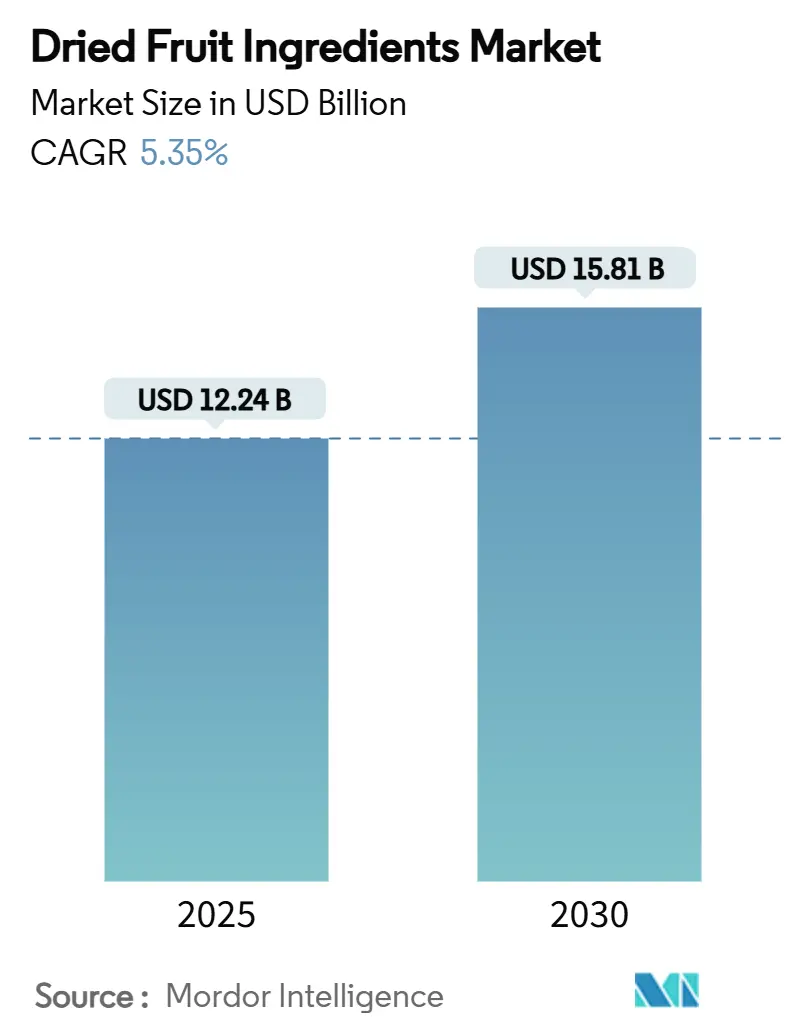
The dried fruit ingredients market size is estimated to be USD 12.24 billion in 2025 and is forecast to reach USD 15.81 billion by 2030, expanding at a 5.35% CAGR. Consumer preferences for nutrient-dense snacks drive the incorporation of dried fruits in cereals, snack bars, bakery items, and plant-based products. Food manufacturers utilize dried fruit ingredients to meet clean-label requirements and provide recognizable ingredients. Advancements in freeze-drying and vacuum dehydration technologies enhance product quality through improved flavor and nutrient retention, enabling manufacturers to develop premium ingredients for retail and industrial applications. Besides, tightening organic enforcement rules are encouraging processors to formalize traceability systems, which is raising entry barriers in high-value channels. Meanwhile, consolidation among mid-sized packers is fostering scale efficiencies that help offset raw-material cost spikes caused by adverse weather in California and Turkey. Strategic investments in water-efficient orchards, solar-powered dryers, and recyclable mono-material pouches indicate that ESG compliance is becoming a core differentiator in the dried fruit ingredients market.
Key Report Takeaways
- By fruit type, raisins led with 34.15% of the dried fruit ingredients market share in 2024; tropical and exotic fruits are forecast to post a 6.08% CAGR through 2030.
- By form, whole and chunks accounted for 46.52% of the dried fruit ingredients market size in 2024; powdered/granulated formats are projected to rise at a 6.45% CAGR between 2025 and 2030.
- By drying technology, sun/air drying held 58.23% share of the dried fruit ingredients market size in 2024; freeze drying is advancing at a 6.71% CAGR through 2030.
- By nature, conventional products captured 76.19% of the dried fruit ingredients market share in 2024; certified organic products are set to grow at a 7.22% CAGR over the same period.
- By end user, industrial applications represented 78.28% share of the dried fruit ingredients market size in 2024; retail channels are expanding at a 7.30% CAGR to 2030.
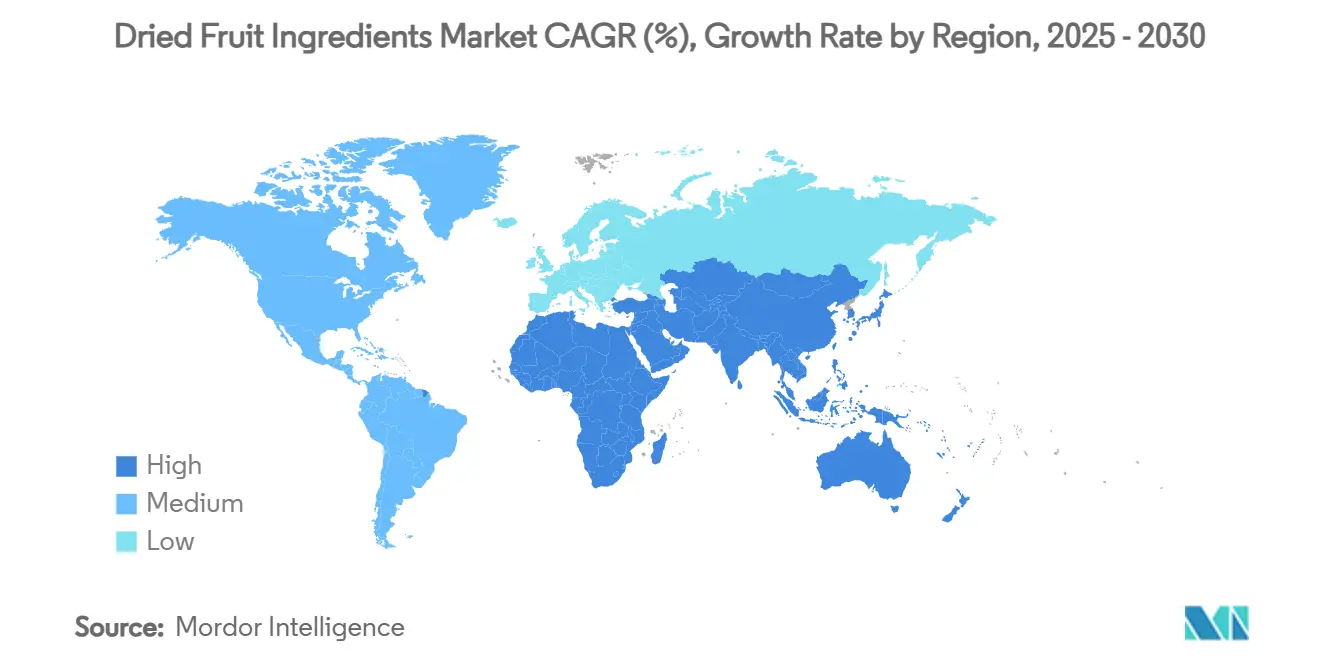
- By geography, Europe dominated with 32.17% dried fruit ingredients market share in 2024; Asia-Pacific is projected to be the fastest region at a 6.16% CAGR through 2030.
Note: Market size and forecast figures in this report are generated using Mordor Intelligence’s proprietary estimation framework, updated with the latest available data and insights as of January 2026.
Market Trends and Insights
Drivers Impact Analysis of Dried Fruit Ingredients Market*
| Driver | (~) % Impact on CAGR Forecast | Geographic Relevance | Impact Timeline |
|---|---|---|---|
| Rising awareness about health benefits of dried fruit ingredients | +1.2% | Global, with strongest impact in North America and Europe | Medium term (2-4 years) |
| Growing demand for natural, clean-label, and plant-based ingredients in food manufacturing | +1.0% | Global, led by Europe and North America | Long term (≥ 4 years) |
| Increased use as natural sweeteners and sugar substitutes in processed foods | +0.8% | North America and Europe, expanding to Asia-Pacific | Medium term (2-4 years) |
| Growth in food processing technologies enabling innovative formats and blends | +0.7% | Global, with technology hubs in North America, Europe, and China | Long term (≥ 4 years) |
| Demand for convenient, healthy snacks and on-the-go food options | +0.9% | Global, strongest in urban centers across all regions | Short term (≤ 2 years) |
| Innovation in packaging to maintain freshness, convenience, and traceability | +0.4% | Global, led by developed markets | Medium term (2-4 years) |
| Source: Mordor Intelligence | |||
Rising awareness about health benefits of dried fruit ingredients
Consumer awareness of health benefits continues to drive demand for dried fruit ingredients across markets. Consumers increasingly view dried fruits as nutrient-rich alternatives to processed snacks, particularly valuing their antioxidants, fiber, and essential mineral content. According to the Organic Trade Association, organic produce, including dried fruits, represented 30.1% of total organic sales in 2024, with a 5.2% annual growth rate, indicating strong consumer preference for clean-label products [1]Source: Organic Trade Association (OTA), "Growth of U.S. Organic Marketplace Accelerated in 2024", ota.com. This trend is particularly prominent among millennials and Generation Z, who actively seek organic/natural energy sources and functional nutrition. Additionally, the market growth is further supported by regulatory updates to dietary guidelines and labeling requirements, which promote transparent health claims and build consumer trust. This has expanded dried fruits' presence beyond retail into industrial applications, driving innovation in healthy snacks and bakery products. The perceived health benefits of dried fruits have increased consumers' willingness to pay premium prices, contributing to market growth in both developed and emerging markets.
Growing demand for natural, clean-label, and plant-based ingredients in food manufacturing
Industrial food manufacturers are increasingly incorporating dried fruit ingredients to meet consumer demand for natural, clean-label, and plant-based products. Food producers are shifting from synthetic additives to dried fruit ingredients in response to consumer preferences for transparent, natural, and healthier products. In Europe, PROFEL, representing more than 500 companies in the processed fruit sector, generates approximately EUR 22 billion in turnover, demonstrating the market's substantial economic impact [2]Source: European Association of Fruit and Vegetable Processing Industries (PROFEL), "PROFEL: Representing the processed fruit and vegetable sector in Europe", profel-europe.eu. PROFEL's focus on sustainable production and clean-label formulations aligns with industry-wide initiatives for transparency, traceability, and responsible sourcing practices. The industrial adoption of dried fruit ingredients continues to expand due to their functional properties and natural composition. This expansion is evident across multiple sectors, including bakery, snacks, and ready meals. Food manufacturers utilize dried fruits' nutritional benefits and versatility to develop products that meet both plant-based dietary requirements and clean-label standards. The combination of consumer demand for natural ingredients and industry adaptation, as demonstrated by PROFEL's activities, continues to drive growth in the global dried fruit ingredients market.
Increased use as natural sweeteners and sugar substitutes in processed foods
The demand for dried fruits as natural sweeteners and sugar substitutes continues to rise, particularly in bakery and confectionery products. Food manufacturers utilize the natural fructose content and flavor profiles of dried fruits to reduce refined sugar usage while maintaining product taste and quality. The market has expanded beyond traditional dried fruit applications, with innovations such as fruit pomace in confectionery products improving nutritional content while reducing sugar levels. This shift is driven by stricter regulations on added sugars, as manufacturers seek natural alternatives that avoid artificial ingredient listings and meet consumer demand for healthier options. Dried fruits provide both sweetening and texture modification properties, enabling simplified ingredient lists and production cost benefits. Market preferences vary by region, with dates being prominent in Middle Eastern and European markets, while raisins and dried cranberries dominate in North America. Food producers are developing products that align with consumer preferences for clean-label and healthier options, expanding dried fruit ingredients' applications in food manufacturing. The transition from refined sugars to dried fruit ingredients demonstrates both nutritional advancement and regulatory adherence, supporting the market's continued growth and diversification.
Growth in food processing technologies enabling innovative formats and blends
Food processing technologies, particularly freeze-drying and spray-drying, are driving significant changes in dried fruit ingredient production. These methods create new product formats that enhance nutritional preservation and extend shelf life compared to conventional drying techniques. Companies like GEA Group are developing freeze-drying equipment that maintains nutritional value while reducing operational costs. The emergence of hybrid technologies, such as spray freeze dryers, enables manufacturers to produce dried fruit ingredients with improved functional characteristics. These technological developments are especially beneficial for processing tropical and exotic fruits, which traditionally present challenges due to high moisture content and delicate flavors. The ability to achieve consistent ingredient quality helps food manufacturers develop reliable formulations across bakery, confectionery, and functional food applications. The enhanced stability and performance of these ingredients support higher price points in the market. These processing innovations drive both market volume and product development, strengthening the global dried fruit ingredients market and meeting the increasing demand for convenient, nutritious, natural ingredients in food production.
Restraints Impact Analysis of Dried Fruit Ingredients Market*
| Restraint | (~) % Impact on CAGR Forecast | Geographic Relevance | Impact Timeline |
|---|---|---|---|
| Climate-driven crop supply volatility and price spikes | -1.1% | Global, with highest impact in California, Turkey, and Mediterranean regions | Short term (≤ 2 years) |
| Tightening aflatoxin/pesticide residue limits | -0.6% | Global, with strictest enforcement in North America and Europe | Medium term (2-4 years) |
| High cost of dried fruits compared to fresh alternatives | -0.4% | Global, with strongest impact in price-sensitive emerging markets | Medium term (2-4 years) |
| Environmental impact of large-scale fruit drying operations | -0.3% | Global, with regulatory focus in Europe and North America | Long term (≥ 4 years) |
| Source: Mordor Intelligence | |||
Climate-driven crop supply volatility and price spikes
Weather-related disruptions in crop supply and price fluctuations are affecting dried fruit production and trade, as severe weather patterns and irregular rainfall impact cultivation in key growing regions. The USDA's Climate Adaptation Plan 2024-2027 emphasizes the need for agricultural system resilience, particularly in California, where water scarcity and temperature variations affect fruit yields and quality for dried fruit production. In Australia, resource constraints affect producer profitability, with small-scale growers such as Bob Vale selling water rights as costs exceed dried fruit prices. Similarly, in China, the Turpan region of Xinjiang Province, the country's primary raisin-producing area, experienced high early-summer temperatures that affected fruit pollination, resulting in reduced crop size and quality, according to USDA FAS. These conditions have reduced raw material availability and increased prices in 2024/25, with Chinese green raisins rising by 8-10% and Sultana raisins by over 50%, despite weak domestic demand [3]Source: International Nut & Dried Fruit Council, "Raisins, Sultanas and Currants Global Statistical Review", inc.nutfruit.org. Processors are adapting through enhanced risk management strategies, including source diversification, long-term supplier agreements, and investments in climate-resilient processing technologies to handle varying raw material quality. These adaptations aim to maintain supply stability amid environmental uncertainties and ensure continued dried fruit ingredient production globally. The climate-induced supply disruptions and prices are transforming competitive dynamics and driving supply chain innovations in the dried fruit ingredients market.
Tightening aflatoxin/pesticide residue limits
Food safety regulations for aflatoxin and pesticide residues require substantial investments in testing infrastructure and supply chain traceability from dried fruit ingredient manufacturers. The USDA's aflatoxin regulation for pistachios, limiting levels to 15 ppb for domestic consumption, establishes a benchmark for safety standards across dried fruit categories. Also, the FDA's July 2024 warning letter to High Quality Organics Inc. regarding organic dried fruit processing violations demonstrates the increased regulatory oversight and penalties for non-compliance. Besides, international trade faces additional challenges, as evidenced by India's FSSAI postponement of mandatory foreign facility registration to September 2024, creating compliance delays for exporters. These regulatory changes particularly affect smaller processors who lack resources for advanced quality management and traceability systems. Larger processors with established compliance infrastructure and testing capabilities gain market advantages, leading to increased market consolidation. The regulatory environment is transforming supply chain operations and quality control practices across the industry. These regulations now serve as fundamental factors in market growth, risk management, and industry structure, making compliance essential for maintaining market access both domestically and internationally.
*Our forecasts treat driver/restraint impacts as directional, not additive. The impact forecasts reflect baseline growth, mix effects, and variable interactions.
Dried Fruit Ingredients Market Segment Analysis
By Fruit Type:
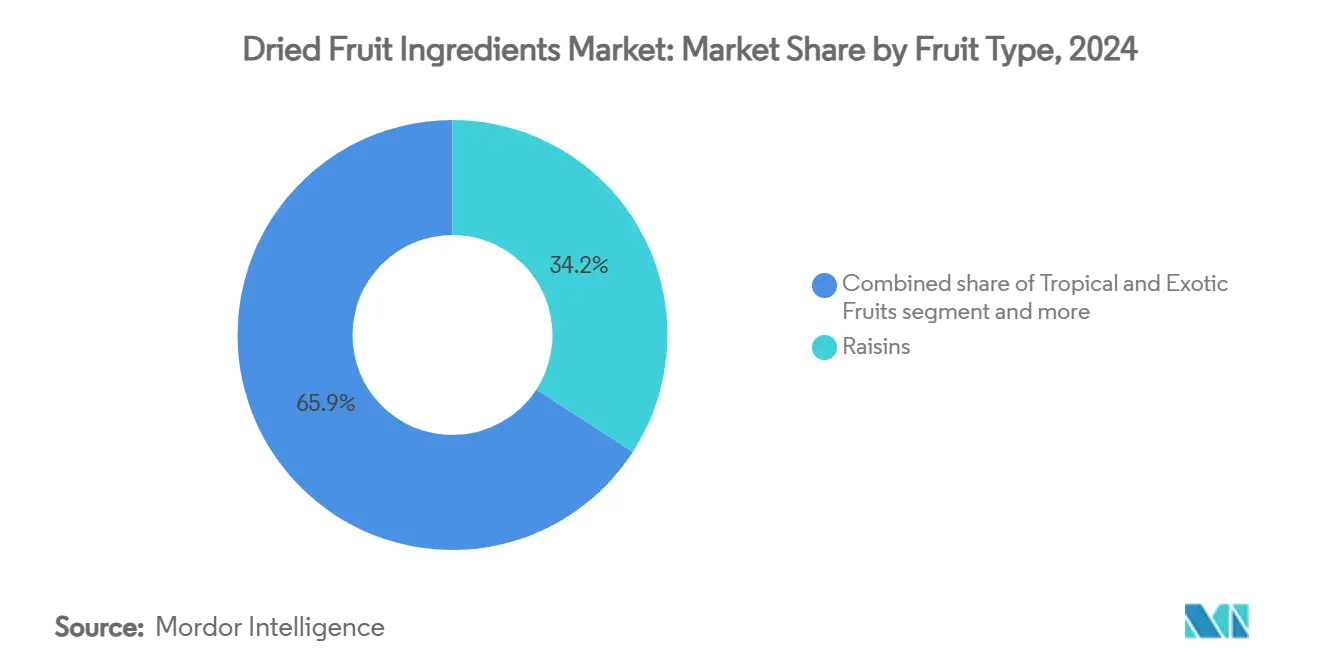
Tropical Varieties Drive InnovationRaisins hold a dominant 34.15% market share in 2024, supported by established supply chains and consumer familiarity. Tropical and exotic fruits demonstrate the highest growth potential with a projected 6.08% CAGR through 2030, as these varieties find increased use in premium food products and appeal to health-conscious consumers. The raisin market faces challenges as California production declines due to international competition and shifting consumer preferences. In response, the USDA has proposed changes to Marketing Order No. 989 to address industry consolidation. Besides, berries, including cranberry, blueberry, strawberry, and goji varieties, continue to grow due to their superfood status and antioxidant properties. For instance, Ocean Spray's USD 75 million expansion of its Wisconsin Rapids facility in September 2024 doubled its sweetened dried cranberry production capacity to over 30 million pounds annually.
Meanwhile, the "others" category, including apples, bananas, and oranges, presents opportunities for innovation through processing techniques that maintain nutritional value and extend shelf life. Tropical and exotic fruits show increased market penetration as established producers diversify their offerings. Baika exemplifies this trend, expanding into India and Indonesia while targeting 2,000 tons of prune exports in 2025. The segment's growth aligns with consumer demand for exotic flavors and functional nutrition, supported by improvements in cold chain logistics and processing technologies that preserve fruit quality during international distribution.



By Form:
Powdered Formats Gain Industrial TractionWhole and chunks formats held a 46.52% market share in 2024, as consumers prefer visible fruit pieces in snacking products. The powdered/granulated segment is expected to grow at a 6.45% CAGR through 2030, primarily due to increased industrial use in processed foods. Food manufacturers are increasingly adopting powdered formats to achieve consistent ingredient incorporation and improved shelf stability in their formulations. Additionally, sliced formats remain essential for cereal and bakery applications, while paste and puree concentrates are becoming more prevalent in beverage and dairy products where intense fruit flavor is essential.
Furthermore, fruit pomace applications in confectionery showcase how processing innovations create value-added formats that improve nutritional content while reducing waste. Advanced packaging developments, including multi-layer side gusset dry fruit bags with oxygen, moisture, and UV protection, extend product shelf life and enhance presentation across all formats. This format diversification is particularly evident in organic segments, where higher pricing supports investments in specialized processing equipment and packaging technologies that maintain nutritional value and visual quality.
By Nature:
Organic Certification Drives Premium GrowthThe conventional dried fruit segment accounted for 76.19% of dried fruit ingredient sales in 2024. This dominance stems from established supply chains and cost advantages that ensure widespread product availability and competitive pricing. While conventional products maintain market leadership, they face increasing competition from organic alternatives due to growing consumer awareness and narrowing price gaps between conventional and organic products. This market shift is prompting manufacturers to diversify their portfolios with organic offerings to address changing consumer preferences.
Meanwhile, the organic dried fruit segment is expected to grow at a CAGR of 7.22% through 2030, driven by consumer preference for certified organic products. The USDA's Strengthening Organic Enforcement rule, implemented in March 2024, requires all organic imports to have valid National Organic Program certificates and USDA organic declarations. This regulation benefits established organic processors with compliant supply chains. The combination of regulatory support, sustainability trends, and increased demand for traceable products creates opportunities for processors who invest in organic certification and supply chain management. As a result, organic dried fruit ingredients are becoming significant growth drivers in the global market's premium segment.
By Drying Technology:
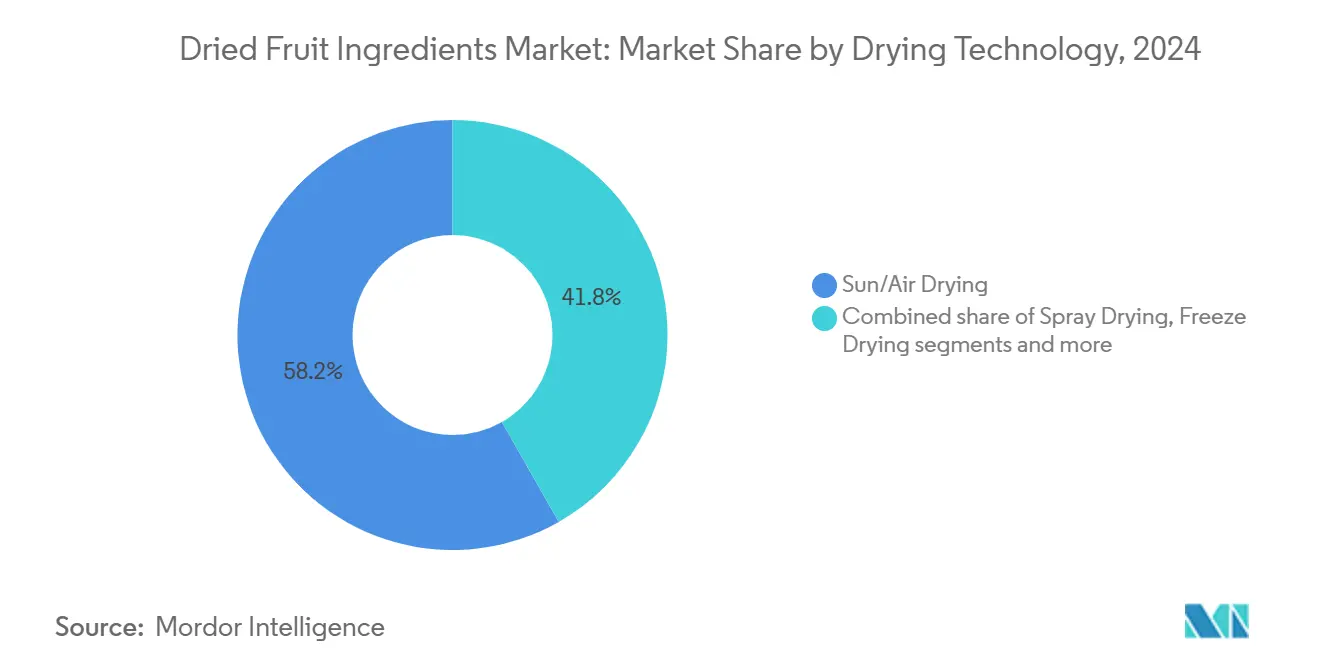
Freeze Drying Commands Premium PositioningSun/air drying holds 58.23% of the market share in 2024, primarily due to its lower operational costs and established infrastructure in traditional production regions. Freeze drying exhibits the highest growth rate at 6.71% CAGR through 2030, supported by its premium market positioning and ability to preserve nutritional content. The acquisition of Paradiesfrucht GmbH by Thrive Freeze Dry in July 2024 demonstrates the industry's consolidation to expand global freeze-dried food production. Besides, spray drying continues to serve specialized product formats, while vacuum/microwave and infrared drying technologies gain traction in processing sensitive fruit varieties.
Combination technologies, such as spray freeze dryers that integrate multiple drying processes, enable manufacturers to develop premium products with enhanced functional properties and longer shelf life. Manufacturers are refining osmotic infusion and dehydration methods to decrease processing time while preserving fruit structure and nutritional value. GEA Group's focus on freeze-drying innovation for food sustainability demonstrates the industry's shift toward environmentally responsible processing solutions. Advanced processing methods generate higher margins despite requiring increased capital investment, reflecting the market's movement toward premium products and functional nutrition.
By End User:
Retail Channels Accelerate Direct Consumer EngagementIndustrial applications held a 78.28% market share in 2024, covering sectors such as bakery, confectionery, breakfast cereals, snack bars, dairy, frozen desserts, meat products, ready meals, beverages, smoothies, baby food, and pet food. The retail channel segment is growing at a 7.30% CAGR through 2030, driven by consumer demand for convenient and healthy snacking options. The industrial segment's dominance stems from dried fruits' functionality as natural sweeteners, texture enhancers, and nutritional fortifiers in processed foods. Manufacturers are replacing synthetic additives with fruit-based ingredients to meet clean-label requirements. This trend is evident in SunOpta's performance, which reported revenue of USD 201.6 million in Q1 2025, supported by 12.2% volume growth in plant-based beverages and fruit snacks.
In industrial applications, bakery and confectionery constitute the primary subsegments, utilizing dried fruits for natural sweetening and prolonged shelf life in their products. Breakfast cereals and snack bars show increased adoption due to their health benefits and convenience. The dairy and frozen dessert segments incorporate dried fruits to enhance texture and flavor profiles. However, the retail segment continues to expand as consumers increasingly purchase premium dried fruit products directly, supported by advances in packaging technology and wider availability through grocery retailers. Besides, the pet food segment demonstrates growth potential, with the USDA implementing organic standards for pet food processing to enhance market development and consumer confidence.
Geography Analysis
Europe Dried Fruit Ingredients Market
The European region accounts for 32.17% market share in 2024, supported by advanced supply chain infrastructure, strict organic certification standards, and high consumer demand for premium products. The region's established trade networks with Mediterranean and African suppliers ensure consistent product sourcing. The European market is experiencing increased consumer focus on sustainability, with buyers demanding environmental responsibility and supply chain transparency, aligned with the EU's Green Deal target of climate neutrality by 2050. Additionally, the dried pineapple segment is expected to grow 3-4% annually, with Germany and the UK being the primary importers and significant private label markets as per CBI. The region is diversifying its sourcing strategy by developing partnerships with suppliers in Africa and Central Asia, reducing reliance on traditional sources.
APAC Dried Fruit Ingredients Market
The dried fruit ingredients market in Asia-Pacific is set to grow at a CAGR of 6.16% through 2030, making it the fastest-growing region globally. This growth stems from increasing disposable incomes, urbanization, and growing health awareness among consumers in China, India, and Japan. China's dried fruit ingredient demand continues to grow despite production challenges in the Xinjiang region, as manufacturers develop products aligned with clean-label and functional food preferences. India's dried fruit exports have increased following the implementation of the Agriculture Export Policy 2018, which focuses on improving export quality and capabilities. The Food Safety and Standards Authority of India (FSSAI) has extended the foreign food manufacturing facilities' mandatory registration deadline to September 2024, supporting market growth through simplified trade and compliance processes. Also, the Australian agricultural sector further strengthens regional supply through improved processing technologies and export opportunities.
The Americas and MEA Dried Fruit Ingredients Market
North America represents a mature market with established consumption patterns and advanced distribution networks that maintain consistent demand for dried fruit ingredients, especially in bakery, confectionery, and snack products. South America and the Middle East and Africa are developing as key production centers while experiencing growth in local consumption. South American producers, particularly in Chile, are expanding their exports, with companies like Baika focusing on Asian markets while maintaining European trade relationships. Besides, the Middle East and Africa region benefits from its traditional dried fruit production expertise and geographic proximity to European markets, supporting both export growth and increased domestic consumption due to urbanization and health consciousness. The market demonstrates distinct regional characteristics, with targeted strategies driving expansion across different geographical areas.

Competitive Landscape
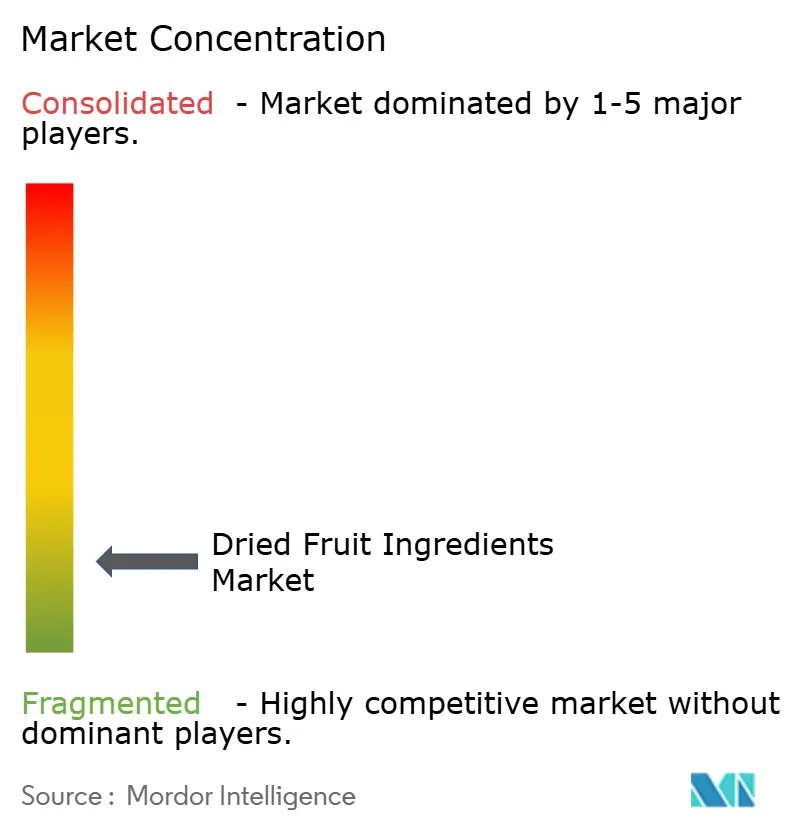
The dried fruit ingredients industry operates in a highly fragmented, competitive environment, characterized by diverse product portfolios and regional production patterns. This market structure enables both established cooperatives and new processors to compete through differentiated positioning and operational strategies aligned with local consumer preferences. The fragmented nature of the market encourages innovation and various competitive approaches, allowing companies to target specific market segments as demand increases.
Strategic consolidation is emerging as a key trend, with major players pursuing vertical integration and geographic expansion to enhance their market presence and supply chain control. Thrive Freeze Dry's acquisition of Paradiesfrucht GmbH in July 2024 demonstrates this trend, combining processing capabilities with expanded regional coverage. These strategic moves improve competitiveness by integrating technological capabilities with broader market reach, enabling companies to address varied consumer needs and regulatory requirements.
Technology adoption and regulatory compliance have become essential competitive factors in the market. Companies are investing in advanced processing equipment, organic certification programs, and supply chain traceability systems to meet consumer demands for quality, transparency, and sustainability. The strict implementation of food safety standards, including FDA regulations, benefits processors with strong quality management systems while creating barriers for smaller operators, potentially driving market consolidation. Growth opportunities exist in emerging markets, premium organic segments, and new product formats using freeze-drying and spray-drying technologies, offering pathways for company expansion in the dried fruit ingredients industry.
Dried Fruit Ingredients Industry Leaders
-
Sun-Maid Growers of California
-
Ocean Spray Cranberries, Inc.
-
Dole plc
-
Mariani Packing Company
-
Döhler GmbH
- *Disclaimer: Major Players sorted in no particular order
Dried Fruit Ingredients Market Companies Covered in this Report
- Sun-Maid Growers of California
- Ocean Spray Cranberries, Inc.
- Dohler GmbH
- Dole plc
- Mariani Packing Company
- Sunsweet Growers Inc.
- National Raisin Company
- Mojan Food Industries (Mojan Dried Fruits)
- Frubero Freeze Dried Solution
- Graceland Fruit, Inc.
- Montagu Snacks
- Traina Foods
- Tree Top, Inc.
- Nagatanien Holdings Co., Ltd.
- Sweet Dried Fruit Inc.
- European Freeze Dry
- Happilo International Private Limited
- Seawind Foods
- Berrifine A/S
- Mavuno Harvest

Recent Industry Developments in Dried Fruit Ingredients Market
- January 2025: Döhler partnered with The Perfect Pureé to introduce Tastecraft freeze-dried fruit products in North America. Tastecraft, Döhler's globally registered trademark, provided food and beverage solutions for the foodservice industry worldwide. This partnership with The Perfect Pureé aligned with Döhler's strategy to expand its foodservice presence in North America. The Tastecraft Freeze-Dried Fruit line featured seven fruit varieties suitable for garnishes, inclusions, and toppings across various food and beverage applications.
- November 2024: Del Monte introduced dried fruit snacks in the United Kingdom through a licensing agreement with D2 International. The product line included Lemon Apple Sticks (20g), Strawberry Apple Sticks (20g), Spiced Apple Crisps (20g, Christmas edition), and Naked Apple Crisps (20g).
- March 2024: Brothers All Natural launched Infused Fruit Crisps in three flavor combinations: Fuji Apples infused with Raspberry, Blueberry, and Strawberry. The company soaked sliced Fuji apples in berry juice before freeze-drying them to create a crispy texture and fruit flavor combination. The fruit crisps contained 100% fruit without additives, preservatives, or artificial colorings.


Global Dried Fruit Ingredients Market Report Scope
| Raisins |
| Berries (cranberry, blueberry, strawberry, goji) |
| Tropical and Exotic Fruits (dates, apricots, figs, mango, pineapple, papaya) |
| Others (e.g., apples, bananas, orange) |
| Whole and Chunks |
| Sliced |
| Powdered/Granulated |
| Paste and Puree Concentrates |
| Sun/Air Drying |
| Freeze Drying |
| Spray Drying |
| Vacuum/Microwave and Infrared Drying |
| Osmotic Infusion and Dehydration |
| Conventional |
| Organic |
| Industrial | Bakery and Confectionery |
| Breakfast Cereals and Snack Bars | |
| Dairy and Frozen Desserts | |
| Meat, Poultry and Ready Meals | |
| Beverages and Smoothies | |
| Baby and Toddler Food | |
| Pet Food and Treats | |
| Retail |
| North America | United States |
| Canada | |
| Mexico | |
| Rest of North America | |
| Europe | Germany |
| United Kingdom | |
| Italy | |
| France | |
| Spain | |
| Netherlands | |
| Poland | |
| Belgium | |
| Sweden | |
| Rest of Europe | |
| Asia-Pacific | China |
| India | |
| Japan | |
| Australia | |
| Indonesia | |
| South Korea | |
| Thailand | |
| Singapore | |
| Rest of Asia-Pacific | |
| South America | Brazil |
| Argentina | |
| Colombia | |
| Chile | |
| Peru | |
| Rest of South America | |
| Middle East and Africa | South Africa |
| Saudi Arabia | |
| United Arab Emirates | |
| Nigeria | |
| Egypt | |
| Morocco | |
| Turkey | |
| Rest of Middle East and Africa |
| By Fruit Type | Raisins | |
| Berries (cranberry, blueberry, strawberry, goji) | ||
| Tropical and Exotic Fruits (dates, apricots, figs, mango, pineapple, papaya) | ||
| Others (e.g., apples, bananas, orange) | ||
| By Form | Whole and Chunks | |
| Sliced | ||
| Powdered/Granulated | ||
| Paste and Puree Concentrates | ||
| By Drying Technology | Sun/Air Drying | |
| Freeze Drying | ||
| Spray Drying | ||
| Vacuum/Microwave and Infrared Drying | ||
| Osmotic Infusion and Dehydration | ||
| By Nature | Conventional | |
| Organic | ||
| By End User | Industrial | Bakery and Confectionery |
| Breakfast Cereals and Snack Bars | ||
| Dairy and Frozen Desserts | ||
| Meat, Poultry and Ready Meals | ||
| Beverages and Smoothies | ||
| Baby and Toddler Food | ||
| Pet Food and Treats | ||
| Retail | ||
| By Geography | North America | United States |
| Canada | ||
| Mexico | ||
| Rest of North America | ||
| Europe | Germany | |
| United Kingdom | ||
| Italy | ||
| France | ||
| Spain | ||
| Netherlands | ||
| Poland | ||
| Belgium | ||
| Sweden | ||
| Rest of Europe | ||
| Asia-Pacific | China | |
| India | ||
| Japan | ||
| Australia | ||
| Indonesia | ||
| South Korea | ||
| Thailand | ||
| Singapore | ||
| Rest of Asia-Pacific | ||
| South America | Brazil | |
| Argentina | ||
| Colombia | ||
| Chile | ||
| Peru | ||
| Rest of South America | ||
| Middle East and Africa | South Africa | |
| Saudi Arabia | ||
| United Arab Emirates | ||
| Nigeria | ||
| Egypt | ||
| Morocco | ||
| Turkey | ||
| Rest of Middle East and Africa | ||


Key Questions Answered in the Report
What is the current value of the dried fruit ingredients market?
The dried fruit ingredients market size reached USD 12.24 billion in 2025 and is projected to climb to USD 15.81 billion by 2030.
Which region leads in dried fruit ingredients consumption?
Europe held 32.17% market share in 2024 due to strict organic standards and strong demand for premium snacks.
Which dried fruit type is growing the fastest?
Tropical and exotic fruits are forecast to expand at a 6.08% CAGR through 2030, outpacing traditional categories.
How fast is the retail channel expanding?
Retail sales are set to rise at a 7.30% CAGR to 2030 as consumers seek convenient, healthy snacking options.
What technology offers the highest growth potential?
Freeze drying is projected to grow at 6.71% CAGR because it preserves nutrients and aligns with premium positioning.
Page last updated on:





