
Chalcedony Earrings Market Size and Share
Market Overview
| Study Period | 2021 - 2031 |
|---|---|
| Market Size (2026) | USD 5.84 Billion |
| Market Size (2031) | USD 8.41 Billion |
| Growth Rate (2026 - 2031) | 7.57 % |
| Fastest Growing Market | Middle East and Africa |
| Largest Market | Asia Pacific |
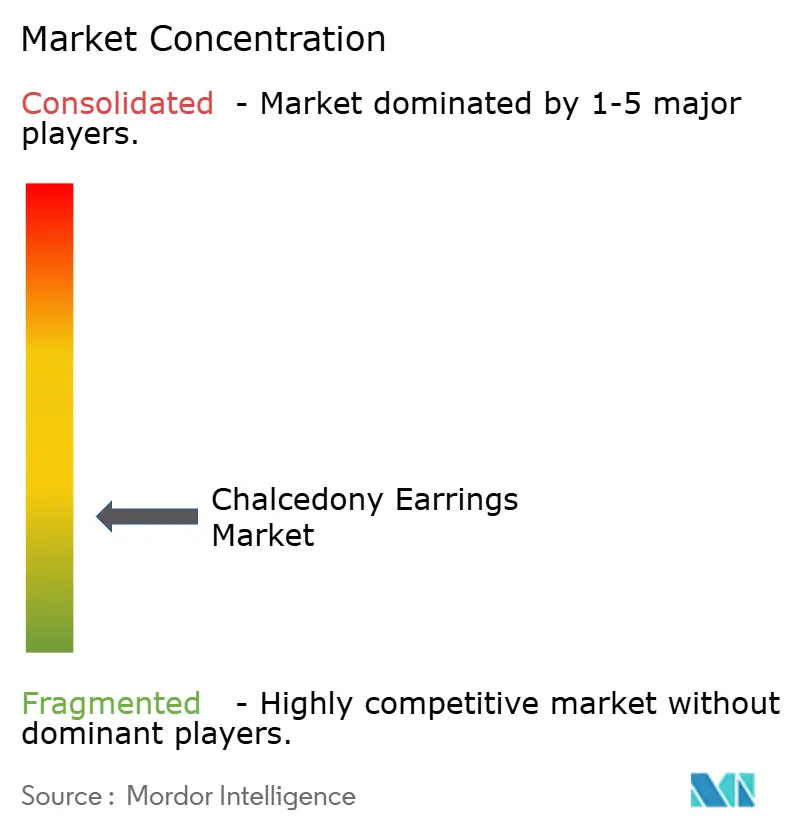
| Market Concentration | Low |
Major Players *Disclaimer: Major Players sorted in no particular order Image © Mordor Intelligence. Reuse requires attribution under CC BY 4.0. | |
Chalcedony Earrings Market Analysis by Mordor Intelligence
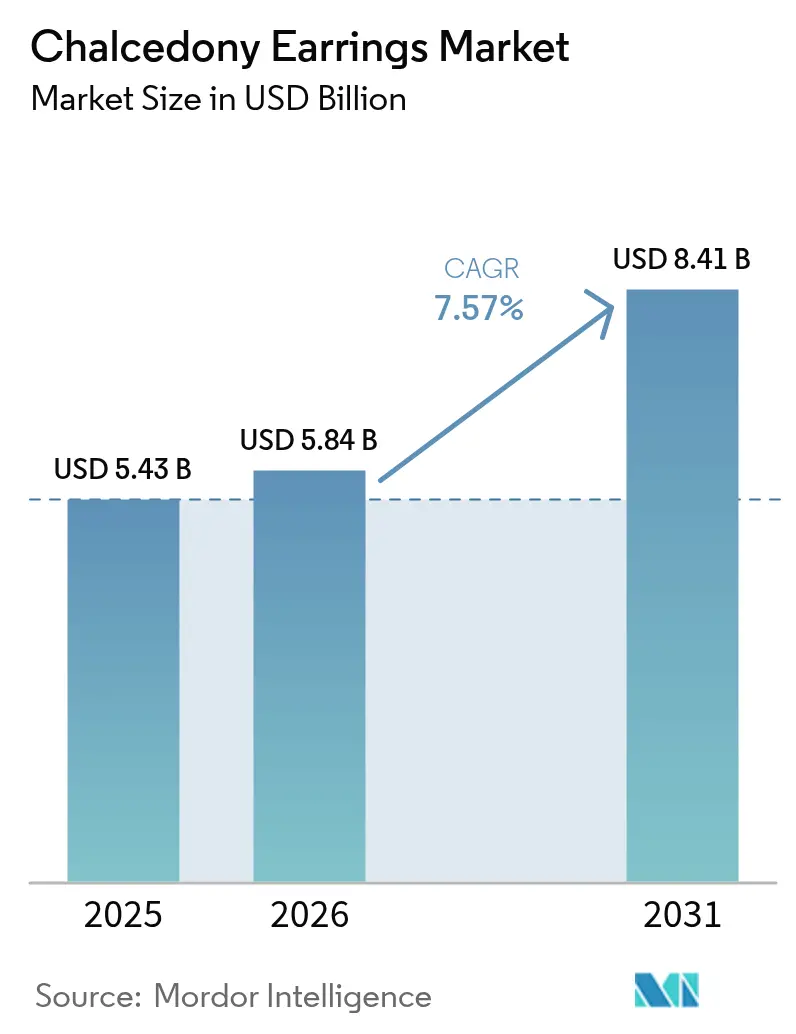
The chalcedony earrings market size in 2026 is estimated at USD 5.84 billion, growing from 2025 value of USD 5.43 billion with 2031 projections showing USD 8.41 billion, growing at 7.57% CAGR over 2026-2031. Amid ongoing macroeconomic fluctuations, consumer preferences are increasingly shifting toward semi-precious stones, primarily driven by the affordability of chalcedony. Trends in gifting, endorsements from social media influencers, and heightened availability are fueling this market's expansion. The Asia-Pacific region maintains its leadership in production scale and cost efficiency, solidifying its position as a critical player in the global market. Concurrently, the Middle East and Africa are emerging as high-growth consumption markets, with demand accelerating significantly. Luxury retailers in these regions are strategically capitalizing on the growing interest in culturally significant colored stones to strengthen their market presence. Moreover, premiumization trends are becoming increasingly evident, highlighted by the strong annual growth of gold-plated jewelry. The rising popularity of lab-created stones, driven by their ethical sourcing benefits, is also reshaping the market dynamics. Additionally, the expansion of online sales channels, supported by patented virtual-try-on technologies, is further propelling market growth and enhancing the consumer purchasing experience.
Key Report Takeaways
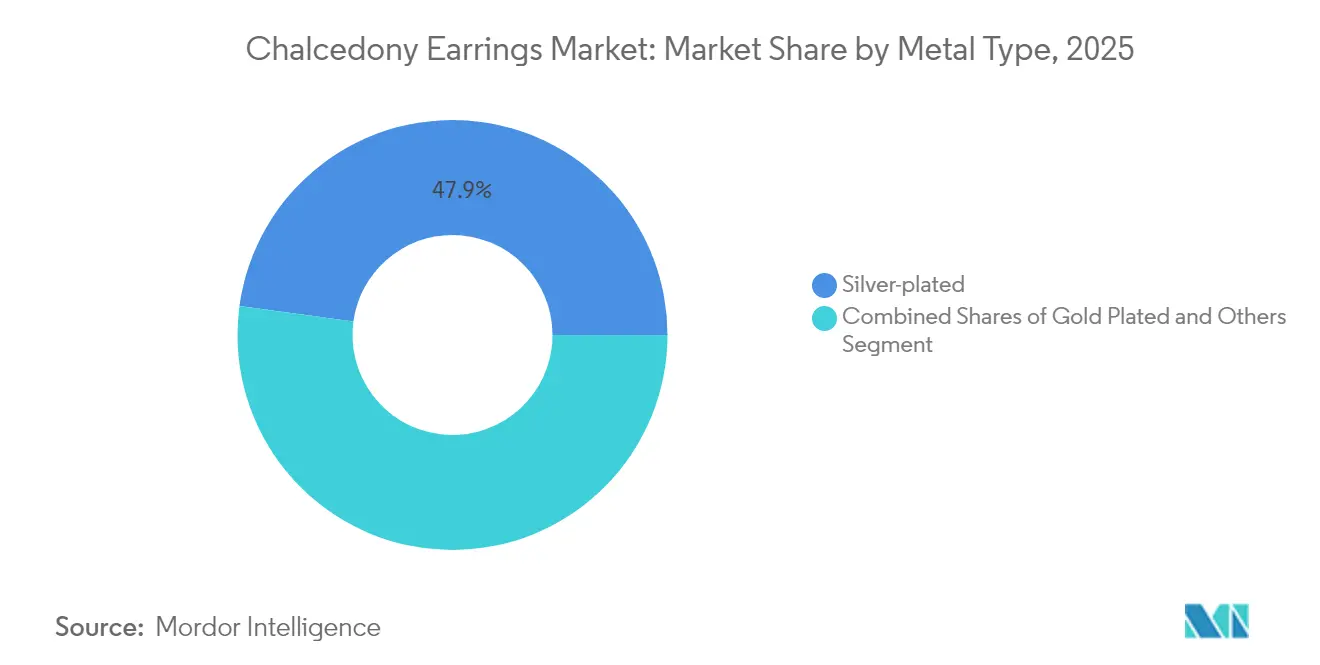
- By metal type, silver-plated captured 47.85% revenue share in 2025, while gold-plated is set to grow at 11.37% through 2031.
- By stone creation method, natural stones commanded 84.25% share of the chalcedony earrings market size in 2025; lab-created variants are projected to advance at 10.34% CAGR by 2031.
- By price range, the mass market led with 67.95% share in 2025, whereas the premium tier is accelerating at 10.88% CAGR to 2031.
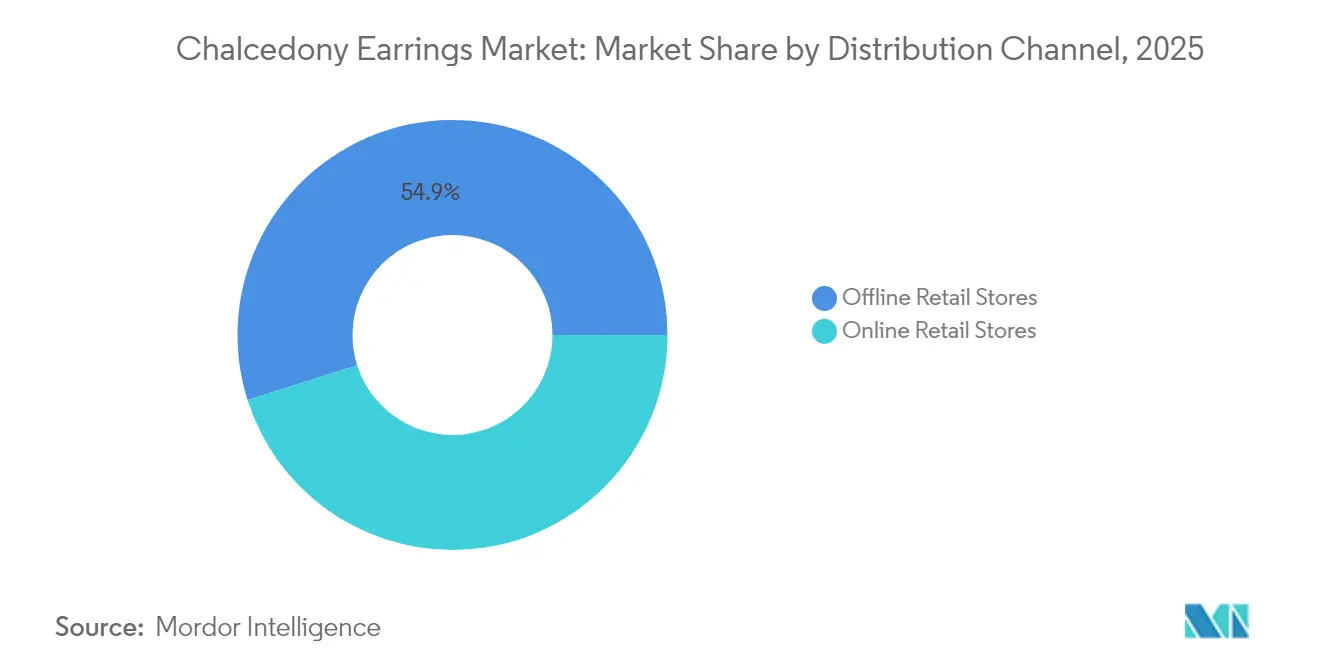
- By distribution channel, offline retail retained a 54.88% share in 2025, and online retail is rising at 9.65% CAGR to 2031.
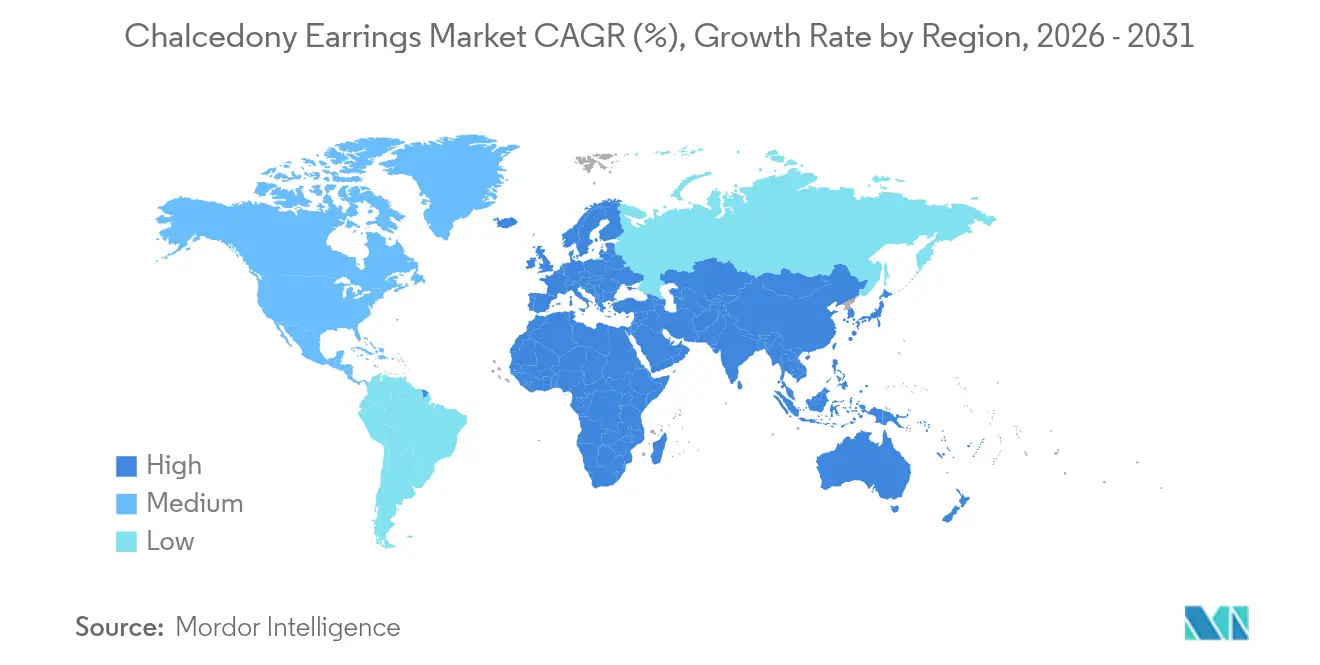
- By geography, Asia-Pacific held 36.62% of the chalcedony earrings market share in 2025; the Middle East and Africa is forecast to expand at a 10.61% CAGR to 2031.
Note: Market size and forecast figures in this report are generated using Mordor Intelligence’s proprietary estimation framework, updated with the latest available data and insights as of 2026.
Market Trends and Insights
Drivers Impact Analysis of Chalcedony Earrings Market*
| Driver | (~) % Impact on CAGR Forecast | Geographic Relevance | Impact Timeline |
|---|---|---|---|
| Increasing gifting trends during festivals and special occasions | +1.2% | Global, with a concentration in Asia-Pacific and the Middle East | Medium term (2-4 years) |
| Rising demand for unique and semi-precious gemstone jewelry | +1.8% | North America and Europe, spill-over to Asia-Pacific | Long term (≥ 4 years) |
| Increasing online availability of custom and designer earrings | +1.5% | Global, with early gains in North America, Europe | Short term (≤ 2 years) |
| Rising awareness of gemstone-based metaphysical healing beliefs | +0.9% | North America and Europe core, expanding to Asia-Pacific | Medium term (2-4 years) |
| Social media influencers fueling greater demand for gemstone jewelry | +1.3% | Global, strongest in North America, Europe, urban Asia-Pacific | Short term (≤ 2 years) |
| Virtual try-on feature via e-commerce platforms surges demand | +1.1% | Global, with technology adoption leaders in North America, Europe | Short term (≤ 2 years) |
| Source: Mordor Intelligence | |||
Increasing gifting trends during festivals and special occasions
In the Middle East, religious festivals and cultural celebrations significantly influence seasonal purchasing patterns, driving consistent and predictable demand for jewelry during these periods. According to the World Gold Council, global jewelry consumption reached 1,878.4 tons in 2024, highlighting the sustained importance of this market[1]. Chalcedony, positioned as an affordable luxury product, caters effectively to gifting scenarios where emotional significance takes precedence over substantial financial expenditure. Additionally, the increasing global exchange of cultural practices has heightened awareness of diverse celebration traditions, creating new opportunities for businesses to tap into cross-cultural gifting markets. E-commerce platforms play a critical role in leveraging this trend by enabling businesses to execute highly targeted seasonal marketing strategies and offer customized gift packaging solutions. These efforts not only enhance customer engagement but also strengthen brand loyalty and satisfaction.
Rising demand for unique and semi-precious gemstone jewelry
Chalcedony is increasingly emerging as a competitive option within the U.S. jewelry market, driven by evolving consumer preferences for distinctive and personalized designs that deliver individuality at a more affordable price point compared to traditional precious gemstones. The U.S. jewelry sector, comprising approximately 17,600 stores[2], presents significant opportunities for specialized retailers to differentiate themselves by offering unique chalcedony varieties, such as fire agate sourced from Arizona or Fairburn agates from South Dakota. This growing demand aligns with a broader market trend where consumers prioritize authentic, story-driven purchases over standardized, mass-produced alternatives. Furthermore, the geographic concentration of demand in North America and Europe can be attributed to higher disposable income levels and a long-standing cultural appreciation for artisanal craftsmanship, which continues to drive the adoption of unique and high-quality jewelry pieces.
Increasing online availability of custom and designer earrings
Digital marketplaces have revolutionized the accessibility of design studios, which were previously restricted to physical boutiques. The introduction of virtual-try-on patents has effectively addressed key challenges such as scale, perspective, and skin-tone visualization for earrings, enhancing the customer experience. Artisans are leveraging advanced configurable design interfaces that empower buyers to personalize their purchases by selecting stone color, metal finish, and engraving details. This approach enables artisans to generate revenue through made-to-order models while eliminating the risks associated with maintaining inventory. Furthermore, cross-border shipping agreements have streamlined logistics, allowing U.S.-based designers to deliver products to European customers in under a week, thereby strengthening their service credibility and global reach. Additionally, platform algorithms now curate comprehensive gemstone education modules, which play a pivotal role in improving customer engagement and driving higher conversion rates.
Social media influencers fueling greater demand for gemstone jewelry
Influencer marketing has significantly elevated the market presence of chalcedony, transforming it from a relatively obscure gemstone into a sought-after category within the jewelry industry. This shift is particularly evident among younger consumer segments who prioritize visually appealing, Instagram-worthy accessories. The wide range of chalcedony varieties, from the subtle translucence of blue chalcedony to the vibrant tones of carnelian, offers visually striking content that enhances social media engagement, driving both product discovery and purchase intent. However, compliance with FTC guidelines (16 CFR 23.27), which require accurate disclosure of gemstone properties, presents challenges for influencer partnerships. Despite these challenges, brands and influencers that transparently communicate the authenticity of natural chalcedony gain a competitive advantage by building consumer trust. This trend is gaining momentum in urban markets, where high social media penetration and a fashion-forward consumer base create strong demand for distinctive and unique jewelry options.
Restraints Impact Analysis of Chalcedony Earrings Market*
| Restraint | (~) % Impact on CAGR Forecast | Geographic Relevance | Impact Timeline |
|---|---|---|---|
| Presence of counterfeit and low-grade gemstone imitations | -0.8% | Global, particularly affecting online channels | Medium term (2-4 years) |
| Limited awareness about chalcedony in certain regions | -0.6% | Emerging markets in Africa, parts of Asia-Pacific | Long term (≥ 4 years) |
| High price sensitivity among middle and low-income buyers | -0.9% | Global, concentrated in price-sensitive segments | Short term (≤ 2 years) |
| Intense competition from gold, diamond, and synthetic jewelry | -1.1% | Global, strongest in established jewelry markets | Long term (≥ 4 years) |
| Source: Mordor Intelligence | |||
Presence of counterfeit and low-grade gemstone imitations
Authentication challenges, driven by the influx of low-quality imitations in online marketplaces, significantly undermine consumer trust and weaken pricing power. This issue is particularly detrimental to chalcedony, a gemstone valued for its natural beauty and metaphysical attributes. In response, X-ray fluorescence spectroscopy has emerged as a vital technology for gemstone authentication. Academic studies emphasize its critical role in detecting fraudulent gemstones, especially as advancements in technology enable increasingly sophisticated counterfeit methods. The Laboratory Manual Harmonisation Committee has introduced standardized guidelines to establish robust authentication frameworks; however, inconsistent enforcement across global markets limits their effectiveness. Additionally, online platforms face significant difficulties in implementing large-scale verification processes, creating vulnerabilities that allow counterfeit products to infiltrate the market and harm brand reputation.
Intense competition from gold, diamond, and synthetic jewelry
Established categories of precious metals and gemstones continue to dominate consumer preferences and secure prime retail positioning, thereby exerting significant competitive pressure on chalcedony in terms of both market share and pricing strategies. Synthetic gemstones, offering similar visual appeal at more competitive price points, further challenge chalcedony's market potential. Meanwhile, gold jewelry retains its cultural and traditional importance across various markets, reinforcing its stronghold. In numerous cultures, particularly in regions such as India and the Middle East, gold jewelry plays a pivotal role in significant life events, including rituals, weddings, and festivals. Chalcedony, however, is rarely incorporated into these traditional practices. Furthermore, gold and diamonds are widely regarded as investment assets due to their strong resale value, whereas chalcedony lacks a well-established secondary market, which discourages consumer purchases and limits its appeal as a viable investment option. Lab-grown diamonds, supported by extensive marketing campaigns and regulatory transparency, have successfully enhanced consumer awareness, creating a distinct advantage over the relatively obscure chalcedony varieties.
*Our forecasts treat driver/restraint impacts as directional, not additive. The impact forecasts reflect baseline growth, mix effects, and variable interactions.
Chalcedony Earrings Market Segment Analysis
By Metal Type:
Gold-Plated Drives Premium PositioningGold-plated variants are projected to achieve a robust compound annual growth rate (CAGR) of 11.37% through 2031, reflecting their growing popularity and market penetration. Meanwhile, silver-plated products continue to dominate, accounting for a significant 47.85% of total revenues in 2025. The 23 standards published by ISO/TC 174, which govern plating thickness and purity, play a critical role in enhancing consumer trust and ensuring product quality. Silver-plated items maintain strong consumer appeal due to their affordability and suitability as gifts, while the inclusion of ruthenium or rhodium accents is driving growth within the emerging "Others" category.
Designers are increasingly leveraging mixed-metal strategies, such as combining gold fronts with silver posts, to deliver a balance of hypoallergenic properties and versatile aesthetics. The cultural and symbolic importance of gold continues to drive robust demand in key markets, including India, Indonesia, and the Gulf states. According to the World Gold Council (WGC), total gold demand increased by 1% year-over-year in Q4 2024. Innovations in electroplating technology now enable the application of thicker deposits, significantly extending the wear life of products to over three years under normal usage conditions. Retailers are capitalizing on these advancements by offering warranty programs tied to replating services, thereby unlocking new streams of recurring revenue. Collectively, these developments reinforce the ongoing premiumisation trend within the chalcedony earrings market, highlighting a shift toward higher-value offerings and enhanced consumer experiences.

By Stone Creation Method:
Lab-Created Gains MomentumNatural chalcedony commands 84.25% market share in 2025, yet lab-created alternatives surge at 10.34% CAGR through 2031, reflecting evolving consumer attitudes toward synthetic gemstones. Lab-created chalcedony offers consistency in color and clarity while addressing ethical sourcing concerns that increasingly influence purchase decisions. Natural varieties maintain premium positioning through authenticity narratives and unique geological formations that create distinctive patterns.
The differentiation in production methods has resulted in the formation of distinct market segments, each offering unique value propositions and targeting specific consumer profiles. Natural chalcedony appeals to consumers who prioritize authentic geological specimens and the associated metaphysical properties. In contrast, lab-created chalcedony attracts environmentally conscious buyers and those who value consistent aesthetics. Additionally, the Federal Trade Commission (FTC) guidelines, which require clear disclosure of synthetic versus natural materials, enhance market transparency. These regulations empower consumers to make informed purchasing decisions while mitigating the risk of deceptive marketing practices. The ongoing evolution of this market indicates a complementary coexistence of both segments, with each addressing distinct consumer needs and catering to different price points.
By Price Range:
Premium Segment AcceleratesThe premium segment drives 10.88% CAGR through 2031 while the mass market maintains 67.95% share in 2025, indicating bifurcated demand patterns where volume remains accessible but growth concentrates in higher-value propositions. This trend aligns with the broader U.S. jewelry market's shift toward 'accessible luxury,' as consumers increasingly seek enhanced experiences without incurring the costs associated with precious gemstones. Premium chalcedony earrings capitalize on superior stone quality, intricate designs, and designer branding to justify higher price points. In contrast, mass market products sustain their volume leadership by leveraging retail accessibility and affordability, particularly for gift-giving purposes.
The expansion of the premium segment reflects evolving consumer preferences, with buyers demonstrating a greater willingness to invest in distinctive pieces that combine aesthetic appeal with potential value appreciation. This segment benefits from the limited production of rare chalcedony varieties, creating scarcity value that supports premium pricing. Additionally, designer collaborations and artisanal craftsmanship enhance the perceived value beyond the base material cost. These factors enable robust margins, supporting specialized retail channels and custom services. The segmentation of price ranges indicates a maturing market, where consumers are increasingly discerning between commodity and premium offerings within the chalcedony category.
By Distribution Channel:
Online Retail Transforms AccessOnline retail stores accelerate at 9.65% CAGR through 2031 while offline retail maintains 54.88% share in 2025, reflecting digital transformation that expands market reach while preserving tactile shopping preferences. Innovations such as virtual try-on technologies, exemplified by patent US20220197459A1 for earring visualization, address key challenges in online jewelry retail by providing realistic product previews. Online platforms are expanding access to niche chalcedony varieties and custom design services, fostering connections between global artisans and international consumers. However, offline retail continues to offer a competitive edge through high-touch sales processes and immediate product inspection, which remain critical for jewelry purchases.
The transformation of distribution channels has led to the emergence of hybrid models, where online platforms drive offline purchases and vice versa. E-commerce platforms play a crucial role in educating consumers about chalcedony's attributes and origins, enabling informed purchasing decisions that often benefit from physical product evaluation. The integration of mobile commerce and social media is accelerating online growth, particularly among younger, digitally savvy demographics. This channel segmentation highlights a broader retail evolution, where success increasingly depends on implementing omnichannel strategies that effectively combine digital reach with physical engagement.
Geography Analysis
APAC Chalcedony Earrings Market
In 2025, the Asia-Pacific region captured 36.62% of global revenues, driven by its robust manufacturing hubs in China, Thailand, and Indonesia. These countries benefit from their proximity to raw agate deposits, which significantly reduces material lead times and enhances supply chain efficiency. The region's diverse cultural preferences, spanning from the minimalist aesthetics of Japan to the elaborate grandeur of Indian bridal designs, necessitate tailored assortment planning. Consequently, regional design studios are focusing on customizing stone sizes and metal finishes to align with local consumer demands. The expanding middle class in Asia-Pacific, with a growing appetite for status-symbol jewelry, further fuels market growth. Chalcedony, particularly in green and blue tones, is considered auspicious and holds cultural significance. In India, semi-precious stones are prominently featured in silver and gold-plated ethnic jewelry designs, catering to traditional and contemporary tastes.
MEA Chalcedony Earrings Market
The Middle East and Africa are forecasted to achieve the highest CAGR of 10.61% through 2031. This growth is primarily attributed to the increasing discretionary spending on jewelry by aspirational consumers in the Gulf Cooperation Council (GCC) region. Gold-accented chalcedony resonates strongly with consumers due to the cultural significance of gold in the region. Tourist boutiques in Kuwait and Qatar strategically emphasize the metaphysical properties of chalcedony to attract international visitors. The implementation of mandatory hallmarking regulations ensures product authenticity and quality, thereby strengthening consumer confidence and encouraging premium purchases. In countries such as South Africa and Kenya, chalcedony is locally sourced and intricately incorporated into ethnic jewelry traditions, reflecting the region's rich cultural heritage. Additionally, the rising global interest in African gemstone jewelry presents significant opportunities for export growth, further enhancing the region's market potential.
North America and Europe Chalcedony Earrings Market
North America and Europe, while characterized by mature markets, continue to offer lucrative opportunities within the jewelry ecosystem. European consumers exhibit a strong preference for products with verified provenance and ethical sourcing. In Germany, lapidary houses are leveraging locally sourced agates to meet the demand for "made in country" labeling, which appeals to environmentally and socially conscious buyers. The widespread adoption of digital platforms in these regions facilitates seamless integration between online customization tools and in-store boutique pickups, enhancing the overall customer experience. Educational campaigns that highlight the unique micro-crystalline structure of chalcedony are elevating its perceived value, driving higher sales of premium stock-keeping units (SKUs). In Italy and France, consumers prioritize craftsmanship, design purity, and symbolic significance in their jewelry choices. Chalcedony, in particular, is highly regarded for its historical association with ancient Roman and Etruscan jewelry, further solidifying its appeal in these markets.
Regulatory Landscape
Regulation affecting chalcedony earrings spans marketing disclosure, metal-chemicals compliance, and product-quality standards across major consuming regions. In the United States, the Federal Trade Commission Guides for the Jewelry, Precious Metals, and Pewter Industries (16 CFR Part 23) anchor advertising and labeling practices, including mandatory disclosure of gemstone treatments under 16 CFR 23.24 and prohibitions on using gemstone names deceptively for synthetic, imitation, or laboratory-grown stones unless clearly qualified under 16 CFR 23.25. These rules directly shape how brands and influencers describe natural versus lab-created chalcedony and any appearance treatments.
In Europe, the REACH Regulation (EC) No 1907/2006 influences material selection for earring metal components, including restrictions such as cadmium limits in jewelry, with a 0.01% by weight threshold in metal parts. An August 2025 European Court of Justice ruling (Case C-512/24) clarified the application of the REACH Annex XVII prohibition for jewelry components at or above the 0.01% cadmium level, reinforcing the need for material testing and documented compliance for silver and other metal parts sold into EU markets. Alongside these frameworks, plating-related quality expectations are supported by ISO/TC 174 standards that cover plating thickness and purity, which premium and gold-plated segments use to strengthen consumer trust and reduce quality disputes.
Competitive Landscape
The chalcedony earrings market is highly competitive and fragmented in nature, owing to the presence of many regional and domestic players. Emphasis is given on the merger, expansion, acquisition, and partnership of the companies, along with new product development as strategic approaches adopted by the leading companies to boost their brand presence among consumers. The players operating in the market are Compagnie Financière Richemont SA, Gemporia Ltd., Signet Jewelers Ltd, and Monica Vinader, among others.
Digital capability constitutes a pivotal battleground. Patents such as US 9183581 B2 enable interactive garment overlays, and licensors court mid-size jewelers seeking turnkey augmented-reality solutions. Direct-to-consumer entrants emphasize transparent pricing and eco-friendly packaging to resonate with environmentally conscious millennials. Vendors invest in blockchain tagging to certify stone origin, pre-empting counterfeit risks. Advertising strategies revolve around influencer seeding and shoppable social videos, compressing awareness funnels.
Industry alliances target knowledge gaps in gemstone identification. Retail staff complete Gemological Institute of America (GIA) modules to accurately describe chalcedony’s cryptocrystalline make-up, differentiating from quartz macro-varieties. Supply security remains a priority; wholesalers sign multiyear agreements with Indonesian agate miners to stabilize colour mix consistency. Although no single company controls a double-digit slice of category revenues, scale advantages in logistics and marketing allow chain retailers to negotiate favourable payment terms, nudging independents toward cooperative buying groups.
Chalcedony Earrings Industry Leaders
-
Gemporia Ltd.
-
Compagnie Financière Richemont SA
-
David Yurman Enterprises LLC
-
Monica Vinader
-
Signet Jewelers Ltd.
- *Disclaimer: Major Players sorted in no particular order
Chalcedony Earrings Market Companies Covered in this Report
- Compagnie Financiere Richemont SA
- Gemporia Ltd.
- David Yurman Enterprises LLC
- Signet Jewelers Ltd.
- Monica Vinader
- Pasquale Bruni S.p.A.
- Syna Jewels
- Luxury Brand Holdings, Inc.
- NOVICA United Inc.
- Wanderlust Life
- Astrid & Miyu
- J.Mills Studio
- Sarah Cornwell Jewelry
- Blue Heron Jewelry
- Time for Nature GmbH (Holzkern)
- Bloom Jewelry LLC
- Elumeo SE
- Milina London Limited
- GIVA Jewellery
- Rays and Riches
Market Opportunities and Future Outlook
Brand-led sustainability programs and circular design choices open specific routes for differentiation, particularly for chalcedony earring assortments positioned around recycled metals, traceable sourcing, and transparent material claims. April 2026 product launches in adjacent fashion-jewelry categories, including Swarovski's Chroma Twist collection (using ReCreated Crystals and recycled metal within a circular design framework developed with the Centre for Sustainable Fashion), suggest that recycled inputs and circular narratives are becoming common levers in jewelry product development and marketing. For chalcedony earrings, this translates into opportunities in gold-plated and premium tiers where recycled-metal claims and durability assurances can be paired with compliance-led disclosure on stone creation method (natural vs lab-created) and any treatments.
Traceability and ethical sourcing also help semi-precious categories stand apart as consumers scrutinize provenance and authenticity amid counterfeit risks. De Beers Group's January 2026 move to position its GemFair program as a registered supplier for De Beers London jewelry collections points to a stronger emphasis on verified supply chains, which chalcedony-focused brands can mirror through origin documentation, third-party gemological education (including GIA modules), and digital authentication to protect online conversion. Operational decarbonization investments at manufacturing sites, such as Tiffany & Co.'s reported solar PV installations in Botswana and Kentucky (from 2025 sustainability reporting), further support renewable-energy upgrades as part of luxury value propositions, offering a practical template for suppliers and private-label partners serving omnichannel jewelry retail.
Recent Industry Developments in Chalcedony Earrings Market
- July 2026: Compagnie Financiere Richemont SA reported a 24% increase in sales at its Jewellery Maisons for the first quarter ended 30 June 2026. The update points to continued pricing power and demand resilience for branded jewelry houses that shape design, sourcing, and retail standards across colored-stone categories.
- February 2025: Lulu Designs introduced the Nova Earrings featuring Aqua Chalcedony set on 14k gold-fill hooks. The launch highlights ongoing product innovation around colored chalcedony variants and reinforces how gold-toned settings help premiumize semi-precious stone earrings.
- July 2024: HBC acquired Neiman Marcus for USD 2.65 billion and combined it with Saks Fifth Avenue and Bergdorf Goodman to form Saks Global. The consolidation tightens control of luxury retail distribution and can affect brand onboarding, merchandising, and digital investment priorities for gemstone earring categories.
Chalcedony Earrings Market Report Scope and Research Methodology
Market Definition and Coverage
This market covers the revenue generated from the sale of earrings where chalcedony is the featured gemstone, across online and offline retail channels, and measured at the selling price level for the period considered.
Scope exclusions: Excludes other chalcedony jewelry (such as rings and necklaces), loose chalcedony stones, and non-jewelry uses of chalcedony.
Segments Covered in This Report
- By Metal Type
- Gold Plated
- Silver Plated
- Others
- By Stone Creation Method
- Lab Created
- Natural
- By Price Range
- Mass
- Premium
- By Distribution Channel
- Offline Retail Stores
- Online Retail Stores
- By Geography
- North America
- United States
- Canada
- Mexico
- Rest of North America
- Europe
- Germany
- United Kingdom
- Italy
- France
- Spain
- Netherlands
- Poland
- Belgium
- Sweden
- Rest of Europe
- Asia-Pacific
- China
- India
- Japan
- Australia
- Indonesia
- South Korea
- Thailand
- Singapore
- Rest of Asia-Pacific
- South America
- Brazil
- Argentina
- Colombia
- Chile
- Peru
- Rest of South America
- Middle East and Africa
- South Africa
- Saudi Arabia
- United Arab Emirates
- Nigeria
- Egypt
- Morocco
- Turkey
- Rest of Middle East and Africa
- North America
Data Sources, Market Sizing, and Validation
Desk Research
For the initial structure of the market, we leaned on public sources that help describe jewelry demand, trade flows, and price direction, which can then be mapped into earrings with chalcedony as a focus stone. Examples include UN Comtrade for trade patterns, the US International Trade Commission DataWeb for import signals, the World Bank and IMF for macro indicators that influence discretionary spending, and the US Bureau of Labor Statistics CPI series for jewelry-related inflation reads.
To ground the supply and industry context, we also reviewed sources such as USGS mineral information for gemstone context, WIPO patent data for design and setting innovation signals, and trade association publications that discuss jewelry retail trends and consumer preferences. Alongside these, annual reports, investor presentations, and reputable business press were used to sanity check channel shifts and pricing narratives. Where helpful, our team used paid subscriptions for company financials and intelligence, patent databases, and shipment-level trade datasets to spot gaps that public tables do not explain. The desk sources listed here are illustrative, and many other public documents were also referenced for data collection, cross-checks, and clarification.
Primary Interviews and Surveys
Primary work was used to validate what desk research could not fully show, especially the share split between natural and lab-created chalcedony, offline versus online mix, and how metal plating and price tiers affect average selling prices. We spoke with a mix of jewelry retailers, brand-side product teams, distributors, and industry specialists across key consuming and trading regions so channel behavior and regional demand patterns could be compared, then aligned with the model.
Distribution of primary research fieldwork respondents
| Company type | Respondent position | Region |
|---|---|---|
| Top tier: 31% | CXOs: 14% | APAC: 51% |
| Mid tier: 49% | Functional/Unit leaders: 28% | EMEA: 30% |
| Smaller Players: 20% | Managers: 58% | Americas: 19% |
Market-Sizing & Forecasting
Sizing was built with a top-down approach where jewelry demand indicators and trade signals are reconstructed into an earrings demand pool and then narrowed to chalcedony, followed by country and regional rollups. To keep the totals practical, we used selective bottom-up checks, such as sampled price points from retail listings, channel-level mix checks, and validations with suppliers and retailers on volume direction.
Key inputs that shaped the model included the natural versus lab-created adoption rate, offline versus online channel share, price range mix (mass versus premium), and metal type preference (for example, silver-plated versus gold-plated). We also tracked jewelry inflation and currency conversion timing since pricing changes can move revenue without the same shift in unit demand. Where gaps appeared in country coverage or channel reporting, we applied proxy assumptions using similar markets and then refined them after interview feedback.
For forecasting, scenario analysis was used, with demand drivers and price progression assumptions adjusted based on what industry respondents expected for discretionary spending, online conversion behavior, and premiumization. Growth paths were stress tested to ensure regional shares and channel shares do not move in a way that contradicts known retail and trade signals.
Data Validation & Update Cycle
Validation was handled through several cross-checks so that a single data series does not over-influence the outcome. Model outputs were compared against independent indicators such as jewelry CPI direction, trade value movements, and region-level retail growth commentary, and then large variances were reviewed before sign-off.
When an outlier was found, the underlying assumptions were revisited, and respondents were re-contacted when clarification was needed on pricing, mix, or channel behavior. Reports are refreshed annually, and interim updates are completed when material events occur, such as a sharp shift in consumer spending or a major change in online penetration. Before delivery, a final review pass is done so clients receive the latest updated view.
Mordor Intelligence's Chalcedony Earrings Market Estimate Compared With Other Published Estimates
Published market values for chalcedony earrings can look far apart, even when everyone is talking about the same product, because the counting rules are not always aligned. The spread usually comes from how each study handles what qualifies as chalcedony earrings, the year used as the starting point, and how price movement is treated versus true volume growth.
The benchmark table shows a tighter mid-decade value than some other figures, and in Mordor Intelligence's model the scope explicitly includes both natural and lab-created chalcedony earrings, with revenue split by price range, metal type, and online versus offline channels so the total is not inflated by adjacent jewelry categories.
Benchmark comparison
| Source | Market Size | Gaps in Research Methodology |
|---|---|---|
| Mordor Intelligence | USD 5.84 B (2026) | |
| Trade Research Outlet A | USD 5.17 B (2024) | Uses an earlier base year and a broader segmentation style that mixes type and application, which can shift what gets counted as earrings revenue versus wider jewelry activity, and it does not clearly separate natural from lab-created chalcedony. |
| Global Consultancy B | USD 5.80 B (2025) | Uses a different base year and channel taxonomy, and the higher long-range trajectory can reflect a more aggressive price and premiumization path without showing the same set of mix checks by metal plating and mass versus premium tiers. |
Overall, the differences mainly trace back to base-year choice, how the scope is bounded around earrings versus adjacent jewelry, and how pricing and mix shifts are carried forward in forecasts. By tying the total to clear channel mix, stone creation method mix, and practical pricing assumptions, our estimate stays easier to follow and replicate when clients do their own scenario checks.
Key Questions Answered in the Report
What is the current value of the chalcedony earrings market?
The chalcedony earrings market is valued at USD 5.84 billion in 2026 and is projected to reach USD 8.41 billion by 2031.
Which region leads in chalcedony earrings sales?
Asia-Pacific holds the largest share at 36.62% of global revenues due to manufacturing scale and rising regional consumption.
Why are gold-plated chalcedony earrings growing faster than silver-plated?
Gold-plated options provide a luxury aesthetic at lower cost than solid gold, driving an 11.37% CAGR between 2026 and 2031.
How is online retail impacting the chalcedony earrings market?
E-commerce is expanding at a 9.65% CAGR, supported by virtual-try-on technology that improves purchase confidence and reduces returns.