
CBD Skincare Market Size and Share
Market Overview
| Study Period | 2021 - 2031 |
|---|---|
| Market Size (2026) | USD 2.87 Billion |
| Market Size (2031) | USD 6.11 Billion |
| Growth Rate (2026 - 2031) | 16.31 % |
| Fastest Growing Market | Asia-Pacific |
| Largest Market | North America |
| Market Concentration | Low |
Major Players *Disclaimer: Major Players sorted in no particular order Image © Mordor Intelligence. Reuse requires attribution under CC BY 4.0. | |
CBD Skincare Market Analysis by Mordor Intelligence
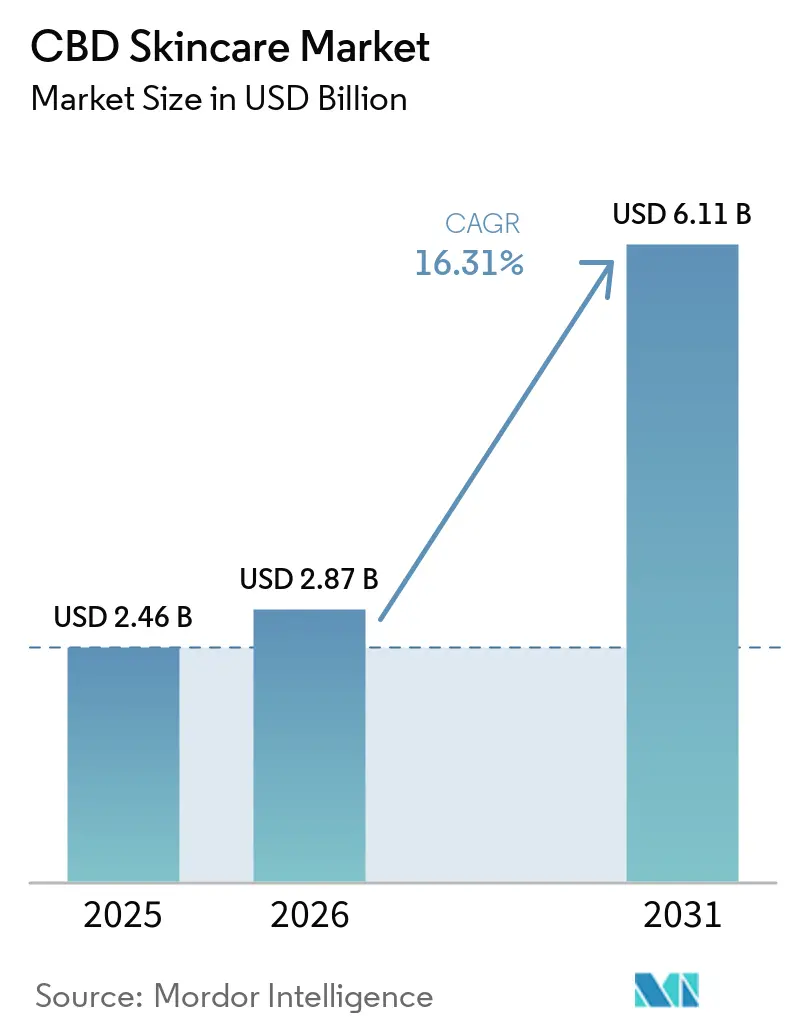
The CBD skincare market size is projected to be USD 2.46 billion in 2025, USD 2.87 billion in 2026, and reach USD 6.11 billion by 2031, growing at a CAGR of 16.31% from 2026 to 2031. The CBD skincare market continues to grow as consumers actively seek products that deliver skin comfort, ingredient transparency, and plant-derived benefits. This demand is driven by the increasing acceptance of botanical actives, with brands positioning CBD as a gentle and effective solution for soothing skin, supporting the skin barrier, and meeting daily care needs. Rather than treating CBD as a novelty ingredient, companies are leveraging its functional benefits to appeal to wellness-focused buyers. However, the market remains fragmented and faces stricter scrutiny. Companies that prioritize high-quality formulations, provide clear and substantiated claims, and enhance digital education efforts are better equipped to defend their pricing strategies and expand distribution channels in this competitive and regulated environment.
Key Report Takeaways
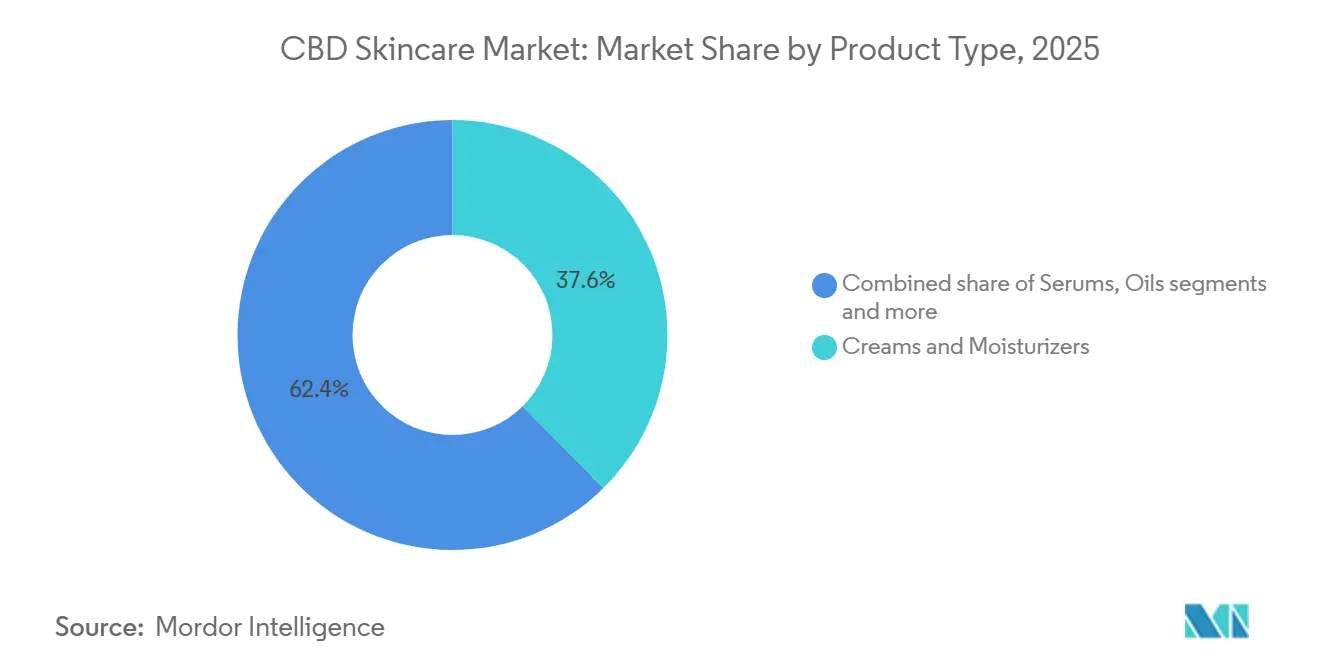
- By product type, creams and moisturizers accounted for 37.61% of the CBD skincare market size in 2025, while serums are projected to grow at a 17.49% CAGR through 2031.
- By category, the mass segment held 61.17% of revenue in 2025, while premium is forecast to expand at an 18.28% CAGR through 2031.
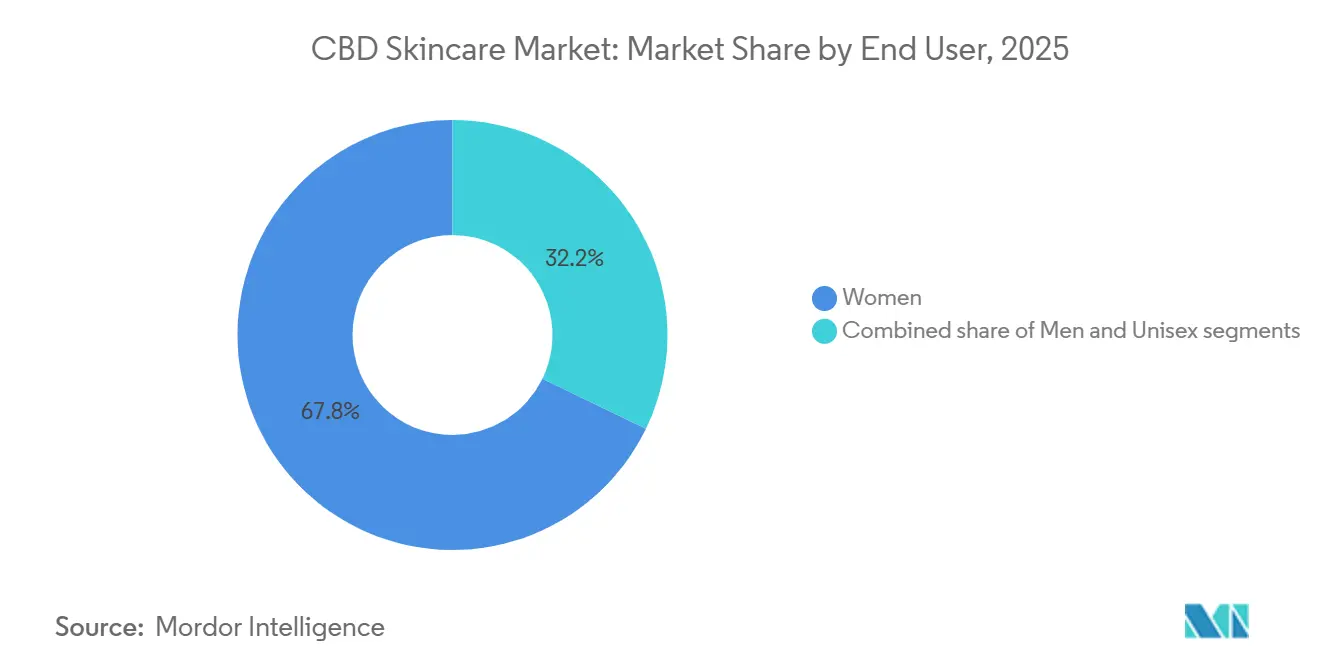
- By end user, women held 67.81% of the CBD skincare market share in 2025, while men recorded the highest projected CAGR at 17.34% through 2031.
- By distribution channel, online retail stores represented 35.61% of the CBD skincare market size in 2025 and are advancing at an 18.76% CAGR through 2031.
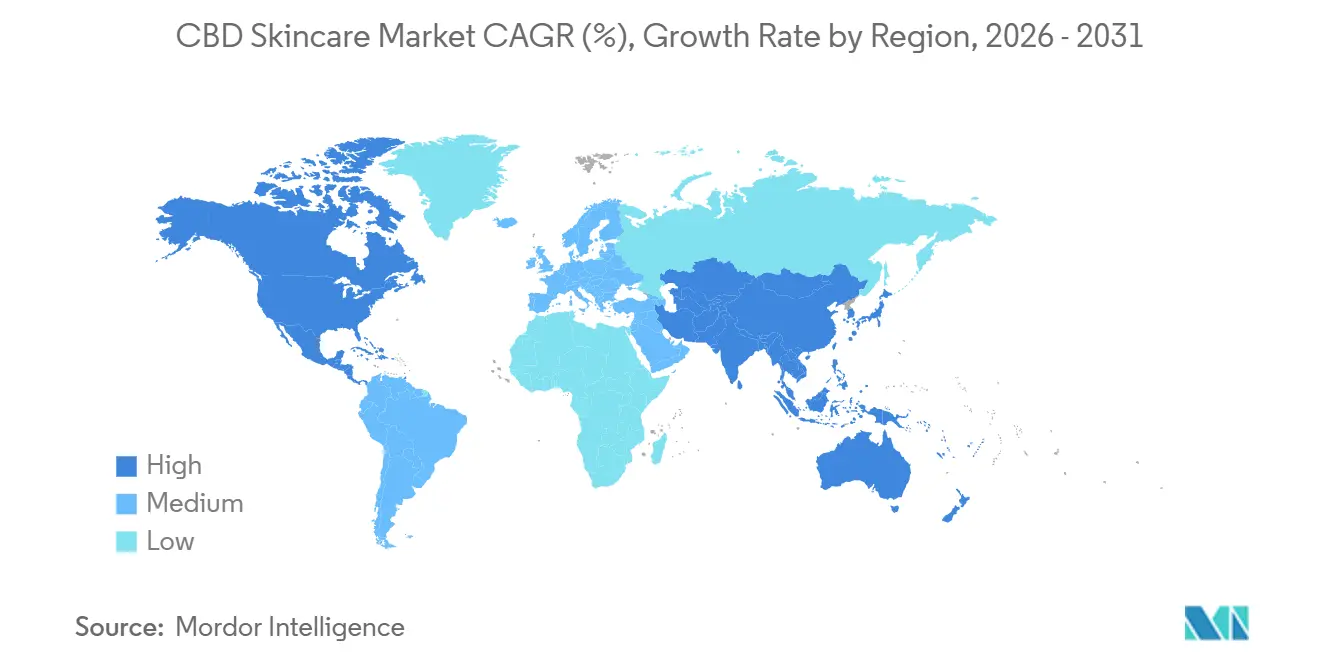
- By geography, North America held 42.61% of the CBD skincare market share in 2025, while Asia-Pacific is forecast to expand at a 17.91% CAGR through 2031.
Note: Market size and forecast figures in this report are generated using Mordor Intelligence’s proprietary estimation framework, updated with the latest available data and insights as of January 2026.
Market Trends and Insights
Drivers Impact Analysis of CBD Skincare Market*
| Driver | (~) % Impact on CAGR Forecast | Geographic Relevance | Impact Timeline |
|---|---|---|---|
| Rising Consumer Preference for Natural And Plant-Based Skincare Products | +2.8% | Global, strongest in North America and Western Europe | Short term (≤ 2 years) |
| Growing Awareness of CBD's Anti-Inflammatory And Soothing Properties | +3.2% | Global, accelerating in Asia-Pacific through advanced skincare channels | Medium term (2-4 years) |
| Increasing Prevalence of Skin Conditions Such as Acne, Eczema, And Psoriasis | +2.1% | Global, with higher relevance in North America, Europe, and Asia-Pacific | Medium term (2-4 years) |
| Rising Demand for Clean-Label And Wellness-Oriented Beauty Products | +2.4% | North America, Europe, and premium Asia-Pacific markets | Short term (≤ 2 years) |
| Strong Influence of Social Media, Celebrities, And Wellness Influencers | +1.9% | North America, South Korea, and Southeast Asia | Short term (≤ 2 years) |
| Growing Investment And Product Innovation by Skincare Manufacturers | +2.5% | Global, with strong innovation hubs in North America, Europe, and Asia-Pacific | Long term (≥ 4 years) |
| Source: Mordor Intelligence | |||
Rising consumer preference for natural and plant-based skincare products
Rising consumer preference for natural and plant-based skincare products is significantly shaping the growth of the CBD skincare market, as buyers increasingly move toward clean-label and wellness-focused beauty solutions. This shift is supported by heightened awareness of ingredient safety and growing demand for greater transparency in personal care formulations. A 2024 consumer survey commissioned by the National Sanitation Foundation revealed that 74% of U.S. consumers consider organic ingredients important in skincare and personal care products, reflecting strong acceptance of naturally derived formulations[1]Source: National Sanitation Foundation, “74% of Consumers Consider Organic Ingredients Important in Personal Care Products”, nsf.org. The same survey also indicated that 65% of consumers prefer clear ingredient labeling to better understand and avoid potentially harmful substances. This evolving mindset is encouraging brands to reformulate products using botanical and plant-based ingredients, including cannabidiol (CBD). Consequently, the increasing inclination toward natural skincare is accelerating the adoption of CBD-based cosmetic products across global markets.
Growing awareness of CBD's anti-inflammatory and soothing properties
Growing awareness of CBD’s anti-inflammatory and soothing properties is significantly contributing to the expansion of the CBD skincare market. Consumers are increasingly recognizing cannabidiol as a functional skincare ingredient that may help calm irritation, reduce redness, and support overall skin barrier health. This perception is particularly important for individuals dealing with sensitive skin conditions such as acne, eczema, and rosacea, where inflammation plays a central role. As dermatology-focused wellness trends continue to rise, CBD is being integrated into creams, serums, and moisturizers designed for targeted skin relief. Clinical interest and ongoing research into the interaction between cannabinoids and the skin’s endocannabinoid system have further strengthened consumer confidence. In addition, the positioning of CBD as a plant-derived, non-psychoactive compound enhances its appeal in clean beauty formulations.
Increasing prevalence of skin conditions such as acne, eczema, and psoriasis
Increasing prevalence of skin conditions such as acne, eczema, and psoriasis is playing a significant role in shaping demand within the CBD skincare market. These chronic and inflammatory skin disorders are becoming increasingly common, driven by factors such as environmental pollution, stress, and changing lifestyle patterns. According to the U.S. Centers for Disease Control and Prevention (CDC) 2024 report, 31.7% of U.S. adults had at least one diagnosed allergic condition, including eczema, seasonal allergies, or food allergies, highlighting the widespread nature of dermatological sensitivities. The same report noted that eczema prevalence in adults was 9.5% in women and 5.7% in men, indicating a notable gender-based difference in incidence rates[2]Source: Centers for Disease Control and Prevention, “Diagnosed Allergic Conditions in Adults: United States, 2024”, cdc.gov. Conditions like eczema and psoriasis are associated with persistent inflammation and skin barrier dysfunction, which has increased consumer interest in soothing and restorative skincare solutions. CBD-based formulations are increasingly being explored for their potential calming and anti-inflammatory properties in addressing such concerns.
Rising demand for clean-label and wellness-oriented beauty products
Rising demand for clean-label and wellness-oriented beauty products is significantly influencing the growth of the CBD skincare market. Consumers are increasingly prioritizing transparency, safety, and simplicity in personal care formulations, leading to a strong shift toward products with minimal synthetic additives and clearly listed ingredients. This trend is closely aligned with broader wellness movements that emphasize holistic health and natural living. According to research by the CBI Ministry of Foreign Affairs, clean-label products are projected to constitute over 70% of portfolios in 2025 and 2026, rising sharply from 52% in 2021[3]Source: CBI Ministry of Foreign Affairs, “Which trends offer opportunities”, cbi.eu. This substantial increase highlights the accelerating adoption of cleaner and more transparent product formulations across the beauty industry. CBD-based skincare products fit well within this preference due to their plant-derived origin and perceived natural therapeutic benefits.
Restraints Impact Analysis of CBD Skincare Market*
| Restraint | (~) % Impact on CAGR Forecast | Geographic Relevance | Impact Timeline |
|---|---|---|---|
| Regulatory Uncertainty Regarding CBD Use in Cosmetics Across Regions | -1.8% | European Union member states, Asia-Pacific, South America, and Middle East and Africa | Medium term (2-4 years) |
| High Product Prices Compared to Conventional Skincare Alternatives | -1.4% | Global, strongest in price-sensitive Asia-Pacific and Middle East and Africa markets | Short term (≤ 2 years) |
| Limited Clinical Evidence Supporting Some CBD Skincare Claims | -1.2% | Global, especially relevant for premium and therapeutic claim positioning | Long term (≥ 4 years) |
| Potential Safety Concerns And Adverse Reaction Risks Among Sensitive Users | -0.9% | Global, with stronger relevance in eczema and sensitive skin categories | Medium term (2-4 years) |
| Source: Mordor Intelligence | |||
Regulatory uncertainty regarding CBD use in cosmetics across regions
Regulatory uncertainty regarding CBD use in cosmetics across different regions is a key factor limiting the growth of the CBD skincare market. The lack of uniform global standards for the classification, permissible concentration, and labeling of cannabidiol in cosmetic products creates compliance challenges for manufacturers. In several countries, CBD regulations remain fragmented, with differing interpretations of whether it is permitted in topical formulations derived from hemp or cannabis sources. This inconsistency complicates product development, cross-border trade, and market expansion strategies for skincare brands. Companies are often required to invest additional resources in legal compliance, testing, and certification to meet region-specific requirements. Moreover, evolving regulatory frameworks increase the risk of sudden policy changes that may impact product availability or formulation standards.
High product prices compared to conventional skincare alternatives
High product prices compared to conventional skincare alternatives act as a significant restraint on the growth of the CBD skincare market. CBD-infused formulations are generally positioned in the premium segment due to higher raw material costs, complex extraction processes, and stringent quality testing requirements. These factors make CBD skincare products considerably more expensive than traditional skincare offerings available in mass-market categories. As a result, price-sensitive consumers, particularly in emerging economies, often hesitate to adopt CBD-based products despite growing awareness of their potential benefits. Additionally, limited large-scale production and supply chain inefficiencies further contribute to elevated retail prices. The premium pricing structure restricts mass adoption and confines demand largely to niche and affluent consumer groups. Consequently, high cost remains a key barrier to broader market penetration and widespread commercialization of CBD skincare products.
*Our forecasts treat driver/restraint impacts as directional, not additive. The impact forecasts reflect baseline growth, mix effects, and variable interactions.
CBD Skincare Market Segment Analysis
By Product Type:
Creams Lead Volume, Serums Signal the Next Growth PhaseCreams and moisturizers represented the largest product category in the CBD skincare market, accounting for 37.61% of total revenue in 2025. The segment's dominance is primarily attributed to the widespread consumer preference for daily-use skincare products that provide hydration, nourishment, and skin barrier protection. CBD-infused creams and moisturizers are increasingly favored for their potential soothing and anti-inflammatory properties, making them suitable for consumers dealing with dryness, irritation, redness, and sensitive skin conditions. Their ease of application and compatibility with existing skincare routines have further strengthened market penetration across a broad consumer base. In addition, manufacturers continue to introduce advanced formulations that combine CBD with botanical extracts, vitamins, and other active ingredients to enhance product efficacy.
Serums are projected to be the fastest-growing product segment in the CBD skincare market, registering a CAGR of 17.49% through 2031. The rapid growth is driven by increasing consumer interest in targeted skincare treatments that address specific concerns such as aging, hyperpigmentation, acne, and uneven skin texture. CBD serums typically contain higher concentrations of active ingredients and offer deeper skin penetration, making them attractive to consumers seeking visible and faster results. The premium positioning of serums within skincare regimens has also contributed to higher adoption rates, particularly among beauty-conscious consumers and younger demographics. Furthermore, ongoing product innovation, including formulations featuring CBD combined with hyaluronic acid, peptides, antioxidants, and plant-based extracts, is expanding the appeal of this category.



By Category:
Mass Holds Volume, Premium Accelerates on Clinical CredentialsThe mass-market category dominated the CBD skincare market in 2025, accounting for 61.17% of total revenue. The segment's leadership is largely driven by its affordability and widespread accessibility across multiple retail channels, including supermarkets, pharmacies, and online platforms. Consumers seeking the benefits of CBD-infused skincare often prefer mass-market products due to their competitive pricing and broad product availability. Manufacturers have also expanded their mass-market offerings by introducing a diverse range of creams, cleansers, moisturizers, and other everyday skincare solutions containing CBD. Strong consumer awareness of wellness-oriented skincare products has further supported demand within this category.
The premium category is expected to register the fastest growth in the CBD skincare market, expanding at a CAGR of 18.28% through 2031. Growth is being fueled by increasing consumer willingness to invest in high-quality skincare products that offer specialized formulations and enhanced performance. Premium CBD skincare products often incorporate higher concentrations of CBD along with clinically backed active ingredients, botanical extracts, and advanced delivery technologies. Rising demand for clean-label, natural, and luxury beauty products is further strengthening the appeal of premium offerings among affluent and skincare-conscious consumers. In addition, premium brands are benefiting from growing interest in personalized skincare routines and wellness-focused beauty solutions.
By End User:
Women Drive Scale, Men Represent the Structural UpsideWomen accounted for the largest share of the CBD skincare market in 2025, representing 67.81% of total revenue. The segment’s dominance is driven by higher engagement in skincare routines and stronger consumer awareness regarding beauty, wellness, and personal care products. Female consumers are generally more likely to adopt specialized skincare solutions targeting concerns such as aging, hydration, acne, pigmentation, and skin sensitivity. The increasing popularity of natural and plant-based beauty products has further accelerated the adoption of CBD-infused skincare among women. In addition, extensive product availability across premium and mass-market categories has enabled brands to cater to diverse consumer preferences and spending levels.
The men’s segment is projected to witness the fastest growth in the CBD skincare market, registering a CAGR of 17.34% through 2031. Rising awareness of personal grooming and skincare among male consumers is a key factor supporting this expansion. Men are increasingly incorporating products such as moisturizers, facial serums, cleansers, and beard-care solutions into their daily routines, creating new opportunities for CBD skincare brands. The perceived benefits of CBD, including its soothing, anti-inflammatory, and skin-calming properties, are particularly appealing for addressing concerns related to shaving irritation, acne, and environmental skin stress. Furthermore, manufacturers are launching male-focused skincare lines with tailored formulations, packaging, and branding to attract this growing consumer base.
By Distribution Channel:
Online Retail Commands Both Scale and Growth VelocityBy distribution channel, online retail stores represented 35.61% of the CBD skincare market size in 2025 and are advancing at an 18.76% CAGR through 2031. This dominance is driven by the growing shift toward e-commerce platforms that offer consumers convenience, product variety, and easy access to detailed product information. Buyers increasingly prefer online channels to compare CBD skincare products based on ingredients, pricing, brand reputation, and user reviews before making purchase decisions. The rapid expansion of direct-to-consumer (DTC) strategies and strong digital marketing efforts by brands have further strengthened online sales. In addition, the availability of doorstep delivery, promotional discounts, and subscription-based purchasing models continues to enhance consumer engagement. As a result, online retail remains the most influential distribution channel in the CBD skincare market.
Supermarkets/hypermarkets, pharmacies, and drug stores collectively represent a significant offline distribution channel in the CBD skincare market, offering strong accessibility and consumer trust. These retail formats benefit from high foot traffic and allow consumers to physically examine products before purchase, which remains important for skincare items. Pharmacies and drug stores, in particular, play a key role due to their association with health, safety, and dermatologist-recommended products, making them a preferred choice for first-time CBD skincare users. Supermarkets and hypermarkets also contribute by providing a wide assortment of mass-market CBD skincare products at competitive prices, appealing to budget-conscious consumers.
Geography Analysis
North America CBD Skincare Market
North America dominated the CBD skincare market in 2025, accounting for 42.61% of total revenue. The region’s leadership is supported by strong consumer awareness of CBD-based wellness and personal care products, along with the early legalization and commercialization of hemp-derived CBD in key markets such as the United States and Canada. A well-established cosmetics and skincare industry, combined with high disposable income levels, has further accelerated product adoption. Consumers in the region show a strong preference for premium and functional skincare solutions that address concerns such as acne, aging, and skin sensitivity. In addition, the presence of leading CBD skincare brands and advanced retail infrastructure, including both online and offline channels, continues to reinforce North America’s dominant position in the global market.
APAC CBD Skincare Market
Asia-Pacific is expected to be the fastest-growing region in the CBD skincare market, registering a CAGR of 17.91% through 2031. Growth in the region is driven by rising consumer awareness of natural and plant-based skincare products, alongside increasing demand for wellness-oriented beauty solutions. Expanding middle-class populations, growing disposable incomes, and rapid urbanization are further supporting market expansion. Countries such as China, Japan, South Korea, and Australia are witnessing increased adoption of innovative skincare formulations, including CBD-infused products. The rapid growth of e-commerce platforms and social media influence has also played a significant role in boosting product visibility and consumer engagement. As regulatory frameworks gradually evolve and acceptance of CBD-based cosmetics increases, Asia-Pacific is expected to experience sustained and robust market growth.
EMEA and South America CBD Skincare Market
Europe holds a significant share of the CBD skincare market, supported by strong demand for natural, organic, and clean-label beauty products, along with well-established cosmetic regulations that encourage product standardization and consumer trust. Countries such as the United Kingdom, Germany, and France are key contributors to regional demand, driven by growing interest in wellness and sustainable skincare solutions. South America is witnessing steady growth, fueled by increasing consumer awareness of herbal and plant-based skincare products and gradual expansion of premium beauty segments in countries like Brazil. Meanwhile, the Middle East and Africa region is at a relatively nascent stage but shows promising potential, driven by rising urbanization, increasing luxury beauty consumption, and expanding retail penetration.

Competitive Landscape
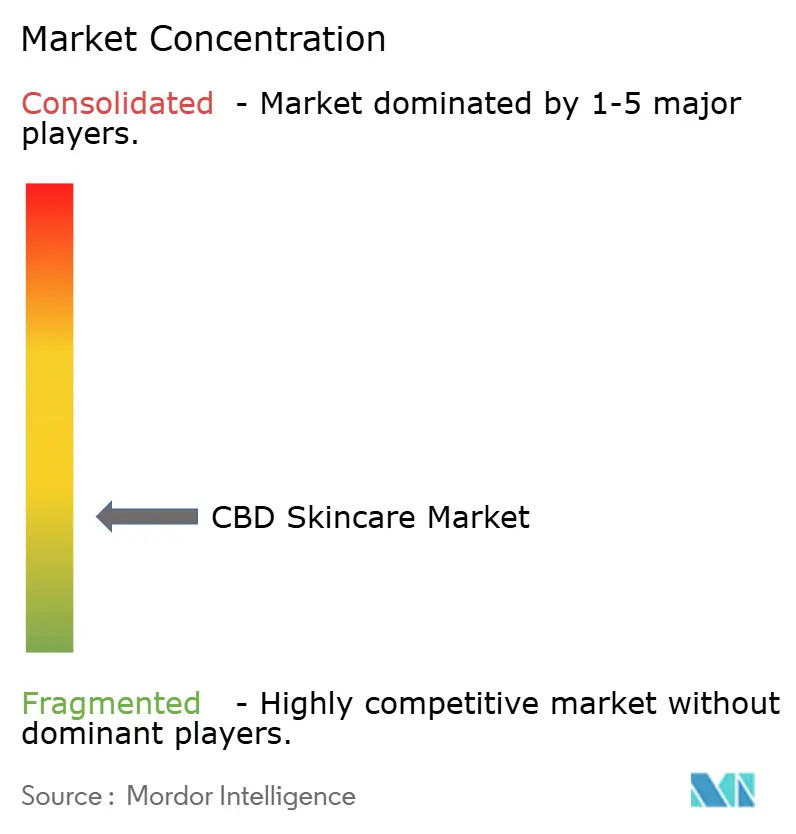
The CBD skincare market exhibits a highly fragmented competitive landscape characterized by the presence of numerous regional and international players. No single company holds a dominant share, as the market is still in a relatively early stage of development and continues to evolve rapidly. A large number of small and mid-sized brands are actively competing by offering differentiated product portfolios, including creams, serums, oils, and masks infused with CBD. These companies often focus on niche positioning, such as organic formulations, vegan skincare, or clean-label beauty products, to attract targeted consumer groups. Intense competition has also led to frequent product innovation and branding strategies aimed at improving consumer trust and product visibility.
The competitive intensity is further heightened by the strong presence of direct-to-consumer (DTC) brands and e-commerce-focused companies. Many players leverage online platforms and social media marketing to build brand awareness and directly engage with consumers without relying heavily on traditional retail channels. Strategic partnerships with ingredient suppliers, cosmetic formulators, and wellness influencers are also commonly used to strengthen market positioning. In addition, companies are increasingly investing in research and development to enhance product efficacy and differentiate their offerings in a crowded marketplace.
Despite fragmentation, the market is witnessing gradual consolidation as larger beauty and personal care companies enter the CBD skincare space through acquisitions, partnerships, and new product launches. Established cosmetic brands are leveraging their distribution strength and R&D capabilities to capture share in this growing segment. Meanwhile, smaller players continue to innovate rapidly, creating a diverse and competitive ecosystem. Regulatory developments across different regions are also influencing competitive dynamics, as compliance requirements impact product formulation and market entry strategies.
CBD Skincare Industry Leaders
Charlotte's Web Holdings, Inc.
Elixinol Global Limited
Endoca B.V.
CBD For Life, LLC
Isodiol International Inc.
- *Disclaimer: Major Players sorted in no particular order
CBD Skincare Market Companies Covered in this Report
- Charlotte's Web Holdings, Inc.
- Isodiol International Inc.
- Elixinol Global Limited
- Endoca B.V.
- CBD For Life, LLC
- Cannuka, Inc.
- Josie Maran Cosmetics, LLC
- The CBD Skincare Co.
- Myaderm Inc.
- Vertly, Inc.
- Herbivore Botanicals, LLC
- Leef Organics, LLC
- Lab To Beauty, LLC
- 707 Flora, LLC
- Sweet Earth Holdings Corporation
- Cannabliss Organic LLC
- Earthly Body, Inc.
- Kapu Maku LLC
- Medterra CBD, LLC
- Lord Jones, Inc.

Recent Industry Developments in CBD Skincare Market
- May 2026: NourishUs Naturals announced the launch of its CBD Ready Collection, a suite of pre-vetted cosmetic bases designed to streamline the formulation of CBD-infused skincare products. The launch focuses on enabling brands to develop stable, compliant, and market-ready formulations more efficiently by reducing early-stage R&D complexity. The collection includes ten functional bases spanning creams, serums, cleansers, gels, and exfoliators, all tested for compatibility with hemp-derived CBD.
- January 2026: cbdMD announced the completion of its all-equity acquisition of Bluebird Botanicals, a long-established hemp and CBD wellness brand. The transaction involved the purchase of substantially all assets of Bluebird Botanicals, including its trademarks, intellectual property, inventory, and online CBD marketplace operations. The acquisition is positioned as a strategic move to expand cbdMD’s brand portfolio and strengthen its presence across direct-to-consumer and retail CBD channels.
- June 2024: Charlotte's Web Holdings launched its CBD topical collection in 827 Walmart stores across five states: California, Illinois, Florida, Texas, and Pennsylvania. This competitively priced line features products formulated with CBD isolate. The collection boasts a balm stick, a cream, and a cooling gel, each infused with 1,000 mg of concentrated CBD isolate. These products are enhanced with soothing and cooling agents like menthol, camphor, and aloe vera. Furthermore, all offerings are non-GMO, cruelty-free, and free from sulfates, parabens, and major allergens.


Global CBD Skincare Market Report Scope
CBD skincare products are personal care and cosmetic formulations infused with cannabidiol (CBD), a non-psychoactive compound extracted from the Cannabis sativa plant, typically from hemp varieties. The CBD skincare market is segmented by product type, category, end user, distribution channel, and geography. By product type, the market is segmented into creams and moisturizers, serums, oils, cleansers, masks, and other product types. Based on category, the market is segmented into mass and premium. Based on end user, the market is segmented into men, women, and unisex. Based on distribution channel, the market is segmented into supermarkets/hypermarkets, pharmacies and drug stores, online retail stores, and other distribution channels. By geography, the market is segmented into North America, Europe, Asia-Pacific, South America, and Middle East, and Africa. For each segment, the market sizing and forecasting have been done in value terms (USD million).
| Creams and Moisturizers |
| Serums |
| Oils |
| Cleansers |
| Masks |
| Other Product Types |
| Mass |
| Premium |
| Men |
| Women |
| Unisex |
| Supermarkets/Hypermarkets |
| Pharmacies & Drug Stores |
| Online Retail Stores |
| Other Distribution Channels |
| North America | United States |
| Canada | |
| Mexico | |
| Rest of North America | |
| Europe | Germany |
| United Kingdom | |
| Italy | |
| France | |
| Spain | |
| Netherlands | |
| Poland | |
| Belgium | |
| Sweden | |
| Rest of Europe | |
| Asia-Pacific | China |
| India | |
| Japan | |
| Australia | |
| Indonesia | |
| South Korea | |
| Thailand | |
| Singapore | |
| Rest of Asia-Pacific | |
| South America | Brazil |
| Argentina | |
| Colombia | |
| Chile | |
| Peru | |
| Rest of South America | |
| Middle East & Africa | South Africa |
| Saudi Arabia | |
| United Arab Emirates | |
| Nigeria | |
| Egypt | |
| Morocco | |
| Turkey | |
| Rest of Middle East and Africa |
| By Product Type | Creams and Moisturizers | |
| Serums | ||
| Oils | ||
| Cleansers | ||
| Masks | ||
| Other Product Types | ||
| By Category | Mass | |
| Premium | ||
| By End User | Men | |
| Women | ||
| Unisex | ||
| By Distribution Channel | Supermarkets/Hypermarkets | |
| Pharmacies & Drug Stores | ||
| Online Retail Stores | ||
| Other Distribution Channels | ||
| By Geography | North America | United States |
| Canada | ||
| Mexico | ||
| Rest of North America | ||
| Europe | Germany | |
| United Kingdom | ||
| Italy | ||
| France | ||
| Spain | ||
| Netherlands | ||
| Poland | ||
| Belgium | ||
| Sweden | ||
| Rest of Europe | ||
| Asia-Pacific | China | |
| India | ||
| Japan | ||
| Australia | ||
| Indonesia | ||
| South Korea | ||
| Thailand | ||
| Singapore | ||
| Rest of Asia-Pacific | ||
| South America | Brazil | |
| Argentina | ||
| Colombia | ||
| Chile | ||
| Peru | ||
| Rest of South America | ||
| Middle East & Africa | South Africa | |
| Saudi Arabia | ||
| United Arab Emirates | ||
| Nigeria | ||
| Egypt | ||
| Morocco | ||
| Turkey | ||
| Rest of Middle East and Africa | ||


Key Questions Answered in the Report
What is the current size of the CBD skincare market?
The CBD skincare market is projected at USD 2.87 billion in 2026 and is expected to reach USD 6.11 billion by 2031, growing at a 16.31% CAGR over 2026 to 2031.
Which product type leads CBD skincare sales today?
Creams and moisturizers lead current demand with 37.61% of 2025 product revenue because they fit daily routines and align with the most familiar use cases such as soothing and hydration.
Which format is expanding fastest in cannabidiol skincare products?
Serums are the fastest-growing product format, with a projected 17.49% CAGR through 2031, supported by concentrated active positioning and improved delivery through advanced formulation systems.
Why is online retail so important for CBD-based skin products?
Online retail held 35.61% of channel revenue in 2025 and is growing at 18.76% through 2031 because digital channels are better suited to explain concentration, extraction, and delivery details.
Which region leads global revenue for CBD skincare products?
North America led with 42.61% of 2025 revenue, supported by established hemp supply chains, strong consumer familiarity, and a mature e-commerce and brand ecosystem.
Page last updated on:





