
Captive Logistics Market Size and Share
| Study Period | 2019 - 2030 |
| Market Size (2025) | USD 5.32 Billion |
| Market Size (2030) | USD 6.41 Billion |
| CAGR (2025 - 2030) | 3.92% |
| Fastest Growing Market | Asia Pacific |
| Largest Market | North America |
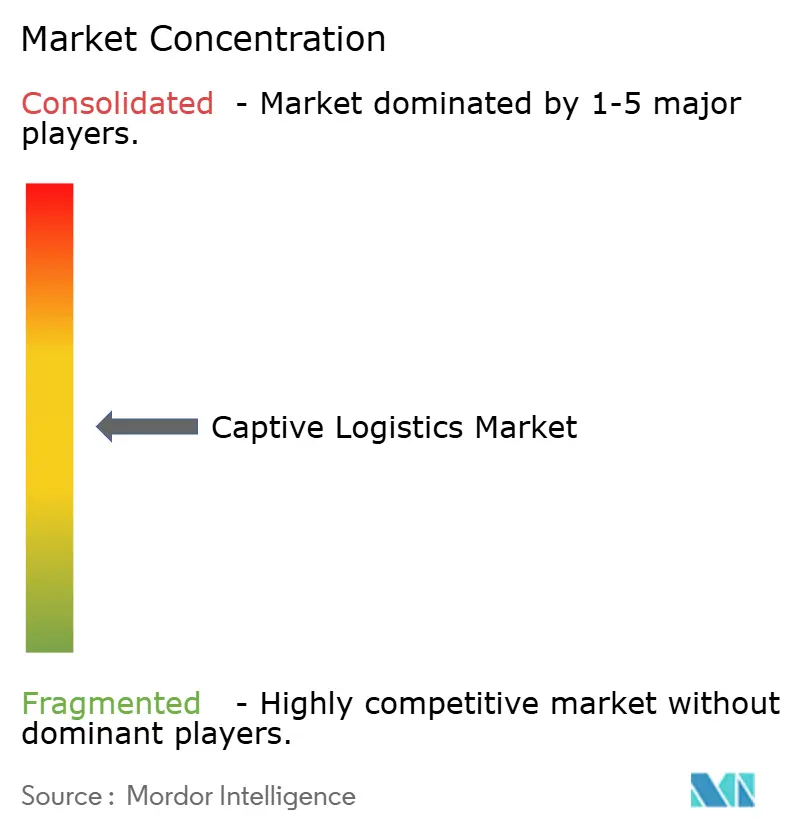
| Market Concentration | Medium |
Major Players *Disclaimer: Major Players sorted in no particular order |
Captive Logistics Market Analysis by Mordor Intelligence
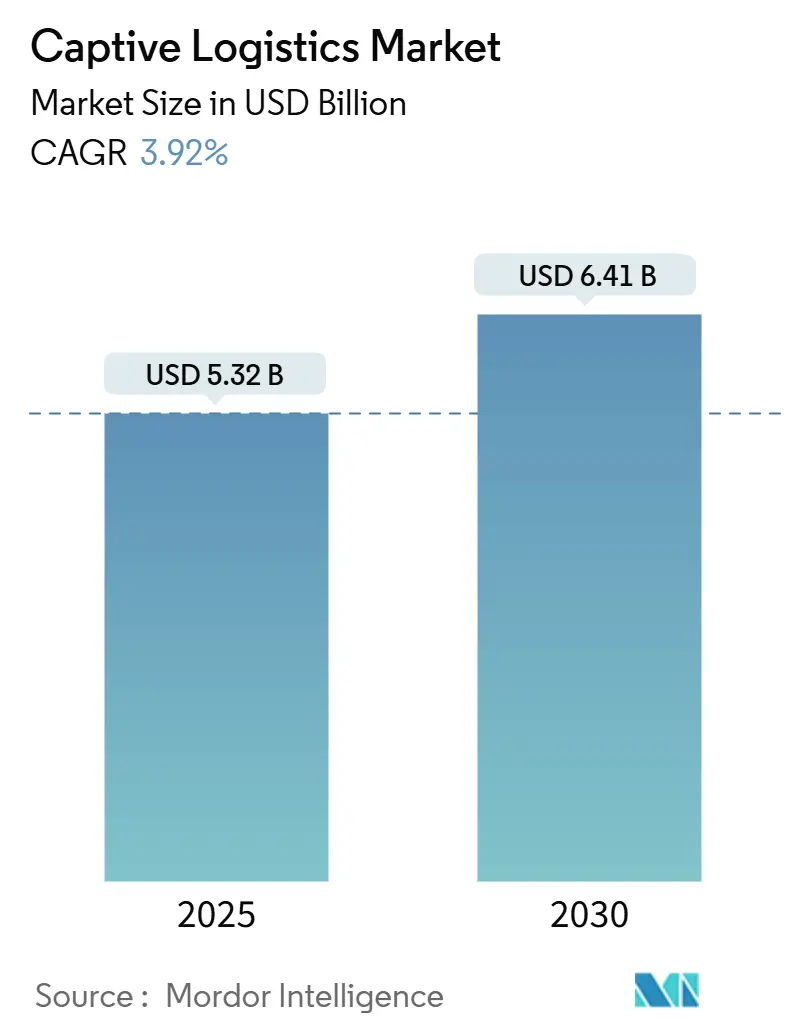
The Captive Logistics Market size is estimated at USD 5.32 billion in 2025, and is expected to reach USD 6.41 billion by 2030, at a CAGR of 3.92% during the forecast period (2025-2030).
- The captive logistics market is witnessing substantial investments in technology, sustainability, and supply chain control. These advancements aim to enhance operational efficiency, reduce costs, and ensure resilience amidst market uncertainties.
- Automation, AI-driven solutions, and data analytics are key growth drivers in the captive logistics market. Companies are leveraging these technologies to strengthen their internal logistics operations, enabling better supply chain control and reducing reliance on third-party providers, which is critical for maintaining competitive advantage.
- For example, as of January 2025, industry reports highlight that companies like Tesla, Google, and Mercedes Benz are heavily investing in autonomous vehicle technology. While autonomous trucks are expected to become a reality globally, BCG estimates indicate that only 10% of light trucks will operate autonomously by 2030, showcasing the gradual adoption of such innovations within captive logistics frameworks.
- Sustainability is a core focus in the captive logistics market. Companies are increasingly adopting electric vehicles (EVs), green technologies, and alternative fuels to reduce their carbon footprint. This trend is driving the development of sustainable captive logistics networks. Additionally, the rapid growth of e-commerce is intensifying the demand for faster and more efficient delivery systems, compelling businesses to expand and optimize their captive logistics infrastructure.
- The Asia-Pacific region, particularly China and India, is emerging as a hotspot for captive logistics investments. These investments align with national initiatives to enhance infrastructure and improve supply chain efficiency, further strengthening the region's position in the global market.
- In conclusion, the captive logistics market is evolving rapidly, driven by technological advancements, sustainability efforts, and the growing need for efficient supply chain management. Companies investing in these areas are better positioned to navigate market challenges and capitalize on emerging opportunities.
Global Captive Logistics Market Trends and Insights
More Dependency on Road Transport Driving Growth in Market
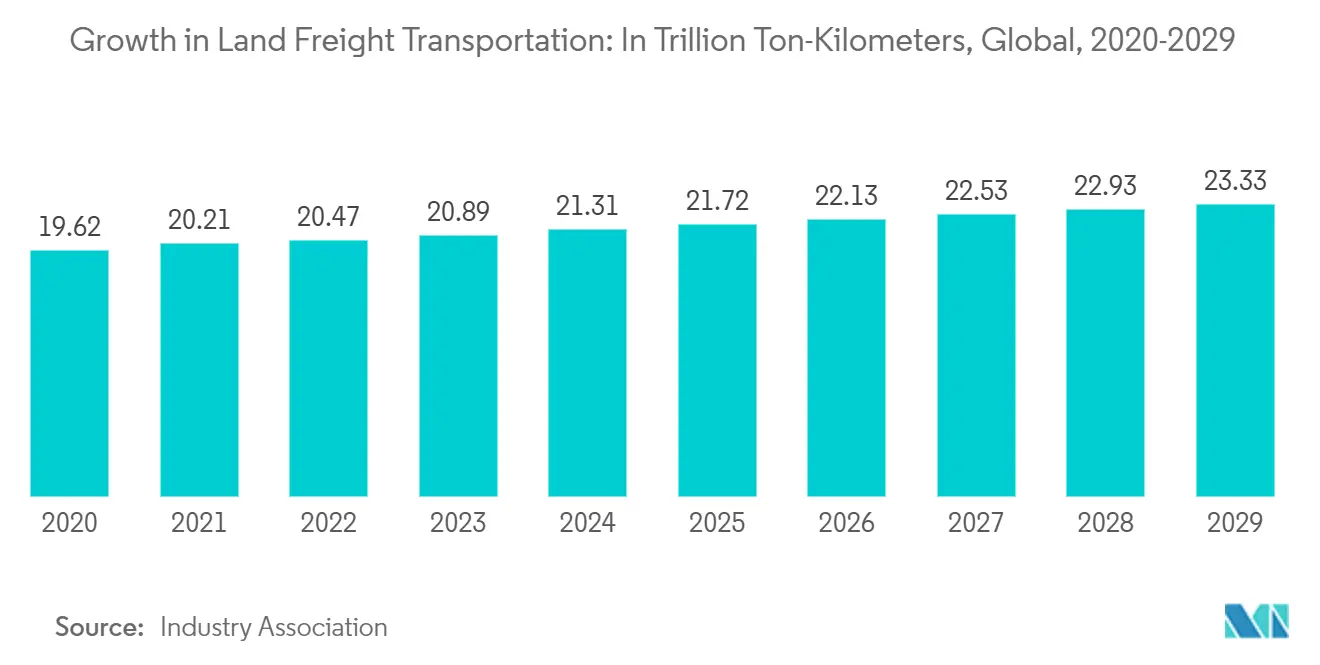
Road transport has been identified as a key driver in the growth of the captive logistics market. Captive logistics, which involves companies managing their own transportation and supply chain operations, is said to provide greater control over logistics requirements. Analysts have noted that the efficiency of captive logistics heavily relies on road transport, which continues to dominate freight movement in many regions, particularly in developing economies such as India.
Reports suggest that governments and private organizations are making significant investments in infrastructure development, fleet expansions, and technology-driven logistics solutions to improve road transport efficiency, thereby benefiting the captive logistics market. For instance, it was reported in April 2024 that India planned to construct 13,000 km of new highways in FY 2024-25, a development expected to enhance connectivity for logistics operators and create opportunities within the captive logistics market. Additionally, the inauguration of the Z-Morh Tunnel in Kashmir, a USD 932 million project completed in early 2025, was highlighted as a strategic move to ensure all-season connectivity, further supporting market growth.
In line with sustainability goals, companies like Amazon have reportedly taken steps to integrate zero-emission solutions into their captive logistics operations. According to reports from January 2025, Amazon ordered over 150 electric heavy goods vehicles (HGVs), including more than 140 Mercedes-Benz eActros 600 trucks and eight Volvo FM Electric trucks, to establish the UK's largest zero-emission truck fleet. This initiative aligns with Amazon's commitment to achieving net-zero emissions by 2040 and reflects the growing trend of incorporating sustainable practices within the captive logistics market.
In conclusion, the captive logistics market is witnessing significant growth, driven by advancements in road transport infrastructure, strategic investments, and the adoption of sustainable technologies. These developments are expected to further enhance the efficiency and effectiveness of in-house logistics operations across various industries.
APAC Leading Market Growth
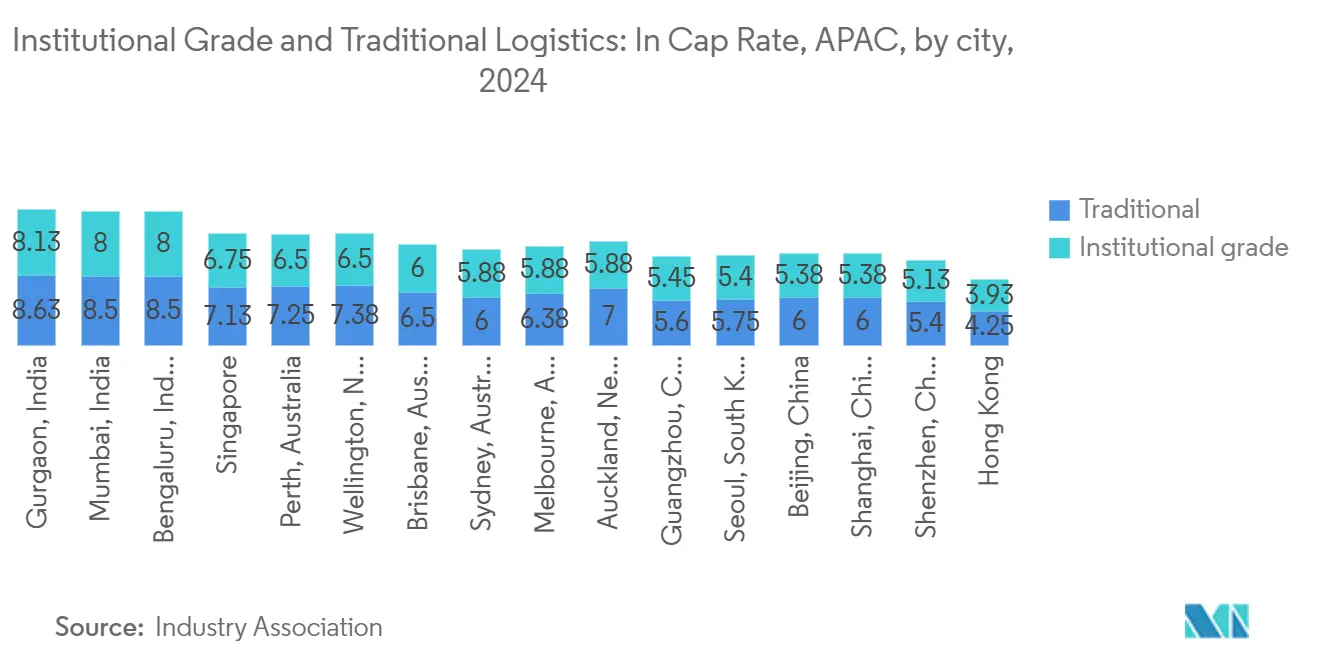
The captive logistics market is witnessing rapid growth, driven by evolving global supply chain dynamics and increasing demand for efficient logistics solutions. Investors are actively exploring opportunities in this sector, particularly in regions with high growth potential. The Asia-Pacific (APAC) region has emerged as a key player, attracting significant attention due to its diverse market conditions and strategic importance. This analysis highlights the region's cap rate trends and their implications for the captive logistics market.
As of March 2024, cap rates for logistics facilities in the Asia-Pacific (APAC) region demonstrated significant variation, highlighting the region's dynamic investment landscape. Cities like Taipei and Tokyo reported cap rates of approximately 3.5%, indicating strong investor confidence and high property valuations. Meanwhile, Gurgaon's traditional logistics facilities in India recorded higher cap rates, averaging 8.13%, showcasing opportunities for higher returns in emerging markets. These developments emphasize the APAC's critical roles in advancing the captive logistics market through strategic investments and operational expansions.
In conclusion, the captive logistics market is on a positive growth trajectory, driven by nearshoring trends, strategic geographical expansions, and a dynamic investment environment. The APAC regions are at the forefront of this growth, setting a strong foundation for the market's continued development.
Competitive Landscape
Numerous companies across diverse industries are managing in-house logistics operations tailored to their unique supply chain needs, leading to a fragmented structure in the captive logistics market. Although some large corporations boast extensive internal logistics capabilities, the overall market remains dispersed, devoid of any single dominant entity. Major players include Amazon, Walmart, PepsiCo, Tesla and Unilever.
For insatnce, in January 2025, Advent International-backed InPost announced over EUR 1 billion (USD 1.05 billion) in investments to expand its network to 15 countries, reflecting its growing footprint in the Captive Logistics Market. In the UK, the company is installing 100 automated parcel machines weekly to enhance last-mile delivery efficiency. In Q4 2024, it processed 322.1 million parcels, a 20% year-on-year increase, driven by e-commerce growth within the market.
Captive Logistics Industry Leaders
-
Amazon
-
Walmart
-
Tesla
-
Unilever
-
PepsiCo
- *Disclaimer: Major Players sorted in no particular order
Recent Industry Developments
- January 2025: ADNOC Logistics & Services, the logistics division of Abu Dhabi National Oil Company, has shifted its tankers to Navig8 after securing an 80% stake in the company for over USD 1 billion. This move strengthens ADNOC's position in the Captive Logistics Market by enhancing customer service and expanding its competitive edge.
- September 2024: UPS bolstered its healthcare logistics footprint by acquiring two German firms, Frigo-Trans and BPL. This strategic acquisition amplifies UPS's temperature-controlled logistics capabilities across Europe, aligning with its goal to double healthcare logistics revenue from USD 10 billion in 2023 to USD 20 billion by 2026.
Global Captive Logistics Market Report Scope
Companies that handle their logistics in-house, instead of relying on third-party providers, define the captive logistics market. By using their own assets and resources, these businesses oversee every facet of their supply chain, from transportation and warehousing to distribution. This strategy is frequently chosen to boost operational efficiency, maintain stringent quality control, and safeguard proprietary processes.
Captive Logistics Market report is segmented by service (transportation (road, rail, air, sea), warehousing and storage, value added services), by end user industry (agriculture, fishing and forestry, construction, manufacturing, oil and gas, mining and quarrying, wholesale and retail trade, others), by geography (North America, Europe, Asia-Pacific, Middle East & Africa, Latin America). The report offers market size and market forecasts for Captive Logistics Market in value (USD).
| Transportation | Road |
| Rail | |
| Air | |
| Sea | |
| Warehousing and Storage | |
| Value Added Services |
| Agriculture |
| Fishing and Forestry |
| Construction |
| Manufacturing |
| Oil and Gas |
| Mining and Quarrying, |
| Wholesale and Retail Trade |
| Others |
| North America |
| Europe |
| Asia Pacific |
| Middle East & Africa |
| Latin America |
| By Service | Transportation | Road |
| Rail | ||
| Air | ||
| Sea | ||
| Warehousing and Storage | ||
| Value Added Services | ||
| By End User | Agriculture | |
| Fishing and Forestry | ||
| Construction | ||
| Manufacturing | ||
| Oil and Gas | ||
| Mining and Quarrying, | ||
| Wholesale and Retail Trade | ||
| Others | ||
| By Region | North America | |
| Europe | ||
| Asia Pacific | ||
| Middle East & Africa | ||
| Latin America |
Key Questions Answered in the Report
How big is the Captive Logistics Market?
The Captive Logistics Market size is expected to reach USD 5.32 billion in 2025 and grow at a CAGR of 3.92% to reach USD 6.41 billion by 2030.
What is the current Captive Logistics Market size?
In 2025, the Captive Logistics Market size is expected to reach USD 5.32 billion.
Who are the key players in Captive Logistics Market?
Amazon, Walmart, Tesla, Unilever and PepsiCo are the major companies operating in the Captive Logistics Market.
Which is the fastest growing region in Captive Logistics Market?
Asia Pacific is estimated to grow at the highest CAGR over the forecast period (2025-2030).
Which region has the biggest share in Captive Logistics Market?
In 2025, the North America accounts for the largest market share in Captive Logistics Market.
What years does this Captive Logistics Market cover, and what was the market size in 2024?
In 2024, the Captive Logistics Market size was estimated at USD 5.11 billion. The report covers the Captive Logistics Market historical market size for years: 2019, 2020, 2021, 2022, 2023 and 2024. The report also forecasts the Captive Logistics Market size for years: 2025, 2026, 2027, 2028, 2029 and 2030.
Captive Logistics Market Report
Statistics for the 2025 Captive Logistics market share, size and revenue growth rate, created by Mordor Intelligence™ Industry Reports. Captive Logistics analysis includes a market forecast outlook for 2025 to 2030 and historical overview. Get a sample of this industry analysis as a free report PDF download.