
Market Overview
| Study Period | 2021 - 2031 |
|---|---|
| Market Size (2026) | USD 448.32 Billion |
| Market Size (2031) | USD 549.23 Billion |
| Growth Rate (2026 - 2031) | 4.14 % |
| Fastest Growing Market | Asia Pacific |
| Largest Market | Europe |
| Market Concentration | Medium |
Major Players *Disclaimer: Major Players sorted in no particular order Image © Mordor Intelligence. Reuse requires attribution under CC BY 4.0. | |
Cakes, Pastries, and Sweet Pies Market Analysis by Mordor Intelligence
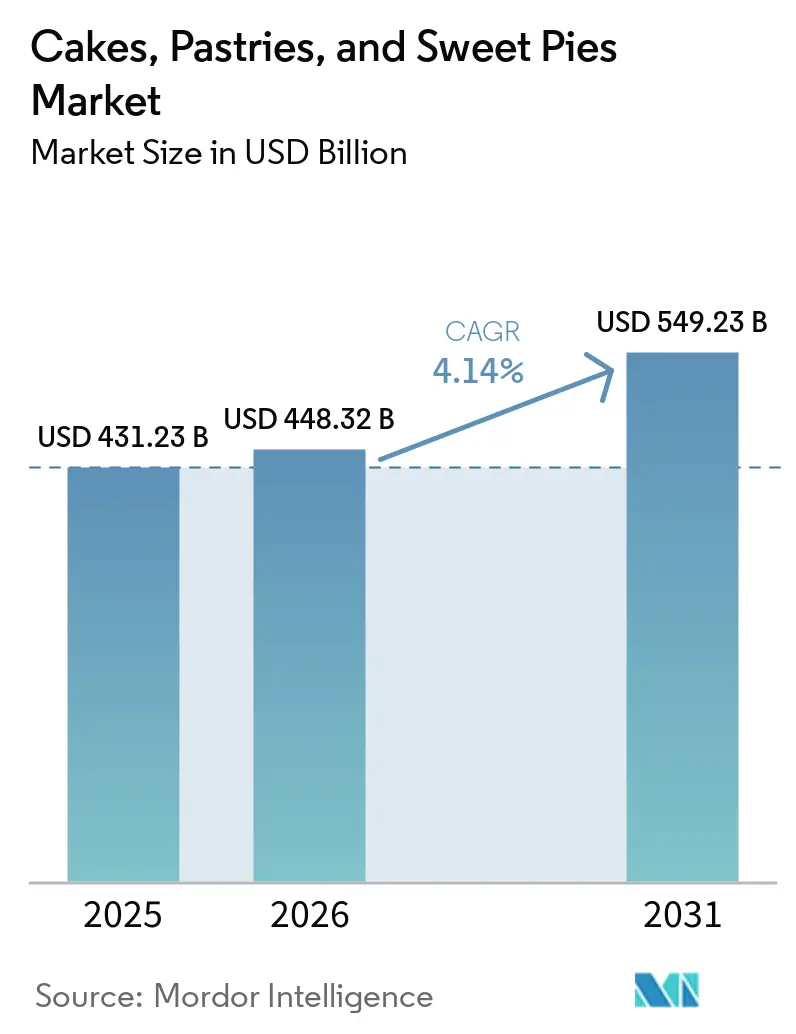
The cakes, pastries, and sweet pies Market size is expected to grow from USD 431.23 billion in 2025 to USD 448.32 billion in 2026 and is forecast to reach USD 549.23 billion by 2031 at 4.14% CAGR over 2026-2031. Disposable incomes are increasing, out-of-home dining is making a comeback, and consumers are showing greater interest in trying new flavors, which is expanding the consumer base. At the same time, portion-controlled products and clean-label reformulations are addressing health-related concerns. Foodservice operators are improving dessert menus to increase average transaction values. Omnichannel strategies are enabling seamless discovery-to-purchase experiences, which helps maintain strong engagement within the category. The premium segment is growing faster than the mass market, as consumers consider baked sweets to be affordable indulgences. Investments in technology, such as automation and cold-chain logistics, are helping both global companies and regional players scale their operations efficiently. Additionally, premium products are witnessing higher growth rates in terms of % compared to mass-market offerings.
Key Report Takeaways
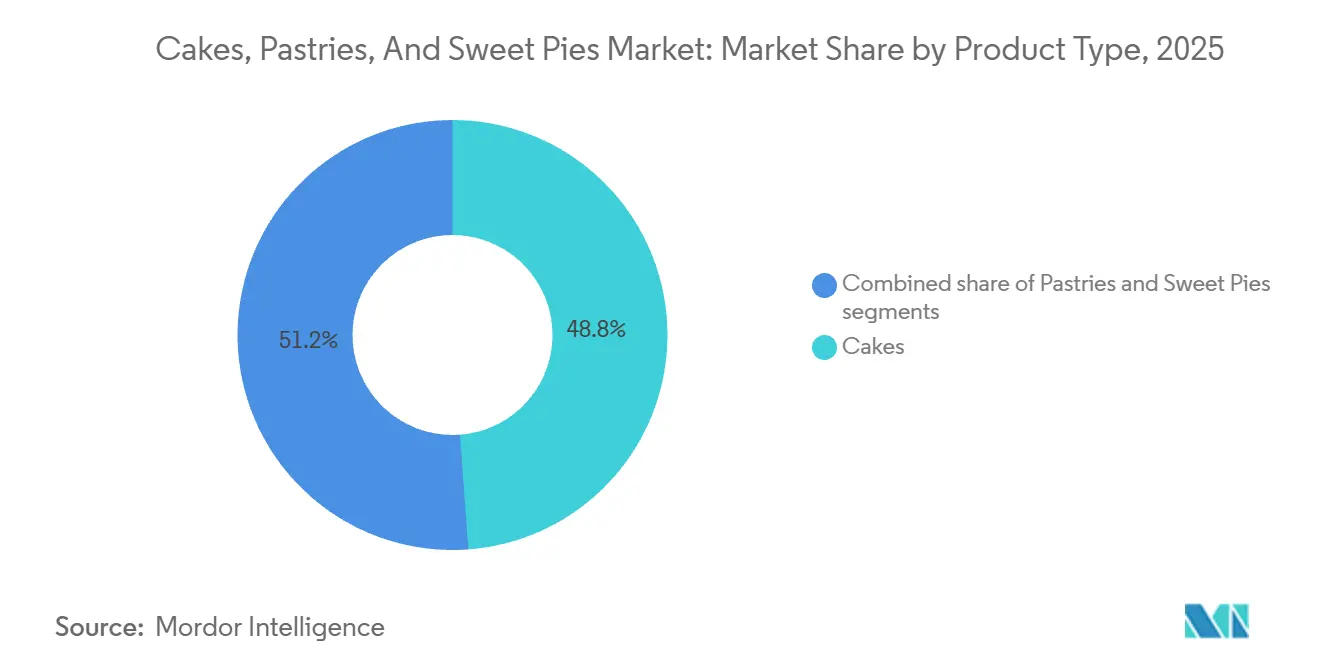
- By product type, cakes led with 48.82% of the cakes, pastries, and sweet pies market share in 2025, while sweet pies are forecast to expand at a 4.99% CAGR to 2031.
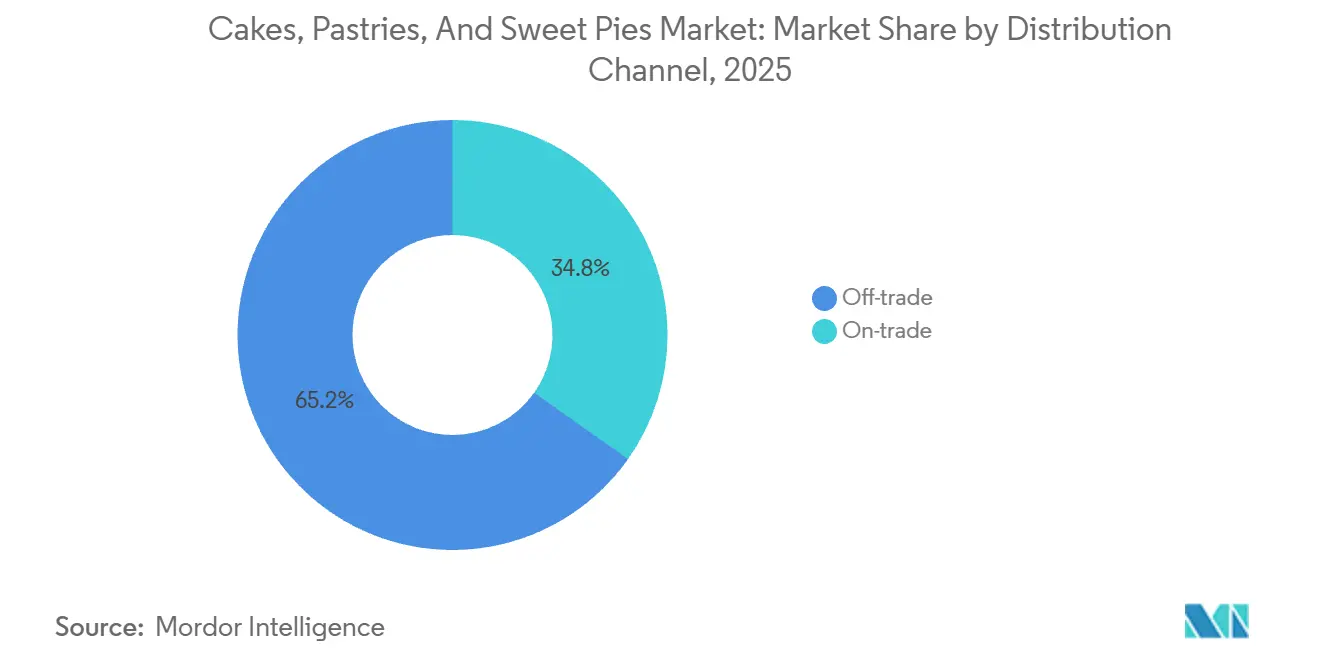
- By distribution channel, off-trade outlets accounted for 65.21% of the cakes, pastries, and sweet pies market size in 2025, whereas on-trade sales are advancing at a 6.58% CAGR through 2031.
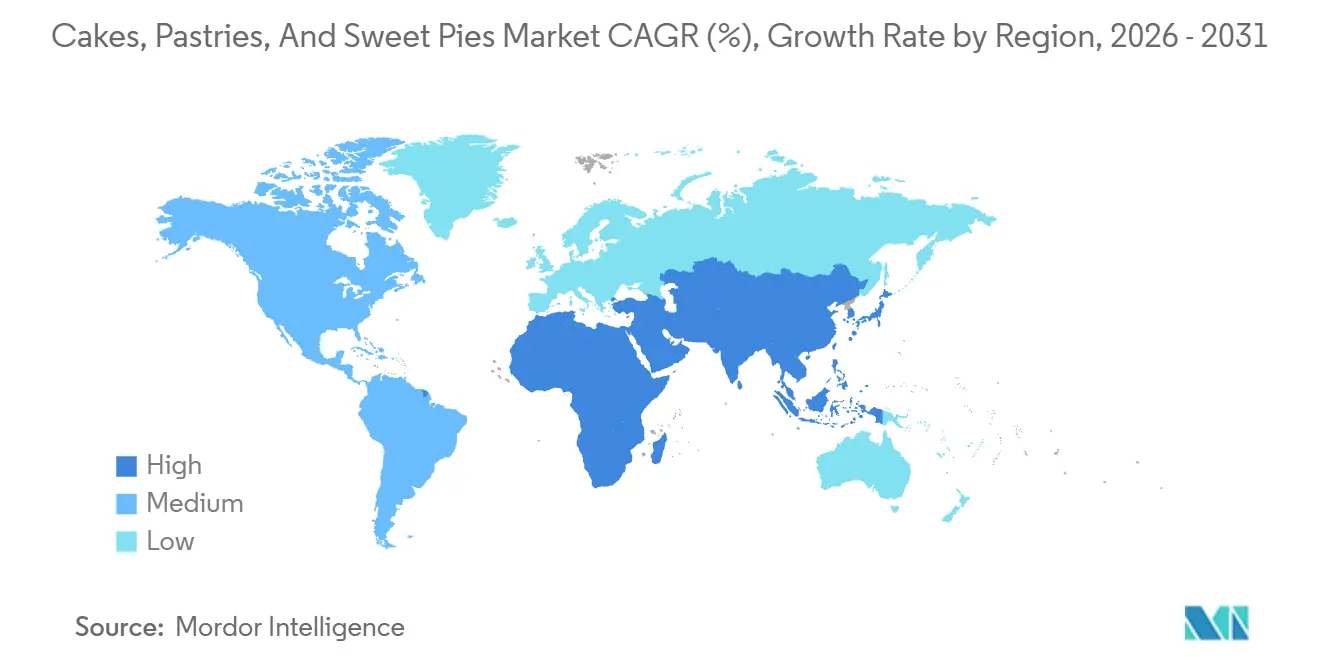
- By geography, Europe held 32.13% of 2025 revenue, yet Asia-Pacific is projected to register a 6.12% CAGR over 2026-2031.
Note: Market size and forecast figures in this report are generated using Mordor Intelligence’s proprietary estimation framework, updated with the latest available data and insights as of 2026.
Market Trends and Insights
Drivers Impact Analysis of Cakes, Pastries, and Sweet Pies Market*
| Driver | (~) % Impact on CAGR Forecast | Geographic Relevance | Impact Timeline |
|---|---|---|---|
| Product innovation in gluten-free offerings attracts consumers with dietary restrictions | +0.6% | Global, with concentration in North America and Europe | Medium term (2-4 years) |
| Rising demand for ready-to-eat products aligns with fast-paced lifestyles of urban populations | +0.8% | Asia-Pacific core, spill-over to Middle East and South America | Long term (≥ 4 years) |
| Changing snacking habits increase preference for portable pastries and pies | +0.5% | Global, led by North America and Europe | Short term (≤ 2 years) |
| Demand for unique exotic flavors drives market expansion | +0.4% | Asia-Pacific, North America, and select European markets | Medium term (2-4 years) |
| Growth of bakery chains improves product availability in retail outlets | +0.7% | Global, with rapid expansion in Asia-Pacific and Middle East | Long term (≥ 4 years) |
| Seasonal product launches encourage festive and limited-time purchases | +0.3% | Global, with regional peaks tied to local festivals | Short term (≤ 2 years) |
| Source: Mordor Intelligence | |||
Product innovation in gluten-free offerings attracts consumers with dietary restrictions
Gluten-free and allergen-friendly bakery products are shifting from niche markets to mainstream retail shelves, driven by increasing diagnoses of celiac disease and growing awareness of non-celiac gluten sensitivity. In 2024, Waitrose expanded its free-from bakery range, introducing gluten-free croissants and Danish pastries that mimic the laminated texture of wheat-based products using hydrocolloid blends and modified starches. Vegan formulations are also progressing, with brands like OGGS utilizing aquafaba (the liquid from cooked chickpeas) as an egg substitute to achieve similar crumb structure and moisture retention in cakes. The combination of gluten-free and plant-based claims is particularly significant in North America and Europe, where regulatory frameworks such as the United States Food and Drug Administration (FDA) gluten-free labeling standard and the European Food Safety Authority allergen disclosure rules enhance consumer trust. Manufacturers are increasingly investing in dedicated production lines to prevent cross-contamination, a costly initiative that reflects their long-term commitment to this market. The premium pricing of gluten-free products, often priced higher by a certain percentage compared to conventional alternatives, supports margin growth, even as their market penetration remains relatively modest compared to the overall bakery market.
Rising demand for ready-to-eat products aligns with fast-paced lifestyles of urban populations
Urbanization and the rise of dual-income households are reducing meal preparation time, increasing the demand for grab-and-go bakery products that do not require refrigeration or reheating. General Mills introduced freezer-to-oven croissants, catering to time-pressed consumers seeking bakery-fresh quality without the need for proofing and baking from scratch. In Asia-Pacific markets, there is a growing preference for individually wrapped pastries and single-serve cake slices available in convenience stores and transit hubs. The adoption of digital ordering and rapid delivery platforms has further streamlined the process from impulse to consumption. Providers such as Deliveroo and Uber Eats reported significant growth in bakery category orders. Packaging innovations, including modified-atmosphere packaging and resealable formats, are extending shelf life without the use of preservatives, meeting both convenience and clean-label demands. The shift toward ready-to-eat products is also influencing retail layouts, with supermarkets allocating more space to ambient bakery displays that complement traditional in-store bakery counters. Additionally, the integration of digital platforms has shortened the path from purchase to consumption, with providers reporting a percentage increase in bakery orders. Modified-atmosphere packaging and resealable formats are addressing consumer expectations for convenience and clean-label products, while also extending product shelf life.
Changing snacking habits increase preference for portable pastries and pies
The shift in traditional meal patterns has elevated snacking to a primary mode of consumption, positioning pastries and sweet pies as acceptable indulgences across breakfast, mid-morning, and afternoon occasions. Croissants and Danish pastries, once associated with sit-down breakfasts, are now adapted for portability through innovations such as reduced flaking, reinforced lamination, and single-hand packaging. Bridor, a French frozen dough specialist, conducted consumer research in the United Kingdom in 2024, revealing that a majority of respondents consumed pastries outside the home. This insight led the company to develop formats tailored for on-the-go consumption. Fruit pies are also benefiting from portion downsizing, with mini and hand-pie variants gaining market share over full-size options that require utensils and plating. The snacking trend is particularly prominent among younger demographics, who prioritize flavor variety and visually appealing presentations over traditional bakery offerings. In response, manufacturers are introducing limited-edition flavors and collaborating with beverage brands to create pairing opportunities that enhance the snacking experience and encourage product trials.
Demand for unique exotic flavors drives market expansion
Globalization of culinary preferences is driving the demand for bakery products featuring non-traditional flavor profiles. Ingredients such as matcha, ube, yuzu, and black sesame are gaining traction in Western markets. For instance, Mondelez International introduced matcha-infused cake variants in North America in 2025, leveraging the ingredient's association with wellness and premium positioning to achieve higher price points compared to conventional chocolate or vanilla offerings. Similarly, European techniques like choux pastry and mille-feuille are being adapted in the Asia-Pacific region with local sweeteners such as pandan and red bean, resulting in hybrid formats that appeal to regional tastes while conveying sophistication. This trend toward exotic flavors is further amplified by social media, where visually distinctive products generate organic reach and influencer endorsements, surpassing the impact of traditional advertising. Flavor houses are focusing on natural extraction and fermentation technologies to create authentic taste profiles without artificial additives, aligning with clean-label requirements. Consumers' willingness to pay premium prices for innovative flavors is creating margin opportunities that help offset the higher input costs associated with specialty ingredients and small-batch production. Additionally, the use of natural ingredients and clean-label practices aligns with consumer preferences, with many willing to pay a premium of up to 25% for such products.
Restraints Impact Analysis of Cakes, Pastries, and Sweet Pies Market*
| Restraint | (~) % Impact on CAGR Forecast | Geographic Relevance | Impact Timeline |
|---|---|---|---|
| Health concerns regarding high sugar content limit frequent consumption | -0.5% | Global, with heightened impact in Europe and North America | Medium term (2-4 years) |
| Increased awareness of obesity discourages consumption of calorie-dense treats | -0.4% | Global, led by developed markets with established health campaigns | Long term (≥ 4 years) |
| Campaigns addressing diabetes prevalence reduce demand for sweet bakery products | -0.3% | Global, with concentration in markets with high diabetes rates | Medium term (2-4 years) |
| Heightened scrutiny of fat and calorie content shifts preferences toward lighter alternatives | -0.3% | Europe and North America, with emerging influence in Asia-Pacific | Short term (≤ 2 years) |
| Source: Mordor Intelligence | |||
Health concerns regarding high sugar content limit frequent consumption
Increasing public health awareness regarding sugar consumption is reducing the frequency of purchases, particularly among health-conscious consumers who perceive sweet bakery products as occasional treats rather than regular items. The World Health Organization recommends limiting free sugars to less than 10% of total energy intake, a guideline that has influenced national dietary policies and consumer education initiatives. The United Kingdom's High Fat, Salt, and Sugar (HFSS) regulations, introduced in October 2022 and expanded in subsequent years, restrict promotional placements and volume-based discounts for products exceeding specific thresholds, directly affecting merchandising strategies in the bakery category [1]. Manufacturers are addressing these challenges through reformulation efforts, utilizing alternative sweeteners such as stevia, erythritol, and monk fruit extract. However, consumer acceptance of these alternatives remains mixed due to concerns about aftertaste and unfamiliarity. Research from Wageningen University, published in 2024, highlighted that fat reduction in bakery products can be achieved through emulsifier optimization and air incorporation techniques, enabling sugar reduction without compromising texture or mouthfeel.
Increased awareness of obesity discourages consumption of calorie-dense treats
Rising obesity rates, particularly in developed markets, are driving societal and governmental efforts to reduce the consumption of calorie-dense foods, with sweet bakery products often highlighted in public health campaigns. According to the Centers for Disease Control and Prevention (CDC), adult obesity rates in the United States have prompted increased emphasis on dietary interventions and portion control. Educational programs aimed at addressing childhood obesity are influencing household purchasing decisions, as parents seek to limit children's exposure to high-calorie snacks and desserts [2]. Portion-controlled options, such as mini cakes and individually wrapped pastries, are gaining popularity as they allow indulgence while managing caloric intake. Some manufacturers have reported significant growth in these product categories. The growing stigmatization of sugar-heavy products is also fueling demand for transparent labeling and clean ingredient lists, as consumers increasingly examine nutritional information before making purchases. Retailers are responding by allocating more shelf space to healthier bakery alternatives, such as protein-enriched cakes and fiber-fortified pastries, which offer functional benefits alongside taste. The long-term outlook indicates that traditional sweet bakery products will need to coexist with healthier options, requiring manufacturers to maintain dual portfolios that cater to diverse consumer preferences.
*Our forecasts treat driver/restraint impacts as directional, not additive. The impact forecasts reflect baseline growth, mix effects, and variable interactions.
Cakes, Pastries, and Sweet Pies Market Segment Analysis
By Product Type:
Sweet Pies Accelerate Despite Cake DominanceCakes accounted for 48.82% of market revenue in 2025, highlighting their established role in celebrations, gifting, and everyday indulgence. However, sweet pies are projected to grow at an annual rate of 4.99% through 2031, marking the fastest growth among product types. White cream cakes and chocolate cream cakes remain central to the segment, supported by their adaptability for occasions such as birthdays, weddings, and corporate events. Meanwhile, designer and fondant cakes are gaining a premium market share due to customization and visually appealing designs, often priced 50% to 100% higher than standard offerings. Healthy and vegan cakes are emerging as a distinct niche, with brands like Mightylicious reporting a 40% year-over-year increase in plant-based cake sales in 2025, driven by allergen-free claims and clean-label formulations.
Pastries, including croissants and Danish variants, benefit from their dual functionality as breakfast items and snack options. Puff pastries, in particular, are gaining popularity in foodservice channels, where chefs utilize their versatility for both sweet and savory dishes. Sweet pies, especially fruit pies and cream or custard pies, are experiencing renewed interest due to nostalgia-driven marketing and innovations in portion sizes. For example, Willamette Valley Pie Company in the United States introduced single-serve fruit pie formats in 2024, targeting convenience stores and vending channels where traditional full-size pies faced distribution challenges.

By Distribution Channel:
On-Trade Gains Momentum as Foodservice ReboundsOff-trade channels accounted for 65.21% of the market share in 2025, highlighting the prominence of supermarkets, hypermarkets, specialist bakery retailers, convenience stores, and online platforms in providing accessibility and variety to consumers. Supermarkets and hypermarkets benefit from high customer traffic, promotional flexibility, and the ability to cross-merchandise bakery products with complementary categories such as beverages and dairy. Specialist bakery retailers, including chains like BreadTalk and independent artisan bakeries, differentiate themselves through freshness, premium ingredients, and experiential retail environments that support higher price points. Convenience stores are gaining incremental share by optimizing product offerings for impulse purchases, with single-serve pastries and mini cakes strategically placed at checkout counters to drive conversions. Online retail stores, bolstered by pandemic-induced behavioral changes, continue to grow through subscription models, customization options, and same-day delivery services that replicate the immediacy of physical retail.
On-trade channels, which include restaurants, cafes, hotels, and catering services, are projected to grow at an annual rate of 6.58% through 2031, the fastest growth among distribution types. This growth is driven by foodservice operators rebuilding customer traffic and enhancing dessert menus to increase per-check averages. The incorporation of bakery products into brunch offerings, afternoon tea services, and dessert-pairing menus is generating additional demand beyond traditional retail occasions. Hotels and catering services are utilizing bakery products for events and banquets, where portion-controlled formats and visually appealing presentations align with experiential dining trends.
Geography Analysis
Europe Cakes, Pastries, and Sweet Pies Market
In 2025, Europe accounted for 32.13% of the market share, reflecting the region's established bakery culture, artisan traditions, and high per-capita consumption of cakes and pastries. Key markets such as France, Germany, Italy, and the United Kingdom drive demand, each with distinct consumer preferences. French consumers favor laminated pastries like croissants and pain au chocolat, while German buyers prefer cream-filled cakes and tortes. Italian households lean towards ricotta-based pastries and tiramisu-inspired products, and British shoppers maintain strong demand for sponge cakes and fruit pies. As a mature market, Europe is experiencing premiumization, with consumers increasingly opting for organic, clean-label, and locally sourced products that align with sustainability values. The European Food Safety Authority's strict allergen labeling and additive regulations are influencing product formulations, prompting manufacturers to focus on natural ingredient sourcing and transparent supply chains.
APAC Cakes, Pastries, and Sweet Pies Market
The Asia-Pacific region is projected to grow at an annual rate of 6.12% through 2031, making it the fastest-growing market. This growth is driven by urbanization, rising disposable incomes, and the adoption of Western-style bakery products among younger demographics. China and India present significant opportunities, with urban populations in both countries gaining exposure to international bakery brands through retail expansion and e-commerce platforms. In India, increasing consumer preference for premium desserts and celebration-based consumption patterns is supporting the growth of the India cake industry across urban and semi-urban markets. Japan's mature bakery market is characterized by meticulous craftsmanship and seasonal innovations, with limited-edition flavors and packaging encouraging frequent trials and repeat purchases. Australia and South Korea exhibit high per-capita consumption, supported by café culture and the integration of bakery products into breakfast and snacking routines. Southeast Asian markets, including Indonesia, Thailand, and Singapore, are experiencing rapid growth as local bakeries incorporate Western formats with regional flavors such as pandan, durian, and coconut, creating hybrid products that appeal to local tastes while signaling modernity.
North America Cakes, Pastries, and Sweet Pies Market
In North America, comprising the United States, Canada, and Mexico, steady demand is sustained by established consumption habits, although health-conscious trends are tempering growth in traditional sweet bakery categories. The United States remains the largest single-country market, with branded players like Flowers Foods and Hostess Brands maintaining strong retail distribution and consumer loyalty. Canada's bilingual market necessitates tailored product positioning and packaging, while Mexico's expanding middle class is driving premiumization and the adoption of international bakery formats. Regulatory frameworks, including the Food and Drug Administration's (FDA) Food Safety Modernization Act and front-of-pack labeling initiatives, are influencing product development and marketing strategies in the region [3]. The region's bakery market is expected to grow by approximately 5% annually, driven by evolving consumer preferences.
Competitive Landscape
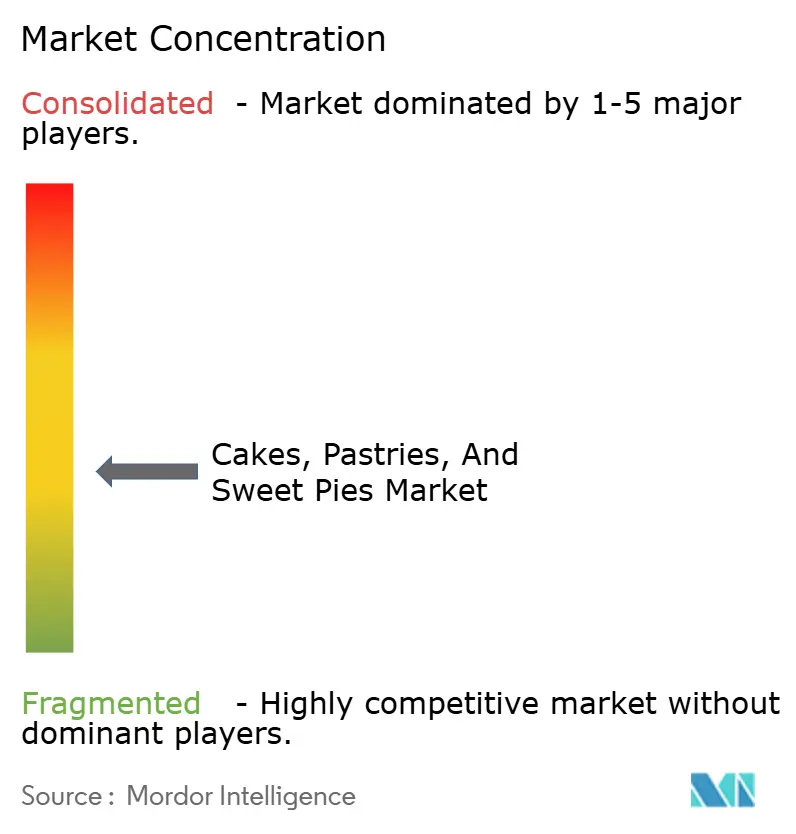
The global cakes, pastries, and sweet pies market is moderately fragmented, with a mix of multinational companies, regional specialists, private-label programs, and artisan bakeries holding significant market shares. Leading companies such as Grupo Bimbo, Flowers Foods, and Yamazaki Baking leverage their scale in procurement, production, and distribution to achieve cost efficiency and extensive geographic coverage. Smaller players differentiate themselves through hyperlocal flavor innovations, clean-label offerings, and direct-to-consumer channels that bypass traditional retail models. The 2024 acquisition of Hostess Brands by The J.M. Smucker Company for approximately USD 5.6 billion underscores the growing interest in consolidating branded platforms with strong retail distribution, aiming to enhance margins through portfolio optimization and operational synergies. Opportunities for growth exist in functional bakery products, such as protein-enriched cakes and fiber-fortified pastries, where established players have been slower to innovate, creating space for challenger brands to capitalize through rapid product development and digital marketing strategies.
Technology adoption is reshaping competitive dynamics. Automation in production lines reduces labor costs and enhances consistency, while digital ordering platforms and data analytics enable personalized offerings and accurate demand forecasting, improving inventory management. Aryzta's frozen dough technology allows foodservice customers to provide bakery-quality products with minimal labor, which is particularly advantageous in labor-constrained markets.
E-commerce platforms provide opportunities for smaller bakeries to access niche and artisan product markets, enabling them to reach national audiences without requiring significant investments in physical retail. Success in this market depends on achieving both scale efficiency to maintain competitive pricing and availability in mainstream channels, as well as the ability to innovate for premium segments and new consumer occasions. Companies that can strike this balance, while complying with regulations such as the United States Food and Drug Administration (FDA) food safety standards and the European Food Safety Authority (EFSA) allergen guidelines, are likely to lead in a market experiencing steady growth and evolving consumer preferences. With consumer priorities shifting, businesses must adapt to meet these changes effectively.
Cakes, Pastries, and Sweet Pies Industry Leaders
-
General Mills, Inc.
-
Flowers Foods, Inc.
-
Grupo Bimbo, S.A.B. de C.V.
-
Mondelez International Inc.
-
Hostess Brands LLC
- *Disclaimer: Major Players sorted in no particular order
Cakes, Pastries, and Sweet Pies Market Companies Covered in this Report
- Grupo Bimbo S.A.B. de C.V.
- Flowers Foods Inc.
- Mondelez International Inc.
- General Mills Inc.
- Hostess Brands LLC
- Yamazaki Baking Co. Ltd.
- Aryzta AG
- Premier Foods plc
- McKee Foods Corporation
- Tyson Foods Inc.
- Samworth Brothers Ltd
- American Baking Company
- Willamette Valley Pie Co.
- Dr. Oetker GmbH
- Sara Lee Frozen Bakery LLC
- Crown Bakeries LLC
- Orion Corporation
- Barilla Holding S.p.A.
- JJ Food Group
- BreadTalk Group Ltd.
Recent Industry Developments in Cakes, Pastries, and Sweet Pies Market
- April 2025: Entenmann's revamped its mini snack cake line with two new flavors, Iced Chocolate Chip Cake and Iced Party Cake, both featuring confetti and chocolate sprinkles for added appeal.
- March 2025: Classic Wonder Brand introduced its first snack cake line, featuring filled cakes, confetti cakes, and cupcakes in vanilla and chocolate flavors, offering a variety of options for consumers.
- December 2024: M’s Bakery introduced a new fusion pastry, combining kimchi and smoked cheese within a laminated bear claw. This product, highlighting popular Asian flavors and promoting gut health, received recognition at the Baking Industry Awards.
- March 2024: Marks & Spencer (M&S) introduced a premium range of celebration pastries, featuring the Brown Sugar & Salted Caramel Cake. This cake is made with a brown sugar sponge, infused with dates, layered with sticky salted caramel, and topped with miso buttercream.
Global Cakes, Pastries, and Sweet Pies Market Report Scope
Cakes, pastries, and sweet pies are baked products made using ingredients such as sugar, flour, butter, milk, baking powder, shortening, and eggs. The market for cakes, pastries, and sweet pies is segmented by product type, distribution channel, and geography. The product type segment includes cakes, pastries, and sweet pies. Cakes are further sub-segmented into white cream cakes, chocolate cream cakes, designer and fondant cakes, healthy and vegan cakes, and others. Pastries are sub-segmented into croissants, danish and puff pastries, and others. Sweet pies are sub-segmented into fruit pies, cream/custard pies, and others. The distribution channel segment is divided into on-trade and off-trade, where off-trade is further sub-segmented into supermarkets and hypermarkets, specialist bakery retailers, convenience stores, and online retail stores.
Segmentation Overview
By Product Type
| Cakes | White Cream Cakes |
| Chocolate Cream Cakes | |
| Designer and Fondant Cakes | |
| Healthy and Vegan Cakes | |
| Others | |
| Pastries | Croissants |
| Danish and Puff Pastries | |
| Others | |
| Sweet Pies | Fruit Pies |
| Cream/Custard Pies | |
| Others |
By Distribution Channel
| On-Trade | |
| Off-Trade | Supermarkets and Hypermarkets |
| Specialist Bakery Retailers | |
| Convenience Stores | |
| Online Retail Stores |
By Geography
| North America | United States |
| Canada | |
| Mexico | |
| Rest of North America | |
| Europe | Germany |
| United Kingdom | |
| Italy | |
| France | |
| Spain | |
| Netherlands | |
| Poland | |
| Belgium | |
| Sweden | |
| Rest of Europe | |
| Asia-Pacific | China |
| India | |
| Japan | |
| Australia | |
| Indonesia | |
| South Korea | |
| Thailand | |
| Singapore | |
| Rest of Asia-Pacific | |
| South America | Brazil |
| Argentina | |
| Colombia | |
| Chile | |
| Peru | |
| Rest of South America | |
| Middle East and Africa | South Africa |
| Saudi Arabia | |
| United Arab Emirates | |
| Nigeria | |
| Egypt | |
| Morocco | |
| Turkey | |
| Rest of Middle East and Africa |
| By Product Type | Cakes | White Cream Cakes |
| Chocolate Cream Cakes | ||
| Designer and Fondant Cakes | ||
| Healthy and Vegan Cakes | ||
| Others | ||
| Pastries | Croissants | |
| Danish and Puff Pastries | ||
| Others | ||
| Sweet Pies | Fruit Pies | |
| Cream/Custard Pies | ||
| Others | ||
| By Distribution Channel | On-Trade | |
| Off-Trade | Supermarkets and Hypermarkets | |
| Specialist Bakery Retailers | ||
| Convenience Stores | ||
| Online Retail Stores | ||
| By Geography | North America | United States |
| Canada | ||
| Mexico | ||
| Rest of North America | ||
| Europe | Germany | |
| United Kingdom | ||
| Italy | ||
| France | ||
| Spain | ||
| Netherlands | ||
| Poland | ||
| Belgium | ||
| Sweden | ||
| Rest of Europe | ||
| Asia-Pacific | China | |
| India | ||
| Japan | ||
| Australia | ||
| Indonesia | ||
| South Korea | ||
| Thailand | ||
| Singapore | ||
| Rest of Asia-Pacific | ||
| South America | Brazil | |
| Argentina | ||
| Colombia | ||
| Chile | ||
| Peru | ||
| Rest of South America | ||
| Middle East and Africa | South Africa | |
| Saudi Arabia | ||
| United Arab Emirates | ||
| Nigeria | ||
| Egypt | ||
| Morocco | ||
| Turkey | ||
| Rest of Middle East and Africa | ||
Key Questions Answered in the Report
What is the global value of cakes, pastries, and sweet pies in 2026?
The cakes, pastries, and sweet pies market size stands at USD 448.32 billion in 2026.
Which product type is growing fastest through 2031?
Sweet pies are projected to post the highest CAGR at 4.99% between 2026 and 2031.
How quickly are on-trade dessert sales expanding?
Sales through restaurants, cafés, hotels, and catering are advancing at a 6.58% CAGR to 2031.
Which region offers the strongest growth outlook?
Asia-Pacific is set to grow at 6.12% a year through 2031, the fastest regional pace.
What regulatory trend is influencing reformulation efforts?
Sugar-reduction policies such as the United Kingdom’s HFSS rules are pushing manufacturers toward alternative sweeteners and portion control.