
Market Overview
| Study Period | 2021 - 2031 |
|---|---|
| Market Size (2026) | USD 434.19 Billion |
| Market Size (2031) | USD 580.21 Billion |
| Growth Rate (2026 - 2031) | 5.97 % |
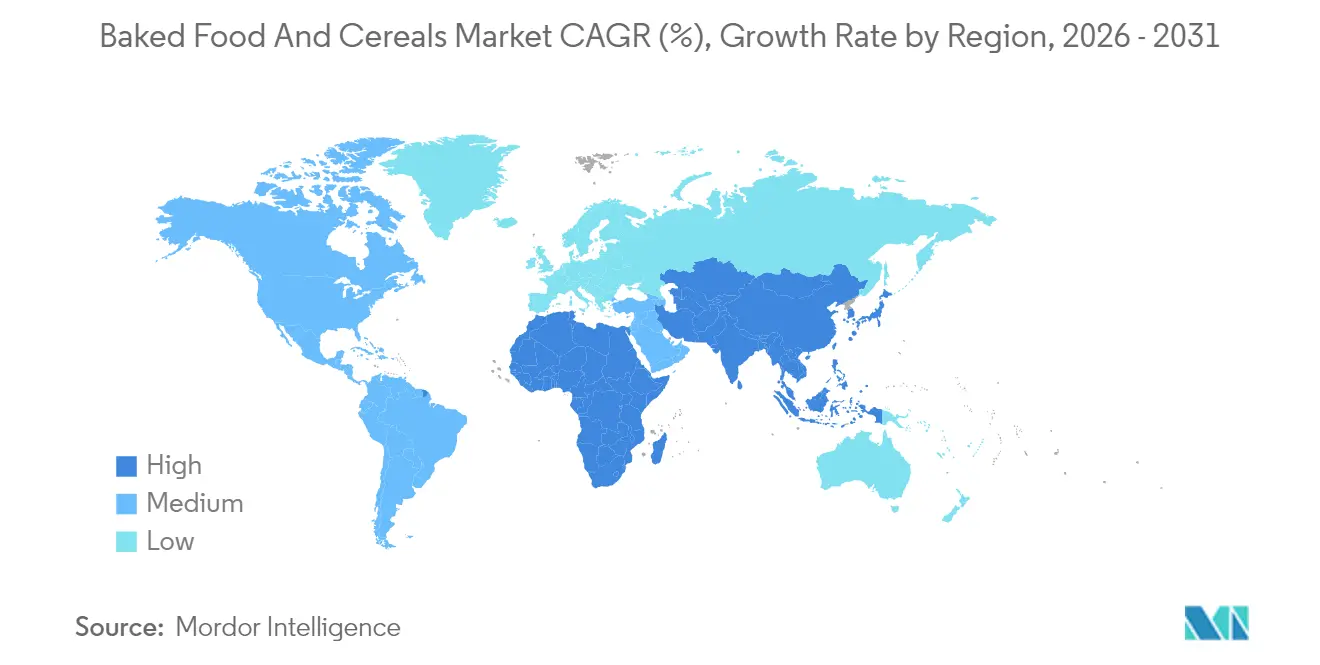
| Fastest Growing Market | Asia Pacific |
| Largest Market | North America |
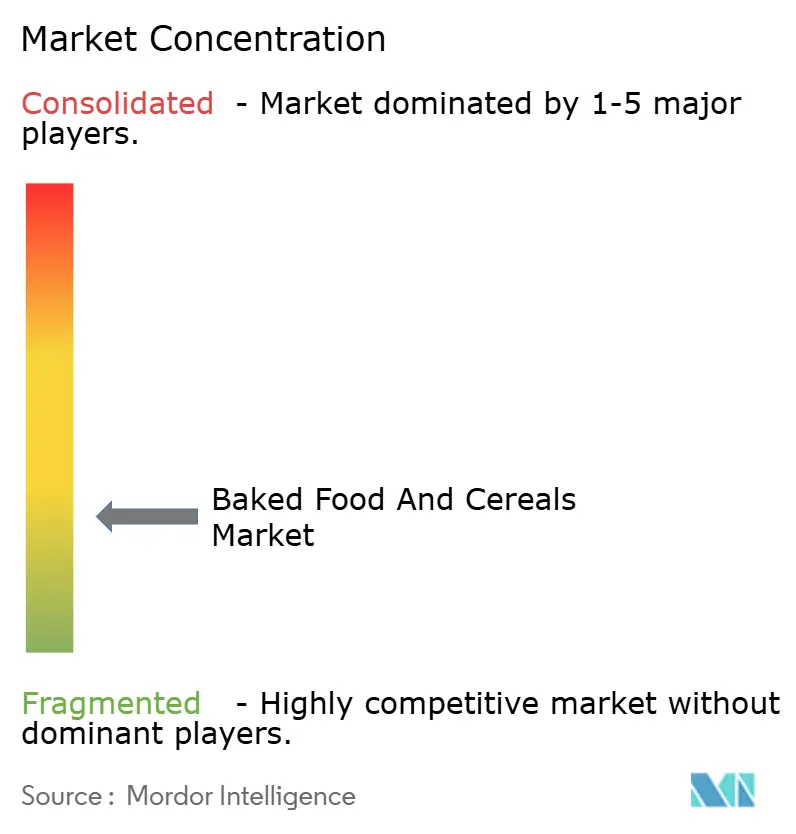
| Market Concentration | Low |
Major Players *Disclaimer: Major Players sorted in no particular order Image © Mordor Intelligence. Reuse requires attribution under CC BY 4.0. | |
Baked Food And Cereals Market Analysis by Mordor Intelligence
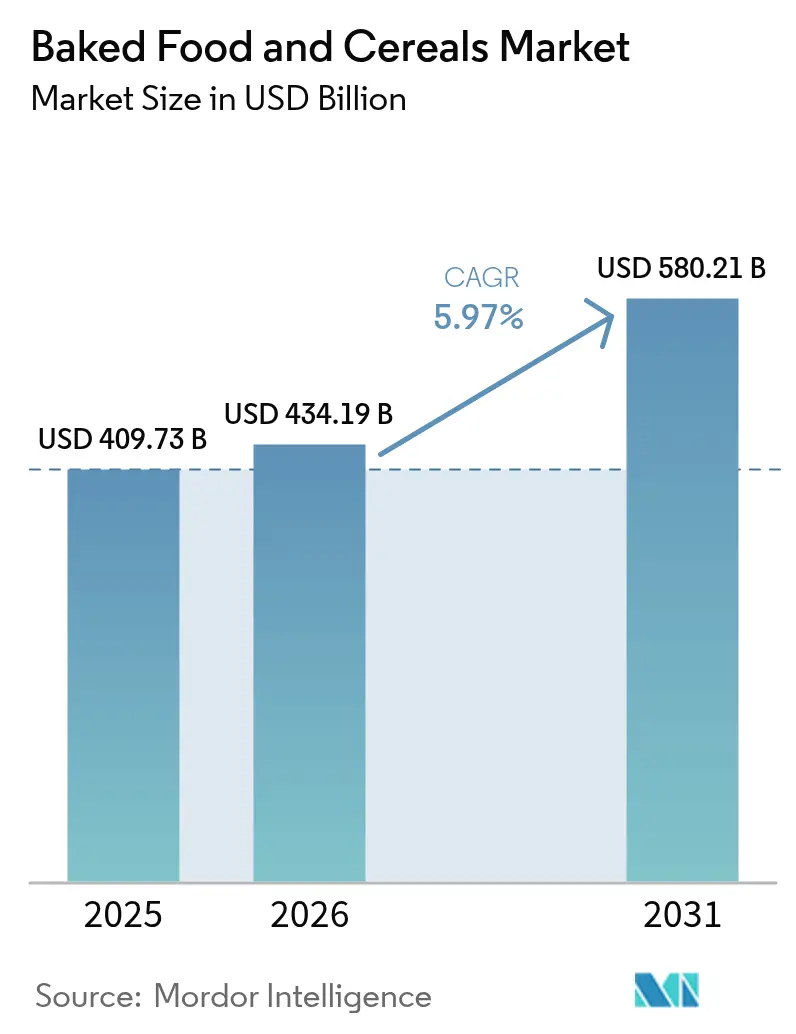
In 2025, the baked foods and cereals market size was valued at USD 409.73 billion. baked foods and cereals market size in 2026 is estimated at USD 434.19 billion, growing from 2025 value of USD 409.73 billion with 2031 projections showing USD 580.21 billion, growing at 5.97% CAGR over 2026-2031. This growth is largely driven by an increasing appetite for convenient breakfast and snack options, a regulatory push towards organic certifications, and a notable shift in grocery spending towards digital platforms. Major manufacturers are expanding their offerings, introducing protein-fortified breads, gluten-free crackers, and fiber-rich cereals, all aimed at health-conscious consumers. They're also navigating raw material price fluctuations through strategies like forward contracting and utilizing frozen formats. While budget-conscious shoppers are leaning towards private-label products, premium artisanal items are carving out a niche, boosting margins through a focus on authenticity, local sourcing, and techniques like sourdough fermentation. In today's competitive landscape, success hinges on strategies like omnichannel merchandising, packaging tailored for last-mile delivery, and rolling out innovations that blend indulgence with health-conscious cues.
Key Report Takeaways
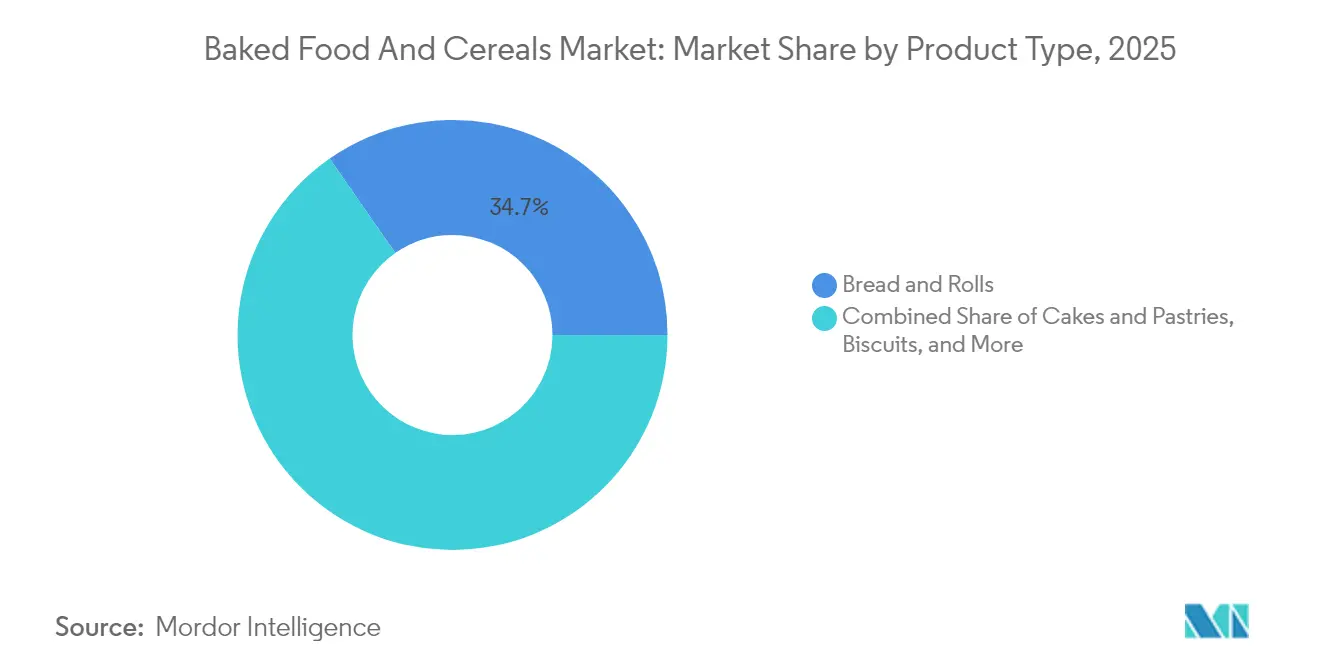
- By product type, bread and rolls commanded 34.68% of the baked food and cereals market share in 2025, while crackers and savory biscuits are poised to expand at a 6.98% CAGR through 2031.
- By category, conventional lines held 61.75% revenue share in 2025; organic offerings are forecast to grow at an 7.79% CAGR between 2026 and 2031.
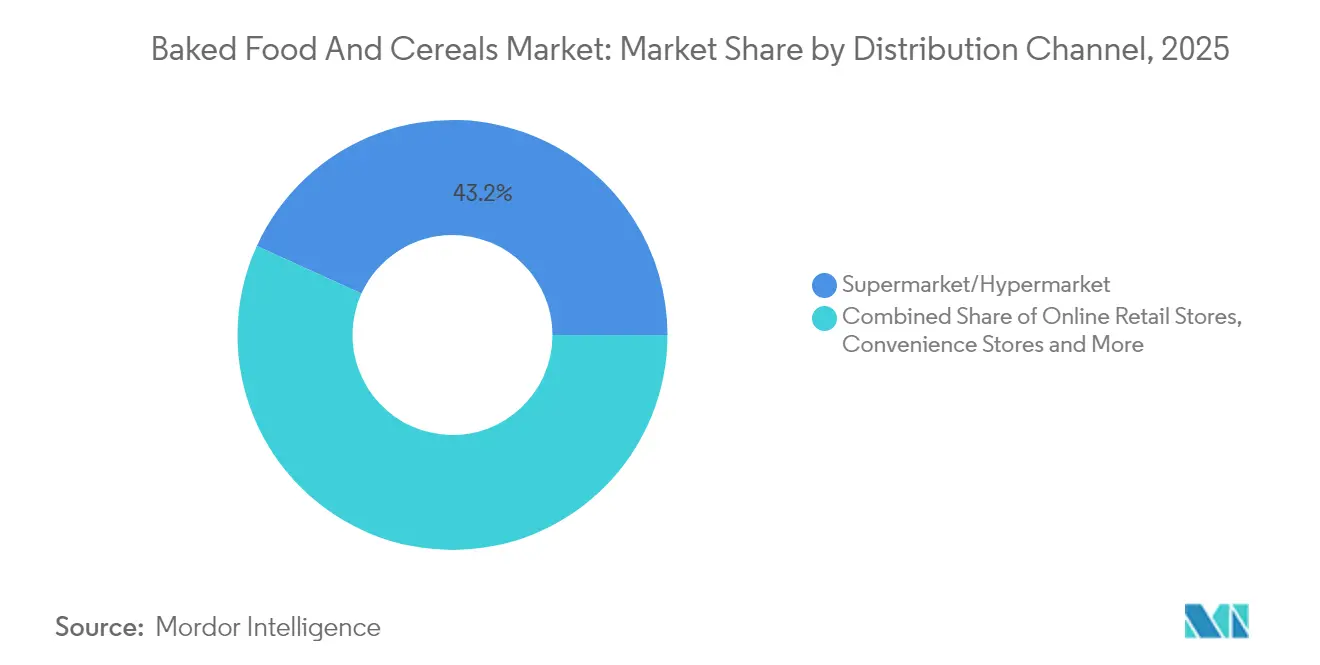
- By distribution channel, supermarkets and hypermarkets led with 43.21% of the baked food and cereals market size in 2025, whereas convenience stores are projected to post a 7.55% CAGR.
- By geography, North America accounted for 36.18% revenue share in 2025; Asia-Pacific is expected to rise at an 8.36% CAGR to 2031.
Note: Market size and forecast figures in this report are generated using Mordor Intelligence’s proprietary estimation framework, updated with the latest available data and insights as of 2026.
Market Trends and Insights
Drivers Impact Analysis of Baked Food And Cereals Market*
| Drivers | (~) % Impact on CAGR Forecast | Geographic Relevance | Impact Timeline |
|---|---|---|---|
| Growing consumer demand for convenient and on-the-go breakfast and snack options | +1.2% | Global, with concentration in North America and urban Asia-Pacific | Medium term (2-4 years) |
| Rising interest in organic and clean-label baked foods and cereals | +1.1% | North America and Europe, expanding to Asia-Pacific | Long term (≥ 4 years) |
| Expansion of e-commerce and digital retail channels | +0.9% | Global, led by North America and Asia-Pacific | Short term (≤ 2 years) |
| Innovation in product formulations | +0.8% | Global, with early adoption in developed markets | Medium term (2-4 years) |
| Rising consumer shift towards snacking culture | +1.0% | Global, particularly strong in North America and Europe | Medium term (2-4 years) |
| Growing popularity of artisanal and specialty bakery products | +0.7% | Europe and North America, emerging in Asia-Pacific urban centers | Long term (≥ 4 years) |
| Source: Mordor Intelligence | |||
Growing Consumer Demand for Convenient and On-the-Go Breakfast and Snack Options
Urbanization and busy daily routines have made portable, shelf-stable food formats a common choice rather than a niche option. The United States Department of Agriculture reports that 83% of children and adults eat breakfast daily, often during their commute or at work[1]. This shift has encouraged manufacturers to create single-serve products that are both filling and nutritious, catering to changing eating habits that move away from traditional meal patterns. Retailers have adapted by increasing grab-and-go sections and chilled bakery areas to serve consumers looking for fresh, ready-to-eat options. The demand for convenience and nutrition has also led to innovations like protein-fortified biscuits and fiber-enriched breakfast bars, as brands strive to combine health benefits with good taste and texture. For example, Warburtons launched Protein Flatbreads in August 2024, targeting fitness-conscious consumers who value macronutrient-rich, portable food options.
Rising Interest in Organic and Clean-Label Baked Foods and Cereals
Regulatory standardization and increasing consumer concerns about synthetic additives are driving a shift toward organic and clean-label products. The organic food market in the European Union is growing at 6% annually, supported by unified certification frameworks across member states and more shelf space allocated by retailers. The United States Department of Agriculture's Organic Integrity Database lists over 41,000 certified operations worldwide, showing the significant supply chain changes needed to meet the demand for traceable and pesticide-free ingredients. A report by Puratos reveals that 73% of consumers prefer familiar ingredients in their food, highlighting a demand for simple and recognizable ingredient lists instead of complex chemical names. This preference also influences production methods, with sourdough fermentation becoming more popular for its ability to lower the glycemic index and improve mineral absorption without using synthetic additives.
Expansion of E-Commerce and Digital Retail Channels
Digital commerce has shifted from being an additional option to a critical part of business strategy, as shopping habits formed during the pandemic have become permanent. Vietnam's food e-commerce market grew at a positive compound annual growth rate between 2020 and 2024, showing how emerging markets are skipping traditional retail systems and moving directly to mobile-first shopping. This change has led manufacturers to redesign packaging for direct-to-consumer deliveries, ensuring it is durable for shipping while still appealing for unboxing. Subscription services and customized product assortments have made online shopping more attractive, helping brands secure repeat customers and collect data to improve products. In 2024, the Supplemental Nutrition Assistance Program expanded online acceptance to more retailers, making digital shopping accessible to lower-income households and increasing the customer base for e-commerce bakery and cereal products.
Innovation in Product Formulations
Reformulation has become crucial as health-conscious consumers pay closer attention to sodium, sugar, and saturated fat levels in products. DIOSNA has highlighted significant efforts to reduce salt and sugar content while maintaining taste, using enzyme technologies and fermentation processes to improve flavor. Sourdough fermentation naturally increases shelf life, reducing the need for preservatives and meeting clean-label requirements without affecting product stability. Functional ingredients like plant-based proteins, omega-3 fatty acids, and prebiotic fibers are being added to crackers and breakfast cereals, turning them into products that offer specific health benefits. In February 2024, Britannia Industries introduced Nutrichoice Essentials high-protein digestive biscuits to cater to the growing demand for functional snacks that support active lifestyles.
Restraints Impact Analysis of Baked Food And Cereals Market*
| Restraint | (~) % Impact on CAGR Forecast | Geographic Relevance | Impact Timeline |
|---|---|---|---|
| Highly fragmented market with intense competition | -0.5% | Global, particularly acute in mature markets like North America and Europe | Short term (≤ 2 years) |
| Supply chain disruptions and raw material price volatility | -0.8% | Global, with acute pressure in import-dependent regions | Medium term (2-4 years) |
| Perishability and short shelf life | -0.4% | Global, more pronounced in regions with underdeveloped cold chain infrastructure | Medium term (2-4 years) |
| Health concerns over gluten and allergen content | -0.6% | North America and Europe, expanding to Asia-Pacific | Long term (≥ 4 years) |
| Source: Mordor Intelligence | |||
Supply Chain Disruptions and Raw Material Price Volatility
Wheat supply issues and trade restrictions have caused significant instability in ingredient procurement. According to the Organisation for Economic Co-operation and Development and the Food and Agriculture Organization, global wheat stocks have fallen to 257.6 million metric tons, the lowest level in nine years[2]. This drop has reduced supply reserves, making prices more vulnerable to weather changes and policy decisions. Following the Ukraine conflict, 63 food-related export restrictions were imposed, disrupting global trade and forcing importers to find alternative sources at higher costs. In the United States, the wheat season-average farm price for 2024/25 is projected to be between USD 5.55 and USD 5.60 per bushel. While relatively stable, this price remains higher than pre-pandemic levels, keeping costs elevated for millers and bakers. From October to December 2024, flour milling activity totaled 231 million bushels, a 2% increase from the previous year, reflecting strong demand that continues to strain supply and limit price relief.
Perishability and Short Shelf Life
Fresh bakery products face significant shelf-life limitations, complicating inventory management, distribution logistics, and waste reduction efforts. Suppliers to major retailers operate under weekly tender systems and risk rejection for quality deviations, posing challenges for producers without scale or cold-chain infrastructure. Sourdough fermentation provides a natural solution by extending shelf life through organic acid production, reducing the need for chemical preservatives while supporting clean-label positioning. Frozen bakery formats have also emerged as a strategic approach, allowing centralized production, extended distribution timelines, and reduced spoilage risks. Grupo Bimbo's acquisition of Pagnifique in Uruguay in September 2024 expanded its frozen bread and pastry offerings, utilizing freezing technology to serve geographically dispersed markets without compromising product quality. However, the balance between freshness perception and logistical efficiency remains a strategic challenge, as consumers often associate shorter shelf life with artisanal quality, while retailers prioritize products that minimize markdown losses.
*Our forecasts treat driver/restraint impacts as directional, not additive. The impact forecasts reflect baseline growth, mix effects, and variable interactions.
Baked Food And Cereals Market Segment Analysis
By Product Type:
Bread Anchors Volume, Crackers Drive GrowthBread and rolls held a 34.68% market share in 2025, remaining a key category due to their widespread use in daily meals and affordability, which appeals to consumers across all income levels. Sourdough bread has seen growing demand because of its lower glycemic index and better mineral absorption, making it a popular choice for health-conscious consumers looking for nutritious options without compromising on taste or tradition. Premium products, featuring artisanal preparation and whole-grain ingredients, enable brands to stand out and maintain profitability despite competition from private-label alternatives.
Crackers and savory biscuits are expected to grow at a 6.98% CAGR from 2026 to 2031, driven by their increasing popularity as snacks and their versatility as meal accompaniments or standalone options. The demand for GMO-free crackers has grown at a positive rate, highlighting a strong consumer preference for clean-label products with simple and transparent ingredients, even at premium prices. Cheese crackers experience a seasonal surge in demand during December, while ongoing innovations in plant-based proteins and functional ingredients continue to drive steady growth throughout the year.

By Category:
Conventional Dominates, Organic AcceleratesConventional products held a 61.75% market share in 2025, driven by their affordability and widespread availability, which appeal to cost-conscious consumers dealing with inflation. During periods of economic uncertainty, consumers often opt for more affordable options, maintaining steady demand for conventional products. In 2023, Aldi opened 109 new stores across the United States, strengthening its position as a discount retailer. This expansion helped Aldi capture market share from traditional supermarkets and increased the presence of private-label products in bakery and cereal categories. Conventional products also benefit from efficient supply chains and manufacturing processes, which allow competitive pricing while ensuring consistent availability and product variety.
Organic alternatives are expected to grow at a compound annual growth rate (CAGR) of 7.79% from 2026 to 2031, supported by clearer regulations and growing consumer preference for certified pesticide-free ingredients. According to the United States Department of Agriculture's Organic Integrity Database, there are over 41,000 certified organic operations worldwide, reflecting the significant changes in supply chains to meet the demand for traceable organic products. In February 2024, Nature's Path launched Organic Sprouted Grain Toaster Pastries, which use sprouted grains to improve nutrient content while adhering to clean-label standards. Organic certification also builds consumer trust in markets where there is skepticism about synthetic additives and genetically modified organisms. This trust justifies the higher prices of organic products, ensuring profitability despite increased production costs.
By Distribution Channel:
Supermarkets Lead, Convenience Stores SurgeSupermarkets and hypermarkets accounted for 43.21% of the market share in 2025, leveraging their scale, broad product assortment, and promotional strategies to dominate bakery and cereal distribution. The expansion of private-label products within this channel has intensified competition, as retailers utilize bakery and cereal categories to drive traffic and contribute to profit margins. Discount formats, such as Aldi and Lidl, have disrupted traditional supermarket economics, with Poland's discount channel capturing the majority of value share. This has compelled established players to streamline assortments and adopt competitive pricing strategies.
Convenience stores are projected to grow at a 7.55% CAGR from 2026 to 2031, driven by urbanization and the increasing demand for on-the-go consumption. These stores prioritize proximity and speed over extensive product assortments. Convenience stores focus on grab-and-go packaging and single-serve formats, aligning with the growing snacking culture and shorter meal occasions. Vietnam's retail landscape highlights the potential of this channel, as supermarkets and convenience stores gain market share while traditional wet markets decline. Urban consumers in Vietnam increasingly prioritize hygiene and convenience. In January 2025, Fuel10K expanded into protein cake mixes, targeting the convenience channel, where functional snacking options command premium pricing and cater to impulse purchasing behavior.
Geography Analysis
North America Baked Food and Cereals Market
In 2025, North America held a 36.18% market share, driven by high per-capita consumption of packaged bakery goods and efficient supply chains enabling broad distribution and strong promotions. The Supplemental Nutrition Assistance Program expanded online acceptance to more retailers, increasing digital access for low-income households and diversifying the e-commerce customer base for bakery and cereal products. U.S. digital grocery sales grew 18.4% year-over-year, with projections exceeding USD 330 billion by 2027, highlighting e-commerce's growing role in distribution and margins. W.K. Kellogg invested USD 500 million in supply chain upgrades across three plants to meet demand in both retail and direct-to-consumer channels. Canada and Mexico added volume, with Mexico benefiting from proximity to U.S. manufacturing hubs, enhancing cross-border supply chain efficiency.
APAC Baked Food and Cereals Market
Asia-Pacific is projected to grow at an 8.36% CAGR from 2026 to 2031, driven by rising incomes, urbanization, and the adoption of Western breakfast habits. China and India offer significant opportunities as middle-class consumers seek convenience and branded packaged foods. Japan's mature market supports demand for premium bakery products, while Australia's grocery sector, led by Coles and Woolworths, ensures stable distribution for local and imported brands. In 2024, Nissin Foods acquired ABC Pastry in Australia for AUD 33.7 million (USD 22.5 million) and Gaemi Food in South Korea for USD 35 million, reflecting Japanese manufacturers' focus on regional growth through local acquisitions. Urbanization and modern retail formats in Indonesia, Thailand, and Singapore further drive incremental growth.
EMEA and South America Baked Food and Cereals Market
Europe sustained its position through premiumization and organic product expansion. The U.K. saw growth in specialty bakery formats, with consumers willing to pay more for quality and craftsmanship. Warburtons launched Belgian Waffles in September 2024 and Protein Flatbreads in August 2024, catering to demand for indulgent and functional products at premium prices. Germany, Italy, France, Spain, and the Netherlands remain key markets, while Poland and Belgium show growth potential as incomes rise. In Brazil, wheat products account for 5% of food processing output, with clean-label and plant-based trends gaining traction among urban consumers. Argentina, Colombia, Chile, and Peru contribute volume but face challenges from economic instability and currency fluctuations. In the Middle East and Africa, Saudi Arabia, the UAE, and Turkey lead demand for packaged bakery goods, supported by expatriates and tourism. Egypt's flour milling capacity and Nigeria's large population offer long-term potential, though infrastructure and import reliance limit short-term growth.
Regulatory Landscape
Food safety, labeling, and additive oversight continue to shape formulation and cross-border trade for baked foods and cereals. In July 2026, the Codex Alimentarius Commission (49th Session) adopted updates that include guidance on precautionary allergen labelling (PAL). The update reinforces the need for tighter allergen-control programs and consistent consumer communication across export markets. In the European Union, EFSA published a 2026 re-evaluation of sucralose (E 955), keeping attention on sweetener use and dossier support for products such as cereals and baked goods.
On food safety management systems and compliance infrastructure, near-term operational focus is shifting toward updated, GFSI-benchmarked schemes. FSSC 22000 moved from Version 6 to Version 7 in May 2026, with certified organizations required to complete upgrade audits by April 2028. In the United States, the FDA Human Foods Program listed 2026 priority deliverables that include sanitation and preventive controls alignment with the Preventive Controls for Human Food rule, raising expectations for plant-level documentation and verification. Trade policy also remains a variable for ingredient and finished-goods flows, with USTR continuing to emphasize efforts to lower tariff and non-tariff barriers for US agricultural exports through reciprocal trade initiatives.
Value Chain Analysis
The value chain covers grain origination (wheat and other cereals), milling and ingredient processing (flour, sweeteners, fats, enzymes, and fortifiers), manufacturing (industrial bakeries, cereal extrusion and processing, co-manufacturing), packaging, and distribution through modern trade, convenience, and online retail. Volatility in agricultural inputs remains a central pressure point. Global wheat stocks fell to 257.6 million metric tons (OECD-FAO Agricultural Outlook 2024-2033), and the 2024-25 wheat flour trade contraction of 15.5 million tonnes (down 9%) highlights how harvest swings and policy moves can tighten availability and re-route trade.
To protect service levels and claim integrity (organic, non-GMO, clean label), manufacturers increasingly complement spot procurement with forward contracting and identity-preserved sourcing. Resilience efforts are moving upstream, with regenerative and responsible sourcing programs becoming more embedded in supplier qualification and long-term cost management. PepsiCo and Cargill launched a regenerative agriculture collaboration across 240,000 acres in Iowa (2025-2030), while ADM announced a regenerative agriculture partnership with PepsiCo and Mars covering 13,477 acres in Poland (September 2025), signaling closer coordination between brand owners, agribusinesses, and farm networks for traceable grains. Downstream, shelf-life constraints and the need for scalable logistics, including frozen formats, shape operations, while e-commerce growth is pushing packaging redesign for last-mile durability and tighter demand planning to reduce waste and out-of-stocks.
Competitive Landscape
The baked food and cereals market is fragmented, with many local, domestic, and global players competing in the segment. The strong presence of local players intensifies competition among market participants. Major companies in this industry include Grupo Bimbo SAB de CV, Kellanova, General Mills, Mondelez International Inc., and Nestlé S.A.
New entrants are using direct-to-consumer channels and niche strategies to avoid traditional retail barriers. In response, established companies are focusing on innovation and expanding their capacities. For example, W.K. Kellogg's investment of around USD 500 million in supply chain improvements across three plants demonstrates the scale needed to efficiently serve both retail and e-commerce markets while maintaining competitive delivery times and cost efficiency.
Technological advancements in production, such as enzyme formulations for product reformulation, sourdough fermentation to extend shelf life, and automation to reduce labor costs, are becoming critical for success. As labor costs increase and consumers demand consistent quality, these innovations help companies stay competitive. Furthermore, compliance with regulations like the United States Food and Drug Administration's Food Safety Modernization Act and the European Union Regulation 1169/2011 on allergen labeling requires strict operational standards. These regulations benefit larger players with dedicated quality assurance teams while creating challenges for smaller, underfunded competitors[3].
Baked Food And Cereals Industry Leaders
-
Grupo Bimbo SAB de CV
-
General Mills Inc.
-
Mondelez International Inc.
-
Nestlé S.A.
-
Kellanova
- *Disclaimer: Major Players sorted in no particular order
Baked Food And Cereals Market Companies Covered in this Report
- Grupo Bimbo, S.A.B. de C.V.
- Kellanova
- General Mills, Inc.
- Mondelez International, Inc.
- Nestle S.A.
- Aryzta AG
- Yamazaki Baking Company, Ltd.
- Flowers Foods, Inc.
- The Campbell Soup Company
- Barilla Group
- Associated British Foods plc
- Post Holdings, Inc.
- The Hain Celestial Group, Inc.
- Britannia Industries Limited
- Conagra Brands, Inc.
- Hostess Brands, Inc.
- Warburtons Limited
- Grupo Nutresa S.A.
- Pladis Global Limited
- Nature's Path Foods
Market Opportunities and Future Outlook
Capacity additions and localized manufacturing footprints are showing up as an opportunity area, particularly where demand and logistics support shorter supply lines and faster replenishment. In June 2026, Bauducco Foods opened a USD 200 million, 160,000-square-foot production facility in Zephyrhills, Florida. This doubled its US manufacturing capacity and points to the operational leverage of in-country scale for bakery supply reliability. In the United Kingdom, Cereal Partners UK received approval in June 2026 for a GBP 66 million expansion of its Staverton factory to add capacity for major cereal brands. Bakeit Food also opened a GBP 3 million granola plant (February 2026), indicating continued investment behind cereal and better-for-you formats.
Product and process whitespace is centered more on functional renovation and manufacturing efficiency than on line extensions. Named launches across the broader category reflect demand for protein and satiety cues, such as General Mills introducing Honey Nut Cheerios Protein in 2026 with 8 grams of protein per serving. Bakery players are also intensifying clean-label changes and recipe simplification. Operationally, automation, robotics, sensors, and predictive maintenance are being adopted to manage labor constraints and energy-intensive steps (baking, cooling, and packaging). This creates room for manufacturers that pair formulation work (protein, fiber, and gut-health-supporting ingredients) with consistent, scalable production and omnichannel-ready packaging.
Recent Industry Developments in Baked Food And Cereals Market
- July 2026: Bimbo Bakeries USA announced sweeping portfolio commitments tied to nutrition and ingredient changes across its branded and everyday bakery offerings. The announcement supports cleaner-label and reformulation work at scale, shaping how large producers align recipes and ingredient sourcing with evolving consumer and retailer expectations.
- June 2026: General Mills launched the Pillsbury Grands! Poppin' Flavor lineup, including a Mike's Hot Honey biscuits variant, extending the company's refrigerated dough innovation into bolder, snack-forward flavors. The launch strengthens premium and differentiated offerings in a high-velocity segment where brands compete on convenience and distinctive taste cues.
- September 2024: Grupo Bimbo acquired Pagnifique in Uruguay, expanding its frozen bread and pastry capabilities. The acquisition supports wider geographic reach and shelf-life management, using frozen formats to serve dispersed markets while reducing spoilage and distribution constraints.
Baked Food And Cereals Market Report Scope and Research Methodology
Market Definition and Coverage
This market covers the retail and foodservice value of baked foods and cereals sold to end consumers, including common packaged and fresh formats across major regions. It is sized in USD based on consumption-led demand, and we support the demand picture with trade and production signals.
Scope exclusions: Food ingredients (flour, enzymes, sweeteners), industrial bakery equipment, and private label manufacturing services are excluded unless they are sold as finished baked foods or cereals.
Segments Covered in This Report
- Product Type
- Bread and Rolls
- Cakes and Pastries
- Biscuits and Cookies
- Breakfast Cereals
- Crackers and Savory Biscuits
- Others
- Category
- Conventional
- Organic
- Distribution Channel
- Supermarket/Hypermarket
- Specialist Store
- Online Retail Store
- Convenience Store
- Other Distribution Channels
- Geography
- North America
- United States
- Canada
- Mexico
- Rest of North America
- Europe
- Germany
- United Kingdom
- Italy
- France
- Spain
- Netherlands
- Poland
- Belgium
- Sweden
- Rest of Europe
- Asia-Pacific
- China
- India
- Japan
- Australia
- Indonesia
- South Korea
- Thailand
- Singapore
- Rest of Asia-Pacific
- South America
- Brazil
- Argentina
- Colombia
- Chile
- Peru
- Rest of South America
- Middle East and Africa
- South Africa
- Saudi Arabia
- United Arab Emirates
- Nigeria
- Egypt
- Morocco
- Turkey
- Rest of Middle East and Africa
- North America
Data Sources, Market Sizing, and Validation
Desk Research
For desk research, we start with public statistics that anchor the demand pool and show how grain-based foods move through the supply chain. Sources typically include USDA and ERS food availability and price series, FAOSTAT food balance sheets, UN Comtrade trade flows for cereals and bakery-linked categories, and national statistics offices for CPI and household expenditure.
We also refer to annual reports, investor presentations, and earnings call notes to track category mix shifts, pack size trends, and pricing behavior in key regions. Patent databases are used selectively to spot faster moving product themes, such as fortification and shelf-life improvement, which then inform assumption checks. The sources listed here are illustrative, and many other public references were reviewed to collect, validate, and clarify specific data points.
Primary Interviews and Surveys
Primary work focuses on checking what consumers are actually buying and how channel shifts change the category mix across regions. We speak with manufacturers, distributors, retailers, and category specialists, and then test assumptions on pricing, volume trends, and the share of organized retail versus traditional trade, with coverage across APAC, EMEA, and the Americas.
Distribution of primary research fieldwork respondents
| Company type | Respondent position | Region |
|---|---|---|
| Top tier: 26% | CXOs: 15% | APAC: 46% |
| Mid tier: 56% | Functional/Unit leaders: 33% | EMEA: 36% |
| Smaller Players: 18% | Managers: 52% | Americas: 18% |
Market-Sizing & Forecasting
The sizing model is built using a top-down structure where food consumption and expenditure signals are reconstructed into category demand by region, then converted into market value using observed price ladders. To keep totals practical, outputs are cross-checked with selective bottom-up approximations, such as sampled brand and private label shelf pricing, typical pack sizes, and channel volume cues gathered from interviews.
Key inputs used in the model include per capita cereal and bakery consumption indicators, urbanization and working population trends that affect convenience food uptake, wheat and other grain price movements that drive pass-through, retail food inflation and CPI, and distribution channel shifts (modern trade and e-commerce mix). Where a data gap exists for a smaller country, proxies from similar income and diet clusters are applied, then corrected using region-level import patterns and expert feedback.
Forecasts are developed through multivariate regression, using the variables above, and then stress-tested through scenario analysis around grain price volatility and consumer downtrading. Assumptions are carried forward only when they stay consistent with interview consensus and the latest public inflation and trade series.
Data Validation & Update Cycle
Model results are validated through multiple checks, starting with internal consistency tests across regions, product groups, and channel totals. Outliers are flagged when price or implied consumption shifts do not match CPI, trade flows, or the direction shared by interviewees, and those items are reviewed again before final sign-off.
Updates follow an annual refresh cycle, and interim revisions are triggered when there are material events such as sharp grain price moves, major regulatory changes on labeling, or visible channel disruptions. Before a report is delivered, we run a final pass to ensure the latest public datasets and any new primary feedback are reflected in the final numbers.
Mordor Intelligence's Baked Food and Cereals Market Sizing Compared With Other Published Estimates
Published market values for baked foods and cereals can differ even when the topic sounds the same, because the product boundary and the year used for the starting point are not always aligned. Differences also come from how foodservice is treated, how private label is counted, and how price progression is applied during high inflation periods.
Import and export movement for grain-based categories, food CPI, and consumption availability series are the signals that tie the model to a realistic demand pool, and they are used to validate the 2026 estimate reported by Mordor Intelligence before forecasting forward. When those checks are not applied, totals can drift upward if adjacent snack categories, ingredient value, or broader ready-to-eat grain products are blended into the same bucket without clear rules.
Benchmark comparison
| Source | Market Size | Gaps in Research Methodology |
|---|---|---|
| Mordor Intelligence | USD 434.19 B (2026) | |
| Global Consultancy A | USD 650.00 B (2026) | Uses a wider packaged-food interpretation that can fold in additional grain-based ready-to-eat items and broader channel value capture, which inflates the counted value relative to a tighter baked foods and cereals boundary. |
| Industry Research House B | USD 530.00 B (2025) | Uses a different base year and applies long-horizon price growth assumptions from a 2025 starting point, which can lift the near-term value if inflation pass-through is treated more aggressively across regions. |
The spread in the table is mainly explained by scope edges and base-year choices, not by one single growth assumption. By keeping the demand pool anchored to consumption and inflation signals, and then checking prices and channel mix through primary feedback, the estimate remains traceable to inputs that can be re-tested each year.
Key Questions Answered in the Report
What is the current value of the baked food and cereals market?
The baked food and cereals market size reached USD 434.19 billion in 2026 and is forecast to climb to USD 580.21 billion by 2031.
Which product segment is growing the fastest within baked goods and cereals?
Crackers and savory biscuits are projected to register the quickest growth, advancing at a 6.98% CAGR through 2031.
How quickly is organic bakery gaining ground?
Organic baked foods are expanding at an 7.79% CAGR as certification processes mature and consumers prioritize clean-label assurances.
Which sales channel offers the highest growth potential?
Convenience stores are set to post a 7.55% CAGR, propelled by urbanization and demand for grab-and-go formats.