
Market Overview
| Study Period | 2021 - 2031 |
|---|---|
| Market Size (2026) | USD 104.13 Billion |
| Market Size (2031) | USD 127.18 Billion |
| Growth Rate (2026 - 2031) | 4.08 % |
| Fastest Growing Market | Middle East and Africa |
| Largest Market | Asia Pacific |
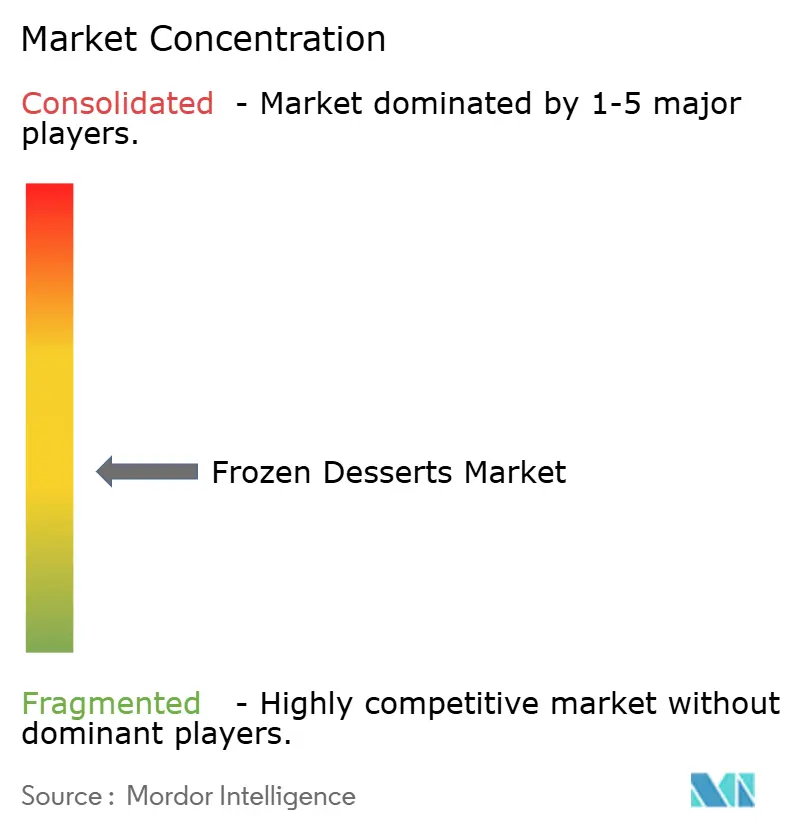
| Market Concentration | Medium |
Major Players
*Disclaimer: Major Players sorted in no particular order Image © Mordor Intelligence. Reuse requires attribution under CC BY 4.0. |
|
Frozen Desserts Market Analysis by Mordor Intelligence
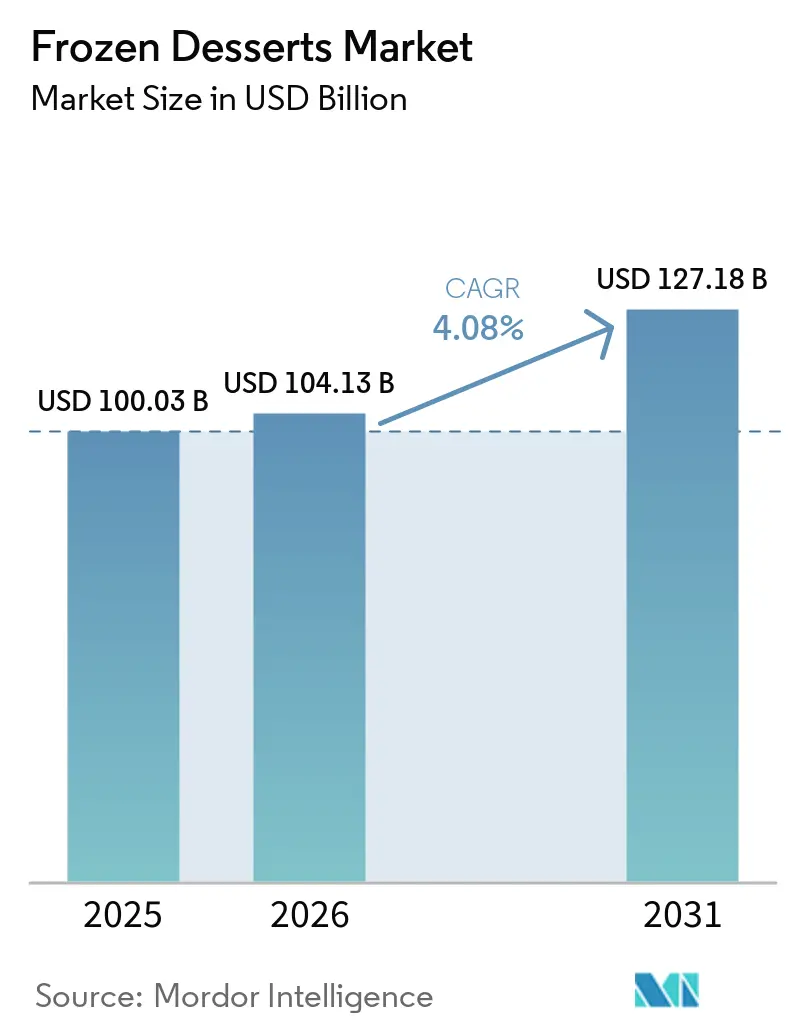
The Frozen desserts market size was valued at USD 100.03 billion in 2025 and is estimated to grow from USD 104.13 billion in 2026 to reach USD 127.18 billion by 2031, at a CAGR of 4.08% during the forecast period. This growth trajectory reflects the industry's resilience in the face of evolving consumer preferences and supply chain complexities. The market demonstrates remarkable adaptability as manufacturers pivot toward health-conscious formulations while maintaining indulgent appeal, creating a dual-track strategy that captures both wellness-focused and traditional consumer segments. Consumers are driving the frozen dessert market by seeking healthier options, including low-sugar, high-protein, and often non-dairy or plant-based treats. Simultaneously, they are drawn to innovative, premium flavors and textures that enhance their experience. Convenience plays a crucial role, as ready-to-eat and single-serve options, along with expanded availability in supermarkets, e-commerce platforms, and specialty stores, make these products more accessible. Furthermore, sustainability and ethical trends, such as eco-friendly packaging, clean labels, and a shift toward plant-based products, significantly influence product development and consumer preferences.
Key Report Takeaways
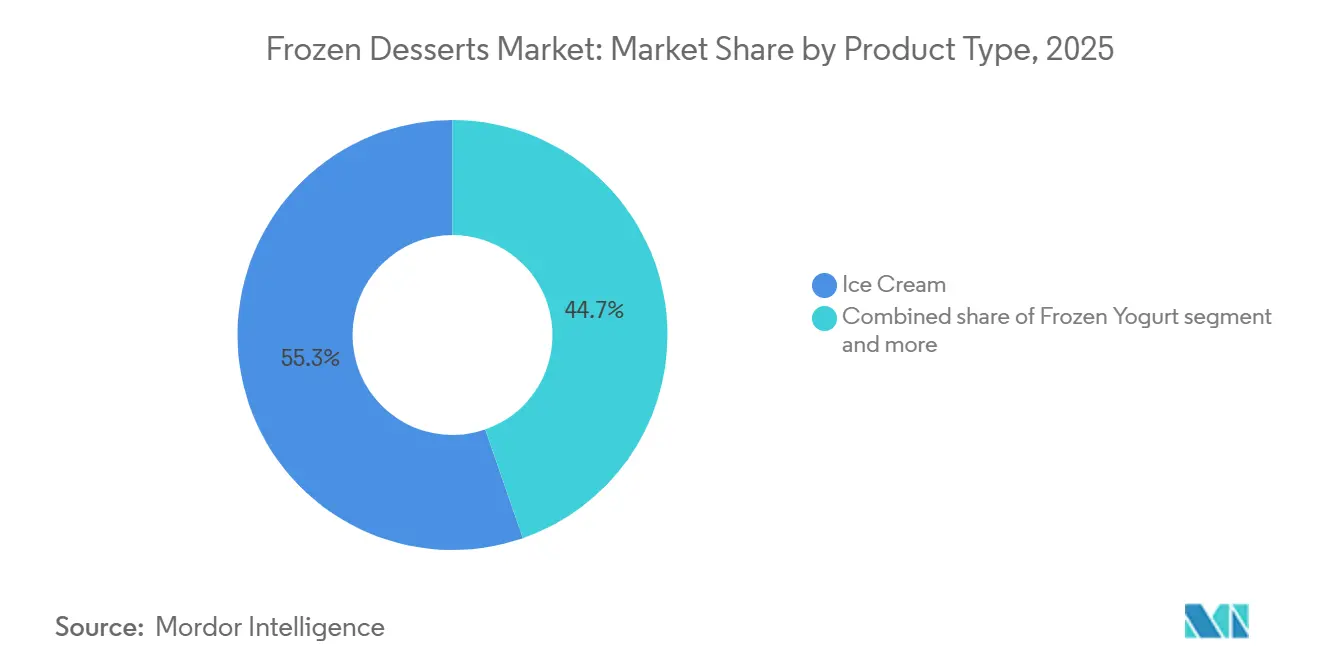
- By product type, ice cream led with 55.31% revenue share in 2025, while frozen yogurt is projected to record the highest CAGR at 6.02% through 2031.
- By category, conventional offerings held 80.18% of the frozen desserts market share in 2025; organic variants are forecast to expand at a 5.56% CAGR to 2031.
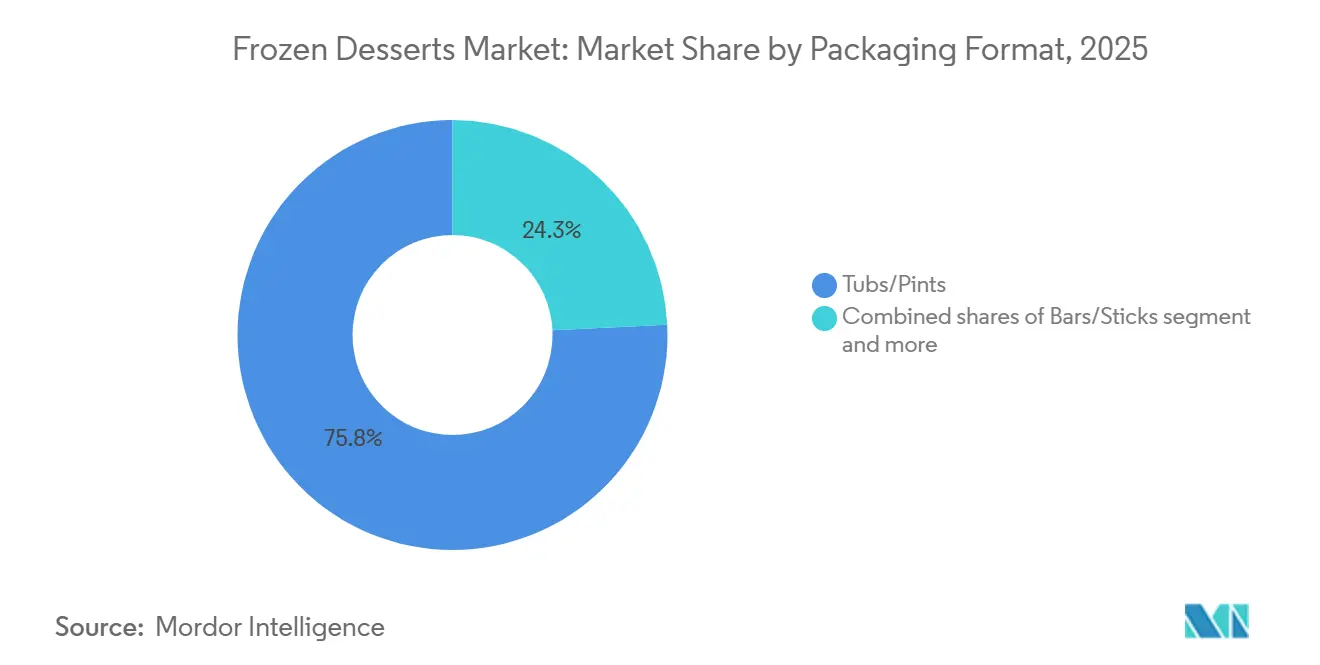
- By packaging format, tubs and pints accounted for 75.75% of the frozen desserts market size in 2025, whereas bars and sticks are advancing at a 4.89% CAGR through 2031.
- By distribution channel, retail controlled 83.18% sales in 2025, while foodservice/HoReCa is set to grow fastest at 5.01% CAGR over 2026-2031.
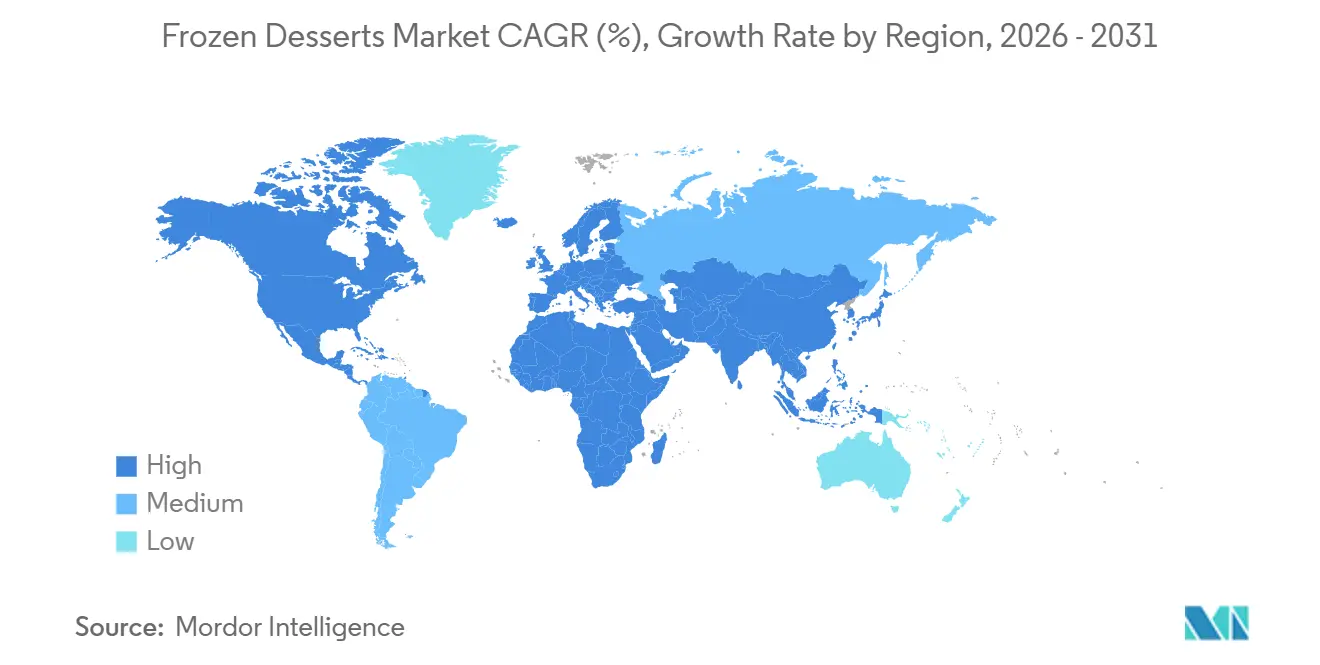
- Asia-Pacific secured 41.19% of the market share in 2025; the Middle East and Africa represent the quickest-growing region at 5.33% CAGR to 2031.
Note: Market size and forecast figures in this report are generated using Mordor Intelligence’s proprietary estimation framework, updated with the latest available data and insights as of 2026.
Market Trends and Insights
Drivers Impact Analysis of Frozen Desserts Market*
| Driver | (~) % Impact on CAGR Forecast | Geographic Relevance | Impact Timeline |
|---|---|---|---|
| Continuous innovation in unique flavor varieties | +0.6% | Global, with premium positioning in North America and Europe | Medium term (2-4 years) |
| Rising demand for health-conscious and low-sugar dessert options | +0.9% | Global, led by North America and Europe, accelerating in Asia-Pacific urban centers | Long term (≥4 years) |
| Growth of premium and artisanal frozen desserts | +0.7% | North America and Europe core, spillover to Asia-Pacific affluent segments | Medium term (2-4 years) |
| Seasonal campaigns and promotional activities boosting sales | +0.4% | Global, peak impact in temperate regions during summer months | Short term (≤2 years) |
| Rising demand for plant-based and non-dairy frozen desserts | +1.0% | North America and Europe lead, Asia-Pacific following with lactose-intolerance prevalence | Long term (≥4 years) |
| Increasing adoption of sustainable and clean-label product formulations | +0.5% | Europe regulatory-driven, North America consumer-driven, emerging in Asia-Pacific | Medium term (2-4 years) |
| Source: Mordor Intelligence | |||
Continuous innovation in unique flavor varieties
Flavor innovation drives market differentiation as manufacturers leverages global culinary trends to capture adventurous consumer palates. Unilever showcases this approach with product launches like Talenti's bakery-inspired gelato layers and Good Humor's sustainably-farmed lime offerings. U.S. consumers increasingly prefer exotic fruit flavors such as mango, guava, and dragon fruit, while younger generations boost demand for global street food-inspired varieties. Collaborative product development, such as Baskin-Robbins' partnership with Trolli for sour-flavored ice cream, enhances cross-category appeal and extends seasonal relevance beyond traditional summer peaks. Social media-driven trends in flavor discovery and cultural fusion accelerate this innovation cycle. Manufacturers create consumer urgency and test market acceptance for permanent line extensions by focusing on limited-time offerings and co-branded flavors.
Rising demand for health-conscious and low-sugar dessert options
Consumers increasingly prioritize wellness, driving product development to offer indulgence without compromise. Frozen yogurt grows faster than traditional ice cream, while the organic segment shifts toward premiumization with a focus on cleaner ingredients and functional benefits. Perfect Day integrates its precision fermentation technology into Breyers' lactose-free chocolate ice cream, demonstrating how biotechnology addresses dietary restrictions while preserving dairy-like sensory qualities. Academic research on vegan ice cream formulations, using fermented hazelnut cake, reveals the potential of upcycled ingredients to enhance protein digestibility and antioxidant activity after digestion. Conagra targets the growing segment of GLP-1 medication users by developing high-protein, low-calorie frozen desserts with "On Track" labels to support weight management. This health-focused innovation not only enables premium pricing but also expands the market reach beyond traditional demographics.
Growth of premium and artisanal frozen desserts
The growth of premium and artisanal frozen desserts is emerging as a significant driver in the frozen desserts market. Consumers are increasingly seeking high-quality, indulgent products that offer unique flavors, natural ingredients, and a gourmet experience. This trend is fueled by rising disposable incomes, urbanization, and exposure to global dessert trends through social media and food tourism. Premium offerings, such as small-batch ice creams, gelatos, and innovative plant-based desserts, are gaining popularity among health-conscious and experience-driven consumers. Artisanal products also capitalize on clean-label formulations and locally sourced ingredients, appealing to sustainability-conscious buyers. As a result, manufacturers are investing in product innovation, sophisticated packaging, and targeted marketing campaigns to capture this growing segment. This shift toward premiumization not only enhances brand value but also supports higher profit margins, encouraging further expansion and competition in the frozen desserts market.
Increasing adoption of sustainable and clean-label product formulations
The increasing adoption of sustainable and clean-label product formulations is a key driver of growth in the frozen desserts market. Consumers are becoming more conscious of the ingredients in their desserts, preferring products with natural, minimally processed components and transparent labeling. According to research by the CBI Ministry of Foreign Affairs, clean-label products are projected to constitute over 70% of portfolios in 2025 and 2026, up from 52% in 2021, highlighting the rapid shift toward transparency and health-conscious choices[1]Source: CBI Ministry of Foreign Affairs, "Which trends offer opportunities," cbi.eu. This trend is complemented by growing demand for environmentally sustainable practices, including responsibly sourced ingredients and eco-friendly packaging. Manufacturers are responding by reformulating recipes, reducing artificial additives, and introducing plant-based and organic variants to meet consumer expectations. The focus on clean-label and sustainable products not only strengthens brand trust but also enables companies to differentiate themselves in a competitive market.
Restraints Impact Analysis of Frozen Desserts Market*
| Restraint | (~) % Impact on CAGR Forecast | Geographic Relevance | Impact Timeline |
|---|---|---|---|
| Health concerns related to sugar content and artificial additives | -0.7% | Global, most acute in North America and Europe with stringent labeling | Long term (≥4 years) |
| High dependence on cold-chain logistics and temperature-controlled distribution | -0.9% | Emerging markets in Middle East, Africa, and South America; infrastructure gaps in rural Asia-Pacific | Medium term (2-4 years) |
| Shift in consumer preference toward fresh and alternative desserts | -0.4% | North America and Europe, urban centers with artisanal bakery proliferation | Short term (≤2 years) |
| Volatility in raw material prices including dairy and sugar | -0.8% | Global, with acute margin pressure in cost-sensitive Asia-Pacific and South America markets | Short term (≤2 years) |
| Source: Mordor Intelligence | |||
Health concerns related to sugar content and artificial additives
Health concerns related to sugar content and artificial additives are a significant restraint in the frozen desserts market. Increasing consumer health consciousness is creating formulation challenges, as manufacturers strive to balance taste and indulgence with nutritional expectations. Regulatory pressures are intensifying, with the U.S. Food and Drug Administration (FDA) proposing the revocation of 23 food standards of identity, which could impact the flexibility of frozen dessert formulations while ensuring consumer safety[2]Source: U.S Food & Drug Administration, "Proposal to Revoke 23 Standards of Identity for Foods; Preliminary Regulatory Impact Analysis", fda.gov. Additionally, the rising prevalence of diet-related diseases underscores the need for healthier products; according to the International Diabetes Federation (IDF), approximately 589 million adults (aged 20–79 years) were living with diabetes in 2024, and this number is projected to rise to 853 million by 2050[3]Source: International Diabetes Federation, "Diabetes around the world in 2024”, idf.org. These factors are driving manufacturers to explore sugar-reduced, natural, and functional ingredient-based alternatives, but reformulation without compromising taste remains a challenge.
High dependence on cold-chain logistics and temperature-controlled distribution
Cold-chain infrastructure limitations hinder market expansion, especially in emerging economies where the Asia-Pacific's growth potential encounters distribution challenges. Regulations from the USDA and FDA mandate continuous temperature monitoring at or below 0°F (-18°C), with documented compliance, adding operational complexity and cost pressures. Energy expenses for refrigerated transport and storage are substantial, and the push for sustainability complicates matters with demands for renewable energy adoption. While strong consumer demand exists, infrastructure gaps in developing markets restrict penetration. Conversely, established markets grapple with aging equipment and the need for efficiency upgrades. Reliance on specialized logistics providers introduces supply chain vulnerabilities, evident during peak seasons and extreme weather events. Although technology solutions like IoT monitoring and predictive maintenance present mitigation strategies, they necessitate significant capital investment and technical expertise, potentially sidelining smaller market players.
*Our forecasts treat driver/restraint impacts as directional, not additive. The impact forecasts reflect baseline growth, mix effects, and variable interactions.
Frozen Desserts Market Segment Analysis
By Product Type:
Ice Cream Dominance Faces Yogurt ChallengeIn the frozen desserts market, ice cream dominates as the largest segment by product type, capturing a substantial 55.31% revenue share in 2025. This leadership stems from its widespread consumer appeal, driven by diverse flavors, textures, and formats that cater to both impulse purchases and family treats. Ice cream's entrenched position is bolstered by strong brand loyalty from global giants and extensive distribution networks in supermarkets, convenience stores, and foodservice outlets. Its versatility ranging from classic cones to premium artisanal varieties ensures consistent high-volume sales across demographics. Moreover, seasonal demand peaks during warmer months further solidify its market dominance, making it a staple in retail freezers worldwide.
Frozen yogurt stands out as the fastest-growing segment, projected to achieve the highest CAGR of 6.02% through 2031. This rapid expansion is fueled by rising health consciousness, positioning frozen yogurt as a lighter, probiotic-rich alternative to traditional ice cream for fitness enthusiasts and calorie-watchers. Innovations in low-sugar, plant-based, and dairy-free formulations are broadening its appeal, particularly among millennials and Gen Z consumers seeking indulgent yet guilt-free options. Self-serve frozen yogurt shops and ready-to-eat packaged formats are proliferating in urban areas, supported by e-commerce and quick-service channels. The segment's growth is further accelerated by flavor fusions like fruit-infused or functional varieties with added vitamins, tapping into wellness trends.



By Category:
Organic Premiums Compress as Scale ArrivesConventional offerings commanded the lion's share with an impressive 80.18% revenue share in 2025. This dominance is rooted in their affordability and mass-market appeal, making them the go-to choice for everyday consumers across households and foodservice settings. Widely available in supermarkets, convenience stores, and online platforms, conventional products benefit from established supply chains and economies of scale that keep prices competitive. Their broad flavor profiles and familiar formats such as standard ice creams, yogurts, and novelties resonate with price-sensitive families and impulse buyers alike. Major brands leverage heavy marketing and promotional tie-ins to maintain this stronghold, ensuring high shelf visibility and repeat purchases.
Organic variants in the frozen desserts market are poised for the fastest growth, forecasted to expand at a robust 5.56% CAGR through 2031. This surge reflects surging consumer demand for clean-label, pesticide-free, and sustainably sourced treats amid rising health and environmental awareness. Younger demographics, particularly millennials and Gen Z, drive adoption by prioritizing organic certifications that signal quality and ethical production. Innovations like dairy-free organic ice creams and yogurts with superfood add-ins are capturing premium shelf space in specialty and upscale retail channels. E-commerce platforms further amplify accessibility, enabling direct-to-consumer sales of these higher-margin products.
By Packaging Format:
Bars and Sticks Capture On-the-Go DemandTubs and pints dominate with a commanding 75.75% share of the market size in 2025. This preeminence arises from their family-sized portions and value-for-money appeal, ideal for home consumption and sharing during gatherings. These formats excel in supermarkets and hypermarkets, where ample freezer space allows prominent displays that drive bulk purchases. Their versatility supports a wide array of flavors and premium upgrades, from indulgent classics to low-calorie options, catering to diverse household preferences. Strong supply chain efficiencies and longer shelf lives further bolster their position, minimizing waste and enabling widespread distribution. Ultimately, tubs and pints serve as the cornerstone of the market, leveraging volume sales to overshadow compact alternatives like bars and sticks.
Bars and sticks represent the fastest-growing packaging format in the frozen desserts market, advancing at a 4.89% CAGR through 2031. This growth is propelled by their portability and on-the-go convenience, perfectly suiting busy lifestyles and impulse buys at checkout counters. Rising demand for single-serve, mess-free indulgences appeals to children, teens, and active adults seeking quick treats without commitment. Innovations in fun shapes, novel flavors, and health-oriented variants like low-sugar or fruit-infused bars are capturing younger demographics and expanding market reach. Convenience stores and vending machines amplify their accessibility, fostering frequent, spontaneous purchases that boost overall category momentum.
By Distribution Channel:
Foodservice Rebounds Post-PandemicRetail channels accounted for 83.18% of sales in 2025, establishing itself as the undisputed leader. This supremacy stems from its unparalleled reach through supermarkets, hypermarkets, convenience stores, and online platforms, where consumers make routine and impulse purchases. Retail's strength lies in its ability to offer extensive variety, from economy packs to premium novelties, all supported by eye-catching in-store displays and promotional endcaps. High-volume transactions during peak seasons, such as summer, further amplify its revenue generation, catering to families stocking freezers for everyday indulgences. Efficient cold-chain logistics ensure product freshness and availability across urban and suburban outlets, minimizing stockouts.
The foodservice and HoReCa segment is poised to exhibit the fastest growth in the frozen desserts market, with a projected 5.01% CAGR from 2026 to 2031. This expansion is driven by surging demand in restaurants, hotels, cafes, and catering events, where frozen desserts enhance dessert menus and elevate dining experiences. Premiumization trends favor artisanal ice creams, gelatos, and customized sundaes, appealing to diners seeking experiential treats post-meal. Urbanization and rising disposable incomes in emerging markets are boosting out-of-home consumption, particularly in quick-service and fine-dining establishments.
Geography Analysis
APAC Frozen Desserts Market
Asia-Pacific emerged as the largest regional market for frozen desserts in 2025, accounting for 41.19% of the total market value. The region’s dominance is primarily driven by large consumer bases in countries such as China, India, and Japan, coupled with rising urbanization and increasing disposable incomes. Growing adoption of western-style desserts, expansion of modern retail formats, and a strong presence of multinational brands have further strengthened market penetration. Additionally, a rising preference for premium and innovative frozen dessert options, including plant-based and functional variants, is supporting sustained growth in the region. The established cold-chain infrastructure in developed Asia-Pacific markets also facilitates wider distribution and availability, reinforcing the region’s leadership in the global frozen desserts market.
MEA Frozen Desserts Market
The Middle East and Africa represent the fastest-growing region, projected to expand at a CAGR of 5.33% between 2026 and 2031. This rapid growth is driven by increasing urbanization, rising disposable incomes, and greater exposure to global dessert trends through tourism and international food chains. Expanding modern retail networks, coupled with higher penetration of online grocery and delivery services, is further accelerating consumption. In addition, consumer demand for premium, artisanal, and indulgent frozen dessert products is steadily increasing, prompting both regional and global players to introduce localized flavors and formats.
Europe and the Americas Frozen Desserts Market
Other regions, including Europe, South America, and North America, continue to play significant roles in the global frozen desserts market. Europe maintains a mature market with strong demand for premium, artisanal, and low-fat dessert options, particularly in countries like Germany, the UK, and France. North America exhibits steady growth, supported by innovation in flavors, convenience-focused formats, and plant-based alternatives, while the presence of established players like Unilever and Nestlé ensures a competitive landscape. South America, though smaller in market size, is witnessing gradual expansion driven by rising disposable incomes, urbanization, and increasing exposure to international dessert trends.

Regulatory Landscape
Frozen desserts operate under a patchwork of compositional, labeling, additive, and cold-chain rules that vary by market and product definition (for example, "ice cream" versus broader "frozen desserts"). In the United States, standards of identity for frozen desserts are set out under FDA regulations (21 CFR Part 135), which affect allowable ingredients and naming conventions for products sold into retail and foodservice channels.
Regulatory tightening is also visible across Asia and Europe through updated product and safety requirements. In January 2026, the European Commission adopted Regulation (EU) 2026/196 amending specifications for selected food additives (including stabilizers such as locust bean gum, E410, and guar gum, E412), with transitional provisions for products placed on the market before 18 August 2026. Emerging market standards are sharpening product integrity and handling requirements, such as Nepal endorsing draft standards in May 2026 that include limits on trans fat (2% of total fat), caps on permitted food color (200 mg/kg), and storage requirements at -18 C or below, while China implemented GB/T 31114-2024 to update quality requirements for pre-packaged ice cream and replace the 2014 version.
Competitive Landscape
The frozen desserts market exhibits moderate fragmentation, characterized by the presence of several multinational corporations alongside numerous regional and private-label manufacturers competing across product categories and price tiers. Leading companies such as Unilever, Nestlé, General Mills, and Froneri maintain strong global market positions through extensive distribution networks, strong brand portfolios, and continuous product innovation. However, regional brands and emerging artisanal producers continue to gain traction by focusing on premiumization, clean-label ingredients, and locally inspired flavors.
Competition in the market is largely driven by innovation, brand positioning, and expansion into new consumption occasions. Major players are actively introducing new formats, flavors, and health-oriented alternatives such as dairy-free, lactose-free, and high-protein frozen desserts to cater to changing dietary trends. Strategic collaborations, mergers, and acquisitions have also become common as companies aim to strengthen their geographic presence and optimize supply chains. At the same time, private-label brands are expanding rapidly, particularly in developed markets, leveraging competitive pricing and improving product quality to challenge established brands.
In addition, the competitive landscape is influenced by evolving retail dynamics and the growing role of e-commerce and direct-to-consumer channels. Companies are increasingly investing in digital marketing, cold-chain logistics, and omnichannel distribution strategies to enhance accessibility and consumer engagement. Sustainability initiatives, including environmentally friendly packaging and responsible sourcing of ingredients, have also emerged as key differentiators among market participants. While large multinational companies continue to dominate overall market share, the presence of niche and regional players ensures a diverse and competitive environment, contributing to the market’s moderately fragmented structure and ongoing innovation-driven growth.
Frozen Desserts Industry Leaders
-
General Mills Inc.
-
Meiji Holdings Co. Ltd
-
Nestlé S.A.
-
Unilever PLC
-
Fonterra Co-operative Group Limited
- *Disclaimer: Major Players sorted in no particular order
Frozen Desserts Market Companies Covered in this Report
- General Mills Inc.
- Fonterra Co-operative Group Limited
- Meiji Holdings Co. Ltd
- Nestlé S.A.
- Unilever PLC
- Wells Enterprises
- Inner Mongolia Yili Industrial Group Co. Ltd
- Mars Inc.
- Amul (GCMMF)
- Blue Bell Creameries
- Lotte Confectionery
- Turkey Hill Dairy
- J&J Snack Foods Corp.
- Bulla Dairy Foods
- Yasso Inc.
- Dunkin’ Brands
- Arun Ice Creams
- Mondel?z International Inc.
- Baskin Robbins
- Hatsun Agro

Market Opportunities and Future Outlook
Capacity additions and automation investments are creating whitespace for manufacturers and co-packers to scale premium and novelty formats (bars, sticks, and portion-controlled items) while improving line flexibility for dairy and plant-based recipes. In 2026, multiple projects reflected this shift: Glacier announced a EUR 45 million investment across its Italian and Belgian plants, including new lines for extruded ice creams and spiral lollies, while Froneri initiated a EUR 100 million investment in its Italian operations (Ferentino and Terni) to expand capacity and enhance automation, paired with a partner-led logistics hub planned for 2026. In North America, Gelatys opened an USD 8 million, 30,000+ square-foot facility in Fort Myers, Florida, aimed at producing portion-controlled gelato novelties for national grocery distribution.
Health-positioned reformulation and energy efficiency in cold storage also present actionable opportunity areas where product development links to cost-to-serve. Manufacturer focus on low-sugar, high-protein, lactose-free, and plant-based propositions aligns with tightening scrutiny on sugar content and additives, while technical advances such as high-freezing-point ice cream reformulations (reported in 2026 research) point to a pathway to reduce cold-storage energy use through higher draw temperatures. In high-growth consumption geographies, investment-led expansion is visible in new plant builds, including Heritage Foods commissioning a greenfield ice cream facility in Shamirpet, India (24 million litres per annum), which should support broader assortment availability and improved service levels in modern retail and e-commerce cold chains.
Recent Industry Developments in Frozen Desserts Market
- July 2026: Meiji launched a limited-time collaboration featuring Toy Story-themed packaging for its Meiji Bulgaria Frozen Yogurt Dessert and announced a new muscat flavor for release on July 20, 2026. The tie-in strengthens brand visibility in the frozen yogurt segment and supports demand creation through licensed IP and limited-edition rotation.
- June 2026: General Mills entered a definitive agreement to sell its Haagen-Dazs shops and gifting business in mainland China to an investor group including tea chain operator Ningji. The shift moves retail-store operations to a local partner while General Mills retains ownership of Haagen-Dazs retail and foodservice operations in China, reshaping route-to-market execution without exiting the brand.
- April 2025: 16 Handles introduced its Dubai Chocolate frozen yogurt flavor, combining a pistachio base with crushed milk chocolate and cocoa. The launch shows how operators are turning viral dessert cues into frozen yogurt menu innovation to drive traffic and incremental purchases in self-serve and quick-service formats.


Frozen Desserts Market Report Scope and Research Methodology
Market Definition and Coverage
For this report, the frozen dessert market covers ready-to-eat desserts that are stored and sold in frozen form for retail or foodservice consumption, and are counted as revenue generated across the value chain in the studied regions.
Scope exclusions: We exclude chilled desserts, ambient shelf-stable sweets, and at-home dessert mixes that are not sold as frozen finished products.
Segments Covered in This Report
-
By Product Type
- Ice Cream
- Frozen Yogurt
- Frozen Cakes and Pastries
- Others
-
By Category
- Conventional
- Organic
-
By Packaging Format
- Tubs/Pints
- Bars/Sticks
- Cones/Cups
- Others
-
By Distribution Channel
- Foodservice/HoReCa
-
Retail
- Supermarkets/Hypermarkets
- Convenience/Grocery Stores
- Online Retail Stores
- Other Distribution Channels
-
By Geography
-
North America
- United States
- Canada
- Mexico
- Rest of North America
-
Europe
- Germany
- United Kingdom
- Italy
- France
- Spain
- Netherlands
- Poland
- Belgium
- Sweden
- Rest of Europe
-
Asia-Pacific
- China
- India
- Japan
- Australia
- Indonesia
- South Korea
- Thailand
- Singapore
- Rest of Asia-Pacific
-
South America
- Brazil
- Argentina
- Colombia
- Chile
- Peru
- Rest of South America
-
Middle East and Africa
- South Africa
- Saudi Arabia
- United Arab Emirates
- Nigeria
- Egypt
- Morocco
- Turkey
- Rest of Middle East and Africa
-
North America
Data Sources, Market Sizing, and Validation
Desk Research
Desk work started with public statistics and standards that help explain demand and supply signals for frozen desserts in a consistent way across regions. We referenced sources such as USDA and other national agriculture and dairy statistics portals, FAOSTAT for dairy and related production series, UN Comtrade for trade direction checks, and broad price and inflation series from agencies such as the US Bureau of Labor Statistics.
After that, we used company annual reports, investor presentations, and earnings commentary to understand channel mix shifts, premiumization, and capacity or distribution expansion that can move revenues. Patent and publication reads, including food science journals and patent databases, were used to sanity-check innovation themes like sugar reduction, dairy alternatives, and packaging formats that affect mix and pricing. A few paid subscriptions were also used selectively for company financial intelligence, shipment-level trade visibility, and patent screening, mainly to speed up validation. The sources listed here are not exhaustive, and many other references were also used for data collection, cross-checking, and clarification.
Primary Interviews and Surveys
Primary work was used to pressure-test the desk assumptions and to fill gaps that public sources do not answer cleanly, especially pricing ladders, channel margins, and how product mix changes across markets. We spoke with a balanced set of stakeholders across manufacturing, distribution, retail, and foodservice, and we ensured inputs were grounded in APAC, EMEA, and the Americas so regional consumption patterns and seasonality were not overgeneralized.
Distribution of primary research fieldwork respondents
| Company type | Respondent position | Region |
|---|---|---|
| Top tier: 34% | CXOs: 15% | APAC: 45% |
| Mid tier: 46% | Functional/Unit leaders: 29% | EMEA: 30% |
| Smaller Players: 20% | Managers: 56% | Americas: 25% |
Market-Sizing & Forecasting
Sizing starts from a top-down demand pool build that reconstructs category consumption using regional food expenditure signals, dairy and ingredient availability, and trade flows, which are then translated into frozen dessert revenues through pricing and channel splits. To keep the totals realistic, we corroborated outputs with selective bottom-up approximations such as sampled brand and private label price points by format, retail and foodservice mix checks, and supplier and distributor channel checks, and then adjusted for gaps where coverage was thin.
A few inputs that matter a lot in this market include per capita frozen dessert consumption direction, freezer penetration and cold chain availability, seasonality by region, packaging format shifts (tubs, sticks, cones), and organic versus conventional mix, since each can change volume and realized price. For forecasting, scenario analysis was used around pricing and mix, and then an exponential smoothing approach was applied to stabilize short-term swings before building the medium-term trend. When primary inputs suggested sharp changes, the assumptions were revisited and re-run so the model stayed explainable and repeatable with practical data.
Data Validation & Update Cycle
Validation is done through multi-step checks so results do not rely on a single indicator. Analysts compare model outputs against independent signals such as trade movement, dairy input trends, and channel performance commentary, and then investigate variance that looks inconsistent with regional seasonality or category behavior.
Before sign-off, figures are reviewed in more than one pass, and expert re-contact is triggered when a major assumption shifts, like a price reset or a channel mix change. Reports are refreshed annually, and interim updates are made if a material event changes demand or pricing direction. Right before delivery, a fresh check is performed so clients receive the most current view available.
Mordor Intelligence's Frozen Dessert Market Size Versus Other Published Estimates
Published market sizes for frozen desserts do not always line up because each publisher draws the scope line a bit differently and also uses its own pricing logic and time period for currency conversion. Differences also come from how retail and foodservice revenues are treated, and whether volume signals are connected back to realistic average selling prices.
Some external numbers look higher because they fold in a wider set of indulgent dessert categories and apply a faster price escalation over the forecast window. For Mordor Intelligence, the total is counted only for frozen, ready-to-eat dessert products sold through retail and foodservice, with packaging and channel mix used to keep ASP progression tied to what buyers actually pay in-market.
Benchmark comparison
| Source | Market Size | Gaps in Research Methodology |
|---|---|---|
| Mordor Intelligence | USD 104.13 B (2026) | |
| Industry Publisher A | USD 138.69 B (2026) | Uses a broader product set that can include adjacent dessert categories and applies more aggressive value growth assumptions, which can lift the same-year total versus a frozen-only revenue count. |
| Industry Publisher B | USD 115.40 B (2024) | Anchors the series to an earlier base year and can differ on category splits such as sugar-free versus conventional and channel weighting, which shifts the implied ASP and the level of the market in the starting year. |
Taken together, the spread is mainly explained by scope choices, base-year alignment, and how price and mix are projected. By keeping the count tied to frozen products sold through defined channels and then cross-checking with consumption and trade signals, the estimate remains easy to trace back to clear drivers and to replicate when new data becomes available.


Key Questions Answered in the Report
How large is the frozen desserts market in 2026?
It stands at USD 104.13 billion and is forecast to reach USD 127.18 billion by 2031.
How fast is the frozen desserts market expected to grow?
Between 2026 and 2031, the frozen desserts market is forecast to expand at a CAGR of 4.08%.
Which product type is growing quickest?
Frozen yogurt is projected to register the highest CAGR at 6.02% through 2031 due to probiotic positioning and lower sugar content.
Which region will see the fastest value expansion?
The Middle East and Africa are set to grow at a 5.33% CAGR through 2031 as cold-chain investment improves distribution reach.
What packaging formats are gaining popularity?
Single-serve bars and sticks are expected to grow at a 4.89% CAGR, reflecting on-the-go snacking trends and impulse purchases.
Page last updated on:


 Your data is secure and never sold or shared.


