
Natural Sponge Market Size and Share
Market Overview
| Study Period | 2021 - 2031 |
|---|---|
| Market Size (2026) | USD 1.28 Billion |
| Market Size (2031) | USD 1.65 Billion |
| Growth Rate (2026 - 2031) | 5.21 % |
| Fastest Growing Market | Asia-Pacific |
| Largest Market | North America |
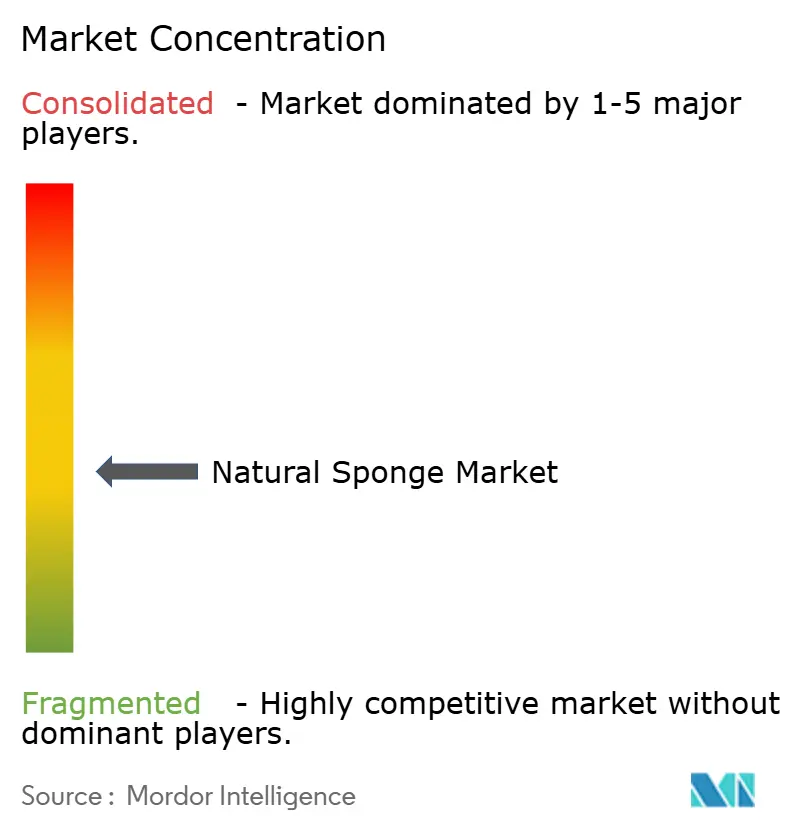
| Market Concentration | Medium |
Major Players *Disclaimer: Major Players sorted in no particular order Image © Mordor Intelligence. Reuse requires attribution under CC BY 4.0. | |
Natural Sponge Market Analysis by Mordor Intelligence
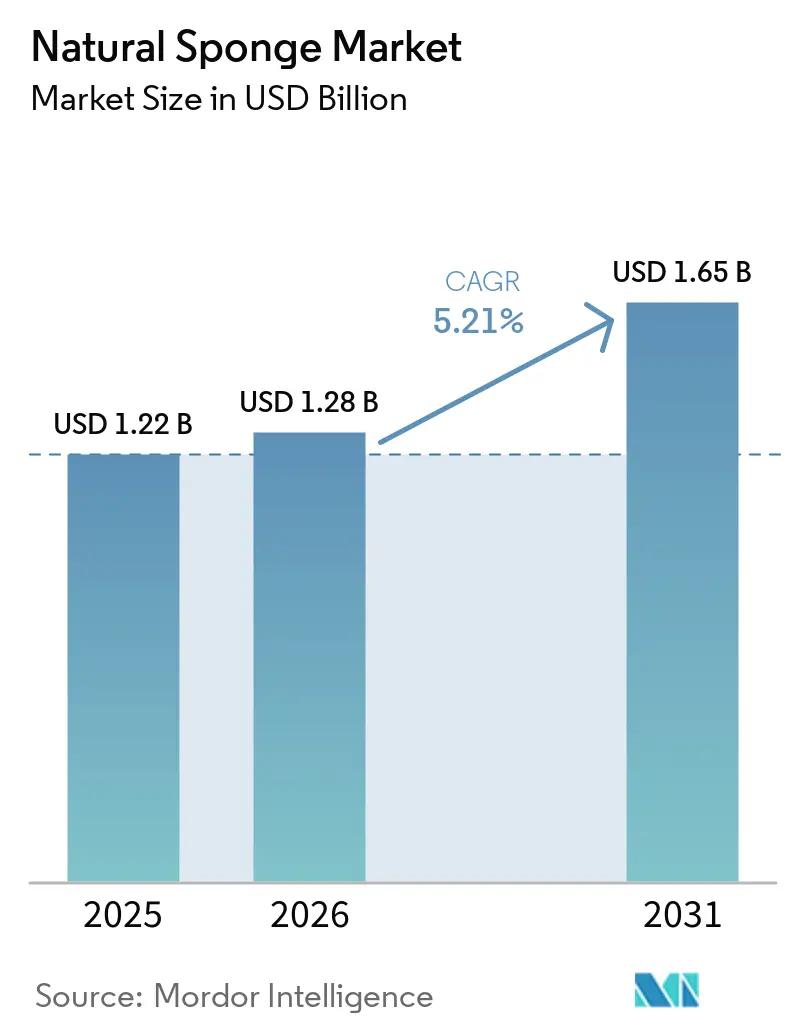
The natural sponge market size is expected to grow from USD 1.22 billion in 2025 to USD 1.28 billion in 2026 and is forecast to reach USD 1.65 billion by 2031 at 5.21% CAGR over 2026-2031. Steady demand across personal care, household cleaning, and institutional procurement is supporting the natural sponge market, particularly as buyers increasingly prioritize traceability and biodegradability compared to a few years ago. Consumers are choosing natural sponges for daily hygiene and bath routines, households are using them for cleaning applications, and institutional buyers are incorporating them into procurement decisions where sustainability credentials influence product selection. The market also benefits from the adoption of clean beauty products, higher wellness spending, and the growing use of premium bath tools in spas and hospitality settings. Together, these factors are expanding demand beyond routine replacement purchases and strengthening the market’s position across both consumer and professional applications.
Key Report Takeaways
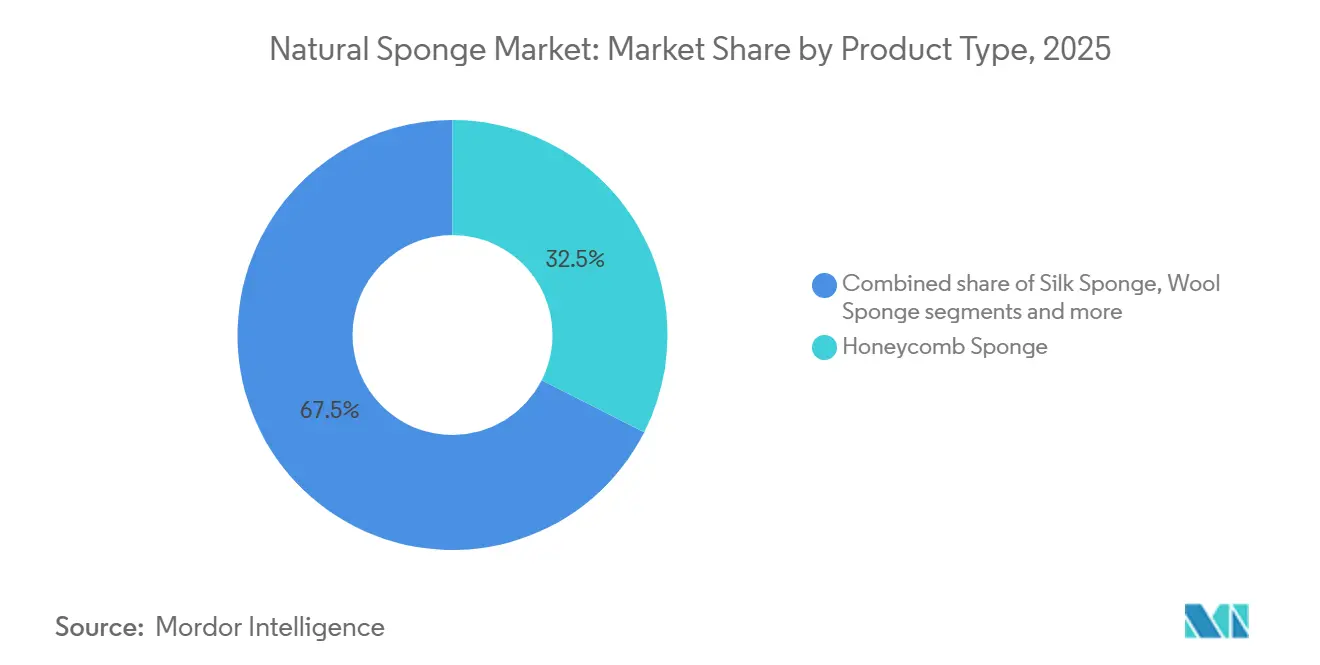
- By product type, honeycomb sponge held 32.47% of the natural sponge market share in 2025, while silk sponge is forecast to expand at a 6.71% CAGR through 2031.
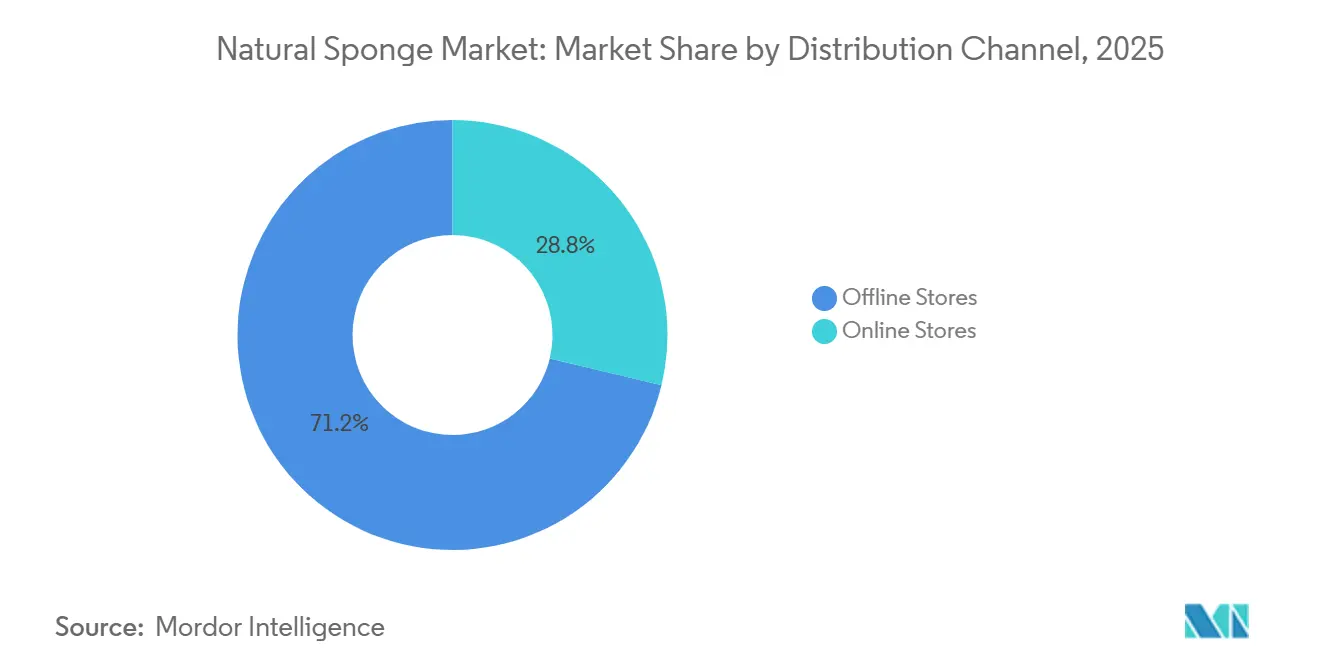
- By distribution channel, offline stores accounted for 71.24% of the natural sponge market size in 2025, while online stores are projected to grow at 7.01% CAGR through 2031.
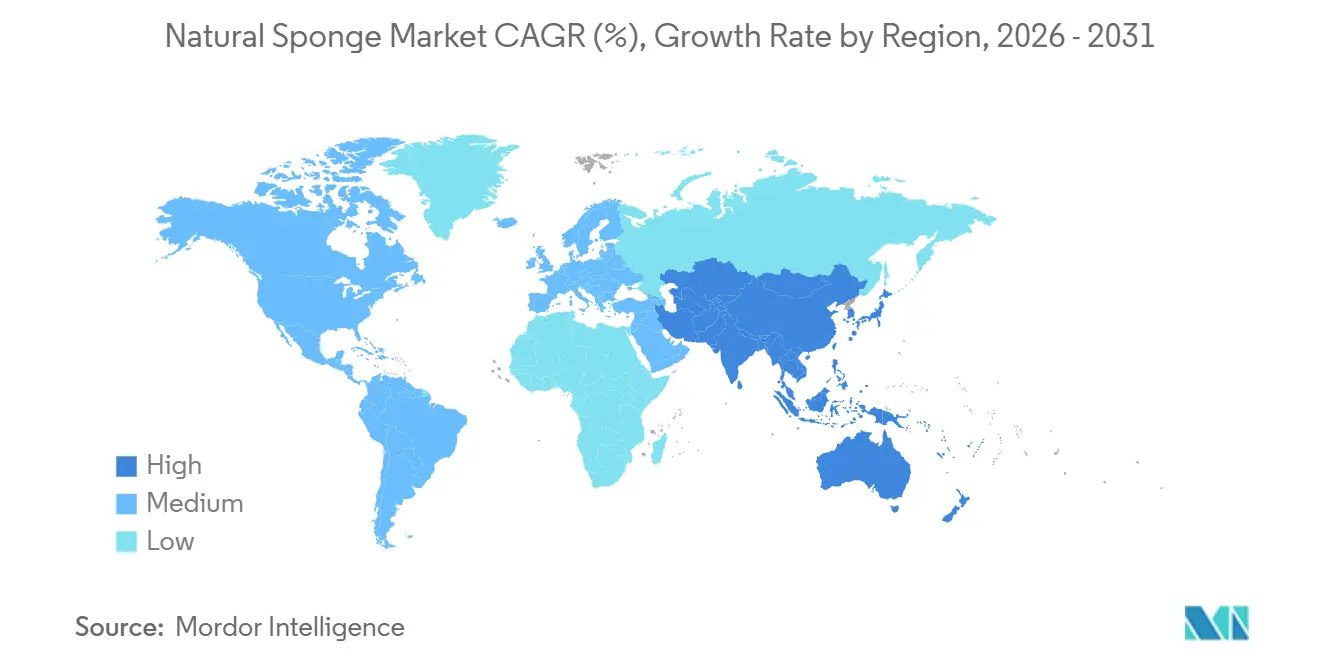
- By geography, North America held 34.56% of the natural sponge market share in 2025, while Asia-Pacific is advancing at a 6.3% CAGR through 2031.
Note: Market size and forecast figures in this report are generated using Mordor Intelligence’s proprietary estimation framework, updated with the latest available data and insights as of January 2026.
Market Trends and Insights
Drivers Impact Analysis of Natural Sponge Market*
| Driver | (~) % Impact on CAGR Forecast | Geographic Relevance | Impact Timeline |
|---|---|---|---|
| Rising consumer preference for natural and eco-friendly personal care products | +1.4% | Global | Medium term (2-4 years) |
| Growing demand for biodegradable alternatives to synthetic sponges | +1.0% | Global, with early gains in North America and Europe | Medium term (2-4 years) |
| Expanding use of natural sponges in premium skincare and cosmetics | +0.9% | North America and Europe, with spillover to Asia-Pacific | Long term (≥ 4 years) |
| Increasing awareness of sustainable marine-sourced products | +0.6% | Global | Long term (≥ 4 years) |
| Growth in spa, wellness, and luxury hospitality industries | +0.8% | Global, with strong relevance in Asia-Pacific and the Middle East and Africa | Medium term (2-4 years) |
| Rising demand for natural cleaning products in households | +0.5% | North America and Europe | Short term (≤ 2 years) |
| Source: Mordor Intelligence | |||
Rising consumer preference for natural and eco-friendly personal care products
Consumer demand for cleaner, safer, and environmentally responsible personal care products is creating strong growth opportunities for the natural sponge market. As buyers become more conscious of the ingredients and materials used in their daily routines, natural sponges are increasingly favored over synthetic alternatives due to their biodegradable nature, renewable origin, and chemical-free composition. According to a 2024 survey by the National Sanitation Foundation (NSF), 74% of Americans prefer organic ingredients in personal care products, while 65% actively seek transparent ingredient labeling to avoid potentially harmful substances[1]. This growing emphasis on natural and transparent products aligns well with the characteristics of natural sea sponges, which are free from artificial additives and microplastics. In addition, expanding awareness of sustainable consumption and eco-friendly beauty practices is encouraging consumers to incorporate natural sponges into skincare, bathing, and cosmetic applications, supporting long-term market expansion.
Growing demand for biodegradable alternatives to synthetic sponges
Increasing environmental concerns over plastic waste and microplastic pollution are accelerating the shift toward biodegradable alternatives across personal care and household products. Natural sponges, which are harvested from renewable marine sources and decompose naturally at the end of their lifecycle, offer an eco-friendly substitute to petroleum-based synthetic sponges. Consumers are increasingly choosing biodegradable products to reduce their environmental footprint while maintaining product performance and durability. This trend is further supported by stricter sustainability commitments from brands and retailers, many of which are expanding their portfolios with plastic-free and naturally sourced products. The growing popularity of zero-waste lifestyles and circular economy practices is also encouraging the adoption of natural sponges for bathing, skincare, and cosmetic applications.
Expanding use of natural sponges in premium skincare and cosmetics
The increasing incorporation of natural sponges into premium skincare and cosmetic routines is contributing significantly to market growth. Valued for their soft texture, gentle exfoliation, superior absorbency, and suitability for sensitive skin, natural sponges are widely used for facial cleansing, makeup application, and luxury bath products. Their chemical-free and biodegradable properties align with the growing demand for high-quality, naturally sourced beauty accessories. According to the Maine Department of Economic & Community Development, consumers in the United States spent approximately USD 74 billion on personal care products in 2024, highlighting the strong consumer base for premium beauty and wellness products[2]. As spending on skincare and cosmetics continues to increase, brands are introducing natural sponges into premium product portfolios to enhance sustainability and product differentiation.
Increasing awareness of sustainable marine-sourced products
Growing awareness of sustainably sourced marine products is encouraging consumers to choose natural alternatives with lower environmental impact, supporting demand for natural sea sponges. Harvested responsibly from renewable marine ecosystems, natural sponges are increasingly recognized as eco-friendly products that combine functionality with environmental stewardship. Consumers are becoming more informed about the ecological benefits of biodegradable, renewable, and plastic-free materials, particularly in personal care and wellness applications. This shift is also prompting manufacturers to emphasize sustainable harvesting practices, traceability, and responsible sourcing in their product offerings. In addition, environmental education campaigns and sustainability certifications are strengthening consumer confidence in marine-derived products.
Restraints Impact Analysis of Natural Sponge Market*
| Restraint | (~) % Impact on CAGR Forecast | Geographic Relevance | Impact Timeline |
|---|---|---|---|
| Higher prices compared to synthetic sponge alternatives | -0.9% | Global | Medium term (2-4 years) |
| Competition from low-cost synthetic and cellulose sponges | -0.7% | Global | Short term (≤ 2 years) |
| Vulnerability of sponge harvesting to climate change and ocean pollution | -0.5% | Mediterranean, Caribbean, and Indo-Pacific | Long term (≥ 4 years) |
| Limited consumer awareness in developing markets | -0.4% | South America and the Middle East and Africa | Medium term (2-4 years) |
| Source: Mordor Intelligence | |||
Higher prices compared to synthetic sponge alternatives
The relatively high cost of natural sponges compared to synthetic alternatives remains a key challenge for broader market adoption. Natural sea sponges require careful harvesting, cleaning, grading, and processing, resulting in higher production costs than mass-produced synthetic sponges made from inexpensive petroleum-based materials. As a result, natural sponges are often positioned as premium products, making them less attractive to price-sensitive consumers. The price difference is particularly noticeable in developing markets, where affordability plays a major role in purchasing decisions. In addition, retailers frequently offer synthetic sponges in multi-pack, low-cost formats, increasing their appeal for everyday household use. Although natural sponges provide superior durability, biodegradability, and skin-friendly properties, their higher upfront cost can discourage first-time buyers.
Competition from low-cost synthetic and cellulose sponges
The widespread availability of low-cost synthetic and cellulose sponges presents a significant challenge for the natural sponge market. Synthetic and cellulose variants are produced on a large scale, allowing manufacturers to offer consistent quality, multiple shapes, and lower prices that appeal to cost-conscious consumers. These alternatives are readily available across supermarkets, convenience stores, and online retail channels, making them more accessible than natural sea sponges. Many consumers also perceive synthetic and cellulose sponges as sufficient for routine household cleaning and personal care applications, reducing the incentive to switch to premium natural options. Continuous product innovations, including antimicrobial coatings and enhanced durability, further strengthen the competitive position of synthetic alternatives.
*Our forecasts treat driver/restraint impacts as directional, not additive. The impact forecasts reflect baseline growth, mix effects, and variable interactions.
Natural Sponge Market Segment Analysis
By Product Type:
Honeycomb Sponge Anchors Volume as Silk Surges in Premium SkincareHoneycomb sponge accounted for the largest share of the natural sponge market, representing 32.47% of total revenue in 2025. Its leading position is primarily driven by its superior absorbency, durability, and soft texture, making it highly preferred for bathing, skincare, and cosmetic applications. Consumers value honeycomb sponges for their ability to produce a rich lather while remaining gentle on sensitive skin, supporting widespread adoption across both personal care and wellness segments. The product also benefits from strong demand in premium spa, beauty salon, and luxury hospitality settings where high-quality natural bathing accessories are preferred. In addition, its long service life and excellent water retention characteristics provide greater value to consumers compared to several alternative sponge varieties.
The silk sponge segment is projected to register the fastest CAGR of 6.71% through 2031, reflecting increasing demand for premium and skin-friendly natural bathing products. Silk sponges are widely recognized for their exceptionally fine texture, making them ideal for delicate facial cleansing, baby care, and sensitive skin applications. Rising consumer awareness regarding gentle skincare routines and the growing popularity of clean beauty products are accelerating demand for this product type. The expansion of premium skincare brands and luxury wellness services has further strengthened the adoption of silk sponges across developed and emerging markets.

By Distribution Channel:
Offline Stores Lead While Online Outpaces Overall MarketBy distribution channel, offline stores accounted for 71.24% of the natural sponge market in 2025, maintaining their position as the dominant sales channel. Consumers continue to prefer purchasing natural sponges from supermarkets, specialty personal care stores, pharmacies, and beauty retailers because they can physically examine the product’s texture, size, and quality before making a purchase. Since natural sponges vary in shape, softness, and density, in-store inspection plays an important role in influencing buying decisions. Although digital commerce is expanding, offline stores remain the preferred channel due to the trust, convenience, and hands-on shopping experience they provide.
The online stores segment is projected to register the fastest CAGR of 7.01% through 2031, supported by the rapid expansion of e-commerce and changing consumer shopping preferences. Increasing internet penetration and smartphone usage have made it easier for consumers to access a wide variety of natural sponge products from domestic and international brands. Online platforms enable customers to compare prices, read product reviews, and evaluate product features before making purchasing decisions, contributing to higher adoption rates. Attractive discounts, subscription offers, and convenient home delivery services are further encouraging consumers to shift toward digital purchasing channels.
Geography Analysis
North America Natural Sponge Market
North America accounted for 34.56% of the global natural sponge market share in 2025, making it the largest regional market. The region's dominance is supported by high consumer awareness regarding sustainable and biodegradable personal care products, coupled with strong spending on premium skincare and bath accessories. The United States and Canada have well-established beauty, wellness, and spa industries that continue to drive consistent demand for high-quality natural sponges. Growing consumer preference for chemical-free exfoliation products and eco-friendly alternatives to synthetic bath accessories has further strengthened market growth.
APAC Natural Sponge Market
Asia-Pacific is projected to expand at the fastest CAGR of 6.3% through 2031, driven by rising disposable incomes, rapid urbanization, and increasing awareness of premium personal care products. Around 54% of the global urban population, more than 2.2 billion people, live in Asia. By 2050, the urban population in Asia is expected to grow by 50% - an additional 1.2 billion people[3]. Countries such as China, Japan, South Korea, India, and Australia are witnessing growing demand for natural skincare accessories as consumers increasingly adopt wellness-oriented lifestyles. The expanding middle-class population and the influence of beauty trends, particularly K-beauty and J-beauty, are encouraging greater use of gentle and natural cleansing products, including natural sponges.
EMEA and South America Natural Sponge Market
Europe leads as a mature market for natural sponges, driven by stringent environmental regulations, strong demand for sustainable products, and the adoption of organic personal care solutions. Germany, France, Italy, and the United Kingdom sustain demand through established beauty, wellness, and luxury skincare industries. South America is growing gradually, supported by rising awareness of eco-friendly personal care products and expanding retail networks, particularly in Brazil and Argentina. The Middle East and Africa is emerging as a promising market, driven by higher disposable incomes, hotel and spa demand, and expanding premium personal care retail channels.
Competitive Landscape
The natural sponge market remains moderately fragmented, indicating that no single company holds a dominant global position. The industry consists of numerous regional manufacturers, processors, and distributors that primarily serve domestic or neighboring export markets. Production is closely tied to naturally occurring sponge harvesting areas, resulting in geographically dispersed supply networks rather than centralized manufacturing hubs. Many companies have established strong regional reputations based on product quality, sustainable harvesting practices, and long-standing customer relationships. As a result, competition is distributed across multiple suppliers instead of being concentrated among a few multinational corporations.
Regional specialization plays a significant role in shaping the competitive landscape of the natural sponge market. Mediterranean countries continue to be recognized for premium-quality natural sponges, while producers in the Caribbean and selected Asia-Pacific regions cater to growing international demand. Many suppliers focus on niche product offerings, including cosmetic-grade, baby care, and luxury bath sponges, rather than pursuing large-scale mass production. Differences in harvesting techniques, sponge quality, processing expertise, and sustainability certifications further distinguish regional competitors.
Despite the fragmented market structure, competition is expected to intensify as demand for sustainable and biodegradable personal care products continues to rise worldwide. Manufacturers are increasingly investing in eco-friendly harvesting methods, improved processing technologies, and premium product development to strengthen their competitive position. Expanding e-commerce platforms are enabling smaller regional producers to access international customers without requiring extensive physical distribution networks.
Natural Sponge Industry Leaders
-
Acme Sponge Company
-
The Natural Sea Sponge Company
-
Sea Sponge Factory
-
The Sponge Company
-
SPONGEAN
- *Disclaimer: Major Players sorted in no particular order
Natural Sponge Market Companies Covered in this Report
- The Natural Sea Sponge Company
- Sea Sponge Factory
- SPONGEAN
- Acme Sponge Company
- The Sponge Company
- Ideal Eponge SAS
- Setalg SA
- Swissco LLC
- Baby Buddy, Inc.
- Baudelaire, Inc.
- TOP SPONGE (Tsokis Christos)
- Bellini S.r.l.
- Mediterranean Natural Sponges
- Caribbean Sea Sponge Company
- Sponges Direct Inc.
- Natural Sponge Company
- Natural Bath & Body Products, LLC
- Sponge Wholesale
- Oceanic Natural Sponges
- Greek Natural Sponges
Recent Industry Developments in Natural Sponge Market
- March 2026: Swiss NGO Marine Cultures expanded its Zanzibar sponge aquaculture program to mainland Tanzania, Madagascar, and the Seychelles, building on a decade of training coastal women as sponge aquaculturists. Farmers operating under the cooperative structure retain 70% of the proceeds from sponges sold through tourism channels at USD 15 to USD 30 per unit. This replicable, climate-adaptive supply chain model has generated documented income growth and demonstrates the commercial viability of aquaculture-based sponge supply diversification.
- February 2025: ABC News Australia reported that Offshore Biotechnologies established deep-sea sponge trial nurseries in Apollo Marine Park, Victoria. The initiative explores sponge population restoration as part of marine park resilience planning ahead of projected climate-induced heatwave events. The research has long-term implications for sustainable sponge supply infrastructure in Southern Hemisphere waters.
Global Natural Sponge Market Report Scope
Natural sponges are biodegradable, renewable marine organisms harvested primarily from the ocean and processed for use in personal care, household cleaning, industrial, and artistic applications. The natural sponge market is segmented by product type, distribution channel, and geography. Based on the product type, the market is segmented into silk sponge, honeycomb sponge, wool sponge, yellow sponge, and other product types. Based on the distribution channel, the market is segmented into offline stores and online stores. By geography, the market is segmented into North America, Europe, Asia-Pacific, South America, and the Middle East, and Africa. For each segment, the market sizing and forecasting have been done in value terms (USD).
| Silk Sponge |
| Honeycomb Sponge |
| Wool Sponge |
| Yellow Sponge |
| Other Product Types |
| Offline Stores |
| Online Stores |
| North America | United States |
| Canada | |
| Mexico | |
| Rest of North America | |
| Europe | United Kingdom |
| Germany | |
| Spain | |
| France | |
| Italy | |
| Sweden | |
| Ireland | |
| Austria | |
| Rest of Europe | |
| Asia-Pacific | China |
| Japan | |
| India | |
| South Korea | |
| New Zealand | |
| Australia | |
| Rest of Asia-Pacific | |
| South America | Brazil |
| Argentina | |
| Rest of South America | |
| Middle East and Africa | United Arab Emirates |
| Saudi Arabia | |
| South Africa | |
| Rest of Middle East and Africa |
| By Product Type | Silk Sponge | |
| Honeycomb Sponge | ||
| Wool Sponge | ||
| Yellow Sponge | ||
| Other Product Types | ||
| By Distribution Channel | Offline Stores | |
| Online Stores | ||
| By Geography | North America | United States |
| Canada | ||
| Mexico | ||
| Rest of North America | ||
| Europe | United Kingdom | |
| Germany | ||
| Spain | ||
| France | ||
| Italy | ||
| Sweden | ||
| Ireland | ||
| Austria | ||
| Rest of Europe | ||
| Asia-Pacific | China | |
| Japan | ||
| India | ||
| South Korea | ||
| New Zealand | ||
| Australia | ||
| Rest of Asia-Pacific | ||
| South America | Brazil | |
| Argentina | ||
| Rest of South America | ||
| Middle East and Africa | United Arab Emirates | |
| Saudi Arabia | ||
| South Africa | ||
| Rest of Middle East and Africa | ||
Key Questions Answered in the Report
What is the projected value of the natural sponge sector by 2031?
The natural sponge market is forecast to reach USD 1.65 billion by 2031, rising from USD 1.28 billion in 2026 at a 5.21% CAGR over 2026 to 2031.
Which product type currently leads sales?
Honeycomb Sponge led in 2025 with 32.47% share because it serves broad bath, spa, and hospitality use with strong lather and water retention.
Which channel is growing fastest for natural sponge sales?
Online Stores are the fastest-growing channel with a 7.01% CAGR through 2031.
Which region leads global demand?
North America led the natural sponge market in 2025 with 34.56% share, supported by strong personal care spending and a large spa and hotel base.