
Baking Ingredients Market Size and Share
Market Overview
| Study Period | 2021 - 2031 |
|---|---|
| Market Size (2026) | USD 20.55 Billion |
| Market Size (2031) | USD 29.39 Billion |
| Growth Rate (2026 - 2031) | 7.42 % |
| Fastest Growing Market | Asia-Pacific |
| Largest Market | Europe |
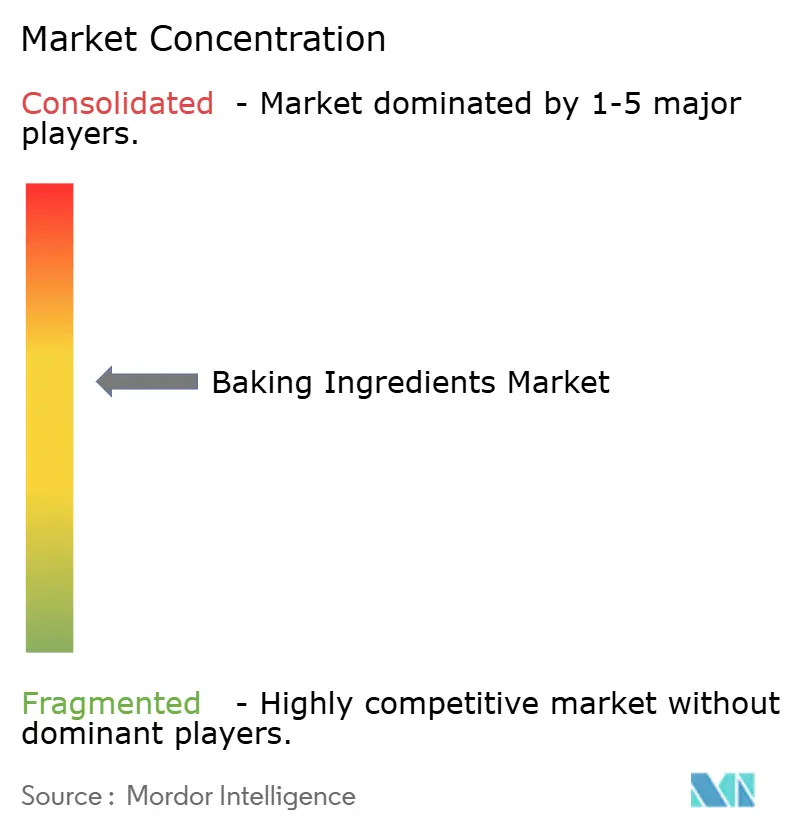
| Market Concentration | Medium |
Major Players *Disclaimer: Major Players sorted in no particular order Image © Mordor Intelligence. Reuse requires attribution under CC BY 4.0. | |
Baking Ingredients Market Analysis by Mordor Intelligence
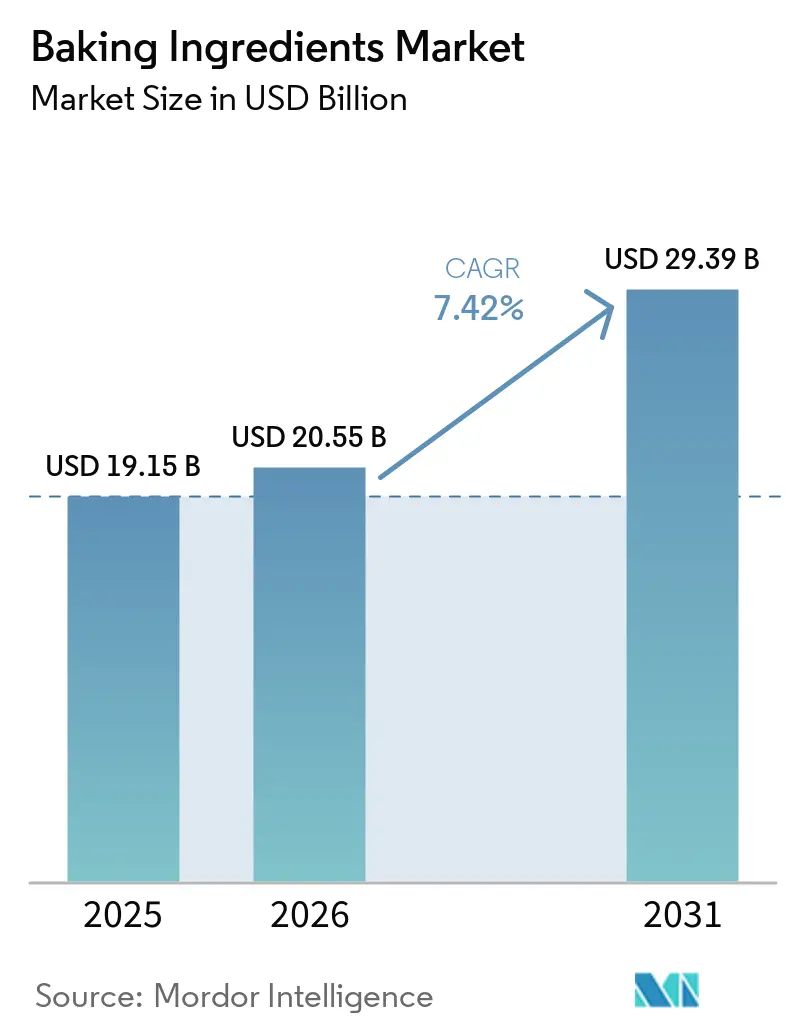
The baking ingredients market size is projected to expand from USD 19.15 billion in 2025 and USD 20.55 billion in 2026 to USD 29.39 billion by 2031, registering a CAGR of 7.42% between 2026 to 2031. The baking ingredients market is being reshaped by demand for cleaner labels, premium products, and ingredients that improve texture, freshness, or nutrition. Suppliers are moving beyond bulk inputs toward enzyme systems, natural preservatives, and specialty blends that can support reformulation without disrupting bakery operations. Commodity price pressure makes cost-in-use and reliable sourcing more important, especially for fats, flours, and sweeteners. Regulatory changes are shortening development cycles for suppliers that still rely on synthetic additives. The baking ingredients market also favors companies that can combine technical support, local regulatory knowledge, and broad manufacturing capacity.
Key Report Takeaways
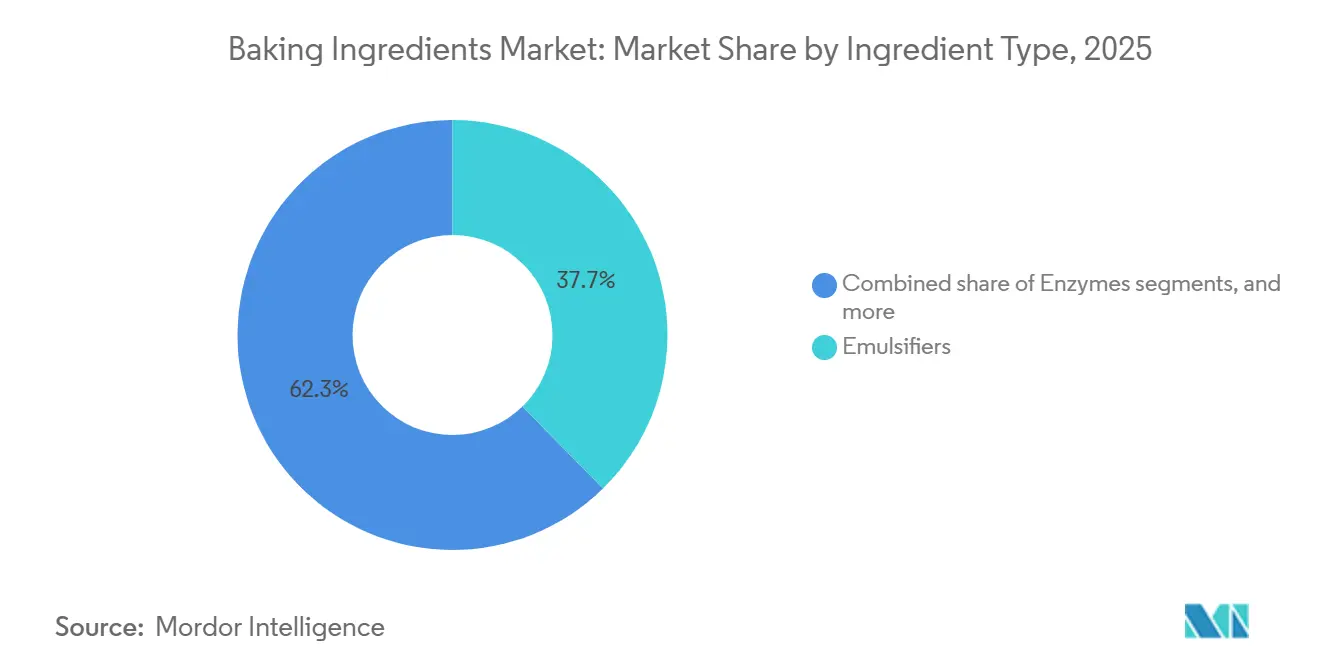
- By ingredient type, emulsifiers held 37.66% of the baking ingredients market share in 2025, while enzymes are forecast to expand at an 8.15% CAGR through 2031.
- By form, dry or powder ingredients accounted for 64.72% of the baking ingredients market size in 2025, while liquid ingredients are projected to grow at a 7.78% CAGR through 2031.
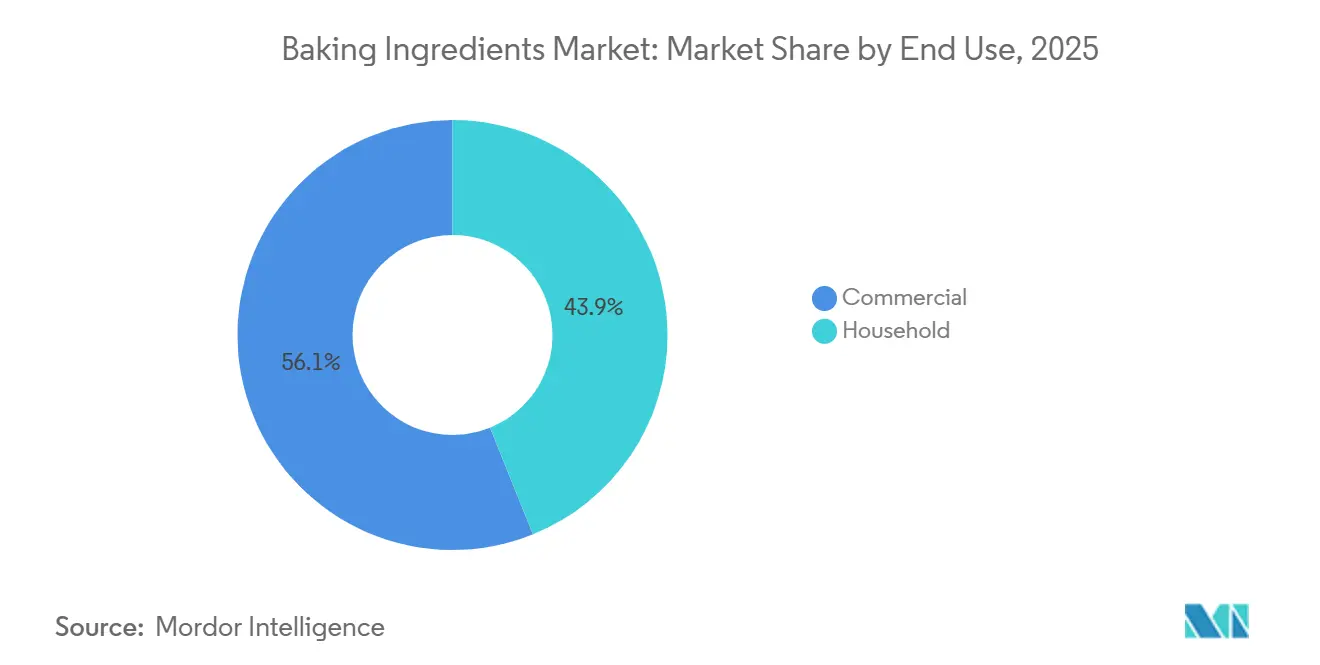
- By end use, commercial users held 56.11% of the baking ingredients market share in 2025, while household users are forecast to grow at a 7.69% CAGR through 2031.
- By application, bread accounted for 43.27% of the baking ingredients market size in 2025, while cakes and pastries are projected to grow at an 8.31% CAGR through 2031.
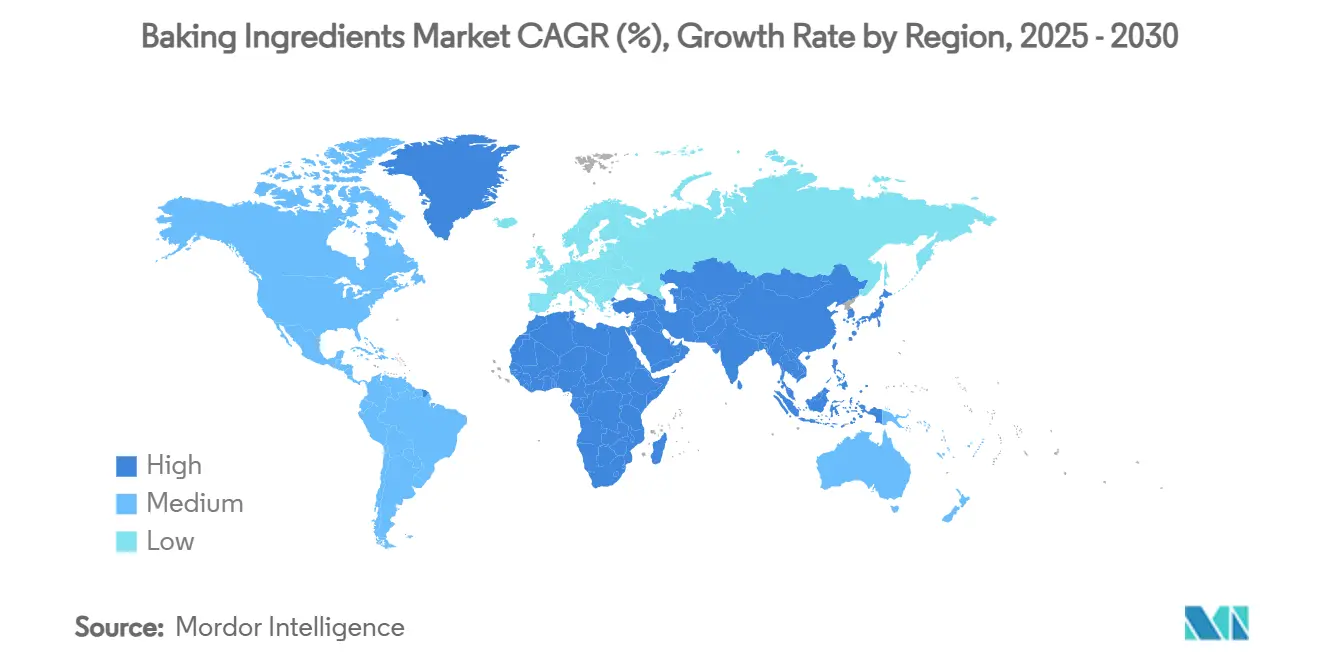
- By geography, Europe held 34.63% of market revenue in 2025, while Asia-Pacific is forecast to grow at an 8.42% CAGR through 2031.
Note: Market size and forecast figures in this report are generated using Mordor Intelligence’s proprietary estimation framework, updated with the latest available data and insights as of January 2026.
Market Trends and Insights
Drivers Impact Analysis of Baking Ingredients Market*
| Drivers | (~) % Impact on CAGR Forecasts | Geographic Relevance | Impact Timeline |
|---|---|---|---|
| Surging Demand for Clean-Label and Natural Bakery Inputs | +1.8% | Global, with early gains in North America and Europe | Short term (≤ 2 years) |
| Rising Bread and Pastry Consumption | +1.5% | Global, strongest in Asia-Pacific and MEA | Medium term (2-4 years) |
| Functional Ingredients for Gut Health and High Protein | +1.2% | North America and Europe, with spillover to Asia-Pacific | Medium term (2-4 years) |
| Technological Advances in Baking Processes | +1.0% | Global, concentrated in North America, Europe, and Japan | Long term (≥ 4 years) |
| E-commerce Expansion of Home-Baking Ingredient Kits | +0.5% | North America, Europe, and urban Asia-Pacific | Short term (≤ 2 years) |
| Upcycling Food Waste into Novel Fibre-Rich Flours | +0.4% | Europe, Australia, and early-stage North America | Long term (≥ 4 years) |
| Source: Mordor Intelligence | |||
Surging Demand for Clean-Label and Natural Bakery Inputs
Ingredient procurement strategies are undergoing a fundamental shift due to rising consumer transparency expectations. Clean-label formulations have transitioned from being a premium offering to a baseline requirement. Reflecting this trend, the European Food Safety Authority (EFSA) issued guidance in 2024 on novel food authorization, emphasizing the demand for recognizable and minimally processed ingredients [1]. Suppliers that invest in natural extraction technologies and sustainable sourcing practices stand to gain competitive advantages in this evolving landscape. Clean-label reformulation has become a commercial requirement for many ingredient suppliers. In April 2025, 2 U.S. federal agencies announced steps to remove petroleum-based synthetic dyes from the food supply by the end of 2026. The American Bakers Association’s FD&C Colors Pledge commits more than 90% of its member companies to completing the phaseout by December 31, 2028.
Rising Bread and Pastry Consumption
Bread held 43.27% of revenue in 2025, but demand is shifting toward functional and premium formats. Kerry estimated global bread production at 143 million metric tons per year in March 2026. The company also stated that 10% of production is lost or wasted, creating demand for shelf-life-extending systems. China’s baked-food consumption was 7-8 kg per person in 2025, compared with 40 kg in the United States and 25 kg in Japan. This gap supports longer-term volume expansion as Chinese bakery consumption develops. Cakes and pastries are also increasing demand for specialty sweeteners, clean-label fats, and enzyme systems that maintain structure and freshness.
Functional Ingredients Targeting Gut Health and High-Protein Needs
Gut health and high-protein claims are changing product development priorities in the baking ingredients market. Novonesis launched 33 new biosolutions in 2025, and products introduced during the prior 5 years accounted for 25% of its sales. IFF’s ENOVERA phospholipase-based dough strengthener can reduce or replace DATEM and similar emulsifiers while improving dough stability. A 2026 scientific study found that alpha-glucans produced through amylosucrase can alter dough viscoelastic properties. This supports the development of high-fiber, enzyme-modified bread with simpler ingredient declarations. Suppliers that combine nutritional positioning with dependable processing performance are likely to be better placed in premium bakery formats.
Technological Advancements in Baking Processes
Automation, precision fermentation, and enzyme screening are changing ingredient development and manufacturing. Novonesis uses a library of more than 10 million enzyme structures and 100,000 microbial strains in its innovation pipeline. This scale makes it harder for smaller suppliers to match the pace of product development. Kerry stated that its Biobake GTNCA enzyme can replace vital wheat gluten and reduce costs by up to 50%, or EUR 32 per metric ton of flour. FERM FOOD acquired a former Orkla site in Denmark in April 2026 to target annual output of up to 20,000 tonnes of fermented bakery binders. These tools shorten trial cycles and allow producers to address flour variability more quickly.
Restraints Impact Analysis of Baking Ingredients Market*
| Restraints | (~) % Impact on CAGR Forecasts | Geographic Relevance | Impact Timeline |
|---|---|---|---|
| Volatile Wheat and Edible-Oil Prices Squeezing Margins | -1.2% | Global, most acute in import-dependent Asia-Pacific, MEA, and South America | Short term (≤ 2 years) |
| Stringent Regulations and Food Safety Standards | -0.8% | North America and Europe, with a growing compliance burden in Asia-Pacific | Medium term (2-4 years) |
| Supply Chain Disruptions and Ingredient Shortages | -0.6% | Global, concentrated in MEA and South America | Short term (≤ 2 years) |
| Competition From Homemade and Artisanal Bakery Products | -0.4% | Europe and North America, emerging in Asia-Pacific | Long term (≥ 4 years) |
| Source: Mordor Intelligence | |||
Volatile Wheat and Edible-Oil Prices Squeezing Margins
Raw-material instability is an immediate concern for bakery procurement teams. The FAO Cereal Price Index rose 17.2% year over year in September 2026 and reached its highest level since August 2023. The rise was linked to Black Sea logistics constraints and dry weather in North American winter-wheat areas. The World Bank reported that global edible-oil consumption is expected to exceed supply growth by nearly 3 million metric tons in 2025-26. This puts pressure on fats and shortenings used in pastry, laminated dough, and cookies. Conventional ingredient suppliers face displacement risk when bakeries reformulate, while enzyme systems can help reduce input requirements.
Stringent Regulations and Food Safety Standards
As major markets tighten their grip on food safety standards, smaller suppliers find themselves bearing the brunt of rising compliance costs. The FDA's 2024 updates to the Food Code mandate significant operational shifts across the supply chain, introducing enhanced measures for disinfecting surfaces, bolstering food defense, and refining food safety management systems [2]. Meanwhile, the European Union's Commission Regulation 2023/915 sets stringent maximum contaminant levels for bakery products, backed by enforcement mechanisms that bar non-compliant items from the market. State-level restrictions in 8 U.S. states have added pressure on suppliers serving school meal programs. India’s Food Safety and Standards Authority has expanded mandatory flour fortification requirements, changing formulation requirements in South and Southeast Asia.
*Our forecasts treat driver/restraint impacts as directional, not additive. The impact forecasts reflect baseline growth, mix effects, and variable interactions.
Baking Ingredients Market Segment Analysis
By Ingredient Type:
Enzymes Accelerate as Emulsifiers Hold ScaleEnzymes are the fastest-growing ingredient type, with the baking ingredients market size for enzymes projected to rise at an 8.15% CAGR through 2031. Phospholipase, amylase, and lipase systems can match the performance of synthetic emulsifiers in commercial baking operations. Kerry, Novonesis, and IFF report that multi-enzyme systems can reduce vital wheat gluten use by up to 50% per metric ton of flour. Novonesis has used machine learning to assess 35 commercial flour varieties and identify enzyme parameters that can reduce trials. The baking ingredients market is therefore rewarding solutions that improve processing while helping customers simplify labels.
Emulsifiers held 37.66% of baking ingredients market share in 2025 because they remain widely used as multifunctional aids in industrial bread and pastry production. Their large installed base gives suppliers a meaningful revenue foundation, even as enzyme alternatives gain acceptance. Sugars and sweeteners are seeing greater interest in natural alternatives, although cost and taste replication limit broader use in value products. Fats and shortenings remain essential to laminated pastry and croissant production despite clean-label pressure. Leavening agents are comparatively stable, while enzymes are increasingly used to supplement them in commercial products designed for a longer shelf life. The broader baking ingredients industry is shifting toward systems that perform several functions at once.

By Form:
Powder’s Scale Efficiency Meets Liquid’s Precision AdvantageDry or powder form held 64.72% of revenue in 2025 because it works well with automated dosing systems and ambient storage. Powder ingredients also avoid the cold-chain costs associated with many liquid alternatives. Leavening agents, enzyme powder blends, and specialty flour premixes are especially suited to shelf-stable processing. These advantages make powder a practical choice for high-volume baking sites where batch consistency is important. The baking ingredients market continues to rely on powdered formats in regions where cold-chain infrastructure is limited.
Liquid ingredients are forecast to grow at a 7.78% CAGR through 2031, led by enzyme preparations and wet-process sweetener solutions. Liquid inputs can provide more uniform dispersion in continuous-mixing lines than powder metering. This change is most advanced in European and North American industrial bakeries, where continuous mixing has become more common than batch processing. Natural liquid sweeteners, including glucose syrups, inverted sugar syrups, and honey variants, help producers manage texture and water activity in soft sweet goods. Refrigerated logistics and higher storage costs limit liquid adoption in parts of Asia-Pacific, MEA, and South America. Powder’s scale advantage will therefore remain important even as liquid systems take a larger role in sophisticated production lines.
By End Use:
Commercial Scale Sets the Pace, Household PremiumizesCommercial users held 56.11% of revenue in 2025, supported by industrial bakeries, major QSR chains, and supermarket bakery counters. These buyers place high value on consistent performance and cost-in-use efficiency. Large, integrated suppliers can meet those needs by offering a broad range from commodity inputs to specialty systems. The commercial part of the baking ingredients market also benefits from the growing need for standardized recipes across large outlet networks. In this channel, technical support and supply reliability remain central to supplier selection.
Household users are forecast to grow at a 7.69% CAGR through 2031 as e-commerce kits and social media-led baking culture continue to support premium home baking. Artisan flour blends, clean-label baking mixes, and specialty sugars have gained space in online retail. Puratos acquired Vör Foods in January 2026, strengthening its ability to serve nut-based filling demand and sweet-goods innovation in the United States. QSR chains expanding in Asia-Pacific also use premixed conditioners, liquid emulsifier blends, and standardized enzymes to reduce skill requirements at individual sites. Product ideas from premium household packs are increasingly being used by commercial bakers pursuing health and wellness claims.
By Application:
Cakes and Pastries Drive PremiumizationBread accounted for 43.27% of revenue in 2025 and remains the largest application in the baking ingredients market. Supplier competition in bread centers on shelf-life extension, clean-label conditioners, and enzyme combinations that reduce the declared ingredient count. Kerry estimated that 10% of global bread production is lost or wasted. This gives bakery producers a clear reason to invest in anti-staling systems. Bread also gives large suppliers an established route to scale new enzyme and preservation technologies.
Cakes and pastries are forecast to grow at an 8.31% CAGR through 2031 as premium desserts and gifting-oriented products expand. Patisserie chains have grown across Chinese tier-1 and tier-2 cities, increasing demand for specialty chocolate, nut-based fillings, and premium fats. Cookies and biscuits remain supported by snacking demand and a growing clean-label segment. Rolls and pies retain stable demand in foodservice markets in Europe and North America. Croissants, waffles, and doughnuts are benefiting from the spread of European laminated pastry formats into Asia-Pacific and Gulf markets. The baking ingredients market gives specialty suppliers a strong opening in these applications because consistent texture and appearance are important to premium positioning.
Geography Analysis
Europe Baking Ingredients Market
In 2024, Europe commands a dominant 33.50% market share, bolstered by its rich bakery traditions, discerning consumer tastes, and regulatory frameworks prioritizing clean-label and sustainable ingredients. The region's mature market landscape not only paves the way for premium product positioning but also encourages the integration of functional ingredients. Suppliers are increasingly investing in application laboratories and technical services, underscoring their commitment to fostering customer innovation. Europe's stringent food safety and environmental standards, often setting the global benchmark, compel suppliers to adapt their formulations. A case in point: the European Food Safety Authority's 2024 re-evaluation of silicon dioxide (E 551) as a food additive, which included updated toxic element limit specifications, underscores the region's vigilance in ingredient safety. Meanwhile, the ramifications of Brexit linger, impacting supply chain logistics and regulatory adherence. In response, suppliers are adopting dual-location strategies, balancing market access with the complexities of heightened administrative demands.
APAC Baking Ingredients Market
Asia-Pacific is on a rapid ascent, boasting a 7.12% CAGR projected through 2030. This growth is largely attributed to urbanization, increasing disposable incomes, and a westernized diet, all of which are driving up bread and pastry consumption. Efforts to harmonize regulations across ASEAN markets are not only dismantling trade barriers but also aligning food safety standards with global best practices. This alignment presents a golden opportunity for suppliers adept in compliance. Additionally, owing to the rising consumption, the import of baked goods is also increasing in the region. According to the Observatory of Economic Complexity data from 2024, China imported USD 952 million worth of baked goods[3]. As the region cements its status as a manufacturing hub, it enjoys supply chain advantages for global distribution.
North America Baking Ingredients Market
North America is witnessing steady growth, thanks to its well-entrenched commercial bakery infrastructure and a discerning household baking segment that fuels demand for premium ingredients. Navigating the region's regulatory maze, which includes FDA updates and state-specific additive restrictions, is no small feat. Yet, this complexity is driving innovation, particularly in clean-label formulations. Looking at Canada, the bakery and tortilla products market is set for a 3.4% nominal sales dip in 2024, but a rebound with a 4.3% volume growth is on the horizon. This uptick is bolstered by declining flour prices, which enhance profitability even as other ingredient categories exert margin pressures. E-commerce is reshaping the landscape, with a surge in home baking ingredient kit sales. Suppliers are seizing this moment, crafting direct-to-consumer strategies that not only sidestep traditional retail channels but also foster brand loyalty and elevate consumer education.
Competitive Landscape
The baking ingredients market includes Cargill, Incorporated, Kerry Group, Puratos, and AB Mauri among its significant global suppliers, while regional specialists compete through local service and formulation speed. Global suppliers are strengthening their positions through acquisition, fermentation technology, and broader specialty ingredient portfolios. Ingredion announced an all-cash offer for Tate & Lyle in June 2026, with an enterprise value of GBP 3.7 billion and combined revenue of USD 9.9 billion. The transaction shows how scale is becoming more important in mouthfeel, sweetening, gums, and multi-ingredient systems. It also strengthens the ability of larger companies to spread regulatory and research costs across more markets.
Puratos agreed to acquire Dawn Foods in March 2026, subject to regulatory approvals. The combination links Puratos’s fermentation, sourdough, and grain technology with Dawn’s manufacturing and distribution network, which serves more than 50,000 bakery operators in over 100 countries. CVC Capital Partners agreed to acquire Irca in June 2026 from Advent International. Irca’s revenue grew from EUR 370 million in 2021 to EUR 1.5 billion in 2026, and CVC plans to support expansion in the United States and EMEA through add-on acquisitions. These transactions demonstrate interest in suppliers that serve pastry, bakery, chocolate, and other premium food applications.
Novonesis is targeting 6-9% organic sales CAGR through 2030, with baking identified as a priority for its culture and enzyme systems. Its portfolio is supported by approximately 10,000 patents and a large enzyme structure library. FERM FOOD is building an alternative model through solid-state fermentation and a Danish production site with planned output of up to 20,000 tonnes a year. Such suppliers are challenging conventional preservative and conditioner businesses in Northern Europe. The baking ingredients industry remains competitive because regional specialists can still win on local regulations, customer proximity, and fast formulation support.
Baking Ingredients Industry Leaders
-
Archer Daniels Midland Company
-
Kerry Group
-
Associated British Foods Plc
-
General Mills Inc.
-
Cargill, Incorporated
- *Disclaimer: Major Players sorted in no particular order
Baking Ingredients Market Companies Covered in this Report
- Cargill, Incorporated
- Archer Daniels Midland Company
- Kerry Group
- Associated British Foods Plc
- Puratos Group
- Lesaffre
- AB Enzymes
- Ingredion Inc.
- DSM-Firmenich
- Tate & Lyle plc
- CSM Ingredients
- Bakels Group
- Novozymes
- International Flavors and Fragrances Inc.
- General Mills Inc.
- Biocatalyst Ltd
- Riken Vitamin Co.
- Jungbunzlauer Suisse AG
- Stern Ingredients
Recent Industry Developments in Baking Ingredients Market
- June 2026: CVC Capital Partners Fund IX entered into an agreement to acquire Irca, an Italian B2B manufacturer of ingredient solutions for pastry, bakery, chocolate, and ice cream, from Advent International. Irca's revenue grew from EUR 370 million in 2021 to EUR 1.5 billion at announcement, and CVC plans to accelerate U.S. and EMEA expansion through selective add-on acquisitions.
- March 2026: Puratos and Dawn Foods announced a definitive acquisition agreement, subject to regulatory approvals expected by the end of 2026. The combination links Puratos' fermentation, sourdough, and grain technology with Dawn Foods' manufacturing and distribution network serving more than 50,000 bakery operators in over 100 countries.
- March 2026: FERM FOOD acquired Orkla's former manufacturing site in Skovlund, Denmark, effective April 1, 2026, to scale solid-state fermented ingredient output. At full ramp-up, the facility targets up to 20,000 tonnes per year of fermented legumes, oats, wheat, and binders for bread, bakery, and plant-based applications.
Global Baking Ingredients Market Report Scope
The Baking Ingredients Market Report is Segmented by Ingredient Type (Flours and Starches, Sugars and Sweeteners, Fats and Shortenings, Emulsifiers, and More), Form (Dry/Powder, Liquid), End Use (Commercial, Household), Applications (Bread, Cakes and Pastries, and More), and Geography. The Market Forecasts are Provided in Terms of Value (USD).
Segmentation Overview
| Flours and Starches |
| Sugars and Sweeteners |
| Fats and Shortenings |
| Emulsifiers |
| Leavening Agents |
| Enzymes |
| Other Ingredient Types |
| Dry/Powder |
| Liquid |
| Commercial |
| Household |
| Bread |
| Cakes and Pastries |
| Cookies and Biscuits |
| Rolls and Pies |
| Other Applications |
| North America | United States |
| Canada | |
| Mexico | |
| Rest of North America | |
| Europe | Germany |
| United Kingdom | |
| Italy | |
| France | |
| Spain | |
| Netherlands | |
| Poland | |
| Belgium | |
| Sweden | |
| Rest of Europe | |
| Asia-Pacific | China |
| India | |
| Japan | |
| Australia | |
| Indonesia | |
| South Korea | |
| Thailand | |
| Singapore | |
| Rest of Asia-Pacific | |
| South America | Brazil |
| Argentina | |
| Colombia | |
| Chile | |
| Peru | |
| Rest of South America | |
| Middle East and Africa | South Africa |
| Saudi Arabia | |
| United Arab Emirates | |
| Nigeria | |
| Egypt | |
| Morocco | |
| Turkey | |
| Rest of Middle East and Africa |
| Ingredient Type | Flours and Starches | |
| Sugars and Sweeteners | ||
| Fats and Shortenings | ||
| Emulsifiers | ||
| Leavening Agents | ||
| Enzymes | ||
| Other Ingredient Types | ||
| Form | Dry/Powder | |
| Liquid | ||
| End Use | Commercial | |
| Household | ||
| Applications | Bread | |
| Cakes and Pastries | ||
| Cookies and Biscuits | ||
| Rolls and Pies | ||
| Other Applications | ||
| Geography | North America | United States |
| Canada | ||
| Mexico | ||
| Rest of North America | ||
| Europe | Germany | |
| United Kingdom | ||
| Italy | ||
| France | ||
| Spain | ||
| Netherlands | ||
| Poland | ||
| Belgium | ||
| Sweden | ||
| Rest of Europe | ||
| Asia-Pacific | China | |
| India | ||
| Japan | ||
| Australia | ||
| Indonesia | ||
| South Korea | ||
| Thailand | ||
| Singapore | ||
| Rest of Asia-Pacific | ||
| South America | Brazil | |
| Argentina | ||
| Colombia | ||
| Chile | ||
| Peru | ||
| Rest of South America | ||
| Middle East and Africa | South Africa | |
| Saudi Arabia | ||
| United Arab Emirates | ||
| Nigeria | ||
| Egypt | ||
| Morocco | ||
| Turkey | ||
| Rest of Middle East and Africa | ||
Key Questions Answered in the Report
Which form of baking ingredient is used most widely?
Dry or powder ingredients held 64.72% of revenue in 2025 because they suit automated dosing, ambient storage, and high-volume production.
What is the projected value of the baking ingredients market by 2031?
The baking ingredients market is projected to reach USD 29.39 billion by 2031, from USD 20.55 billion in 2026, at a 7.42% CAGR.
Which baking ingredient type is growing fastest?
Enzymes are projected to grow at an 8.15% CAGR through 2031 because they can replace or reduce some conventional dough conditioners and emulsifiers.
Which end-use channel is growing fastest?
Household use is forecast to grow at a 7.69% CAGR through 2031.