
Bakers Yeast Market Size and Share
Market Overview
| Study Period | 2021 - 2031 |
|---|---|
| Market Size (2026) | USD 1.3 Billion |
| Market Size (2031) | USD 1.91 Billion |
| Growth Rate (2026 - 2031) | 7.84 % |
| Fastest Growing Market | Asia Pacific |
| Largest Market | Europe |
| Market Concentration | Medium |
Major Players
*Disclaimer: Major Players sorted in no particular order Image © Mordor Intelligence. Reuse requires attribution under CC BY 4.0. |
|
Bakers Yeast Market Analysis by Mordor Intelligence
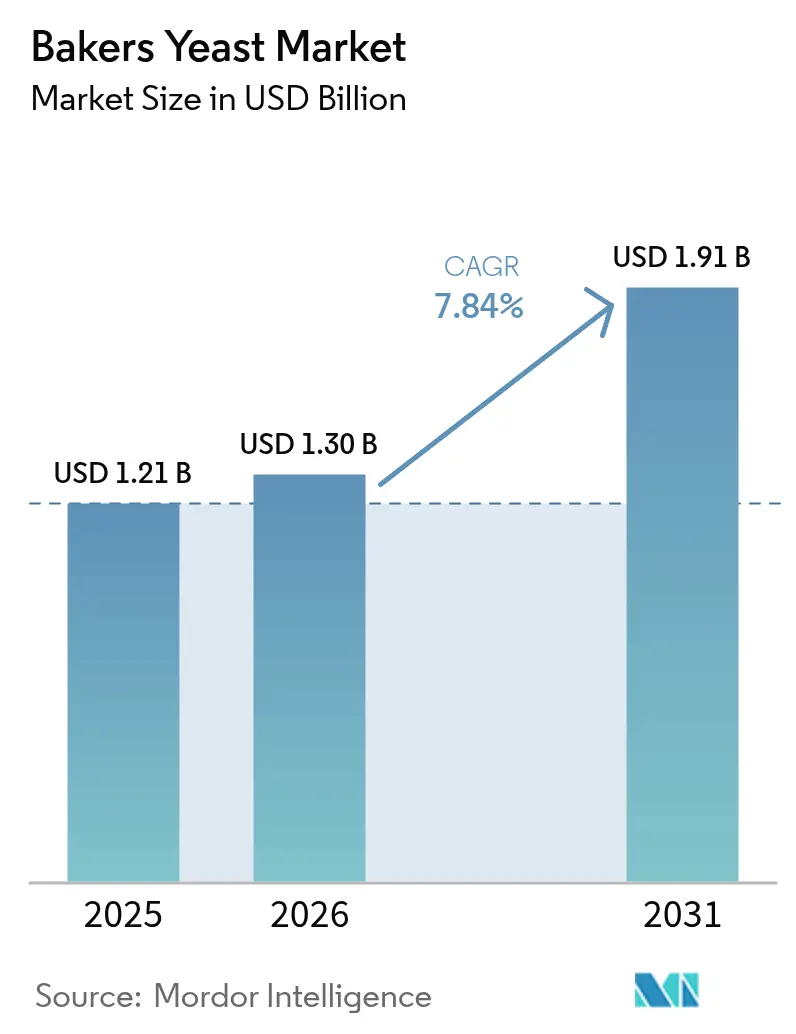
The baker's yeast market size in 2026 is estimated at USD 1.3 billion, growing from 2025 value of USD 1.21 billion with 2031 projections showing USD 1.91 billion, growing at 7.84% CAGR over 2026-2031. Growth momentum stems from the premiumization of everyday bread, quick-service restaurant expansion, and the rapid scale-up of precision-fermentation platforms that widen yeast functionality beyond leavening. Europe preserves leadership through deep artisan traditions and clean-label regulations, while Asia-Pacific contributes the largest incremental volume thanks to rising disposable incomes and urban lifestyles. Fresh/compressed formats remain the workhorse of industrial lines, yet liquid and cream variants gain favour as bakeries automate dosing and cold-chain logistics improve. Engineered Saccharomyces strains that deliver higher yields of vitamins, proteins, and bioactives are moving from pilot to commercial batches, opening new revenue streams for incumbents and start-ups. Overall, the baker's yeast market continues to show resilience despite volatile molasses prices because bakers see yeast as a cost-effective path to clean labels, flavour complexity, and reliable dough performance
Key Report Takeaways
- By form, fresh/compressed yeast led with 36.78% revenue share in 2025, while liquid/cream is projected to post the fastest 8.55% CAGR to 2031.
- By yeast type, Saccharomyces cerevisiae dominated, with 76.22% of the baker's yeast market share in 2025; genetically edited strains are set to expand at a 9.05% CAGR through 2031.
- By application, bread and rolls captured 55.62% of the baker's yeast market size in 2025; pizza and flatbread applications are rising at a 6.12% CAGR.
- By category, conventional products held a 74.68% share in 2025, whereas organic yeast is forecast to grow at 9.98% CAGR to 2031.
- By geography, Europe accounted for 30.84% revenue in 2025; Asia-Pacific is the fastest-growing region with an 8.43% CAGR
Note: Market size and forecast figures in this report are generated using Mordor Intelligence’s proprietary estimation framework, updated with the latest available data and insights as of 2026.
Global Bakers Yeast Market Trends and Insights
Drivers Impact Analysis*
| DRIVER | (~) % IMPACT ON CAGR FORECAST | GEOGRAPHIC RELEVANCE | IMPACT TIMELINE |
|---|---|---|---|
| Rising demand for packaged and convenience bakery products | +1.2% | Global, with strongest impact in Asia-Pacific and North America | Medium term (2-4 years) |
| Growth in clean-label artisan and specialty bread consumption | +1.8% | Europe and North America core, expanding to urban centers in Asia-Pacific | Long term (≥ 4 years) |
| Expansion of retail bakery chains in emerging economies | +1.5% | Asia-Pacific, Middle East and Africa, Latin America | Medium term (2-4 years) |
| Advancements in precision fermentation for high-performance yeast strains | +1.1% | Global, led by North America and Europe, research and development centers | Long term (≥ 4 years) |
| Fortified baker's yeast positioned as functional ingredient | +0.9% | Global, with early adoption in developed markets | Medium term (2-4 years) |
| Use of bio-ethanol molasses byproducts to reduce yeast production costs | +0.7% | Global, particularly in sugar-producing regions | Short term (≤ 2 years) |
| Source: Mordor Intelligence | |||
Rising demand for packaged and convenience bakery products
Packaged bread, buns, and snack pastries are gaining shelf space as consumers seek long-lasting baked goods requiring minimal preparation. The convenience and extended shelf life of these products align with modern lifestyle demands. In the United States, premium bread products that depend on consistent yeast functionality are experiencing increased demand, driven by consumer preferences for artisanal quality in packaged formats. While in Asia-Pacific countries such as Indonesia, India, and Vietnam, modern retail formats and e-commerce increase access to branded baked products, particularly in urban areas with rising disposable incomes. Automated production lines with inline quality sensors require yeast strains that can withstand wider temperature variations and minimize proofing inconsistencies, ensuring consistent product quality across large-scale manufacturing. The growing convenience segment continues to drive demand for performance-optimized yeast, supporting sustained growth in the baker's yeast market, as manufacturers focus on product innovation and process optimization.
Growth in clean-label artisan and specialty bread consumption
Consumers increasingly examine ingredient lists for familiar components, making artisanal breads produced through extended fermentation processes more desirable for health-conscious consumers. The extended fermentation periods, typically lasting between 12 to 24 hours, create complex flavors and demonstrate improved digestibility in research studies, enabling premium bakeries to command higher prices. Research from CBI, the Ministry of Foreign Affairs, highlights this trend, projecting that clean-label products will rise from constituting 52% of portfolios in 2021 to over 70% in 2025[1]Source: CBI, Ministry of Foreign Affairs, "Which trends offer opportunities or pose a threat on the European natural food additives market?", cbi.eu.Major companies like Bimbo Bakeries USA and Flowers Foods are developing organic products and seasonal items that highlight natural fermentation methods, incorporating traditional techniques such as sourdough starters and long proofing times. Research facilities such as the Sourdough Institute in Belgium provide bakers with extensive wild-yeast collections that expand flavor possibilities while meeting allergen-free requirements. The institute maintains over 100 unique yeast strains, each offering distinct flavor profiles. This trend drives specialized demand in the baker's yeast market for strains that enhance bread aroma while maintaining simple ingredient declarations, particularly in European and North American markets where clean-label products are increasingly popular.
Expansion of retail bakery chains in emerging economies
The growth of café-bakery franchises across Southeast Asia, the Middle East, and Africa has generated consistent demand cycles, benefiting suppliers with robust logistics and technical support capabilities. These franchises need reliable, high-quality yeast supplies for their operations across diverse locations, including urban centers and suburban areas. Government initiatives support domestic yeast production to lower import expenses and improve food security, especially in regions that rely heavily on imported raw materials. Yeast manufacturers have positioned micro-facilities near sugar mills to reduce molasses transportation costs and enhance production efficiency. They have also developed liquid yeast products adapted to warm climates, using temperature-resistant strains and stabilizers. The liquid format provides improved stability and performance in tropical environments, addressing the requirements of regional bakeries and industrial food processors. Singapore's investment in precision-fermentation research demonstrates the region's commitment to local production of specialized yeast strains. This research emphasizes developing strains suited to local ingredients and climate conditions, driving demand and advancing technological capabilities in the regional yeast industry.
Advancements in precision fermentation for high-performance yeast strains
CRISPR technology enables scientists to modify Saccharomyces genomes to increase the production of vitamins, proteins, and complex flavors through targeted genetic modifications. The precision-fermentation market creates new opportunities for established yeast manufacturers by expanding their product portfolios and technological capabilities. Companies are developing specialized yeasts that produce complete amino acid profiles for sports nutrition products and dairy alternatives, meeting the growing demand for plant-based ingredients. For instance, Phytolon utilizes modified baker's yeast to create natural food colorants through biosynthetic pathways, which await FDA approval. As global food companies commit to reducing carbon emissions in their operations, fermentation technology provides a viable and sustainable pathway for producing animal-free proteins, attracting both venture capital investments and strategic corporate partnerships. The increasing regulatory approvals in this space position the baker's yeast market to generate substantial revenue through royalties, technology licensing agreements, and specialized fermentation contracts.
Restraints Impact Analysis*
| RESTRAINT | (~) % IMPACT ON CAGR FORECAST | GEOGRAPHIC RELEVANCE | IMPACT TIMELINE |
|---|---|---|---|
| Volatile sugar/molasses feedstock prices and availability | -1.4% | Global, particularly acute in sugar-producing regions | Short term (≤ 2 years) |
| Stringent global food-safety and labelling regulations | -0.8% | Global, with varying intensity across regulatory jurisdictions | Medium term (2-4 years) |
| Growing use of chemical leavening agents in rapid-bake products | -1.1% | Global, strongest in cost-sensitive mass production segments | Medium term (2-4 years) |
| Freight and logistics volatility affecting yeast supply and viability | -0.6% | Global, with particular impact on fresh yeast segments | Short term (≤ 2 years) |
| Source: Mordor Intelligence | |||
Volatile sugar/molasses feedstock prices and availability
Molasses prices fluctuate based on sugarcane harvest yields, ethanol demand, and weather patterns, including El Niño events. The price volatility is particularly pronounced during adverse weather conditions that affect sugarcane cultivation regions and when ethanol production competes for available molasses supply. As yeast production relies on clarified molasses as the primary carbon source, increased input costs directly impact profit margins across the production chain. Small-scale producers, limited by storage capacity and financial constraints, cannot effectively hedge against price fluctuations and must purchase at spot market rates, significantly affecting their competitive position in the market. While some companies investigate lignocellulosic sugars derived from agricultural waste as an alternative, technical challenges in processing, high conversion costs, and potential flavor effects have limited widespread adoption. The baker's yeast market growth may remain constrained unless manufacturers secure long-term supply agreements with reliable molasses suppliers or develop commercially viable alternative raw materials that maintain product quality and consistency.
Stringent global food-safety and labeling regulations
Regulatory bodies enforce increasingly strict microbial specifications and safety standards while closely monitoring genetically modified organisms in food production. In the United States, 21 CFR Parts 170-186 establish comprehensive limits on viable counts, heavy metals, and allergen disclosures, substantially increasing compliance and testing costs[2]Source: US Food and Drug Administration, “21 CFR Parts 170-186 Food Ingredients,” fda.gov. The European Food Safety Authority (EFSA) mandates detailed biannual dossier updates under the Qualified Presumption of Safety list, significantly extending the time-to-market for new strains and product innovations. Organic certification bodies require commercial bakers to use organic yeast when available in the market, restricting supply chain options during shortage periods and production constraints[3]Source: OMRI, “Organic Yeast Usage Guidelines,” omri.org.These complex regulatory requirements create substantial market entry barriers for small companies and delay product innovation cycles, moderately constraining the overall baker's yeast market growth and development.
*Our forecasts treat driver/restraint impacts as directional, not additive. The impact forecasts reflect baseline growth, mix effects, and variable interactions.
Segment Analysis
By Form: Fresh Retains Leadership while Liquid Gains Momentum
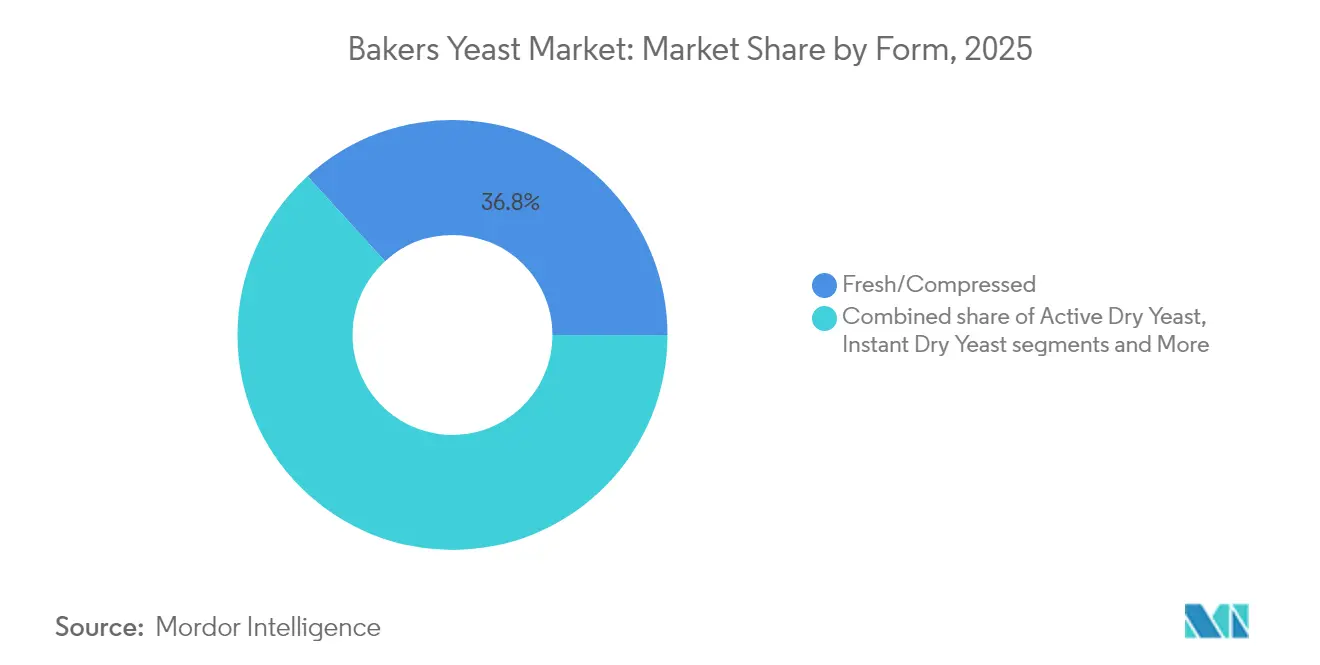
Fresh/compressed yeast accounted for 36.78% of the baker's yeast market share in 2025, maintaining its position as the highest revenue generator. This dominance stems from its rapid activation properties and consistent fermentation performance in industrial baking operations. The format remains particularly important for bakeries producing laminated dough and high-sugar products, where controlled gas formation is essential for product quality. However, the format faces challenges from cold-chain requirements in warm regions and increasing energy costs associated with refrigerated storage and transport.
Liquid and cream yeast formats are experiencing growth at 8.55% CAGR, driven by their compatibility with automated dosing systems that reduce manual handling and lower contamination risks. This growth is particularly notable in large-scale bread manufacturing facilities in Japan and the United States. The integration of digital monitoring systems in modern bakeries supports this transition, as sensors monitor fermentation times and enable precise recipe adjustments to optimize production efficiency. Active dry and instant yeast maintain their presence in retail and food service segments, while nutritional yeast occupies a growing niche in plant-based food products. These various yeast formats reflect the market's adaptation to increasing automation and changing consumer preferences.



By Yeast Type: Genetic Engineering Reshapes Traditions
Saccharomyces cerevisiae maintains its dominant position in commercial bread production, holding a 76.22% market share in 2025. This dominance stems from its proven performance and widespread regulatory approval. The availability of its complete genome sequence enables efficient strain optimization, ensuring its continued market significance. Genetically modified variants are experiencing a 9.05% CAGR, driven by bakery industry demands for improved stress tolerance and specific flavor profiles. CRISPR technology modifications reduce unwanted flavors and enhance trehalose production, resulting in better freeze-thaw stability for frozen dough transportation.
Alternative yeast varieties are gaining market presence. Candida milleri provides distinctive sour characteristics in European rye bread production, while Kluyveromyces marxianus operates effectively at elevated temperatures, reducing energy consumption in tropical facilities. Selenium-fortified yeast is increasing in popularity as a functional component in health-focused bread products. Despite lower production volumes, these specialty yeasts enhance the baker's yeast market value proposition and create additional revenue opportunities beyond traditional white bread production.
By Application: Pizza and Flatbreads Spur Diversification
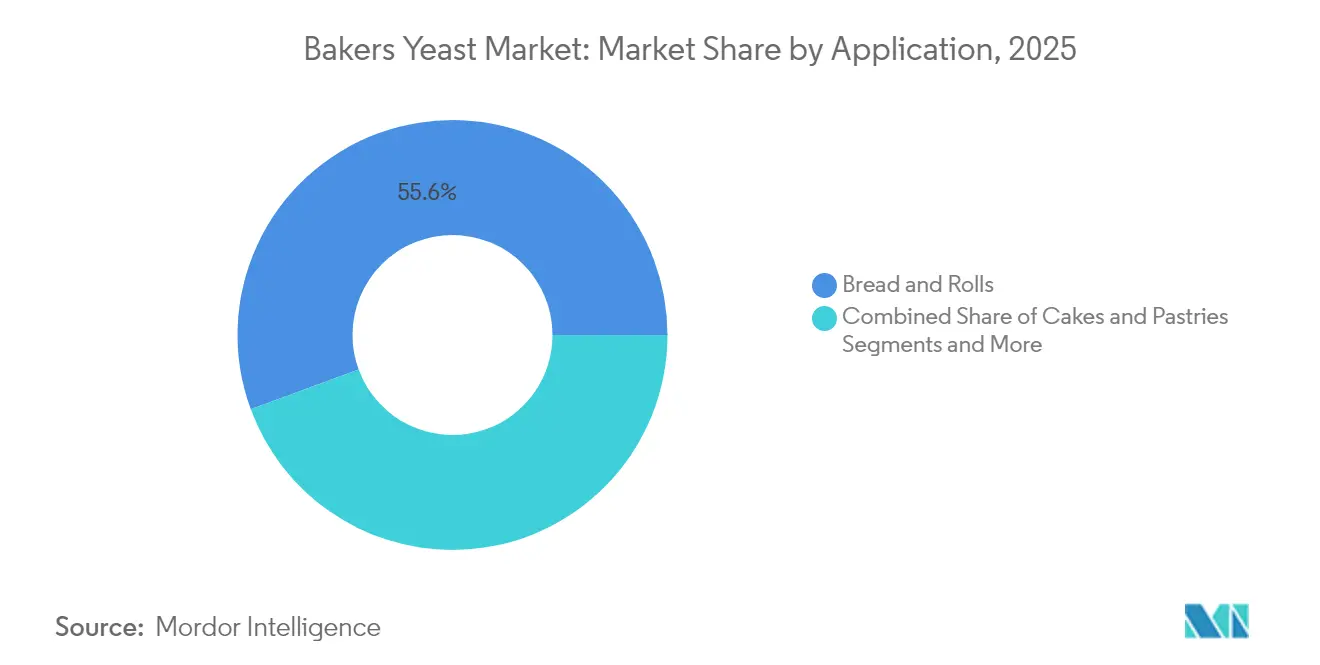
Rolls and bread market maintain their dominance, representing 55.62% of the baker's yeast market size in 2025. Diversifying into pizza, pita, and naan products drives the market expansion. The growth in quick-service pizza restaurants across China and Latin America, particularly targeting younger consumers through delivery services, requires yeast products that ensure consistent dough performance. Consequently, the pizza and flatbread segment is projected to grow at a 6.12% CAGR, exceeding traditional bread categories. The cakes, pastries, and enriched sweet goods segment maintains stable growth, particularly in markets where gifting traditions emphasize the importance of texture quality through controlled fermentation processes.
The market is further strengthened by functional bakery products. The production of Vitamin D2-fortified doughs using ultraviolet-treated yeast addresses consumer demand for immunity-enhancing products, while high-protein breads incorporate fermentation-derived yeast concentrates to enhance amino acid content. The increasing popularity of special occasion and ethnic celebration products, which often require specialized dough formulations, creates demand for yeast variants capable of performing in high-sugar and high-fat environments. These diverse applications contribute to sustained growth in the baker's yeast market.
By Category: Organic and Non-GMO Gain Premium Shelf Space
Conventional yeast dominates with a 74.68% share in 2025, thanks to cost efficiency and wide availability. Still, organic yeast posts the highest 9.98% CAGR because health-conscious consumers are willing to pay premiums for certified inputs. Supermarket analytics in the United States show visible organic badges driving a price differential of 15-20% per loaf, with minimal volume trade-offs. Non-GMO labels hold middle ground, appealing to shoppers wary of genetic modification but mindful of budgets.
Fortified yeast categories grow as bakery formulators chase nutrition claims. Selenium-fortified options, backed by peer-reviewed bioavailability trials, find slots in multigrain loaves marketed to seniors. Natural food colour producers use engineered baker’s yeast to insert beta-carotene and beet-red hues, a sign that category boundaries blur. Collectively, these shifts confirm that the baker's yeast market now balances mass-production economics with niche premiumisation, offering multiple price points across retail and food service.
Geography Analysis
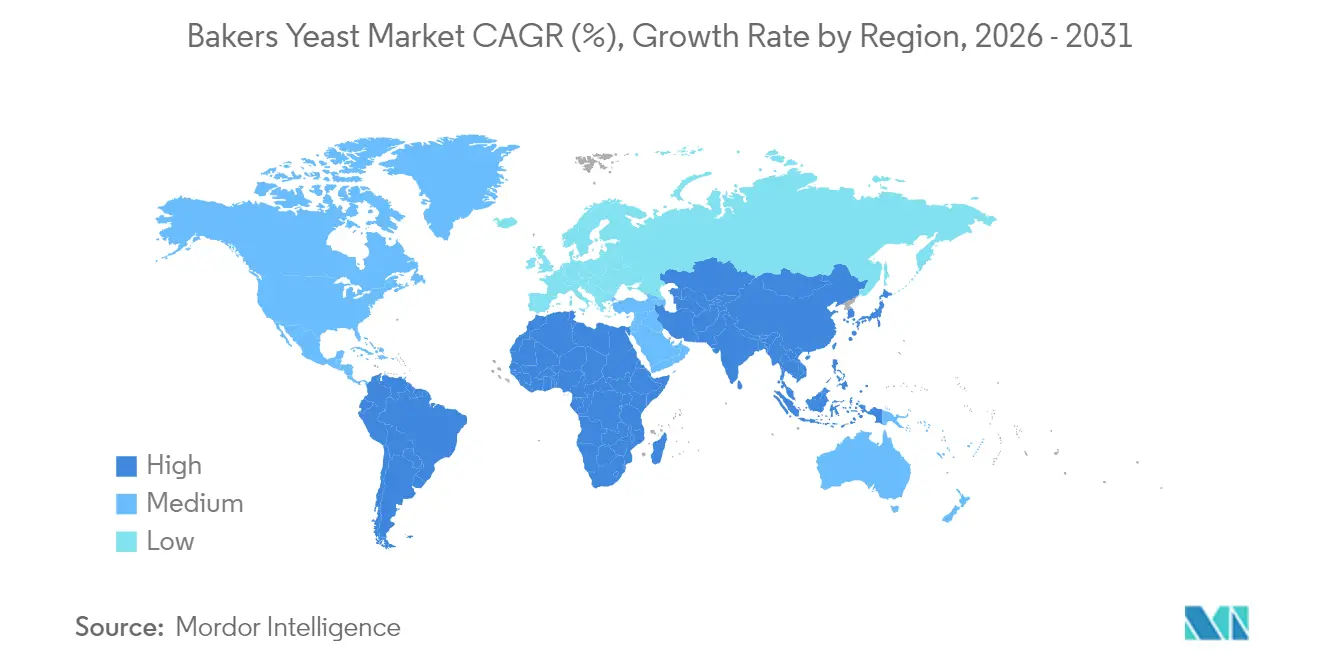
Europe accounts for 30.84% of revenue in 2025, supported by its established artisan culture, strict clean-label regulations, and extensive network of craft bakeries that utilize natural fermentation processes. Germany leads the region in volume consumption, while France generates higher average selling prices through premium sourdough products. Eastern European markets, particularly Poland, show above-average growth as modern supermarkets replace traditional corner stores. European Union regulations limiting additives maintain demand for yeast over chemical leaveners, supporting stable sales in this mature market.
The Asia-Pacific region exhibits the highest growth rate at 8.43% CAGR, driven by Indonesia's expanding domestic chains and Japanese-style bakeries. Singapore's USD 14.8 million investment in precision-fermentation demonstrates its commitment to local ingredient production and supply chain resilience. China maintains the largest yeast production capacity, while India's consumption increases due to urbanization and café culture growth. Australia, despite its smaller market size, maintains demand for specialized yeast products in gluten-free and organic segments. These regional developments support market growth despite raw material price fluctuations.
North America maintains steady single-digit growth as established manufacturers focus on cost optimization and functional bread products. The United States market emphasizes innovation in low-carb and protein-enhanced breads, increasing demand for specialized yeast formulations. South America leverages its sugarcane industry advantages, particularly in Brazil where integrated facilities reduce molasses transportation costs. The Middle East and Africa region experiences growth in bakery franchises, though limited cold-chain infrastructure restricts fresh yeast distribution. However, improvements in port logistics and free-trade zones enhance supply chain reliability, creating new market opportunities for yeast manufacturers.

Regulatory Landscape
Food safety and labeling compliance influence strain selection and cross-border shipments of baker's yeast, particularly as suppliers expand into fortified and specialty variants. In July 2026, the Codex Alimentarius Commission ratified the first international standard for baker's yeast at its 49th Session in Geneva, providing a unified quality and safety reference for trade alongside ISO 23983:2025 specifications for physical, chemical, and microbiological properties.
Key jurisdictional regimes continue to differ by ingredient format and technology. In the European Union, UV-treated baker's yeast (Saccharomyces cerevisiae) is handled within the novel food framework (Regulation (EU) 2015/2283), with detailed specifications set out via Commission Implementing Regulation (EU) 2022/196, while the United States treats yeast extract as GRAS under 21 CFR 184.1983 with defined limits, including microbial and lead content. China applies national requirements such as GB/T 20886.1-2021 for yeast products used in food processing, including heavy metal and microbiological thresholds, which increases the need for multi-market documentation, testing, and labeling discipline for global suppliers.
Value Chain Analysis
The value chain starts with agricultural feedstocks, led by cane and beet molasses that are clarified and standardized, then combined with water, nutrients (such as ammonium phosphate and ammonium sulfate), vitamins, and a pure culture inoculum. Aerobic fermentation in large vessels generates biomass that is concentrated by centrifugation and dewatered into a filter cake, then formulated and finished into fresh/compressed yeast, or dried into active dry and instant dry formats via extrusion, cutting, and drying steps. Higher-value side streams, including yeast extracts and hydrolysates, increasingly come downstream of the same fermentation backbone, reflecting the shift toward broader yeast functionality.
Key constraints focus on cost and viability control. Molasses price volatility affects input economics, while fresh yeast depends on cold-chain reliability during storage and transport. Operations are also sensitive to energy use for temperature control in large bioreactors, plus handling and treatment of by-products such as vinasse. Competitive manufacturers rely on scale, process automation, and feedstock optimization to reduce off-spec batches, and some production footprints favor proximity to sugarcane regions, including integrated models in Brazil referenced in the report context, to lower molasses logistics costs and improve supply resilience.
Competitive Landscape
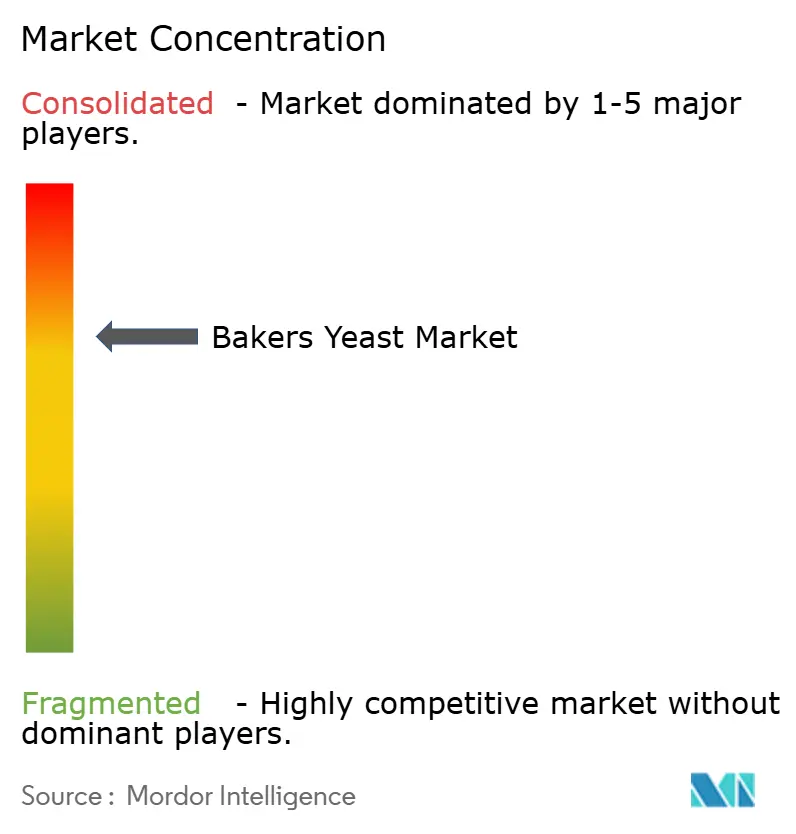
The bakers yeast market is moderately concentrated, with the top five suppliers holding substantial market share while allowing space for niche players. Prominent players in the market incldues Lesaffre International, Associated British Foods Plc, Lallemand Inc., Pak Group, and Angel Yeast Co. Ltd. dominate global operations through their multi-continent manufacturing facilities and extensive technical service networks. Lesaffre strengthened its position through a 70% acquisition of Biorigin and the purchase of DSM-Firmenich's yeast extract operations in June 2024, expanding its fermentation capacity and enhancing its savory ingredient portfolio. Angel Yeast focuses on protein extraction research and development to expand into alternative-protein markets.
Digital technology adoption creates competitive advantages in the market. Manufacturers implement AI algorithms to optimize feedstock combinations and minimize off-spec production, reducing production costs. Renaissance BioScience develops non-GMO yeast strains for masking off-flavors in plant-based meat products, securing co-manufacturing agreements with major ingredient companies. Regulatory compliance influences market position, as companies that obtain GRAS certifications for new strains or EFSA QPS approvals gain early market access in health-focused applications. While price competition remains strong in commodity segments, premium product lines rely on specialized strain collections and application expertise. The baker's yeast market leadership depends primarily on innovation capabilities and supply chain reliability.
Lesaffre International offers an organic range of baker's yeast that provides optimum performance in the long term. This gives the company a competitive advantage in the international market, particularly in Europe. Companies in the global baker's yeast market primarily focus on expansion strategies, continuously increasing their production capacity and distribution networks.
Bakers Yeast Industry Leaders
-
Associated British Foods PLC
-
Lesaffre International
-
Lallemand Inc.
-
Pak Group (Pakmaya)
-
AngelYeast Co., Ltd.
- *Disclaimer: Major Players sorted in no particular order

Market Opportunities and Future Outlook
Codified quality benchmarks and specialized-ingredient approvals are extending the commercial runway for differentiated baker's yeast and derivatives across regions. The July 2026 adoption of the first Codex Alimentarius standard for baker's yeast provides a shared technical reference that supports export-oriented producers and reduces friction in buyer qualification across multi-country bakery networks. At the same time, EU authorization pathways for UV-treated yeast under Commission Implementing Regulation (EU) 2022/196, together with US GRAS positioning for yeast extract under 21 CFR 184.1983, create clearer routes for application-specific functional positioning in fortified bakery and adjacent food uses.
Investment and capacity activity point to opportunities in regional self-sufficiency, specialty yeast, and derivative platforms. Angel Yeast announced a green manufacturing project in January 2026 (220 million yuan, 12,000 tons annual capacity) and began trial production in August 2025 at an 8,500-ton specialty yeast facility in Yichang, while Red Star Yeast (Lesaffre) commissioned a new industrial fermenter at Cedar Rapids in August 2025 for baking, nutrition, and biotech demand. Beyond incumbent hubs, Anouar Invest announced a USD 53.3 million yeast plant in El Jadida, Morocco (25,000 tons per year initial capacity, using locally sourced molasses), and Qiqihar Longjiang Fufeng Bio-technology progressed a 10,000-ton per year expansion in Heilongjiang covering active dry yeast and yeast derivatives. These moves align with opportunities in localized molasses-linked production, automated liquid/cream supply for industrial bakeries, and higher-margin derivatives such as extracts and hydrolysates that leverage the same upstream fermentation assets.
Recent Industry Developments
- July 2026: The Codex Alimentarius Commission adopted the first global standard for baker's yeast at its 49th Session in Geneva. The decision establishes a common quality and safety benchmark for international trade, reducing technical specification friction for global suppliers and multinational bakery customers.
- May 2026: Biospringer (Lesaffre) acquired selected intellectual property and technology assets from PTX Food Corp to strengthen its fermentation-based food ingredient solutions. The transaction supports Lesaffre's move beyond commodity yeast into higher-value fermentation capabilities that can be applied across baking and broader food applications.
- October 2024: Lesaffre acquired a 70% stake in Biorigin, expanding its yeast-based ingredients footprint tied to sugarcane processing. The deal broadens access to natural flavor and yeast-derived ingredient portfolios, supporting cross-selling into industrial baking and adjacent savory applications.


Research Methodology Framework and Report Scope
Market Definition and Coverage
This market covers the value of baker's yeast sold for leavening and dough fermentation in baked products, across common commercial forms like fresh, dry, and liquid yeast. The sizing is done in value terms (USD) based on the point where yeast is sold into bakery and food manufacturing use.
Scope exclusions: Excludes yeast extracts and non-baking fermentation uses that are not purchased as baker's yeast for dough making.
Segmentation Overview
-
By Form
- Liquid/Cream Yeast
- Fresh/Compressed Yeast
- Active Dry Yeast
- Instant Dry Yeast
- Nutritional Yeast/Specialty Forms
-
By Yeast Type
- Saccharomyces cerevisiae
- Candida milleri and related
- High-selenium strains
- Genetically-edited strains
-
By Application
- Bread and Rolls
- Cakes and Pastries
- Pizza Dough and Flatbreads
- Other Baked Goods
-
By Category
- Conventional
- Organic Certified
- Non-GMO
- Fortified/Functional
-
By Geography
-
North America
- United States
- Canada
- Mexico
- Rest of North America
-
Europe
- Germany
- United Kingdom
- France
- Italy
- Spain
- Russia
- Rest of Europe
-
Asia-Pacific
- China
- India
- Japan
- Australia
- Rest of Asia-Pacific
-
South America
- Brazil
- Argentina
- Rest of South America
-
Middle East and Africa
- Saudi Arabia
- South Africa
- Rest of Middle East and Africa
-
North America
Data Sources, Market Sizing, and Validation
Desk Research
Desk research is used to build the starting structure of the market, and then to keep assumptions realistic by tracking demand signals tied to baking activity. We relied on public sources such as FAOSTAT food balance and agriculture statistics, UN Comtrade trade flows for yeast-related HS codes, USDA and Eurostat food manufacturing indicators, and national statistics offices that publish bread and bakery output series.
We also referenced company annual reports and investor presentations to track capacity changes, footprint shifts, and mix commentary. Bakery and ingredient association websites and reputable press were used for category trend context. Where needed, paid subscriptions for company financials and intelligence, shipment level import and export data, and patent databases were used to confirm timelines and technology direction. These examples are not exhaustive, and many other sources were also reviewed for data collection, cross-checking, and clarification.
Primary Interviews and Surveys
Primary work focused on interviewing yeast producers, distributors, industrial bakeries, and selected ingredient traders to confirm pricing behavior, form mix (fresh versus dry versus liquid), and the share of demand coming from packaged bread versus artisanal and in-store baking. For a global view, inputs were checked across APAC, EMEA, and the Americas so regional consumption patterns and trade reliance could be reflected in the model.
Distribution of primary research fieldwork respondents
| Company type | Respondent position | Region |
|---|---|---|
| Top tier: 28% | CXOs: 18% | APAC: 45% |
| Mid tier: 50% | Functional/Unit leaders: 39% | EMEA: 36% |
| Smaller Players: 22% | Managers: 43% | Americas: 19% |
Market-Sizing & Forecasting
The core sizing starts with a top-down build where bakery production and consumption signals are converted into an addressable yeast demand pool, and then value is reconstructed using form-wise pricing ranges. To keep totals realistic, the result is then corroborated with selective bottom-up checks such as supplier revenue splits, sampled price per kg by form, and channel checks on typical pack sizes and turnover.
Inputs used in the model include bread and bakery output indices, per capita bakery consumption proxies, yeast import and export volumes, reported capacity additions and plant utilization commentary, and observed price movements for key fermentation inputs that influence yeast pricing. When data is thin in smaller countries, gaps are handled through regional ratioing that is anchored to trade reliance and bakery output, and then reviewed with interview feedback.
For forecasting, we run scenario analysis supported by a light multivariate regression on bakery output indicators and trade momentum, followed by expert led adjustments for changes like premium bread growth, foodservice recovery, and clean label formulation trends. Assumptions are kept simple so they can be traced back to visible indicators and updated without overfitting.
Data Validation & Update Cycle
Outputs are validated through triangulation across independent signals, including trade flows, bakery production trends, and price bands by yeast form, before final numbers are locked. If a region shows unusual spikes or drops, the drivers are rechecked and respondents may be re-contacted to confirm whether it was caused by pricing, stock building, or a one-time supply event.
Each report goes through multi-step analyst review where assumptions, calculations, and conversions are checked for consistency, and any large variances versus observable indicators are reconciled. The dataset is refreshed annually, and interim updates are made when material events occur such as capacity expansions, major disruptions, or sharp currency moves. Before delivery, a final pass is done so clients receive the most current view available.
Mordor Intelligence's Bakers Yeast Market Size Measured Against Other Published Estimates
Published market sizes for baker's yeast do not always match because the underlying scope and the timing choices are not the same, even when the topic name looks identical. Differences usually come from what gets counted as baker's yeast, which end uses are included, how pricing is applied across fresh, dry, and liquid forms, and whether the year is treated as a normal demand year or an adjusted scenario.
Some external estimates broaden the definition by blending adjacent yeast ingredient categories or by extending demand into feed and other downstream uses that are not strictly baking. In the referenced Mordor Intelligence approach, the market total is limited to baker's yeast sold for baking applications, and the value model is tied back to bakery output signals and form-wise price ranges that are rechecked during updates.
Benchmark comparison
| Source | Market Size | Gaps in Research Methodology |
|---|---|---|
| Mordor Intelligence | USD 1.30 B (2026) | |
| Industry Publisher A | USD 0.77 B (2024) | Uses an earlier base year and appears to apply a narrower value capture, which can understate the effect of later price changes and shifts toward higher-value dry and specialty forms. |
| Research Aggregator B | USD 1.27 B (2024) | Uses a different forecast window and base year, and the segmentation emphasis by channel and usage type can change what is treated as household versus commercial demand, affecting the total value. |
The spread in the table is largely explained by year selection and what is counted inside the category, not by a single math error. When scope is kept tight to baking use and key drivers like bakery output, trade reliance, and form pricing are consistently applied, the final market size becomes easier to reproduce and to compare over time.


Key Questions Answered in the Report
What is the current value of the baker's yeast market?
The baker's yeast market is valued at USD 1.3 billion in 2026 and is projected to reach USD 1.91 billion by 2031.
Which region leads the baker's yeast market?
Europe leads with 30.84% revenue share in 2025, driven by strong artisan traditions and clean-label regulations.
What segment shows the fastest growth?
Liquid and cream yeast formats record the fastest 8.55% CAGR as automated bakery lines adopt pumpable solutions.
What is the forecast CAGR for the baker's yeast market?
The market is expected to expand at an 7.84% CAGR between 2026 and 2031, supported by convenience trends and clean-label demand.
Page last updated on:


 Your data is secure and never sold or shared.


