
Avocado Oil Market Size and Share
Market Overview
| Study Period | 2021 - 2031 |
|---|---|
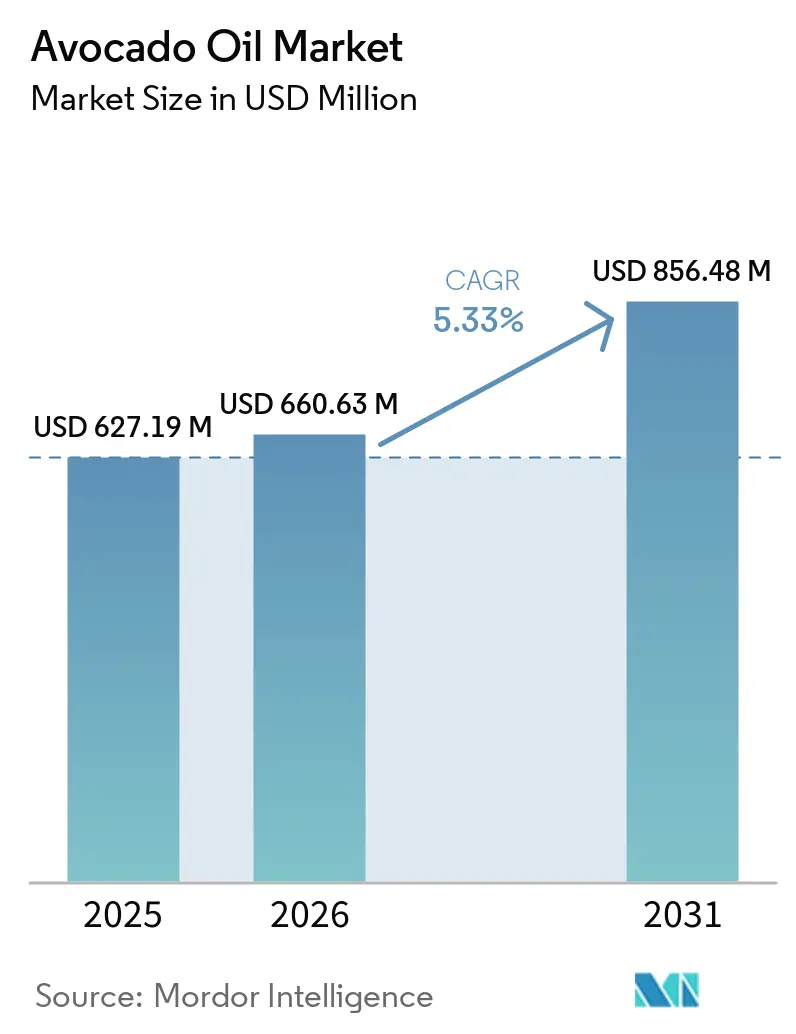
| Market Size (2026) | USD 660.63 Million |
| Market Size (2031) | USD 856.48 Million |
| Growth Rate (2026 - 2031) | 5.33 % |
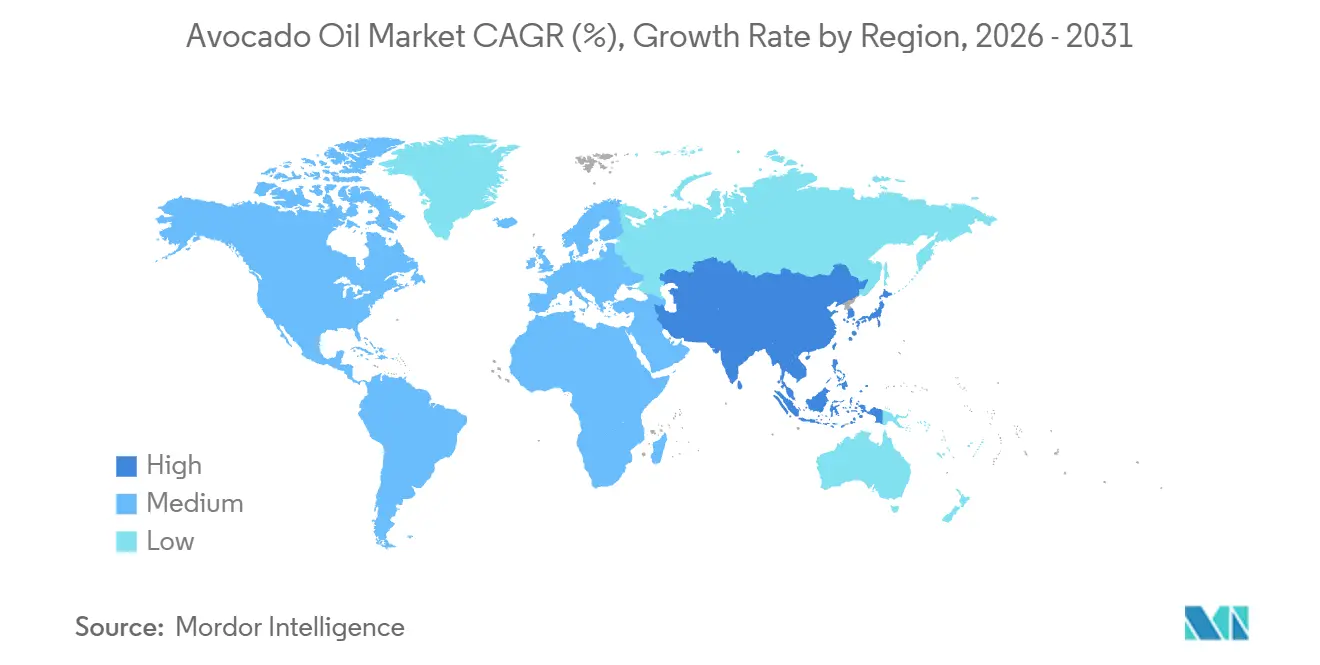
| Fastest Growing Market | Asia-Pacific |
| Largest Market | North America |
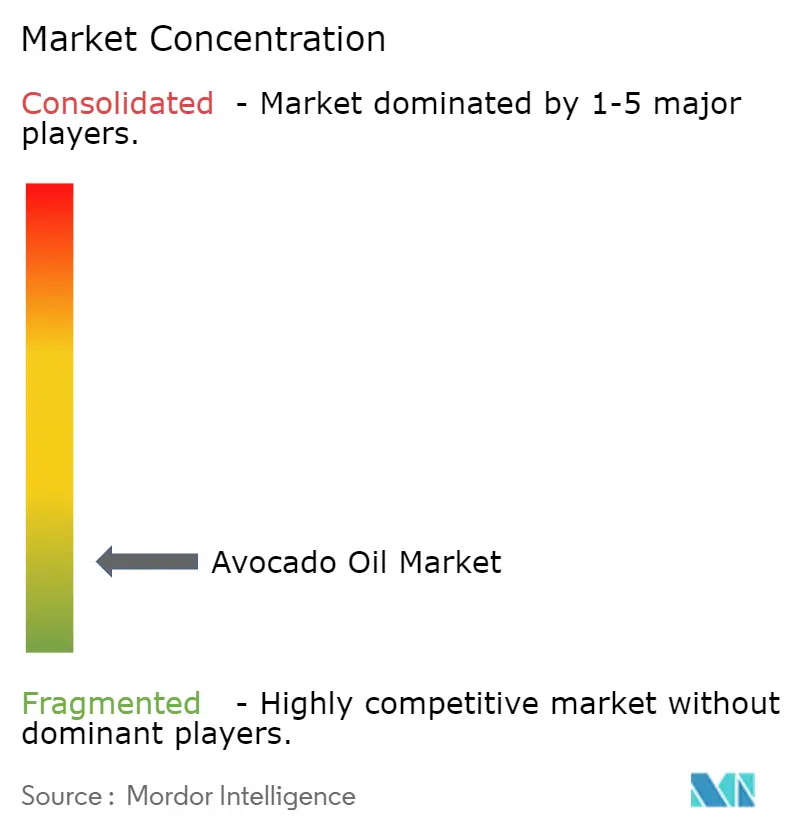
| Market Concentration | Low |
Major Players *Disclaimer: Major Players sorted in no particular order Image © Mordor Intelligence. Reuse requires attribution under CC BY 4.0. | |
Avocado Oil Market Analysis by Mordor Intelligence
The global avocado oil market is witnessing consistent growth, increasing from USD 627.19 million in 2025 to USD 660.63 million in 2026, and is projected to reach USD 856.48 million by 2031, with a CAGR of 5.33% during 2026–2031. This growth is primarily driven by the rising consumer preference for health-focused and functional edible oils, supported by growing awareness of the benefits of monounsaturated fats, antioxidants, and clean-label ingredients. Avocado oil is increasingly regarded as a premium, plant-based alternative to conventional oils, gaining traction among consumers seeking natural, minimally processed, and nutrient-rich food options. The shift away from heavily refined oils toward organic, non-GMO, and minimally processed alternatives further strengthens avocado oil's market position. Additionally, its high smoke point and versatility in various cooking applications enhance its appeal to a broader consumer base.
Key Report Takeaways
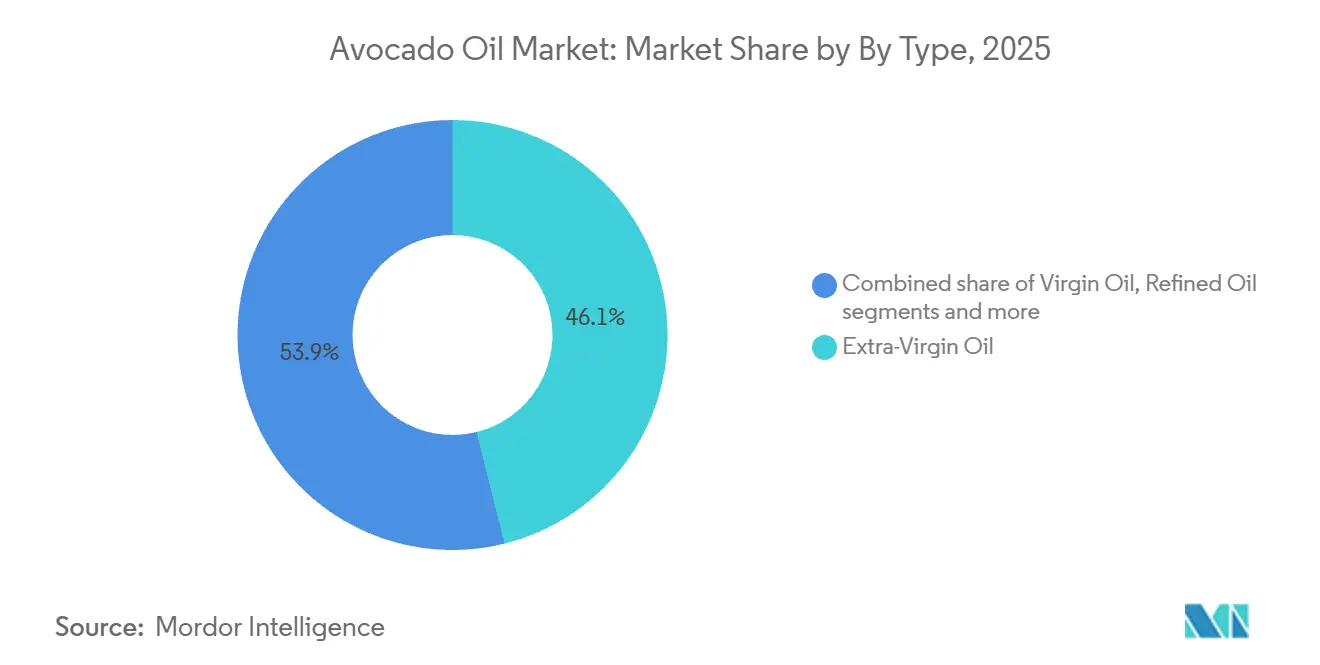
- By type, extra-virgin avocado oil commanded 46.12% of 2025 revenue, while refined oil is forecast to expand at a 6.12% CAGR through 2031.
- By extraction technology, cold-pressed methods accounted for 60.08% share of the avocado oil market size in 2025 and supercritical CO₂ systems are projected to advance at 5.75% CAGR to 2031.
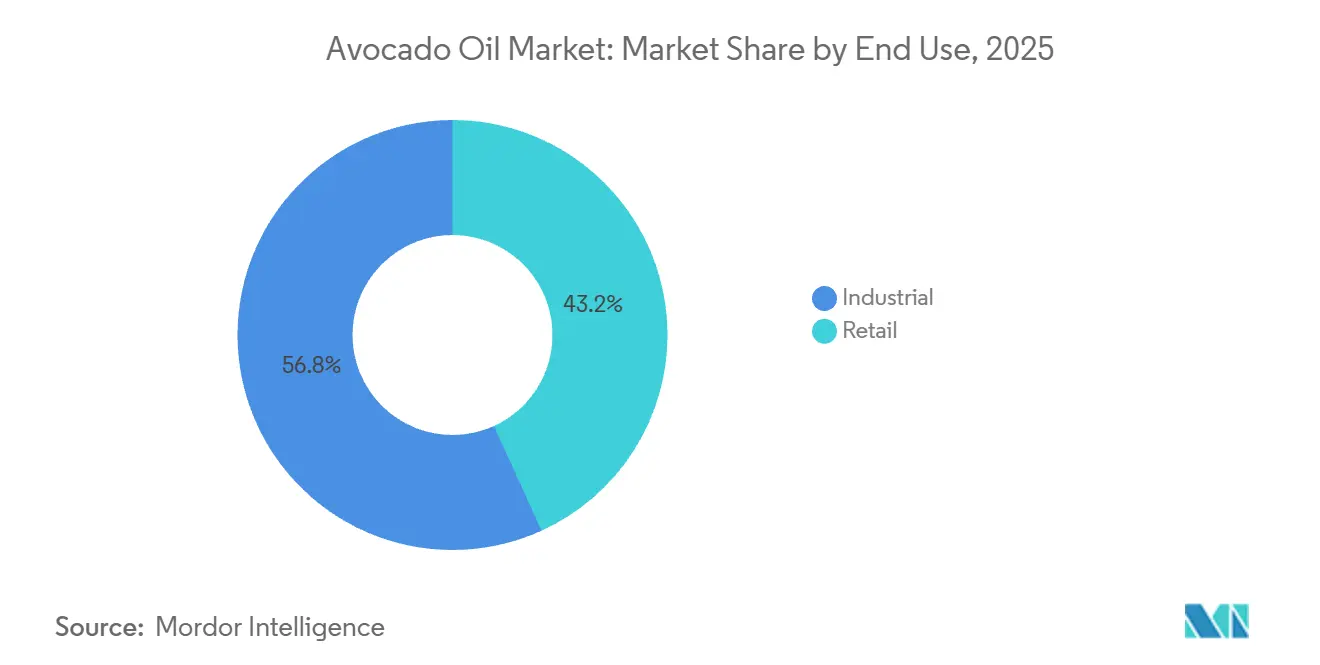
- By end use, industrial formulations captured 56.76% of 2025 value and retail channels are advancing at a 5.96% CAGR through 2031.
- By geography, North America held 38.01% of revenue in 2025, while Asia-Pacific is on course for the fastest 6.81% CAGR over 2026-2031.
Note: Market size and forecast figures in this report are generated using Mordor Intelligence’s proprietary estimation framework, updated with the latest available data and insights as of January 2026.
Market Trends and Insights
Drivers Impact Analysis of Avocado Oil Market*
| Driver | (~) % Impact on CAGR Forecast | Geographic Relevance | Impact Timeline |
|---|---|---|---|
| Growing popularity of plant-based diets | +1.2% | Global, with concentration in North America, Western Europe, urban Asia-Pacific | Medium term (2-4 years) |
| Increasing awareness of healthy fats | +0.8% | Global, strongest in North America and Europe | Short term (≤ 2 years) |
| High smoke point suitability | +0.9% | Global, particularly North America and Asia-Pacific commercial kitchens | Short term (≤ 2 years) |
| Shift toward organic, clean-label, and minimally processed oils | +1.0% | North America, Western Europe, Australia | Medium term (2-4 years) |
| Advancements in extraction and processing technology | +0.7% | Global, early adoption in Mexico, New Zealand, South Africa, Kenya | Long term (≥ 4 years) |
| Rising demand in gourmet and specialty foods | +0.5% | North America, Europe, select Asia-Pacific urban centers | Medium term (2-4 years) |
| Source: Mordor Intelligence | |||
Growing Popularity of Plant-Based Diets
The increasing adoption of plant-based diets is a key factor driving the growth of the avocado oil market. Consumers are progressively shifting toward plant-derived, nutrient-rich food options to support healthier and more sustainable lifestyles. Avocado oil, as a naturally sourced plant-based fat, aligns well with this trend due to its high content of monounsaturated fats, antioxidants, and clean-label attributes. These qualities make it a favorable alternative to animal-based fats and conventional cooking oils. This transition is particularly prominent in developed markets, where dietary preferences are moving toward flexitarian and vegan options. According to the Good Food Institute (GFI), 59% of households in the United States purchased plant-based foods in 2024, underscoring the widespread acceptance of plant-based consumption[1]. As consumers increasingly prioritize natural ingredients, functional health benefits, and sustainability, avocado oil is being incorporated into everyday cooking, processed foods, and health-oriented product formulations, thereby sustaining demand and driving market growth.
Increasing Awareness of Healthy Fats
Growing awareness of healthy fats is driving the avocado oil market as consumers become increasingly informed about the role of dietary fats in promoting overall health and wellness. Traditional perceptions linking fats to negative health outcomes are shifting, with greater recognition of the benefits of monounsaturated and unsaturated fats, which are associated with heart health, improved cholesterol levels, and anti-inflammatory effects. Avocado oil, rich in these healthy fats, along with vitamin E and antioxidants, is being viewed as a functional and heart-friendly alternative to conventional edible oils. This trend is further supported by health professionals, nutrition research, and clean-label initiatives, encouraging consumers to make more informed dietary choices. Consequently, avocado oil is gaining wider acceptance for both household use and product formulations, solidifying its position as a preferred option in the health-focused edible oils market.
High Smoke Point Suitability
The high smoke point of avocado oil is a key factor driving its widespread adoption among consumers and manufacturers who require oils capable of withstanding high-temperature cooking without degrading or losing nutritional value. Avocado oil's naturally high smoke point makes it exceptionally suitable for frying, roasting, grilling, and sautéing, where stability and safety are critical. Unlike many conventional oils, it retains its nutritional properties and neutral flavor even at elevated temperatures, significantly enhancing its functionality and versatility. This advantage is further bolstered by continuous product innovations. For instance, in July 2024, Primal Kitchen launched Pure Organic Avocado Oil, featuring a high smoke point of up to 500°F (260°C), strongly emphasizing its suitability for demanding cooking applications and reinforcing its position as a preferred choice for high-heat culinary uses.
Shift toward Organic, Clean-Label, and Minimally Processed Oils
The growing preference for organic, clean-label, and minimally processed oils is driving demand in the avocado oil market. Consumers are increasingly prioritizing transparency, natural ingredients, and "free-from" claims in their purchasing decisions. Avocado oil aligns well with these preferences, especially in its extra-virgin and cold-pressed forms, which preserve natural nutrients and avoid chemical processing. This trend is further supported by rising skepticism toward highly refined and additive-laden oils, leading consumers to opt for products that are non-GMO, gluten-free, and free from harmful residues. Reflecting this shift, in October 2024, Chosen Foods LLC introduced its 100% Pure Avocado Oil Squeeze. The product is marketed as 100% pure, naturally refined, gluten-free, glyphosate residue-free, kosher, and Non-GMO Project certified, demonstrating strong adherence to clean-label standards.
Restraints Impact Analysis of Avocado Oil Market*
| Restraint | (~) % Impact on CAGR Forecast | Geographic Relevance | Impact Timeline |
|---|---|---|---|
| High production costs | -0.8% | Global, acute in water-scarce regions (California, Spain, Chile, South Africa) | Short term (≤ 2 years) |
| Climate sensitivity affecting avocado crop yields | -1.0% | Mexico (Michoacán), Peru, Chile, Spain, South Africa | Long term (≥ 4 years) |
| Allergen concerns for sensitive consumers | -0.3% | Global, higher awareness in North America and Europe | Medium term (2-4 years) |
| Strong competition from established oils | -0.6% | Global, particularly in price-sensitive markets | Short term (≤ 2 years) |
| Source: Mordor Intelligence | |||
High Production Costs
High production costs significantly restrain the growth of the avocado oil market, limiting its adoption and competitiveness compared to conventional edible oils. Avocado oil production is resource-intensive, requiring substantial quantities of avocados to produce relatively small volumes of oil, which increases raw material costs. Additionally, processes such as cold-pressing, sorting, grading, and quality control add to operational expenses, particularly for premium-grade oils. The reliance on specific avocado varieties and agricultural conditions further contributes to cost variability and supply constraints, making production less predictable. Furthermore, the use of advanced extraction technologies and compliance with certifications increases production and processing costs. Consequently, avocado oil is often priced higher than alternatives such as sunflower, soybean, or palm oil, reducing its accessibility for price-sensitive consumers and limiting its penetration in mass-market segments.
Climate Sensitivity affecting Avocado Crop Yields
Climate sensitivity significantly impacts avocado crop yields, thereby influencing the avocado oil market. Avocado cultivation relies heavily on stable climatic conditions and specific growing environments. Avocado trees require consistent temperatures, sufficient rainfall, and balanced soil moisture, making them highly susceptible to extreme weather events such as droughts, heatwaves, frost, and irregular rainfall. Disruptions in these conditions can adversely affect fruit yield, quality, and oil content, leading to fluctuations in raw material availability. Furthermore, changing climate patterns heighten the risk of pest infestations and plant diseases, further reducing productivity. This vulnerability results in supply instability and pricing volatility, creating challenges for manufacturers in ensuring consistent production and maintaining long-term supply contracts.
*Our forecasts treat driver/restraint impacts as directional, not additive. The impact forecasts reflect baseline growth, mix effects, and variable interactions.
Avocado Oil Market Segment Analysis
By Type:
Refined Oil Gains on Thermal StabilityExtra-virgin avocado oil, which accounted for 46.12% of the market in 2025, emerged as a key driver of growth in the avocado oil industry. This was attributed to its premium quality, health benefits, and clean-label appeal. The segment's growth was primarily fueled by increasing consumer preference for minimally processed, nutrient-rich oils. Extra-virgin avocado oil, produced through cold-pressed extraction methods, retained high levels of monounsaturated fats, antioxidants, and vitamins. These attributes made it highly desirable for both household consumption and foodservice applications, where there was growing demand for high-performance cooking oils with a high smoke point and natural origin.
Refined avocado oil, anticipated to grow at a CAGR of 6.12% through 2031, is gaining popularity as an accessibility-focused segment, supporting the overall expansion of the avocado oil market. Refined avocado oil undergoes additional processing, resulting in a neutral taste, lighter color, and enhanced stability, making it well-suited for high-temperature cooking applications such as frying, grilling, and commercial food preparation. Its longer shelf life and reduced sensitivity to storage conditions further increase its appeal in retail and bulk distribution channels. Additionally, refined avocado oil is increasingly utilized as a base oil in blended formulations and processed foods, contributing to its consistent demand.

By Extraction Type:
Supercritical CO₂ Emerges as Quality BenchmarkCold-pressed and mechanical extraction methods accounted for 60.08% of the global avocado oil market in 2025. These methods dominate the segment due to their alignment with consumer preferences for natural, minimally processed, and nutrient-rich products. By avoiding the use of chemicals and excessive heat, these techniques preserve the oil's natural color, aroma, antioxidants, and essential fatty acids, which are highly valued in both food and personal care applications. Additionally, their compatibility with organic certification and non-GMO claims enhances their market position, particularly in developed regions. The segment also benefits from strong branding around sustainability, transparency, and premium quality, enabling manufacturers to achieve higher price points.
Supercritical CO₂ extraction, growing at a CAGR of 5.75% through 2031, represents a niche segment within the avocado oil market, driven by technology and a focus on high-purity, value-added applications. This advanced method utilizes carbon dioxide under controlled pressure and temperature to produce oil free from solvent residues while retaining a high concentration of bioactive compounds, such as antioxidants and phytosterols. These attributes not only ensure ingredient purity, consistency, and safety but also enhance the oil's appeal for pharmaceutical, nutraceutical, and premium personal care formulations. Furthermore, the method's ability to meet stringent quality standards positions it as a preferred choice for manufacturers targeting high-end markets.
By End-Use:
Retail Channels Accelerate as E-Commerce ExpandsIndustrial applications accounted for 56.76% of the global avocado oil market in 2025, dominating the market due to their extensive use in large-scale food processing, personal care manufacturing, nutraceutical production, and other industrial formulations. These applications require consistency, scalability, and functional performance, which avocado oil provides. The segment's dominance is further supported by the growth of the processed food industry, where avocado oil is increasingly utilized as a functional ingredient in packaged foods, ready-to-eat meals, sauces, and dressings due to its stability and nutritional benefits. According to the United States Department of Agriculture (USDA), total food spending reached USD 2.58 trillion in 2024, highlighting the significant scale of food production and processing activities that depend on edible oils, including avocado oil[2].
Retail channels, growing at a CAGR of 5.96% through 2031, are playing a crucial role in increasing consumer access and driving volume growth in the avocado oil market. This expansion is driven by the rising availability of avocado oil across supermarkets, hypermarkets, specialty health stores, and e-commerce platforms, enhancing its visibility and accessibility to a broader consumer base. As consumers increasingly prefer health-oriented and clean-label products, retail shelves are witnessing a wider variety of avocado oil options, including extra-virgin, refined, organic, and infused variants, catering to diverse preferences. Additionally, the growth of private label offerings and competitive pricing strategies is lowering entry barriers for first-time buyers, facilitating market penetration beyond premium segments.
Geography Analysis
North America Avocado Oil Market
In 2025, North America accounted for 38.01% of the global avocado oil market value, maintaining its leading position. This dominance is supported by the mature health and wellness ecosystem in the United States and the established consumption of premium edible oils. Mexico plays a pivotal role as a major avocado producer and supply hub, ensuring consistent raw material availability and cost advantages across the region. According to the Agri-Food and Fisheries Information Service, Mexico’s avocado production reached 2.76 million metric tons in 2024, underscoring its critical role in the global value chain[3]. Additionally, the United States and Canada contribute to regional growth through increased retail penetration, product diversification, and the adoption of avocado oil in food processing and personal care applications, further solidifying North America’s leadership in the market.
APAC Avocado Oil Market
The Asia-Pacific region is projected to grow at a CAGR of 6.81% through 2031, making it the fastest-growing regional market for avocado oil. This growth is driven by rapid urbanization, changing dietary habits, and the rise of health-conscious consumers in countries such as China, India, Japan, and Australia. Increasing awareness of the benefits of healthy fats and natural oils, coupled with the expansion of modern retail infrastructure and e-commerce platforms, is enhancing product accessibility. Urban consumers are increasingly shifting from traditional cooking oils to premium and functional alternatives, including avocado oil.
EMEA and South America Avocado Oil Market
Europe, South America, and the Middle East and Africa represent a diverse but strategically important landscape for the avocado oil market. In Europe, there is a growing focus on organic, non-GMO, and clean-label certifications, with consumers favoring sustainably sourced and high-quality oils, particularly in countries like Germany, the United Kingdom, and France. South America, led by Brazil and Argentina, benefits from its proximity to major avocado-producing countries such as Chile, Peru, and Colombia, which supports raw material availability and export potential. However, limited domestic processing infrastructure in South America continues to constrain value addition within the region.
Competitive Landscape
The global avocado oil market is highly fragmented, with numerous regional and international players competing across various quality tiers, pricing strategies, and application areas. Established companies such as Hans Merensky Holdings (Pty) Ltd., Sesajal S.A. de C.V., Olivado Ltd, Chosen Foods LLC, and The Hain Celestial Group, Inc. hold significant positions. However, the market remains dispersed, comprising specialty producers and vertically integrated suppliers. This fragmentation is influenced by the regional nature of avocado cultivation, differences in processing capabilities, and the coexistence of premium and mass-market product offerings. These factors contribute to intense competition and limited market concentration.
Technology adoption is reshaping the competitive landscape, with leading processors investing in advanced extraction techniques such as supercritical CO₂ systems. These technologies enhance product purity, improve yield efficiency, and support differentiation. While traditional cold-pressed methods continue to dominate in terms of volume, technologically advanced players are carving out positions in high-margin segments, particularly in nutraceutical and personal care applications. This trend is creating a two-tier market structure: one focused on scale and cost efficiency, and the other emphasizing innovation, quality enhancement, and premiumization. This bifurcation allows companies to target distinct consumer segments and application areas effectively.
Competition is intensifying around quality assurance, transparency, and supply chain integrity. Companies are increasingly investing in third-party testing, blockchain-based traceability, and clear labeling practices to build consumer trust and enhance brand credibility. As concerns about adulteration and mislabeling grow, businesses that demonstrate authentic sourcing, purity verification, and sustainable practices are gaining a competitive advantage. This emphasis on transparency is strengthening brand positioning and influencing purchasing decisions, particularly in developed markets where consumers prioritize traceability, ethical sourcing, and clean-label certifications. These shifts are reshaping competitive dynamics across the global avocado oil market.
Avocado Oil Industry Leaders
-
Hans Merensky Holdings (Pty) Ltd.
-
Sesajal S.A. de C.V.
-
Olivado Ltd
-
Chosen Foods LLC
-
The Hain Celestial Group, Inc.
- *Disclaimer: Major Players sorted in no particular order
Avocado Oil Market Companies Covered in this Report
- Hans Merensky Holdings (Pty) Ltd. (Westfalia Fruit)
- Sesajal S.A. de C.V.
- Olivado Ltd
- CalPure Foods Inc.
- La Tourangelle Inc.
- Chosen Foods LLC
- The Hain Celestial Group, Inc. (Spectrum Organics)
- Grove Avocado Oil (Avocado Oil NZ Ltd)
- Bella Vado
- BetterBody Foods
- Stonewall Kitchen LLC
- AvoHealth Ltd
- Kevala International LLC
- Cosmopolitan Food Group
- Fruittal LLC
- Ava Jane's Kitchen
- De La Rosa Real Foods & Vineyards
- BMA USA Inc.
- Sulu Organics LLC
- Agroindustrias Avoin SAC
Recent Industry Developments in Avocado Oil Market
- March 2026: Ecovado, an emerging agro-processing company, launched a new avocado oil processing plant in collaboration with Alfa Laval Middle East, South, and East Africa. This initiative aims to support economic development in the uVhembe District community in Limpopo, South Africa.
- January 2026: Marianne’s launched a new range of avocado oils. The product line includes Classic Avocado Oil, Organic Avocado Oil, and Regenerative Organic Certified Avocado Oil. Each product featured a pop-up pour spout for drizzling and offers a smoke point of up to 500°F, suitable for high-temperature searing.
- November 2025: Chosen Foods introduced a unique holiday gift set aimed at food enthusiasts, home chefs, and gift-givers. The Chosen Foods Organic Avocado Oil Holiday Set includes organic avocado oil paired with a handblown glass dispenser, designed to enhance kitchen countertops.
Global Avocado Oil Market Report Scope
Avocado oil is a heart-healthy, edible oil pressed from the fleshy pulp of avocados rather than the seeds. The avaocado oil market is segmented by type, extraction type, end-use, and geography. Based on type, the market is segmented into extra virgin oil, virgin oil, refined oil, and others. Based on extraction type, the market is segmented into cold-pressed/mechanical, solvent extraction, supercritical CO₂ extraction, and others. Based on end-user, the market is segmented into industrial, and retail. Based on geography, the market is segmented into North America, Europe, Asia-Pacific, South America, and the Middle East and Africa. The report provides market size and forecasts in both value (USD) and volume (tons) for all the mentioned segments.
Segmentation Overview
| Extra Virgin Oil |
| Virgin Oil |
| Refined Oil |
| Others |
| Cold-Pressed/Mechanical |
| Solvent Extraction |
| Supercritical CO2 Extraction |
| Others |
| Industrial | Food andBeverages |
| Personal Care and Cosmetics | |
| Pharmaceuticals and Nutraceuticals | |
| Others | |
| Retail | Supermarkets and Hypermarkets |
| Convenience Stores | |
| Specialty Stores | |
| Online Retail | |
| Others |
| North America | United States |
| Canada | |
| Mexico | |
| Rest of North America | |
| Europe | Germany |
| United Kingdom | |
| Italy | |
| France | |
| Spain | |
| Netherlands | |
| Rest of Europe | |
| Asia-Pacific | China |
| India | |
| Japan | |
| Australia | |
| Rest of Asia-Pacific | |
| South America | Brazil |
| Argentina | |
| Middle East and Africa | South Africa |
| Saudi Arabia | |
| United Arab Emirates |
| By Type | Extra Virgin Oil | |
| Virgin Oil | ||
| Refined Oil | ||
| Others | ||
| By Extraction Type | Cold-Pressed/Mechanical | |
| Solvent Extraction | ||
| Supercritical CO2 Extraction | ||
| Others | ||
| End-Use | Industrial | Food andBeverages |
| Personal Care and Cosmetics | ||
| Pharmaceuticals and Nutraceuticals | ||
| Others | ||
| Retail | Supermarkets and Hypermarkets | |
| Convenience Stores | ||
| Specialty Stores | ||
| Online Retail | ||
| Others | ||
| By Geography | North America | United States |
| Canada | ||
| Mexico | ||
| Rest of North America | ||
| Europe | Germany | |
| United Kingdom | ||
| Italy | ||
| France | ||
| Spain | ||
| Netherlands | ||
| Rest of Europe | ||
| Asia-Pacific | China | |
| India | ||
| Japan | ||
| Australia | ||
| Rest of Asia-Pacific | ||
| South America | Brazil | |
| Argentina | ||
| Middle East and Africa | South Africa | |
| Saudi Arabia | ||
| United Arab Emirates | ||
Key Questions Answered in the Report
How large will global avocado oil sales be by 2031?
Sales are forecast to reach USD 856.48 million by 2031, up from USD 660.63 million in 2026.
Which avocado-oil segment is expanding fastest?
Refined oil is projected to grow at a 6.12% CAGR through 2031, mainly because its 500 °F smoke point fits industrial cooking lines.
Why are supercritical CO₂ systems gaining traction?
SC-CO₂ delivers higher yields, lower acidity, and longer shelf life, enabling premium positioning for nutraceutical and pharma buyers despite high capex.
Which region will add the most new demand?
Asia-Pacific is projected to post the fastest 6.81% CAGR as China, India, and Japan upgrade to healthier cooking oils.