
Animal Model Market Size and Share
Market Overview
| Study Period | 2020 - 2031 |
|---|---|
| Market Size (2026) | USD 3.14 Billion |
| Market Size (2031) | USD 4.67 Billion |
| Growth Rate (2026 - 2031) | 8.24 % |
| Fastest Growing Market | Asia Pacific |
| Largest Market | North America |
| Market Concentration | Medium |
Major Players *Disclaimer: Major Players sorted in no particular order Image © Mordor Intelligence. Reuse requires attribution under CC BY 4.0. | |
Animal Model Market Analysis by Mordor Intelligence
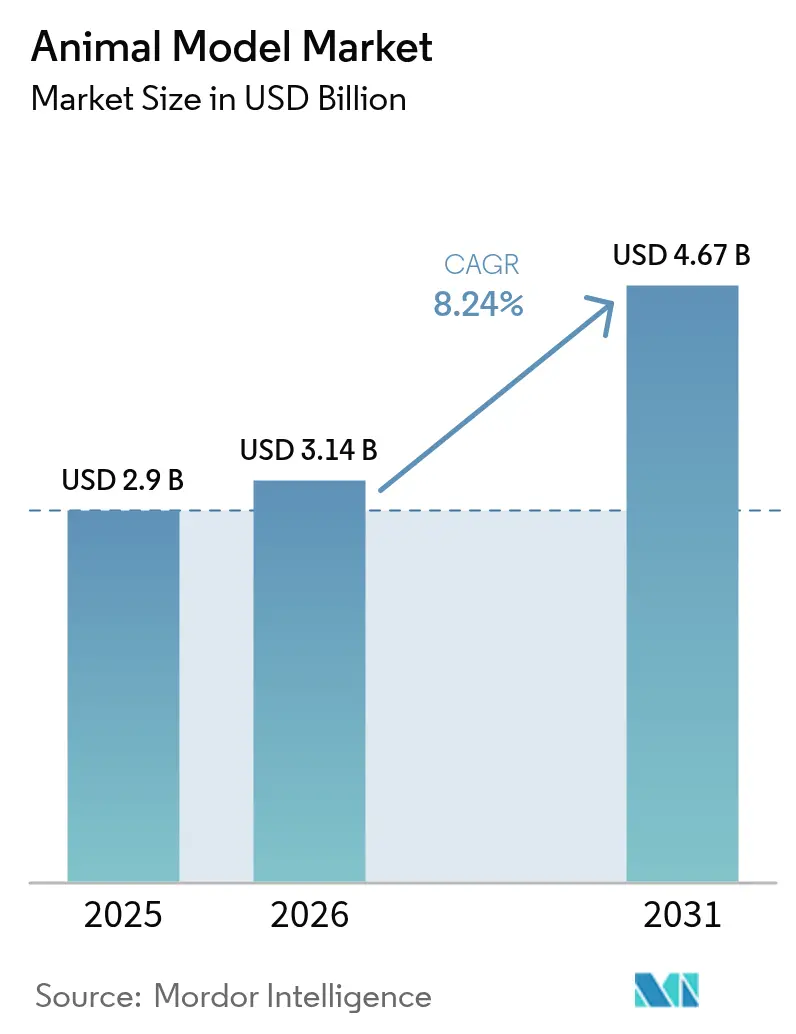
The animal model market size was valued at USD 2.90 billion in 2025 and estimated to grow from USD 3.14 billion in 2026 to reach USD 4.67 billion by 2031, at a CAGR of 8.24% during the forecast period (2026-2031). Expansion is fueled by post-pandemic research budgets, rapid diffusion of CRISPR-based engineering, and the enduring need for in-vivo evidence across oncology, infectious diseases, and precision medicine. At the same time, regulatory modernization is starting to loosen the historic reliance on animals, illustrated by the United States Food and Drug Administration’s April 2025 plan to withdraw monoclonal antibody animal-testing mandates within five years. Large providers are responding by piloting virtual control groups and AI-facilitated phenotyping while still scaling colonies for studies that lack validated substitutes. The animal model market now sits at a strategic crossroads where scientific necessity, ethical scrutiny, and digital innovation overlap, creating a landscape that rewards suppliers able to combine traditional breeding depth with next-generation analytics
Key Report Takeaways
- By animal type, mice captured 54.62% of the animal model market share in 2025, while fish models are projected to expand at a 10.04% CAGR through 2031.
- By service, breeding operations held 44.21% of the animal model market size in 2025; genetic testing services are on track for an 10.72% CAGR to 2031.
- By technology, CRISPR/Cas9 led with 38.05% revenue and is forecast to grow at 12.32% CAGR, reflecting its dominance in precision engineering workflows.
- By application, oncology accounted for 40.77% of 2025 revenue, whereas infectious-disease studies are poised for the fastest growth at 11.18% CAGR through 2031.
- By end-user, Pharmaceutical & Biopharmaceutical Companies held 47.68% of the animal model market size in 2025; Contract Research Organizations are on track for a 9.18% CAGR to 2031.
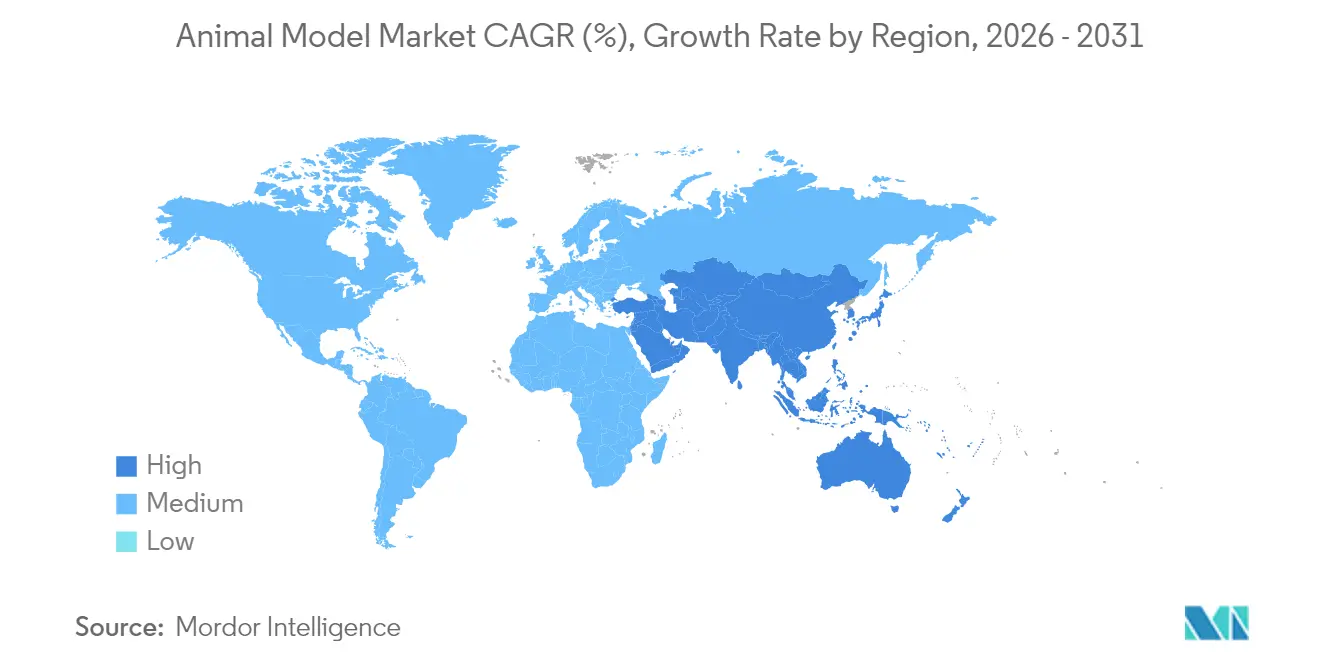
- By geography, North America commanded 46.25% of the animal model market share in 2025; Asia-Pacific is set to grow the fastest at 8.98% CAGR on the back of China’s capacity build-out.
Note: Market size and forecast figures in this report are generated using Mordor Intelligence’s proprietary estimation framework, updated with the latest available data and insights as of 2026.
Market Trends and Insights
Drivers Impact Analysis of Animal Model Market*
| Driver | (~) % Impact on CAGR Forecast | Geographic Relevance | Impact Timeline |
|---|---|---|---|
| Increased adoption of CRISPR & other gene-editing tools | +2.1% | Global; strongest in North America & Asia-Pacific | Long term (≥ 4 years) |
| Rising use of animal models in virology & emerging infectious diseases | +1.8% | Global; concentrated in North America & Europe | Medium term (2-4 years) |
| Growing demand for humanized models in precision medicine | +1.7% | Global; strongest in developed markets | Long term (≥ 4 years) |
| Government R&D funding surge post-pandemic | +1.5% | North America & Europe | Short term (≤ 2 years) |
| AI-enabled high-throughput phenotyping accelerating adoption | +0.9% | North America & Europe | Medium term (2-4 years) |
| Micro-gravity disease models from space-biology programs | +0.4% | North America, Europe, select Asia-Pacific | Long term (≥ 4 years) |
| Source: Mordor Intelligence | |||
Increased Adoption of CRISPR & Other Gene-Editing Tools
CRISPR/Cas9 has cut classical model-generation timelines in half and trimmed per-project costs[1]Indiana University School of Medicine, “Genome Editing Core Pricing,” Indiana University School of Medicine, medicine.iu.edu by roughly 40%, making sophisticated knock-ins feasible for smaller research institutes that previously depended on commercial suppliers. Beyond simple indels, base- and prime-editing variants now deliver single-nucleotide precision without double-strand breaks, broadening use in metabolic, immunologic, and neurodegenerative investigations. Vendors such as Cyagen and GenOway have capitalized on the trend with standardized CRISPR pipelines and robust quality controls, allowing pharmaceutical clients to commission multi-gene constructs in parallel rather than sequentially. Demand for compound mutants is therefore scaling faster than classical colony-expansion capacity, prompting breeders to automate embryo handling, genotyping, and cryopreservation. As these efficiencies aggregate, the animal model market gains a durable growth engine that offsets margin pressure from regulatory alternatives.
Rising Use of Animal Models in Virology & Emerging Infectious Diseases
Since 2024, infectious-disease budgets have migrated from crisis response to long-term infrastructure, spurring record orders for humanized mouse strains and non-human primates engineered for viral receptors. The hACE2 mouse, pivotal during COVID-19, has become a template for rapid pathogen-specific line creation through CRISPR knock-ins. National Institutes of Health consortia now fund dedicated high-containment breeding sites, shifting procurement from ad-hoc imports to secure domestic pipelines. The strategic goal is to maintain on-shore capacity to model respiratory viruses, filoviruses, and flaviviruses without relying on global transportation corridors that can be disrupted by bio-security rules. For suppliers, this sustained virology focus means recurring demand for custom immunocompetent and immunodeficient backgrounds, supporting steady CAGR contribution across the forecast window.
Growing Demand for Humanized Models in Precision Medicine
Immunotherapy, gene therapy, and rare-disease pipelines increasingly require murine hosts that recapitulate human immune function, metabolic polymorphisms, or patient-specific mutations. The Jackson Laboratory’s expansion of its humanized mouse portfolio in China illustrates how regional hubs seek local access to sophisticated lines that meet global Good Laboratory Practice requirements. Pharmaceutical sponsors now specify panel studies[2]Claire Kowalick, “Scientists Create First Mouse Model With Complete Functional Human Immune System,” UT Health San Antonio, news.uthscsa.edu across multiple ethnic haplotypes or HLA backgrounds to anticipate variable therapeutic responses. Immune-humanized mice also underpin checkpoint-inhibitor and CAR-T validation, a segment whose compound annual growth already outpaces oncology spend overall. Although per-mouse pricing is several times higher than classical inbred lines, the translational value justifies the premium, anchoring a profitable niche for breeders that can guarantee genetic authenticity and pathogen-free status.
Government R&D Funding Surge Post-Pandemic
Emergency appropriations in 2024 evolved into line-item increases in 2025 budgets at agencies such as the NIH and USDA. These grants back both state-of-the-art vivaria upgrades and the parallel validation of non-animal methods, reflecting regulators’ dual objectives of incremental welfare improvement and long-term replacement. Facilities that secure federal contracts must now demonstrate redundant power systems, rigorous barrier protocols, and digital colony-management records, elevating baseline capital requirements but also locking in multi-year revenue streams once certified. Internationally, the Asian Federation of Laboratory Animal Science Associations has aligned import/export health standards to smooth cross-border study initiation, further widening the addressable customer pool for compliant suppliers.
Restraints Impact Analysis of Animal Model Market*
| Restraint | (~) % Impact on CAGR Forecast | Geographic Relevance | Impact Timeline |
|---|---|---|---|
| Rapid advances in organ-on-chip & 3D-organoid alternatives | -1.8% | North America & Europe | Long term (≥ 4 years) |
| Stringent regulations on ethical use of animals | -1.2% | Global; strictest in Europe | Medium term (2-4 years) |
| Shareholder ESG pressure to reduce animal testing | -0.9% | Developed markets | Medium term (2-4 years) |
| High cost & long lead-times for complex transgenic lines | -0.7% | Global | Short term (≤ 2 years) |
| Source: Mordor Intelligence | |||
Stringent Regulations on Ethical Use of Animals
European Directive 2010/63/EU tightened the ethical bar by requiring systematic replacement reviews, enhanced enrichment, and public disclosure of annual animal-use statistics[3]European Commission, “Animals in Science,” European Commission, environment.ec.europa.eu, all of which raise compliance costs. Laboratories must secure approvals from Institutional Animal Care and Use Committees that track every procedural refinement, adding months to project lead-times in certain jurisdictions. Pharmaceutical sponsors, wary of reputational risk, often mirror EU rules globally, compelling North-American and Asian sites to upgrade housing, analgesia, and endpoint monitoring. Smaller academic centers struggle to finance these upgrades, pushing more demand toward large-scale commercial providers that already meet high-welfare thresholds.
Rapid Advances in Organ-on-Chip & 3D-Organoid Alternatives
Multi-organ microfluidic platforms have now cleared specific toxicology-screening hurdles with the FDA, enabling early safety calls without live mammals. CN Bio’s Series B fund-raise underlines investor belief that human-relevant liver-kidney constructs can de-risk attrition for metabolic liabilities before candidate nomination. Cost-benefit analyses show that integrating organ-on-chip at lead-optimization can shrink overall pre-clinical budgets by double-digit percentages. While such systems cannot yet replicate full immune interplay or chronic multi-organ pathologies, they siphon demand away from routine acute-tox screens, trimming absolute study volumes for the animal model industry long-term.
*Our forecasts treat driver/restraint impacts as directional, not additive. The impact forecasts reflect baseline growth, mix effects, and variable interactions.
Animal Model Market Segment Analysis
By Animal Type:
Mice Dominance Faces Aquatic ChallengeMice retained a 54.62% hold of the animal model market share in 2025, reflecting decades of accumulated genomic resources, standardized husbandry protocols, and well-validated behavioral assays. This dominance anchors predictable baseline demand across oncology, neuroscience, and metabolic disease. Yet the segment’s growth rate is now trailing the broader animal model market, signaling maturity in traditional murine workflows.
By contrast, zebrafish and other aquatic species are set to log a 10.04% CAGR to 2031. High-content imaging of transparent larvae, automation-friendly plate formats, and lower compound requirements drive cost efficiencies that resonate with high-throughput screening teams at pharmaceutical firms. As a result, the animal model market size for aquatic species is projected to climb swiftly, supported by institutional investment in automated embryo sorters and micro-CT imaging. Although regulatory familiarity with teleost outcomes is still building, early adopters cite clear toxicity-ranking parallels with mammalian studies, bolstering acceptance.




By Service:
Genetic Testing Transforms Traditional BreedingBreeding services accounted for 44.21% of the animal model market size in 2025, underlining their status as the logistical backbone of the animal model market. Volume demand stems from the sheer number of colonies needed to support oncology xenografts, safety pharmacology, and neurobehavioral pipelines. Nevertheless, growth has shifted toward value-added offerings, with genetic authentication registering an 10.72% CAGR as sponsors adopt mandatory single-nucleotide polymorphism panels to verify strain integrity.
The animal model market size for genetic-testing workflows benefits from the broader rollout of next-generation sequencing benches within vivaria, enabling same-day confirmation of CRISPR edits or genetic drift. Cryopreservation, rederivation, and quarantine services complete a life-cycle loop that reduces vivarium footprint at client sites while guaranteeing health status. These integrated service bundles strengthen stickiness because once embryos or sperm are banked, switching providers becomes operationally risky and time-consuming.
By Technology:
CRISPR Consolidates Gene-Editing LeadershipCRISPR/Cas9 captured 38.05% of the animal model market share in 2025 and is forecast to post a 12.32% CAGR, cementing its role as the principal engineering engine inside the animal model market. Turnaround times measured in weeks instead of months allow therapeutics teams to iterate quickly on proof-of-concept hypotheses, supporting concurrent exploration of multiple alleles.
Alternative technologies retain niche value: embryonic stem-cell injection remains the method of choice for elaborate conditional constructs; nuclear transfer underpins large-animal cloning; and random-insertion microinjection still supports transgenics demanding high-expression. Base- and prime-editing modalities—functional extensions of CRISPR—will likely enter routine service by 2027, further broadening accessible genotype space and keeping technology-intensive projects inside the commercial supplier channel rather than shifting to academic core labs.
By Application:
Infectious Diseases Research AcceleratesOncology held 40.77% of the animal model market size in 2025, anchored by the complexity of tumor microenvironment studies that still defy full in-vitro reproduction. Even so, infectious-disease work is advancing at 11.18% CAGR as national security rhetoric frames pandemic preparedness as critical infrastructure.
This shift propels the animal model market size for virology above historical norms, energized by NIH programs funding pathogen-specific model development and biosafety-level-3 expansion. Sponsors increasingly require flexible colony platforms capable of rapid receptor knock-in once a novel virus emerges. The dual need for speed and bio-containment places a premium on providers with on-site genetic-engineering teams and ring-fenced high-barrier rooms.

By End-User:
CROs Gain Ground on Pharmaceutical CompaniesPharmaceutical and biopharmaceutical companies held 47.68% of the animal model market share in 2025, reflecting their in-house discovery pipelines and regulatory submission obligations. However, cost-conscious portfolio leaders are migrating routine in-vivo work to specialist contract research organizations, fueling a 9.18% CAGR for CRO demand through 2031.
CROs differentiate by stacking vertical capabilities—breeding, CRISPR engineering, AI phenotyping, and regulatory dossier preparation—into single statements of work. This one-stop model streamlines sponsor oversight and consolidates vendor budgeting, making it attractive for mid-size biotechnology firms that lack internal vivaria. The dynamic reallocates margin from vivarium overhead toward high-value service layers, reinforcing competitive intensity but also embedding CROs more deeply within long-term preclinical strategies.
Geography Analysis
North America Animal Model Market
North America retained 46.25% of 2025 revenue, underpinned by a dense cluster of pharmaceutical headquarters, venture-funded biotech start-ups, and academic medical centers. The region’s 7.77% CAGR to 2031 rests on technology refresh cycles—automated cage-change robotics, digital colony-management, and AI-driven behavior analytics—rather than volume expansion. The FDA’s 2025 signal to sunset monoclonal antibody animal requirements has triggered parallel investment in virtual control-group software, allowing suppliers to diversify while shielding core revenue.
Europe Animal Model Market
Europe follows with an 8.01% CAGR even under stringent welfare directives. Commercial breeders command premium pricing by offering genetically authenticated, welfare-optimized lines that pass EU inspections without additional client audits. Simultaneously, Europe leads global organ-on-chip validation, granting its suppliers export opportunities for alternative testing platforms; that dual capability positions EU firms at the intersection of current and future regulatory paradigms.
APAC, MEA and South America Animal Model Market
Asia-Pacific stands out as the fastest-growing territory at 8.98% CAGR, driven by China’s rapid expansion of laboratory-animal science programs. China now produces more than 19 million research animals annually, supported by a workforce exceeding 100,000 specialists across roughly 2,000 institutes. Regional leaders such as Japan’s RIKEN BioResource Center supply over 13,000 defined mouse strains with rigorous health-screening, aligning output with global Good Laboratory Practice standards. These developments raise the animal model market size for the region dramatically and are complemented by emerging spending in the Middle East, Africa, and South America, each logging high-single-digit CAGRs as nascent biotech sectors take hold.

Regulatory Landscape
Regulation of animal models is tightening on welfare and transparency, while also creating formal pathways for New Approach Methodologies (NAMs) to substitute for some animal studies. In the United States, the FDA is operationalizing the FDA Modernization Act 2.0 through its April 2025 roadmap to reduce animal testing in preclinical safety studies and its 2026 draft guidance that outlines core validation principles for NAMs in regulatory submissions. This policy direction is visible in the agency plan to withdraw monoclonal antibody animal-testing mandates over a multi-year transition window, which requires sponsors and suppliers to justify animal use more explicitly and to present fit-for-purpose non-animal evidence where available.
In Europe, animal use is governed by Directive 2010/63/EU, and recent updates further raise facility and husbandry requirements. Commission Delegated Directive (EU) 2024/1262 updates housing, care, and killing requirements for certain species, with application milestones culminating in an effective date of 4 December 2026, which adds compliance-driven capex and documentation burden to vivaria and breeding networks. At the same time, the European Medicines Agency (EMA), through CHMP processes, is consulting on virtual control groups (including a March 2026 draft qualification opinion for selected preclinical contexts), indicating that regulators are prepared to accept digital or historical comparators where scientifically justified and audited. This is reshaping how study designs are built and how suppliers package data services alongside animals.
Value Chain Analysis
The value chain starts upstream with source colonies, genetic background stewardship, and biosecurity inputs that maintain specific pathogen-free (SPF) status. It then moves into model creation and scaling via CRISPR/Cas9 and other engineering workflows, including embryo manipulation, rederivation, genotyping, and quality control. Midstream participants include specialized breeders and integrated CROs that operate barrier facilities, high-containment rooms for infectious-disease work, and genetic-testing and validation services to protect strain integrity. Downstream, pharmaceutical and biopharmaceutical companies, CRO customers, and academic institutes procure animals and associated services, including breeding, cryopreservation, quarantine, and genetic testing, while bundling phenotyping outputs and study documentation into regulatory-grade packages.
Distribution and execution rely on logistics, quarantine clearance, and standardized health reporting across jurisdictions, which is why large providers emphasize colony management systems, traceable genetic authentication, and rederivation capacity to reduce contamination or drift events. A second, fast-growing parallel chain is also developing around NAM enablement, supported by regulators such as the FDA (March 2026 draft guidance on alternatives to animal testing) formalizing how NAMs are validated for submissions. That work is increasing demand for suppliers and CROs to add virtual control datasets, in vitro-to-in vivo translation support, and cross-platform analytics, shifting more value capture toward data, validation, and regulatory documentation layers while keeping core breeding as the operational backbone for studies without validated substitutes.
Competitive Landscape
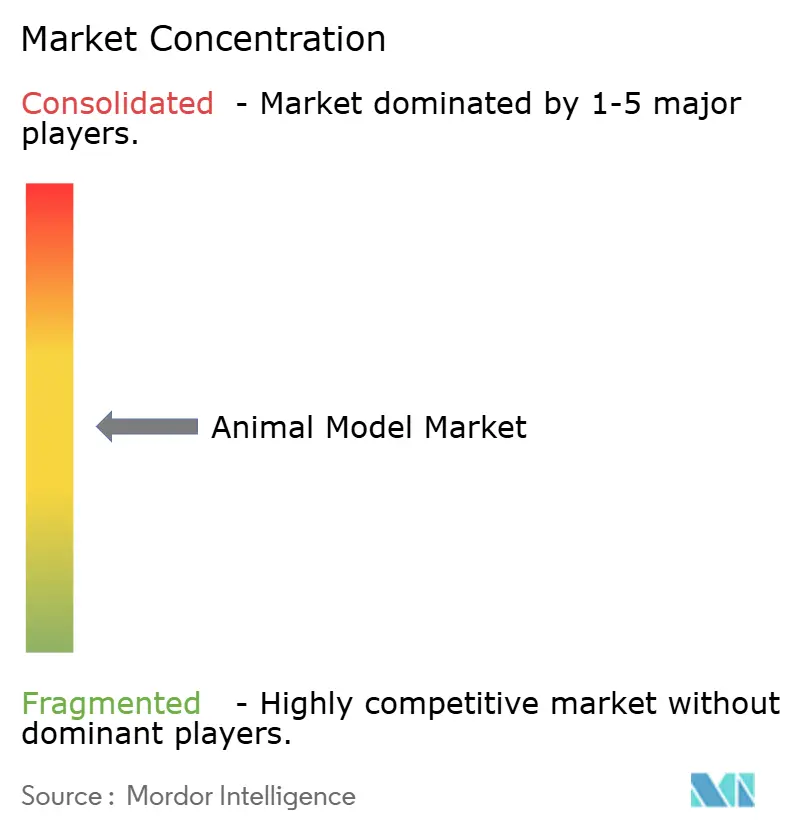
The animal model market displays moderate concentration. Charles River Laboratories, The Jackson Laboratory, and Taconic Biosciences anchor global capacity with vertically integrated offerings that start at breeding and extend to custom CRISPR design, regulatory consulting, and AI-assisted phenotyping. Charles River’s USD 292.5 million acquisition of Vigene Biosciences in 2024 deepened its viral-vector portfolio while keeping a foothold in traditional murine production.
Competition increasingly revolves around technology turn-around time and data quality. Providers that automate embryo transfer, integrate next-generation sequencing for genotype verification, and deliver cloud-based behavior analytics can shorten drug-discovery cycles, a value proposition that commands premium pricing even as unit numbers face gradual attrition from alternative technologies. The Jackson Laboratory’s tie-up with AbTherx combines proprietary mouse genetics with antibody discovery platforms, demonstrating how cross-fertilization between genetic depth and therapeutic application widens economic moats.
Disruptive pressure comes from organ-on-chip players like CN Bio, whose USD 21 million Series B will finance multi-organ microphysiological systems targeting drug-induced liver injury screens. AI-native behavioral-analysis startups promise objective, scalable endpoints that regulators can audit remotely. Traditional suppliers hedge by investing in hybrid offerings—virtual control-group datasets drawn from historic animal-study repositories—thereby monetizing decades of accumulated phenotypic information while supporting reduction goals.
Animal Model Industry Leaders
Charles River Laboratories International Inc.
GenOway
Labcorp UK Ltd
Taconic Biosciences, Inc.
The Jackson Laboratory
- *Disclaimer: Major Players sorted in no particular order
Animal Model Market Companies Covered in this Report
- Aragen Bioscience
- Beijing Vital River Laboratory Animal Technology Co.
- Biocytogen Pharma
- Biomere
- Charles River
- CLEA Japan
- Crown BioScience Intl.
- Cyagen Biosciences.
- GemPharmatech
- GenOway
- Harbour BioMed
- Hera BioLabs
- Ingenious Targeting Laboratory
- Innovative Research
- Inotiv, Inc.
- Janvier Labs
- JSR
- Labcorp UK Ltd
- Melior Inc.
- Ozgene
- PolyGene AG
- Shanghai Model Organisms Center, Inc.
- Taconic Biosciences
- The Jackson Laboratory
- Trans Genic

Market Opportunities and Future Outlook
A near-term opportunity is compliance-grade hybrid study design services that help sponsors operate under both welfare tightening and NAM acceptance. FDA activity (April 2025 roadmap and 2026 draft guidance on NAM validation) and EMA consultations on virtual control groups are prompting sponsors to redesign preclinical packages, creating room for providers that can pair animals with auditable historical control datasets, digital phenotyping, and statistical tooling that supports reduction without weakening submission credibility. Providers that already run large breeding operations can monetize their legacy data repositories by productizing virtual controls and standardized endpoints, while keeping colony depth for oncology and infectious-disease studies where whole-organism evidence is still required.
Another opportunity is premium, disease-relevant model portfolios and localized access in fast-scaling regions as demand shifts from standard inbred stocks to high-value humanized and complex engineered lines. The evidence of this shift is visible in supplier moves toward specialized immune-humanized models and higher-content services, including genetic testing, cryopreservation, and rederivation, which reduce operational risk for sponsors and shorten project timelines. At the same time, public-funding signals are reweighting method choice: NIH communications and policy emphasis in 2025-2026 toward NAMs and human-based research increase the value of suppliers that can support both pathways, including by offering integrated decision frameworks, cross-validation services, and study designs that sequence NAM screening ahead of targeted in vivo confirmation.
Recent Industry Developments in Animal Model Market
- June 2026: Taconic Biosciences launched the hG-CSF KI NOG mouse model to enable research into human neutrophil biology and neutrophil-targeted therapies. The release expands Taconic's portfolio in immune-humanized models, supporting higher-value studies where sponsors require human-relevant immune function in vivo.
- April 2026: Charles River Laboratories launched rat in vitro fertility (IVF) services as an embryology-focused offering to accelerate colony creation and study readiness. The service strengthens timelines and continuity for rat-based research programs by reducing bottlenecks in model generation and refresh cycles.
- February 2025: genOway signed a three-year contract with the Gates Foundation to incorporate the genO-hFcgammaR mouse model into infectious-disease and global health research initiatives. The multi-year engagement reinforces demand for translatable antibody-research models and signals sponsor willingness to commit to specialized platforms rather than commodity strains.


Animal Model Market Report Scope and Research Methodology
Market Definition and Coverage
For this study, the animal model market covers the paid supply of research-use animals and related services that enable in vivo experiments for drug discovery, toxicology, and disease research.
Scope exclusions: We do not count organoids, 3D cell cultures, organ-on-chip systems, or animals used mainly for veterinary care or classroom demonstration.
Segments Covered in This Report
- By Animal Type
- Mice
- Rats
- Fish
- Birds
- Cattle
- Other Animals
- By Service
- Breeding
- Cryopreservation
- Rederivation & Quarantine
- Genetic Testing
- Other Services
- By Technology
- CRISPR/Cas9
- Embryonic Stem Cell Injection
- Nuclear Transfer
- Microinjection
- Other Technologies
- By Application
- Oncology
- Cardiovascular & Metabolic Disorders
- Neurology & Psychiatry
- Immunology & Infectious Diseases
- Toxicology & Safety Assessment
- Others
- By End-User
- Pharmaceutical & Biopharmaceutical Companies
- Contract Research Organizations (CROs)
- Academic & Research Institutes
- Other End-Users
- By Geography
- North America
- United States
- Canada
- Mexico
- Europe
- Germany
- United Kingdom
- France
- Italy
- Spain
- Rest of Europe
- Asia-Pacific
- China
- India
- Japan
- Australia
- South Korea
- Rest of Asia-Pacific
- Middle East and Africa
- GCC
- South Africa
- Rest of Middle East and Africa
- South America
- Brazil
- Argentina
- Rest of South America
- North America
Data Sources, Market Sizing, and Validation
Desk Research
We start by building a clear view of the demand pool and the supply ecosystem using public sources that can be checked by readers. Common inputs include NIH and other public grant databases, USDA Animal and Plant Health Inspection Service (APHIS) oversight information on regulated species, EU Commission materials linked to Directive 2010/63/EU, and OECD guidance that connects to toxicity and safety testing practices.
Next, we align these signals with business-side evidence such as annual reports, investor presentations, and reputable press coverage on research capacity expansions and facility utilization. Patent databases are also reviewed to understand the pace of genetic engineering tools and strain innovation that can shift pricing and adoption over time. For trade and availability checks, we selectively use import and export shipment-level databases where it helps validate movements of research-related biological materials. The specific desk research sources listed here are illustrative only, and many other public and paid references were used to cross-check, validate, and clarify the final analysis.
Primary Interviews and Surveys
We validate the desk view through structured interviews and surveys with breeders and service providers, CROs that run in vivo studies, and end users in pharma, biotech, and academia. Because demand is global, coverage is balanced across major research hubs in the Americas, EMEA, and APAC, and the discussions focus on buying drivers tied to study execution, including strain mix, lead times, and service attach rates (quarantine, rederivation, cryopreservation, and genetic testing).
Distribution of primary research fieldwork respondents
| Company type | Respondent position | Region |
|---|---|---|
| Top tier: 25% | CXOs: 14% | APAC: 49% |
| Mid tier: 55% | Functional/Unit leaders: 40% | EMEA: 31% |
| Smaller Players: 20% | Managers: 46% | Americas: 20% |
Market-Sizing & Forecasting
The core model uses a top-down build that reconstructs market value from the active in vivo research base, and then converts activity into annual spend using typical study volumes and service pricing. We anchor demand using indicators such as preclinical pipeline intensity, NIH funding direction, regulated animal use oversight signals, the mix shift toward genetically engineered strains, and the proportion of studies outsourced to CROs.
Those totals are then corroborated with selective bottom-up approximations, such as sampled price-per-animal by species and strain type, typical per-study animal counts, and channel checks on service bundles like rederivation, quarantine, and cryopreservation. When a full supplier roll-up is not practical, gaps are handled by using region-specific ratios (for example, engineered strain share and outsourcing share) that were validated through interviews and then applied consistently across the model.
For forecasting, we mainly use scenario analysis supported by trend lines on R&D funding, outsourcing behavior, and expected pricing progression for specialized strains and value-added services. Assumptions are kept transparent so they can be revisited quickly when regulatory shifts, facility expansions, or new genetic engineering workflows change the near-term demand pattern.
Data Validation & Update Cycle
Before finalizing results, we run variance checks across regions and compare implied spending against independent signals such as funding patterns, outsourcing penetration, and reported capacity additions. Outliers are reviewed in a second analyst pass, and follow-up calls are triggered when assumptions like service attach rates or regional mix look inconsistent with what interviewees report.
The report is refreshed annually, and interim updates are made when there are material changes such as policy actions impacting animal research, large facility expansions, or sharp shifts in pricing. Right before publication, an analyst performs a final review to ensure the latest public information and expert feedback are reflected in the delivered numbers.
Mordor Intelligence's Animal Model Market Sizing Compared With Other Published Estimates
Published market sizes for animal models can differ, even when the topic name looks the same, because each publisher draws the boundary in a slightly different way. The largest differences usually come from what gets counted as market revenue, which year is treated as the base, and how pricing and service revenue are handled.
Study volume signals and service-level attach rates from interviews are used as checks that keep Mordor Intelligence tied to spending on animals plus research services like rederivation, quarantine, cryopreservation, and genetic testing, instead of only counting animal sales. Differences in base year, the mix of engineered strains, and how regions are converted to USD can still create visible gaps when estimates are compared side by side.
Benchmark comparison
| Source | Market Size | Gaps in Research Methodology |
|---|---|---|
| Mordor Intelligence | USD 2.90 B (2025) | |
| Global Consultancy A | USD 2.30 B (2023) | Uses an earlier base year and commonly centers the scope on core animal model purchases, with limited visibility on service revenue such as quarantine, rederivation, and cryopreservation. |
| Regional Consultancy B | USD 2.64 B (2025) | Keeps the same broad topic, but applies different regional mix and pricing progression assumptions for specialized strains, which changes the implied average spend per study. |
The spread in the table is mainly explained by boundary choices around service revenue and how quickly pricing is assumed to move for engineered strains and bundled services. By keeping the calculation tied to observable research activity and cross-checking assumptions with expert inputs, we provide a market value that is practical to trace and repeat when conditions change.


Key Questions Answered in the Report
How are recent regulatory shifts influencing demand for traditional animal testing?
Regulators are granting greater flexibility to use virtual control groups and validated in-vitro platforms, which is prompting research organizations to reserve live-animal studies for complex disease models where no alternative yet exists.
What is driving the growing popularity of zebrafish in early-stage drug discovery?
Transparent embryos and plate-based husbandry enable automated imaging and high-content screening, allowing scientists to evaluate hundreds of compounds rapidly while observing whole-organism biology.
Why is CRISPR now considered a standard tool rather than an emerging technology in this field?
Precise gene-editing protocols, falling per-edit costs, and widely available core-lab expertise have made CRISPR the default method for creating knock-in or knock-out lines across multiple species.
In what ways are contract research organizations reshaping the competitive landscape?
CROs combine breeding, advanced genetic engineering, and digital phenotyping in one service package, allowing sponsors to outsource entire in-vivo workflows instead of maintaining internal vivaria.
How are ethical and environmental, social, and governance (ESG) considerations impacting supplier strategies?
Investors and corporate boards increasingly favor vendors that demonstrate reduction and refinement of animal use, so leading suppliers are investing in AI-enabled behavior monitoring, enriched housing, and hybrid models that integrate organ-on-chip data.
What role do humanized models play in precision-medicine pipelines?
By incorporating human immune cells, metabolic enzymes, or patient-specific mutations, humanized models help researchers predict therapeutic responses more accurately and de-risk clinical trial designs.
Page last updated on:


 Your data is secure and never sold or shared.


