
Global Animal Biotechnology Market Size and Share
Market Overview
| Study Period | 2020 - 2031 |
|---|---|
| Market Size (2026) | USD 31.91 Billion |
| Market Size (2031) | USD 45.47 Billion |
| Growth Rate (2026 - 2031) | 7.34 % |
| Fastest Growing Market | Asia Pacific |
| Largest Market | North America |
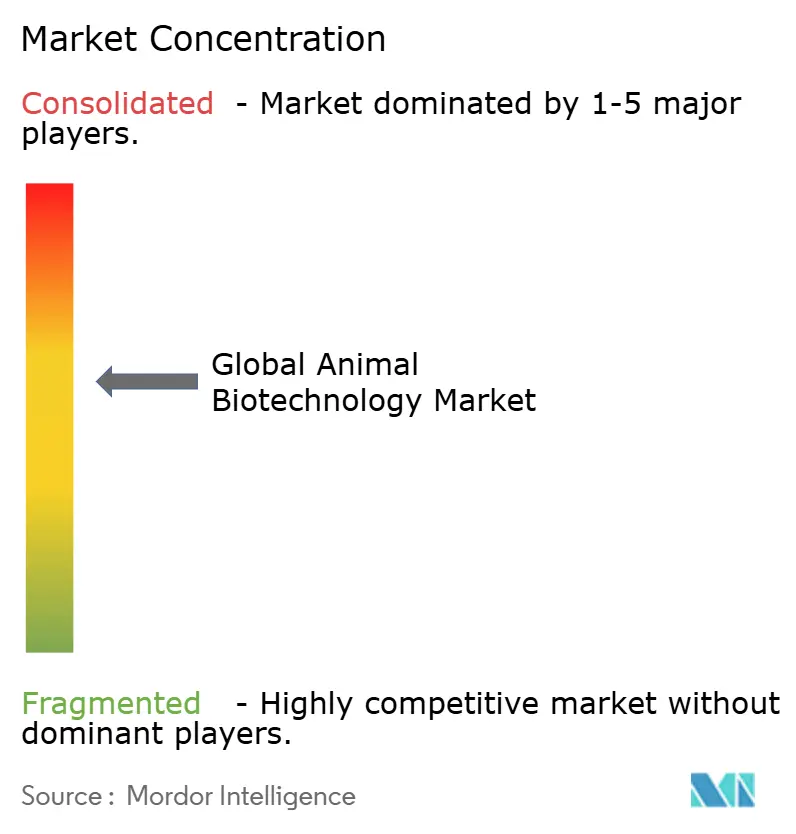
| Market Concentration | Medium |
Major Players *Disclaimer: Major Players sorted in no particular order Image © Mordor Intelligence. Reuse requires attribution under CC BY 4.0. | |
Global Animal Biotechnology Market Analysis by Mordor Intelligence
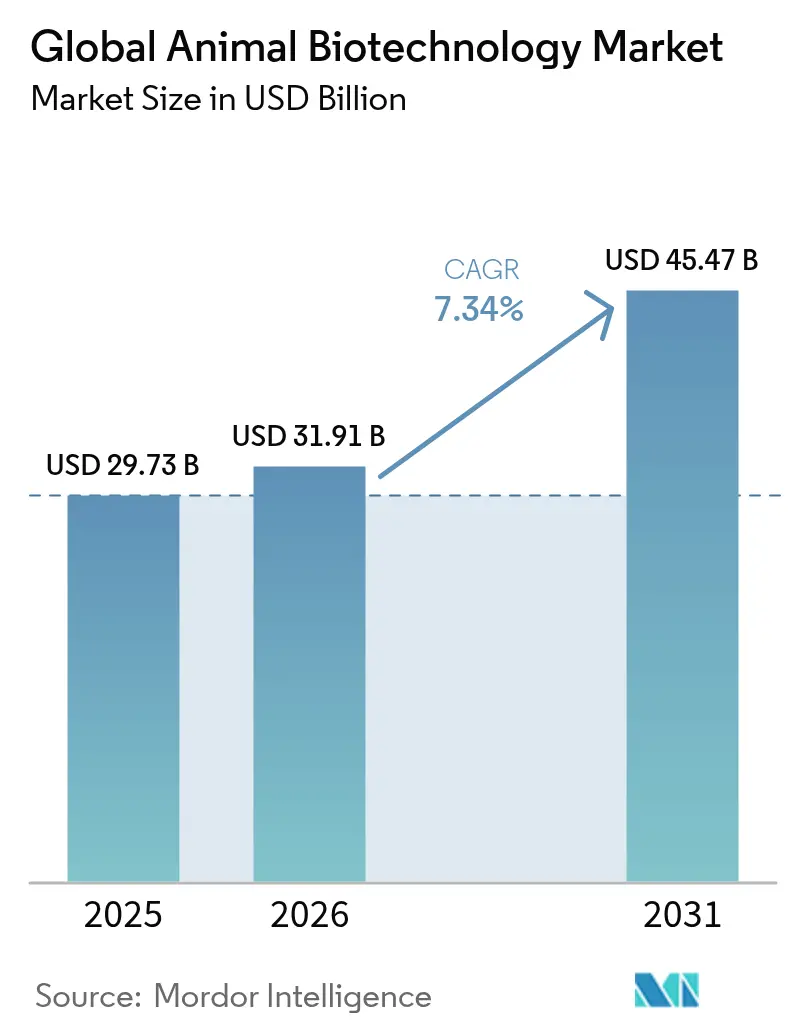
The animal biotechnology market size is expected to grow from USD 29.73 billion in 2025 to USD 31.91 billion in 2026 and is forecast to reach USD 45.47 billion by 2031 at 7.34% CAGR over 2026-2031. Demand originates from precision gene-editing breakthroughs, AI-guided breeding programs, and rapid in-clinic molecular tests that shorten disease-response times. Regulatory green lights, typified by the FDA’s first approval of PRRS-resistant pigs, validate commercial paths for engineered livestock while cutting avoidable swine losses valued at USD 1.2 billion. North America’s clear rules and deep R&D capacity keep the region in front, yet Asia-Pacific, propelled by China’s brisk vaccine expansion, is closing the gap fastest. Competitive intensity is moving from traditional drugs toward platform technologies that merge diagnostics, vaccines, and data analytics, giving scale players new tools and start-ups novel entry points.
Key Report Takeaways
- By product type, biologics led with 34.02% of the animal biotechnology market revenue share in 2025, whereas reproductive and genetic technologies are expanding at a 8.78% CAGR to 2031.
- By application, preventive care and treatment held 73.85% of the animal biotechnology market size in 2025; disease diagnosis is advancing at a 7.62% CAGR through 2031.
- By animal type, livestock accounted for 62.41% share of the animal biotechnology market size in 2025, while companion animals record the highest projected CAGR at 7.74% through 2031.
- By end-user, laboratories retained 35.74% share in 2025; point-of-care testing is growing at a 7.55% CAGR to 2031.
Note: Market size and forecast figures in this report are generated using Mordor Intelligence’s proprietary estimation framework, updated with the latest available data and insights as of 2026.
Market Trends and Insights
Drivers Impact Analysis of Global Animal Biotechnology Market*
| Driver | (~) % Impact on CAGR Forecast | Geographic Relevance | Impact Timeline |
|---|---|---|---|
| Surge in CRISPR/Cas-Based Gene-Edited Livestock Programs | +1.8% | North America & EU leading, APAC emerging | Long term (≥ 4 years) |
| Expansion of AI-Enabled Precision-Breeding Platforms | +1.3% | North America & Europe core, expanding to APAC | Long term (≥ 4 years) |
| Rising R&D Spending by Tier-1 Animal-Health Companies | +1.2% | Global, concentrated in North America & Europe | Medium term (2-4 years) |
| Growth in Point-of-Care Molecular Diagnostics for Zoonoses | +1.1% | Global, with accelerated adoption in APAC | Short term (≤ 2 years) |
| Demand for Thermostable Synthetic-Biology Vaccines | +0.9% | Global, particularly emerging markets | Medium term (2-4 years) |
| Regulatory Fast-Track Incentives for Antibiotic Alternatives | +0.8% | North America & EU, spreading globally | Medium term (2-4 years) |
| Source: Mordor Intelligence | |||
Surge in CRISPR/Cas-Based Gene-Edited Livestock Programs
The FDA’s 2025 clearance for PRRS-resistant pigs[1] cemented CRISPR’s shift from lab to farm, carving a proof-of-concept path that cuts recurring swine disease losses and trims antibiotic use by 5%. Expanded interest spans biopharma protein production via transgenic cattle[2] that secrete human insulin. Gene-edited organs for xenotransplant trials further blur the lines between animal health and human medicine. Regional rules differ, but scale developers with compliance budgets secure first-mover advantages that reinforce the animal biotechnology market.
Expansion of AI-Enabled Precision-Breeding Platforms
Genomic algorithms now guide embryo selection, milk-yield optimization, and climate-resilience traits in dairy and beef herds. Proprietary databases widen predictive gaps between incumbents and entrants. When coupled with gene-editing toolkits, artificial intelligence (AI) reorients breeding from iterative selection toward engineered outcomes. Data access hurdles may entrench existing breeders, yet cross-border data alliances are forming to level input depth, sustaining growth in the animal biotechnology market.
Rising R&D Spending by Tier-1 Animal-Health Companies
Zoetis raised R&D outlays while delivering USD 9.3 billion revenue in 2024, aligning budgets toward genomic and precision-medicine programs. Merck Animal Health’s SEQUIVITY RNA particle system[3] exemplifies platform thinking that can pivot across pathogens within months. Larger coffers, plus regulatory and distribution expertise, set formidable barriers yet accelerate field innovation.
Growth in Point-of-Care Molecular Diagnostics for Zoonoses
Portable PCR and isothermal kits bring lab-grade detection into clinics, aligning with National Veterinary Associates’ 1,000-plus sites that feed real-time disease alerts into a shared platform. Fast confirmation enabled quick H5N1 vaccine rollouts after 973 dairy cattle herds were hit, supported by the Elanco-Medgene[4] partnership. The outcome is tighter biosecurity, lower outbreak losses, and wider uptake of biotechnology tools across the animal biotechnology market.
Restraints Impact Analysis of Global Animal Biotechnology Market*
| Restraint | (~) % Impact on CAGR Forecast | Geographic Relevance | Impact Timeline |
|---|---|---|---|
| Heightened Public Opposition to Gene-Edited Food Animals | -1.4% | Global, particularly strong in EU | Long term (≥ 4 years) |
| Complex, Fragmented Global Approval Pathways | -1.1% | Global, varying by jurisdiction | Medium term (2-4 years) |
| High Bioreactor CAPEX in Emerging Markets | -0.7% | Emerging markets, APAC & MEA | Medium term (2-4 years) |
| Insurance Liability Risks for Transgenic Animal Leaks | -0.5% | Global, with varying frameworks | Long term (≥ 4 years) |
| Source: Mordor Intelligence | |||
Heightened Public Opposition to Gene-Edited Food Animals
Consumer sentiment skews cautious, more so in Europe. Retail bans arrive faster than formal regulations. Surveys show higher acceptance when edits cut antibiotic reliance or boost welfare, yet distrust lingers. Industry transparency campaigns aim to rebuild confidence and thus protect the animal biotechnology market.
Complex, Fragmented Global Approval Pathways
US processes revolve around molecular risk assessments whereas the EU leans on the precautionary principle. Emerging economies often lack defined statutes, extending timelines. Multinational firms absorb these costs; smaller innovators postpone launches, dampening momentum in parts of the animal biotechnology market.
*Our forecasts treat driver/restraint impacts as directional, not additive. The impact forecasts reflect baseline growth, mix effects, and variable interactions.
Global Animal Biotechnology Market Segment Analysis
By Product Type:
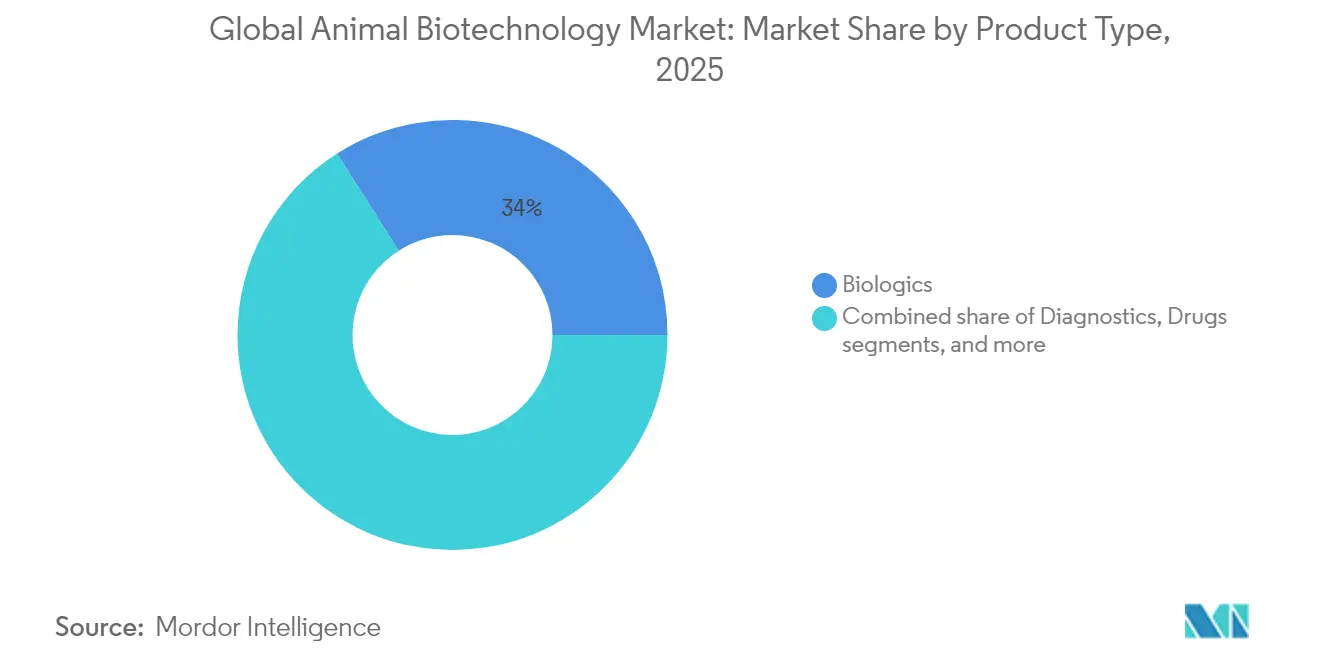
Biologics Leadership Challenged by Genetic InnovationBiologics held 34.02% of the animal biotechnology market share in 2025. Investor attention is shifting to reproductive and genetic technologies, the fastest-rising group at a 8.78% CAGR. Their surge reflects gene-editing platforms that compress development cycles and lift return profiles beyond vaccine economics. Diagnostics lines profit from clinic-based molecular tools, whereas conventional drugs face pressure from tighter antimicrobial rules. Hybrid offerings, such as SEQUIVITY’s RNA particle-plus-adjuvant combo, blur historical product labels and elevate platform depth as the new competitive yardstick.
Second-order effects include rising feed-additive ventures exploring synthetic biology proteins. Agency approvals for plant-expressed porcine enzymes spark curiosity from feed majors that seek cost-competitive nutrition gains. Expect biologics to retain top-line heft, yet genetic solutions will account for an outsized slice of incremental animal biotechnology market revenue.

By Application:
Preventive Care Dominance Faces Diagnostic DisruptionPreventive programs anchored 73.85% of the animal biotechnology market revenue share in 2025, a testament to vaccine efficacy and producer economics that prefer prevention to cure. Disease diagnosis, however, records a brisk 7.62% CAGR and chips into traditional revenue mixes. Point-of-care devices close testing loops, making early detection financially rational for mid-size farms. R&D applications benefit when gene-editing advances shorten product timelines. The animal biotechnology market size attributable to research clients could climb further as public-private consortia back translational studies.
Uptake of cloud-linked diagnostic platforms creates network effects. Data improves model accuracy, which then refines vaccine strain matching, underscoring a virtuous circle between detection and prevention that strengthens overall animal biotechnology market resilience.
By Animal Type:
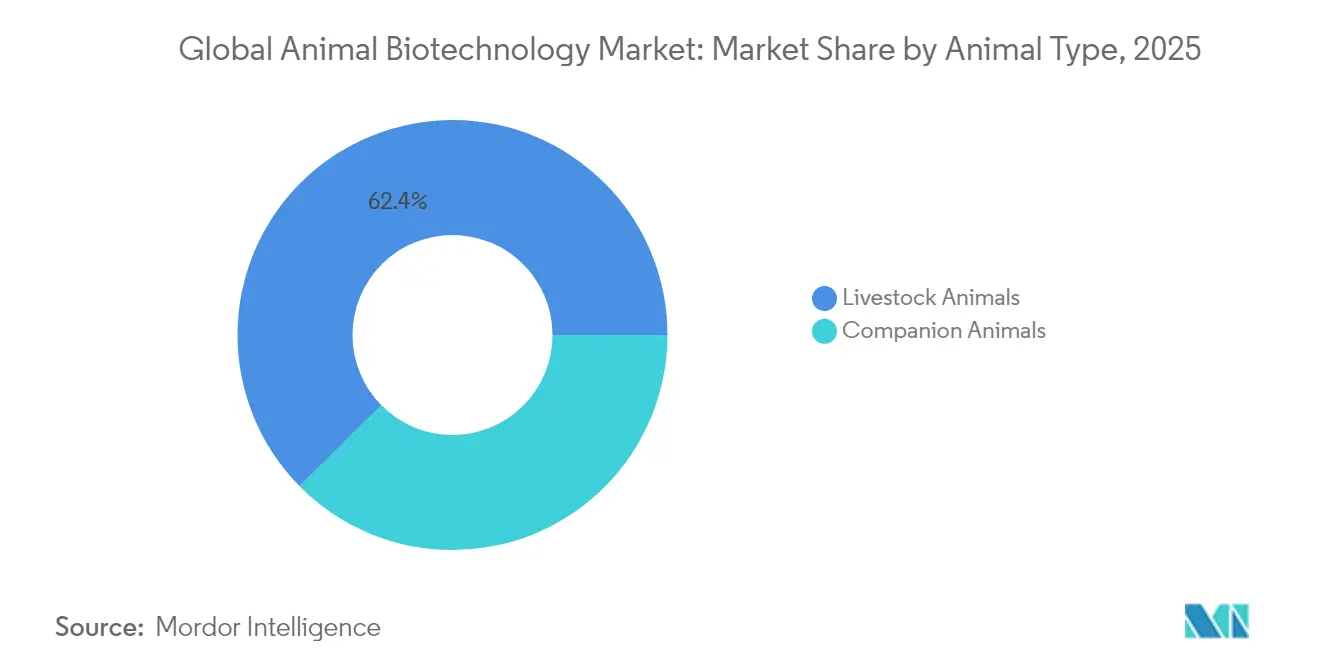
Livestock Scale Versus Companion PremiumizationLivestock represented 62.41% of the animal biotechnology market size in 2025. Gains stem from herd-level genetic programs aimed at disease resistance and feed efficiency. Companion animals push a quicker growth path at 7.74% CAGR, thanks to owner willingness to finance advanced treatments. Products like Loyal’s lifespan-extending tablet for senior dogs signal a premium trajectory potentially transferable to equine or exotic species niches.
Producers of gene-edited pigs, disease-resistant poultry, and high-yield cattle continue to dominate volume. Yet margin dynamics increasingly favor companion therapeutics where single-patient pricing is higher, enabling a balance that stabilizes the wider animal biotechnology market.
By End-User:
Laboratory Infrastructure Versus Point-of-Care DemocratizationLaboratories accounted for 35.74% of the animal biotechnology market revenue share in 2025, reflecting their historic centrality in testing and R&D. Point-of-care sites clock the highest CAGR at 7.55% as vets adopt compact analyzers. Chain clinics roll out unified platforms that enhance data pooling. This switch supports a more distributed model that lowers sample transport expenses while broadening the reach of biotech innovations. Integration with supply-chain portals lets farmers order vaccines triggered by field test results, further embedding biotechnology into daily practice and reinforcing adoption across the animal biotechnology market.
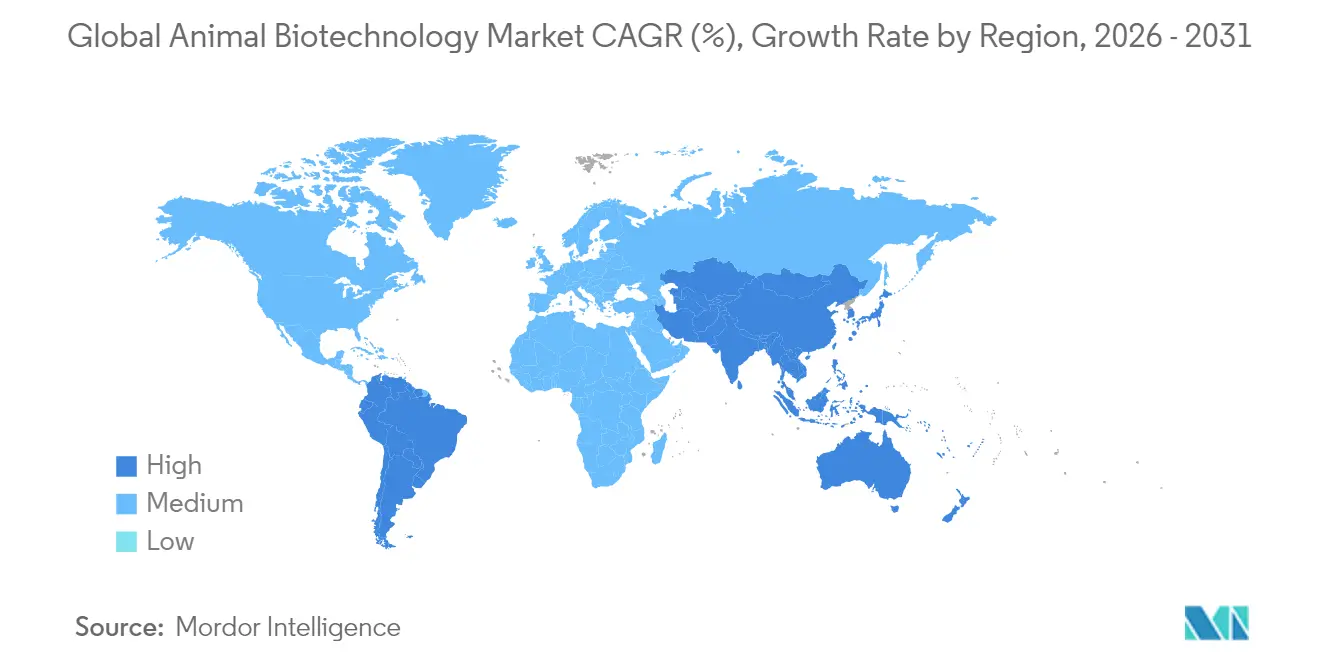
Geography Analysis
North America Animal Biotechnology Market
North America retained 37.10% share of the animal biotechnology market in 2025 and is growing at 6.82% CAGR. A science-focused regulator, deep venture funding, and consolidated vet networks create smooth tech diffusion. FDA nods for gene-edited pigs and early xenotransplant trials set policy precedents. U.S. veterinary service outlays reached USD 66 billion and are on pace for USD 70 billion by 2029, widening the spending base for biotech upgrades.
APAC Animal Biotechnology Market
Asia-Pacific logs the fastest 7.92% CAGR and enlarges its slice of the animal biotechnology market on the back of soaring protein demand, burgeoning pet ownership, and aggressive vaccine rollouts. China’s animal-vaccine sales rose 26% annually as producers chase herd-health coverage. Regulatory maturity is uneven, but manufacturing capacity and cost advantages foster an emerging production hub, provided patent safeguards keep pace.
Europe Animal Biotechnology Market
Europe appears steady with a 7.05% CAGR, yet wrestles with public skepticism toward genetic edits. Strong biologics pipelines and research clusters from Denmark to Germany keep the region relevant. However, precautionary rules could push breakthrough launches to North America first, delaying European benefit capture from the animal biotechnology market.
MEA and South America Animal Biotechnology Market
South America and Middle East & Africa remain niche but show consistent adoption where export-oriented livestock sectors modernize. Brazil’s experiments with insulin-producing cows highlight regional innovation potential, while Gulf states fund camel health programs amid rising dairy diversification. These pockets add incremental depth to the global animal biotechnology market without yet altering leadership ranks.
Regulatory Landscape
Animal biotechnology regulation remains highly jurisdiction-specific, and the United States remains an important reference point through FDA Center for Veterinary Medicine (CVM) oversight of Intentional Genomic Alterations (IGAs) in animals under the Federal Food, Drug, and Cosmetic Act. This supports a clearer path for approvals of engineered livestock, consistent with the report context reference to the 2025 PRRS-resistant pig clearance. For veterinary biologics and adjacent products, FDA and USDA operate under a formal charter and memorandum of understanding to clarify jurisdiction between FFDCA-regulated products and those overseen under the Virus-Serum-Toxin Act, which reduces uncertainty for developers choosing drug versus biologics routes.
Internationally, food and feed safety assessments for recombinant-DNA animals are anchored by Codex Alimentarius guidance (CAC/GL 68-2008). This provides common safety-assessment principles that support trade and dossier preparation across borders. OECD biosafety and novel food and feed safety workstreams also facilitate regulatory information exchange. At the intergovernmental level, the World Organisation for Animal Health (WOAH) used its May 2026 General Session to reinforce priorities around prevention, vaccination, and stronger animal-health systems, signaling continued alignment of surveillance and vaccine-related policy efforts that connect with diagnostics, vaccine platforms, and cross-border movement of animals and animal products.
Value Chain Analysis
The animal biotechnology value chain begins with discovery and design (genomics, gene editing, antigen selection, and assay development) led by animal-health companies, specialist biotech firms, and academic or contract research partners. It then moves into development and validation, which depends on diagnostic laboratories and veterinary networks for samples, field data, and trial execution. Scale-up and manufacturing remain capital-intensive and quality-driven, requiring GMP-compliant bioprocessing, specialized inputs such as pathogen-free cell lines and other biological raw materials, and in many cases high-containment capabilities for vaccines and biologics, which can constrain capacity availability and raise barriers for smaller entrants.
Downstream, distribution and administration flow through wholesalers, veterinary hospitals and clinics, laboratory networks, and farm channels. Cold-chain integrity and last-mile logistics are practical make-or-break points for vaccine and biologics performance, particularly in remote regions where refrigeration and depot infrastructure are less consistent. The chain is increasingly integrating data flows from point-of-care molecular diagnostics into surveillance and treatment decisions, creating feedback loops that affect vaccine strain updates and breeding programs. Platform acquisitions and partnerships by large incumbents also tighten control over critical nodes such as diagnostics, genomics, and poultry or farm automation tools.
Competitive Landscape
Competition sits at a moderate level yet is quickening as data and platform models supplant standalone products. Top players hold overlapping pipelines in vaccines, diagnostics, and genetics. Zoetis lifted 2024 sales by 11.02%, inching its slice of the animal biotechnology market to 9.48%. Merck, Elanco, and Boehringer Ingelheim strengthen through platform and partner plays.
Consolidation continues in vet service chains, giving suppliers captive outlets to trial biotech tools. Partnerships proliferate: Elanco joined with Medgene for rapid H5N1 dairy cattle vaccines; United Therapeutics coordinates with transplant centers for gene-edited organ studies. Start-ups such as Loyal and Ginkgo Bioworks target longevity and synthetic biology niches, challenging incumbents by carving specialized use cases that could scale.
Data ownership becomes a strategic lever. Firms connecting diagnostic feeds with breeding decisions amass proprietary datasets that refine AI models, raising switching costs. Investment in cloud security and privacy protocols now influences tender outcomes as clients demand compliant data pipelines across the animal biotechnology market.
Global Animal Biotechnology Industry Leaders
-
Boehringer Ingelheim
-
Elanco Animal Health Incorporated
-
Merck & Co., Inc.
-
Virbac S.A.
-
Zoetis Inc.
- *Disclaimer: Major Players sorted in no particular order
Global Animal Biotechnology Market Companies Covered in this Report
- BioChek B.V.
- Bio-Rad Laboratories
- Boehringer Ingelheim
- Ceva Santé Animale S.A.
- Elanco
- Genus plc
- Heska
- IDEXX
- Indical Bioscience
- Innovative Diagnostics SAS (IDVet)
- Intervet
- Medgene
- Merck
- Phibro Animal Health
- Precigen, Inc.
- Randox Laboratories
- Recombinetics, Inc.
- Thermo Fisher Scientific
- Trans Ova Genetics, LC
- Vetoquinol
- Virbac S.A.
- Zoetis
Market Opportunities and Future Outlook
A major opportunity sits at the intersection of faster regulatory pathways and platform-driven product refresh cycles across biologics, diagnostics, and genetics. Clearer jurisdictional rules, including FDA CVM oversight for IGAs and the FDA-USDA framework for animal biologicals referenced in the report context, reduce process uncertainty for developers building multi-product portfolios. Intergovernmental emphasis on prevention and stronger surveillance systems also supports more routine deployment of rapid diagnostics and vaccine platforms, reinforced by WOAHs May 2026 General Session focus on preventive measures and digital transformation in animal-health diagnostics and surveillance.
Feed and nutrition-linked biotechnology adds further whitespace through authorizations for biotech-derived additives and ingredients. The European Commission has issued 2026 implementing regulations authorizing certain enzyme and amino-acid feed additives for specific use cases and species, broadening the commercial toolkit beyond therapeutics. Separately, commercialization of precision fermentation ingredients for pet nutrition reached a concrete regulatory milestone when Hill's Pet Nutrition and Bond Pet Foods received an FDA CVM letter of no objection for a lamb protein yeast produced via precision fermentation. That outcome creates an adoption pathway for novel proteins, linking animal nutrition with biotech manufacturing scale and quality systems.
Recent Industry Developments in Global Animal Biotechnology Market
- June 2026: Merck Animal Health announced a definitive agreement to acquire TARGAN, a developer of biodevice solutions for the poultry industry. The deal strengthens Merck's position in production-linked technologies that connect animal health outcomes with on-farm operational tools. It also expands the company’s footprint beyond pharmaceuticals into hardware-enabled platforms used in high-throughput poultry settings.
- February 2025: Elanco entered an agreement with Medgene to commercialize a highly pathogenic avian influenza (H5N1) vaccine for dairy cattle. The collaboration targets rapid response capacity for outbreaks affecting large numbers of herds and elevates vaccine platform partnerships as a route to speed field deployment. It also reinforces demand for adjacent diagnostics and surveillance workflows that guide vaccination decisions.
- June 2024: Boehringer Ingelheim and Trupanion announced an exclusive collaboration to increase access to pet care. The arrangement links veterinary care delivery with financing and coverage mechanics, supporting broader uptake of advanced diagnostics and therapeutics in companion animals. It also leverages distribution and service-network reach as a competitive differentiator for animal-health portfolios.
Global Animal Biotechnology Market Report Scope and Research Methodology
Market Definition and Coverage
For this report, the animal biotechnology market is defined as revenues generated from biotech products and tools used to prevent, diagnose, and treat animal diseases, and to improve reproduction and genetic outcomes in livestock and companion animals.
Scope exclusions: We exclude human biotechnology and purely conventional animal health products that do not use biotech-based platforms or processes.
Segments Covered in This Report
- By Product Type
- Biologics
- Diagnostics
- Drugs
- Nutrition
- Reproductive & Genetic
- By Application
- Disease Diagnosis
- Preventive Care & Treatment
- Research & Development
- By Animal Type
- Livestock Animals
- Cattle
- Swine
- Poultry
- Other Livestock Animals
- Companion Animals
- Dogs
- Cats
- Equine
- Other Companion Animals
- Livestock Animals
- By End-User
- Laboratories
- Point-of-care testing
- Veterinary Hospitals & Clinics
- Other End-Users
- By Geography
- North America
- United States
- Canada
- Mexico
- Europe
- Germany
- United Kingdom
- France
- Italy
- Spain
- Rest of Europe
- Asia-Pacific
- China
- Japan
- India
- Australia
- South Korea
- Rest of Asia-Pacific
- Middle East and Africa
- GCC
- South Africa
- Rest of Middle East and Africa
- South America
- Brazil
- Argentina
- Rest of South America
- North America
Data Sources, Market Sizing, and Validation
Desk Research
Desk research helped us set the market boundary and collect the hard reference points needed to build a stable revenue model. We relied on public sources such as USDA and APHIS publications, FDA CVM and USDA Center for Veterinary Biologics notices, the European Medicines Agency, and the World Organisation for Animal Health (WOAH) for disease and vaccination context.
To make the numbers practical, we also used company filings and investor decks for product mix cues, association websites for technology adoption direction, and reputed press for regulatory and commercial milestones. Where useful, we checked patent databases to understand the pace of innovation in diagnostics, vaccines, and reproductive and genetic technologies. Paid subscriptions were used selectively for company financials and news screening, and for patent search workflow support. The sources listed here are illustrative only, and we reviewed additional public references for data collection, validation checks, and research clarification.
Primary Interviews and Surveys
Primary work focused on validating what desk research cannot fully explain, which is pricing behavior, adoption speed by animal type, and the share split across diagnostics, vaccines, drugs, and reproductive and genetic offerings. We spoke with a mix of manufacturers, distributors, veterinary channels, lab operators, and informed experts across major regions so assumptions on volumes, tendering patterns, and regulatory timelines could be confirmed and then adjusted before finalizing totals.
Distribution of primary research fieldwork respondents
| Company type | Respondent position | Region |
|---|---|---|
| Top tier: 32% | CXOs: 12% | APAC: 43% |
| Mid tier: 49% | Functional/Unit leaders: 29% | EMEA: 30% |
| Smaller Players: 19% | Managers: 59% | Americas: 27% |
Market-Sizing & Forecasting
Sizing starts with a top-down approach where animal health spend signals, disease burden indicators, and regulatory activity are used to reconstruct the addressable pool for biotech-linked products across regions, and then the totals are distributed into key categories based on observed adoption. The result is corroborated with selective bottom-up approximations, such as sampled average selling prices (ASPs) multiplied by estimated test and dose volumes, followed by channel checks on mix shifts.
Inputs used in the model include the frequency of notifiable outbreaks and vaccination programs, the installed base and throughput of veterinary diagnostic labs and point-of-care testing, the pace of new product approvals and label expansions, livestock and companion animal population trends, and realized price movement for premium biologics and advanced diagnostics. When parts of the market cannot be cleanly rolled up from public information, gaps are handled through bounded assumptions anchored to interview ranges, and then stress-tested so no single variable ends up driving the full total.
Forecasting is built using scenario analysis supported by trend smoothing on the demand indicators, and then expert-led adjustments are applied where policy, disease cycles, or technology adoption is expected to shift the curve. We kept assumptions simple and traceable so that changes in volumes, ASP progression, and product mix can be reviewed quickly and updated without rebuilding the whole model.
Data Validation & Update Cycle
Validation is done through multiple checks that compare the output against independent signals, such as approval counts, disease pressure, and category-level growth visible in public company disclosures. Outliers are reviewed, and when a jump is driven by a single assumption, the driver is re-tested using alternate ranges and fresh primary feedback.
Before sign-off, the model and key tables go through an analyst review step where arithmetic consistency, unit logic, and currency treatment are checked again. Reports are refreshed annually, and interim updates are triggered when material events occur such as major approvals, trade disruptions affecting animal health supply, or sharp price resets. Right before delivery, we run a final pass so clients receive the most current view available at that time.
Mordor Intelligence's Animal Biotechnology Market Size Measured Against Other Published Estimates
Published numbers for animal biotechnology do not always line up because groups choose different timing, scope boundaries, and price logic for fast-moving categories like advanced diagnostics and biologics. Small differences such as which exchange-rate window is used, how ASP changes are carried forward, and whether approvals are counted at launch or at broader rollout can move the total.
A refreshed year-average currency conversion and an updated ASP step-down for mature vaccine and diagnostic lines were checked against recent approval cadence and channel feedback, and that refresh cadence is a concrete driver behind the 2025 value reported by Mordor Intelligence.
Benchmark comparison
| Source | Market Size | Gaps in Research Methodology |
|---|---|---|
| Mordor Intelligence | USD 29.73 B (2025) | |
| Industry Publisher A | USD 31.44 B (2025) | This figure is consistent with wider inclusion of adjacent animal health technologies and a steeper implied mix upgrade into premium biologics, which can lift the 2025 starting point when back-cast assumptions are applied. |
| Research Publisher B | USD 31.59 B (2025) | The difference aligns with broader end-use coverage and category treatment that may include feed-related biotech add-ons, along with higher implied ASPs for vaccines and diagnostics without the same launch-to-adoption timing checks. |
The spread is mainly explained by what gets counted inside the market boundary and how price and rollout timing are carried through the base year. By tying inputs to approval cadence, adoption reality in labs and veterinary channels, and clearly stated ASP steps, we give users a market size that stays traceable to repeatable checks.
Key Questions Answered in the Report
Which breakthrough technology is currently reshaping commercial livestock breeding in animal biotechnology?
CRISPR-based gene editing is driving a shift from traditional selection to precision engineering by creating disease-resistant animals and enabling traits that improve productivity and welfare.
How are artificial-intelligence platforms influencing genetic improvement programs?
AI tools analyze massive genomic datasets to predict optimal mating pairs and embryo selections, shortening breeding cycles and unlocking trait gains that were previously unattainable through conventional methods.
What role do point-of-care molecular diagnostics play in veterinary practice today?
Portable PCR and other rapid tests let veterinarians detect pathogens in minutes at the clinic or farm, making treatment decisions faster and supporting real-time surveillance networks that help contain outbreaks.
Why are established animal-health companies investing heavily in platform technologies rather than single products?
Platform approaches—such as modular RNA vaccine systems—allow firms to pivot quickly to new diseases, reduce time-to-market, and create recurring revenue streams across multiple therapeutic areas.
What is the biggest non-technical obstacle facing gene-edited food animals?
Public acceptance remains the primary hurdle; consumer skepticism and retailer policies can restrict market access even in regions with favorable regulatory approvals.
How is Asia-Pacific emerging as a strategic production hub for animal biotechnology?
The region offers large livestock populations, expanding pet ownership, and competitive manufacturing costs, encouraging firms to establish R&D and production facilities closer to high-growth end-markets.