
Animal Genetics Market Size and Share
Market Overview
| Study Period | 2022 - 2031 |
|---|---|
| Market Size (2026) | USD 7.41 Billion |
| Market Size (2031) | USD 9.99 Billion |
| Growth Rate (2026 - 2031) | 6.16 % |
| Fastest Growing Market | Asia-Pacific |
| Largest Market | North America |
| Market Concentration | Medium |
Major Players *Disclaimer: Major Players sorted in no particular order Image © Mordor Intelligence. Reuse requires attribution under CC BY 4.0. | |
Animal Genetics Market Analysis by Mordor Intelligence
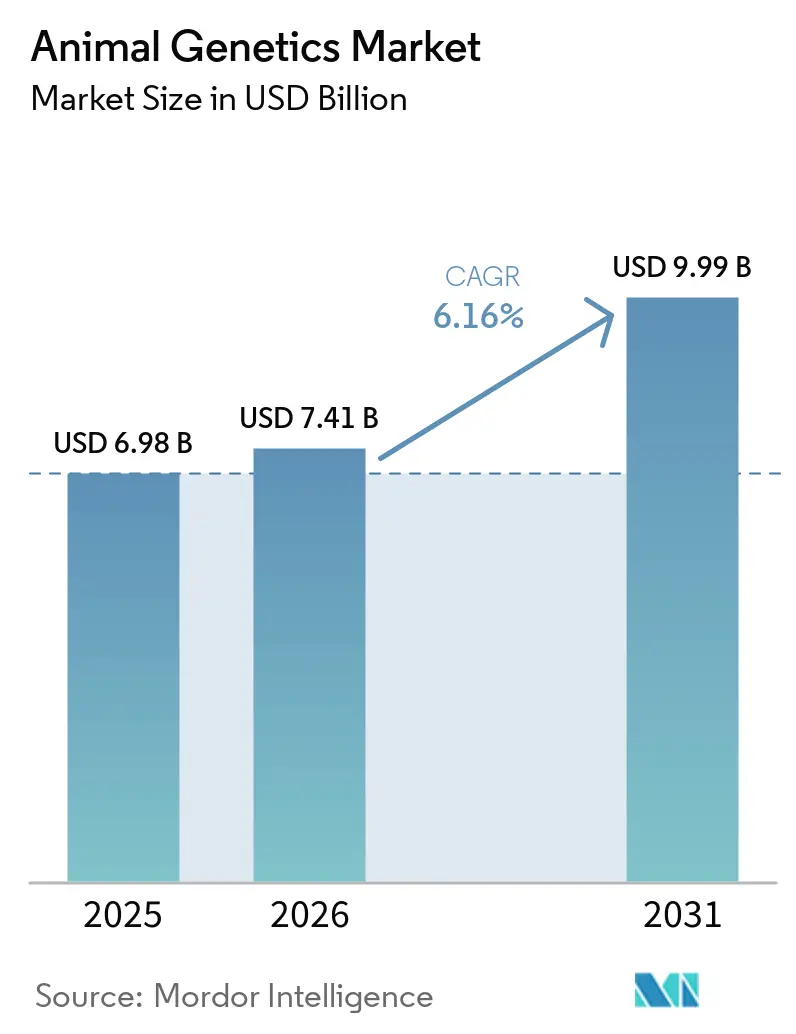
Animal Genetics market size in 2026 is estimated at USD 7.41 billion, growing from 2025 value of USD 6.98 billion with 2031 projections showing USD 9.99 billion, growing at 6.16% CAGR over 2026-2031.
This healthy pace reflects sustained demand for high-quality animal protein, wider use of genomic tools, and the rise of precision breeding that blends genomic selection with conventional husbandry. North America remains the largest regional contributor as advanced laboratories, supportive regulation, and early adoption of artificial insemination and genomic testing keep research cycles short and commercial uptake high. Asia-Pacific is catching up fast, supported by expanding herds, government productivity schemes, and a widening network of in-country genotyping centers that lower access costs. Product-wise, live animals still represent the primary revenue stream, yet genetic material—especially frozen semen and embryos—records quicker growth as logistics, cryopreservation, and digital ordering improve. Technology competition centers on artificial insemination for its proven economics, while CRISPR and related gene-editing tools are moving from experimental to commercial scale as regulatory paths clarify. End-user demand is shifting toward veterinary clinics, where genetic diagnostics are becoming routine for both livestock and companion animals
Key Report Takeaways
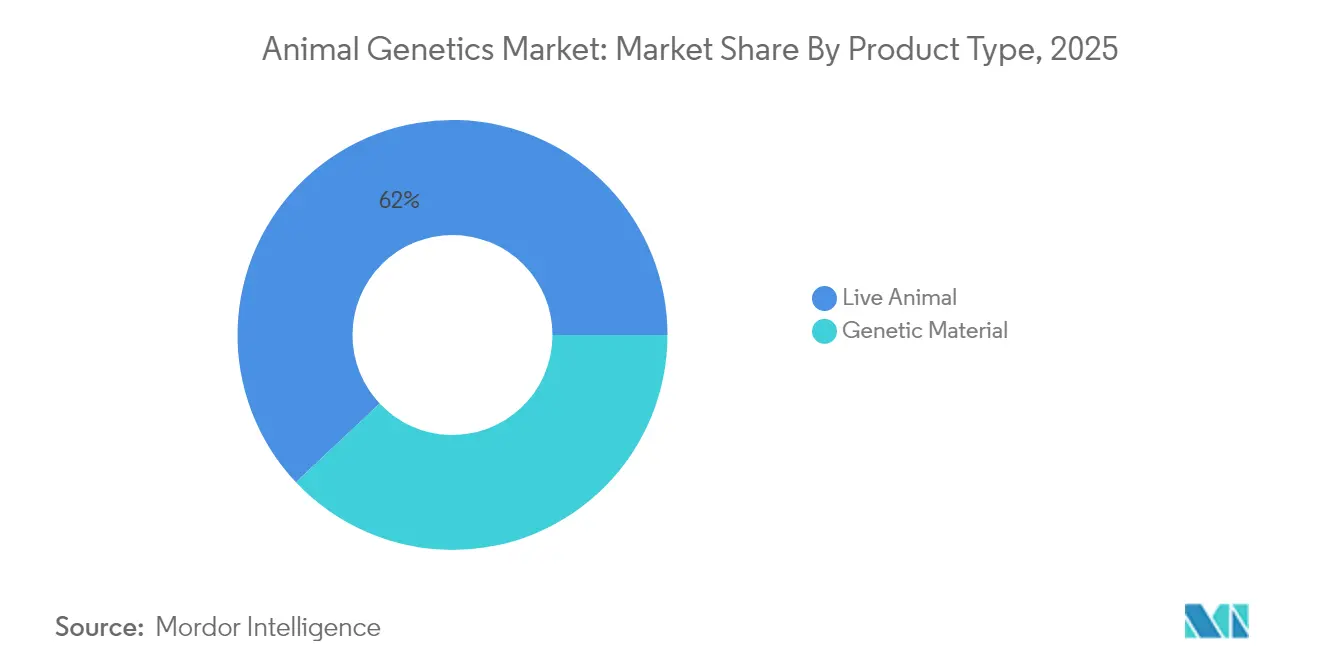
- By product type, the live animal segment led with 62.02% of the animal genetics market share in 2025, while genetic material is projected to expand at a 6.72% CAGR to 2031.
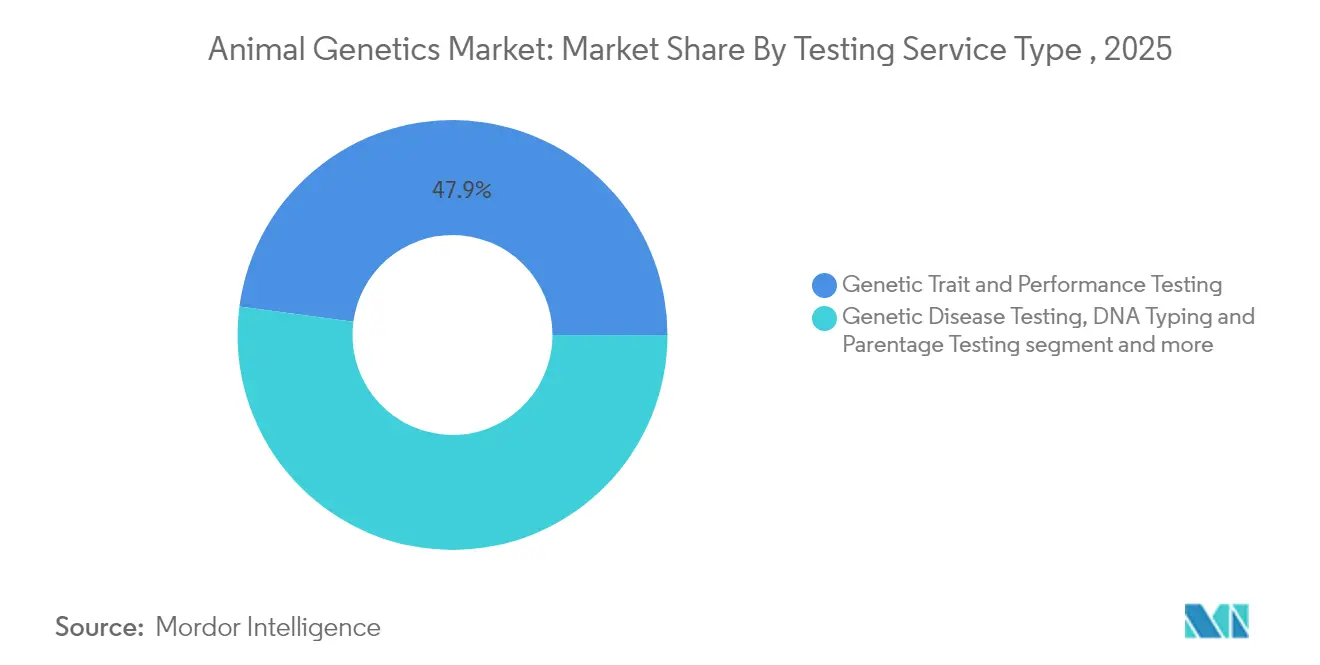
- By testing service, genetic trait & performance testing accounted for 47.88% of the animal genetics market size in 2025; DNA typing & parentage testing posts the fastest 6.75% CAGR through 2031.
- By technology, artificial insemination held 56.10% revenue share in 2025, whereas CRISPR & gene editing is advancing at a 7.35% CAGR over the same period.
- By end user, breeding companies & associations captured 37.85% share of the animal genetics market size in 2025, with veterinary hospitals & specialty clinics rising at an 7.62% CAGR.
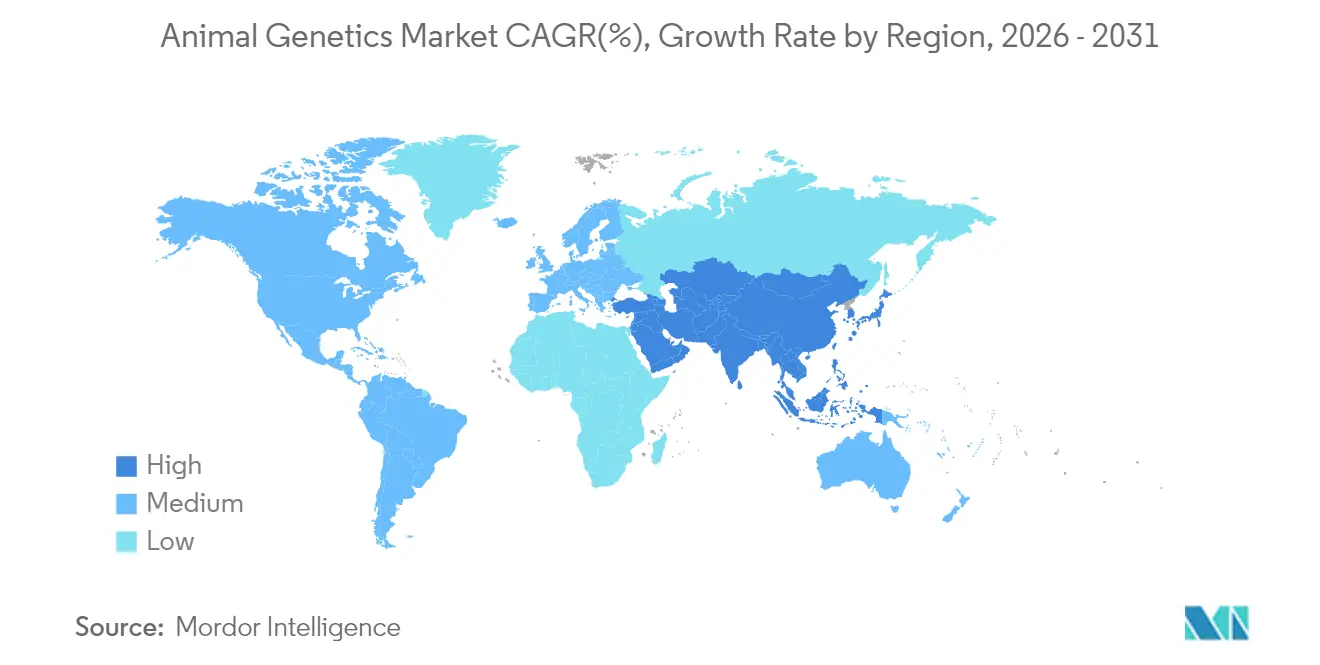
- By geography, North America dominated with 36.95% of the animal genetics market share in 2025; Asia-Pacific is poised for the highest 7.28% CAGR to 2031.
Note: Market size and forecast figures in this report are generated using Mordor Intelligence’s proprietary estimation framework, updated with the latest available data and insights as of 2026.
Market Trends and Insights
Drivers Impact Analysis of Animal Genetics Market*
| Driver | (~) % Impact on CAGR Forecast | Geographic Relevance | Impact Timeline |
|---|---|---|---|
| Demand for high-yielding disease-resistant livestock breeds | 2.20% | Asia-Pacific, North America | Medium term (2-4 years) |
| Increased adoption of advanced genetic technologies | 1.60% | North America, Europe, emerging Asian markets | Medium term (2-4 years) |
| Rapid uptake of sexed-semen technology in bovine AI | 1.20% | North America, Europe, Oceania | Short term (≤2 years) |
| Growth of companion-animal genetic testing | 0.90% | North America, Europe, urban Asia-Pacific | Medium term (2-4 years) |
| Government-subsidized swine herd rebuilding post-ASF | 1.40% | China & Vietnam | Short term (≤2 years) |
| Expansion of dairy genetics programs targeting A2A2 β-casein | 1.10% | Europe | Medium term (2-4 years) |
| Source: Mordor Intelligence | |||
Demand for high-yielding disease-resistant livestock breeds
Intensifying pressure on food systems has made genetic disease resistance a core productivity lever. Marker-assisted selection now pinpoints resistance loci quickly, and CRISPR-generated PRRS-resistant pigs demonstrate how precision edits can curb costly outbreaks. Buyers also reward antibiotic-free labels, turning resistance traits into clear price premiums. Breeding firms respond by bundling resistance markers with growth and efficiency traits, while governments channel grants toward projects that cut antimicrobial use. Asia-Pacific producers, exposed to dense farm clusters, view resistance as risk insurance, driving regional demand for verified genetics.
Increased adoption of advanced genetic technologies
Falling sequencing costs and high-throughput SNP arrays have opened genomic testing to mid-scale producers. Integrated prediction models now combine genomic, performance, and environmental records, allowing selection for feed efficiency, heat tolerance, and methane mitigation. Dairy programs, for instance, use rumen microbiome-linked SNP panels to support bovine animal genetics, raise nutrient absorption efficiency, and lower feed costs and emissions. Public-private partnerships in Europe and North America co-fund reference populations, ensuring long-term data flow that sustains genetic gain.
Rapid adoption of sexed-semen technology
Improved sorting accuracy and higher post-thaw viability have cut the cost penalty that once limited sexed-semen uptake. Dairy herds can now breed top cows for heifers and channel lower-ranked females to beef crosses, turning a former by-product into a premium calf. Early adopters report tighter calving windows and improved replacement planning. As volumes climb, semen centres invest in larger flow cytometers, lowering unit costs and widening access in Latin America and South-East Asia.
Growth of companion-animal genetic testing
Direct-to-consumer test kits let pet owners uncover disease risks and ancestry, with 81.2% of veterinarians fielding related client queries in 2025. Practices integrate results into preventive care plans, yet many clinicians lack confidence in interpreting genomic data[1]. Continuing-education modules and decision-support dashboards now emerge to bridge this gap. Market momentum is strongest in urban centres where disposable income and pet humanisation drive premium spending
Restraints Impact Analysis of Animal Genetics Market*
| Restraint | (~) % Impact on CAGR Forecast | Geographic Relevance | Impact Timeline |
|---|---|---|---|
| High cost of genomic sequencing | −0.9% | Global; higher impact in developing regions | Short term (≤2 years) |
| Shortage of skilled geneticists in breeding co-ops | −0.6% | Global; most acute in emerging markets | Medium term (2-4 years) |
| Biosecurity restrictions on cross-border germplasm trade | −0.8% | Global | Short term (≤2 years) |
| EU ethical & regulatory hurdles for CRISPR gene-edited lines | −0.7% | Europe | Medium term (2-4 years) |
| Source: Mordor Intelligence | |||
High cost of genomic sequencing limiting adoption
While sequencing has become cheaper, upfront equipment outlays and per-sample fees still deter smallholders. Beef enterprises, where genetic gains translate more slowly into cash, adopt cautiously. Output-based pricing schemes and state subsidies partially offset costs, yet access remains uneven. This disparity risks widening performance gaps between industrial players and family farms, nudging policy makers to explore shared lab facilities and tiered service packages.
Shortage of skilled geneticists in breeding co-ops
Modern breeding blends quantitative genetics, bioinformatics, and data science, but training pipelines lag demand. Cooperatives, especially in developing economies, struggle to match private-sector salaries, leaving analytic roles unfilled. The resulting bottleneck slows interpretation of genomic data and dilutes return on technology investments. Remote consultancy platforms and online courses are interim fixes, yet long-term solutions hinge on expanding graduate programs and incentivising rural placements.
*Our forecasts treat driver/restraint impacts as directional, not additive. The impact forecasts reflect baseline growth, mix effects, and variable interactions.
Animal Genetics Market Segment Analysis
By Product Type:
Live Animals Anchor Revenue while Genetic Material AcceleratesThe live animal segment generated 62.02% of the animal genetics market in 2025, reflecting the persistent premium that commercial buyers place on proven bulls, boars, rams, and breeding stock with validated production records. Breeders invest in on-farm performance testing, show circuit visibility, and digital pedigree platforms to justify animal prices that often exceed USD 50,000 for elite sires. The trade benefits from improved logistics and quarantine hubs that simplify cross-border movement.
Genetic material, though smaller in absolute value, expands faster at a 6.72% CAGR as cryopreservation advances lower shipment risk and digitized ordering portals connect global buyers to diverse germplasm inventories. Embryo vitrification now achieves post-thaw viability above 90%, widening usage among emerging-market dairies that want rapid genetic leaps without importing live cattle. Semen remains the volume leader for its affordability, but premium embryos and DNA libraries create higher-margin niches. End-product diversity and delivery flexibility position genetic material to outpace overall animal genetics market growth through 2031.

By Testing Service Type:
Performance Testing Leads, DNA Typing Gains MomentumGenetic trait-and-performance testing produced 47.88% of animal genetics market revenue in 2025. The service captures granular data on milk yield, carcass quality, feed conversion, and resilience traits, then integrates them with DNA markers to refine selection indices. Cloud-based dashboards now deliver real-time benchmarking to producers, encouraging iterative improvements each breeding cycle. Demand from integrated pork and poultry operations keeps volume high because small gains in feed efficiency compound across millions of head.
DNA typing and parentage testing, forecast at 6.75% CAGR, benefits from plummeting per-sample sequencing costs and the spread of handheld collection kits that mail specimens to central labs overnight. Companion-animal clinics account for a rising share of samples, but livestock players also employ parentage panels to verify pedigree claims and enforce breed-specific health program compliance. Packages that bundle DNA typing with trait testing help laboratories upsell value-added analytics, strengthening their position within the animal genetics market.
By End User:
Breeding Entities Retain Lead while Veterinary Clinics Expand RapidlyBreeding companies & associations held 37.85% of 2025 revenue, leveraging scale R&D pipelines, proprietary lines, and global distribution networks. Many diversify into software tools that allow clients to model breeding scenarios before purchase, cementing service stickiness. Strategic consolidation remains active as firms seek to broaden species portfolios or acquire novel gene-editing capabilities to future-proof their genetic catalogs.
Veterinary hospitals and specialty clinics chart the highest 7.62% CAGR as genomic diagnostics integrate into routine health management. The newly expanded 21,000-square-foot UC Davis Veterinary Genetics Laboratory can process tens of thousands of samples monthly, offering turnaround times that facilitate same-week treatment decisions. Firms combine test results with breed-specific care protocols that improve patient outcomes and bolster customer loyalty. This clinical adoption widens the addressable base of the animal genetics market beyond core breeding operations.
By Technology:
Artificial Insemination Dominates while CRISPR Drives DisruptionArtificial insemination delivered 56.10% of 2025 revenue, underscoring its cost-effective role in propagating desirable genetics across large herds quickly. Charted estrus cycling and synchronized breeding protocols lift conception rates and cut labor. AI service providers increasingly employ data analytics to recommend mating pairs that maximize predicted genetic merit and reduce inbreeding. Average AI cost per live calf still ranges USD 50-200, a fraction of embryo transfer or IVF alternatives.
CRISPR & gene editing, though holding a smaller slice today, is projected to post the leading 7.35% CAGR. Recent on-farm trials with BMPRIB-edited fine-wool sheep achieved 47.4% editing efficiency and higher litter sizes, proving commercial feasibility. Regulatory green lights in the United States for gene-edited pork add commercial confidence. Adoption will hinge on clear labeling policies and cost-efficient delivery platforms, but early movers expect transformative advances in disease resistance and feed conversion that could redefine competitive positions across the broader animal genetics market.
Geography Analysis
North America Animal Genetics Market
North America remained the largest region, accounting for 36.95% of the animal genetics market share in 2025. Modern laboratory infrastructure, a seasoned AI technician base, and an accommodating regulatory stance reinforce adoption. The FDA’s 2025 approval of gene-edited pork signals growing acceptance of precision breeding in the food chain. USDA outlooks project beef, pork, and broiler production to climb 11.1%, 10.0%, and 11.5% respectively by 2034, reinforcing region-wide demand for superior genetics. Universities add further momentum; SubCas9, a compact CRISPR protein discovered in bovine microbiota, promises more targeted edits with fewer off-target risks.
APAC Animal Genetics Market
Asia-Pacific is on course for the fastest 7.28% CAGR through 2031. China rolls out national genomic chips for local breeds, while India promotes sexed semen to lift dairy yield per cow. Rising disposable incomes and shifting diets expand demand for meat, eggs, and dairy, prompting investment in genetic upgrades to boost output and cut imports. Public–private partnerships in genomics lower test prices, helping mid-sized farms participate. These efforts collectively push the region’s weight in the animal genetics market upward each year of the forecast period.
EMEA, South America and APAC Animal Genetics Market
Europe holds a sizeable position anchored by stringent welfare and sustainability norms that shape breeder strategies. Emphasis lies on balanced selection indices that pair productivity with animal well-being, especially in swine and poultry lines. South America continues to monetize strong pasture resources; Brazil and Argentina see brisk uptake of gene-edited cattle for heat tolerance and hornlessness traits. The Middle East and parts of Africa, though smaller, explore genomics to counter harsh climates and limited feed supplies. Regulatory clarity in Japan and Argentina—where certain gene-edited livestock qualify as non-GMO—could inspire other jurisdictions and smooth cross-border trade in genetic products.
Mordor Intelligence provides coverage of the animal genetics market across other key regional markets, including Middle East and Africa, each with their regulatory frameworks and demand patterns.
Regulatory Landscape
Regulation in animal genetics is shaped by differing national rules for breeding-trade standards and for advanced genomic alterations. In the European Union, Regulation (EU) 2016/1012 (Zootechnical and genealogical conditions for the breeding trade) anchors requirements for breed societies, performance testing, and the marketing of breeding animals and germplasm, directly affecting cross-border movement of high-value live animals, semen, and embryos. In the United States, the FDA Center for Veterinary Medicine sets a pathway for heritable intentional genomic alterations (IGAs) in animals, with GFI #187B finalized on January 7, 2025, clarifying expectations for developers seeking market authorization for food-producing species and improving regulatory predictability for gene-edited lines.
In the United Kingdom and Northern Ireland, policy moves also shape how standards and public funding affect access to genotyping. The UK government guidance on “Animal Breeding Regulation (Zootech)” sets out preparations tied to a proposed SPS agreement that includes dynamic alignment with EU Regulation (EU) 2016/1012, with additional detail signposted for summer and autumn 2026 and a target implementation referenced for mid-2027. Separately, The Bovine Genetics Genotyping Scheme Regulations (Northern Ireland) 2026 come into operation on September 1, 2026, creating a subsidy-supported demand channel for accredited bovine genotyping services and eligible testing providers.
Competitive Landscape
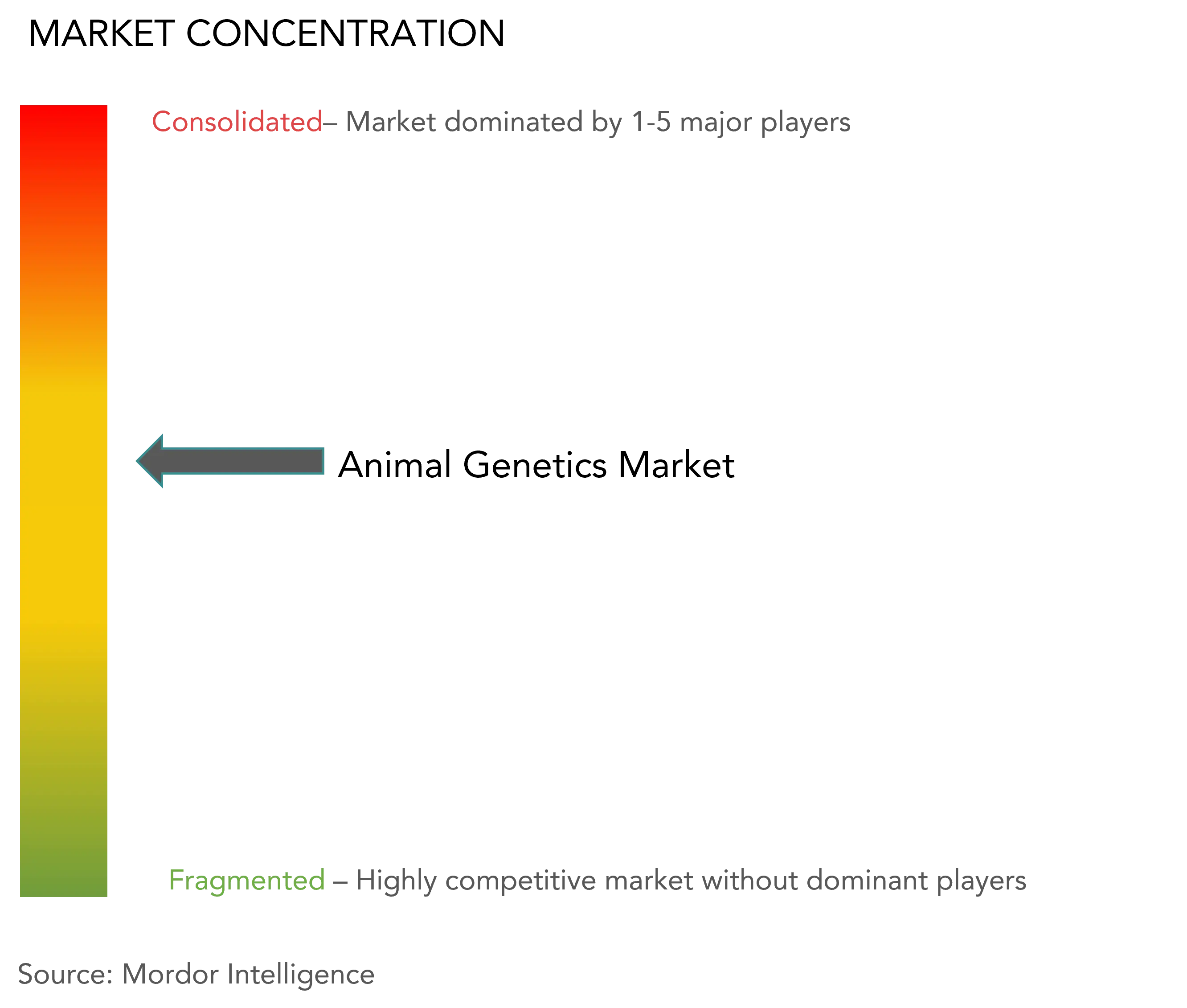
Competitive intensity in the animal genetics market is moderate. The top five suppliers collectively command an estimated 55–60% of global revenue, leaving meaningful space for regional specialists. Consolidation accelerates as firms seek broader species coverage; Urus Group’s purchase of Leachman Cattle of Colorado gives it immediate access to a top Angus database and complements its dairy strength. R&D spending focuses on proprietary haplotypes for disease resistance and sustainability traits.
White-space opportunities sit at the convergence of genomics and data science. AI-driven prediction engines model gene-phenotype interactions to suggest optimal mating pairs, reducing trial-and-error cycles. Early pilots report a 12% jump in realized genetic gain over traditional index selection [2]. Start-ups exploit niche gaps; Vetigenics raised USD 6 million to advance canine immunotherapy antibodies, signaling potential for species-specific therapeutics that leverage genetic.
Regulation remains a key strategic variable. Players with in-house policy teams adapt faster to gene-editing approval pathways and labeling mandates that vary by country. Companies also promote genebank collaborations to secure biodiversity and hedge against supply shocks. Over the next five years, competitive differentiation will combine validated genomic pipelines, customer-friendly digital services, and agile compliance management—factors that collectively define leadership within the animal genetics market.
Animal Genetics Industry Leaders
-
Animal Genetics Inc.
-
URUS
-
Genus plc
-
Zoetis Services LLC
-
CRV Holdings
- *Disclaimer: Major Players sorted in no particular order
Animal Genetics Market Companies Covered in this Report
- Genus
- Hendrix Genetics
- Zoetis
- Topigs Norsvin
- Cobb-Vantress Inc.
- Aviagen Group
- CRV Holding BV
- Select Sires
- STgenetics
- Semex Alliance
- Alta Genetics
- Neogen
- ABS Global Inc.
- Genex Co-operative Inc.
- Grimaud Groupe
- Eurogene AI Services
- Sexing Technologies
- Envigo RMS LLC
- Bovine Elite
- Nugenomics Ltd.
Market Opportunities and Future Outlook
An immediate opportunity is expanding veterinary and farm-side genetic testing capacity as genetic diagnostics move further into routine decision-making and supporting data pipelines. The 21,000-square-foot expansion of the UC Davis Veterinary Genetics Laboratory, built for high-throughput genotyping, indicates rising institutional throughput and tighter turnaround expectations, which in turn supports demand for interoperable ordering, reporting, and interpretation workflows. That also increases the need for AI-enabled bioinformatics and decision-support layers that translate genomic outputs into actionable breeding and clinical plans, especially as whole-genome sequencing becomes more integrated into veterinary diagnostics and portable sequencing platforms broaden where sequencing can be performed.
Cross-border breeding and germplasm trade also creates whitespace around compliance-ready productization, particularly where standards alignment reduces friction. The UK government’s stated direction toward dynamic alignment with EU Zootech rules under a proposed SPS agreement, with further guidance trailed for summer and autumn 2026, points to continued work to harmonize trade-facing requirements for breeding animals and genetic material. At the same time, fragmented global frameworks for genome-edited animals keep commercialization uneven across regions. This increases the value of companies that can design, document, and label genetics programs for multiple jurisdictions while maintaining biosecurity and traceability for semen and embryo shipments.
Recent Industry Developments in Animal Genetics Market
- May 2026: Hendrix Genetics Swine began commercial rollout of its Big I multispectral imaging system for rapid phenotyping after six years of development. The rollout supports precision breeding by increasing the speed and consistency of phenotype capture that feeds selection decisions. It also supports tighter integration of on-farm data streams with genomic programs used by large breeding operations.
- March 2026: Zoetis entered a definitive agreement to acquire Neogen’s global animal genomics business for about USD 160 million. The deal expands Zoetis’ genomics and data capabilities within its Precision Animal Health portfolio, strengthening the link between testing services and downstream clinical or herd-management actions. Regulatory approvals remain a gating item, with closing targeted for the second half of 2026.
- February 2026: Genus plc reported the successful formation of its Chinese porcine joint venture with Beijing Capital Agribusiness Co. Ltd (BCA), structured with Genus at 49% and BCA at 51%. The joint venture provides a localized platform to accelerate delivery of advanced porcine genetics in China, including pathways for PRRS-related innovations. It also deepens in-country execution capacity in a market where biosecurity and local production constraints shape breeding and germplasm deployment.
Animal Genetics Market Report Scope and Research Methodology
Market Definition and Coverage
For this study, the animal genetics market is defined as revenue earned from improving and selecting animal traits through genetics, covering breeding stock, genetic materials like semen and embryos, and genetics-related testing or assisted reproduction services used in farms and breeding programs.
Scope exclusions: Items not tied to breeding decisions, such as veterinary drugs, feed additives, and consumer ancestry kits, are excluded.
Segments Covered in This Report
- By Product Type (Value)
- Animal
- Bovine
- Porcine
- Poultry
- Canine
- Equine
- Aquaculture Species
- Others
- Genetic Material
- Semen
- Embryo
- DNA & Other Germplasm
- Animal
- By Testing Service Type (Value)
- Genetic Disease Testing
- Genetic Trait & Performance Testing
- DNA Typing & Parentage Testing
- Other Specialised Tests
- By Technology (Value)
- Artificial Insemination (AI)
- Embryo Transfer (ET)
- Marker-Assisted & Genomic Selection
- CRISPR & Gene Editing
- Other Assisted-Reproduction Technologies
- By End User (Value)
- Breeding Companies & Associations
- Livestock Producers / Farms
- Veterinary Hospitals & Specialty Clinics
- Research & Academic Institutes
- Others
- By Geography
- North America
- United States
- Canada
- Mexico
- Europe
- Germany
- United Kingdom
- France
- Italy
- Spain
- Rest of Europe
- Asia-Pacific
- China
- Japan
- India
- South Korea
- Australia
- Rest of Asia-Pacific
- Middle East and Africa
- GCC
- South Africa
- Rest of Middle East and Africa
- South America
- Brazil
- Argentina
- Rest of South America
- North America
Data Sources, Market Sizing, and Validation
Desk Research
Desk research was used to set the market boundary and create the first set of sizing inputs that can be checked consistently across regions. We relied on public sources such as USDA and other national agriculture departments for livestock and production indicators, FAOSTAT for cross-country livestock and output series, and OECD-FAO outlook references for demand drivers that influence breeding intensity.
To ground the model in what is actually being used in the field, we also reviewed sources such as international animal health and breeding association websites, peer reviewed articles on genomic selection and assisted reproduction adoption, and customs and trade statistics where relevant for genetic materials. Company annual reports, investor presentations, and reputable press were reviewed to understand service mix, pricing direction, and capacity expansion signals, and then a paid subscription for company financials plus an import-export shipment level database were used selectively to validate larger directional assumptions. This list is illustrative only, and many other public and paid sources were reviewed for data collection, validation, and clarification.
Primary Interviews and Surveys
Primary work focused on interviews and structured surveys with breeding organizations, genetics service providers, animal production companies, distributors, and technical specialists who deal with semen, embryos, and genetic testing decisions. For a global market, we checked inputs across major producing and consuming regions so adoption assumptions and price movements could be corrected before finalizing the model.
Distribution of primary research fieldwork respondents
| Company type | Respondent position | Region |
|---|---|---|
| Top tier: 25% | CXOs: 15% | APAC: 43% |
| Mid tier: 60% | Functional/Unit leaders: 27% | EMEA: 34% |
| Smaller Players: 15% | Managers: 58% | Americas: 23% |
Market-Sizing & Forecasting
The market size was built using a top-down and bottom-up approach, where production and herd trends help reconstruct the demand pool for breeding and genetics activities, and then pricing and service intensity are applied to convert that activity into revenue. To keep it practical, we started from livestock population, replacement rates, and breeding cycles by major species, and then mapped how much of that flow uses improved genetics through semen, embryos, or testing.
Key inputs used to shape totals included artificial insemination penetration, embryo transfer usage where applicable, the share of herds under structured breeding programs, the volume of genetic tests linked to selection decisions, and average selling price movement for genetic materials and services. Where public data did not clearly separate conventional breeding from advanced genomic offerings, gaps were handled using interview-based ranges and then tightened through regional consistency checks. Forecasts were developed using scenario analysis supported by expert views on protein demand, disease pressure, technology adoption speed, and expected pricing progression, and then projections were cross-checked against sampled supplier roll-ups and channel checks to avoid over-counting.
Data Validation & Update Cycle
Validation was done in multiple steps so the final numbers are internally consistent and aligned with outside signals. Model outputs were compared with independent metrics such as livestock production changes, breeding program coverage indicators, and reported business momentum in genetics services, and then large variances were investigated before sign-off.
A second analyst review is used to re-check calculations, assumptions, and year-to-year movements, and follow-up outreach is triggered when a key input moves beyond a reasonable range for that region or species. The report is refreshed annually, and interim updates are made when material events occur that can shift pricing, availability, or adoption. Before delivery, a final pass is completed so clients receive the latest updated view based on the most recent data points available.
Mordor Intelligence's Animal Genetics Market Sizing Compared With Other Published Estimates
Published market values for animal genetics can differ because the boundary of what is counted is not always the same, and the timing of base year conversion and price updates also varies. Differences also come from how each publisher treats service revenue versus genetic material revenue, and whether companion species activity is included at the same depth as livestock.
By tracking livestock replacement flows, assisted reproduction penetration, and genetics testing volumes, Mordor Intelligence keeps the estimate tied to breeding decisions and refreshes average price assumptions by region before totals are finalized.
Benchmark comparison
| Source | Market Size | Gaps in Research Methodology |
|---|---|---|
| Mordor Intelligence | USD 7.41 B (2026) | |
| Global Consultancy A | USD 8.26 B (2026) | This estimate appears to use a broader revenue scope that more heavily blends animal biotechnology-style revenue streams with animal genetics, and it may apply higher assumed adoption for genomic services without separating conventional semen trade from premium genomic offerings. |
| Industry Publisher B | USD 9.54 B (2026) | The higher value likely reflects more aggressive pricing progression and a wider inclusion of downstream service revenues, with less transparent checks on regional breeding intensity and currency timing for multi-country rollups. |
The spread across the three values is mainly explained by scope and pricing choices rather than a disagreement on overall demand direction. When the revenue pool is restricted to breeding animals, semen and embryos, and breeding-linked testing and assisted reproduction services, the size can be rebuilt with clear steps and rechecked against farm activity signals.
Key Questions Answered in the Report
What is the forecast growth rate of the animal genetics market through 2031?
The market is projected to expand at a 6.16% CAGR, moving from USD 7.41 billion in 2026 to USD 9.99 billion by 2031.
Which product segment currently dominates global revenue?
Live Animals lead with 62.02% share, reflecting sustained demand for proven breeders.
Why is CRISPR expected to outpace other technologies?
Precise single-gene edits address traits such as disease resistance and heat tolerance, and supportive regulations in key countries speed commercialisation.
How are veterinary clinics influencing industry growth?
Hospitals and specialty practices are integrating genetic tests into routine care, driving the fastest end-user CAGR at 7.62%.
What regional market will grow fastest, and why?
Asia-Pacific is forecast at a 7.28% CAGR due to large-scale livestock expansion, rising protein demand, and government support for genomic tools.
What barrier most limits technology adoption in developing regions?
High per-sample testing costs and limited bioinformatics expertise restrict genomic uptake among small to mid-scale producers.