
Aluminum Chloride Hexahydrate Market Size and Share
Market Overview
| Study Period | 2021 - 2031 |
|---|---|
| Market Size (2026) | USD 685.99 Million |
| Market Size (2031) | USD 851.60 Million |
| Growth Rate (2026 - 2031) | 4.42 % |
| Fastest Growing Market | Asia Pacific |
| Largest Market | Asia Pacific |
| Market Concentration | Medium |
Major Players *Disclaimer: Major Players sorted in no particular order Image © Mordor Intelligence. Reuse requires attribution under CC BY 4.0. | |
Aluminum Chloride Hexahydrate Market Analysis by Mordor Intelligence
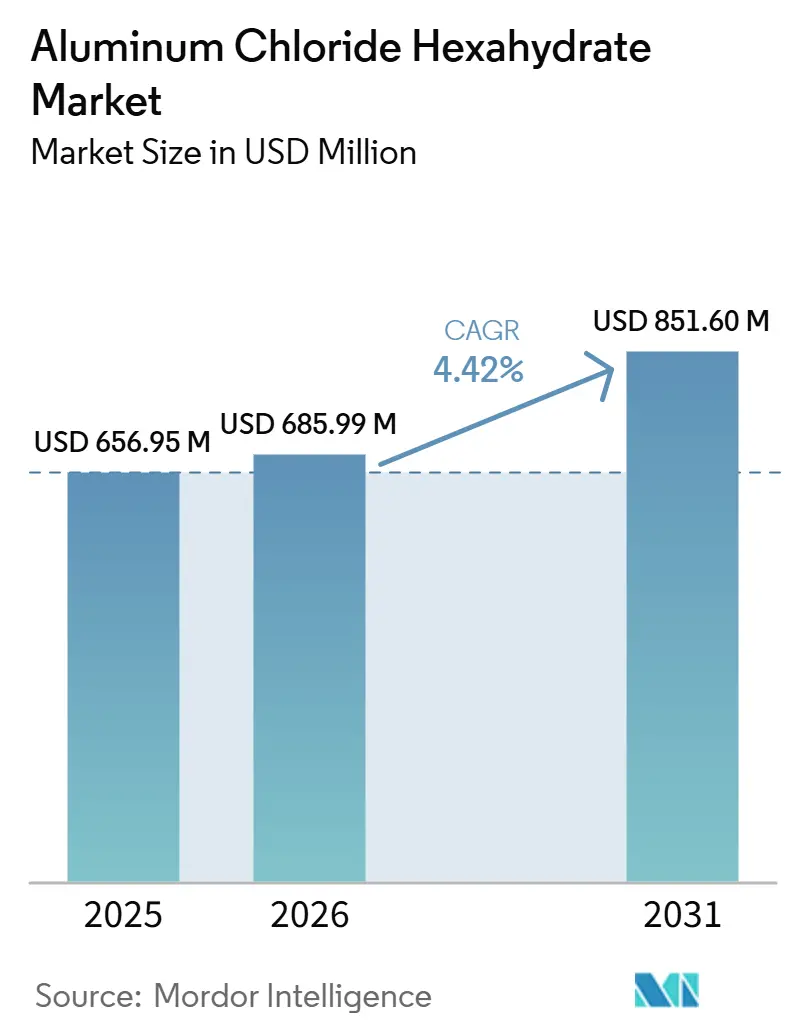
The Aluminum Chloride Hexahydrate Market size is projected to be USD 656.95 million in 2025, USD 685.99 million in 2026, and reach USD 851.60 million by 2031, growing at a CAGR of 4.42% from 2026 to 2031. This growth reflects a shift from traditional bulk water treatment to high-purity applications, especially in pharmaceuticals, next-gen batteries, and eco-friendly fine chemicals. Demand dynamics are being reshaped by several factors: a surge in API outsourcing to China and India, the rapid adoption of deep-eutectic-electrolyte pilots in East Asia, and stricter catalyst-purity mandates from the EU and U.S. Suppliers with certifications for ≤10 ppm heavy-metal residues, ISO 9001 traceability, and the ability to manage the volatile costs of anhydrous AlCl₃ feedstock are capturing price premiums of 30-50% over standard commodity grades. On the flip side, municipal utilities are pivoting to polyaluminum chloride (PAC), achieving 30-50% lower dosing rates and curbing traditional coagulation volumes.
Key Report Takeaways
- By purity, the Between 99% to 99.5% grade led with 53.11% revenue share in 2025; the Greater than 99.5% grade is projected to expand at a 4.87% CAGR from 2026 to 2031.
- By application, water treatment held 33.24% of the aluminum chloride hexahydrate market share in 2025, while pharmaceuticals will post the fastest 5.11% CAGR from 2026 to 2031.
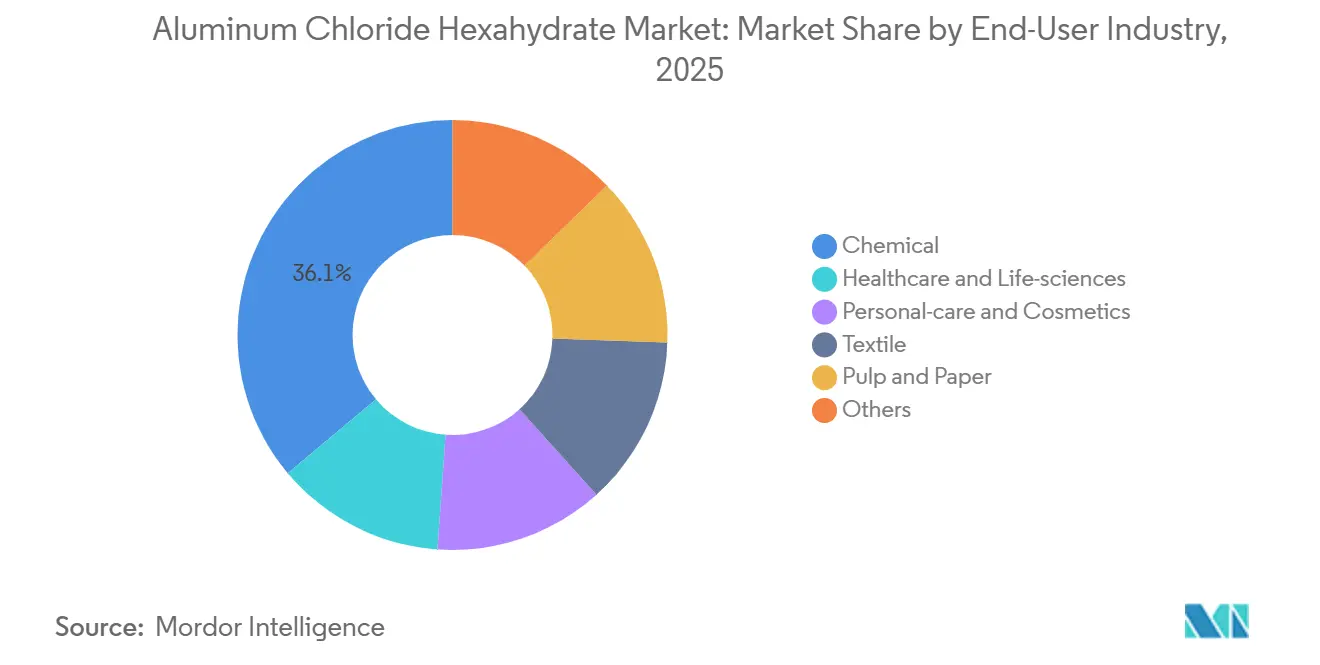
- By end-user, the chemical sector accounted for 36.11% of the aluminum chloride hexahydrate market size in 2025, whereas healthcare and life-sciences are advancing at a 5.17% CAGR from 2026 to 2031.
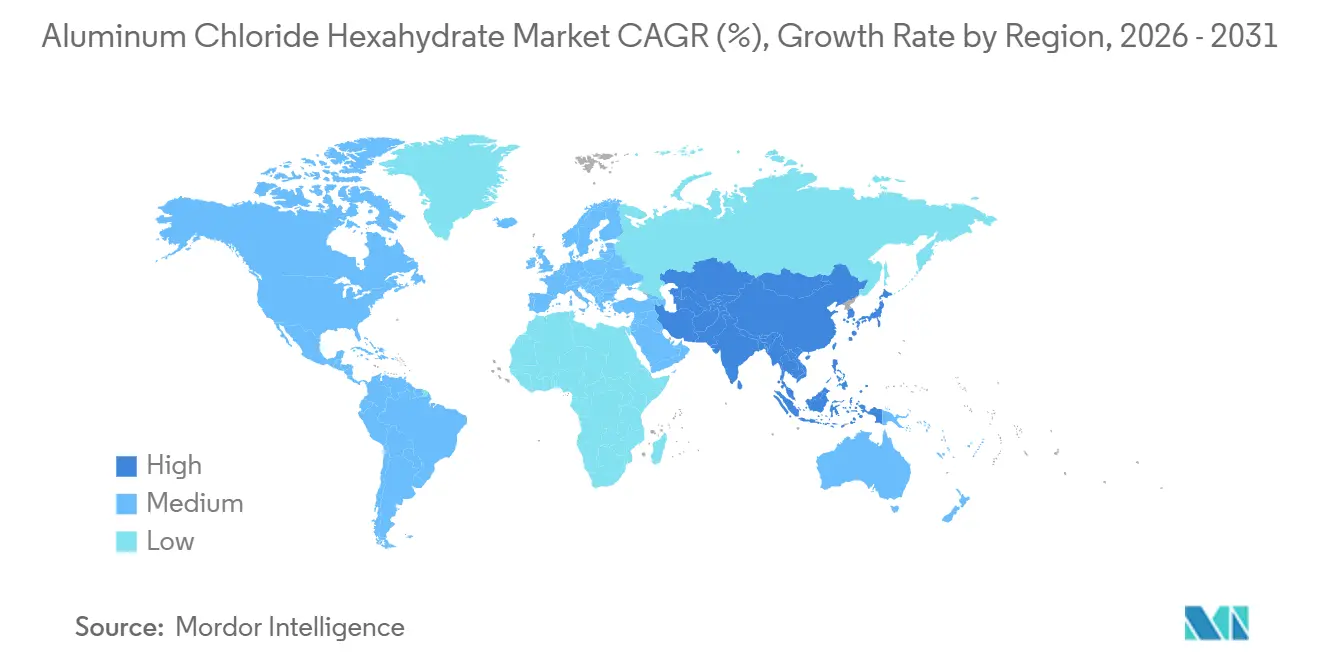
- By geography, Asia-Pacific commanded 47.78% share in 2025 and is forecast to record the highest 5.76% CAGR from 2026 to 2031.
Note: Market size and forecast figures in this report are generated using Mordor Intelligence’s proprietary estimation framework, updated with the latest available data and insights as of January 2026.
Market Trends and Insights
Drivers Impact Analysis of Aluminum Chloride Hexahydrate Market*
| Driver | (~) % Impact on CAGR Forecast | Geographic Relevance | Impact Timeline |
|---|---|---|---|
| Expanding API synthesis in emerging-market pharmaceutical clusters | +1.2 % | China, India, ASEAN | Medium term (2-4 years) |
| Scale-up of Lewis-acid catalysis for biomass-to-chemicals routes | +0.6 % | North America, Europe, Brazil | Long term (≥4 years) |
| Commercialization of AlCl₃-based deep-eutectic battery electrolytes | +1.0 % | China, South Korea, Japan | Medium term (2-4 years) |
| Growth of precision additive-manufacturing feedstocks | +0.4 % | North America, Germany, Japan | Long term (≥4 years) |
| Mandates for high-purity catalysts in green fine-chemicals production | +0.8 % | EU, U.S. | Short term (≤2 years) |
| Source: Mordor Intelligence | |||
Expanding API Synthesis in Emerging-Market Pharmaceutical Clusters
Western drugmakers have relocated 60-70% of their intermediate production to Asia, reducing costs by up to 50%. This cost efficiency has resulted in a steady demand for catalytic grades with purity levels of 99-99.5% that adhere to FDA and EMA residue limits. The addition of new API capacities in Gujarat, Hyderabad, Jiangsu, and Zhejiang is increasing at an annual rate of 20-30%. However, stricter discharge regulations in China and India are influencing the preference for aluminum catalysts instead of ferric or zinc alternatives.
Scale-Up of Lewis-Acid Catalysis for Biomass-to-Chemicals Routes
Pilot biorefineries are converting corn stover and bagasse into 5-HMF and levulinic acid, with aluminum chloride hexahydrate being increasingly selected as a catalyst. This is driven by its ability to cleave lignin ether bonds under milder conditions compared to mineral acids. The economic feasibility of these processes depends on the recovery of this highly soluble catalyst. Current membrane systems contribute an additional cost of USD 0.15-0.25 per kg of product. Consequently, broader adoption is expected to follow the maturation of integrated, closed-loop projects in Europe after 2028[1]Horizon Europe, “Circular Biorefineries Project,” ec.europa.eu.
Commercialization of AlCl₃-Based Deep-Eutectic Electrolytes for Next-Gen Batteries
In 2024, aluminum-ion prototypes, combining aluminum chloride hexahydrate with urea or choline chloride, resulted in non-flammable electrolytes, enabling 1,000 cycles with 85% capacity retention[2]Springer Nature, “Aluminum-Ion Battery Performance with Deep Eutectic Solvents,” springer.com . CATL and BYD pilots are working toward stationary systems priced at USD 80-100 /kWh by 2028. However, they face challenges such as the requirement for salt with purity levels exceeding 99.9%, which is priced 50-70% higher than pharmaceutical grades, and limitations in conductivity due to viscosity issues.
Growth of Precision Additive-Manufacturing Feedstocks
In a breakthrough, researchers have successfully applied atomic layer deposition of Al₂O₃ onto 3-D-printed titanium implants. They utilized aluminum chloride hexahydrate, which decomposes cleanly at temperatures between 180-220 °C, resulting in sub-nanometer films. Notably, a German patent filed in 2025 highlighted a 95% recovery rate of the precursor, leading to a 30% reduction in material costs and hastening the adoption of these advanced implants in aerospace and medical devices.
Restraints Impact Analysis of Aluminum Chloride Hexahydrate Market*
| Restraint | (~) % Impact on CAGR Forecast | Geographic Relevance | Impact Timeline |
|---|---|---|---|
| Substitution by alum and polyaluminum chloride in bulk coagulation | -0.9 % | Global, acute in municipal utilities | Short term (≤2 years) |
| Tight anhydrous AlCl₃ supply chains causing price volatility | -0.5 % | Asia-Pacific, global spillover | Short term (≤2 years) |
| Shift toward “aluminum-free” consumer-care formulations | -0.4 % | Europe, North America | Medium term (2-4 years) |
| Source: Mordor Intelligence | |||
Substitution by Alum and Polyaluminum Chloride in Bulk Coagulation
PAC reduces COD/BOD levels by 60-80% with half the aluminum dose. This results in cost savings for utilities of USD 0.02-0.04 per m³ while complying with the EU Directive 2020/2184's residual-Al cap of 200 µg/L. Similarly, China's GB 15892-2020 supports PAC's application. Currently, PAC is priced at USD 180-220 per MT, compared to USD 250-300 for hexahydrate, which impacts commodity demand.
Tight Anhydrous AlCl₃ Supply Chains Causing Price Volatility
In 2024, an accident in Shandong led to the removal of 50,000 tons of anhydrous AlCl₃. This incident caused spot prices to surge by 25-30% and reduced converters' margins by as much as 300 basis points. The cost of backward integration stands at USD 30-50 million, a hurdle that only Solstice Advanced Materials Inc and a few select state-owned enterprises (SOEs) can overcome.
*Our forecasts treat driver/restraint impacts as directional, not additive. The impact forecasts reflect baseline growth, mix effects, and variable interactions.
Aluminum Chloride Hexahydrate Market Segment Analysis
By Purity:
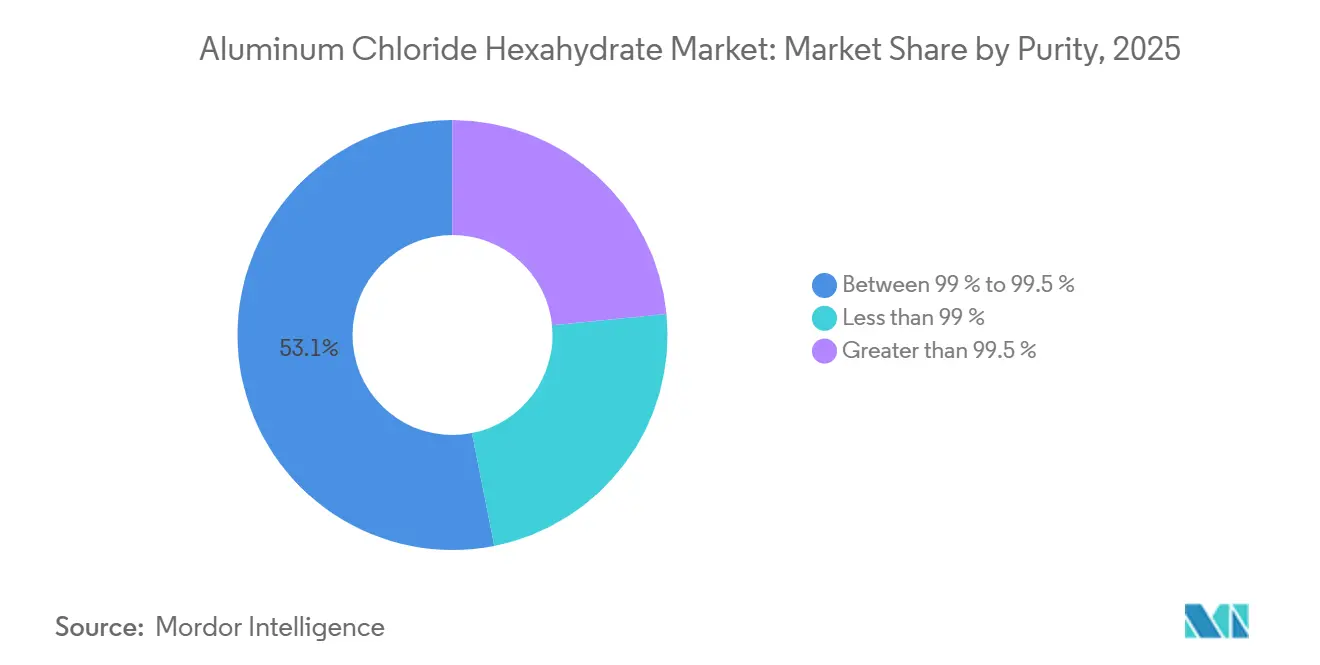
High-Purity Grades Steal Profits as Mid-Grade Dominates VolumesIn 2025, the 99-99.5 % purity segment accounted for 53.11 % of the revenue, driven by consistent demand in API, textiles, and water treatment. Economies of scale in China and India have supported pricing within the range of USD 1.20-1.50 /kg for aluminum chloride hexahydrate. The greater than 99.5 % ultra-high-purity segment is projected to grow at a 4.87 % CAGR, supported by increasing applications in deep-eutectic batteries and compliance with EU REACH catalyst mandates. Several producers have adopted fractional-crystallization units to enhance mid-grade stock at an additional cost of USD 0.30-0.50 /kg, focusing on higher-margin niches. The <99 % purity segment now represents only 12-15 % of the total volume, as PAC continues to replace it in southern-Asia municipal tenders.
Stricter regulatory requirements are shaping this segmental dynamic. Arsenic limits set by the EU and China, capped at <1 ppm, have reduced the viability of low-grade lots, prompting capacity upgrades or market exits.



By Application:
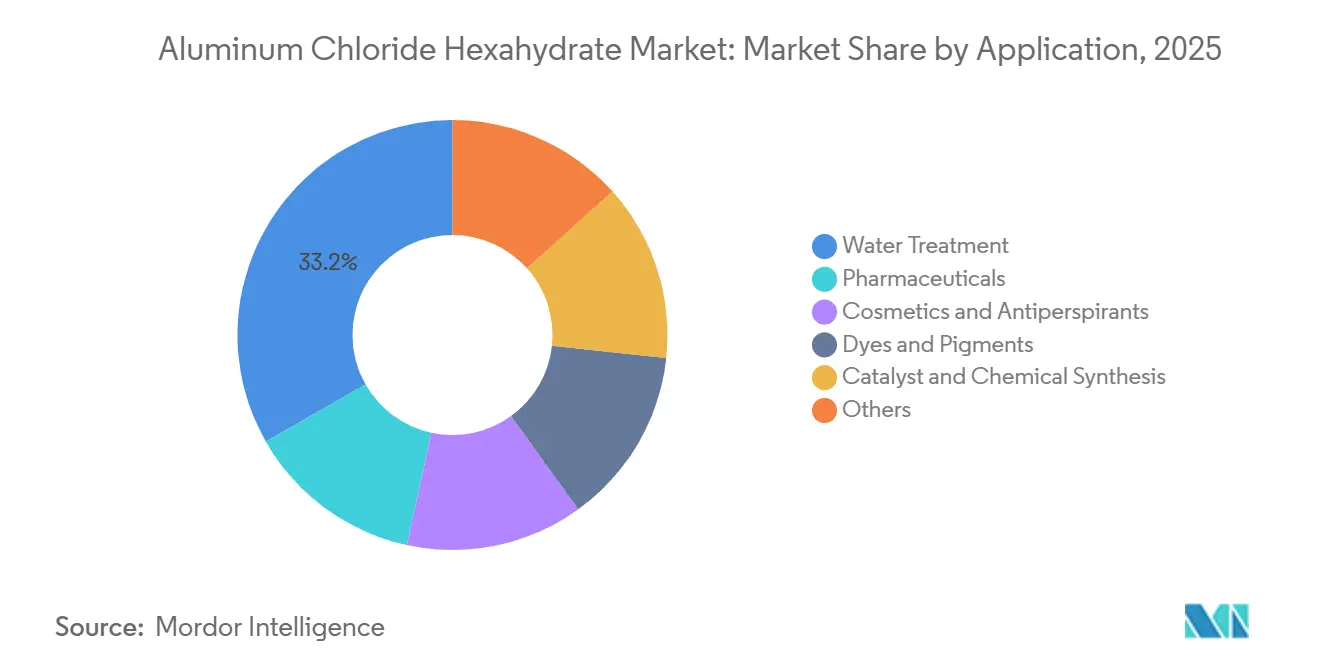
Pharmaceuticals Eclipse Water Treatment in Margin ContributionIn 2025, water treatment represented the largest application segment, accounting for 33.24% of revenues. Nevertheless, pharmaceutical synthesis is projected to grow at a 5.11% CAGR, lifting its slice of the aluminum chloride hexahydrate market size by 2031. Formulation chemists prefer the reagent for regio-selective acylations, minimizing downstream purification steps. In dermatology, prescription antiperspirant gels containing 15% aluminum chloride secure double-digit sales growth as telehealth platforms expand access to hyperhidrosis treatments.
Dyes, pigments, and polymer-additive manufacturers capitalize on aluminum-complexed colorants that deliver chromium-free coloration with lower metal-ion discharge. Catalysis applications inch forward as petrochemical clusters in the Middle East invest in on-purpose alkylate units, each demanding 2–3 ktpa of high-purity catalyst. Emerging additive-manufacturing and battery-electrolyte niches attract venture capital focused on advanced materials, promising incremental, premium-priced volumes through the next decade.
By End-User:
Healthcare Momentum Challenges Chemical-Sector LeadershipChemical producers consumed 36.11% of output in 2025, continuing a legacy of using aluminum chloride hexahydrate in fragrances, plasticizers, and specialty intermediates. Plant revamps that substitute aluminum chloride for titanium tetrachloride-based catalysts are underway, prompted by lower toxicity and simpler waste-neutralization. Healthcare and life-sciences applications, however, will post a 5.17% CAGR. Pharma companies expand capacity for generic APIs where aluminum chloride catalyzes 2,4-dichlorobenzyl routes, while dermatology and OTC antiperspirant brands layer new product lines targeting teenage and athlete demographics. The personal-care universe benefits as microencapsulated aluminum salts extend efficacy, shortening re-application cycles.
Textile use, though a mature segment, gains from tighter discharge norms in Bangladesh and Vietnam, prompting mills to replace iron-based coagulants that leave fabric staining. Pulp-and-paper players deploy aluminum chloride in modified sizing systems that improve water retention, enabling heavier-basis-weight specialty boards. The diversification of end-user profiles consequently cushions cyclical swings in any single customer group and supports a resilient aluminum chloride hexahydrate market.
Geography Analysis
APAC Aluminum Chloride Hexahydrate Market
Asia-Pacific, which accounts for 47.78% of 2025 sales, is projected to grow at a 5.76% CAGR through 2031. In China, vertical integration achieves costs of USD 1.10-1.40/kg, but stricter discharge regulations are leading to the closure of smaller plants, resulting in higher purity averages. In India, the Gujarat and Hyderabad corridors are increasing API capacity by 20-30% annually, driven by rising local demand. Vietnam's 30,000-ton PAC complex, expected to become operational in 2026, is anticipated to shift some coagulation expenditures while increasing the region's demand for high-grade hexahydrate, a key PAC feedstock catalyst.
North America and Europe Aluminum Chloride Hexahydrate Market
In North America, the reshoring of CMOs and EPA's green-chemistry incentives are driving demand for high-purity products, although water-treatment volumes are stabilizing due to the PAC shift. Mexico, benefiting from the USMCA, is gradually expanding its capacity with a focus on automotive paints and packaging grades. In Europe, REACH criteria are encouraging the adoption of >99.5% purity standards. Merck's EUR 3 billion investment in life sciences reflects the focus on regulated niches. However, southern Europe's municipal tenders are experiencing reduced activity due to PAC substitutions.
South America and MEA Aluminum Chloride Hexahydrate Market
In South America and the Middle East-Africa, growth is supported by Brazil's pulp-and-paper sector and water-scarcity initiatives in the Gulf. Nevertheless, currency fluctuations and logistical challenges are limiting the pace of growth.

Competitive Landscape
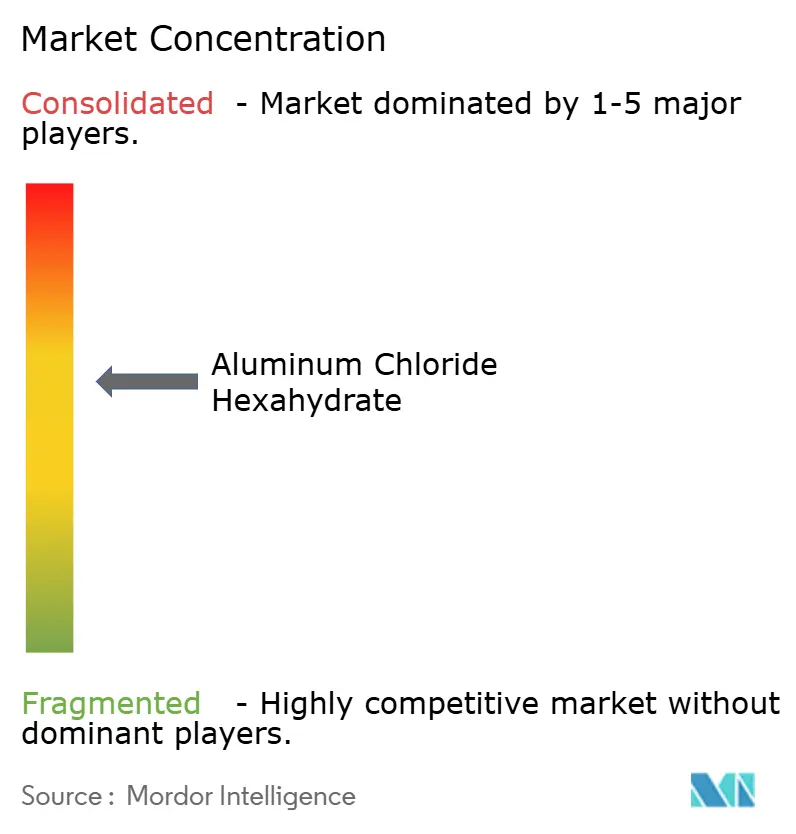
The aluminum chloride hexahydrate market is moderately fragmented. The leading players include Merck KGaA, Thermo Fisher Scientific, Avantor, Solstice Advanced Materials Inc., and IRO GROUP INC. They maintain this position through FDA-registered plants, compliance with ISO 14001 programs, and proprietary purification methods. Regional competitors such as Jinan Haohua, Tianjin Kaifeng, and Yixing Bluwat offer 15-25% discounts on commodity lots but face challenges due to shrinking addressable markets in water treatment. Companies are increasingly focusing on regulated demand pools to strengthen their market position. Merck has allocated EUR 3 billion for modular life-science lines from 2025 to 2028, Thermo Fisher plans to invest USD 2.15 billion in U.S. bioprocess infrastructure in 2024, and Avantor has spent USD 1.4 billion on specialty-chemical mergers and acquisitions, aiming to secure higher-margin downstream opportunities. Additionally, patent filings for deep-eutectic electrolytes have doubled post-2024, primarily driven by battery start-ups rather than traditional salt manufacturers, indicating potential competition from emerging innovators.
Aluminum Chloride Hexahydrate Industry Leaders
Avantor, Inc.
IRO GROUP INC
Solstice Advanced Materials Inc
Thermo Fisher Scientific Inc
Merck KGaA
- *Disclaimer: Major Players sorted in no particular order
Aluminum Chloride Hexahydrate Market Companies Covered in this Report
- Alpha Chemika
- Avantor, Inc.
- GFS Chemicals Inc
- Solstice Advanced Materials Inc.
- IRO GROUP INC
- Jinan Haohua Industry
- Merck KGaA
- Otto Chemie Pvt. Ltd.
- Sisco Research Laboratories Pvt. Ltd.
- Spectrum Chemical
- Strem Chemicals
- Thermo Fisher Scientific Inc.
- Tianjin Kaifeng
- YIXING BLUWAT CHEMICALS CO., LTD.

Recent Industry Developments in Aluminum Chloride Hexahydrate Market
- November 2025: Merck KGaA broke ground on a EUR 800 million high-purity salt facility in Darmstadt, Germany, featuring zero-liquid-discharge wastewater treatment.
- February 2025: Thermo Fisher Scientific invested USD 22 million to expand oral solid dose drug development capabilities at its Bend, Oregon, and Cincinnati, Ohio, sites, enhancing formulation processes and bioavailability testing that rely on aluminum-based compounds for pharmaceutical synthesis such as aluminum chloride hexahydrate.


Global Aluminum Chloride Hexahydrate Market Report Scope
Aluminum chloride hexahydrate is a white or yellowish, highly soluble, deliquescent crystalline compound. It is primarily used as a first-line, FDA-approved topical treatment for hyperhidrosis (excessive sweating) and in antiperspirants, as well as an industrial catalyst.
The market is segmented by purity, application, end-user industry, and geography. By purity, the market is segmented into less than 99%, between 99% to 99.5%, and greater than 99.5%. By application, the market is segmented into water treatment, pharmaceuticals, cosmetics and antiperspirants, dyes and pigments, catalyst and chemical synthesis, and other applications. By end-user industry, the market is segmented into chemical, healthcare and life sciences, personal care and cosmetics, textile, pulp and paper, and other end-user industries. The report also covers the market size and forecasts for Aluminum chloride hexahydrate in 17 countries across the world. For each segemnt market sizing and forecasts are provided in terms of value (USD).
| Less than 99 % |
| Between 99 % to 99.5 % |
| Greater than 99.5 % |
| Water Treatment |
| Pharmaceuticals |
| Cosmetics and Antiperspirants |
| Dyes and Pigments |
| Catalyst and Chemical Synthesis |
| Others |
| Chemical |
| Healthcare and Life-sciences |
| Personal-care and Cosmetics |
| Textile |
| Pulp and Paper |
| Others |
| Asia-Pacific | China |
| India | |
| Japan | |
| South Korea | |
| ASEAN Countries | |
| Rest of Asia-Pacific | |
| North America | United States |
| Canada | |
| Mexico | |
| Europe | Germany |
| United Kingdom | |
| France | |
| Italy | |
| Spain | |
| Russia | |
| Rest of Europe | |
| South America | Brazil |
| Argentina | |
| Rest of South America | |
| Middle-East and Africa | Saudi Arabia |
| South Africa | |
| Rest of Middle-East and Africa |
| By Purity | Less than 99 % | |
| Between 99 % to 99.5 % | ||
| Greater than 99.5 % | ||
| By Application | Water Treatment | |
| Pharmaceuticals | ||
| Cosmetics and Antiperspirants | ||
| Dyes and Pigments | ||
| Catalyst and Chemical Synthesis | ||
| Others | ||
| By End-user Industry | Chemical | |
| Healthcare and Life-sciences | ||
| Personal-care and Cosmetics | ||
| Textile | ||
| Pulp and Paper | ||
| Others | ||
| By Geography | Asia-Pacific | China |
| India | ||
| Japan | ||
| South Korea | ||
| ASEAN Countries | ||
| Rest of Asia-Pacific | ||
| North America | United States | |
| Canada | ||
| Mexico | ||
| Europe | Germany | |
| United Kingdom | ||
| France | ||
| Italy | ||
| Spain | ||
| Russia | ||
| Rest of Europe | ||
| South America | Brazil | |
| Argentina | ||
| Rest of South America | ||
| Middle-East and Africa | Saudi Arabia | |
| South Africa | ||
| Rest of Middle-East and Africa | ||


Key Questions Answered in the Report
How fast is the aluminum chloride hexahydrate market expected to grow through 2031?
Revenue is forecast to advance at a 4.42 % CAGR between 2026 and 2031, expanding from USD 685.99 million in 2026 to USD 851.60 million by 2031.
Which purity grade holds the largest share?
The 99-99.5 % purity grade captured 53.11 % of 2025 revenue, supported by API synthesis, textile mordanting, and municipal water treatment demand.
Why is PAC replacing aluminum chloride hexahydrate in water treatment?
PAC achieves similar or better turbidity and COD/BOD removal at 30-50 % lower dosing, reduces sludge, and helps utilities meet 200 µg/L residual-Al limits under EU rules.
Which region leads demand growth?
Asia-Pacific dominates with 47.78 % of 2025 sales and is growing the fastest at 5.76 % CAGR through 2031, driven by Chinese and Indian API capacity expansion.
Page last updated on:


 Your data is secure and never sold or shared.


