
Africa Tire Market Size and Share
Market Overview
| Study Period | 2019 - 2031 |
|---|---|
| Forecast Data Period | 2026 - 2031 |
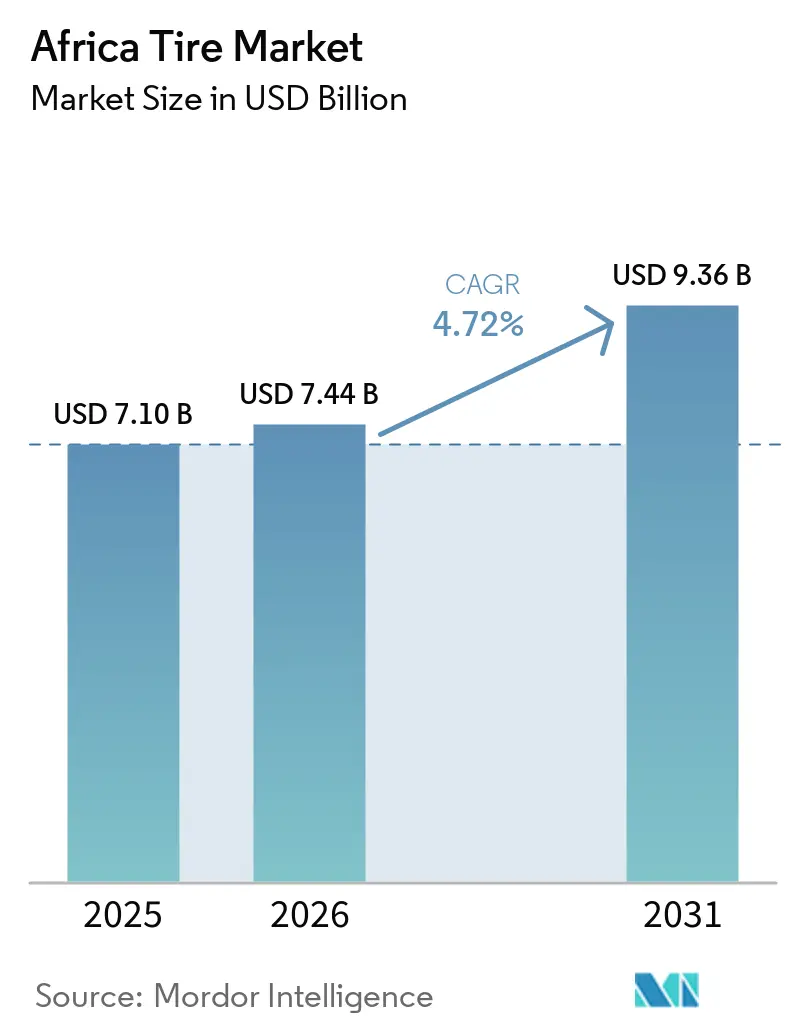
| Base Year Market Size (2025) | USD 7.10 Billion |
| Market Size (2026) | USD 7.44 Billion |
| Market Size (2031) | USD 9.36 Billion |
| Growth Rate (2026 - 2031) | 4.72 % |
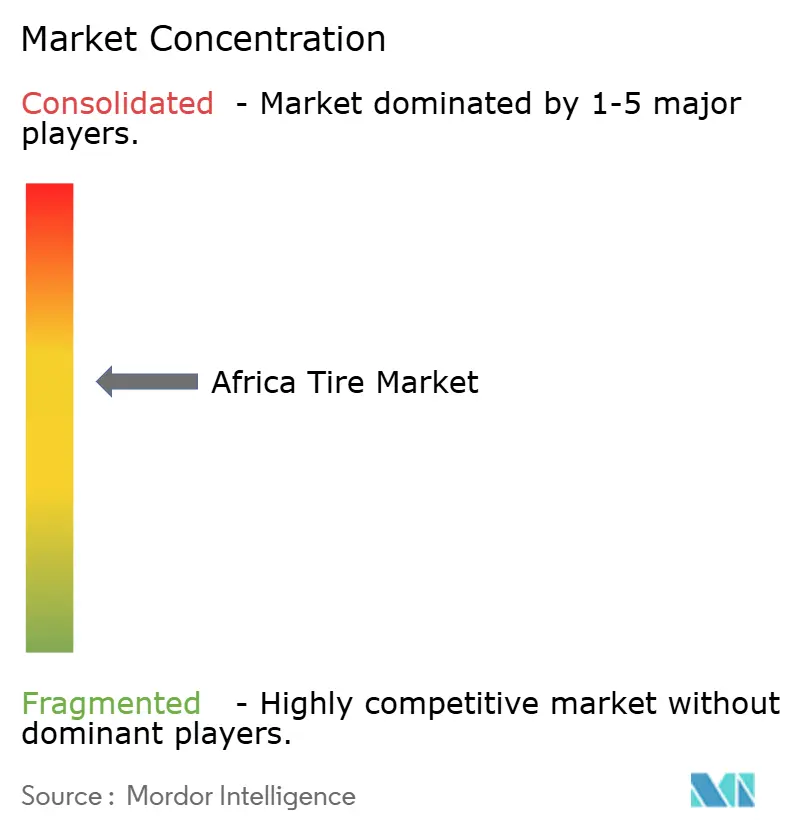
| Market Concentration | Medium |
Major Players *Disclaimer: Major Players sorted in no particular order Image © Mordor Intelligence. Reuse requires attribution under CC BY 4.0. | |
Africa Tire Market Analysis by Mordor Intelligence
The African tire market size was valued at USD 7.10 billion in 2025 and is estimated at USD 7.44 billion in 2026, and is projected to reach USD 9.36 billion by 2031 at a 4.72% CAGR over 2026-2031. Infrastructure modernization, the African Continental Free Trade Agreement's transport corridor initiatives, and price-driven strategies by Chinese manufacturers are reshaping the market landscape. Chinese brands, supported by localized plants and competitive pricing strategies, are steadily gaining market share and overshadowing European suppliers. The rapid motorization of resource-rich economies is driving an increase in replacement demand by approximately 5%. Additionally, the adoption of digital fleet-management tools is influencing commercial fleets to transition toward premium radial products. In Nigeria, Egypt, and Kenya, currency fluctuations and regulatory restrictions on used-tire imports are fostering the growth of local manufacturing ambitions. This development presents significant opportunities for market players capable of combining cost efficiency with strong compliance capabilities.
Key Report Takeaways
- By season, all-season lines captured 55.13% of the African tire market share in 2025; summer designs registered the fastest 5.64% CAGR through 2031.
- By tire design, radial construction commanded 91.25% share of the African tire market size in 2025; non-pneumatic airless formats are advancing at a 6.71% CAGR to 2031.
- By vehicle type, passenger cars commanded a 39.44% share of the African tire market size in 2025, and will advance at a 4.97% CAGR to 2031.
- By application, on-road commanded a 73.15% share of the African tire market size in 2025, and will continue to expand at a 5.15% CAGR to 2031.
- By end user, the aftermarket held 78.66% of the African tire market size in 2025, while OEM demand records a 6.04% CAGR through 2031.
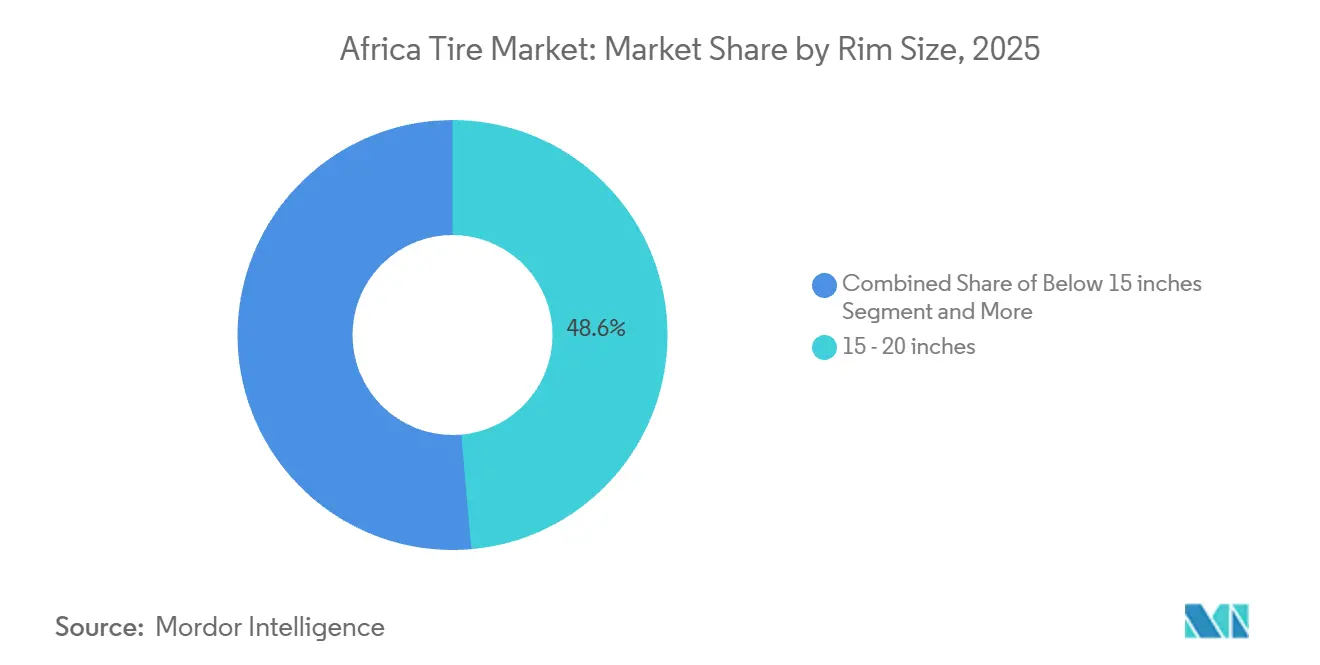
- By rim size, tires of 15 to 20 inches held 48.55% of the African tire market size in 2025, while the above 20 inches segment is projected to record a 5.87% CAGR through 2031.
- By propulsion, internal-combustion vehicles dominated with 90.24% of the African tire market size in 2025, while battery-electric vehicles' demand will grow at a 9.49% CAGR through 2031.
- By country, South Africa led with 26.75% of the African tire market share in 2025; the Democratic Republic of Congo posts the strongest 6.21% CAGR to 2031.
Note: Market size and forecast figures in this report are generated using Mordor Intelligence’s proprietary estimation framework, updated with the latest available data and insights as of January 2026.
Africa Tire Market Trends and Insights
Drivers Impact Analysis*
| Driver | (~) % Impact on CAGR Forecast | Geographic Relevance | Impact Timeline |
|---|---|---|---|
| Increasing Vehicle Parc and Motorization | +1.2% | Nigeria, South Africa, Algeria | Medium term (2-4 years) |
| Expansion of Chinese Tire-Maker | +1.1% | Morocco, Kenya, Nigeria, Egypt | Medium term (2-4 years) |
| AfCFTA Road-Infrastructure Build-Out | +0.9% | Continental, West Africa focus | Long term (≥ 4 years) |
| Demand for Affordable Replacement Tires | +0.8% | Nigeria, Kenya, Tanzania, Ghana | Short term (≤ 2 years) |
| Government Incentives for Local Capacity | +0.4% | Nigeria, Egypt, South Africa | Long term (≥ 4 years) |
| Digital Fleet-Management Adoption | +0.3% | South Africa, DRC, Ghana, Botswana | Medium term (2-4 years) |
| Source: Mordor Intelligence | |||
Increasing Vehicle Parc and Motorization Rate Across Africa
Nigeria imported automobiles valued at NGN 1.58 trillion (approximately USD 1.04 billion) in 2025, signaling a gap that replacement tire suppliers are rushing to fill [1]. In oil-rich nations such as Algeria and Angola, increasing incomes have resulted in higher passenger-car ownership, which is driving significant demand for budget and mid-tier tires. The expansion of ride-hailing services and informal taxi operations is further contributing to the growing daily requirement for tire replacements. Furthermore, in densely populated urban areas, the rising adoption of two-wheelers is significantly boosting the demand for smaller rim sizes. As urban mobility continues to develop, the previously pronounced seasonality of tire demand is becoming less evident, enabling warehouses to maintain consistent stock levels throughout the year. Distributors who effectively manage their inventory policies are gaining a competitive advantage in this evolving market environment.
Expansion of Chinese Tire Makers’ Distribution Networks (Price Competitiveness)
Qingdao Sentury Tire Co., Ltd. and Linglong's Kenya plant, along with a facility in Morocco, are transitioning from solely exporting to manufacturing regionally. This strategic shift not only reduces shipping costs but also minimizes exposure to currency fluctuations. By establishing local production facilities, these companies gain access to duty exemptions provided under regional trade agreements, enabling their products to be priced more competitively compared to European alternatives. Once these facilities become operational, they can efficiently supply nearby markets such as Senegal or Uganda. This approach allows for the customization of tread patterns to meet specific local road conditions while also significantly reducing lead times, thereby enhancing overall market responsiveness.
Rapid Road-Infrastructure Development Programs (e.g., AfCFTA Corridors)
Projects such as the Abidjan–Lagos Highway unlock long-haul freight lanes requiring durable truck and bus radials [2]. With a decline in the preference for fuel-efficient radials, there is a noticeable shift towards enhanced pavements, leading to a price increase of approximately 45%. The growing use of off-road tires in on-site construction equipment is driving the expansion of heavy-duty niches. Enhanced connectivity is not only shortening delivery lead times but also bolstering the adoption of hub and spoke warehousing models. Suppliers offering field service support along these routes are seizing opportunities for both customer retention and upselling.
Growing Demand for Affordable Replacement Tires Through Informal Channels
In Nigeria, informal dealerships, which prefer brands that offer smaller batches and cash-friendly terms, dominate the retail landscape. Chinese manufacturers, by leveraging cost leadership and flexible packaging strategies, often bypass formal importers to effectively address this demand. The rural markets in the country are significantly reliant on motorbike and minibus operators. These operators, despite their short purchase cycles, exhibit a consistent demand for high volumes of products. Price sensitivity continues to play a more critical role than quality perception in influencing purchasing decisions. However, ongoing safety campaigns have the potential to gradually enhance standards within the market. This shift in standards is likely to benefit producers who align their offerings with these evolving requirements, thereby positioning themselves advantageously in the competitive landscape.
Restraints Impact Analysis*
| Restraint | (~) % Impact on CAGR Forecast | Geographic Relevance | Impact Timeline |
|---|---|---|---|
| Currency Depreciation and Import-Duty | –0.9% | Nigeria, Egypt, Ghana, Kenya | Short term (≤ 2 years) |
| Volatile Natural-Rubber and Synthetic Prices | –0.7% | Import-dependent states | Short term (≤ 2 years) |
| Fragmented Rubber Supply Chain | –0.4% | West and Central Africa | Long term (≥ 4 years) |
| Regulatory Clamp-Down on Imports | –0.3% | Kenya, South Africa, Nigeria | Medium term (2-4 years) |
| Source: Mordor Intelligence | |||
Currency Depreciation and Import-Duty Fluctuations
The Nigerian naira and Egyptian pound have each lost more than 50% of value since 2024, inflating landed tire costs and curbing consumer purchasing power [3]. To maintain stock, distributors are compelled to hold higher working capital, which in turn places significant strain on their financing capabilities. This financial pressure has prompted several importers to adopt a strategic approach by committing to partial local assembly. This development highlights a gradual yet inevitable transformation within the supply chain, as companies increasingly prioritize localized operations to mitigate risks and optimize efficiency. Such a shift underscores the evolving dynamics of the supply chain landscape, driven by the need for adaptability and resilience in the face of financial and operational challenges.
Volatile Natural-Rubber and Synthetic-Rubber Prices
Despite Côte d’Ivoire increasing its latex exports, African producers are experiencing significant challenges due to global rubber shortages, which have elevated input costs to their highest levels in a decade. These rising costs are creating substantial difficulties for distributors who prioritize strict budgeting. The price surges are forcing these distributors to choose between absorbing the increased costs, which erodes their profit margins, or passing the costs onto consumers through higher retail prices. Both options have the potential to negatively impact demand within the market. Furthermore, the absence of adequate hedging tools in emerging markets exacerbates the challenges faced by mid-tier players, leaving them particularly exposed to the volatility in rubber prices. This situation underscores the pressing need for more robust financial instruments and strategies to mitigate risks in these markets.
*Our forecasts treat driver/restraint impacts as directional, not additive. The impact forecasts reflect baseline growth, mix effects, and variable interactions.
Segment Analysis
By Season: Growing Summer-Tire Adoption in Northern Markets
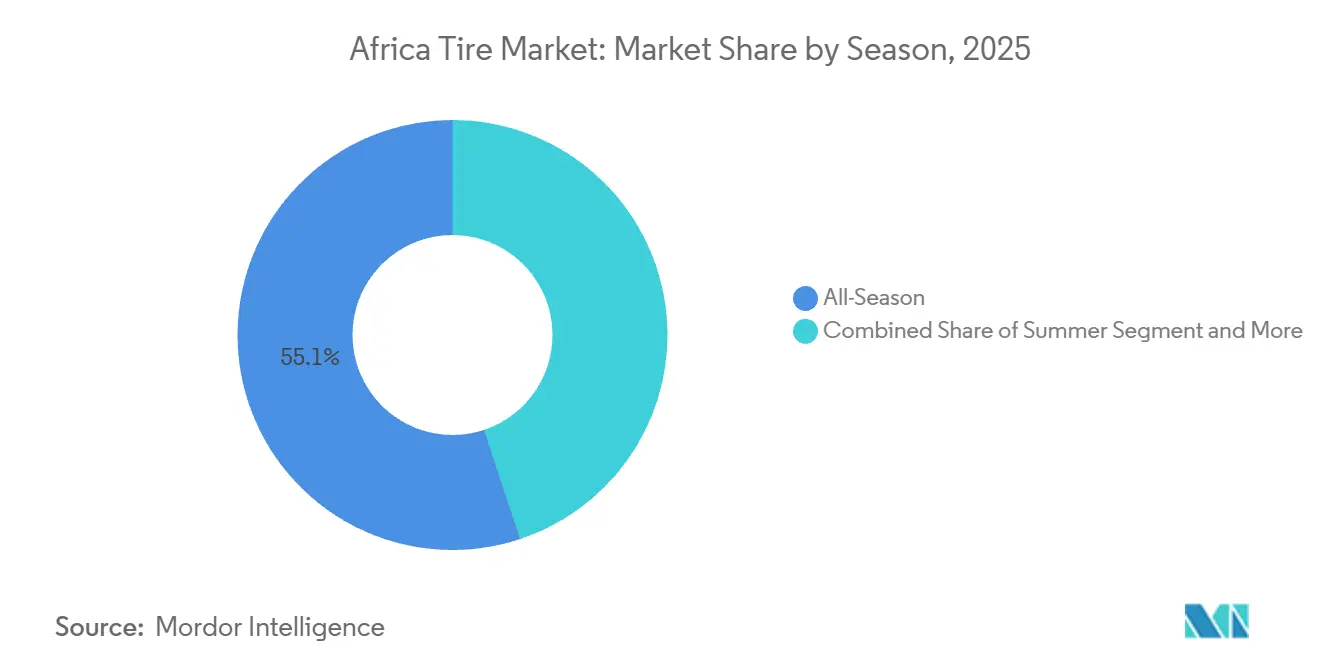
In the African tire market, all-season products hold a commanding 55.13% market share in 2025. However, fleet managers in Algeria and Morocco are increasingly opting for heat-resistant compounds that are specifically designed to endure the challenges posed by desert highways. Suppliers with expertise in addressing these temperature extremes are able to command premium prices, which effectively offset the higher costs associated with their specialized rubber mixes. Furthermore, summer tires are anticipated to grow at a CAGR of 5.64%, surpassing the overall growth rate of the African tire market during the forecast period.
In other regions, tropical climates exhibit a preference for flexible all-season rubbers that are capable of withstanding sporadic rainfall. Consequently, multinational distributors are strategically maintaining inventories of two distinct product assortments. These include high-silica summer tire lines that are specifically tailored for the Maghreb region and versatile multi-purpose treads that are designed to meet the demands of sub-Saharan roads. This approach to seasonal segmentation reflects a stronger alignment with climatic zones rather than economic tiers, thereby emphasizing the importance of regionalized research and development efforts for companies aiming to achieve a competitive advantage in the market.

By Tire Design: Radial Stronghold Faces Airless Experiments
In 2025, radials dominated the African tire market, accounting for 91.25% of the market share, owing to their advantages of lower rolling resistance and extended tread life. Meanwhile, mining conglomerates in South Africa and the DRC are experimenting with non-pneumatic or airless tire formats, which are projected to grow at a CAGR of 6.71% through 2031. These airless tires provide a significant advantage by eliminating downtime caused by punctures, a critical factor in an industry where equipment rental costs are substantially high on an hourly basis. This trend highlights the increasing focus on innovative tire solutions within the mining sector.
Mainstream passenger and truck operators continue to prefer radials, supported by well-established service networks and retreading infrastructure. However, partnerships between OEMs and quarry trucks indicate that as economies of scale improve, airless technology could expand its application to other utility vehicles. Companies investing in polymer link architectures at present are strategically positioned to attract early adopters and gain a competitive edge in thought leadership. This development emphasizes the potential for airless technology to significantly disrupt traditional tire markets in the coming years.
By Vehicle Type: Passenger Cars Dominate, but Commercial Fleets Accelerate
In 2025, passenger car fitments accounted for 39.44% of Africa's tire market share, with a projected CAGR of 4.97%, driven by increasing personal mobility. Additionally, e-commerce and construction activities are driving growth in light commercial and heavy-duty truck volumes. As axle loads increase, the frequency of replacements rises, creating larger value opportunities for suppliers in this segment.
In cities such as Lagos, Nairobi, and Kampala, the demand for two-wheelers grew significantly as ride-hailing companies expanded their motorcycle taxi fleets. Off-the-road lines catering to excavators and loaders, while niche in volume, offer attractive margins. By diversifying into these areas, manufacturers mitigate risks from slowing passenger car turnover and capitalize on higher-frequency commercial cycles.
By Application: On-Road Supremacy with Off-Road Momentum
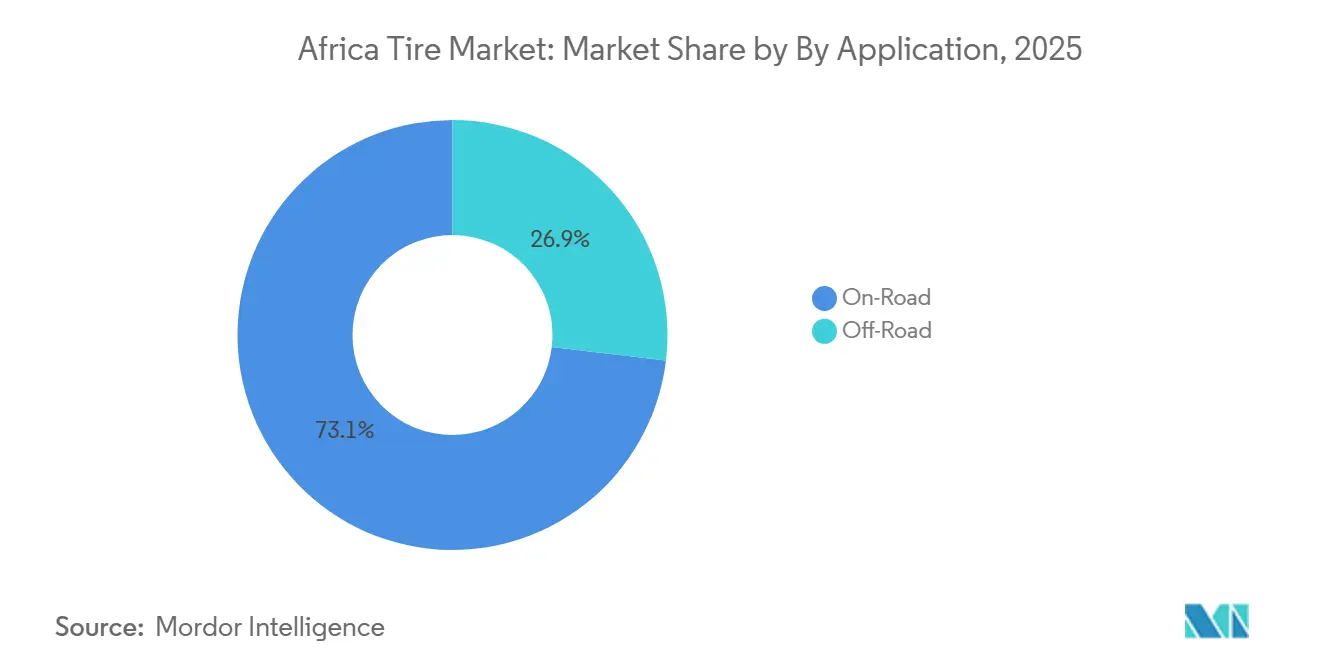
In 2025, the African tire market saw on-road categories dominate with a 73.15% share, reflecting the continent's expanding paved road network. This segment is projected to grow at a CAGR of 5.15% by 2031. As new asphalt supports higher speeds, there is a growing demand for stronger tread compounds, driving premiumization.
Off-road segments are experiencing significant growth, supported by mining concessions in Katanga's copper-rich regions and Ghana's gold belts. Specialized tread designs, which enhance traction on loose terrain, command price premiums of up to 35%. Brands focusing on application-specific engineering are capturing a larger share of fleet maintenance budgets, with an emphasis on improving uptime.
By End User: Aftermarket Bulk Meets OEM Growth Spurts
In 2025, the African tire market saw the aftermarket capture a commanding 78.66% share, supported by an influx of used vehicles and a sprawling informal retail network. In Tier 3 cities, small-scale dealers prioritize immediate availability over brand reputation, directing their bulk orders to cost-effective Asian suppliers.
From 2026 to 2031, OEM sales are expected to register a CAGR of 6.04%, driven by financing schemes that make new cars more accessible to middle-income families. In South Africa and Morocco, local assembly hubs are turning to global Tier 1 brands, favoring suppliers who can adhere to strict homologation standards and deliver just in time. To maximize both volume and profit margins, maintaining a careful balance between these two channels is crucial.
By Rim Size: Mid-Sized Rims Lead, Larger Diameters Surge
In 2025, compact sedans and light trucks drove the 15 to 20-inch bracket, capturing 48.55% of Africa's tire market share. Meanwhile, as SUVs gain traction and construction fleets expand, sizes exceeding 20 inches are projected to grow with a 5.87% CAGR. These larger diameters not only command higher average selling prices but also bolster manufacturers' gross margins.
As minicars wane in popularity, especially in urban areas prioritizing ride comfort and status, demand for tires below 15 inches is declining. Producers, facing a contraction in this segment, are streamlining their SKU complexity and reallocating resources to capitalize on the rapidly expanding larger formats.
By Propulsion: ICE Dominance, EV Tailwinds
In 2025, internal combustion units accounted for 90.24% of the African tire market share. However, electric vehicles (EVs) are projected to grow at a CAGR of 9.49%. This growth is primarily attributed to South Africa's tax rebate initiative and the development of charging corridors in Morocco. EV tires, which require features such as lower rolling resistance and sound-absorbing tread blocks, are driving significant research and development investments by premium brands.
Although hybrid adoption remains modest, it indicates potential for future diversification. Suppliers focusing on EV-specific compounds at present are likely to secure first-mover advantages. As grid expansions and declining battery prices further support the electrification of taxi and delivery fleets, these early adopters are expected to be well-positioned to capitalize on emerging opportunities.
Geography Analysis
In 2025, South Africa held a 26.75% share of the African tire market. This dominance is anchored by an established domestic automotive assembly sector that guarantees consistent demand from major global vehicle brands. Local distributors of premium radial tires benefit from highly integrated supply chains and extensive regional fitment networks, significantly reducing vehicle downtime for commercial operators. Furthermore, strategic industrial policies and protective trade measures help stabilize domestic manufacturing, enabling both private vehicle owners and large logistics fleets to plan long-term replacement cycles.
Forecasts indicate that the Democratic Republic of Congo will lead the African tire market with a compound annual growth rate of 6.21% through 2031. This growth is driven by an increase in heavy-truck purchases, supported by Chinese-backed infrastructure projects and the expansion of the copper-cobalt mining sector. Although logistics challenges persist, suppliers can mitigate port bottlenecks by collaborating with local wholesalers and utilizing Angola’s Atlantic ports as alternative routes. These strategic measures are expected to enhance the supply chain efficiency within the region.
The Rest-of-Africa region presents a diverse and evolving market landscape. In Nigeria, a large market facing currency-related challenges is increasingly shifting toward domestically assembled tires, as the depreciation of the naira raises the cost of imports. South Africa's well-established original equipment manufacturer sector continues to maintain consistent demand while enforcing stringent quality standards that favor global Tier-1 brands. Meanwhile, Kenya is emerging as a key manufacturing hub in East Africa, supported by Linglong’s production facility, which is expected to facilitate shipments to Uganda, Tanzania, and Rwanda within a 24-hour timeframe. Stable exchange rates and improvements in road infrastructure across these nations contribute to a more predictable and stable consumption outlook, further solidifying their position in the African tire market.
Competitive Landscape
Global giants such as Michelin, Bridgestone, and Continental are recognized for their durability and technological expertise. These companies have successfully positioned themselves to attract premium urban consumers while securing original equipment manufacturer (OEM) fitments. On the other hand, Chinese competitors, including Zhongce Rubber, Triangle Tyre, Sailun, and Linglong, are rapidly increasing their market share. This growth is largely attributed to their strategic use of local factories, which significantly reduce landed costs and enhance competitiveness.
The trend of vertical integration is becoming more prominent across the industry. Qingdao Sentury Tire Co., Ltd. has established a plant in Morocco that sources rubber additives from local suppliers. This facility also leverages the Tangier Med port to ensure rapid and efficient distribution. Michelin is conducting trials of treads made from recycled materials in South Africa. This initiative aligns with circular economy objectives and is designed to appeal to fleet clients who prioritize environmental, social, and governance (ESG) metrics. Additionally, Linglong has signed a memorandum of understanding with Kenyan authorities to provide training for technicians, thereby embedding its brand within the local service ecosystem and strengthening its market presence.
Technological advancements are becoming a critical area of competition within the tire industry. Bridgestone has introduced the Tirematics platform, while Continental has launched ContiConnect Live. Both platforms are web-connected and specifically designed to meet the needs of mining fleets that require predictive maintenance solutions. In response, Chinese companies are offering cost-effective sensor kits bundled with premium stock-keeping units (SKUs), which effectively reduce the competitive gap in this segment. As governments implement stricter homologation checks, the ability to meet compliance requirements will increasingly differentiate leading market players from less competitive firms.
Africa Tire Industry Leaders
-
Michelin
-
Bridgestone Corporation
-
The Goodyear Tire & Rubber Company
-
Continental AG
-
Zhongce Rubber Group Co., Ltd.
- *Disclaimer: Major Players sorted in no particular order
Recent Industry Developments
- June 2026: Sailun Group unveiled a USD 1.14 billion plan to expand production capacity in Egypt, its third expansion since August 2025. A new factory in the Suez Canal Economic Zone will produce 27 million semi-steel radial tires, 1.65 million all-steel radial tires, and 20,000 tons of off-the-road tires annually.
- January 2025: Linglong Tire, a leading tire manufacturer hailing from China, is poised to establish a factory in Kenya, with eyes set on the expansive African market. This initiative aligns seamlessly with government efforts to attract global enterprises, further cementing Kenya's reputation as a prime hub for foreign investments.
- January 2025: Sailun Group unveiled a USD 1.14 billion plan to expand production capacity in Egypt, its third expansion since August 2025. A new factory in the Suez Canal Economic Zone will produce 27 million semi-steel radial tires, 1.65 million all-steel radial tires, and 20,000 tons of off-the-road tires annually.
Africa Tire Market Report Scope
The African tire market is segmented by season, tire design, vehicle type, application, end user, rim size, propulsion, and country. By season, the market is segmented into summer, winter, and all-season tires. By tire design, the market is segmented into radial, bias, and non-pneumatic/airless tires. By vehicle type, the market is segmented into two-wheelers, passenger cars, light commercial vehicles, heavy commercial trucks and buses, and off-the-road and specialty vehicles, including OTR, agriculture, mining, and racing applications. By application, the market is segmented into on-road and off-road. By end user, the market is segmented into OEM and aftermarket. By rim size, the market is segmented into below 15 inches, 15 to 20 inches, and above 20 inches. By propulsion, the market is segmented into internal-combustion vehicles, battery-electric vehicles, and hybrid and fuel-cell vehicles. By country, the market is segmented into South Africa, Algeria, Nigeria, Morocco, Egypt, Kenya, the Democratic Republic of Congo, and the rest of Africa. The report offers market size and forecasts in value (USD) and volume (Units) for all the above-mentioned segments.
| Summer |
| Winter |
| All-Season |
| Radial |
| Bias |
| Non-pneumatic/Airless |
| Two-Wheelers |
| Passenger Cars |
| Light Commercial Vehicles |
| Heavy Commercial Trucks and Buses |
| Off-the-Road and Specialty (OTR, Agriculture, Mining, Racing) |
| On-Road |
| Off-Road (Construction, Mining, Agriculture) |
| OEM |
| Aftermarket (Replacement and Retread) |
| Below 15 inches |
| 15 to 20 inches |
| Above 20 inches |
| Internal-Combustion Vehicles |
| Battery-Electric Vehicles |
| Hybrid and Fuel-Cell Vehicles |
| South Africa |
| Algeria |
| Nigeria |
| Morocco |
| Egypt |
| Kenya |
| Democratic Republic of Congo |
| Rest of Africa |
| By Season | Summer |
| Winter | |
| All-Season | |
| By Tire Design | Radial |
| Bias | |
| Non-pneumatic/Airless | |
| By Vehicle Type | Two-Wheelers |
| Passenger Cars | |
| Light Commercial Vehicles | |
| Heavy Commercial Trucks and Buses | |
| Off-the-Road and Specialty (OTR, Agriculture, Mining, Racing) | |
| By Application | On-Road |
| Off-Road (Construction, Mining, Agriculture) | |
| By End User | OEM |
| Aftermarket (Replacement and Retread) | |
| By Rim Size | Below 15 inches |
| 15 to 20 inches | |
| Above 20 inches | |
| By Propulsion | Internal-Combustion Vehicles |
| Battery-Electric Vehicles | |
| Hybrid and Fuel-Cell Vehicles | |
| By Country | South Africa |
| Algeria | |
| Nigeria | |
| Morocco | |
| Egypt | |
| Kenya | |
| Democratic Republic of Congo | |
| Rest of Africa |
Key Questions Answered in the Report
How large is the Africa tire market in 2025?
The Africa tire market size stands at USD 7.10 billion in 2025 and is projected to reach USD 9.36 billion by 2031.
What is the expected growth rate for Africa’s tire demand?
Overall demand is forecast to expand at a 4.72% CAGR between 2026 and 2031.
Which country currently leads sales across the continent?
South Africa holds 26.75% of 2025 revenue, benefiting from hydrocarbon income that keeps import channels liquid.
Which tire segment is growing fastest by design?
Non-pneumatic/airless formats show the highest 6.71% CAGR due to mining and heavy-equipment use cases.