
Vegan Market Size and Share
Market Overview
| Study Period | 2021 - 2031 |
|---|---|
| Market Size (2026) | USD 1.28 Trillion |
| Market Size (2031) | USD 2.15 Trillion |
| Growth Rate (2026 - 2031) | 10.97 % |
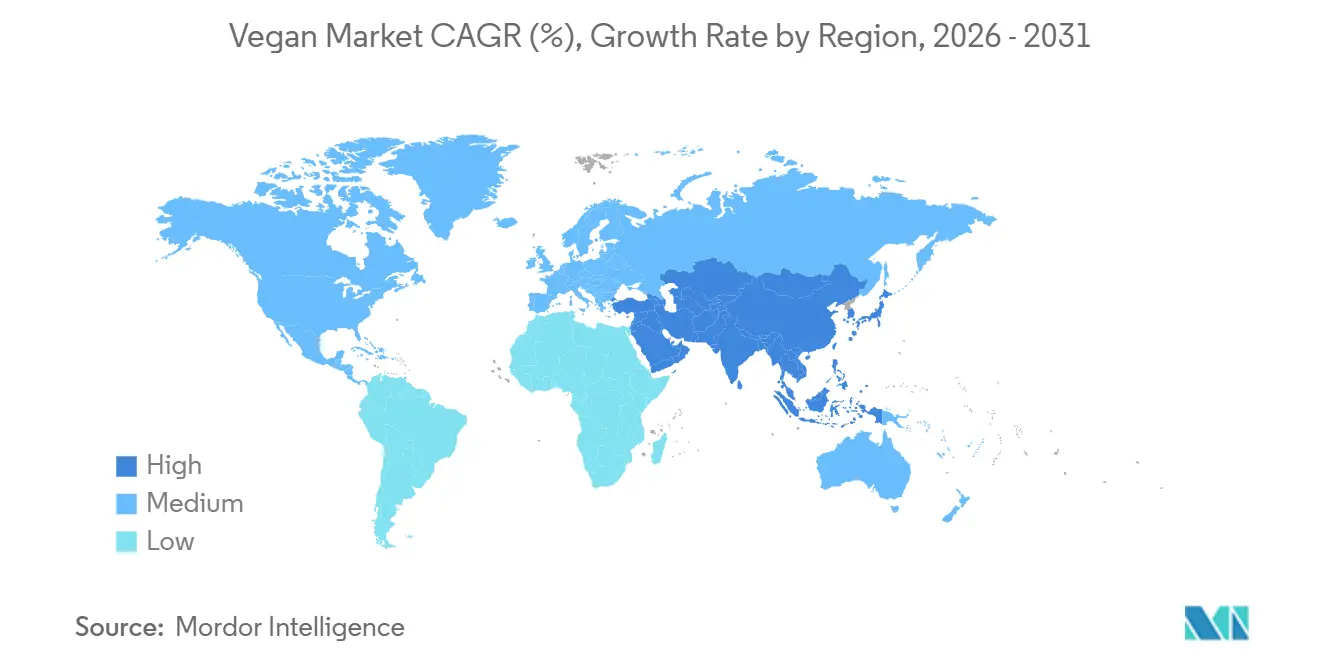
| Fastest Growing Market | Asia Pacific |
| Largest Market | North America |
| Market Concentration | Low |
Major Players *Disclaimer: Major Players sorted in no particular order Image © Mordor Intelligence. Reuse requires attribution under CC BY 4.0. | |
Vegan Market Analysis by Mordor Intelligence
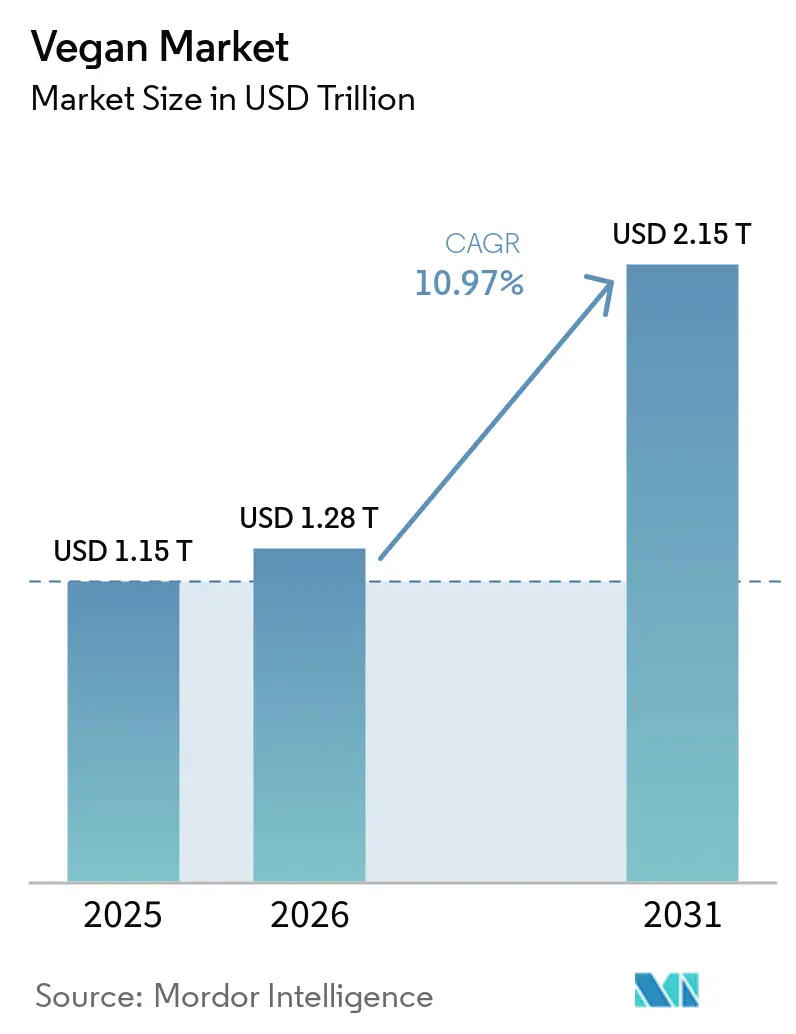
The Vegan Market size is expected to increase from USD 1.15 trillion in 2025 to USD 1.28 trillion in 2026 and reach USD 2.15 trillion by 2031, growing at a CAGR of 10.97% over 2026-2031. The market is driven by increasing awareness of animal welfare, growing interest in health and wellness, and rising consumer preference for ethical and environmentally conscious products. Consumers are increasingly seeking alternatives to animal-derived ingredients and materials as they become more aware of animal exploitation, resource consumption, and the environmental impact of conventional production practices. The growing adoption of flexitarian lifestyles is further expanding market demand, as consumers incorporate vegan products into their daily routines without necessarily eliminating all animal-derived products.
Key Report Takeaways
- By product type, Food and Beverages held 36.90% of the Vegan products market share in 2025, while Personal Care and Beauty is forecast to grow at a 12.09% CAGR through 2031.
- By distribution channel, Offline Retail Stores held 82.34% of the Vegan products market share in 2025, while Online Retail Stores are forecast to grow at a 13.11% CAGR through 2031.
- By geography, North America held 33.23% of the Vegan products market share in 2025, while Asia-Pacific is forecast to grow at an 11.55% CAGR through 2031.
Note: Market size and forecast figures in this report are generated using Mordor Intelligence’s proprietary estimation framework, updated with the latest available data and insights as of January 2026.
Market Trends and Insights
Drivers Impact Analysis of Vegan Market*
| Driver | (~) % Impact on CAGR Forecast | Geographic Relevance | Impact Timeline |
|---|---|---|---|
| Increasing consumer awareness of animal welfare and ethical consumption | +1.5% | Global, with intensity in North America and Northwestern Europe | Short term (≤ 2 years) |
| Increasing adoption of plant-based diets and flexitarian eating habits | +2.2% | Global; Asia-Pacific core, spill-over to South America | Medium term (2–4 years) |
| Rising consumer focus on health, wellness, and preventive nutrition | +2.0% | North America and Europe, early gains in urban Asia-Pacific | Medium term (2–4 years) |
| Growing influence of social media, vegan advocacy campaigns, and digital communities | +1.2% | Global, highest in 18–44 demographic across all regions | Short term (≤ 2 years) |
| Adoption of vegan labeling, third-party certification, and ingredient transparency standards | +1.0% | Europe and North America, with spill-over to Singapore, South Korea | Medium term (2–4 years) |
| Advancements in alternative protein technologies and fermentation-based ingredients | +1.5% | Global, led by Europe and North America | Long term (≥ 4 years) |
| Source: Mordor Intelligence | |||
Increasing Consumer Awareness of Animal Welfare and Ethical Consumption
Growing consumer awareness of animal welfare and ethical consumption is driving the vegan market by influencing purchasing decisions toward products that minimize animal exploitation and exclude animal-derived ingredients. Consumers are increasingly considering the ethical implications of product sourcing, manufacturing, and testing, leading to a preference for alternatives that align with cruelty-free and animal-conscious values. This shift is encouraging the adoption of vegan products across everyday consumption, as consumers seek consistency between their ethical beliefs and purchasing behavior. Growing scrutiny of ingredient origins and production practices is also increasing the importance of transparency, vegan certification, and credible cruelty-free claims, helping consumers identify products that meet their expectations.
Increasing Adoption of Plant-Based Diets and Flexitarian Eating Habits
The increasing adoption of plant-based diets and flexitarian eating habits is driving the vegan market, as consumers reduce their reliance on animal-based products and incorporate more plant-derived alternatives into their regular diets. The growing acceptance of flexitarian diets, which prioritize plant-based foods while allowing occasional consumption of animal products, broadens the potential consumer base beyond strict vegans and vegetarians. This gradual dietary shift supports market growth by making vegan products accessible to consumers who prefer to reduce, rather than eliminate, animal-based foods. According to ProVeg International, in 2025, 48% of meat eaters in the United Kingdom reported reducing their annual meat intake, while 38% identified as flexitarian, pescatarian, vegetarian, or vegan[1]. These figures indicate a shift toward more plant-oriented eating habits and a growing willingness to modify conventional dietary patterns.
Rising Consumer Focus on Health, Wellness, and Preventive Nutrition
Rising consumer focus on health, wellness, and preventive nutrition is driving the vegan market, as consumers increasingly prioritize dietary quality, nutritional balance, and food choices aligned with their long-term health goals. Greater attention to protein intake and overall nutritional adequacy is encouraging consumers to evaluate product composition and seek alternatives that fit their dietary preferences. According to the Ministry of Statistics and Programme Implementation, average daily per-capita protein intake in India was 61.8 grams in rural areas and 63.4 grams in urban areas in 2024, highlighting the importance of protein in dietary consumption[2]. This growing emphasis on nutritional intake supports consumer interest in evaluating the nutritional value of foods, including plant-based alternatives.
Growing Influence of Social Media, Vegan Advocacy Campaigns, and Digital Communities
The growing influence of social media, vegan advocacy campaigns, and digital communities is driving the vegan market by raising awareness of animal-derived ingredients, cruelty-free practices, and the availability of alternatives across consumer product categories. Digital discussions and advocacy initiatives encourage consumers to scrutinize product ingredients, sourcing methods, and manufacturing practices, strengthening interest in products that align with vegan principles. This influence extends beyond dietary choices to personal care and beauty products, where greater awareness of animal-derived ingredients and animal testing drives interest in vegan formulations; clothing and apparel, where consumers increasingly explore alternatives to animal-derived materials such as wool and silk; and footwear and accessories, where awareness of leather and other animal-based materials supports interest in plant-based and synthetic alternatives.
Restraints Impact Analysis of Vegan Market*
| Restraint | (~) % Impact on CAGR Forecast | Geographic Relevance | Impact Timeline |
|---|---|---|---|
| High production costs of certain vegan alternatives | -0.8% | Global; most acute in South America, and the Middle East and Africa | Short term (≤ 2 years) |
| Taste and texture limitations of vegan food products | -0.7% | Global, highest friction in plant-based meat segment | Short-medium term (≤ 3 years) |
| Limited nutritional equivalence of certain vegan alternatives | -0.5% | Global; visible in plant-based dairy and meat segments | Medium term (2–4 years) |
| Limited availability of suitable plant-based raw materials | -0.6% | Asia-Pacific, South America; spill-over to the Middle East and Africa | Long term (≥ 4 years) |
| Source: Mordor Intelligence | |||
High Production Costs of Certain Vegan Alternatives
High production costs of certain vegan alternatives restrain market growth by limiting affordability and reducing adoption among price-sensitive consumers. Developing vegan products often requires specialized raw materials, alternative ingredients, formulation expertise, processing methods, and quality-control procedures to achieve the desired performance, taste, texture, durability, and stability. The use of plant-derived ingredients and animal-free materials can increase manufacturing costs, particularly when production volumes are low or sourcing options are limited. Manufacturers may also incur additional expenses when reformulating products to replace animal-derived components while maintaining comparable functionality and quality. These cost pressures can result in higher retail prices, making some vegan alternatives less competitive with conventional products and discouraging consumers from switching or making regular purchases.
Taste and Texture Limitations of Vegan Food Products
Taste and texture limitations of vegan food products restrain market growth by affecting consumer acceptance, repeat purchases, and the ability of plant-based alternatives to compete with conventional products. Replicating the sensory characteristics of animal-derived foods is challenging because plant proteins, oils, starches, and other ingredients behave differently during processing and preparation. Differences in flavor, aroma, mouthfeel, creaminess, juiciness, and melting properties can make certain alternatives less appealing to consumers accustomed to conventional products. Some plant-based formulations may also develop undesirable aftertastes, grainy textures, dryness, or inconsistent performance during cooking, reducing their appeal to consumers seeking a comparable eating experience. These limitations are particularly significant for first-time buyers of vegan products, as an unsatisfactory initial experience may discourage further purchases.
*Our forecasts treat driver/restraint impacts as directional, not additive. The impact forecasts reflect baseline growth, mix effects, and variable interactions.
Vegan Market Segment Analysis
By Product Type:
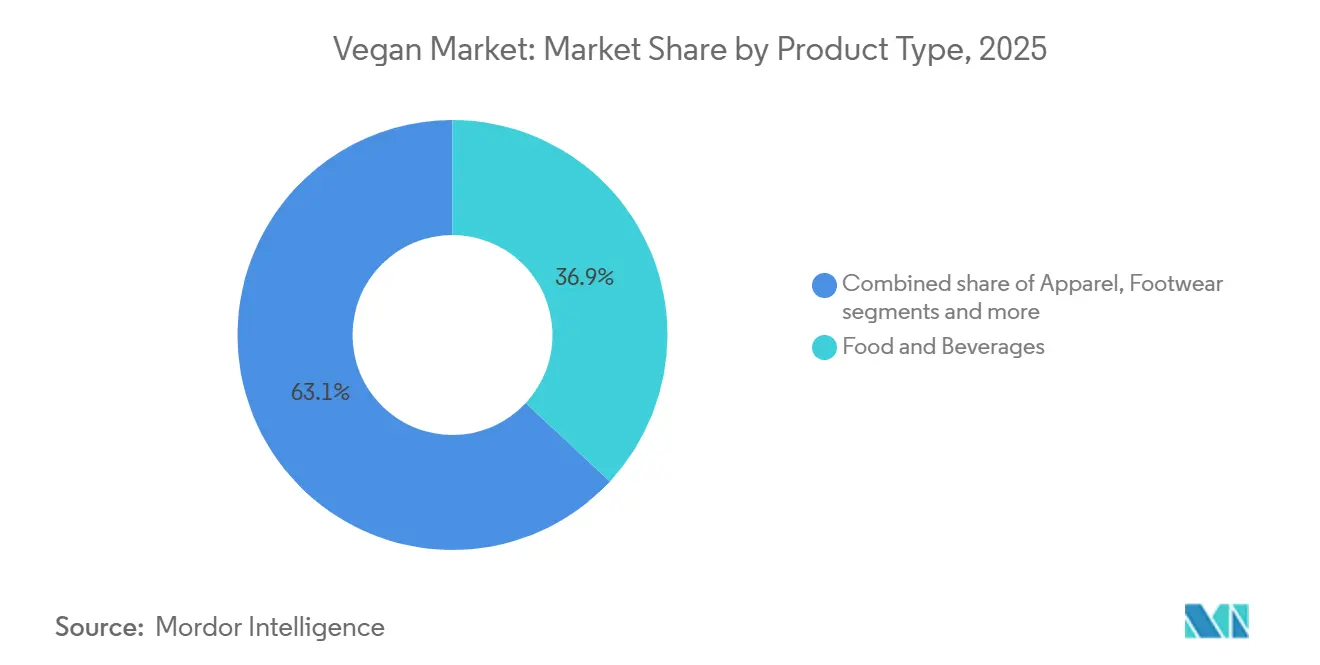
Health Repositioning Accelerates Cross-Category ExpansionFood and beverages accounted for a 36.92% share of the vegan market in 2025, supported by the growing integration of plant-based products into everyday diets and the increasing acceptance of vegan food among consumers who do not follow strict vegan lifestyles. The segment benefits from rising interest in dietary variety, animal welfare, ingredient transparency, and the environmental impact of conventional food production, encouraging consumers to explore alternatives that align with their personal preferences. Improvements in product formulation have strengthened demand by addressing traditional barriers related to taste, texture, aroma, and nutritional value, making plant-based foods more competitive with conventional options.
Personal care and beauty is projected to be the fastest-growing product type in the vegan market, registering a CAGR of 12.09% during 2026–2031. Growth is driven by increasing consumer preference for cruelty-free formulations, plant-derived ingredients, and beauty products developed without animal-derived components. Rising awareness of ingredient transparency and ethical sourcing is encouraging consumers to evaluate not only product performance but also the environmental and animal welfare implications of personal care purchases. Advances in vegan formulation technologies are helping manufacturers develop effective alternatives to conventional ingredients, including plant-based emollients, waxes, oils, and conditioning agents, while improving product stability, texture, fragrance, and skin compatibility.



By Distribution Channel:
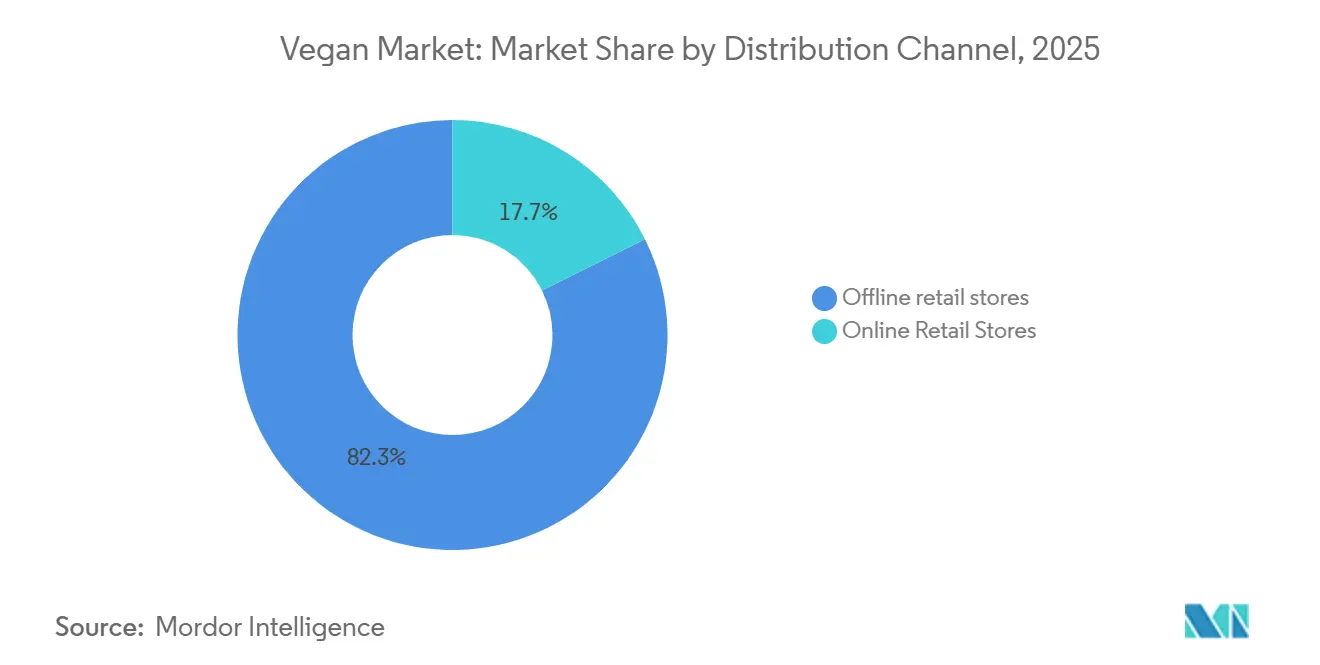
Offline Dominance Masks the Strategic Urgency of Digital TransitionOffline retail stores accounted for 82.34% of the vegan market's distribution channel share in 2025, supported by consumers' continued preference for evaluating products in person before making purchasing decisions. Physical retail outlets offer immediate product access and let shoppers inspect ingredient lists, nutritional information, vegan certifications, packaging, and product claims directly, building confidence in unfamiliar plant-based and cruelty-free alternatives. The channel also benefits from established shopping habits, convenient access to everyday essentials, and opportunities for consumers to compare vegan products with conventional alternatives within the same store. Dedicated vegan sections, natural and organic product shelves, in-store promotions, sampling activities, and retailer-led merchandising can further boost awareness and encourage trial purchases.
Online retail stores are projected to be the fastest-growing distribution channel, registering a CAGR of 13.11% during 2026–2031. Growth is driven by the convenience of digital shopping, expanding product availability, and consumers' increasing use of online platforms to discover and purchase vegan alternatives. E-commerce enables shoppers to access a broader selection of products than may be available in nearby physical stores, including niche formulations, specialist vegan brands, and products with specific ingredient or certification requirements. Detailed product descriptions, ingredient lists, customer reviews, ratings, and certification information also help consumers evaluate product suitability and make more informed purchasing decisions. Subscription services, bundled offers, personalized recommendations, and repeat-order features can strengthen customer retention while simplifying the replenishment of frequently used products.

Geography Analysis
North America Vegan Market
North America held the largest share of the vegan products market, accounting for 33.23% in 2025, supported by a mature retail ecosystem, established plant-based food categories, and growing consumer familiarity with vegan and cruelty-free products. The region benefits from broad product availability across supermarkets, specialty retailers, natural and organic stores, and e-commerce platforms, enabling consumers to access vegan alternatives across multiple product categories. The United States is a key contributor to regional market development, with plant-based foods gaining visibility through mainstream retail distribution and continued product innovation. According to the Plant Based Foods Association, 60% of the United States population purchased plant-based foods in 2025[3]. Canada's established market for plant-based alternatives and Mexico's developing retail availability also contribute to regional demand.
APAC Vegan Market
Asia-Pacific is forecast to be the fastest-growing region in the vegan products market, registering a CAGR of 11.55% during 2026–2031. Growth is supported by increasing awareness of plant-based lifestyles, rising interest in cruelty-free products, and the gradual expansion of vegan alternatives across mainstream consumer markets. The region benefits from established familiarity with plant-derived ingredients and traditional plant-based diets, providing a foundation for broader acceptance of modern vegan products. Growing interest in ingredient transparency, environmental sustainability, and ethical consumption is extending demand beyond traditional dietary preferences. Improvements in product formulation, availability, and affordability are also helping overcome barriers related to taste, texture, and consumer familiarity.
EMEA and South America Vegan Market
Europe represents an established market for vegan products, supported by growing awareness of sustainability, animal welfare, and responsible consumption, alongside demand for transparent ingredients and ethically produced goods. Continued product innovation and the availability of vegan-certified options are helping sustain market development, although growth varies across countries based on consumer preferences, retail access, and purchasing habits. In South America, the market remains at an earlier stage of development, with opportunities arising from growing awareness of plant-based lifestyles, expanding product availability, and increasing consumer interest in sustainable consumption. The Middle East and Africa region is also developing, with growth potential linked to rising awareness of vegan and cruelty-free products, the gradual diversification of retail assortments, and increasing digital product discovery.
Competitive Landscape
Market Concentration
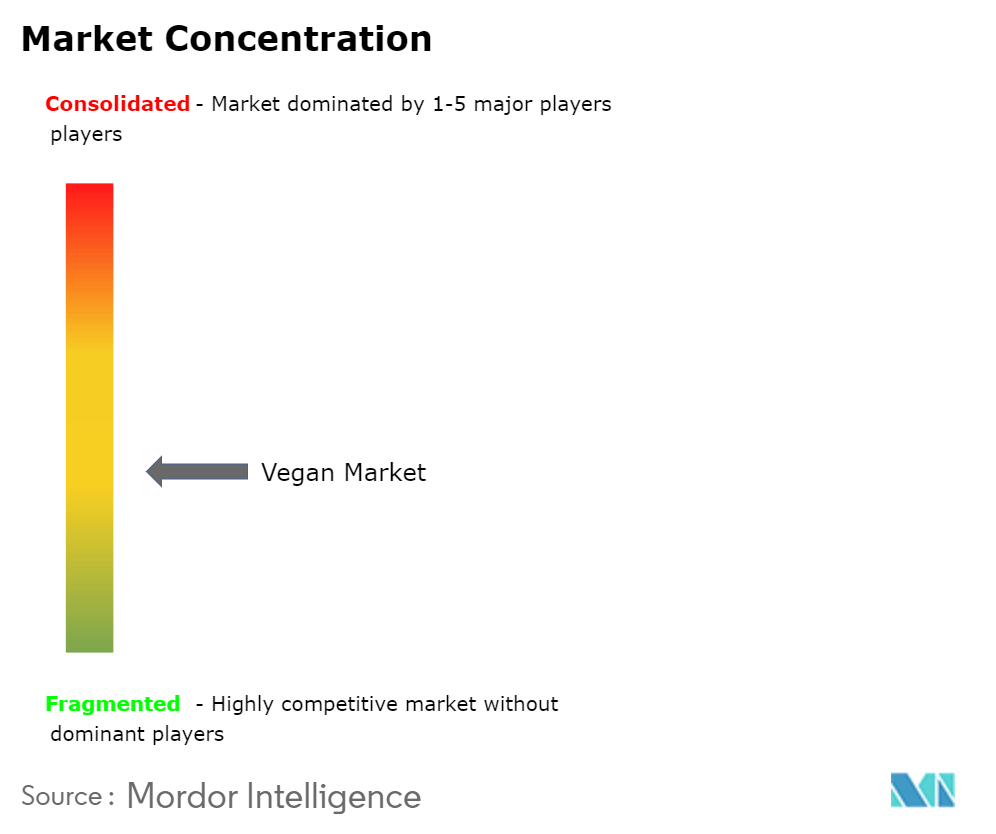
The global vegan market is fragmented, with competition distributed across multinational consumer goods companies, specialized vegan brands, emerging startups, and ingredient technology providers. Key players include Danone S.A., Unilever PLC, The Hain Celestial Group, Inc., Beyond Meat, Inc., and Impossible Foods Inc., alongside companies specializing in fermentation-based protein ingredients and alternative food technologies. Market participants compete through product innovation, portfolio diversification, pricing strategies, brand positioning, distribution expansion, and product quality improvements. The fragmented structure reflects the broad scope of the market, which encompasses food and beverages, personal care and beauty, apparel, footwear, accessories, and household cleaning products.
Competition is increasingly shaped by technological innovation, ingredient development, and product differentiation. Companies are investing in plant-protein formulations, fermentation-based ingredients, and advanced processing technologies to improve taste, texture, nutritional value, durability, and product functionality. Ingredient suppliers and biotechnology companies also contribute to the competitive landscape by developing specialized proteins and fermentation-derived ingredients that support innovation across vegan product categories. Competitive advantage increasingly depends on scaling production, securing reliable raw material supplies, improving manufacturing efficiency, and developing formulations that address consumer concerns about processing and product performance. These capabilities enable both established businesses and emerging innovators to differentiate their offerings and respond to evolving consumer preferences.
Market participants are also focusing on portfolio expansion, retail penetration, and strategic partnerships to strengthen their competitive positions. Established manufacturers can leverage existing distribution networks and brand recognition to introduce vegan products, while specialized businesses compete through focused innovation and distinctive product offerings. Retail availability, pricing, ingredient transparency, certification, and consumer trust remain important factors influencing purchasing decisions. Companies are also exploring adjacent product categories and alternative material technologies to broaden their market reach and reduce dependence on individual product segments. Despite these opportunities, competition remains intense, as manufacturers must balance product quality, affordability, sustainability objectives, and supply consistency.
Vegan Industry Leaders
-
Danone S.A.
-
Unilever PLC
-
The Hain Celestial Group, Inc.
-
Beyond Meat, Inc.
-
Impossible Foods Inc.
- *Disclaimer: Major Players sorted in no particular order
Vegan Market Companies Covered in this Report
- Danone S.A.
- Unilever PLC
- The Hain Celestial Group, Inc.
- Beyond Meat, Inc.
- Impossible Foods Inc.
- Oatly Group AB
- Conagra Brands, Inc.
- General Mills, Inc.
- Tyson Foods, Inc.
- Maple Leaf Foods Inc.
- DAIYA FOODS INC.
- Amy's Kitchen, Inc.
- Vitasoy International Holdings Limited
- Califia Farms, LLC
- Roquette Freres
- Archer-Daniels-Midland Company
- Kerry Group plc
- Ingredion Incorporated
- e.l.f. Beauty, Inc.
- LVMH Moet Hennessy Louis Vuitton SE
Recent Industry Developments in Vegan Market
- September 2026: Beyond Meat, Inc. launched the Phytosphere, a portfolio of products designed to improve access to plant-based nutrition. The portfolio includes powders, bars, beverages, and center-of-plate offerings within an integrated nutrition platform.
- September 2026: Impossible Foods launched in United Kingdom supermarkets in collaboration with grocery retailer Tesco. The plant-based protein brand, which was preferred by meat eaters in taste tests, rolled out new flavored products in select Tesco supermarkets across the United Kingdom.
- March 2025: JBS subsidiary Vivera completed the acquisition of The Vegetarian Butcher from Unilever. The brand operates across 55 markets in 32,000 European supermarkets, consolidating Vivera's position as a dedicated plant-based meat specialist.
Global Vegan Market Report Scope
The term vegan refers to a lifestyle that excludes the use of animal-derived products across all aspects of life, including food, clothing, cosmetics, personal care, and other industries. It is based on the principles of reducing harm to animals, minimizing environmental impact, and promoting sustainability. The Vegan Market is segmented by product type, distribution channel, and geography. Based on product type, the market is segmented into food and beverages, personal care and beauty, apparel, footwear, accessories, household and cleaning products, and other product types. Based on distribution channel, the market is segmented into offline retail stores and online retail stores. Based on geography, the market is segmented into North America, Europe, Asia-Pacific, South America, and the Middle East and Africa. For each segment, the market sizing and forecast have been done based on value (in USD).
Segmentation Overview
| Food and Beverages |
| Personal Care and Beauty |
| Apparel |
| Footwear |
| Accessories |
| Household and Cleaning Products |
| Other Product Types |
| Off-line Retail Stores |
| Online Retail Stores |
| North America | United States |
| Canada | |
| Mexico | |
| Rest of North America | |
| Europe | United Kingdom |
| Germany | |
| France | |
| Italy | |
| Spain | |
| Netherlands | |
| Poland | |
| Belgium | |
| Sweden | |
| Rest of Europe | |
| Asia-Pacific | China |
| Japan | |
| India | |
| Australia | |
| Indonesia | |
| South Korea | |
| Thailand | |
| Singapore | |
| Rest of Asia-Pacific | |
| South America | Brazil |
| Argentina | |
| Colombia | |
| Chile | |
| Peru | |
| Rest of South America | |
| Middle East and Africa | South Africa |
| Saudi Arabia | |
| United Arab Emirates | |
| Nigeria | |
| Egypt | |
| Morocco | |
| Turkey | |
| Rest of Middle East and Africa |
| By Product Type | Food and Beverages | |
| Personal Care and Beauty | ||
| Apparel | ||
| Footwear | ||
| Accessories | ||
| Household and Cleaning Products | ||
| Other Product Types | ||
| By Distribution Channel | Off-line Retail Stores | |
| Online Retail Stores | ||
| By Geography | North America | United States |
| Canada | ||
| Mexico | ||
| Rest of North America | ||
| Europe | United Kingdom | |
| Germany | ||
| France | ||
| Italy | ||
| Spain | ||
| Netherlands | ||
| Poland | ||
| Belgium | ||
| Sweden | ||
| Rest of Europe | ||
| Asia-Pacific | China | |
| Japan | ||
| India | ||
| Australia | ||
| Indonesia | ||
| South Korea | ||
| Thailand | ||
| Singapore | ||
| Rest of Asia-Pacific | ||
| South America | Brazil | |
| Argentina | ||
| Colombia | ||
| Chile | ||
| Peru | ||
| Rest of South America | ||
| Middle East and Africa | South Africa | |
| Saudi Arabia | ||
| United Arab Emirates | ||
| Nigeria | ||
| Egypt | ||
| Morocco | ||
| Turkey | ||
| Rest of Middle East and Africa | ||
Key Questions Answered in the Report
Which product category is the largest?
Food and Beverages leads with 36.90% share in 2025. Its position reflects routine household purchasing and the growing role of beverages, protein supplements, and fortified foods.
Which product category is growing the fastest?
Personal Care and Beauty is projected to expand at a 12.09% CAGR through 2031. Certification, ingredient transparency, and cruelty-free claims are important to buyers in this category.
Why do stores remain important for vegan products?
Offline Retail Stores account for 82.34% of distribution in 2025. Supermarkets allow flexitarian consumers to compare vegan and conventional products during routine shopping trips.
What limits wider consumer adoption?
Price, taste, texture, and questions about nutritional completeness can slow repeat buying. Production scale and better fermentation-based ingredients may help address these barriers.